
asia pacific
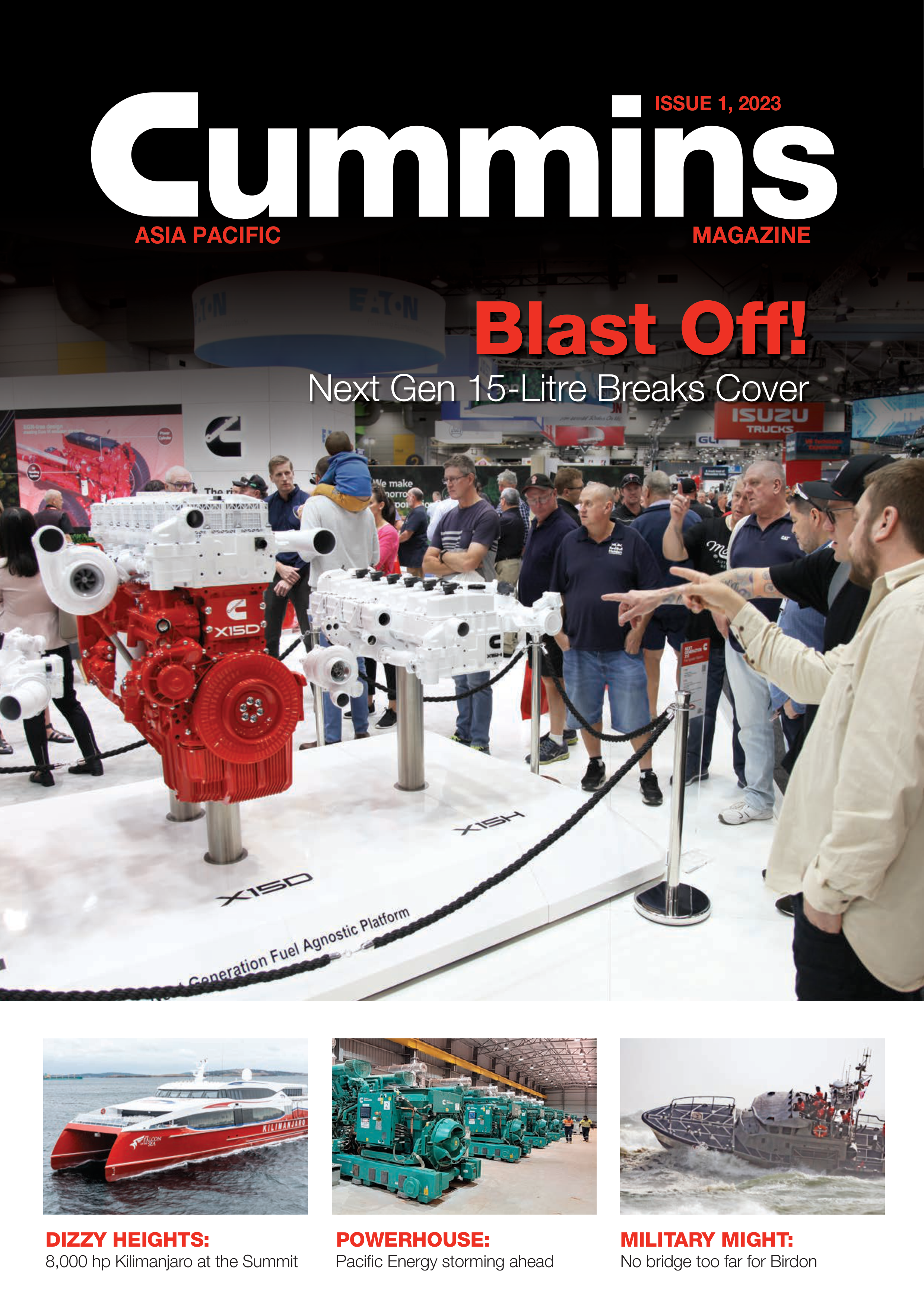
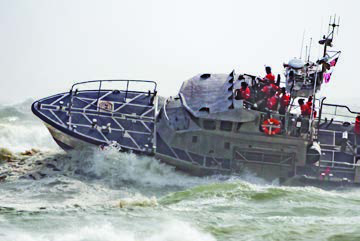
Blast Off!
Next Gen 15-Litre Breaks Cover
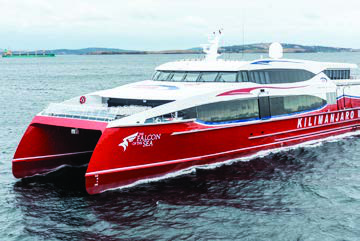
Dizzy Heights:
8,000 hp Kilimanjaro at the Summit
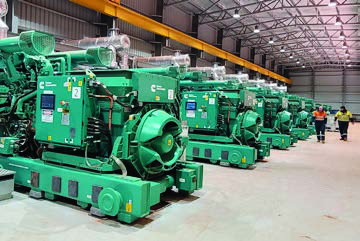
POWERHOUSE:
Pacific Energy storming ahead
Military Might:
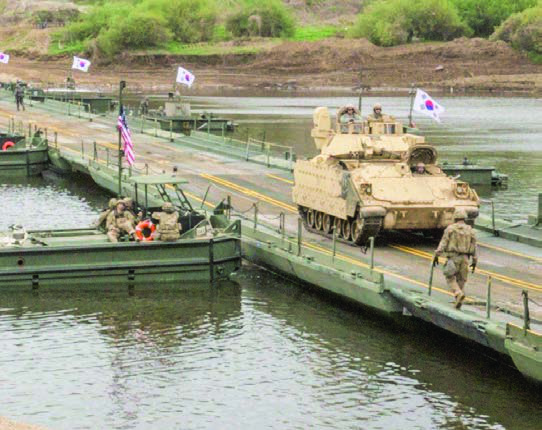
No bridge too far for Birdon
MAGAZINE
Issue 1, 2023

04
06
08
10
13
14
16
17
18
20
21
22
24
26
28
29
30
32
The latest Kilimanjaro
powers into service
Twin 4,000 hp Cummins QSK95
engines power Kilimanjaro VIII, the
latest Australian-built passenger
ferry operating in Tanzania.
Counterfeit parts destroy
50-litre Cummins at WA mine
The impact of using counterfeit
parts in a high horsepower diesel
engine has hit home at a mine
in WA.
Polished to perfection
Emerald Carrying Co is renowned
for its immaculate fleet.
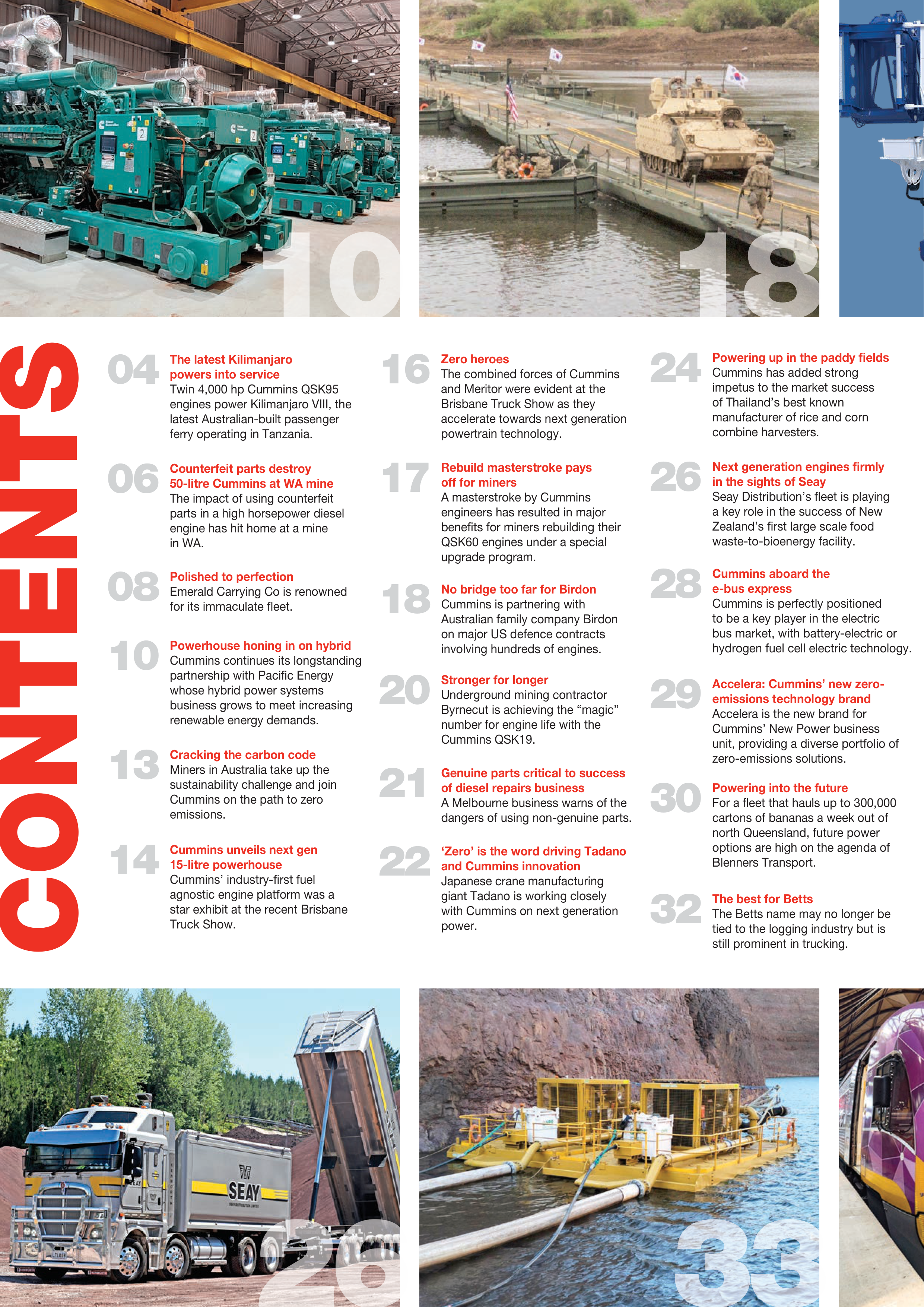
Powerhouse honing in on hybrid
Cummins continues its longstanding
partnership with Pacific Energy
whose hybrid power systems
business grows to meet increasing
renewable energy demands.
Cracking the carbon code
Miners in Australia take up the
sustainability challenge and join
Cummins on the path to zero
emissions.
Cummins unveils next gen
15-litre powerhouse
Cummins’ industry-first fuel
agnostic engine platform was a
star exhibit at the recent Brisbane
Truck Show.
Zero heroes
The combined forces of Cummins
and Meritor were evident at the
Brisbane Truck Show as they
accelerate towards next generation
powertrain technology.
Rebuild masterstroke pays
off for miners
A masterstroke by Cummins
engineers has resulted in major
benefits for miners rebuilding their
QSK60 engines under a special
upgrade program.
No bridge too far for Birdon
Cummins is partnering with
Australian family company Birdon
on major US defence contracts
involving hundreds of engines.
Stronger for longer
Underground mining contractor
Byrnecut is achieving the “magic”
number for engine life with the
Cummins QSK19.
Genuine parts critical to success
of diesel repairs business
A Melbourne business warns of the
dangers of using non-genuine parts.
‘Zero’ is the word driving Tadano
and Cummins innovation
Japanese crane manufacturing
giant Tadano is working closely
with Cummins on next generation
power.
Powering up in the paddy fields
Cummins has added strong
impetus to the market success
of Thailand’s best known
manufacturer of rice and corn
combine harvesters.
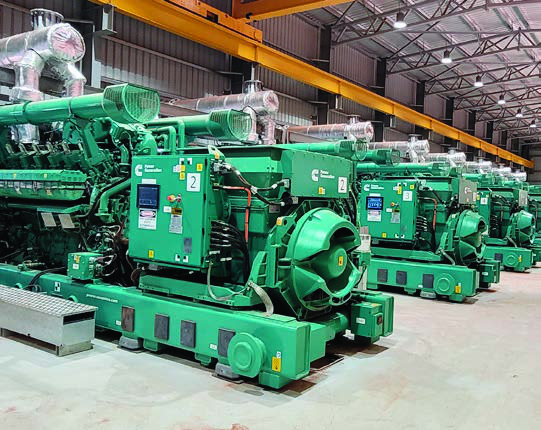
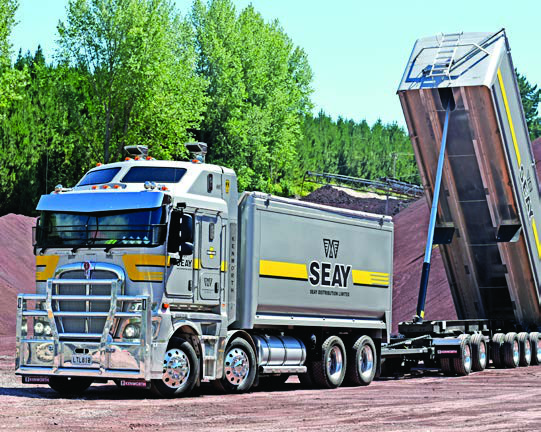
Next generation engines firmly
in the sights of Seay
Seay Distribution’s fleet is playing
a key role in the success of New
Zealand’s first large scale food
waste-to-bioenergy facility.
Cummins aboard the
e-bus express
Cummins is perfectly positioned
to be a key player in the electric
bus market, with battery-electric or
hydrogen fuel cell electric technology.
Accelera: Cummins’ new zero-
emissions technology brand
Accelera is the new brand for
Cummins’ New Power business
unit, providing a diverse portfolio of
zero-emissions solutions.
Powering into the future
For a fleet that hauls up to 300,000
cartons of bananas a week out of
north Queensland, future power
options are high on the agenda of
Blenners Transport.
The best for Betts
The Betts name may no longer be
tied to the logging industry but is
still prominent in trucking.
Contents
10
26
18
33
36
37
38
33
34
39
The good oil: Why the earth
moves for Goodsell
Cummins Townsville plays a key
role in the efficient running of the
Goodsell Earthmoving operation.
Packing a mighty punch
Cummins unveils new B4.5
marine engine.
No combat fatigue for
Cummins V903
A once prominent engine in
Australian trucking, Cummins’
V903 has become acclaimed in
combat vehicles.
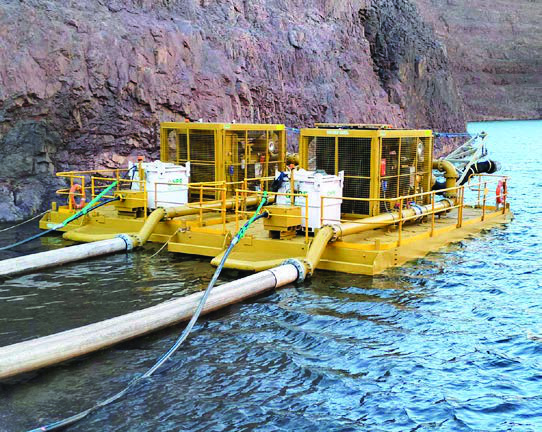
Punishing in the Pilbara
There’s no glory in mine dewatering,
especially in a remote region like the
Pilbara in Western Australia.
Maintenance critical for
standby generators
Without routine maintenance,
standby generators run a high-risk
of experiencing significant
system failure.
Full velocity
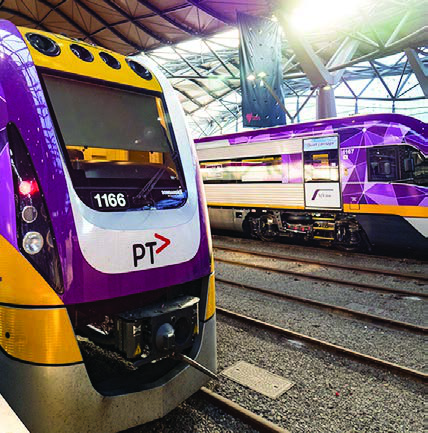
Cummins has delivered the 300th
QSK19 engine for Victoria’s world-
recognised VLocity train.
22
39
ISSUE 1 2023
These are exciting times for Cummins as our 104-year-old
company continues to evolve at incredible pace to meet
the ever-changing needs of the future, as the new power
revolution takes shape.
Not surprisingly, a key theme running through the following pages is Cummins’
focus on this new age of clean and sustainable power. “We have to act now,”
emphasised Jennifer Rumsey, CEO and President of Cummins Inc., in a recent
keynote speech, reaffirming the company’s commitment to Destination Zero, the
strategy to reach net zero emissions by 2050. That commitment is reflected in
Cummins’ spend of around US$1 billion a year on R&D of future technologies.
As you’ll read in this issue, Cummins took the Brisbane Truck Show by storm,
showcasing its fuel agnostic 15-litre X-series platform of internal combustion
hydrogen, biogas and advanced diesel engines, offering low-to-zero carbon fuel
capability. The combined forces of Cummins and Meritor were also on display with
an ePowertrain drive axle assembly attracting huge interest.
Elsewhere in this issue, we look at Cummins’ commitment to decarbonisation in the
mining industry as well as its involvement in the burgeoning hybrid power station
business in Western Australia as renewable energy increasingly becomes a priority.
The remarkable success of Port Macquarie, NSW, family company, Birdon,
which has secured prestigious US marine defence contracts involving hundreds
of Cummins engines, is another story you’ll enjoy, along with profiles of several
trucking fleets where we look at their efficiency gains. There’s also a critical
message about the use of counterfeit parts, especially after a 50-litre engine was
destroyed at a mine in Western Australia.
And then there’s the 8,000 hp, Cummins QSK95-powered Kilimanjaro VIII, the
magnificent fast ferry built by renowned Tasmanian shipbuilder Richardson Devine
Marine which is making waves for its Tanzanian operator. Stories from Thailand and
Japan top up to a power-packed magazine!
So, there’s a lot to read – about our customers,
our products and projects. We hope you enjoy this
publication which recognises the many people who
have made Cummins what it is today – customers,
employees, enthusiasts, suppliers, community
partners and everyone in between!
Cummins Asia Pacific magazine
is published by
Cummins Asia Pacific
2 Caribbean Drive, Scoresby VIC 3179 Australia.
Welcome to Cummins
Asia Pacific Magazine!
Peter Jensen-Muir
Executive Managing Director
Cummins Asia Pacific
Cummins Asia Pacific
@CumminsAPAC
@CumminsJapan
Cummins South Pacific
Cummins Southeast Asia
Cummins Philippines
@cumminsasiapacific
@cumminskorea
Follow us on:
3
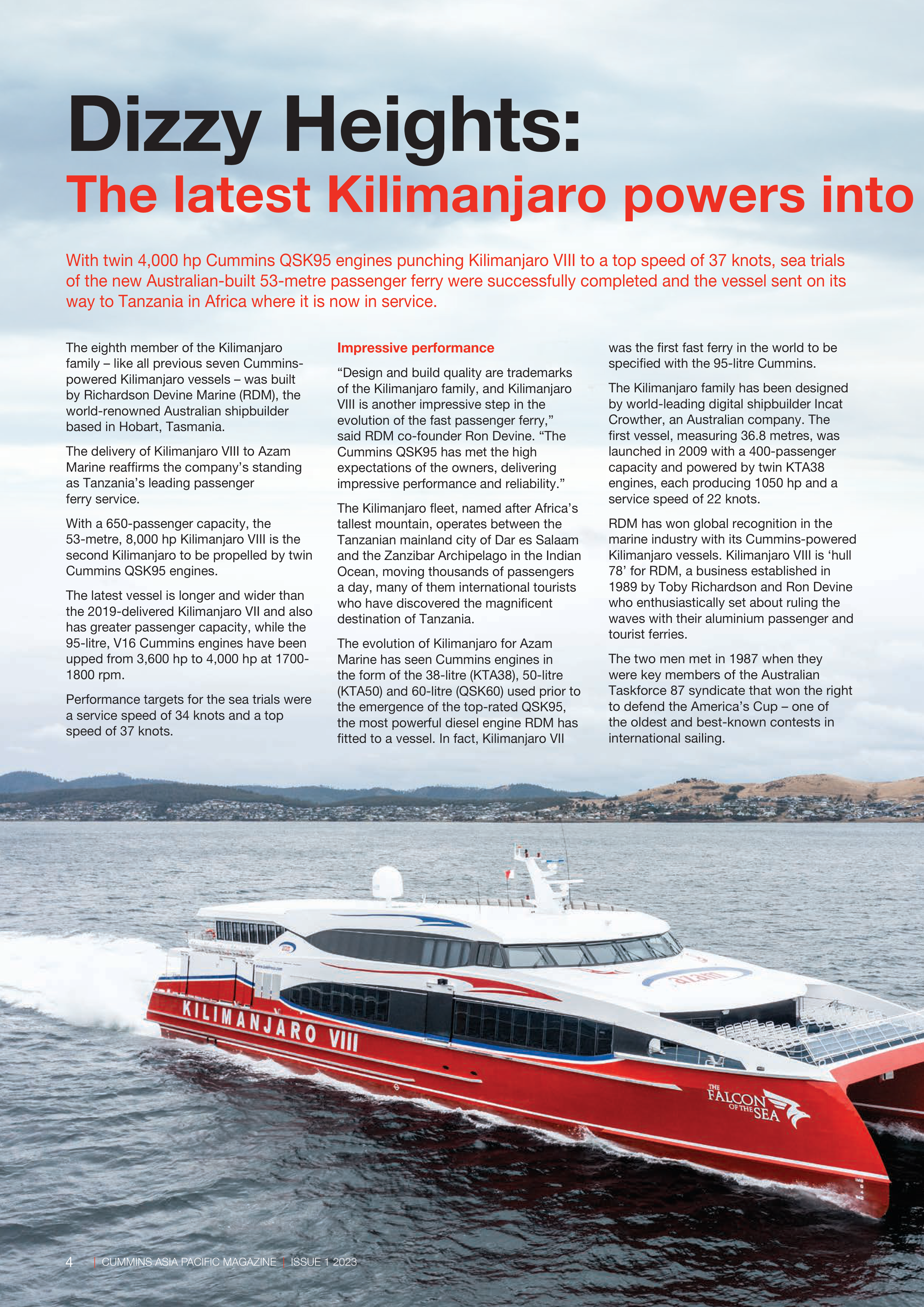

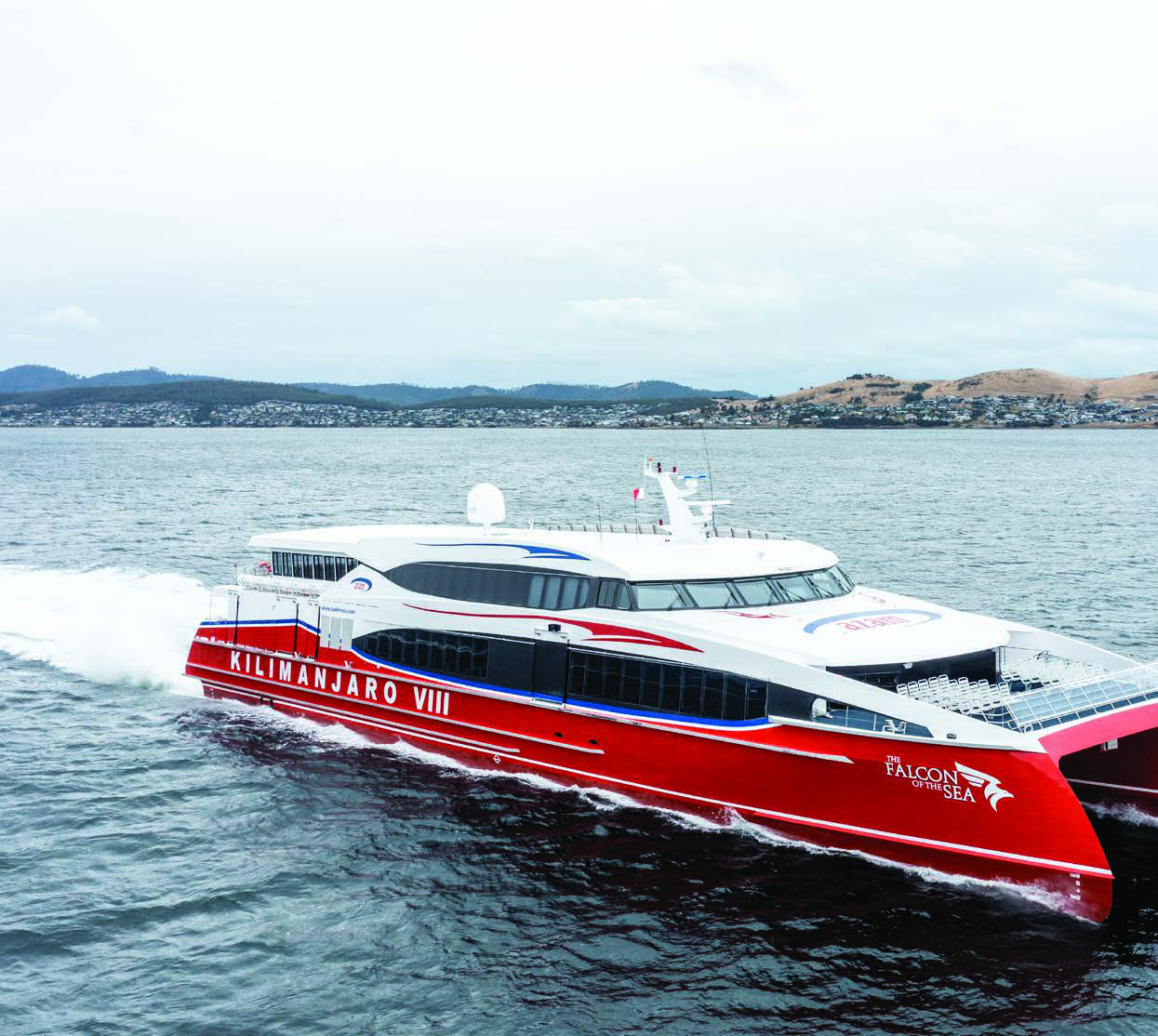
The latest Kilimanjaro powers into
With twin 4,000 hp Cummins QSK95 engines punching Kilimanjaro VIII to a top speed of 37 knots, sea trials
of the new Australian-built 53-metre passenger ferry were successfully completed and the vessel sent on its
way to Tanzania in Africa where it is now in service.
The eighth member of the Kilimanjaro
family – like all previous seven Cummins-
powered Kilimanjaro vessels – was built
by Richardson Devine Marine (RDM), the
world-renowned Australian shipbuilder
based in Hobart, Tasmania.
The delivery of Kilimanjaro VIII to Azam
Marine reaffirms the company’s standing
as Tanzania’s leading passenger
ferry service.
With a 650-passenger capacity, the
53-metre, 8,000 hp Kilimanjaro VIII is the
second Kilimanjaro to be propelled by twin
Cummins QSK95 engines.
The latest vessel is longer and wider than
the 2019-delivered Kilimanjaro VII and also
has greater passenger capacity, while the
95-litre, V16 Cummins engines have been
upped from 3,600 hp to 4,000 hp at 1700-
1800 rpm.
Performance targets for the sea trials were
a service speed of 34 knots and a top
speed of 37 knots.
Impressive performance
“Design and build quality are trademarks
of the Kilimanjaro family, and Kilimanjaro
VIII is another impressive step in the
evolution of the fast passenger ferry,”
said RDM co-founder Ron Devine. “The
Cummins QSK95 has met the high
expectations of the owners, delivering
impressive performance and reliability.”
The Kilimanjaro fleet, named after Africa’s
tallest mountain, operates between the
Tanzanian mainland city of Dar es Salaam
and the Zanzibar Archipelago in the Indian
Ocean, moving thousands of passengers
a day, many of them international tourists
who have discovered the magnificent
destination of Tanzania.
The evolution of Kilimanjaro for Azam
Marine has seen Cummins engines in
the form of the 38-litre (KTA38), 50-litre
(KTA50) and 60-litre (QSK60) used prior to
the emergence of the top-rated QSK95,
the most powerful diesel engine RDM has
fitted to a vessel. In fact, Kilimanjaro VII
was the first fast ferry in the world to be
specified with the 95-litre Cummins.
The Kilimanjaro family has been designed
by world-leading digital shipbuilder Incat
Crowther, an Australian company. The
first vessel, measuring 36.8 metres, was
launched in 2009 with a 400-passenger
capacity and powered by twin KTA38
engines, each producing 1050 hp and a
service speed of 22 knots.
RDM has won global recognition in the
marine industry with its Cummins-powered
Kilimanjaro vessels. Kilimanjaro VIII is ‘hull
78’ for RDM, a business established in
1989 by Toby Richardson and Ron Devine
who enthusiastically set about ruling the
waves with their aluminium passenger and
tourist ferries.
The two men met in 1987 when they
were key members of the Australian
Taskforce 87 syndicate that won the right
to defend the America’s Cup – one of
the oldest and best-known contests in
international sailing.
Dizzy Heights:
4
|
CUMMINS ASIA PACIFIC MAGAZINE
|
ISSUE 1 2023


service
Strong relationships
The success of the Kilimanjaro fleet
is testimony to the quality aluminium
construction produced by RDM.
When Kilimanjaro VII was launched in 2019, its
build quality was described as “exceptional”
by Azam Marine MD Abubakar Aziz Salim.
“The vessel reflects the strong relationship
we have forged with RDM since the first
Kilimanjaro was built in 2009,” he said.
The Kilimanjaro fleet operates in harsh,
incredibly saline conditions and constantly high
water temperatures around the 30 degrees
Celsius mark – a highly corrosive environment.
Kilimanjaro VIII has an 18,600-litre fuel
capacity, and the twin Cummins 95s draw the
diesel through 40 mm (internal diameter) lines
while delivering their power through ZF marine
gears to the Kamewa waterjets.
The Cummins influence isn’t confined to
propulsion power; the electrical needs on
all Kilimanjaro ferries are met by Cummins
generator sets.
The Cummins QSK95 has met
the high expectations of the owners.
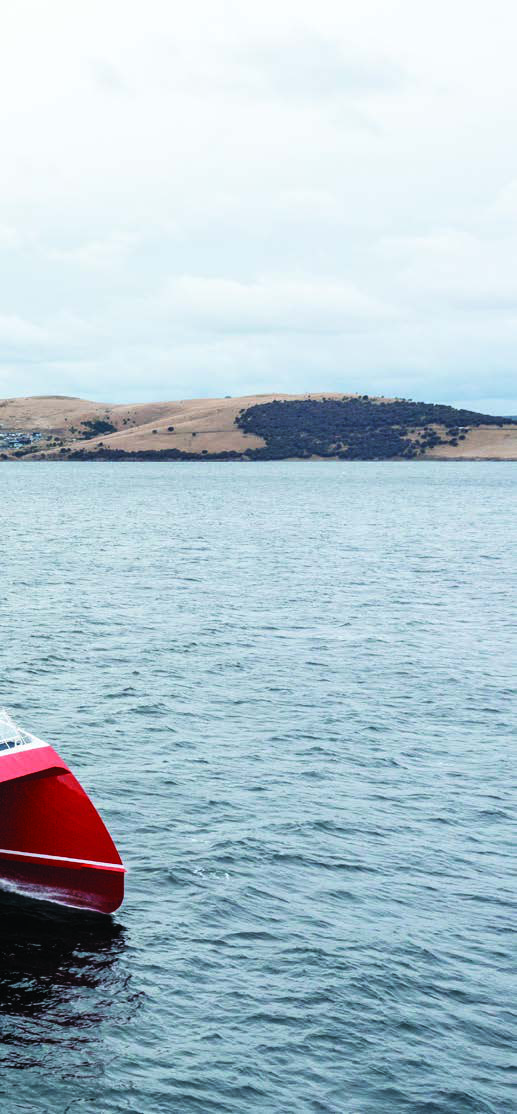
Twin 4,000 hp Cummins QSK95
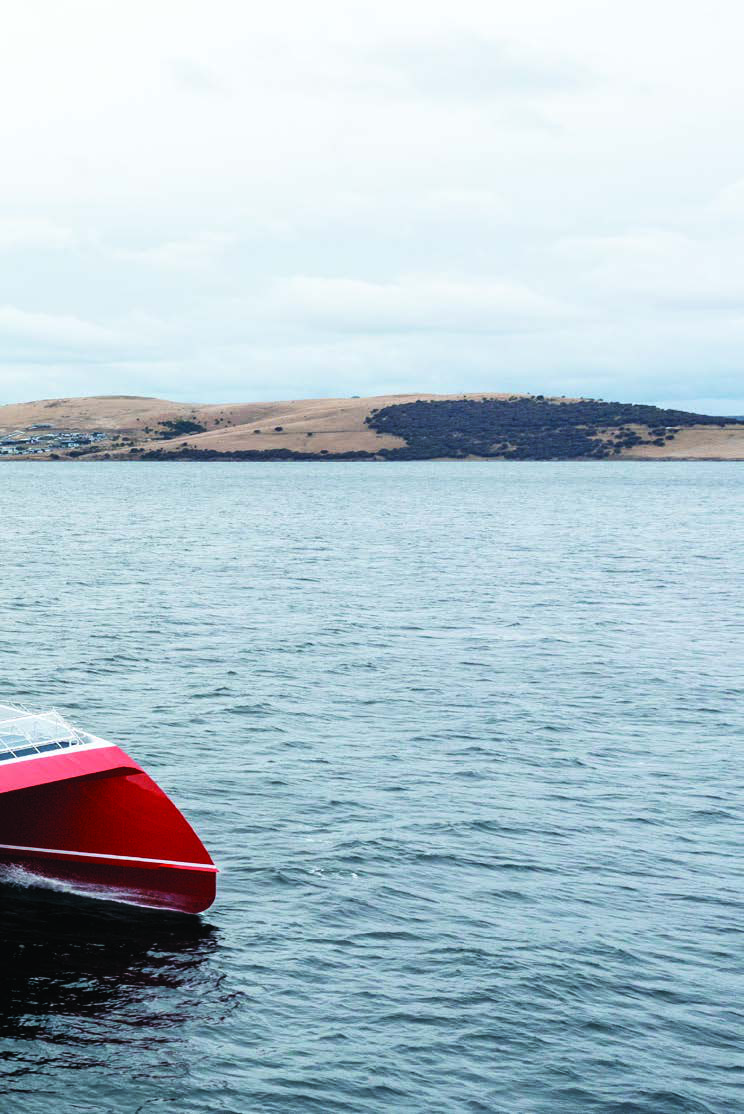
engines power Kilimanjaro VIII.
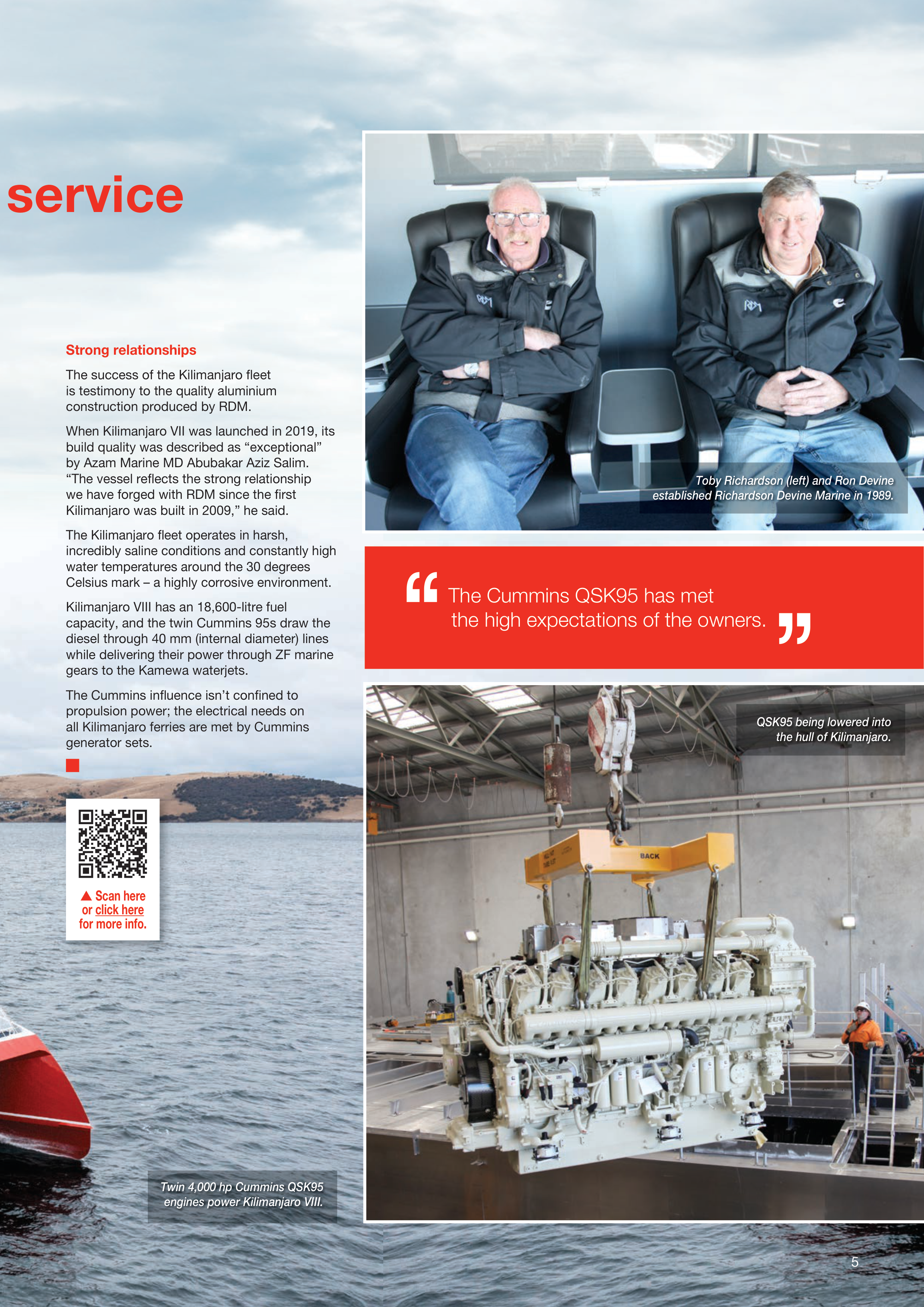
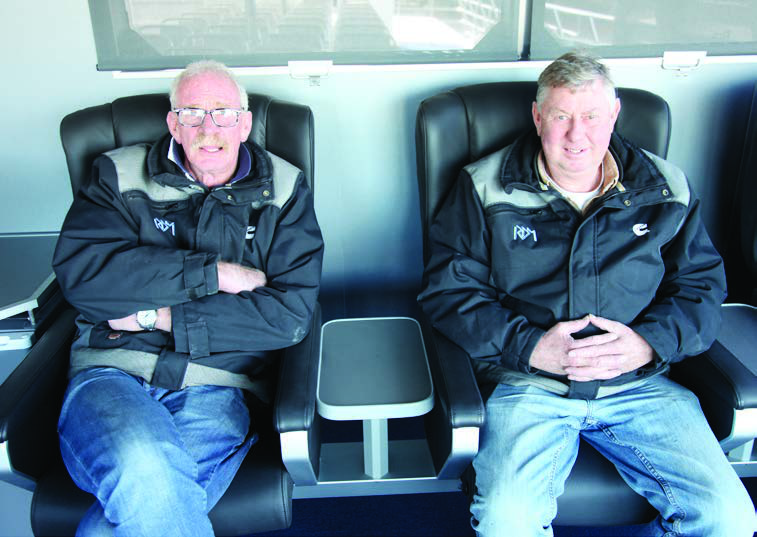
Toby Richardson (left) and Ron Devine
established Richardson Devine Marine in 1989.
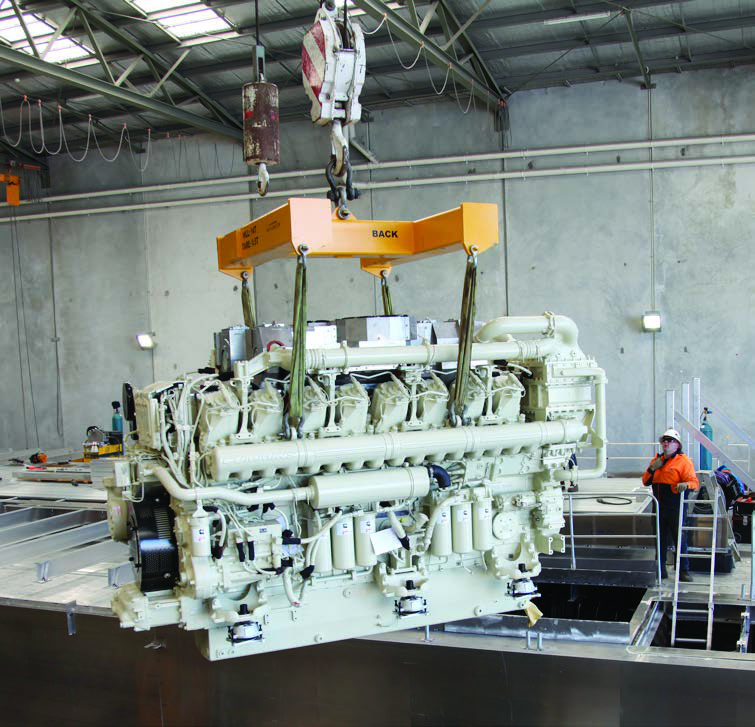
QSK95 being lowered into
the hull of Kilimanjaro.
▲
Scan here
or click here
for more info.
5



Counterfeit
parts destroy
50-litre Cummins at
Western Australia mine
The high risk involved in using counterfeit parts
in a high horsepower diesel engine has hit home
at a mining operation in Western Australia.
A Cummins K50 – a long-established
50-litre V16 renowned for its reliability
and durability – failed at only 6,000 hours
powering an excavator when it would
have been expected to clock up to
16,000 hours after midlife maintenance at
8,000 hours.
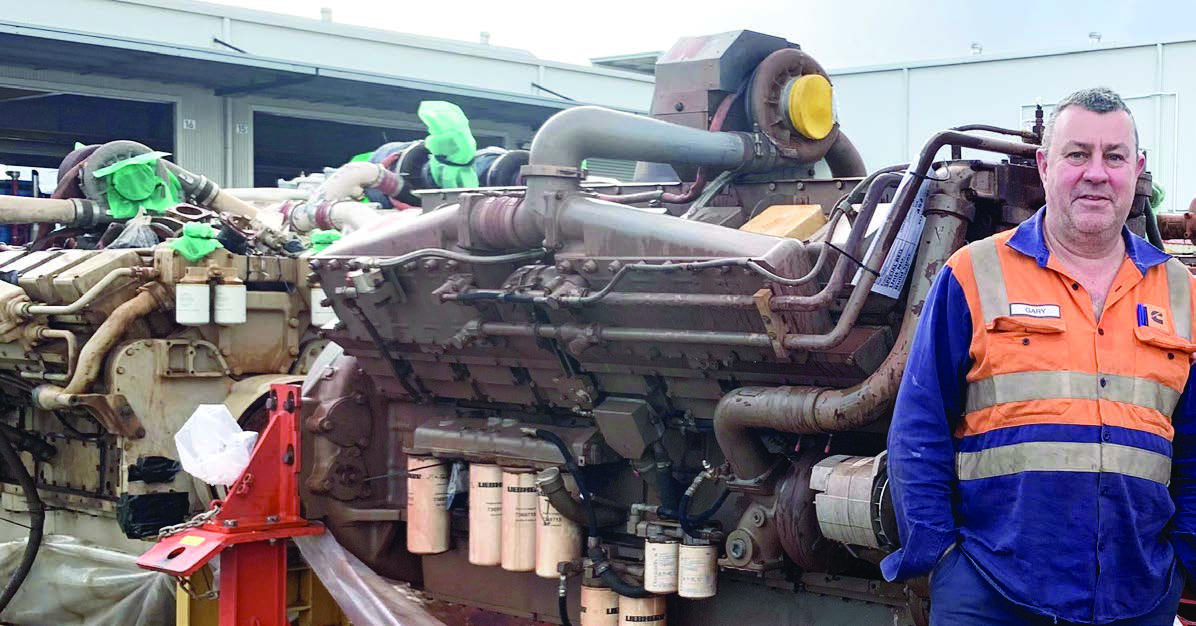
Cummins Perth workshop supervisor
Gary Mollart and service technician
Ryan Elliott were involved in the teardown
and analysis of the 1,800 hp engine.
The teardown and testing were done
within Cummins with no third-party
testing involved.
“There was total destruction inside one
cylinder,” Elliott reveals. “The technicians
at site had to pull the engine out and
send it to Perth when they realised they
couldn’t fix it in situ.”
When the engine was disassembled, the
reason for the destruction was glaring:
Counterfeit parts, including the cylinder
liners, had been used by a third party
repairer to rebuild the K50.
Metal debris everywhere
“When the rocker cover was removed
there was metal debris everywhere –
pieces of valve spring, bent push rods, a
broken crosshead, and there was fuel, oil
and coolant floating around,” Elliott says.
“Some debris had fallen into the cylinder,
hit the injector and snapped off the bolts
inside the rocker box. The injector had
come out and cracked the rocker cover.
“We could see straight away that
counterfeit parts were used. We’ve pulled
heaps of K50 engines apart so we know
when something looks dodgy.
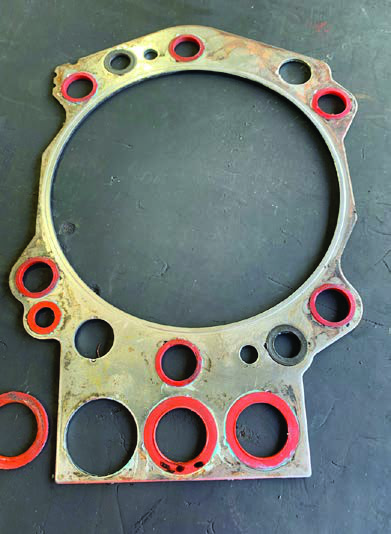
“The head gaskets looked cheap. When
we went to undo the head bolts we found
the bolts were not actually held in by the
thread, they were held in by seal around
the bolt.
“The head gaskets were red rather than
the green, black or orange head gaskets
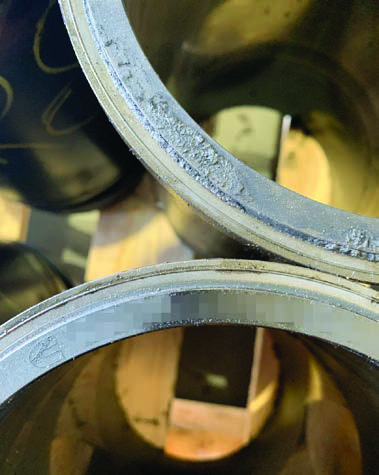
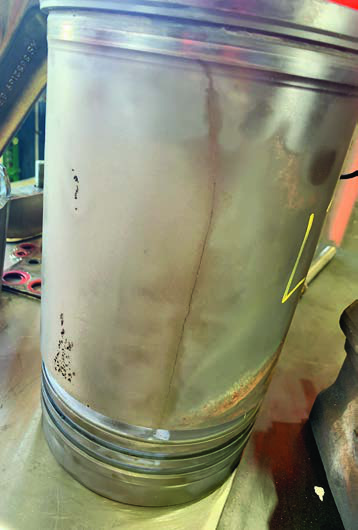
that Cummins uses. The liners also had a
laser-etched, dodgy-looking Cummins ‘C’
on them.”
Elliott points out that most liners had
cavitation, as did the insert in the block:
“The liners weren’t far from pitting all the
way through, so the engine was on the
verge of hydraulic-lock and throwing a
rod out of the block.”
False economy
For Gary Mollart, the lesson is obvious:
“The customer is now aware of the
downfall of using an unauthorised
Cummins repairer to cut costs.
“At the end of the day you get what you
pay for… if you want to pay for quality
then you get quality, if you want to cut
corners to save a few grand you get
exactly what happened to this customer.”
Kyle Miller, Cummins’ aftermarket
business development manager for
mining in the Asia Pacific region, is
involved in Cummins’ crackdown on
counterfeit activity in Australia.
“The real challenge is when third-party
repairers import parts from outside
Cummins’ channels. Some importers
think they’re getting genuine Cummins
parts and are telling customers the parts
are genuine…but they’re not genuine,
they’re counterfeit,” he says.
“Our reputation is obviously at stake
because the end-user customer perceives
they are buying genuine product.”
Miller points out that counterfeiters have
become so sophisticated that their parts
often look like the original, even down to
their labelling, packaging, barcodes and
QR codes.
“The magnitude of the problem in
Australia is requiring Cummins to take
a tough stance against counterfeiters,”
asserts Miller, “and we’ll be announcing
measures soon that will help protect our
customers from counterfeit parts.
“Cummins High Horsepower Genuine
parts sourced from the extensive network
of Cummins branches in Australia and
New Zealand are the only parts approved
and warranted by Cummins.”
www.cummins.com/locations
When the rocker cover
was removed there
was metal debris
everywhere…
6
|
CUMMINS ASIA PACIFIC MAGAZINE
|
ISSUE 1 2023

Counterfeit parts not worth
the risk, warns Cummins
It’s a warning often repeated by original equipment manufacturers
(OEMs), yet some businesses continue to put their operations at
risk – knowingly or otherwise – by using cheap counterfeit parts.
Powering more types of equipment in more
markets than any other engine company,
Cummins encounters and fights against
counterfeiting every day while constantly warning
that use of bogus parts can have potentially
serious consequences in terms of safety,
productivity and performance.
The main reason for using counterfeit components
is to reduce costs, even though this can ultimately
compromise an engine’s lifespan, resulting in a
blow-out of whole-of-life costs.
“Counterfeiters are becoming so sophisticated
that their parts often look like the original, even
down to their labelling, packaging, barcodes and QR codes, and many consumers are misled
into thinking they are buying the genuine article,” says Kyle Miller, Cummins’ aftermarket
business development manager for mining in the Asia Pacific region.
“These products are usually reverse-engineered with poor quality materials and loose
specifications. They are not designed or tested to Cummins’ exacting engineering and quality
standards and this can lead to rapid wear, poor reliability, high fuel and oil consumption,
excessive emissions and even engine failure.
Safety risk
“Counterfeit parts can also pose a safety risk if they are poorly produced or made of
substandard materials. For example, fire risk or electrical failure may result from faulty
components.”
He points out that while manufacturers of counterfeit parts may claim their products will work
in a Cummins engine, the fact is they are not fit for purpose. Only genuine components are
built to meet the original factory specifications while using the latest materials, component
designs and manufacturing techniques.
“With genuine Cummins parts, customers know where and how they have been
manufactured, so they can be confident in the quality, durability and reliability of the parts. In
the event of failure, Cummins takes responsibility in providing warranty.”
The proliferation of cheap counterfeit parts entering Australia and New Zealand is a growing
concern. In both countries, the purchase and supply of counterfeit goods is illegal.
A recent case in Australia saw a mine operator buy fuel injectors through a reputable third-
party supplier. The injectors showed all the signs of being a Cummins product but with a
cheaper price. After the injectors were installed in 15 engines, the operator began to see
performance degradation along with higher fuel consumption and increased visible exhaust
emissions. A Cummins technician found the injectors to be counterfeit so the short-term
savings ended up costing the customer more in lost production.
Every genuine Cummins part is backed by a comprehensive factory warranty and supported
by Cummins’ extensive support network in the Asia Pacific region, ensuring peace of mind
and financial protection. Counterfeit parts suppliers cannot provide this level of support.
Counterfeiters
are becoming so
sophisticated that
their parts often look
like the original…
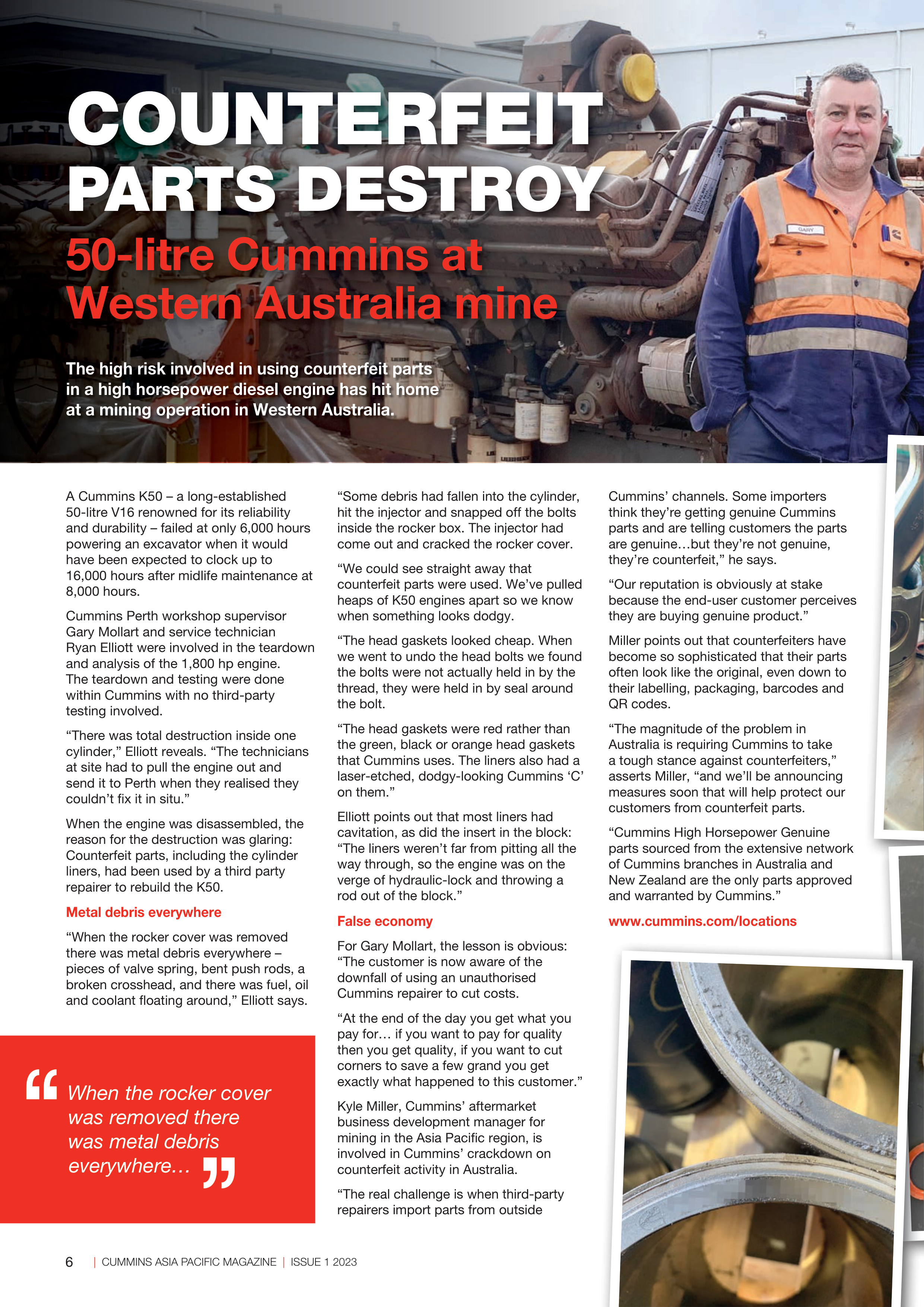
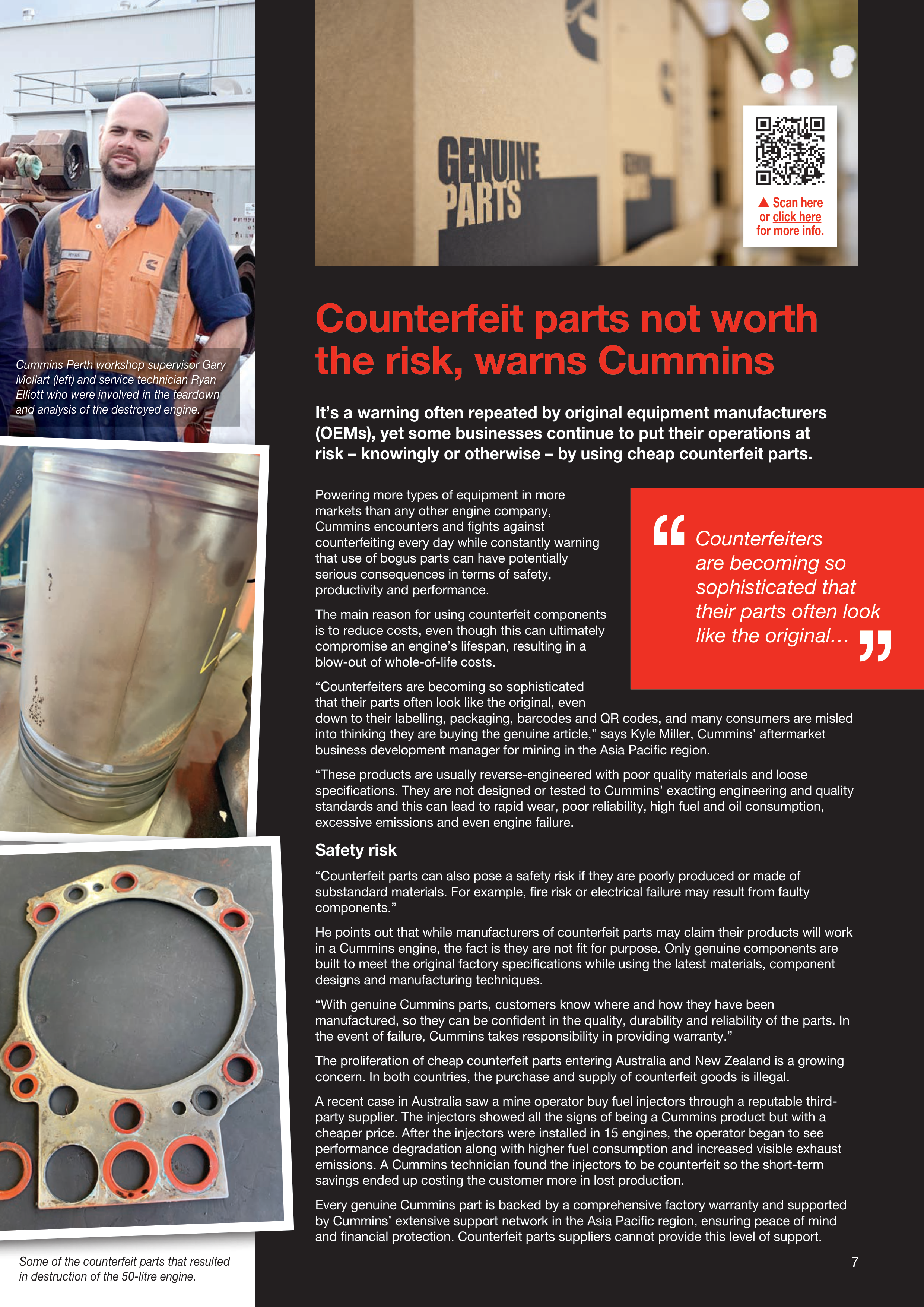
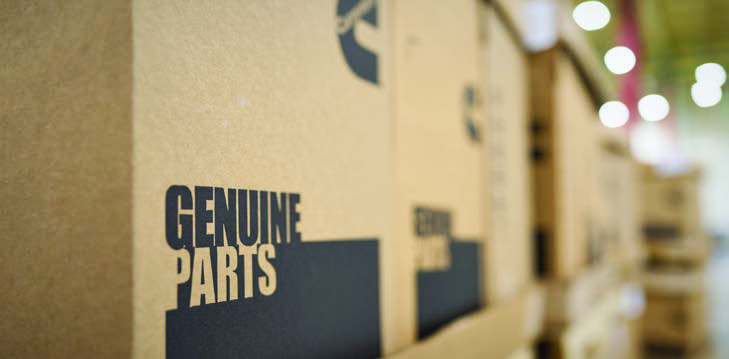
Some of the counterfeit parts that resulted
in destruction of the 50-litre engine.
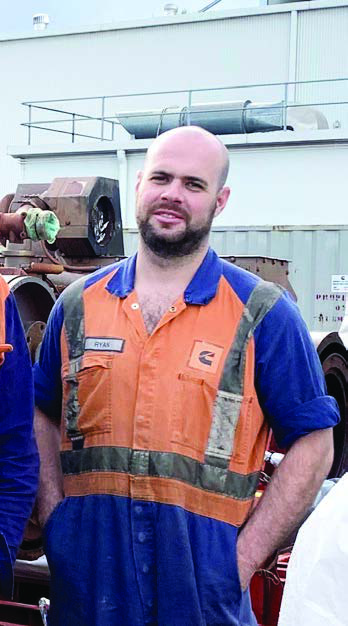
Cummins Perth workshop supervisor Gary
Mollart (left) and service technician Ryan
Elliott who were involved in the teardown
and analysis of the destroyed engine.
▲
Scan here
or click here
for more info.
7
Polished to perfection
Emerald Carrying Company:
The culture at ECC is obvious: Pride in
everything IS everything!
The stunningly immaculate Queensland
fleet will this year haul 4 billion litres of fuel
to mines, fuel depots and service stations.
ECC’s operational and maintenance
standards are of the highest order, with
the company’s fleet of 155 prime movers
and 350 trailers running on high utilisation
schedules.
In fact, high utilisation is a trademark of
the fleet with some of ECC’s fuel-haul
B-doubles clocking 450,000 km a year on
triple-shift work.
Loyalty to suppliers
Kenworths with Cummins power
dominate at ECC. What is obvious is the
strong relationship that has been forged
over the years between ECC and its
suppliers: Loyalty received is deserving of
loyalty in return!
The relationship with Cummins, dating
back to the 1980s, is evident with ECC
recently putting into service a set of
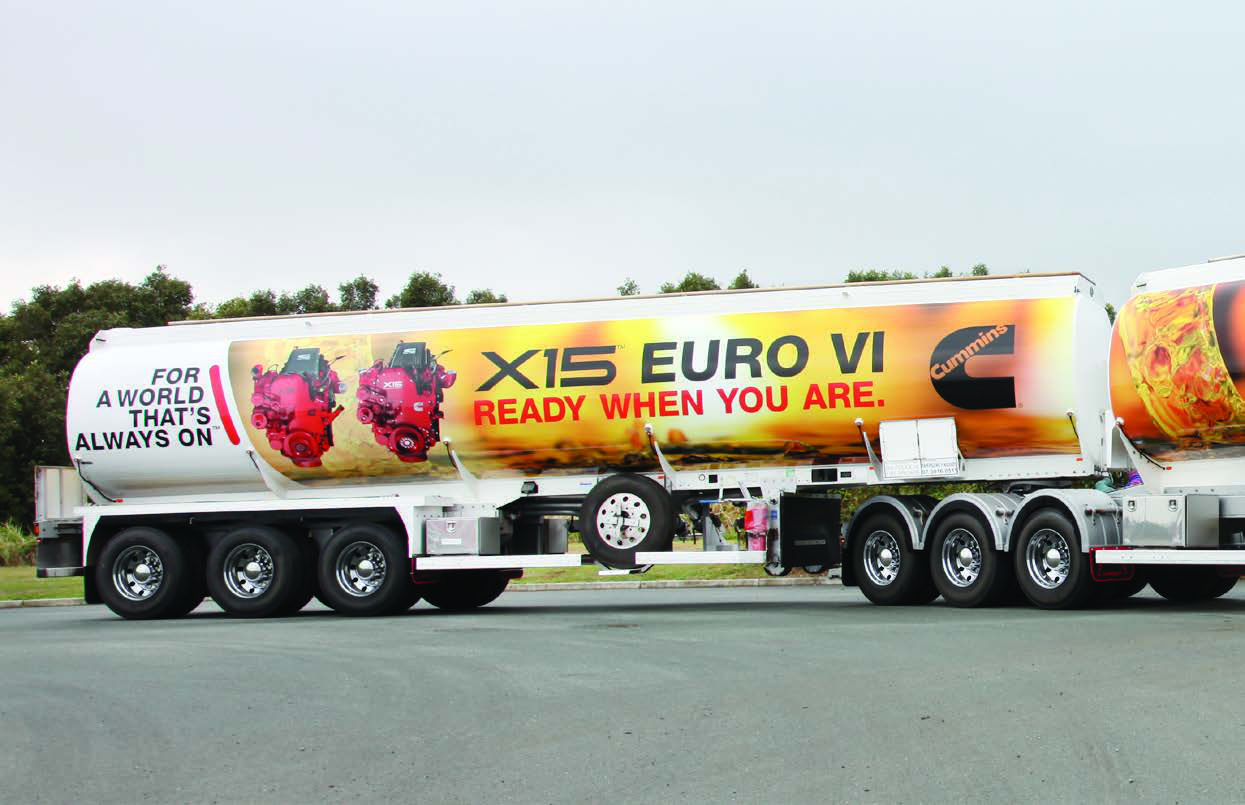
B-double tankers promoting the Cummins
brand – in particular the Euro 6 X15 with
the accompanying message
‘We’re ready
when you are’
.
“Cummins is the best engine brand on the
market in terms of reliability and aftersales
support,” says ECC fleet manager Matt
Haylock without hesitation.
“We run our trucks into some extremely
remote areas across Queensland, the
Northern Territory and New South Wales
so reliability is crucial.”
When a Kenworth has done around
1.2 million km, ECC rebuilds the engine
or replaces it with a brand new one
depending on how quickly the kilometres
have been accumulated. The ISXe5
dominates in a fleet which has recently
seen the first Euro 6 ISX engines
enter service.
The latest innovation at ECC is the ‘Super
Triple’, a PBS-certified combination that
operates on the 900 km trip between
Townsville and Mt Isa, hauling 130,000
litres of fuel – a gain of up to 22,000 litres
compared with the capacity of a standard
roadtrain triple.
The Super Triple, with 600 Cummins X15
horses in harness, features a tri-drive
Kenworth T909 pulling Tieman quad-axle
trailers and tri-axle dollies, with a loaded
weight of 156 tonnes. Early fuel figures
show the Super Triple running at
1.18 km/litre.
Impeccable presentation
If high utilisation is a trademark of the
fleet, just as important is the presentation
of the trucks – they are generally washed
after each shift – and the way they are
maintained.
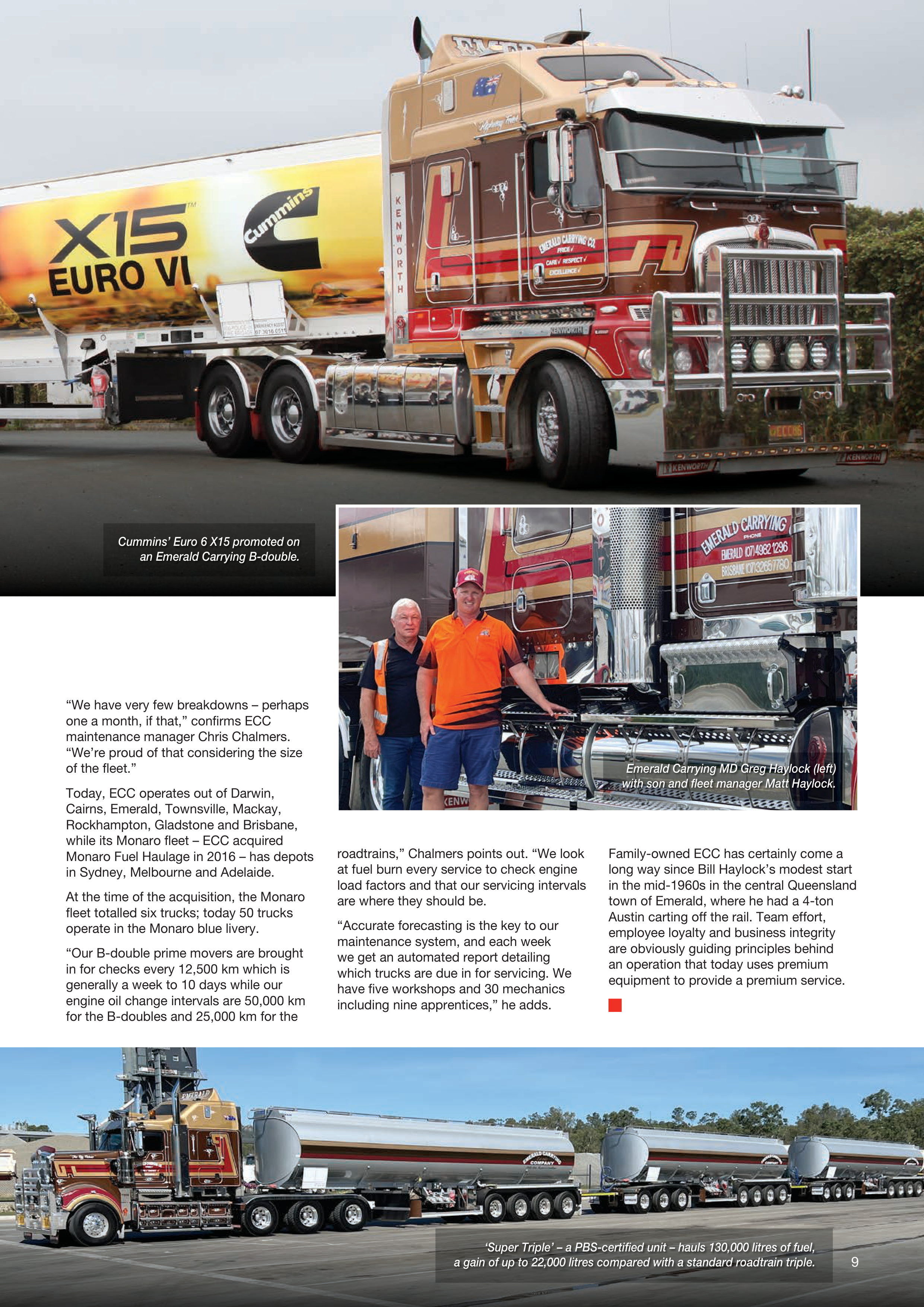
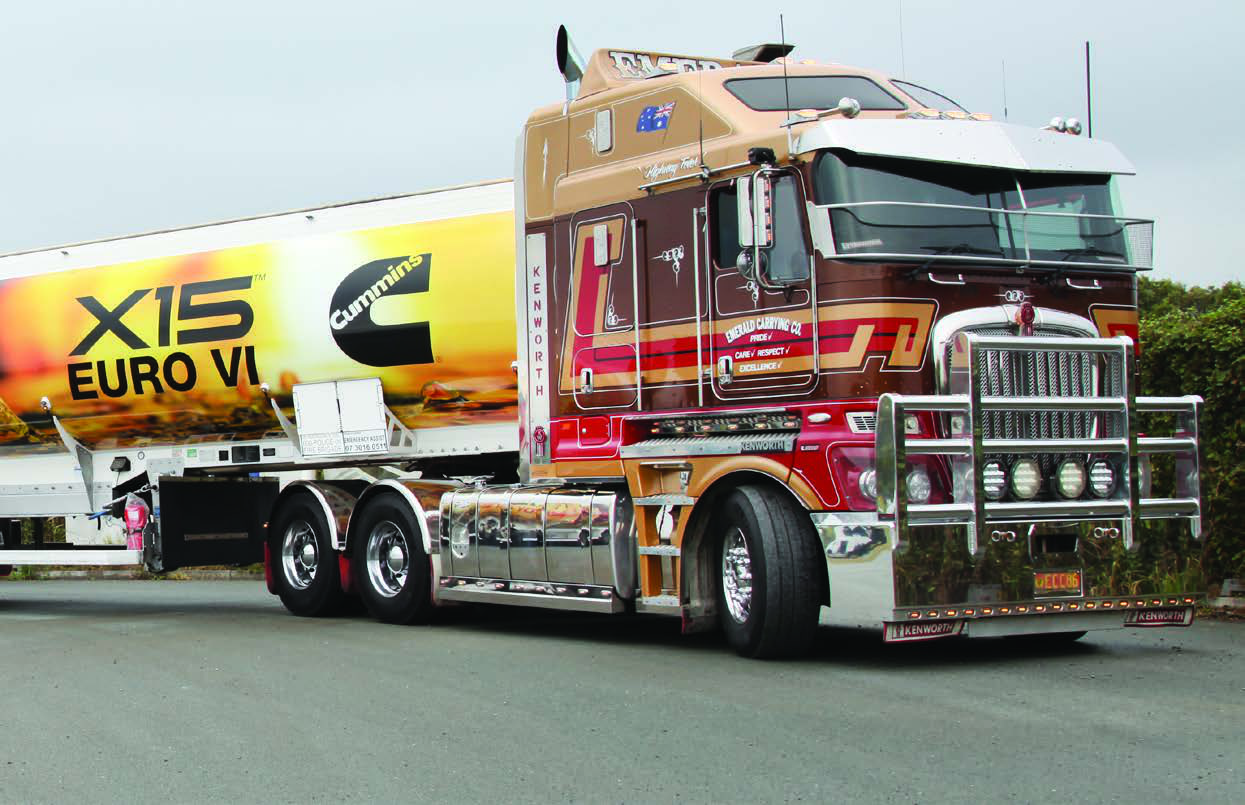
I guessed that the impeccable Kenworth
K200 in the photo accompanying this
article was probably 12 months old with a
few hundred thousand kilometres on the
clock. It is, in fact, a 2016 model with over
one million kilometres under the ISXe5
rocker cover.
ECC runs a stringent maintenance regime
which underpins the company’s fleet
reliability and safety commitments.
Cummins is the best
engine brand on
the market in terms
of reliability and
aftersales support.
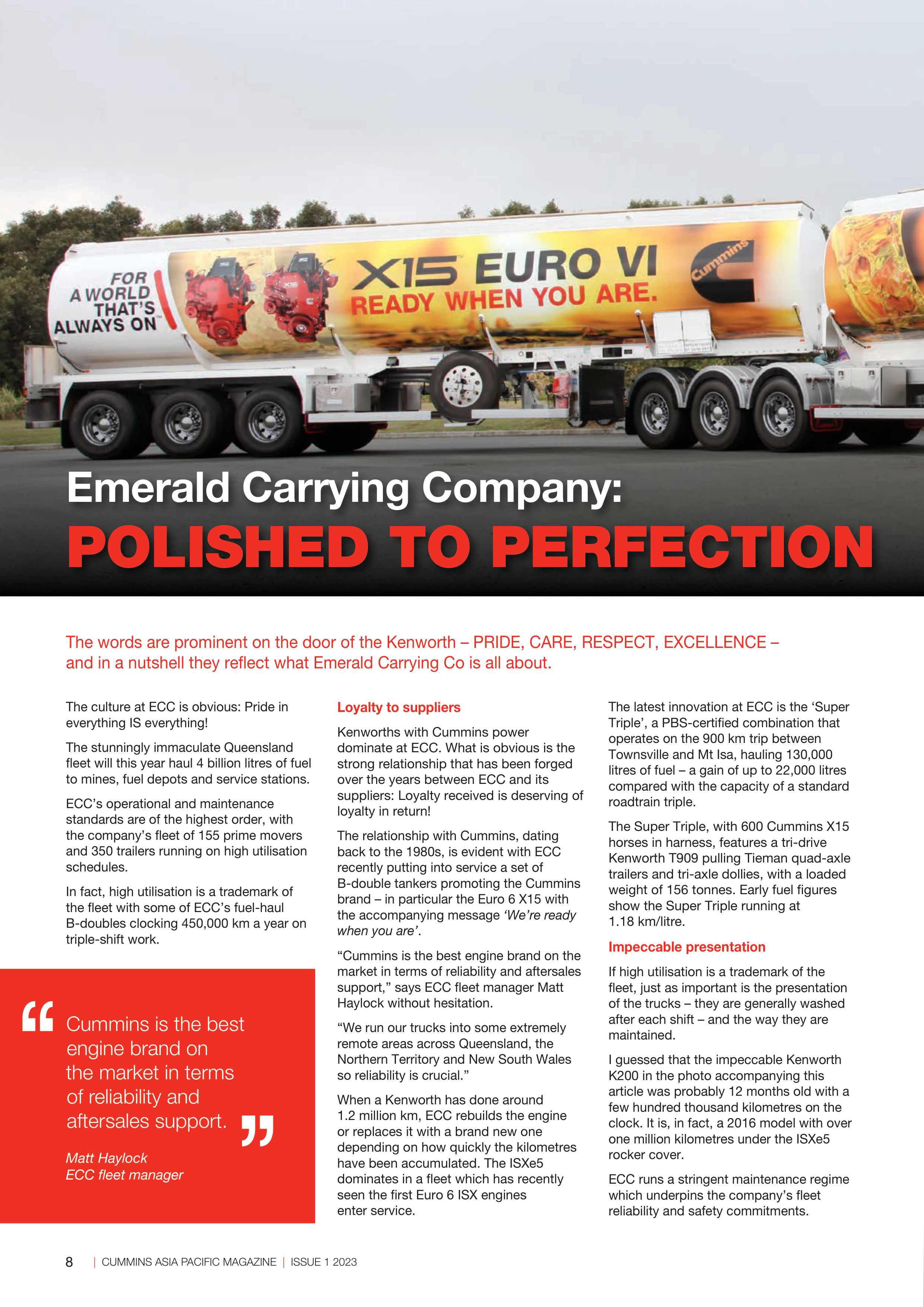
The words are prominent on the door of the Kenworth – PRIDE, CARE, RESPECT, EXCELLENCE –
and in a nutshell they reflect what Emerald Carrying Co is all about.
Matt Haylock
ECC fleet manager
8
|
CUMMINS ASIA PACIFIC MAGAZINE
|
ISSUE 1 2023
“We have very few breakdowns – perhaps
one a month, if that,” confirms ECC
maintenance manager Chris Chalmers.
“We’re proud of that considering the size
of the fleet.”
Today, ECC operates out of Darwin,
Cairns, Emerald, Townsville, Mackay,
Rockhampton, Gladstone and Brisbane,
while its Monaro fleet – ECC acquired
Monaro Fuel Haulage in 2016 – has depots
in Sydney, Melbourne and Adelaide.
At the time of the acquisition, the Monaro
fleet totalled six trucks; today 50 trucks
operate in the Monaro blue livery.
“Our B-double prime movers are brought
in for checks every 12,500 km which is
generally a week to 10 days while our
engine oil change intervals are 50,000 km
for the B-doubles and 25,000 km for the
roadtrains,” Chalmers points out. “We look
at fuel burn every service to check engine
load factors and that our servicing intervals
are where they should be.
“Accurate forecasting is the key to our
maintenance system, and each week
we get an automated report detailing
which trucks are due in for servicing. We
have five workshops and 30 mechanics
including nine apprentices,” he adds.
Family-owned ECC has certainly come a
long way since Bill Haylock’s modest start
in the mid-1960s in the central Queensland
town of Emerald, where he had a 4-ton
Austin carting off the rail. Team effort,
employee loyalty and business integrity
are obviously guiding principles behind
an operation that today uses premium
equipment to provide a premium service.
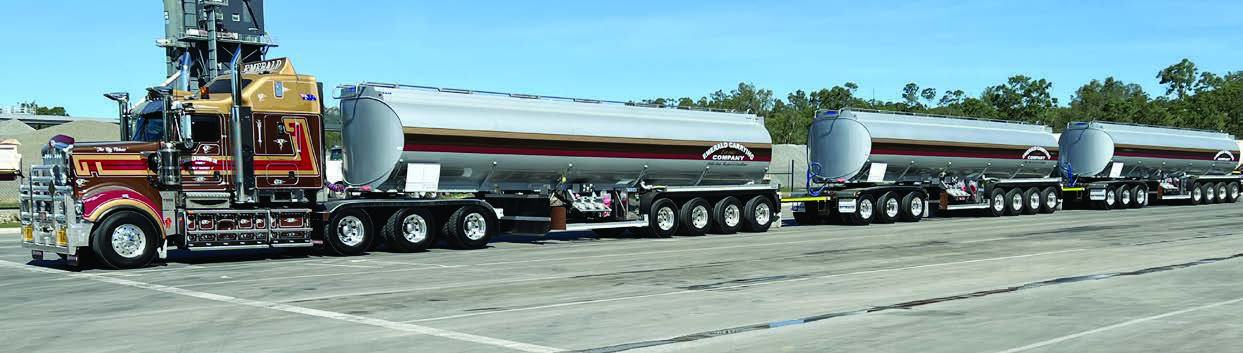
Cummins’ Euro 6 X15 promoted on
an Emerald Carrying B-double.
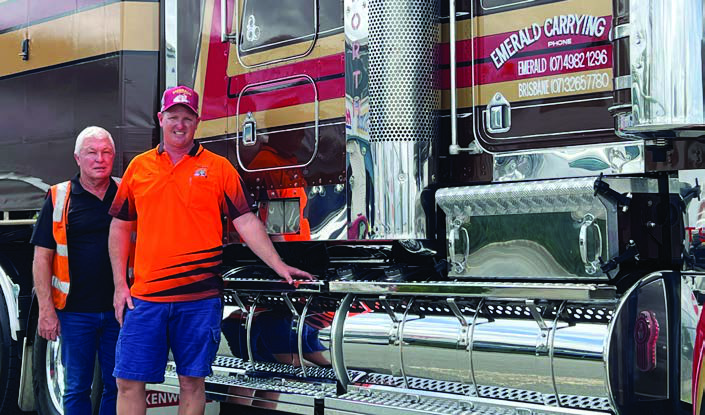
Emerald Carrying MD Greg Haylock (left)
with son and fleet manager Matt Haylock.
‘Super Triple’ – a PBS-certified unit – hauls 130,000 litres of fuel,
a gain of up to 22,000 litres compared with a standard roadtrain triple.
9
A flurry of acquisitions – including big name Western Australian power station players Kalgoorlie Power
Systems and Contract Power – has stamped Pacific Energy as an immense force in the delivery of hybrid
power stations to remote mines and communities across the country.
Pacific Energy has a 40-year history,
starting out in the 1990s with two
hydroelectric power stations and one
peaking power station in Victoria. It wasn’t
until 2009, however, that serious growth
began in Western Australia when Ken
Hall’s Kalgoorlie Power Systems (KPS)
was acquired.
Then followed the acquisition of Leon
Hodges’ Contract Power in 2018,
along with several smaller businesses
specialising in switchboards, renewable
energy systems, control systems and
hydrogen that enabled Pacific Energy to
boast complete in-house capabilities.
Cummins generator sets were nothing
new to KPS and Contract Power, both
outfits using multiple numbers of the
Cummins brand in their off-grid power
stations. Their demand for top-shelf
aftersales support and Cummins’
ability to come to the party, is obviously
recognised at Pacific Energy.
Grant Farquhar joined Pacific Energy last
year as managing director of its Perth-
based remote power business after
25 years in the construction materials
industry, the last eight as general
manager, which included accountability
for Hansen’s national quarry assets. His
immediate task was to apply his corporate
expertise to the integration of Pacific
Energy’s various new businesses.
“We’ve had an interesting merger of
people and cultures,” says Farquhar,
pointing out that Pacific Energy now has
more than 600 employees compared with
160 three years ago. “KPS and Contract
Power were owned by Pacific Energy but
were actually competing against each
other under the one roof in Perth until
early last year when we integrated the
two businesses.
Strong pipeline
“Our core business today is hybrid
energy solutions—building power stations
that incorporate renewable energy,”
he confirms. “In fact, all our future
installations will be hybrid, or microgrids as
they are also known.
“We have a very strong pipeline of both
greenfield and brownfield hybrid projects,”
he reveals, adding that the brownfield
projects involve integrating renewable
power into existing diesel or gas
generation facilities.
Not surprisingly, Pacific Energy
continues the highly successful
business model laid down by Contract
Power and KPS of design, build,
own and operate, and today has 47
operational power station sites, most
of them in Western Australia, supplying
off-grid power.
Among the newest is the Esperance hybrid
renewable power station comprising
wind, solar, gas and diesel generation, as
well as a battery energy storage system,
commissioned for State Government
owned Horizon Power.
Esperance is 700 km south-east of Perth
and has a population of around 10,000.
Its port is a vital trade hub, connecting
industries in regional Western Australia
with the rest of the world. Exports
include iron ore, lithium, nickel, grain
and woodchip.
A first for Esperance
It is the first regional town in Australia
powered by a system that integrates gas,
wind and solar power, and battery storage.
The microgrid, which became operational
early in 2022, provides Esperance’s
community, industries and port with up to
50% renewable energy in its initial stage
of development, without compromising
power quality or reliability.
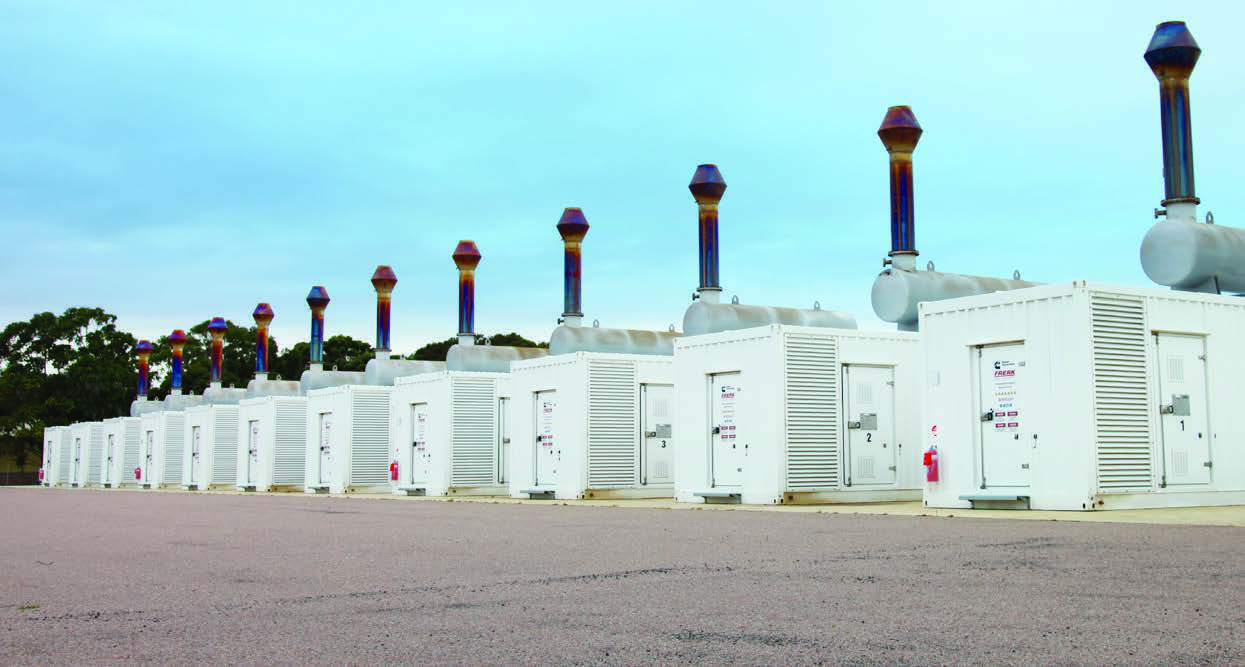
At the heart of the new power station
are 11 high-efficiency Cummins
HSK78G gas generator sets delivering
22 MW – the industry’s latest technology
gas generators that were released
in 2019.
Total installed capacity is 41.5 MW: The
power system integrates a 4 MW solar
farm and two 4.5 MW wind turbines in
the renewables hub, a 24.5 MW thermal
power station comprising the 11 Cummins
gas gensets and three Cummins diesel
gensets, and a 4 MW battery energy
storage system. Gas for the power station
is trucked in from Perth.
Carbon emissions are cut by up to 50%
compared with the previous power
Continued overleaf...
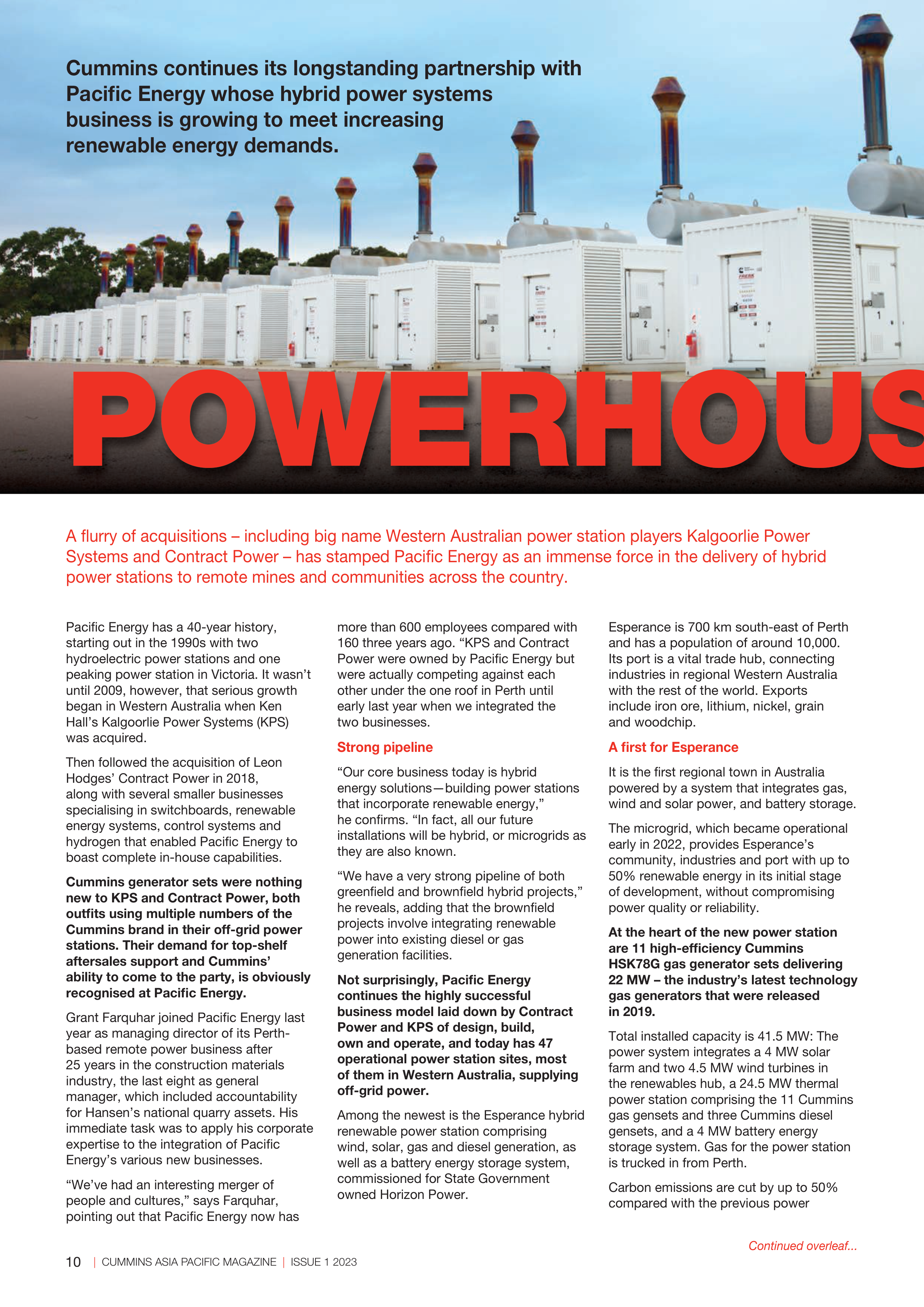
Cummins continues its longstanding partnership with
Pacific Energy whose hybrid power systems
business is growing to meet increasing
renewable energy demands.
POWERHOUS
10
|
CUMMINS ASIA PACIFIC MAGAZINE
|
ISSUE 1 2023



If you line up all the
OEMs, Cummins has
got it right in terms of
customer focus.
Giving
it the
gas
Cummins released the HSK78G in 2019, a
completely new design from the skid up
with a power density of up to 2 MW from
the compact 78-litre, V12 gas engine.
This engine is not a derivative of Cummins’
high horsepower, 78-litre QSK78 diesel unit;
it is designed specifically for gas.
The HSK78G has the industry’s longest
major overhaul service cycle of 80,000 hours
and is offered with ratings (50 Hz) of 2 MWe,
1.8 MWe, and 1.6 MWe.
Cummins Perth sales engineer Bhavani
Sambhara points out that high electrical
efficiency of up to 43.8% (50 Hz) is achieved
on a wide range of pipeline natural gas
down to 70 MN (Methane Number) without
impacting power output and efficiency.
New technology and electronic engine
management systems allow the generator
to automatically manage gas fuel quality
fluctuations to ensure zero loss in
performance.
Peak efficiency is maintained by automatic
engine adjustments, which account for
fuel quality changes and quick load-step
performance, without the need to calibrate
or switch off the engine.
“The generator has high ambient capability,
able to run efficiently at 55 deg.C without
derating at an altitude of 150 metres,”
says Sambhara.
ERHOUSE
honing in on hybrid
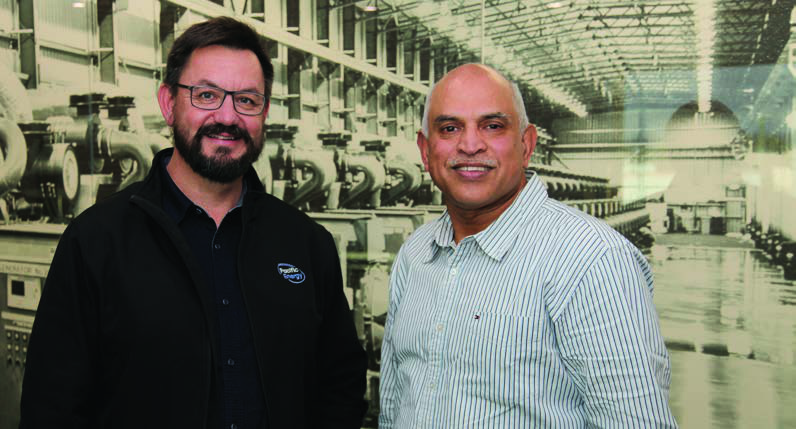
Pacific Energy’s managing director of remote power
business Grant Farquhar (left) with Cummins Perth
sales engineer Bhavani Sambhara.
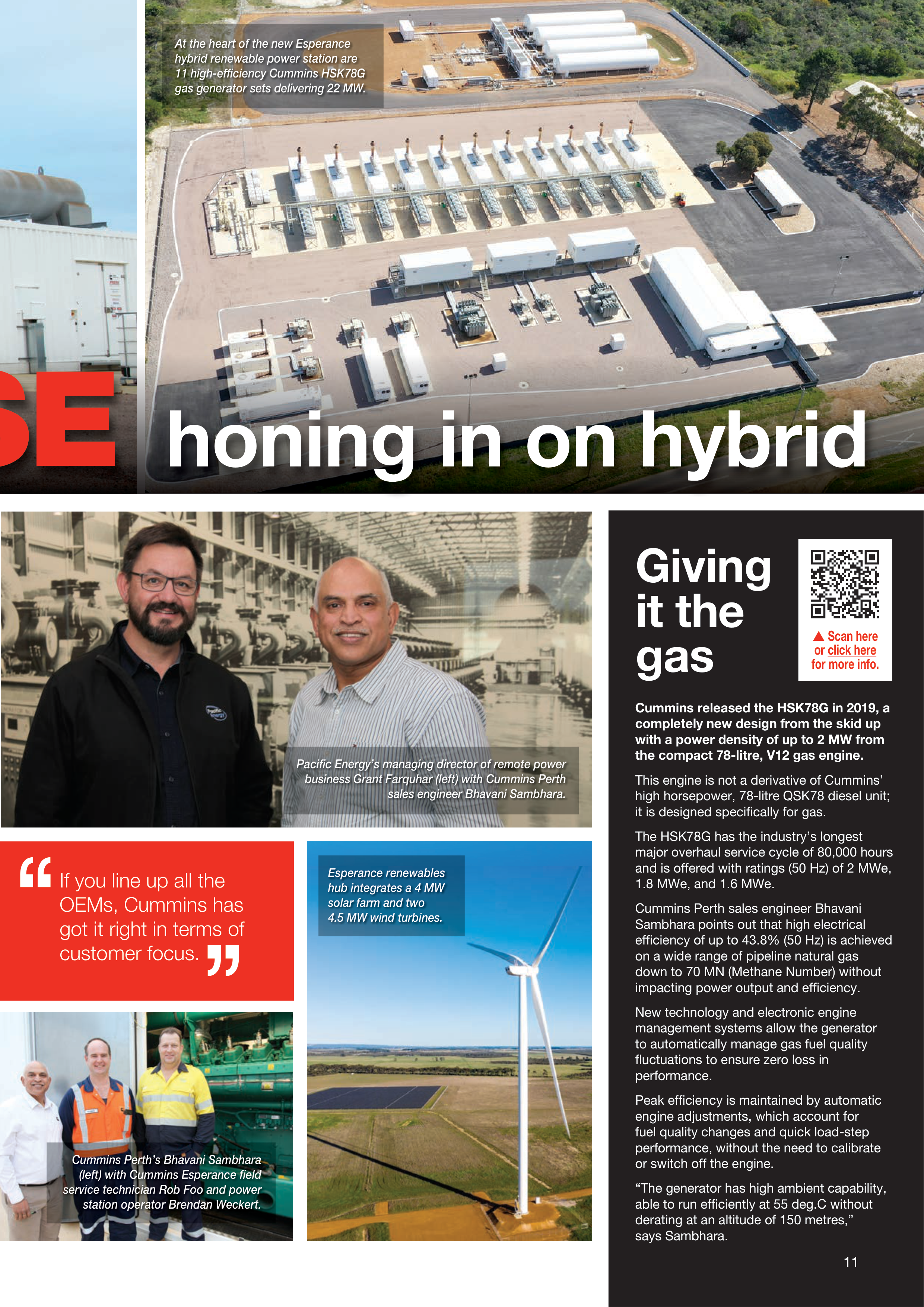
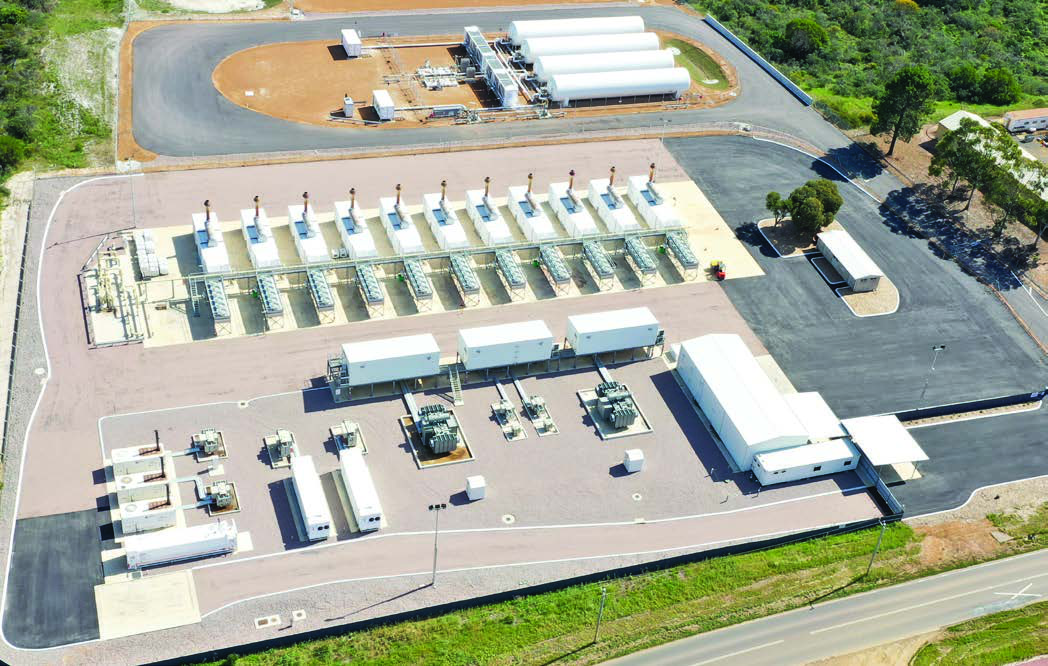
At the heart of the new Esperance
hybrid renewable power station are
11 high-efficiency Cummins HSK78G
gas generator sets delivering 22 MW.
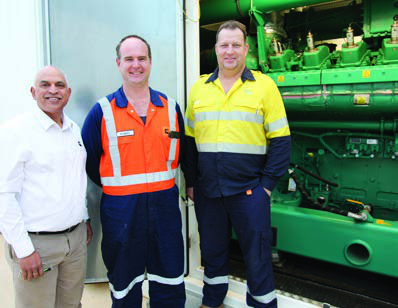
Cummins Perth’s Bhavani Sambhara
(left) with Cummins Esperance field
service technician Rob Foo and power
station operator Brendan Weckert.
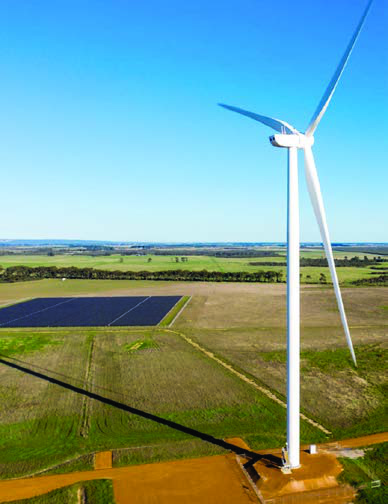
Esperance renewables
hub integrates a 4 MW
solar farm and two
4.5 MW wind turbines.
▲
Scan here
or click here
for more info.
11
generation system which incorporated gas
turbines and wind turbines.
Grant Farquhar still sees the important role
gas generators play in large-scale power
systems. “Thermal capacity is critical in
supplementing the renewable component,”
he says. “In Esperance, power demand
is quite volatile, necessitating the thermal
capacity for reliable and economical
baseload power supply.
“Batteries aren’t at the level yet where
they could be considered a substitute for a
power station’s thermal capacity.”
The three 850 kW Cummins diesel gensets
at Esperance are ‘black start’ units as
well as support for the gas gensets during
periods of high demand.
Cummins’ proactive support
“Cummins is proactive with its aftersales
technical support,” says Marc Grosser,
general manager of design and
engineering for Pacific Energy’s remote
power business. “It’s what we expect from
Cummins. If you line up all the OEMs,
Cummins has got it right in terms of
customer focus.”
He points out the HSK78G generator set
is “meeting expectations” and that Pacific
Energy has worked closely with Cummins
to further improve and optimise the genset
to meet site requirements.
“Fuel efficiency along with load step and
load rejection capabilities are strong points
of the HSK78G,” he says.
Another new power station added recently
to Pacific Energy’s asset portfolio and
using HSK78G generators is at Capricorn
Metals’ Karlawinda gold project in the
Pilbara region.
Pacific Energy was awarded the build, own
and operate contract to supply power to
the project, which covers an area 110 km
wide and 30 km long. The first gold was
poured in mid-2021 and annual production
rate is between 110,000 and 125,000
ounces of gold.
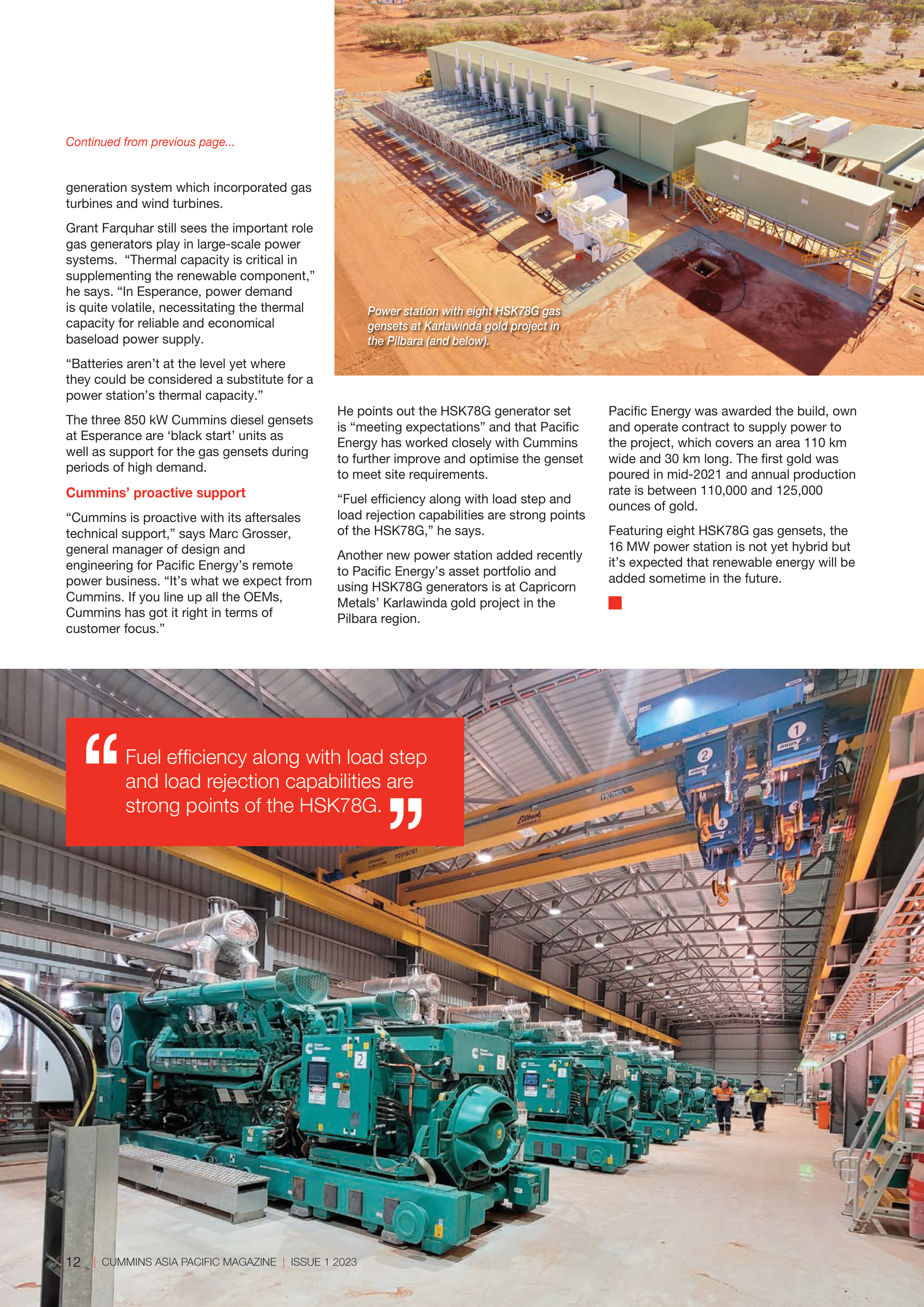
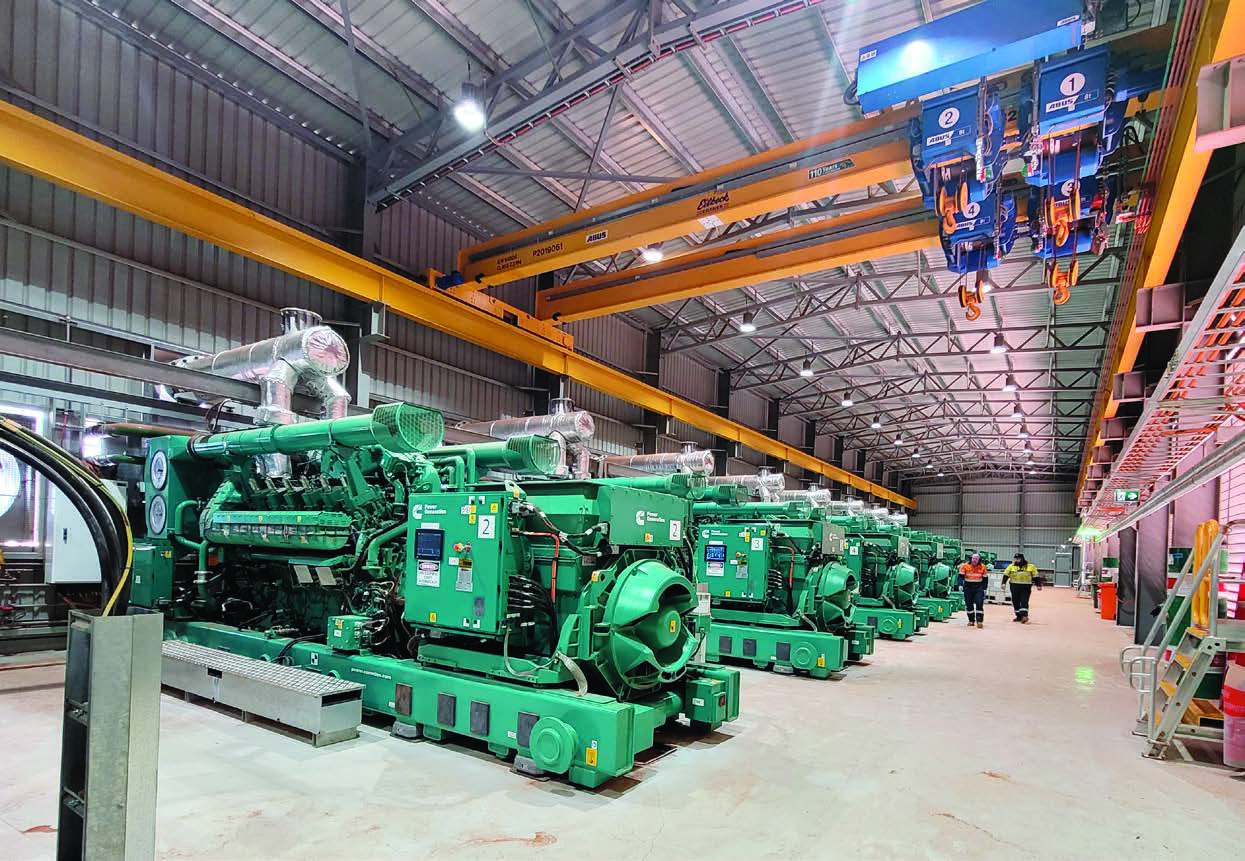
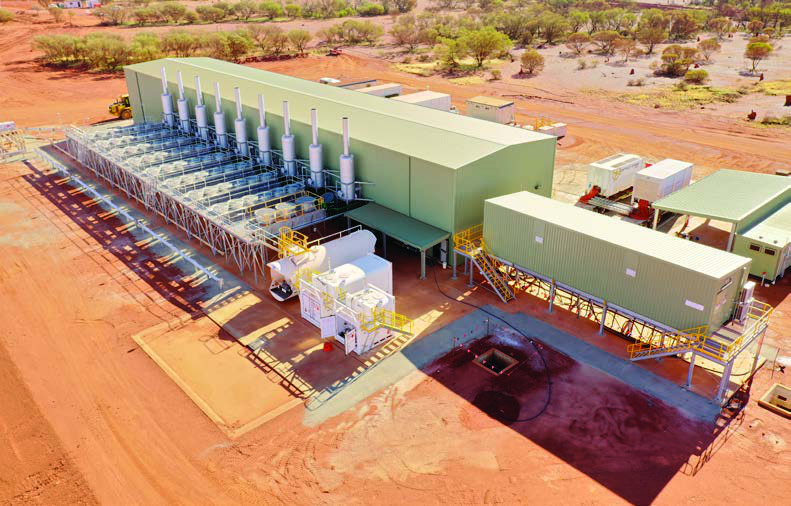
Featuring eight HSK78G gas gensets, the
16 MW power station is not yet hybrid but
it’s expected that renewable energy will be
added sometime in the future.
Continued from previous page...
Fuel efficiency along with load step
and load rejection capabilities are
strong points of the HSK78G.
Power station with eight HSK78G gas
gensets at Karlawinda gold project in
the Pilbara (and below).
12
|
CUMMINS ASIA PACIFIC MAGAZINE
|
ISSUE 1 2023




It’s an important one nonetheless due to its
contribution to greenhouse gas emissions
and atmospheric pollutants while powering
the mighty machines involved in the
extraction of natural resources as the global
demand for minerals and energy rises.
The willingness of mining companies around
the world to reduce their environmental
footprint is seeing massive changes in
the pipeline as decarbonisation gathers
momentum.
In Australia, the efforts of major iron ore
and coal miners in reducing their carbon
footprint are well documented.
Cummins’ stance is clear, as outlined by
CEO Jennifer Rumsey: “We recognise that
Cummins and our industry contribute to the
need to address climate change…with 12
million engines in the field today, we
(at Cummins) have an opportunity to make
a significant impact by being part of
the solution.”
With its Destination Zero strategy,
Cummins is committed to net-zero carbon
by 2050. The strategy calls for improving
the company’s core products today to
reduce carbon while bringing to market the
zero-carbon technologies that will power
tomorrow.
“We can make a big difference by improving
the efficiency of diesel engines in the next
decade. We shouldn’t just focus on zero
only, we need a combination of advancing
zero and improving engine-based products
that we have today,” Rumsey said.
The majority of high horsepower Cummins
engines sold into mining in Australia today
have Tier 4 architecture, meaning industry-
leading reductions in greenhouse gas and
diesel particulate emissions.
While exhaust emissions from off-highway
equipment are still unregulated in Australia,
Cummins has developed a double-edged
solution for its latest generation high
horsepower engines like the QSK50
and QSK60.
Both are available with Selective Catalytic
Reduction (SCR) exhaust aftertreatment
technology for Tier 4 compliance. Even
without SCR, the engines retain Cummins’
advanced Tier 4 architecture which means
a host of product improvements, mainly to
improve combustion efficiency and thus
reduce greenhouse gas emissions.
Renewable diesel
Cummins has also approved the use of
unblended renewable diesel, including
hydrotreated vegetable oil (HVO), for
its entire line of high horsepower diesel
engines, across all ratings. The approval
applies to the QSK19, K19, QSK23, QST30,
QSK38, K38, QSK45, QSK50, K50, QSK60,
QSK78 and QSK95 across all industrial
segments, such as mining, oil & gas, rail
and marine.
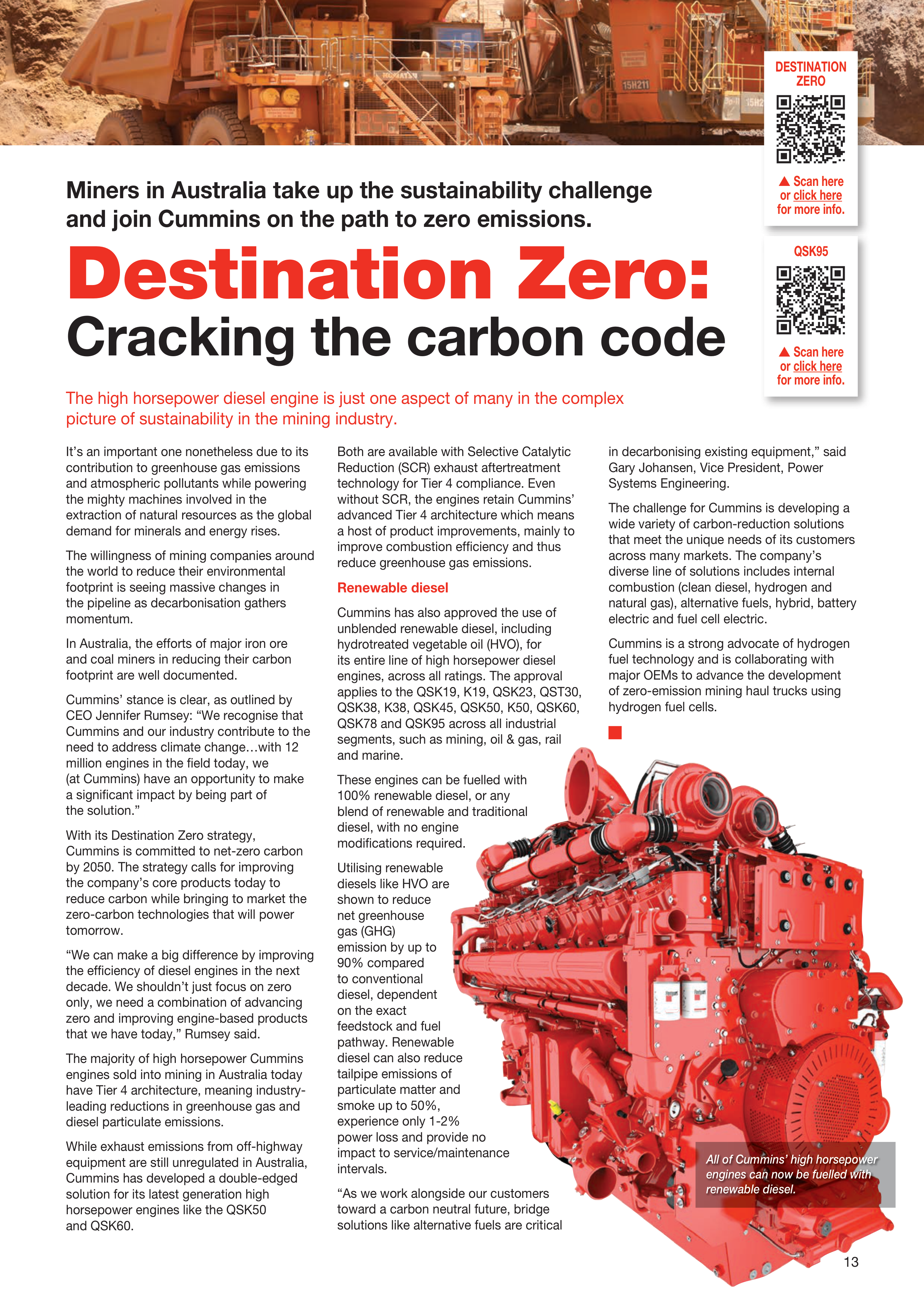
These engines can be fuelled with
100% renewable diesel, or any
blend of renewable and traditional
diesel, with no engine
modifications required.
Utilising renewable
diesels like HVO are
shown to reduce
net greenhouse
gas (GHG)
emission by up to
90% compared
to conventional
diesel, dependent
on the exact
feedstock and fuel
pathway. Renewable
diesel can also reduce
tailpipe emissions of
particulate matter and
smoke up to 50%,
experience only 1-2%
power loss and provide no
impact to service/maintenance
intervals.
“As we work alongside our customers
toward a carbon neutral future, bridge
solutions like alternative fuels are critical
in decarbonising existing equipment,” said
Gary Johansen, Vice President, Power
Systems Engineering.
The challenge for Cummins is developing a
wide variety of carbon-reduction solutions
that meet the unique needs of its customers
across many markets. The company’s
diverse line of solutions includes internal
combustion (clean diesel, hydrogen and
natural gas), alternative fuels, hybrid, battery
electric and fuel cell electric.
Cummins is a strong advocate of hydrogen
fuel technology and is collaborating with
major OEMs to advance the development
of zero-emission mining haul trucks using
hydrogen fuel cells.
All of Cummins’ high horsepower
engines can now be fuelled with
renewable diesel.
Destination Zero:
Cracking the carbon code
The high horsepower diesel engine is just one aspect of many in the complex
picture of sustainability in the mining industry.
Miners in Australia take up the sustainability challenge
and join Cummins on the path to zero emissions.
▲
Scan here
or click here
for more info.
destination
zero
▲
Scan here
or click here
for more info.
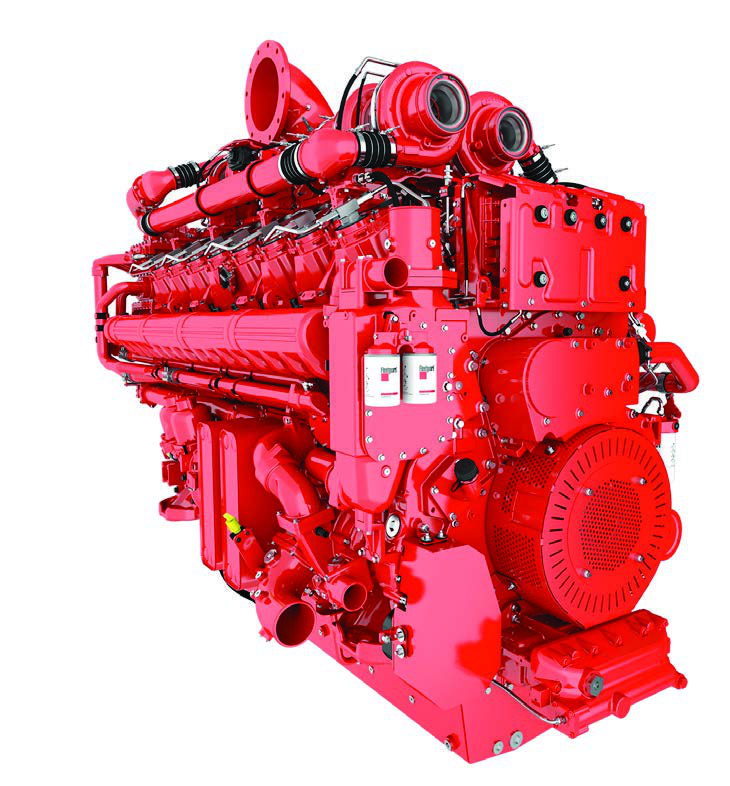
QSK95
13
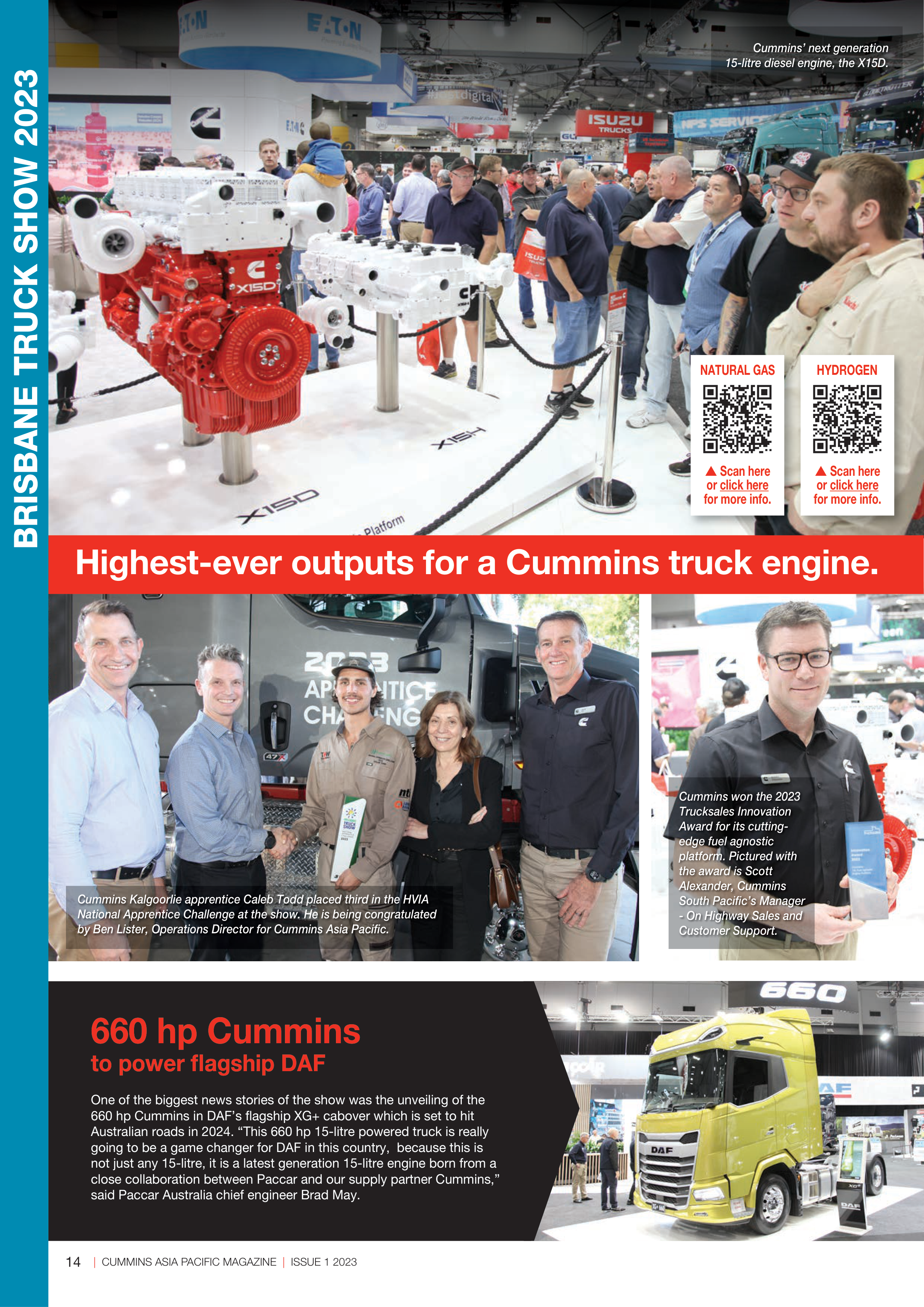
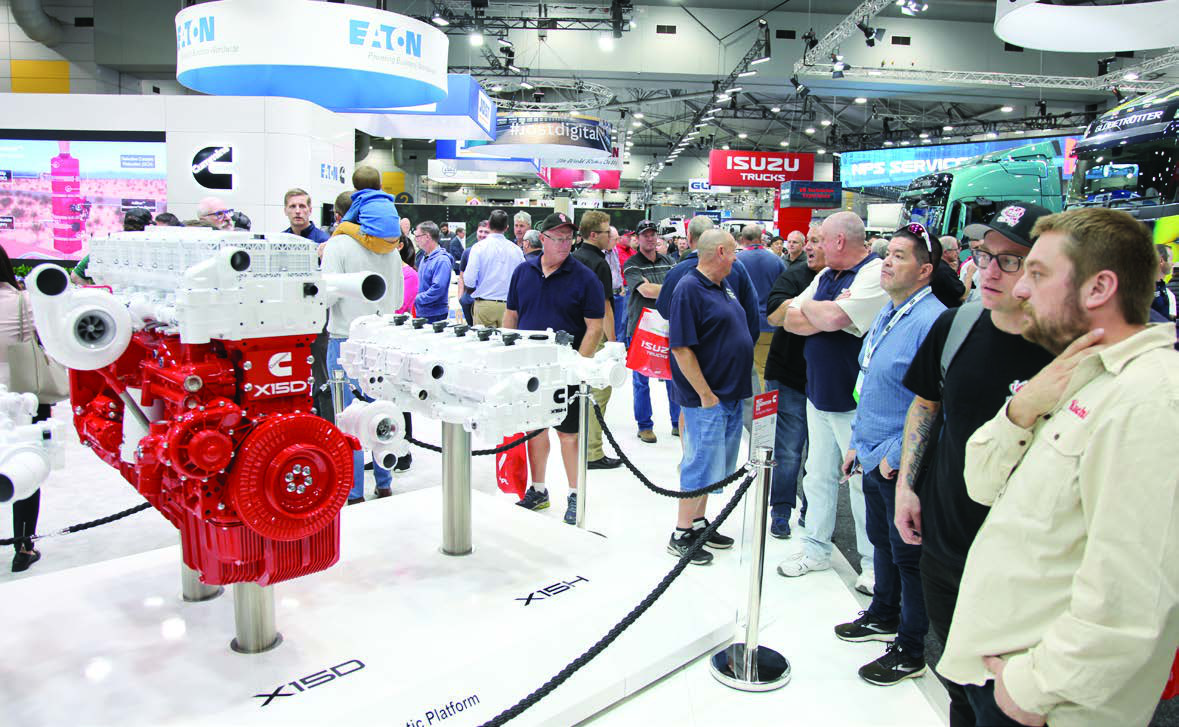
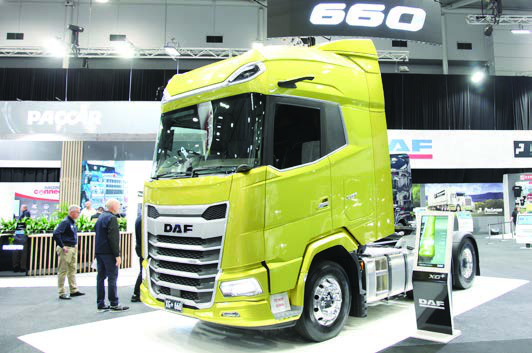


Highest-ever outputs for a Cummins truck engine.
660 hp Cummins
to power flagship DAF
One of the biggest news stories of the show was the unveiling of the
660 hp Cummins in DAF’s flagship XG+ cabover which is set to hit
Australian roads in 2024. “This 660 hp 15-litre powered truck is really
going to be a game changer for DAF in this country, because this is
not just any 15-litre, it is a latest generation 15-litre engine born from a
close collaboration between Paccar and our supply partner Cummins,”
said Paccar Australia chief engineer Brad May.
Cummins’ next generation
15-litre diesel engine, the X15D.
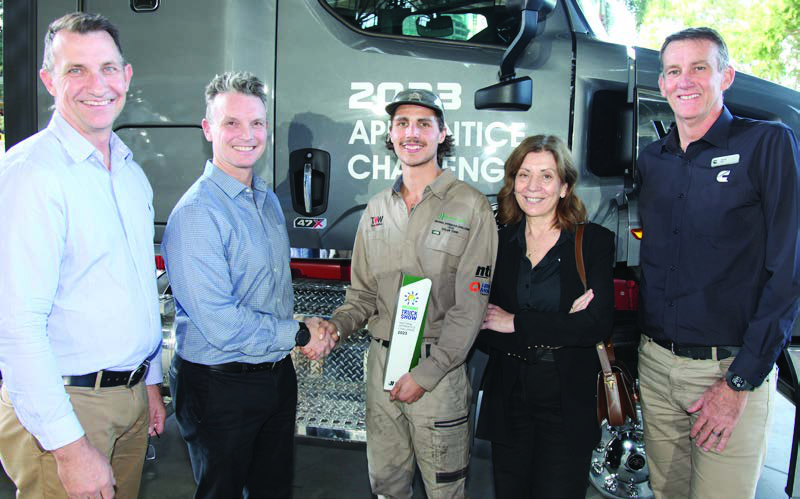
Cummins Kalgoorlie apprentice Caleb Todd placed third in the HVIA
National Apprentice Challenge at the show. He is being congratulated
by Ben Lister, Operations Director for Cummins Asia Pacific.
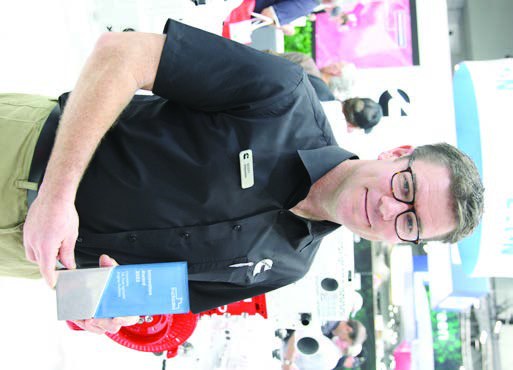
Cummins won the 2023
Trucksales Innovation
Award for its cutting-
edge fuel agnostic
platform. Pictured with
the award is Scott
Alexander, Cummins
South Pacific’s Manager
- On Highway Sales and
Customer Support.
Brisbane Truck Show 2023
▲
Scan here
or click here
for more info.
hydrogen
▲
Scan here
or click here
for more info.
natural gas
14
|
CUMMINS ASIA PACIFIC MAGAZINE
|
ISSUE 1 2023
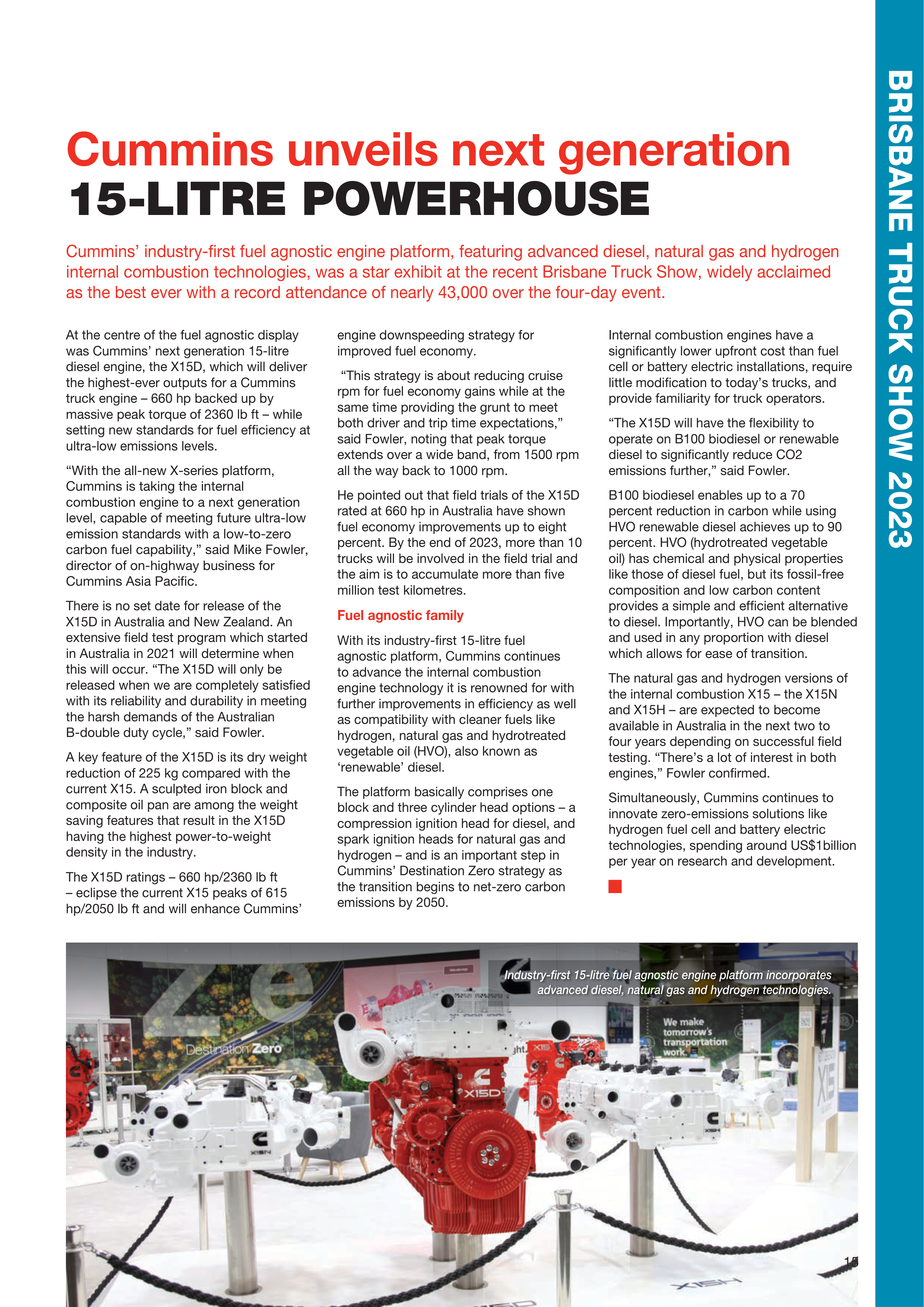

Cummins unveils next generation
15-litre powerhouse
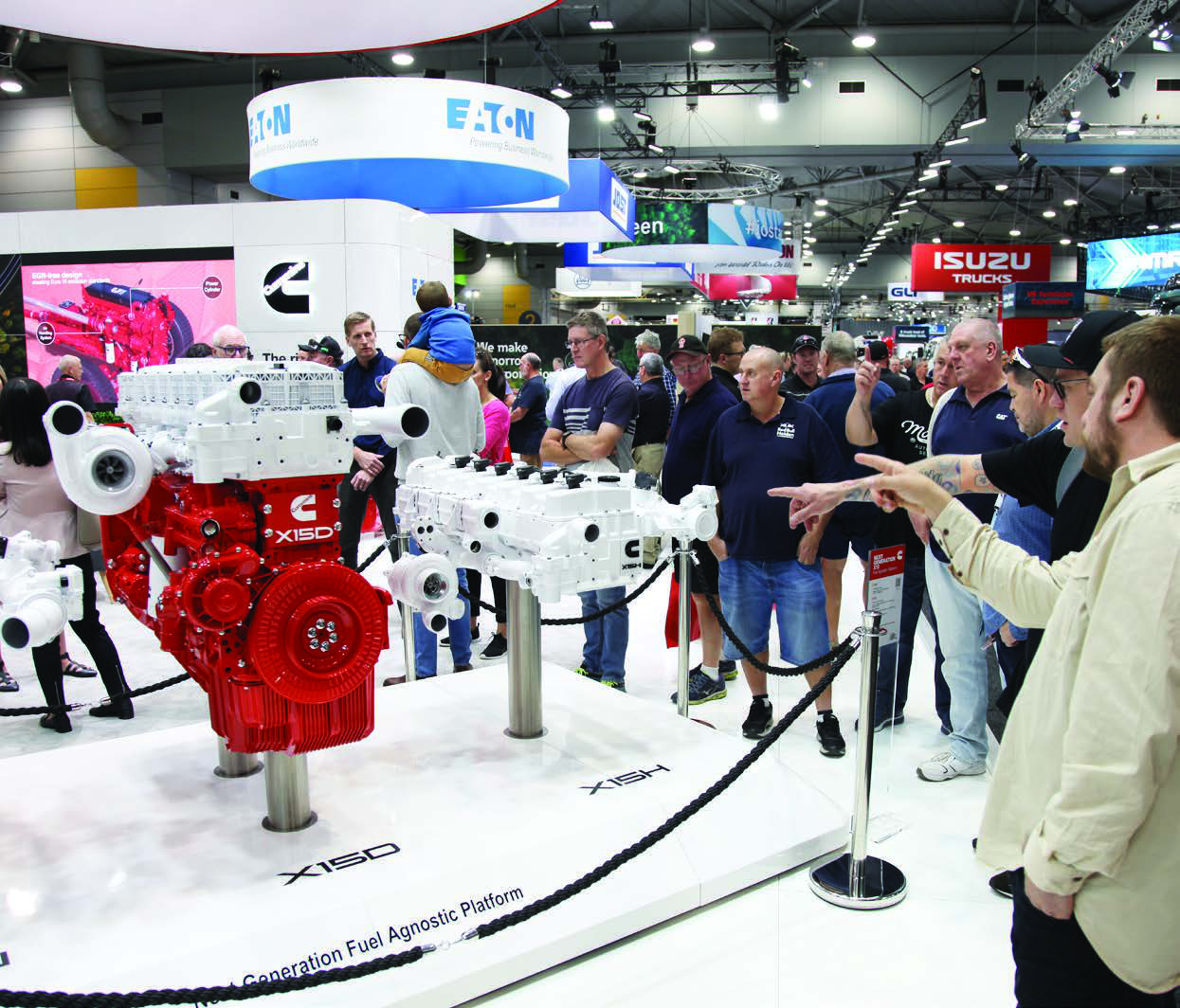
Cummins’ industry-first fuel agnostic engine platform, featuring advanced diesel, natural gas and hydrogen
internal combustion technologies, was a star exhibit at the recent Brisbane Truck Show, widely acclaimed
as the best ever with a record attendance of nearly 43,000 over the four-day event.
At the centre of the fuel agnostic display
was Cummins’ next generation 15-litre
diesel engine, the X15D, which will deliver
the highest-ever outputs for a Cummins
truck engine – 660 hp backed up by
massive peak torque of 2360 lb ft – while
setting new standards for fuel efficiency at
ultra-low emissions levels.
“With the all-new X-series platform,
Cummins is taking the internal
combustion engine to a next generation
level, capable of meeting future ultra-low
emission standards with a low-to-zero
carbon fuel capability,” said Mike Fowler,
director of on-highway business for
Cummins Asia Pacific.
There is no set date for release of the
X15D in Australia and New Zealand. An
extensive field test program which started
in Australia in 2021 will determine when
this will occur. “The X15D will only be
released when we are completely satisfied
with its reliability and durability in meeting
the harsh demands of the Australian
B-double duty cycle,” said Fowler.
A key feature of the X15D is its dry weight
reduction of 225 kg compared with the
current X15. A sculpted iron block and
composite oil pan are among the weight
saving features that result in the X15D
having the highest power-to-weight
density in the industry.
The X15D ratings – 660 hp/2360 lb ft
– eclipse the current X15 peaks of 615
hp/2050 lb ft and will enhance Cummins’
engine downspeeding strategy for
improved fuel economy.
“This strategy is about reducing cruise
rpm for fuel economy gains while at the
same time providing the grunt to meet
both driver and trip time expectations,”
said Fowler, noting that peak torque
extends over a wide band, from 1500 rpm
all the way back to 1000 rpm.
He pointed out that field trials of the X15D
rated at 660 hp in Australia have shown
fuel economy improvements up to eight
percent. By the end of 2023, more than 10
trucks will be involved in the field trial and
the aim is to accumulate more than five
million test kilometres.
Fuel agnostic family
With its industry-first 15-litre fuel
agnostic platform, Cummins continues
to advance the internal combustion
engine technology it is renowned for with
further improvements in efficiency as well
as compatibility with cleaner fuels like
hydrogen, natural gas and hydrotreated
vegetable oil (HVO), also known as
‘renewable’ diesel.
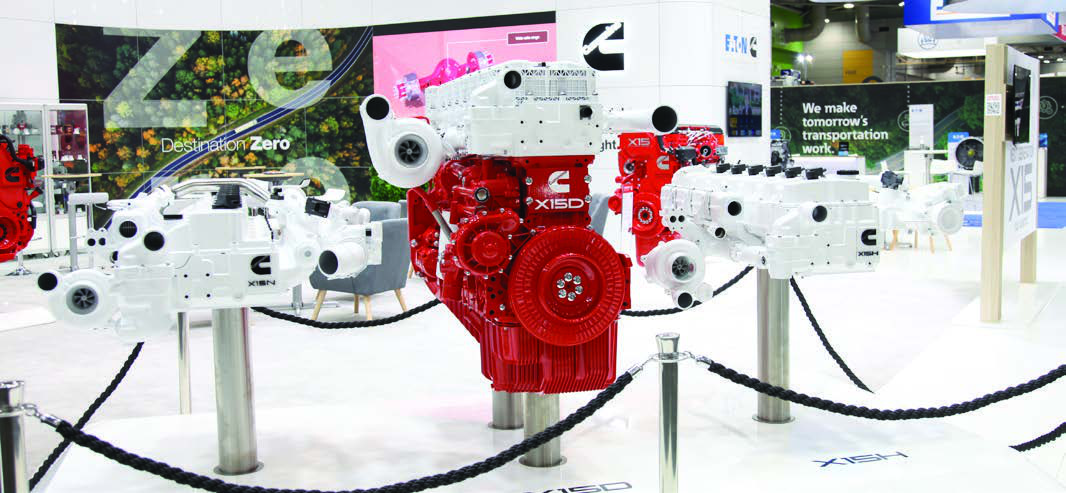
The platform basically comprises one
block and three cylinder head options – a
compression ignition head for diesel, and
spark ignition heads for natural gas and
hydrogen – and is an important step in
Cummins’ Destination Zero strategy as
the transition begins to net-zero carbon
emissions by 2050.
Internal combustion engines have a
significantly lower upfront cost than fuel
cell or battery electric installations, require
little modification to today’s trucks, and
provide familiarity for truck operators.
“The X15D will have the flexibility to
operate on B100 biodiesel or renewable
diesel to significantly reduce CO2
emissions further,” said Fowler.
B100 biodiesel enables up to a 70
percent reduction in carbon while using
HVO renewable diesel achieves up to 90
percent. HVO (hydrotreated vegetable
oil) has chemical and physical properties
like those of diesel fuel, but its fossil-free
composition and low carbon content
provides a simple and efficient alternative
to diesel. Importantly, HVO can be blended
and used in any proportion with diesel
which allows for ease of transition.
The natural gas and hydrogen versions of
the internal combustion X15 – the X15N
and X15H – are expected to become
available in Australia in the next two to
four years depending on successful field
testing. “There’s a lot of interest in both
engines,” Fowler confirmed.
Simultaneously, Cummins continues to
innovate zero-emissions solutions like
hydrogen fuel cell and battery electric
technologies, spending around US$1billion
per year on research and development.
Industry-first 15-litre fuel agnostic engine platform incorporates
advanced diesel, natural gas and hydrogen technologies.
Brisbane Truck Show 2023
15

Brisbane Truck Show 2023
HEROES
The combined forces of Cummins
and Meritor were evident at
the Brisbane Truck Show as
they accelerate towards next
generation powertrain technology.
The US$3.7 billion acquisition of Meritor by
Cummins last year has drastically altered
the commercial vehicle landscape for
decarbonised solutions.
By accelerating Meritor’s investment
in electrification and integrating its
ePowertrain products with Cummins’ New
Power business under the new Accelera
brand, Cummins is on course to meet its
ambitious Destination Zero goal – reaching
net-zero emissions by 2050.
For several years leading up to the
purchase in 2022, Cummins had watched
closely the nature of Meritor’s product
offerings and liked what it saw.
Meritor’s success with its ePowertrain
product, for instance, coupled with
Cummins’ capabilities in hydrogen fuel
cell, battery and electrolyser production,
had tremendous potential to drive
technology development and expand
the profile of Cummins as a leader in low
emission transportation technologies.
Furthermore, the existing portfolio of
conventional axle, brake and drivelines
from Meritor were viewed as highly
complementary, enabling Cummins to
offer complete powertrain solutions. And
so, Cummins-Meritor was born.
The hero product on display on the
Cummins-Meritor stand at the Brisbane
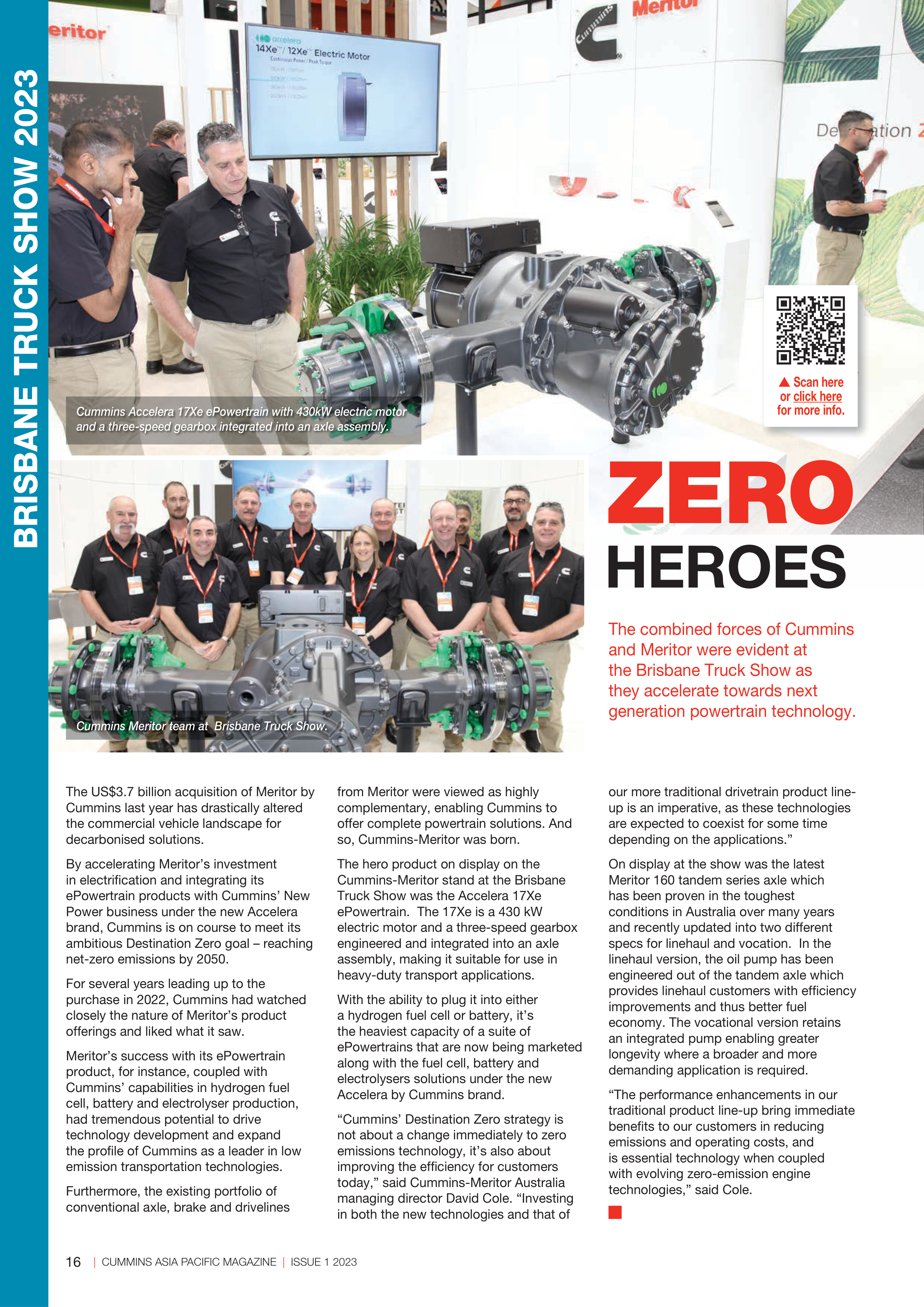
Truck Show was the Accelera 17Xe
ePowertrain. The 17Xe is a 430 kW
electric motor and a three-speed gearbox
engineered and integrated into an axle
assembly, making it suitable for use in
heavy-duty transport applications.
With the ability to plug it into either
a hydrogen fuel cell or battery, it’s
the heaviest capacity of a suite of
ePowertrains that are now being marketed
along with the fuel cell, battery and
electrolysers solutions under the new
Accelera by Cummins brand.
“Cummins’ Destination Zero strategy is
not about a change immediately to zero
emissions technology, it’s also about
improving the efficiency for customers
today,” said Cummins-Meritor Australia
managing director David Cole. “Investing
in both the new technologies and that of
our more traditional drivetrain product line-
up is an imperative, as these technologies
are expected to coexist for some time
depending on the applications.”
On display at the show was the latest
Meritor 160 tandem series axle which
has been proven in the toughest
conditions in Australia over many years
and recently updated into two different
specs for linehaul and vocation. In the
linehaul version, the oil pump has been
engineered out of the tandem axle which
provides linehaul customers with efficiency
improvements and thus better fuel
economy. The vocational version retains
an integrated pump enabling greater
longevity where a broader and more
demanding application is required.
“The performance enhancements in our
traditional product line-up bring immediate
benefits to our customers in reducing
emissions and operating costs, and
is essential technology when coupled
with evolving zero-emission engine
technologies,” said Cole.
ZERO
Cummins Accelera 17Xe ePowertrain with 430kW electric motor
and a three-speed gearbox integrated into an axle assembly.
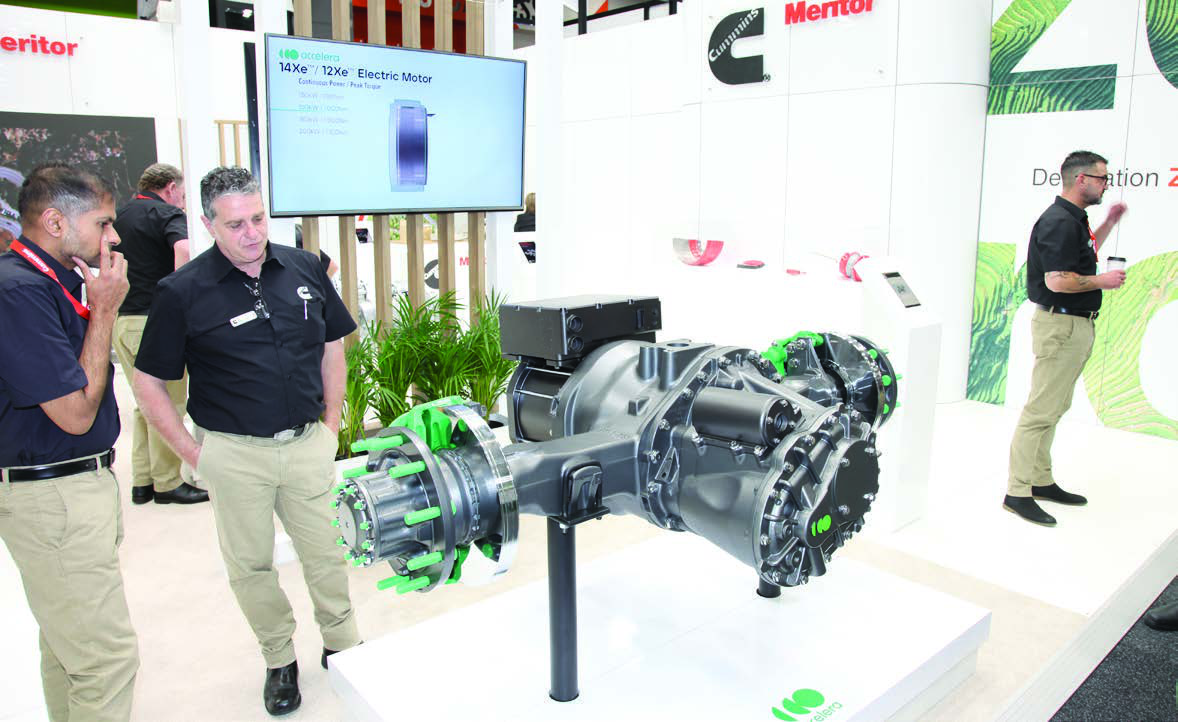
Cummins Meritor team at Brisbane Truck Show.
▲
Scan here
or click here
for more info.
16
|
CUMMINS ASIA PACIFIC MAGAZINE
|
ISSUE 1 2023

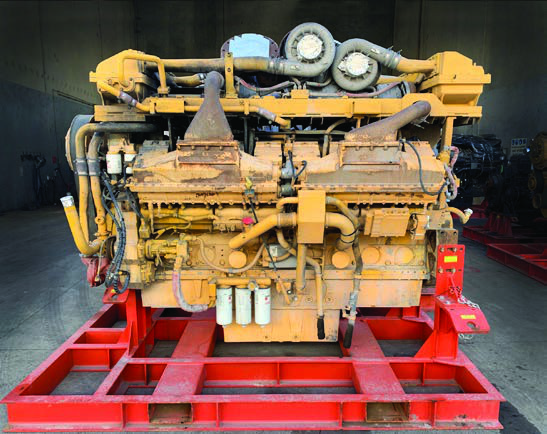

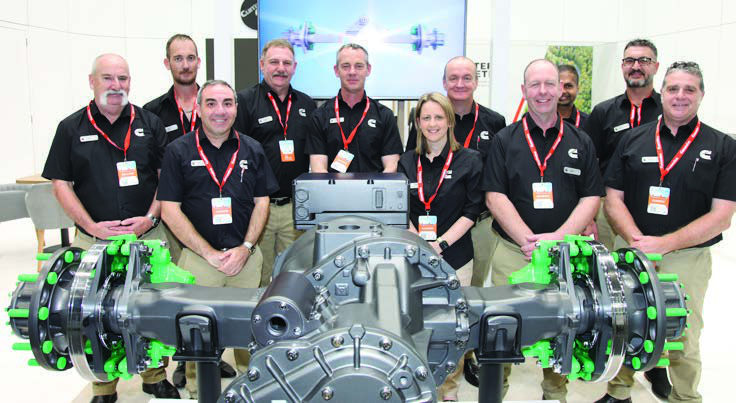
Early generation QSK60 HPI engine
at the Master Rebuild Centre for
conversion to MCRS technology.
Rebuild
masterstroke
pays off for miners
BEFORE
A masterstroke by Cummins engineers in Australia
and the US has resulted in major cost reduction and
environmental benefits for mining companies electing
to rebuild their QSK60 engines under a special
upgrade program.
The engineers focused on rebuild possibilities for the early generation
QSK60, and how it could be upgraded to the latest diesel technology
at overhaul time with no major change to the base 60-litre V16
design – a feat that eluded other engine manufacturers.
The key technology upgrade is to fuel injection, with the early unit
injection system (HPI) replaced with the high-pressure modular
common rail system (MCRS) that now features on all of Cummins’
latest generation high horsepower engines.
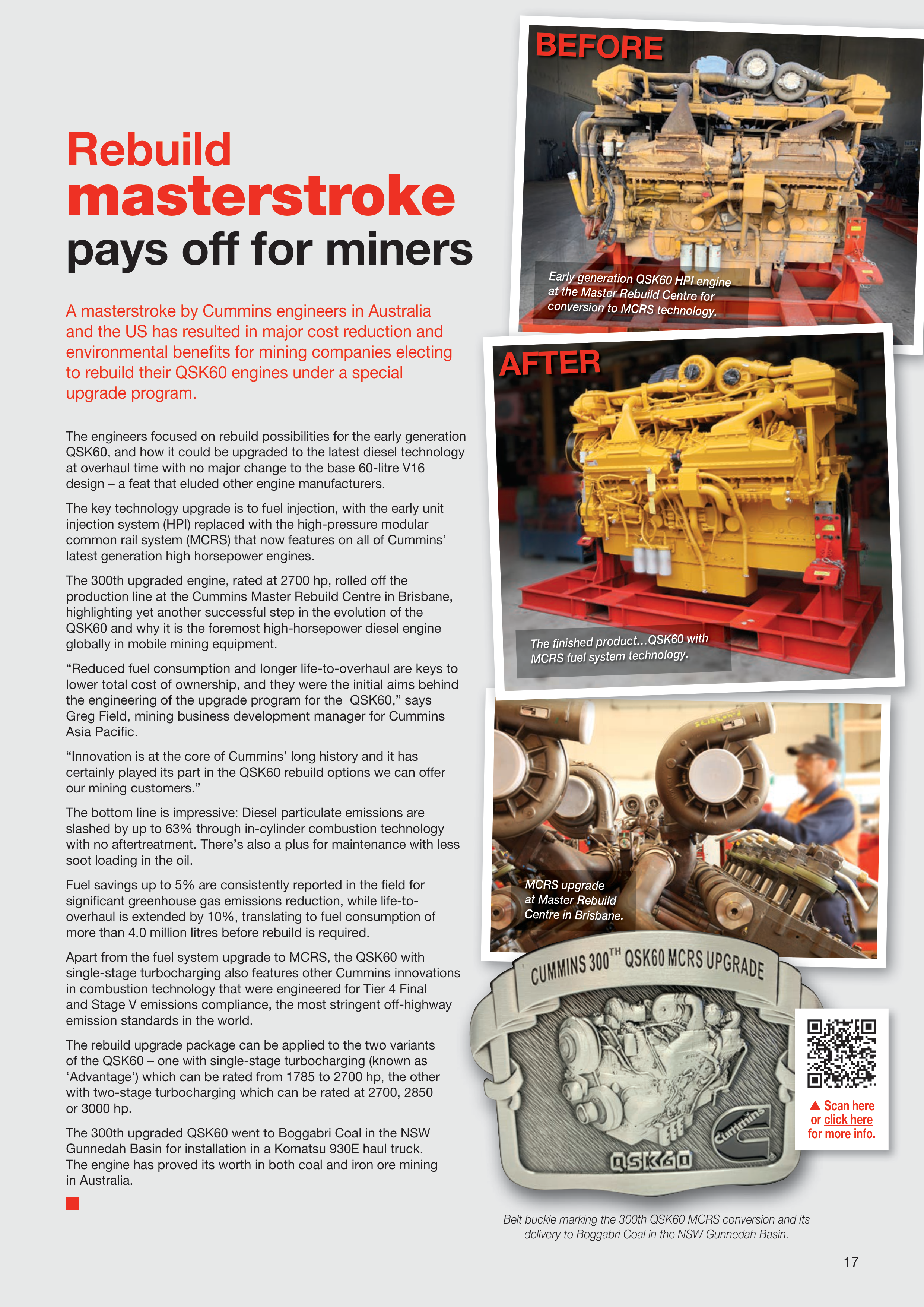
The 300th upgraded engine, rated at 2700 hp, rolled off the
production line at the Cummins Master Rebuild Centre in Brisbane,
highlighting yet another successful step in the evolution of the
QSK60 and why it is the foremost high-horsepower diesel engine
globally in mobile mining equipment.
“Reduced fuel consumption and longer life-to-overhaul are keys to
lower total cost of ownership, and they were the initial aims behind
the engineering of the upgrade program for the QSK60,” says
Greg Field, mining business development manager for Cummins
Asia Pacific.
“Innovation is at the core of Cummins’ long history and it has
certainly played its part in the QSK60 rebuild options we can offer
our mining customers.”
The bottom line is impressive: Diesel particulate emissions are
slashed by up to 63% through in-cylinder combustion technology
with no aftertreatment. There’s also a plus for maintenance with less
soot loading in the oil.
Fuel savings up to 5% are consistently reported in the field for
significant greenhouse gas emissions reduction, while life-to-
overhaul is extended by 10%, translating to fuel consumption of
more than 4.0 million litres before rebuild is required.
Apart from the fuel system upgrade to MCRS, the QSK60 with
single-stage turbocharging also features other Cummins innovations
in combustion technology that were engineered for Tier 4 Final
and Stage V emissions compliance, the most stringent off-highway
emission standards in the world.
The rebuild upgrade package can be applied to the two variants
of the QSK60 – one with single-stage turbocharging (known as
‘Advantage’) which can be rated from 1785 to 2700 hp, the other
with two-stage turbocharging which can be rated at 2700, 2850
or 3000 hp.
The 300th upgraded QSK60 went to Boggabri Coal in the NSW
Gunnedah Basin for installation in a Komatsu 930E haul truck.
The engine has proved its worth in both coal and iron ore mining
in Australia.
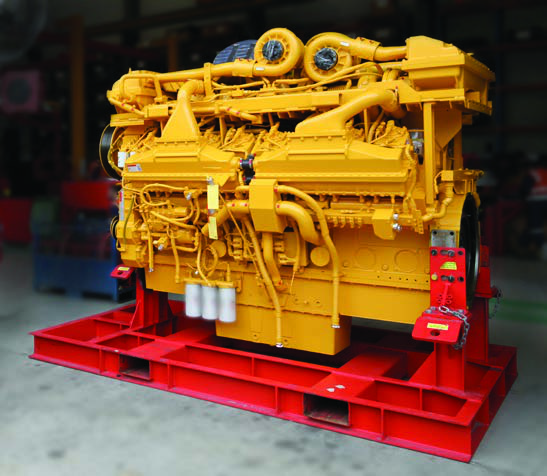
The finished product…QSK60 with
MCRS fuel system technology.
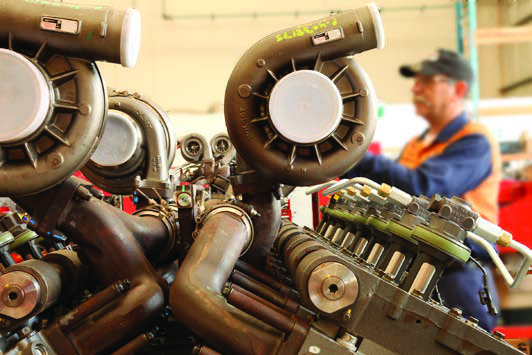
MCRS upgrade
at Master Rebuild
Centre in Brisbane.
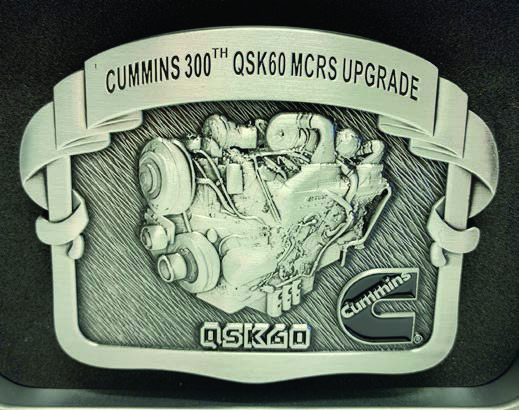
Belt buckle marking the 300th QSK60 MCRS conversion and its
delivery to Boggabri Coal in the NSW Gunnedah Basin.
AFTER
▲
Scan here
or click here
for more info.
17
for Birdon
When Jim Bruce was a kid all he dreamed about was being a truck driver. That dream turned to
reality in the 1960s and he went on to own his own truck, eventually giving him the encouragement
to broaden his business horizons.
The company he established in 1977 in
Port Macquarie, New South Wales, was
called Birdon, and what has ensued can
only be described as one of the most
remarkable achievements in Australian
business.
It’s the story of a small Australian family-
owned marine engineering company
shrugging off the minnow tag to become
a serious player in the US marine defence
market, successfully bidding against
globally recognised defence contractors.
Not so small now with more than 500
employees and growing all the time,
Birdon was founded when Jim Bruce, after
giving up his career in trucking, bought
a single dredge to extract sand from the
Hastings River at Port Macquarie.
Sadly, Jim hasn’t seen the extraordinary
achievements of Birdon under the
leadership of son Jamie as CEO and
daughter Tammy as CFO, having passed
away from cancer in 2008.
Prestigious contracts
In recent years, Birdon has secured
prestigious contracts with the US Army
and US Coast Guard worth more than
US$2 billion, while its Port Macquarie
facility is still world HQ for the company
and is busy in its own right.
The company slogan ‘Make It Happen’
says it all.
The Bruce family’s long relationship with
Cummins started in the 1960s through
Jim Bruce’s trucking aspirations when the
iconic NH250 was his engine of choice.
“Creating relationships is very important
in business,” Jim said in an interview in
2005. “You need faith in the people you are
dealing with, so you establish a relationship
and you move ahead. That has happened
in our relationship with Cummins.”
The Bruce family’s strong relationship with
Cummins continues today in no small way:
The 800th Cummins QSB6.7 engine rated
at 250 hp was delivered in January 2023 to
Birdon for the bridge erection boats (BEBs)
it is building for the US Army at its Denver
HQ in the US.
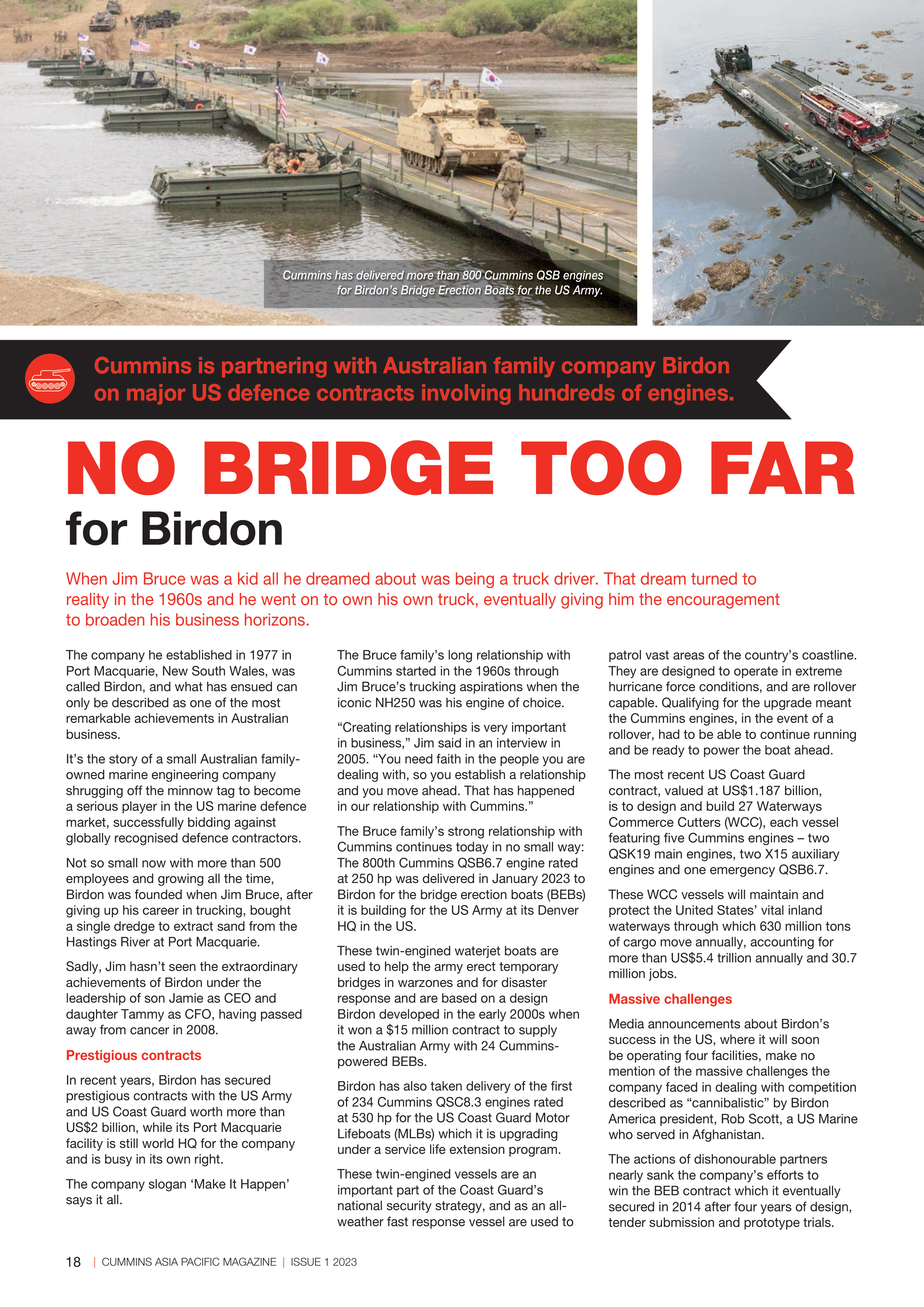
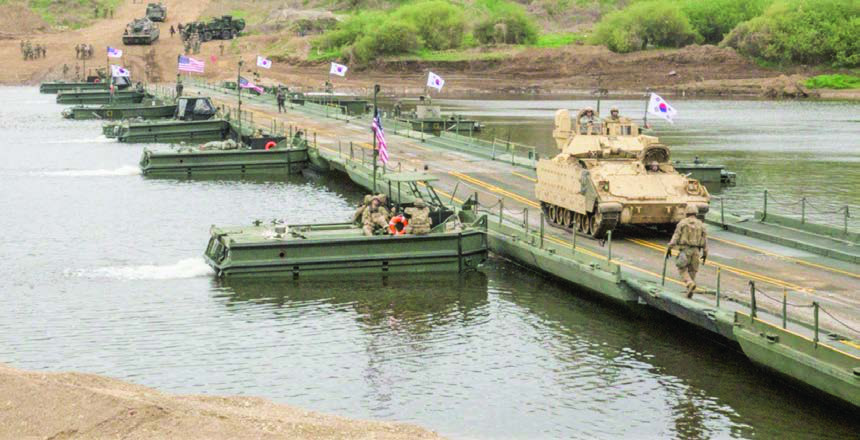
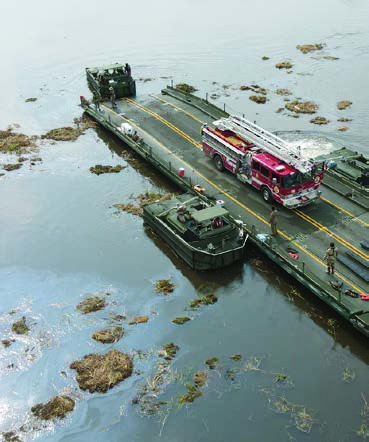
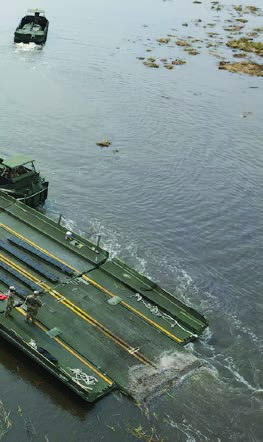
These twin-engined waterjet boats are
used to help the army erect temporary
bridges in warzones and for disaster
response and are based on a design
Birdon developed in the early 2000s when
it won a $15 million contract to supply
the Australian Army with 24 Cummins-
powered BEBs.
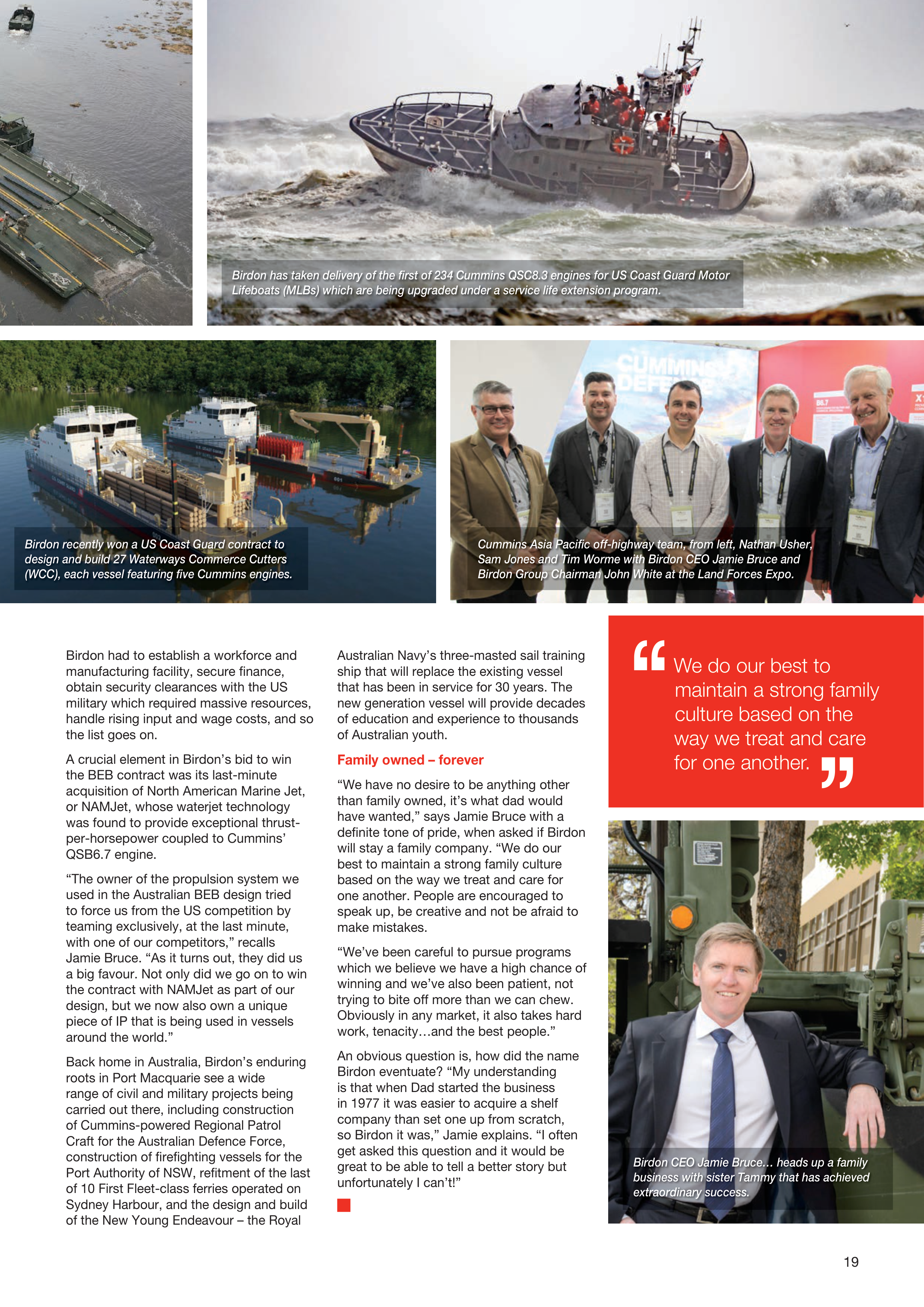
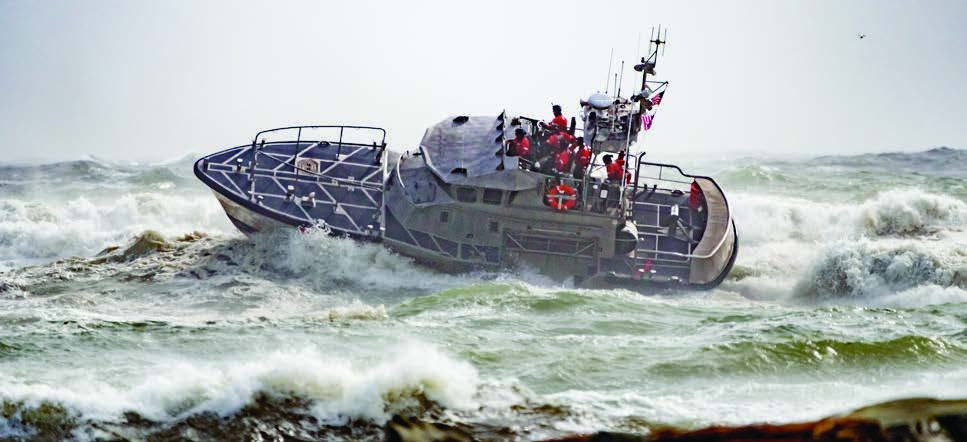
Birdon has also taken delivery of the first
of 234 Cummins QSC8.3 engines rated
at 530 hp for the US Coast Guard Motor
Lifeboats (MLBs) which it is upgrading
under a service life extension program.
These twin-engined vessels are an
important part of the Coast Guard’s
national security strategy, and as an all-
weather fast response vessel are used to
patrol vast areas of the country’s coastline.
They are designed to operate in extreme
hurricane force conditions, and are rollover
capable. Qualifying for the upgrade meant
the Cummins engines, in the event of a
rollover, had to be able to continue running
and be ready to power the boat ahead.
The most recent US Coast Guard
contract, valued at US$1.187 billion,
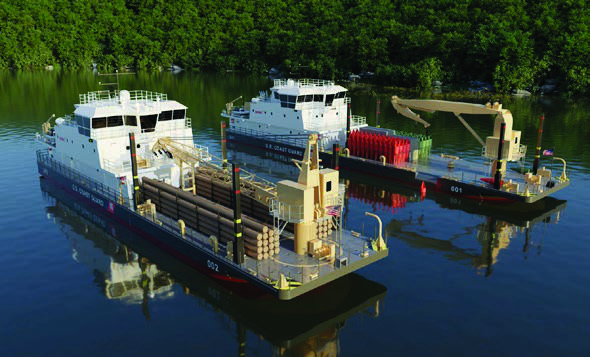
is to design and build 27 Waterways
Commerce Cutters (WCC), each vessel
featuring five Cummins engines – two
QSK19 main engines, two X15 auxiliary
engines and one emergency QSB6.7.
These WCC vessels will maintain and
protect the United States’ vital inland
waterways through which 630 million tons
of cargo move annually, accounting for
more than US$5.4 trillion annually and 30.7
million jobs.
Massive challenges
Media announcements about Birdon’s
success in the US, where it will soon
be operating four facilities, make no
mention of the massive challenges the
company faced in dealing with competition
described as “cannibalistic” by Birdon
America president, Rob Scott, a US Marine
who served in Afghanistan.
The actions of dishonourable partners
nearly sank the company’s efforts to
win the BEB contract which it eventually
secured in 2014 after four years of design,
tender submission and prototype trials.
Cummins is partnering with Australian family company Birdon
on major US defence contracts involving hundreds of engines.
Cummins has delivered more than 800 Cummins QSB engines
for Birdon’s Bridge Erection Boats for the US Army.
No bridge too far
18
|
CUMMINS ASIA PACIFIC MAGAZINE
|
ISSUE 1 2023
Birdon had to establish a workforce and
manufacturing facility, secure finance,
obtain security clearances with the US
military which required massive resources,
handle rising input and wage costs, and so
the list goes on.
A crucial element in Birdon’s bid to win
the BEB contract was its last-minute
acquisition of North American Marine Jet,
or NAMJet, whose waterjet technology
was found to provide exceptional thrust-
per-horsepower coupled to Cummins’
QSB6.7 engine.
“The owner of the propulsion system we
used in the Australian BEB design tried
to force us from the US competition by
teaming exclusively, at the last minute,
with one of our competitors,” recalls
Jamie Bruce. “As it turns out, they did us
a big favour. Not only did we go on to win
the contract with NAMJet as part of our
design, but we now also own a unique
piece of IP that is being used in vessels
around the world.”
Back home in Australia, Birdon’s enduring
roots in Port Macquarie see a wide
range of civil and military projects being
carried out there, including construction
of Cummins-powered Regional Patrol
Craft for the Australian Defence Force,
construction of firefighting vessels for the
Port Authority of NSW, refitment of the last
of 10 First Fleet-class ferries operated on
Sydney Harbour, and the design and build
of the New Young Endeavour – the Royal
Australian Navy’s three-masted sail training
ship that will replace the existing vessel
that has been in service for 30 years. The
new generation vessel will provide decades
of education and experience to thousands
of Australian youth.
Family owned – forever
“We have no desire to be anything other
than family owned, it’s what dad would
have wanted,” says Jamie Bruce with a
definite tone of pride, when asked if Birdon
will stay a family company. “We do our
best to maintain a strong family culture
based on the way we treat and care for
one another. People are encouraged to
speak up, be creative and not be afraid to
make mistakes.
“We’ve been careful to pursue programs
which we believe we have a high chance of
winning and we’ve also been patient, not
trying to bite off more than we can chew.
Obviously in any market, it also takes hard
work, tenacity…and the best people.”
An obvious question is, how did the name
Birdon eventuate? “My understanding
is that when Dad started the business
in 1977 it was easier to acquire a shelf
company than set one up from scratch,
so Birdon it was,” Jamie explains. “I often
get asked this question and it would be
great to be able to tell a better story but
unfortunately I can’t!”
We do our best to
maintain a strong family
culture based on the
way we treat and care
for one another.
Birdon has taken delivery of the first of 234 Cummins QSC8.3 engines for US Coast Guard Motor
Lifeboats (MLBs) which are being upgraded under a service life extension program.
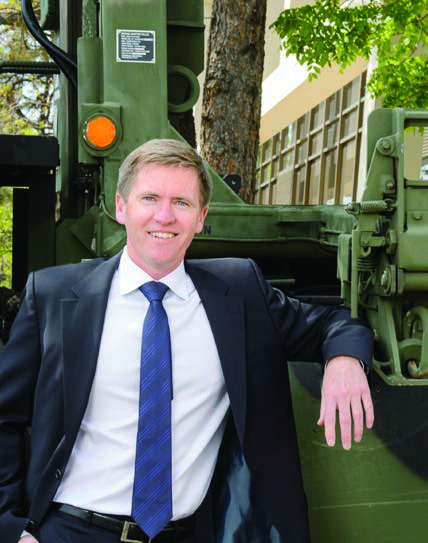
Birdon CEO Jamie Bruce… heads up a family
business with sister Tammy that has achieved
extraordinary success.
Birdon recently won a US Coast Guard contract to
design and build 27 Waterways Commerce Cutters
(WCC), each vessel featuring five Cummins engines.
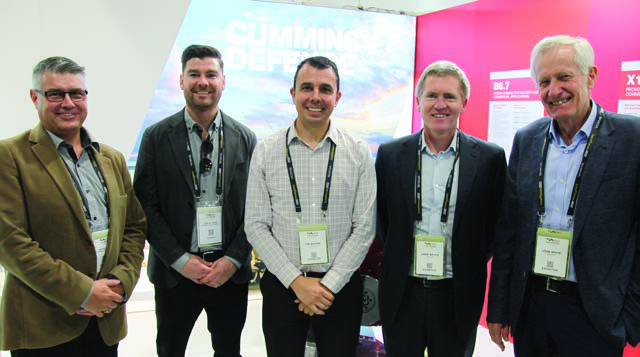
Cummins Asia Pacific off-highway team, from left, Nathan Usher,
Sam Jones and Tim Worme with Birdon CEO Jamie Bruce and
Birdon Group Chairman John White at the Land Forces Expo.
19

Epiroc and Cummins have worked
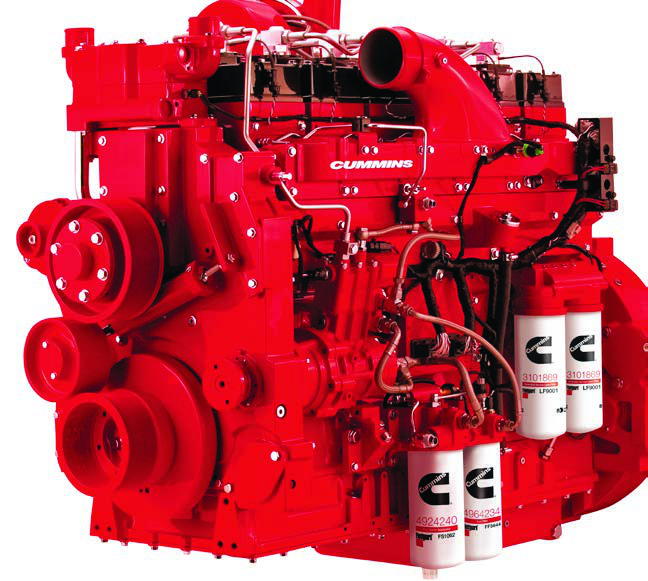
together closely to extend life-to-overhaul
of the 760 hp QSK19 in underground haul
trucks which have one of the toughest
jobs in mining.
High engine load factors are the norm,
with trucks operating at full power for
long periods on punishingly steep grades
at fully loaded weights in excess of
100 tonnes.
Byrnecut, one of Australia’s largest
underground mining contractors,
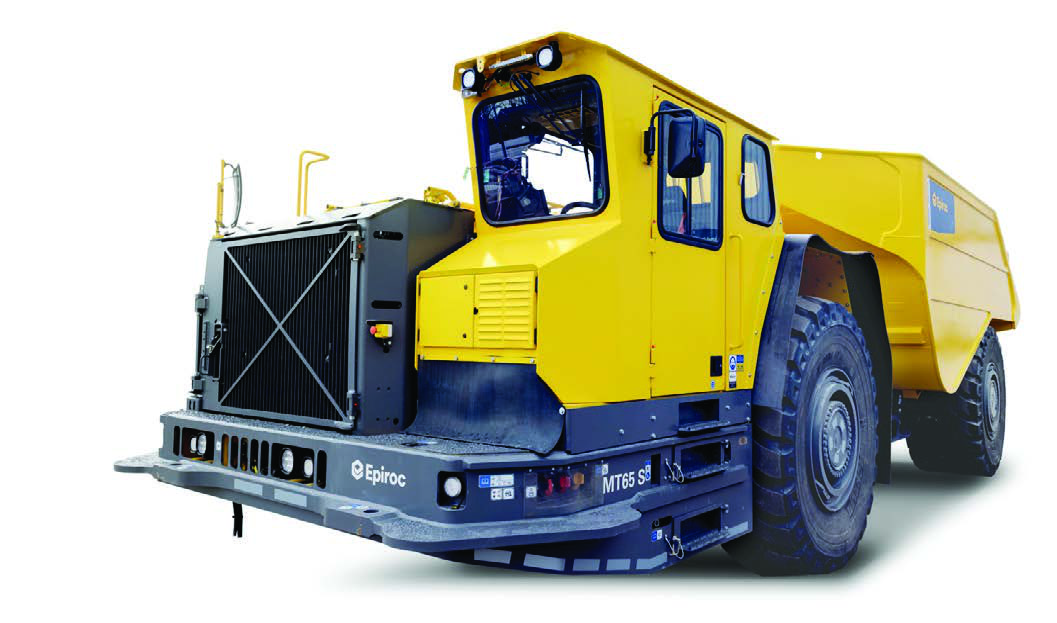
operates 27 Epiroc MT65 underground
trucks among its massive fleet of
equipment which includes hundreds of
trucks, loaders, and development and
production drills.
Acclaimed as the industry’s first 65-tonne
payload capacity truck, the MT65 was
introduced in 2016 with Cummins’ QSK19
MCRS engine and today Byrnecut’s 27
units are hauling gold-bearing ore at
the Golden Grove, Carosue Dam, Deep
South and Hamlet underground mines in
Western Australia.
Jamie Armstrong, Byrnecut’s
maintenance reliability coordinator, is
concise in describing his role: “I just look
at the data – the facts and figures – before
making recommendations,” he states.
Magic number
“When we look at engine life, 16,000
hours is the magic number, and the
evidence is that we
can now achieve that
with the QSK19,”
he says. “Reliability
has improved
considerably over
the last four years,
and today we are
very comfortable
with the product.”
He points out that longer engine life, as
well as improvements to the MT65 itself,
have been critical to reducing lifecycle
costs, with Byrnecut now able to extend
truck life from 24,000 to 30,000 hours.
Byrnecut’s knowledge of the product
has also “grown”, resulting in improved
skillsets at a servicing level.
Engineering support provided by
Cummins – specifically James Lim – is
rated highly by Jamie Armstrong.
One example was when fluctuating
oil pressure was causing premature
bearing wear, a problem detected by
PrevenTech, Cummins’ real-time digital
monitoring and reporting system. The
cause was found to be oil sump overfill,
and James Lim developed a calibration to
warn the operator if this has occurred.
“The QSK19 is the benchmark for
reliability and durability in underground
mining,” says Dave Abbott, Cummins
mining business manager for Western
Australia. “In fact, in some operations in
Australia, we’re seeing the engine reach
the 18,000-hour mark.”
Drivetrain updates
An upgraded MT65 – designated the
MT65 S – will be seen in Australia late this
year. Epiroc points out that the optimised
drivetrain of the MT65 S combines
high ramp speed with improved energy
efficiency.
Among the key updates are a diff ratio
change to ensure the engine is constantly
operating in the ‘sweet spot’ for improved
performance and fuel efficiency.
Additionally, upgraded software for the
transmission ensures gear shifting takes
place at the right time while also providing
improved retardation.
The is MT65 S is part of Epiroc’s ‘Smart’
series, which makes it prepared for 6th
Sense functionality such as automation
and remote control.
STRONGER
FOR LONGER
Underground mining contractor Byrnecut
is achieving the “magic” number for engine
life with the Cummins QSK19.
When we look at
engine life, 16,000
hours is the magic
number, and
the evidence is
that we can now
achieve that with
the QSK19.
▲
Scan here
or click here
for more info.
20
|
CUMMINS ASIA PACIFIC MAGAZINE
|
ISSUE 1 2023



Genuine parts
Joe Ribera is proud of the reputation of the diesel repair business
he established with wife Donna in Derrimut, Melbourne, in 2011.
Melbourne Diesel Repairs’ focus is on
quality, and there are no compromises.
“It takes a long time to build up a
reputation,” says Joe. “If you make a
mistake it spreads like wildfire the way
social media is today.
“We don’t advertise, we don’t have a sign
up outside our workshop. We’re proud of
our reputation for quality work.”
The Ribera business in Australis Drive,
Derrimut, with four mechanics and two
apprentices on the tools, specialises in
bumper-to-bumper truck maintenance and
diesel engine repairs.
He is one of the largest parts customers of
the Cummins Laverton branch.
Pay for quality
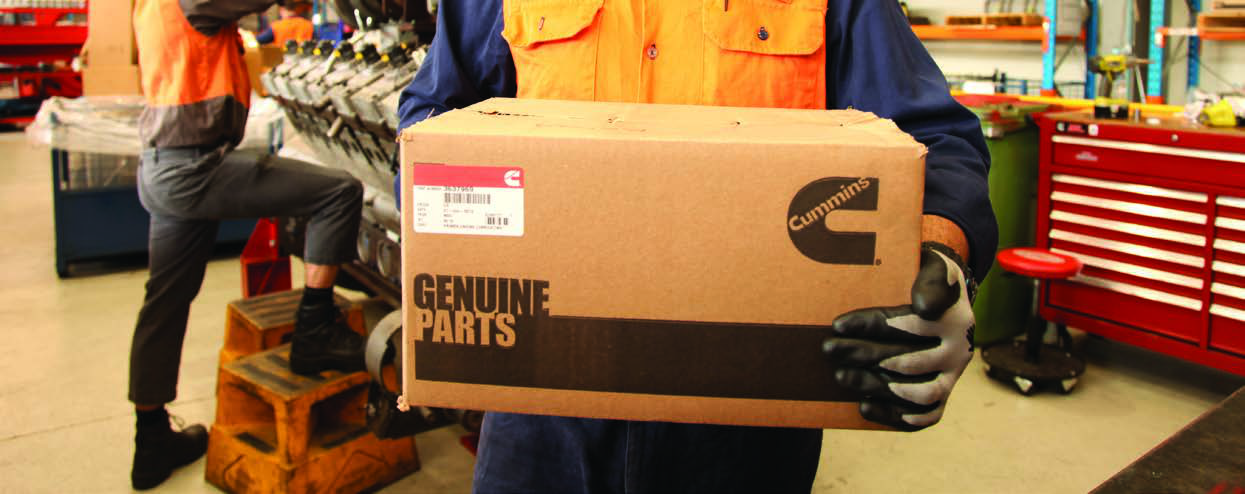
“Genuine Cummins parts are important
to the success of our business,” he says.
“The parts are more expensive than non-
genuine parts but if you want quality you
have to pay for it.”
He points out that the parts warranty and
service support coverage provided by
Cummins also “strongly favour” the use of
genuine parts.
He confides he once used non-genuine
parts when rebuilding a Cummins engine
and it failed due to this.
“The parts supplier didn’t want to know
about it, they didn’t want to support us,”
he says. “When something goes wrong
like that it’s hard work for all involved
– the owner of the truck or engine, the
mechanical repair business. There ends up
being a lot of unpaid labour.
“I learned from that mistake. When you
buy non-genuine parts you risk having
problems.
“When you look at the R&D Cummins puts
into the design and manufacture of its
parts, the non-genuine suppliers don’t do
that, so there’s an obvious risk in terms of
poor reliability.”
With genuine Cummins parts, customers
know where and how they have been
manufactured, so they can be confident
in the quality, durability and reliability of
the parts.
Only genuine components are built to meet
the original factory specifications while
using the latest materials, component
designs and manufacturing techniques.
Every genuine Cummins part is backed
by a comprehensive factory warranty and
supported by Cummins’ extensive support
network in the Asia Pacific region, ensuring
peace of mind and financial protection.
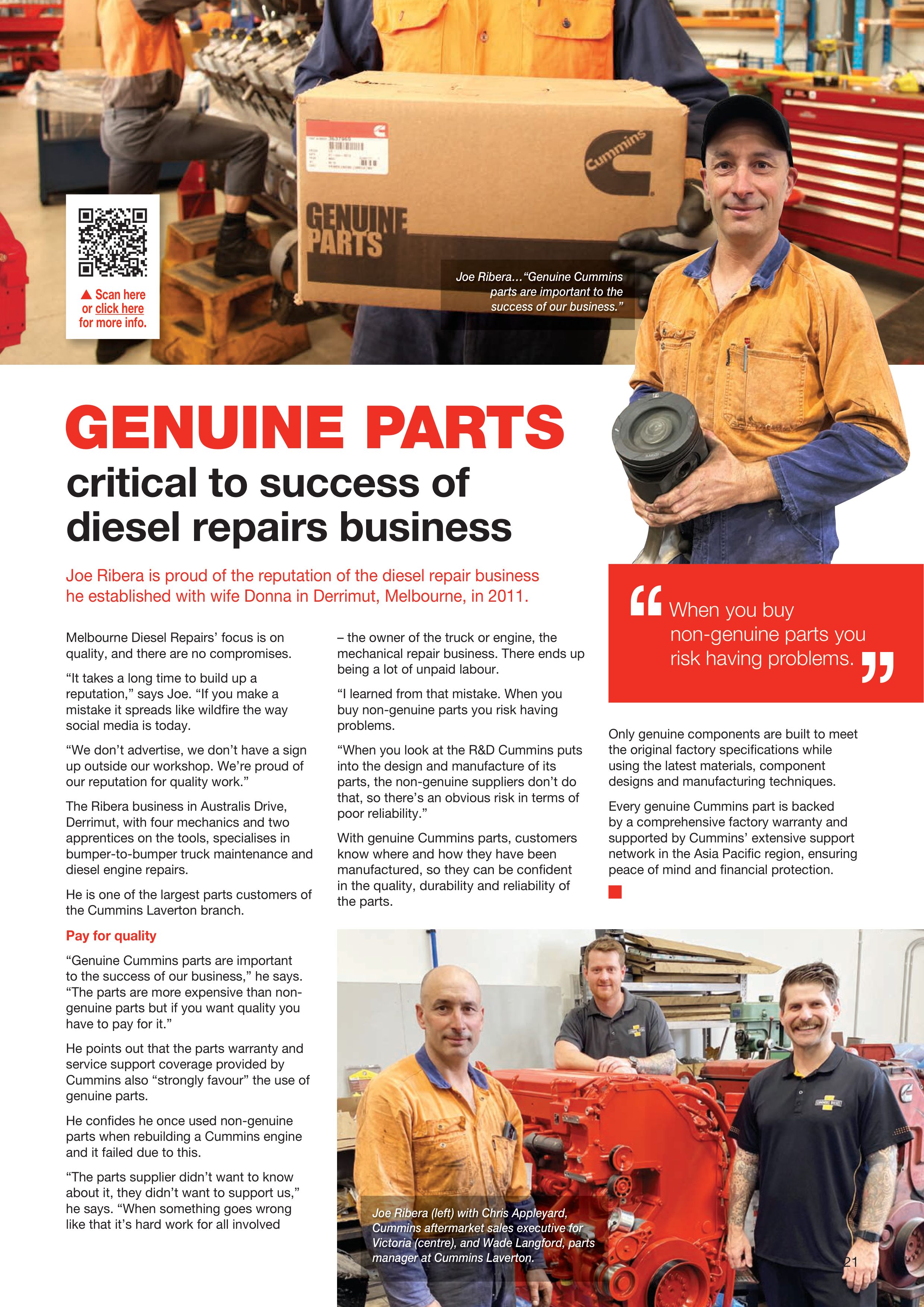
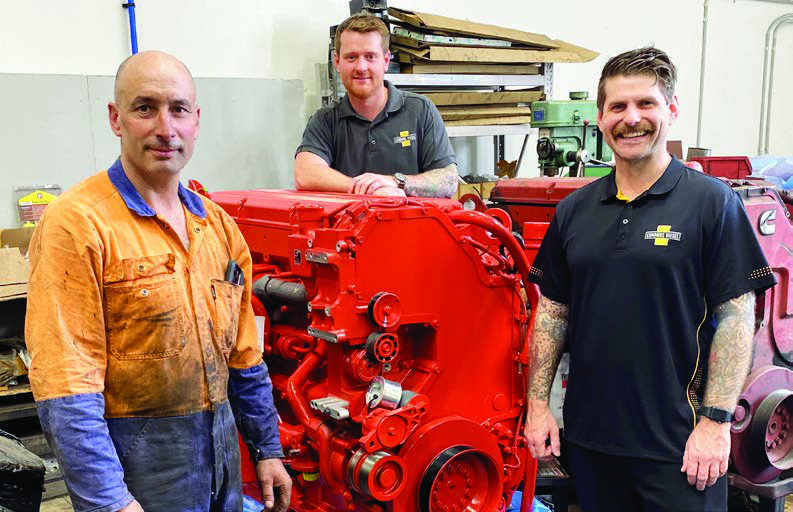
Joe Ribera (left) with Chris Appleyard,
Cummins aftermarket sales executive for
Victoria (centre), and Wade Langford, parts
manager at Cummins Laverton.
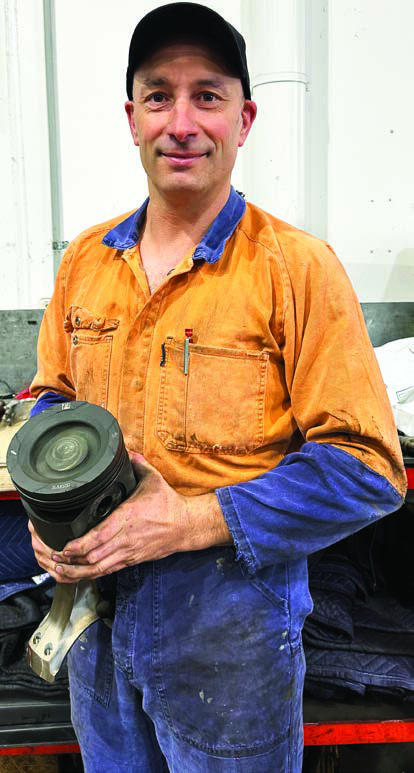
Joe Ribera…“Genuine Cummins
parts are important to the
success of our business.”
When you buy
non-genuine parts you
risk having problems.
critical to success of
diesel repairs business
▲
Scan here
or click here
for more info.
21
Zero
is the word
driving Tadano and Cummins innovation
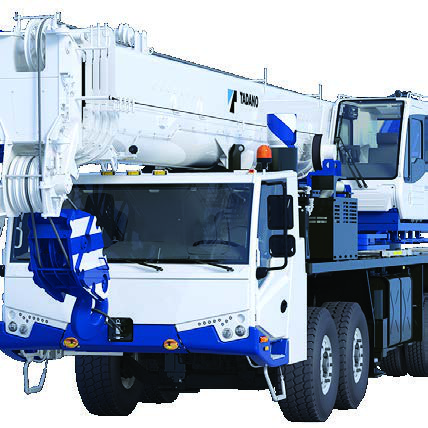
Japanese crane manufacturing giant Tadano is working closely with Cummins on next generation
power solutions as it strives to meet its commitment to reduce the greenhouse gas (CO2)
emissions from its products by 35 percent by 2030.
The strong partnership forged between
the two companies since 2003, when
Tadano began using Cummins engines to
increase its export business, is reflected in
both companies’ commitment to net-zero
carbon emissions by 2050.
Cummins’ hydrogen internal combustion
engine – the B6.7 version, in particular –
could well be in Tadano’s sights as a next
generation power solution, especially for
export to the US. Cummins has already
unveiled the hydrogen-fuelled B6.7 in a
290 hp medium-duty concept truck and is
promoting the engine as a practical, lower-
cost decarbonisation technology.
The use of zero-carbon H2 as a
commercial fuel within the Japanese
market is also looking increasingly
attractive, with Japan having the second
highest number of hydrogen refuelling
stations in the world behind China while
constantly expanding its H2 infrastructure.
Tadano’s contribution to the “fight against
climate change” is initially focusing on the
development of fully electric rough terrain
cranes known as EVOLT for release in
Japan in late 2023 and in North America
in 2024.
The company’s catchcry – Our True
Mission: Zero Emissions – aligns with
Cummins’ Destination Zero strategy which
is to improve the company’s core products
today to reduce carbon while bringing to
market the zero-carbon technologies that
will power tomorrow.
Respected global brand
Meanwhile, Cummins’ latest generation,
low-emission diesel engines continue to be
integral to the success of Tadano’s global
crane business.
This year, around 1000 Cummins engines
– QSB6.7, QSL9 and X12 models – will
be delivered to Tadano’s Kozai and Shido
manufacturing plants for installation in
rough terrain cranes and truck cranes.
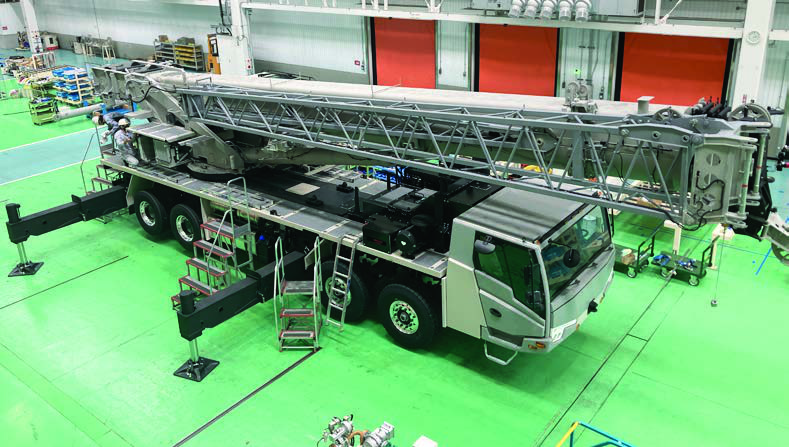
The Kozai plant, Tadano’s fifth
manufacturing facility in Japan as well
as its largest, was opened in 2019 and
is helping the company reach the next
level of competitive advantage as it
works towards its goal of becoming No.1
worldwide in the lifting equipment industry.
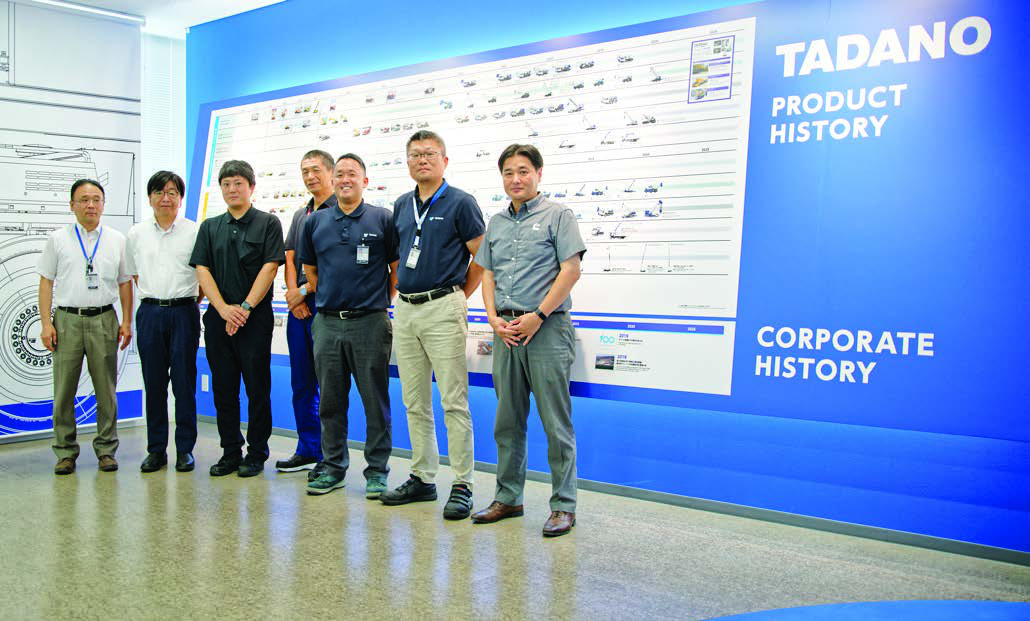
The reason for Tadano’s swing to
Cummins power in 2003 to increase its
export business was clear-cut: “Cummins
is a respected global brand with a
worldwide service support network,”
said Minoru Hirose, manager of Tadano’s
Quality and Safety Assurance Department.
Last year, 67% of the cranes Tadano
manufactured in Japan were exported.
A time-honoured company, Tadano
– like Cummins – celebrated its
100th anniversary in 2019. Founder
Masuo Tadano began a small welding
company in 1919 and it wasn’t until
1955 – after earlier developing a railroad
track maintenance machine – that he
introduced Japan’s first hydraulic truck
crane, with a 2-ton lifting capacity. The
first exports were made in 1960.
Vast array of models
Today, Tadano manufactures a vast array
of crane models for world markets – all-
terrain cranes, rough terrain cranes, truck
cranes, telescopic boom crawler cranes,
lattice boom crawler cranes, aerial work
platforms and truck loader cranes – and
has six production facilities in Japan, three
in Germany and one in the US.
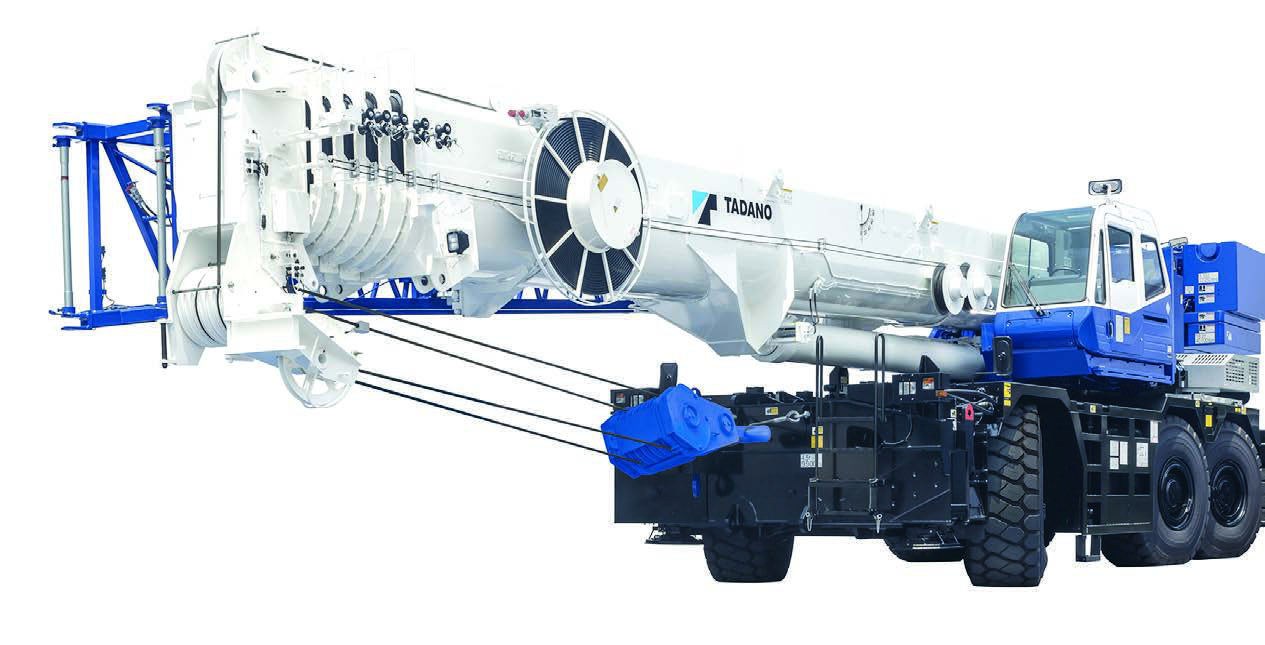
Tadano GR-1600XL with Cummins
QSB6.7 with Tier 4 emissions
compliance for North American market.
More than 1000 Cummins engines will this year be installed
in Tadano cranes as the Japanese manufacturer aims for
No.1 spot worldwide in the lifting equipment industry.
22
|
CUMMINS ASIA PACIFIC MAGAZINE
|
ISSUE 1 2023
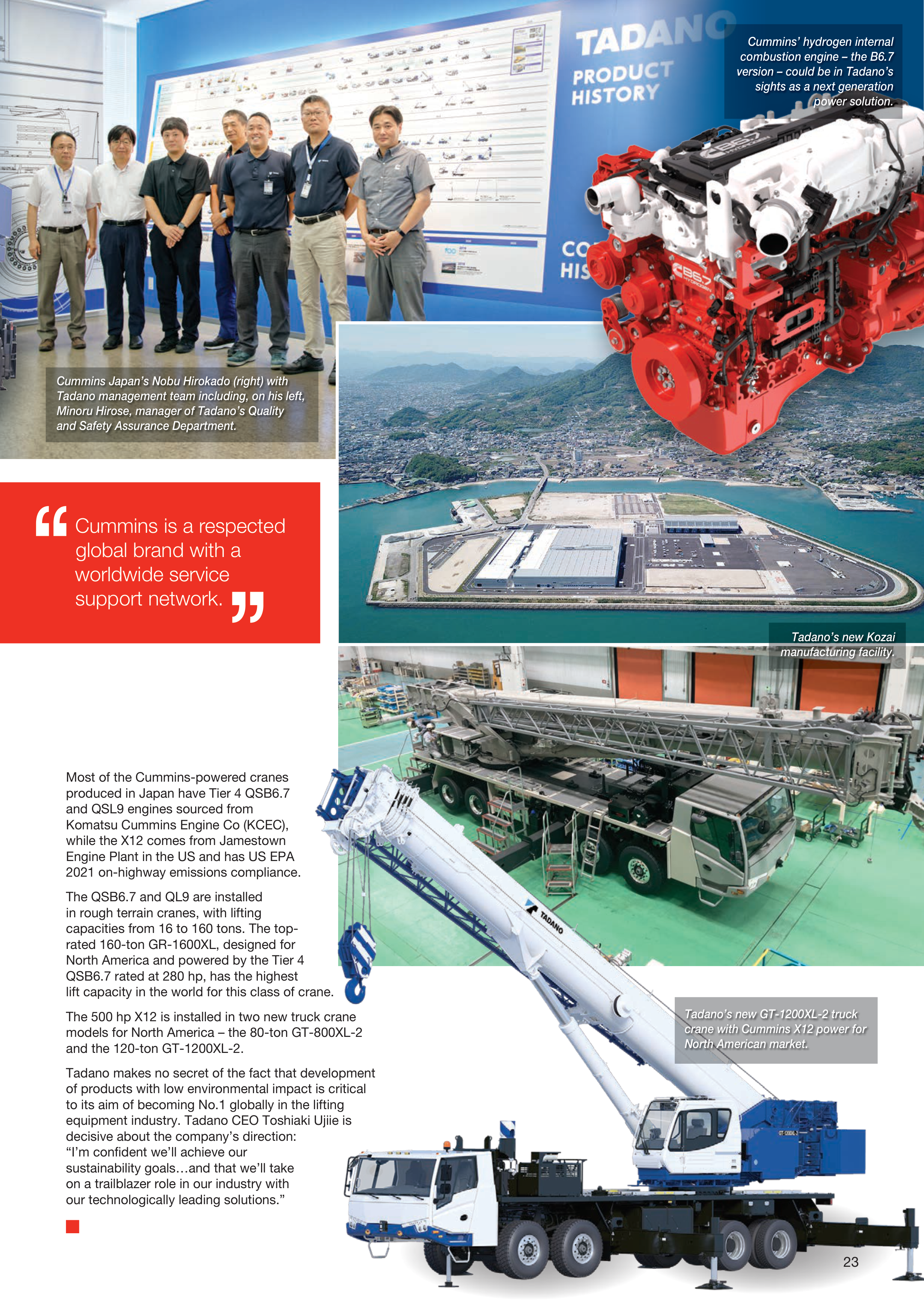

Most of the Cummins-powered cranes
produced in Japan have Tier 4 QSB6.7
and QSL9 engines sourced from
Komatsu Cummins Engine Co (KCEC),
while the X12 comes from Jamestown
Engine Plant in the US and has US EPA
2021 on-highway emissions compliance.
The QSB6.7 and QL9 are installed
in rough terrain cranes, with lifting
capacities from 16 to 160 tons. The top-
rated 160-ton GR-1600XL, designed for
North America and powered by the Tier 4
QSB6.7 rated at 280 hp, has the highest
lift capacity in the world for this class of crane.
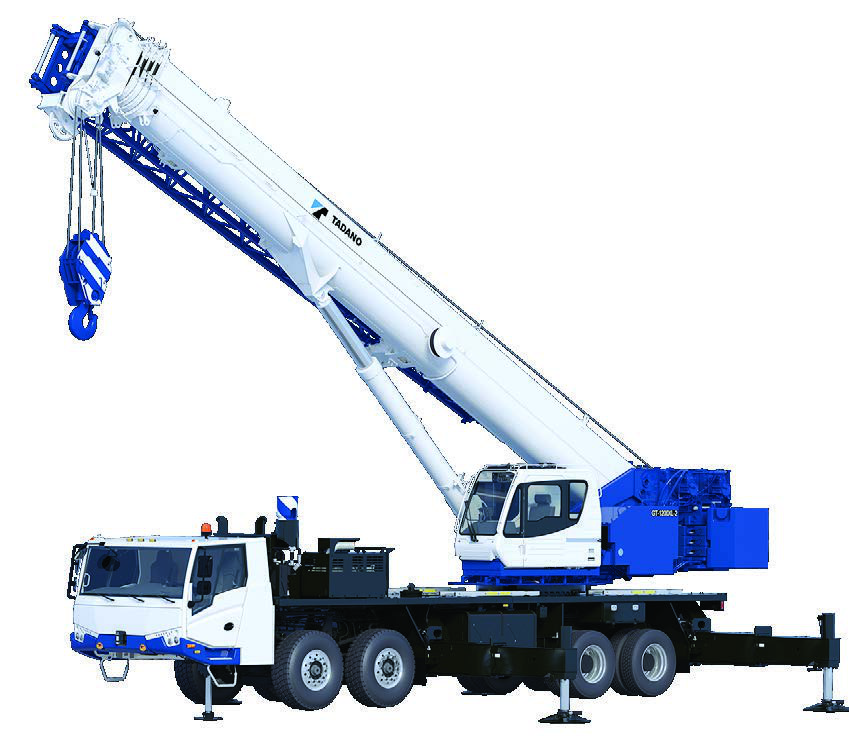
The 500 hp X12 is installed in two new truck crane
models for North America – the 80-ton GT-800XL-2
and the 120-ton GT-1200XL-2.
Tadano makes no secret of the fact that development
of products with low environmental impact is critical
to its aim of becoming No.1 globally in the lifting
equipment industry. Tadano CEO Toshiaki Ujiie is
decisive about the company’s direction:
“I’m confident we’ll achieve our
sustainability goals…and that we’ll take
on a trailblazer role in our industry with
our technologically leading solutions.”
Cummins is a respected
global brand with a
worldwide service
support network.
Cummins Japan’s Nobu Hirokado (right) with
Tadano management team including, on his left,
Minoru Hirose, manager of Tadano’s Quality
and Safety Assurance Department.
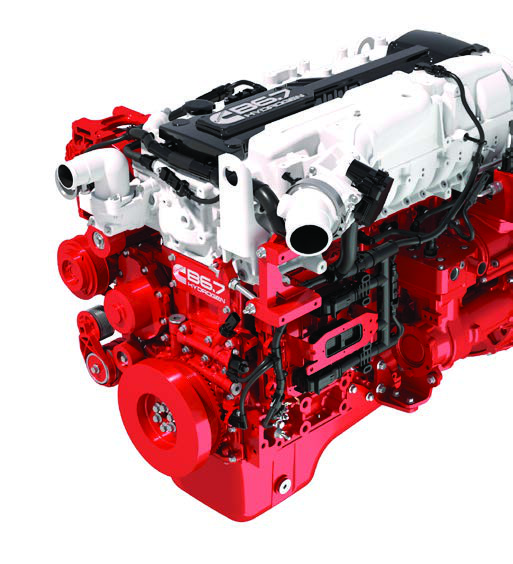
Cummins’ hydrogen internal
combustion engine – the B6.7
version – could be in Tadano’s
sights as a next generation
power solution.
Tadano’s new GT-1200XL-2 truck
crane with Cummins X12 power for
North American market.
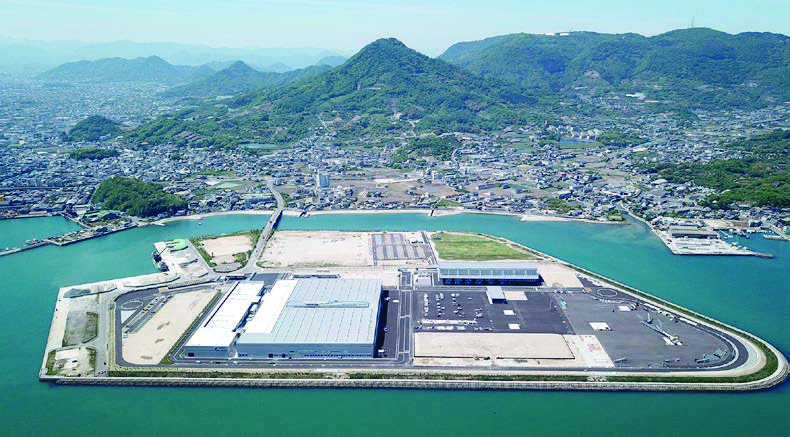
Tadano’s new Kozai
manufacturing facility.
23
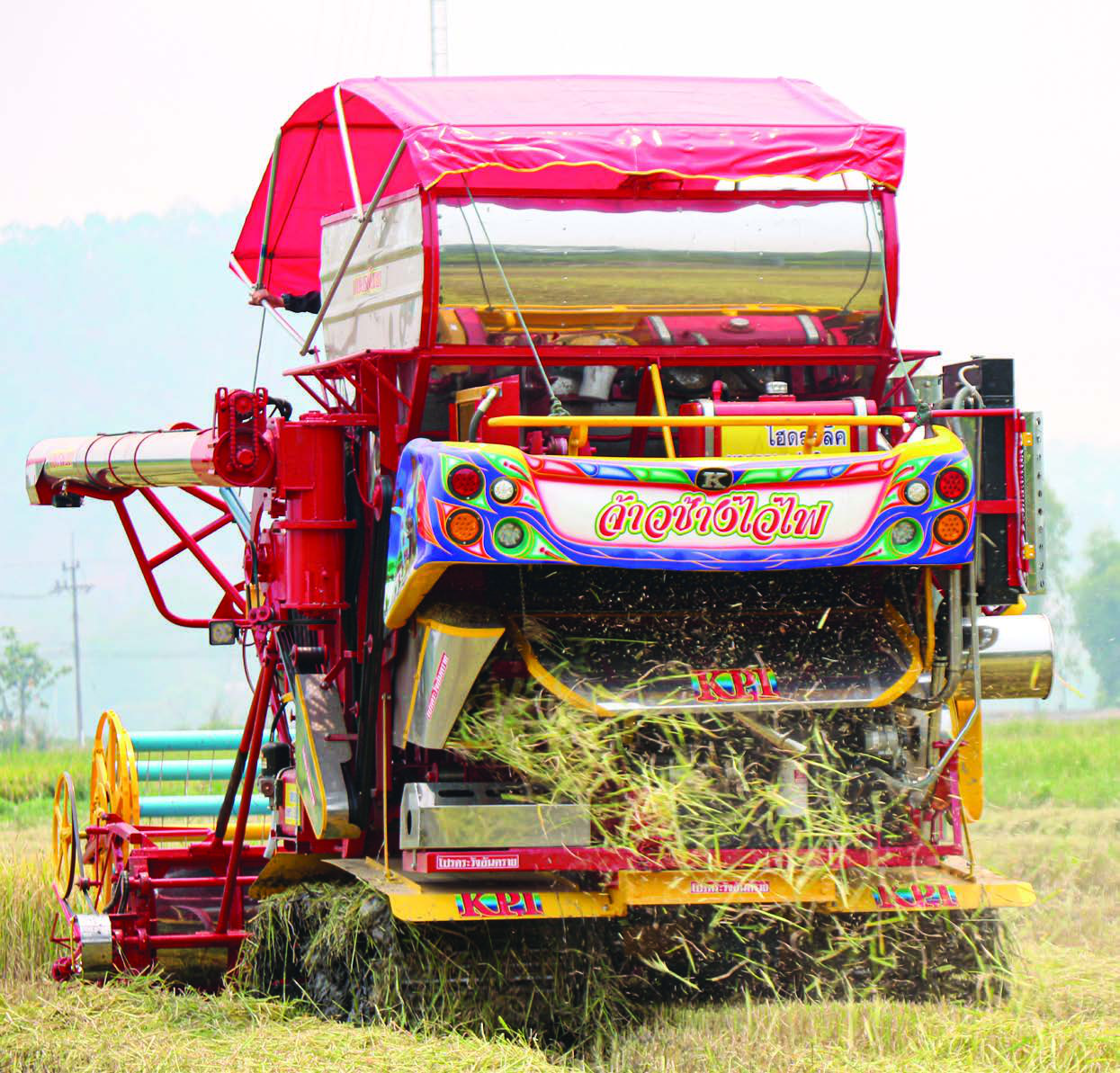
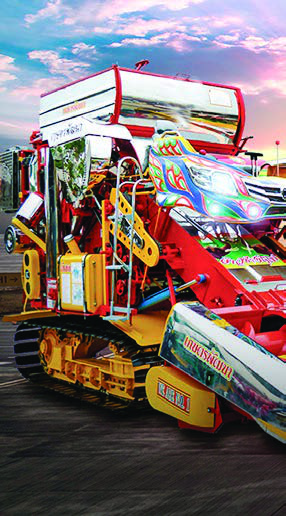
We convinced
Kaset Phattana
that new Cummins
product offered far
greater reliability...
Powering UP
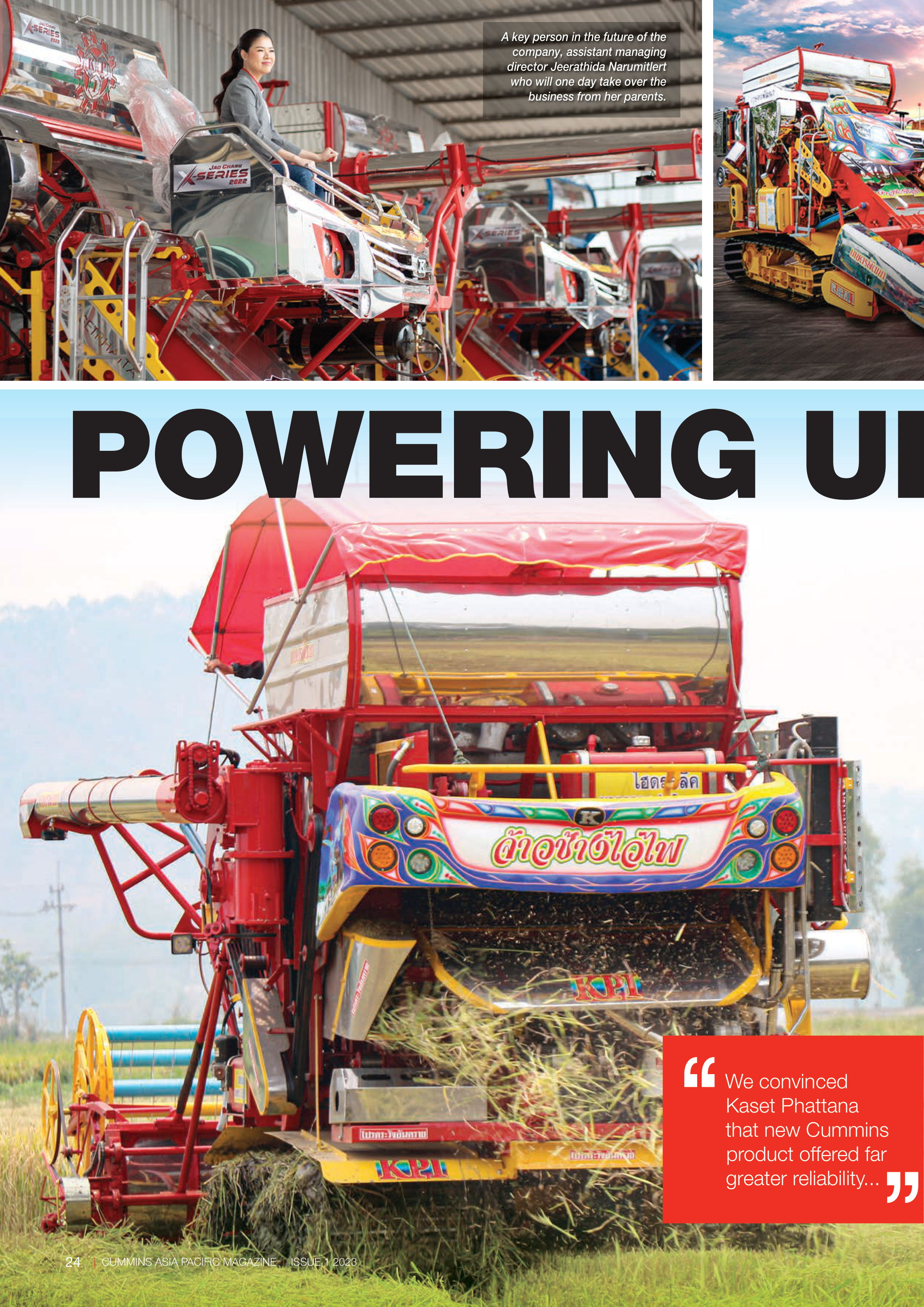
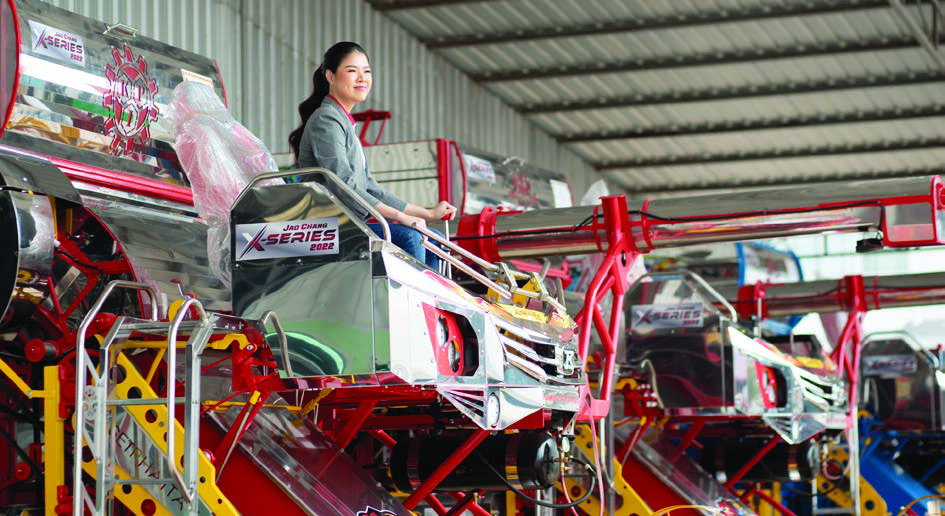
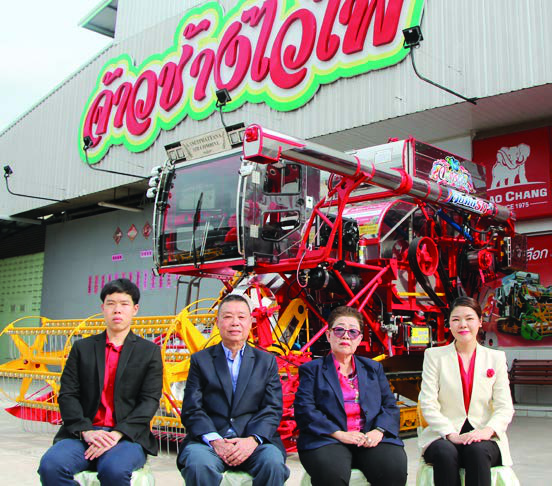
A key person in the future of the
company, assistant managing
director Jeerathida Narumitlert
who will one day take over the
business from her parents.
24
|
CUMMINS ASIA PACIFIC MAGAZINE
|
ISSUE 1 2023


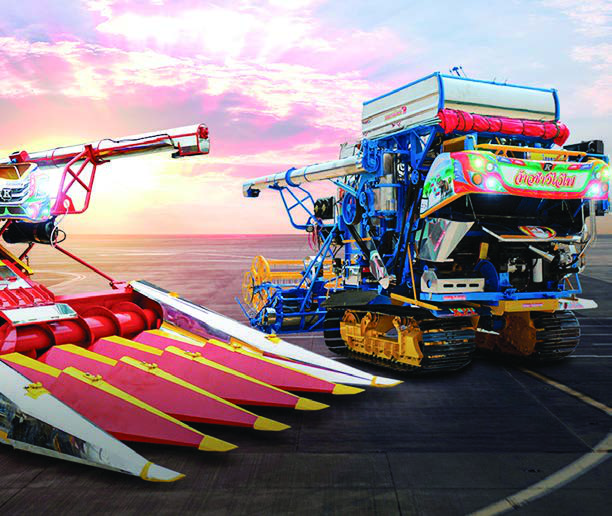

in the paddy fields
Cummins engines and the aftersales support provided by joint venture distributor, Cummins DKSH,
have added strong impetus to the market success of Kaset Phattana, Thailand’s best known
manufacturer of rice and corn combine harvesters.
Rice is one of the main foods and sources of nutrition for Thai
people. In fact, Thailand has around 10.5 million hectares of rice-
producing farmland – the fifth-largest amount of land under rice
cultivation in the world.
In 2023-24, Thailand is projected to harvest 20.4 million tonnes of
rice while more than 8.0 million tonnes will be exported, making
the country the world’s largest exporter of rice.
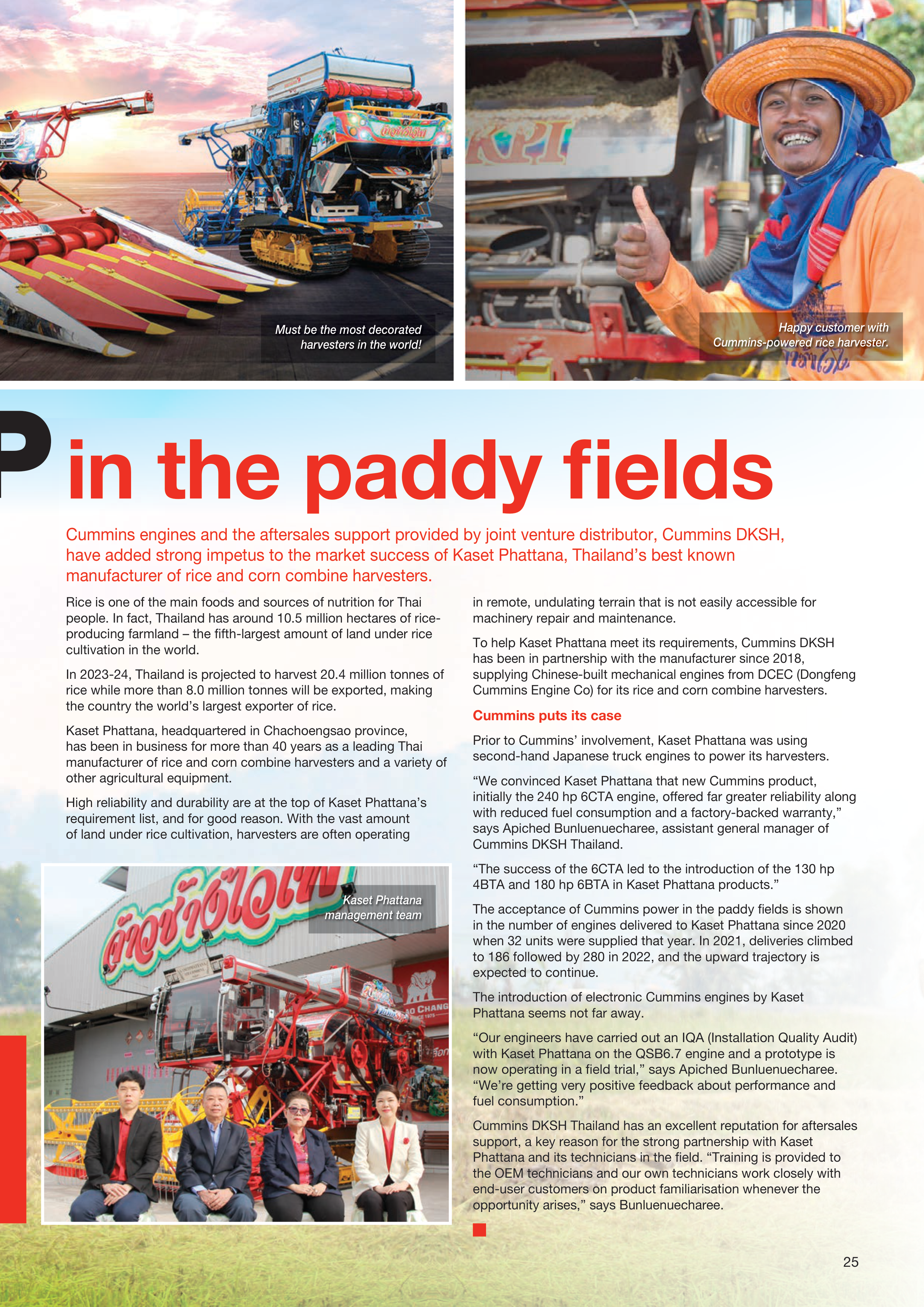
Kaset Phattana, headquartered in Chachoengsao province,
has been in business for more than 40 years as a leading Thai
manufacturer of rice and corn combine harvesters and a variety of
other agricultural equipment.
High reliability and durability are at the top of Kaset Phattana’s
requirement list, and for good reason. With the vast amount
of land under rice cultivation, harvesters are often operating
in remote, undulating terrain that is not easily accessible for
machinery repair and maintenance.
To help Kaset Phattana meet its requirements, Cummins DKSH
has been in partnership with the manufacturer since 2018,
supplying Chinese-built mechanical engines from DCEC (Dongfeng
Cummins Engine Co) for its rice and corn combine harvesters.
Cummins puts its case
Prior to Cummins’ involvement, Kaset Phattana was using
second-hand Japanese truck engines to power its harvesters.
“We convinced Kaset Phattana that new Cummins product,
initially the 240 hp 6CTA engine, offered far greater reliability along
with reduced fuel consumption and a factory-backed warranty,”
says Apiched Bunluenuecharee, assistant general manager of
Cummins DKSH Thailand.
“The success of the 6CTA led to the introduction of the 130 hp
4BTA and 180 hp 6BTA in Kaset Phattana products.”
The acceptance of Cummins power in the paddy fields is shown
in the number of engines delivered to Kaset Phattana since 2020
when 32 units were supplied that year. In 2021, deliveries climbed
to 186 followed by 280 in 2022, and the upward trajectory is
expected to continue.
The introduction of electronic Cummins engines by Kaset
Phattana seems not far away.
“Our engineers have carried out an IQA (Installation Quality Audit)
with Kaset Phattana on the QSB6.7 engine and a prototype is
now operating in a field trial,” says Apiched Bunluenuecharee.
“We’re getting very positive feedback about performance and
fuel consumption.”
Cummins DKSH Thailand has an excellent reputation for aftersales
support, a key reason for the strong partnership with Kaset
Phattana and its technicians in the field. “Training is provided to
the OEM technicians and our own technicians work closely with
end-user customers on product familiarisation whenever the
opportunity arises,” says Bunluenuecharee.
Must be the most decorated
harvesters in the world!
Happy customer with
Cummins-powered rice harvester.
UP
Kaset Phattana
management team
25

Two entirely new 15-litre internal combustion engines being developed by Cummins – one fuelled
with hydrogen, the other with natural gas – head the priority list of future products for New Zealand
haulage business Seay Distribution.
Owner Bruce Seay’s interest in carbon
reduction has heightened with his fleet
playing an integral role in the success
of New Zealand’s first large scale food
waste-to-bioenergy facility at Reporoa, in
the central North Island.
“I’m not a greenie or climate activist
but I am a believer in protecting our
environment and decarbonisation is an
important part of that,” says Auckland-
based Seay. “I also want to make sure my
business is aligned in an environmental
sense with my customers.”
Cummins ‘ahead of the game’
Seay believes Cummins is “ahead of the
game” in developing alternative powertrain
technologies for the pathway to net zero-
carbon by 2050.
“I’m very impressed with what Cummins is
doing with its Destination Zero strategy,”
he says. “It’s a huge comfort when you see
one of your suppliers investing billions of
dollars in developing future technologies
and knowing confidently you’ll be
supported by that supplier.
“To have a 15-litre internal combustion
engine running on energy dense hydrogen
and virtually eliminating CO2 emissions is
certainly appealing,” he adds.
“Of course, our plans for the future would
only come to fruition if the infrastructure
for hydrogen fuelling was available. The
government wants us to play our part in
decarbonisation and they must play their
part too.”
He believes the 15-litre natural gas engine,
due for release in 2024 with peak outputs
of 500 hp and 1850 lb ft, also looks to have
great potential in that it can be powered
with biogas, the fuel produced by the new
plant at Reporoa which is being fed with
food waste by the Seay Distribution fleet.
He notes that Cummins’ hydrogen
and natural gas engines – designated
X15H and X15N – were displayed at the
Advanced Clean Transportation (ACT)
Expo, North America’s largest advanced
transportation technology and clean
fleet event, where they attracted a lot
of attention.
“Being able to refit existing trucks with
either of these engines would be a definite
bonus,” he asserts.
Environmental focus
Bruce Seay’s immediate focus is on the
new bioenergy plant at Reporoa in the
Rotorua district, into which his expanding
fleet is transporting food waste.
“This facility will help overcome the huge
environmental problem with waste food
that historically has been dumped in
landfills, emitting methane which is one of
the largest contributors to greenhouse gas
emissions,” he points out.
By mid-2023, the Seay fleet will be hauling
around 120,000 tonnes of waste food a
year from Auckland to the Reporoa facility,
using nine 60-tonne Kenworth K200 truck-
and-dog combinations, all powered by
Cummins X15 engines rated at 600 hp.
The facility is turning organic waste, from
businesses and kerbside food scrap
collections, into sustainable renewable
biogas to annually power the equivalent
of around 2,500 households, produce
bio-fertiliser for around 2,000 hectares of
local farmland, and provide CO2 and heat
to enhance the growth of tomatoes in the
glasshouse owned by T&G Fresh, one
of New Zealand’s largest fresh produce
businesses.
Setting high environmental standards is
not new to Bruce Seay. His father Hartley
and brother Graham founded Seay
Earthmovers in 1978 and also acquired a
quarry in Taupo in 2004 which produces
red scoria and various other forms of road
and construction aggregates.
“The earthmoving and quarrying
operations have always been mindful of
environmental standards and regulations
and have achieved recognition for
protection of the environment in a number
of challenging civil projects,” he says, with
a definite tone of pride.
Those projects have included hydro-
electric schemes, geothermal power
station and steam field development,
roading, landfill cells, subdivisions and
forestry contracts.
After working in the family earthmoving
and quarrying businesses for a number
of years, Bruce Seay founded his own
company, Seay Distribution, in 2018,
hauling quarry aggregates from Taupo
to Auckland. He also had an established
relationship with EcoStock Supplies,
transporting recycled food waste for
animal consumption. EcoStock is a joint
venture partner in the Reporoa
bioenergy facility.
First Kenworths
He put his first two Kenworths – T409
models with 600 hp Cummins ISXe5
engines – into service in 2014-15 and since
then has forged an excellent relationship
with Cummins and Kenworth dealer
Southpac Trucks.
His third Kenworth, a K200, started work
in 2018. “We had an engine problem and
the way I was supported by Cummins and
Southpac was unbelievable. I’m not a big
customer by any means but they had that
truck back on the road in two days which
was great turnaround.”
Three new K200 Kenworths have recently
gone into service hauling the waste food
for the Reporoa biogas plant and these
are being followed by another three in
mid-2023.
I’m very
impressed with
what Cummins
is doing with its
Destination Zero
strategy.
in the sights of Seay
Next generation
26
|
CUMMINS ASIA PACIFIC MAGAZINE
|
ISSUE 1 2023
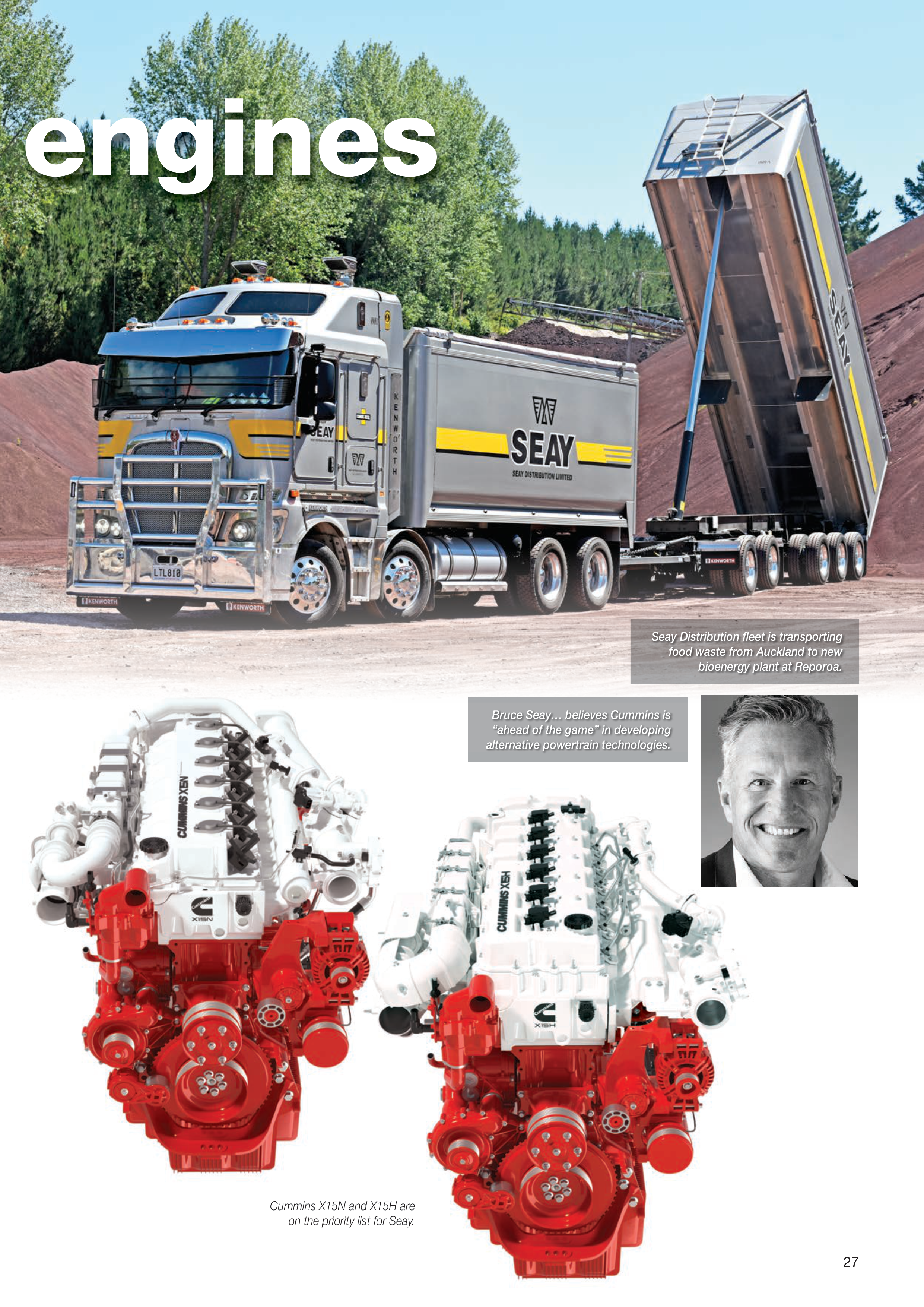
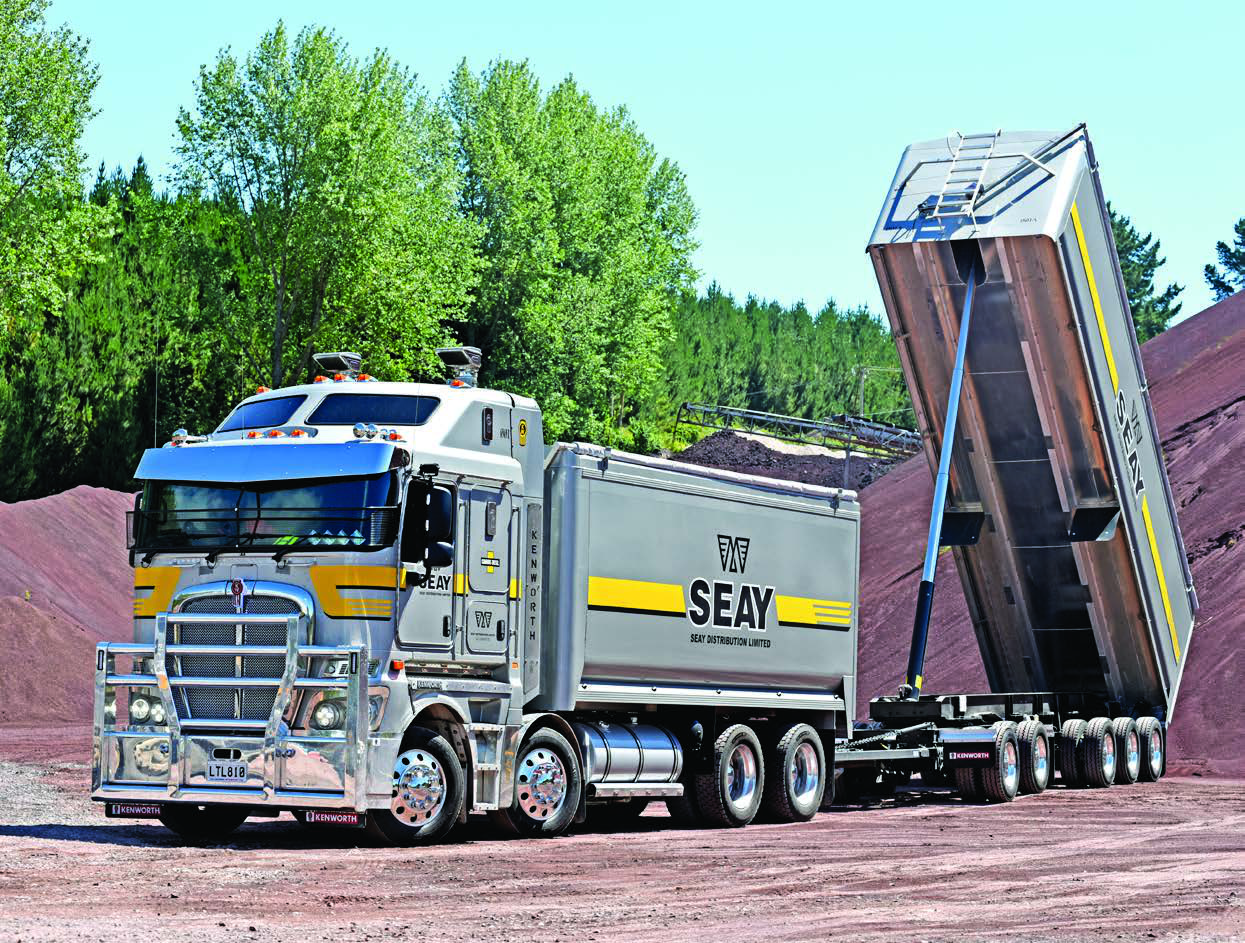

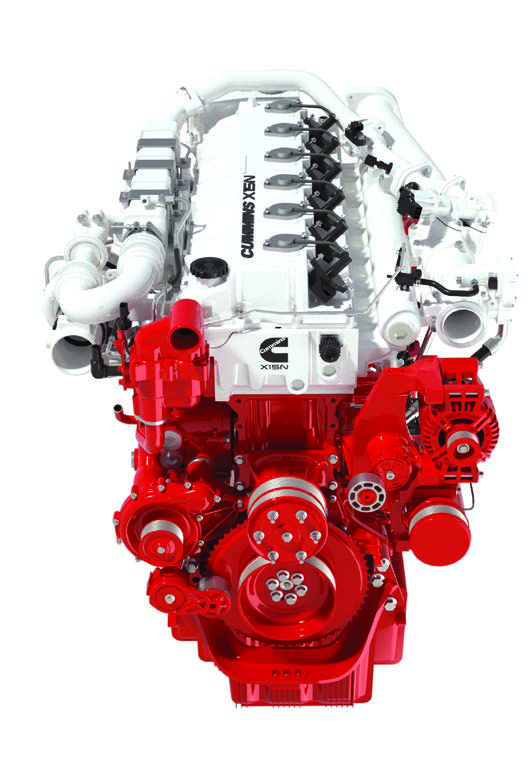
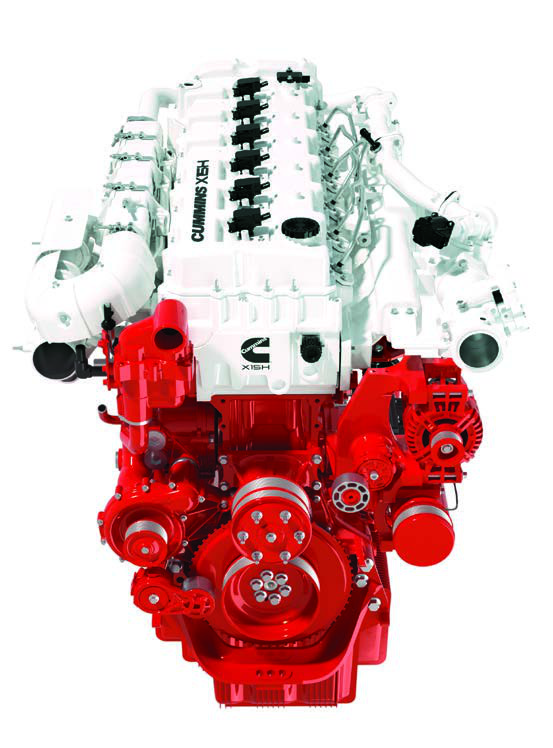
Seay Distribution fleet is transporting
food waste from Auckland to new
bioenergy plant at Reporoa.
Bruce Seay… believes Cummins is
“ahead of the game” in developing
alternative powertrain technologies.
Cummins X15N and X15H are
on the priority list for Seay.
engines
27
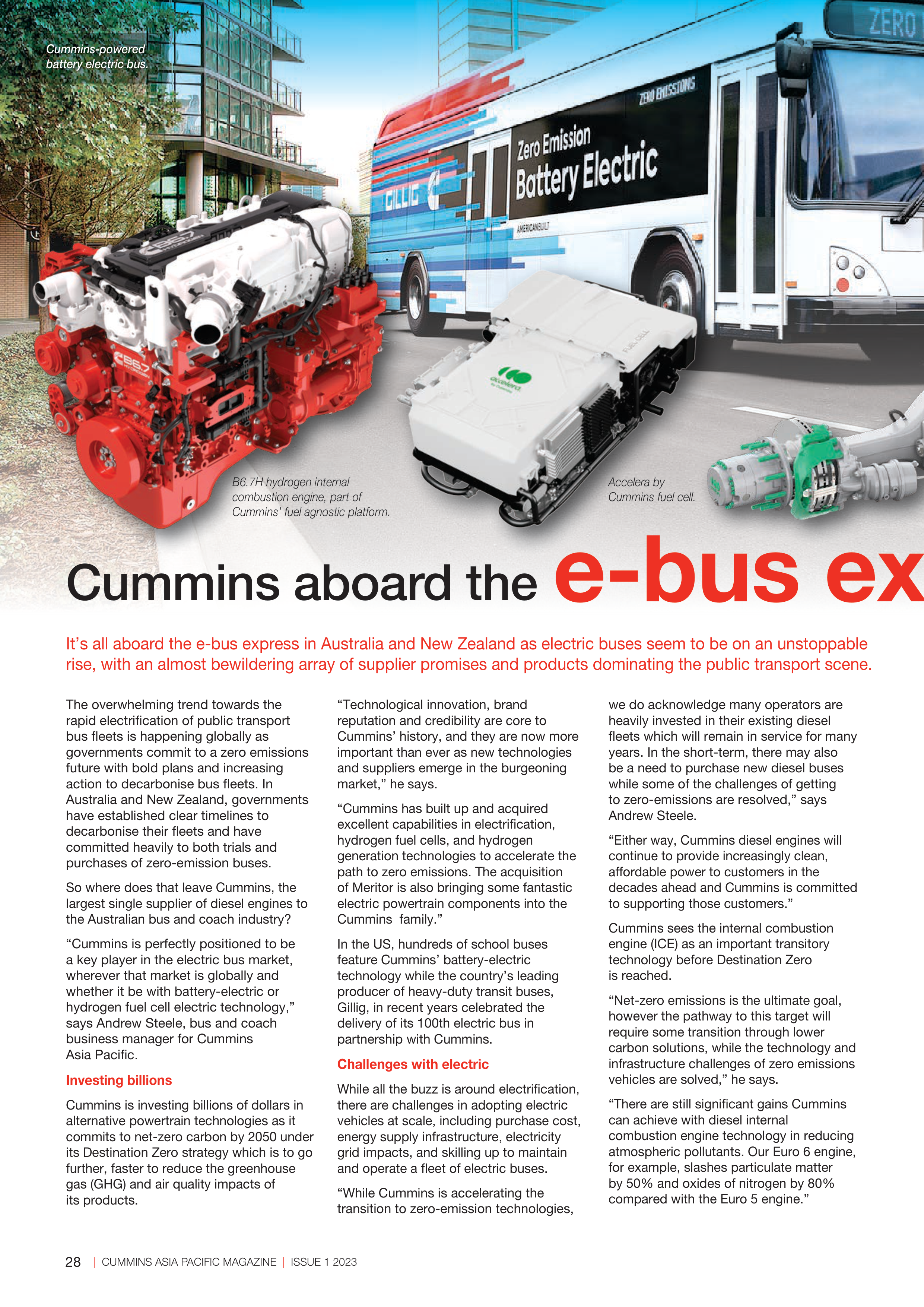
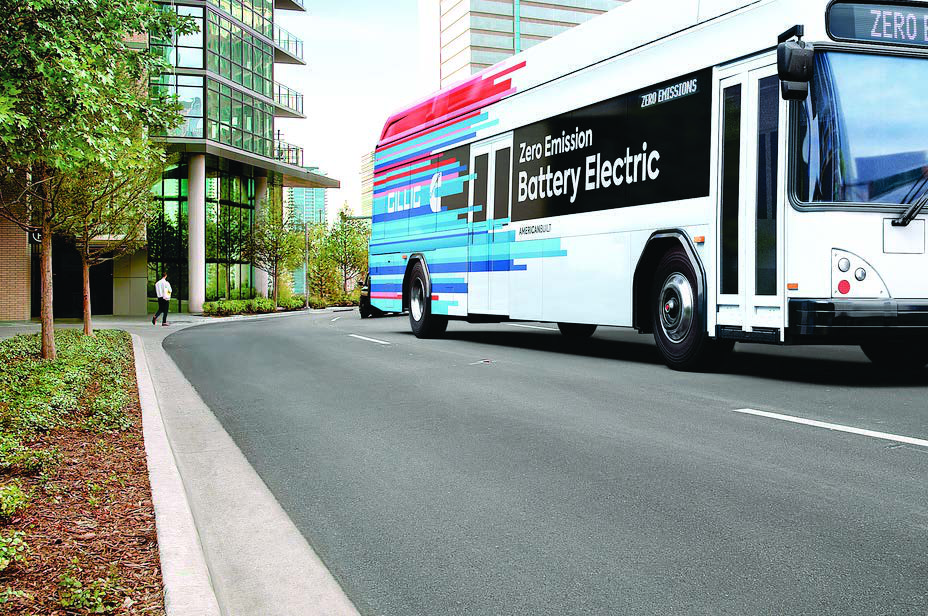
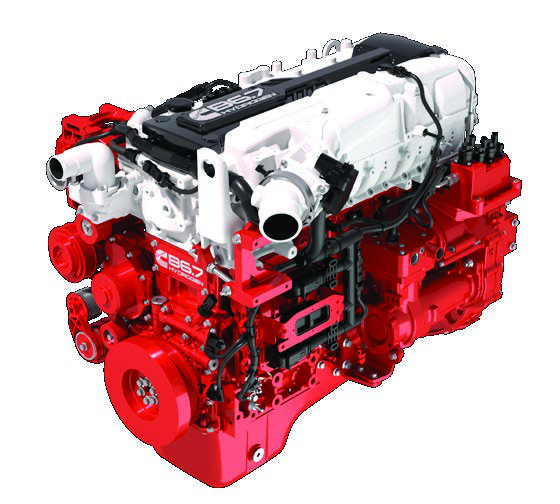
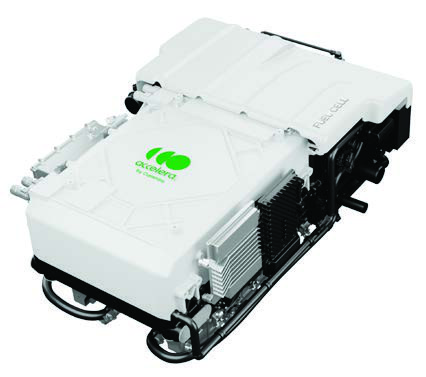
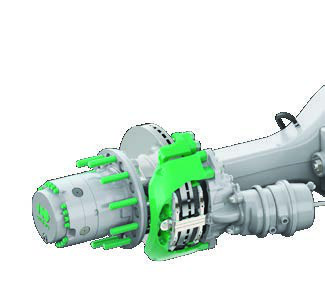
It’s all aboard the e-bus express in Australia and New Zealand as electric buses seem to be on an unstoppable
rise, with an almost bewildering array of supplier promises and products dominating the public transport scene.
The overwhelming trend towards the
rapid electrification of public transport
bus fleets is happening globally as
governments commit to a zero emissions
future with bold plans and increasing
action to decarbonise bus fleets. In
Australia and New Zealand, governments
have established clear timelines to
decarbonise their fleets and have
committed heavily to both trials and
purchases of zero-emission buses.
So where does that leave Cummins, the
largest single supplier of diesel engines to
the Australian bus and coach industry?
“Cummins is perfectly positioned to be
a key player in the electric bus market,
wherever that market is globally and
whether it be with battery-electric or
hydrogen fuel cell electric technology,”
says Andrew Steele, bus and coach
business manager for Cummins
Asia Pacific.
Investing billions
Cummins is investing billions of dollars in
alternative powertrain technologies as it
commits to net-zero carbon by 2050 under
its Destination Zero strategy which is to go
further, faster to reduce the greenhouse
gas (GHG) and air quality impacts of
its products.
“Technological innovation, brand
reputation and credibility are core to
Cummins’ history, and they are now more
important than ever as new technologies
and suppliers emerge in the burgeoning
market,” he says.
“Cummins has built up and acquired
excellent capabilities in electrification,
hydrogen fuel cells, and hydrogen
generation technologies to accelerate the
path to zero emissions. The acquisition
of Meritor is also bringing some fantastic
electric powertrain components into the
Cummins family.”
In the US, hundreds of school buses
feature Cummins’ battery-electric
technology while the country’s leading
producer of heavy-duty transit buses,
Gillig, in recent years celebrated the
delivery of its 100th electric bus in
partnership with Cummins.
Challenges with electric
While all the buzz is around electrification,
there are challenges in adopting electric
vehicles at scale, including purchase cost,
energy supply infrastructure, electricity
grid impacts, and skilling up to maintain
and operate a fleet of electric buses.
“While Cummins is accelerating the
transition to zero-emission technologies,
we do acknowledge many operators are
heavily invested in their existing diesel
fleets which will remain in service for many
years. In the short-term, there may also
be a need to purchase new diesel buses
while some of the challenges of getting
to zero-emissions are resolved,” says
Andrew Steele.
“Either way, Cummins diesel engines will
continue to provide increasingly clean,
affordable power to customers in the
decades ahead and Cummins is committed
to supporting those customers.”
Cummins sees the internal combustion
engine (ICE) as an important transitory
technology before Destination Zero
is reached.
“Net-zero emissions is the ultimate goal,
however the pathway to this target will
require some transition through lower
carbon solutions, while the technology and
infrastructure challenges of zero emissions
vehicles are solved,” he says.
“There are still significant gains Cummins
can achieve with diesel internal
combustion engine technology in reducing
atmospheric pollutants. Our Euro 6 engine,
for example, slashes particulate matter
by 50% and oxides of nitrogen by 80%
compared with the Euro 5 engine.”
Cummins-powered
battery electric bus.
e-bus ex
Cummins aboard the
B6.7H hydrogen internal
combustion engine, part of
Cummins’ fuel agnostic platform.
Accelera by
Cummins fuel cell.
28
|
CUMMINS ASIA PACIFIC MAGAZINE
|
ISSUE 1 2023
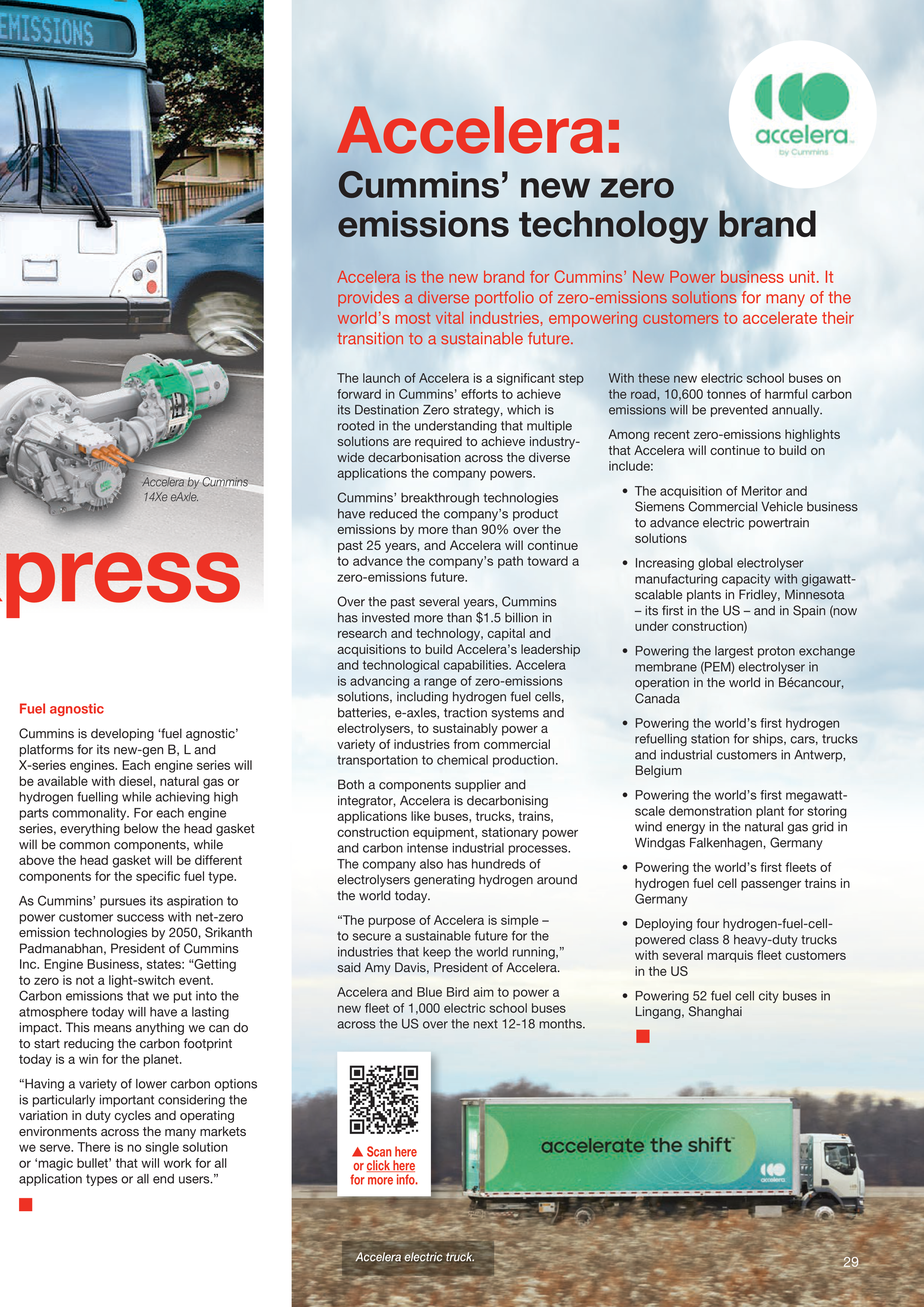

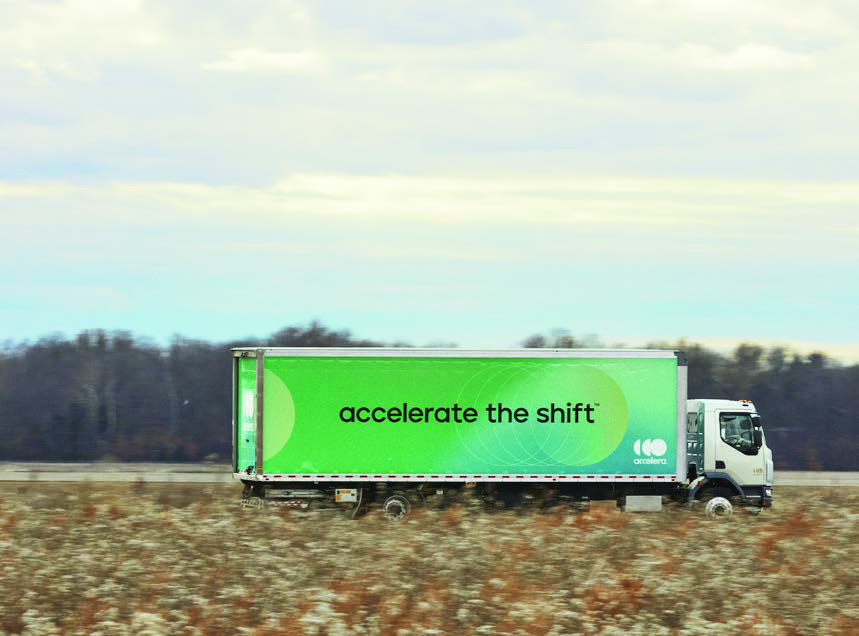
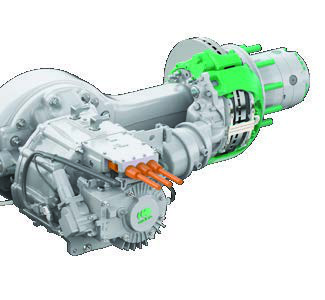


Accelera:
Cummins’ new zero
emissions technology brand
Accelera is the new brand for Cummins’ New Power business unit. It
provides a diverse portfolio of zero-emissions solutions for many of the
world’s most vital industries, empowering customers to accelerate their
transition to a sustainable future.
The launch of Accelera is a significant step
forward in Cummins’ efforts to achieve
its Destination Zero strategy, which is
rooted in the understanding that multiple
solutions are required to achieve industry-
wide decarbonisation across the diverse
applications the company powers.
Cummins’ breakthrough technologies
have reduced the company’s product
emissions by more than 90% over the
past 25 years, and Accelera will continue
to advance the company’s path toward a
zero-emissions future.
Over the past several years, Cummins
has invested more than $1.5 billion in
research and technology, capital and
acquisitions to build Accelera’s leadership
and technological capabilities. Accelera
is advancing a range of zero-emissions
solutions, including hydrogen fuel cells,
batteries, e-axles, traction systems and
electrolysers, to sustainably power a
variety of industries from commercial
transportation to chemical production.
Both a components supplier and
integrator, Accelera is decarbonising
applications like buses, trucks, trains,
construction equipment, stationary power
and carbon intense industrial processes.
The company also has hundreds of
electrolysers generating hydrogen around
the world today.
“The purpose of Accelera is simple –
to secure a sustainable future for the
industries that keep the world running,”
said Amy Davis, President of Accelera.
Accelera and Blue Bird aim to power a
new fleet of 1,000 electric school buses
across the US over the next 12-18 months.
With these new electric school buses on
the road, 10,600 tonnes of harmful carbon
emissions will be prevented annually.
Among recent zero-emissions highlights
that Accelera will continue to build on
include:
• The acquisition of Meritor and
Siemens Commercial Vehicle business
to advance electric powertrain
solutions
• Increasing global electrolyser
manufacturing capacity with gigawatt-
scalable plants in Fridley, Minnesota
– its first in the US – and in Spain (now
under construction)
• Powering the largest proton exchange
membrane (PEM) electrolyser in
operation in the world in Bécancour,
Canada
• Powering the world’s first hydrogen
refuelling station for ships, cars, trucks
and industrial customers in Antwerp,
Belgium
• Powering the world’s first megawatt-
scale demonstration plant for storing
wind energy in the natural gas grid in
Windgas Falkenhagen, Germany
• Powering the world’s first fleets of
hydrogen fuel cell passenger trains in
Germany
• Deploying four hydrogen-fuel-cell-
powered class 8 heavy-duty trucks
with several marquis fleet customers
in the US
• Powering 52 fuel cell city buses in
Lingang, Shanghai
Accelera electric truck.
Fuel agnostic
Cummins is developing ‘fuel agnostic’
platforms for its new-gen B, L and
X-series engines. Each engine series will
be available with diesel, natural gas or
hydrogen fuelling while achieving high
parts commonality. For each engine
series, everything below the head gasket
will be common components, while
above the head gasket will be different
components for the specific fuel type.
As Cummins’ pursues its aspiration to
power customer success with net-zero
emission technologies by 2050, Srikanth
Padmanabhan, President of Cummins
Inc. Engine Business, states: “Getting
to zero is not a light-switch event.
Carbon emissions that we put into the
atmosphere today will have a lasting
impact. This means anything we can do
to start reducing the carbon footprint
today is a win for the planet.
“Having a variety of lower carbon options
is particularly important considering the
variation in duty cycles and operating
environments across the many markets
we serve. There is no single solution
or ‘magic bullet’ that will work for all
application types or all end users.”
xpress
Accelera by Cummins
14Xe eAxle.
▲
Scan here
or click here
for more info.
29
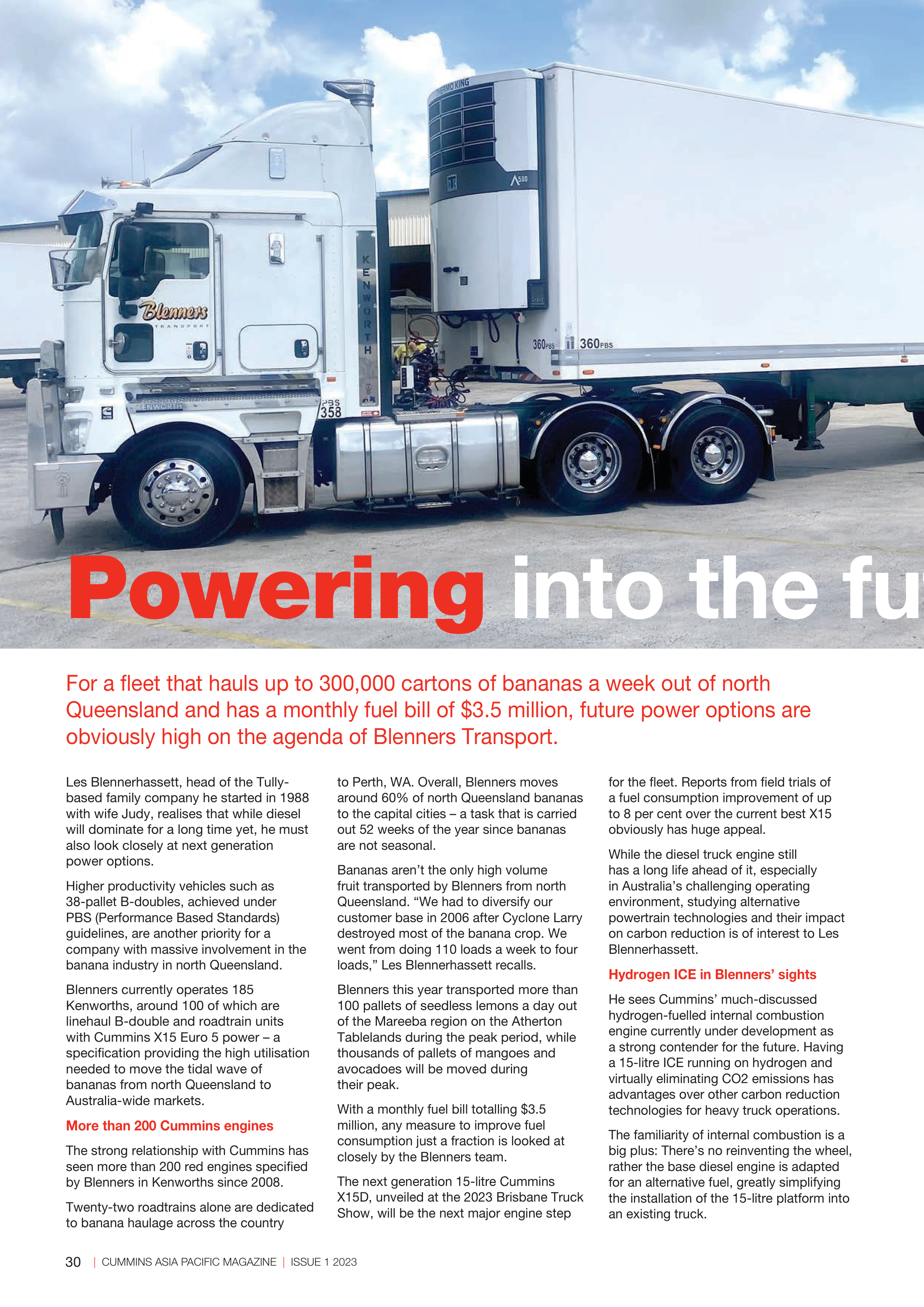
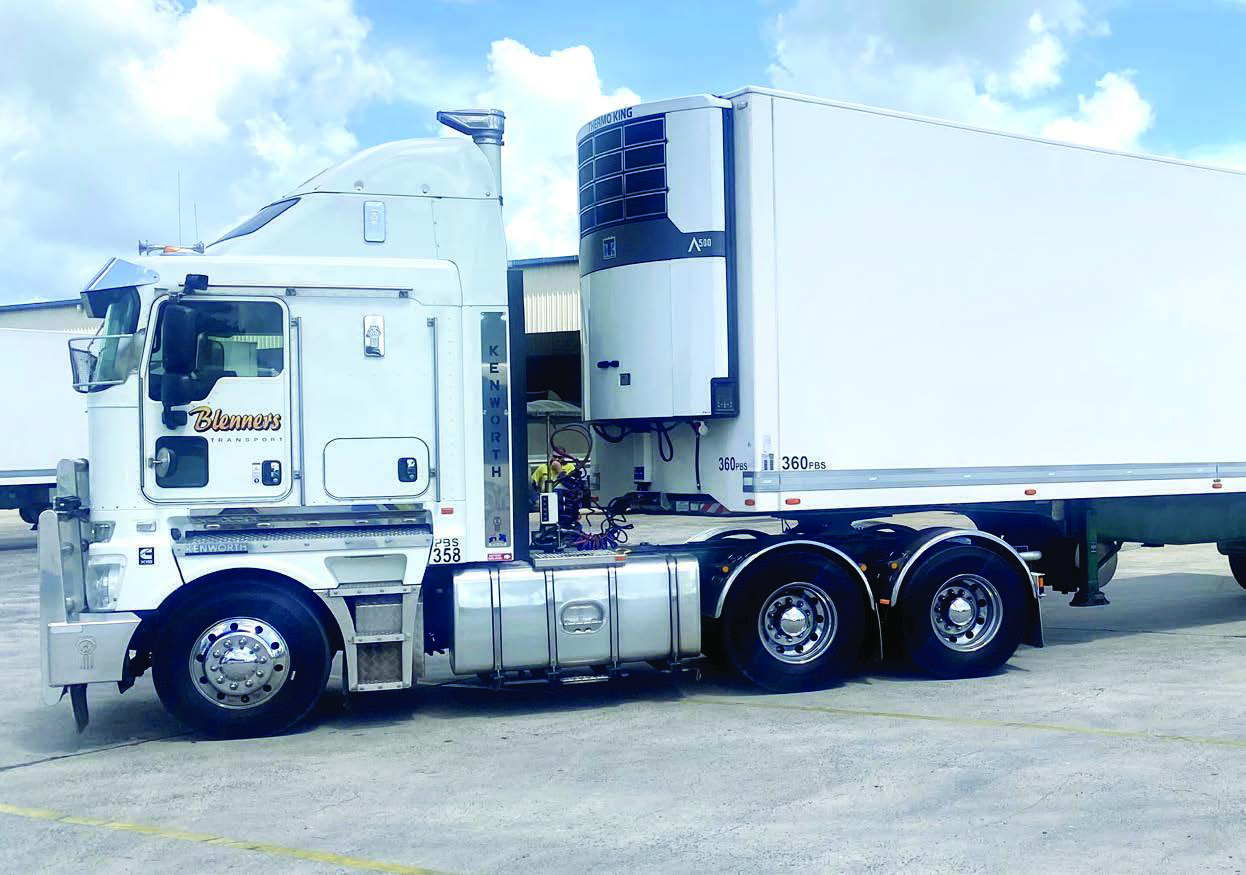
Powering
into the fut
For a fleet that hauls up to 300,000 cartons of bananas a week out of north
Queensland and has a monthly fuel bill of $3.5 million, future power options are
obviously high on the agenda of Blenners Transport.
Les Blennerhassett, head of the Tully-
based family company he started in 1988
with wife Judy, realises that while diesel
will dominate for a long time yet, he must
also look closely at next generation
power options.
Higher productivity vehicles such as
38-pallet B-doubles, achieved under
PBS (Performance Based Standards)
guidelines, are another priority for a
company with massive involvement in the
banana industry in north Queensland.
Blenners currently operates 185
Kenworths, around 100 of which are
linehaul B-double and roadtrain units
with Cummins X15 Euro 5 power – a
specification providing the high utilisation
needed to move the tidal wave of
bananas from north Queensland to
Australia-wide markets.
More than 200 Cummins engines
The strong relationship with Cummins has
seen more than 200 red engines specified
by Blenners in Kenworths since 2008.
Twenty-two roadtrains alone are dedicated
to banana haulage across the country
to Perth, WA. Overall, Blenners moves
around 60% of north Queensland bananas
to the capital cities – a task that is carried
out 52 weeks of the year since bananas
are not seasonal.
Bananas aren’t the only high volume
fruit transported by Blenners from north
Queensland. “We had to diversify our
customer base in 2006 after Cyclone Larry
destroyed most of the banana crop. We
went from doing 110 loads a week to four
loads,” Les Blennerhassett recalls.
Blenners this year transported more than
100 pallets of seedless lemons a day out
of the Mareeba region on the Atherton
Tablelands during the peak period, while
thousands of pallets of mangoes and
avocadoes will be moved during
their peak.
With a monthly fuel bill totalling $3.5
million, any measure to improve fuel
consumption just a fraction is looked at
closely by the Blenners team.
The next generation 15-litre Cummins
X15D, unveiled at the 2023 Brisbane Truck
Show, will be the next major engine step
for the fleet. Reports from field trials of
a fuel consumption improvement of up
to 8 per cent over the current best X15
obviously has huge appeal.
While the diesel truck engine still
has a long life ahead of it, especially
in Australia’s challenging operating
environment, studying alternative
powertrain technologies and their impact
on carbon reduction is of interest to Les
Blennerhassett.
Hydrogen ICE in Blenners’ sights
He sees Cummins’ much-discussed
hydrogen-fuelled internal combustion
engine currently under development as
a strong contender for the future. Having
a 15-litre ICE running on hydrogen and
virtually eliminating CO2 emissions has
advantages over other carbon reduction
technologies for heavy truck operations.
The familiarity of internal combustion is a
big plus: There’s no reinventing the wheel,
rather the base diesel engine is adapted
for an alternative fuel, greatly simplifying
the installation of the 15-litre platform into
an existing truck.
30
|
CUMMINS ASIA PACIFIC MAGAZINE
|
ISSUE 1 2023
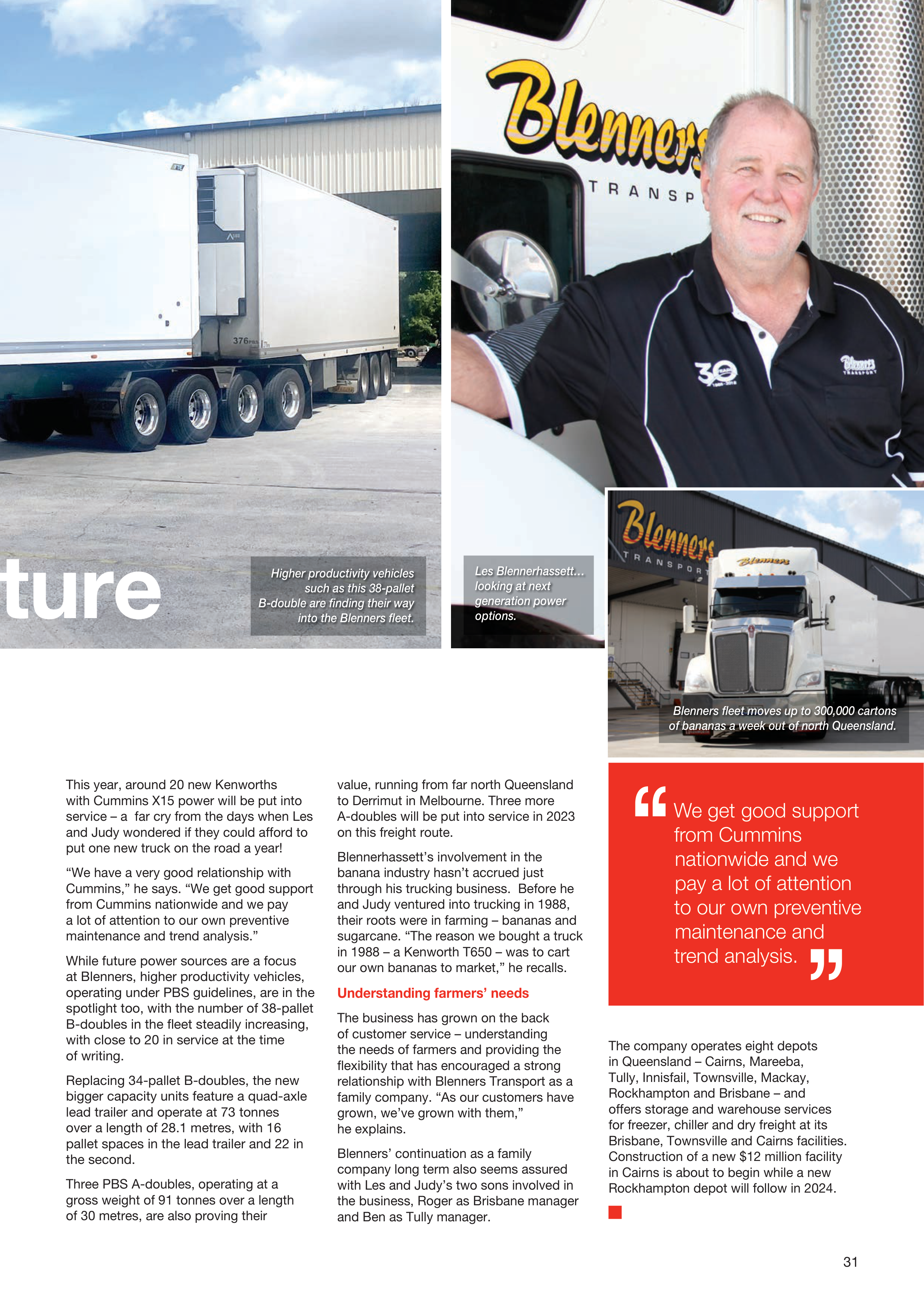
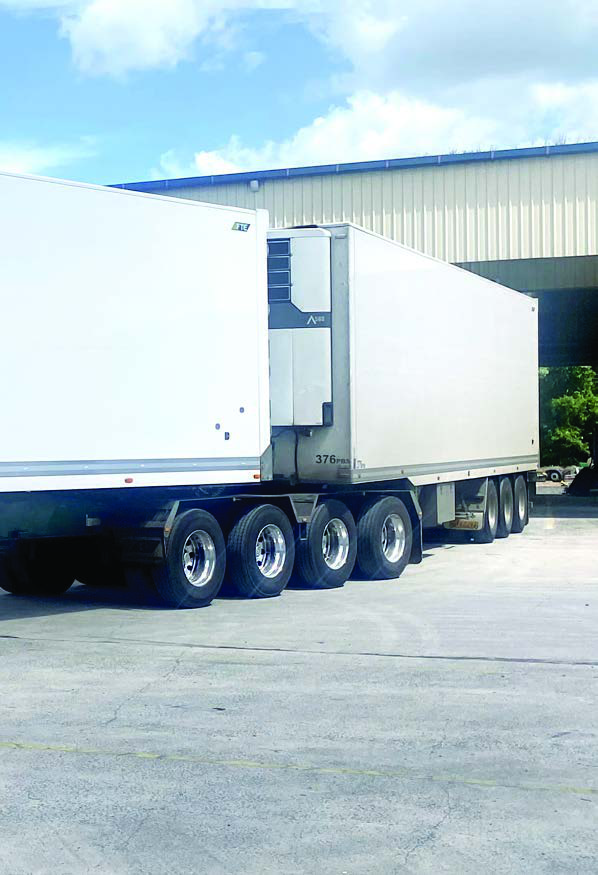
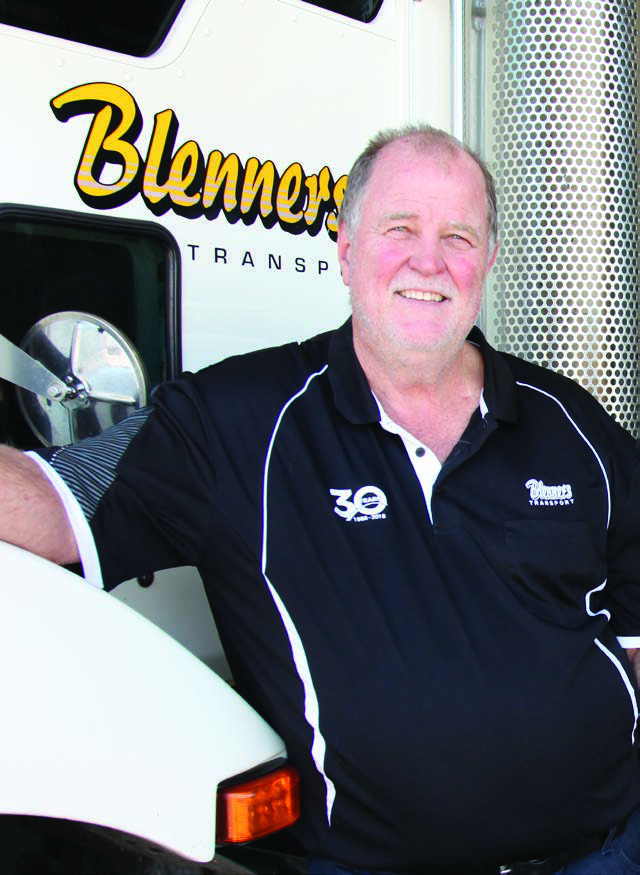
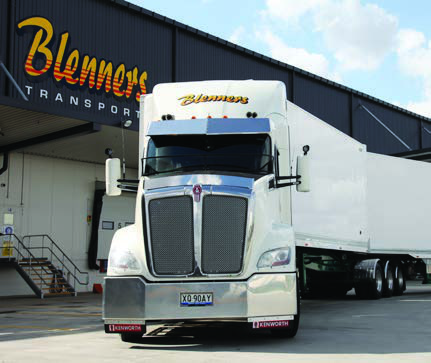
ture
This year, around 20 new Kenworths
with Cummins X15 power will be put into
service – a far cry from the days when Les
and Judy wondered if they could afford to
put one new truck on the road a year!
“We have a very good relationship with
Cummins,” he says. “We get good support
from Cummins nationwide and we pay
a lot of attention to our own preventive
maintenance and trend analysis.”
While future power sources are a focus
at Blenners, higher productivity vehicles,
operating under PBS guidelines, are in the
spotlight too, with the number of 38-pallet
B-doubles in the fleet steadily increasing,
with close to 20 in service at the time
of writing.
Replacing 34-pallet B-doubles, the new
bigger capacity units feature a quad-axle
lead trailer and operate at 73 tonnes
over a length of 28.1 metres, with 16
pallet spaces in the lead trailer and 22 in
the second.
Three PBS A-doubles, operating at a
gross weight of 91 tonnes over a length
of 30 metres, are also proving their
value, running from far north Queensland
to Derrimut in Melbourne. Three more
A-doubles will be put into service in 2023
on this freight route.
Blennerhassett’s involvement in the
banana industry hasn’t accrued just
through his trucking business. Before he
and Judy ventured into trucking in 1988,
their roots were in farming – bananas and
sugarcane. “The reason we bought a truck
in 1988 – a Kenworth T650 – was to cart
our own bananas to market,” he recalls.
Understanding farmers’ needs
The business has grown on the back
of customer service – understanding
the needs of farmers and providing the
flexibility that has encouraged a strong
relationship with Blenners Transport as a
family company. “As our customers have
grown, we’ve grown with them,”
he explains.
Blenners’ continuation as a family
company long term also seems assured
with Les and Judy’s two sons involved in
the business, Roger as Brisbane manager
and Ben as Tully manager.
The company operates eight depots
in Queensland – Cairns, Mareeba,
Tully, Innisfail, Townsville, Mackay,
Rockhampton and Brisbane – and
offers storage and warehouse services
for freezer, chiller and dry freight at its
Brisbane, Townsville and Cairns facilities.
Construction of a new $12 million facility
in Cairns is about to begin while a new
Rockhampton depot will follow in 2024.
We get good support
from Cummins
nationwide and we
pay a lot of attention
to our own preventive
maintenance and
trend analysis.
Les Blennerhassett…
looking at next
generation power
options.
Higher productivity vehicles
such as this 38-pallet
B-double are finding their way
into the Blenners fleet.
Blenners fleet moves up to 300,000 cartons
of bananas a week out of north Queensland.
31
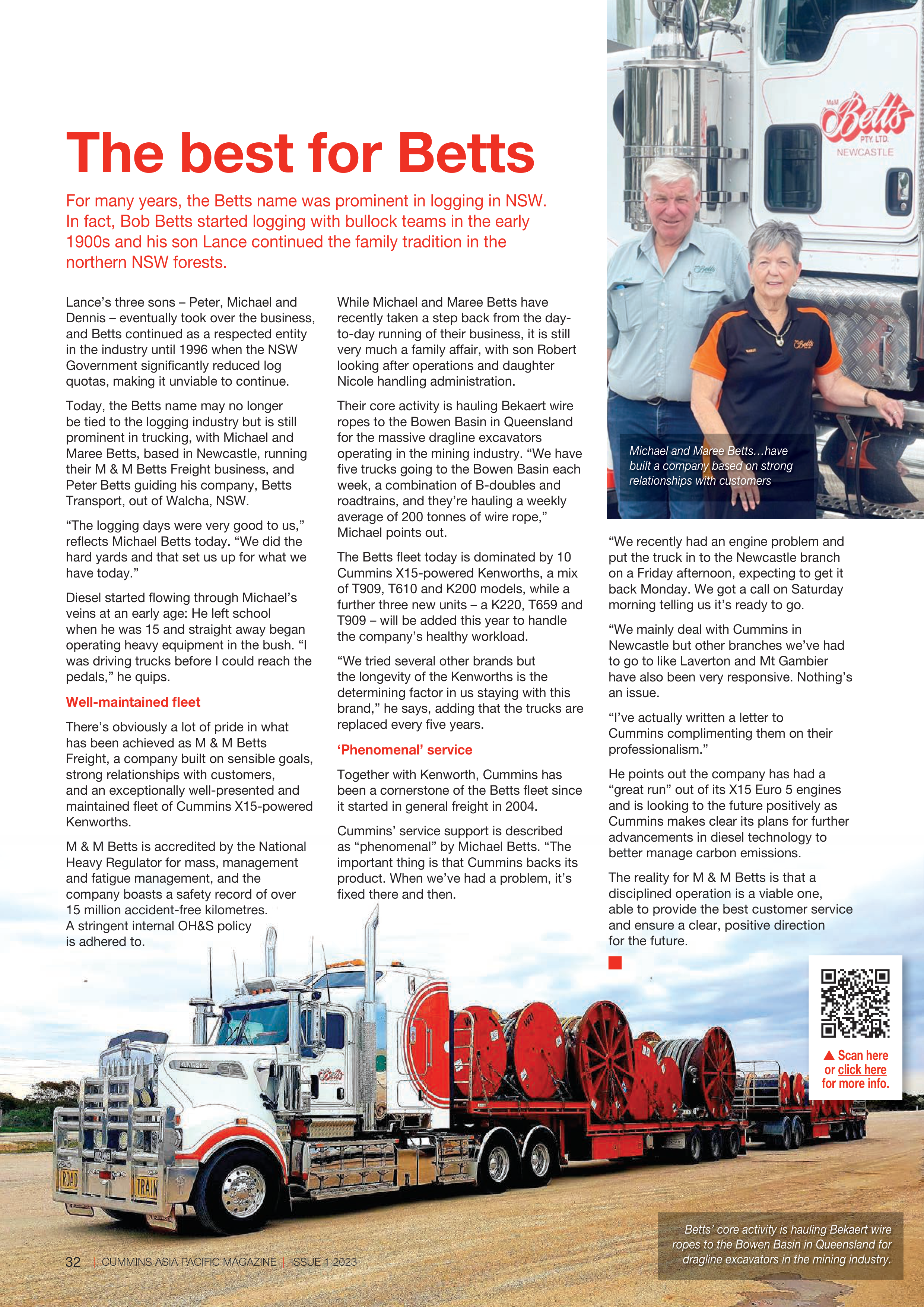
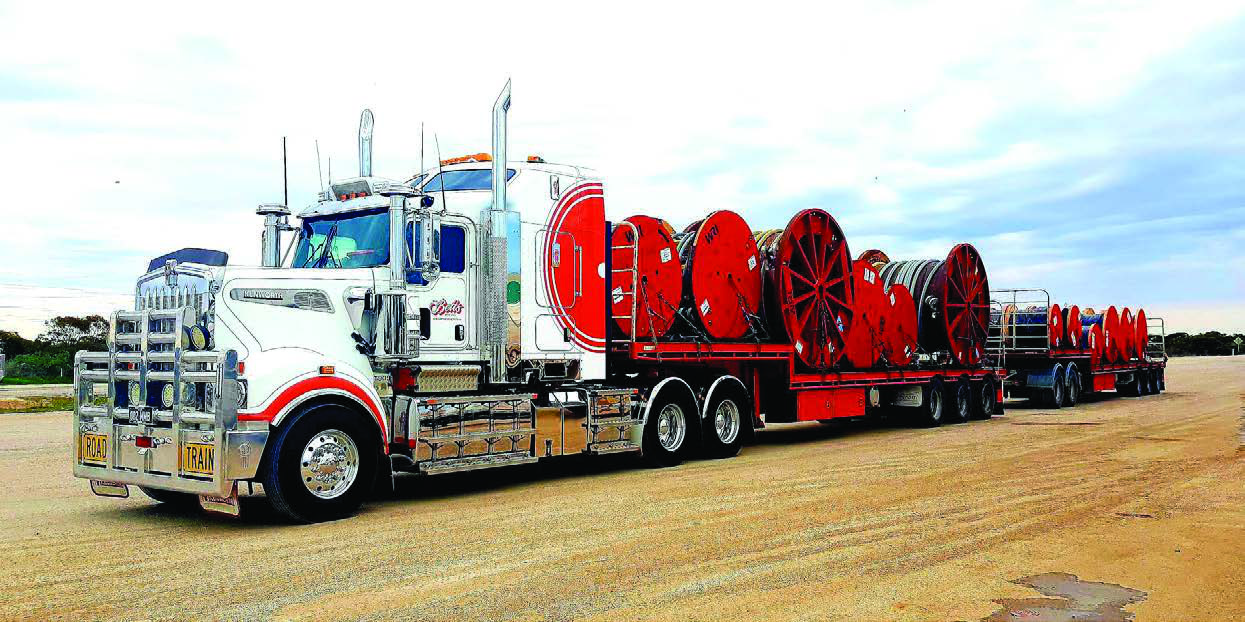
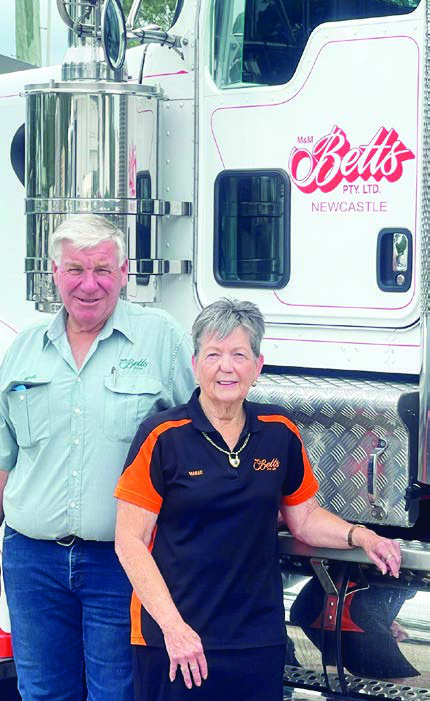

The best for Betts
For many years, the Betts name was prominent in logging in NSW.
In fact, Bob Betts started logging with bullock teams in the early
1900s and his son Lance continued the family tradition in the
northern NSW forests.
Lance’s three sons – Peter, Michael and
Dennis – eventually took over the business,
and Betts continued as a respected entity
in the industry until 1996 when the NSW
Government significantly reduced log
quotas, making it unviable to continue.
Today, the Betts name may no longer
be tied to the logging industry but is still
prominent in trucking, with Michael and
Maree Betts, based in Newcastle, running
their M & M Betts Freight business, and
Peter Betts guiding his company, Betts
Transport, out of Walcha, NSW.
“The logging days were very good to us,”
reflects Michael Betts today. “We did the
hard yards and that set us up for what we
have today.”
Diesel started flowing through Michael’s
veins at an early age: He left school
when he was 15 and straight away began
operating heavy equipment in the bush. “I
was driving trucks before I could reach the
pedals,” he quips.
Well-maintained fleet
There’s obviously a lot of pride in what
has been achieved as M & M Betts
Freight, a company built on sensible goals,
strong relationships with customers,
and an exceptionally well-presented and
maintained fleet of Cummins X15-powered
Kenworths.
M & M Betts is accredited by the National
Heavy Regulator for mass, management
and fatigue management, and the
company boasts a safety record of over
15 million accident-free kilometres.
A stringent internal OH&S policy
is adhered to.
While Michael and Maree Betts have
recently taken a step back from the day-
to-day running of their business, it is still
very much a family affair, with son Robert
looking after operations and daughter
Nicole handling administration.
Their core activity is hauling Bekaert wire
ropes to the Bowen Basin in Queensland
for the massive dragline excavators
operating in the mining industry. “We have
five trucks going to the Bowen Basin each
week, a combination of B-doubles and
roadtrains, and they’re hauling a weekly
average of 200 tonnes of wire rope,”
Michael points out.
The Betts fleet today is dominated by 10
Cummins X15-powered Kenworths, a mix
of T909, T610 and K200 models, while a
further three new units – a K220, T659 and
T909 – will be added this year to handle
the company’s healthy workload.
“We tried several other brands but
the longevity of the Kenworths is the
determining factor in us staying with this
brand,” he says, adding that the trucks are
replaced every five years.
‘Phenomenal’ service
Together with Kenworth, Cummins has
been a cornerstone of the Betts fleet since
it started in general freight in 2004.
Cummins’ service support is described
as “phenomenal” by Michael Betts. “The
important thing is that Cummins backs its
product. When we’ve had a problem, it’s
fixed there and then.
“We recently had an engine problem and
put the truck in to the Newcastle branch
on a Friday afternoon, expecting to get it
back Monday. We got a call on Saturday
morning telling us it’s ready to go.
“We mainly deal with Cummins in
Newcastle but other branches we’ve had
to go to like Laverton and Mt Gambier
have also been very responsive. Nothing’s
an issue.
“I’ve actually written a letter to
Cummins complimenting them on their
professionalism.”
He points out the company has had a
“great run” out of its X15 Euro 5 engines
and is looking to the future positively as
Cummins makes clear its plans for further
advancements in diesel technology to
better manage carbon emissions.
The reality for M & M Betts is that a
disciplined operation is a viable one,
able to provide the best customer service
and ensure a clear, positive direction
for the future.
Michael and Maree Betts…have
built a company based on strong
relationships with customers
Betts’ core activity is hauling Bekaert wire
ropes to the Bowen Basin in Queensland for
dragline excavators in the mining industry.
▲
Scan here
or click here
for more info.
32
|
CUMMINS ASIA PACIFIC MAGAZINE
|
ISSUE 1 2023
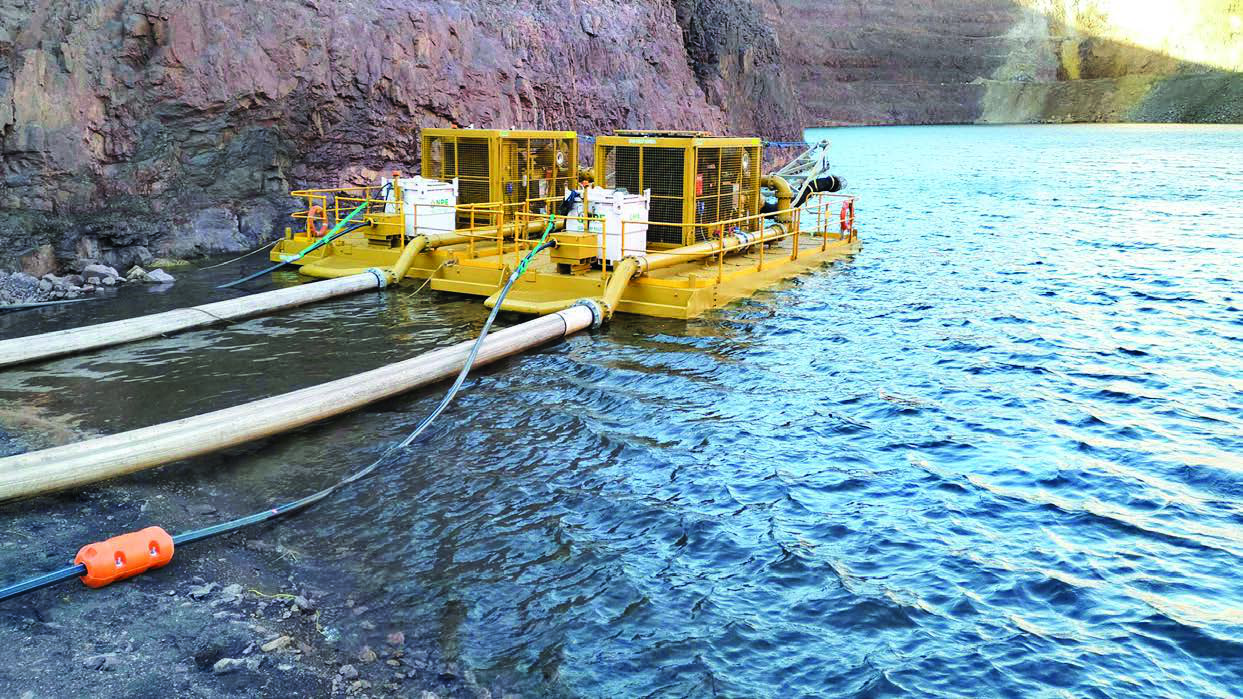
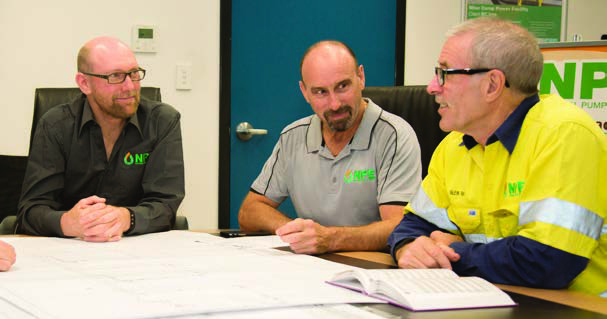

Punishing in the Pilbara
Mine dewatering:
There’s no glory in mine dewatering, especially in a
remote region like the Pilbara in Western Australia,
where diesel-driven pumps are asked to slog it out
24/7 in ferocious heat in deep pits, lifting thousands
of litres of water a minute to the surface.
Bulletproof diesel workhorses are indeed the name of the game,
as National Pump & Energy (NPE) knows only too well.
“Dewatering is a critical business,” says Jeremy Collins, General
Manager - West for NPE.
“Equipment must be the best you can buy because you don’t
want on-going maintenance problems. You can’t afford to lose
a pump on site. If you lose a critical component of a dewatering
system, it can stop a mine.”
NPE has a fleet of close to 400 Cummins engines for the wide
range of water management projects it gets involved in around
the country, from the supply of a single pump to the design,
construction and installation of turn-key custom-built equipment
and systems.
A recent project for NPE was the supply of four pumps for
dewatering at the Sino Iron project in the Pilbara. Operated by
CITIC Pacific Mining, the project is the largest magnetite iron ore
mining and processing operation in Australia.
“Pump efficiency is very much tied to engine performance,”
Jeremy Collins points out. “Use an inferior engine and you’ll get
inferior pump performance.”
Cummins QST30 CustomPaks
Four 1000 hp Cummins QST30 CustomPaks coupled to Cornell
pumps were selected by NPE for the project which was won
through a normal tender process and required individual pump set
performance of 300 litres/second at a 200-metre head.
“Product quality and our ability to meet the customer’s lead
times were the key selling points,” Collins says. “The customer
was already aware of the performance of the QST30 in other
applications at Sino Iron.”
He describes the QST30, a 30-litre V12 configuration, as a
“shining light” in dewatering with its combination of power density,
flexible rpm range, and proven robustness. “We’ve been using
QST30 engines in dewatering for more than 15 years and it is a
tried and trusted workhorse,” he asserts.
Collins points to its life-to-overhaul capability of 20,000 hours,
which is best-in-class for an operation like dewatering where
engine load factors often hit 100 per cent.
Cooling capacity of the Cummins CustomPak is another key
benefit with its 50 to 55 deg.C ambient capable radiator assembly,
often tested fully in deep pits.
Woodie Woodie project
Another major project NPE is involved in is at Consolidated
Minerals’ open pit mine at Woodie Woodie in the Pilbara, which
supplies high grade manganese ore to world markets.
NPE was engaged to remove surface water from the open pit mine
so it could be expanded. To accomplish this, NPE provided and
installed a pair of pontoon-mounted pumps that had undergone
extensive engineering and they were fitted with QST30 engines
delivering 1000 hp.
The NPE package included telemetry, giving the client visibility on
the critical engine and pump data as well as pumping flow rates
(instantaneous and cumulative). Additionally, both pontoons could
be remotely started, stopped, and controlled.
Two pump stations – one being redundant – will then be set up
for sump pumping at the mine in a 10-month project using six
1050 hp QST30 powerpacks and one 800 hp QSK23 CustomPak.
NPE will operate and maintain the pump stations, the operational
one ramping up from 500 litres/sec to 750 litres/sec and then
1000 litres/sec.
While the pump sets for the Sino Iron project were sold to CITIC
Pacific, NPE rented out the units for the Woodie Woodie project.
NPE actually lays claim to having the largest ready-to-rent pump
fleet in the country, with more than 6000 dewatering pumps and
generators in its hire fleet. The business has a national footprint
spanning 12 branches across five states and one territory.
NPE had its origins in 2001 when Campbell Mining Services (CMS)
was formed in Mackay, QLD, with a vision to one day be the
largest dewatering pump company in the country. In 2014, CMS
– trading as National Pump Services – merged with Perth-based
Resource Equipment Rental to become National Pump & Energy.
Pontoon-mounted pumps
powered by Cummins
QST30 engines at Woodie
Woodie manganese mine.
NPE General Manager – West,
Jeremy Collins (left), discusses a
project with engineering colleagues.
▲
Scan here
or click here
for more info.
33
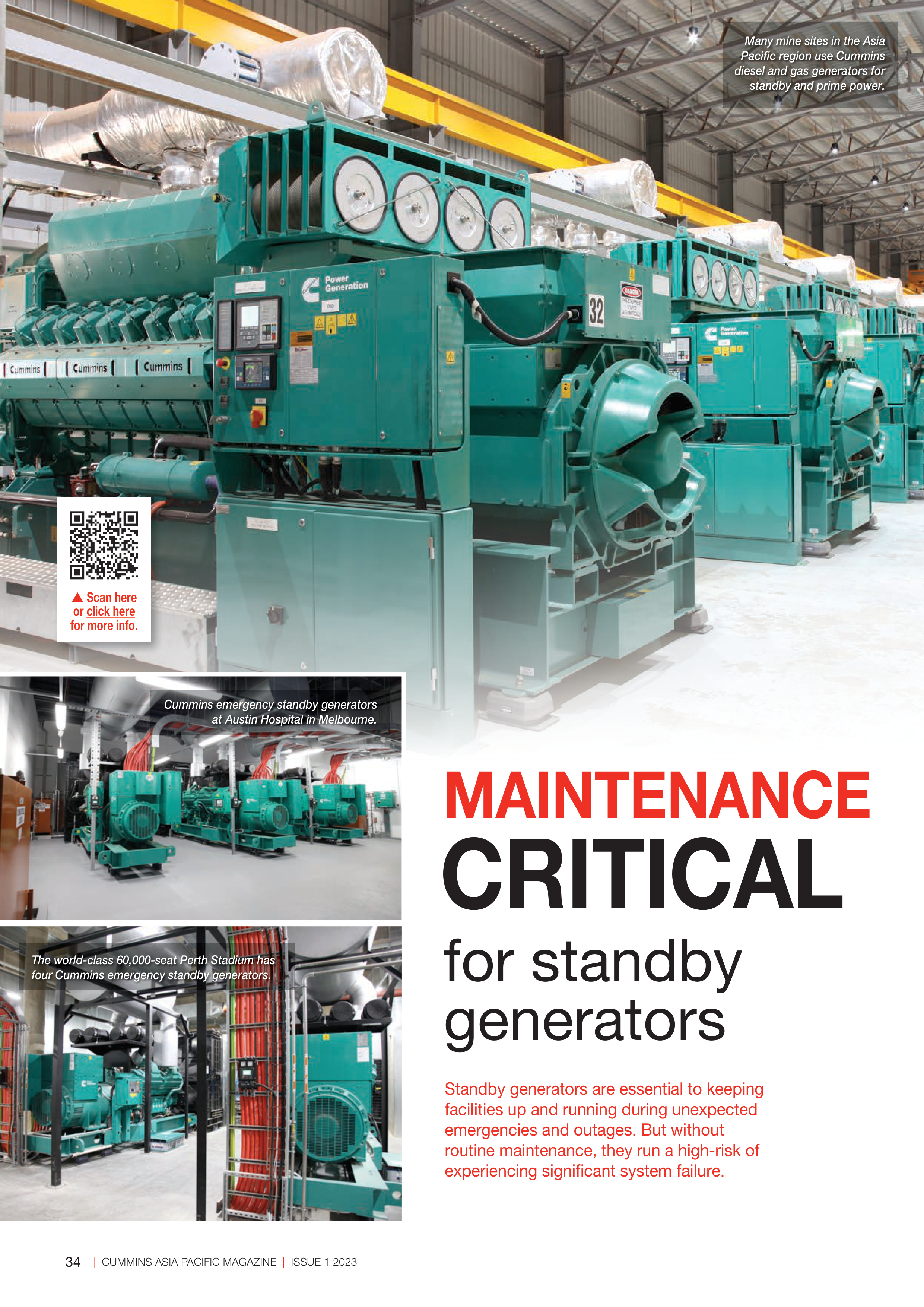
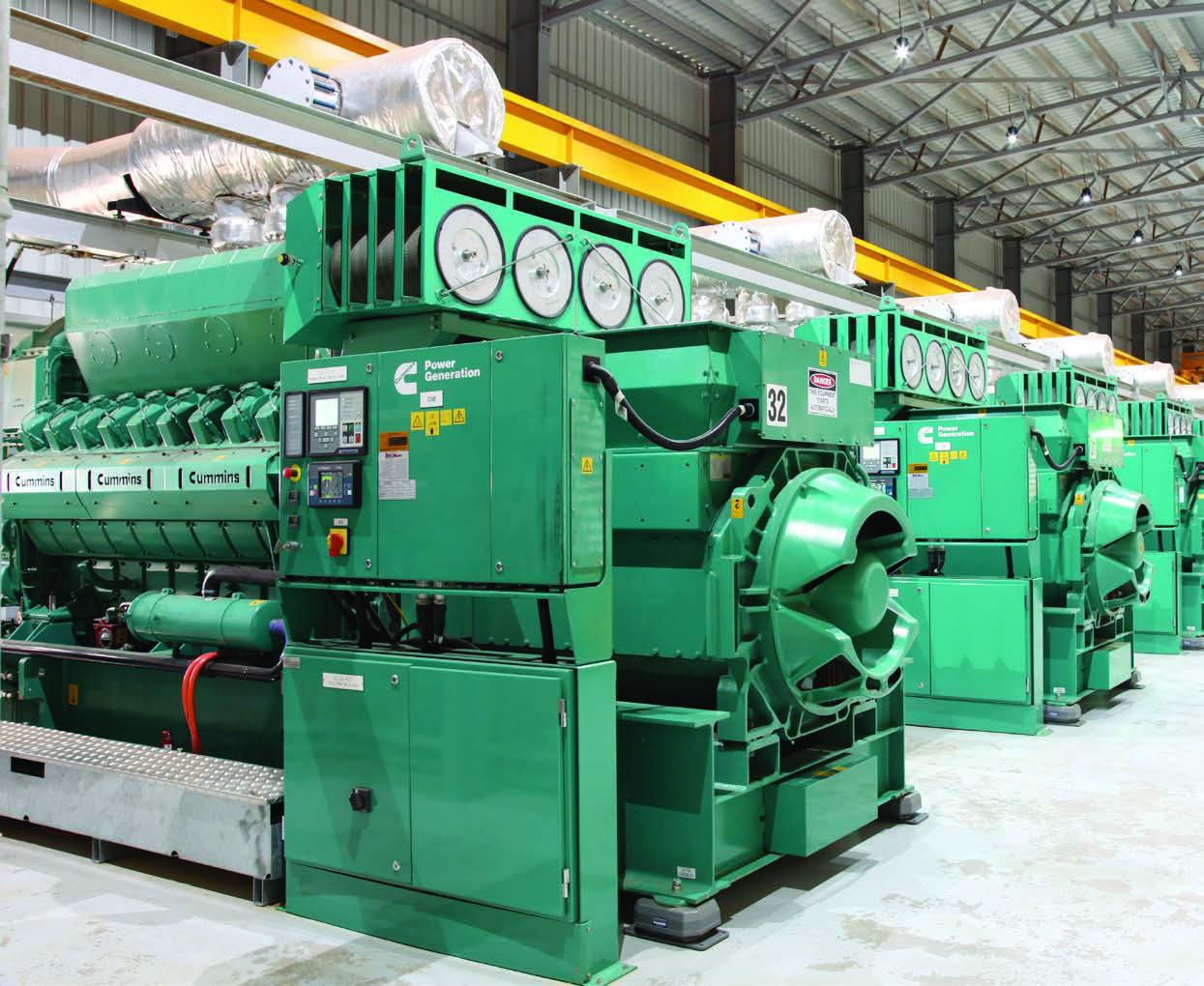
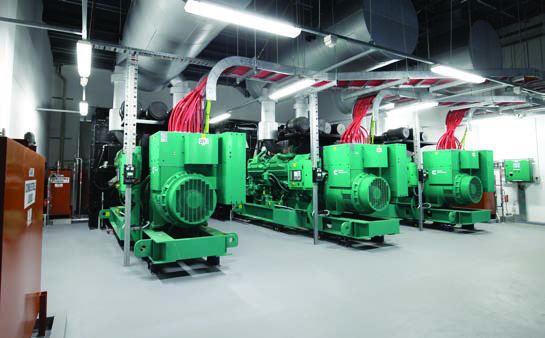
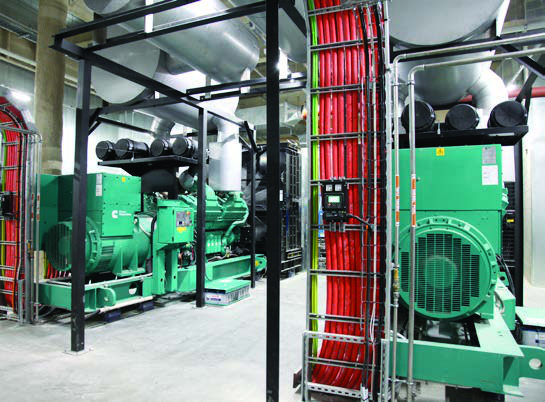

Maintenance
Standby generators are essential to keeping
facilities up and running during unexpected
emergencies and outages. But without
routine maintenance, they run a high-risk of
experiencing significant system failure.
for standby
generators
Many mine sites in the Asia
Pacific region use Cummins
diesel and gas generators for
standby and prime power.
Cummins emergency standby generators
at Austin Hospital in Melbourne.
The world-class 60,000-seat Perth Stadium has
four Cummins emergency standby generators.
critical
▲
Scan here
or click here
for more info.
34
|
CUMMINS ASIA PACIFIC MAGAZINE
|
ISSUE 1 2023
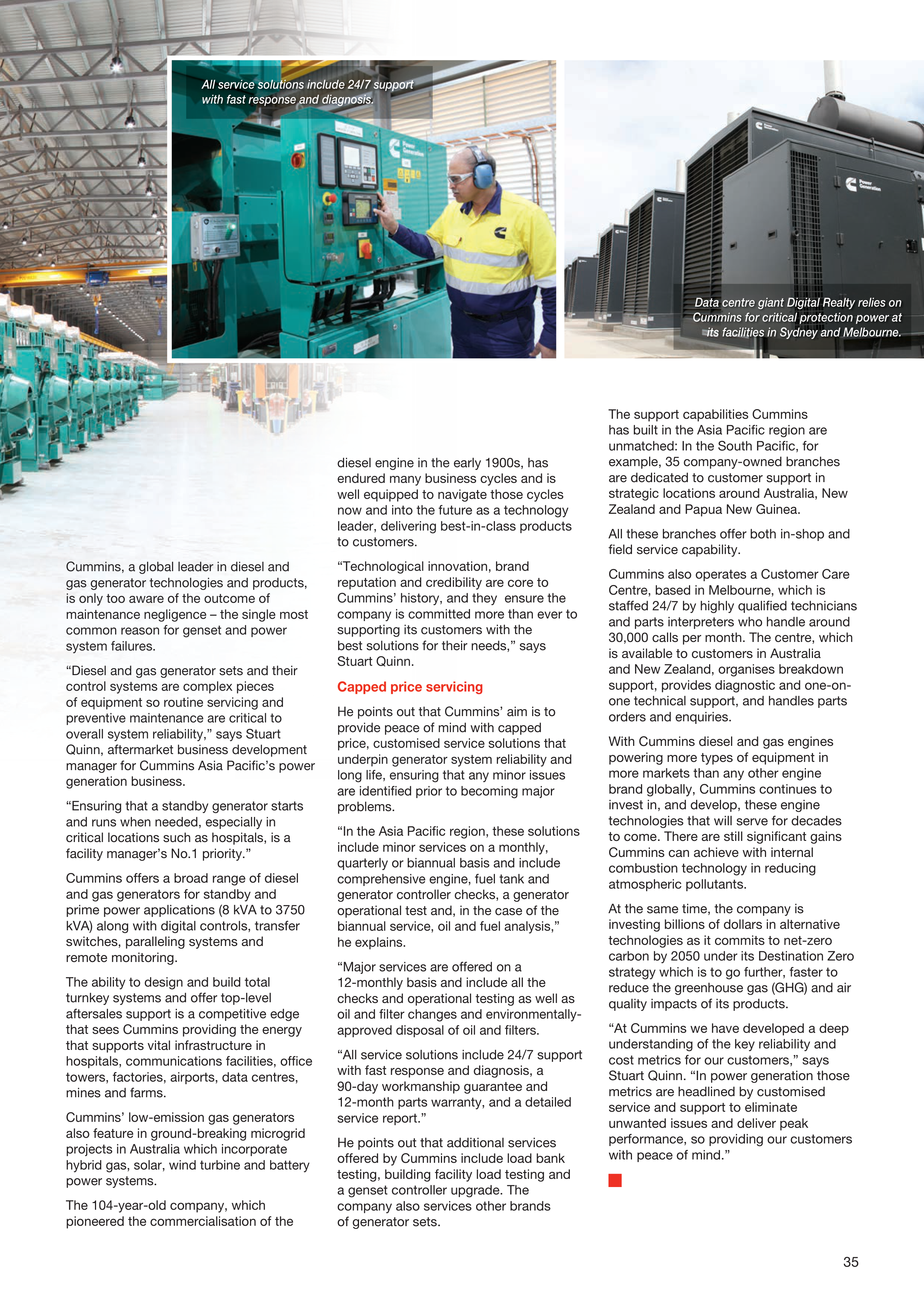
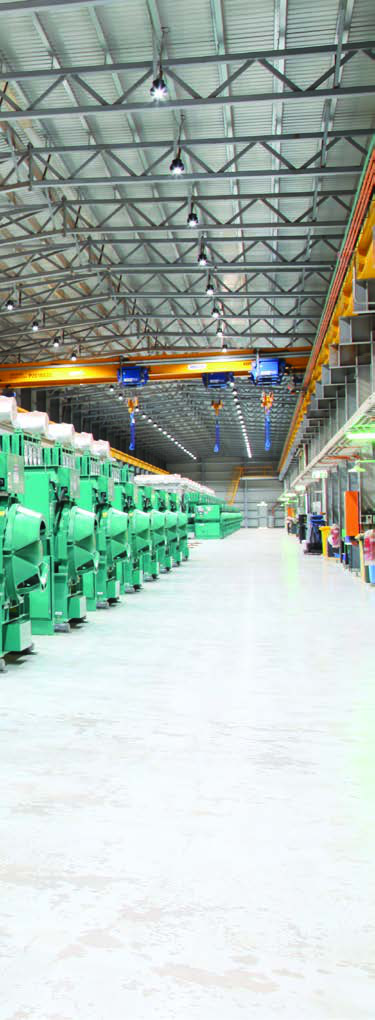

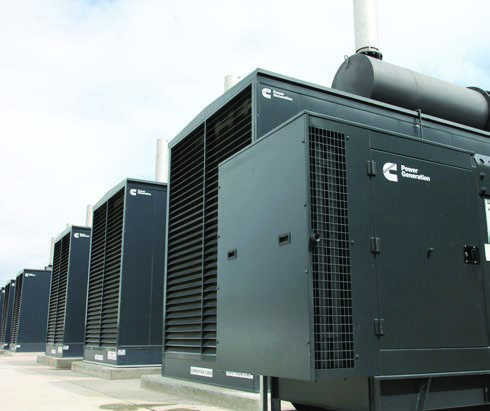
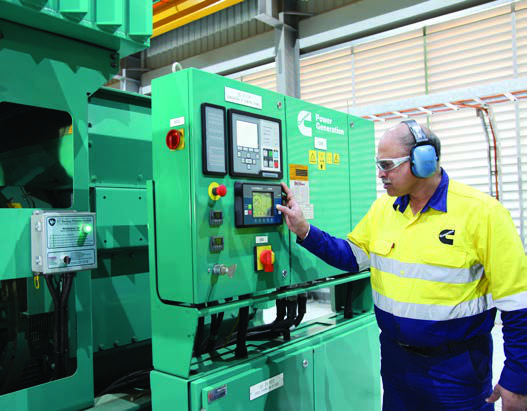
Cummins, a global leader in diesel and
gas generator technologies and products,
is only too aware of the outcome of
maintenance negligence – the single most
common reason for genset and power
system failures.
“Diesel and gas generator sets and their
control systems are complex pieces
of equipment so routine servicing and
preventive maintenance are critical to
overall system reliability,” says Stuart
Quinn, aftermarket business development
manager for Cummins Asia Pacific’s power
generation business.
“Ensuring that a standby generator starts
and runs when needed, especially in
critical locations such as hospitals, is a
facility manager’s No.1 priority.”
Cummins offers a broad range of diesel
and gas generators for standby and
prime power applications (8 kVA to 3750
kVA) along with digital controls, transfer
switches, paralleling systems and
remote monitoring.
The ability to design and build total
turnkey systems and offer top-level
aftersales support is a competitive edge
that sees Cummins providing the energy
that supports vital infrastructure in
hospitals, communications facilities, office
towers, factories, airports, data centres,
mines and farms.
Cummins’ low-emission gas generators
also feature in ground-breaking microgrid
projects in Australia which incorporate
hybrid gas, solar, wind turbine and battery
power systems.
The 104-year-old company, which
pioneered the commercialisation of the
diesel engine in the early 1900s, has
endured many business cycles and is
well equipped to navigate those cycles
now and into the future as a technology
leader, delivering best-in-class products
to customers.
“Technological innovation, brand
reputation and credibility are core to
Cummins’ history, and they ensure the
company is committed more than ever to
supporting its customers with the
best solutions for their needs,” says
Stuart Quinn.
Capped price servicing
He points out that Cummins’ aim is to
provide peace of mind with capped
price, customised service solutions that
underpin generator system reliability and
long life, ensuring that any minor issues
are identified prior to becoming major
problems.
“In the Asia Pacific region, these solutions
include minor services on a monthly,
quarterly or biannual basis and include
comprehensive engine, fuel tank and
generator controller checks, a generator
operational test and, in the case of the
biannual service, oil and fuel analysis,”
he explains.
“Major services are offered on a
12-monthly basis and include all the
checks and operational testing as well as
oil and filter changes and environmentally-
approved disposal of oil and filters.
“All service solutions include 24/7 support
with fast response and diagnosis, a
90-day workmanship guarantee and
12-month parts warranty, and a detailed
service report.”
He points out that additional services
offered by Cummins include load bank
testing, building facility load testing and
a genset controller upgrade. The
company also services other brands
of generator sets.
The support capabilities Cummins
has built in the Asia Pacific region are
unmatched: In the South Pacific, for
example, 35 company-owned branches
are dedicated to customer support in
strategic locations around Australia, New
Zealand and Papua New Guinea.
All these branches offer both in-shop and
field service capability.
Cummins also operates a Customer Care
Centre, based in Melbourne, which is
staffed 24/7 by highly qualified technicians
and parts interpreters who handle around
30,000 calls per month. The centre, which
is available to customers in Australia
and New Zealand, organises breakdown
support, provides diagnostic and one-on-
one technical support, and handles parts
orders and enquiries.
With Cummins diesel and gas engines
powering more types of equipment in
more markets than any other engine
brand globally, Cummins continues to
invest in, and develop, these engine
technologies that will serve for decades
to come. There are still significant gains
Cummins can achieve with internal
combustion technology in reducing
atmospheric pollutants.
At the same time, the company is
investing billions of dollars in alternative
technologies as it commits to net-zero
carbon by 2050 under its Destination Zero
strategy which is to go further, faster to
reduce the greenhouse gas (GHG) and air
quality impacts of its products.
“At Cummins we have developed a deep
understanding of the key reliability and
cost metrics for our customers,” says
Stuart Quinn. “In power generation those
metrics are headlined by customised
service and support to eliminate
unwanted issues and deliver peak
performance, so providing our customers
with peace of mind.”
All service solutions include 24/7 support
with fast response and diagnosis.
Data centre giant Digital Realty relies on
Cummins for critical protection power at
its facilities in Sydney and Melbourne.
35
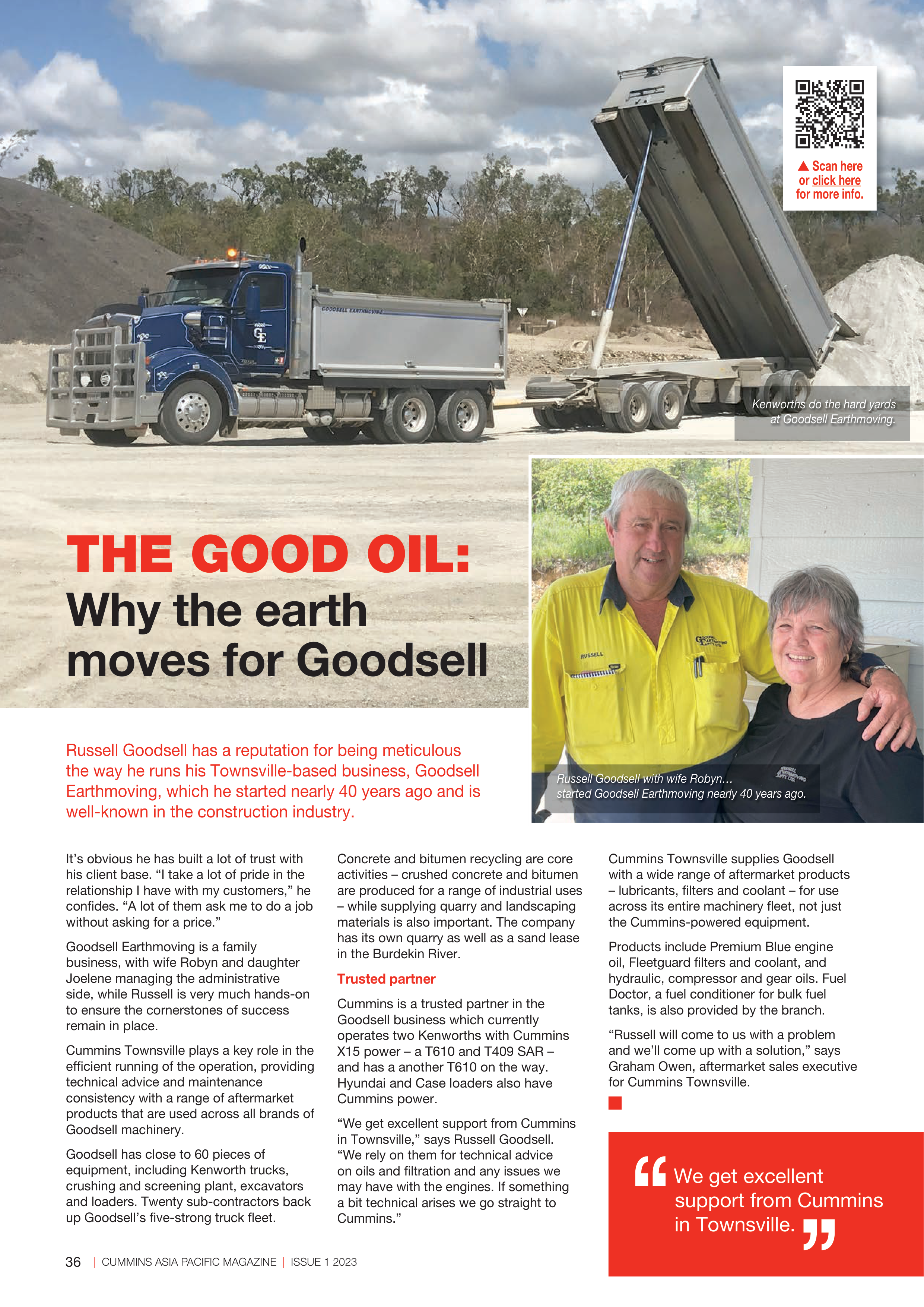
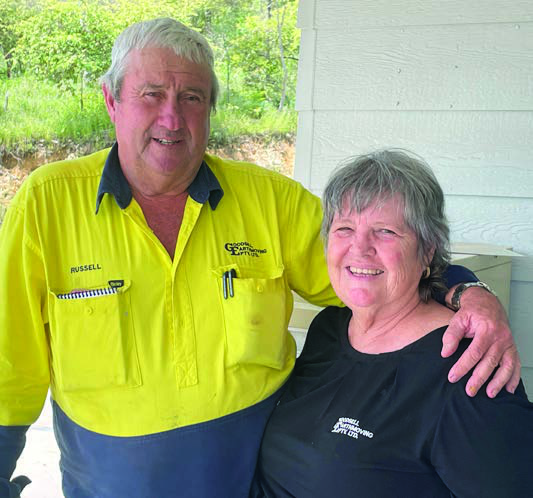

The good oil:
Why the earth
moves for Goodsell
Russell Goodsell has a reputation for being meticulous
the way he runs his Townsville-based business, Goodsell
Earthmoving, which he started nearly 40 years ago and is
well-known in the construction industry.
It’s obvious he has built a lot of trust with
his client base. “I take a lot of pride in the
relationship I have with my customers,” he
confides. “A lot of them ask me to do a job
without asking for a price.”
Goodsell Earthmoving is a family
business, with wife Robyn and daughter
Joelene managing the administrative
side, while Russell is very much hands-on
to ensure the cornerstones of success
remain in place.
Cummins Townsville plays a key role in the
efficient running of the operation, providing
technical advice and maintenance
consistency with a range of aftermarket
products that are used across all brands of
Goodsell machinery.
Goodsell has close to 60 pieces of
equipment, including Kenworth trucks,
crushing and screening plant, excavators
and loaders. Twenty sub-contractors back
up Goodsell’s five-strong truck fleet.
Concrete and bitumen recycling are core
activities – crushed concrete and bitumen
are produced for a range of industrial uses
– while supplying quarry and landscaping
materials is also important. The company
has its own quarry as well as a sand lease
in the Burdekin River.
Trusted partner
Cummins is a trusted partner in the
Goodsell business which currently
operates two Kenworths with Cummins
X15 power – a T610 and T409 SAR –
and has a another T610 on the way.
Hyundai and Case loaders also have
Cummins power.
“We get excellent support from Cummins
in Townsville,” says Russell Goodsell.
“We rely on them for technical advice
on oils and filtration and any issues we
may have with the engines. If something
a bit technical arises we go straight to
Cummins.”
Cummins Townsville supplies Goodsell
with a wide range of aftermarket products
– lubricants, filters and coolant – for use
across its entire machinery fleet, not just
the Cummins-powered equipment.
Products include Premium Blue engine
oil, Fleetguard filters and coolant, and
hydraulic, compressor and gear oils. Fuel
Doctor, a fuel conditioner for bulk fuel
tanks, is also provided by the branch.
“Russell will come to us with a problem
and we’ll come up with a solution,” says
Graham Owen, aftermarket sales executive
for Cummins Townsville.
We get excellent
support from Cummins
in Townsville.
Kenworths do the hard yards
at Goodsell Earthmoving.
Russell Goodsell with wife Robyn…
started Goodsell Earthmoving nearly 40 years ago.
▲
Scan here
or click here
for more info.
36
|
CUMMINS ASIA PACIFIC MAGAZINE
|
ISSUE 1 2023

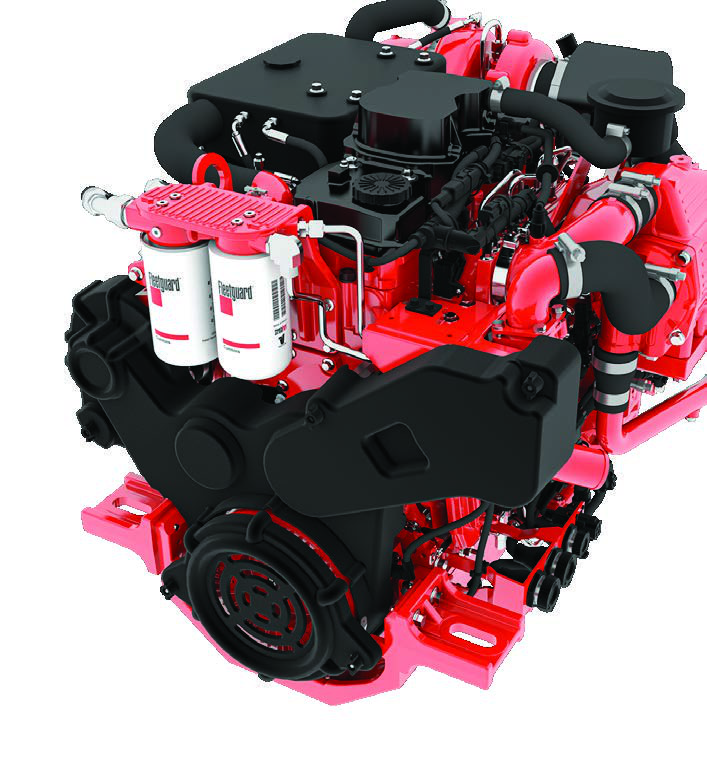

Available as a stand-alone engine with
controls system, as a generator set or
as a hybrid-ready package, the light but
power dense B4.5 is designed for both
recreational and commercial marine
applications.
The B4.5 may be small and compact but
it packs a mighty punch, offering a power
range of 150-250 hp in propulsion format
and 76-112 kWm (50 Hz) prime power in
auxiliary format.
“This robust, fuel efficient pairing
continues the tradition of the time-
honoured Cummins B-series family of
which millions of engines have been built
since its inception in the mid-1980s,” said
Wally Kafer, marine business manager for
Cummins South Pacific.
“The B-series has found its way into every
conceivable application around the world,
and the latest evolution now landing on
Australian and New Zealand shores meets
even higher reliability, durability and
power density targets and is also quieter
and cleaner.”
Based on the proven industrial
engine, the new B4.5 marine
powerhouse complies with IMO II and
US EPA Tier 3 emissions regulations
without the use of aftertreatment.
It also expands Cummins’ hybrid
compatible packages beyond the current
QSB6.7 and QSL9 and shares many
of the proven QSB6.7 marine specific
components in a smaller footprint.
As a propulsion engine, the B4.5 is suited
to shaft drive and stern drive applications.
Best-in-class fuel economy
Thanks to its optimised turbocharging, the
4.5-litre engine features best-in-class peak
torque for greater acceleration and also to
make it easier to maintain speed, even for
vessels with high loads.
The high-pressure common rail fuel
system delivers class-leading fuel
consumption and greatly reduced noise
and vibration while the cast water-cooled
exhaust manifold makes for lower surface
temperatures and improved overall
performance.
The air intake system includes commercial
and recreational reusable washable air
cleaners for more cost savings.
The electrical system is offered in both 12
and 24 volts with simple electrical interface
connections that can be integrated with
Cummins’ C Command engine monitoring
systems. The product also features engine
protection and derate reducing the risk of
catastrophic failure.
Cummins is confident in the total reliability
of its engines and generator sets. The
B4.5 engine is available with a base
warranty of 24 months or 1000 hours for
high output and light duty applications; 24
months or 3000 hours for intermittent duty
applications; or 24 months or unlimited
hours for continuous duty and prime
power applications.
The B4.5 marine offerings are backed by
Cummins’ extensive network of over
9,000 service and dealer locations around
the globe.
PACKING A
MIGHTY PUNCH
Cummins has announced availability of its new
hybrid-compatible B4.5 propulsion and auxiliary
engine for Asia Pacific marine markets.
The latest evolution
of the Cummins
B-series meets even
higher reliability,
durability and power
density target, and is
quieter and cleaner.
Wally Kafer, marine guru at
Cummins South Pacific.
Cummins unveils new
B4.5 marine engine.
▲
Scan here
or click here
for more info.
37
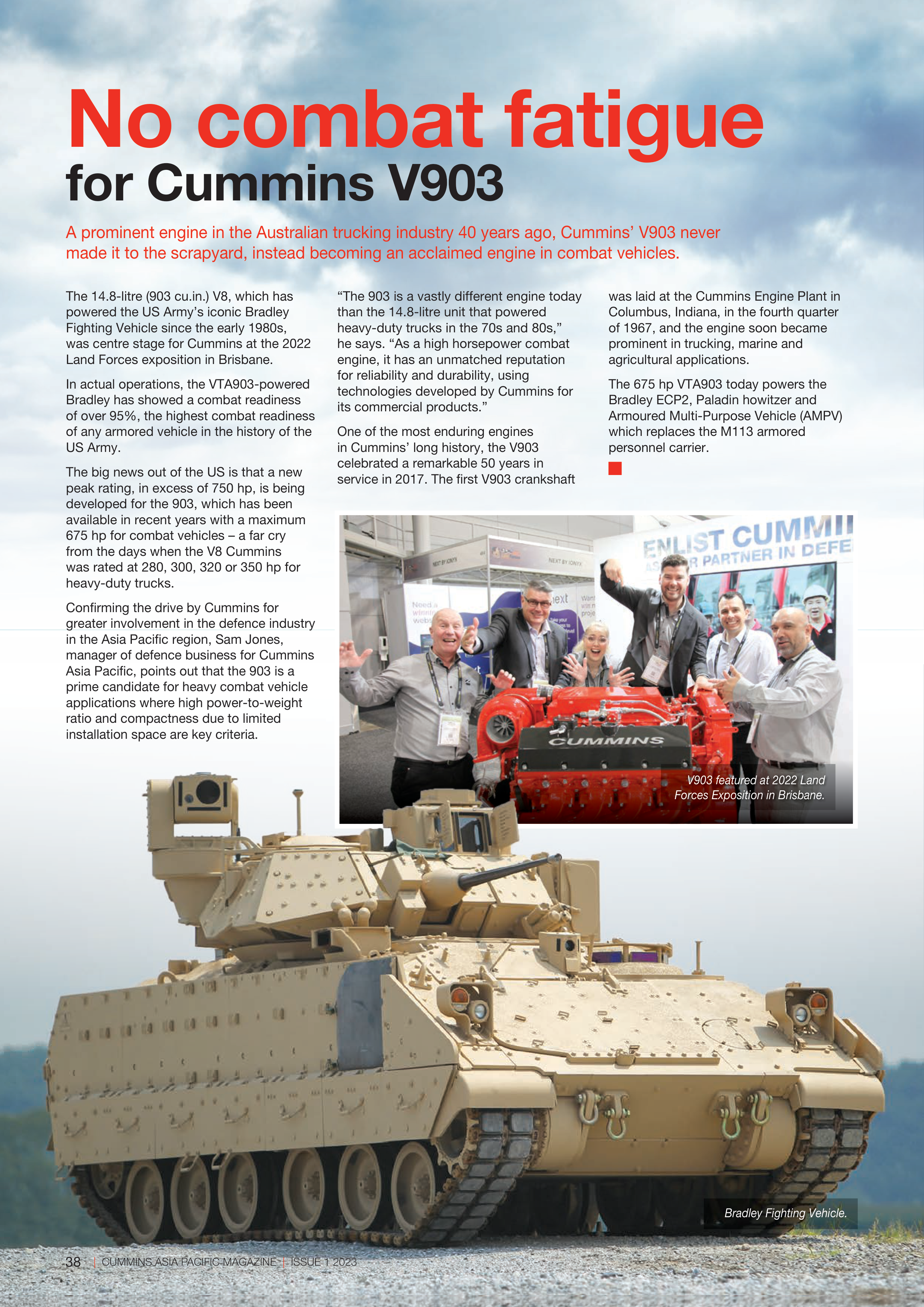
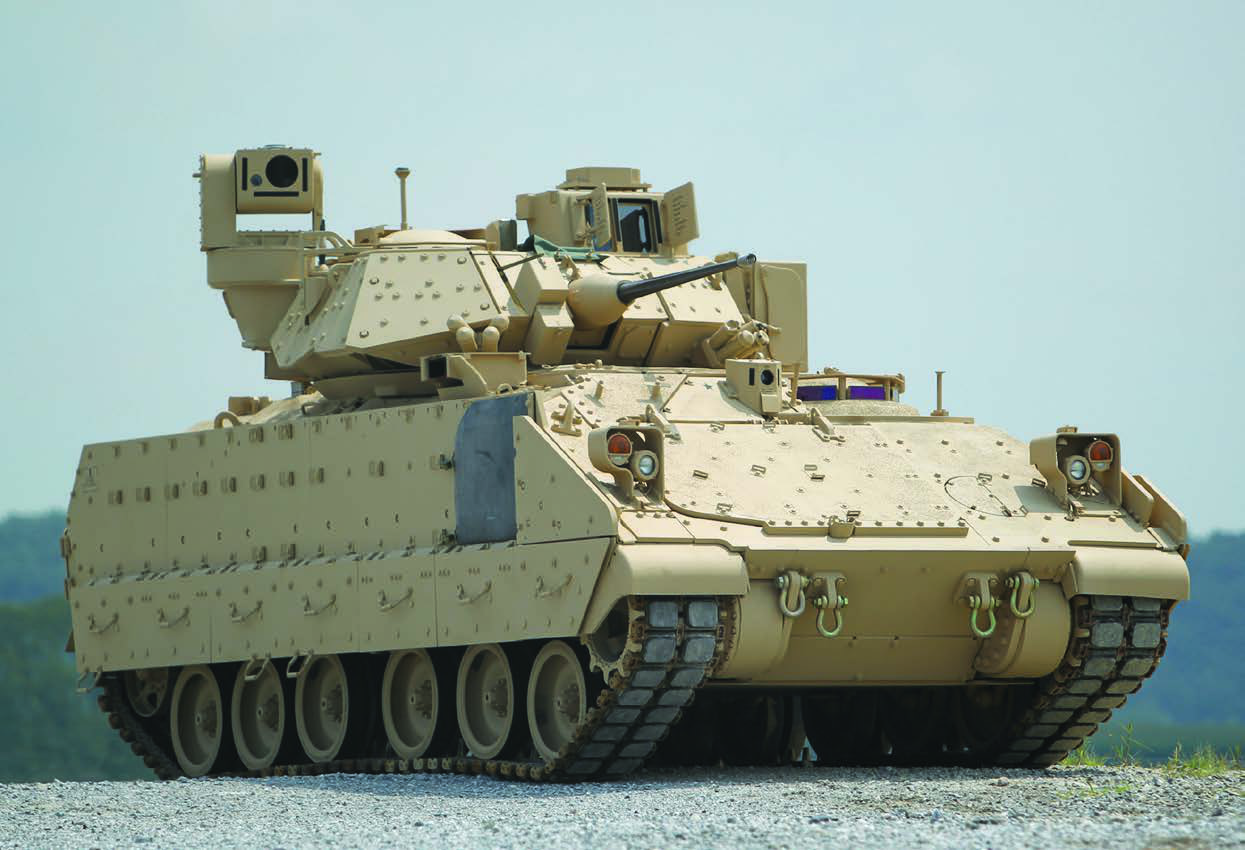
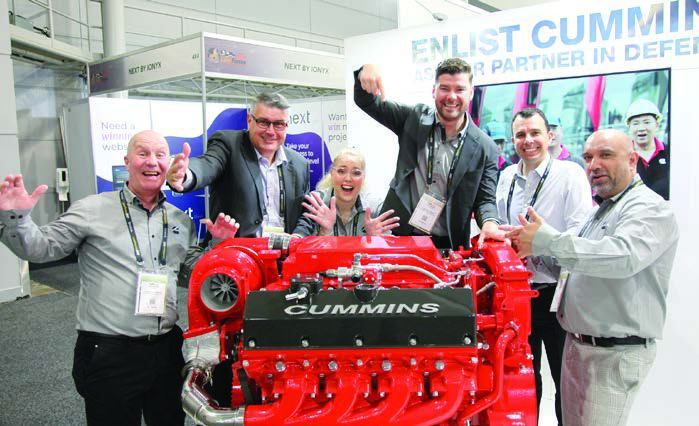
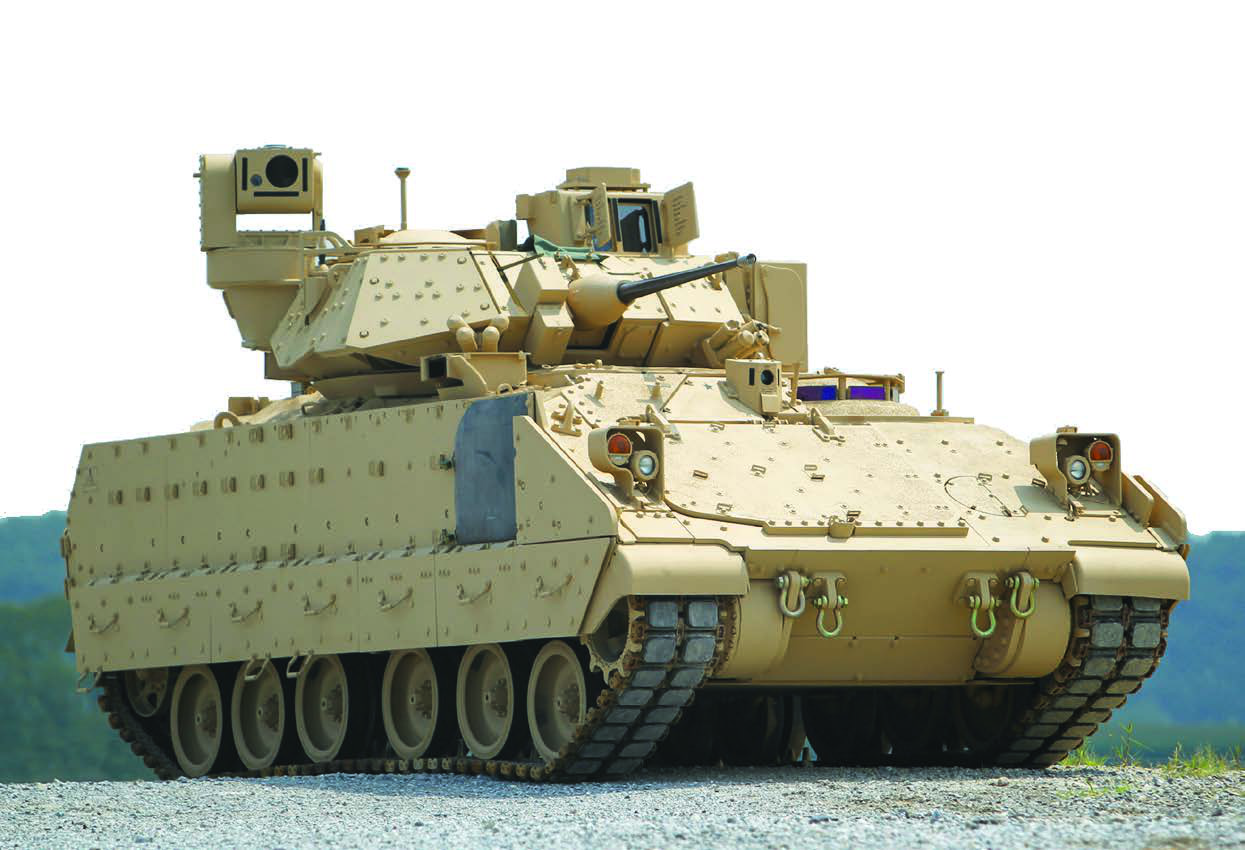


The 14.8-litre (903 cu.in.) V8, which has
powered the US Army’s iconic Bradley
Fighting Vehicle since the early 1980s,
was centre stage for Cummins at the 2022
Land Forces exposition in Brisbane.
In actual operations, the VTA903-powered
Bradley has showed a combat readiness
of over 95%, the highest combat readiness
of any armored vehicle in the history of the
US Army.
The big news out of the US is that a new
peak rating, in excess of 750 hp, is being
developed for the 903, which has been
available in recent years with a maximum
675 hp for combat vehicles – a far cry
from the days when the V8 Cummins
was rated at 280, 300, 320 or 350 hp for
heavy-duty trucks.
Confirming the drive by Cummins for
greater involvement in the defence industry
in the Asia Pacific region, Sam Jones,
manager of defence business for Cummins
Asia Pacific, points out that the 903 is a
prime candidate for heavy combat vehicle
applications where high power-to-weight
ratio and compactness due to limited
installation space are key criteria.
“The 903 is a vastly different engine today
than the 14.8-litre unit that powered
heavy-duty trucks in the 70s and 80s,”
he says. “As a high horsepower combat
engine, it has an unmatched reputation
for reliability and durability, using
technologies developed by Cummins for
its commercial products.”
One of the most enduring engines
in Cummins’ long history, the V903
celebrated a remarkable 50 years in
service in 2017. The first V903 crankshaft
was laid at the Cummins Engine Plant in
Columbus, Indiana, in the fourth quarter
of 1967, and the engine soon became
prominent in trucking, marine and
agricultural applications.
The 675 hp VTA903 today powers the
Bradley ECP2, Paladin howitzer and
Armoured Multi-Purpose Vehicle (AMPV)
which replaces the M113 armored
personnel carrier.
No combat fatigue
for Cummins V903
A prominent engine in the Australian trucking industry 40 years ago, Cummins’ V903 never
made it to the scrapyard, instead becoming an acclaimed engine in combat vehicles.
V903 featured at 2022 Land
Forces Exposition in Brisbane.
Bradley Fighting Vehicle.
38
|
CUMMINS ASIA PACIFIC MAGAZINE
|
ISSUE 1 2023
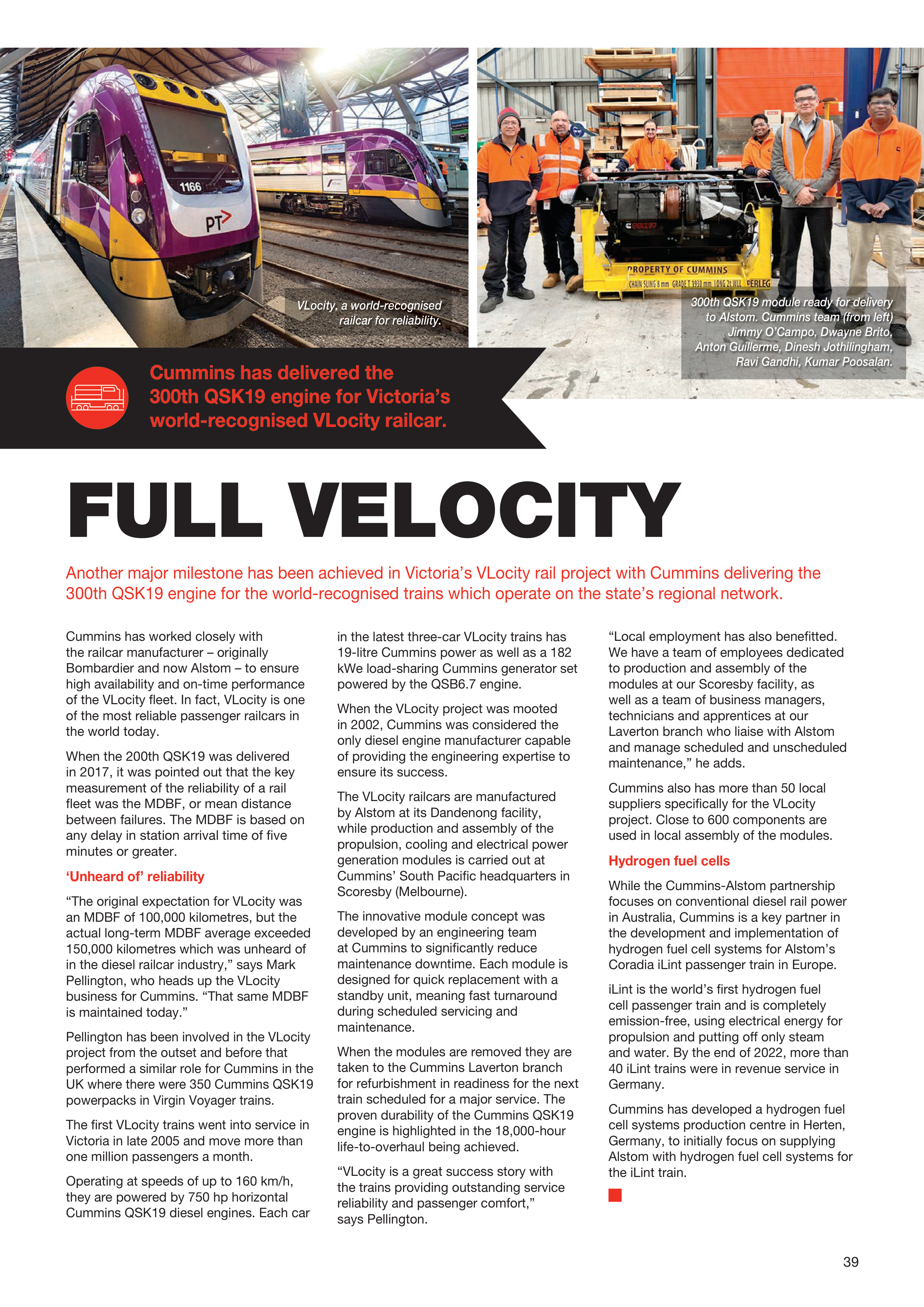
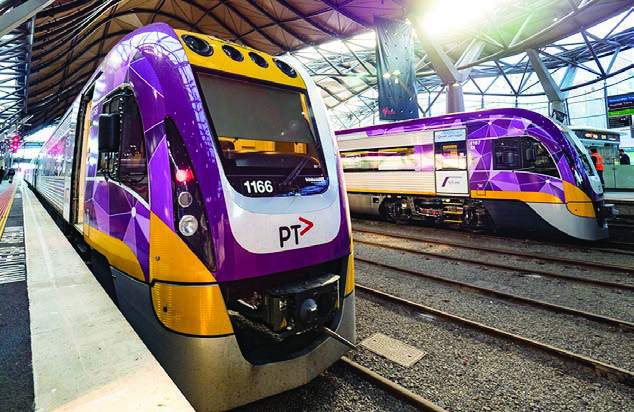
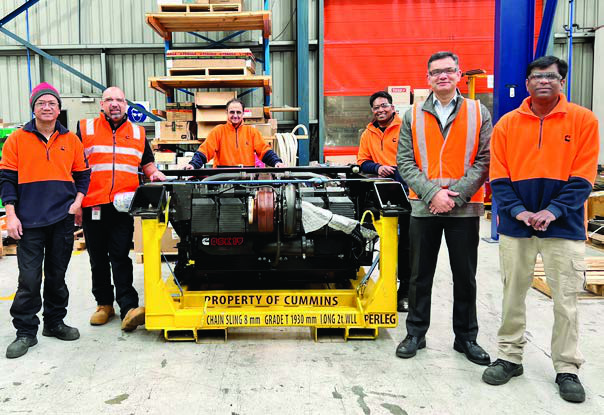

FULL VELOCITY
Another major milestone has been achieved in Victoria’s VLocity rail project with Cummins delivering the
300th QSK19 engine for the world-recognised trains which operate on the state’s regional network.
Cummins has worked closely with
the railcar manufacturer – originally
Bombardier and now Alstom – to ensure
high availability and on-time performance
of the VLocity fleet. In fact, VLocity is one
of the most reliable passenger railcars in
the world today.
When the 200th QSK19 was delivered
in 2017, it was pointed out that the key
measurement of the reliability of a rail
fleet was the MDBF, or mean distance
between failures. The MDBF is based on
any delay in station arrival time of five
minutes or greater.
‘Unheard of’ reliability
“The original expectation for VLocity was
an MDBF of 100,000 kilometres, but the
actual long-term MDBF average exceeded
150,000 kilometres which was unheard of
in the diesel railcar industry,” says Mark
Pellington, who heads up the VLocity
business for Cummins. “That same MDBF
is maintained today.”
Pellington has been involved in the VLocity
project from the outset and before that
performed a similar role for Cummins in the
UK where there were 350 Cummins QSK19
powerpacks in Virgin Voyager trains.
The first VLocity trains went into service in
Victoria in late 2005 and move more than
one million passengers a month.
Operating at speeds of up to 160 km/h,
they are powered by 750 hp horizontal
Cummins QSK19 diesel engines. Each car
in the latest three-car VLocity trains has
19-litre Cummins power as well as a 182
kWe load-sharing Cummins generator set
powered by the QSB6.7 engine.
When the VLocity project was mooted
in 2002, Cummins was considered the
only diesel engine manufacturer capable
of providing the engineering expertise to
ensure its success.
The VLocity railcars are manufactured
by Alstom at its Dandenong facility,
while production and assembly of the
propulsion, cooling and electrical power
generation modules is carried out at
Cummins’ South Pacific headquarters in
Scoresby (Melbourne).
The innovative module concept was
developed by an engineering team
at Cummins to significantly reduce
maintenance downtime. Each module is
designed for quick replacement with a
standby unit, meaning fast turnaround
during scheduled servicing and
maintenance.
When the modules are removed they are
taken to the Cummins Laverton branch
for refurbishment in readiness for the next
train scheduled for a major service. The
proven durability of the Cummins QSK19
engine is highlighted in the 18,000-hour
life-to-overhaul being achieved.
“VLocity is a great success story with
the trains providing outstanding service
reliability and passenger comfort,”
says Pellington.
“Local employment has also benefitted.
We have a team of employees dedicated
to production and assembly of the
modules at our Scoresby facility, as
well as a team of business managers,
technicians and apprentices at our
Laverton branch who liaise with Alstom
and manage scheduled and unscheduled
maintenance,” he adds.
Cummins also has more than 50 local
suppliers specifically for the VLocity
project. Close to 600 components are
used in local assembly of the modules.
Hydrogen fuel cells
While the Cummins-Alstom partnership
focuses on conventional diesel rail power
in Australia, Cummins is a key partner in
the development and implementation of
hydrogen fuel cell systems for Alstom’s
Coradia iLint passenger train in Europe.
iLint is the world’s first hydrogen fuel
cell passenger train and is completely
emission-free, using electrical energy for
propulsion and putting off only steam
and water. By the end of 2022, more than
40 iLint trains were in revenue service in
Germany.
Cummins has developed a hydrogen fuel
cell systems production centre in Herten,
Germany, to initially focus on supplying
Alstom with hydrogen fuel cell systems for
the iLint train.
Cummins has delivered the
300th QSK19 engine for Victoria’s
world-recognised VLocity railcar.
VLocity, a world-recognised
railcar for reliability.
300th QSK19 module ready for delivery
to Alstom. Cummins team (from left)
Jimmy O’Campo, Dwayne Brito,
Anton Guillerme, Dinesh Jothilingham,
Ravi Gandhi, Kumar Poosalan.
39


Cummins Asia Pacific
@CumminsAPAC
@CumminsJapan
@cumminsasiapacific
@cumminskorea
cummins.com
Follow us on:
Scan here to
contact our
Sales team.
Scan here
for Cummins
locations.
Cummins South Pacific
Cummins Southeast Asia
Cummins Philippines