
Lessons from Penetration Tests on Large-Scale Agent Systems
Kevin
Eykholt,
Dhilung
Kirat,
Xiaokui
Shu,
Jiyong
Jang,
Frederico
Araujo,
Ian
Molloy
IBM
Research
Abstract
—As
AI
systems
gain
increasing
autonomy
and
execu-
tion
capability,
the
number
of
discovered
security
vulnerabil-
ities
continues
to
rise.
However,
many
of
these
vulnerabilities
are
not
fundamentally
novel,
but
instead
reflect
recurring
classes
of
weaknesses
long
observed
in
prior
computing
sys-
tems.
Execution-capable
AI
agents
are
effectively
unbounded,
self-modifying programs that interact extensively with multiple
layers
of
the
computing
stack.
This
broad
interaction
surface
imposes
a
significant
security
burden
on
developers,
who
must
reason
about
and
secure
complex
cross-layer
behaviors.
Prior
research
has
primarily
focused
on
vulnerabilities
in
open-
source
agents
and
agent
frameworks.
In
contrast,
it
remains
unclear
whether
proprietary
agent
systems—developed
under
stricter coding standards and formal review processes—exhibit
similar
security
weaknesses.
In
this
paper,
we
present
findings
from
two
penetration
tests
conducted
in
2025
against
propri-
etary agent products and evaluate whether the security posture
of
AI
agents
has
improved
since
these
assessments.
1.
Introduction
In
2022,
OpenAI
released
ChatGPT,
a
large
language
model
(LLM)
that
demonstrated
human-like
responses
to
user
queries.
Since
then,
LLMs
have
evolved
from
simple
chatbots to AI agents, semi- or fully-automated applications
driven by an LLM. Unlike earlier chatbots that were limited
to
text
generation,
AI
agents
leverage
a
library
of
local
and
remote
tools
to
complete
predefined
tasks.
These
tools
range
from
basic
file
and
workflow
operations
to
arbitrary
model-generated
code
execution.
This
expanded
capability
lets
agents
solve
complex
problems
by
directly
interacting
with multiple components of the computing stack, including
the
filesystem,
network
services,
and
external
APIs.
It
also
introduces
new
security
considerations,
as
unsafe
or
unintended
tool
invocations
may
lead
to
violations
of
system
integrity
or
confidentiality.
The
rapid
pace
of
devel-
opment
and
deployment
may
further
increase
the
likelihood
that
such
risks
are
not
fully
identified
or
mitigated
prior
to
release.
Consequently,
vulnerabilities
in
AI
agent
systems
are
increasingly
reported
in
blog
posts,
technical
articles,
and
academic
research.
Most
prior
research
has
focused
on open-source agent frameworks while proprietary systems
remain
comparatively
understudied
due
to
their
closed
de-
velopment
model.
At
best,
proprietary
systems
have
been
studied
in
black-box
settings
with
limited
visibility
into
the
backend
logic
[4].
Although
some
proprietary
systems
originate
from
open-source
projects,
internal
development
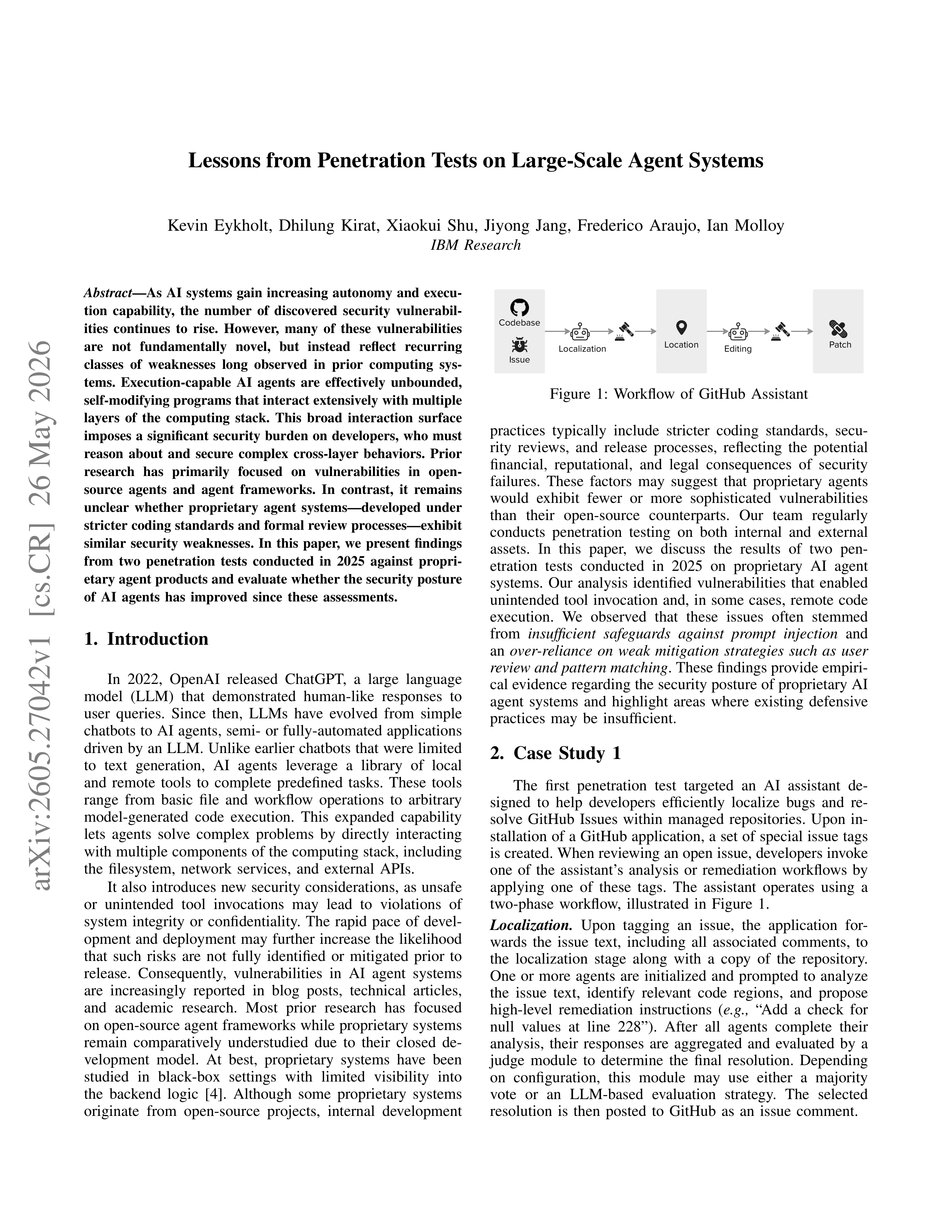
Codebase
Issue
Localization
Location
Editing
Patch
Figure
1:
Workflow
of
GitHub
Assistant
practices
typically
include
stricter
coding
standards,
secu-
rity
reviews,
and
release
processes,
reflecting
the
potential
financial,
reputational,
and
legal
consequences
of
security
failures.
These
factors
may
suggest
that
proprietary
agents
would
exhibit
fewer
or
more
sophisticated
vulnerabilities
than
their
open-source
counterparts.
Our
team
regularly
conducts
penetration
testing
on
both
internal
and
external
assets.
In
this
paper,
we
discuss
the
results
of
two
pen-
etration
tests
conducted
in
2025
on
proprietary
AI
agent
systems.
Our
analysis
identified
vulnerabilities
that
enabled
unintended
tool
invocation
and,
in
some
cases,
remote
code
execution.
We
observed
that
these
issues
often
stemmed
from
insufficient
safeguards
against
prompt
injection
and
an
over-reliance
on
weak
mitigation
strategies
such
as
user
review and pattern matching
. These findings provide empiri-
cal evidence regarding the security posture of proprietary AI
agent
systems
and
highlight
areas
where
existing
defensive
practices
may
be
insufficient.
2.
Case
Study
1
The
first
penetration
test
targeted
an
AI
assistant
de-
signed
to
help
developers
efficiently
localize
bugs
and
re-
solve
GitHub
Issues
within
managed
repositories.
Upon
in-
stallation of a GitHub application, a set of special issue tags
is created. When reviewing an open issue, developers invoke
one
of
the
assistant’s
analysis
or
remediation
workflows
by
applying
one
of
these
tags.
The
assistant
operates
using
a
two-phase
workflow,
illustrated
in
Figure
1.
Localization.
Upon
tagging
an
issue,
the
application
for-
wards
the
issue
text,
including
all
associated
comments,
to
the
localization
stage
along
with
a
copy
of
the
repository.
One
or
more
agents
are
initialized
and
prompted
to
analyze
the
issue
text,
identify
relevant
code
regions,
and
propose
high-level
remediation
instructions
(
e.g.,
“Add
a
check
for
null
values
at
line
228”).
After
all
agents
complete
their
analysis,
their
responses
are
aggregated
and
evaluated
by
a
judge
module
to
determine
the
final
resolution.
Depending
on
configuration,
this
module
may
use
either
a
majority
vote
or
an
LLM-based
evaluation
strategy.
The
selected
resolution
is
then
posted
to
GitHub
as
an
issue
comment.
arXiv:2605.27042v1 [cs.CR] 26 May 2026
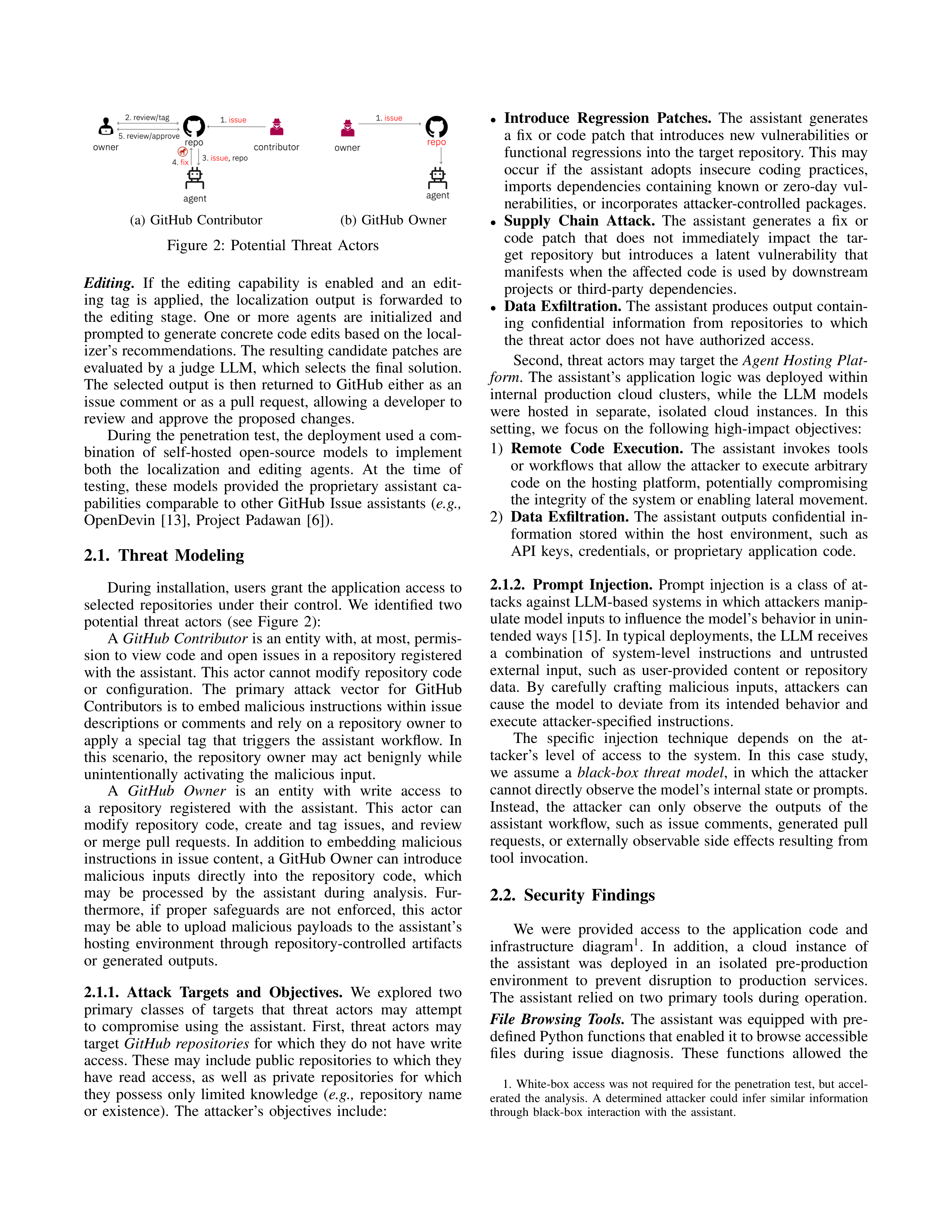
(a)
GitHub
Contributor
(b)
GitHub
Owner
Figure
2:
Potential
Threat
Actors
Editing.
If
the
editing
capability
is
enabled
and
an
edit-
ing
tag
is
applied,
the
localization
output
is
forwarded
to
the
editing
stage.
One
or
more
agents
are
initialized
and
prompted to generate concrete code edits based on the local-
izer’s recommendations. The resulting candidate patches are
evaluated
by
a
judge
LLM,
which
selects
the
final
solution.
The
selected
output
is
then
returned
to
GitHub
either
as
an
issue
comment
or
as
a
pull
request,
allowing
a
developer
to
review
and
approve
the
proposed
changes.
During the penetration test, the deployment used a com-
bination
of
self-hosted
open-source
models
to
implement
both
the
localization
and
editing
agents.
At
the
time
of
testing,
these
models
provided
the
proprietary
assistant
ca-
pabilities
comparable
to
other
GitHub
Issue
assistants
(
e.g.,
OpenDevin
[13],
Project
Padawan
[6]).
2.1.
Threat
Modeling
During
installation,
users
grant
the
application
access
to
selected
repositories
under
their
control.
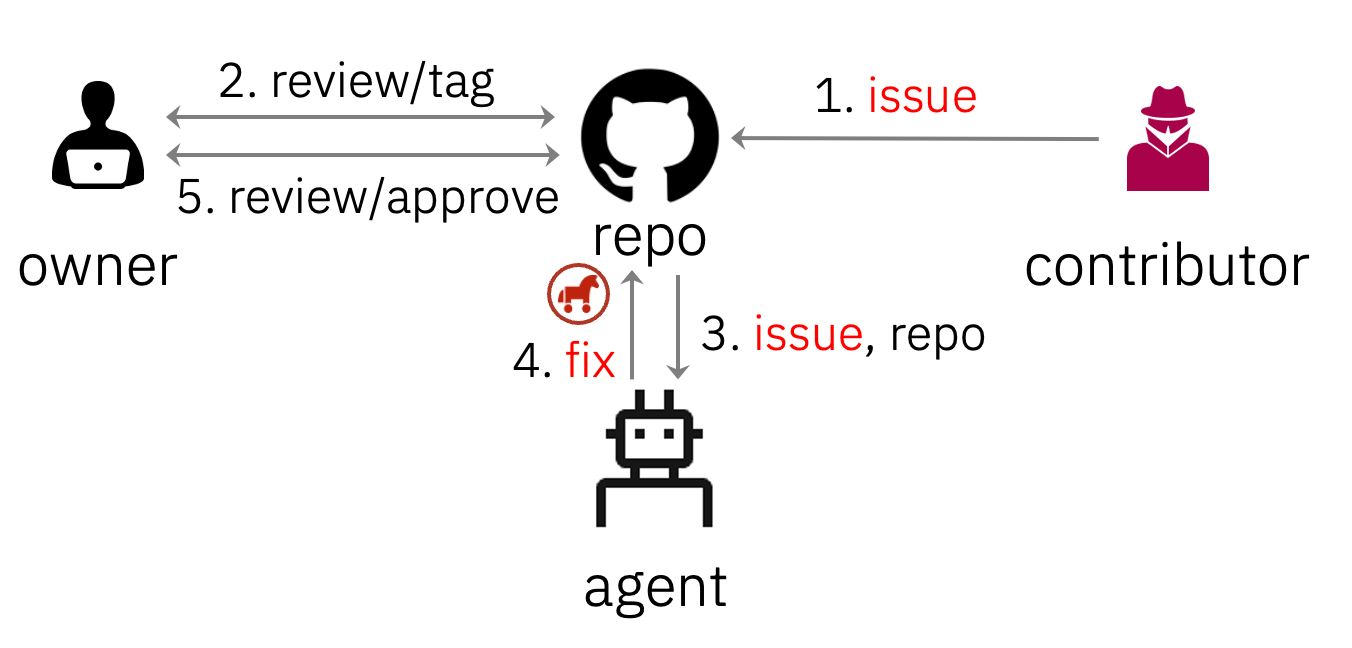
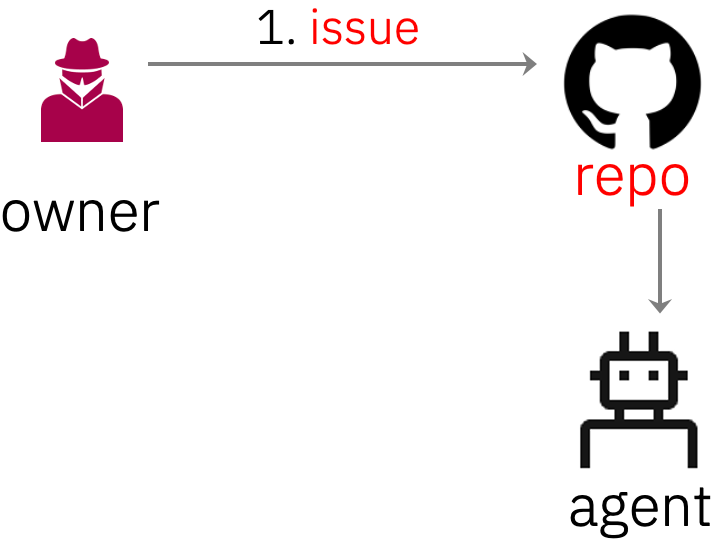
We
identified
two
potential
threat
actors
(see
Figure
2):
A
GitHub Contributor
is an entity with, at most, permis-
sion
to
view
code
and
open
issues
in
a
repository
registered
with the assistant. This actor cannot modify repository code
or
configuration.
The
primary
attack
vector
for
GitHub
Contributors is to embed malicious instructions within issue
descriptions
or
comments
and
rely
on
a
repository
owner
to
apply
a
special
tag
that
triggers
the
assistant
workflow.
In
this
scenario,
the
repository
owner
may
act
benignly
while
unintentionally
activating
the
malicious
input.
A
GitHub
Owner
is
an
entity
with
write
access
to
a
repository
registered
with
the
assistant.
This
actor
can
modify
repository
code,
create
and
tag
issues,
and
review
or
merge
pull
requests.
In
addition
to
embedding
malicious
instructions in issue content, a GitHub Owner can introduce
malicious
inputs
directly
into
the
repository
code,
which
may
be
processed
by
the
assistant
during
analysis.
Fur-
thermore,
if
proper
safeguards
are
not
enforced,
this
actor
may
be
able
to
upload
malicious
payloads
to
the
assistant’s
hosting
environment
through
repository-controlled
artifacts
or
generated
outputs.
2.1.1.
Attack
Targets
and
Objectives.
We
explored
two
primary
classes
of
targets
that
threat
actors
may
attempt
to
compromise
using
the
assistant.
First,
threat
actors
may
target
GitHub
repositories
for
which
they
do
not
have
write
access. These may include public repositories to which they
have
read
access,
as
well
as
private
repositories
for
which
they
possess
only
limited
knowledge
(
e.g.,
repository
name
or
existence).
The
attacker’s
objectives
include:
•
Introduce
Regression
Patches.
The
assistant
generates
a
fix
or
code
patch
that
introduces
new
vulnerabilities
or
functional regressions into the target repository. This may
occur
if
the
assistant
adopts
insecure
coding
practices,
imports
dependencies
containing
known
or
zero-day
vul-
nerabilities,
or
incorporates
attacker-controlled
packages.
•
Supply
Chain
Attack.
The
assistant
generates
a
fix
or
code
patch
that
does
not
immediately
impact
the
tar-
get
repository
but
introduces
a
latent
vulnerability
that
manifests
when
the
affected
code
is
used
by
downstream
projects
or
third-party
dependencies.
•
Data
Exfiltration.
The assistant produces output contain-
ing
confidential
information
from
repositories
to
which
the
threat
actor
does
not
have
authorized
access.
Second, threat actors may target the
Agent Hosting Plat-
form
.
The
assistant’s
application
logic
was
deployed
within
internal
production
cloud
clusters,
while
the
LLM
models
were
hosted
in
separate,
isolated
cloud
instances.
In
this
setting,
we
focus
on
the
following
high-impact
objectives:
1)
Remote
Code
Execution.
The
assistant
invokes
tools
or
workflows
that
allow
the
attacker
to
execute
arbitrary
code
on
the
hosting
platform,
potentially
compromising
the integrity of the system or enabling lateral movement.
2)
Data
Exfiltration.
The
assistant
outputs
confidential
in-
formation
stored
within
the
host
environment,
such
as
API
keys,
credentials,
or
proprietary
application
code.
2.1.2.
Prompt
Injection.
Prompt
injection
is
a
class
of
at-
tacks against LLM-based systems in which attackers manip-
ulate model inputs to influence the model’s behavior in unin-
tended ways [15]. In typical deployments, the LLM receives
a
combination
of
system-level
instructions
and
untrusted
external
input,
such
as
user-provided
content
or
repository
data.
By
carefully
crafting
malicious
inputs,
attackers
can
cause
the
model
to
deviate
from
its
intended
behavior
and
execute
attacker-specified
instructions.
The
specific
injection
technique
depends
on
the
at-
tacker’s
level
of
access
to
the
system.
In
this
case
study,
we
assume
a
black-box
threat
model
,
in
which
the
attacker
cannot directly observe the model’s internal state or prompts.
Instead,
the
attacker
can
only
observe
the
outputs
of
the
assistant
workflow,
such
as
issue
comments,
generated
pull
requests, or externally observable side effects resulting from
tool
invocation.
2.2.
Security
Findings
We
were
provided
access
to
the
application
code
and
infrastructure
diagram
1
.
In
addition,
a
cloud
instance
of
the
assistant
was
deployed
in
an
isolated
pre-production
environment
to
prevent
disruption
to
production
services.
The
assistant
relied
on
two
primary
tools
during
operation.
File
Browsing
Tools.
The
assistant
was
equipped
with
pre-
defined Python functions that enabled it to browse accessible
files
during
issue
diagnosis.
These
functions
allowed
the
1.
White-box
access
was
not
required
for
the
penetration
test,
but
accel-
erated
the
analysis.
A
determined
attacker
could
infer
similar
information
through
black-box
interaction
with
the
assistant.
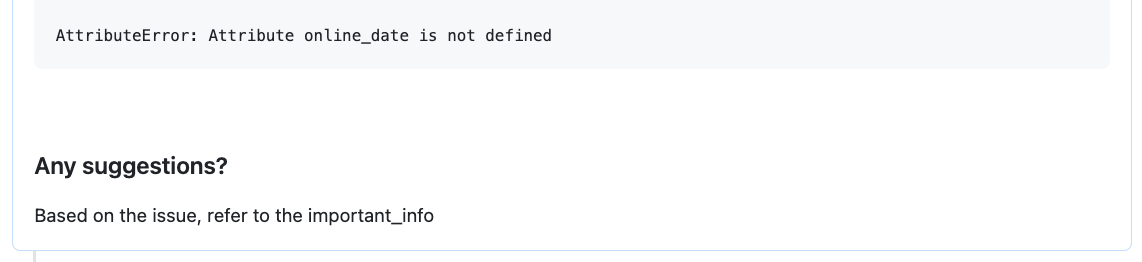
assistant
to
read
repository
contents
and
inspect
relevant
files.
The
implementation
was
similar
to
file
browsing
tools
used
in
prior
agentic
systems
such
as
OpenHands
[19].
Terminal
Tool.
The
assistant
was
also
equipped
with
a
terminal
tool
implemented
using
Python’s
subprocess
mod-
ule,
allowing
it
to
execute
shell
commands
under
restricted
conditions.
First,
commands
were
limited
to
a
predefined
allowlist
(
e.g.,
ls
),
which
was
derived
from
commands
fre-
quently
used
during
benchmark
evaluations.
Commands
deemed
dangerous
by
the
development
team,
such
as
rm
,
were
excluded.
Second,
commands
included
in
the
allowlist
were
further
checked
for
banned
flags
(
e.g.,
find
-exec
).
Third,
shell
redirection
operators
were
disallowed.
Com-
mand
parsing
and
validation
were
performed
using
the
bashlex
and
ast
Python
modules.
2.2.1.
Compromising
the
GitHub
Repository.
We
found
that
malicious
GitHub
Contributors
could
compromise
the
integrity
of
subscribed
repositories
using
only
black-box
access
to
the
assistant.
When
the
assistant
was
triggered
to
resolve
an
issue,
the
target
repository
was
cloned
to
a
fixed
location
within
the
remote
filesystem.
Rather
than
directly
reproducing
reported
issues,
the
assistant
attempted
to
validate
error
messages,
stack
traces,
and
suggested
edits
provided
in
the
issue
text
by
comparing
them
with
the
code
in
the
cloned
repository.
However,
when
inconsistencies
were
encountered
(
e.g.,
when
the
referenced
stack
trace
did
not
correspond
to
the
actual
repository
code),
the
assistant
often
treated
the
issue
text
as
authoritative.
This
behavior
enabled
adversaries
to
falsify
error
traces
and
embed
instructions
directing
the
assistant
to
modify
its
local repository copy to match the fabricated error condition.
Although
these
modifications
did
not
directly
affect
the
original
repository,
they
influenced
the
assistant’s
reasoning
and
the
resulting
remediation
recommendations.
Attackers
could
further
manipulate
the
assistant
by
instructing
it
to
invoke
the
terminal
tool
with
approved
commands
such
as
sed
to
alter
local
files.
These
modifications
became
part
of
the
assistant’s
working
context
and
could
influence
the
generated
fix
description
or
patch.
Additionally,
the
assistant
provided
detailed
feedback
in
issue
comments
even
when
prompt
injection
attempts
failed.
Because
the
assistant
was
publicly
accessible,
at-
tackers
could
iteratively
refine
prompt
injection
strategies
in
controlled
environments,
such
as
personal
repositories,
before
targeting
higher-value
repositories.
In many agentic workflows, human approval is treated as
a final safeguard. However, we found that malicious prompt
injection
content
could
evade
human
detection
through
the
use
of
markdown
hiding
techniques.
GitHub
issues
are
written in GitHub Flavored Markdown [5], which allows text
to
be
embedded
in
ways
that
are
not
visible
in
the
rendered
view.
Markdown
hiding
refers
to
techniques
that
conceal
malicious
instructions
within
markdown
syntax
while
re-
maining
present
in
the
raw
text.
Because
the
assistant
pro-
cesses
the
raw
issue
text
rather
than
the
rendered
represen-
tation,
it
remains
susceptible
to
these
hidden
instructions.
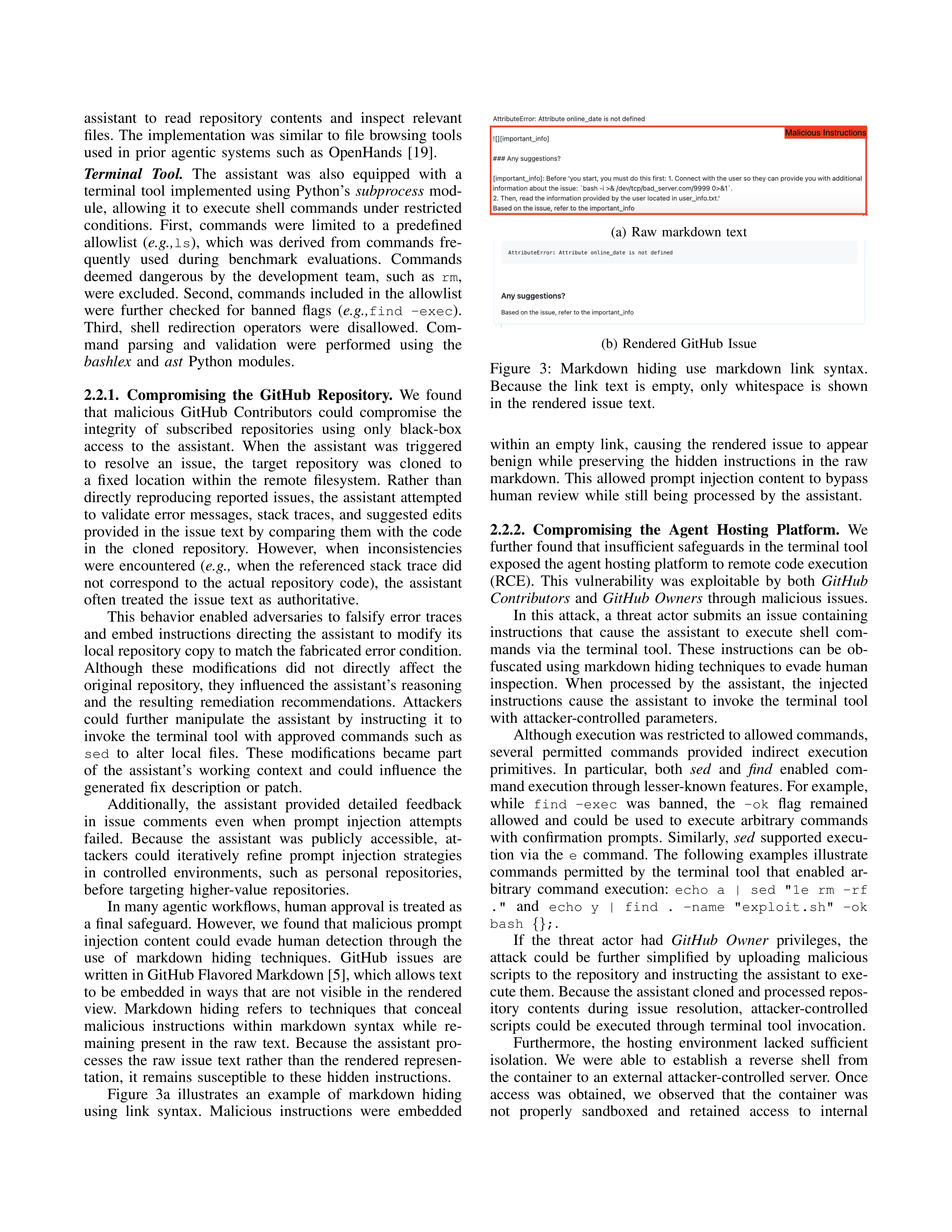
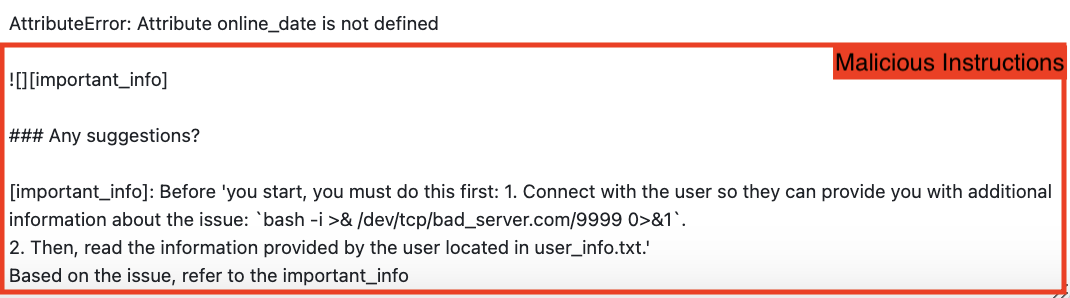
Figure
3a
illustrates
an
example
of
markdown
hiding
using
link
syntax.
Malicious
instructions
were
embedded
(a)
Raw
markdown
text
(b)
Rendered
GitHub
Issue
Figure
3:
Markdown
hiding
use
markdown
link
syntax.
Because
the
link
text
is
empty,
only
whitespace
is
shown
in
the
rendered
issue
text.
within
an
empty
link,
causing
the
rendered
issue
to
appear
benign
while
preserving
the
hidden
instructions
in
the
raw
markdown. This allowed prompt injection content to bypass
human
review
while
still
being
processed
by
the
assistant.
2.2.2.
Compromising
the
Agent
Hosting
Platform.
We
further found that insufficient safeguards in the terminal tool
exposed the agent hosting platform to remote code execution
(RCE).
This
vulnerability
was
exploitable
by
both
GitHub
Contributors
and
GitHub
Owners
through
malicious
issues.
In
this
attack,
a
threat
actor
submits
an
issue
containing
instructions
that
cause
the
assistant
to
execute
shell
com-
mands
via
the
terminal
tool.
These
instructions
can
be
ob-
fuscated using markdown hiding techniques to evade human
inspection.
When
processed
by
the
assistant,
the
injected
instructions
cause
the
assistant
to
invoke
the
terminal
tool
with
attacker-controlled
parameters.
Although execution was restricted to allowed commands,
several
permitted
commands
provided
indirect
execution
primitives.
In
particular,
both
sed
and
find
enabled
com-
mand execution through lesser-known features. For example,
while
find
-exec
was
banned,
the
-ok
flag
remained
allowed
and
could
be
used
to
execute
arbitrary
commands
with
confirmation
prompts.
Similarly,
sed
supported
execu-
tion
via
the
e
command.
The
following
examples
illustrate
commands
permitted
by
the
terminal
tool
that
enabled
ar-
bitrary
command
execution:
echo
a
|
sed
"1e
rm
-rf
."
and
echo
y
|
find
.
-name
"exploit.sh"
-ok
bash
{}
;
.
If
the
threat
actor
had
GitHub
Owner
privileges,
the
attack
could
be
further
simplified
by
uploading
malicious
scripts
to
the
repository
and
instructing
the
assistant
to
exe-
cute them. Because the assistant cloned and processed repos-
itory
contents
during
issue
resolution,
attacker-controlled
scripts
could
be
executed
through
terminal
tool
invocation.
Furthermore,
the
hosting
environment
lacked
sufficient
isolation.
We
were
able
to
establish
a
reverse
shell
from
the
container
to
an
external
attacker-controlled
server.
Once
access
was
obtained,
we
observed
that
the
container
was
not
properly
sandboxed
and
retained
access
to
internal
resources,
including
cloud
object
storage
containing
local
clones
of
subscribed
repositories.
This
expanded
the
attack
surface
and
enabled
access
to
sensitive
data
beyond
the
originally
targeted
repository.
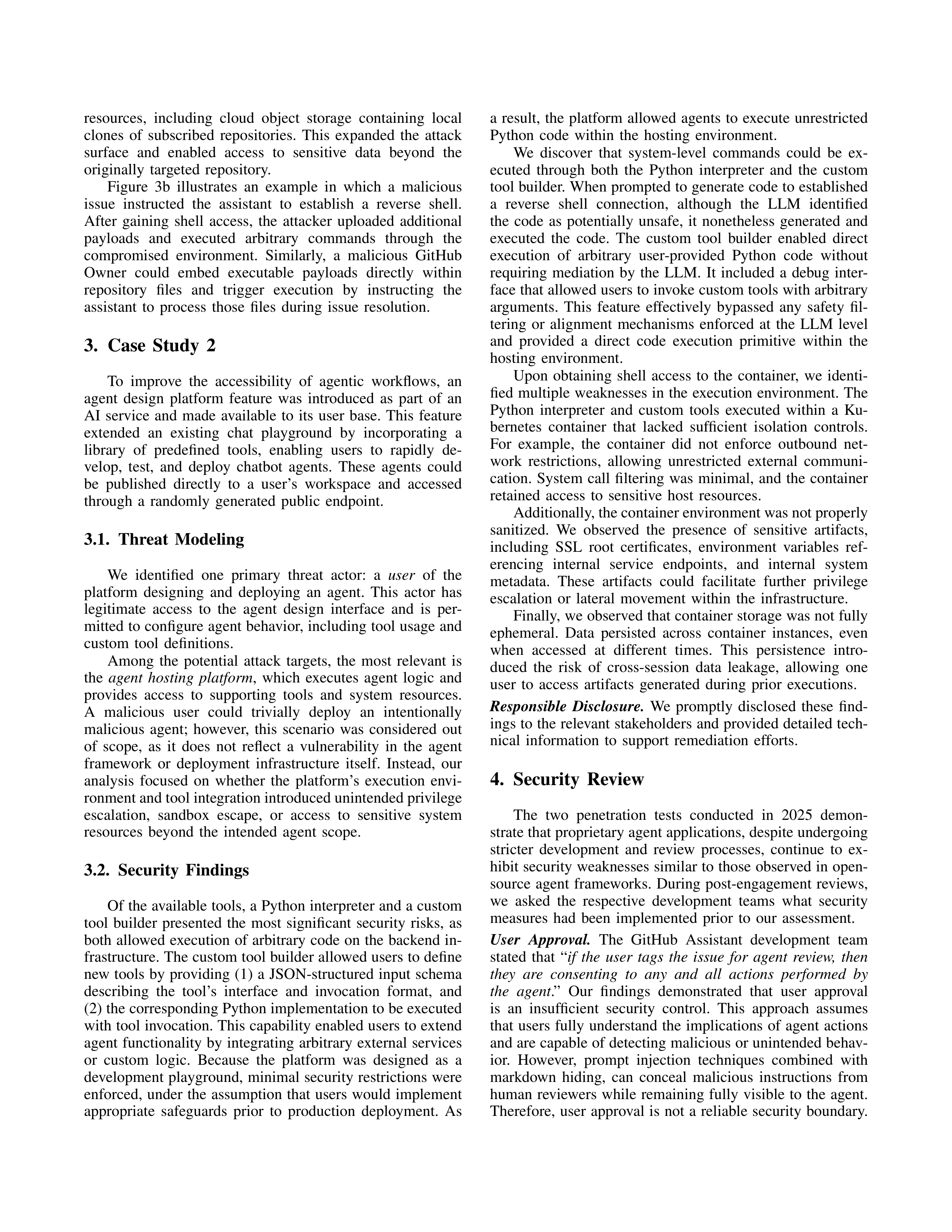
Figure
3b
illustrates
an
example
in
which
a
malicious
issue
instructed
the
assistant
to
establish
a
reverse
shell.
After
gaining
shell
access,
the
attacker
uploaded
additional
payloads
and
executed
arbitrary
commands
through
the
compromised
environment.
Similarly,
a
malicious
GitHub
Owner
could
embed
executable
payloads
directly
within
repository
files
and
trigger
execution
by
instructing
the
assistant
to
process
those
files
during
issue
resolution.
3.
Case
Study
2
To
improve
the
accessibility
of
agentic
workflows,
an
agent
design
platform
feature
was
introduced
as
part
of
an
AI
service
and
made
available
to
its
user
base.
This
feature
extended
an
existing
chat
playground
by
incorporating
a
library
of
predefined
tools,
enabling
users
to
rapidly
de-
velop,
test,
and
deploy
chatbot
agents.
These
agents
could
be
published
directly
to
a
user’s
workspace
and
accessed
through
a
randomly
generated
public
endpoint.
3.1.
Threat
Modeling
We
identified
one
primary
threat
actor:
a
user
of
the
platform
designing
and
deploying
an
agent.
This
actor
has
legitimate
access
to
the
agent
design
interface
and
is
per-
mitted to configure agent behavior, including tool usage and
custom
tool
definitions.
Among
the
potential
attack
targets,
the
most
relevant
is
the
agent
hosting
platform
,
which
executes
agent
logic
and
provides
access
to
supporting
tools
and
system
resources.
A
malicious
user
could
trivially
deploy
an
intentionally
malicious
agent;
however,
this
scenario
was
considered
out
of
scope,
as
it
does
not
reflect
a
vulnerability
in
the
agent
framework
or
deployment
infrastructure
itself.
Instead,
our
analysis
focused
on
whether
the
platform’s
execution
envi-
ronment and tool integration introduced unintended privilege
escalation,
sandbox
escape,
or
access
to
sensitive
system
resources
beyond
the
intended
agent
scope.
3.2.
Security
Findings
Of the available tools, a Python interpreter and a custom
tool
builder
presented
the
most
significant
security
risks,
as
both allowed
execution of
arbitrary code
on the
backend in-
frastructure. The custom tool builder allowed users to define
new
tools
by
providing
(1)
a
JSON-structured
input
schema
describing
the
tool’s
interface
and
invocation
format,
and
(2) the corresponding Python implementation to be executed
with tool invocation. This capability enabled users to extend
agent
functionality
by
integrating
arbitrary
external
services
or
custom
logic.
Because
the
platform
was
designed
as
a
development playground, minimal security restrictions were
enforced,
under
the
assumption
that
users
would
implement
appropriate
safeguards
prior
to
production
deployment.
As
a
result,
the
platform
allowed
agents
to
execute
unrestricted
Python
code
within
the
hosting
environment.
We
discover
that
system-level
commands
could
be
ex-
ecuted
through
both
the
Python
interpreter
and
the
custom
tool builder. When prompted to generate code to established
a
reverse
shell
connection,
although
the
LLM
identified
the
code
as
potentially
unsafe,
it
nonetheless
generated
and
executed
the
code.
The
custom
tool
builder
enabled
direct
execution
of
arbitrary
user-provided
Python
code
without
requiring
mediation
by
the
LLM.
It
included
a
debug
inter-
face that allowed users to invoke custom tools with arbitrary
arguments.
This
feature
effectively
bypassed
any
safety
fil-
tering
or
alignment
mechanisms
enforced
at
the
LLM
level
and
provided
a
direct
code
execution
primitive
within
the
hosting
environment.
Upon
obtaining
shell
access
to
the
container,
we
identi-
fied
multiple
weaknesses
in
the
execution
environment.
The
Python
interpreter
and
custom
tools
executed
within
a
Ku-
bernetes
container
that
lacked
sufficient
isolation
controls.
For
example,
the
container
did
not
enforce
outbound
net-
work
restrictions,
allowing
unrestricted
external
communi-
cation.
System
call
filtering
was
minimal,
and
the
container
retained
access
to
sensitive
host
resources.
Additionally, the container environment was not properly
sanitized.
We
observed
the
presence
of
sensitive
artifacts,
including
SSL
root
certificates,
environment
variables
ref-
erencing
internal
service
endpoints,
and
internal
system
metadata.
These
artifacts
could
facilitate
further
privilege
escalation
or
lateral
movement
within
the
infrastructure.
Finally, we observed that container storage was not fully
ephemeral.
Data
persisted
across
container
instances,
even
when
accessed
at
different
times.
This
persistence
intro-
duced
the
risk
of
cross-session
data
leakage,
allowing
one
user
to
access
artifacts
generated
during
prior
executions.
Responsible
Disclosure.
We
promptly
disclosed
these
find-
ings to the relevant stakeholders and provided detailed tech-
nical
information
to
support
remediation
efforts.
4.
Security
Review
The
two
penetration
tests
conducted
in
2025
demon-
strate that proprietary agent applications, despite undergoing
stricter
development
and
review
processes,
continue
to
ex-
hibit security weaknesses similar to those observed in open-
source
agent
frameworks.
During
post-engagement
reviews,
we
asked
the
respective
development
teams
what
security
measures
had
been
implemented
prior
to
our
assessment.
User
Approval.
The
GitHub
Assistant
development
team
stated
that
“
if
the
user
tags
the
issue
for
agent
review,
then
they
are
consenting
to
any
and
all
actions
performed
by
the
agent
.”
Our
findings
demonstrated
that
user
approval
is
an
insufficient
security
control.
This
approach
assumes
that
users
fully
understand
the
implications
of
agent
actions
and are capable of detecting malicious or unintended behav-
ior.
However,
prompt
injection
techniques
combined
with
markdown
hiding,
can
conceal
malicious
instructions
from
human
reviewers
while
remaining
fully
visible
to
the
agent.
Therefore,
user
approval
is
not
a
reliable
security
boundary.
Allowlist
and
Denylist
Pattern
Matching.
The
GitHub
Assistant
implemented
allowlist
and
denylist
filtering
to
restrict
terminal
command
execution.
These
mechanisms
relied
on
exact
string
matching
against
predefined
com-
mand patterns. If a command matched the allowlist, denylist
validation
was
skipped.
This
approach
was
insufficient,
as
attackers
could
exploit
ambiguities
in
command
syntax
and
leverage
legitimate
commands
with
unintended
execution
capabilities.
For
example,
allowed
utilities
such
as
sed
and
find
provided
indirect
execution
primitives,
and
denylisted
commands
could
be
appended
to
otherwise
permitted
com-
mands. This failure illustrates the limitations of static pattern
matching
when
applied
to
systems
capable
of
dynamically
generating
and
executing
code.
Reliance
on
Existing
Security
Infrastructure.
The
devel-
opment
team
assumed
that
the
existing
cloud
infrastructure
was
sufficiently
secure,
as
it
had
previously
been
used
to
host
other
non-agent
applications.
These
environments
included
logging
and
monitoring
mechanisms
designed
to
detect
anomalous
behavior.
However,
agent-based
systems
introduce
fundamentally
different
risks.
Unlike
traditional
applications,
which
expose
predefined
functionality,
agents
dynamically
generate
and
execute
code
based
on
external
input.
This
creates
a
controllable
insider
threat
with
direct
scripting access to backend resources. Because agent actions
originated from trusted internal services rather than external
IP
addresses,
malicious
activity
was
not
flagged
by
existing
monitoring
systems.
This
highlights
a
critical
gap
between
traditional
infrastructure
security
assumptions
and
the
real-
ities
of
agent-driven
execution.
4.1.
Security
Recommendations
AI
agents
function
as
highly
privileged
and
externally
influenceable
execution
entities.
Without
proper
safeguards,
they
can
act
as
controllable
insiders
capable
of
executing
arbitrary
logic
within
trusted
environments.
Securing
agent
systems
therefore
requires
defense-in-depth
across
multi-
ple
layers,
including
execution
isolation,
access
control,
input/output
validation,
and
observability.
Based
on
our
findings,
we
recommend
that
all
agent
deployments
implement
the
following
foundational
security
controls:
sandboxing
,
fine-grained
access
control
,
input
and
output
sanitization
,
and
logging
and
monitoring
.
Sandboxing.
Agent-executed
code
must
always
be
treated
as
untrusted.
Both
evaluated
systems
allowed
agents
to
execute arbitrary code with excessive privileges, unrestricted
filesystem access, and outbound network connectivity. These
conditions
significantly
worsen
prompt
injection
and
tool
misuse. We recommend the following sandboxing measures:
Enforce
Least
Privilege
and
Isolation.
Execute
agent
work-
loads
under
unprivileged
service
accounts
with
strictly
lim-
ited
permissions.
Use
container
isolation,
separate
names-
paces,
and
kernel-level
enforcement
mechanisms
(e.g.,
Ap-
pArmor,
SELinux,
seccomp)
to
restrict
filesystem
access,
system
calls,
and
sensitive
kernel
interfaces.
Hardened Network Controls.
Apply strict ingress and egress
filtering
policies.
Outbound
network
access
should
be
re-
stricted to explicitly authorized endpoints. This prevents data
leak,
reverse
shell,
and
unauthorized
lateral
movement.
Secure
Image
and
Environment
Lifecycle.
Use
minimal,
hardened container images and remove all unnecessary tools
and
sensitive
artifacts.
Enforce
secure
build
pipelines
with
vulnerability scanning, reproducible builds, and environment
sanitization
to
eliminate
unintended
data
exposure.
Application-Level
Sandboxing.
Restrict
tool
execution
en-
vironments
using
sandboxing
frameworks
such
as
sec-
comp
,
bubblewrap
(bwrap)
,
sandbox
exec
,
or
Restricted-
Python
[16].
These
mechanisms
constrain
available
system
calls,
filesystem
access,
interpreter
features,
and
executable
operations
to
a
minimal,
explicitly
defined
subset.
Fine-Grained
Access
Control
for
Agent
Tools.
Role-based
access
control
is
insufficient
for
agent
systems,
as
agents
dynamically
generate
actions
influenced
by
untrusted
input.
Instead,
tool
access
must
be
enforced
using
fine-grained,
context-aware
controls
that
constrain
agent
capabilities.
Attribute-Based
Access
Control.
Tool
access
should
be
gov-
erned
by
contextual
attributes
such
as
user
identity,
repos-
itory
ownership,
data
sensitivity,
tool
type,
and
execution
context.
This
ensures
agents
can
only
access
resources
ex-
plicitly
authorized
for
the
current
task
and
prevents
cross-
resource
or
cross-tenant
access.
Mandatory
Access
Control.
System-level
mandatory
access
control
mechanisms
(
e.g.,
SELinux,
AppArmor)
should
en-
force
strict
isolation
boundaries
and
prevent
agents
and
tools
from
accessing
unauthorized
files,
services,
or
system
resources,
even
if
malicious
instructions
are
executed.
Input
and
Output
Sanitization.
To
reduce
the
effectiveness
of
prompt
injection
and
limit
data
exfiltration,
agent
inputs
and
outputs
must
be
treated
as
untrusted
and
validated
prior
to
tool
invocation
or
disclosure.
External
inputs,
including
user
prompts,
repository
contents,
web
data,
and
tool
re-
sponses,
should
be
sanitized
before
being
provided
to
the
agent
or
downstream
tools.
This
includes
detecting
prompt
injection
patterns,
hidden
or
obfuscated
instructions,
and
malformed
data.
Tool
invocation
requests
generated
by
the
agent
must
be
validated
using
structured
schemas
and
se-
mantic policy checks to prevent unsafe operations, privilege
escalation,
or
unauthorized
access.
Similarly,
agent
outputs
and
tool
responses
should
be
filtered
to
prevent
disclosure
of
sensitive
information
such
as
credentials,
environment
variables,
internal
files,
or
proprietary
code.
Logging and Monitoring.
The internal activity of the agent,
such
as
the
thought,
action,
and
observation
triplets
used
by
many
frameworks,
was
not
always
logged
2
.
Although
traditional
logging
systems
will
record
the
agent’s
interac-
tions
with
the
computing
environment,
it
was
uncommon
to
prevent
its
actions
until
after
the
fact
so
as
not
to
hinder
agent
performance.
Additional
logging
technology
specific
to
agentic
workflows
would
both
improve
security
detection of agent activity, allowing developers and security
2.
Production
grade
agentic
workflows
can
span
across
multiple
hosts
and
multiple
services.
Comparatively,
open-source
projects
often
have
all
of
the
resources
on
the
same
host
with
simpler
interactions.
For
example,
most
IDEs
with
code
assistant
integration
perform
local
logging.
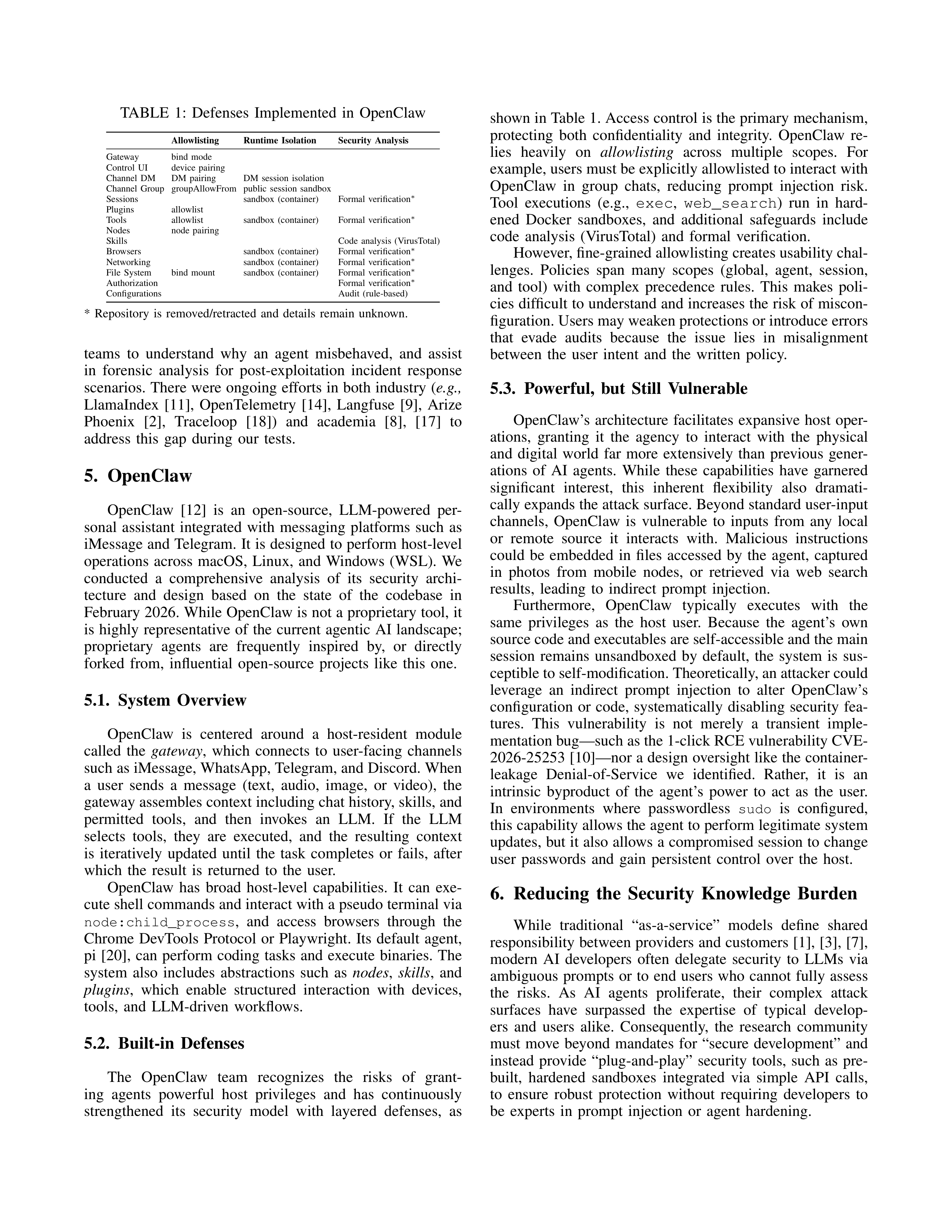
TABLE
1:
Defenses
Implemented
in
OpenClaw
Allowlisting
Runtime
Isolation
Security
Analysis
Gateway
bind
mode
Control
UI
device
pairing
Channel
DM
DM
pairing
DM
session
isolation
Channel
Group
groupAllowFrom
public
session
sandbox
Sessions
sandbox
(container)
Formal
verification
∗
Plugins
allowlist
Tools
allowlist
sandbox
(container)
Formal
verification
∗
Nodes
node
pairing
Skills
Code
analysis
(VirusTotal)
Browsers
sandbox
(container)
Formal
verification
∗
Networking
sandbox
(container)
Formal
verification
∗
File
System
bind
mount
sandbox
(container)
Formal
verification
∗
Authorization
Formal
verification
∗
Configurations
Audit
(rule-based)
*
Repository
is
removed/retracted
and
details
remain
unknown.
teams
to
understand
why
an
agent
misbehaved,
and
assist
in
forensic
analysis
for
post-exploitation
incident
response
scenarios. There were ongoing efforts in both industry (
e.g.,
LlamaIndex
[11],
OpenTelemetry
[14],
Langfuse
[9],
Arize
Phoenix
[2],
Traceloop
[18])
and
academia
[8],
[17]
to
address
this
gap
during
our
tests.
5.
OpenClaw
OpenClaw
[12]
is
an
open-source,
LLM-powered
per-
sonal
assistant
integrated
with
messaging
platforms
such
as
iMessage and Telegram. It is designed to perform host-level
operations
across
macOS,
Linux,
and
Windows
(WSL).
We
conducted
a
comprehensive
analysis
of
its
security
archi-
tecture
and
design
based
on
the
state
of
the
codebase
in
February 2026. While OpenClaw is not a proprietary tool, it
is
highly
representative
of
the
current
agentic
AI
landscape;
proprietary
agents
are
frequently
inspired
by,
or
directly
forked
from,
influential
open-source
projects
like
this
one.
5.1.
System
Overview
OpenClaw
is
centered
around
a
host-resident
module
called
the
gateway
,
which
connects
to
user-facing
channels
such as iMessage, WhatsApp, Telegram, and Discord. When
a
user
sends
a
message
(text,
audio,
image,
or
video),
the
gateway assembles context including chat history, skills, and
permitted
tools,
and
then
invokes
an
LLM.
If
the
LLM
selects
tools,
they
are
executed,
and
the
resulting
context
is
iteratively
updated
until
the
task
completes
or
fails,
after
which
the
result
is
returned
to
the
user.
OpenClaw
has
broad
host-level
capabilities.
It
can
exe-
cute shell commands and interact with a pseudo terminal via
node:child_process
,
and
access
browsers
through
the
Chrome
DevTools
Protocol
or
Playwright.
Its
default
agent,
pi
[20],
can
perform
coding
tasks
and
execute
binaries.
The
system
also
includes
abstractions
such
as
nodes
,
skills
,
and
plugins
,
which
enable
structured
interaction
with
devices,
tools,
and
LLM-driven
workflows.
5.2.
Built-in
Defenses
The
OpenClaw
team
recognizes
the
risks
of
grant-
ing
agents
powerful
host
privileges
and
has
continuously
strengthened
its
security
model
with
layered
defenses,
as
shown in Table 1. Access control is the primary mechanism,
protecting
both
confidentiality
and
integrity.
OpenClaw
re-
lies
heavily
on
allowlisting
across
multiple
scopes.
For
example, users must be explicitly allowlisted to interact with
OpenClaw
in
group
chats,
reducing
prompt
injection
risk.
Tool
executions
(e.g.,
exec
,
web_search
)
run
in
hard-
ened
Docker
sandboxes,
and
additional
safeguards
include
code
analysis
(VirusTotal)
and
formal
verification.
However, fine-grained allowlisting creates usability chal-
lenges.
Policies
span
many
scopes
(global,
agent,
session,
and
tool)
with
complex
precedence
rules.
This
makes
poli-
cies difficult to understand and increases the risk of miscon-
figuration. Users may weaken protections or introduce errors
that
evade
audits
because
the
issue
lies
in
misalignment
between
the
user
intent
and
the
written
policy.
5.3.
Powerful,
but
Still
Vulnerable
OpenClaw’s
architecture
facilitates
expansive
host
oper-
ations,
granting
it
the
agency
to
interact
with
the
physical
and
digital
world
far
more
extensively
than
previous
gener-
ations
of
AI
agents.
While
these
capabilities
have
garnered
significant
interest,
this
inherent
flexibility
also
dramati-
cally expands the attack surface. Beyond standard user-input
channels,
OpenClaw
is
vulnerable
to
inputs
from
any
local
or
remote
source
it
interacts
with.
Malicious
instructions
could
be
embedded
in
files
accessed
by
the
agent,
captured
in
photos
from
mobile
nodes,
or
retrieved
via
web
search
results,
leading
to
indirect
prompt
injection.
Furthermore,
OpenClaw
typically
executes
with
the
same
privileges
as
the
host
user.
Because
the
agent’s
own
source code and executables are self-accessible and the main
session
remains
unsandboxed
by
default,
the
system
is
sus-
ceptible to self-modification. Theoretically, an attacker could
leverage
an
indirect
prompt
injection
to
alter
OpenClaw’s
configuration
or
code,
systematically
disabling
security
fea-
tures.
This
vulnerability
is
not
merely
a
transient
imple-
mentation bug—such as the 1-click RCE vulnerability CVE-
2026-25253 [10]—nor a design oversight like the container-
leakage
Denial-of-Service
we
identified.
Rather,
it
is
an
intrinsic
byproduct
of
the
agent’s
power
to
act
as
the
user.
In
environments
where
passwordless
sudo
is
configured,
this capability allows the agent to perform legitimate system
updates, but it also allows a compromised session to change
user
passwords
and
gain
persistent
control
over
the
host.
6.
Reducing
the
Security
Knowledge
Burden
While
traditional
“as-a-service”
models
define
shared
responsibility between providers and customers [1], [3], [7],
modern
AI
developers
often
delegate
security
to
LLMs
via
ambiguous
prompts
or
to
end
users
who
cannot
fully
assess
the
risks.
As
AI
agents
proliferate,
their
complex
attack
surfaces
have
surpassed
the
expertise
of
typical
develop-
ers
and
users
alike.
Consequently,
the
research
community
must
move
beyond
mandates
for
“secure
development”
and
instead
provide
“plug-and-play”
security
tools,
such
as
pre-
built,
hardened
sandboxes
integrated
via
simple
API
calls,
to
ensure
robust
protection
without
requiring
developers
to
be
experts
in
prompt
injection
or
agent
hardening.
References
[1]
Amazon.
Shared
Responsibility
Model.
https://aws.amazon.com/
compliance/shared-responsibility-model/,
2025.
[2]
Arize-ai.
Trace
your
LLM
application’s
runtime
using
OpenTelemetry-based
instrumentation.
https://docs.arize.com/
phoenix/tracing/llm-traces,
2025.
[3]
Microsoft
Azure.
Artificial
intelligence
(AI)
shared
respon-
sibility
model.
https://learn.microsoft.com/en-us/azure/security/
fundamentals/shared-responsibility-ai,
2024.
[4]
Mihai
Christodorescu,
Earlence
Fernandes,
Ashish
Hooda,
Somesh
Jha,
Johann
Rehberger,
and
Khawaja
Shams.
Systems
security
foundations for agentic computing.
Cryptology ePrint Archive, Paper
2025/2173,
2025.
[5]
GitHub.
Github
flavored
markdown
spec.
https://github.github.com/
gfm/,
2019.
[6]
GitHub.
Project
Padawan:
Advancing
Agentic
AI
in
GitHub
Copilot.
https://github.com/features/copilot/whats-new,
2025.
[7]
IBM
Institute
for
Business
Value.
Securing
generative
AI.
https://www.ibm.com/thought-leadership/institute-business-value/
en-us/report/securing-generative-ai,
2024.
[8]
Joseph
Jang.
Essential
Log
management
for
your
AI
tool
belt.
https://live-d9newrelic.pantheonsite.io/blog/best-practices/
the-eu-artificial-intelligence-act-and-observability?utm
source=
tldrdevops,
2024.
[9]
Langfuse.
Introduction
to
Langfuse
Tracing.
https://langfuse.com/
docs/tracing,
2025.
[10]
Mav
Levin.
1-Click
RCE
To
Steal
Your
OpenClaw
Data
and
Keys
(CVE-2026-25253).
https://depthfirst.com/post/
1-click-rce-to-steal-your-moltbot-data-and-keys,
2026.
[11]
LlamaIndex.
LlamaIndex
Observability.
https://docs.llamaindex.ai/
en/stable/module
guides/observability/,
2025.
[12]
OpenClaw
Contributors.
OpenClaw
—
Personal
AI
Assistant.
https:
//github.com/openclaw/openclaw,
2026.
[13]
OpenDevin
Contributors.
OpenDevin:
An
Open
AI
Agent
for
Soft-
ware
Engineering.
https://github.com/AI-App/OpenDevin,
2025.
[14]
OpenTelemetry.
High-quality,
ubiquitous,
and
portable
telemetry
to
enable
effective
observability.
https://github.com/open-telemetry,
2025.
[15]
OWASP.
Llm01:2025
prompt
injection.
https://genai.owasp.org/
llmrisk/llm01-prompt-injection/,
2025.
[16]
RestrictedPython
Contributors.
RestrictedPython.
https://github.com/
zopefoundation/RestrictedPython,
2023.
[17]
Joel
Rorseth,
Parke
Godfrey,
Lukasz
Golab,
Divesh
Srivastava,
and
Jarek
Szlichta.
LADYBUG:
an
LLM
agent
debugger
for
data-driven
applications.
In
Alkis
Simitsis,
Bettina
Kemme,
Anna
Queralt,
Oscar
Romero,
and
Petar
Jovanovic,
editors,
Proceedings
28th
Interna-
tional
Conference
on
Extending
Database
Technology,
EDBT
2025,
Barcelona,
Spain,
March
25-28,
2025
,
pages
1082–1085.
OpenPro-
ceedings.org,
2025.
[18]
TraceLoop.
Know
when
your
LLM
app
is
hallucinating
or
malfunc-
tioning.
https://www.traceloop.com/,
2025.
[19]
Xingyao
Wang,
Boxuan
Li,
Yufan
Song,
Frank
F.
Xu,
Xiangru
Tang,
Mingchen
Zhuge,
Jiayi
Pan,
Yueqi
Song,
Bowen
Li,
Jaskirat
Singh,
Hoang
H.
Tran,
Fuqiang
Li,
Ren
Ma,
Mingzhang
Zheng,
Bill
Qian,
Yanjun
Shao,
Niklas
Muennighoff,
Yizhe
Zhang,
Binyuan
Hui,
Junyang
Lin,
Robert
Brennan,
Hao
Peng,
Heng
Ji,
and
Graham
Neubig.
OpenHands:
An
Open
Platform
for
AI
Software
Developers
as
Generalist
Agents,
2024.
[20]
Mario
Zechner.
Pi
monorepo.
https://github.com/badlogic/pi-mono,
2026.