My Projects
Home
Free AI Soft Skills Generator
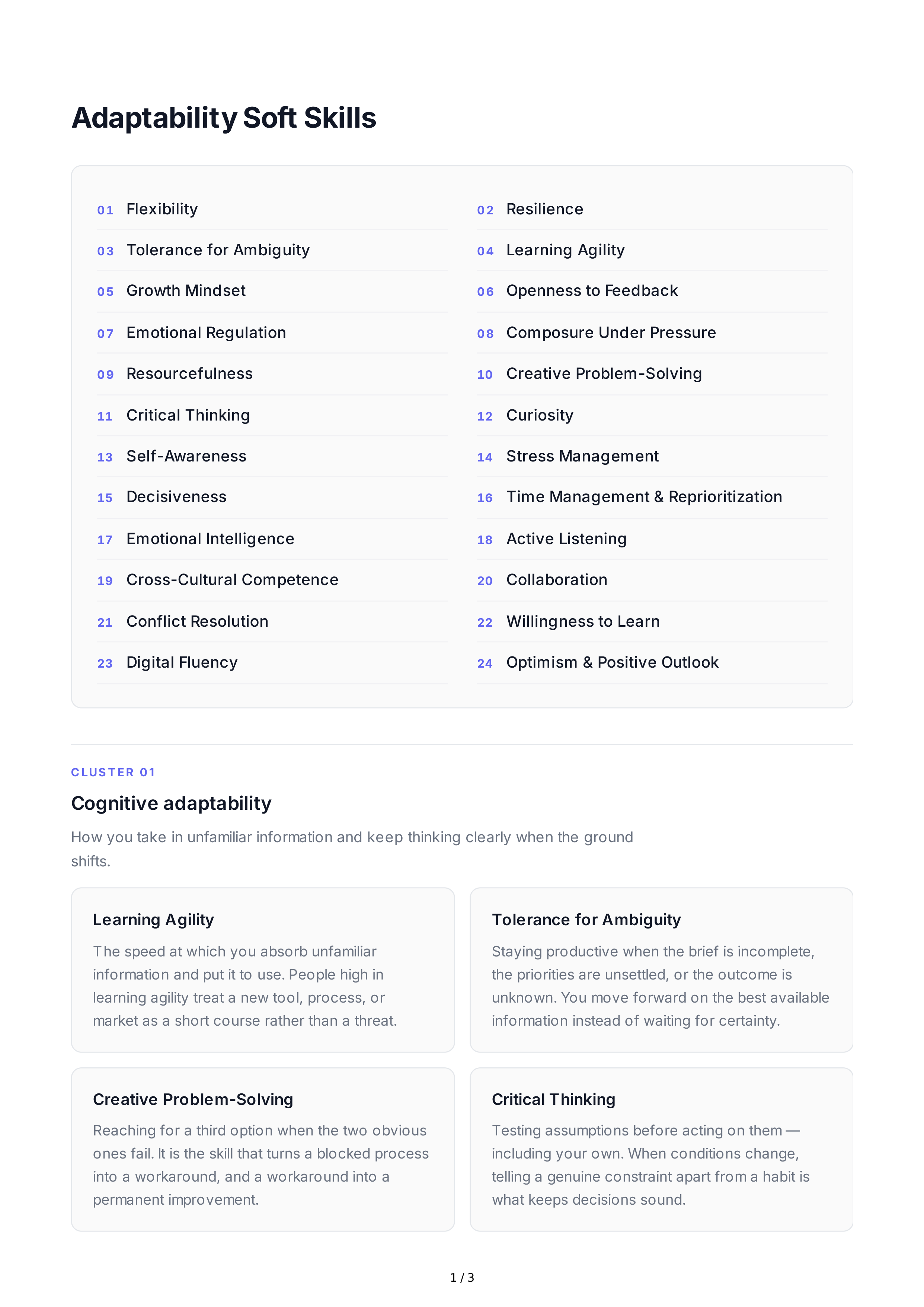
Adaptability Soft Skills
Adaptability
Soft
Skills
01
Flexibility
02
Resilience
03
Tolerance
for
Ambiguity
04
Learning
Agility
05
Growth
Mindset
06
Openness
to
Feedback
07
Emotional
Regulation
08
Composure
Under
Pressure
09
Resourcefulness
10
Creative
Problem
-
Solving
11
Critical
Thinking
12
Curiosity
13
Self
-
Awareness
14
Stress
Management
15
Decisiveness
16
Time
Management
&
Reprioritization
17
Emotional
Intelligence
18
Active
Listening
19
Cross
-
Cultural
Competence
20
Collaboration
21
Conflict
Resolution
22
Willingness
to
Learn
23
Digital
Fluency
24
Optimism
&
Positive
Outlook
C LUS T ER
0 1
Cognitive
adaptability
How
you
take
in
unfamiliar
information
and
keep
thinking
clearly
when
the
ground
shifts
.
Learning
Agility
The
speed
at
which
you
absorb
unfamiliar
information
and
put
it
to
use
.
People
high
in
learning
agility
treat
a
new
tool
,
process
,
or
market
as
a
short
course
rather
than
a
threat
.
Tolerance
for
Ambiguity
Staying
productive
when
the
brief
is
incomplete
,
the
priorities
are
unsettled
,
or
the
outcome
is
unknown
.
You
move
forward
on
the
best
available
information
instead
of
waiting
for
certainty
.
Creative
Problem
-
Solving
Reaching
for
a
third
option
when
the
two
obvious
ones
fail
.
It
is
the
skill
that
turns
a
blocked
process
into
a
workaround
,
and
a
workaround
into
a
permanent
improvement
.
Critical
Thinking
Testing
assumptions
before
acting
on
them
—
including
your
own
.
When
conditions
change
,
telling
a
genuine
constraint
apart
from
a
habit
is
what
keeps
decisions
sound
.
1 / 3
C LUS T ER
0 2
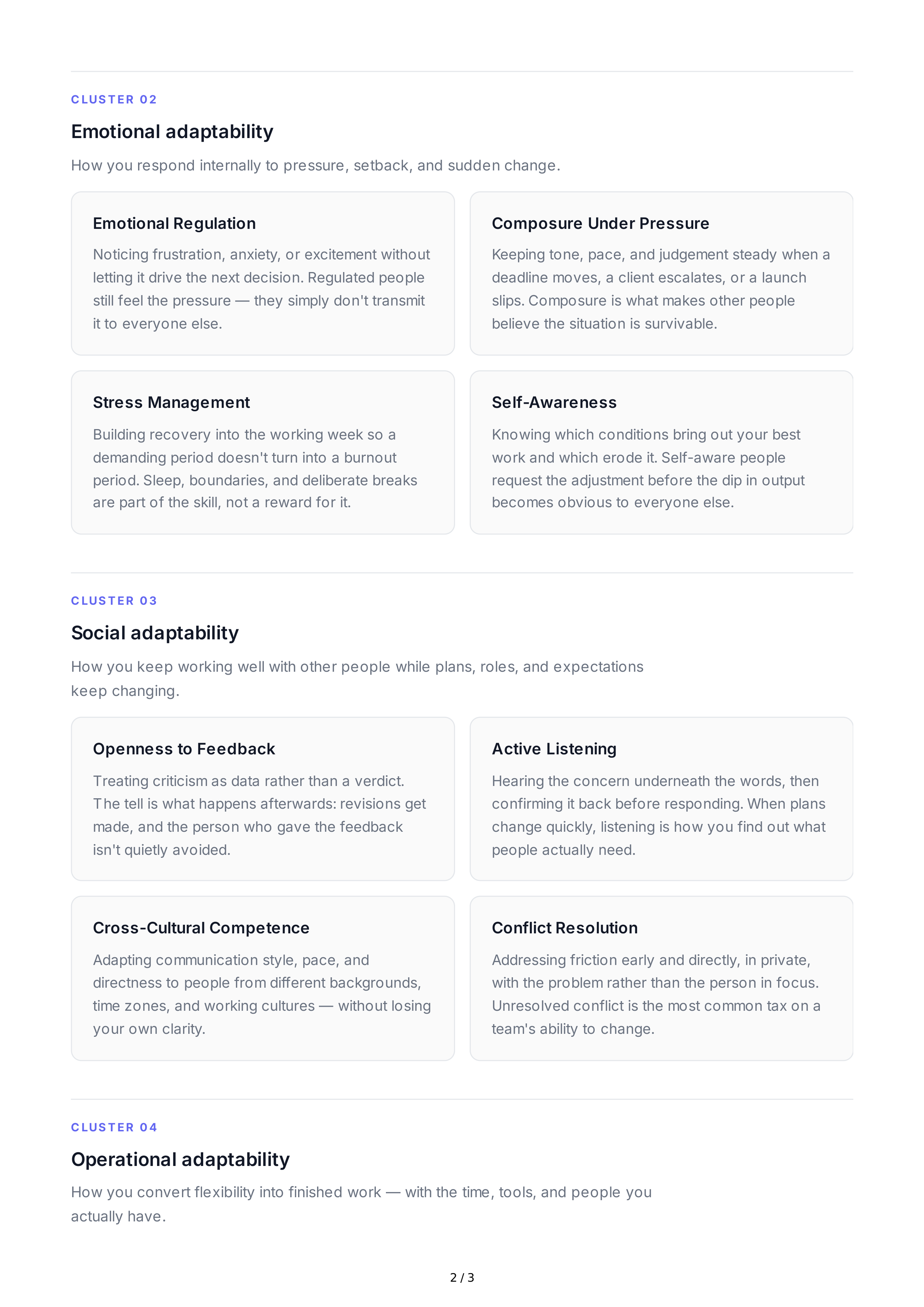
Emotional
adaptability
How
you
respond
internally
to
pressure
,
setback
,
and
sudden
change
.
Emotional
Regulation
Noticing
frustration
,
anxiety
,
or
excitement
without
letting
it
drive
the
next
decision
.
Regulated
people
still
feel
the
pressure
—
they
simply
don
'
t
transmit
it
to
everyone
else
.
Composure
Under
Pressure
Keeping
tone
,
pace
,
and
judgement
steady
when
a
deadline
moves
,
a
client
escalates
,
or
a
launch
slips
.
Composure
is
what
makes
other
people
believe
the
situation
is
survivable
.
Stress
Management
Building
recovery
into
the
working
week
so
a
demanding
period
doesn
'
t
turn
into
a
burnout
period
.
Sleep
,
boundaries
,
and
deliberate
breaks
are
part
of
the
skill
,
not
a
reward
for
it
.
Self
-
Awareness
Knowing
which
conditions
bring
out
your
best
work
and
which
erode
it
.
Self
-
aware
people
request
the
adjustment
before
the
dip
in
output
becomes
obvious
to
everyone
else
.
C LUS T ER
0 3
Social
adaptability
How
you
keep
working
well
with
other
people
while
plans
,
roles
,
and
expectations
keep
changing
.
Openness
to
Feedback
Treating
criticism
as
data
rather
than
a
verdict
.
The
tell
is
what
happens
afterwards
:
revisions
get
made
,
and
the
person
who
gave
the
feedback
isn
'
t
quietly
avoided
.
Active
Listening
Hearing
the
concern
underneath
the
words
,
then
confirming
it
back
before
responding
.
When
plans
change
quickly
,
listening
is
how
you
find
out
what
people
actually
need
.
Cross
-
Cultural
Competence
Adapting
communication
style
,
pace
,
and
directness
to
people
from
different
backgrounds
,
time
zones
,
and
working
cultures
—
without
losing
your
own
clarity
.
Conflict
Resolution
Addressing
friction
early
and
directly
,
in
private
,
with
the
problem
rather
than
the
person
in
focus
.
Unresolved
conflict
is
the
most
common
tax
on
a
team
'
s
ability
to
change
.
C LUS T ER
0 4
Operational
adaptability
How
you
convert
flexibility
into
finished
work
—
with
the
time
,
tools
,
and
people
you
actually
have
.
2 / 3
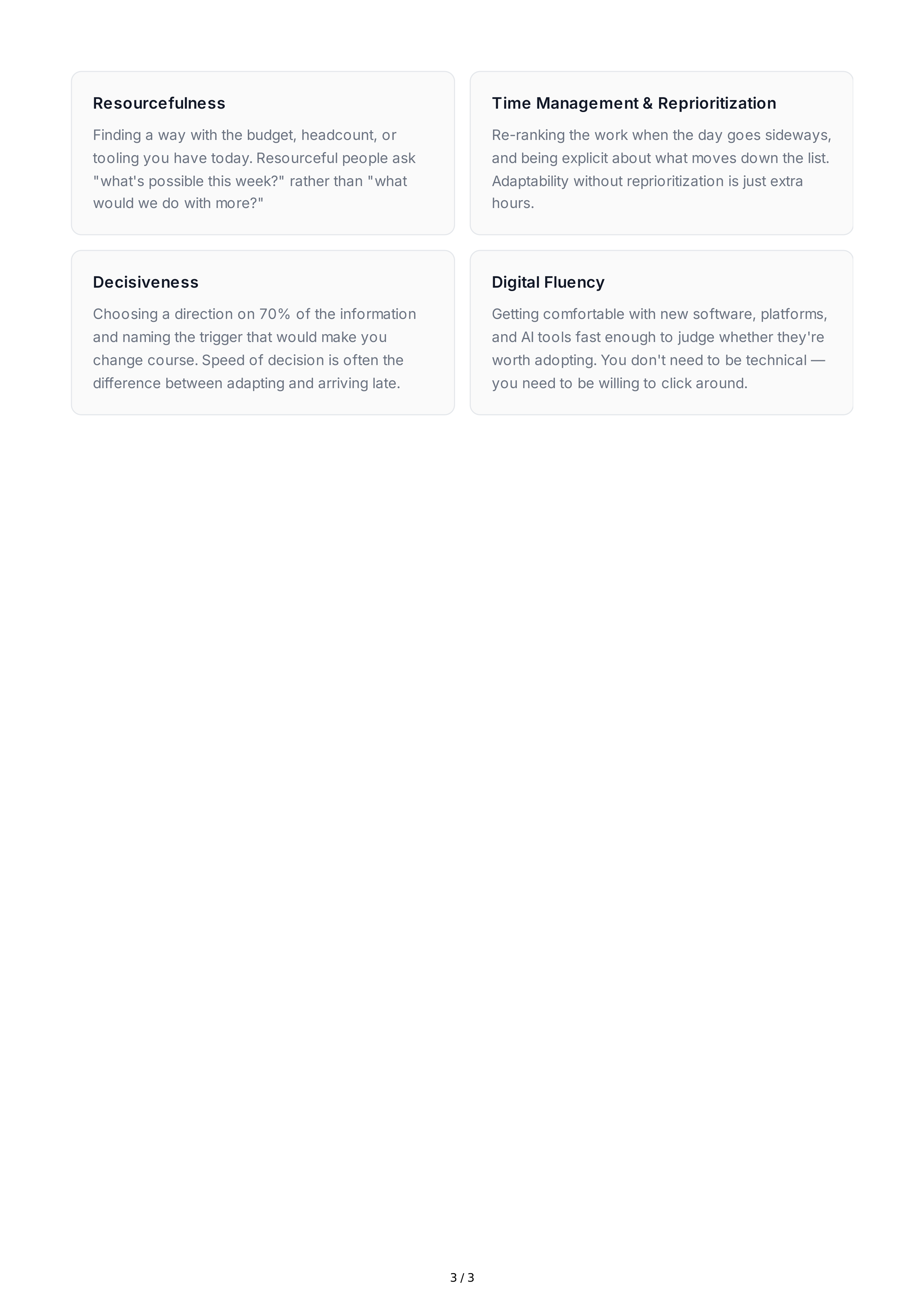
Resourcefulness
Finding
a
way
with
the
budget
,
headcount
,
or
tooling
you
have
today
.
Resourceful
people
ask
"
what
'
s
possible
this
week
?"
rather
than
"
what
would
we
do
with
more
?"
Time
Management
&
Reprioritization
Re
-
ranking
the
work
when
the
day
goes
sideways
,
and
being
explicit
about
what
moves
down
the
list
.
Adaptability
without
reprioritization
is
just
extra
hours
.
Decisiveness
Choosing
a
direction
on
70%
of
the
information
and
naming
the
trigger
that
would
make
you
change
course
.
Speed
of
decision
is
often
the
difference
between
adapting
and
arriving
late
.
Digital
Fluency
Getting
comfortable
with
new
software
,
platforms
,
and
AI
tools
fast
enough
to
judge
whether
they
'
re
worth
adopting
.
You
don
'
t
need
to
be
technical
—
you
need
to
be
willing
to
click
around
.
3 / 3
Similar Examples
Generate Similar
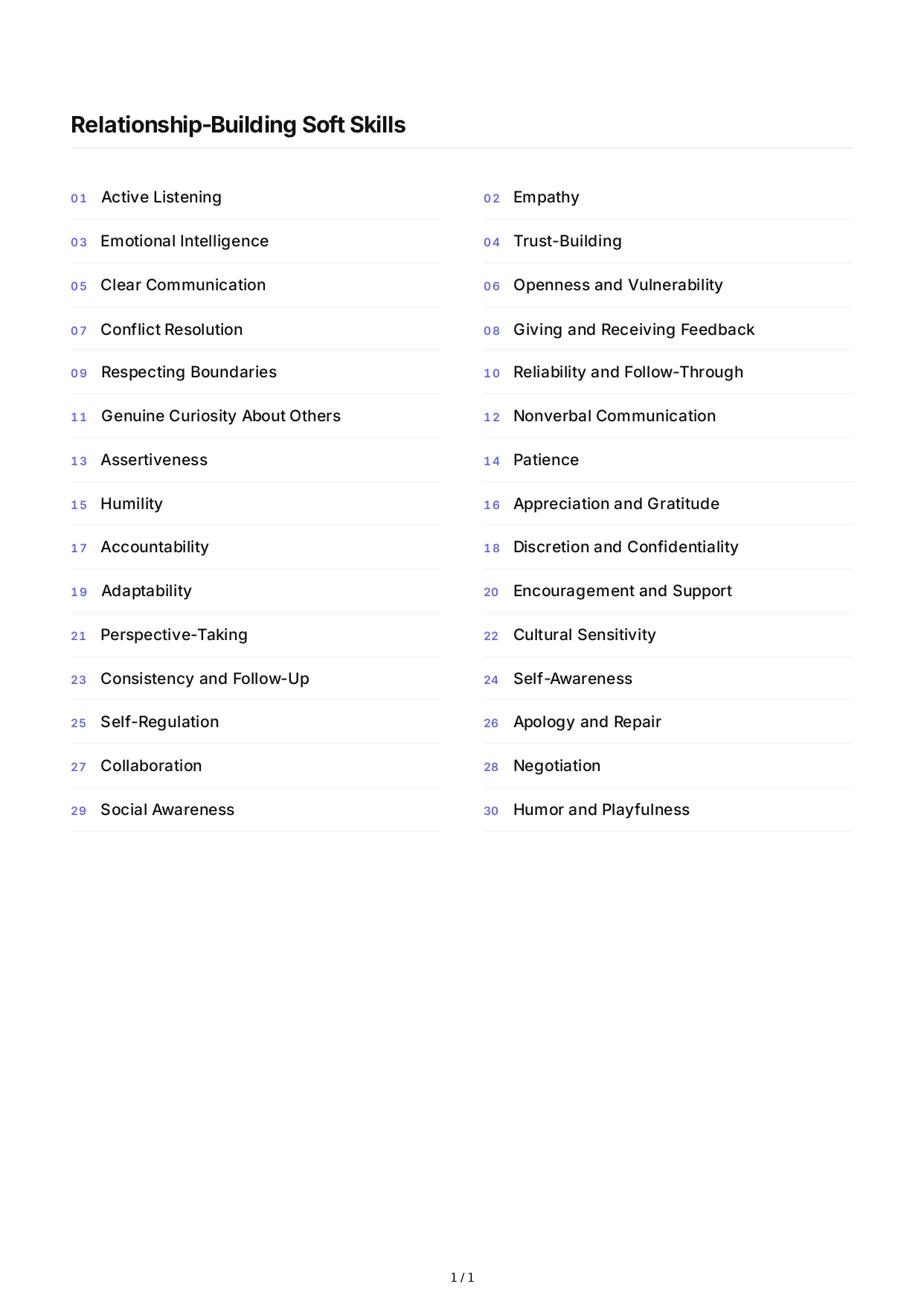
Relationship-Building Soft Skills
Generate Similar
Empathy Soft Skills
Generate Similar
Emotional Intelligence Soft Skills
Generate Similar
Social Soft Skills
Generate Similar
Teamwork Soft Skills
Generate Similar
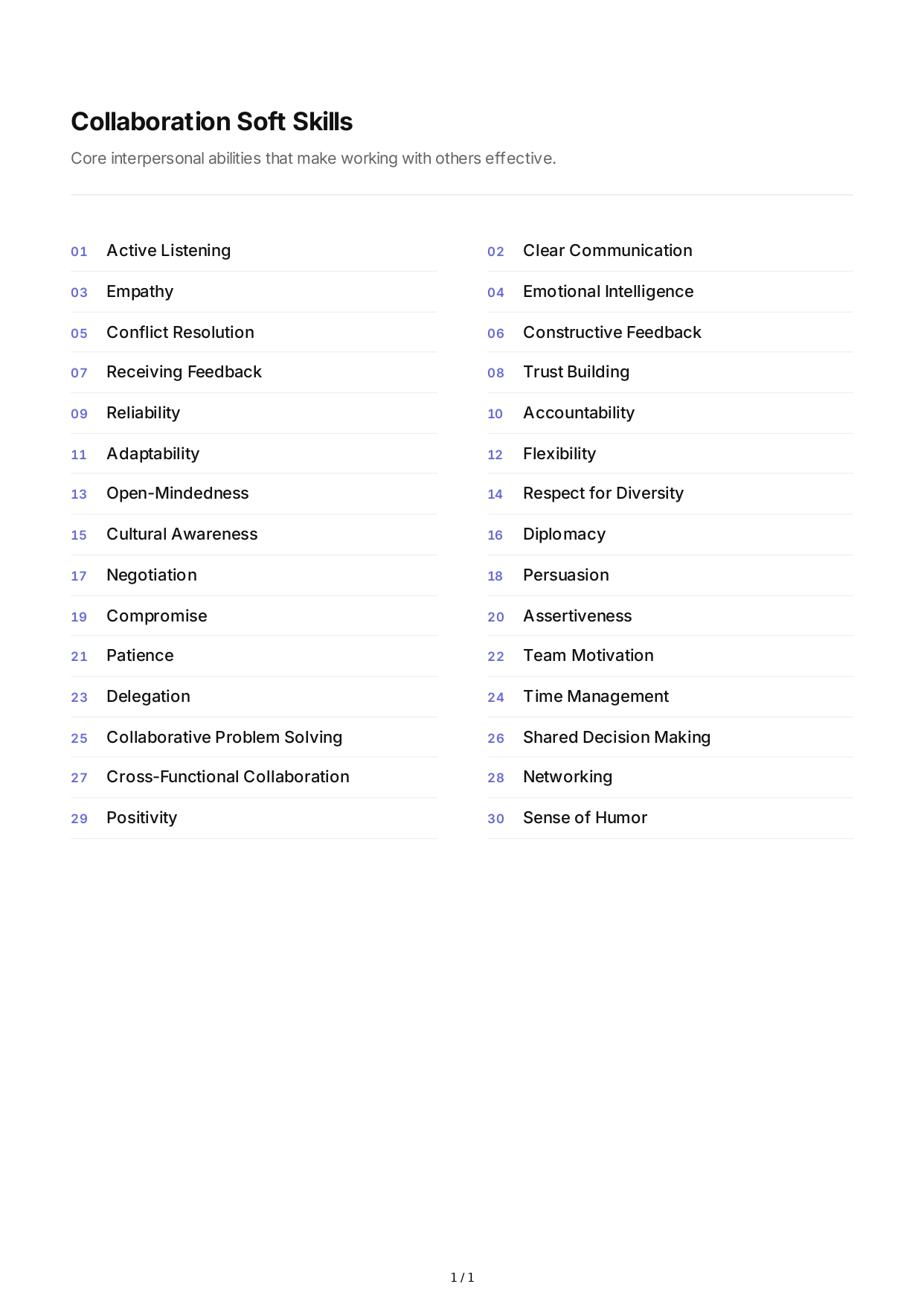
Collaboration Soft Skills
Generate Similar
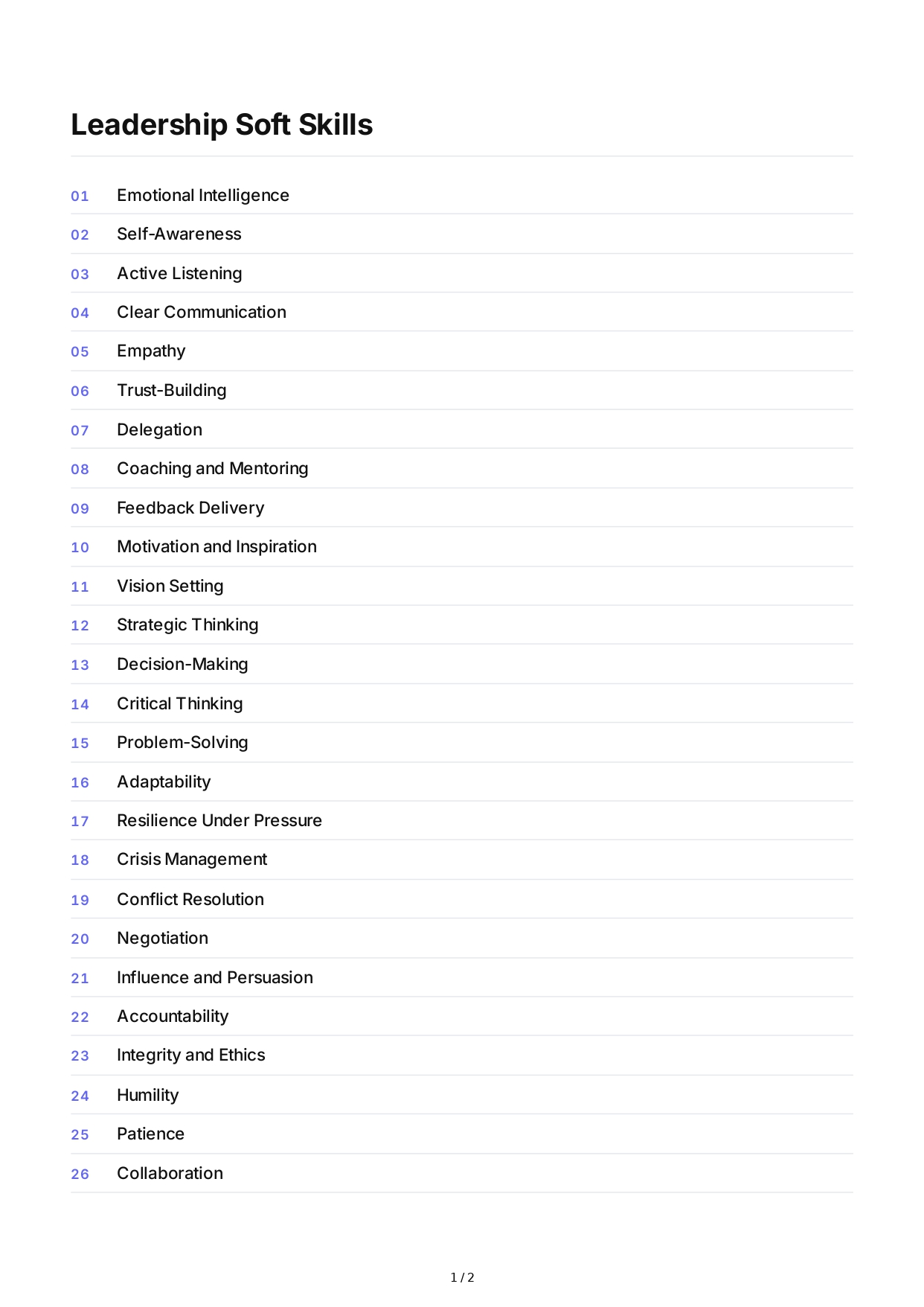
Leadership Soft Skills
Generate Similar
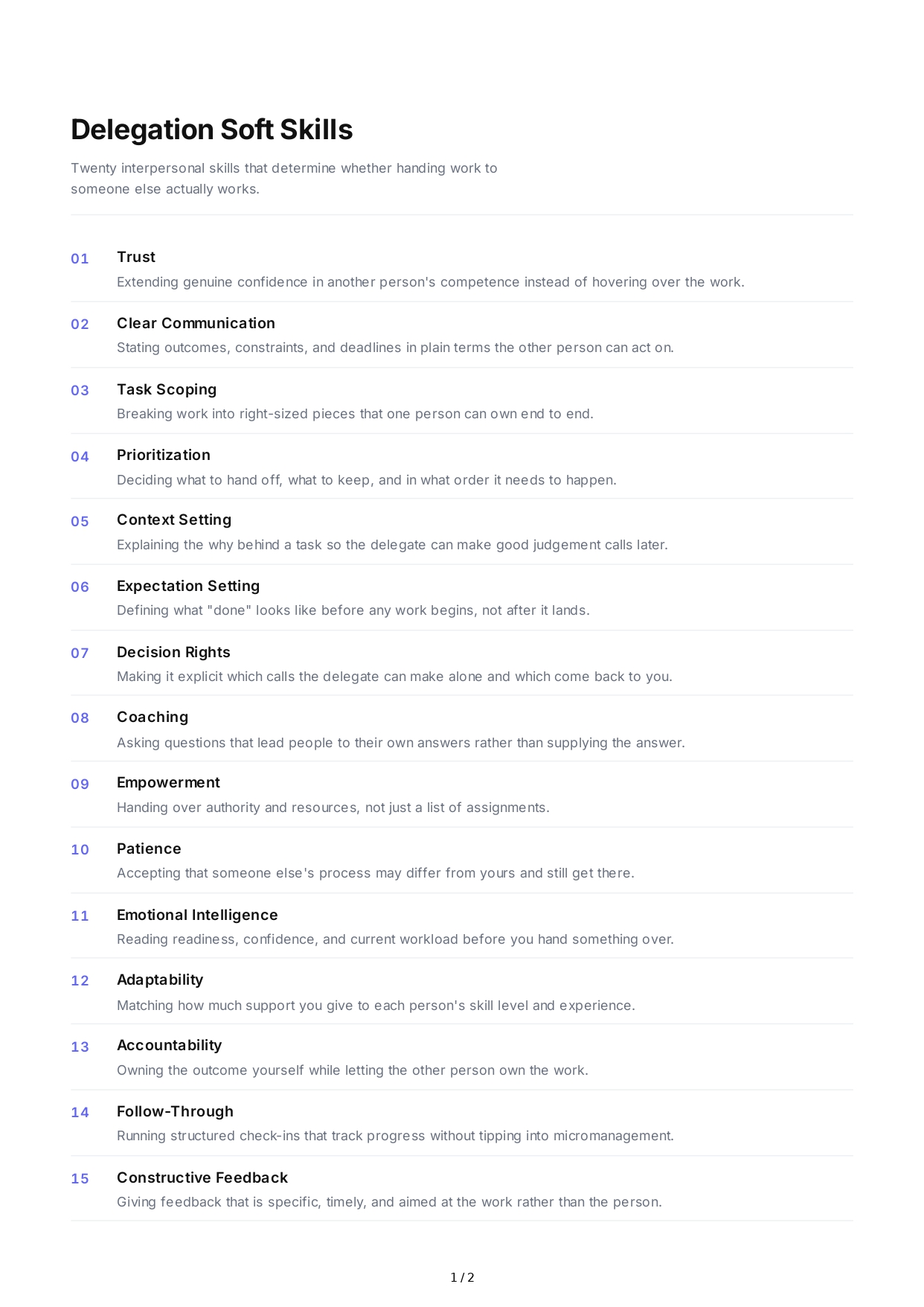
Delegation Soft Skills
Generate Similar
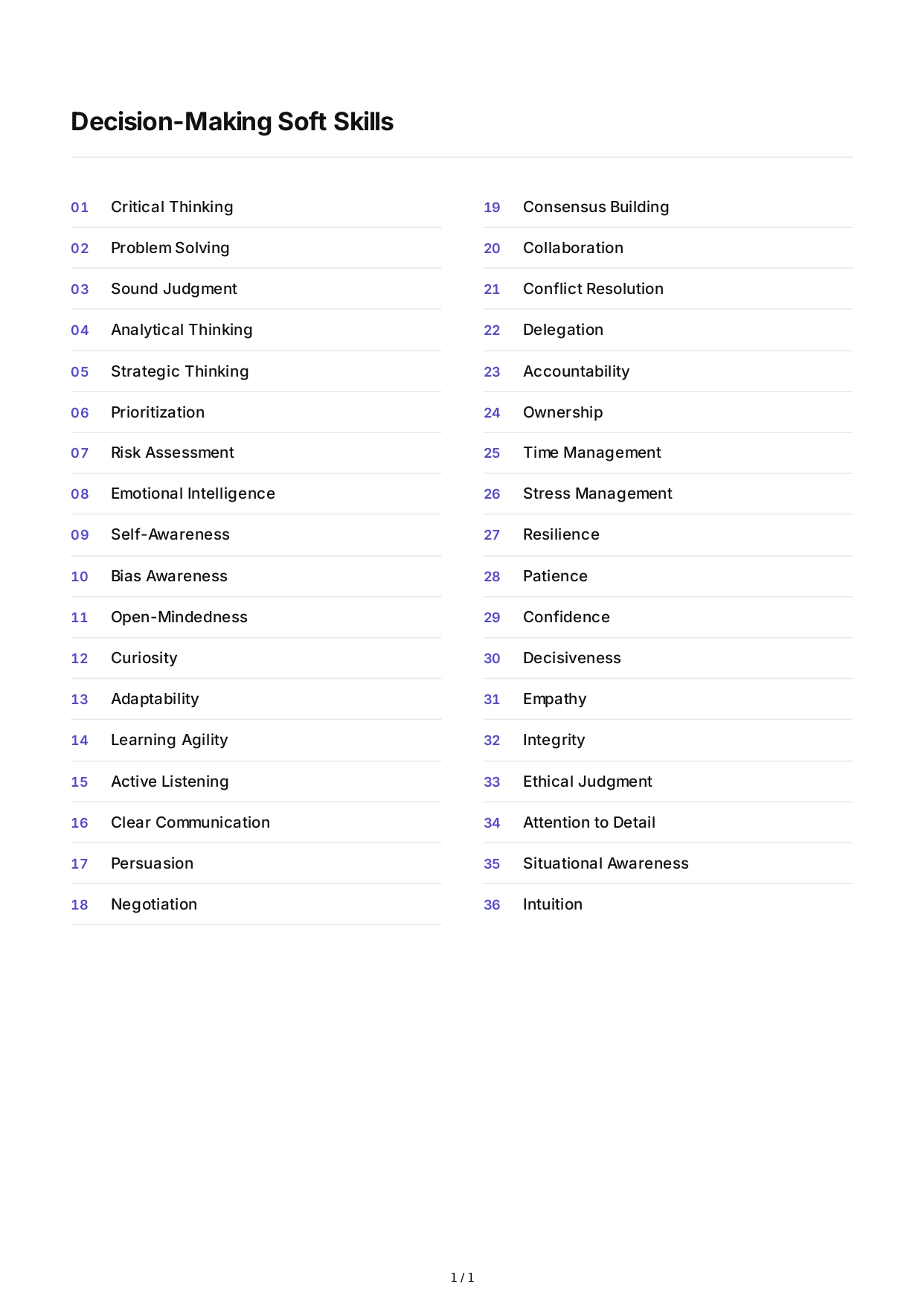
Decision-Making Soft Skills
Generate Similar
Conflict Resolution Soft Skills
Generate Similar
Conflict Management Soft Skills
Generate Similar
Coaching Soft Skills
Generate Similar
Mentoring Soft Skills
Generate Similar
Motivation Soft Skills
Generate Similar
Team-Building Soft Skills
Generate Similar
Influence Soft Skills
Generate Similar
Accountability Soft Skills
Generate Similar
Responsibility Soft Skills
Generate Similar
People Management Soft Skills
Generate Similar
Problem-Solving Soft Skills
Generate Similar
Critical Thinking Soft Skills
Generate Similar
Analytical Thinking Soft Skills
Generate Similar
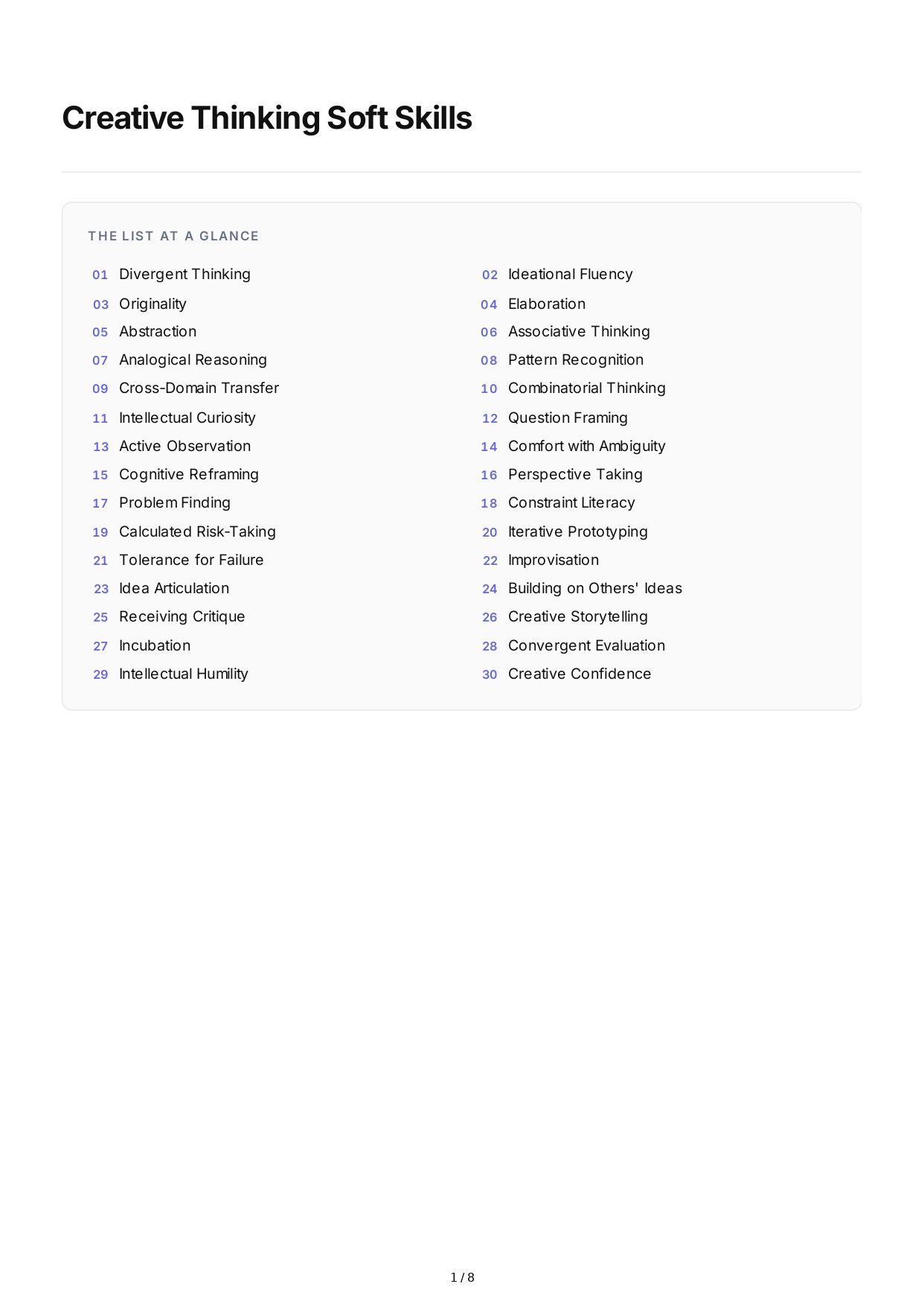
Creative Thinking Soft Skills
Generate Similar
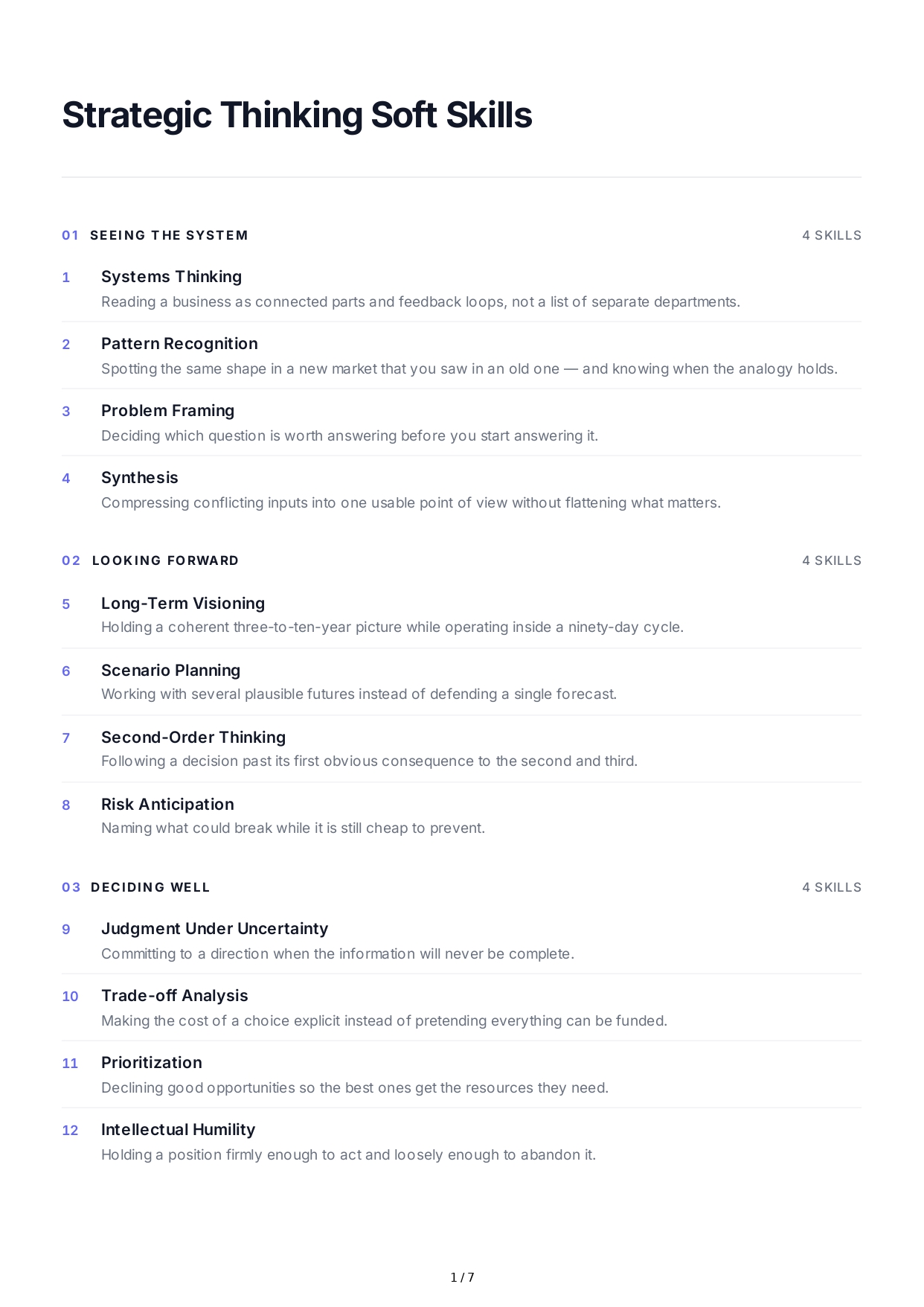
Strategic Thinking Soft Skills
Generate Similar
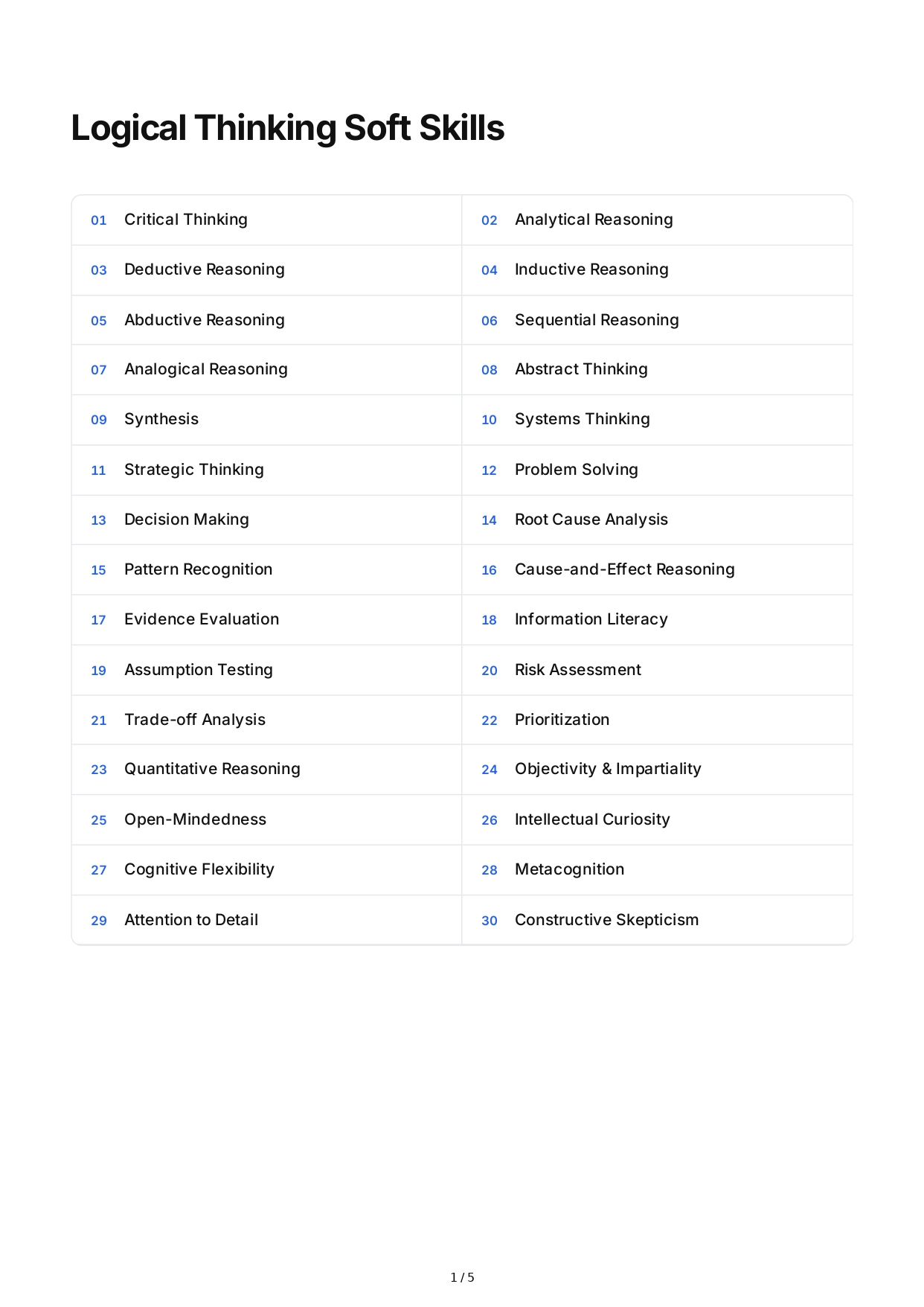
Logical Thinking Soft Skills
Generate Similar
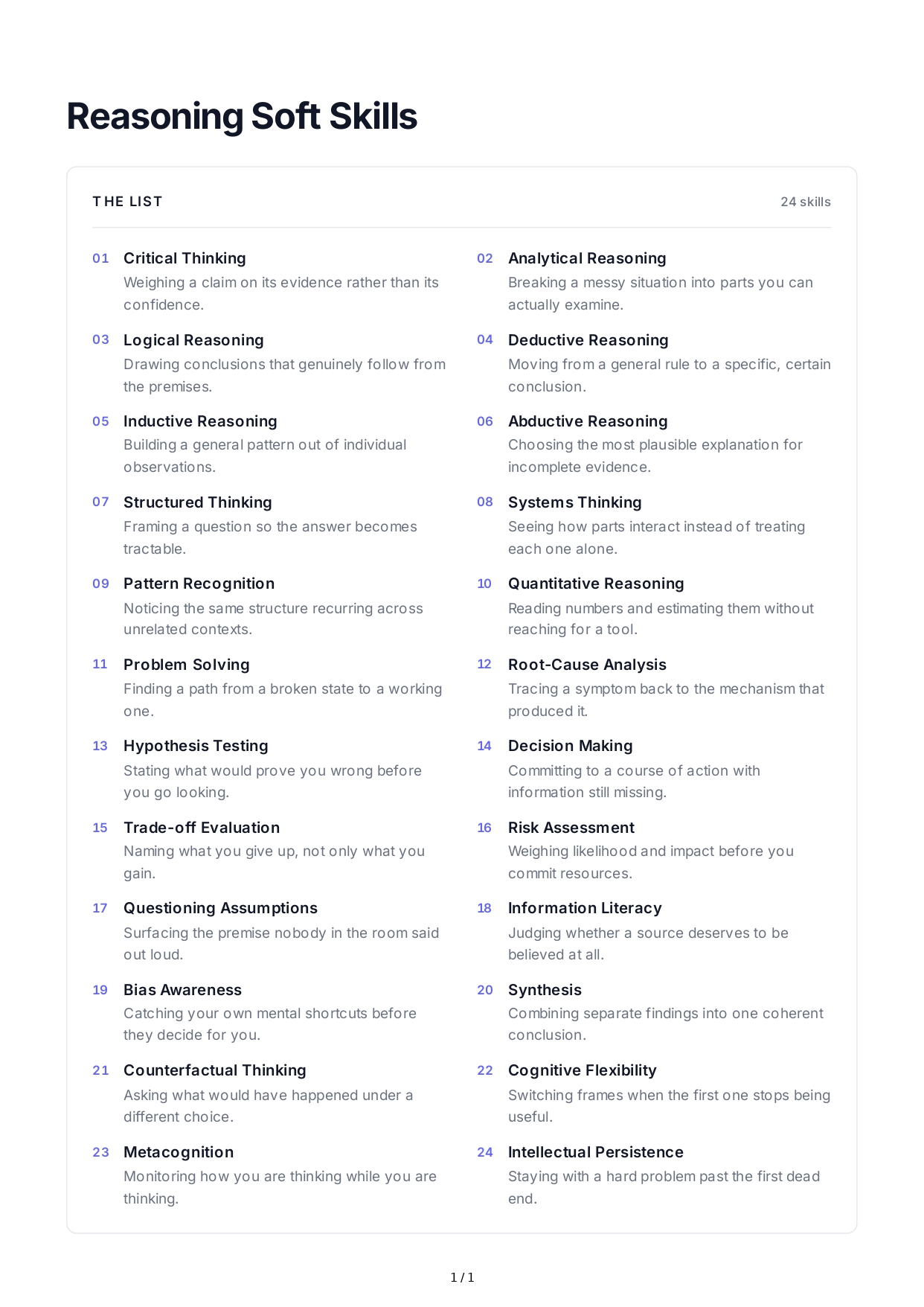
Reasoning Soft Skills
Generate Similar
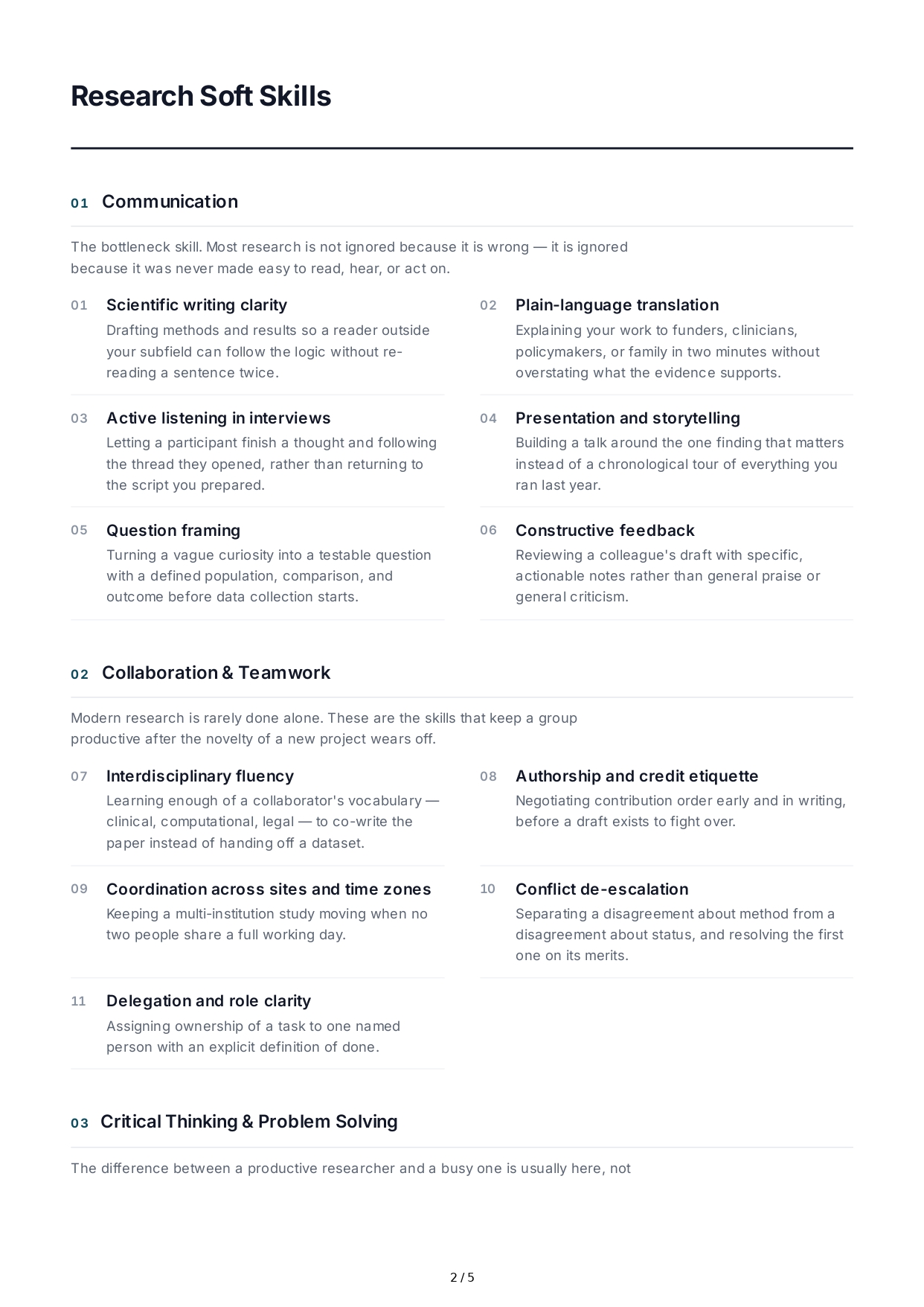
Research Soft Skills
Generate Similar
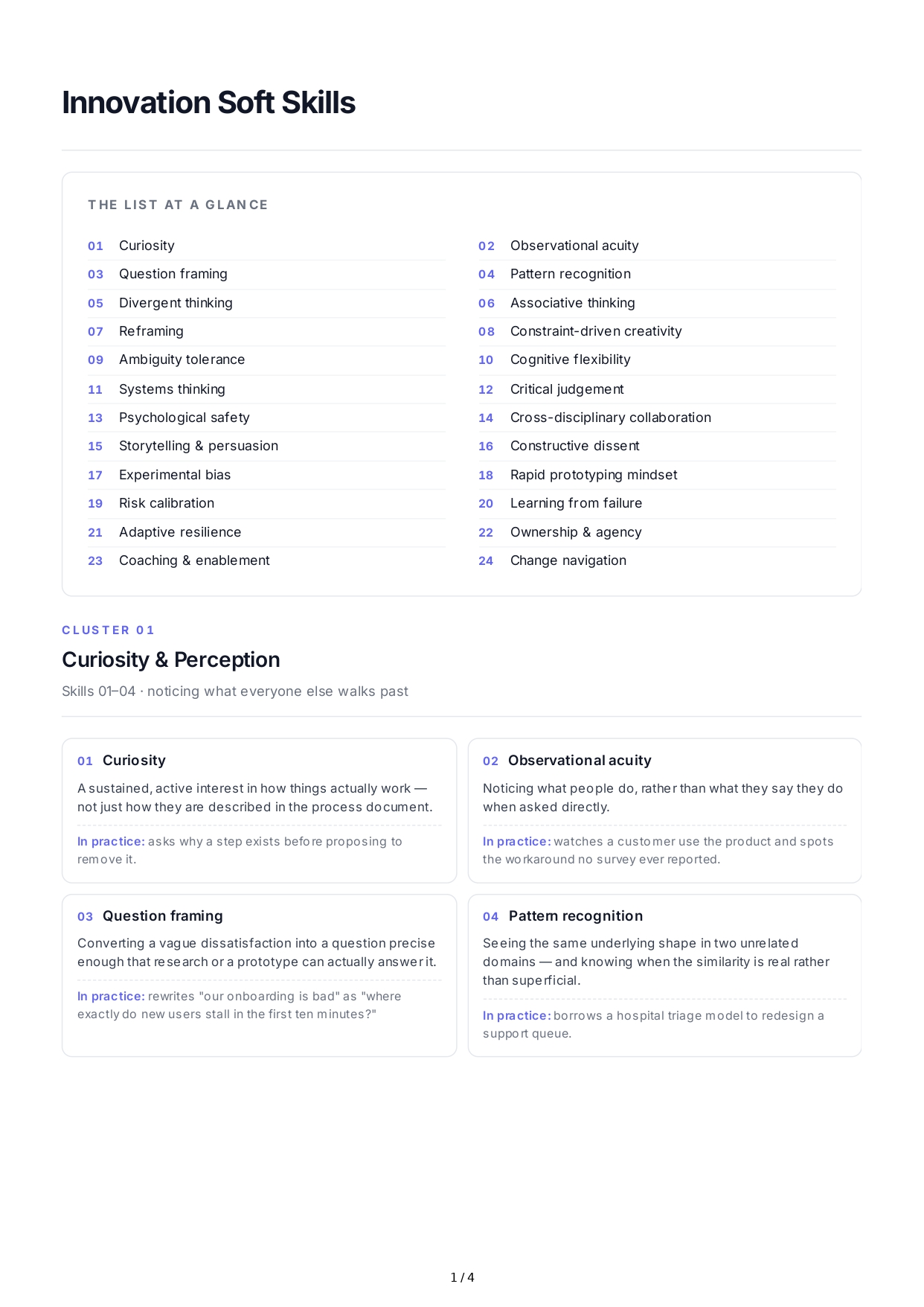
Innovation Soft Skills
Generate Similar
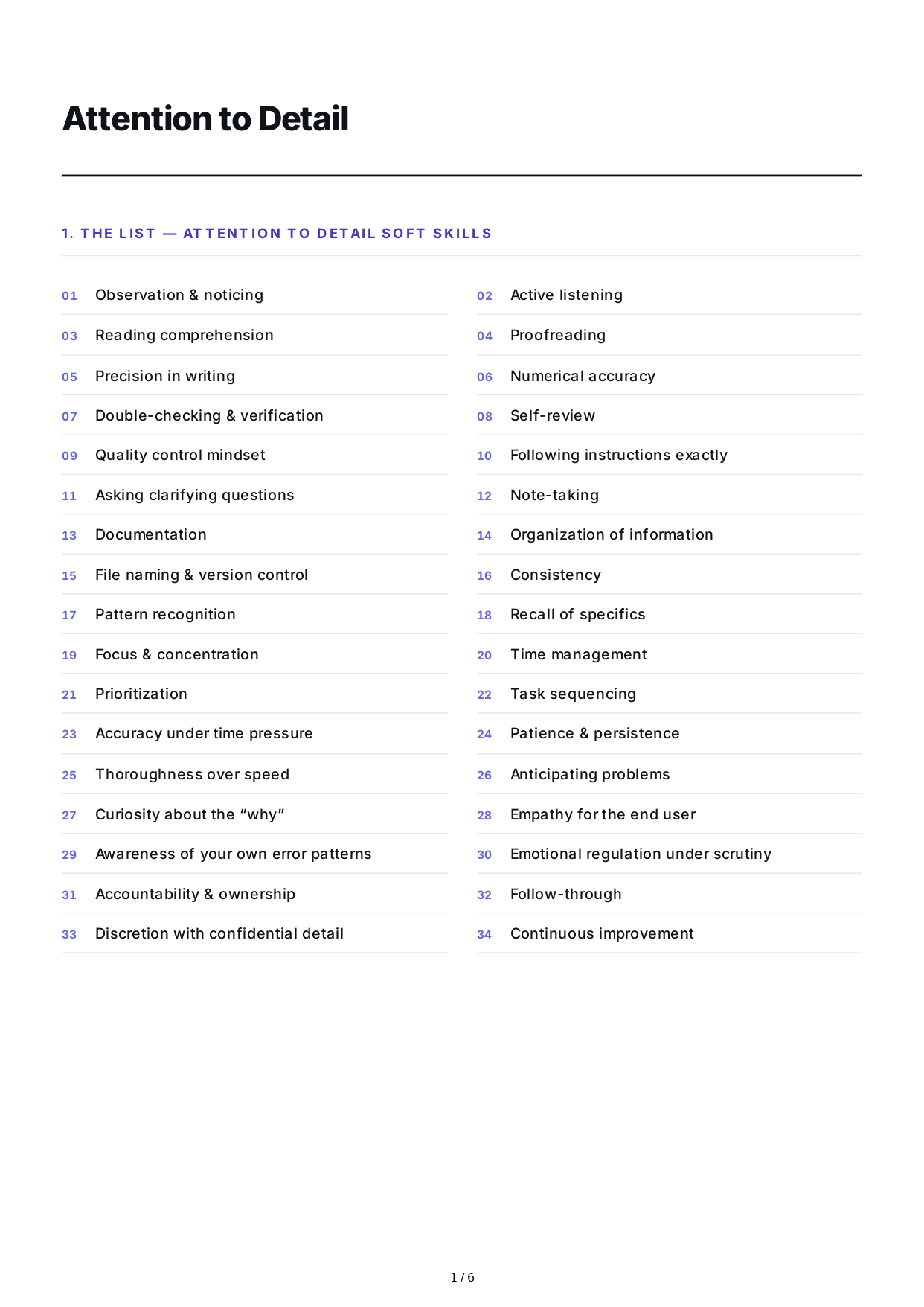
Attention to Detail Soft Skills
Generate Similar
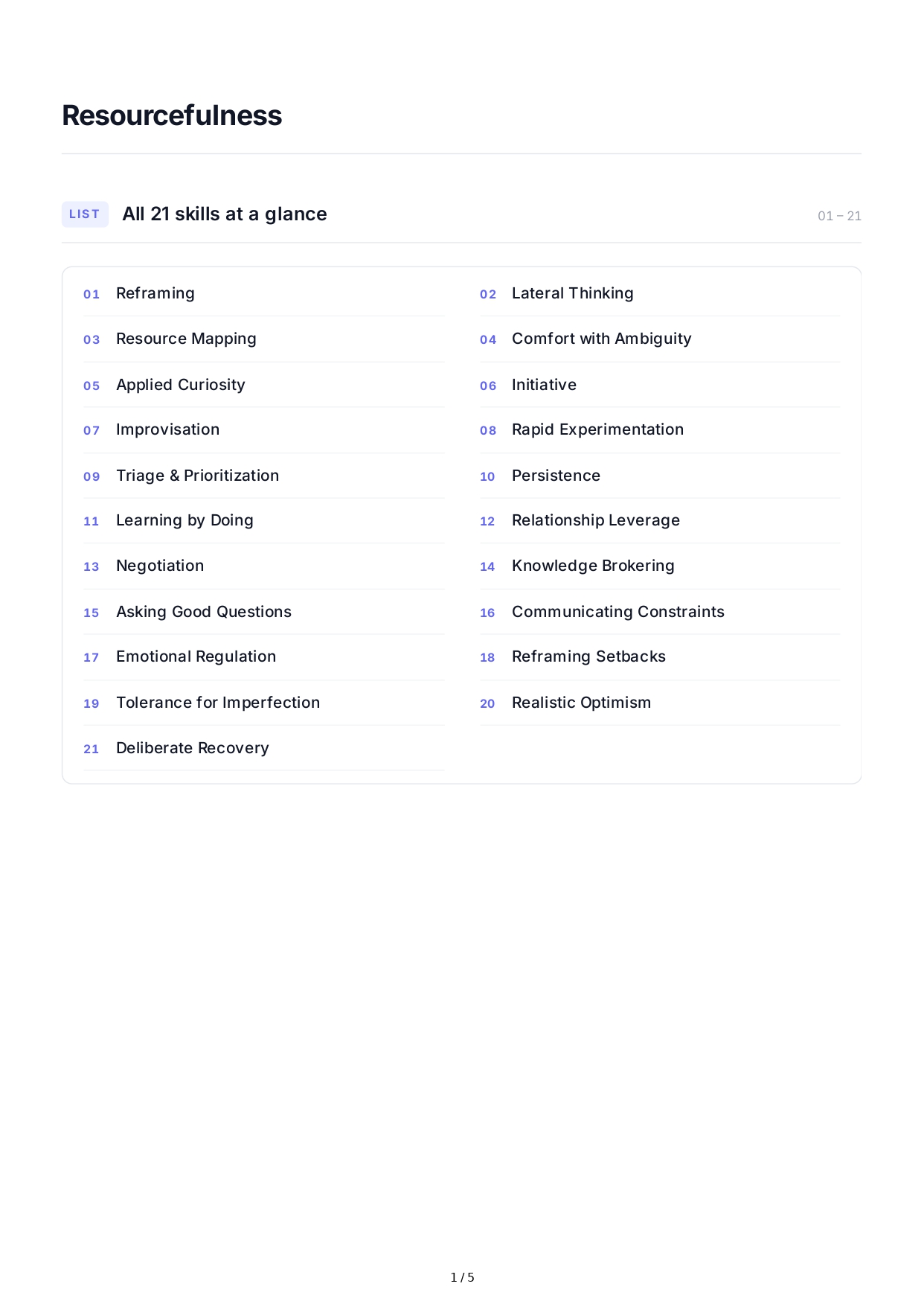
Resourcefulness Soft Skills
Generate Similar
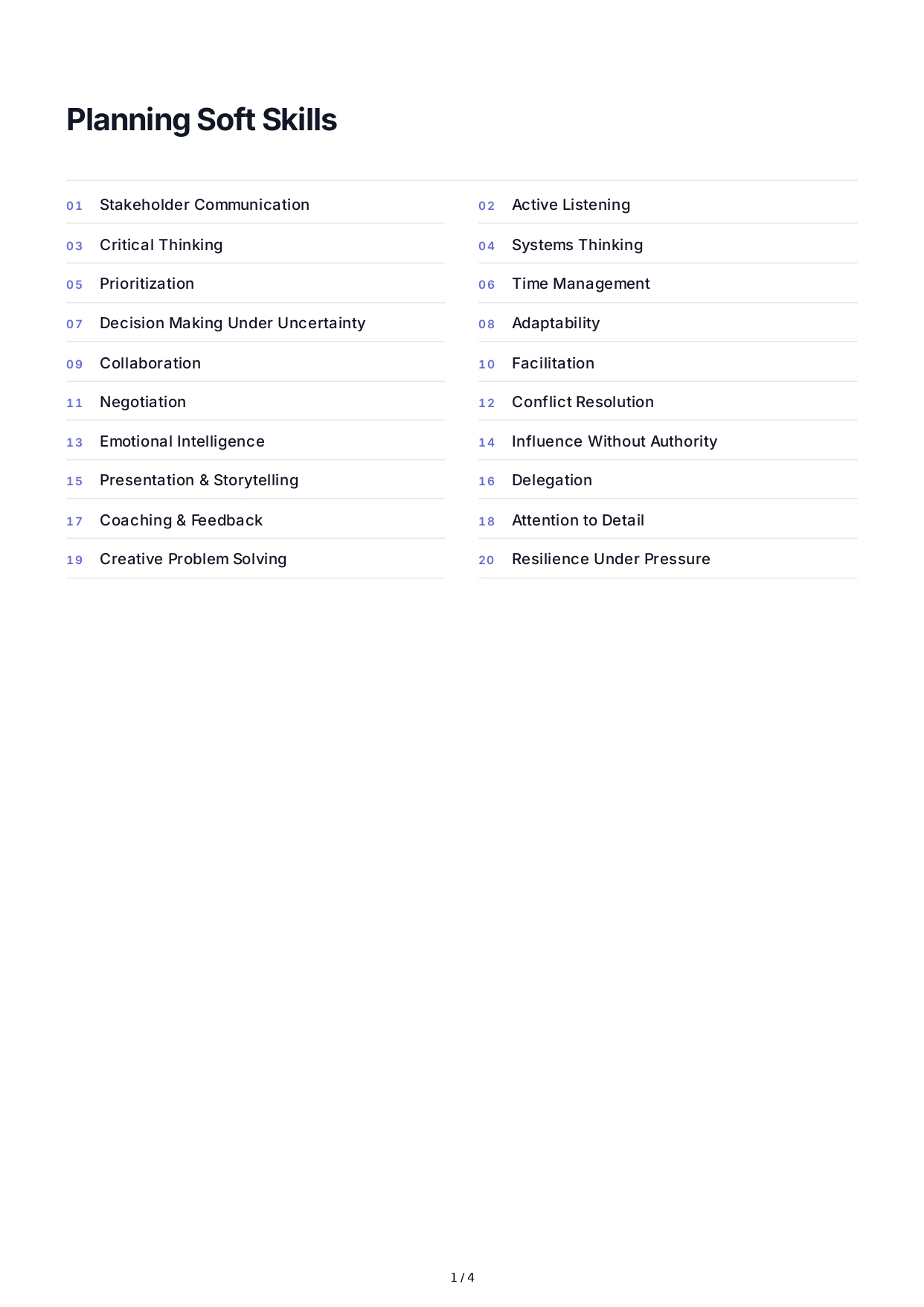
Planning Soft Skills
Generate Similar
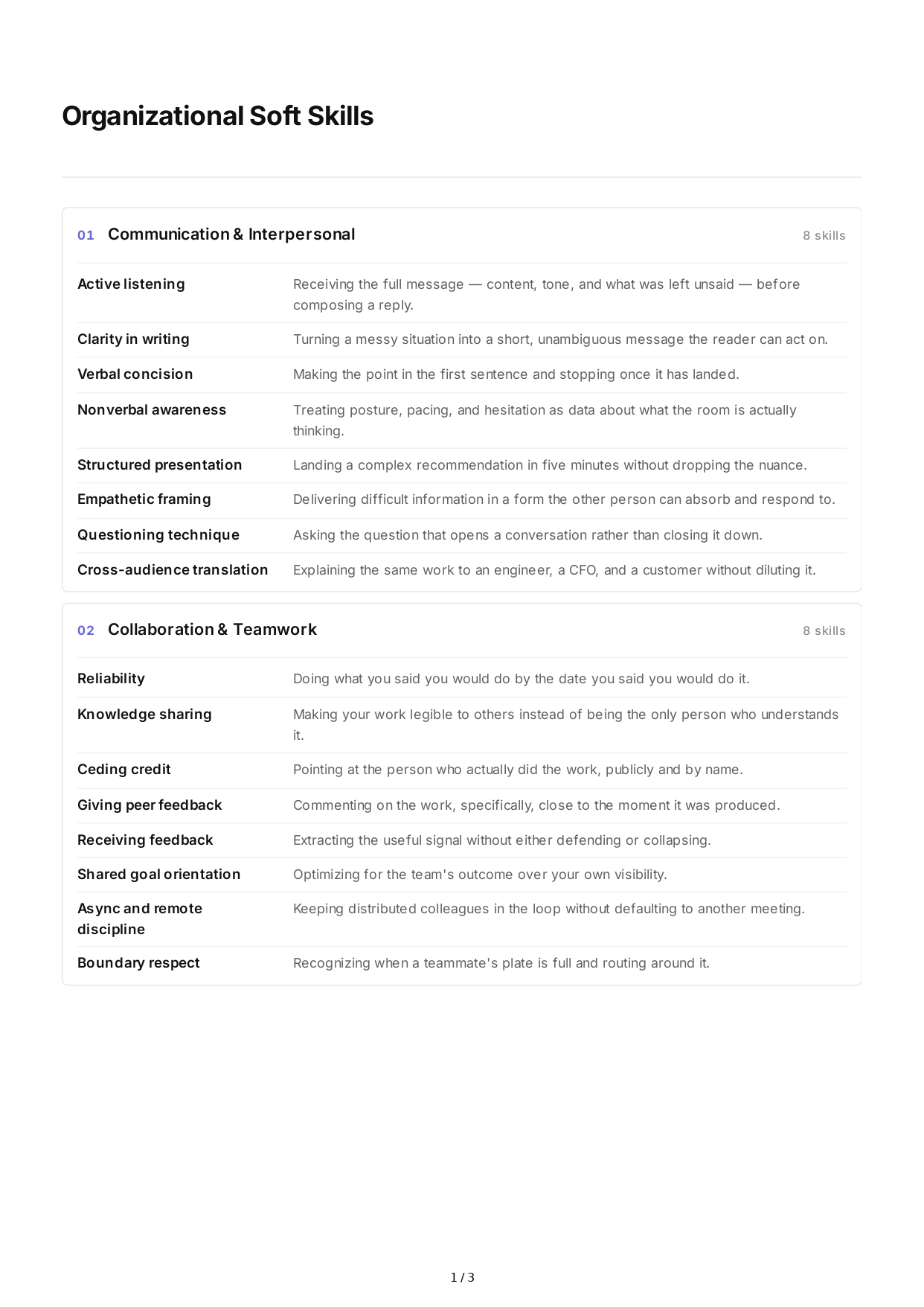
Organizational Soft Skills
Generate Similar
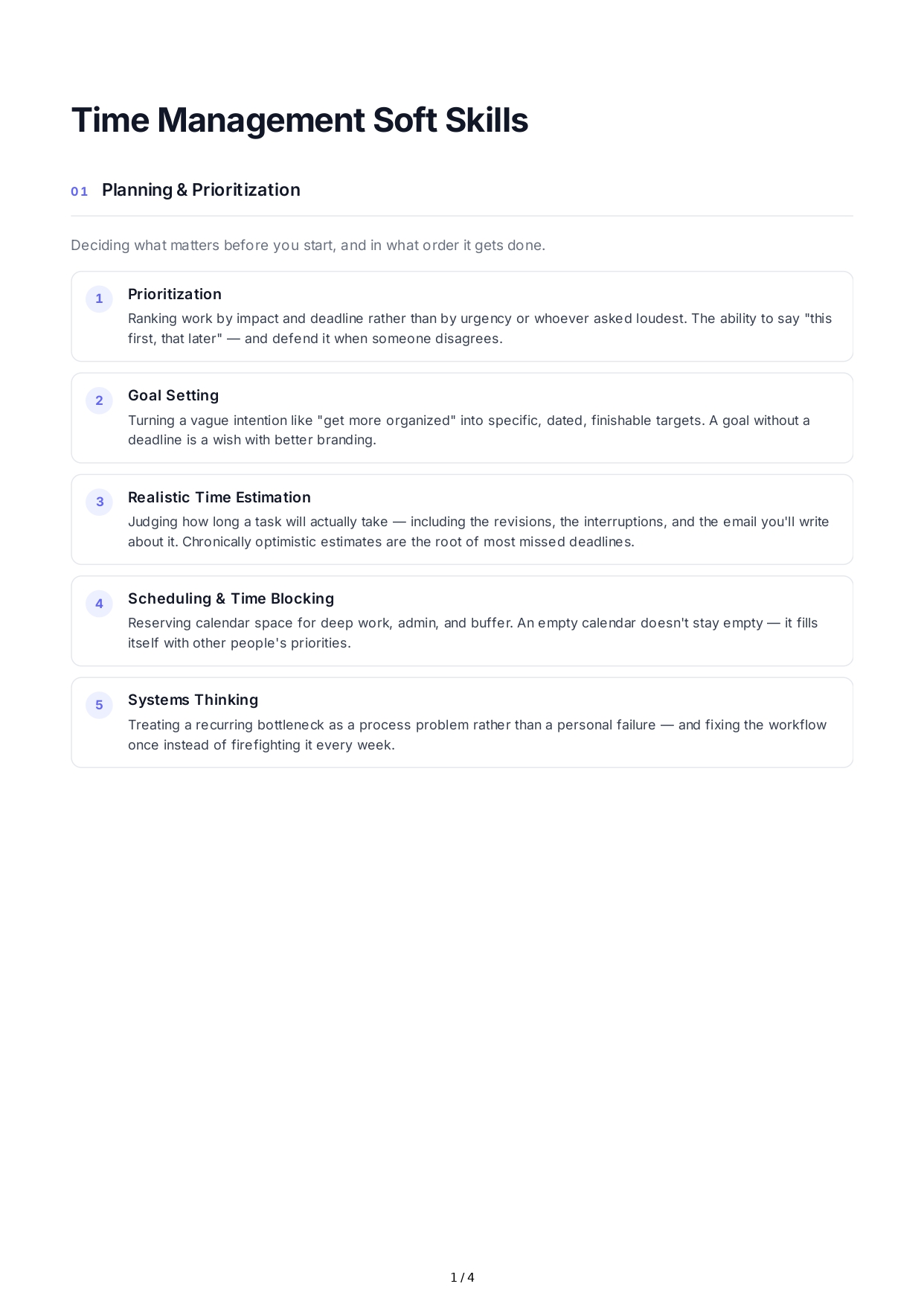
Time Management Soft Skills
Generate Similar
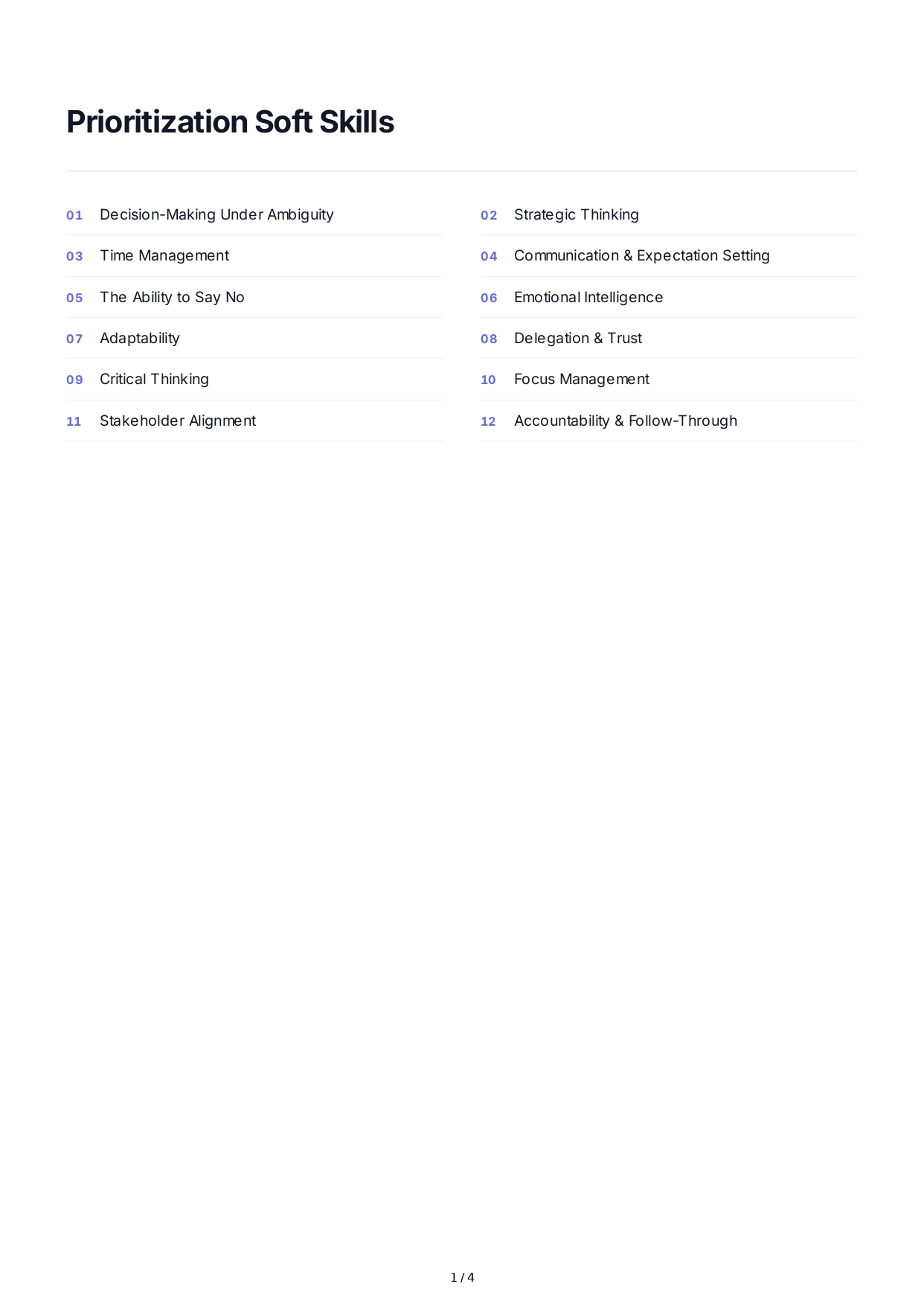
Prioritization Soft Skills
Generate Similar
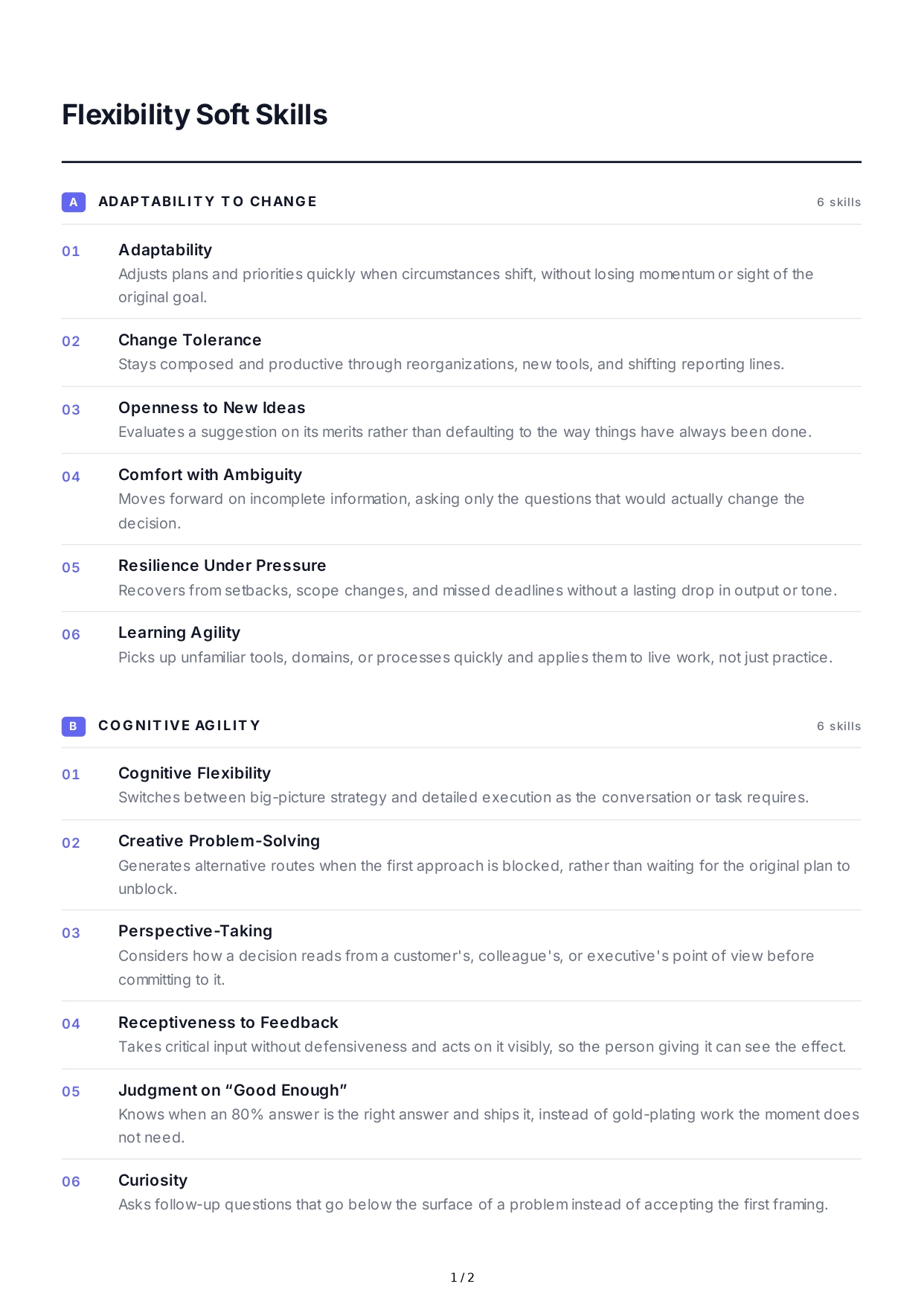
Flexibility Soft Skills
Generate Similar
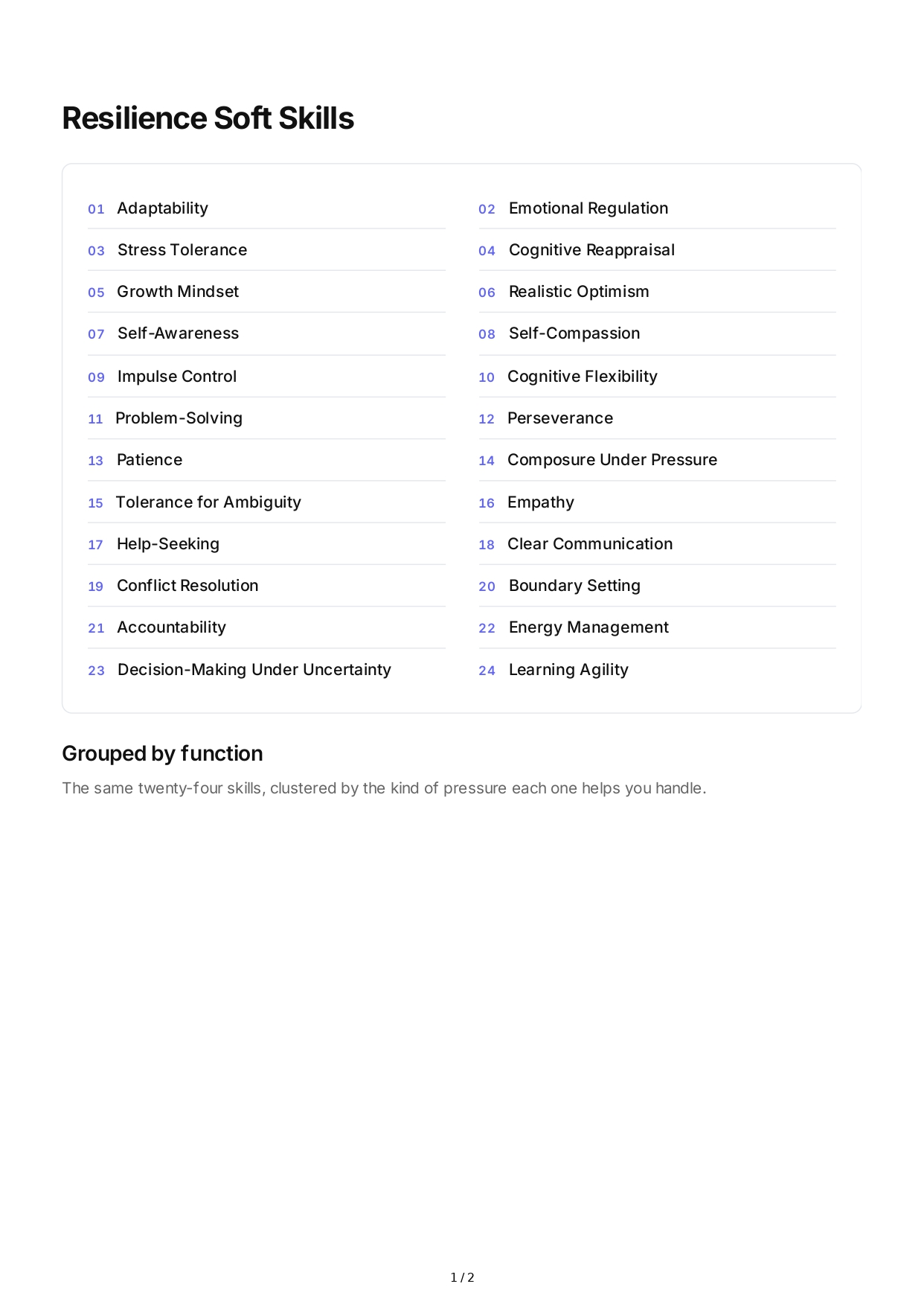
Resilience Soft Skills