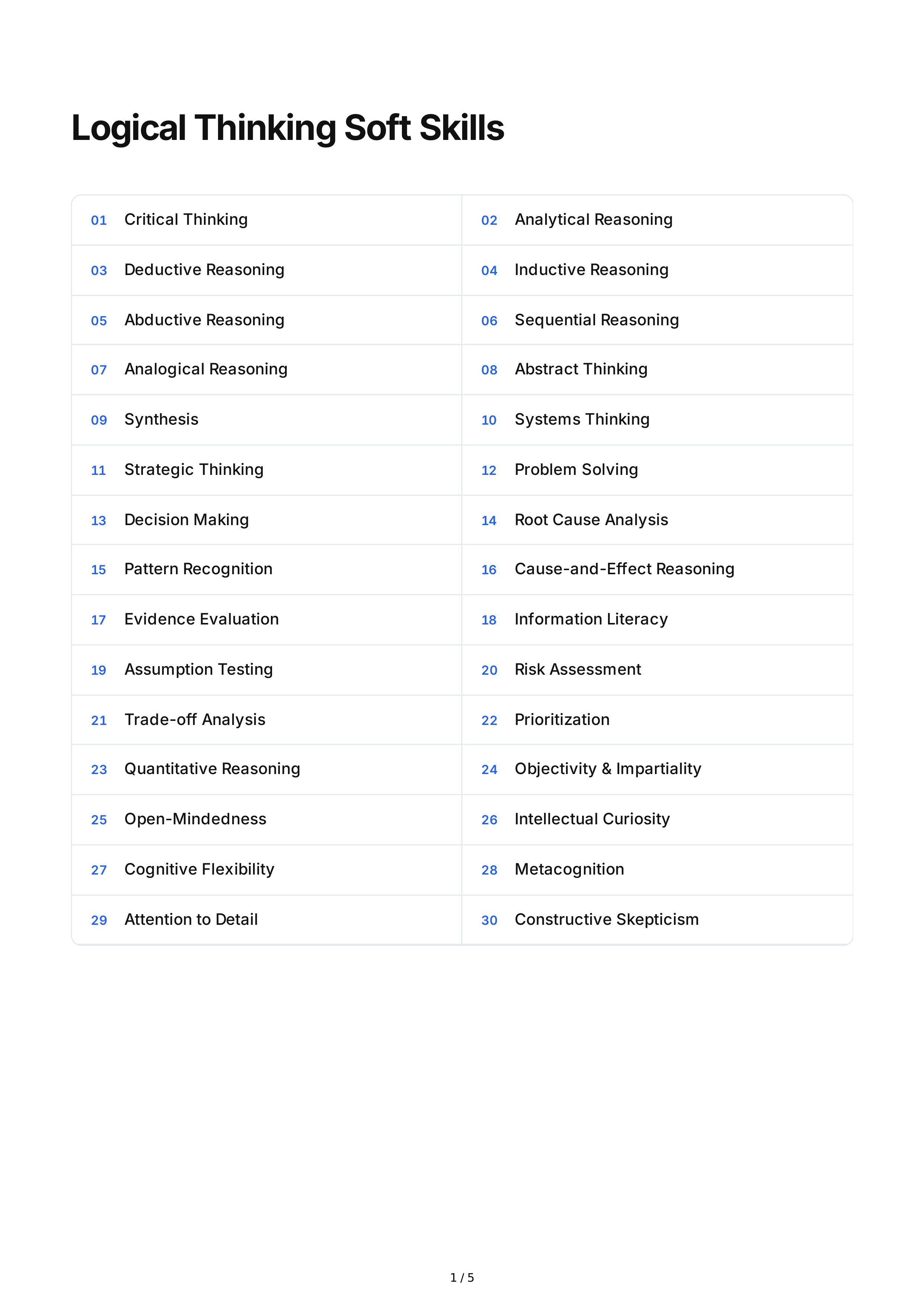
Logical
Thinking
Soft
Skills
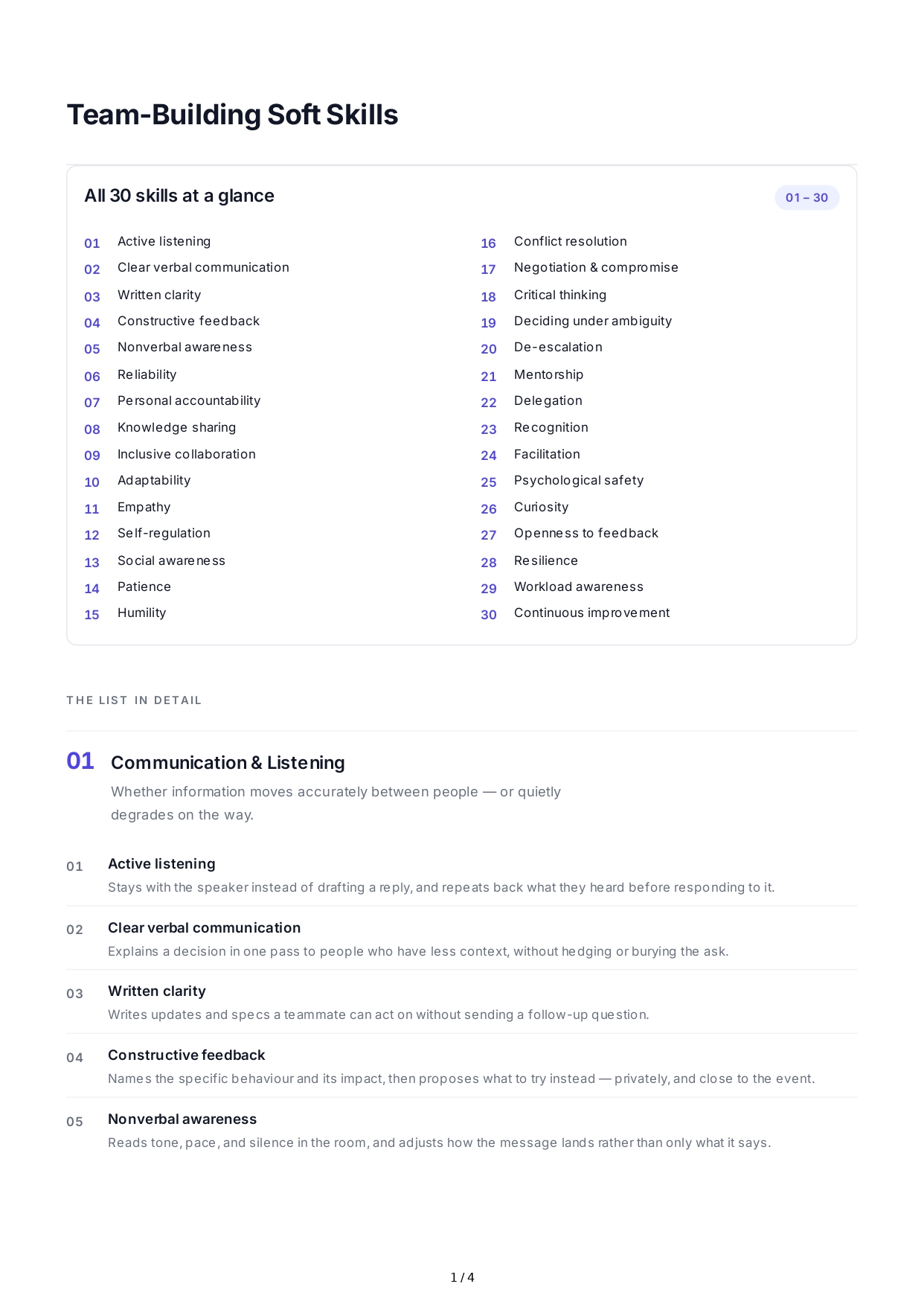
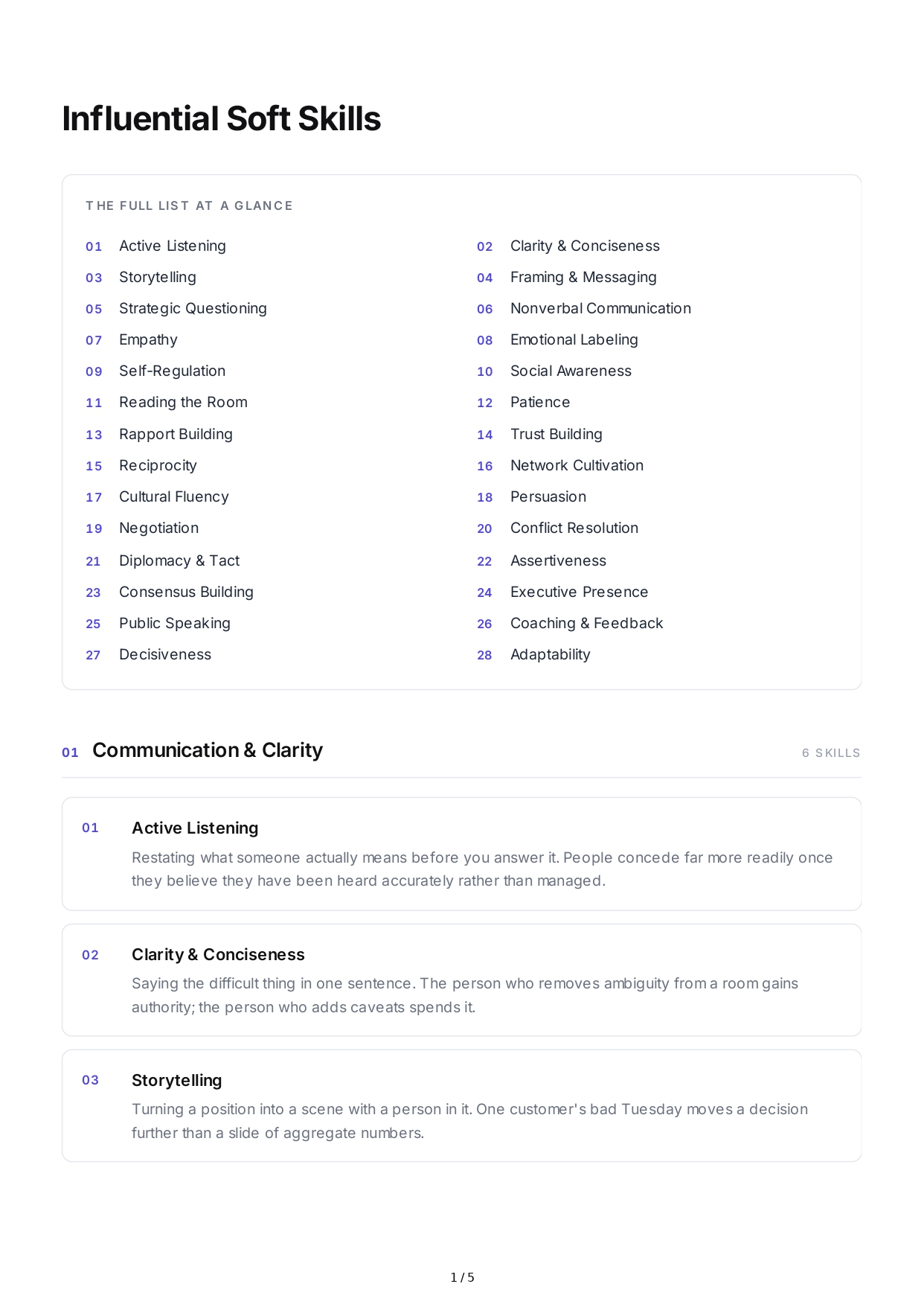
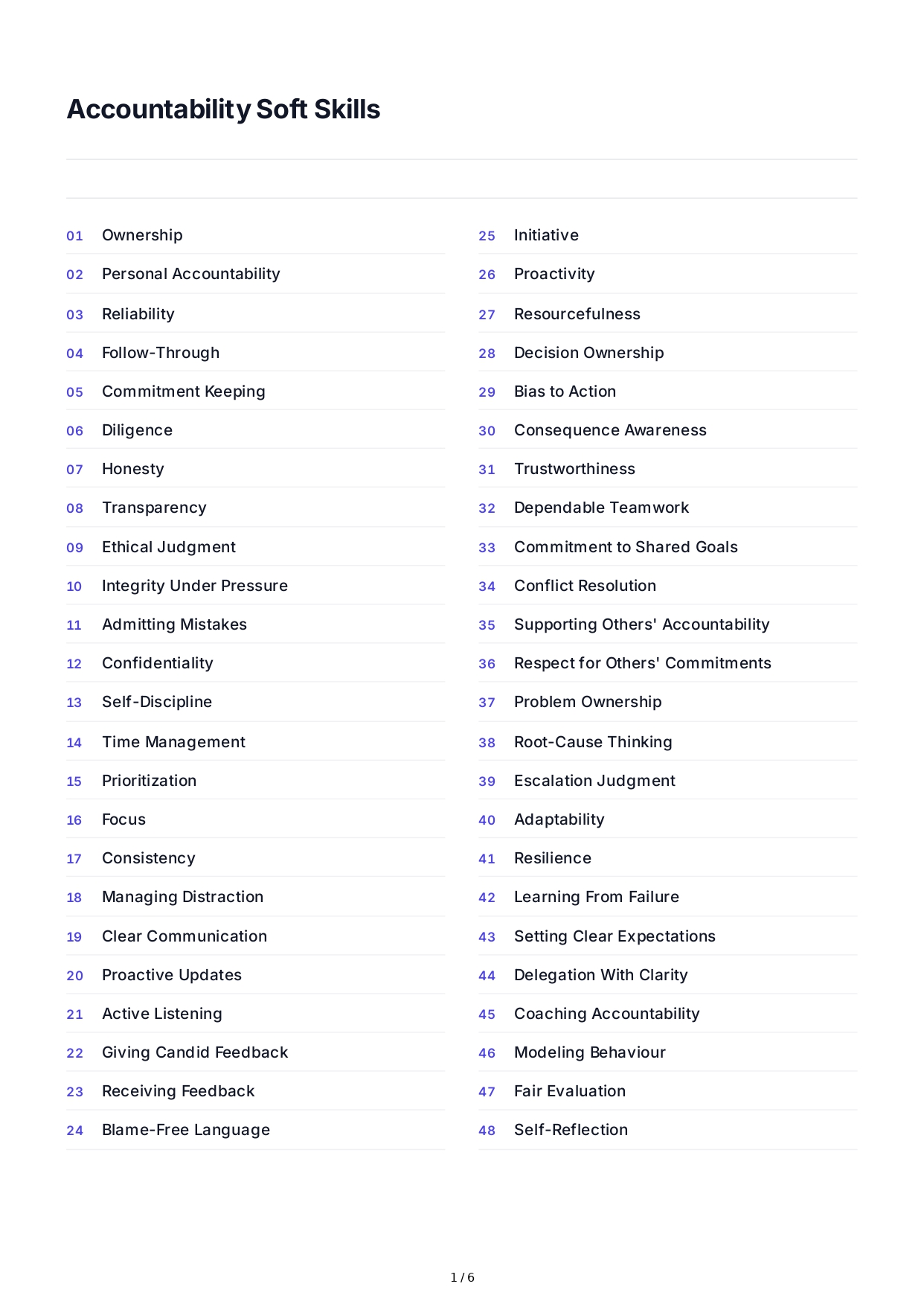
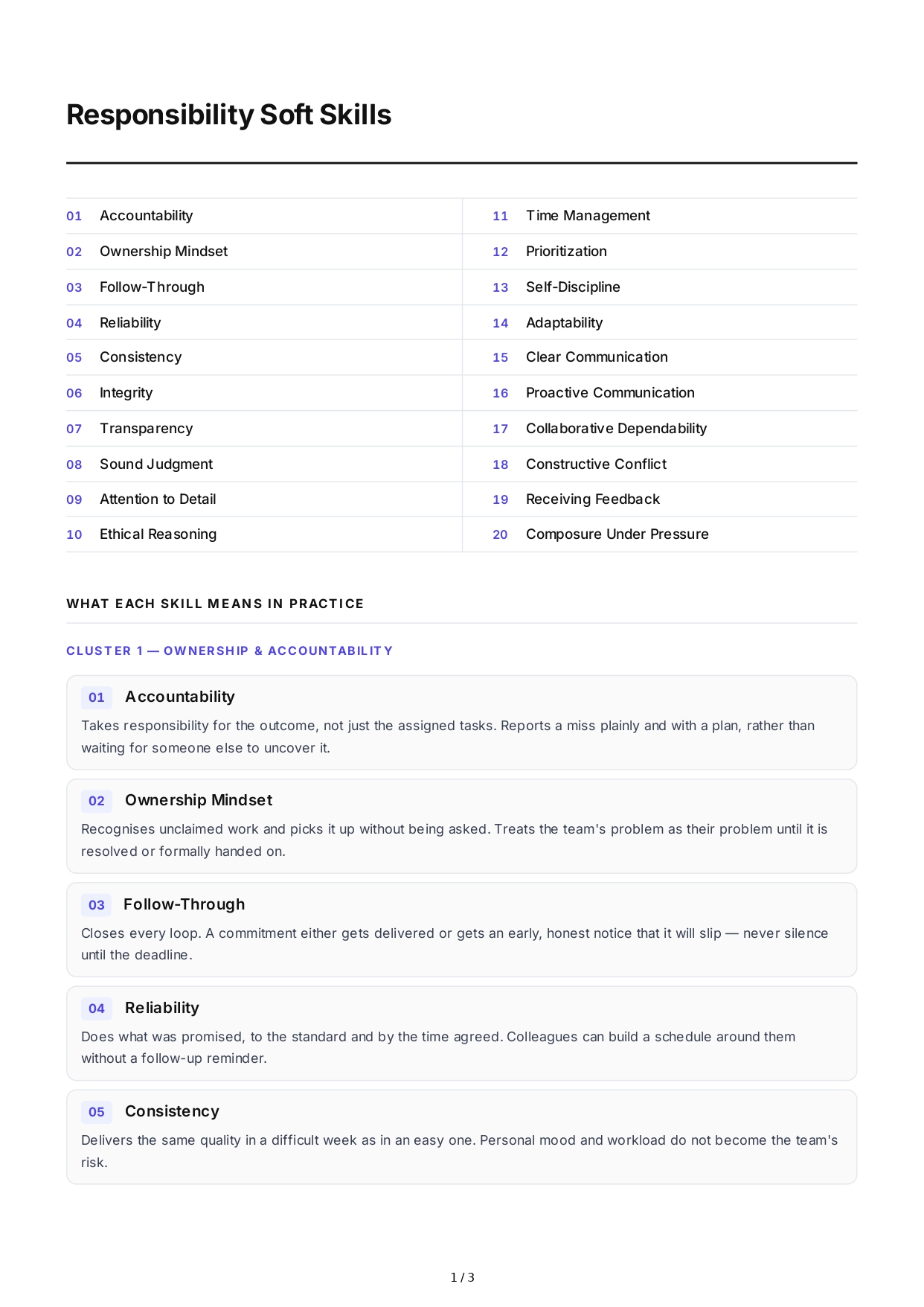
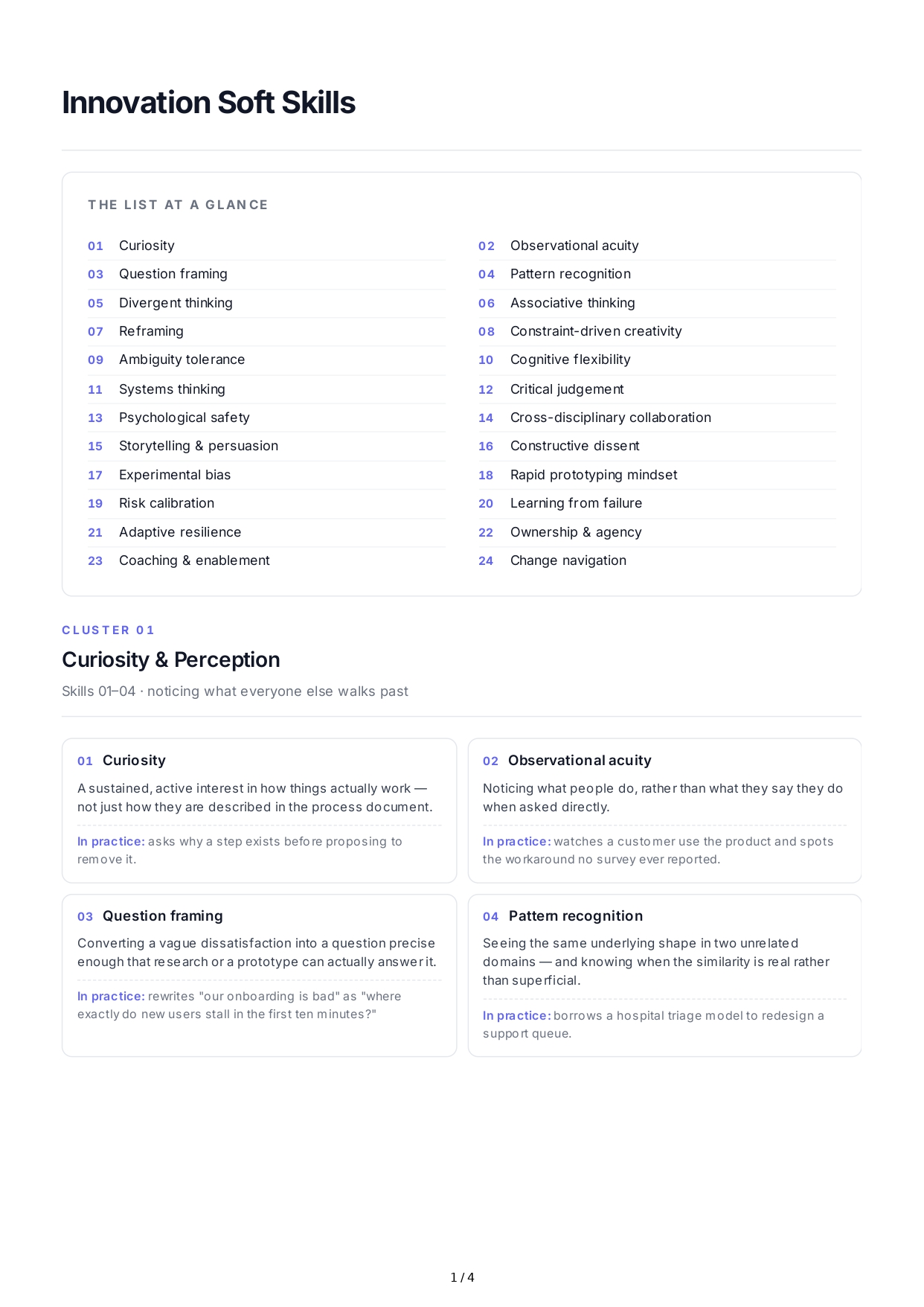
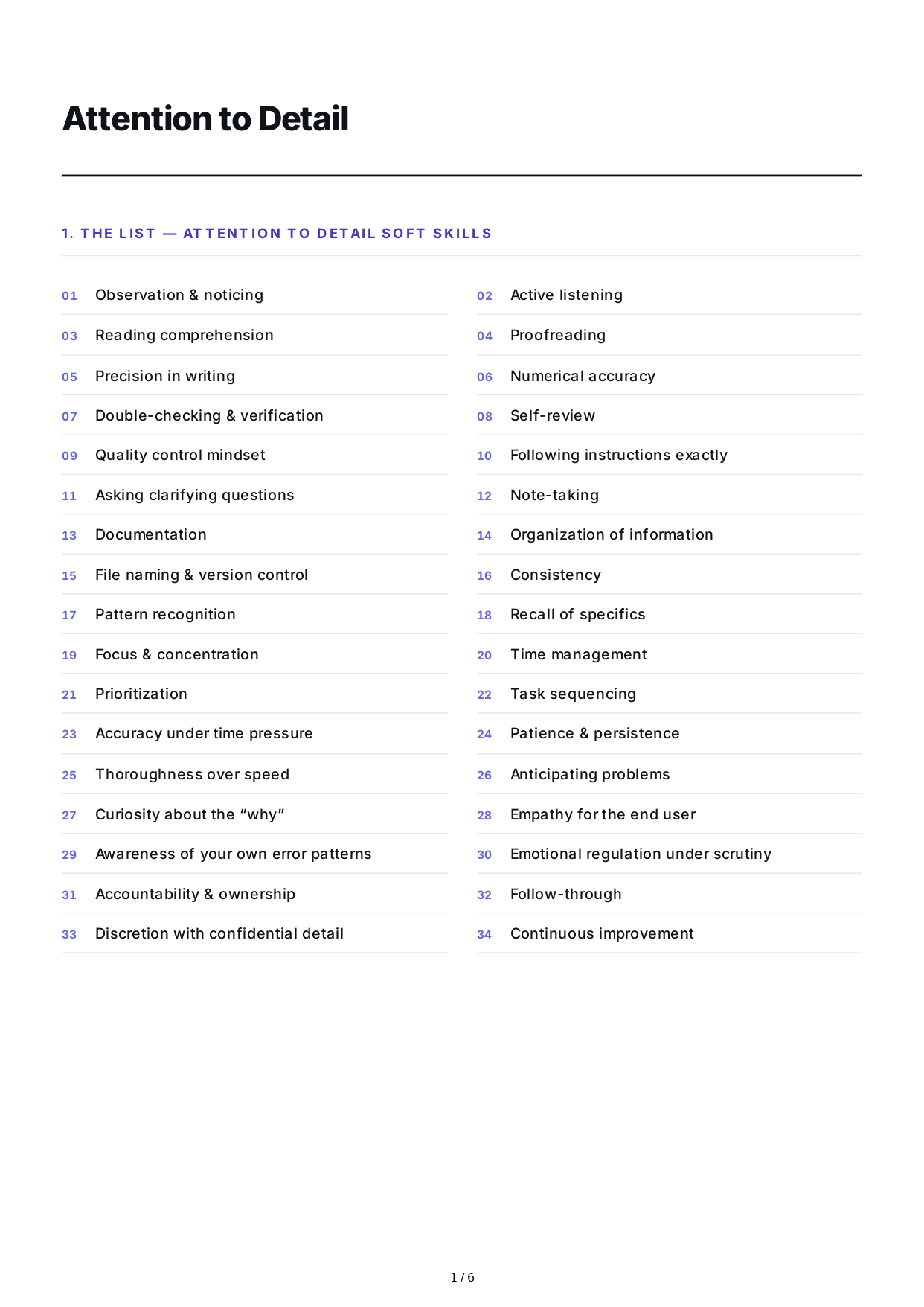
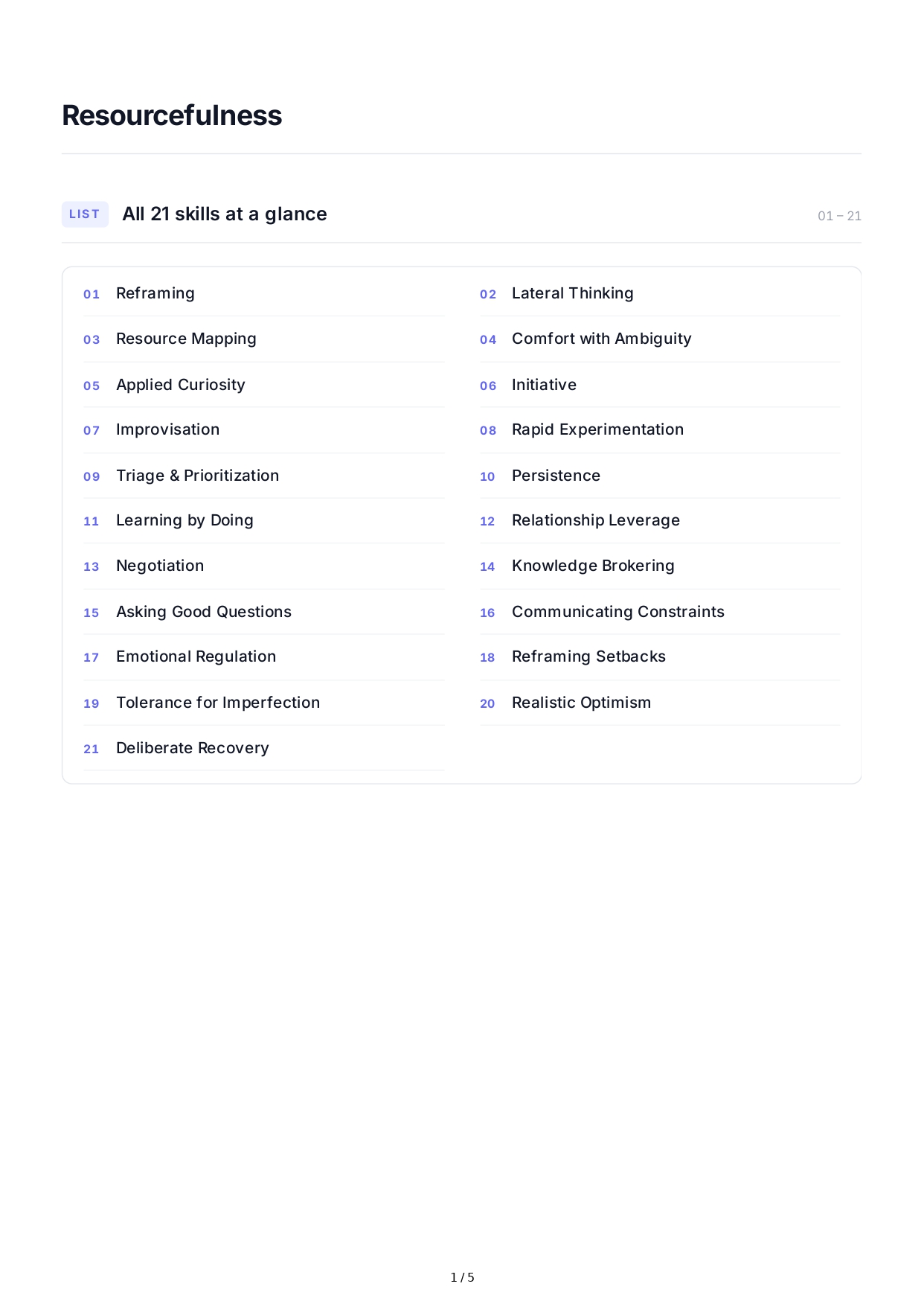
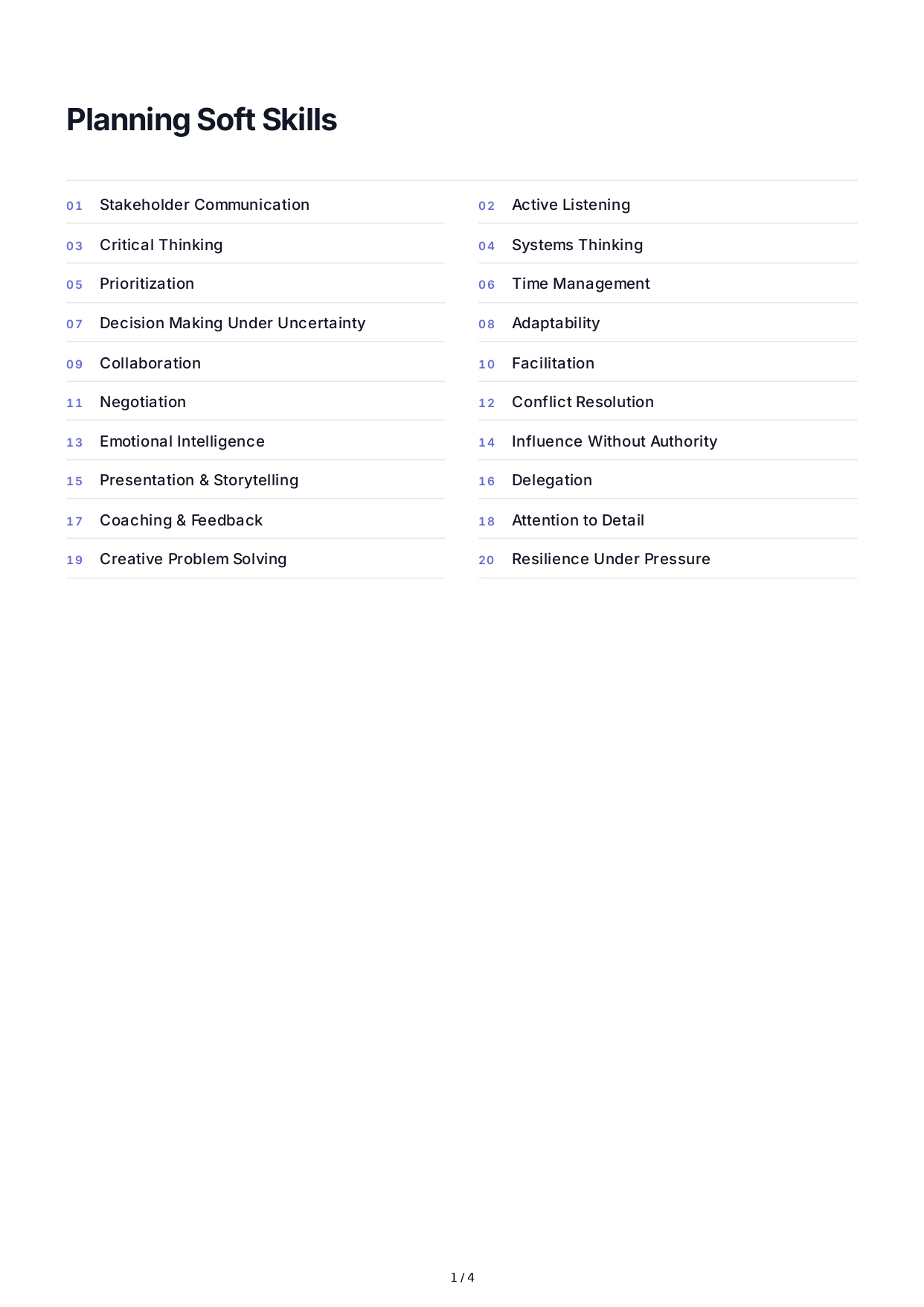
01
Critical
Thinking
02
Analytical
Reasoning
03
Deductive
Reasoning
04
Inductive
Reasoning
05
Abductive
Reasoning
06
Sequential
Reasoning
07
Analogical
Reasoning
08
Abstract
Thinking
09
Synthesis
10
Systems
Thinking
11
Strategic
Thinking
12
Problem
Solving
13
Decision
Making
14
Root
Cause
Analysis
15
Pattern
Recognition
16
Cause
-
and
-
Effect
Reasoning
17
Evidence
Evaluation
18
Information
Literacy
19
Assumption
Testing
20
Risk
Assessment
21
Trade
-
off
Analysis
22
Prioritization
23
Quantitative
Reasoning
24
Objectivity
&
Impartiality
25
Open
-
Mindedness
26
Intellectual
Curiosity
27
Cognitive
Flexibility
28
Metacognition
29
Attention
to
Detail
30
Constructive
Skepticism
1 / 5
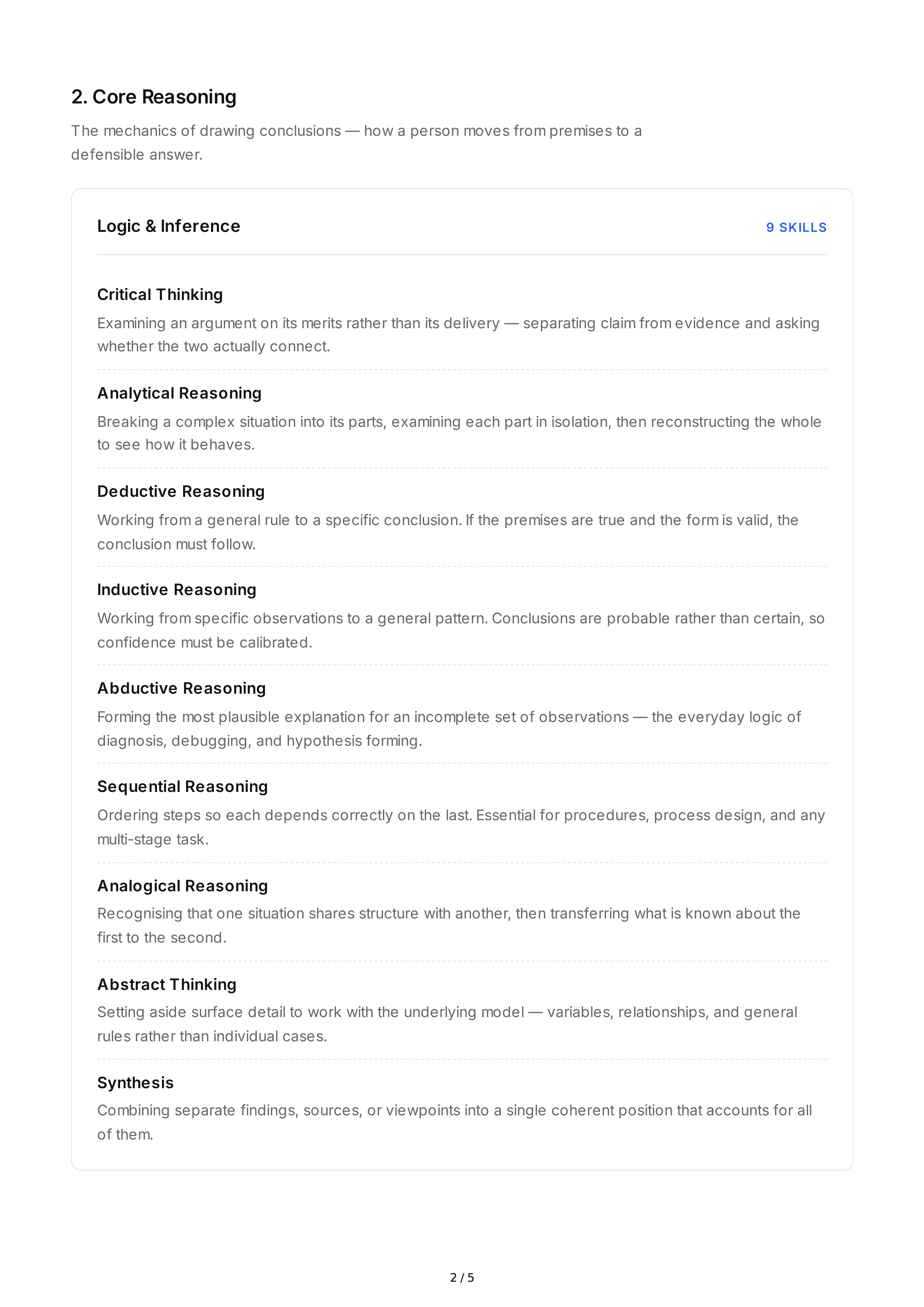
2.
Core
Reasoning
The
mechanics
of
drawing
conclusions
—
how
a
person
moves
from
premises
to
a
defensible
answer
.
Logic
&
Inference
9
SKILLS
Critical
Thinking
Examining
an
argument
on
its
merits
rather
than
its
delivery
—
separating
claim
from
evidence
and
asking
whether
the
two
actually
connect
.
Analytical
Reasoning
Breaking
a
complex
situation
into
its
parts
,
examining
each
part
in
isolation
,
then
reconstructing
the
whole
to
see
how
it
behaves
.
Deductive
Reasoning
Working
from
a
general
rule
to
a
specific
conclusion
.
If
the
premises
are
true
and
the
form
is
valid
,
the
conclusion
must
follow
.
Inductive
Reasoning
Working
from
specific
observations
to
a
general
pattern
.
Conclusions
are
probable
rather
than
certain
,
so
confidence
must
be
calibrated
.
Abductive
Reasoning
Forming
the
most
plausible
explanation
for
an
incomplete
set
of
observations
—
the
everyday
logic
of
diagnosis
,
debugging
,
and
hypothesis
forming
.
Sequential
Reasoning
Ordering
steps
so
each
depends
correctly
on
the
last
.
Essential
for
procedures
,
process
design
,
and
any
multi
-
stage
task
.
Analogical
Reasoning
Recognising
that
one
situation
shares
structure
with
another
,
then
transferring
what
is
known
about
the
first
to
the
second
.
Abstract
Thinking
Setting
aside
surface
detail
to
work
with
the
underlying
model
—
variables
,
relationships
,
and
general
rules
rather
than
individual
cases
.
Synthesis
Combining
separate
findings
,
sources
,
or
viewpoints
into
a
single
coherent
position
that
accounts
for
all
of
them
.
2 / 5
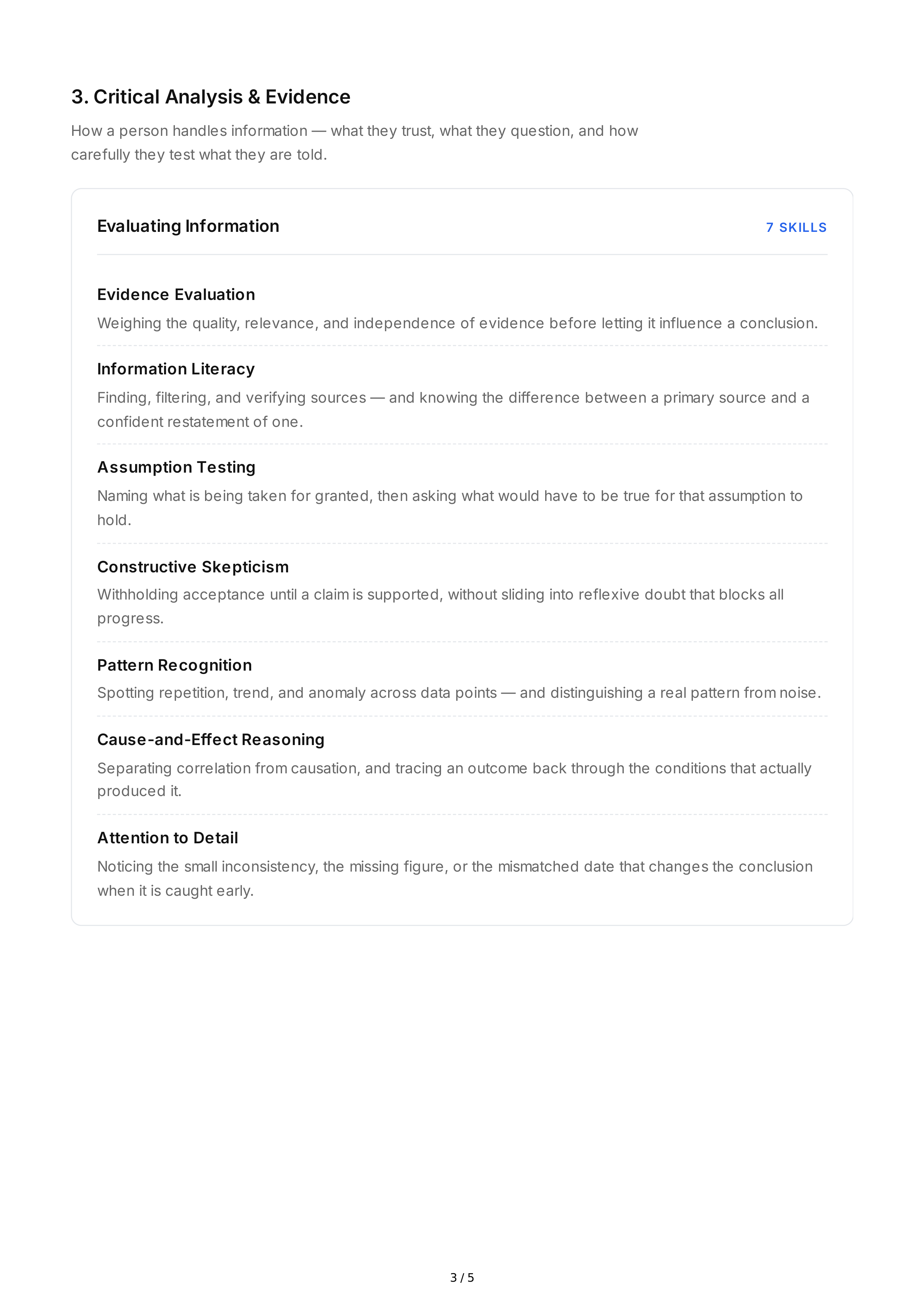
3.
Critical
Analysis
&
Evidence
How
a
person
handles
information
—
what
they
trust
,
what
they
question
,
and
how
carefully
they
test
what
they
are
told
.
Evaluating
Information
7
SKILLS
Evidence
Evaluation
Weighing
the
quality
,
relevance
,
and
independence
of
evidence
before
letting
it
influence
a
conclusion
.
Information
Literacy
Finding
,
filtering
,
and
verifying
sources
—
and
knowing
the
difference
between
a
primary
source
and
a
confident
restatement
of
one
.
Assumption
Testing
Naming
what
is
being
taken
for
granted
,
then
asking
what
would
have
to
be
true
for
that
assumption
to
hold
.
Constructive
Skepticism
Withholding
acceptance
until
a
claim
is
supported
,
without
sliding
into
reflexive
doubt
that
blocks
all
progress
.
Pattern
Recognition
Spotting
repetition
,
trend
,
and
anomaly
across
data
points
—
and
distinguishing
a
real
pattern
from
noise
.
Cause
-
and
-
Effect
Reasoning
Separating
correlation
from
causation
,
and
tracing
an
outcome
back
through
the
conditions
that
actually
produced
it
.
Attention
to
Detail
Noticing
the
small
inconsistency
,
the
missing
figure
,
or
the
mismatched
date
that
changes
the
conclusion
when
it
is
caught
early
.
3 / 5
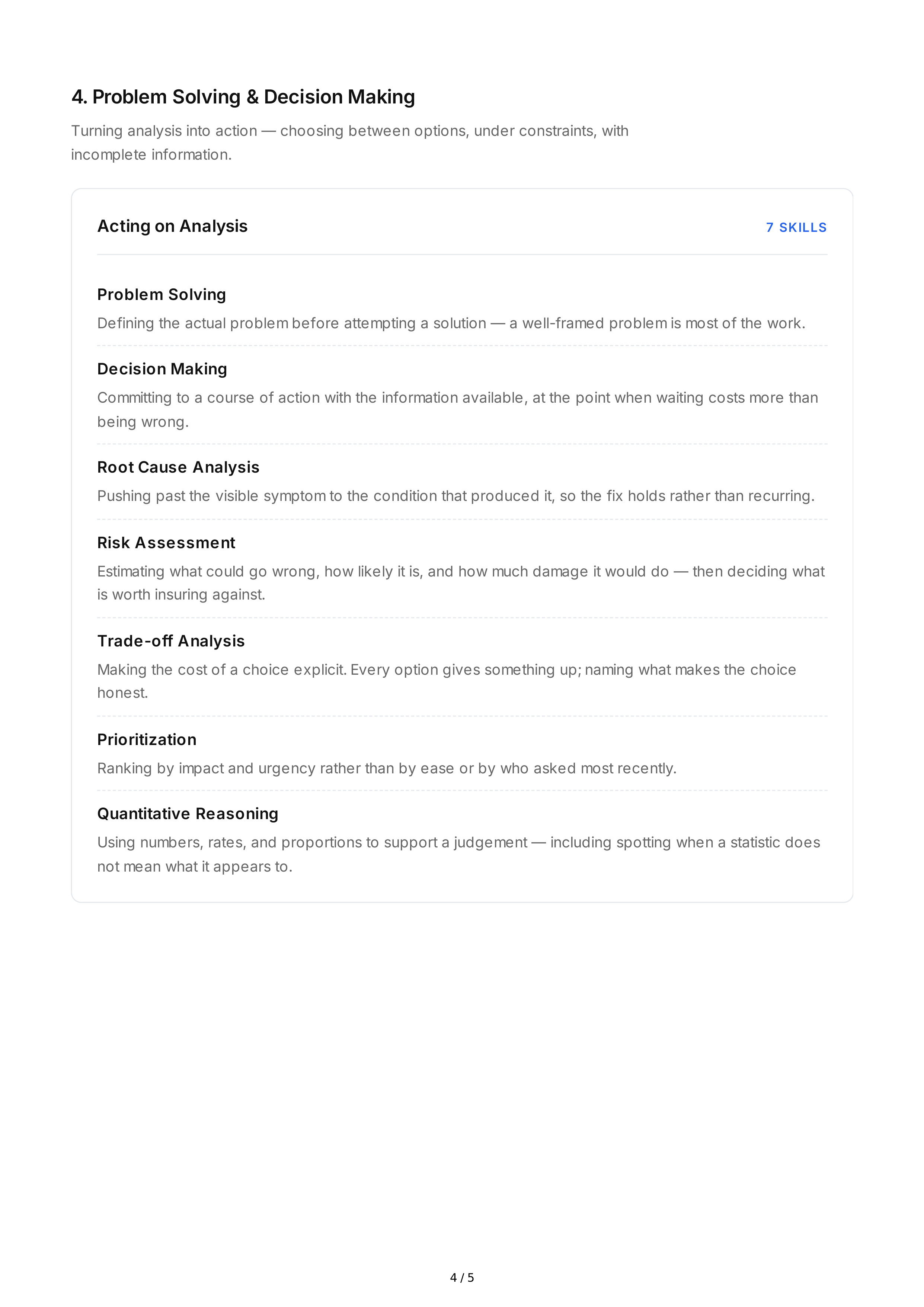
4.
Problem
Solving
&
Decision
Making
Turning
analysis
into
action
—
choosing
between
options
,
under
constraints
,
with
incomplete
information
.
Acting
on
Analysis
7
SKILLS
Problem
Solving
Defining
the
actual
problem
before
attempting
a
solution
—
a
well
-
framed
problem
is
most
of
the
work
.
Decision
Making
Committing
to
a
course
of
action
with
the
information
available
,
at
the
point
when
waiting
costs
more
than
being
wrong
.
Root
Cause
Analysis
Pushing
past
the
visible
symptom
to
the
condition
that
produced
it
,
so
the
fix
holds
rather
than
recurring
.
Risk
Assessment
Estimating
what
could
go
wrong
,
how
likely
it
is
,
and
how
much
damage
it
would
do
—
then
deciding
what
is
worth
insuring
against
.
Trade
-
off
Analysis
Making
the
cost
of
a
choice
explicit
.
Every
option
gives
something
up
;
naming
what
makes
the
choice
honest
.
Prioritization
Ranking
by
impact
and
urgency
rather
than
by
ease
or
by
who
asked
most
recently
.
Quantitative
Reasoning
Using
numbers
,
rates
,
and
proportions
to
support
a
judgement
—
including
spotting
when
a
statistic
does
not
mean
what
it
appears
to
.
4 / 5
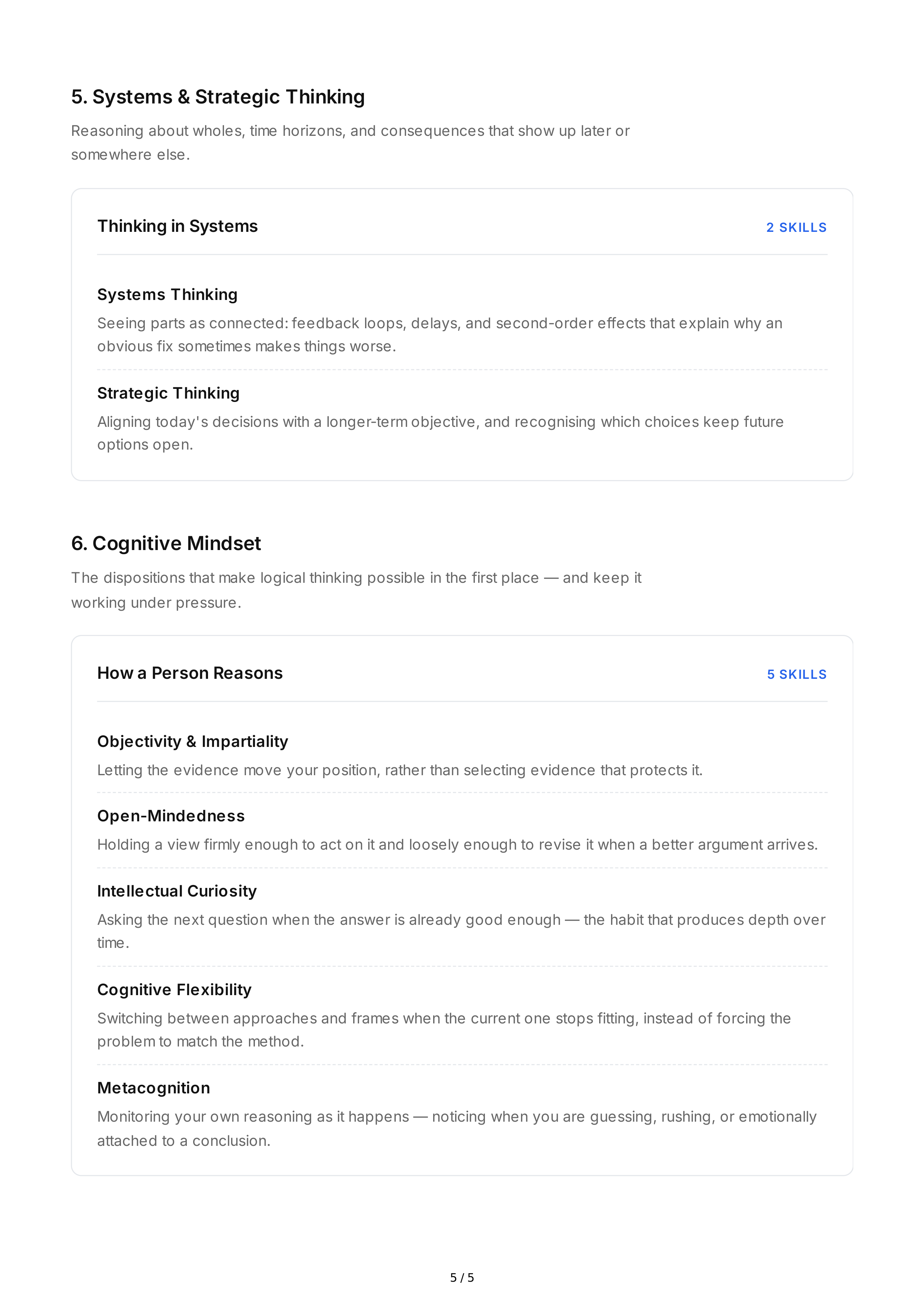
5.
Systems
&
Strategic
Thinking
Reasoning
about
wholes
,
time
horizons
,
and
consequences
that
show
up
later
or
somewhere
else
.
Thinking
in
Systems
2
SKILLS
Systems
Thinking
Seeing
parts
as
connected
:
feedback
loops
,
delays
,
and
second
-
order
effects
that
explain
why
an
obvious
fix
sometimes
makes
things
worse
.
Strategic
Thinking
Aligning
today
'
s
decisions
with
a
longer
-
term
objective
,
and
recognising
which
choices
keep
future
options
open
.
6.
Cognitive
Mindset
The
dispositions
that
make
logical
thinking
possible
in
the
first
place
—
and
keep
it
working
under
pressure
.
How
a
Person
Reasons
5
SKILLS
Objectivity
&
Impartiality
Letting
the
evidence
move
your
position
,
rather
than
selecting
evidence
that
protects
it
.
Open
-
Mindedness
Holding
a
view
firmly
enough
to
act
on
it
and
loosely
enough
to
revise
it
when
a
better
argument
arrives
.
Intellectual
Curiosity
Asking
the
next
question
when
the
answer
is
already
good
enough
—
the
habit
that
produces
depth
over
time
.
Cognitive
Flexibility
Switching
between
approaches
and
frames
when
the
current
one
stops
fitting
,
instead
of
forcing
the
problem
to
match
the
method
.
Metacognition
Monitoring
your
own
reasoning
as
it
happens
—
noticing
when
you
are
guessing
,
rushing
,
or
emotionally
attached
to
a
conclusion
.
5 / 5