My Projects
Home
Free AI Soft Skills Generator
Influence Soft Skills
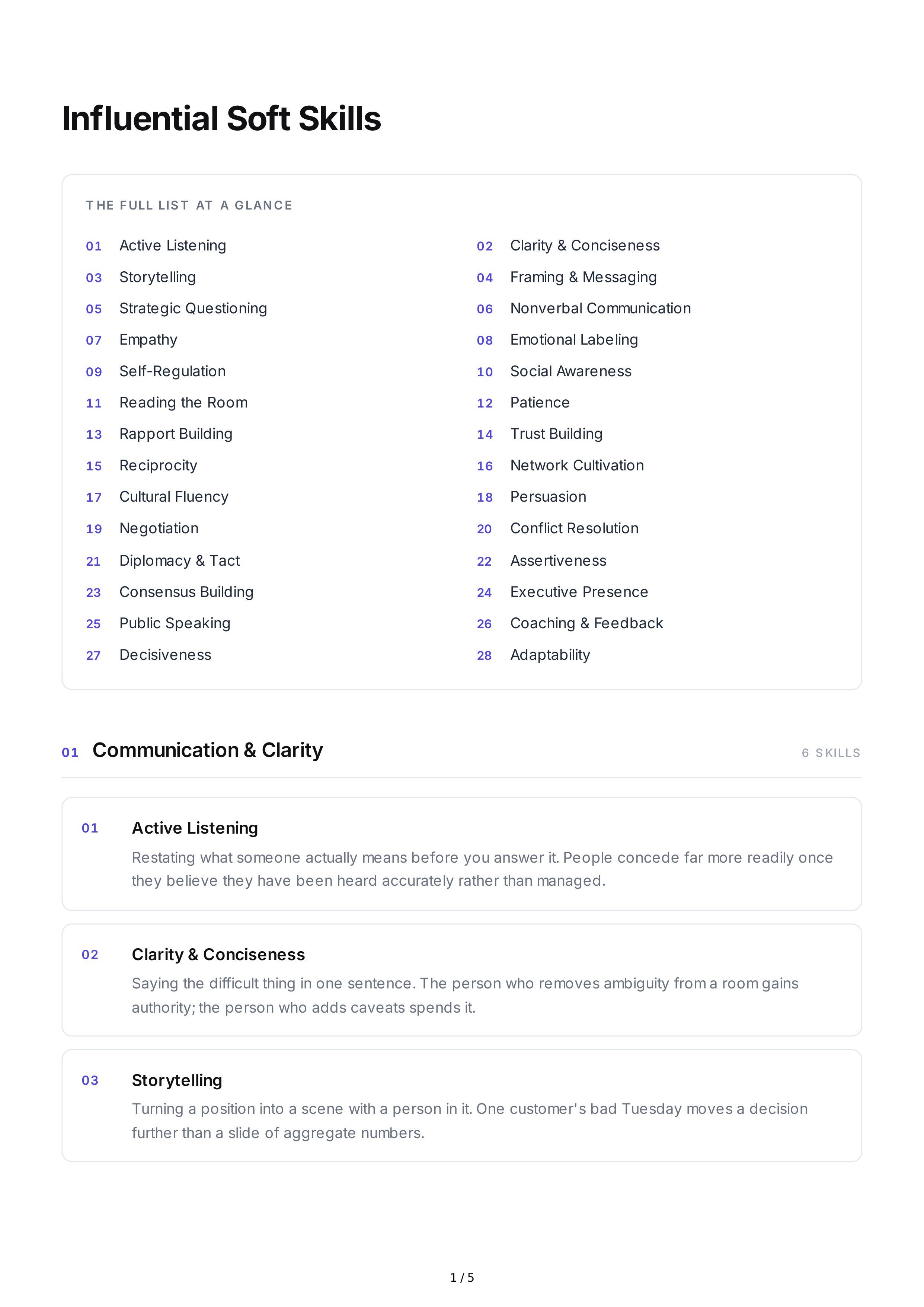
Influential
Soft
Skills
T HE
FULL
LIS T
AT
A
G LANC E
01
Active
Listening
02
Clarity
&
Conciseness
03
Storytelling
04
Framing
&
Messaging
05
Strategic
Questioning
06
Nonverbal
Communication
07
Empathy
08
Emotional
Labeling
09
Self
-
Regulation
10
Social
Awareness
11
Reading
the
Room
12
Patience
13
Rapport
Building
14
Trust
Building
15
Reciprocity
16
Network
Cultivation
17
Cultural
Fluency
18
Persuasion
19
Negotiation
20
Conflict
Resolution
21
Diplomacy
&
Tact
22
Assertiveness
23
Consensus
Building
24
Executive
Presence
25
Public
Speaking
26
Coaching
&
Feedback
27
Decisiveness
28
Adaptability
01
Communication
&
Clarity
6
S KILLS
01
Active
Listening
Restating
what
someone
actually
means
before
you
answer
it
.
People
concede
far
more
readily
once
they
believe
they
have
been
heard
accurately
rather
than
managed
.
02
Clarity
&
Conciseness
Saying
the
difficult
thing
in
one
sentence
.
The
person
who
removes
ambiguity
from
a
room
gains
authority
;
the
person
who
adds
caveats
spends
it
.
03
Storytelling
Turning
a
position
into
a
scene
with
a
person
in
it
.
One
customer
'
s
bad
Tuesday
moves
a
decision
further
than
a
slide
of
aggregate
numbers
.
1 / 5
04
Framing
&
Messaging
Choosing
the
lens
before
the
facts
land
.
The
same
line
item
is
either
a
cost
to
cut
or
the
thing
that
stops
you
losing
accounts
—
the
frame
decides
which
argument
gets
heard
.
05
Strategic
Questioning
Asking
what
would
have
to
be
true
for
something
to
work
.
Questions
that
expose
the
real
constraint
do
more
persuasive
work
than
any
counterargument
you
could
make
.
06
Nonverbal
Communication
Pace
,
tone
,
eye
contact
,
and
stillness
.
Read
accurately
and
controlled
deliberately
,
they
carry
as
much
of
the
message
as
the
words
do
.
02
Emotional
Intelligence
6
S KILLS
07
Empathy
Accurate
empathy
,
which
is
not
the
same
as
agreement
.
You
can
name
precisely
what
someone
is
feeling
and
still
hold
your
position
—
that
combination
is
what
earns
trust
in
your
read
of
them
.
08
Emotional
Labeling
Saying
the
feeling
out
loud
: “
This
sounds
like
a
trust
problem
,
not
a
pricing
problem
.”
Naming
it
lowers
the
temperature
and
often
moves
the
conversation
three
steps
forward
.
09
Self
-
Regulation
Staying
level
when
you
are
provoked
.
Whoever
declines
to
escalate
ends
up
setting
the
temperature
of
the
room
—
and
the
person
who
sets
the
temperature
usually
sets
the
terms
.
10
Social
Awareness
Picking
up
on
status
,
alliances
,
and
mood
without
being
told
.
It
is
the
skill
that
tells
you
when
to
speak
and
,
more
often
,
when
not
to
.
11
Reading
the
Room
Tracking
energy
in
real
time
and
adjusting
mid
-
sentence
.
The
difference
between
a
well
-
prepared
pitch
and
an
influential
one
is
almost
entirely
this
.
2 / 5
12
Patience
Letting
silence
do
its
work
.
Most
concessions
arrive
in
the
pause
right
after
the
question
,
not
in
the
answer
to
it
.
03
Relationship
Building
5
S KILLS
13
Rapport
Building
Finding
genuine
common
ground
in
the
first
ninety
seconds
.
Not
small
talk
for
its
own
sake
—
a
credible
reason
to
keep
talking
.
14
Trust
Building
Doing
the
small
thing
you
promised
,
on
time
,
repeatedly
,
and
saying
so
early
when
you
cannot
.
Trust
is
a
track
record
,
not
a
feeling
anyone
can
be
talked
into
.
15
Reciprocity
Giving
first
,
specifically
,
and
without
a
visible
invoice
.
People
repay
generosity
long
before
they
repay
a
favour
they
were
asked
for
.
16
Network
Cultivation
Maintaining
the
loose
ties
that
later
become
the
fast
path
.
The
people
who
help
you
most
are
usually
the
ones
you
did
not
need
at
the
time
.
17
Cultural
Fluency
Adjusting
directness
,
hierarchy
,
and
humour
to
the
room
you
are
actually
in
—
across
countries
,
functions
,
and
generations
.
04
Persuasion
&
Negotiation
6
S KILLS
18
Persuasion
Making
someone
else
'
s
decision
easier
:
evidence
,
timing
,
and
the
removal
of
risk
,
roughly
in
that
order
.
Push
harder
and
you
get
compliance
;
remove
the
risk
and
you
get
agreement
.
3 / 5
19
Negotiation
Separating
positions
from
interests
.
You
rarely
get
the
number
you
asked
for
,
but
you
often
get
the
need
underneath
it
—
which
is
worth
more
.
20
Conflict
Resolution
Turning
a
dispute
into
a
shared
problem
with
a
name
.
People
stop
fighting
each
other
once
they
are
visibly
fighting
the
same
thing
.
21
Diplomacy
&
Tact
Delivering
an
unwelcome
truth
so
that
it
can
still
be
heard
.
Candour
plus
timing
beats
candour
alone
,
every
time
.
22
Assertiveness
Stating
a
need
plainly
,
with
neither
apology
nor
aggression
.
The
middle
path
between
passive
and
abrasive
is
a
learned
skill
,
not
a
personality
trait
.
23
Consensus
Building
Getting
a
group
to
a
decision
it
will
genuinely
defend
.
Most
of
that
work
happens
one
to
one
,
before
the
meeting
starts
.
05
Presence
&
Leadership
5
S KILLS
24
Executive
Presence
Calm
,
prepared
,
economical
.
A
room
reads
composure
as
competence
well
before
it
evaluates
your
argument
.
25
Public
Speaking
Holding
attention
in
a
room
,
on
a
call
,
or
in
a
hallway
.
Structure
,
pace
,
and
one
clear
ask
.
26
Coaching
&
Feedback
Telling
people
the
truth
about
their
work
in
a
way
that
makes
them
want
to
try
again
rather
than
defend
themselves
.
4 / 5
27
Decisiveness
Choosing
with
incomplete
information
and
owning
the
outcome
.
Hesitation
usually
costs
more
credibility
than
a
wrong
call
that
gets
corrected
quickly
.
28
Adaptability
Changing
your
approach
mid
-
conversation
when
the
evidence
moves
.
Influence
is
a
live
process
,
not
a
script
you
deliver
.
5 / 5
Similar Examples
Generate Similar
Conflict Management Soft Skills
Generate Similar
Coaching Soft Skills
Generate Similar
Mentoring Soft Skills
Generate Similar
Motivation Soft Skills
Generate Similar
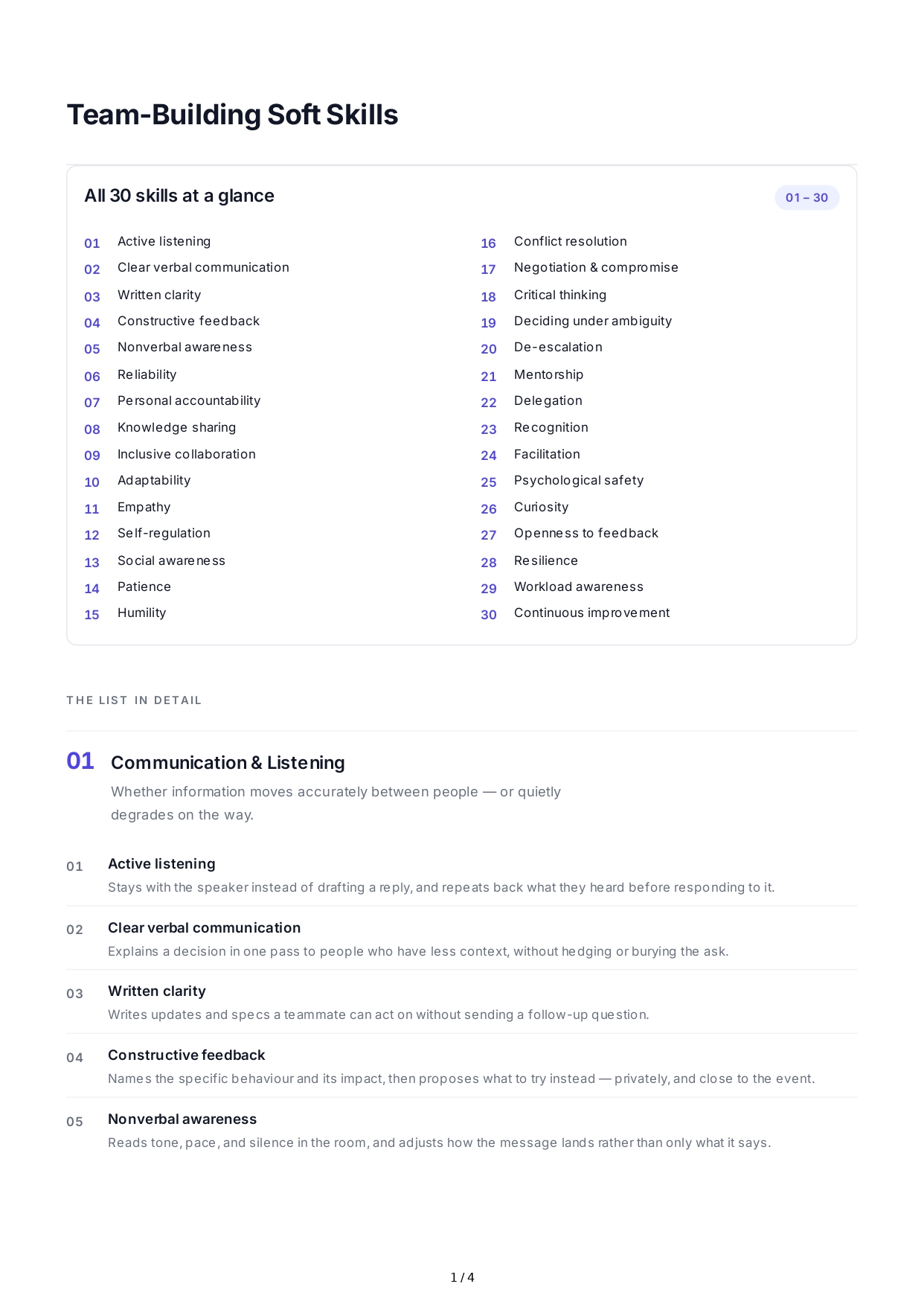
Team-Building Soft Skills
Generate Similar
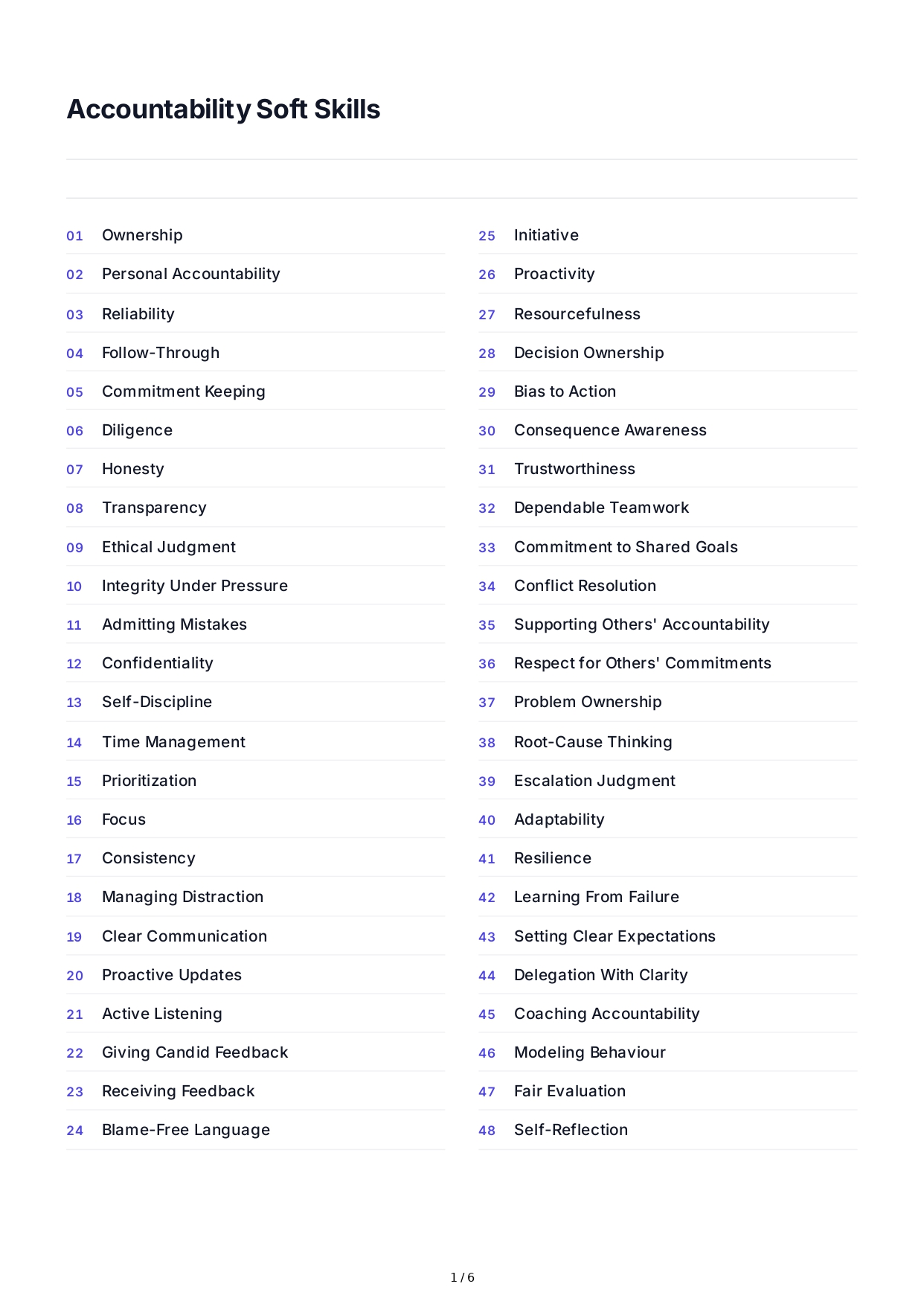
Accountability Soft Skills
Generate Similar
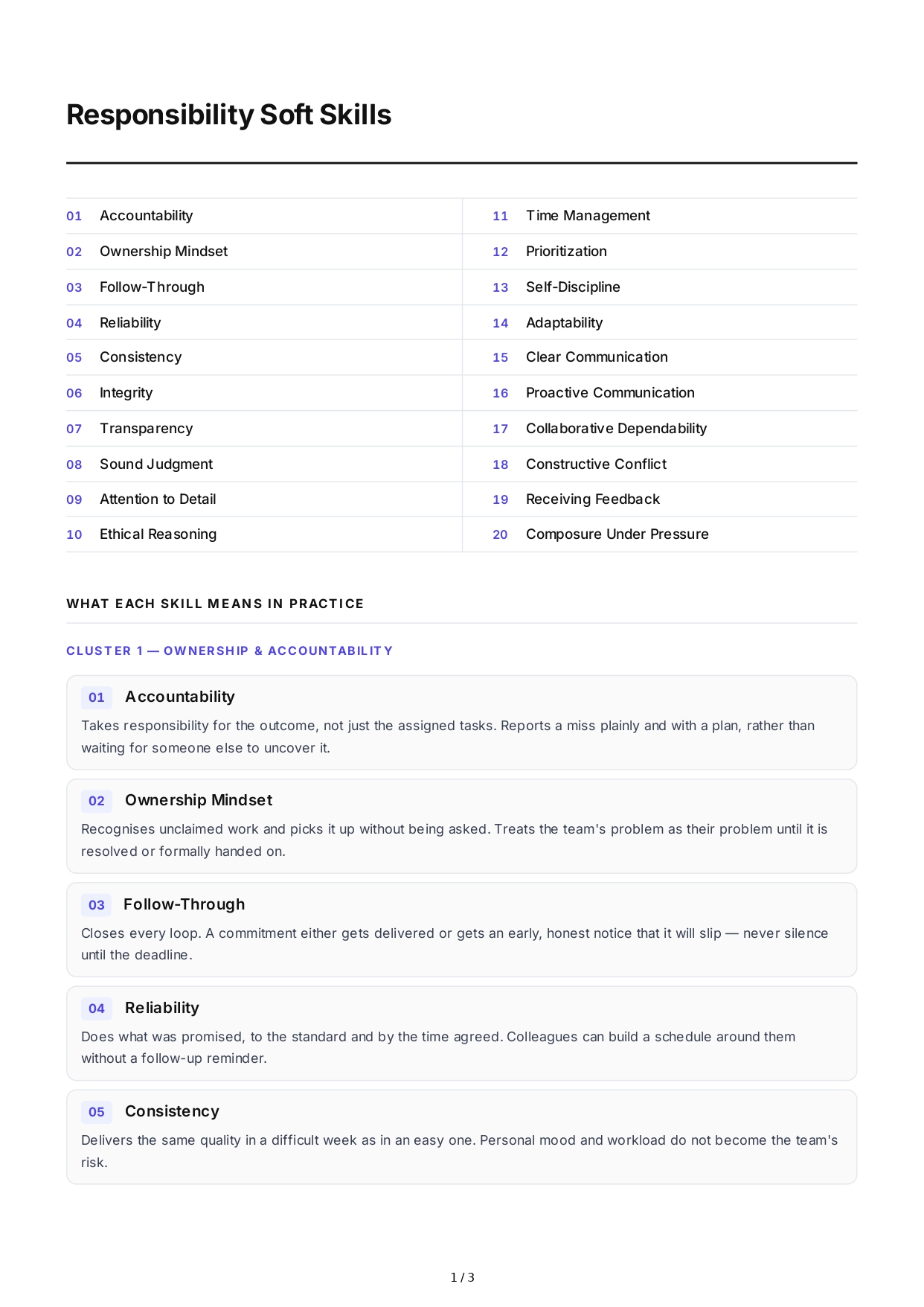
Responsibility Soft Skills
Generate Similar
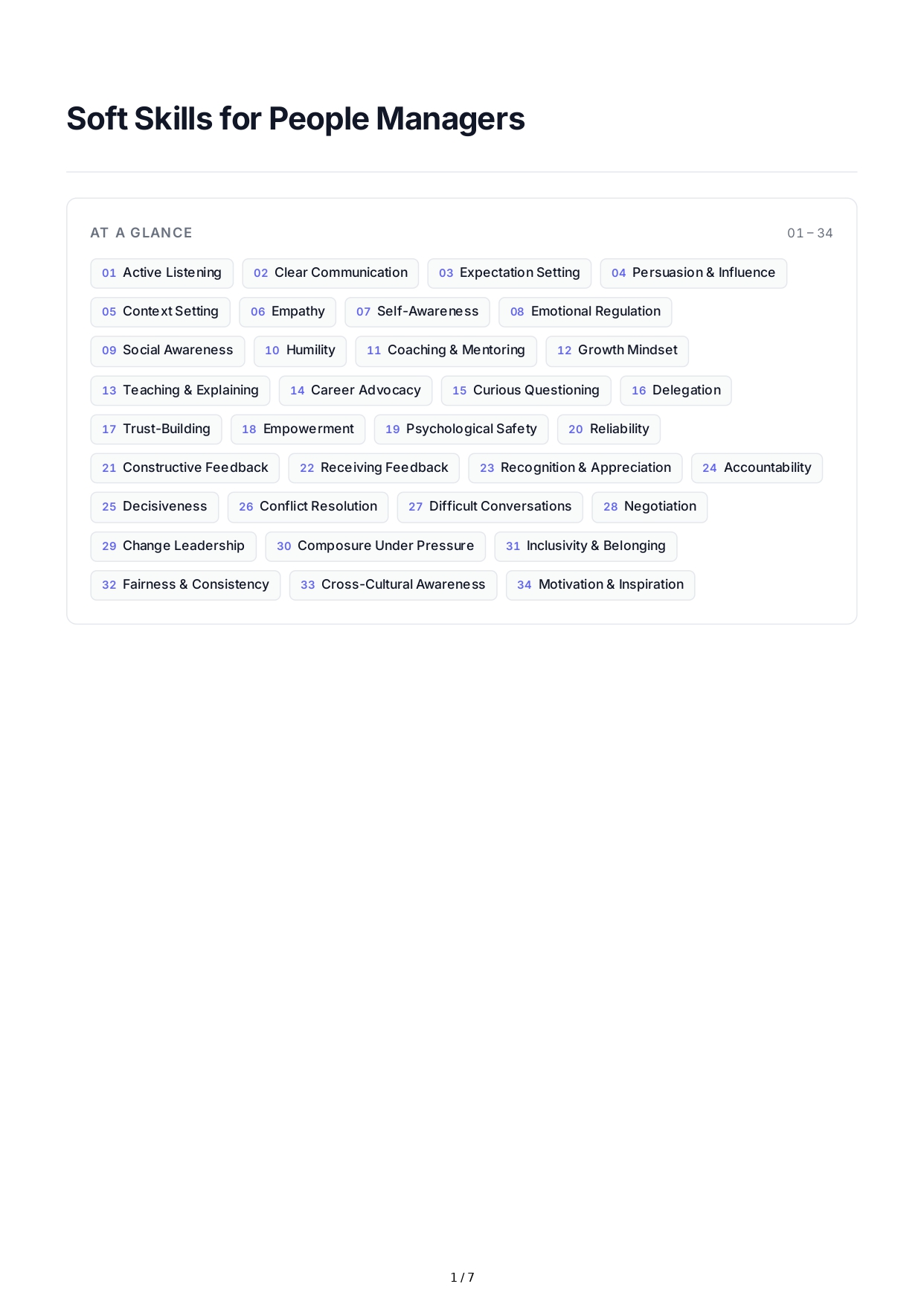
People Management Soft Skills
Generate Similar
Problem-Solving Soft Skills
Generate Similar
Critical Thinking Soft Skills
Generate Similar
Analytical Thinking Soft Skills
Generate Similar
Creative Thinking Soft Skills
Generate Similar
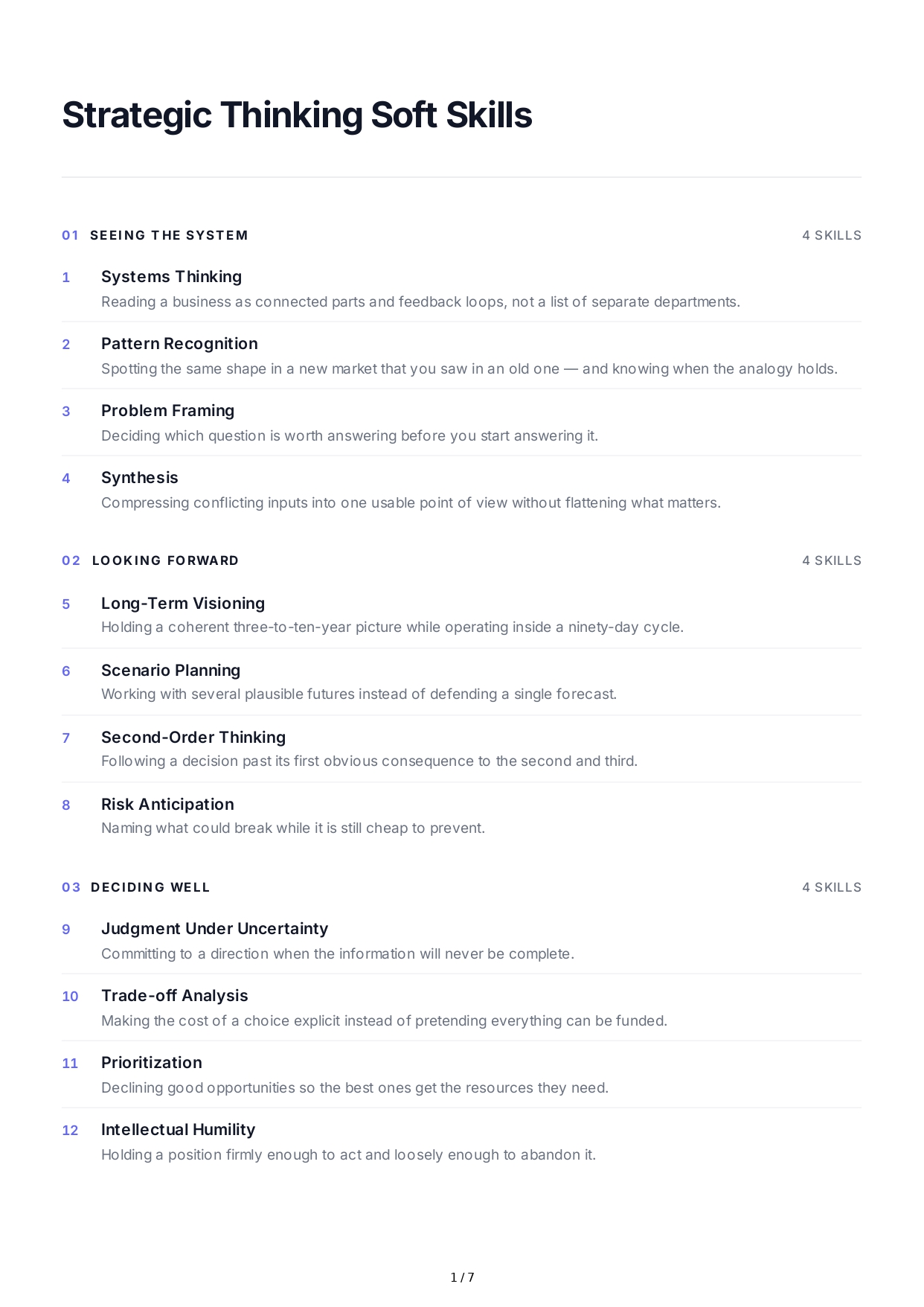
Strategic Thinking Soft Skills
Generate Similar
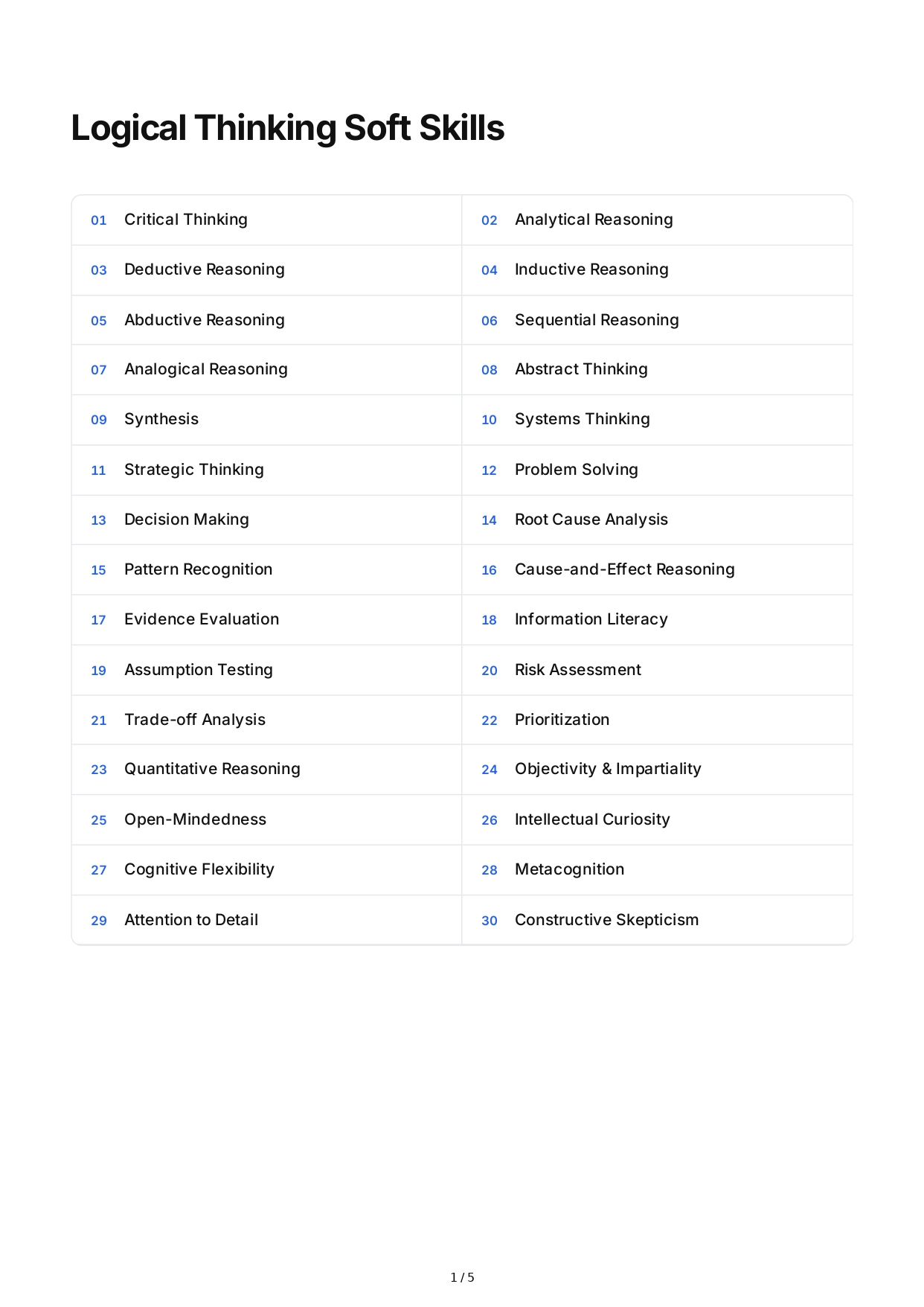
Logical Thinking Soft Skills
Generate Similar
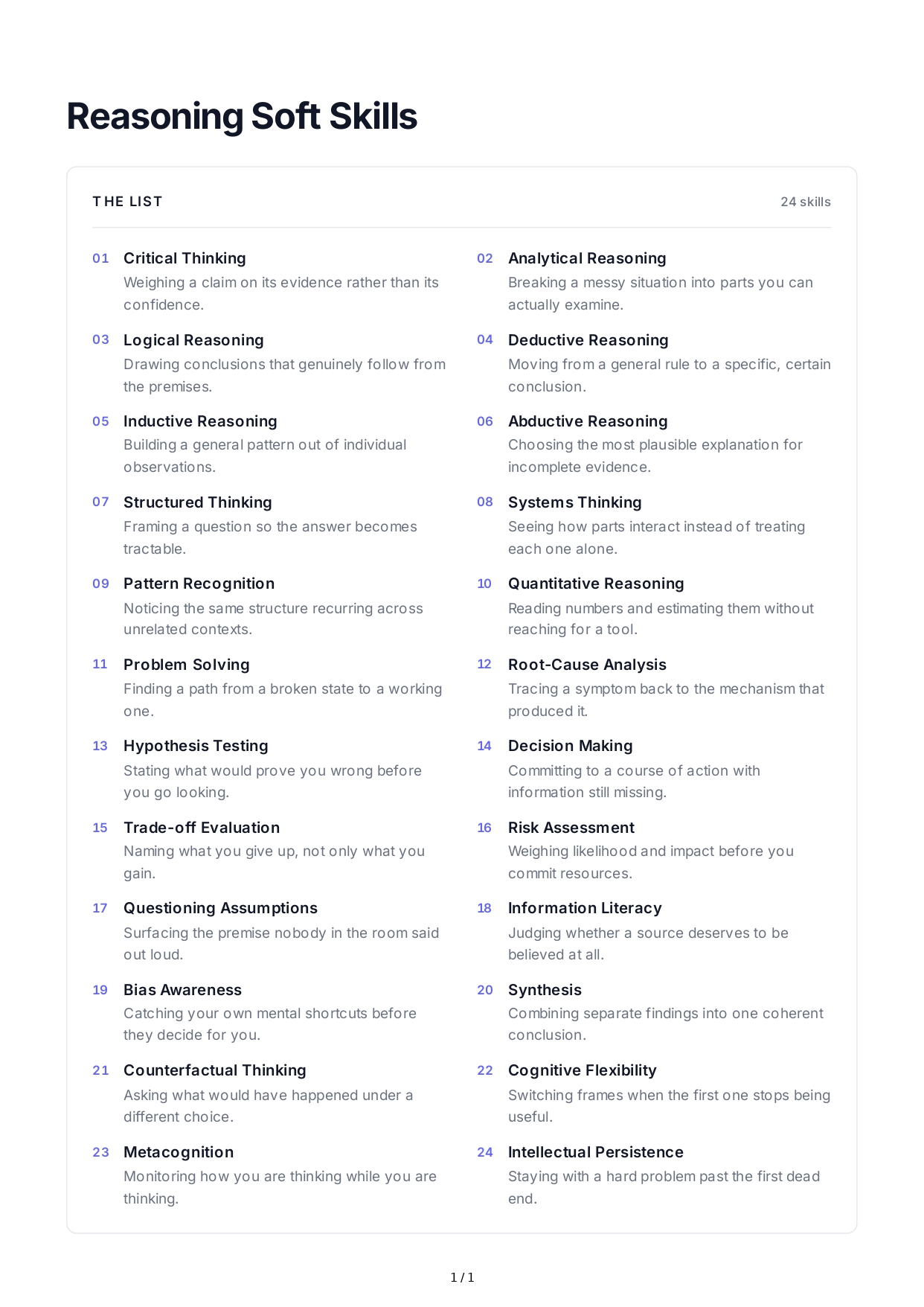
Reasoning Soft Skills
Generate Similar
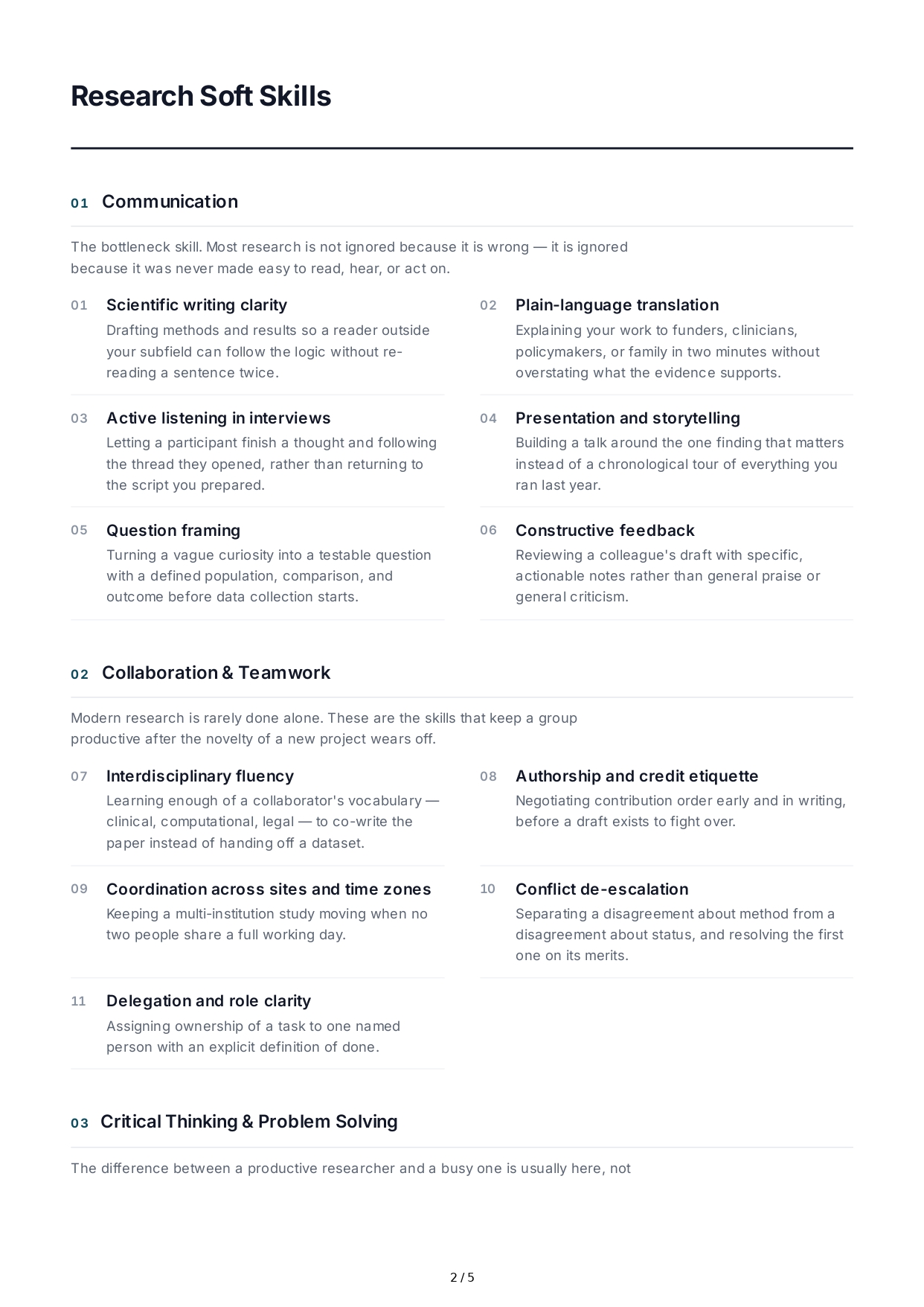
Research Soft Skills
Generate Similar
Innovation Soft Skills
Generate Similar
Attention to Detail Soft Skills
Generate Similar
Resourcefulness Soft Skills
Generate Similar
Planning Soft Skills
Generate Similar
Organizational Soft Skills
Generate Similar
Time Management Soft Skills
Generate Similar
Prioritization Soft Skills
Generate Similar
Adaptability Soft Skills
Generate Similar
Flexibility Soft Skills
Generate Similar
Resilience Soft Skills