Time
Management
Soft
Skills
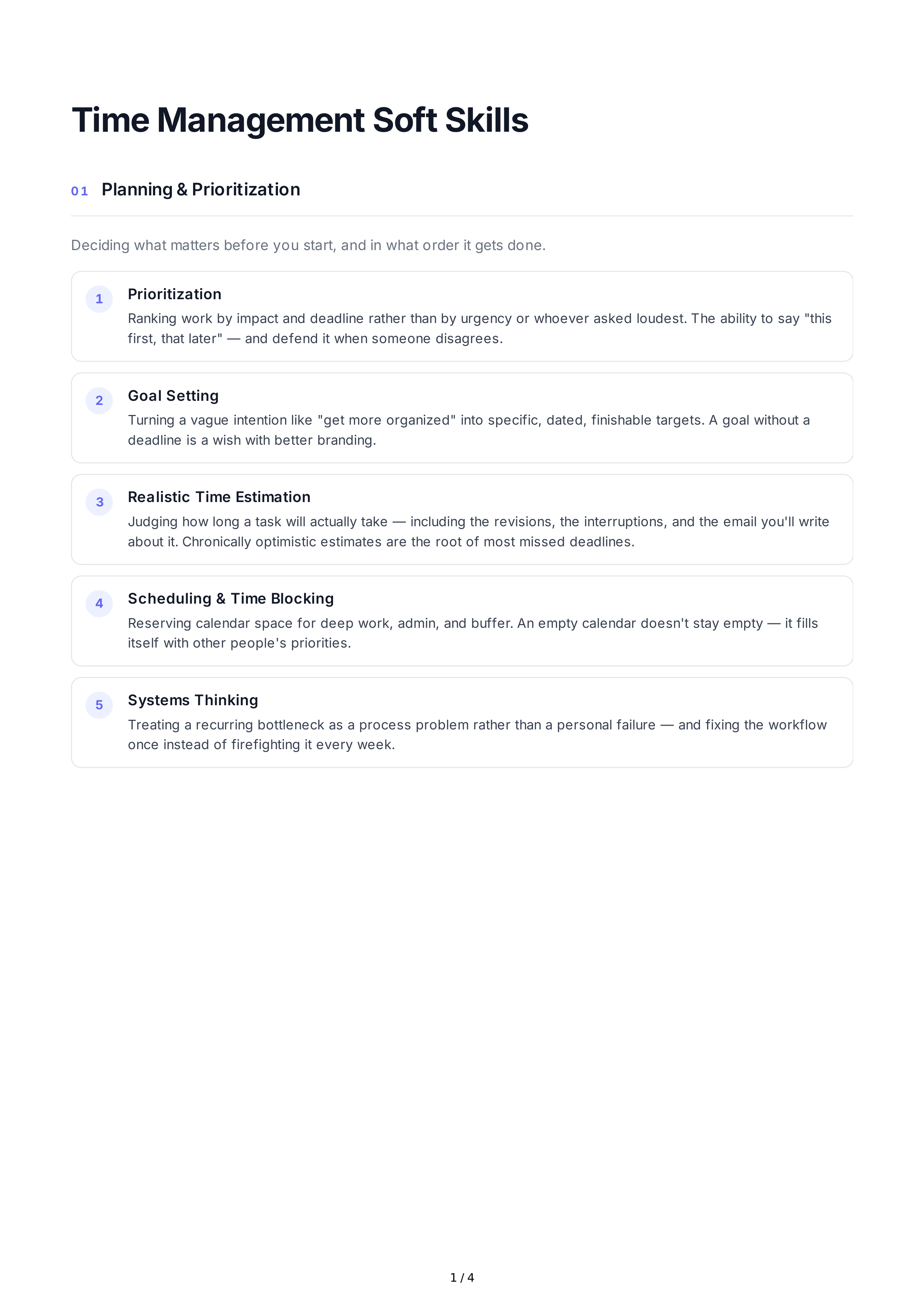
01
Planning
&
Prioritization
Deciding
what
matters
before
you
start
,
and
in
what
order
it
gets
done
.
1
Prioritization
Ranking
work
by
impact
and
deadline
rather
than
by
urgency
or
whoever
asked
loudest
.
The
ability
to
say
"
this
first
,
that
later
" —
and
defend
it
when
someone
disagrees
.
2
Goal
Setting
Turning
a
vague
intention
like
"
get
more
organized
"
into
specific
,
dated
,
finishable
targets
.
A
goal
without
a
deadline
is
a
wish
with
better
branding
.
3
Realistic
Time
Estimation
Judging
how
long
a
task
will
actually
take
—
including
the
revisions
,
the
interruptions
,
and
the
email
you
'
ll
write
about
it
.
Chronically
optimistic
estimates
are
the
root
of
most
missed
deadlines
.
4
Scheduling
&
Time
Blocking
Reserving
calendar
space
for
deep
work
,
admin
,
and
buffer
.
An
empty
calendar
doesn
'
t
stay
empty
—
it
fills
itself
with
other
people
'
s
priorities
.
5
Systems
Thinking
Treating
a
recurring
bottleneck
as
a
process
problem
rather
than
a
personal
failure
—
and
fixing
the
workflow
once
instead
of
firefighting
it
every
week
.
1 / 4
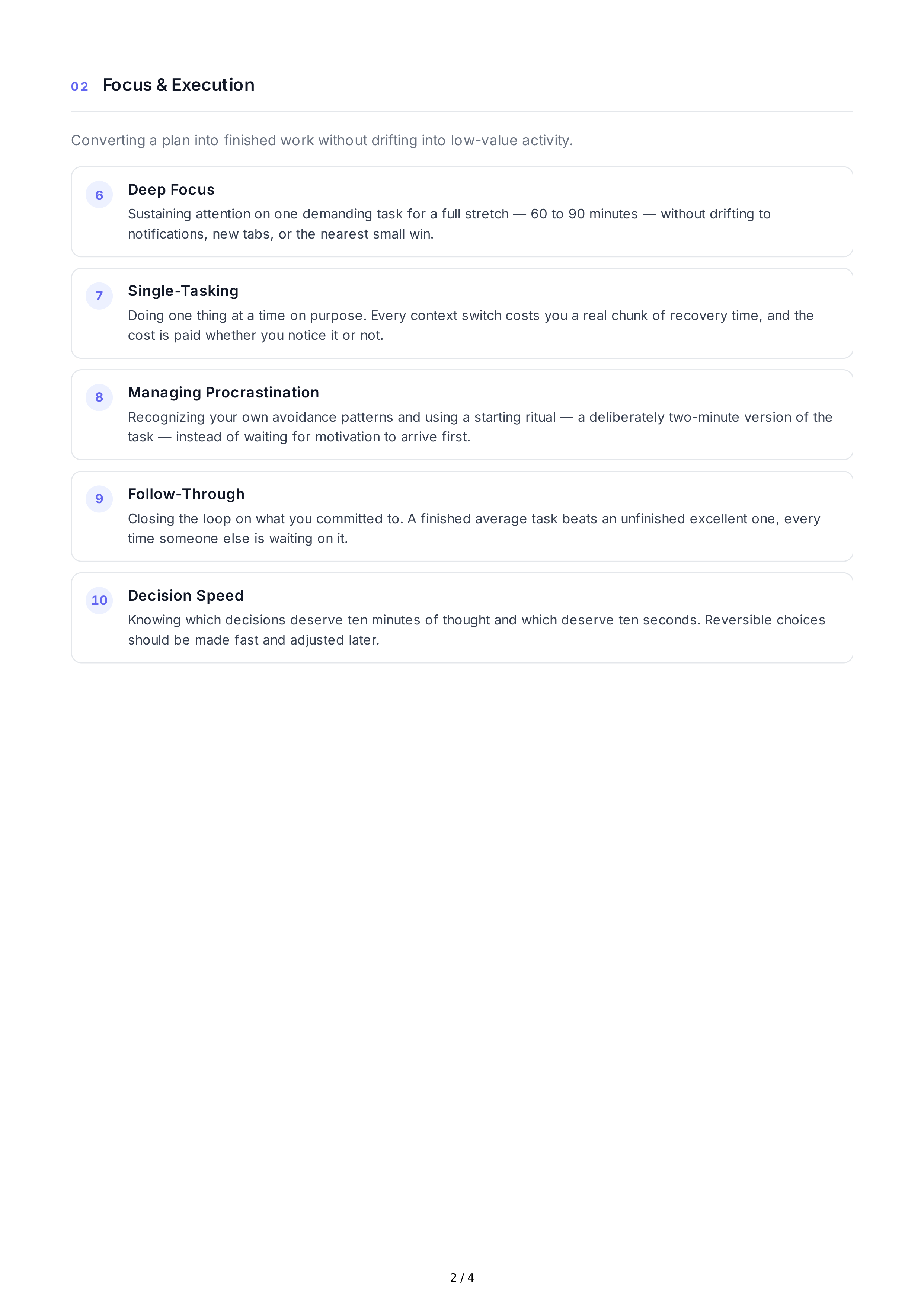
02
Focus
&
Execution
Converting
a
plan
into
finished
work
without
drifting
into
low
-
value
activity
.
6
Deep
Focus
Sustaining
attention
on
one
demanding
task
for
a
full
stretch
— 60
to
90
minutes
—
without
drifting
to
notifications
,
new
tabs
,
or
the
nearest
small
win
.
7
Single
-
Tasking
Doing
one
thing
at
a
time
on
purpose
.
Every
context
switch
costs
you
a
real
chunk
of
recovery
time
,
and
the
cost
is
paid
whether
you
notice
it
or
not
.
8
Managing
Procrastination
Recognizing
your
own
avoidance
patterns
and
using
a
starting
ritual
—
a
deliberately
two
-
minute
version
of
the
task
—
instead
of
waiting
for
motivation
to
arrive
first
.
9
Follow
-
Through
Closing
the
loop
on
what
you
committed
to
.
A
finished
average
task
beats
an
unfinished
excellent
one
,
every
time
someone
else
is
waiting
on
it
.
10
Decision
Speed
Knowing
which
decisions
deserve
ten
minutes
of
thought
and
which
deserve
ten
seconds
.
Reversible
choices
should
be
made
fast
and
adjusted
later
.
2 / 4
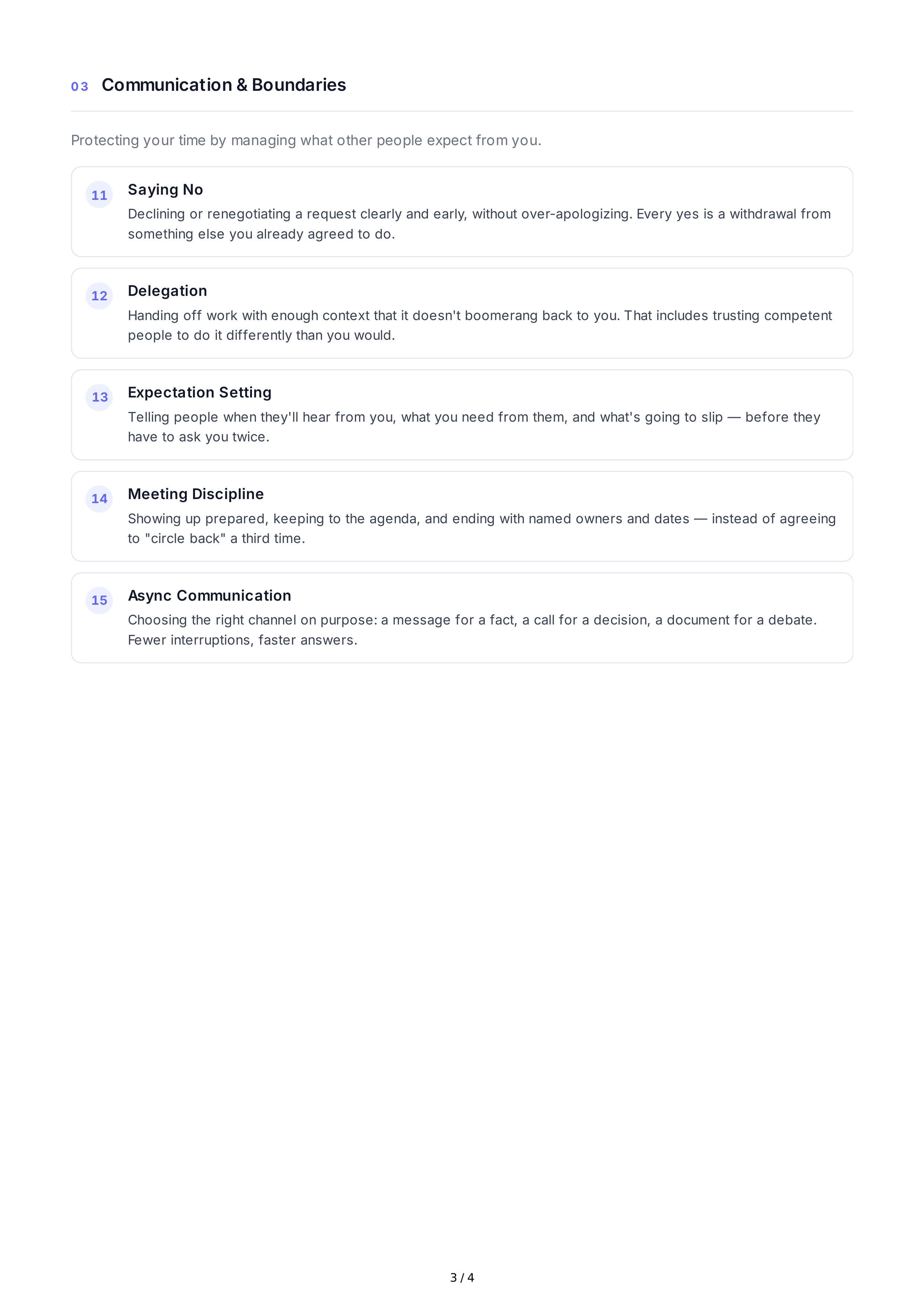
03
Communication
&
Boundaries
Protecting
your
time
by
managing
what
other
people
expect
from
you
.
11
Saying
No
Declining
or
renegotiating
a
request
clearly
and
early
,
without
over
-
apologizing
.
Every
yes
is
a
withdrawal
from
something
else
you
already
agreed
to
do
.
12
Delegation
Handing
off
work
with
enough
context
that
it
doesn
'
t
boomerang
back
to
you
.
That
includes
trusting
competent
people
to
do
it
differently
than
you
would
.
13
Expectation
Setting
Telling
people
when
they
'
ll
hear
from
you
,
what
you
need
from
them
,
and
what
'
s
going
to
slip
—
before
they
have
to
ask
you
twice
.
14
Meeting
Discipline
Showing
up
prepared
,
keeping
to
the
agenda
,
and
ending
with
named
owners
and
dates
—
instead
of
agreeing
to
"
circle
back
"
a
third
time
.
15
Async
Communication
Choosing
the
right
channel
on
purpose
:
a
message
for
a
fact
,
a
call
for
a
decision
,
a
document
for
a
debate
.
Fewer
interruptions
,
faster
answers
.
3 / 4
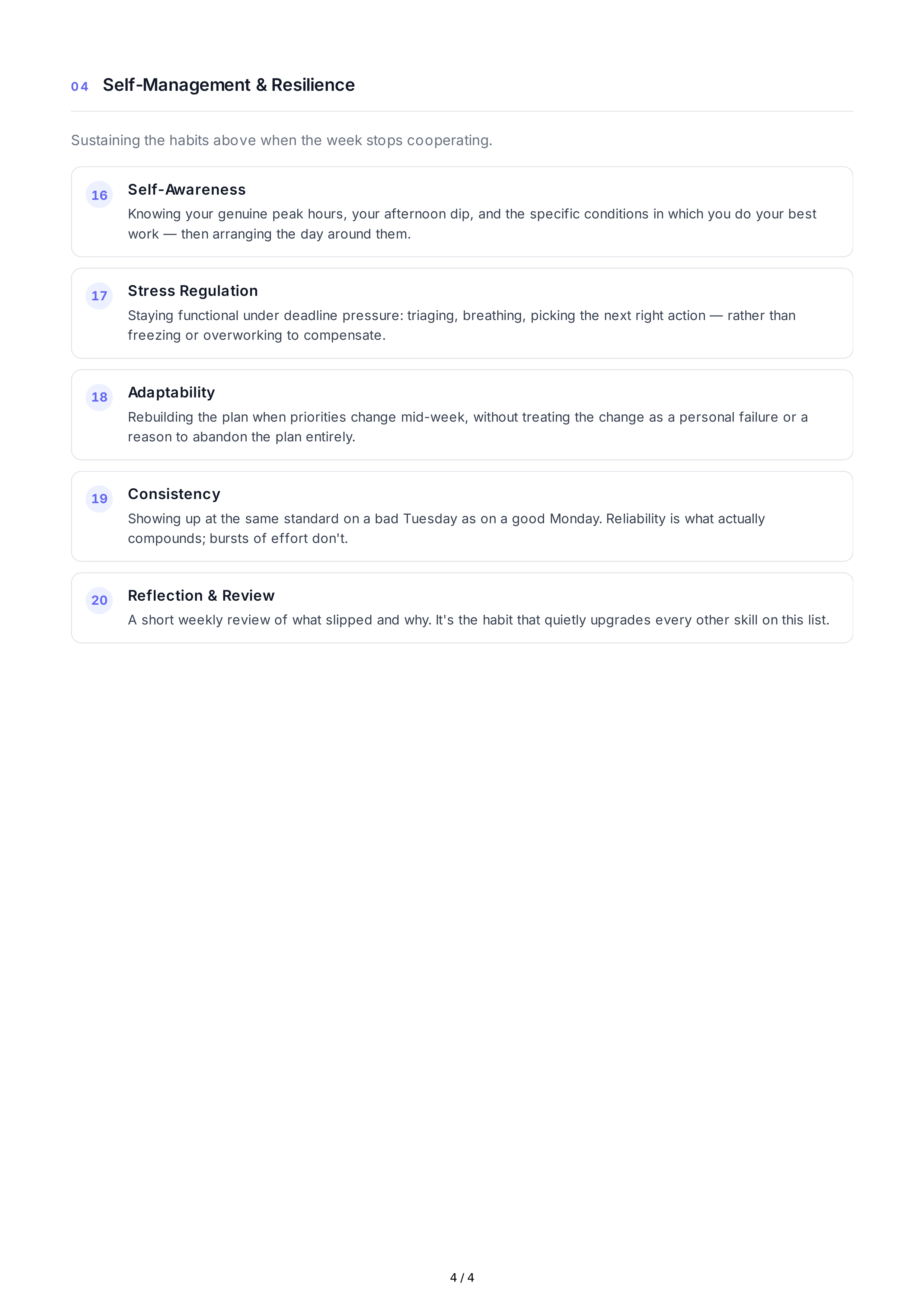
04
Self
-
Management
&
Resilience
Sustaining
the
habits
above
when
the
week
stops
cooperating
.
16
Self
-
Awareness
Knowing
your
genuine
peak
hours
,
your
afternoon
dip
,
and
the
specific
conditions
in
which
you
do
your
best
work
—
then
arranging
the
day
around
them
.
17
Stress
Regulation
Staying
functional
under
deadline
pressure
:
triaging
,
breathing
,
picking
the
next
right
action
—
rather
than
freezing
or
overworking
to
compensate
.
18
Adaptability
Rebuilding
the
plan
when
priorities
change
mid
-
week
,
without
treating
the
change
as
a
personal
failure
or
a
reason
to
abandon
the
plan
entirely
.
19
Consistency
Showing
up
at
the
same
standard
on
a
bad
Tuesday
as
on
a
good
Monday
.
Reliability
is
what
actually
compounds
;
bursts
of
effort
don
'
t
.
20
Reflection
&
Review
A
short
weekly
review
of
what
slipped
and
why
.
It
'
s
the
habit
that
quietly
upgrades
every
other
skill
on
this
list
.
4 / 4