Adjunct Professor
Teaching Philosophy
Prepare
Engage
Apply
Reflect
01
PURPOSE
clear outcomes
02
CONTACT
active class time
03
PRACTICE
transfer to use
04
FEEDBACK
revise and improve
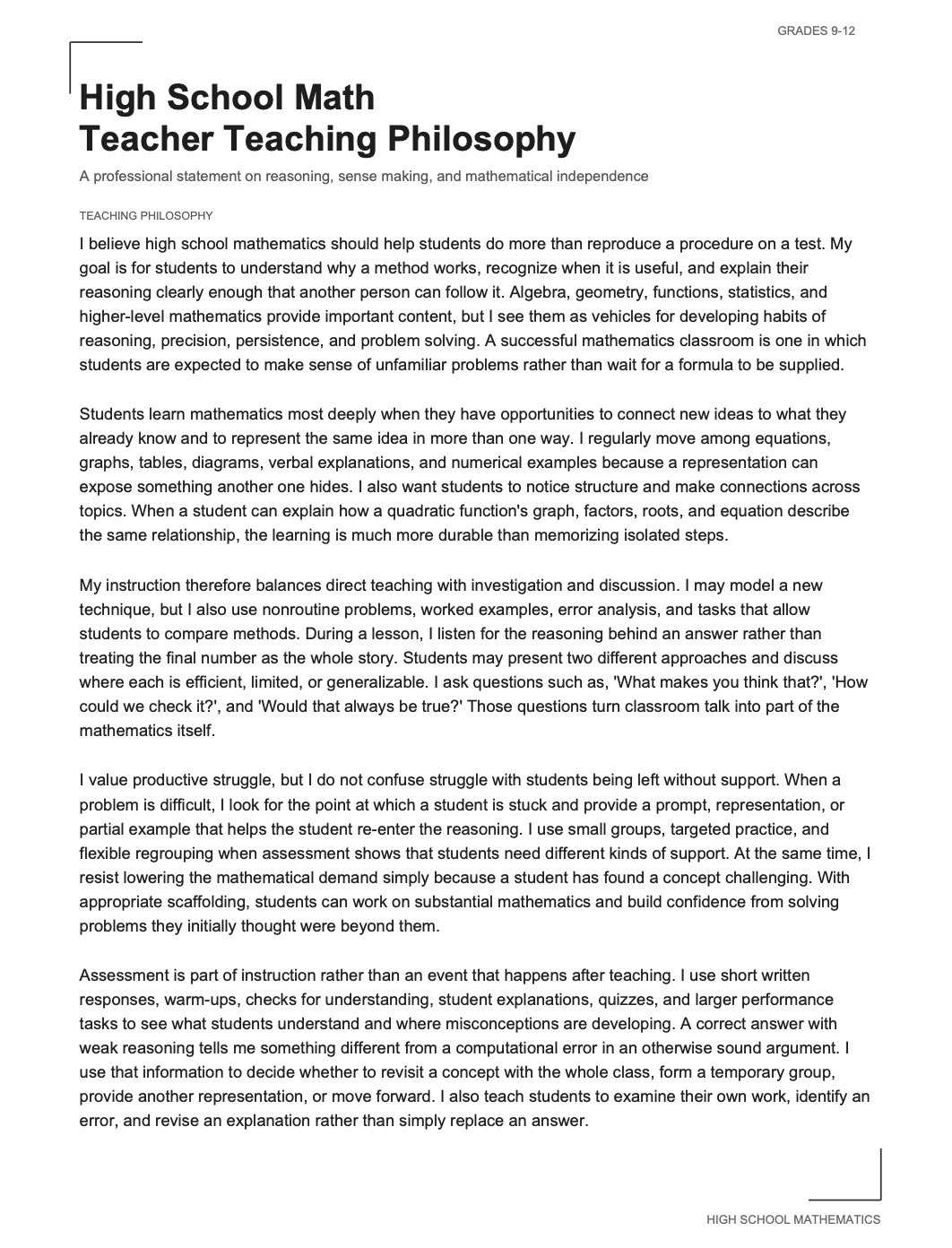
I teach as an adjunct professor because I value the direct connection
between serious academic study and the questions students bring from
their work, communities, and future goals. My responsibility is to make each
course intellectually demanding, well organized, and worth the limited time
students have available. I want students to leave my class knowing more
than they did at the beginning, but also knowing how to use what they
learned.
Adjunct teaching requires intentional course design. Because students may
encounter me for only a few hours each week, I make learning goals,
weekly expectations, and major deadlines visible from the start. I organize
each class around a small number of important ideas or skills rather than
trying to cover everything. I use short explanations when students need a
framework, then move quickly into discussion, examples, problem solving,
analysis, demonstrations, or guided practice. This rhythm keeps class time
focused on thinking rather than passive note-taking.
I treat student participation as part of learning, not as a test of personality. I
use structured questions, brief written responses, paired discussion,
small-group analysis, and whole-class synthesis so that students have
several ways to enter the material. When a topic is difficult, I break the task
into manageable steps and model how I approach the problem. I also make
room for disagreement. In higher education, students should be able to
challenge an interpretation, defend a position with evidence, and revise
their thinking when the evidence changes.
I want students to connect academic ideas to situations beyond the
classroom. Wherever the course allows, I use current examples,
professional cases, realistic scenarios, primary materials, datasets, or
discipline-specific problems. A concept becomes more durable when
students have to decide how it works in a situation that is unfamiliar. My
aim is not to turn every course into job training, but to help students
recognize the usefulness of disciplinary knowledge in professional, civic,
and personal contexts.
Adjunct Professor Teaching Philosophy
1
Adjunct Teaching in Practice
ALIGN
Goals + evidence
TEACH
Explain + practice
CHECK
Notice + assess
REFINE
Respond + revise
Assessment should tell me whether students are learning the things I said mattered. I use
low-stakes checks such as short reflections, practice problems, discussion prompts, quick polls,
draft work, or brief application exercises to see where students are getting stuck. Larger
assignments then ask students to demonstrate the intended course outcomes through work
appropriate to the discipline. I use clear criteria and explain what strong work looks like, so
feedback is a tool for improvement rather than a surprise at the end of the course.
Because adjunct faculty often work across established programs, I see collaboration as part of
good teaching. I follow departmental learning goals, course policies, and academic standards
while bringing my own subject expertise and classroom perspective. I communicate clearly with
program leaders and colleagues about student progress, course needs, and assignments when
coordination is necessary. Consistency across sections matters, but so does responsiveness to
the actual group of students in front of me.
Accessibility and inclusion are practical teaching responsibilities. Students enter my classroom
with different prior preparation, responsibilities outside school, confidence levels, and ways of
processing information. I make directions concrete, keep course materials organized, use
accessible formats when possible, and explain expectations before students are assessed. I also
pay attention to whose voices are being heard in discussion and whether an assignment
measures the learning goal or an unrelated barrier. High standards are compatible with strong
support; students deserve both.
I also take student questions seriously. A student who asks for clarification is giving me useful
information about the course. I try to answer the immediate question while helping the student
develop a method for finding and evaluating answers independently. Outside class, office hours,
online communication, and feedback provide additional points of contact, but my goal is not
constant availability. It is to create a course in which students know where to find help, what to
do next, and how to take increasing responsibility for their learning.
Finally, I revise my teaching from evidence. I review student work, recurring questions,
participation patterns, assignment performance, and course feedback to identify what should
change. Sometimes the change is small: a clearer example, a different sequence of readings, a
shorter lecture, a better prompt, or an additional practice opportunity. Sometimes a unit needs
deeper redesign. I do not assume that a course is finished simply because the syllabus is finished.
Good adjunct teaching is deliberate, responsive, and willing to improve.
My central aim is simple: students should experience an adjunct course as a serious academic
environment in which their time is respected, their thinking is challenged, and their progress is
visible. I want them to become more capable of asking good questions, using evidence,
communicating ideas, and applying disciplinary knowledge with judgment. Whether the next step
is another course, a degree, a profession, or a new direction, I want my teaching to leave
students better prepared to learn without me.
Adjunct Professor Teaching Philosophy
2