03
THIRD GRADE TEACHER
Teaching Philosophy
A classroom where children move from learning basic skills to using them with
purpose.
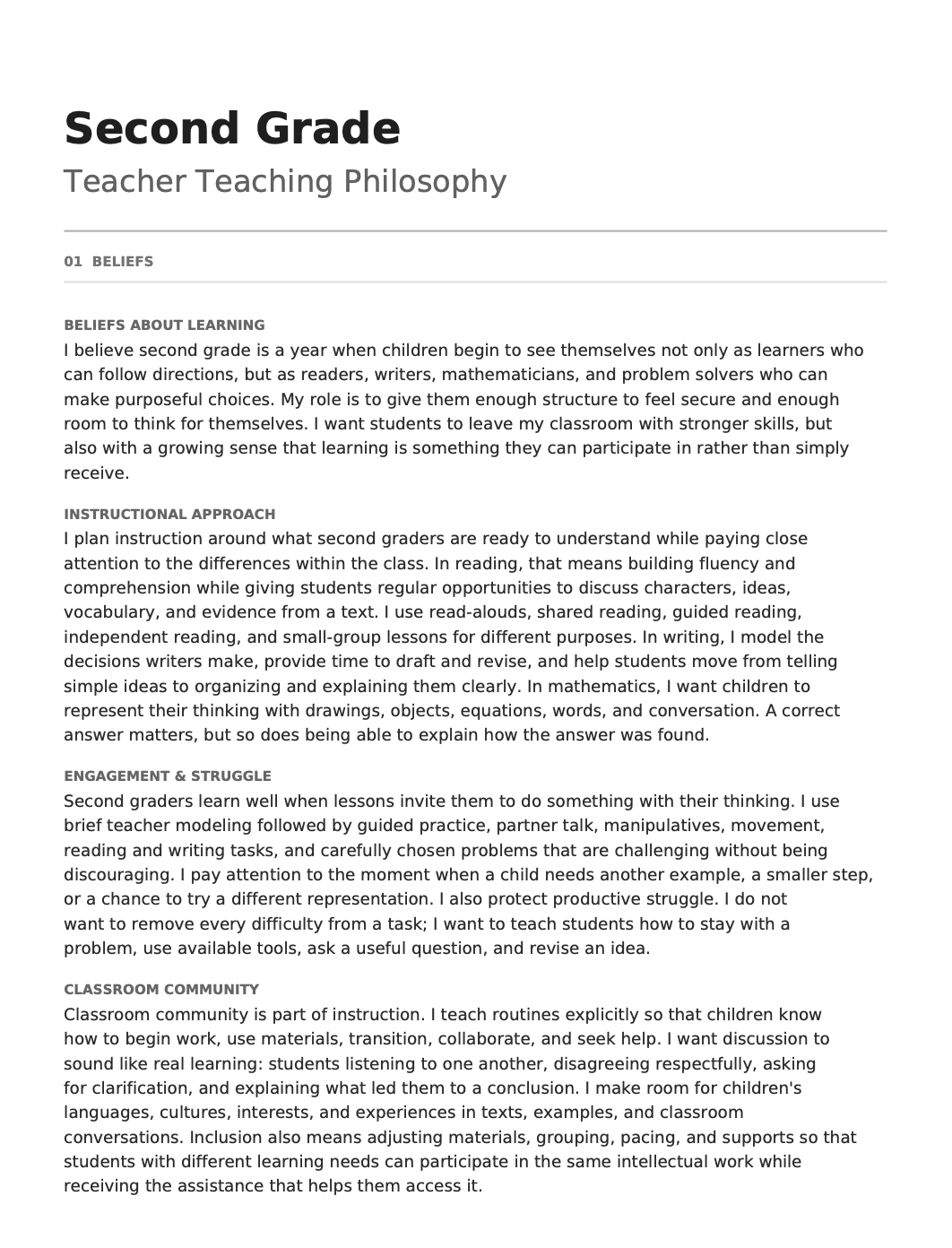
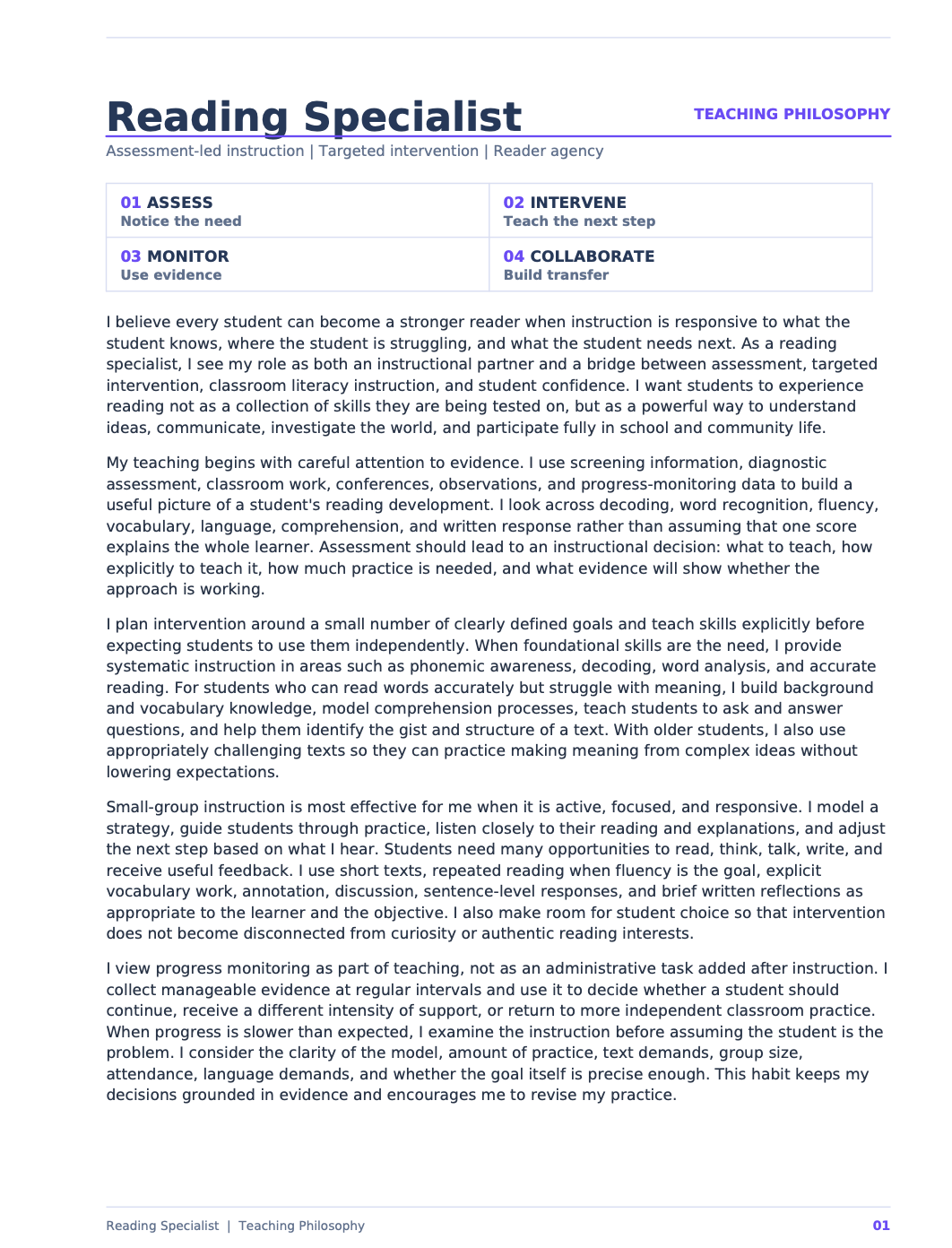
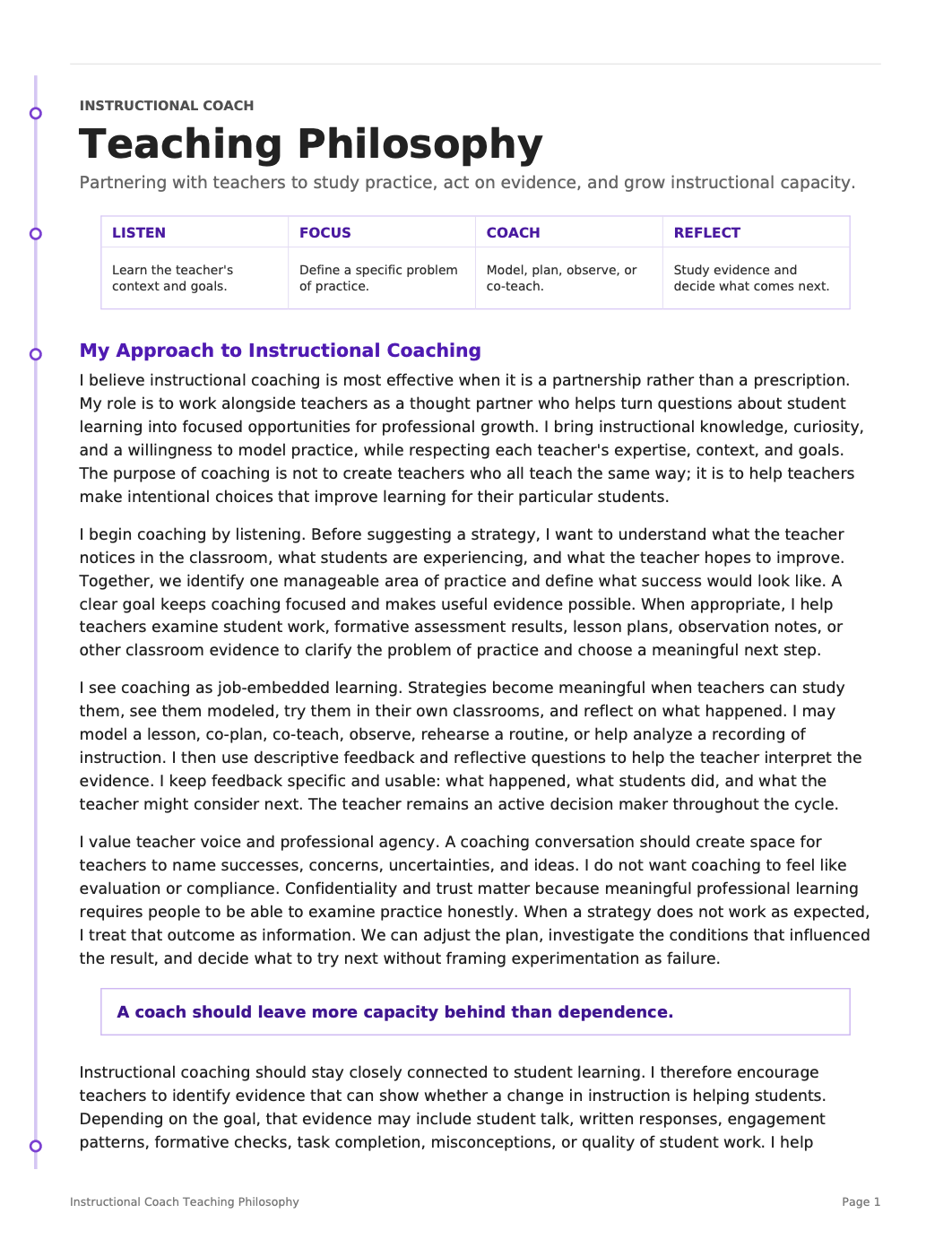
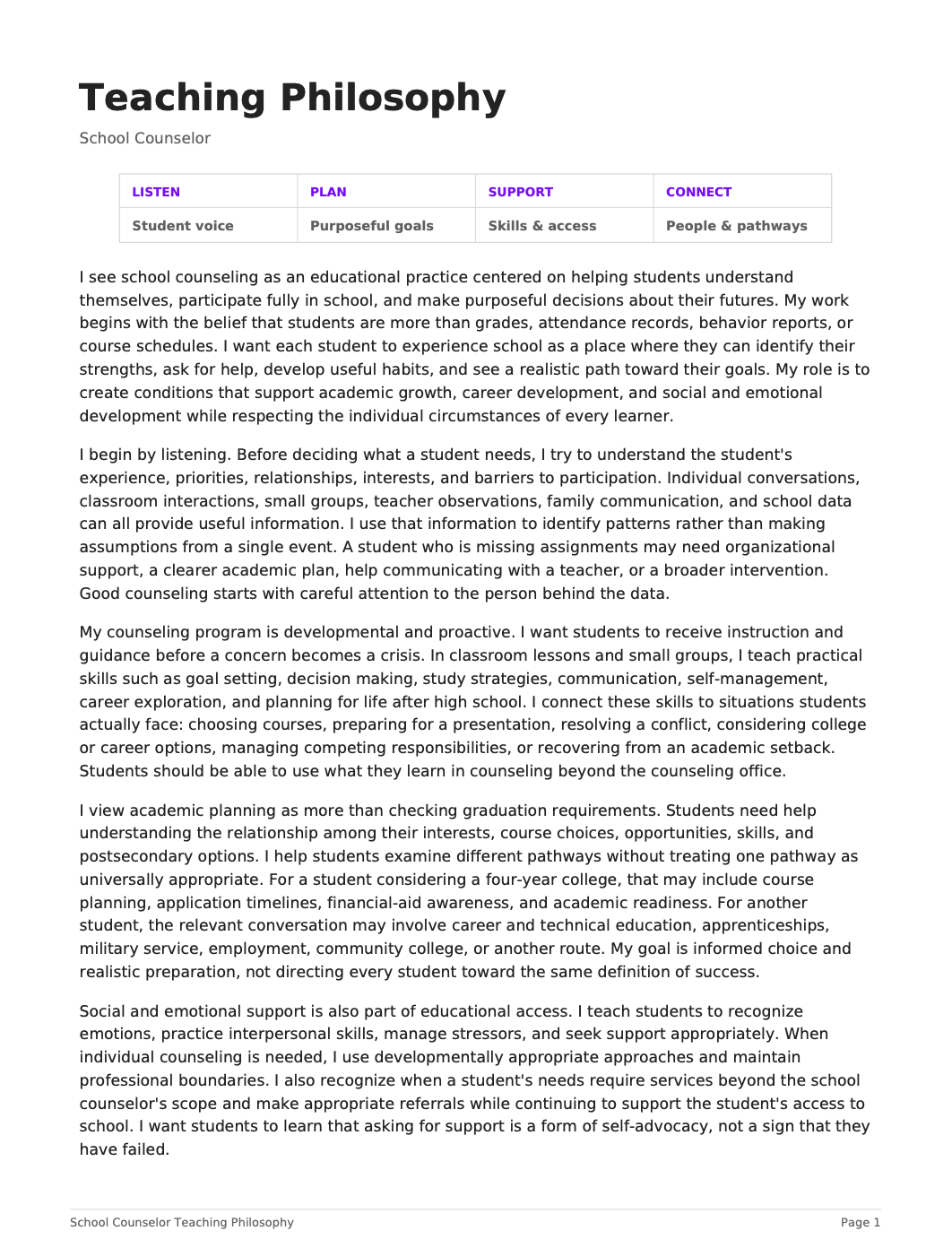
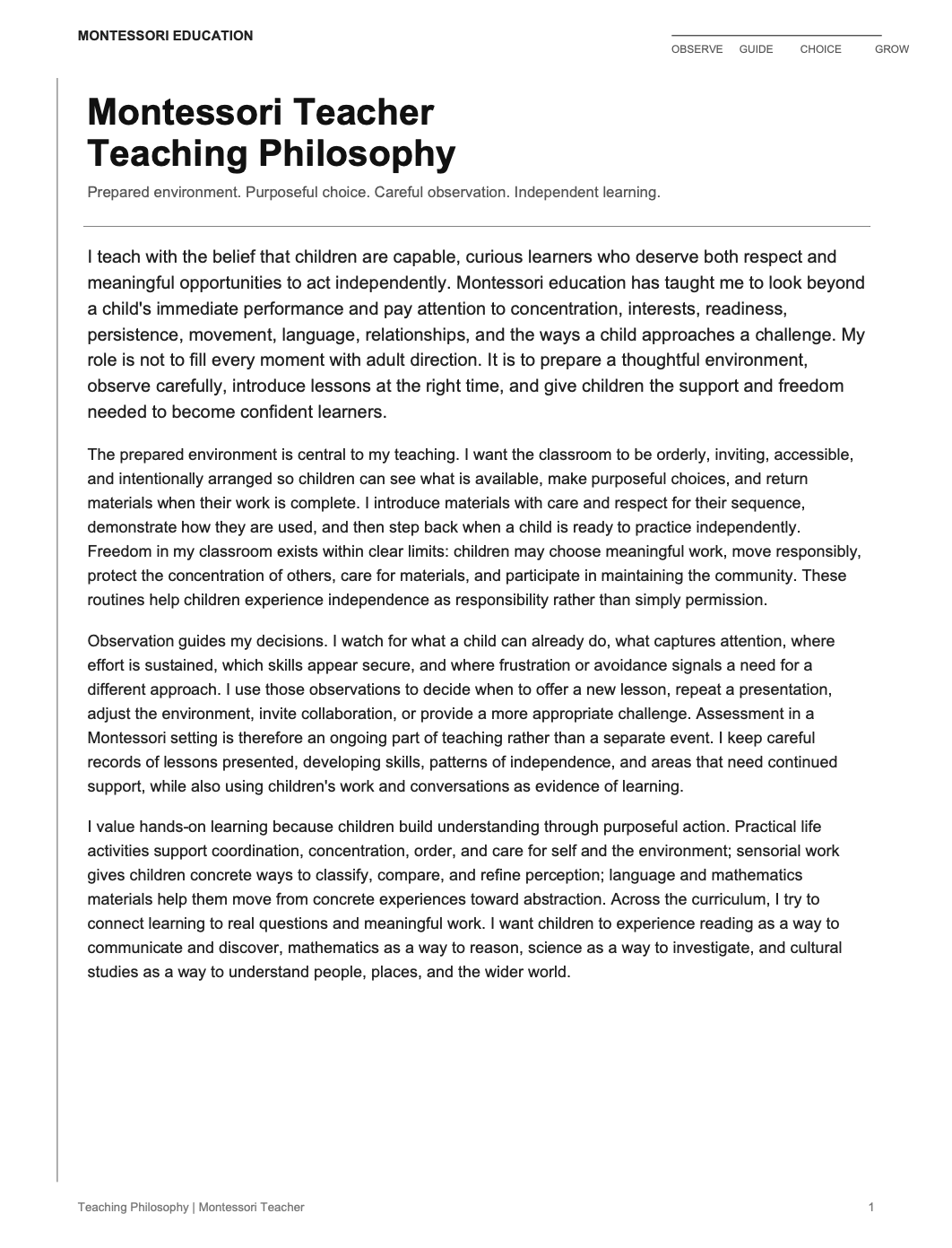
I believe third grade is an important turning point in an elementary classroom. Students are
expected to become more capable readers, writers, mathematicians, and independent learners,
but they are still children who need clear routines, encouragement, movement, conversation,
and time to make sense of new ideas. My role is to build the bridge between foundational skills
and the deeper thinking that those skills make possible. I want students to leave my classroom
not only knowing more, but also knowing how to approach something they do not yet
understand.
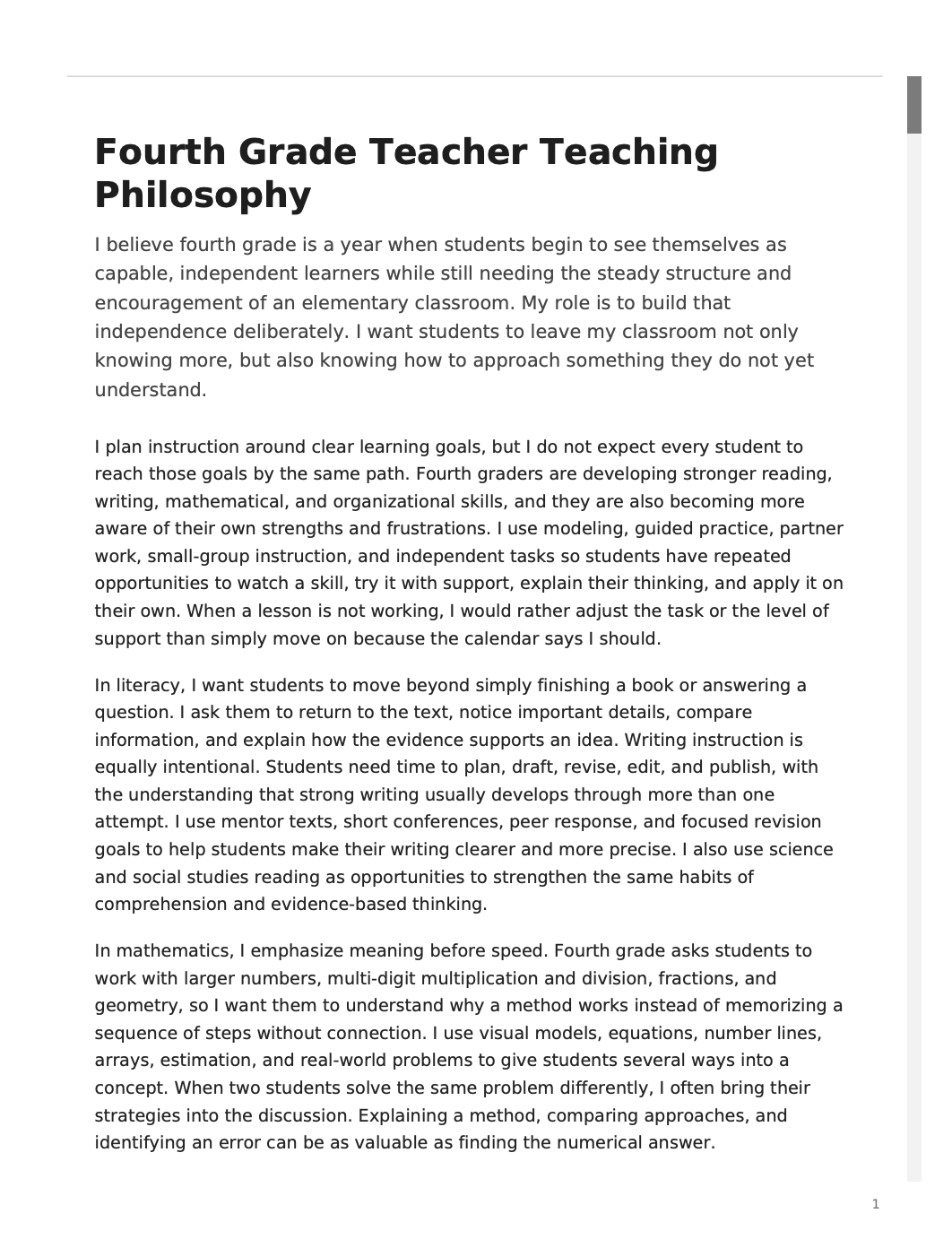
I begin with the belief that children learn best when new ideas are connected to something they
can see, say, do, or explain. In reading, that means giving students opportunities to work with
literary and informational texts, talk about evidence, build vocabulary in context, and explain
their thinking instead of simply naming an answer. In writing, I teach the writing process as real
work: planning, drafting, revising for meaning, editing for clarity, and sharing with a reader in
mind. I also use read-alouds, partner talk, independent reading, and small-group instruction so
that students can hear strong language and have repeated opportunities to practice it
themselves.
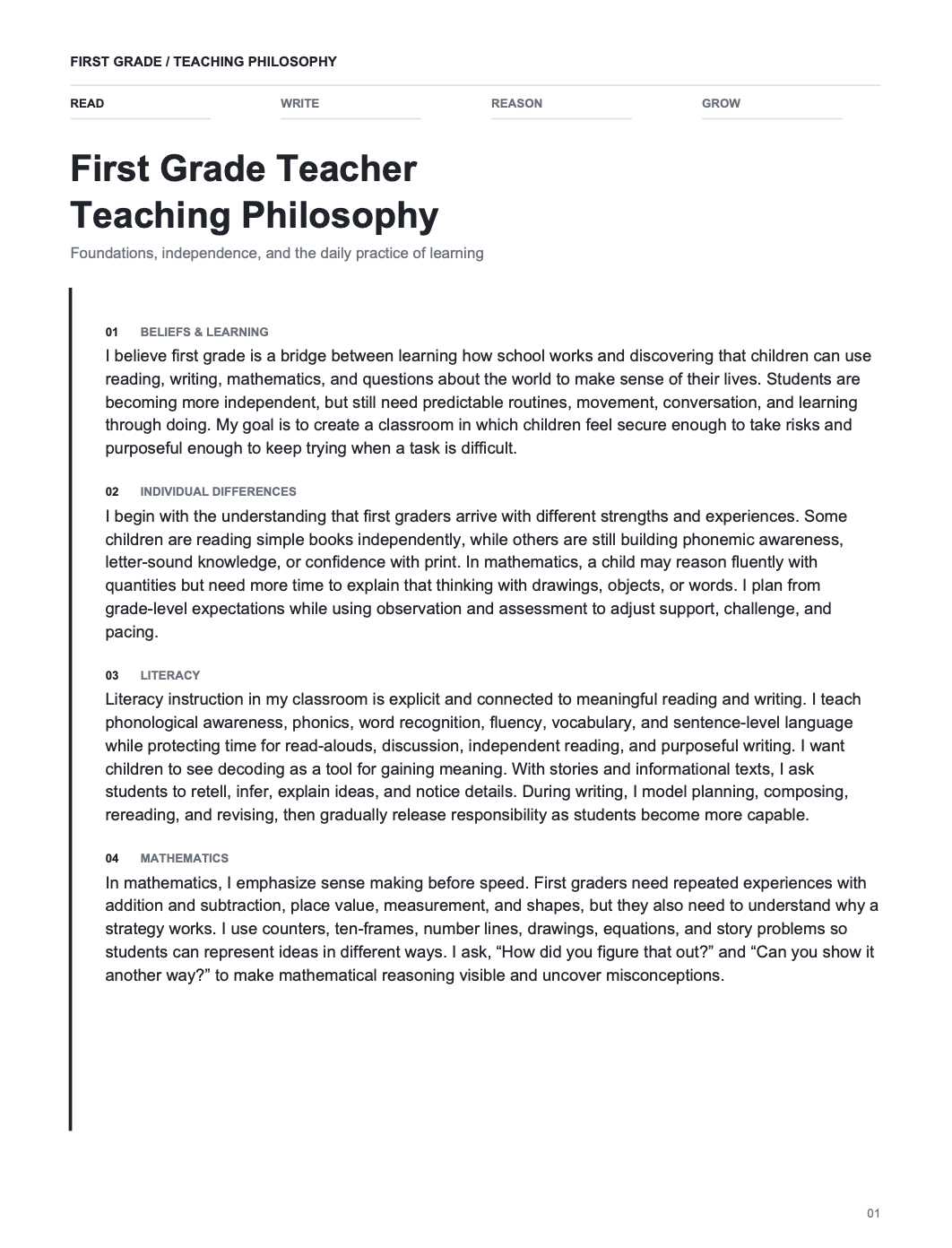
Mathematics in third grade should feel like reasoning, not a race to remember a procedure. I use
visual models, number lines, arrays, equations, drawings, and real problem situations to help
students connect representations and explain why a strategy works. As multiplication, division,
fractions, measurement, and data become more demanding, I want students to experience
productive struggle without feeling abandoned by it. I ask questions such as, "What do you
notice?" "How do you know?" and "Can you show it another way?" so that mathematical
language becomes part of the daily classroom routine.
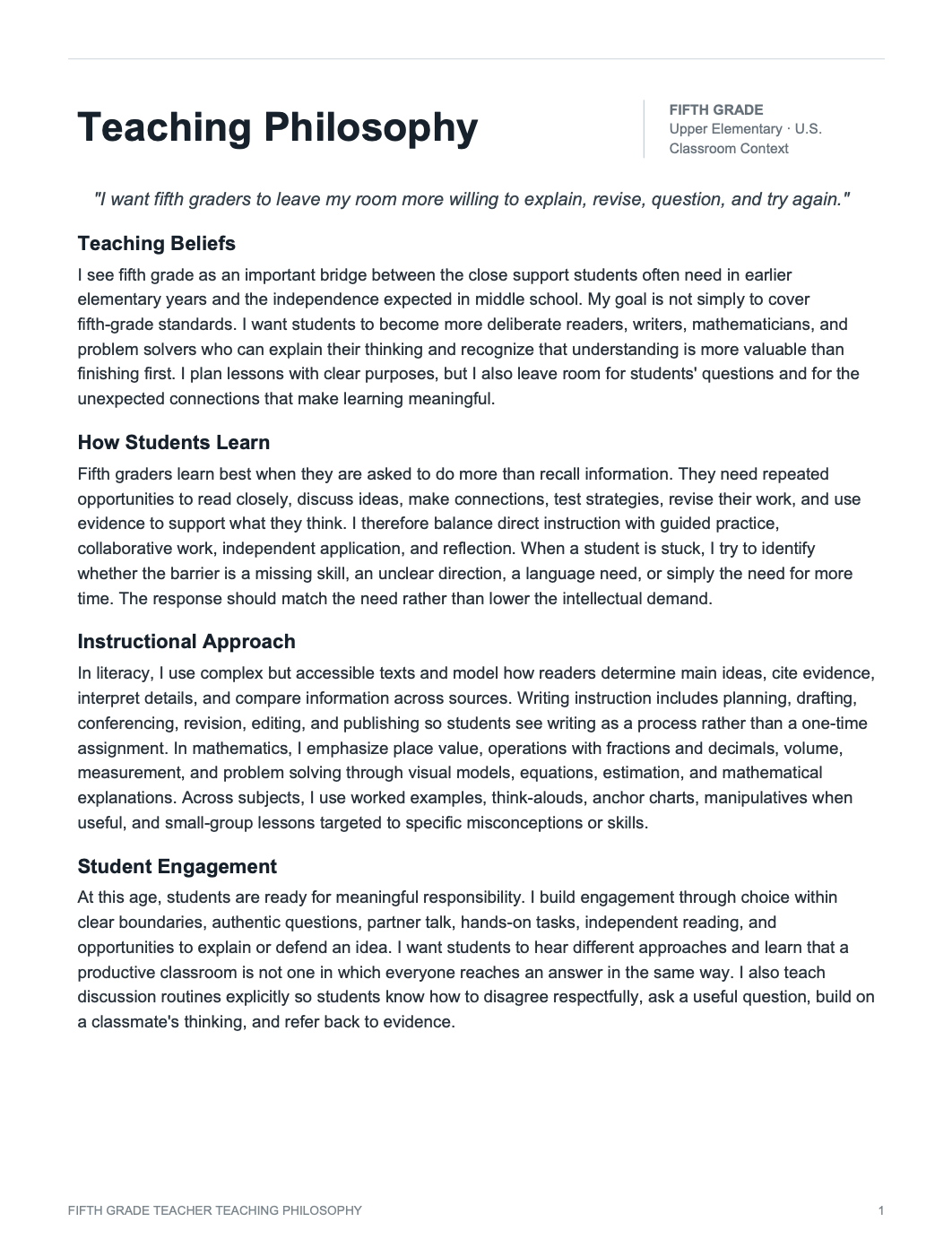
Student engagement grows when children have a meaningful part in the learning. I use short
teacher explanations followed by guided practice, partner work, table conversations, and
independent application. I pay close attention to who is talking, who is waiting, who is guessing,
and who has stopped participating. Sometimes engagement means choice; other times it means
a carefully structured task with a clear purpose. I try to make classroom expectations
predictable so that students can spend their energy on learning rather than figuring out what is
expected of them.
Assessment is part of instruction rather than something that happens only after instruction. I use
quick writes, exit slips, reading conferences, observation notes, student explanations, math
checks, and completed work to decide what to reteach, what to extend, and which students
need a different entry point. A quiz or unit assessment can show what a student can do
independently, but daily evidence often tells me sooner where understanding is breaking down. I
also teach students to use feedback. Revising an answer, correcting an error, or explaining a