Intervention Specialist
Teaching Philosophy
ASSESS • PLAN • TEACH • MONITOR
01
ASSESS
02
PLAN
03
TEACH
04
MONITOR
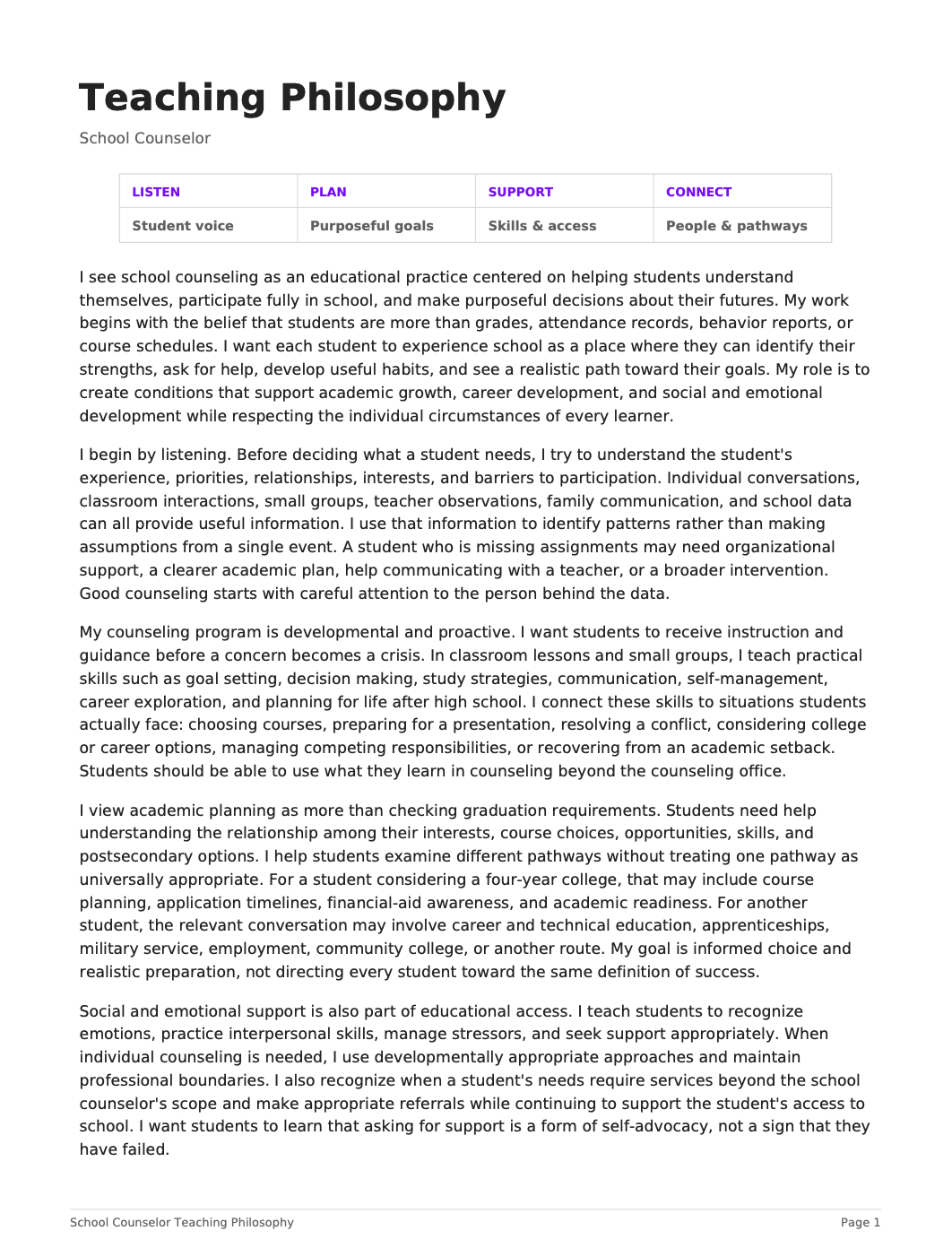
I teach as an intervention specialist because I believe students should
never have to choose between receiving support and being seen as
capable. I design instruction around individual needs while keeping
meaningful academic expectations in view, with the goal of helping
every student move toward greater independence.
I begin with the student rather than the disability category. I review present levels of
performance, IEP goals, classroom expectations, work samples, assessment
information, and observations across settings. I also listen to students. Their interests,
frustrations, strengths, communication preferences, and own explanations of what
helps them learn often reveal information that a score alone cannot provide. From that
starting point, I identify the specific skill or barrier that needs attention and connect it to
a meaningful academic or functional goal.
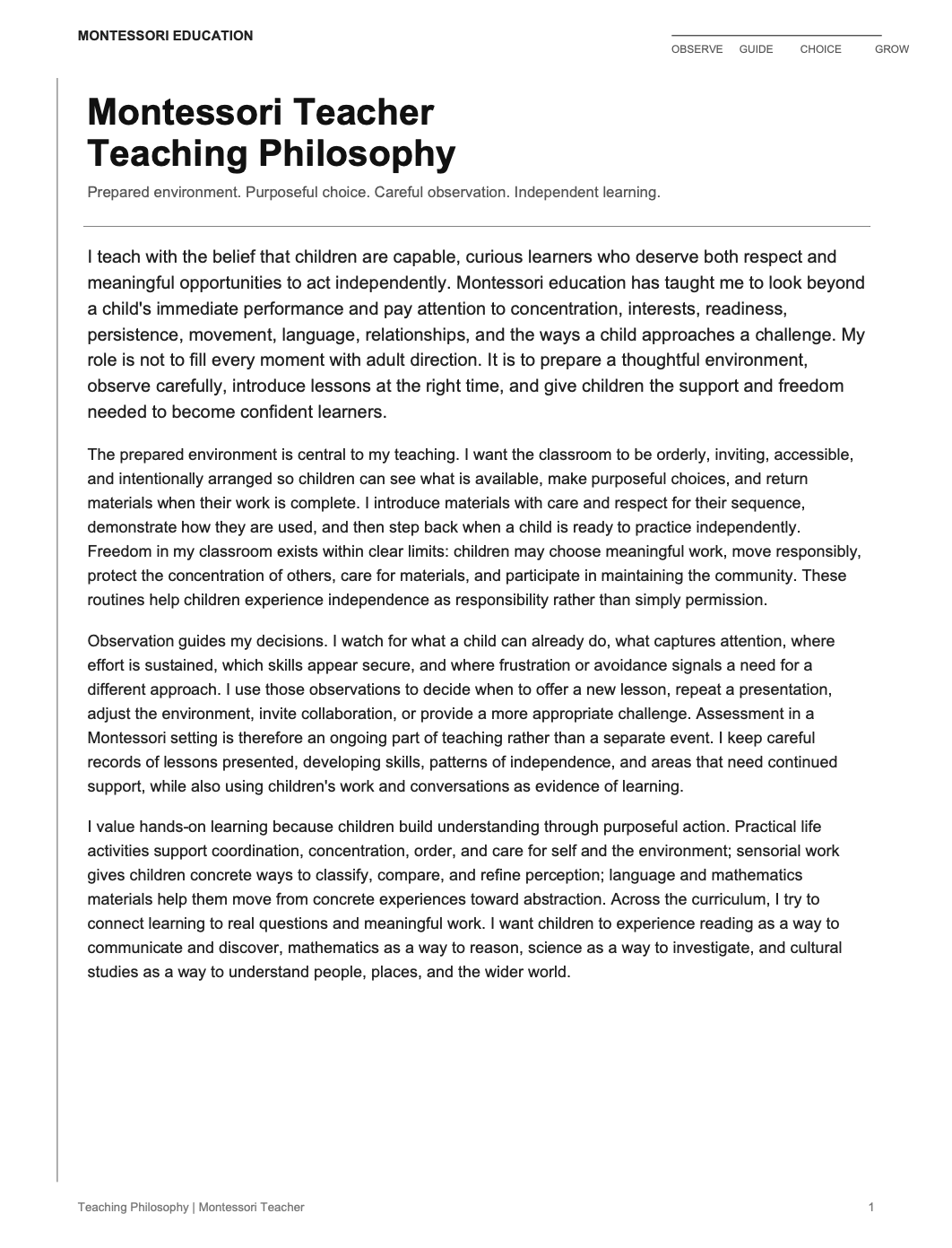
My instruction is explicit, structured, and flexible. I break complex tasks into
manageable steps, model the thinking or process, provide guided practice, and
gradually remove support as students demonstrate readiness. I use visual organizers,
worked examples, manipulatives, assistive technology, guided notes, repeated
practice, and alternative ways to respond when they reduce unnecessary barriers. At
the same time, I avoid turning every task into a simplified version of the grade-level
work. The goal of specially designed instruction is to provide access to meaningful
expectations while teaching the skills students need to approach those expectations
with greater confidence.
I see intervention as a cycle of assess, plan, teach, monitor, and adjust. Progress
monitoring is not something I complete only for documentation; it is part of daily
instructional decision-making. I look for patterns in student responses and ask whether
a strategy is actually producing the intended change. When progress is slower than
expected, I change the instructional approach rather than assuming the student is the
problem. A new model, smaller learning step, different prompt, additional practice
opportunity, or different mode of expression may be what unlocks the next stage of
learning.
Teaching Philosophy
1 / 2
Intervention Specialist Teaching Philosophy
continued
FROM SUPPORT TO INDEPENDENCE
Student-centered intervention
Collaboration is central to my teaching. Students benefit when the intervention specialist, general education
teacher, related service providers, administrators, and family members have a shared understanding of the
student's goals and supports. I communicate clearly about what I am seeing, contribute practical strategies that can
be used across settings, and seek information from colleagues rather than working in isolation. I want supports to
transfer beyond the intervention setting so students can use new skills in the classroom, during group work, on
assessments, and in everyday school routines.
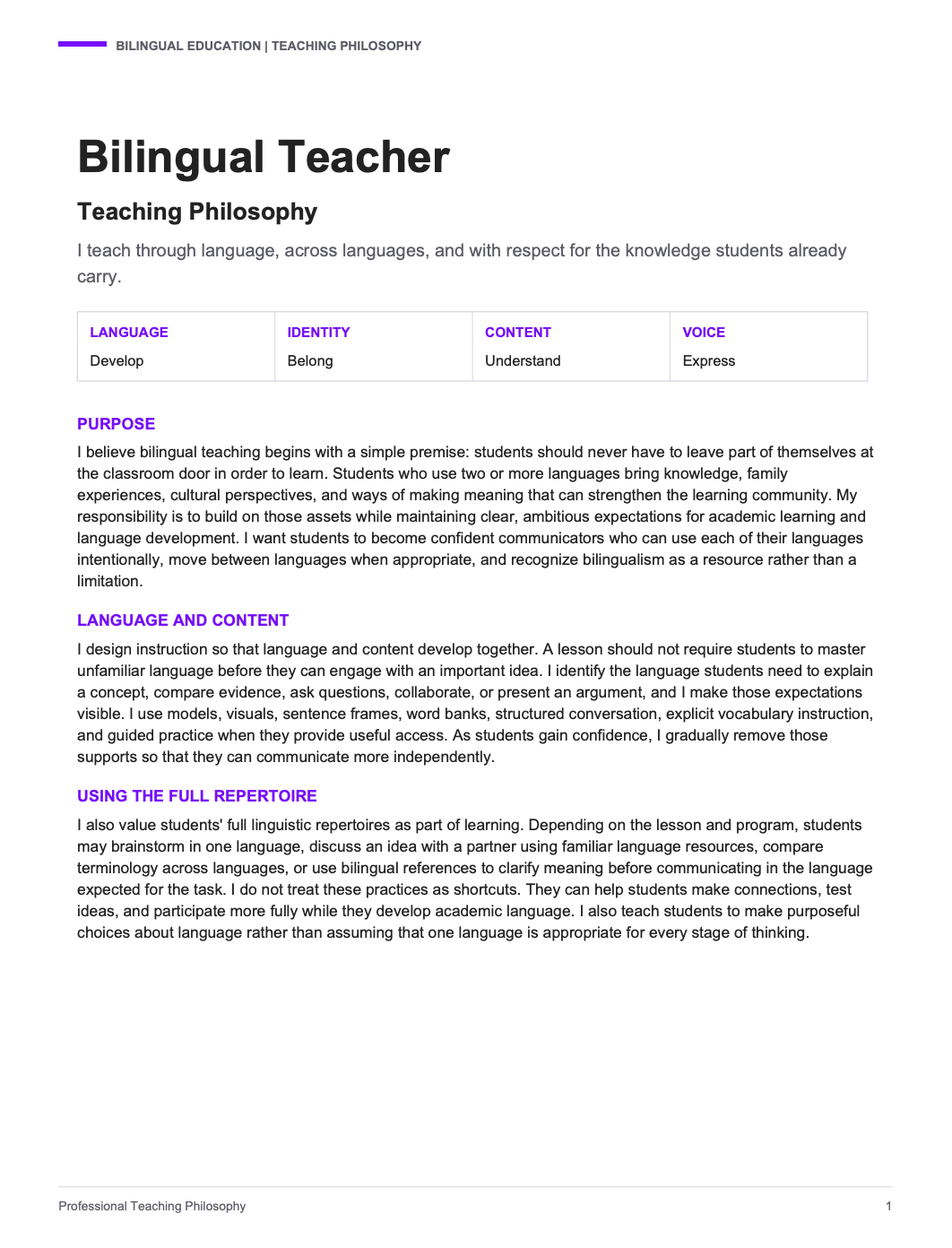
I also want students to become participants in the support process. As students grow, I explicitly teach them to
identify what helps them learn, use tools appropriately, ask for clarification, describe a goal, and reflect on their
progress. For older students, this may include practicing self-advocacy, organization, planning, and preparation for
transitions to postsecondary education, training, employment, or independent living. My measure of success is not
simply that a student performs well with my assistance. It is that the student increasingly knows how to approach a
challenge without waiting for someone else to solve it.
I work to create an environment in which differences are treated as part of human learning rather than as reasons
for lower expectations. I use accessible materials and multiple ways for students to engage with information and
demonstrate understanding. I am careful about language, classroom routines, and grouping so that students who
receive services are not defined publicly by the supports they use. I also recognize the importance of trust: students
are more willing to persist, make mistakes, and accept feedback when they know that the adult in front of them sees
both their current needs and their potential.
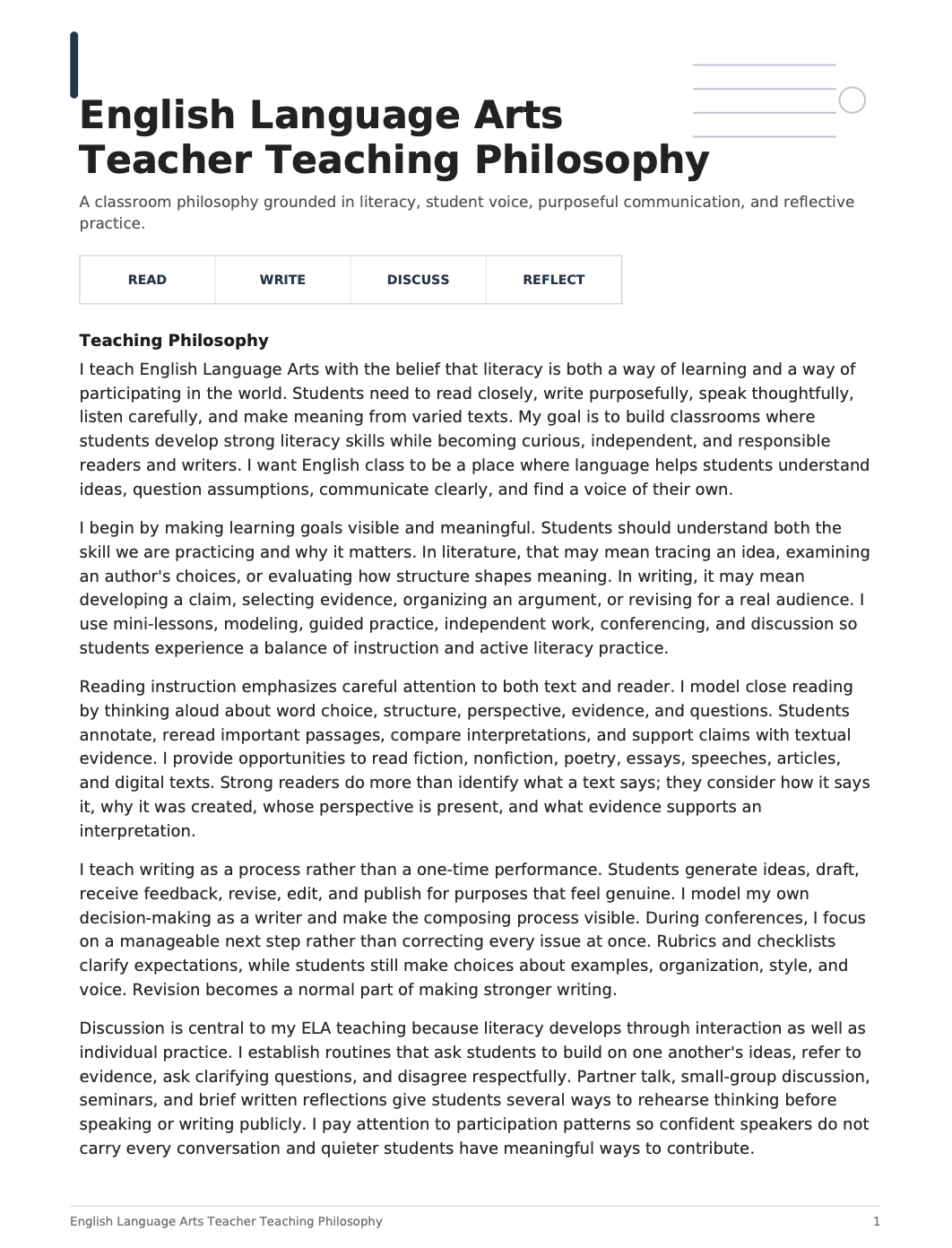
Assessment informs both instruction and opportunity. I use formative checks, curriculum-based measures, student
work, observations, and classroom performance to understand whether a learner can apply a skill beyond a highly
supported practice task. I value feedback that is specific and actionable, and I teach students to use that feedback.
When formal assessments are required, I distinguish between what the assessment is intended to measure and
which barriers can be reduced through appropriate accommodations or instructional supports. Fairness means
preserving the learning target while ensuring that irrelevant barriers do not determine the result.
My teaching continues to evolve through evidence and reflection. I review progress data, student work, family and
colleague feedback, and my own observations to identify what should be retained, changed, or abandoned. I
continue learning about evidence-based instruction, accessibility, behavior and learning supports, and the systems
that shape student opportunity. Ultimately, I want students to leave my instruction with stronger academic or
functional skills, greater confidence, and a clearer sense that they are capable of learning, contributing, and
advocating for themselves. That is the standard I bring to the work of an intervention specialist.
Teaching Philosophy
2 / 2