Kindergarten Teacher Teaching Philosophy
1
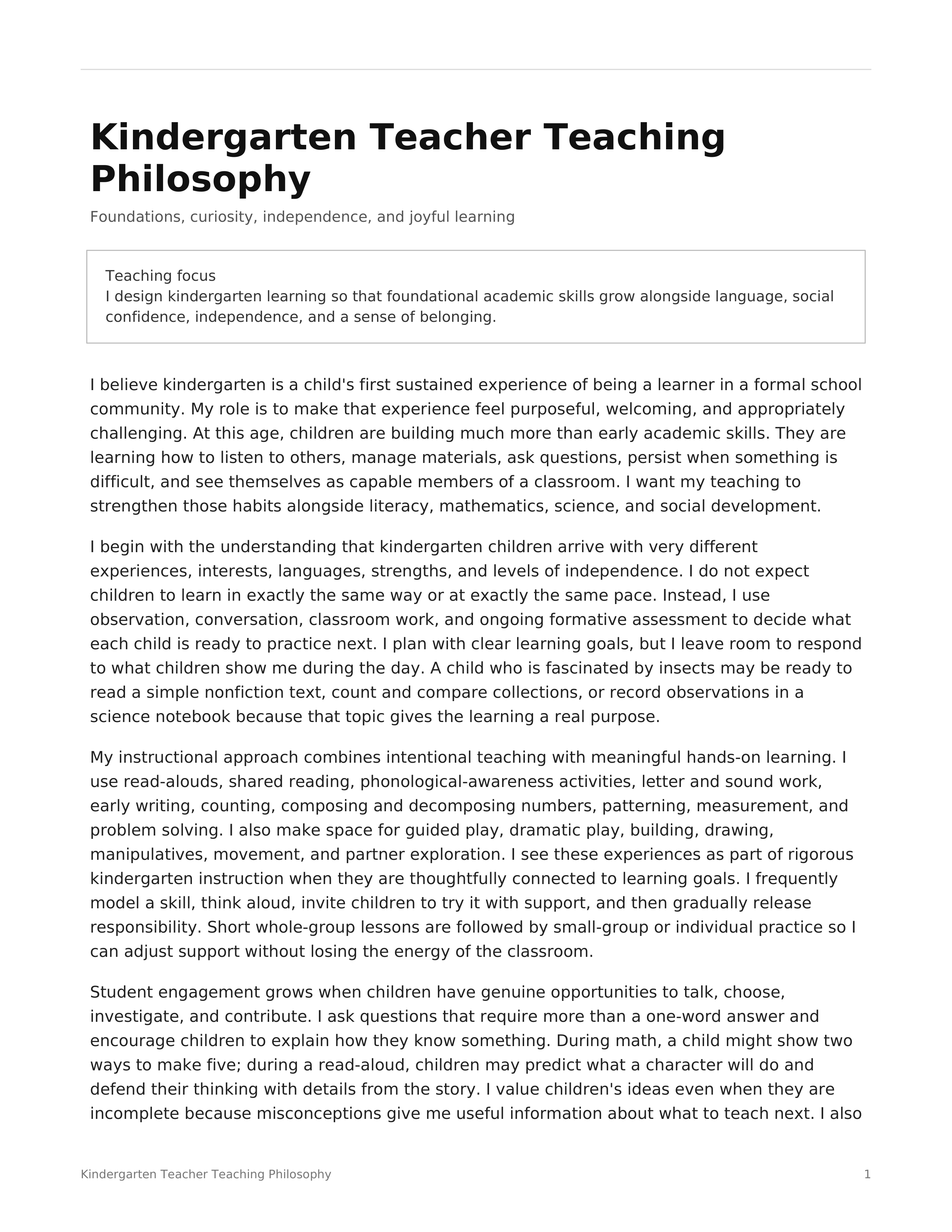
Kindergarten Teacher Teaching
Philosophy
Foundations, curiosity, independence, and joyful learning
Teaching focus
I design kindergarten learning so that foundational academic skills grow alongside language, social
confidence, independence, and a sense of belonging.
I believe kindergarten is a child's first sustained experience of being a learner in a formal school
community. My role is to make that experience feel purposeful, welcoming, and appropriately
challenging. At this age, children are building much more than early academic skills. They are
learning how to listen to others, manage materials, ask questions, persist when something is
difficult, and see themselves as capable members of a classroom. I want my teaching to
strengthen those habits alongside literacy, mathematics, science, and social development.
I begin with the understanding that kindergarten children arrive with very different
experiences, interests, languages, strengths, and levels of independence. I do not expect
children to learn in exactly the same way or at exactly the same pace. Instead, I use
observation, conversation, classroom work, and ongoing formative assessment to decide what
each child is ready to practice next. I plan with clear learning goals, but I leave room to respond
to what children show me during the day. A child who is fascinated by insects may be ready to
read a simple nonfiction text, count and compare collections, or record observations in a
science notebook because that topic gives the learning a real purpose.
My instructional approach combines intentional teaching with meaningful hands-on learning. I
use read-alouds, shared reading, phonological-awareness activities, letter and sound work,
early writing, counting, composing and decomposing numbers, patterning, measurement, and
problem solving. I also make space for guided play, dramatic play, building, drawing,
manipulatives, movement, and partner exploration. I see these experiences as part of rigorous
kindergarten instruction when they are thoughtfully connected to learning goals. I frequently
model a skill, think aloud, invite children to try it with support, and then gradually release
responsibility. Short whole-group lessons are followed by small-group or individual practice so I
can adjust support without losing the energy of the classroom.
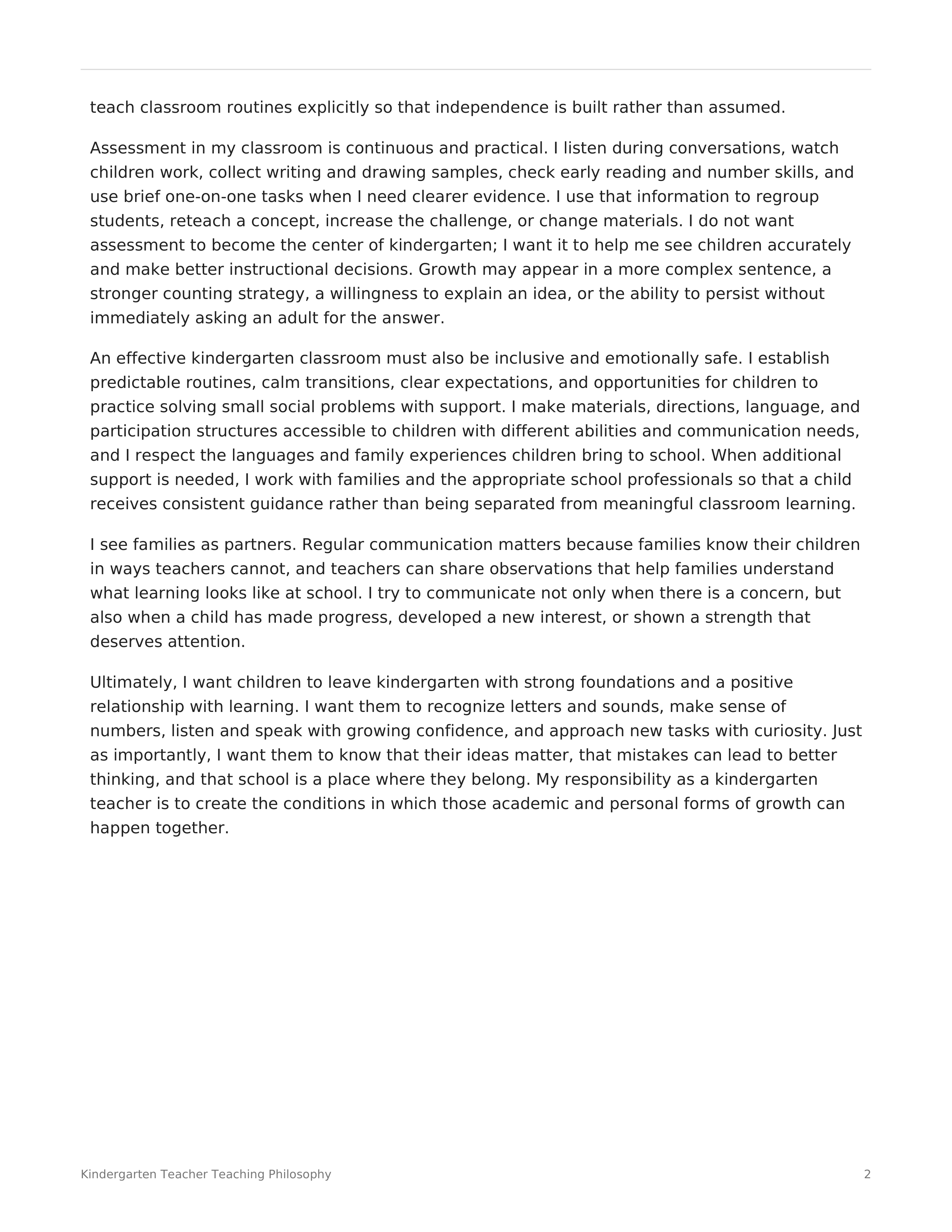
Student engagement grows when children have genuine opportunities to talk, choose,
investigate, and contribute. I ask questions that require more than a one-word answer and
encourage children to explain how they know something. During math, a child might show two
ways to make five; during a read-aloud, children may predict what a character will do and
defend their thinking with details from the story. I value children's ideas even when they are
incomplete because misconceptions give me useful information about what to teach next. I also