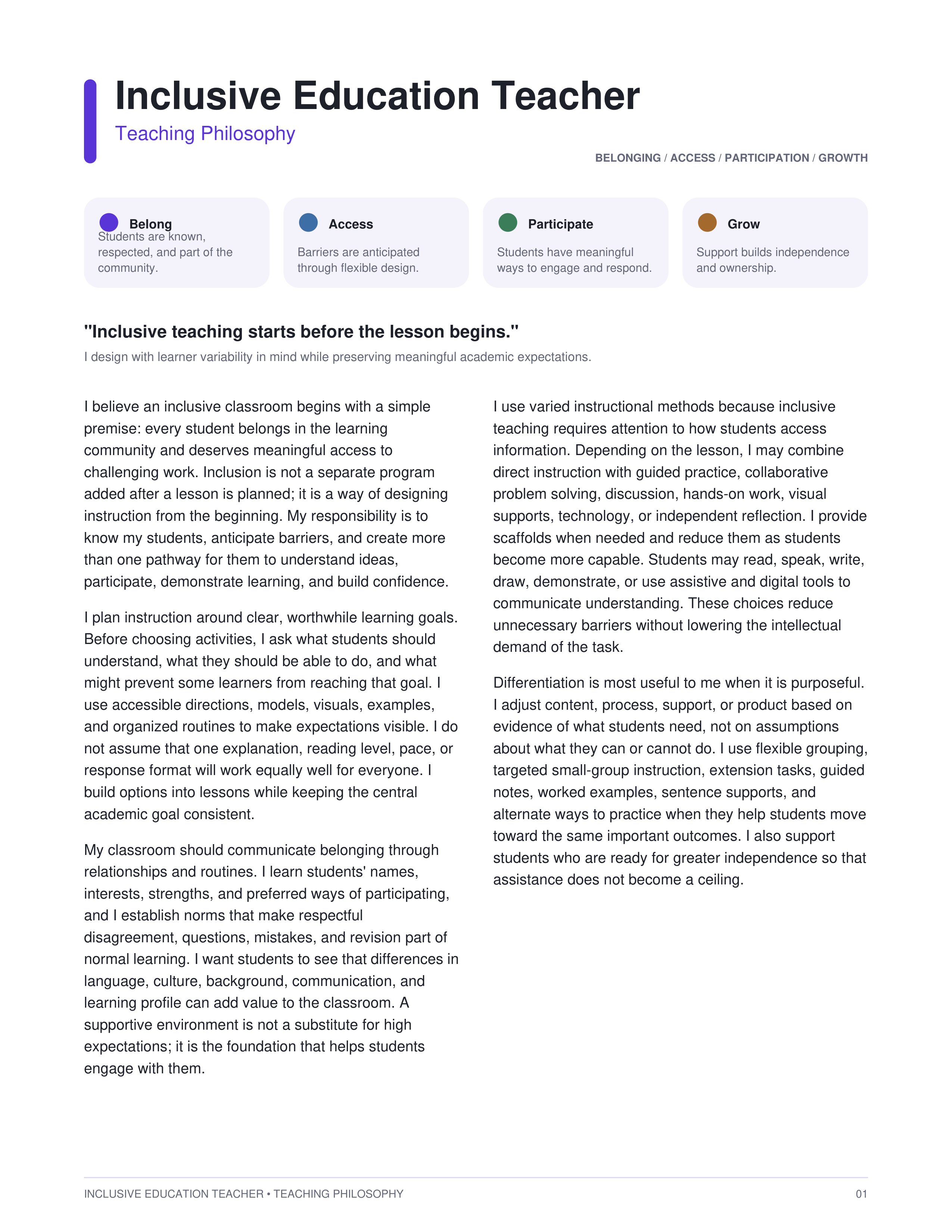
Inclusive Education Teacher
Teaching Philosophy
BELONGING / ACCESS / PARTICIPATION / GROWTH
Belong
Students are known,
respected, and part of the
community.
Access
Barriers are anticipated
through flexible design.
Participate
Students have meaningful
ways to engage and respond.
Grow
Support builds independence
and ownership.
"Inclusive teaching starts before the lesson begins."
I design with learner variability in mind while preserving meaningful academic expectations.
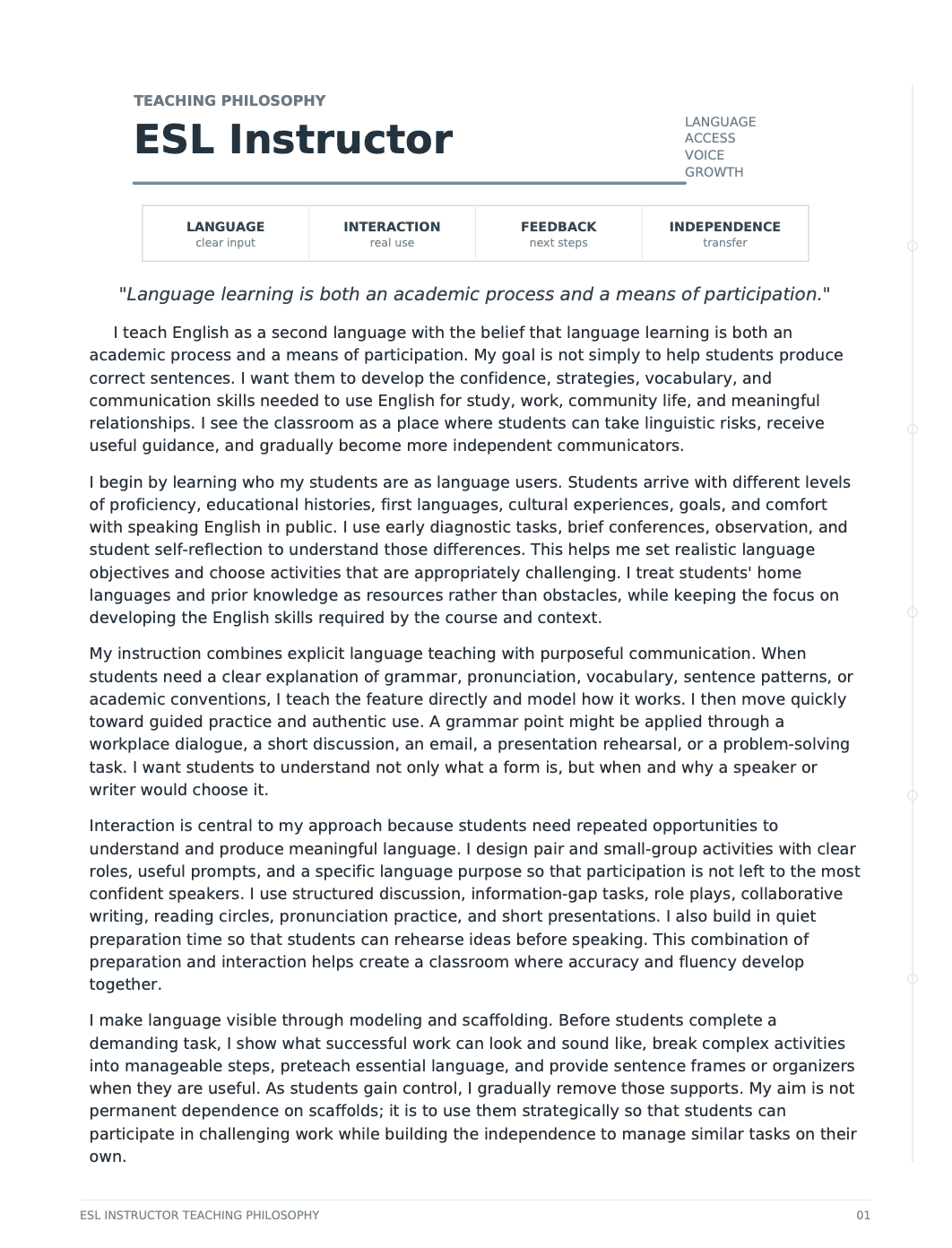
I believe an inclusive classroom begins with a simple
premise: every student belongs in the learning
community and deserves meaningful access to
challenging work. Inclusion is not a separate program
added after a lesson is planned; it is a way of designing
instruction from the beginning. My responsibility is to
know my students, anticipate barriers, and create more
than one pathway for them to understand ideas,
participate, demonstrate learning, and build confidence.
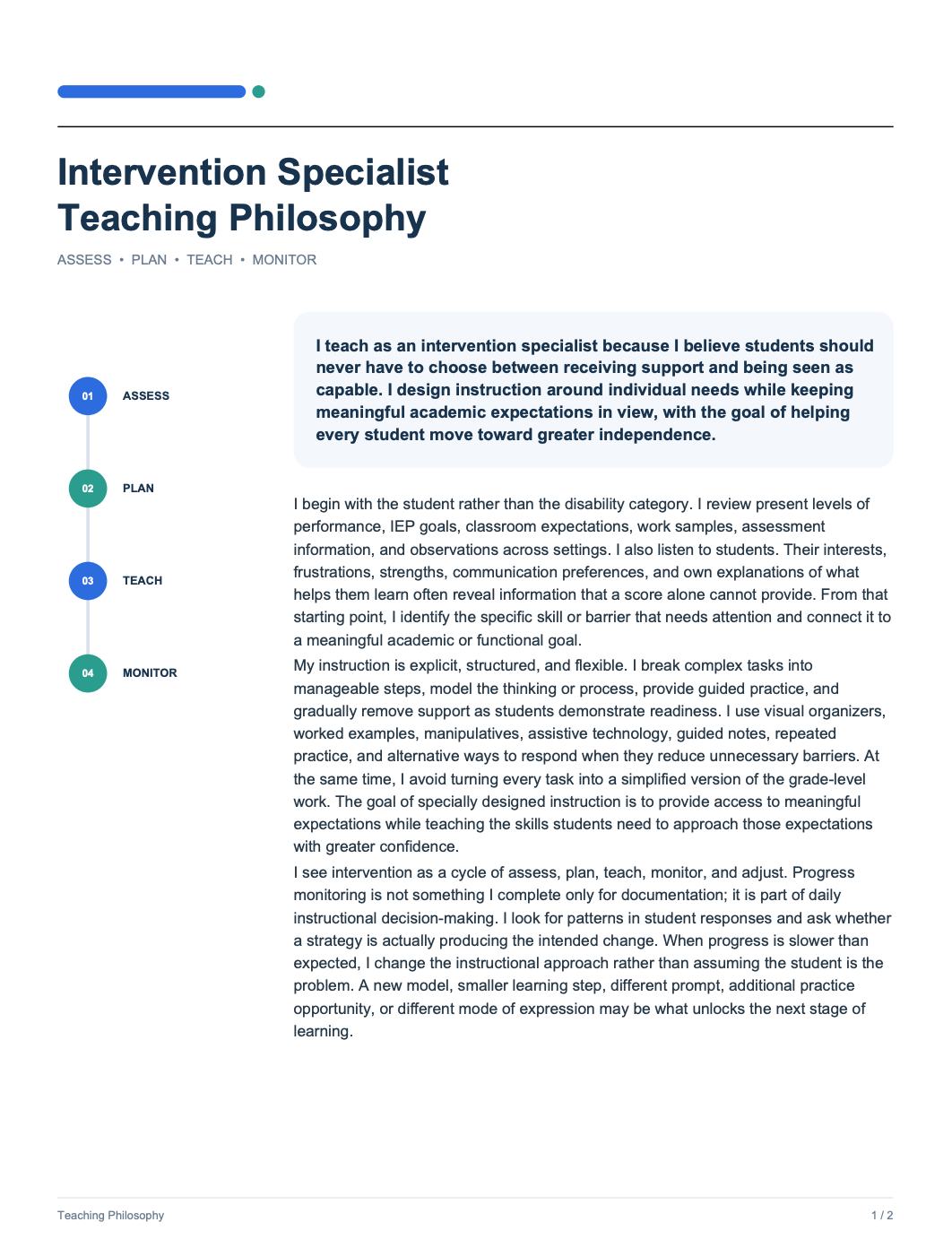
I plan instruction around clear, worthwhile learning goals.
Before choosing activities, I ask what students should
understand, what they should be able to do, and what
might prevent some learners from reaching that goal. I
use accessible directions, models, visuals, examples,
and organized routines to make expectations visible. I do
not assume that one explanation, reading level, pace, or
response format will work equally well for everyone. I
build options into lessons while keeping the central
academic goal consistent.
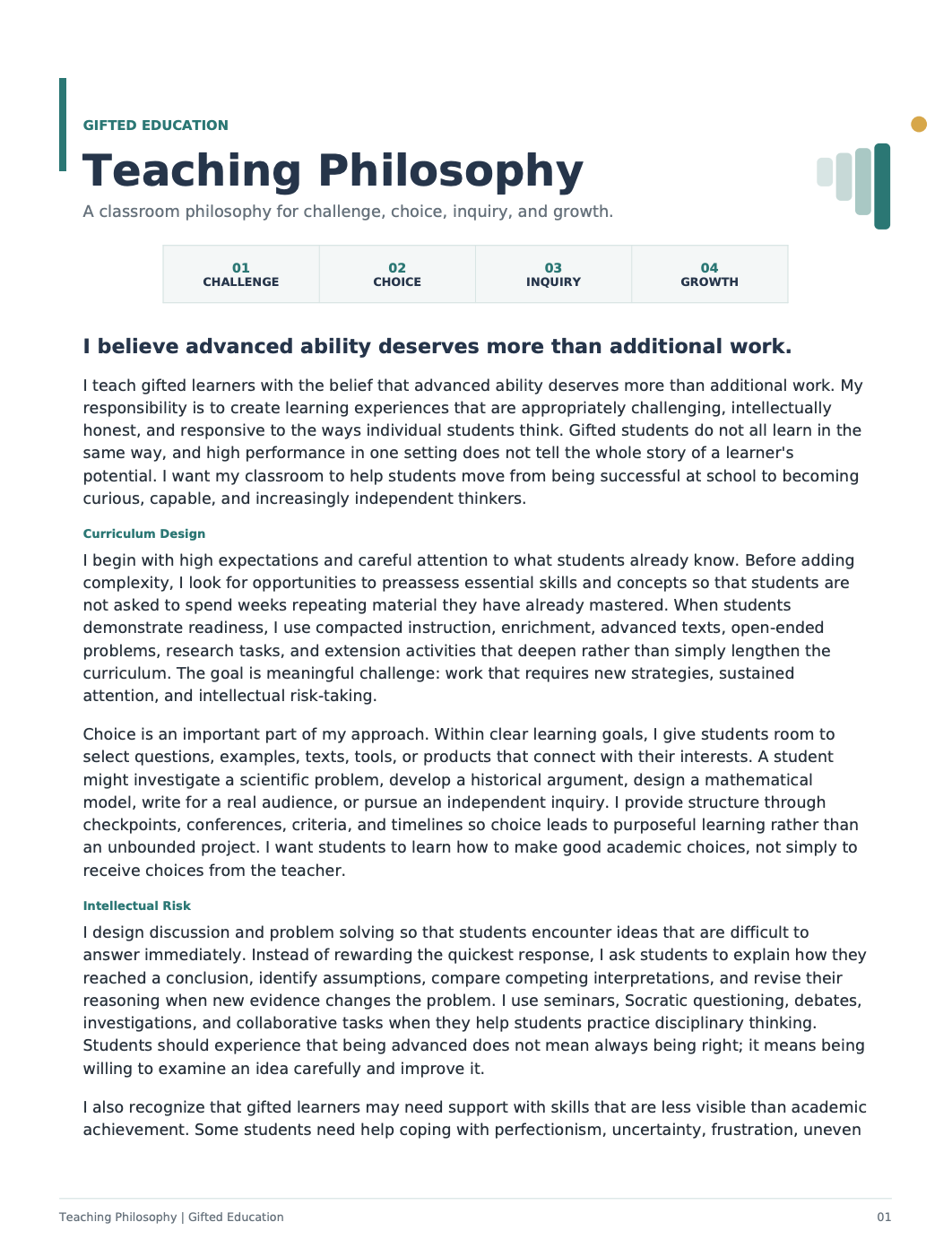
My classroom should communicate belonging through
relationships and routines. I learn students' names,
interests, strengths, and preferred ways of participating,
and I establish norms that make respectful
disagreement, questions, mistakes, and revision part of
normal learning. I want students to see that differences in
language, culture, background, communication, and
learning profile can add value to the classroom. A
supportive environment is not a substitute for high
expectations; it is the foundation that helps students
engage with them.
I use varied instructional methods because inclusive
teaching requires attention to how students access
information. Depending on the lesson, I may combine
direct instruction with guided practice, collaborative
problem solving, discussion, hands-on work, visual
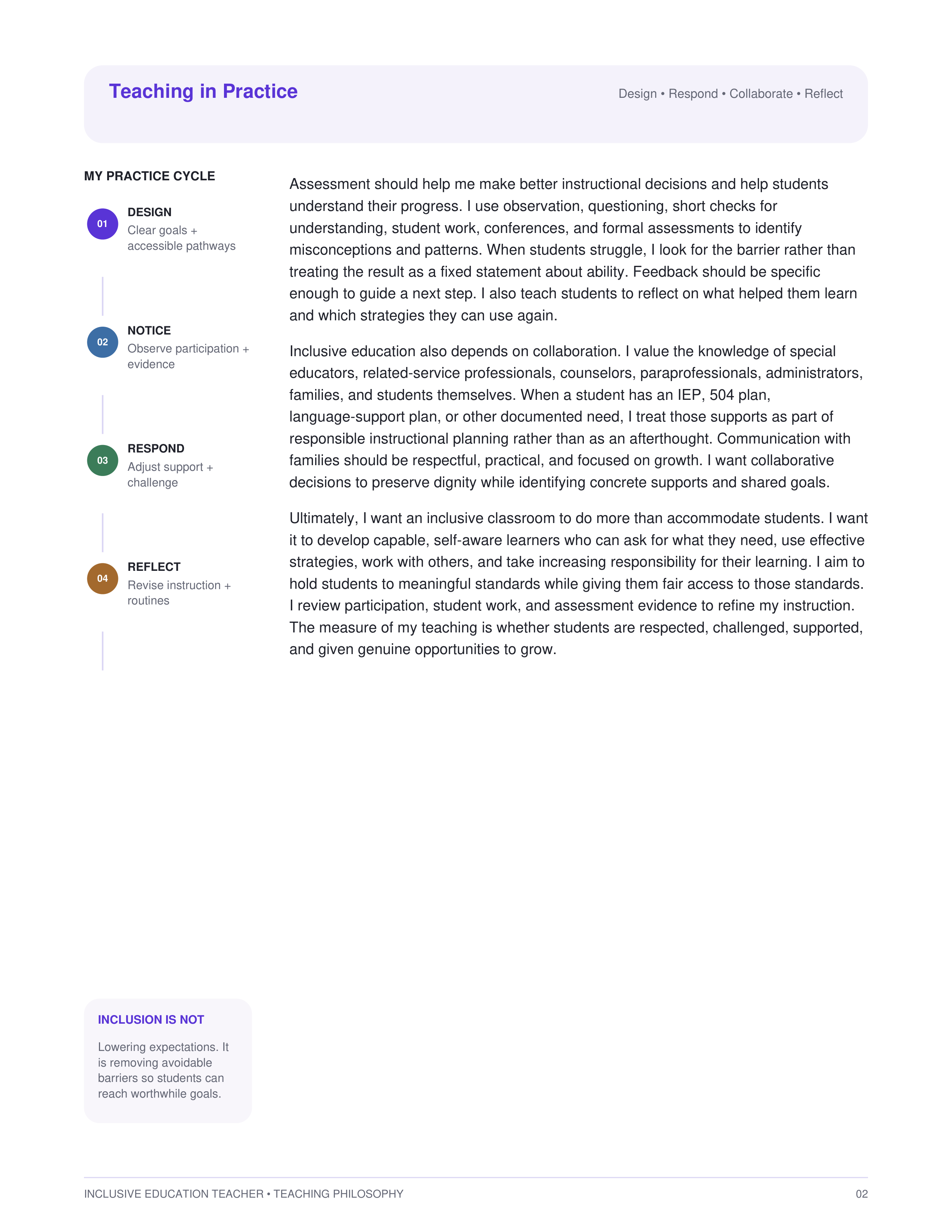
supports, technology, or independent reflection. I provide
scaffolds when needed and reduce them as students
become more capable. Students may read, speak, write,
draw, demonstrate, or use assistive and digital tools to
communicate understanding. These choices reduce
unnecessary barriers without lowering the intellectual
demand of the task.
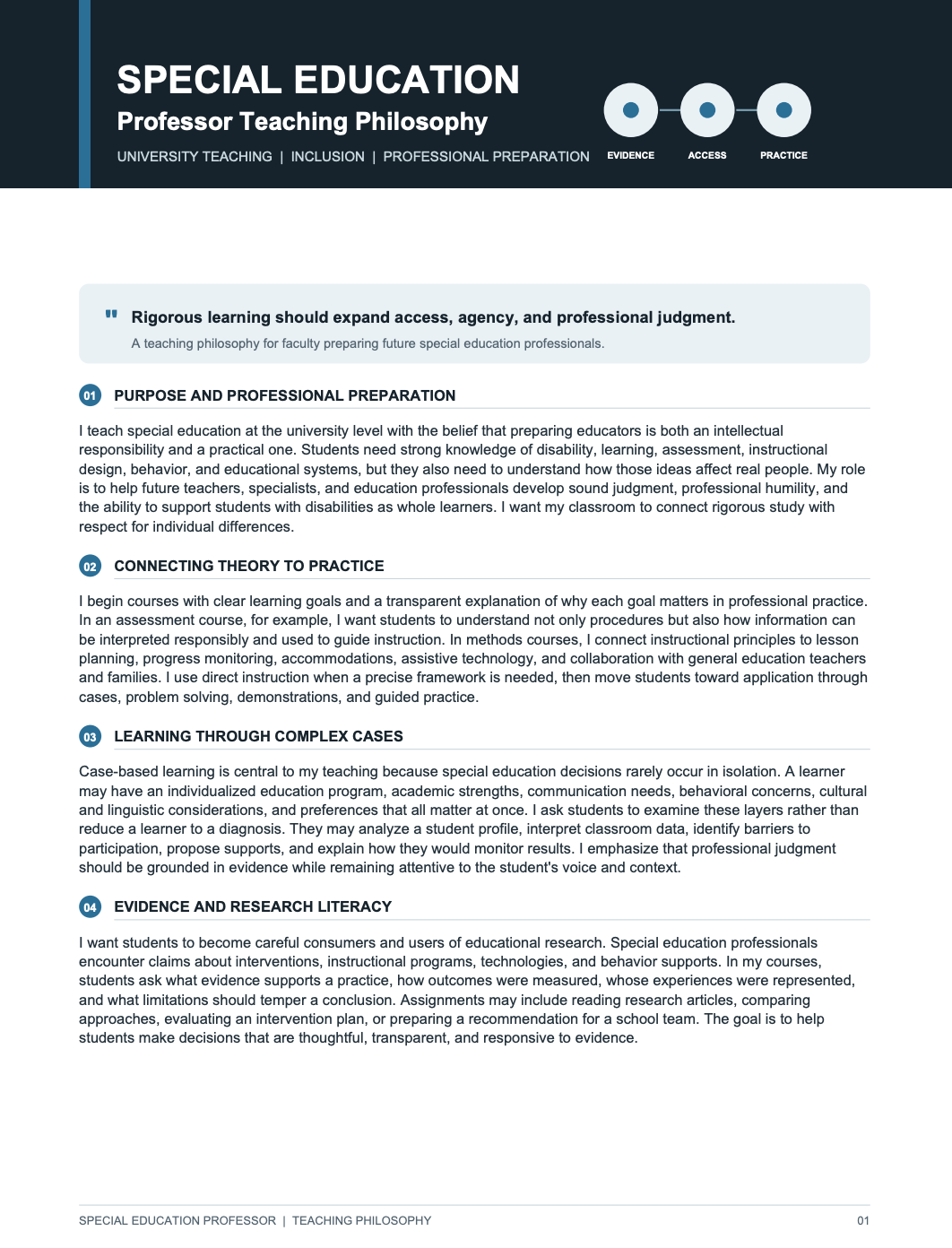
Differentiation is most useful to me when it is purposeful.
I adjust content, process, support, or product based on
evidence of what students need, not on assumptions
about what they can or cannot do. I use flexible grouping,
targeted small-group instruction, extension tasks, guided
notes, worked examples, sentence supports, and
alternate ways to practice when they help students move
toward the same important outcomes. I also support
students who are ready for greater independence so that
assistance does not become a ceiling.
INCLUSIVE EDUCATION TEACHER • TEACHING PHILOSOPHY
01