MONTESSORI EDUCATION
OBSERVE
GUIDE
CHOICE
GROW
Teaching Philosophy | Montessori Teacher
1
Montessori Teacher
Teaching Philosophy
Prepared environment. Purposeful choice. Careful observation. Independent learning.
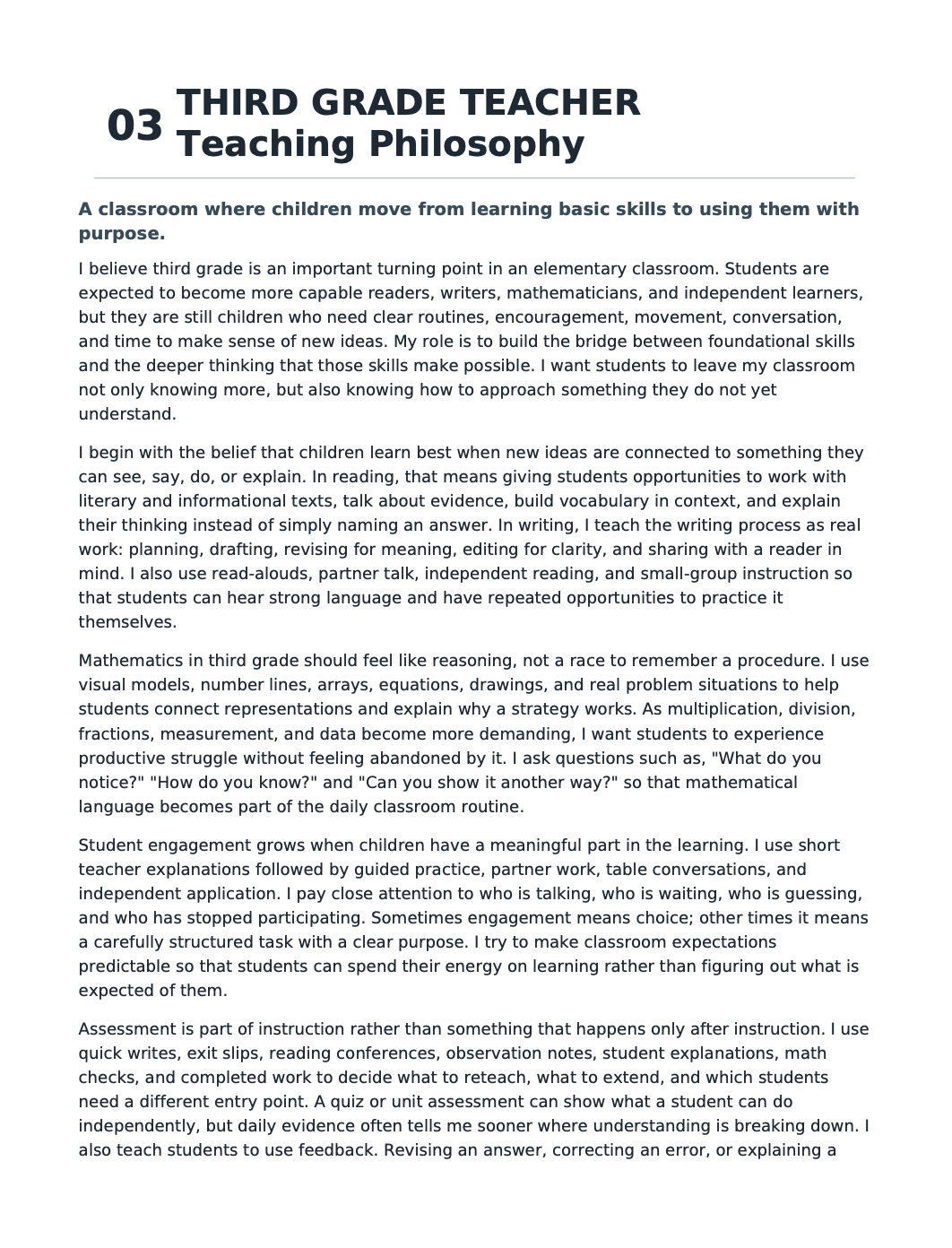
I teach with the belief that children are capable, curious learners who deserve both respect and
meaningful opportunities to act independently. Montessori education has taught me to look beyond
a child's immediate performance and pay attention to concentration, interests, readiness,
persistence, movement, language, relationships, and the ways a child approaches a challenge. My
role is not to fill every moment with adult direction. It is to prepare a thoughtful environment,
observe carefully, introduce lessons at the right time, and give children the support and freedom
needed to become confident learners.
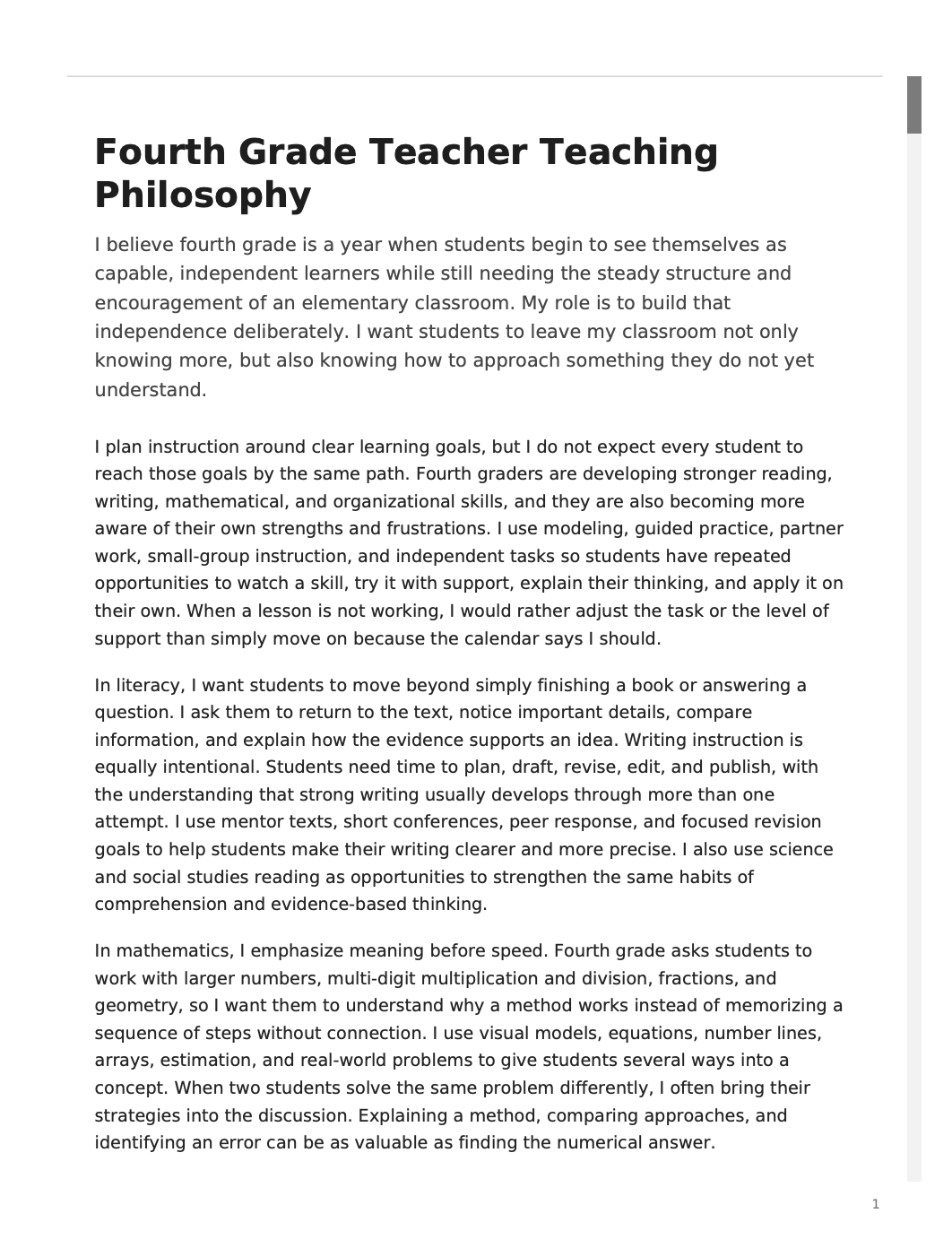
The prepared environment is central to my teaching. I want the classroom to be orderly, inviting, accessible,
and intentionally arranged so children can see what is available, make purposeful choices, and return
materials when their work is complete. I introduce materials with care and respect for their sequence,
demonstrate how they are used, and then step back when a child is ready to practice independently.
Freedom in my classroom exists within clear limits: children may choose meaningful work, move responsibly,
protect the concentration of others, care for materials, and participate in maintaining the community. These
routines help children experience independence as responsibility rather than simply permission.
Observation guides my decisions. I watch for what a child can already do, what captures attention, where
effort is sustained, which skills appear secure, and where frustration or avoidance signals a need for a
different approach. I use those observations to decide when to offer a new lesson, repeat a presentation,
adjust the environment, invite collaboration, or provide a more appropriate challenge. Assessment in a
Montessori setting is therefore an ongoing part of teaching rather than a separate event. I keep careful
records of lessons presented, developing skills, patterns of independence, and areas that need continued
support, while also using children's work and conversations as evidence of learning.
I value hands-on learning because children build understanding through purposeful action. Practical life
activities support coordination, concentration, order, and care for self and the environment; sensorial work
gives children concrete ways to classify, compare, and refine perception; language and mathematics
materials help them move from concrete experiences toward abstraction. Across the curriculum, I try to
connect learning to real questions and meaningful work. I want children to experience reading as a way to
communicate and discover, mathematics as a way to reason, science as a way to investigate, and cultural
studies as a way to understand people, places, and the wider world.
MONTESSORI EDUCATION
OBSERVE
GUIDE
CHOICE
GROW
Teaching Philosophy | Montessori Teacher
2
MONTESSORI TEACHER - CONTINUED
I also protect the child's ability to think, choose, and persist. I do not want constant praise, correction, or adult
approval to become the reason a child continues working. Instead, I help children notice their own progress,
recognize when a material offers a useful challenge, and learn how to respond when an error appears. I use
precise language, calm redirection, and opportunities for repetition so that children can experience the
satisfaction of mastering something through their own effort. When a child is ready for more complexity, I
extend the work rather than simply adding more tasks.
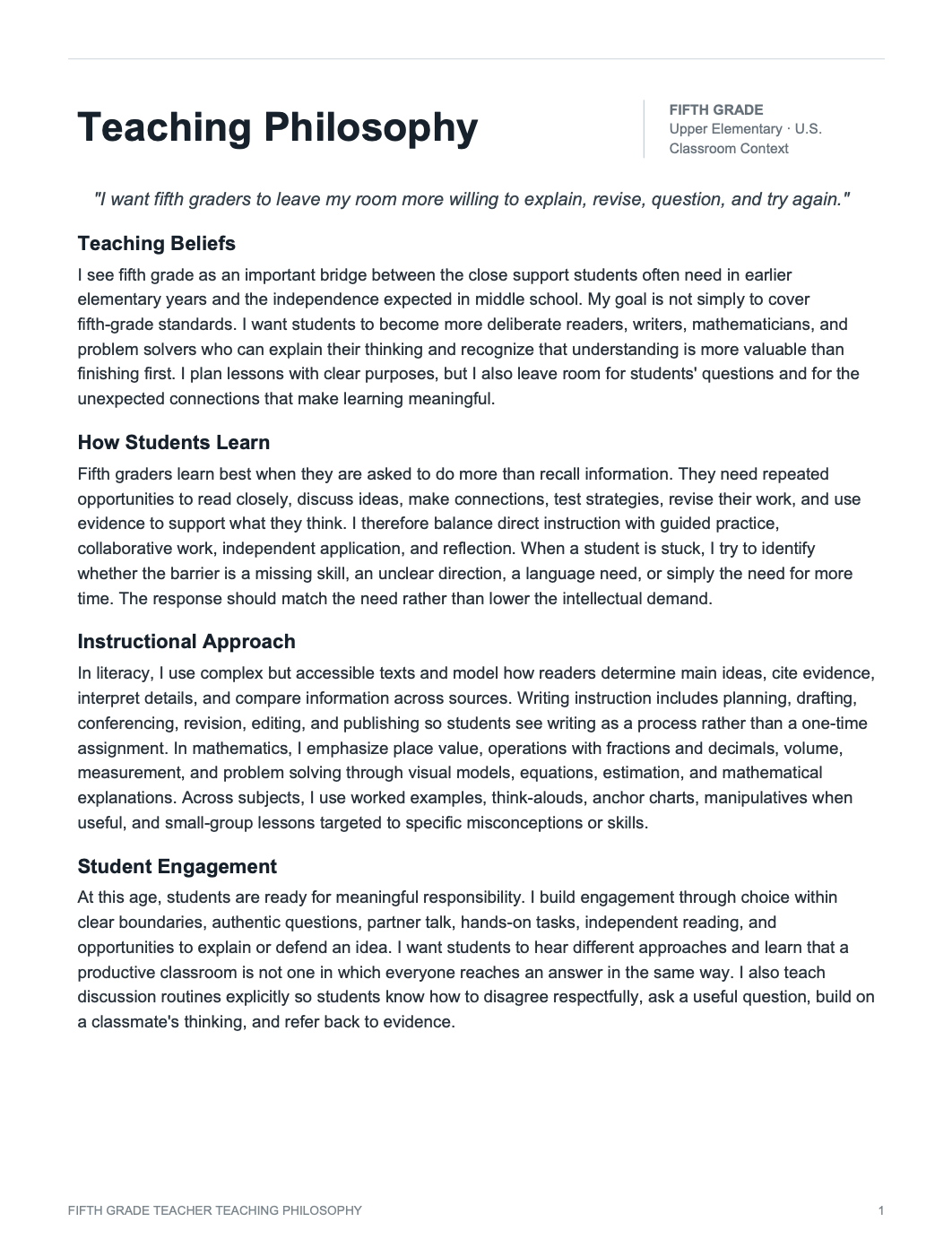
Community is another essential part of my philosophy. Montessori classrooms can include children at
different developmental stages and with different strengths, experiences, and learning needs. I teach grace,
courtesy, collaboration, and care for the environment as part of the curriculum, not as extras. Older or more
experienced students can model routines and support younger classmates, while each child is still expected
to develop personal responsibility. I also work to make the classroom inclusive by observing individual needs,
offering appropriate access to materials, communicating expectations clearly, and avoiding assumptions
about what a child is capable of achieving.
My partnership with families matters because children's development is strengthened when the adults around
them communicate respectfully and consistently. I share meaningful observations, explain the purpose of
classroom practices, listen to family knowledge, and welcome information that helps me understand a child's
interests, culture, language, routines, and goals. I collaborate with colleagues and specialists when a child
needs additional support, while maintaining high expectations and protecting the child's dignity. I want
families to see the classroom as a place where children are known, trusted, and challenged with care.
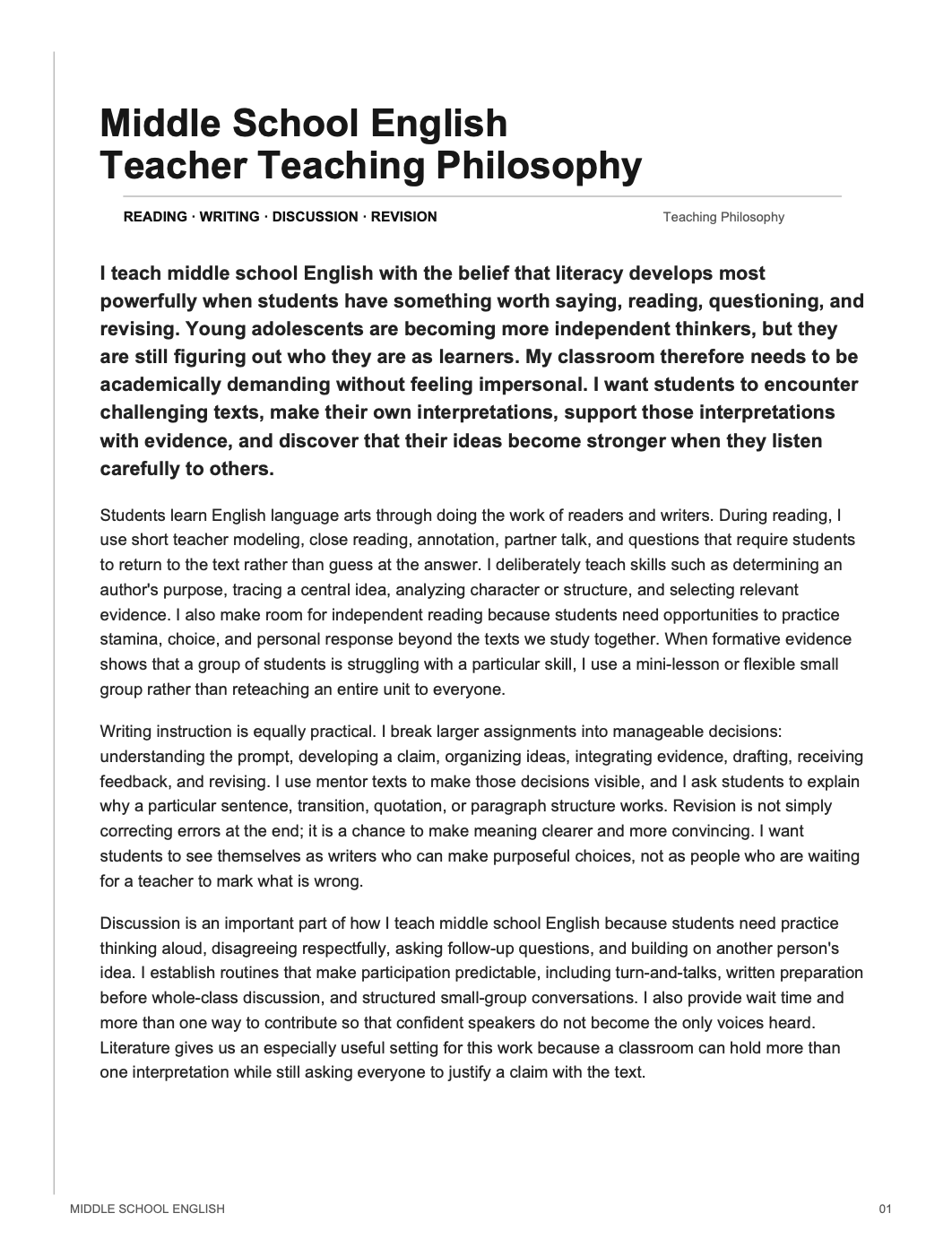
Ultimately, I want my students to leave my classroom with more than academic skills. I want them to develop
concentration, self-discipline, curiosity, confidence, empathy, and the ability to begin meaningful work without
waiting for an adult to direct every step. My teaching philosophy continues to evolve through observation,
reflection, collaboration, and close attention to the children in front of me. Montessori teaching asks me to
prepare the environment, prepare myself, and then respond thoughtfully to the learner. I see that combination
of structure and freedom as a powerful way to help children become capable, responsible, and lifelong
learners.