Literacy Teacher Teaching Philosophy
READ • WRITE • SPEAK • LISTEN
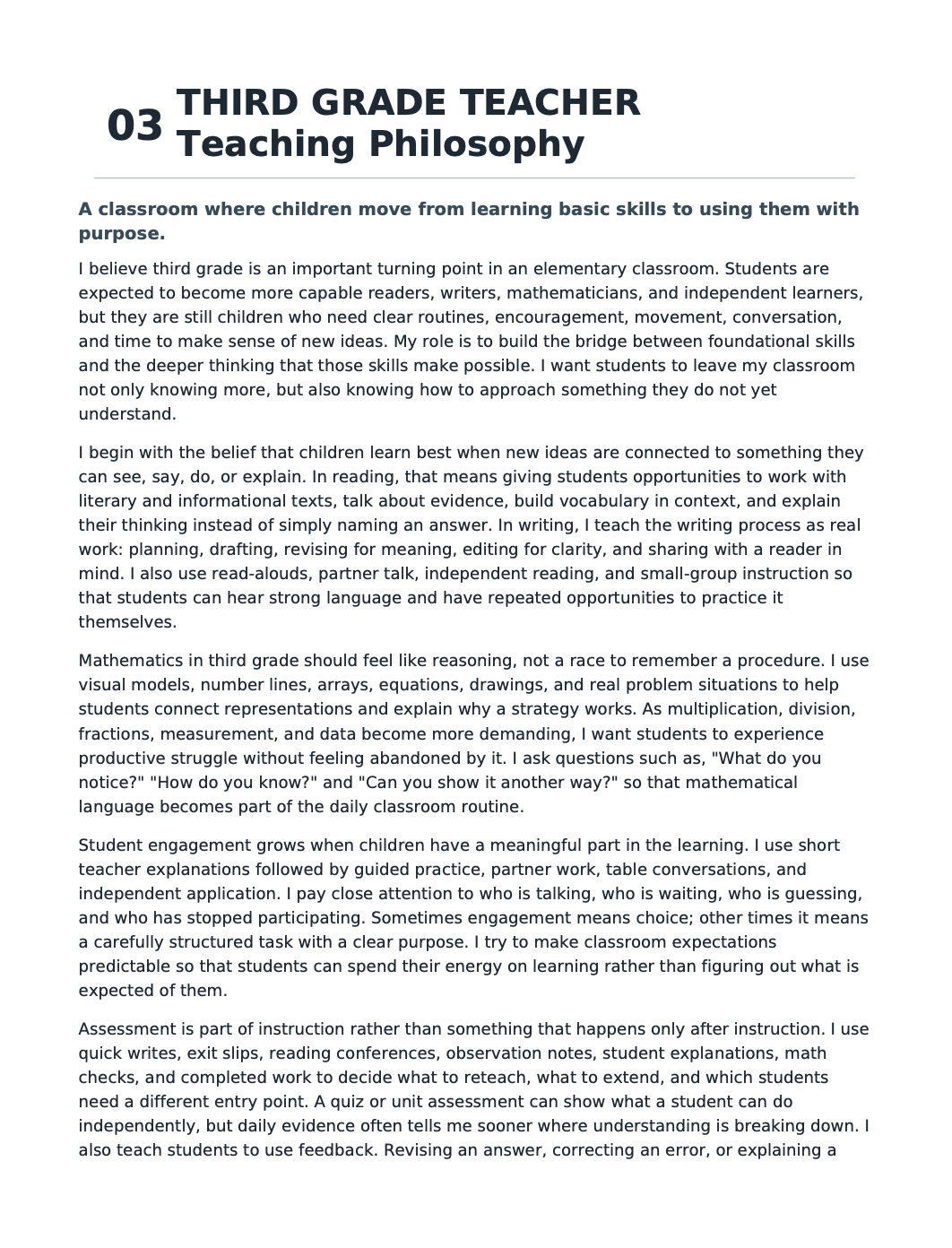
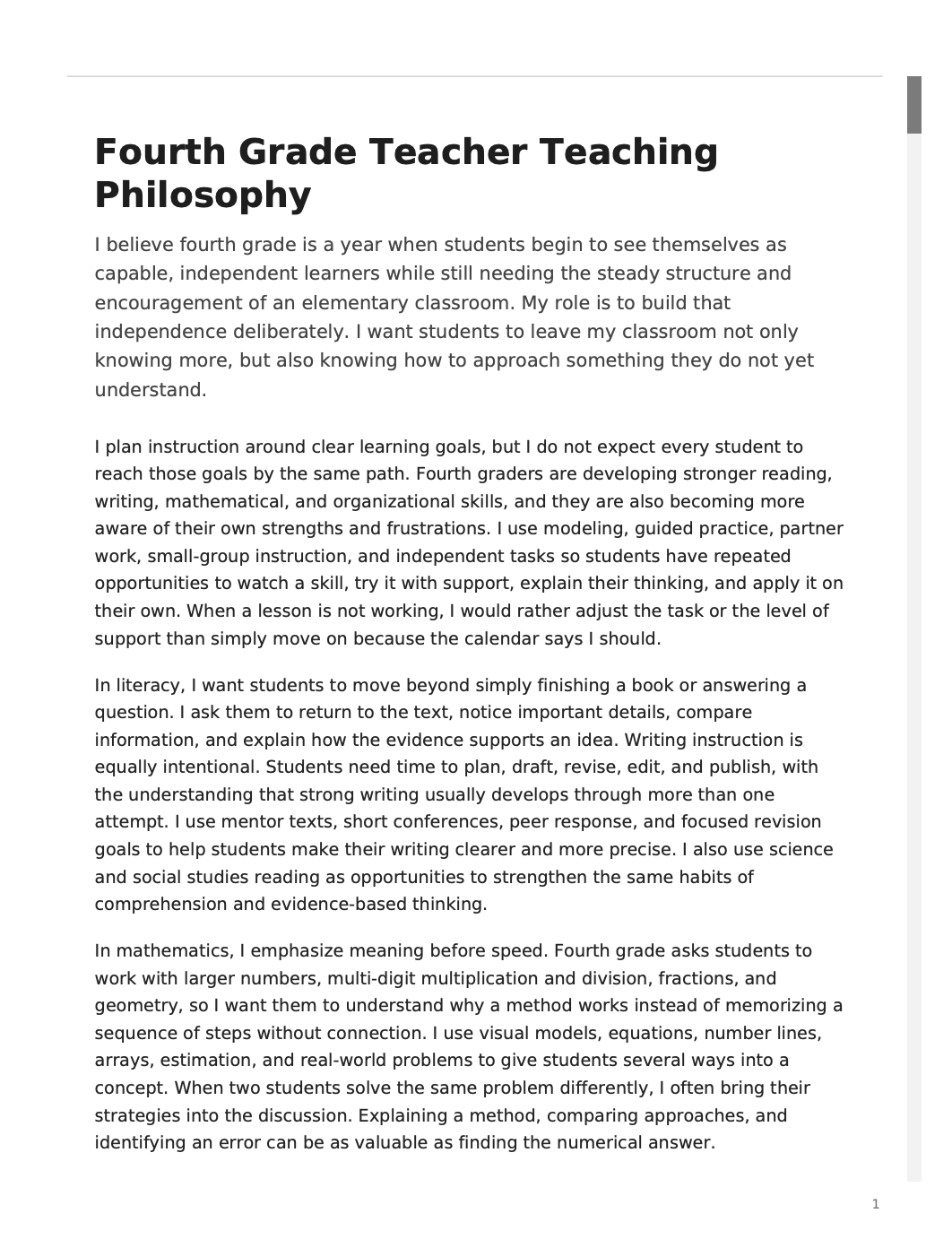
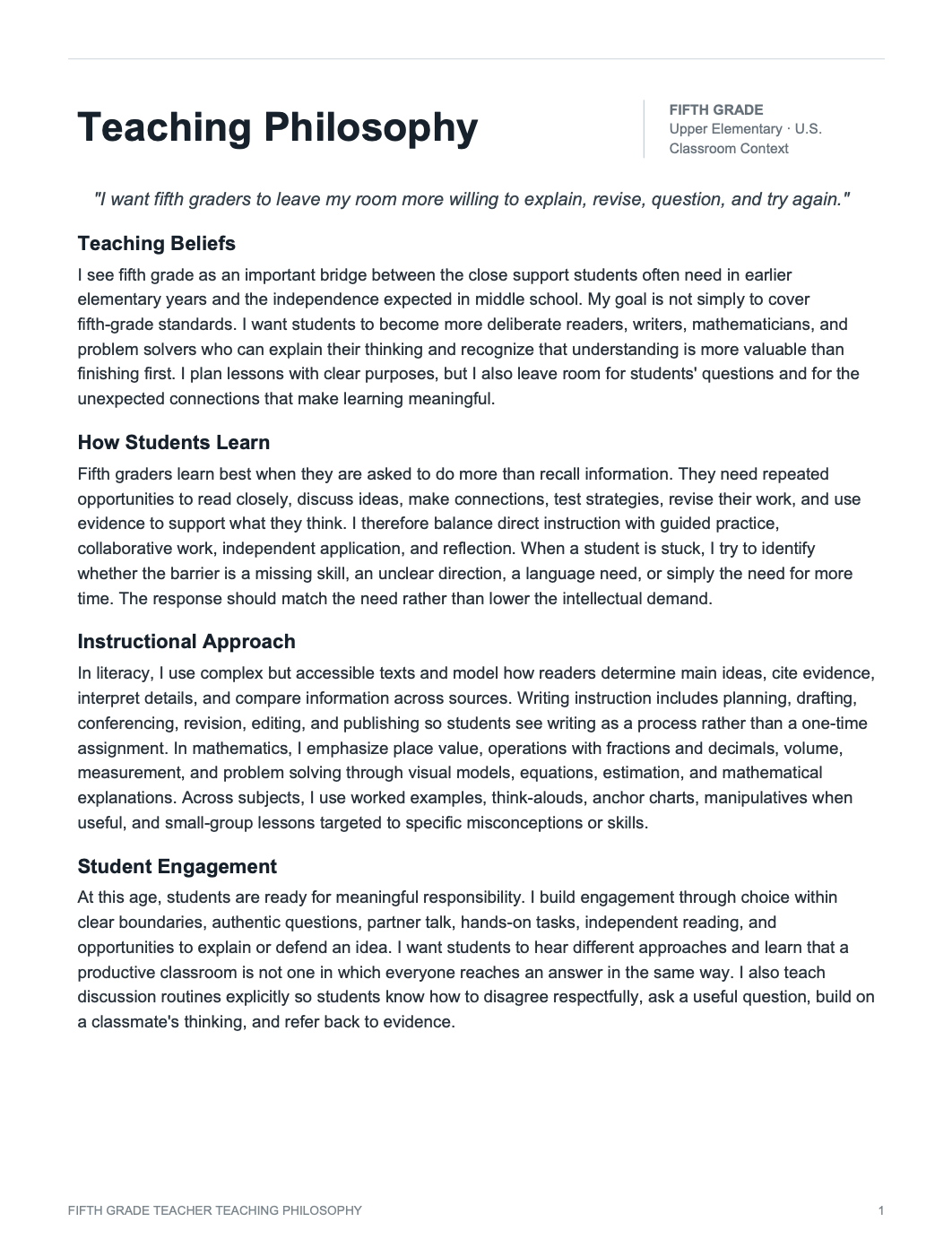
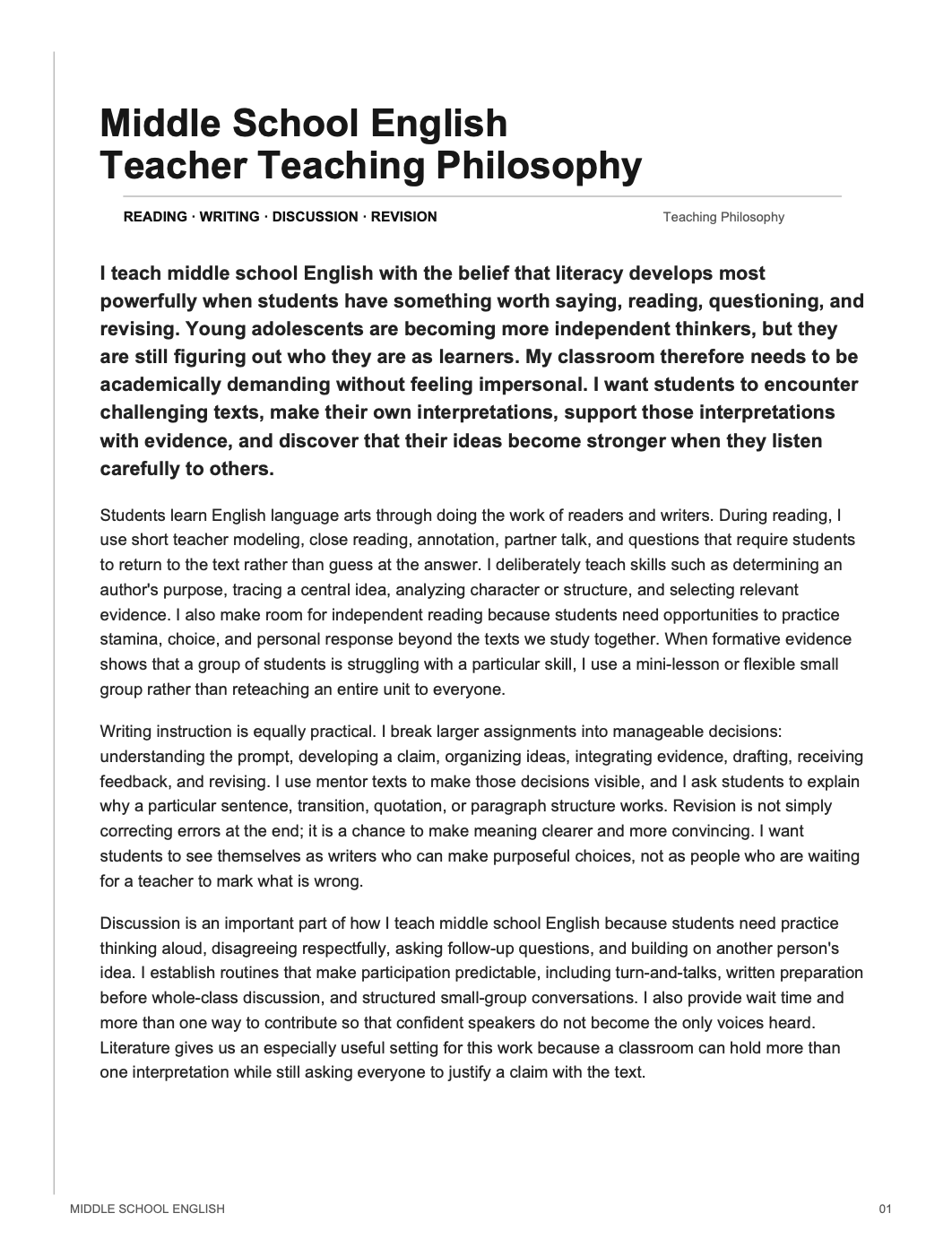
I teach literacy with the belief that reading, writing, speaking, listening, and language develop together.
A student may decode a passage accurately but still need support with vocabulary or comprehension;
another may have strong ideas but need explicit instruction to organize them in writing. My role is to
understand the particular literacy work a student is ready to do next and create instruction that connects
skills to meaningful communication rather than teaching isolated exercises without a purpose.
I use assessment as a way to plan instruction rather than simply to document performance. I pay
attention to how students approach text, explain ideas, use vocabulary, construct sentences, organize
writing, participate in discussion, and revise their work. Depending on the setting and the learner's
needs, I may use reading measures, writing samples, spelling or word-analysis tasks, comprehension
checks, oral-language observations, conferences, and progress-monitoring data. I use that information
to form flexible groups, select appropriate tasks, and determine when a skill needs reteaching or
extension.
Explicit teaching is an important part of my practice. Literacy is complex, and students should not be
expected to infer every strategy for themselves. I model how to analyze a passage, determine the
meaning of a word from context, plan a paragraph, support an idea with evidence, revise a sentence, or
participate in a productive discussion. After modeling, I provide guided practice and feedback, then
gradually remove supports. I want students to understand not only what a literacy strategy is but when it
is useful and how to adapt it when a text or communication task changes.
I also believe literacy instruction should involve real reading and real writing. Students need
opportunities to work with books, articles, essays, informational texts, digital texts, and other materials
that have a reason to be read. Likewise, writing should include purposes beyond completing a
worksheet. Students may explain, inform, narrate, argue, reflect, research, or create for an audience. I
teach the conventions and structures that make communication clearer, but I want those skills to serve
ideas rather than become the entire focus of the lesson.
Discussion is part of literacy learning because language helps students develop and test ideas. I use
partner conversations, small-group text analysis, oral rehearsal before writing, read-aloud discussion,
and whole-class dialogue to give students reasons to listen carefully and respond precisely. I ask
students to build on another person's idea, point to a part of the text, clarify a statement, or revise a
claim after hearing additional information. These routines help me see comprehension and language
development that may not appear in a written assignment alone.
Writing instruction works best for me when students see writing as a process. I teach planning, drafting,
revising, editing, and publishing as related but different kinds of work. Students learn to make decisions
about organization, evidence, word choice, sentence structure, and audience. I use conferences and
targeted feedback rather than trying to correct every issue at once. A student who revises one
paragraph to improve the reasoning, clarity, or relationship between ideas is doing important literacy
work even when the final piece is still developing.
LITERACY EDUCATION • READING • WRITING • LANGUAGE • COMMUNICATION
Teaching Philosophy
Literacy Teacher Teaching Philosophy
I am attentive to language development and inclusion. Students may enter a literacy classroom with
different home languages, educational experiences, reading histories, and levels of confidence. I use
explicit vocabulary instruction, visuals, oral rehearsal, sentence supports, accessible background
information, and multiple ways for students to demonstrate understanding when those supports are
appropriate. For multilingual learners, I treat language development as part of meaningful content
learning rather than asking students to wait until their English is perfect before participating in
challenging literacy work.
I want the literacy classroom to be a place where students can engage with demanding texts without
being defined by previous reading or writing difficulties. I avoid public comparisons and make growth
visible through specific goals, conferences, portfolios, and reflection. Students should know what they
are working on, what successful work looks like, and what they can try next. At the same time, I
maintain high expectations for thinking. Scaffolding should provide an entry point into meaningful work,
not remove the need to reason, communicate, or revise.
Ultimately, I want students to become flexible communicators who can use literacy for learning, work,
relationships, and participation in their communities. I want them to read with purpose, write with an
audience in mind, speak clearly, listen carefully, question information, and revise their thinking when
new evidence or ideas matter. I also see my own teaching as an ongoing literacy practice: I study
student work and language, reflect on which texts and prompts opened productive thinking, and adjust
instruction so that students have increasing control over the decisions that strong readers, writers,
speakers, and listeners make.
LITERACY EDUCATION • READING • WRITING • LANGUAGE • COMMUNICATION
Teaching Philosophy