BILINGUAL EDUCATION | TEACHING PHILOSOPHY
Professional Teaching Philosophy
1
Bilingual Teacher
Teaching Philosophy
I teach through language, across languages, and with respect for the knowledge students already
carry.
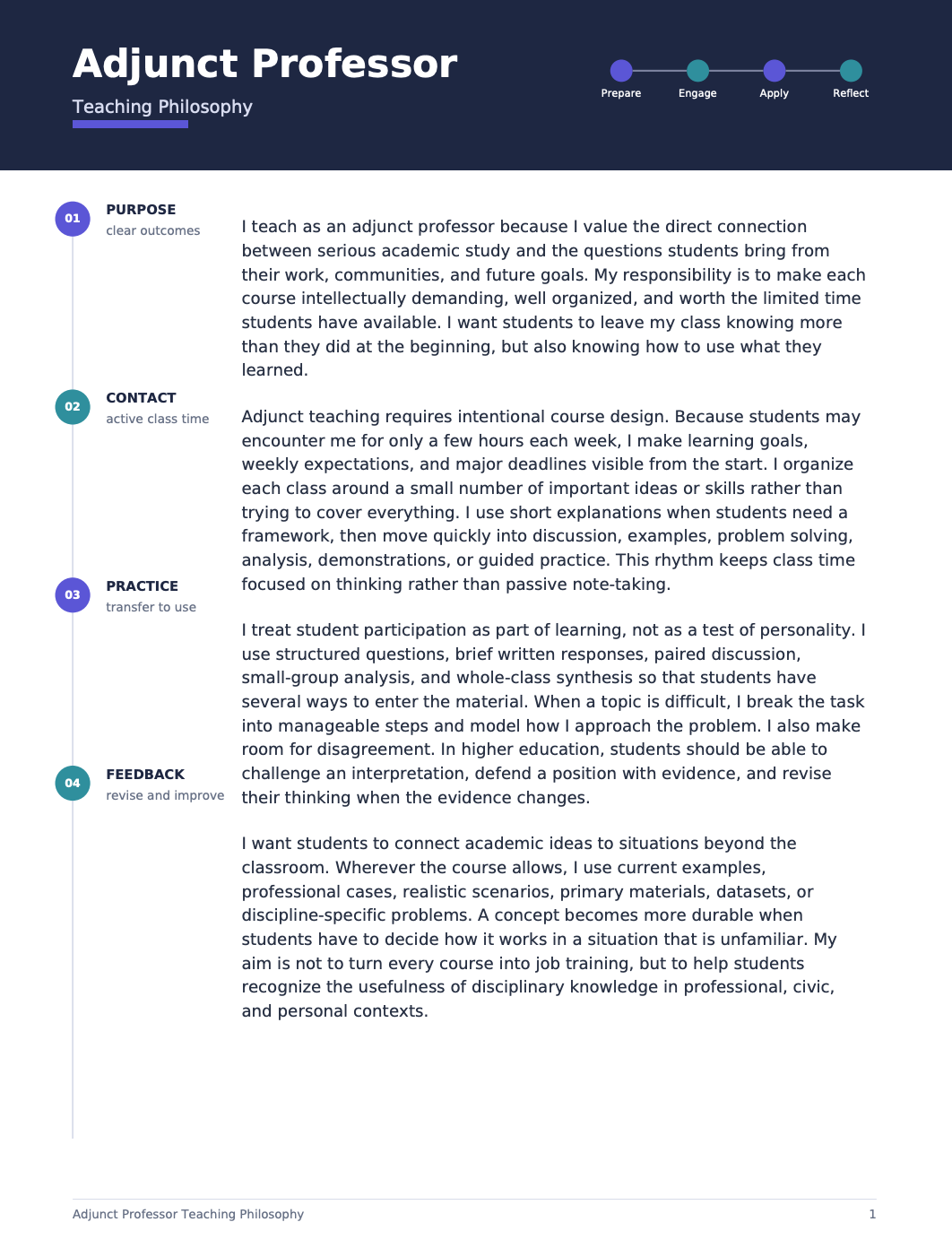
LANGUAGE
Develop
IDENTITY
Belong
CONTENT
Understand
VOICE
Express
PURPOSE
I believe bilingual teaching begins with a simple premise: students should never have to leave part of themselves at
the classroom door in order to learn. Students who use two or more languages bring knowledge, family
experiences, cultural perspectives, and ways of making meaning that can strengthen the learning community. My
responsibility is to build on those assets while maintaining clear, ambitious expectations for academic learning and
language development. I want students to become confident communicators who can use each of their languages
intentionally, move between languages when appropriate, and recognize bilingualism as a resource rather than a
limitation.
LANGUAGE AND CONTENT
I design instruction so that language and content develop together. A lesson should not require students to master
unfamiliar language before they can engage with an important idea. I identify the language students need to explain
a concept, compare evidence, ask questions, collaborate, or present an argument, and I make those expectations
visible. I use models, visuals, sentence frames, word banks, structured conversation, explicit vocabulary instruction,
and guided practice when they provide useful access. As students gain confidence, I gradually remove those
supports so that they can communicate more independently.
USING THE FULL REPERTOIRE
I also value students' full linguistic repertoires as part of learning. Depending on the lesson and program, students
may brainstorm in one language, discuss an idea with a partner using familiar language resources, compare
terminology across languages, or use bilingual references to clarify meaning before communicating in the language
expected for the task. I do not treat these practices as shortcuts. They can help students make connections, test
ideas, and participate more fully while they develop academic language. I also teach students to make purposeful
choices about language rather than assuming that one language is appropriate for every stage of thinking.
BILINGUAL EDUCATION | TEACHING PHILOSOPHY
Professional Teaching Philosophy
2
Learning Through Interaction, Assessment, and
Independence
LEARNING THROUGH INTERACTION
My classroom is built around interaction. Students need repeated opportunities to listen, speak, read, write, and
negotiate meaning with other people. I use partner talk, small-group problem solving, discussion protocols,
collaborative reading, peer explanation, and presentations so that language is practiced as something students use
to accomplish meaningful work. I plan participation carefully because fluency, confidence, personality, and prior
schooling vary. A student who is quiet in a whole-class discussion may have strong ideas in writing or in a small
group; my goal is to create several legitimate pathways into the conversation.
ASSESSMENT FOR GROWTH
Assessment should show both what students understand and how they are developing as communicators. I use
quick checks, conferences, writing samples, oral responses, reading tasks, projects, and performance-based
assessments to gather evidence during instruction, not only at the end. I distinguish content understanding from
language features when the purpose of the assessment requires it, because a student may understand a complex
concept even when the English used to express it is still developing. Feedback should identify what is working,
name one or two high-value next steps, and give students a chance to revise, rehearse, or try again.
EQUITY AND FAMILY PARTNERSHIP
I believe equity in bilingual education requires attention to access as well as opportunity. I work to learn students'
language histories, prior educational experiences, interests, and communication preferences. I communicate with
families in accessible ways and treat family knowledge as relevant to planning and supporting learning. I also
examine classroom materials for cultural narrowness or assumptions that may make some students feel invisible.
High expectations matter, but high expectations become meaningful when students are given the scaffolds, time,
models, and feedback necessary to reach them.
COLLABORATION ACROSS THE SCHOOL
Collaboration is an important part of my practice. I coordinate with grade-level or content-area teachers, multilingual
learner specialists, intervention staff, and other colleagues so that language supports are coherent rather than
isolated. We can examine student work, discuss patterns in language and content learning, and adjust instruction
together. I want colleagues to see bilingual learners as members of the full academic community, not as students
assigned only to the language classroom. Shared responsibility helps students experience consistent expectations
across subjects and settings.
INDEPENDENCE AND REFLECTION
My ultimate goal is independence. I want students to leave my classroom able to learn from demanding texts,
participate in academic conversations, communicate with different audiences, and use their linguistic resources
strategically. I want them to advocate for what they need, take intellectual risks without being defined by mistakes,
and understand that becoming stronger in one language does not require becoming less connected to another. I
also expect my own teaching to evolve. I review student work, listen to families and colleagues, study patterns in
participation and assessment, and revise lessons when the evidence shows that students need a different route
into the learning. For me, bilingual teaching is a commitment to rigorous learning, linguistic dignity, and the belief
that every language a student brings can expand what is possible in the classroom.
LANGUAGE
LEARNING
BELONGING
VOICE