Teaching Philosophy
1
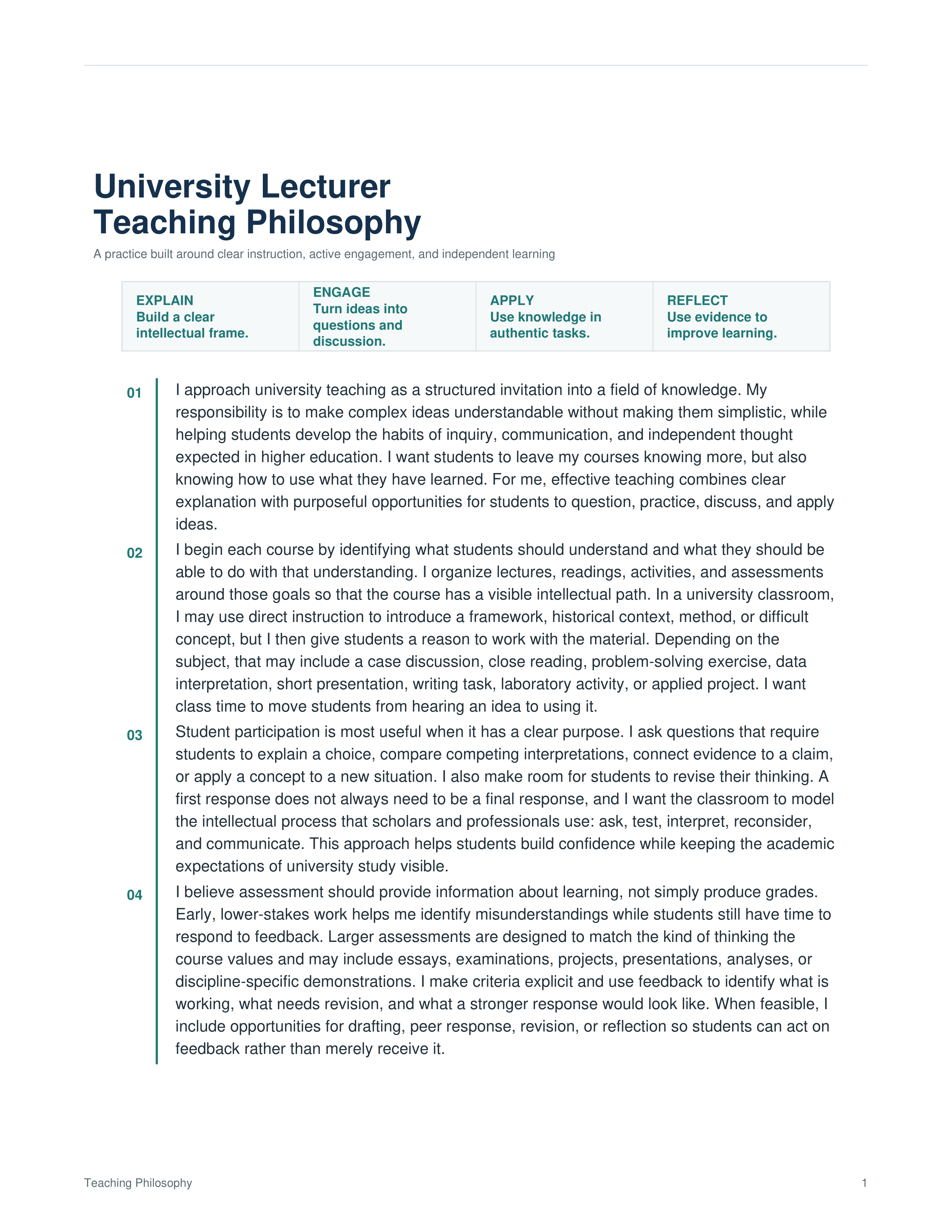
University Lecturer
Teaching Philosophy
A practice built around clear instruction, active engagement, and independent learning
EXPLAIN
Build a clear
intellectual frame.
ENGAGE
Turn ideas into
questions and
discussion.
APPLY
Use knowledge in
authentic tasks.
REFLECT
Use evidence to
improve learning.
01
I approach university teaching as a structured invitation into a field of knowledge. My
responsibility is to make complex ideas understandable without making them simplistic, while
helping students develop the habits of inquiry, communication, and independent thought
expected in higher education. I want students to leave my courses knowing more, but also
knowing how to use what they have learned. For me, effective teaching combines clear
explanation with purposeful opportunities for students to question, practice, discuss, and apply
ideas.
02
I begin each course by identifying what students should understand and what they should be
able to do with that understanding. I organize lectures, readings, activities, and assessments
around those goals so that the course has a visible intellectual path. In a university classroom,
I may use direct instruction to introduce a framework, historical context, method, or difficult
concept, but I then give students a reason to work with the material. Depending on the
subject, that may include a case discussion, close reading, problem-solving exercise, data
interpretation, short presentation, writing task, laboratory activity, or applied project. I want
class time to move students from hearing an idea to using it.
03
Student participation is most useful when it has a clear purpose. I ask questions that require
students to explain a choice, compare competing interpretations, connect evidence to a claim,
or apply a concept to a new situation. I also make room for students to revise their thinking. A
first response does not always need to be a final response, and I want the classroom to model
the intellectual process that scholars and professionals use: ask, test, interpret, reconsider,
and communicate. This approach helps students build confidence while keeping the academic
expectations of university study visible.
04
I believe assessment should provide information about learning, not simply produce grades.
Early, lower-stakes work helps me identify misunderstandings while students still have time to
respond to feedback. Larger assessments are designed to match the kind of thinking the
course values and may include essays, examinations, projects, presentations, analyses, or
discipline-specific demonstrations. I make criteria explicit and use feedback to identify what is
working, what needs revision, and what a stronger response would look like. When feasible, I
include opportunities for drafting, peer response, revision, or reflection so students can act on
feedback rather than merely receive it.