
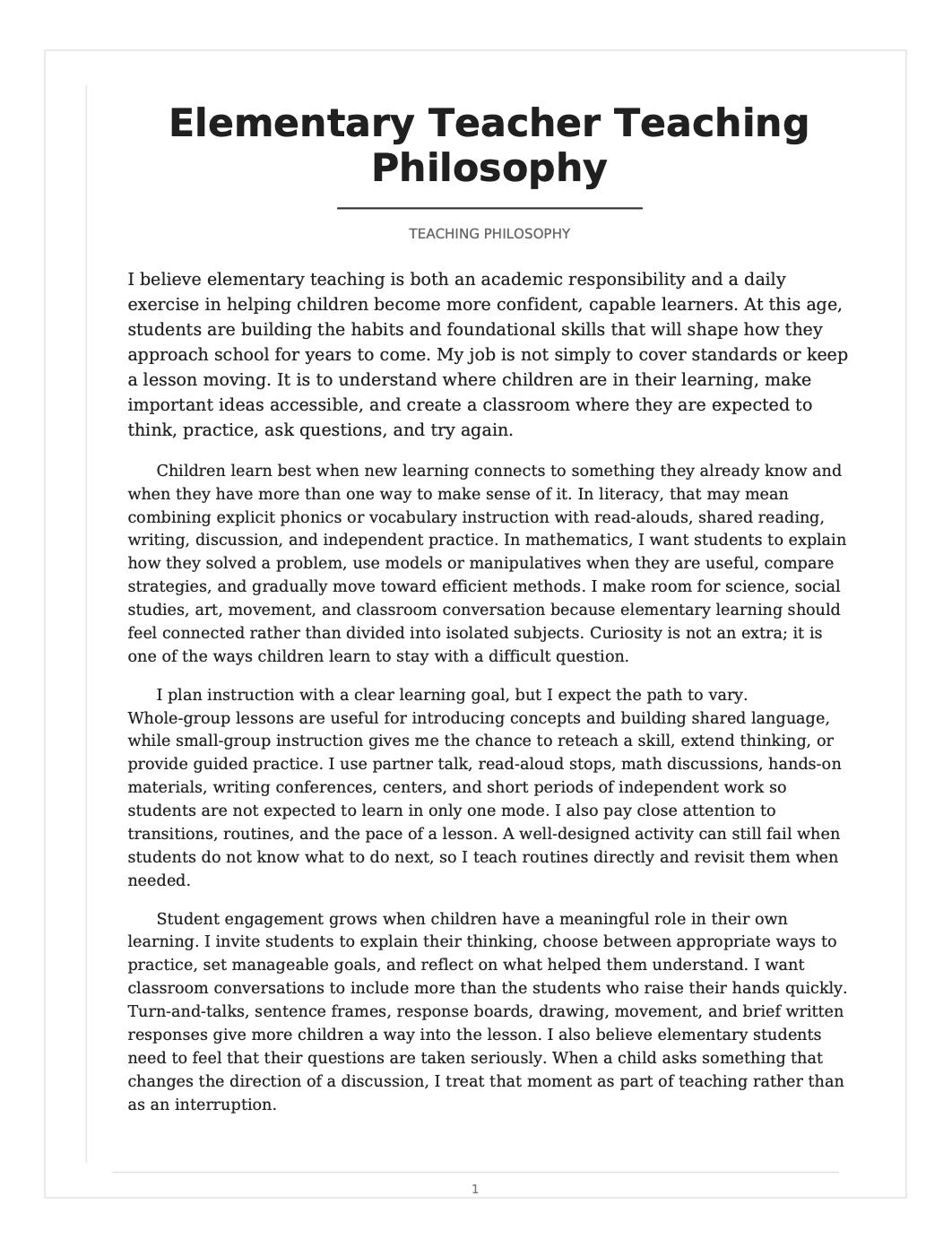
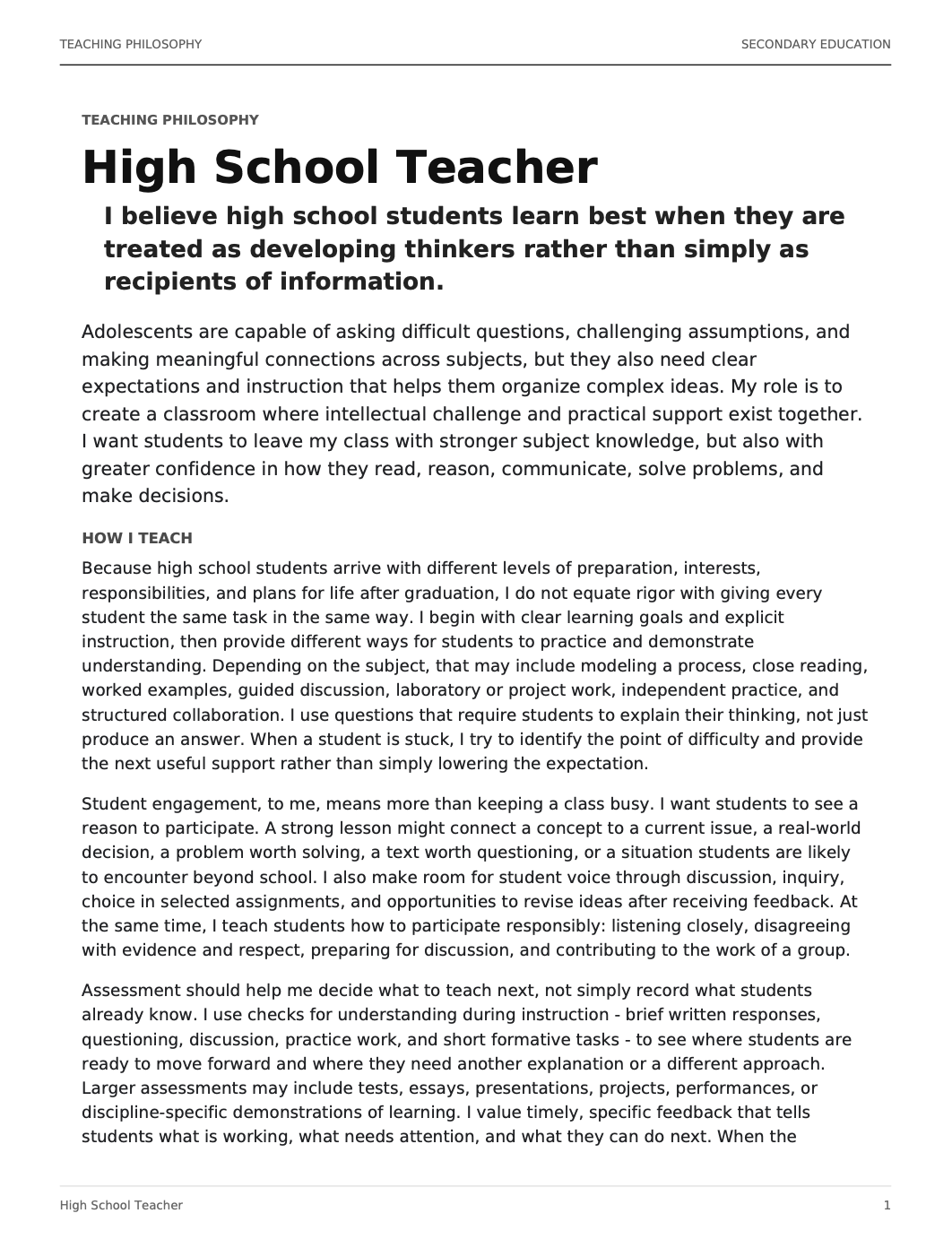
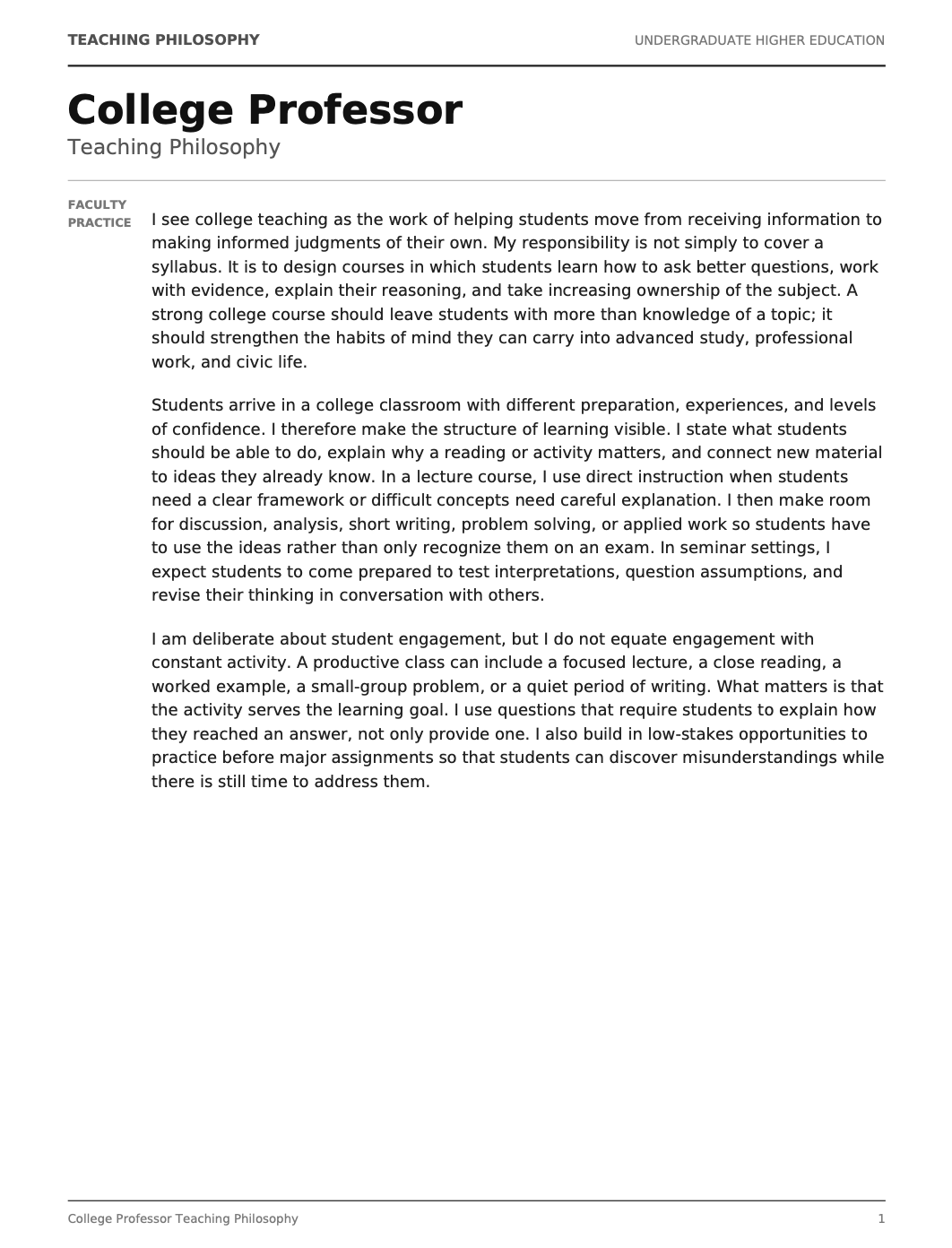
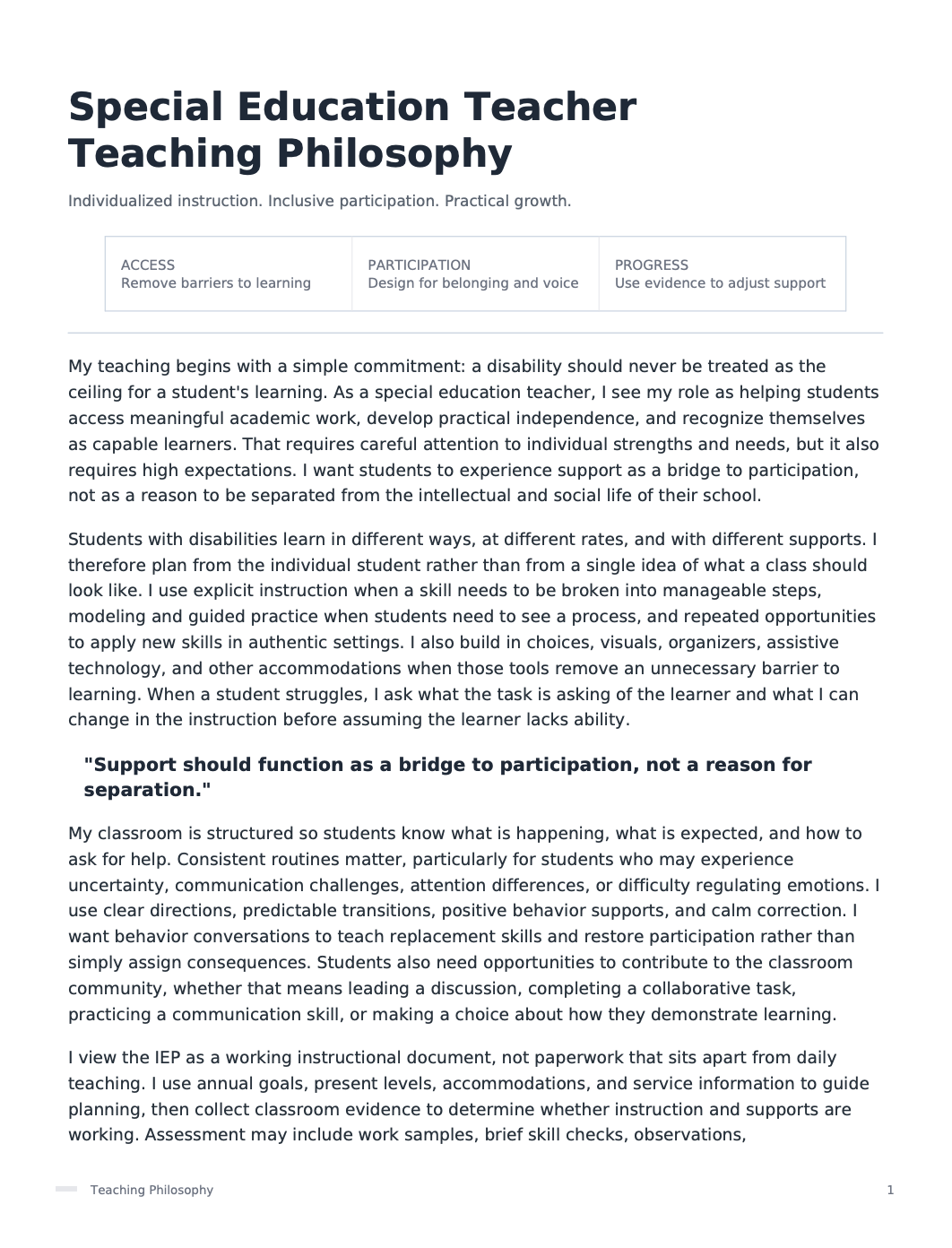
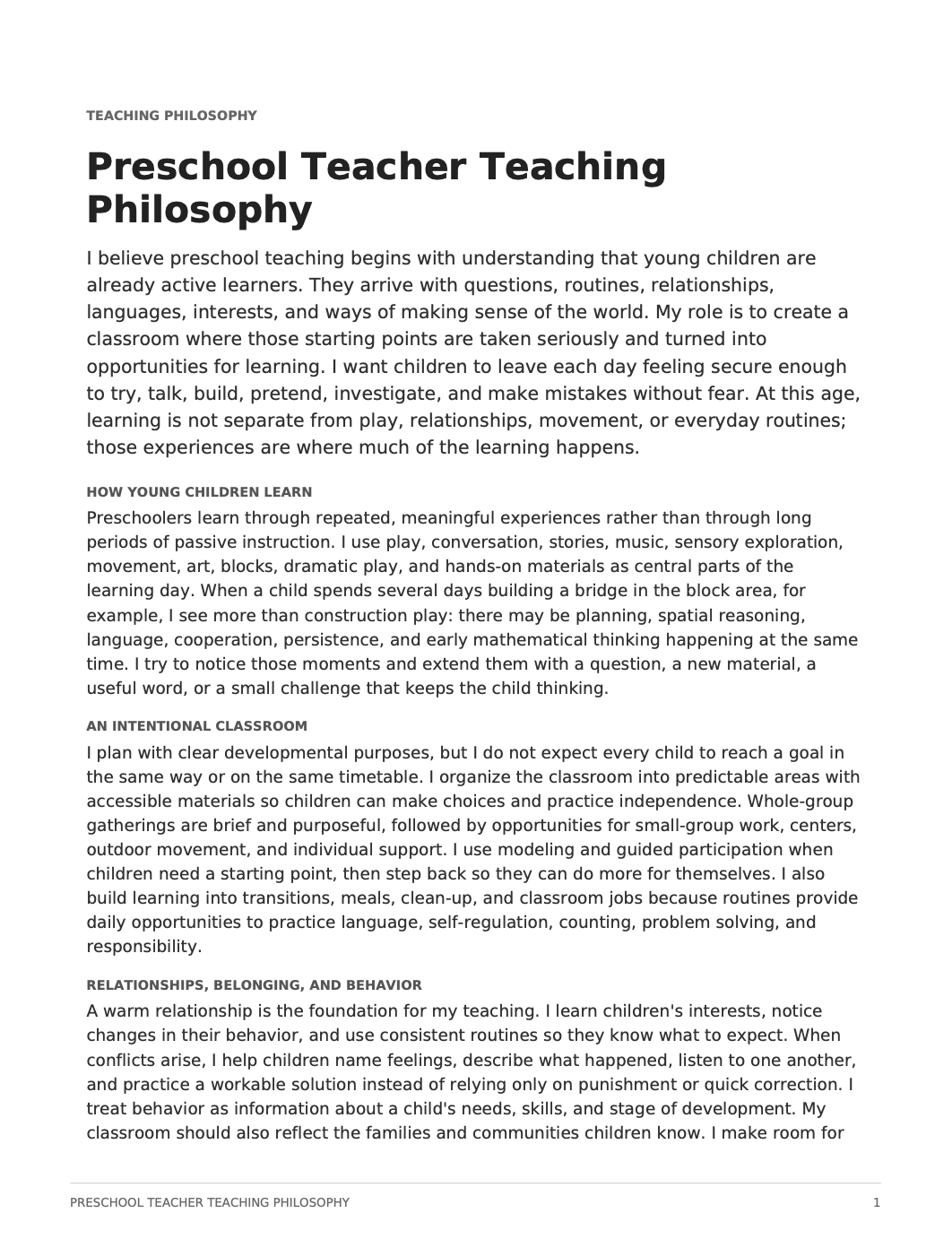
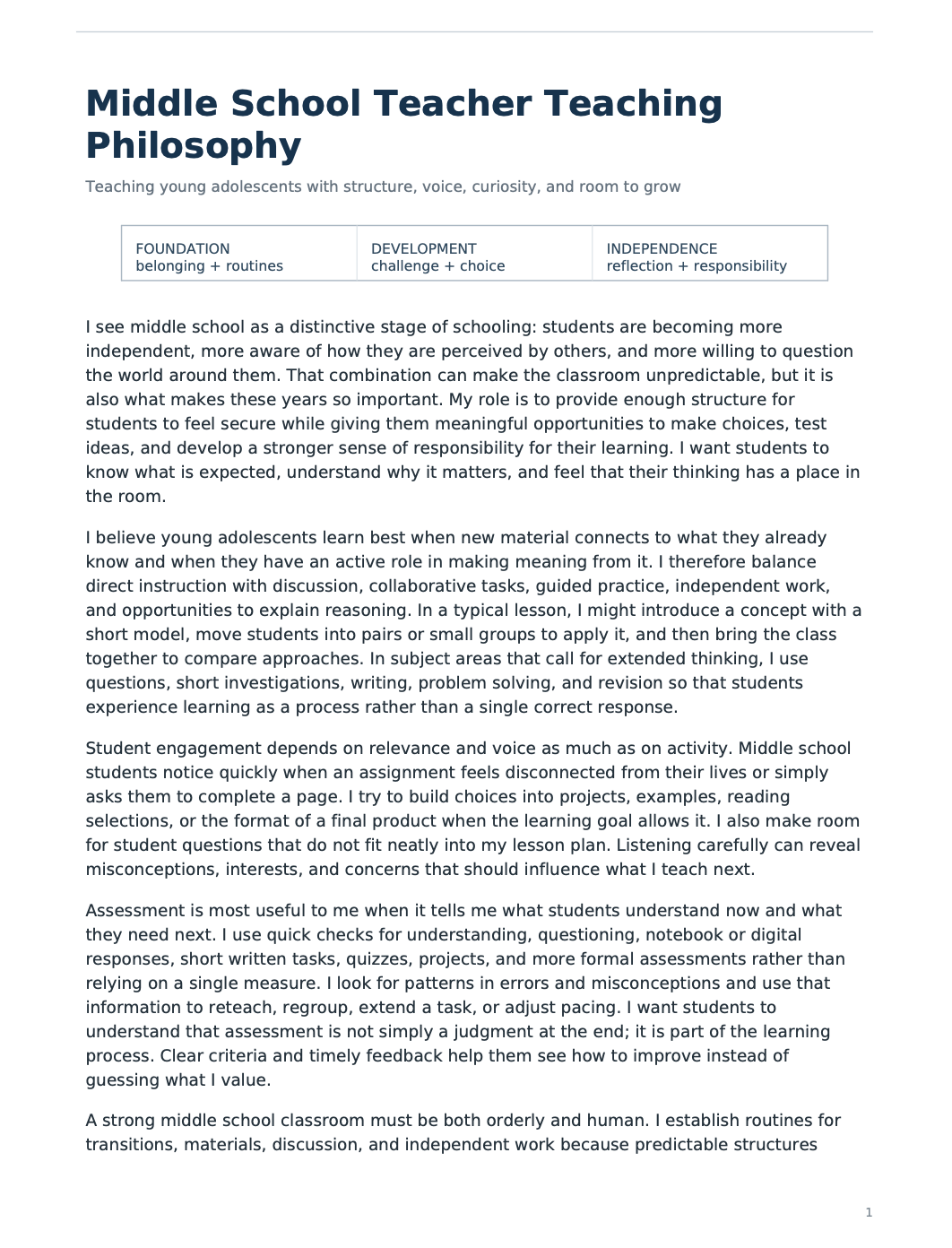
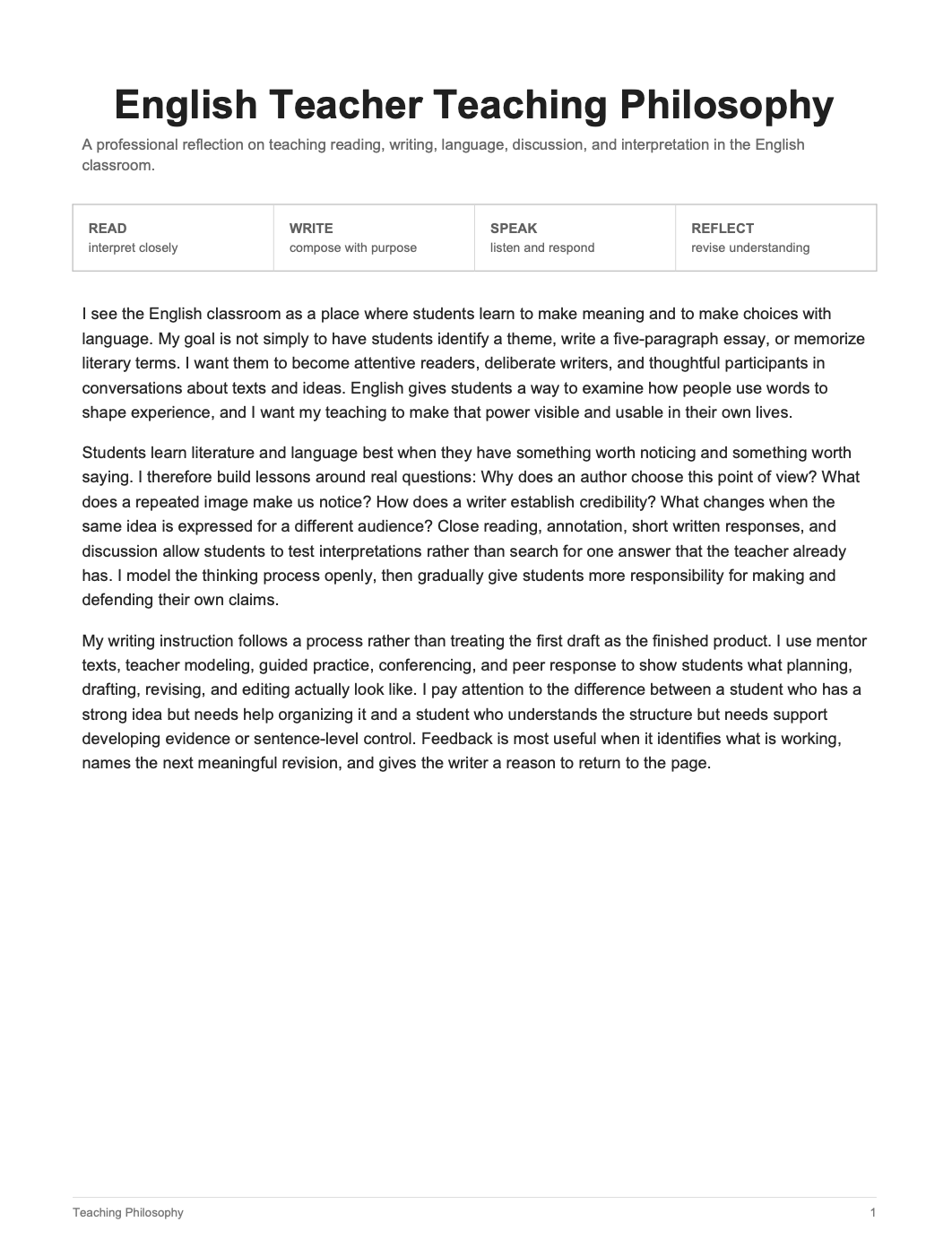
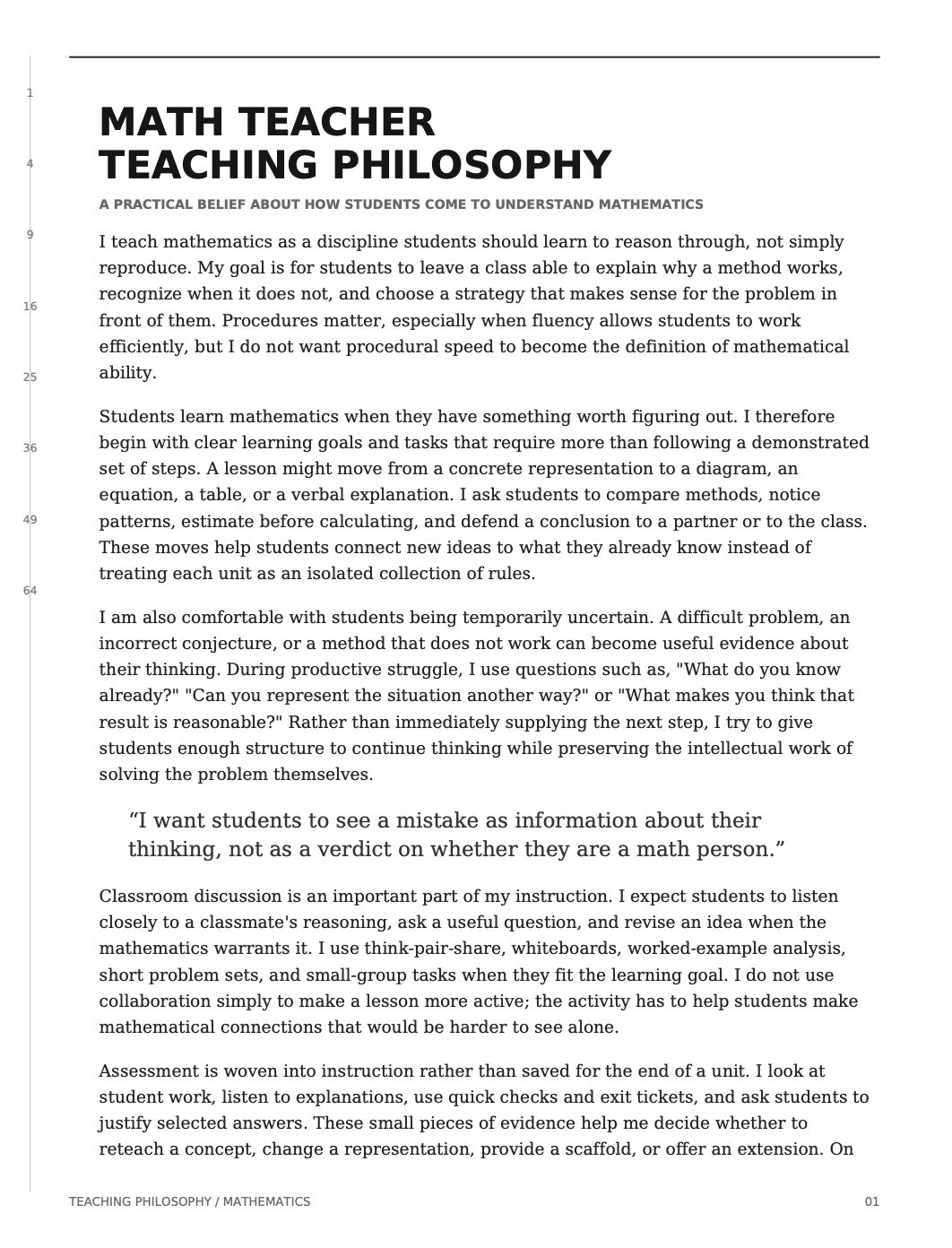
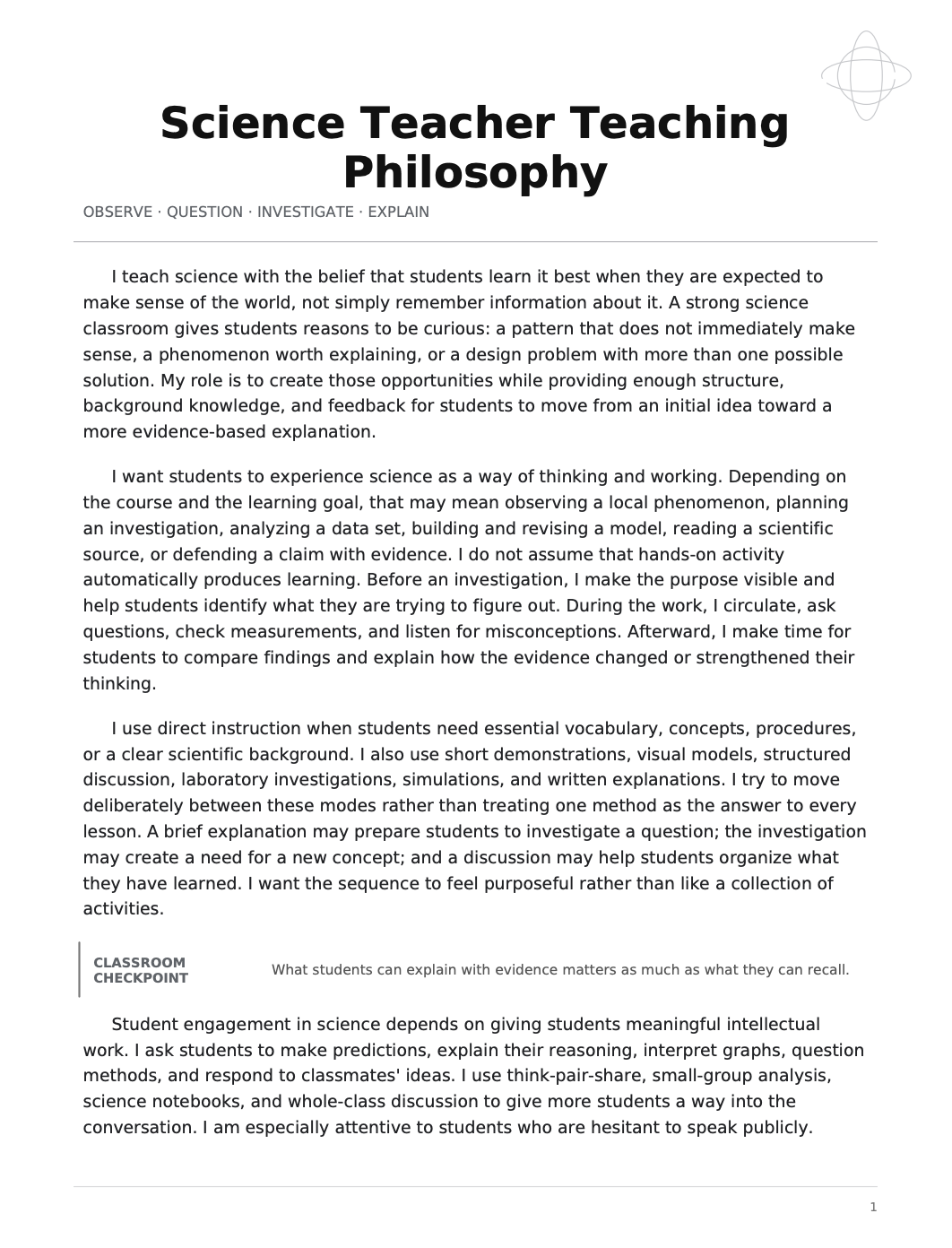
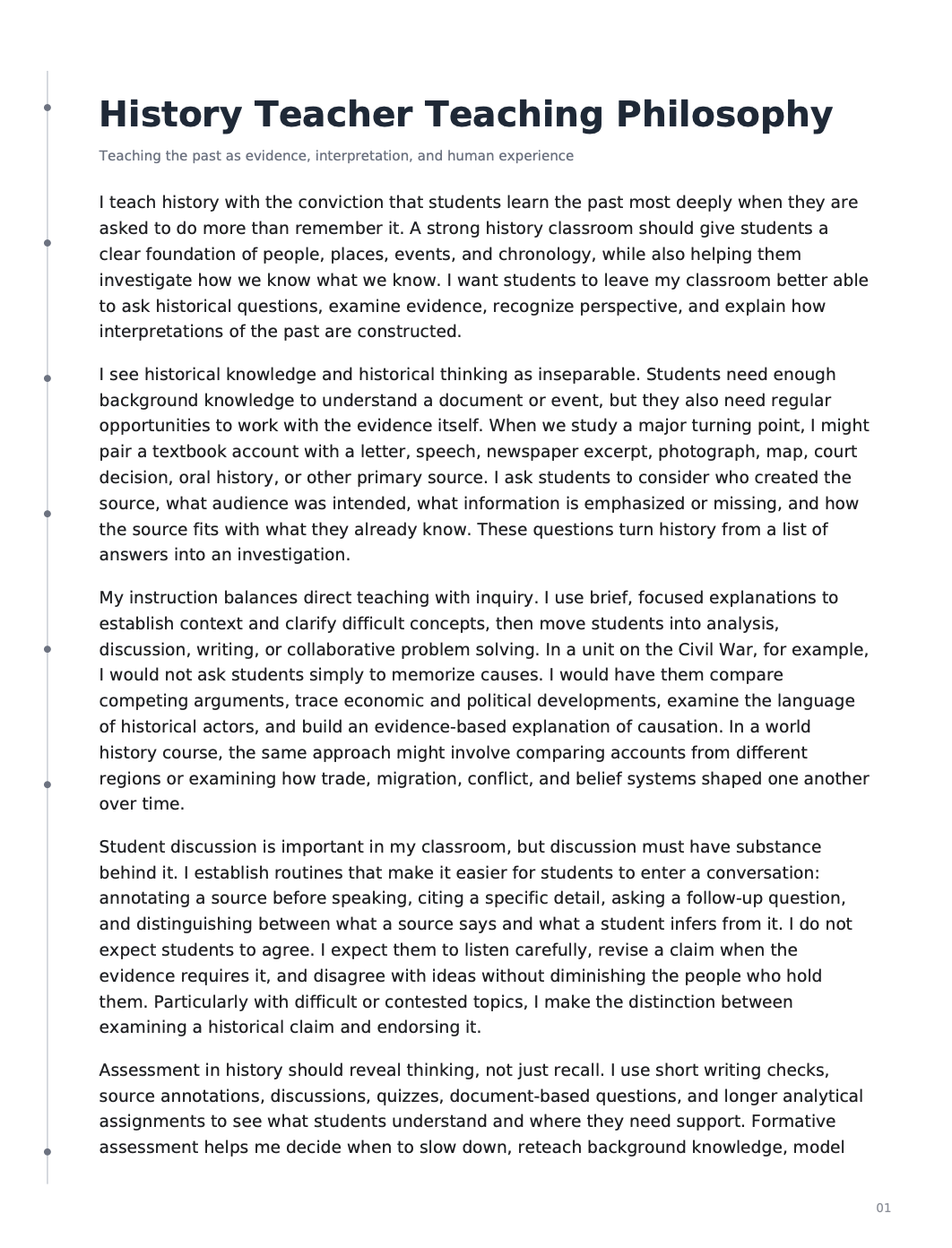
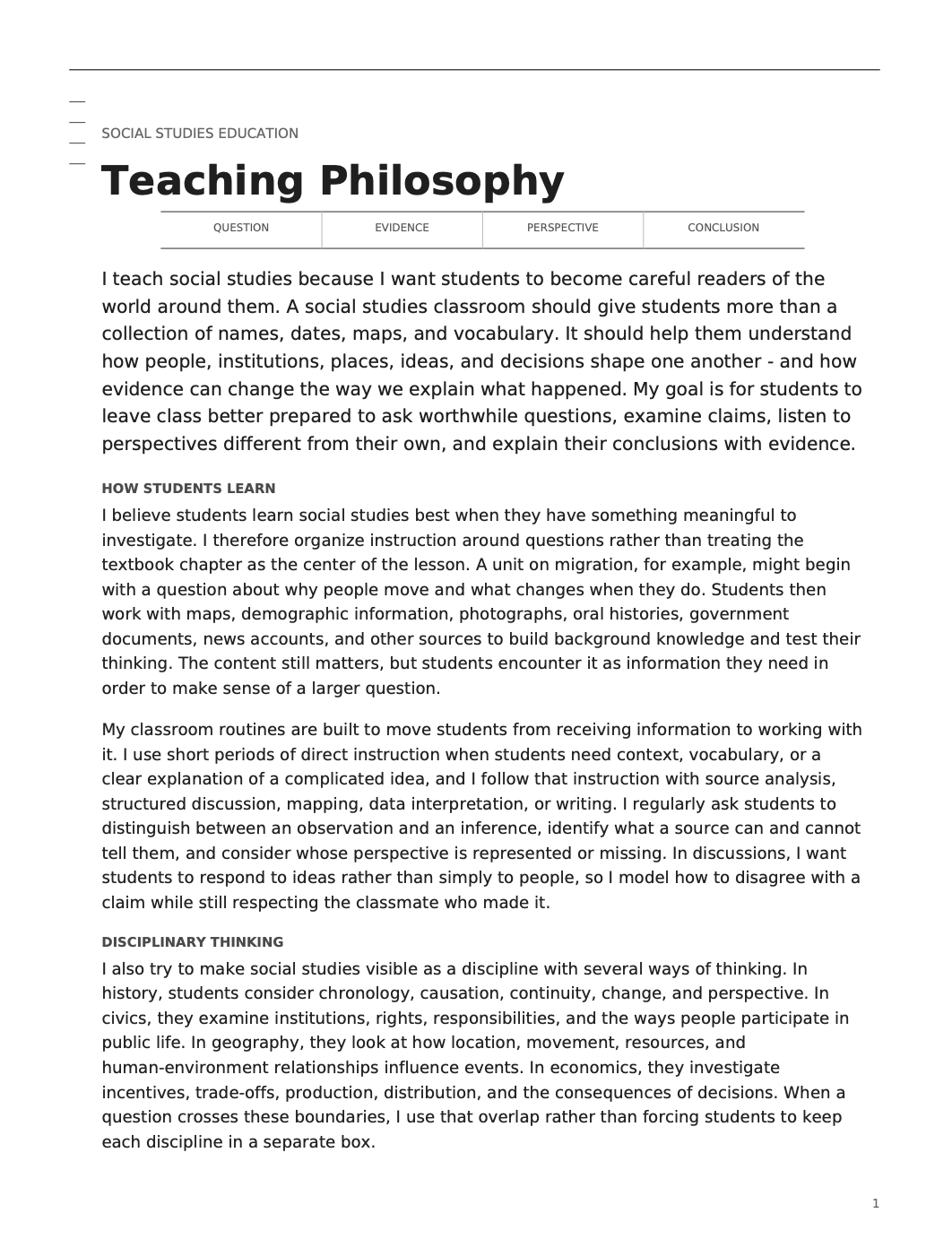
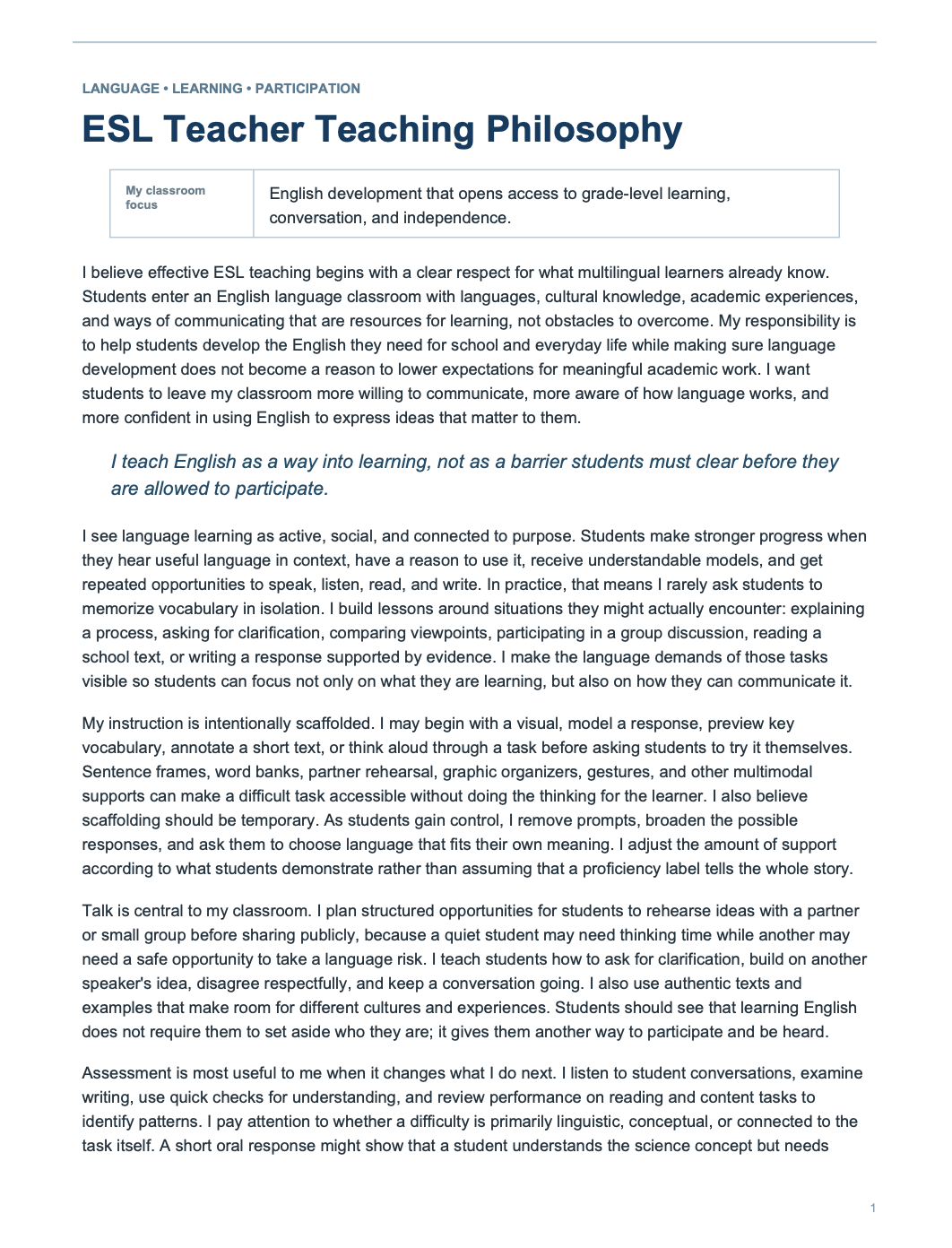
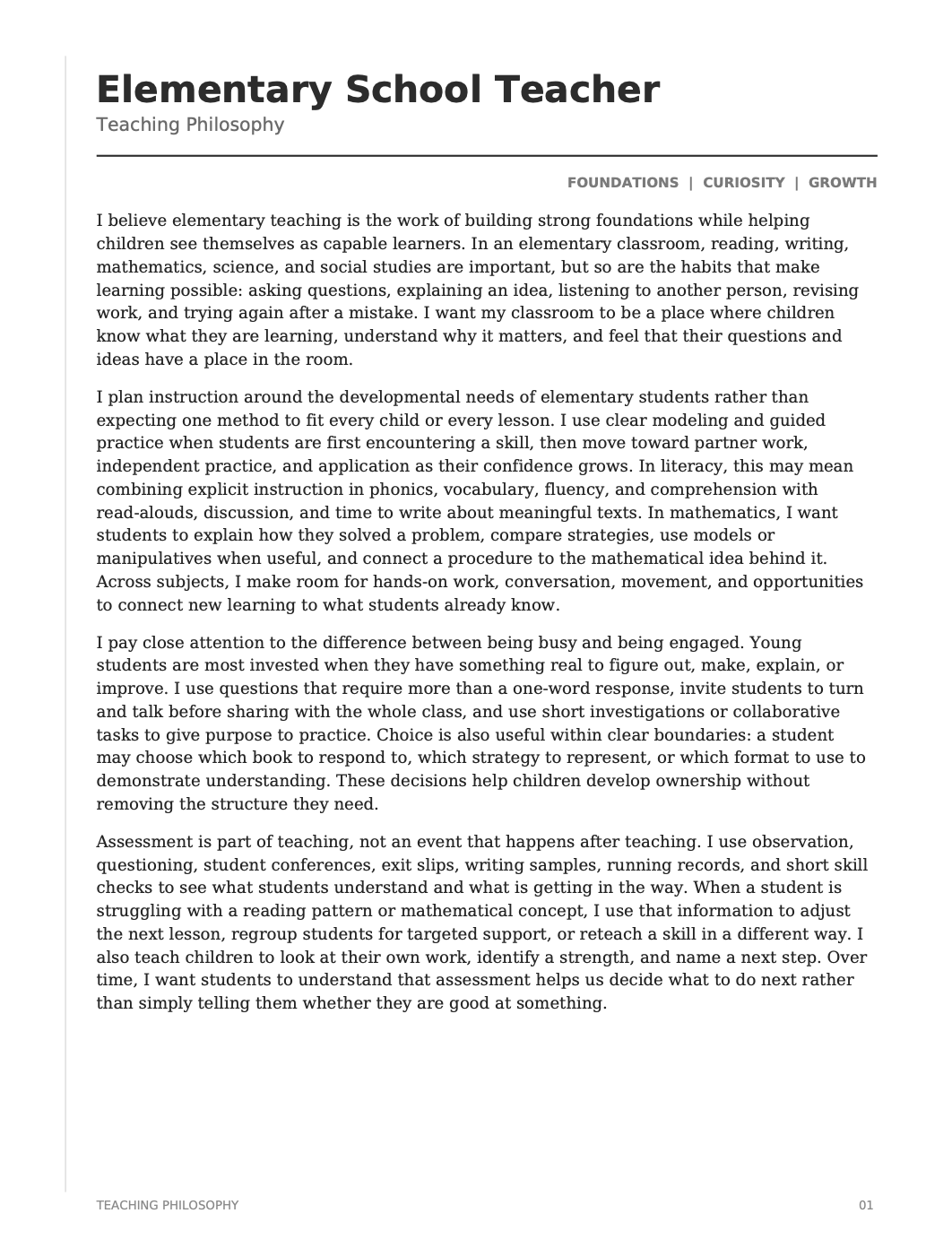
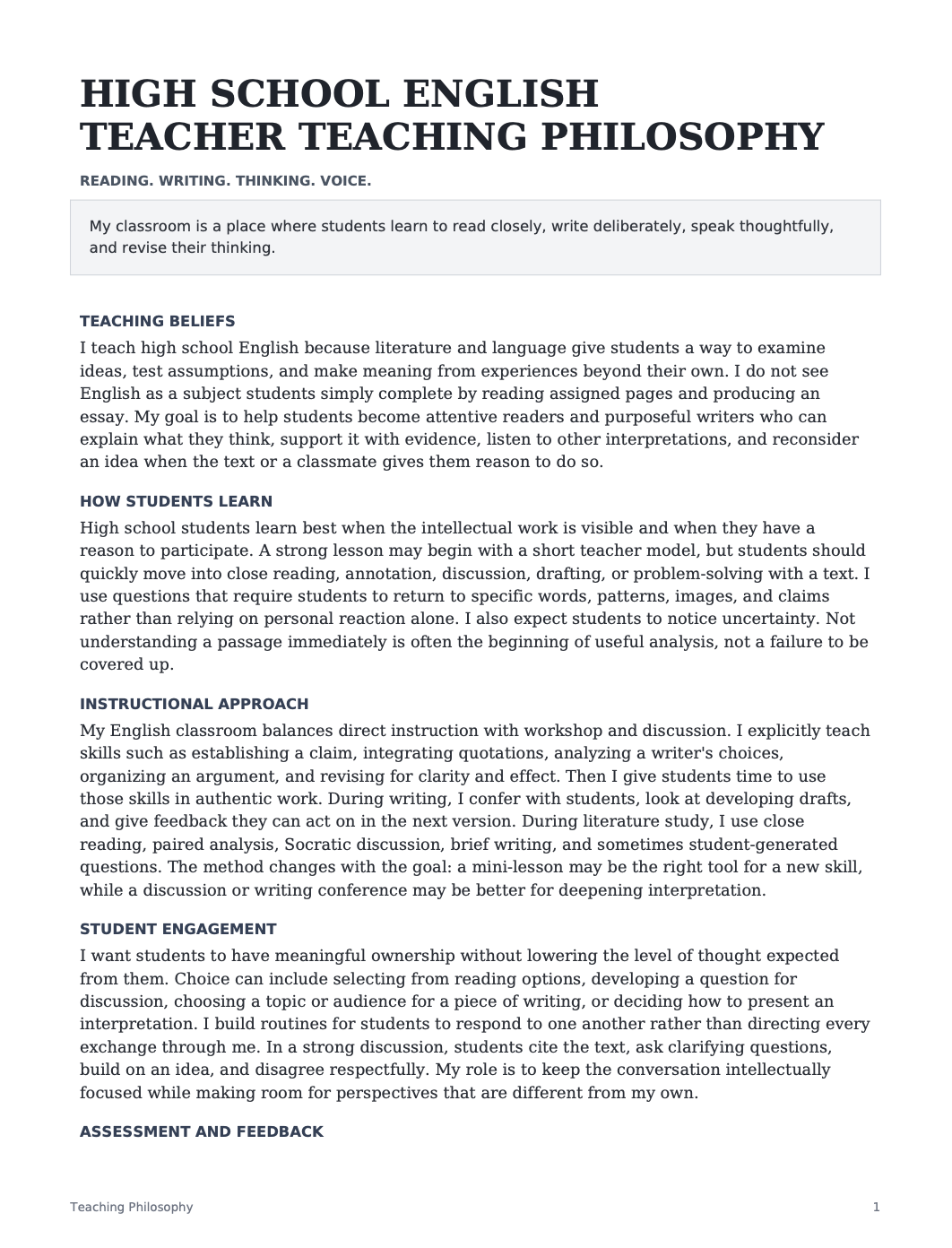
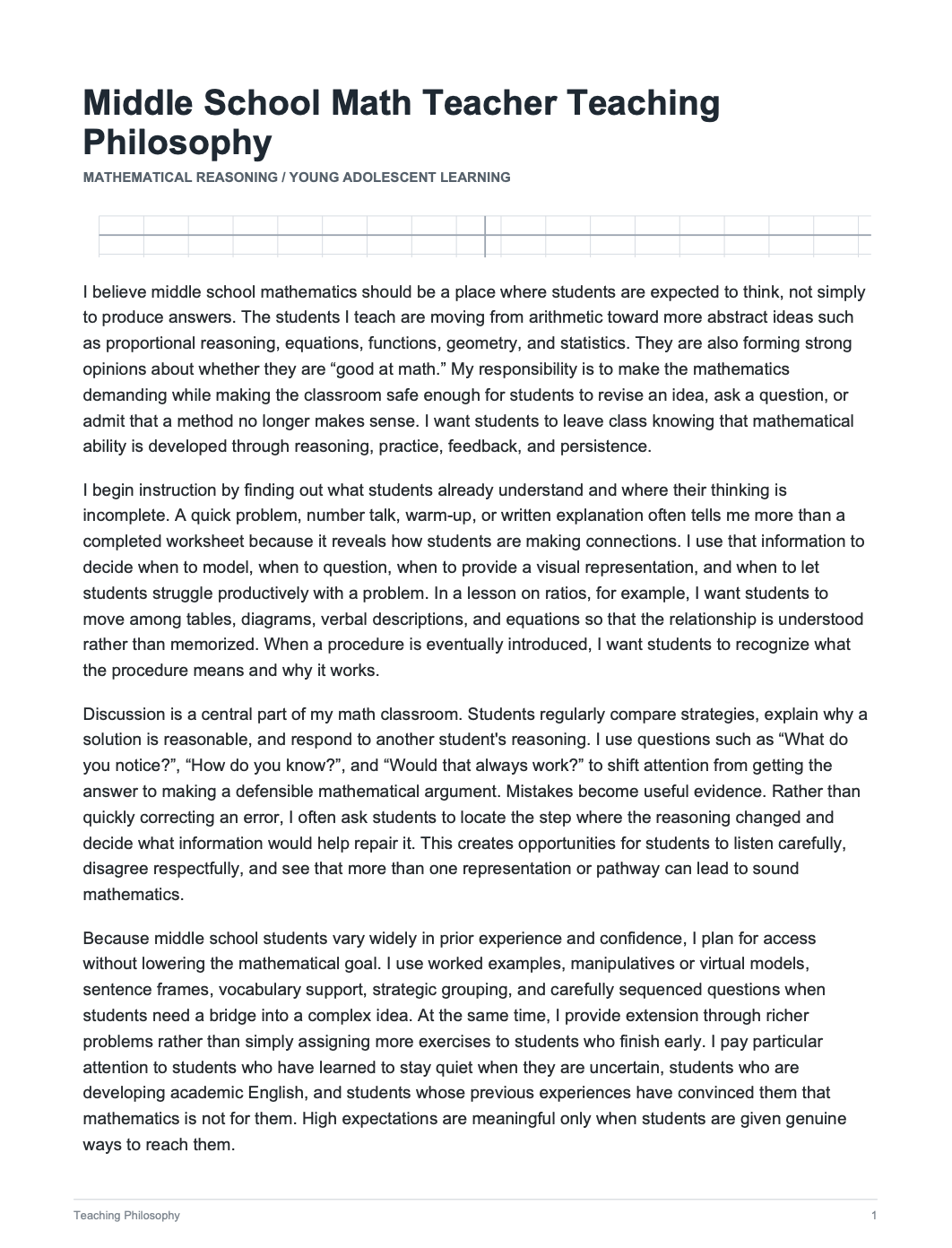

A teaching philosophy is a clear statement that explains an educator’s beliefs about teaching, learning, students, classroom environments, and the purpose of education. It describes how a teacher approaches instruction, supports student learning, evaluates progress, and creates meaningful educational experiences. A strong teaching philosophy is personal and specific enough to communicate the educator’s approach while broad enough to reflect their overall goals and values as an educator.
What Is a Teaching Philosophy?
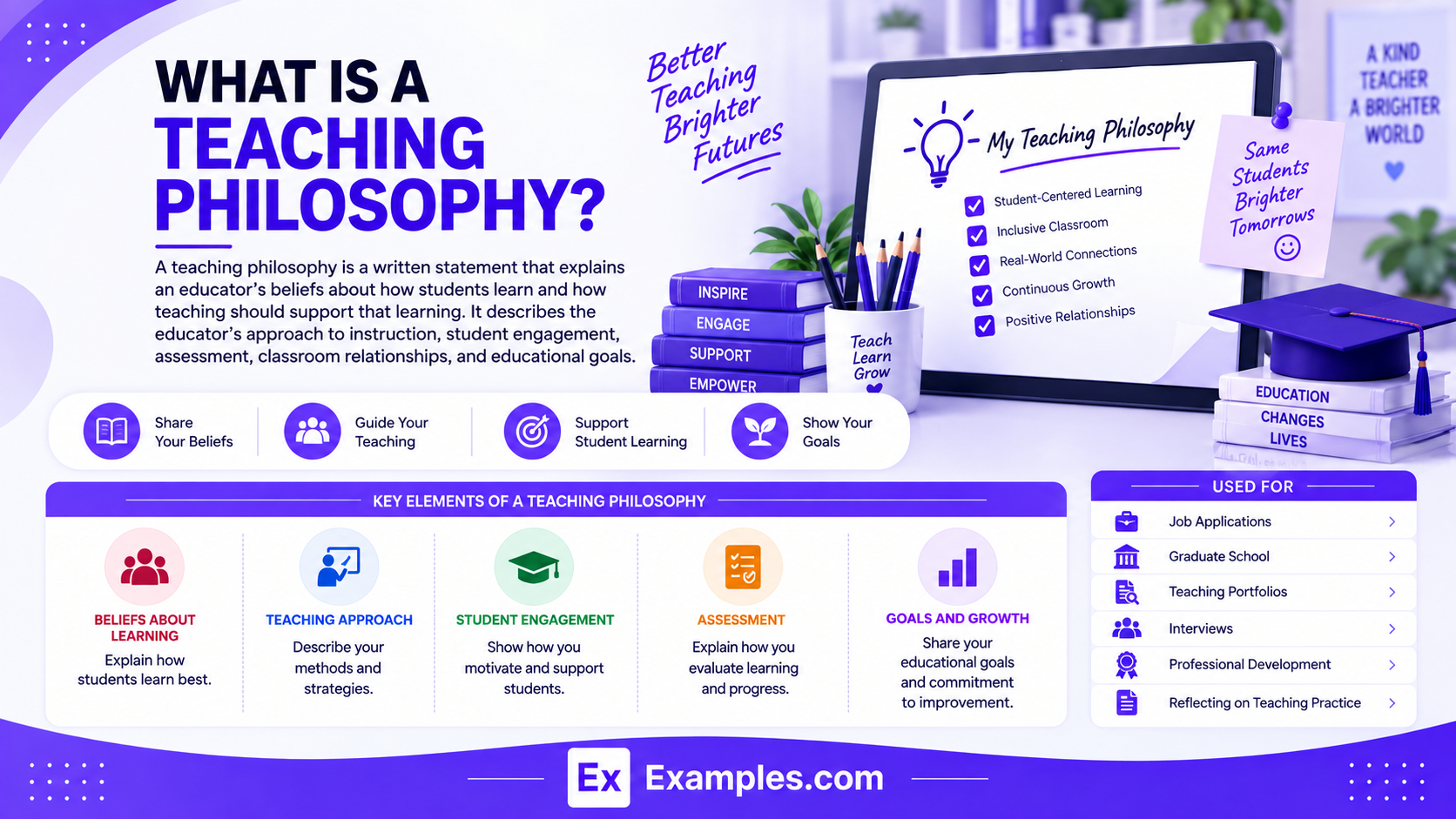
A teaching philosophy is a written statement that explains an educator’s beliefs about how students learn and how teaching should support that learning. It describes the educator’s approach to instruction, student engagement, assessment, classroom relationships, and educational goals. A teaching philosophy helps communicate the principles and practices that guide an educator’s work in the classroom.
What Are the Different Types of Teaching Philosophies?
Student-Centered Teaching
A Student-Centered Teaching philosophy focuses on students’ needs, interests, participation, and learning experiences, emphasizing active involvement rather than relying only on teacher-led instruction.
Constructivist Teaching
A Constructivist Teaching philosophy views learning as an active process in which students develop understanding through experiences, exploration, discussion, and connections to prior knowledge.
Traditional Teaching
A Traditional Teaching philosophy emphasizes structured instruction, clear expectations, direct teaching, subject knowledge, and organized classroom routines.
Inquiry-Based Teaching
An Inquiry-Based Teaching philosophy encourages students to ask questions, investigate ideas, analyze information, and develop understanding through exploration and evidence.
Collaborative Learning
A Collaborative Learning philosophy emphasizes discussion, teamwork, peer interaction, and shared problem-solving to support academic and social learning.
Inclusive Teaching
An Inclusive Teaching philosophy focuses on creating learning environments where students with different backgrounds, abilities, experiences, and perspectives can participate and succeed.
Experiential Learning
An Experiential Learning philosophy emphasizes learning through practical activities, real-world experiences, projects, reflection, and application of knowledge.
Mastery-Based Learning
A Mastery-Based Learning philosophy focuses on helping students develop strong understanding and competence by providing opportunities to practice, receive feedback, and improve.
Social-Emotional Learning
A Social-Emotional Learning philosophy recognizes the importance of relationships, emotional awareness, communication, confidence, and well-being in students’ educational development.
Technology-Enhanced Teaching
A Technology-Enhanced Teaching philosophy integrates digital tools and technology into instruction when they improve engagement, accessibility, collaboration, or learning outcomes.
How Do I Generate Teaching Philosophies Using Real Examples?

Explore Real Teaching Philosophy Examples
Review real teaching philosophy examples to understand how educators explain their beliefs about teaching, learning, student engagement, classroom environments, assessment, and educational goals. Examples can help you identify different approaches and understand how teaching beliefs can be expressed in a clear and professional statement.

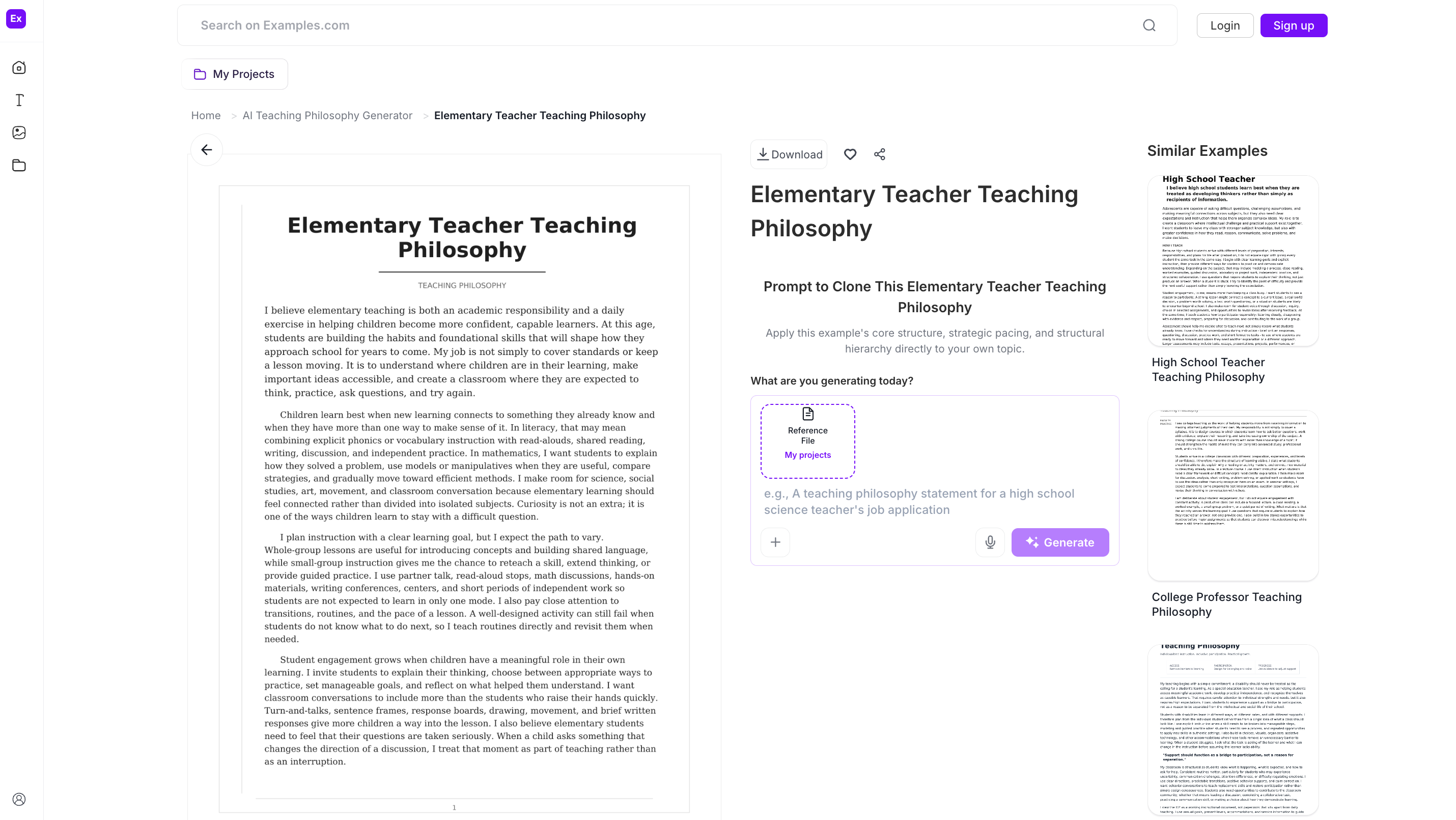
Choose A Reference Example And Enter An AI Prompt
Choose a reference teaching philosophy and describe what you need in your prompt, including your teaching level, subject area, educational beliefs, instructional methods, student needs, classroom approach, assessment practices, and teaching goals. A specific prompt helps produce a focused philosophy that reflects your approach as an educator.
Generate A New AI Teaching Philosophy
Generate a new teaching philosophy from your prompt. The AI can organize your beliefs about teaching and learning into a clear statement that explains how you approach instruction, support students, create learning environments, and pursue educational goals.
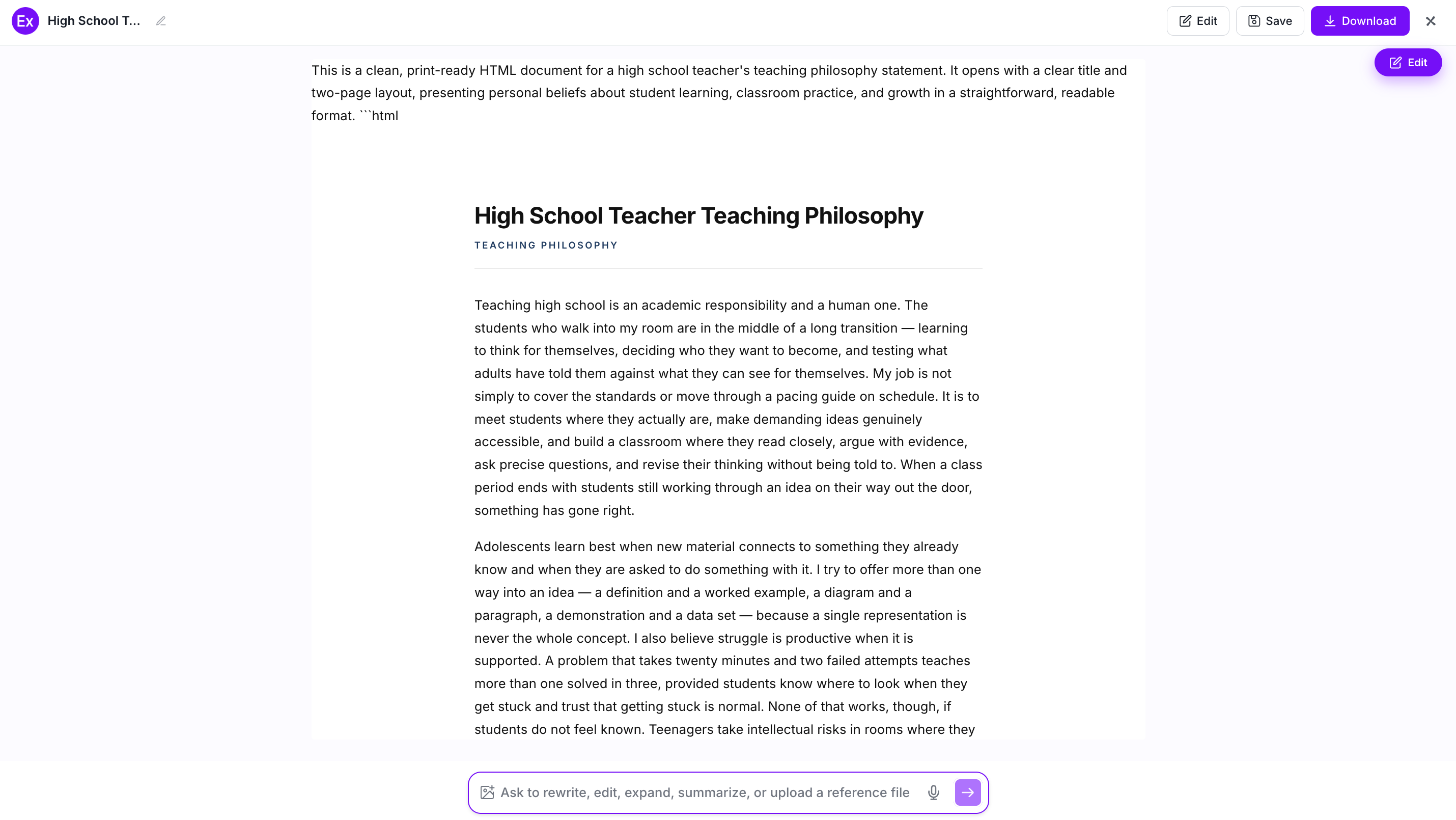
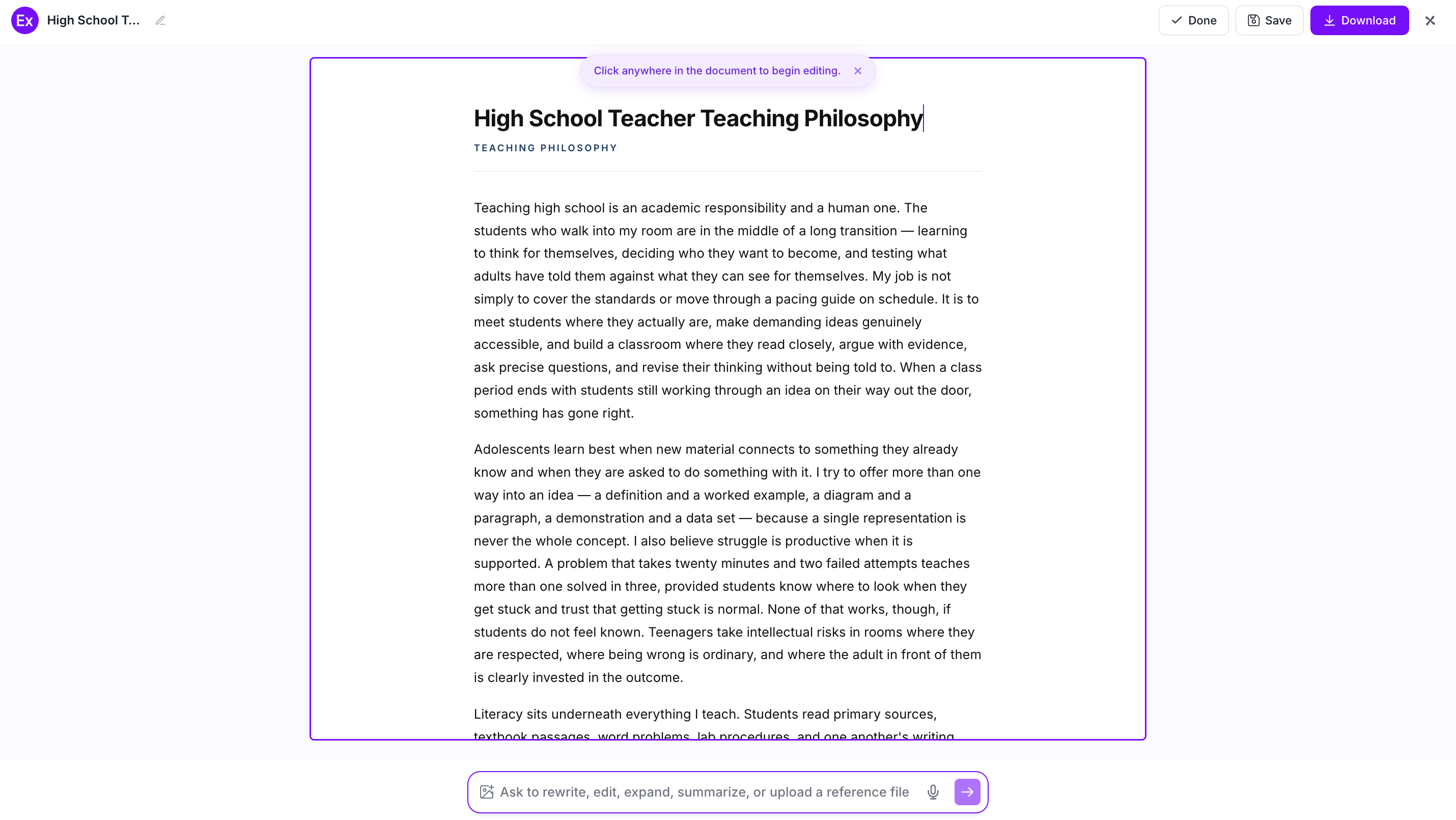
Customize The Teaching Philosophy In The Online Editor
Refine the wording, tone, focus, and level of detail of the generated teaching philosophy in the online editor. Add your own experiences, teaching methods, classroom practices, educational values, and goals so the final statement accurately represents your approach as an educator.
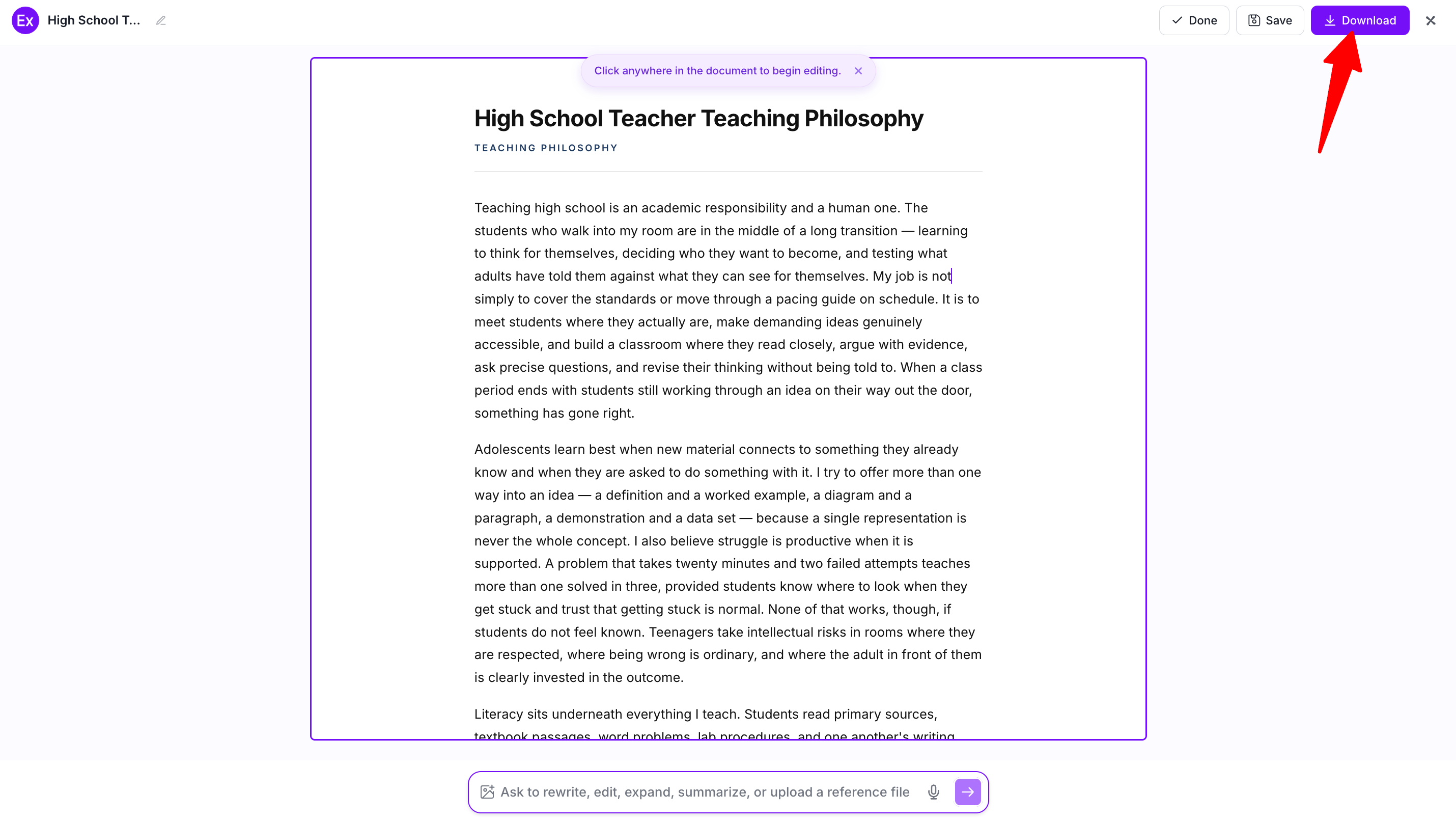
Download And Use Your Teaching Philosophy
Download your completed teaching philosophy in PDF format for reviewing, organizing, printing, or using as a professional reference for teaching applications, faculty materials, portfolios, and educational opportunities.
What Makes a Good Teaching Philosophy?
A good teaching philosophy is clear, personal, reflective, and focused on how students learn and how the educator supports that learning. It should explain the educator’s beliefs about instruction, student engagement, classroom relationships, assessment, inclusion, and educational goals. Strong teaching philosophies connect beliefs with practical teaching methods, avoid vague educational statements, and show how the educator’s approach contributes to meaningful and effective learning experiences.
AI Teaching Philosophy Editing Features
AI Teaching Philosophy Generation
Generate a complete teaching philosophy based on your teaching experience, educational beliefs, subject area, students, instructional methods, and professional goals.
Smart Philosophy Editing
Rewrite, shorten, expand, or refine a teaching philosophy to make its ideas clearer, more specific, organized, and professional.
Teaching Belief Development
Turn broad educational beliefs about teaching and learning into specific statements that explain how those beliefs influence classroom practice.
Teaching Philosophy Customization
Adjust the wording, tone, focus, teaching level, subject area, and level of detail to create a philosophy that reflects your individual educational approach.
Practice and Goal Alignment
Connect teaching beliefs with instructional strategies, student engagement, assessment methods, classroom practices, and educational goals.
Instant PDF Download
Download your completed teaching philosophy in PDF format for reviewing, organizing, printing, or using as a professional teaching reference.
What Are the Essential Elements of a Teaching Philosophy?
- Teaching Beliefs: Explain your core beliefs about teaching, learning, and the role of an educator.
- Student Learning: Describe how you believe students learn best and what supports meaningful learning.
- Role of the Teacher: Explain how you view your responsibilities as a teacher, mentor, facilitator, or guide.
- Instructional Methods: Identify teaching strategies and classroom practices that support your educational beliefs.
- Student Engagement: Explain how you encourage participation, curiosity, critical thinking, collaboration, or active learning.
- Inclusive Environment: Describe how you create a respectful and supportive classroom for students with different needs and backgrounds.
- Assessment Approach: Explain how you use assessment and feedback to understand and support student progress.
- Classroom Relationships: Describe how you build communication, trust, respect, and productive relationships with students.
- Educational Goals: Explain what you want students to gain from your teaching beyond simply completing coursework.
- Reflective Practice: Show how you evaluate and adapt your teaching methods based on student needs, experiences, feedback, and learning outcomes.
How Do I Write a Teaching Philosophy?
- Identify Your Teaching Beliefs: Consider what you believe about how students learn, what effective teaching looks like, and what the role of an educator should be.
- Reflect on Your Experience: Think about teaching, tutoring, mentoring, classroom, professional, or educational experiences that influenced your approach.
- Define Your View of Students: Explain how you view students as learners and what you believe they need to succeed.
- Explain Your Teaching Methods: Describe the instructional strategies, activities, technologies, discussions, projects, or other approaches you use.
- Focus on Student Learning: Show how your teaching choices support understanding, engagement, critical thinking, creativity, or other learning outcomes.
- Describe Your Classroom Environment: Explain how you create a respectful, inclusive, supportive, and productive learning environment.
- Explain Your Assessment Approach: Describe how you use assignments, feedback, observation, assessments, or reflection to monitor and support student progress.
- Connect Beliefs to Practice: Do not simply list educational values; explain how your beliefs influence what you actually do as an educator.
- Include Your Educational Goals: State what you want students to gain from your teaching and how your instruction contributes to their development.
- Review and Refine: Make sure the final philosophy is specific, authentic, coherent, reflective, and consistent with your actual teaching approach.
Why Should I Use Real Teaching Philosophy Examples to Create My Own Teaching Philosophy?
- Real examples show how educators turn teaching beliefs into clear and meaningful statements.
- They help you understand how to explain teaching methods rather than simply listing them.
- They provide useful ideas for describing student engagement, assessment, classroom relationships, and learning goals.
- They show how educators connect educational beliefs with practical classroom experiences.
- They help you avoid vague, generic statements about teaching and learning.
- They make it easier to develop and refine a teaching philosophy that reflects your own educational approach.
What Common Teaching Philosophy Mistakes Should I Avoid?
- Using Generic Statements: Avoid broad claims such as “Every student can learn” without explaining how your teaching approach supports that belief.
- Only Listing Teaching Methods: Do not simply name strategies such as group work, projects, or lectures; explain why and when you use them.
- Focusing Only on the Teacher: A teaching philosophy should explain how your teaching supports student learning rather than focusing entirely on your responsibilities.
- Ignoring Student Differences: Avoid describing a single teaching approach as suitable for every learner without considering different needs, experiences, abilities, or perspectives.
- Being Too Theoretical: Connect educational theories and beliefs to practical classroom decisions and teaching experiences.
- Making Unsupported Claims: Avoid absolute statements about learning or teaching that do not reflect the realities of different classrooms.
- Writing a Teaching Résumé: A teaching philosophy should explain beliefs and approaches rather than simply listing qualifications, courses, or accomplishments.
- Ignoring Assessment: Explain how you use feedback and assessment to understand and improve student learning.
- Being Too Broad: Make sure the philosophy communicates specific beliefs, practices, and educational goals.
- Failing to Reflect Personally: The statement should sound like your own educational philosophy rather than a collection of common teaching phrases.
What Is the Difference Between a Teaching Philosophy and a Teaching Statement?
| Teaching Philosophy | Teaching Statement |
|---|---|
| Explains an educator’s broader beliefs about teaching and learning. | Describes or communicates an educator’s teaching approach, practices, or experience in a specific context. |
| Focuses strongly on educational values, beliefs, and principles. | May focus more directly on what the educator does in practice. |
| Explains how an educator understands learning, students, instruction, and assessment. | Can provide a more focused description of teaching methods or classroom experience. |
| Often connects beliefs with instructional strategies and educational goals. | May emphasize responsibilities, practices, outcomes, or specific teaching contexts. |
| Can serve as a reflective professional statement about teaching. | May be used for a particular application, role, program, or institutional requirement. |
| Should communicate a clear and personal educational perspective. | Can be more narrowly focused on a specific teaching purpose or requirement. |
Teaching Philosophy Ideas for Different Educational Contexts
- Elementary Education: Young students often learn effectively when teaching combines curiosity, active participation, encouragement, and developmentally appropriate experiences.
- High School Education: Effective secondary teaching can help students develop subject knowledge while strengthening independence, critical thinking, and confidence.
- Higher Education: College and university teaching can encourage students to engage deeply with ideas, evaluate evidence, participate in discussion, and apply knowledge beyond the classroom.
- STEM Education: STEM teaching can emphasize experimentation, problem-solving, inquiry, collaboration, and connections between concepts and real-world applications.
- Special Education: Effective teaching can recognize individual learning needs and provide appropriate support, flexibility, accessibility, and opportunities for meaningful participation.
- Online Education: Digital learning can be effective when instructors provide clear communication, accessible resources, meaningful interaction, timely feedback, and structured learning experiences.
- Adult Education: Adult learners often benefit from instruction that connects new knowledge with prior experiences, practical goals, and real-world applications.
- Language Education: Language teaching can support communication, cultural understanding, confidence, practice, and meaningful interaction.
- Arts Education: Arts education can encourage creativity, experimentation, self-expression, reflection, and the development of individual perspectives.
- Career and Technical Education: Career-focused teaching can connect academic concepts with practical skills, workplace expectations, problem-solving, and professional preparation.
FAQs
What Is a Teaching Philosophy?
A teaching philosophy is a written statement that explains an educator’s beliefs about teaching, learning, students, classroom environments, instructional methods, assessment, and educational goals.
How Long Should a Teaching Philosophy Be?
A teaching philosophy should be long enough to clearly communicate your educational beliefs, teaching practices, and goals while remaining focused and relevant to its intended purpose.
What Should Be Included in a Teaching Philosophy?
A teaching philosophy commonly includes beliefs about student learning, the role of the teacher, instructional methods, student engagement, classroom environment, assessment, inclusion, and educational goals.
Should a Teaching Philosophy Include Personal Experiences?
Yes. Relevant teaching, tutoring, mentoring, classroom, or educational experiences can make a teaching philosophy more specific and demonstrate how your beliefs developed.
Should a Teaching Philosophy Include Teaching Methods?
Yes. Explain the instructional strategies you use and, more importantly, how those strategies support your beliefs about student learning.
What Makes a Teaching Philosophy Effective?
An effective teaching philosophy is clear, personal, reflective, specific, and connected to actual teaching practices. It explains not only what you believe but also how those beliefs influence your work with students.
Can a Teaching Philosophy Be Changed?
Yes. A teaching philosophy can develop as educators gain experience, work with different students, receive feedback, learn new approaches, and reflect on their teaching practices.
Is a Teaching Philosophy the Same as a Lesson Plan?
No. A teaching philosophy explains an educator’s broader beliefs and approach to teaching, while a lesson plan provides a detailed plan for a particular lesson or learning activity.
How Is a Teaching Philosophy Different From a Teaching Statement?
A teaching philosophy focuses on an educator’s broader beliefs and principles about teaching and learning, while a teaching statement may describe teaching practices, experience, or a specific instructional approach in a particular context.
Can AI Help Me Create a Teaching Philosophy?
Yes, AI can help organize teaching beliefs, develop ideas, improve wording, and refine a teaching philosophy when you provide accurate information about your educational experience, teaching approach, students, and goals.