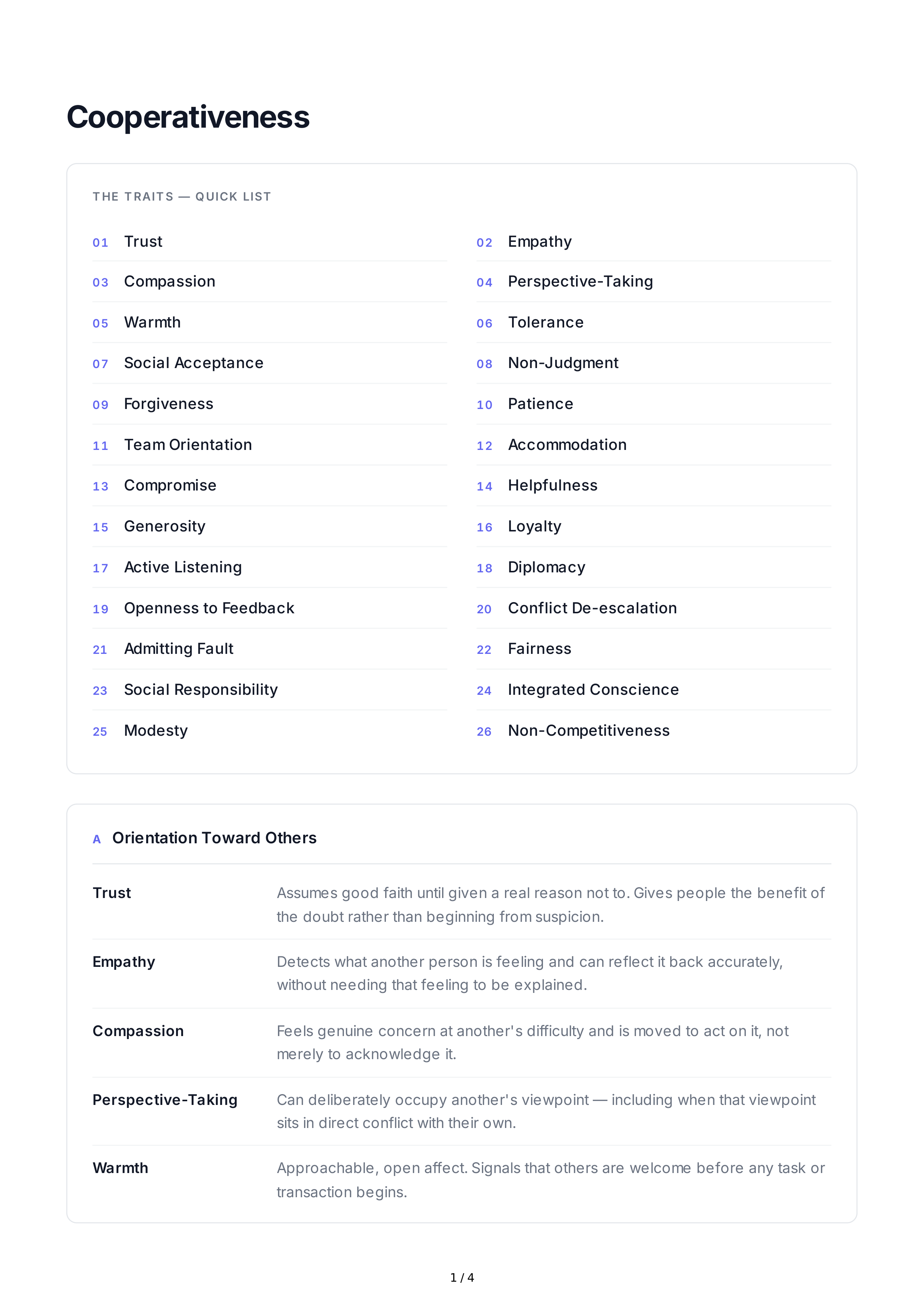
Cooperativeness
T HE
T RAIT S
—
QUICK
LIST
01
Trust
02
Empathy
03
Compassion
04
Perspective
-
Taking
05
Warmth
06
Tolerance
07
Social
Acceptance
08
Non
-
Judgment
09
Forgiveness
10
Patience
11
Team
Orientation
12
Accommodation
13
Compromise
14
Helpfulness
15
Generosity
16
Loyalty
17
Active
Listening
18
Diplomacy
19
Openness
to
Feedback
20
Conflict
De
-
escalation
21
Admitting
Fault
22
Fairness
23
Social
Responsibility
24
Integrated
Conscience
25
Modesty
26
Non
-
Competitiveness
A
Orientation
Toward
Others
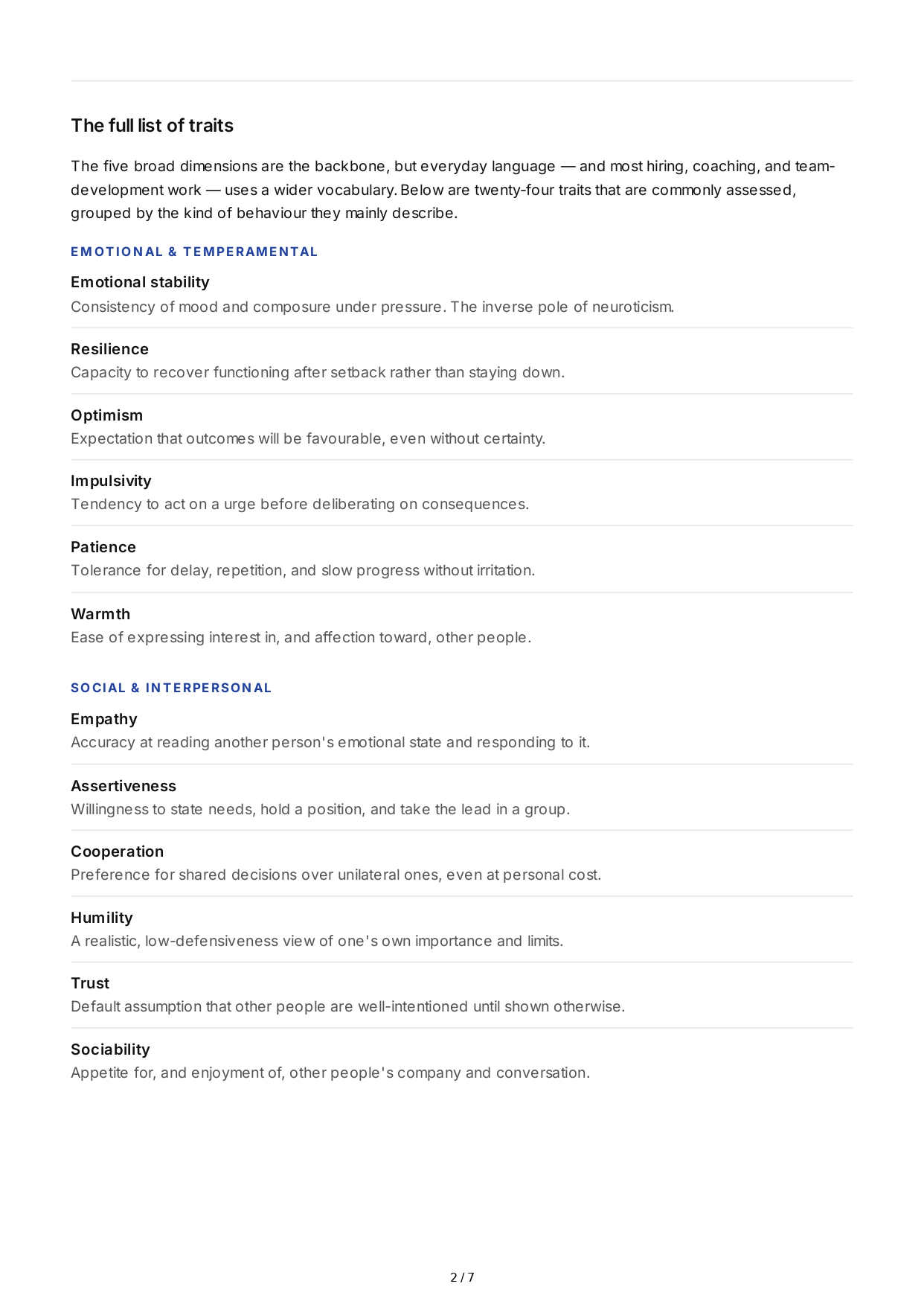
Trust
Assumes
good
faith
until
given
a
real
reason
not
to
.
Gives
people
the
benefit
of
the
doubt
rather
than
beginning
from
suspicion
.
Empathy
Detects
what
another
person
is
feeling
and
can
reflect
it
back
accurately
,
without
needing
that
feeling
to
be
explained
.
Compassion
Feels
genuine
concern
at
another
'
s
difficulty
and
is
moved
to
act
on
it
,
not
merely
to
acknowledge
it
.
Perspective
-
Taking
Can
deliberately
occupy
another
'
s
viewpoint
—
including
when
that
viewpoint
sits
in
direct
conflict
with
their
own
.
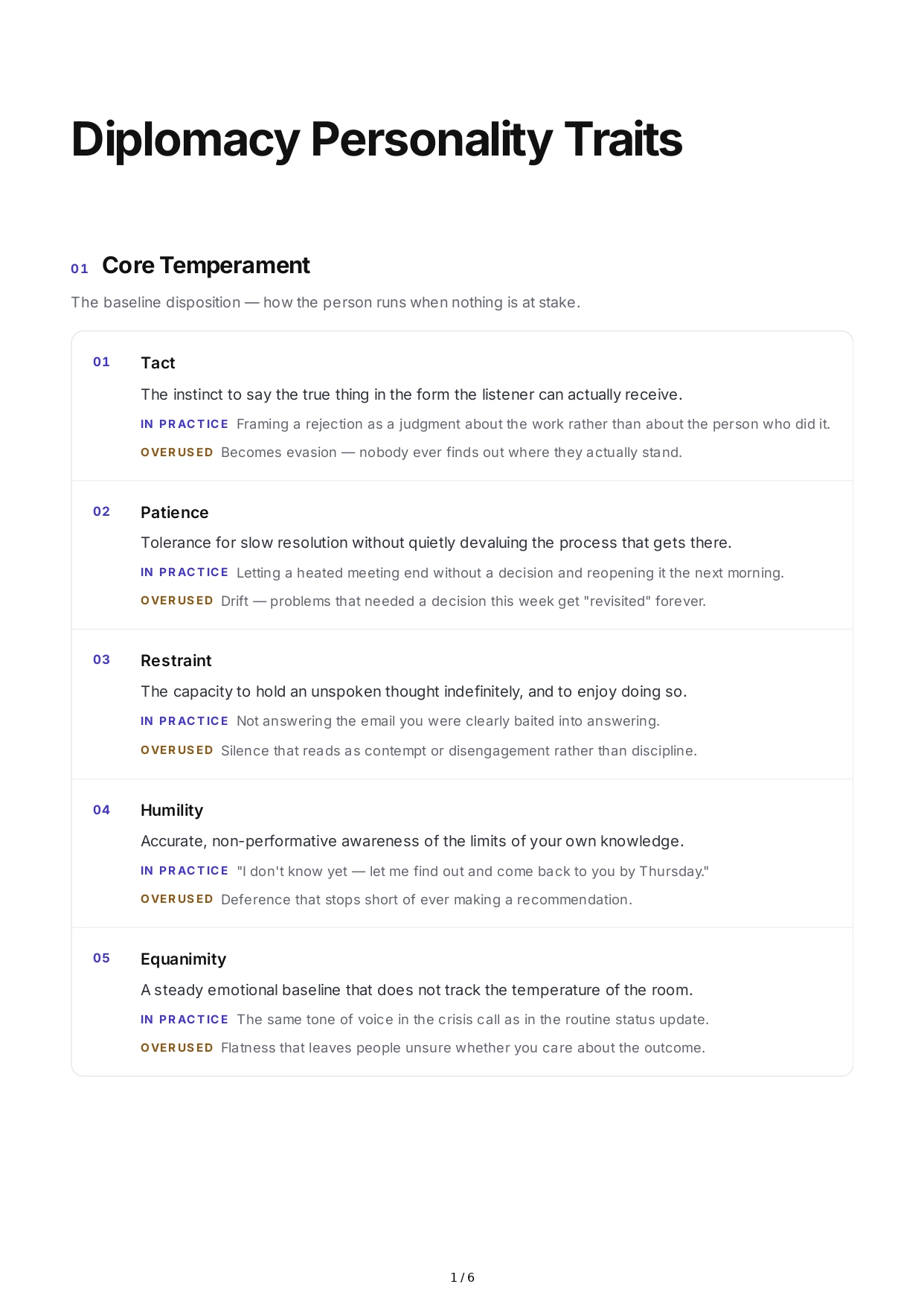
Warmth
Approachable
,
open
affect
.
Signals
that
others
are
welcome
before
any
task
or
transaction
begins
.
1 / 4
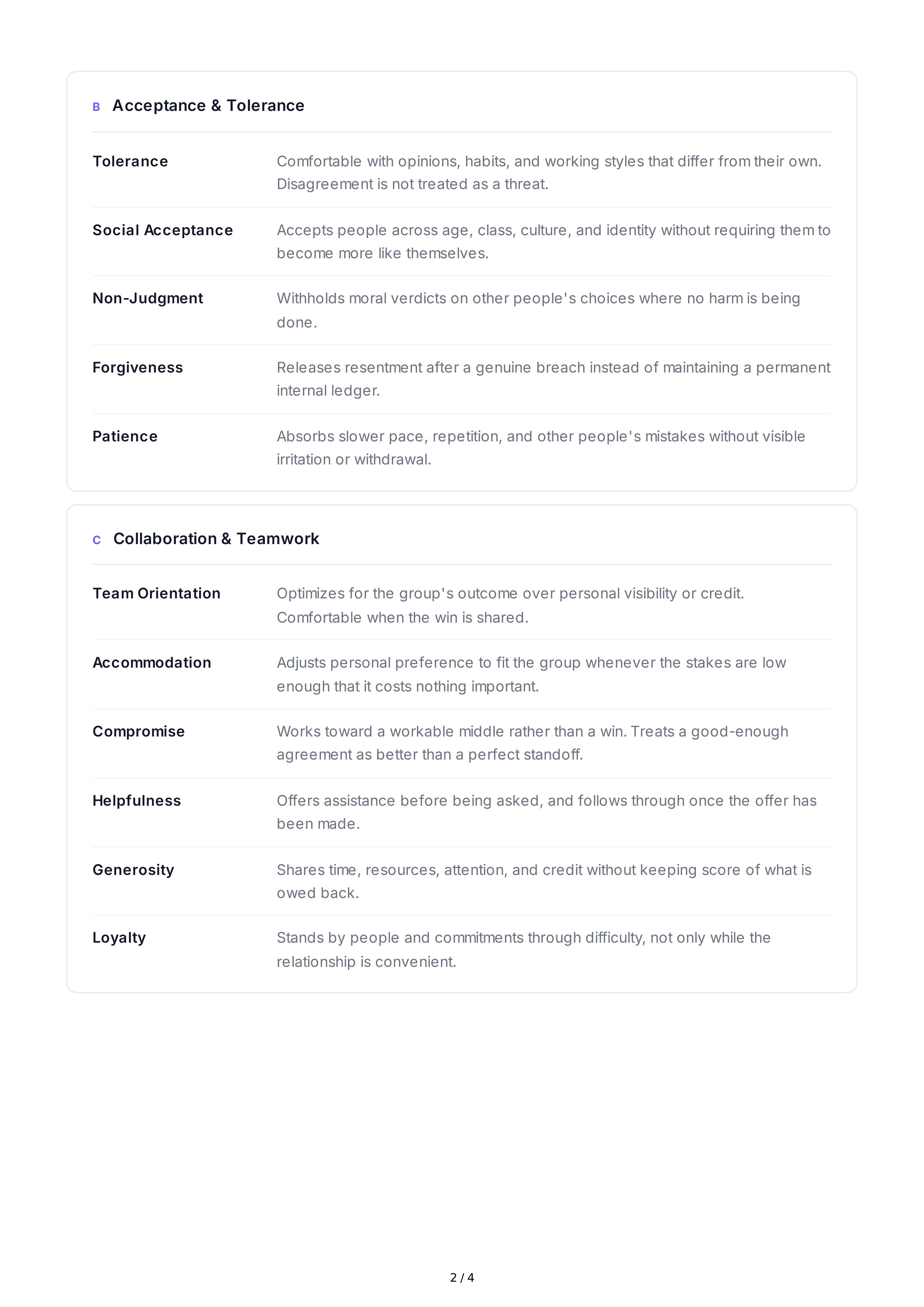
B
Acceptance
&
Tolerance
Tolerance
Comfortable
with
opinions
,
habits
,
and
working
styles
that
differ
from
their
own
.
Disagreement
is
not
treated
as
a
threat
.
Social
Acceptance
Accepts
people
across
age
,
class
,
culture
,
and
identity
without
requiring
them
to
become
more
like
themselves
.
Non
-
Judgment
Withholds
moral
verdicts
on
other
people
'
s
choices
where
no
harm
is
being
done
.
Forgiveness
Releases
resentment
after
a
genuine
breach
instead
of
maintaining
a
permanent
internal
ledger
.
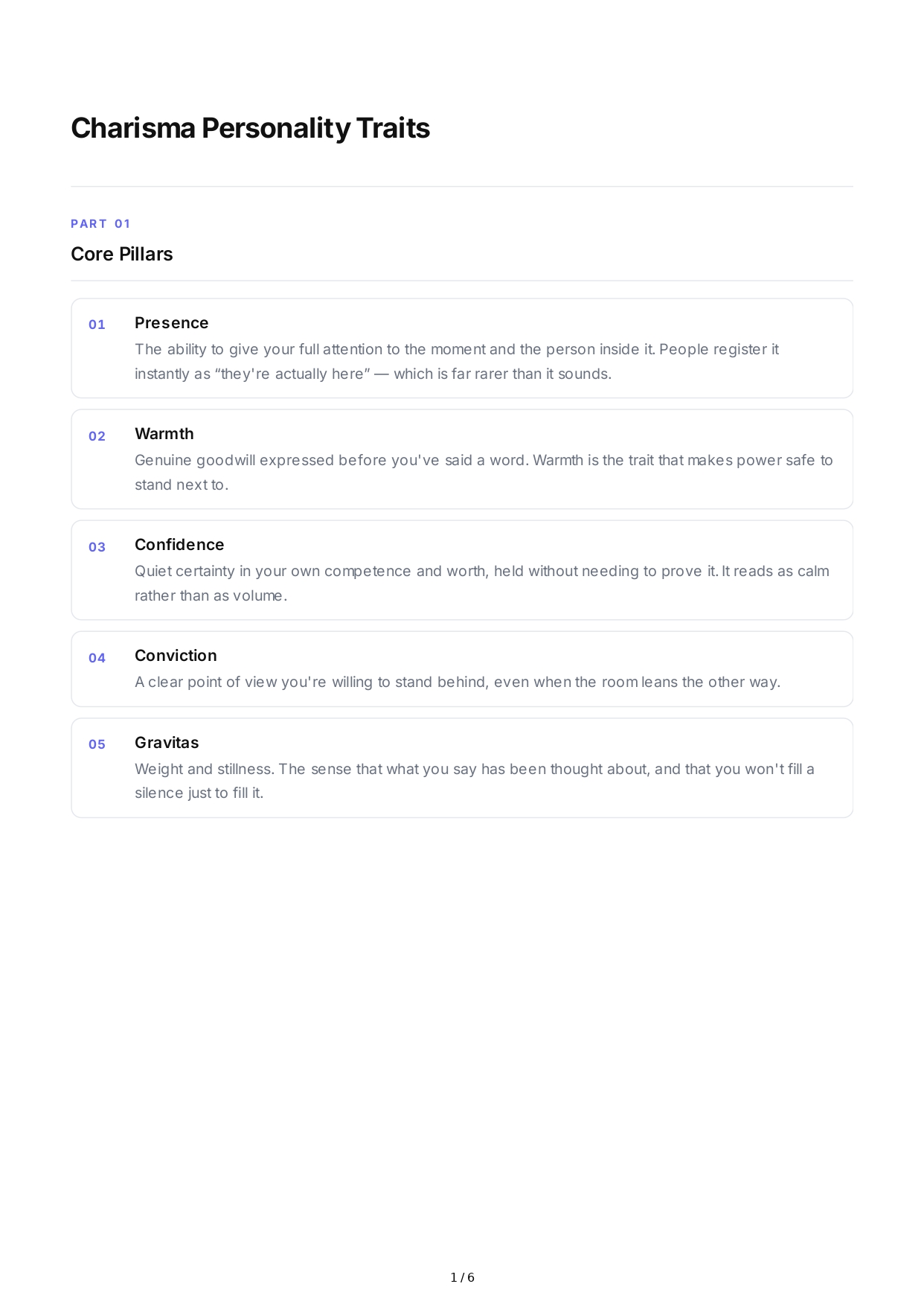
Patience
Absorbs
slower
pace
,
repetition
,
and
other
people
'
s
mistakes
without
visible
irritation
or
withdrawal
.
C
Collaboration
&
Teamwork
Team
Orientation
Optimizes
for
the
group
'
s
outcome
over
personal
visibility
or
credit
.
Comfortable
when
the
win
is
shared
.
Accommodation
Adjusts
personal
preference
to
fit
the
group
whenever
the
stakes
are
low
enough
that
it
costs
nothing
important
.
Compromise
Works
toward
a
workable
middle
rather
than
a
win
.
Treats
a
good
-
enough
agreement
as
better
than
a
perfect
standoff
.
Helpfulness
Offers
assistance
before
being
asked
,
and
follows
through
once
the
offer
has
been
made
.
Generosity
Shares
time
,
resources
,
attention
,
and
credit
without
keeping
score
of
what
is
owed
back
.
Loyalty
Stands
by
people
and
commitments
through
difficulty
,
not
only
while
the
relationship
is
convenient
.
2 / 4
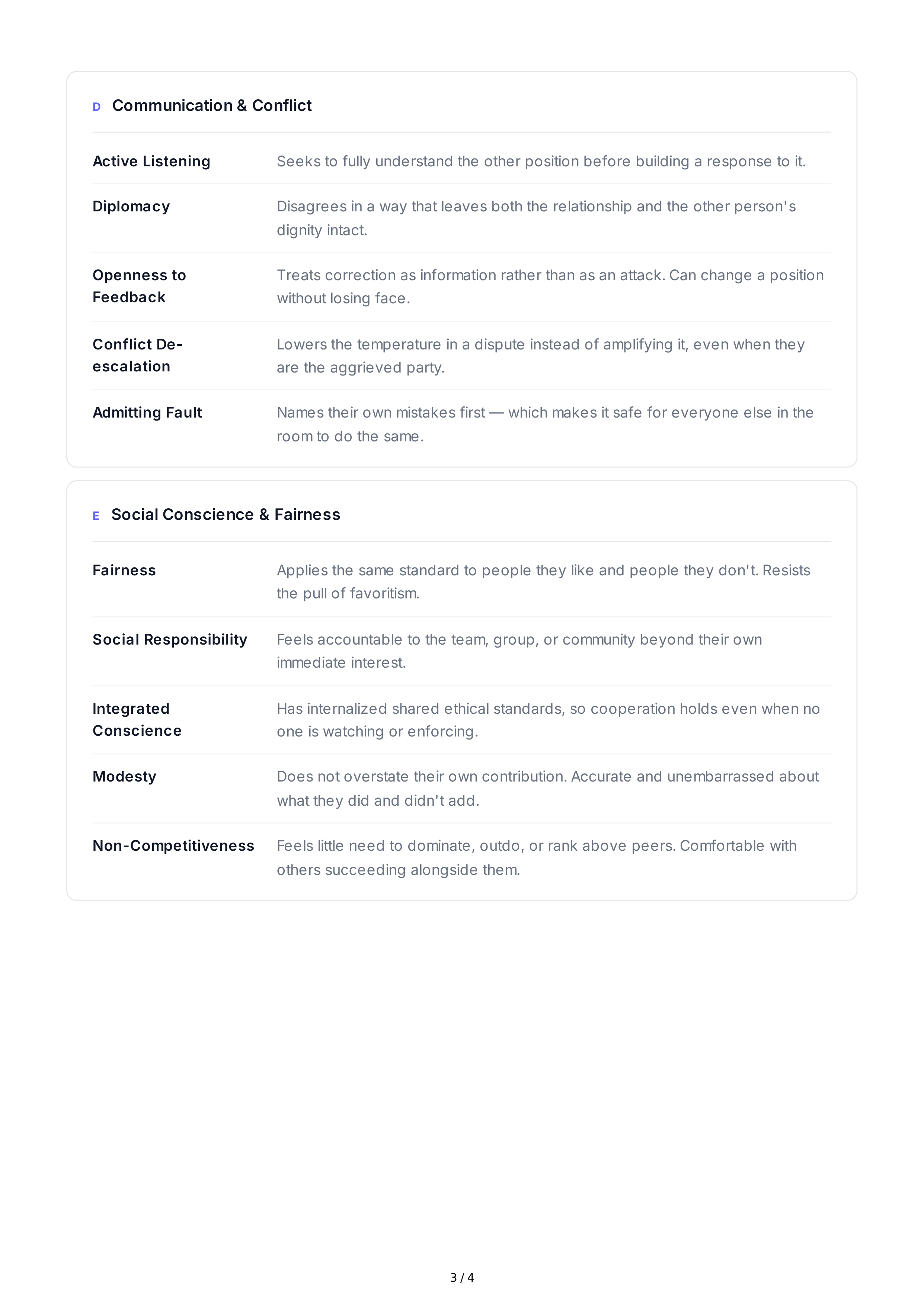
D
Communication
&
Conflict
Active
Listening
Seeks
to
fully
understand
the
other
position
before
building
a
response
to
it
.
Diplomacy
Disagrees
in
a
way
that
leaves
both
the
relationship
and
the
other
person
'
s
dignity
intact
.
Openness
to
Feedback
Treats
correction
as
information
rather
than
as
an
attack
.
Can
change
a
position
without
losing
face
.
Conflict
De
-
escalation
Lowers
the
temperature
in
a
dispute
instead
of
amplifying
it
,
even
when
they
are
the
aggrieved
party
.
Admitting
Fault
Names
their
own
mistakes
first
—
which
makes
it
safe
for
everyone
else
in
the
room
to
do
the
same
.
E
Social
Conscience
&
Fairness
Fairness
Applies
the
same
standard
to
people
they
like
and
people
they
don
'
t
.
Resists
the
pull
of
favoritism
.
Social
Responsibility
Feels
accountable
to
the
team
,
group
,
or
community
beyond
their
own
immediate
interest
.
Integrated
Conscience
Has
internalized
shared
ethical
standards
,
so
cooperation
holds
even
when
no
one
is
watching
or
enforcing
.
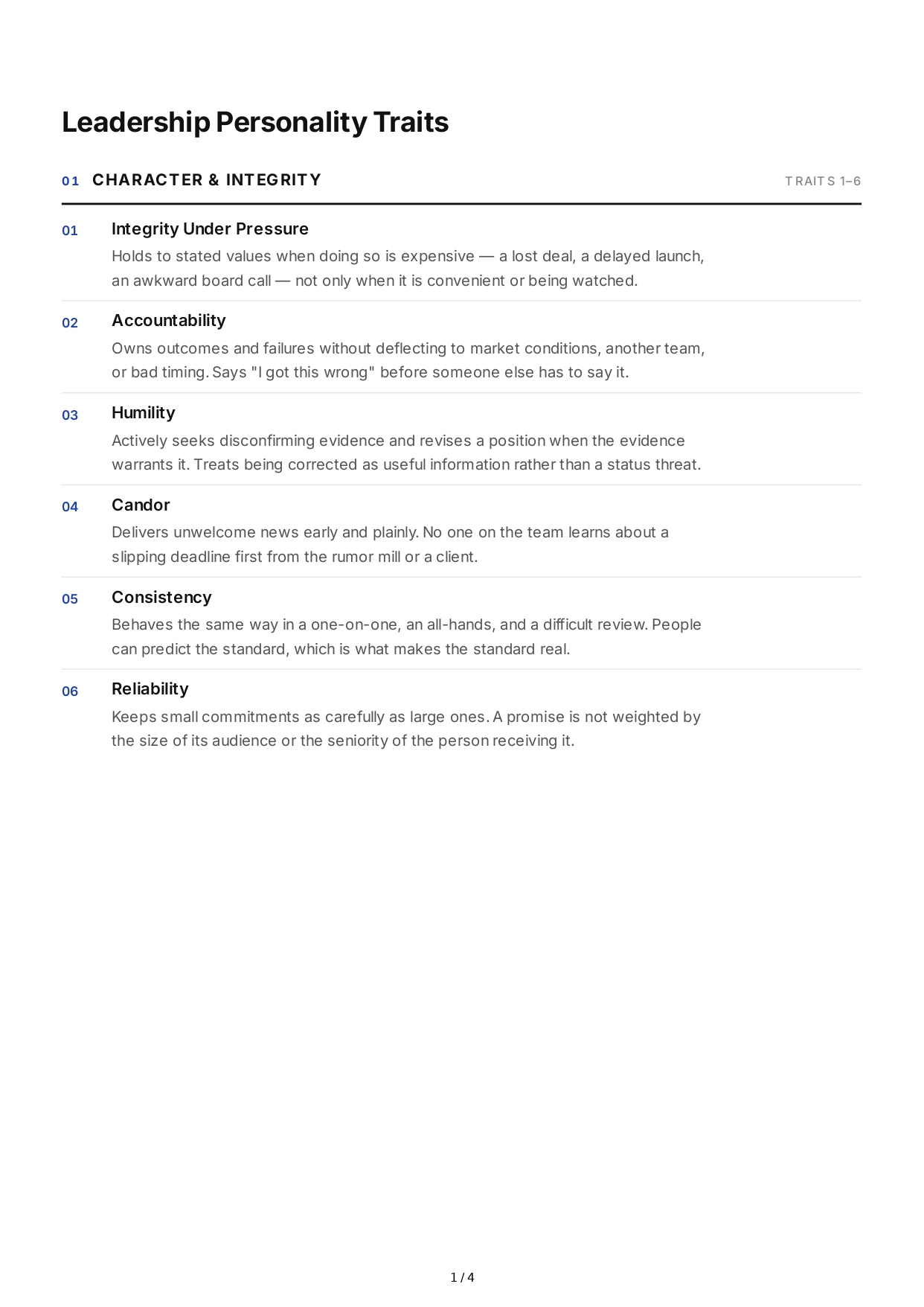
Modesty
Does
not
overstate
their
own
contribution
.
Accurate
and
unembarrassed
about
what
they
did
and
didn
'
t
add
.
Non
-
Competitiveness
Feels
little
need
to
dominate
,
outdo
,
or
rank
above
peers
.
Comfortable
with
others
succeeding
alongside
them
.
3 / 4
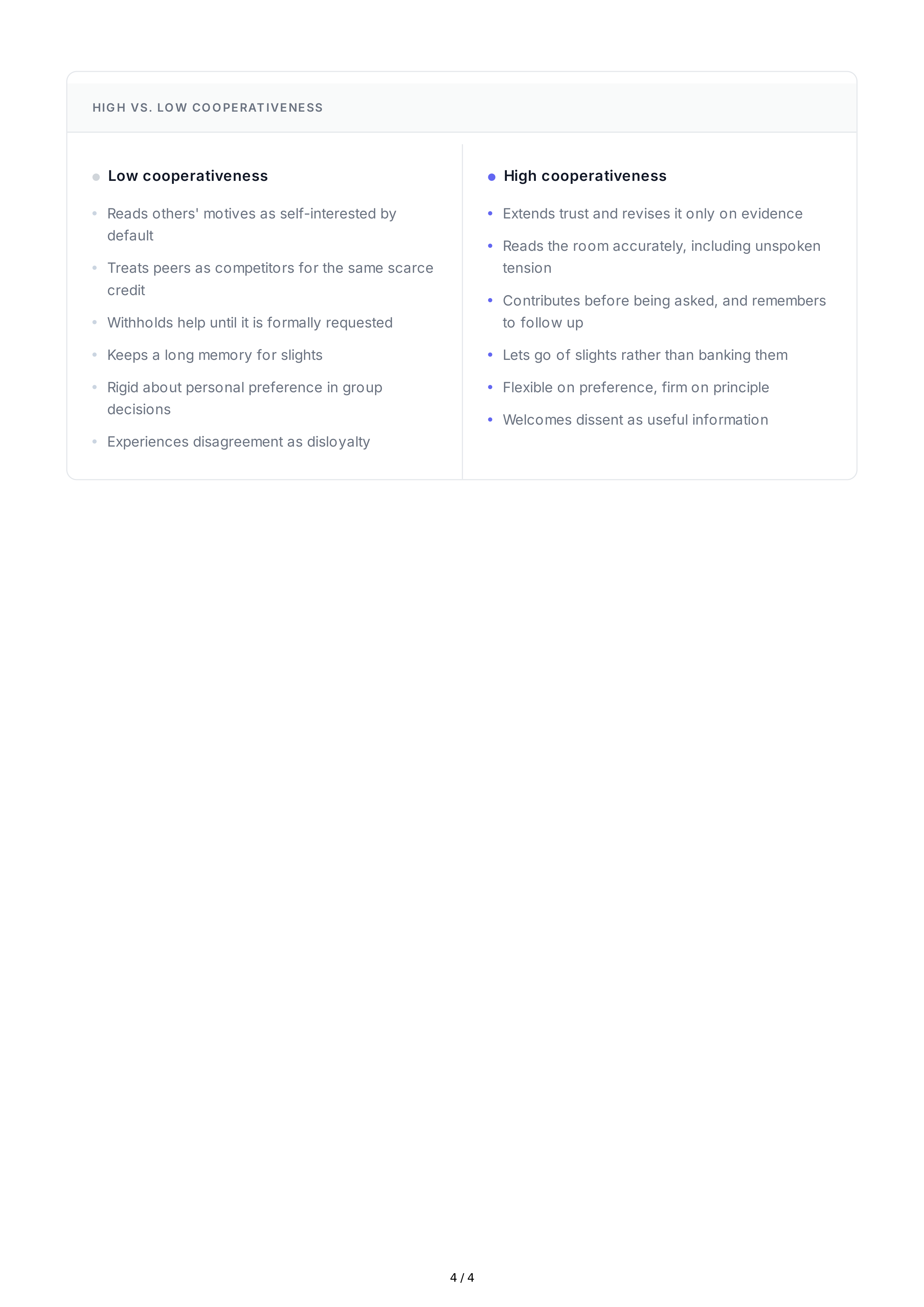
HIG H
VS
.
LO W
CO O PERAT IVENESS
Low
cooperativeness
High
cooperativeness
Reads
others
'
motives
as
self
-
interested
by
default
Treats
peers
as
competitors
for
the
same
scarce
credit
Withholds
help
until
it
is
formally
requested
Keeps
a
long
memory
for
slights
Rigid
about
personal
preference
in
group
decisions
Experiences
disagreement
as
disloyalty
Extends
trust
and
revises
it
only
on
evidence
Reads
the
room
accurately
,
including
unspoken
tension
Contributes
before
being
asked
,
and
remembers
to
follow
up
Lets
go
of
slights
rather
than
banking
them
Flexible
on
preference
,
firm
on
principle
Welcomes
dissent
as
useful
information
4 / 4