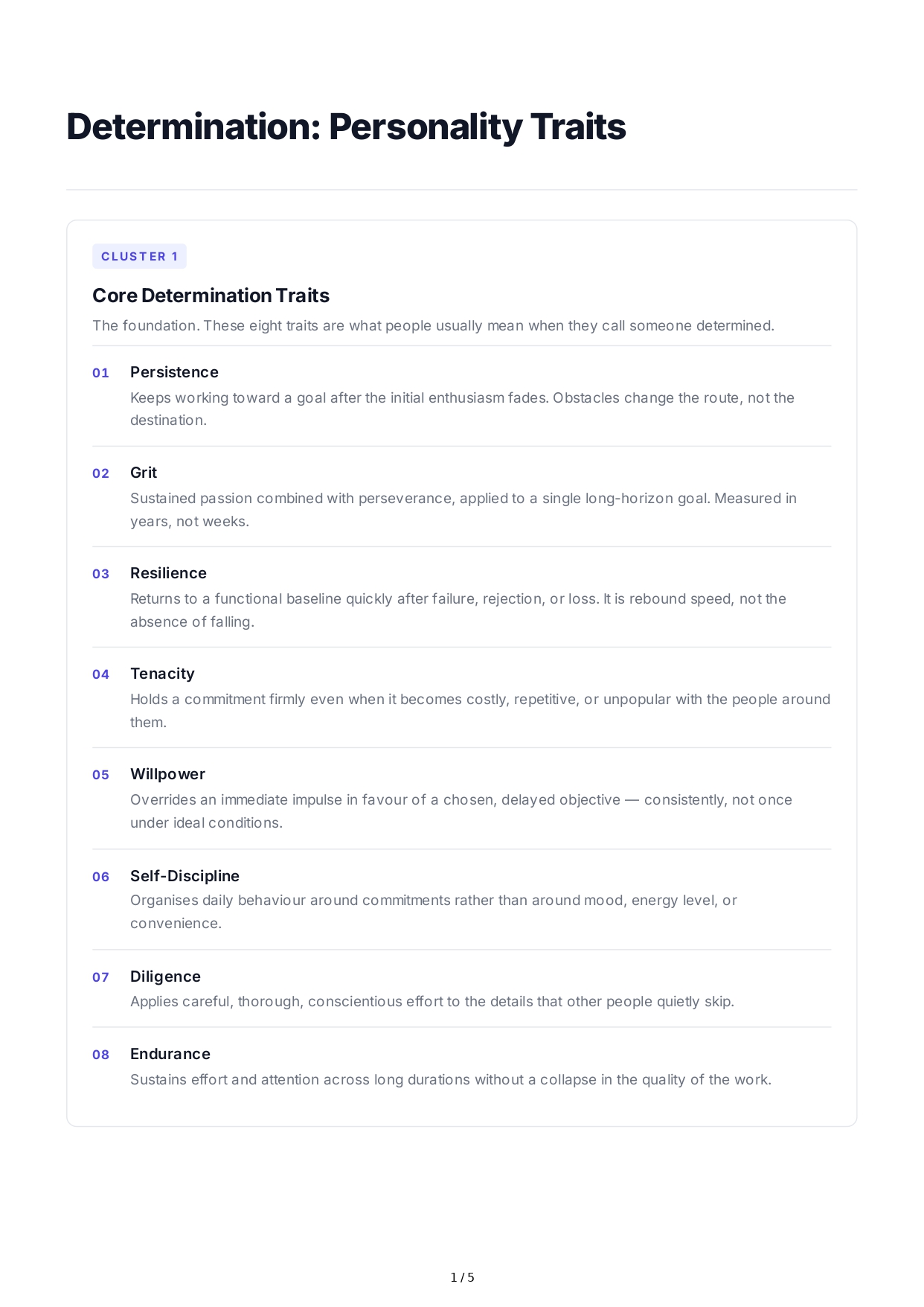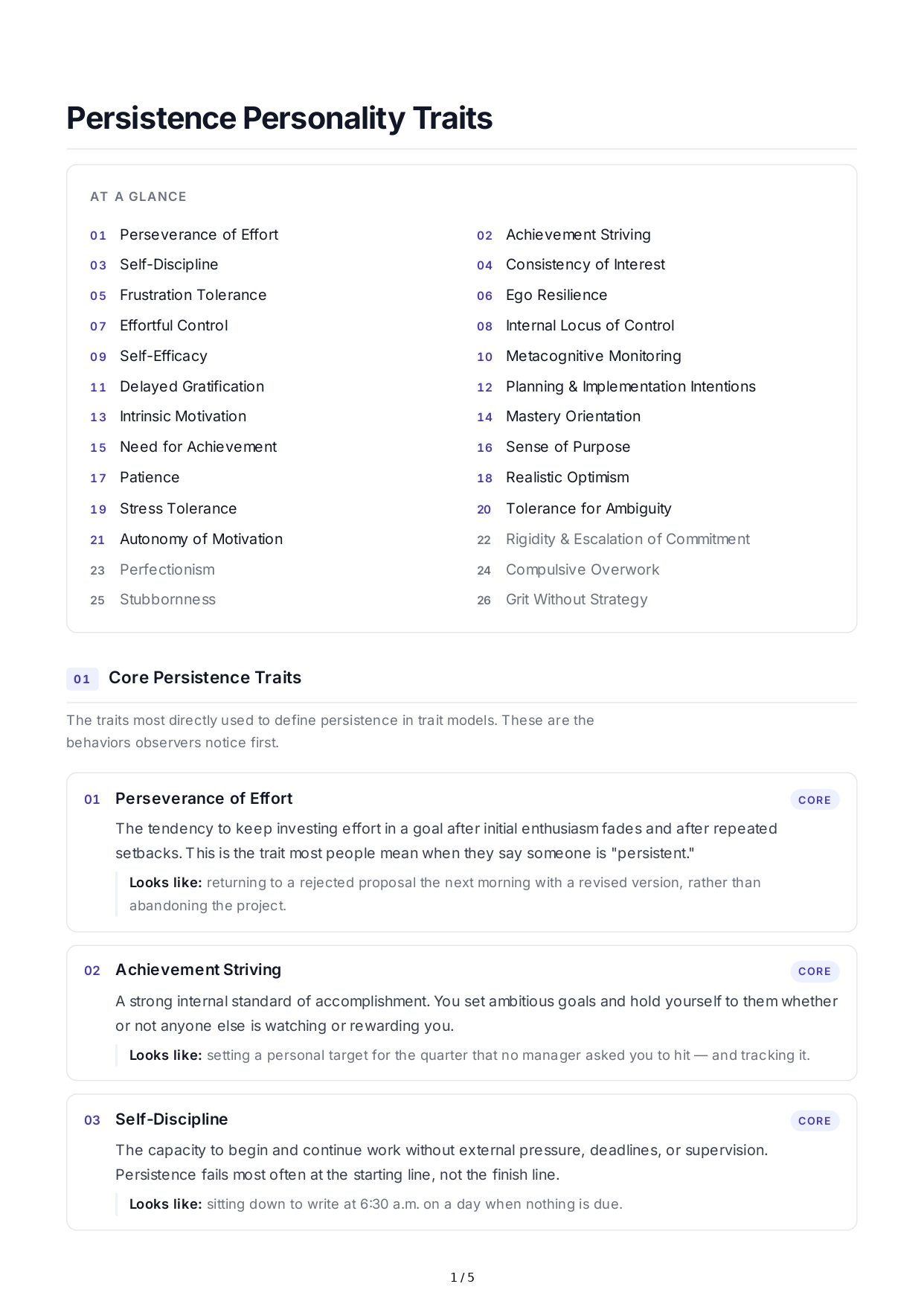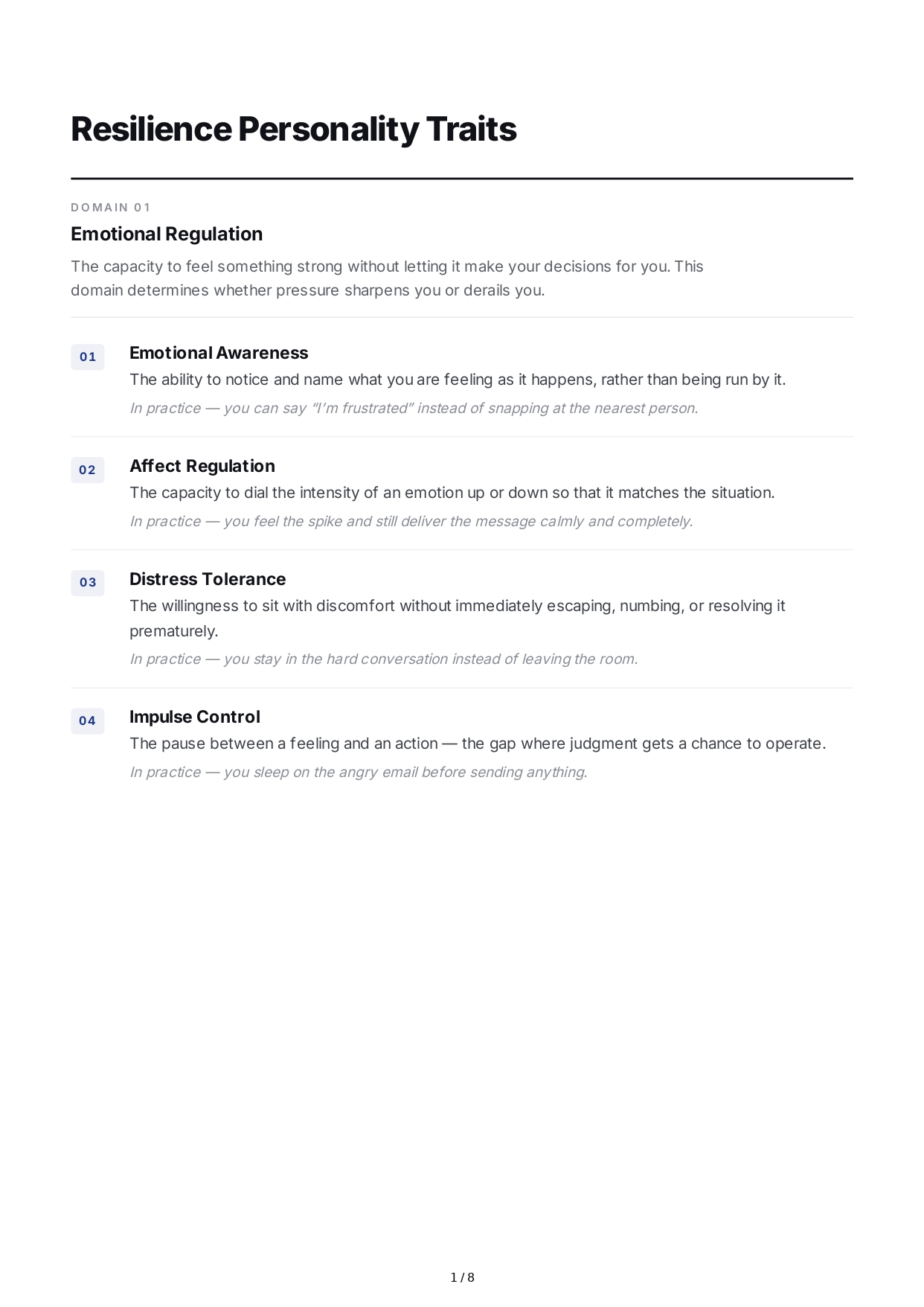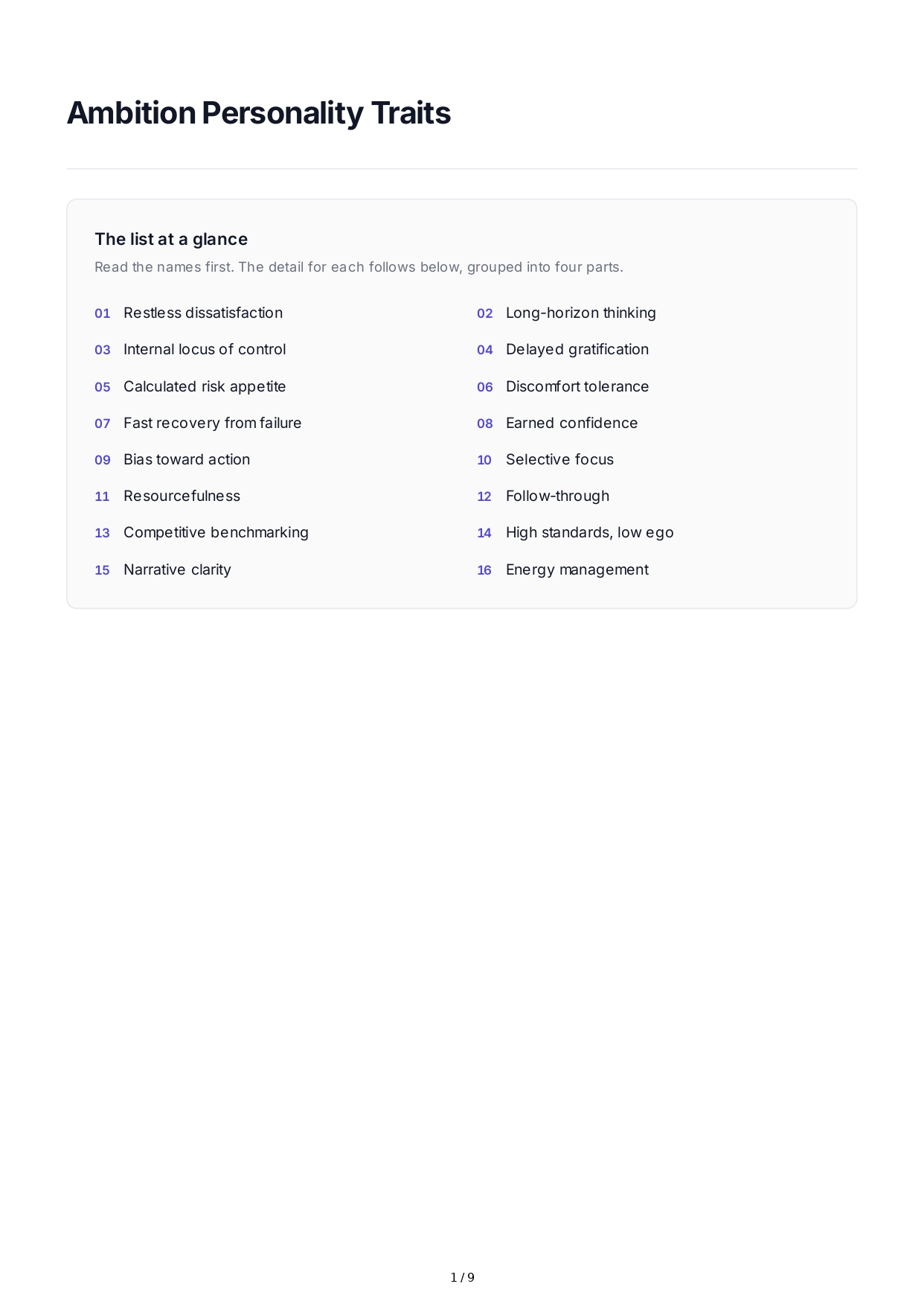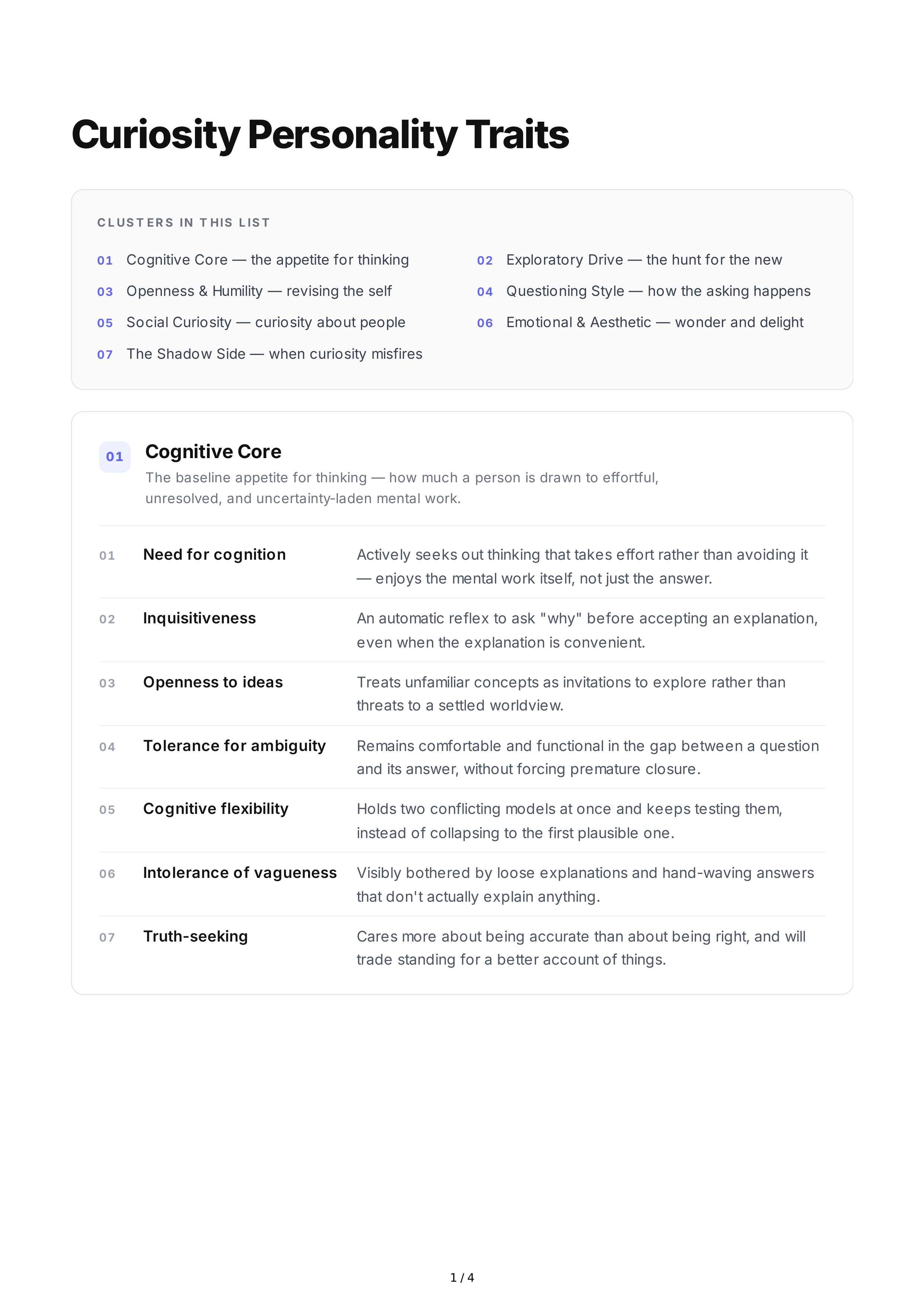
Curiosity
Personality
Traits
C L US T ER S
IN
T HIS
L IS T
01
Cognitive
Core
—
the
appetite
for
thinking
02
Exploratory
Drive
—
the
hunt
for
the
new
03
Openness
&
Humility
—
revising
the
self
04
Questioning
Style
—
how
the
asking
happens
05
Social
Curiosity
—
curiosity
about
people
06
Emotional
&
Aesthetic
—
wonder
and
delight
07
The
Shadow
Side
—
when
curiosity
misfires
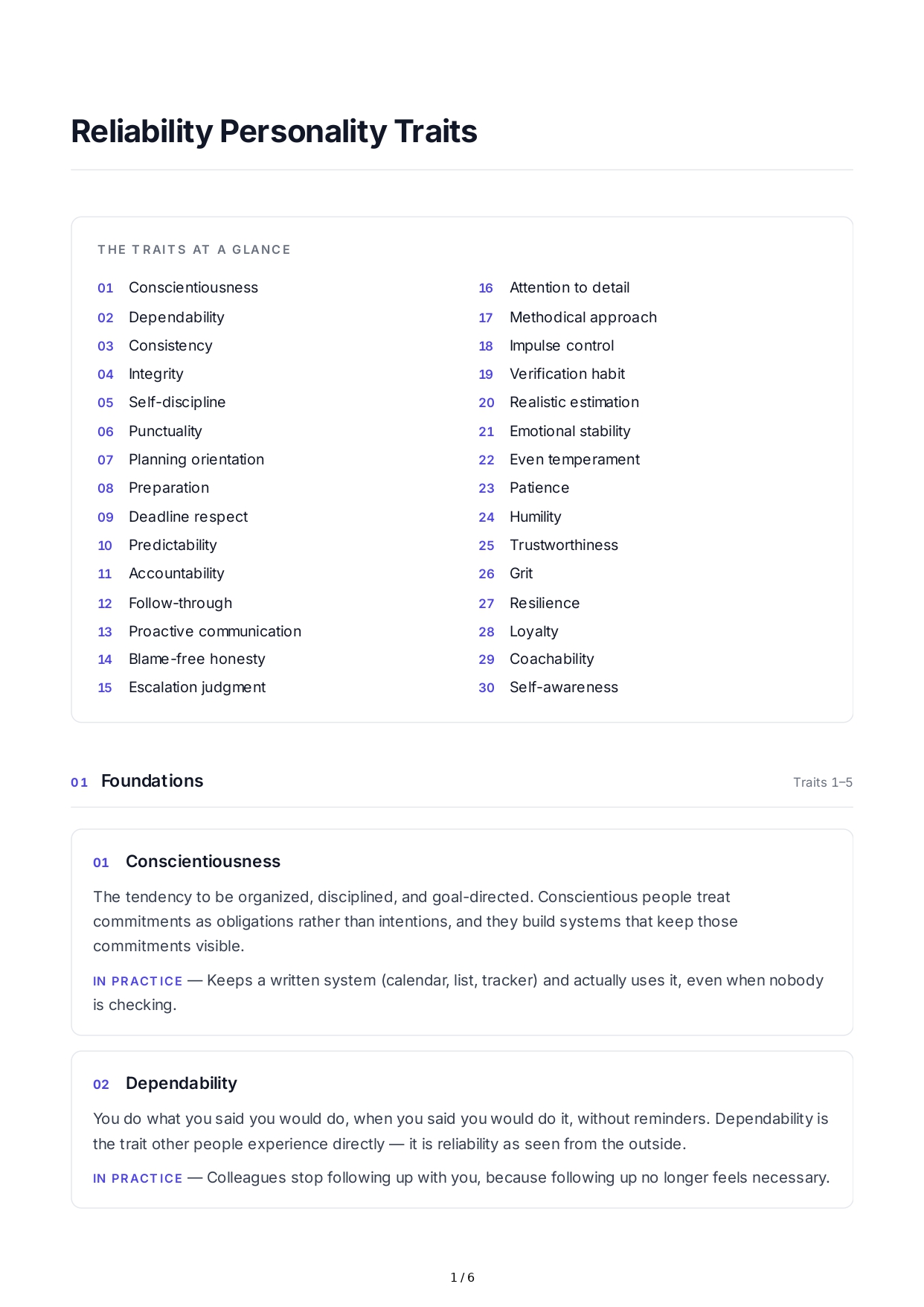
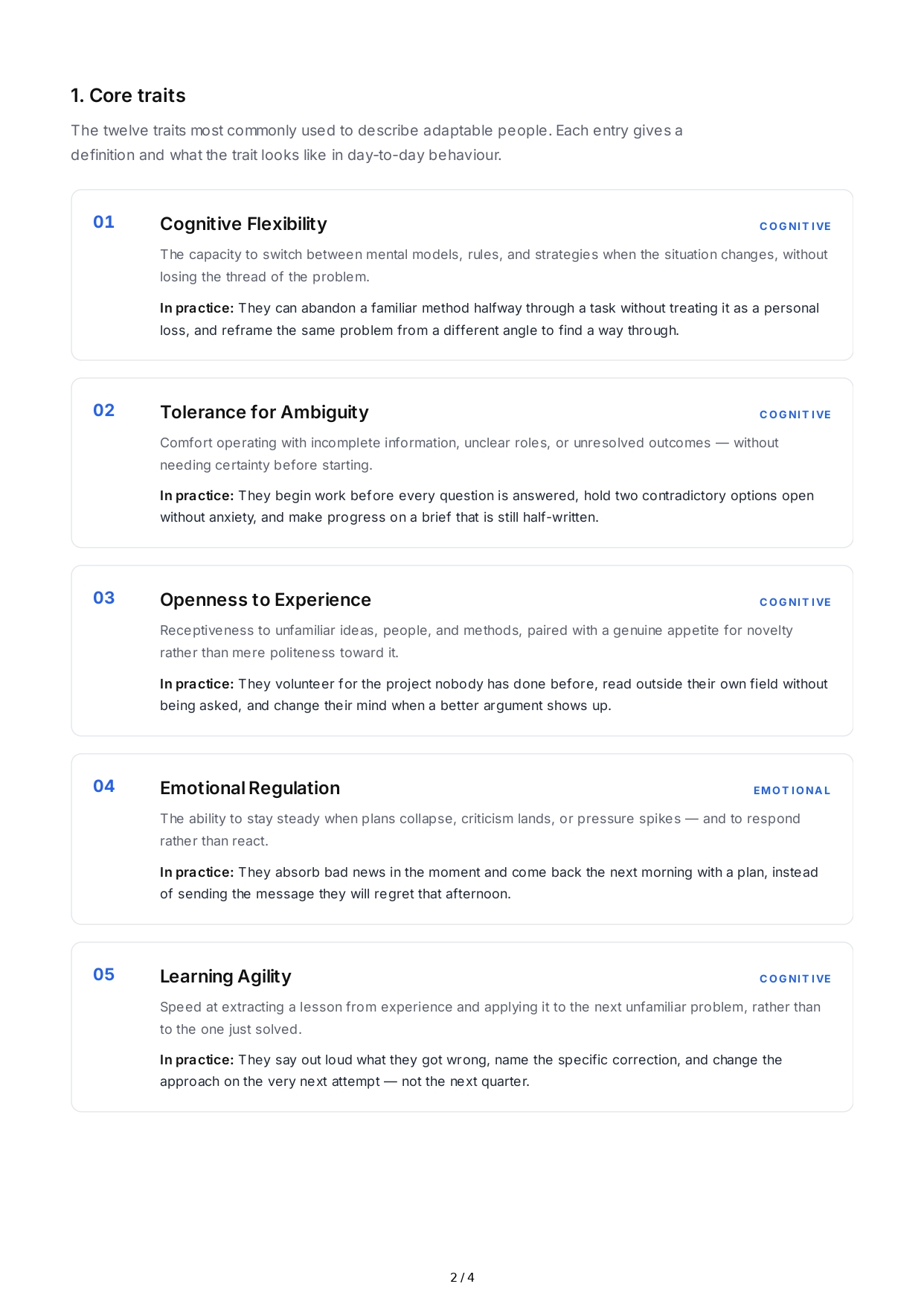
01
Cognitive
Core
The
baseline
appetite
for
thinking
—
how
much
a
person
is
drawn
to
effortful
,
unresolved
,
and
uncertainty
-
laden
mental
work
.
01
Need
for
cognition
Actively
seeks
out
thinking
that
takes
effort
rather
than
avoiding
it
—
enjoys
the
mental
work
itself
,
not
just
the
answer
.
02
Inquisitiveness
An
automatic
reflex
to
ask
"
why
"
before
accepting
an
explanation
,
even
when
the
explanation
is
convenient
.
03
Openness
to
ideas
Treats
unfamiliar
concepts
as
invitations
to
explore
rather
than
threats
to
a
settled
worldview
.
04
Tolerance
for
ambiguity
Remains
comfortable
and
functional
in
the
gap
between
a
question
and
its
answer
,
without
forcing
premature
closure
.
05
Cognitive
flexibility
Holds
two
conflicting
models
at
once
and
keeps
testing
them
,
instead
of
collapsing
to
the
first
plausible
one
.
06
Intolerance
of
vagueness
Visibly
bothered
by
loose
explanations
and
hand
-
waving
answers
that
don
'
t
actually
explain
anything
.
07
Truth
-
seeking
Cares
more
about
being
accurate
than
about
being
right
,
and
will
trade
standing
for
a
better
account
of
things
.
1 / 4
02
Exploratory
Drive
Curiosity
as
behaviour
—
the
willingness
to
go
looking
,
and
the
question
of
whether
the
search
stays
broad
or
goes
deep
.
08
Novelty
seeking
Deliberately
constructs
situations
that
have
not
been
encountered
before
,
rather
than
repeating
what
already
works
.
09
Diversive
curiosity
Broad
,
surface
-
level
scanning
across
many
topics
—
the
pull
to
sample
widely
and
find
out
what
'
s
out
there
.
10
Specific
curiosity
Deep
,
targeted
digging
into
one
narrow
question
until
the
missing
piece
is
actually
found
.
11
Sensation
seeking
Energy
for
new
experiences
,
places
,
tastes
,
and
physical
risk
—
curiosity
expressed
through
the
body
,
not
only
the
mind
.
12
Exploratory
persistence
Keeps
investigating
after
the
first
answer
disappoints
,
instead
of
accepting
the
most
available
explanation
.
13
Breadth
of
interest
Collects
unrelated
domains
—
beekeeping
and
monetary
policy
—
and
holds
them
side
by
side
without
needing
to
justify
the
combination
.
14
Depth
of
interest
Stays
with
a
single
subject
long
past
the
point
where
most
people
feel
they
know
enough
about
it
.
03
Openness
&
Humility
The
traits
that
decide
whether
curiosity
actually
changes
anything
—
whether
new
evidence
is
allowed
to
revise
a
belief
or
an
identity
.
15
Openness
to
experience
Receptive
to
unfamiliar
art
,
ideas
,
people
,
and
ways
of
living
,
including
the
ones
that
don
'
t
immediately
make
sense
.
16
Intellectual
humility
Accurately
recognises
the
limits
of
its
own
knowledge
and
treats
those
limits
as
information
rather
than
embarrassment
.
17
Willingness
to
be
wrong
Revises
a
position
when
the
evidence
demands
it
,
and
does
so
without
treating
the
revision
as
a
defeat
.
18
Non
-
defensiveness
Does
not
experience
a
question
as
an
attack
—
can
be
challenged
mid
-
sentence
and
stay
in
the
conversation
.
19
Comfort
with
not
knowing
Can
sit
inside
an
unanswered
question
for
a
long
time
without
rushing
to
manufacture
an
answer
.
20
Perspective
-
seeking
Actively
hunts
for
the
viewpoint
not
yet
heard
,
especially
the
one
likely
to
disagree
with
the
current
one
.
2 / 4
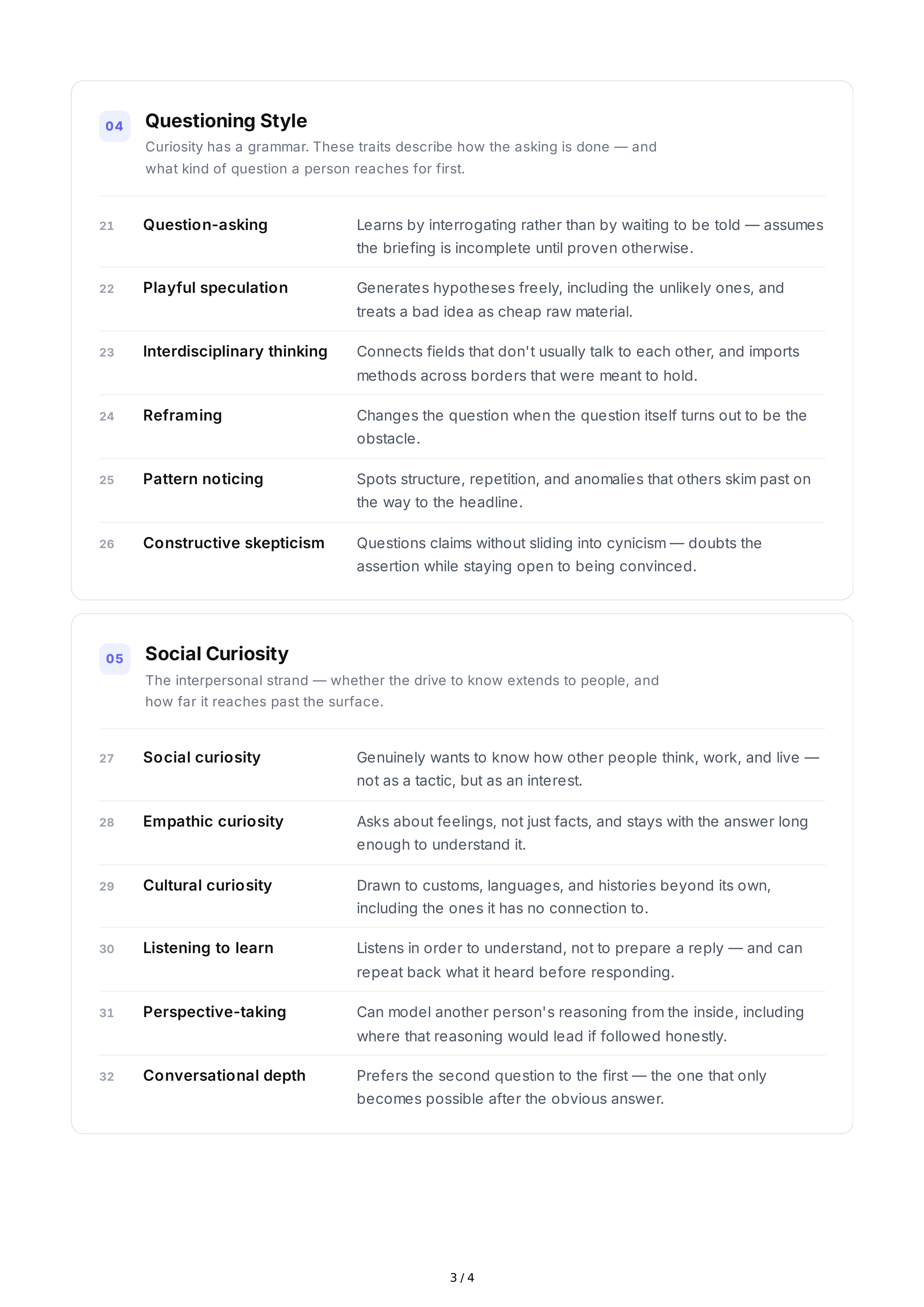
04
Questioning
Style
Curiosity
has
a
grammar
.
These
traits
describe
how
the
asking
is
done
—
and
what
kind
of
question
a
person
reaches
for
first
.
21
Question
-
asking
Learns
by
interrogating
rather
than
by
waiting
to
be
told
—
assumes
the
briefing
is
incomplete
until
proven
otherwise
.
22
Playful
speculation
Generates
hypotheses
freely
,
including
the
unlikely
ones
,
and
treats
a
bad
idea
as
cheap
raw
material
.
23
Interdisciplinary
thinking
Connects
fields
that
don
'
t
usually
talk
to
each
other
,
and
imports
methods
across
borders
that
were
meant
to
hold
.
24
Reframing
Changes
the
question
when
the
question
itself
turns
out
to
be
the
obstacle
.
25
Pattern
noticing
Spots
structure
,
repetition
,
and
anomalies
that
others
skim
past
on
the
way
to
the
headline
.
26
Constructive
skepticism
Questions
claims
without
sliding
into
cynicism
—
doubts
the
assertion
while
staying
open
to
being
convinced
.
05
Social
Curiosity
The
interpersonal
strand
—
whether
the
drive
to
know
extends
to
people
,
and
how
far
it
reaches
past
the
surface
.
27
Social
curiosity
Genuinely
wants
to
know
how
other
people
think
,
work
,
and
live
—
not
as
a
tactic
,
but
as
an
interest
.
28
Empathic
curiosity
Asks
about
feelings
,
not
just
facts
,
and
stays
with
the
answer
long
enough
to
understand
it
.
29
Cultural
curiosity
Drawn
to
customs
,
languages
,
and
histories
beyond
its
own
,
including
the
ones
it
has
no
connection
to
.
30
Listening
to
learn
Listens
in
order
to
understand
,
not
to
prepare
a
reply
—
and
can
repeat
back
what
it
heard
before
responding
.
31
Perspective
-
taking
Can
model
another
person
'
s
reasoning
from
the
inside
,
including
where
that
reasoning
would
lead
if
followed
honestly
.
32
Conversational
depth
Prefers
the
second
question
to
the
first
—
the
one
that
only
becomes
possible
after
the
obvious
answer
.
3 / 4
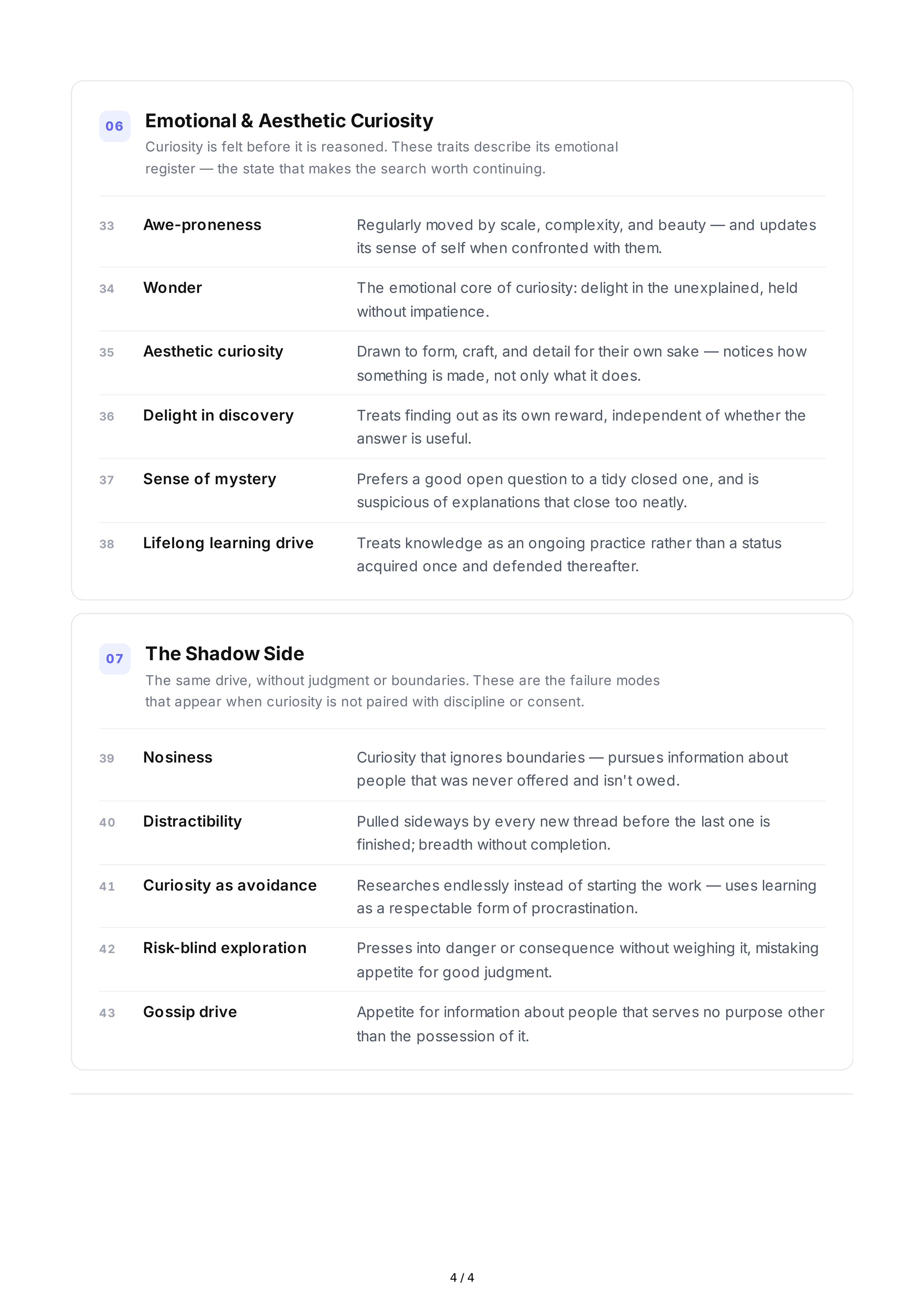
06
Emotional
&
Aesthetic
Curiosity
Curiosity
is
felt
before
it
is
reasoned
.
These
traits
describe
its
emotional
register
—
the
state
that
makes
the
search
worth
continuing
.
33
Awe
-
proneness
Regularly
moved
by
scale
,
complexity
,
and
beauty
—
and
updates
its
sense
of
self
when
confronted
with
them
.
34
Wonder
The
emotional
core
of
curiosity
:
delight
in
the
unexplained
,
held
without
impatience
.
35
Aesthetic
curiosity
Drawn
to
form
,
craft
,
and
detail
for
their
own
sake
—
notices
how
something
is
made
,
not
only
what
it
does
.
36
Delight
in
discovery
Treats
finding
out
as
its
own
reward
,
independent
of
whether
the
answer
is
useful
.
37
Sense
of
mystery
Prefers
a
good
open
question
to
a
tidy
closed
one
,
and
is
suspicious
of
explanations
that
close
too
neatly
.
38
Lifelong
learning
drive
Treats
knowledge
as
an
ongoing
practice
rather
than
a
status
acquired
once
and
defended
thereafter
.
07
The
Shadow
Side
The
same
drive
,
without
judgment
or
boundaries
.
These
are
the
failure
modes
that
appear
when
curiosity
is
not
paired
with
discipline
or
consent
.
39
Nosiness
Curiosity
that
ignores
boundaries
—
pursues
information
about
people
that
was
never
offered
and
isn
'
t
owed
.
40
Distractibility
Pulled
sideways
by
every
new
thread
before
the
last
one
is
finished
;
breadth
without
completion
.
41
Curiosity
as
avoidance
Researches
endlessly
instead
of
starting
the
work
—
uses
learning
as
a
respectable
form
of
procrastination
.
42
Risk
-
blind
exploration
Presses
into
danger
or
consequence
without
weighing
it
,
mistaking
appetite
for
good
judgment
.
43
Gossip
drive
Appetite
for
information
about
people
that
serves
no
purpose
other
than
the
possession
of
it
.
4 / 4