
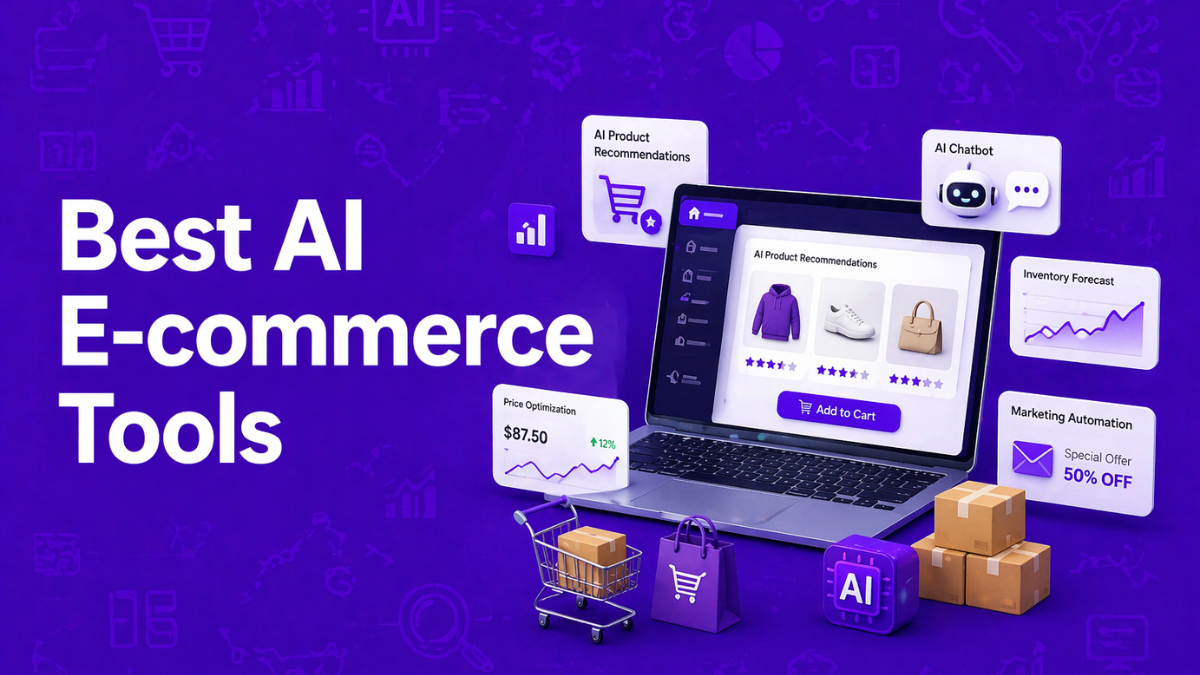
AI e-commerce tools are software platforms that use artificial intelligence to automate, optimize, and personalize online retail operations. In 2026, AI e-commerce tools power critical functions such as product discovery, customer support, marketing automation, and analytics. By analyzing large volumes of customer and operational data, these tools help businesses deliver more relevant shopping experiences, improve conversion rates, and streamline day-to-day ecommerce management.
What are AI E-commerce Tools
AI e-commerce tools are software platforms that use artificial intelligence to automate and improve different aspects of online retail operations. These tools analyze customer data, browsing behavior, and sales patterns to help businesses make smarter decisions and deliver better shopping experiences.
In ecommerce, AI tools are commonly used for tasks such as product recommendations, customer support automation, marketing personalization, pricing optimization, and analytics. By processing large amounts of data in real time, these tools help businesses increase efficiency, improve conversion rates, and scale operations without significantly increasing manual workload.
List of Best AI E-commerce Tools
- Fin AI (Intercom)
- Gorgias AI
- Tidio AI
- Klaviyo AI
- Omnisend AI
- GetResponse AI
- Dynamic Yield AI
- Nosto AI
- Constructor AI
- Jasper AI
- Flair AI
- Photoroom AI
- Triple Whale AI
- Polar Analytics AI
- Prisync AI
Comparison Table of AI E-commerce Tools
AI e-commerce tools differ based on their role in the commerce stack. Some focus on marketing automation, while others improve product discovery, analytics, or customer support.
The table below compares the leading AI e-commerce tools in 2026 based on their primary use case, capabilities, and pricing models.
| Tool | Best For | Key Features | Pricing | Category |
|---|---|---|---|---|
| Fin AI (Intercom) | Automated customer support | AI agent, ticket resolution, system integrations | Enterprise SaaS pricing | Customer Support |
| Gorgias AI | Ecommerce helpdesk automation | AI responses, Shopify integration, multichannel support | Subscription | Customer Support |
| Tidio AI | SMB chat automation | AI chatbot, live chat, support workflows | Freemium + paid plans | Customer Support |
| Klaviyo AI | Predictive email & SMS marketing | Segmentation, behavioral automation | Tiered pricing | Marketing Automation |
| Omnisend AI | Omnichannel marketing | Email, SMS, push automation | Tiered plans | Marketing Automation |
| GetResponse AI | Marketing automation | AI email campaigns, automation flows | Subscription | Marketing Automation |
| Dynamic Yield AI | Enterprise personalization | Real-time recommendations | Enterprise pricing | Personalization |
| Nosto AI | Ecommerce personalization | Behavioral analysis, recommendations | SaaS pricing | Personalization |
| Constructor AI | Product search optimization | Behavioral search, product discovery | Enterprise | Search & Discovery |
| Jasper AI | Content generation | AI copywriting, product descriptions | Subscription | Content Creation |
| Flair AI | Product photography | AI lifestyle images | SaaS | Creative Production |
| Photoroom AI | Image editing | Background removal, product images | Freemium + paid | Creative Production |
| Triple Whale AI | Ecommerce analytics | LTV tracking, marketing attribution | SaaS pricing | Analytics |
| Polar Analytics AI | Data dashboards | unified ecommerce analytics | SaaS pricing | Analytics |
| Prisync AI | Dynamic pricing | competitor tracking, price optimization | Subscription | Pricing Optimization |
While the comparison table provides a quick overview, understanding how each AI tool works in real ecommerce environments is essential. The sections below explain the capabilities, use cases, and practical benefits of each platform in detail.
Customer Support & Conversational AI
1. Fin AI (Intercom)
What is Fin AI (Intercom)
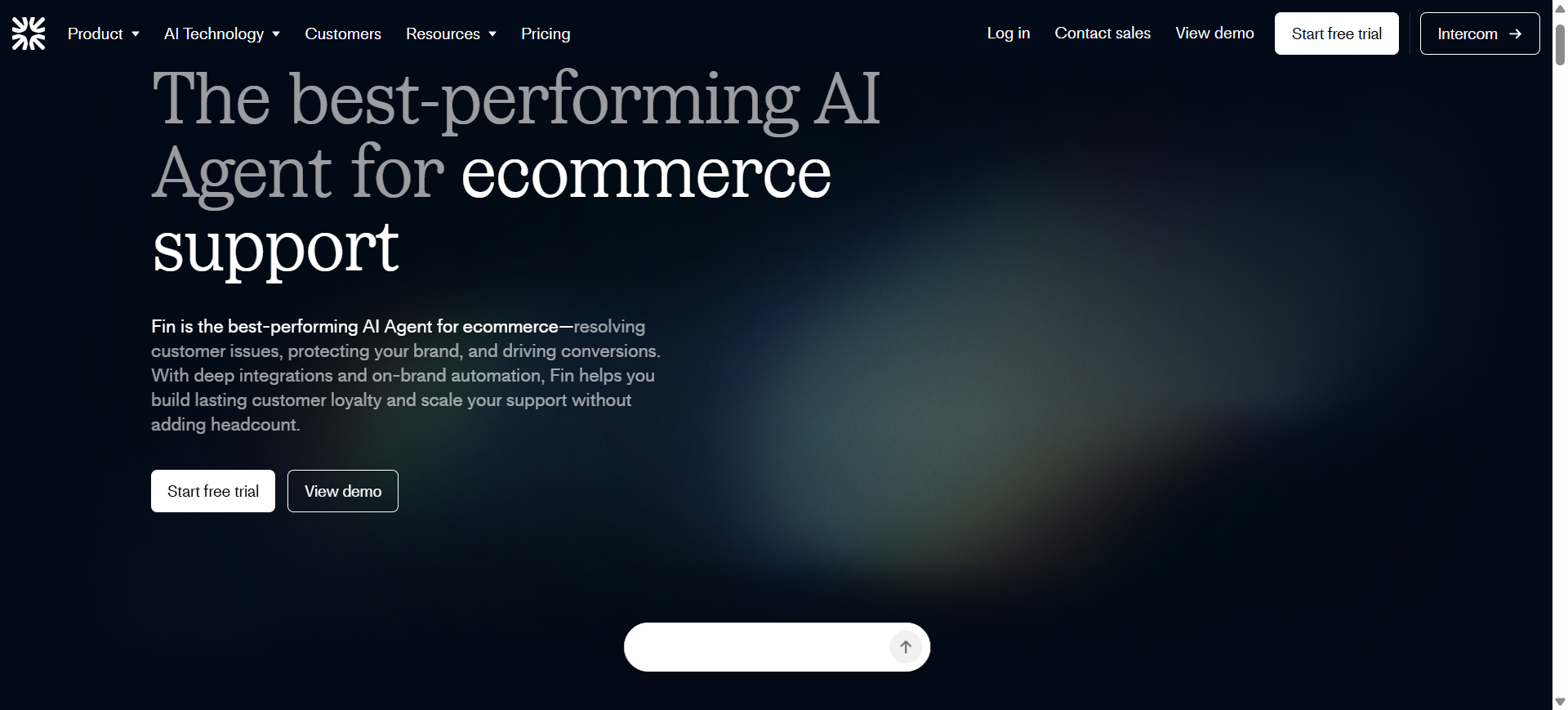
Fin is an AI-powered customer support agent developed by Intercom for automating customer conversations in e-commerce and online businesses. It uses large language models to understand customer questions and provide accurate responses based on help center content and company data. Fin can resolve many support requests automatically, such as order tracking or refunds, while escalating complex cases to human agents when necessary.
How to Use Fin AI for E-commerce
- Connect Fin AI to your ecommerce helpdesk, knowledge base, and store data.
- Train the AI using FAQs, policies, product details, and historical support conversations.
- Deploy the AI across channels like website chat, email, or messaging apps.
- Monitor resolution rates and continuously improve responses using performance analytics.
Benefits of Using Fin AI
- Automates a large portion of customer support conversations
- Provides instant responses to shoppers 24/7
- Reduces support workload for human agents
- Improves response speed and customer satisfaction
- Scales support operations without increasing staff
Use Cases of Fin AI for E-commerce
E-commerce brands use Fin AI to handle common customer inquiries such as order tracking, refund requests, shipping updates, and product questions. For example, an online fashion store can deploy Fin AI to answer delivery queries automatically, allowing support teams to focus on complex cases and high-value customer interactions.
Who Should Use It
- Shopify and ecommerce store owners
- Growing direct-to-consumer brands
- Mid-size ecommerce companies with support teams
- Businesses handling high volumes of customer queries
- Companies looking to automate customer service
Pricing
Fin AI uses outcome-based pricing starting at about $0.99 per successful resolution. Intercom platform plans typically start around $29–$39 per seat per month, with additional costs depending on automation usage and features.
2. Gorgias AI
What is Gorgias AI
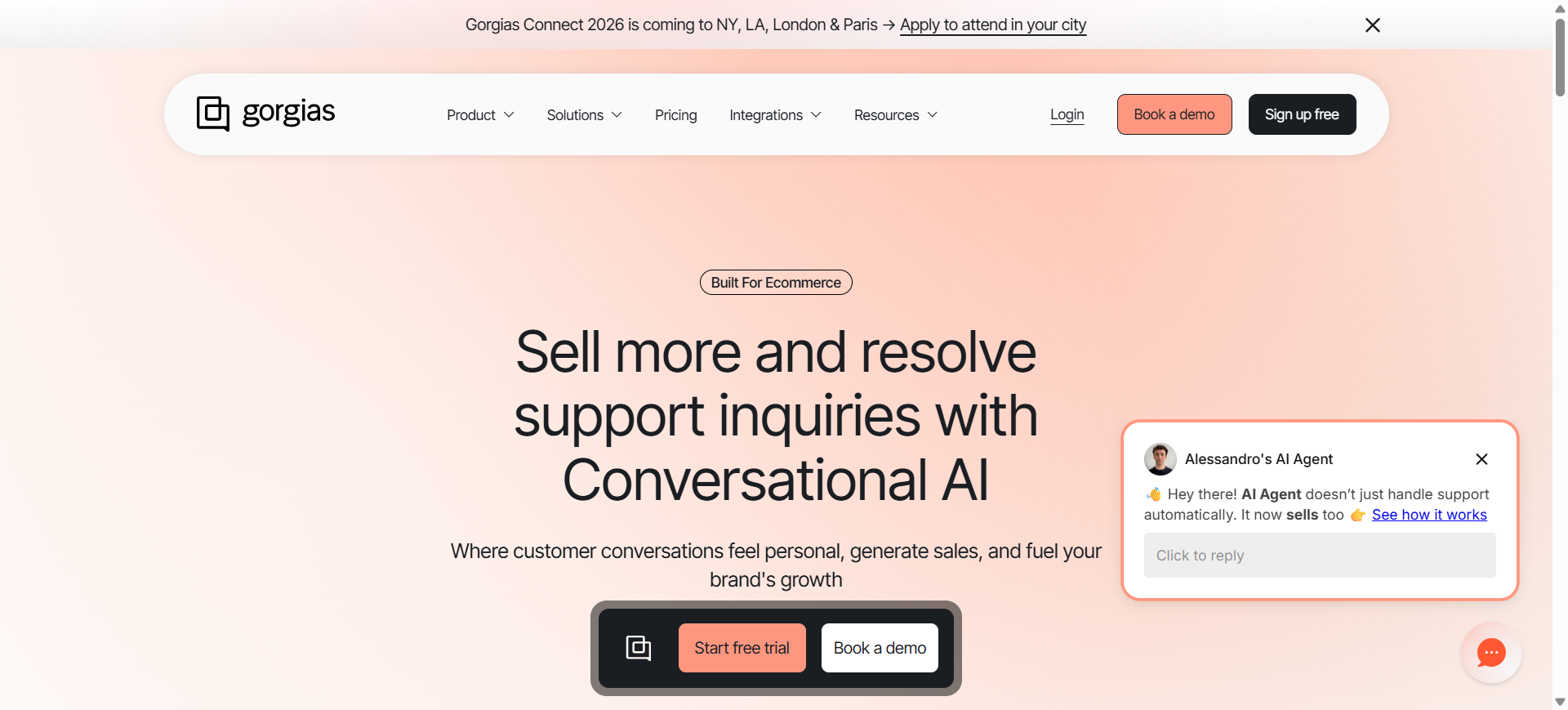
Gorgias is a customer support and conversational commerce platform designed specifically for e-commerce businesses. It combines an AI agent with a helpdesk to manage customer conversations across email, chat, SMS, and social media in one unified dashboard. The platform integrates deeply with ecommerce platforms like Shopify, allowing teams to view and edit orders directly within support tickets. Its AI automation can resolve many common inquiries such as order tracking or return requests without human intervention.
How to Use Gorgias AI for E-commerce
- Connect Gorgias to your ecommerce platform such as Shopify or BigCommerce.
- Import customer data, order history, and help center content to train the AI agent.
- Enable AI automation for common inquiries like order status, refunds, and shipping questions.
- Monitor ticket performance and refine automation workflows to improve resolution rates.
Benefits of Using Gorgias AI
- Automates repetitive customer support requests
- Centralizes conversations from multiple channels
- Improves response speed and customer satisfaction
- Enables support teams to manage orders directly from the helpdesk
- Scales customer support operations without adding more agents
Use Cases of Gorgias AI for E-commerce
Many ecommerce brands use Gorgias AI to handle high volumes of support requests during sales events. For example, a Shopify store running a holiday promotion can automatically answer order tracking questions, process return requests, and recommend related products through AI chat—reducing manual workload for support teams.
Who Should Use It
- Shopify and ecommerce store owners
- Direct-to-consumer brands
- Mid-size ecommerce companies with support teams
- Businesses receiving high support ticket volumes
- Online stores scaling customer experience operations
Pricing
Gorgias pricing is primarily based on monthly ticket volume, with plans starting around $10 per month for small stores and scaling with support demand. AI automation is typically charged separately, with automated resolutions costing roughly $0.90–$1 per interaction depending on billing plan.
3. Tidio AI
What is Tidio AI
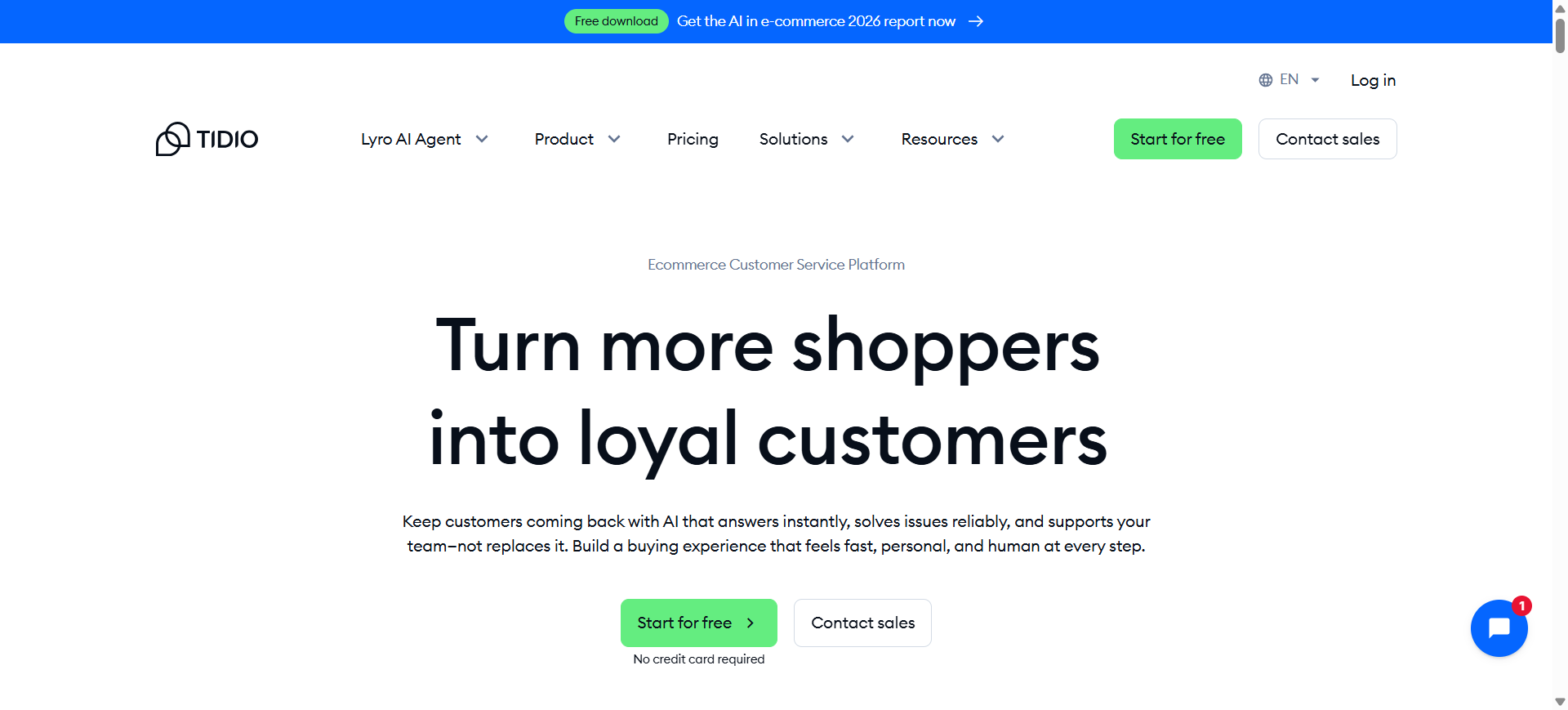
Tidio is a customer service platform that combines live chat, automation, and an AI chatbot called Lyro to help e-commerce businesses manage customer conversations. The AI agent can answer common questions about orders, shipping, and products using information from your website or help center. It works across website chat, email, and social messaging channels. Many online stores use Tidio to provide fast 24/7 support and automate routine customer inquiries.
How to Use Tidio AI for E-commerce
- Install the Tidio chat widget on your ecommerce store (Shopify, WooCommerce, or custom sites).
- Connect your FAQs, policies, and product information so the Lyro AI chatbot can learn from them.
- Create automated chat workflows for tasks like order tracking, product questions, and lead capture.
- Monitor conversations and let human agents handle complex support requests when needed.
Benefits of Using Tidio AI
- Automates common customer support questions
- Provides 24/7 instant responses to shoppers
- Reduces workload for customer service teams
- Improves response time and customer satisfaction
- Helps capture leads and increase sales through live chat
Use Cases of Tidio AI for E-commerce
An online electronics store can deploy Tidio AI to automatically answer customer questions such as “Where is my order?” or “Do you ship internationally?”. The chatbot provides instant responses using order data or help-center content, while complex issues are transferred to a human support agent.
Who Should Use It
- Small and medium ecommerce stores
- Shopify or WooCommerce merchants
- Direct-to-consumer brands
- Online businesses with limited support teams
- Stores needing automated customer service
Pricing
Tidio offers a Free plan with limited chatbot and live-chat conversations. Paid plans typically start around $24–$29 per month, while the Lyro AI chatbot add-on starts around $32–$39 per month for AI conversations, with higher tiers for larger support volumes.
Marketing Automation & Messaging
4. Klaviyo AI
What is Klaviyo AI
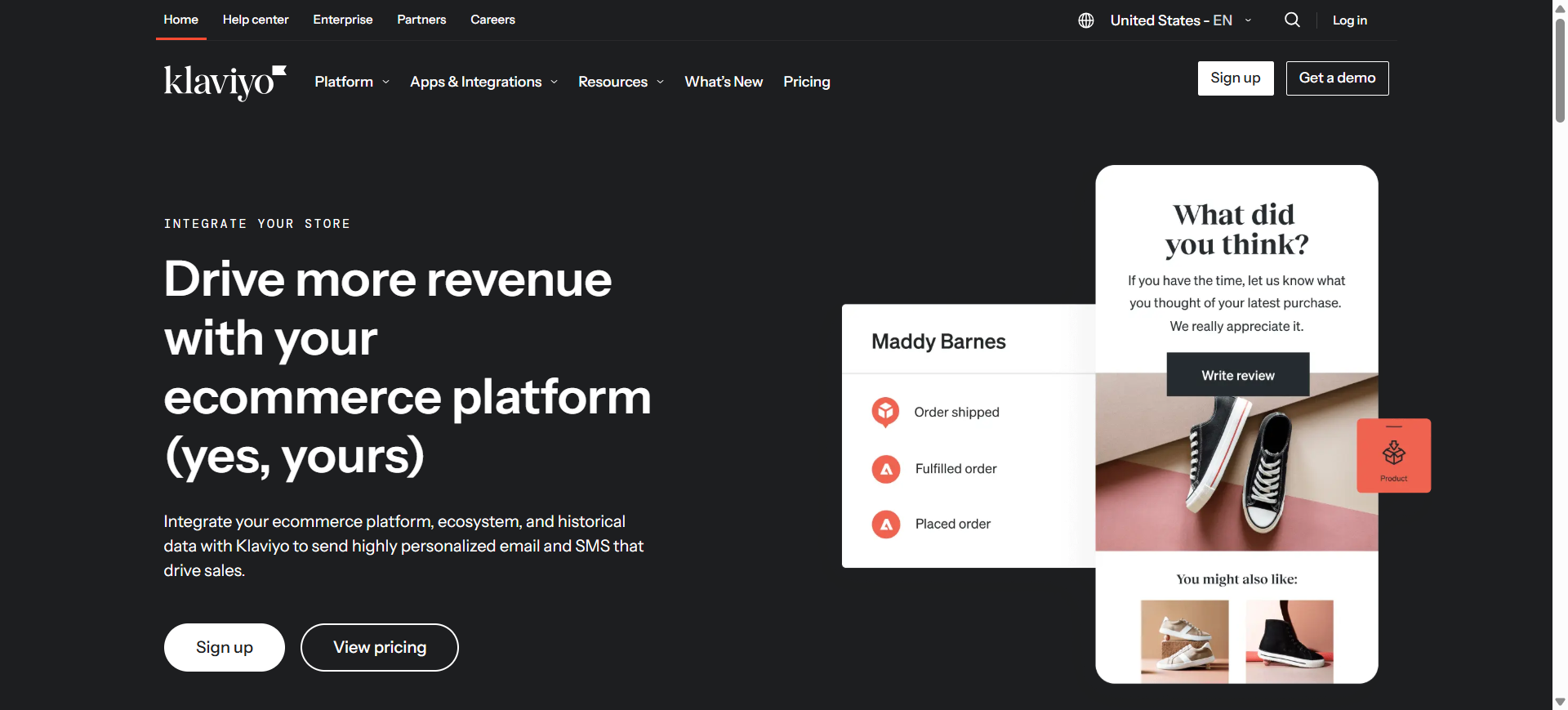
Klaviyo is a marketing automation platform built for e-commerce brands to manage email, SMS, and customer messaging using artificial intelligence. The platform analyzes customer behavior, purchase history, and browsing activity to create personalized marketing campaigns. Its AI capabilities help businesses send the right message at the right time through predictive segmentation, product recommendations, and automated workflows. Klaviyo also integrates directly with ecommerce platforms like Shopify and WooCommerce.
How to Use Klaviyo AI for E-commerce
- Connect Klaviyo to your ecommerce platform and sync your product catalog and customer data.
- Create automated flows such as welcome emails, abandoned cart reminders, and post-purchase campaigns.
- Use AI segmentation to target customers based on predicted buying behavior.
- Track campaign performance and optimize messaging using analytics and AI insights.
Benefits of Using Klaviyo AI
- Automates email and SMS marketing campaigns
- Personalizes product recommendations for each customer
- Improves customer retention and repeat purchases
- Provides predictive insights on customer behavior
- Centralizes customer data for better marketing decisions
Use Cases of Klaviyo AI for E-commerce
An online fashion retailer can use Klaviyo AI to automatically send abandoned cart emails with personalized product recommendations. The platform analyzes previous browsing and purchase behavior to suggest relevant items, increasing the likelihood that shoppers return and complete their purchase.
Who Should Use It
- Shopify and WooCommerce store owners
- Direct-to-consumer ecommerce brands
- Marketing teams focused on email and SMS automation
- Mid-size and growing ecommerce companies
- Businesses focused on customer retention and lifecycle marketing
Pricing
Klaviyo offers a free plan for up to about 250 contacts, allowing businesses to test email automation features. Paid plans typically start around $20–$35 per month and scale based on the number of contacts and messaging volume, with additional charges for SMS and advanced features.
5. Omnisend AI
What is Omnisend AI
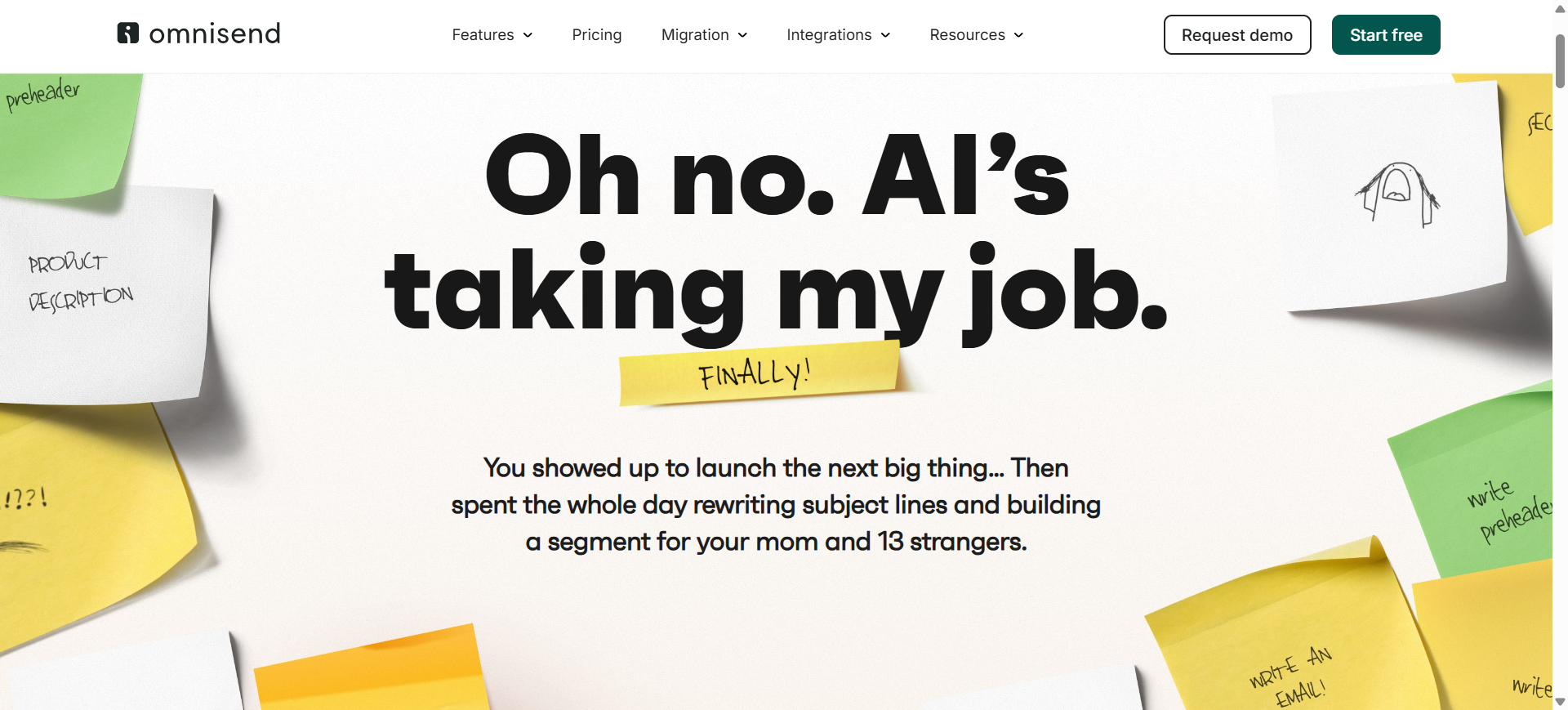
Omnisend is an e-commerce marketing automation platform that helps online stores manage email, SMS, and push notification campaigns from a single dashboard. It uses AI tools to generate marketing content, segment audiences, and personalize product recommendations for each customer. The platform integrates directly with ecommerce platforms like Shopify, WooCommerce, and BigCommerce, making it easy to automate customer communication. Many online retailers use Omnisend to run lifecycle marketing campaigns such as welcome emails, abandoned cart reminders, and post-purchase follow-ups.
How to Use Omnisend AI for E-commerce
- Connect Omnisend to your ecommerce platform to import customer and product data.
- Use AI tools to generate email campaigns, subject lines, and personalized content.
- Create automated workflows such as welcome sequences, cart recovery, and post-purchase messages.
- Monitor campaign performance and optimize marketing using analytics and segmentation tools.
Benefits of Using Omnisend AI
- Automates email, SMS, and push notification marketing
- Personalizes campaigns using customer behavior data
- Improves customer retention and repeat purchases
- Simplifies marketing automation with prebuilt workflows
- Centralizes ecommerce marketing channels in one platform
Use Cases of Omnisend AI for E-commerce
A Shopify fashion brand can use Omnisend AI to automatically send abandoned cart emails with personalized product recommendations. The system tracks browsing behavior and sends targeted email or SMS reminders to encourage customers to complete their purchases.
Who Should Use It
- Shopify and WooCommerce store owners
- Small to medium ecommerce businesses
- Marketing teams running email and SMS campaigns
- Direct-to-consumer brands focused on retention
- Online stores building automated marketing funnels
Pricing
Omnisend offers a Free plan for up to about 250 contacts, making it accessible for new ecommerce stores. Paid plans typically start around $16 per month for the Standard plan and about $59 per month for the Pro plan, with pricing increasing as your contact list grows.
6. GetResponse AI
What is GetResponse AI
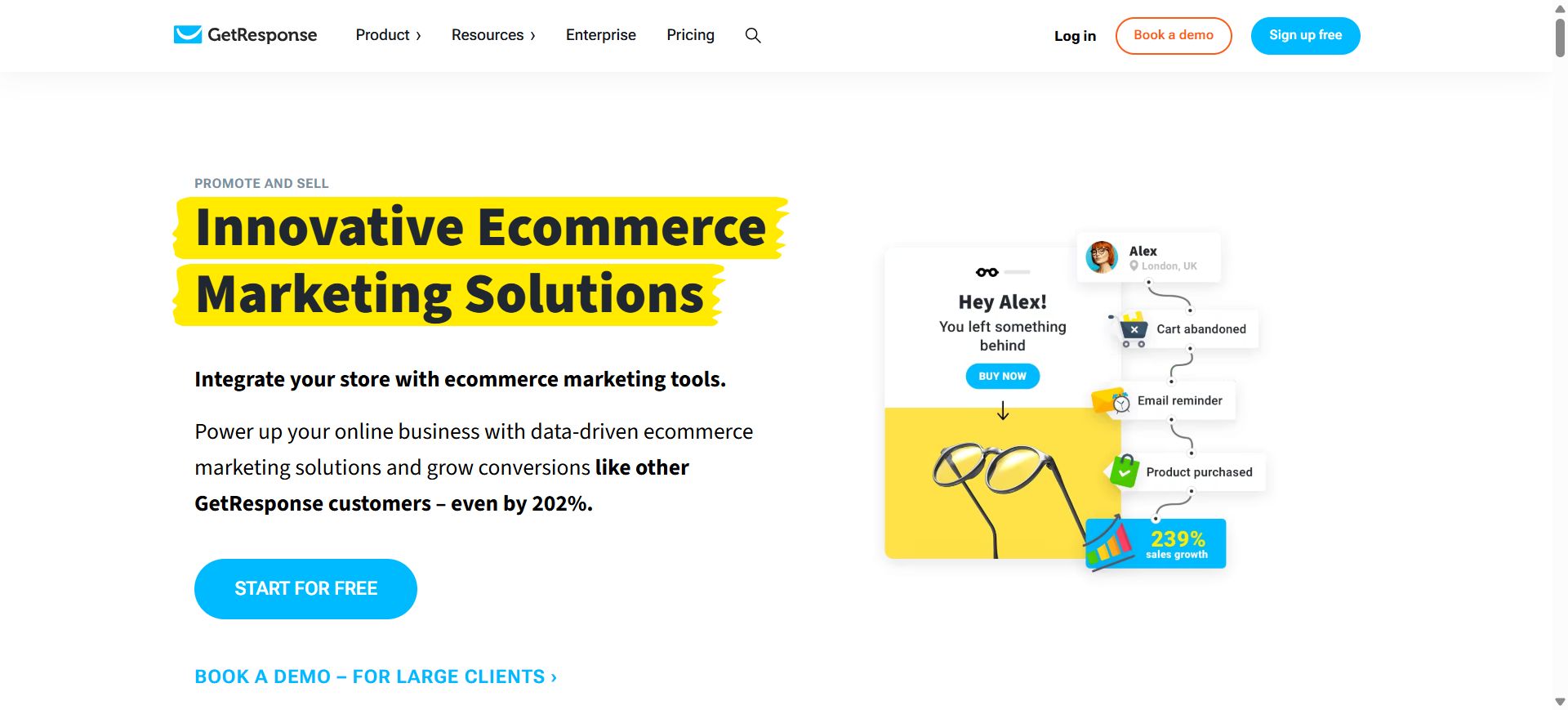
GetResponse is a marketing automation platform that helps e-commerce businesses manage email marketing, landing pages, and automated campaigns using artificial intelligence. The platform includes AI tools that generate email content, product recommendations, and marketing workflows based on customer behavior. It integrates with ecommerce platforms like Shopify, WooCommerce, and Magento to synchronize customer and order data. Many online stores use GetResponse to automate customer communication and improve conversion through targeted campaigns.
How to Use GetResponse AI for E-commerce
- Connect GetResponse to your ecommerce platform to sync products, customers, and order data.
- Use the AI email generator to create marketing campaigns, newsletters, and promotional messages.
- Set up automated workflows such as welcome emails, abandoned cart reminders, and product follow-ups.
- Track performance using analytics and optimize campaigns based on engagement data.
Benefits of Using GetResponse AI
- Automates email marketing and customer communication
- Generates marketing content using AI tools
- Improves customer engagement with targeted campaigns
- Supports landing pages, email automation, and lead capture
- Helps increase conversions through lifecycle marketing
Use Cases of GetResponse AI for E-commerce
An online electronics store can use GetResponse AI to automatically send abandoned cart emails with product recommendations and limited-time discounts. The automation workflow encourages customers to return and complete their purchases while tracking engagement metrics for campaign optimization.
Who Should Use It
- Small and medium ecommerce businesses
- Shopify and WooCommerce merchants
- Marketing teams managing email campaigns
- Online stores building automated sales funnels
- Businesses combining email marketing with landing pages
Pricing
GetResponse offers a Free plan for small lists with basic email features. Paid plans typically start around $19 per month for the Email Marketing plan, while advanced automation and ecommerce features are available in higher-tier plans that scale with contact list size.
Personalization & Product Discovery
7. Dynamic Yield AI
What is Dynamic Yield AI
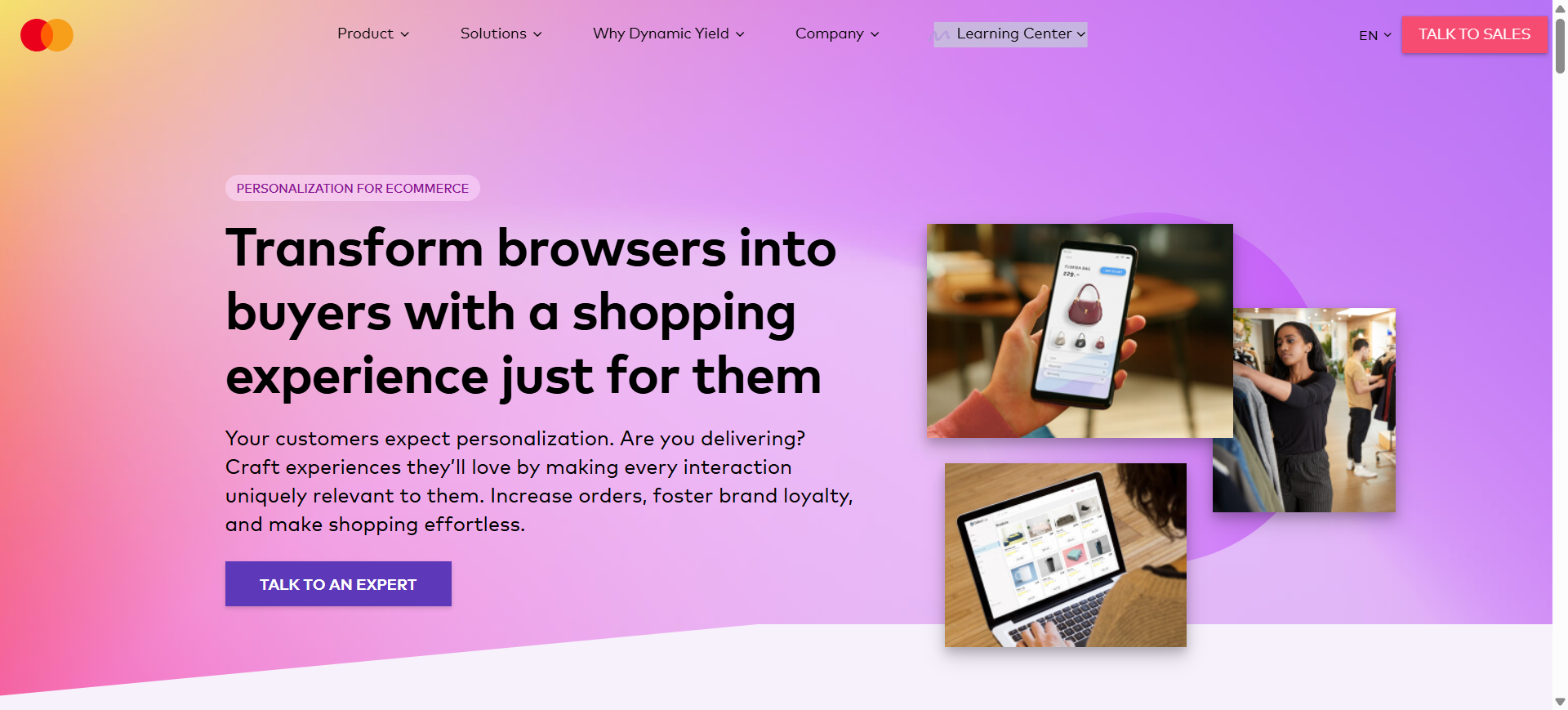
Dynamic Yield is an enterprise-level personalization and experience optimization platform used by e-commerce brands to tailor website experiences for each visitor. It uses machine learning to analyze customer behavior and deliver personalized product recommendations, content, and promotions in real time. The platform also supports experimentation such as A/B testing and audience segmentation to improve conversions and engagement. Many global ecommerce brands use Dynamic Yield to optimize the entire digital shopping journey across web, mobile, and email channels.
How to Use Dynamic Yield AI for E-commerce
- Integrate Dynamic Yield with your ecommerce platform and connect customer data sources.
- Segment audiences based on browsing behavior, purchase history, and demographics.
- Launch personalization campaigns such as product recommendations or dynamic homepage content.
- Run A/B tests to measure performance and automatically optimize the highest-converting experiences.
Benefits of Using Dynamic Yield AI
- Delivers personalized shopping experiences for every visitor
- Increases conversion rates through real-time product recommendations
- Enables data-driven optimization with A/B testing and experimentation
- Improves engagement with targeted content and offers
- Helps ecommerce teams understand customer behavior using analytics
Use Cases of Dynamic Yield AI for E-commerce
Large ecommerce brands often use Dynamic Yield AI to personalize homepage banners and product recommendations. For example, a returning customer who previously bought running shoes may see new athletic gear or related products on the homepage, while a new visitor sees trending items or promotions relevant to their browsing behavior.
Who Should Use It
- Mid-size and enterprise ecommerce brands
- Businesses with high website traffic
- Companies focused on advanced personalization strategies
- Marketing teams running experimentation and A/B testing
- Online retailers optimizing conversion rates
Pricing
Dynamic Yield typically uses custom enterprise pricing based on traffic, features, and deployment scale. Industry reports suggest pricing often starts around $35,000 per year, with larger implementations costing significantly more depending on personalization modules and usage.
8. Nosto AI
What is Nosto AI
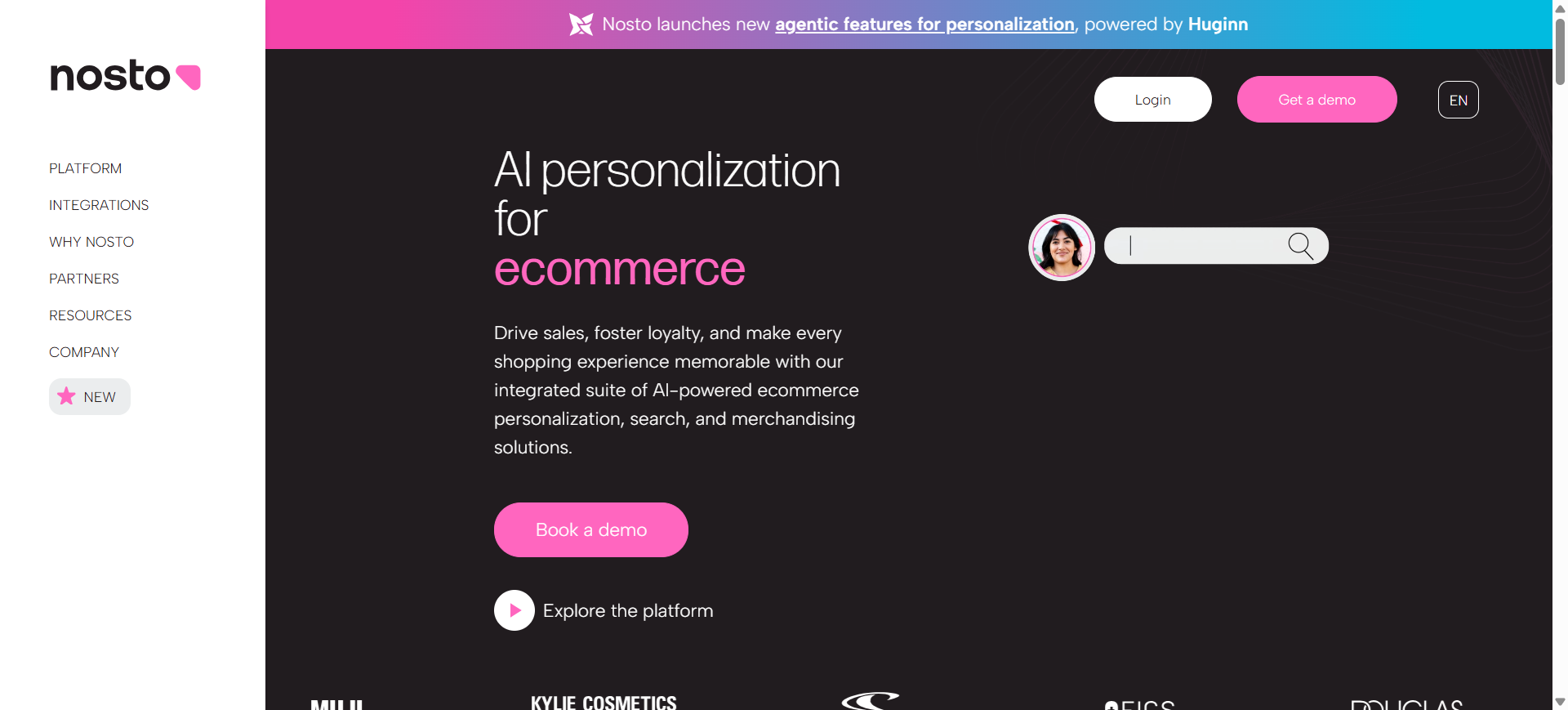
Nosto is an e-commerce personalization platform that helps online stores deliver tailored shopping experiences using artificial intelligence. The platform analyzes customer behavior such as browsing history, purchases, and engagement data to display personalized product recommendations, content, and promotions. It also includes merchandising and search optimization tools to improve product discovery and increase conversions. Many ecommerce brands use Nosto to boost average order value and customer retention through real-time personalization.
How to Use Nosto AI for E-commerce
- Integrate Nosto with your ecommerce platform such as Shopify, Magento, or BigCommerce.
- Allow the platform to collect behavioral data from visitors and customer interactions.
- Enable AI-powered features like product recommendations, dynamic content, and personalized campaigns.
- Monitor performance metrics and optimize recommendations using analytics and A/B testing.
Benefits of Using Nosto AI
- Delivers personalized product recommendations to each shopper
- Increases average order value through smart product suggestions
- Improves conversion rates with behavior-based targeting
- Automates merchandising and product discovery
- Enhances customer engagement with personalized experiences
Use Cases of Nosto AI for E-commerce
An online fashion store can use Nosto AI to automatically recommend complementary items such as matching accessories when customers browse a product. The system analyzes shopper behavior in real time and displays relevant suggestions that increase the likelihood of cross-selling and higher order value.
Who Should Use It
- Mid-size ecommerce brands
- Shopify and Magento store owners
- Direct-to-consumer retail brands
- Marketing teams focused on personalization
- Businesses aiming to increase average order value
Pricing
Nosto typically uses custom pricing based on store traffic, features, and business size, and companies usually request a demo to receive a quote. Smaller implementations may start around $100–$200 per month, while larger ecommerce brands can pay significantly more depending on personalization modules and scale.
9. Constructor AI
What is Constructor AI
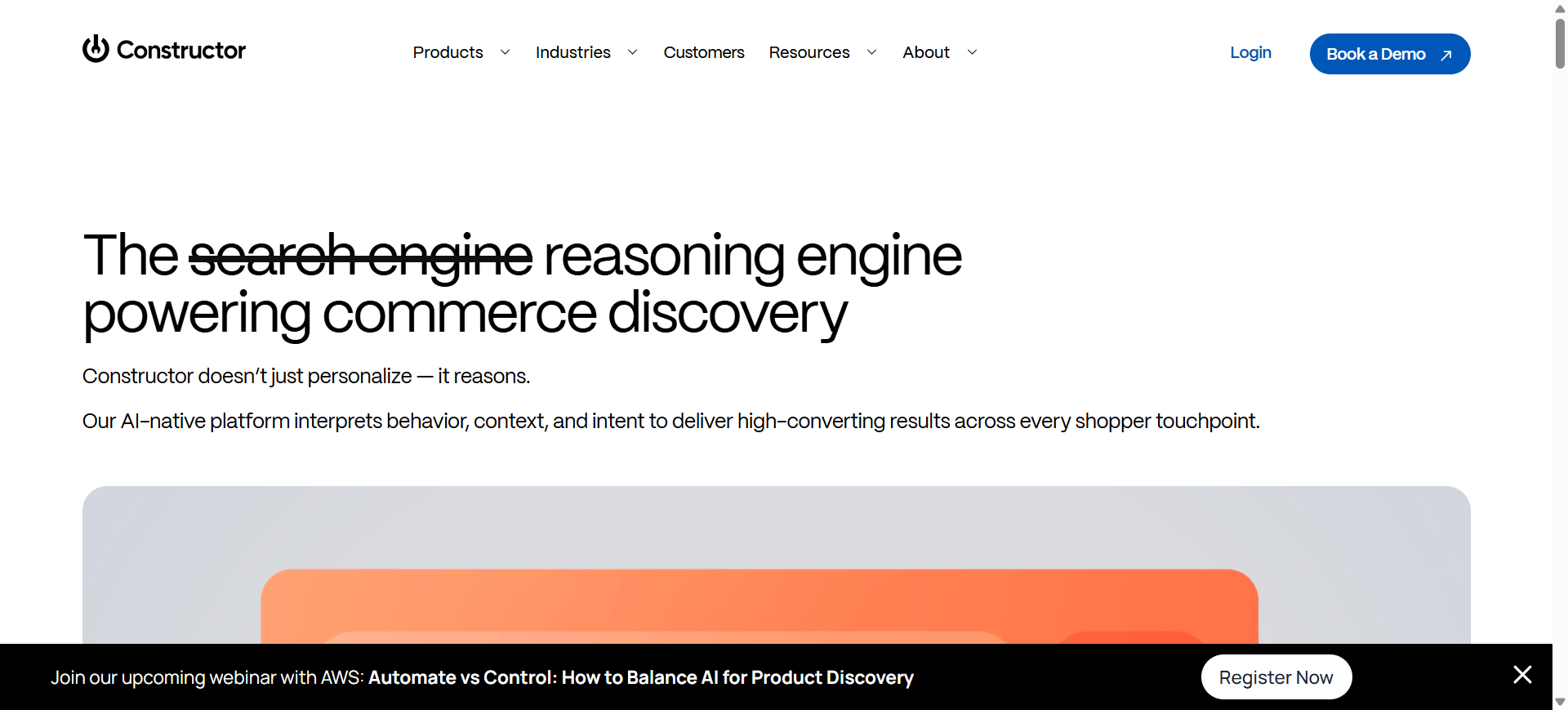
Constructor is an AI-powered product search and discovery platform built specifically for e-commerce websites. It helps shoppers find relevant products quickly through intelligent search, personalized recommendations, and browsing optimization. The platform analyzes real-time shopper behavior and uses machine learning to improve search results and product discovery. Many large ecommerce brands use Constructor to increase conversion rates and improve the overall shopping experience.
How to Use Constructor AI for E-commerce
- Integrate Constructor AI with your ecommerce platform and product catalog.
- Enable AI-powered search, autocomplete, and product recommendations on your website.
- Allow the system to analyze shopper behavior such as clicks, searches, and purchases.
- Use analytics and merchandising tools to optimize product discovery and improve conversion rates.
Benefits of Using Constructor AI
- Improves product search accuracy and relevance
- Increases ecommerce conversion rates through personalized recommendations
- Helps customers find products faster on large catalogs
- Provides insights into shopper behavior and search trends
- Optimizes merchandising using AI-driven data analysis
Use Cases of Constructor AI for E-commerce
Large online retailers often use Constructor AI to improve on-site search experiences. For example, a fashion ecommerce store with thousands of products can use Constructor to deliver personalized search results, recommend similar items, and guide shoppers toward products they are most likely to buy. This reduces bounce rates and increases revenue per visitor.
Who Should Use It
- Enterprise ecommerce brands
- Large online marketplaces
- Retailers with large product catalogs
- Businesses focused on search optimization
- Companies prioritizing personalized shopping experiences
Pricing
Constructor AI typically uses custom enterprise pricing based on website traffic, catalog size, and feature usage. Most implementations require enterprise contracts and consultation, making it more common for large ecommerce companies rather than small stores.
Content & Creative Generation
10. Jasper AI
What is Jasper AI
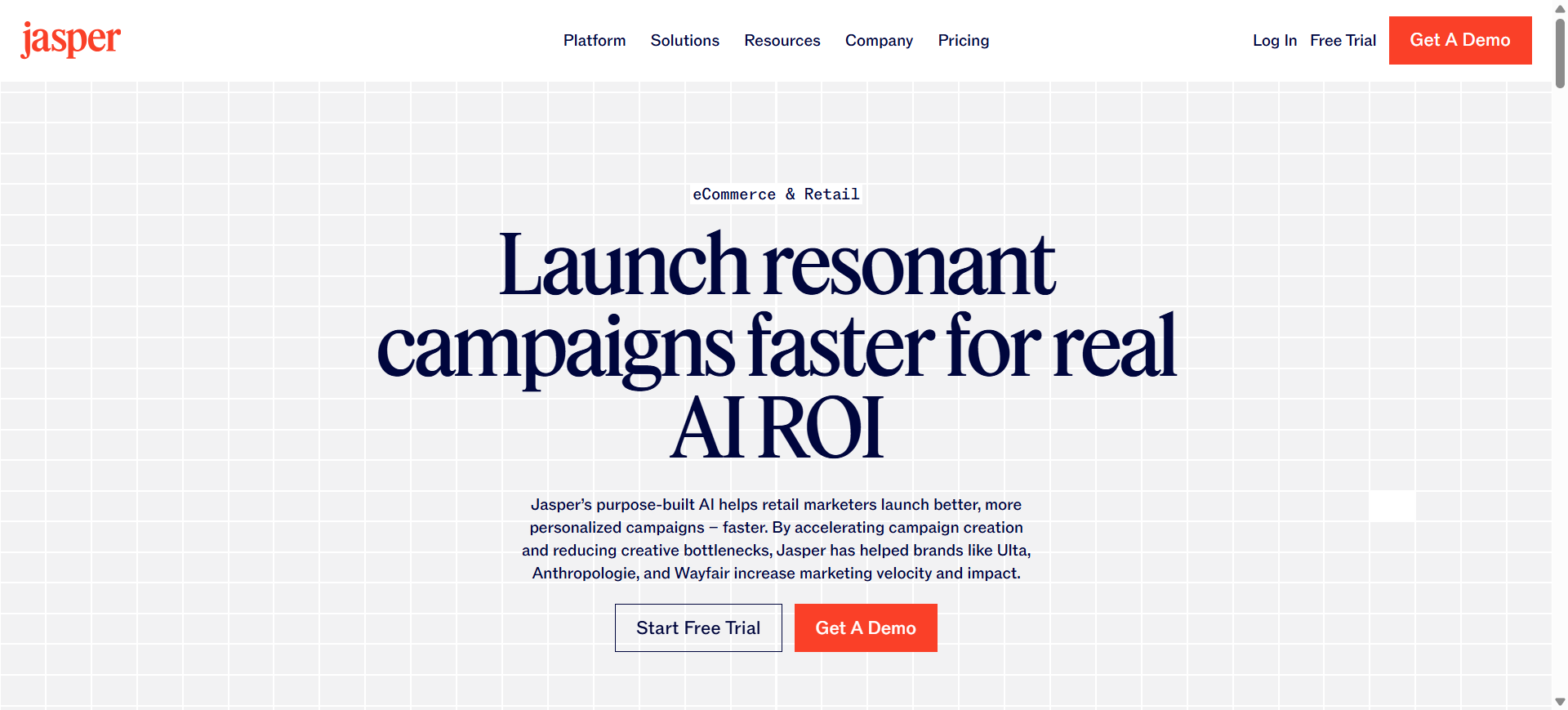
Jasper is an AI-powered content creation platform designed to help businesses generate marketing and ecommerce content quickly. It uses advanced language models to create product descriptions, blog posts, ad copy, email campaigns, and social media content. Jasper can also learn a company’s brand voice and apply it across marketing materials. More than 100,000 businesses use Jasper to scale content production and maintain consistent messaging across digital channels.
How to Use Jasper AI for E-commerce
- Create a Jasper account and connect it with your ecommerce marketing workflow.
- Input product details, brand tone, and campaign goals into the AI editor.
- Generate product descriptions, blog content, email campaigns, and ads automatically.
- Review and refine the content before publishing it across your ecommerce store or marketing channels.
Benefits of Using Jasper AI
- Speeds up creation of product descriptions and marketing content
- Maintains consistent brand voice across campaigns
- Helps ecommerce teams publish content faster
- Supports multiple marketing formats including ads, blogs, and emails
- Improves marketing productivity without increasing team size
Use Cases of Jasper AI for E-commerce
An ecommerce skincare brand can use Jasper AI to generate hundreds of optimized product descriptions for new product launches. The marketing team can also create blog articles, social media captions, and promotional emails quickly, helping the store scale content without hiring additional writers.
Who Should Use It
- Ecommerce marketing teams
- Shopify and WooCommerce store owners
- Direct-to-consumer brands
- Content creators managing product catalogs
- Agencies handling ecommerce marketing campaigns
Pricing
Jasper offers multiple subscription plans. The Creator plan starts around $39–$49 per month, while the Pro plan costs about $59–$69 per seat per month depending on billing cycle. Enterprise Business plans use custom pricing and include advanced collaboration and integrations.
11. Flair AI
What is Flair AI
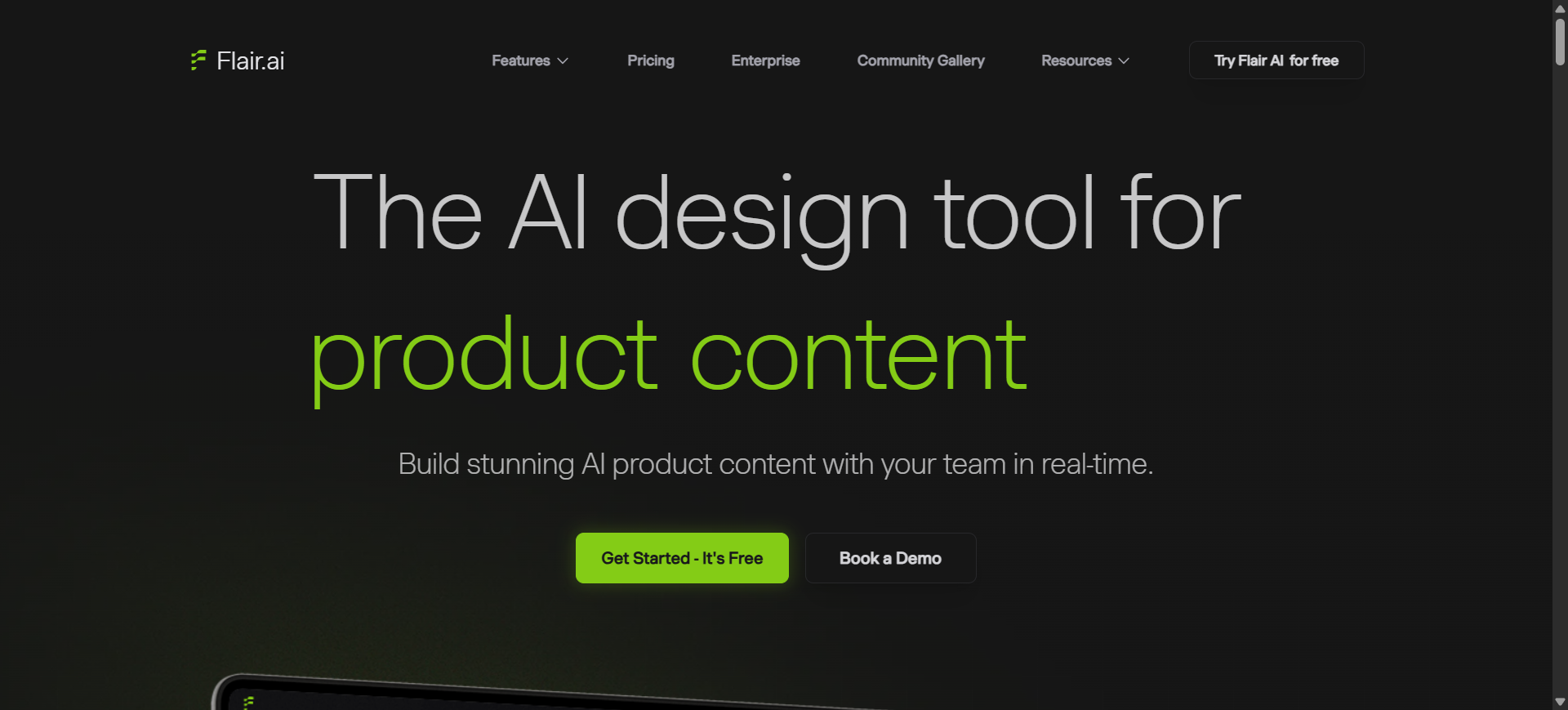
Flair is an AI-powered product photography and design platform built for e-commerce brands and marketing teams. It allows businesses to generate professional product images, lifestyle scenes, and marketing visuals without traditional photo shoots. The platform uses generative AI to place products in realistic environments with automatic lighting, shadows, and props. Many online stores use Flair AI to create high-quality visuals quickly for product pages, ads, and social media campaigns.
How to Use Flair AI for E-commerce
- Upload a product image from your catalog or ecommerce store.
- Use the drag-and-drop editor to add backgrounds, props, or AI-generated scenes.
- Customize lighting, angles, and styling to match your brand aesthetic.
- Export the final images and use them on product pages, ads, or marketing campaigns.
Benefits of Using Flair AI
- Reduces the cost of traditional product photography
- Generates professional lifestyle product images quickly
- Helps create consistent visuals across marketing channels
- Speeds up content production for ecommerce catalogs
- Enables marketing teams to create visuals without designers
Use Cases of Flair AI for E-commerce
A skincare brand launching new products can upload a simple product photo and use Flair AI to generate multiple lifestyle images showing the product in spa-like environments. These visuals can then be used on the product page, Instagram ads, and email campaigns to improve engagement and conversions.
Who Should Use It
- Shopify and ecommerce store owners
- Direct-to-consumer brands
- Marketing teams creating ad creatives
- Fashion, beauty, and lifestyle ecommerce brands
- Businesses managing large product catalogs
Pricing
Flair AI offers a Free plan with limited image generation for testing. Paid plans typically start around $8–$10 per month, with higher tiers such as Pro+, Scale, and Enterprise providing more image credits, AI models, and advanced features.
12. Photoroom AI

What is Photoroom AI
Photoroom is an AI-powered image editing and product photography tool designed for e-commerce businesses and online sellers. It helps create professional product photos by automatically removing backgrounds, adjusting lighting, and generating new backgrounds or scenes. The platform also includes batch editing tools that allow businesses to process large product catalogs quickly. Many ecommerce brands use Photoroom to produce marketplace-ready images for stores, ads, and product listings.
How to Use Photoroom AI for E-commerce
- Upload product images from your store or product catalog.
- Use AI tools to remove backgrounds, add shadows, or generate new product scenes.
- Apply templates and batch editing to standardize images across your catalog.
- Export high-quality images and upload them to your ecommerce store or marketplaces.
Benefits of Using Photoroom AI
- Automatically removes backgrounds from product images
- Creates studio-quality product visuals without photoshoots
- Speeds up editing with batch processing tools
- Helps maintain consistent visuals across product catalogs
- Reduces cost and time spent on traditional product photography
Use Cases of Photoroom AI for E-commerce
An online fashion reseller can upload dozens of product photos and use Photoroom’s batch editing feature to automatically apply white backgrounds and shadows. The result is a set of professional, marketplace-ready images that can be uploaded to Shopify, Amazon, or eBay within minutes.
Who Should Use It
- Shopify and marketplace sellers
- Small ecommerce businesses
- Resellers on Amazon, eBay, or Etsy
- Marketing teams creating product visuals
- Brands managing large product catalogs
Pricing
Photoroom offers a free plan with limited features and watermarked exports for testing the platform. Paid plans typically start around $9–$15 per month, while advanced plans include batch editing, higher resolution exports, and API access for automation.
Analytics & Data Intelligence
13. Triple Whale AI
What is Triple Whale AI
Triple Whale is an ecommerce analytics and intelligence platform that helps online stores track performance, analyze marketing data, and optimize revenue. It centralizes data from advertising channels, storefronts, and marketing tools into a single dashboard for better decision-making. The platform also includes AI features such as Moby, which analyzes data and provides automated insights, recommendations, and performance alerts. Many direct-to-consumer brands use Triple Whale to monitor profitability, attribution, and customer lifetime value.
How to Use Triple Whale AI for E-commerce
- Connect Triple Whale with your ecommerce store and advertising platforms such as Shopify, Meta Ads, and Google Ads.
- Allow the system to collect and unify marketing, revenue, and customer data.
- Use dashboards and AI insights to monitor metrics like ROAS, profit, and customer lifetime value.
- Optimize marketing campaigns and budgets using AI-generated recommendations.
Benefits of Using Triple Whale AI
- Centralizes ecommerce data from multiple platforms
- Provides accurate attribution for marketing performance
- Helps track profitability and revenue in real time
- Uses AI insights to identify growth opportunities
- Improves marketing decisions with data-driven analytics
Use Cases of Triple Whale AI for E-commerce
A direct-to-consumer apparel brand can use Triple Whale AI to track advertising performance across Meta, Google, and TikTok campaigns. By analyzing attribution data and profit metrics in one dashboard, the marketing team can identify which campaigns generate the highest return and reallocate budgets to maximize revenue.
Who Should Use It
- Shopify and DTC ecommerce brands
- Marketing teams running paid advertising campaigns
- Ecommerce businesses focused on analytics and attribution
- Mid-size and scaling online retailers
- Companies optimizing customer acquisition and profitability
Pricing
Triple Whale offers a free plan with limited analytics features for smaller ecommerce brands. Paid plans generally start around $129 per month and scale depending on revenue, integrations, and AI features, with enterprise plans available for larger businesses.
14. Polar Analytics AI
What is Polar Analytics AI
Polar Analytics is an ecommerce analytics and business intelligence platform designed to help online stores understand performance across marketing, sales, and customer data. It consolidates data from multiple sources—such as Shopify, Google Ads, Meta, and Klaviyo—into a single dashboard. The platform uses AI insights and automation to identify trends, calculate key metrics like CAC and LTV, and provide actionable recommendations for improving revenue and marketing performance.
How to Use Polar Analytics AI for E-commerce
- Connect Polar Analytics to your ecommerce platform and marketing tools using built-in integrations.
- Allow the platform to collect and unify data from channels like Shopify, advertising platforms, and email marketing tools.
- Use customizable dashboards to track KPIs such as revenue, customer acquisition cost, and lifetime value.
- Apply AI insights and reports to optimize marketing campaigns and business strategies.
Benefits of Using Polar Analytics AI
- Centralizes ecommerce data from multiple platforms
- Provides AI-driven insights for marketing and revenue optimization
- Tracks key metrics such as CAC, LTV, and ROAS
- Reduces manual reporting with automated dashboards
- Helps teams make faster data-driven decisions
Use Cases of Polar Analytics AI for E-commerce
A direct-to-consumer brand running ads on Meta and Google can use Polar Analytics AI to track campaign performance in one dashboard. The platform consolidates marketing and sales data, helping the team identify which channels generate the highest ROI and where to adjust budgets for better profitability.
Who Should Use It
- Shopify and DTC ecommerce brands
- Marketing teams managing multiple advertising channels
- Mid-size and enterprise ecommerce companies
- Businesses focused on data-driven growth
- Brands needing centralized analytics dashboards
Pricing
Polar Analytics typically offers custom pricing based on store revenue, data sources, and analytics features. Industry reports indicate plans often start around $300 per month and can exceed $700 per month for larger ecommerce brands, depending on scale and integrations.
Pricing Optimization
15. Prisync AI
What is Prisync AI
Prisync is an ecommerce pricing intelligence and competitor price monitoring platform designed to help online retailers stay competitive. It automatically tracks competitor prices and stock availability across multiple websites and marketplaces. The platform uses pricing analytics and automation rules to recommend optimal product pricing. Ecommerce businesses use Prisync to monitor market trends, adjust prices dynamically, and improve profit margins without manual price tracking.
How to Use Prisync AI for E-commerce
- Connect your ecommerce store (Shopify, WooCommerce, Magento, etc.) and import your product catalog.
- Add competitor websites or marketplaces where similar products are sold.
- Enable automated price tracking and dynamic pricing rules.
- Monitor dashboards and reports to adjust prices and optimize margins automatically.
Benefits of Using Prisync AI
- Tracks competitor prices and stock availability automatically
- Helps businesses set competitive product pricing
- Automates price changes using dynamic pricing rules
- Provides pricing analytics and market trend insights
- Reduces manual work involved in monitoring competitors
Use Cases of Prisync AI for E-commerce
An online electronics retailer selling smartphones across multiple marketplaces can use Prisync AI to monitor competitor prices daily. If competitors lower their prices, Prisync automatically suggests adjustments or triggers rule-based repricing, helping the store remain competitive while protecting profit margins.
Who Should Use It
- Ecommerce retailers selling competitive products
- Shopify, WooCommerce, and Magento store owners
- Online marketplaces and resellers
- Businesses managing large product catalogs
- Companies using dynamic pricing strategies
Pricing
Prisync offers a 14-day free trial for testing the platform before committing. Paid plans typically start around $99 per month and can scale up to about $399 per month depending on catalog size and features, with higher tiers supporting larger product catalogs and advanced analytics.
AI Ecommerce Agents
What are AI Ecommerce Agents
AI ecommerce agents are autonomous software systems that use artificial intelligence to analyze data, make decisions, and execute ecommerce tasks automatically. Unlike traditional AI tools that only generate insights or recommendations, AI agents can take action across ecommerce platforms, marketing systems, and customer service workflows.
In an ecommerce environment, AI agents operate by connecting to multiple systems such as online stores, CRM platforms, support tools, and marketing automation platforms. Using machine learning models and natural language processing, they interpret customer behavior, business rules, and real-time data to complete tasks with minimal human intervention.
AI ecommerce agents typically perform functions such as:
- Resolving customer support requests automatically
- Personalizing product recommendations in real time
- Optimizing pricing and promotions
- Triggering lifecycle marketing campaigns
- Monitoring store performance and operational metrics
For example, a customer support AI agent can retrieve order details, issue refunds, update shipping information, and respond to customer inquiries without requiring a human agent to intervene.
The key difference between AI tools and AI agents lies in their level of autonomy. Traditional AI tools assist humans by generating content or providing analytics, while AI agents operate as decision-making systems that execute multi-step workflows across ecommerce platforms.
In 2026, AI ecommerce agents are increasingly used by online retailers to automate complex operations, reduce support workload, improve customer experience, and scale ecommerce businesses without proportionally increasing operational teams.
How AI Agents Are Transforming Ecommerce Automation
AI agents are transforming ecommerce automation by enabling systems to analyze data, make decisions, and execute tasks without constant human input. Unlike traditional rule-based automation, AI agents interpret real-time customer behavior, inventory data, and marketing signals to manage workflows dynamically.
In ecommerce, they can automatically resolve support requests, personalize product recommendations, optimize pricing, and trigger targeted marketing campaigns. By connecting multiple systems such as store platforms, CRM tools, and analytics dashboards, AI agents coordinate complex processes across the customer journey.
This shift allows ecommerce businesses to scale operations, reduce manual work, and deliver faster, more personalized customer experiences while improving efficiency across marketing, support, and store optimization.
Examples of AI Agents in Ecommerce Platforms
AI agents in ecommerce platforms automate specific parts of the online shopping experience by analyzing data and executing tasks across systems. These agents typically operate within customer support, marketing automation, product discovery, and store operations.
Common examples include:
- Customer support agents that automatically answer order tracking questions, process refunds, or update shipping information using data from ecommerce systems. Tools like Fin demonstrate this capability.
- Marketing automation agents that analyze customer behavior and trigger personalized email or SMS campaigns. Platforms such as Klaviyo use AI to determine the best time, audience, and message for lifecycle marketing.
- Product recommendation agents that personalize product discovery by showing items based on browsing behavior and purchase history. Personalization platforms like Dynamic Yield enable this type of AI-driven merchandising.
- Conversational shopping agents that interact with customers through chat interfaces to answer product questions or suggest items. Solutions such as Tidio provide automated shopping assistance through conversational interfaces.
These examples illustrate how AI agents are increasingly embedded within ecommerce platforms to automate customer interactions, personalize shopping experiences, and support operational decision-making.
Ecommerce tools offering AI agents
Several ecommerce platforms now provide AI agents that automate customer interactions, marketing workflows, and operational processes. These tools connect with ecommerce systems such as online stores, CRM platforms, and analytics tools to analyze data and execute actions automatically.
Examples of ecommerce tools offering AI agents include:
- Fin – A customer support AI agent designed to resolve ecommerce issues end-to-end. It can answer customer questions, access order data, and perform actions like refunds or account updates through system integrations.
- Tidio – Provides conversational AI agents that automate customer support through live chat and messaging channels. Its AI assistant can respond to common customer questions and escalate complex issues to human agents.
- Klaviyo – Uses AI-driven agents to analyze customer behavior and automatically trigger personalized email and SMS campaigns based on predictive segmentation.
- Bloomreach – Offers AI-powered agents that personalize product discovery, search results, and merchandising decisions across ecommerce websites.
- DigitalGenius – Provides AI agents designed specifically for ecommerce customer service automation, capable of resolving support tickets using order and customer data.
- Duvo.ai – A newer AI-agent platform that deploys autonomous agents to manage operational workflows across retail and ecommerce systems, helping automate repetitive business processes.
These tools demonstrate how AI agents are becoming an operational layer within ecommerce technology stacks, enabling businesses to automate customer support, marketing campaigns, product discovery, and internal workflows while maintaining human oversight for complex decisions.
AI Agents vs Traditional AI Tools
AI agents and traditional AI tools both use artificial intelligence to support ecommerce operations, but they differ significantly in capability, autonomy, and scope of automation.
Traditional AI tools typically assist humans by generating insights, recommendations, or content. For example, tools like Jasper help generate marketing copy, while analytics platforms such as Triple Whale analyze performance data. However, these tools usually require a person to review the output and take action.
AI agents operate at a higher level of automation. Instead of only generating outputs, they can interpret data, make decisions, and execute tasks across systems. For instance, customer support agents like Fin can retrieve order information, answer customer inquiries, and perform actions such as updating accounts or processing refunds.
| Capability | Traditional AI Tools | AI Agents |
|---|---|---|
| Primary Role | Assist human tasks | Execute workflows autonomously |
| Data Access | Limited or task-specific | Integrates across multiple systems |
| Action Capability | Generates content or insights | Performs multi-step actions |
| Automation Scope | Single-task automation | End-to-end workflow automation |
| Human Involvement | High | Lower with human oversight |
In ecommerce, traditional AI tools are commonly used for content creation, analytics, and reporting, while AI agents are increasingly used to automate customer support, marketing orchestration, pricing optimization, and operational workflows. As AI capabilities evolve, many ecommerce platforms are integrating agent-based systems to handle complex processes that previously required manual coordination.
Where AI is Used in Ecommerce
AI is used across multiple stages of the ecommerce lifecycle to automate operations, improve customer experiences, and support data-driven decision making. Modern ecommerce platforms integrate AI into marketing, customer support, product discovery, analytics, and operational workflows.
Common areas where AI is applied in ecommerce include:
Customer Support Automation
AI-powered chat and support agents handle common customer questions such as order tracking, refunds, return policies, and product inquiries. Platforms like Tidio automate conversations while allowing human agents to manage complex cases.
Product Discovery and Personalization
AI analyzes browsing behavior, purchase history, and customer preferences to recommend relevant products. Personalization platforms such as Dynamic Yield optimize product recommendations, search results, and merchandising.
Marketing Automation
AI tools help businesses create and automate lifecycle marketing campaigns through predictive segmentation and behavioral targeting. Platforms like Klaviyo use AI to trigger personalized email and SMS campaigns.
Pricing and Revenue Optimization
AI systems monitor competitor pricing, demand signals, and inventory levels to recommend or automate pricing strategies. Tools like Prisync support real-time pricing optimization.
Content and Creative Production
AI assists with creating product descriptions, marketing content, and product images. Content tools such as Jasper help ecommerce teams generate copy at scale.
Analytics and Customer Insights
AI-powered analytics platforms analyze large volumes of ecommerce data to identify patterns, customer behavior trends, and performance opportunities. Solutions like Triple Whale provide attribution and performance insights.
By integrating AI across these areas, ecommerce businesses can automate repetitive processes while improving personalization, operational efficiency, and data-driven decision making.
Benefits of AI Ecommerce Tools
AI ecommerce tools help online businesses automate operations, improve customer experiences, and make faster data-driven decisions.
Key benefits include:
- Personalized shopping experiences through AI-driven product recommendations and targeted marketing
- Faster customer support with automated chatbots and AI support agents
- Higher conversion rates using personalized offers and optimized product discovery
- Improved operational efficiency by automating repetitive tasks
- Better decision making through AI-powered analytics and performance insights
- Scalable growth by managing increasing customer interactions without expanding teams
Who Should Use AI E-commerce Tools
AI e-commerce tools are used by businesses of different sizes to automate operations and improve online sales performance. These platforms are especially useful for companies managing large product catalogs, high customer interaction volumes, or complex marketing campaigns.
They are commonly used by:
- Shopify and WooCommerce store owners
- Direct-to-consumer ecommerce brands
- Online retailers managing large product catalogs
- Marketing teams running lifecycle campaigns
- Businesses scaling customer support and analytics operations
How to Choose the Right AI E-commerce Tool
1. Identify Your Business Needs
Start by defining what you want AI to improve. This could be customer support automation, marketing campaigns, product recommendations, or analytics.
2. Check Integrations
Choose tools that integrate with your ecommerce platform such as Shopify, WooCommerce, or BigCommerce. Proper integration allows the AI to access product and customer data.
3. Compare Features
Evaluate whether the tool provides the capabilities you need, such as automation, personalization, analytics, or dynamic pricing.
4. Evaluate Pricing and ROI
Look beyond the subscription cost and consider the potential return on investment, such as increased conversions or reduced operational workload.
5. Consider Scalability
Select tools that can grow with your business as your store expands and customer data increases.
6. Test Before Choosing
Use free trials or demos to test how the tool works with your ecommerce workflow before committing to a paid plan.
In practice, the right AI e-commerce tool is the one that fits your business goals, data infrastructure, and growth strategy. Companies that carefully evaluate integration, scalability, and ROI are more likely to build a reliable AI-powered ecommerce stack that improves efficiency and customer experience over time.
Future of AI in E-commerce
AI will continue to play a larger role in how online stores operate and interact with customers. Future ecommerce platforms are expected to use AI for deeper personalization, predictive shopping experiences, and automated decision-making across marketing, pricing, and inventory management. As AI models improve, businesses will be able to analyze customer behavior in real time and deliver more relevant products, offers, and content.
In the coming years, AI will also become more integrated across the entire ecommerce stack. Instead of using separate tools, many businesses will rely on unified AI systems that connect marketing, analytics, support, and product discovery. This shift will help companies operate more efficiently while delivering faster and more personalized shopping experiences.
Conclusion
AI e-commerce tools are transforming how online businesses manage operations, market products, and interact with customers. From automated customer support and personalized product recommendations to marketing automation and analytics, these tools help businesses improve efficiency and increase sales.
As ecommerce competition continues to grow, adopting the right AI tools can provide a significant advantage. Businesses that carefully choose solutions based on their goals, integrations, and scalability will be better positioned to create smarter, data-driven online stores.
FAQs
How do AI tools improve ecommerce sales?
AI tools improve ecommerce sales by personalizing shopping experiences, recommending relevant products, and optimizing marketing campaigns. They analyze customer behavior and purchase patterns to deliver targeted promotions and product suggestions, which increases conversion rates and average order value.
What are the best AI tools for Shopify stores?
Many AI tools integrate directly with Shopify, including Klaviyo AI for email marketing, Gorgias AI for customer support, Triple Whale AI for analytics, and Nosto AI for personalization. These tools help Shopify merchants automate marketing, improve customer service, and track performance data more effectively.
Can AI automate ecommerce customer support?
Yes, AI can automate many ecommerce customer support tasks such as answering common questions, tracking orders, handling return requests, and providing product information. AI chatbots and support agents can resolve routine issues instantly while passing complex problems to human agents.
Are AI ecommerce tools suitable for small businesses?
Yes, many AI ecommerce tools offer free plans or affordable pricing for small businesses. Tools like Tidio AI, Omnisend AI, and Photoroom AI provide automation features that help small online stores manage customer communication, marketing, and product content more efficiently.
How much do AI ecommerce tools cost?
Pricing varies depending on the tool and features. Some platforms offer free plans with limited capabilities, while paid plans typically start between $10 and $50 per month. Advanced enterprise tools with analytics or personalization features may require custom pricing based on business size and usage.