
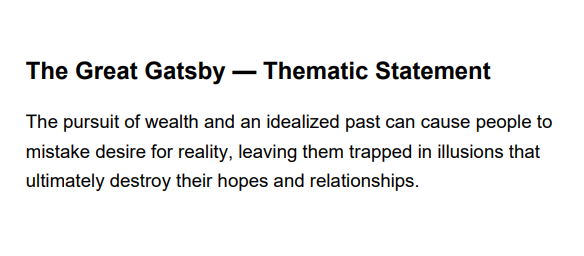
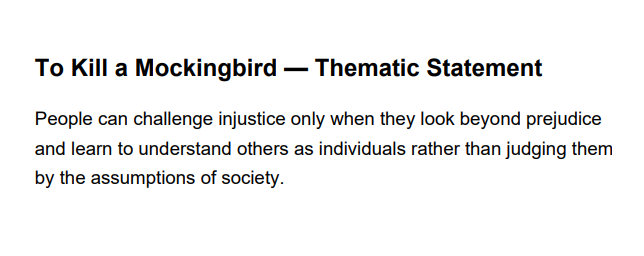
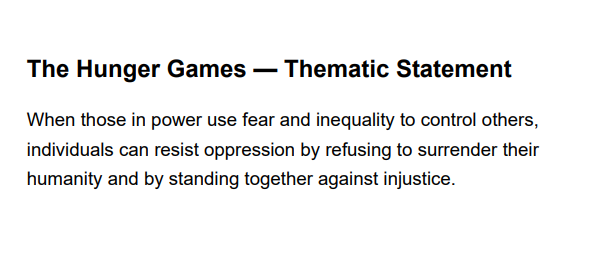
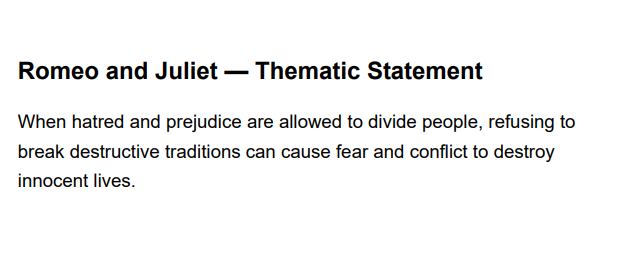
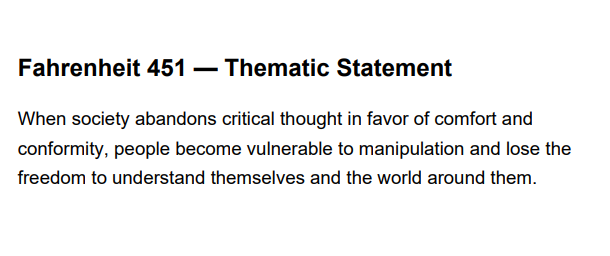
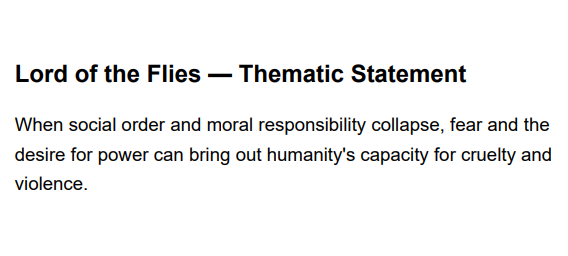
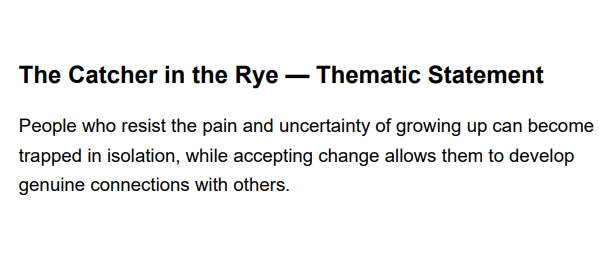
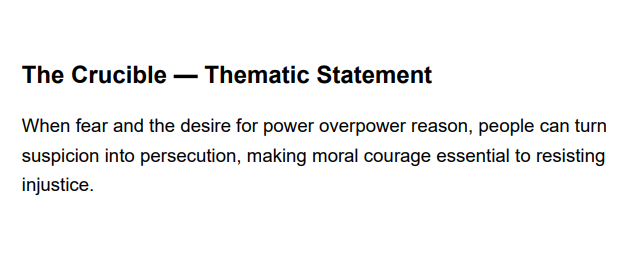
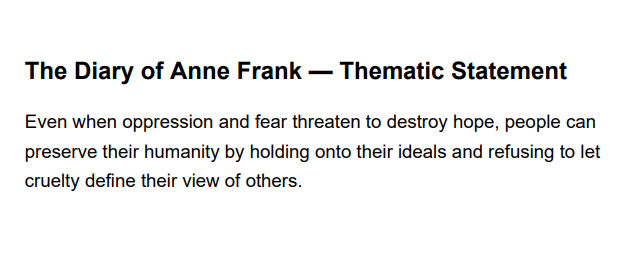
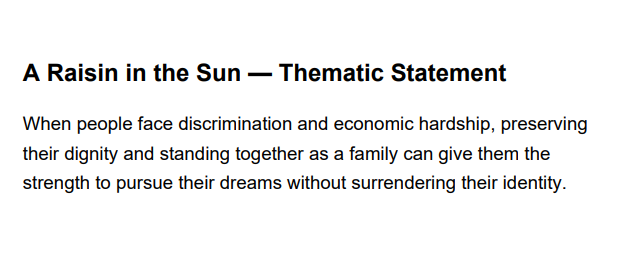
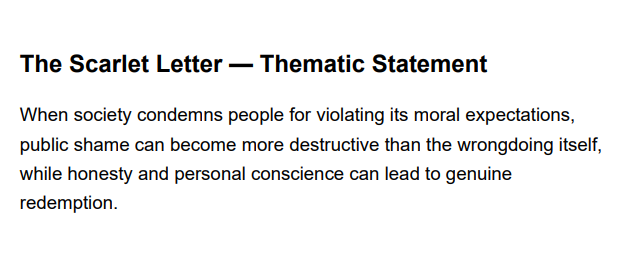
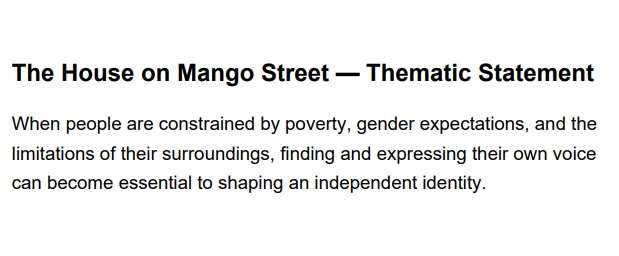
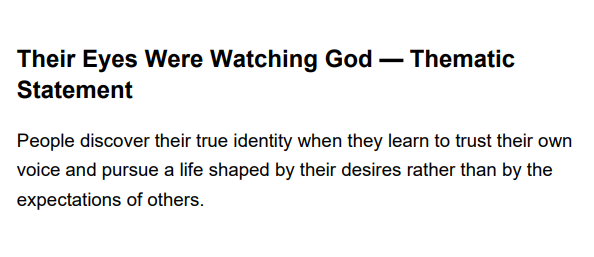
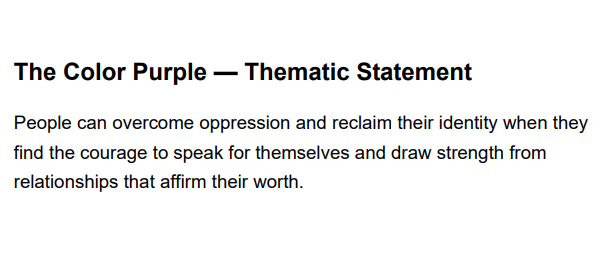
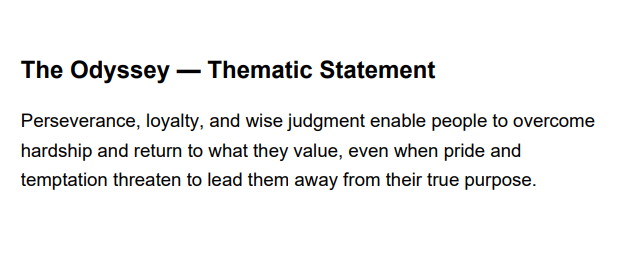

A thematic statement is a complete sentence that expresses the central message or universal insight a story conveys about life, society, or human nature. Unlike a topic such as love, power, or loyalty, a thematic statement explains what the text suggests about that idea. A strong thematic statement is specific enough to communicate a meaningful insight while broad enough to apply beyond the characters, setting, or events of one story.
What Is a Thematic Statement?
A thematic statement is a complete sentence that expresses the central message or universal insight a literary work conveys about life, society, or human nature. Unlike a topic such as love, power, or loyalty, it makes a specific claim about what the story suggests about that idea.

What Are the Different Types of Thematic Statements?
Love and Relationships
A Love and Relationships thematic statement explores what stories reveal about connection, trust, sacrifice, or the challenges people face in relationships.
Conflict and Power
A Conflict and Power thematic statement examines how struggles for control, authority, or influence affect individuals, relationships, and society.
Identity and Self-Discovery
An Identity and Self-Discovery thematic statement explores how people develop their sense of identity through experiences, challenges, and personal growth.
Courage and Fear
A Courage and Fear thematic statement examines how people respond to fear, uncertainty, and difficult situations through courage or avoidance.
Friendship and Loyalty
A Friendship and Loyalty thematic statement explores how trust, commitment, sacrifice, and loyalty shape relationships between people.
Good and Evil
A Good and Evil thematic statement examines moral choices, ethical conflicts, and the ways people respond to right and wrong.
Freedom and Responsibility
A Freedom and Responsibility thematic statement explores how individual choices and freedoms are connected to consequences and responsibilities.
Growth and Change
A Growth and Change thematic statement examines how experiences, challenges, and decisions can transform a person’s beliefs, behavior, or understanding.
Loss and Grief
A Loss and Grief thematic statement explores how people respond to loss, emotional pain, change, and the process of moving forward.
Society and Justice
A Society and Justice thematic statement examines social expectations, inequality, fairness, responsibility, and the relationship between individuals and society.
How Do I Generate Thematic Statements Using Real Examples?
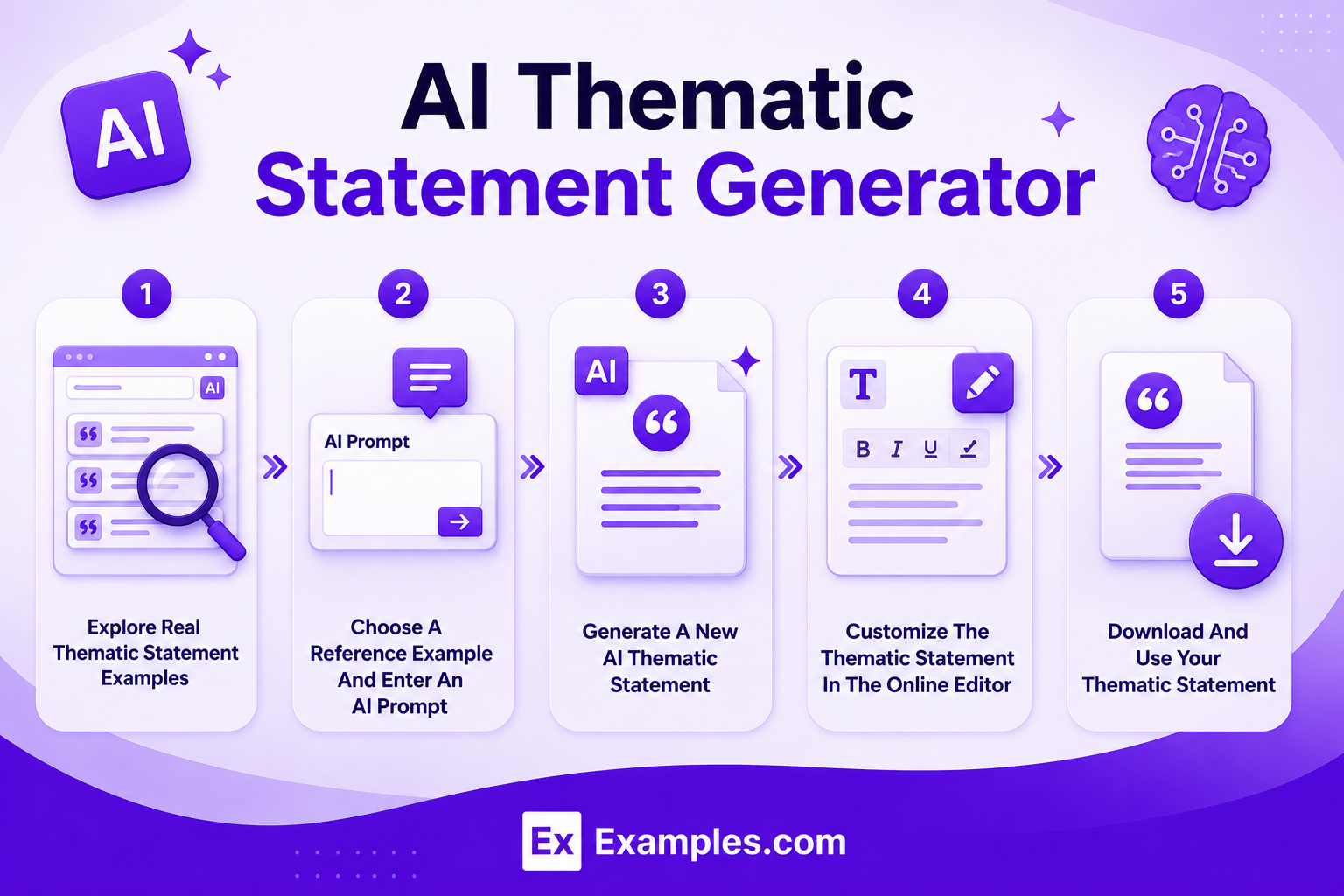
Explore Real Thematic Statement Examples
Review real thematic statement examples to understand how a topic becomes a complete statement about life, society, or human nature. Examples can help you identify the difference between a broad topic and a specific, universal insight.
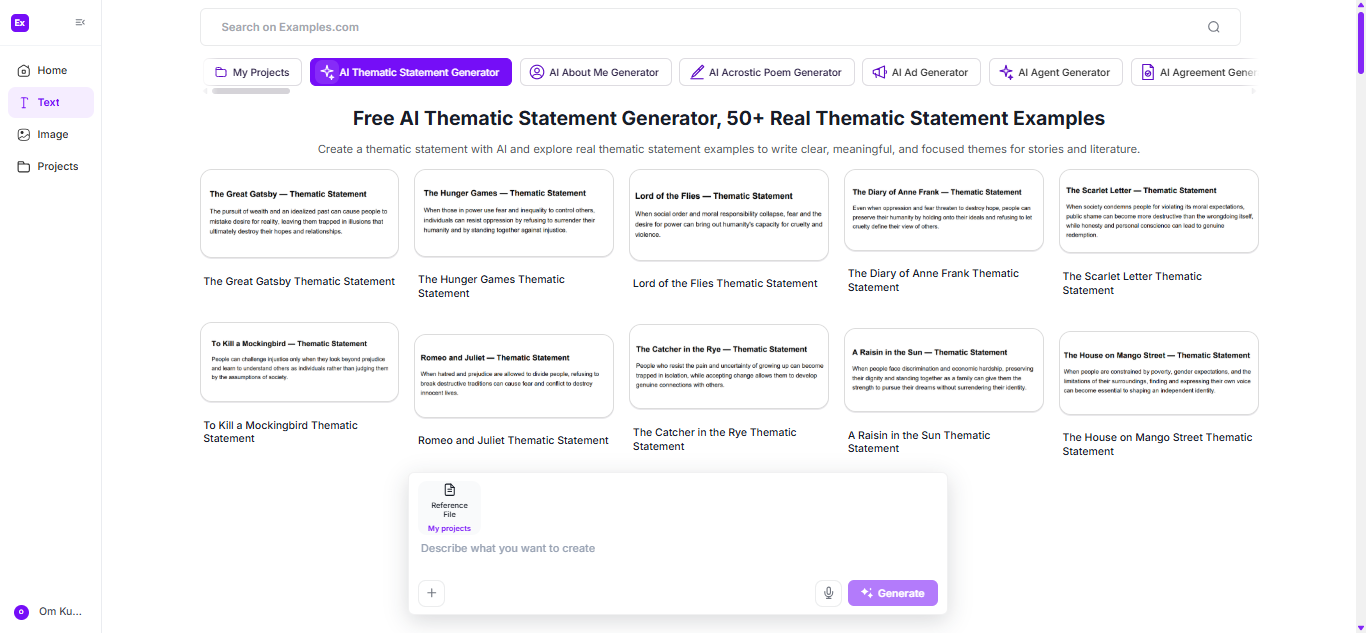
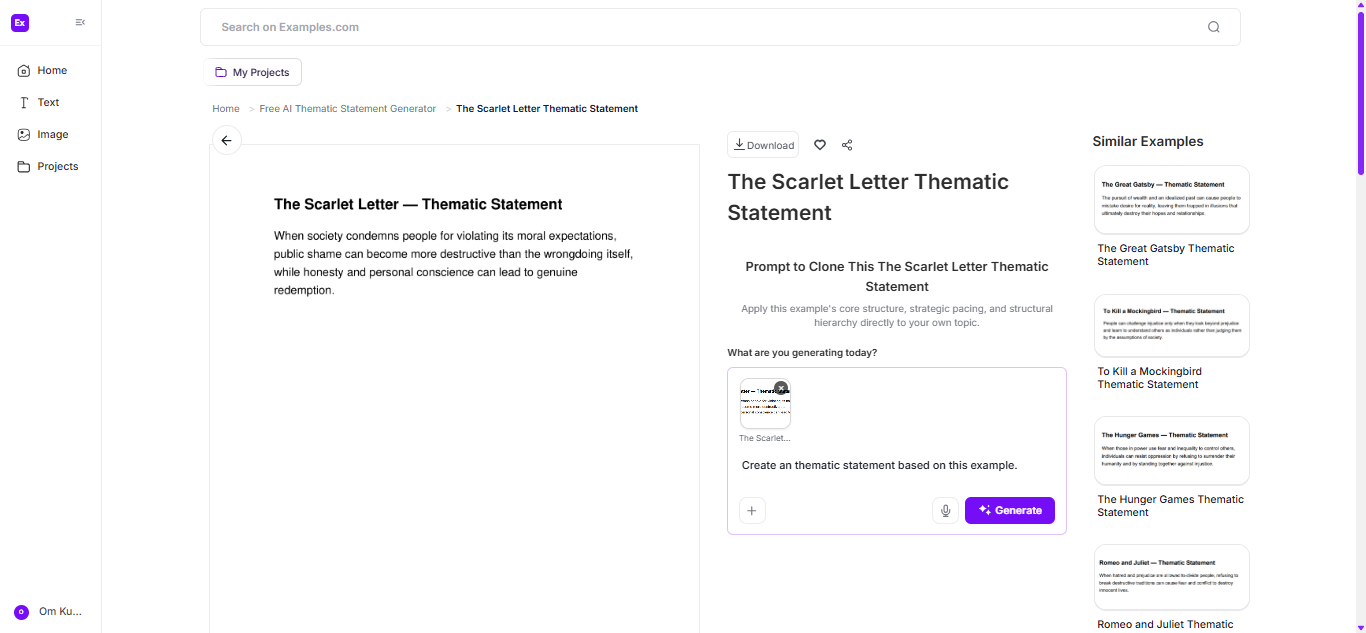
Choose A Reference Example And Enter An AI Prompt
Choose a reference thematic statement and describe what you need in your prompt, including the topic, central idea, genre, tone, and type of insight. A specific prompt helps produce a focused statement that reflects the intended theme.
Generate A New AI Thematic Statement
Generate a new thematic statement from your prompt. The AI can turn a topic or central idea into a complete sentence that communicates a broader insight about human experience, society, or life.
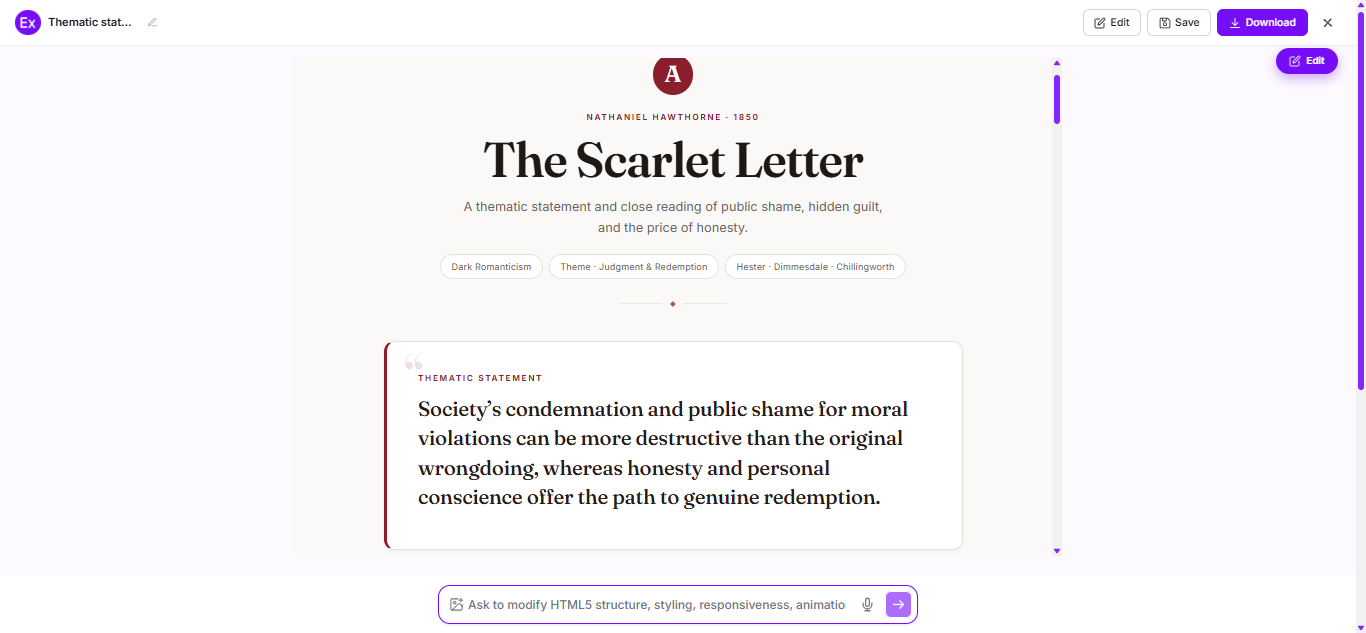
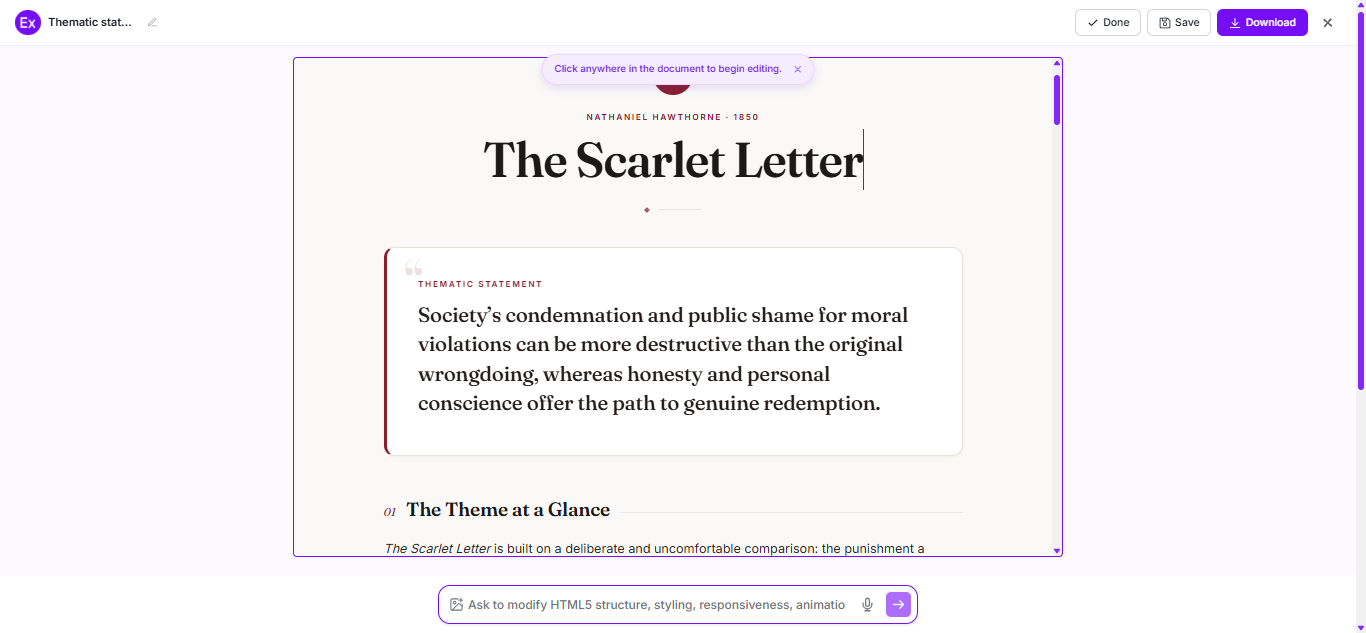
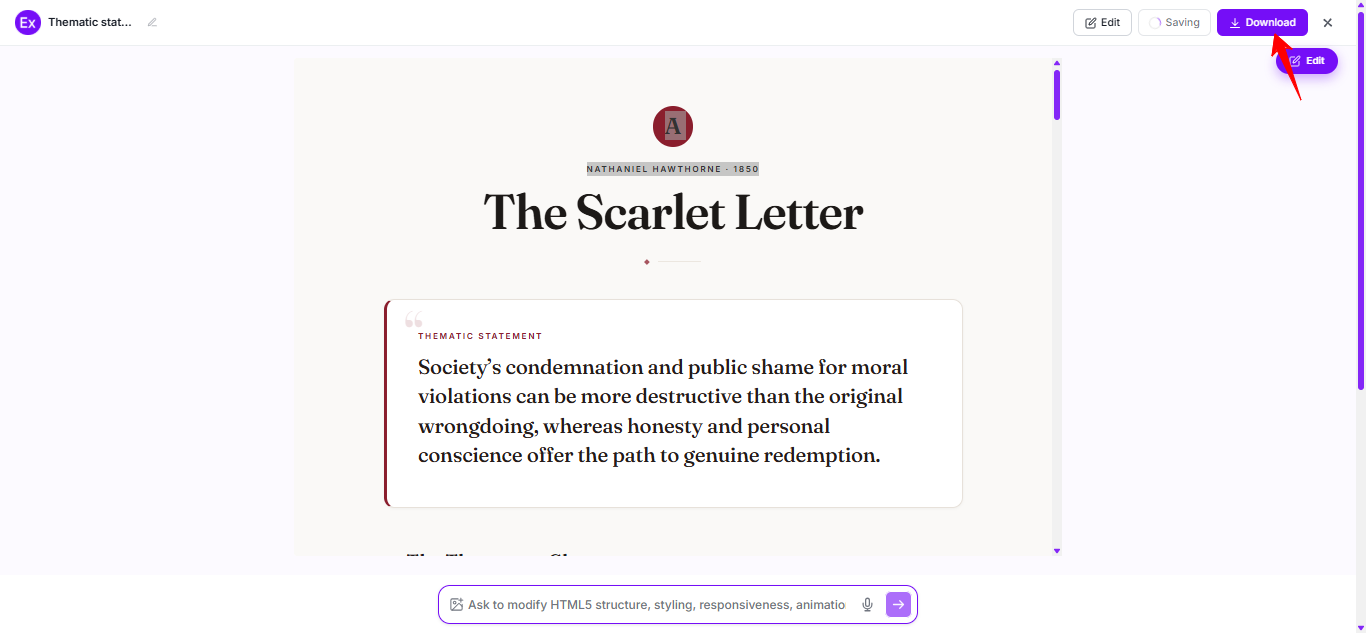
Customize The Thematic Statement In The Online Editor
Refine the wording, tone, and specificity of the generated statement in the online editor. Remove character names, plot details, and setting-specific references so the statement expresses a broader idea that can apply beyond one story.
Download And Use Your Thematic Statement
Download your completed thematic statement in PDF format for reviewing, printing, organizing, or using as a reference while developing literary analysis and written assignments.
What Makes a Good Thematic Statement?
A good thematic statement is a complete, clear, and meaningful sentence that expresses a universal insight about life, society, or human nature. It should focus on a specific idea rather than simply naming a topic, avoid character names and plot-specific details, and communicate an interpretation that can apply beyond one story. Strong thematic statements also avoid clichés and absolute claims, using realistic language such as “can,” “may,” “often,” or “sometimes” when appropriate.
AI Thematic Statement Editing Features
AI Thematic Statement Generation
Generate complete thematic statements based on a topic, central idea, story, or literary work you provide.
Smart Statement Editing
Rewrite, shorten, expand, or refine a thematic statement to make its central insight clearer and more specific.
Topic-to-Statement Conversion
Turn a broad topic such as love, power, identity, or loyalty into a complete sentence that expresses a meaningful insight.
Thematic Statement Customization
Adjust the wording, tone, focus, and level of detail to create a statement that matches your intended theme or literary analysis.
Universal Insight Refinement
Remove character names, plot details, and setting-specific references so the statement communicates an idea that can apply beyond one story.
Instant PDF Download
Download your completed thematic statement in PDF format for reviewing, printing, organizing, or using as a reference.
What Are the Essential Elements of a Thematic Statement?
- Complete Sentence: Express the theme as a complete sentence rather than a single word or phrase.
- Central Idea: Focus on a meaningful topic or concept, such as love, power, identity, courage, or loyalty.
- Universal Insight: State an idea that can apply to life, society, or human nature beyond the specific story.
- Clear Message: Communicate exactly what the text suggests about the chosen topic.
- Specific Claim: Go beyond a broad statement by explaining a particular insight or relationship between ideas.
- Story Independence: Avoid character names, specific events, settings, or other details that limit the statement to one story.
- Realistic Language: Use qualifiers such as “can,” “may,” “often,” or “sometimes” when appropriate instead of making absolute claims.
- Original Perspective: Present a thoughtful interpretation rather than a predictable or commonly repeated cliché.
- Relevant Focus: Keep the statement connected to the central ideas developed throughout the literary work.
- Meaningful Insight: Explain something significant about human behavior, relationships, society, or life rather than simply describing what happens in the story.
How Do I Write a Thematic Statement?
- Identify the Topic: Choose the central idea explored in the story, such as love, power, identity, courage, or loyalty.
- Examine the Story: Consider how the characters, conflicts, and events develop that topic.
- Determine the Message: Ask what the story suggests about the topic and what insight it communicates.
- Move Beyond the Plot: Focus on the broader meaning instead of describing a specific character or event.
- Make It Universal: Write an idea that can apply to people, society, or life beyond the story.
- Use a Complete Sentence: Express the idea as a clear sentence rather than a single word or phrase.
- Make a Specific Claim: Explain what the story suggests about the topic instead of simply naming it.
- Avoid Story-Specific Details: Leave out character names, locations, and plot events so the statement remains universal.
- Avoid Clichés and Absolutes: Replace obvious sayings and overly broad claims with a thoughtful, realistic insight.
- Review and Refine: Make sure the final statement is clear, meaningful, specific, and connected to the story’s central idea.
Why Should I Use Real Thematic Statement Examples to Create My Own Thematic Statement?
- Real examples show how to turn a broad topic into a complete, meaningful statement.
- They help you understand the difference between a topic and a thematic statement.
- They provide useful wording patterns for creating clear and specific statements.
- They show how to express ideas that apply beyond one story or character.
- They help you avoid clichés, plot-specific details, and overly broad claims.
- They make it easier to develop and refine your own original thematic statement.
What Common Thematic Statement Mistakes Should I Avoid?
- Using a Single Word or Phrase: A thematic statement should be a complete sentence, not just a topic such as “love” or “power.”
- Making It Story-Specific: Avoid character names, specific events, settings, or plot details that limit the statement to one story.
- Writing a Cliché: Avoid obvious statements such as “Love is good” or “Always be honest” that offer little meaningful insight.
- Making Absolute Claims: Avoid words such as “always” and “never” unless the idea genuinely supports an absolute claim.
- Being Too Broad: Do not make statements so general that they fail to communicate a specific insight about the topic.
- Simply Summarizing the Plot: A thematic statement should explain a broader message rather than describe what happens in the story.
- Confusing the Topic With the Statement: Naming an idea like “friendship” does not explain what the story says about friendship.
- Using a Moral Command: Avoid turning the statement into direct advice, such as “People should always help others.”
What Is the Difference Between a Theme and a Thematic Statement?
| Theme | Thematic Statement |
|---|---|
| A broad idea explored in a story. | A complete sentence explaining what the story suggests about that idea. |
| Usually expressed as a word or short phrase. | Expressed as a clear, complete sentence. |
| Examples include love, power, identity, courage, or loyalty. | Explains an insight about those ideas, such as how loyalty can require personal sacrifice. |
| Identifies what the story explores. | Explains what the story says about that topic. |
| Does not usually express a complete message. | Communicates a broader message about life, society, or human nature. |
| Can be broad or general. | Should be specific, meaningful, and universal. |
Thematic Statement Ideas for Different Genres
- Romance: Love can strengthen relationships when people learn to understand and accept each other.
- Drama: Difficult experiences can reveal truths about people and change how they understand themselves.
- Mystery: The search for truth often requires people to question appearances and confront uncomfortable realities.
- Fantasy: Courage can help individuals overcome fear and take responsibility for their choices.
- Science Fiction: Technological progress can create new possibilities while also introducing unexpected responsibilities and risks.
- Adventure: Facing uncertainty can help people discover strengths they did not know they possessed.
- Historical Fiction: Individual choices can influence how people respond to social pressures and changing circumstances.
- Horror: Fear can expose vulnerabilities that people attempt to hide from themselves and others.
- Comedy: Mistakes and misunderstandings can reveal the importance of humility and self-awareness.
- Young Adult: Personal growth often comes from learning to make independent choices while understanding their consequences.
FAQs
What Is a Thematic Statement?
A thematic statement is a complete sentence that expresses a story’s broader message about life, society, or human nature.
Can a Thematic Statement Be One Word?
No, a thematic statement should be a complete sentence that communicates a specific insight rather than simply naming a topic.
How Long Should a Thematic Statement Be?
A thematic statement should be concise while providing enough detail to communicate a clear and meaningful universal idea.
Should a Thematic Statement Include Character Names?
No, avoid character names because the statement should express an idea that applies beyond one specific story.
Can a Thematic Statement Be a Question?
Generally, no. A thematic statement should make a clear claim about a topic rather than ask the reader a question.
What Makes a Thematic Statement Universal?
A statement is universal when its message can apply to people, society, or real-life situations beyond the story.
Should a Thematic Statement Include a Moral?
Not necessarily. It should communicate an insight about life rather than directly instruct people about what they should do.
Can a Story Have More Than One Thematic Statement?
Yes, a story can explore multiple ideas and support several thematic statements when different themes are meaningfully developed.
How Is a Thematic Statement Different From a Theme?
A theme identifies the broad topic, while a thematic statement explains what the story suggests about that topic.
Can AI Help Me Create a Thematic Statement?
Yes, AI can help develop, refine, and reword thematic statements when you provide a clear topic and intended message.