
AI reputation management uses artificial intelligence to monitor, analyze, and influence how a brand is perceived across reviews, social media, search results, and online discussions. Businesses use AI reputation management tools to track sentiment, automate responses, detect reputation risks, and maintain trust across digital channels. In 2026, these platforms analyze customer feedback in real time, allowing organizations to respond faster, identify emerging issues, and protect brand credibility online.
List of Top AI Reputation Management Tools
Below are the 15 best AI reputation management tools that help businesses monitor brand perception, manage online reviews, and detect reputation risks using AI-powered analytics and automation.
- Birdeye AI
- Sprinklr AI
- Brandwatch AI
- Reputation.com AI
- Revuze AI
- Meltwater AI
- Podium AI
- Yext AI
- Chatmeter AI
- ReviewTrackers AI
- BrightLocal AI
- Brand24 AI
- Talkwalker AI
- Mention AI
- Erase AI
AI Reputation Management Tools Comparison Table
Businesses often evaluate reputation management platforms based on monitoring coverage, AI capabilities, integrations, and pricing. The comparison below highlights how the leading AI reputation management tools differ in their primary use cases and core features.
| Tool | Best For | Key Features | Pricing | Category |
|---|---|---|---|---|
| Birdeye AI | Multi-location businesses | AI review responses, sentiment analysis, listings management | Custom | Review & CX platform |
| Sprinklr AI | Enterprise brands | Social listening, CX analytics, workflow automation | Custom | Enterprise CX platform |
| Brandwatch AI | Social intelligence | Consumer insights, sentiment tracking, trend analysis | Custom | Social listening |
| Reputation.com AI | Enterprises | Experience analytics, benchmarking, review management | Custom | Enterprise reputation platform |
| Revuze AI | Product and VoC intelligence | Voice of customer analytics, sentiment insights, product feedback analysis | Custom | Consumer intelligence |
| Meltwater AI | PR and communications teams | Media monitoring, sentiment analysis, influencer tracking | Custom | Media intelligence |
| Podium AI | Local and service businesses | SMS review requests, AI response suggestions, messaging inbox | Quote-based | Review management |
| Yext AI | Multi-location listings management | Knowledge Graph, review monitoring, listings synchronization | Subscription | Listings platform |
| Chatmeter AI | Franchise and multi-location brands | Review monitoring, sentiment analysis, location analytics | Custom | Local reputation |
| ReviewTrackers AI | Review analytics | Aggregated reviews, sentiment insights, competitor benchmarking | Subscription | Review monitoring |
| BrightLocal AI | Local SEO and reviews | Local citation tracking, review monitoring, SEO reporting | Subscription | Local SEO |
| Brand24 AI | Brand mention monitoring | Real-time alerts, sentiment analysis, influencer tracking | Subscription | Monitoring |
| Talkwalker AI | Global brand intelligence | Social listening, visual recognition, crisis detection | Custom | Social listening |
| Mention AI | PR and brand monitoring | Mention tracking, competitor benchmarking, sentiment insights | Subscription | Monitoring |
| Erase AI | Reputation cleanup | Harmful content detection, search result monitoring, removal workflows | Quote-based | Reputation protection |
Each AI reputation management platform focuses on different aspects of brand perception, including review monitoring, social listening, customer feedback analytics, and reputation protection. The sections below explain how each tool works, its key features, and which types of businesses benefit most from using it.
Enterprise Reputation Intelligence Platforms
1. Birdeye AI
What is Birdeye AI
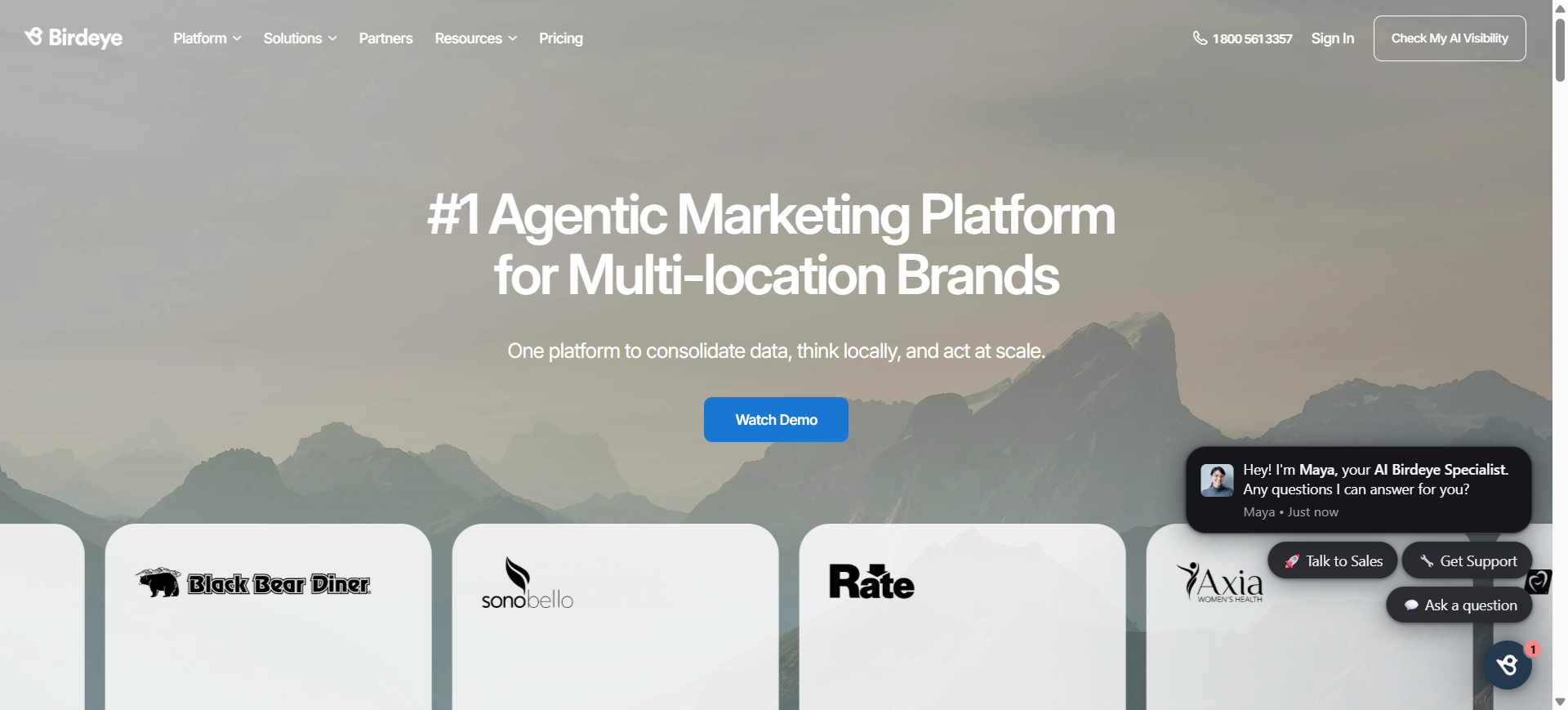
Birdeye is an AI-powered reputation management and customer experience platform designed primarily for multi-location businesses. It helps companies monitor online reviews, generate new customer feedback, and respond to reviews using AI-generated suggestions. By aggregating reviews, messaging, listings, and customer insights in one dashboard, Birdeye AI allows businesses to track brand perception and improve customer engagement across hundreds of review platforms.
How to use Birdeye AI for reputation management
- Connect review platforms such as Google, Facebook, and industry review directories.
- Monitor incoming reviews and brand mentions from a centralized dashboard.
- Use AI-generated responses to reply quickly to positive and negative feedback.
- Analyze sentiment trends and reputation metrics across locations.
Key Features of Birdeye AI
- AI-generated review responses
- Sentiment analysis and reputation insights
- Automated review request campaigns
- Listings and location management
- Competitive benchmarking tools
Benefits of Using Birdeye AI
- Reduces time spent managing reviews
- Improves response speed and consistency
- Centralizes reputation monitoring across platforms
- Provides insights into customer sentiment trends
- Helps strengthen local search visibility
Use Cases of Birdeye AI for Reputation Management
Birdeye AI is commonly used by healthcare clinics, retail chains, automotive dealerships, and hospitality businesses that manage customer feedback across multiple locations and review platforms.
Who Should Use Birdeye AI
- Multi-location businesses
- Marketing and brand management teams
- Customer experience managers
- Service businesses with high review volumes
- Enterprises managing distributed locations
Pricing
Birdeye AI offers custom pricing based on business size, number of locations, and required features.
2. Sprinklr AI
What is Sprinklr AI
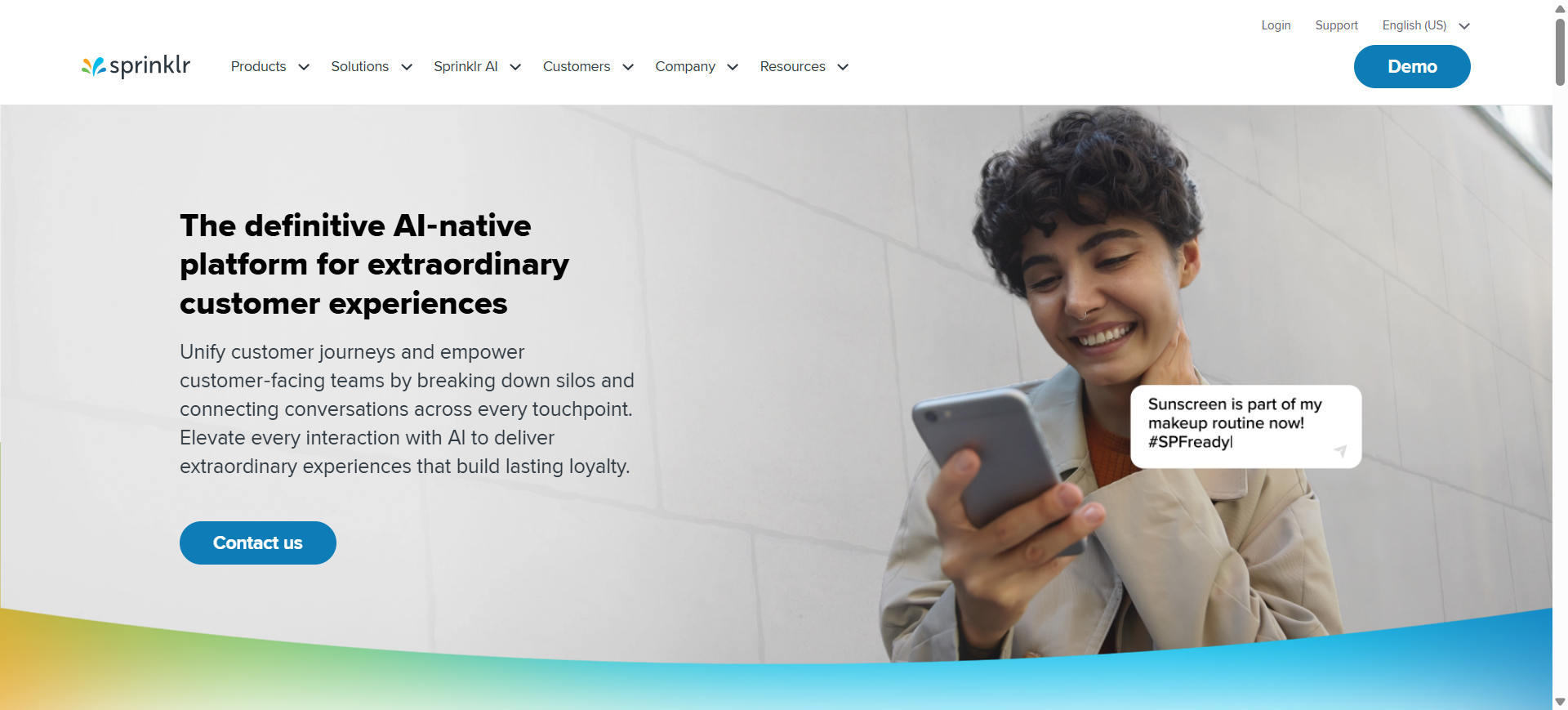
Sprinklr is an enterprise customer experience and reputation management platform that helps organizations monitor brand perception across social media, reviews, messaging channels, and customer support systems. It uses AI-driven analytics to analyze sentiment, track conversations, and detect reputation risks across digital channels. Large organizations use Sprinklr AI to manage customer interactions and maintain brand reputation across global markets.
How to use Sprinklr AI for AI Reputation Management
- Connect social media platforms, review sites, and customer communication channels.
- Monitor brand mentions, customer feedback, and sentiment trends from the dashboard.
- Use AI analytics to identify potential reputation risks and emerging issues.
- Route feedback to appropriate teams for faster response and resolution.
Key Features of Sprinklr AI
- AI-powered sentiment analysis
- Social listening and conversation monitoring
- Unified customer experience platform
- Automated workflows and task routing
- Enterprise analytics and reporting dashboards
Benefits of Using Sprinklr AI
- Enables centralized reputation monitoring across channels
- Detects sentiment changes and emerging reputation risks
- Improves response coordination across teams
- Provides detailed customer experience insights
- Supports global-scale brand monitoring
Use Cases of Sprinklr AI for AI Reputation Management
Global enterprises use Sprinklr AI to monitor social media conversations, analyze customer feedback, and manage reputation across multiple digital touchpoints.
Who Should Use Sprinklr AI
- Large enterprises and multinational brands
- Marketing and customer experience teams
- Social media management teams
- Public relations and brand monitoring teams
- Organizations with global customer interactions
Pricing
Enterprise-level pricing customized based on organization size, features, and deployment scale.
3. Brandwatch AI
What is Brandwatch AI
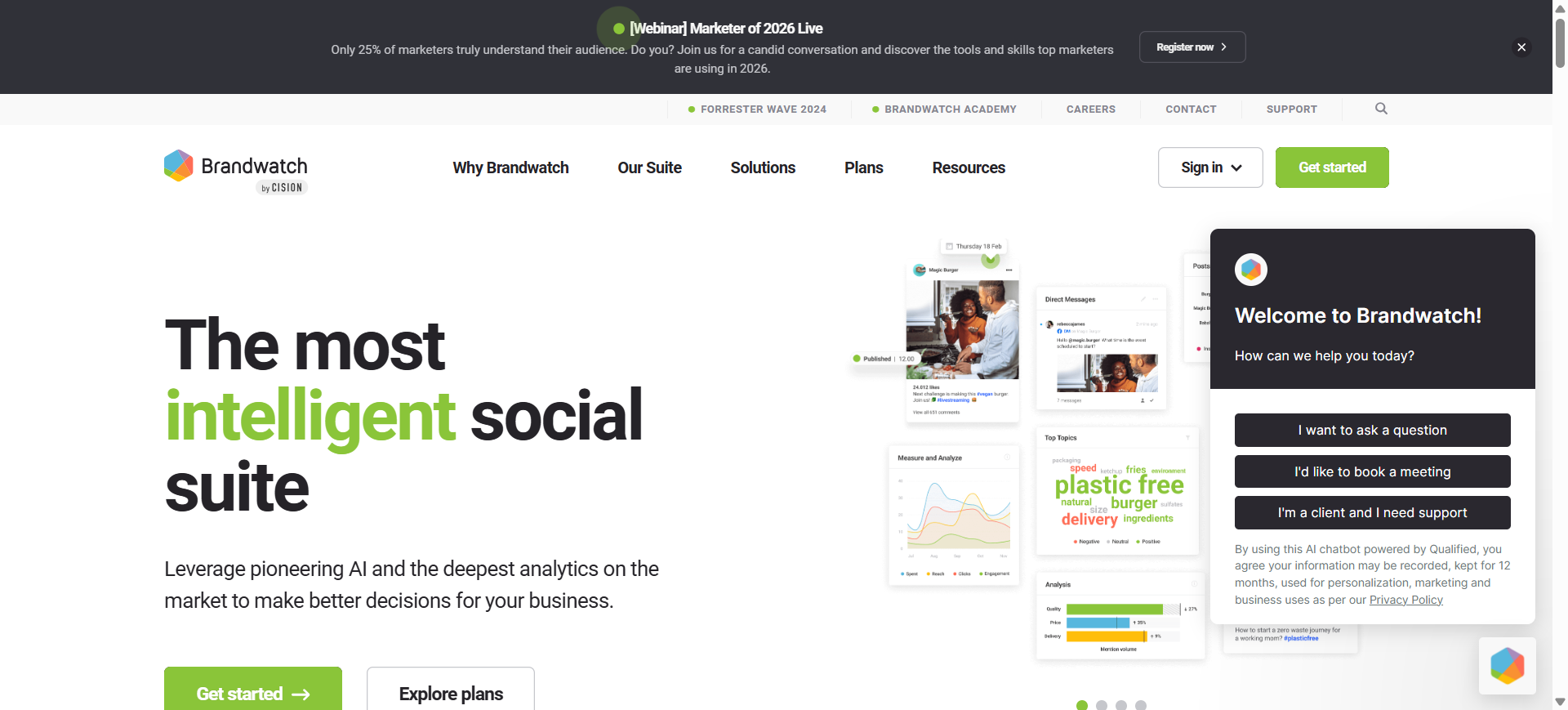
Brandwatch is a social listening and consumer intelligence platform that helps businesses monitor brand mentions, analyze online conversations, and understand public sentiment across digital channels. The platform uses AI to analyze large volumes of social media posts, reviews, forums, and news articles to identify trends that influence brand reputation. Organizations use Brandwatch AI to track how their brand is perceived and detect emerging issues early.
How to use Brandwatch AI for AI Reputation Management
- Set up monitoring for brand names, products, competitors, and relevant keywords.
- Track mentions across social media, blogs, forums, and news sites.
- Use AI sentiment analysis to understand how customers feel about the brand.
- Analyze trends and insights to identify reputation risks or opportunities.
Key Features of Brandwatch AI
- AI-powered social listening
- Sentiment analysis and trend detection
- Consumer intelligence dashboards
- Audience and influencer analysis
- Competitive benchmarking tools
Benefits of Using Brandwatch AI
- Provides deep insights into public perception
- Detects emerging reputation risks early
- Analyzes large-scale online conversations
- Supports strategic brand monitoring
- Helps understand customer sentiment across markets
Use Cases of Brandwatch AI for AI Reputation Management
Marketing and PR teams use Brandwatch AI to track brand sentiment, analyze social media conversations, and monitor reputation trends across global audiences.
Who Should Use Brandwatch AI
- Enterprise marketing teams
- Public relations professionals
- Social media monitoring teams
- Consumer insight analysts
- Global brands managing large-scale conversations
Pricing
Enterprise-level pricing with plans customized based on monitoring volume, features, and organization size.
4. Reputation.com AI
What is Reputation AI
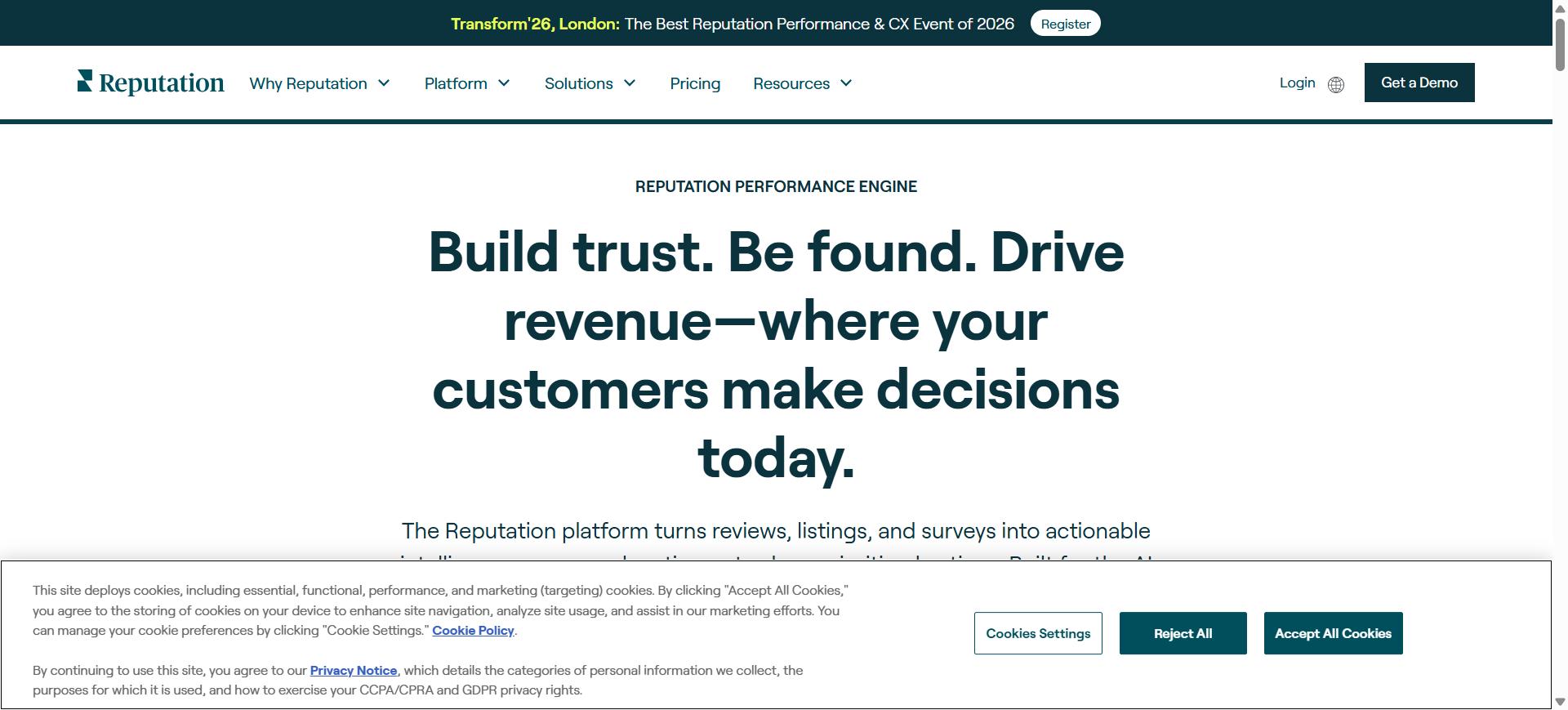
Reputation is an enterprise reputation management and customer experience platform designed to help organizations monitor reviews, analyze feedback, and manage brand perception across digital channels. The platform aggregates reviews, surveys, and social feedback into a centralized system where AI analyzes sentiment and identifies trends affecting brand reputation. Many multi-location businesses use Reputation AI to track customer satisfaction and maintain consistent brand standards.
How to use Reputation AI for AI Reputation Management
- Connect customer feedback channels such as review sites, surveys, and social platforms.
- Monitor reviews and sentiment insights from the centralized dashboard.
- Use AI analytics to identify trends and potential reputation risks.
- Respond to customer feedback and track improvements across locations.
Key Features of Reputation AI
- AI-driven sentiment analysis
- Review and survey management
- Location-level reputation tracking
- Competitive benchmarking tools
- Customer experience analytics dashboards
Benefits of Using Reputation AI
- Provides a unified view of customer feedback
- Detects reputation issues across locations
- Helps organizations improve customer experience
- Enables data-driven decision making
- Supports enterprise-scale reputation monitoring
Use Cases of Reputation AI for AI Reputation Management
Healthcare providers, retail chains, hospitality groups, and service organizations use Reputation AI to monitor reviews and improve customer experience across multiple locations.
Who Should Use Reputation AI
- Large enterprises with multiple locations
- Customer experience and operations teams
- Marketing and brand management teams
- Service-based organizations
- Businesses managing large volumes of customer feedback
Pricing
Enterprise pricing based on organization size, number of locations, and required analytics capabilities.
5. Revuze AI
What is Revuze AI
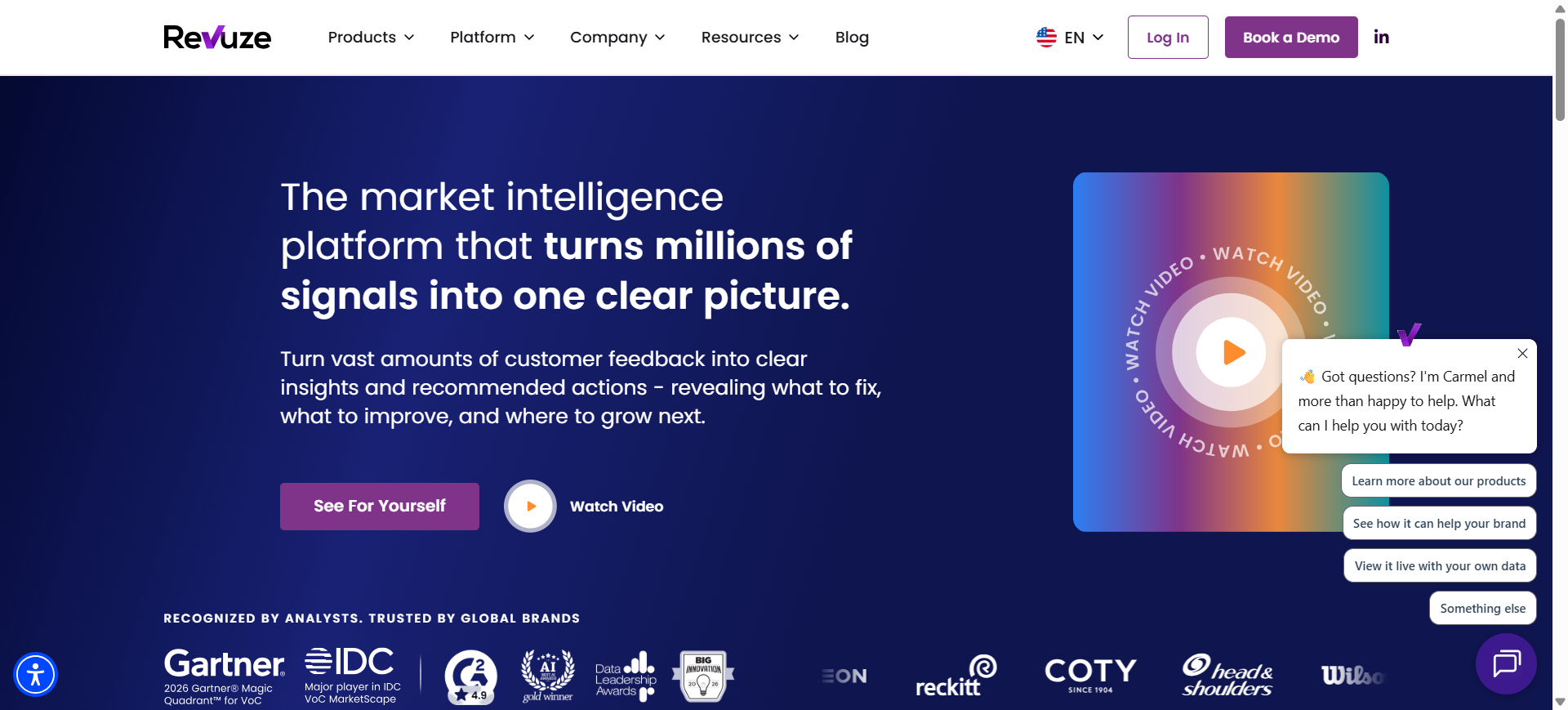
Revuze is an enterprise consumer intelligence and reputation analytics platform that analyzes large volumes of customer feedback from reviews, social media, surveys, and e-commerce platforms. The platform uses artificial intelligence, machine learning, and natural language processing to transform unstructured consumer opinions into actionable insights about brand perception and product performance. Unlike traditional reputation monitoring tools, Revuze focuses on Voice of Customer (VoC) intelligence, allowing companies to understand what customers say about their brand, products, and competitors across digital channels.
How to use Revuze AI for AI Reputation Management
- Connect multiple feedback sources such as reviews, social media posts, surveys, and e-commerce platforms.
- Allow the AI engine to collect and process consumer feedback automatically.
- Use dashboards to analyze sentiment, recurring topics, and reputation trends.
- Identify product issues, brand perception drivers, and emerging market trends.
Key Features of Revuze AI
- AI-powered Voice of Customer (VoC) analytics
- Sentiment analysis using NLP and machine learning
- Cross-channel data integration from reviews, surveys, and social media
- Topic clustering and trend detection
- Product and competitor benchmarking
Benefits of Using Revuze AI
- Converts massive feedback data into clear insights
- Helps identify reputation drivers behind customer sentiment
- Detects product or service issues early
- Supports data-driven marketing and product decisions
- Provides deep competitive and market intelligence
Use Cases of Revuze AI for AI Reputation Management
Product teams, marketing teams, and consumer insights departments use Revuze AI to analyze online reviews, identify reputation trends, and understand customer sentiment across product categories.
Who Should Use Revuze AI
- Consumer product brands
- Marketing and product teams
- Market research and insights teams
- E-commerce companies
- Enterprise organizations analyzing large feedback datasets
Pricing
Enterprise pricing typically starts around $30,000 per year depending on data volume, analytics features, and integrations.
6. Meltwater AI
What is Meltwater AI
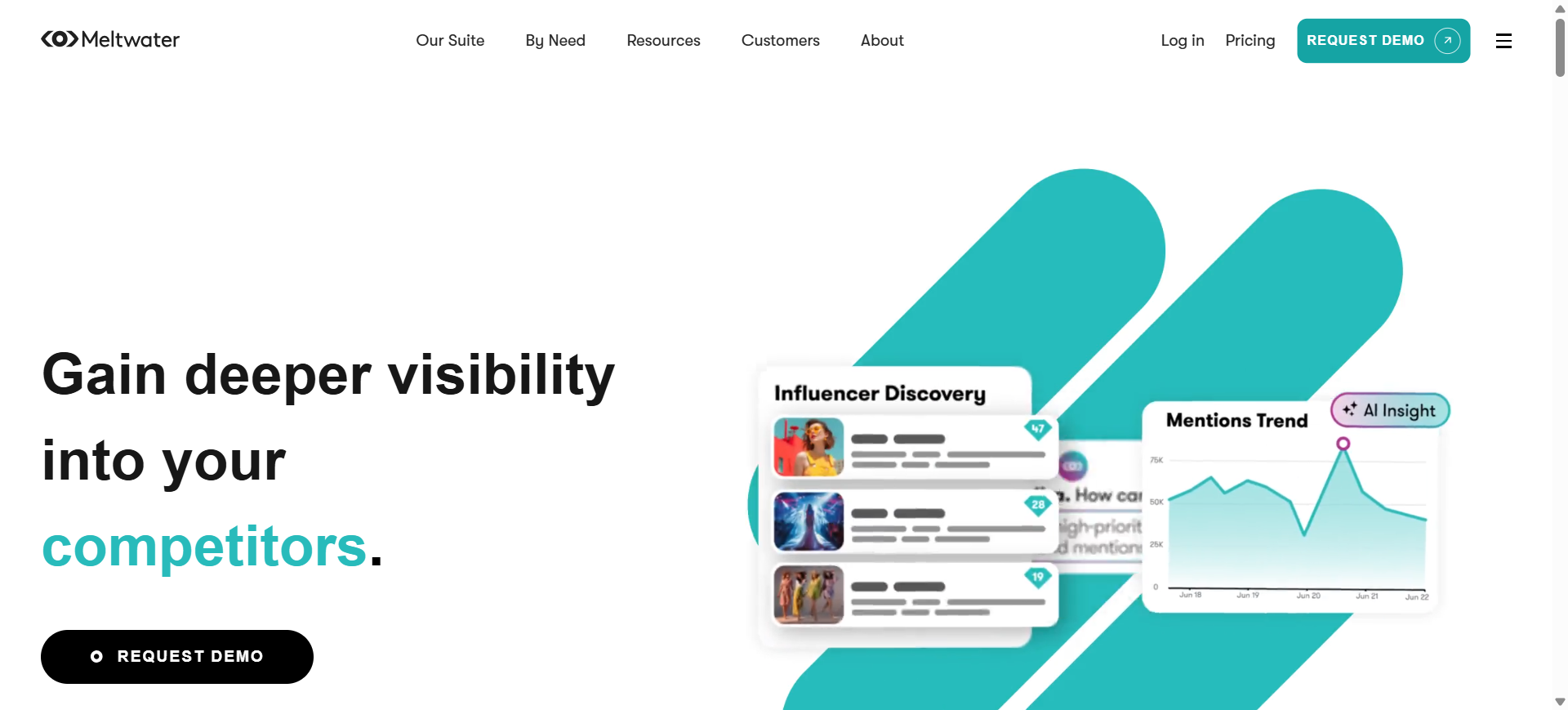
Meltwater is a media intelligence and reputation monitoring platform that helps organizations track brand mentions, analyze sentiment, and monitor public conversations across news outlets, social media, blogs, podcasts, and other digital channels. The platform uses artificial intelligence to analyze large datasets and convert online conversations into insights that help companies understand brand perception and market trends. It combines social listening, media monitoring, and analytics tools so PR, marketing, and communications teams can monitor reputation signals and respond to changes in public sentiment quickly.
How to use Meltwater AI for AI Reputation Management
- Set up keyword monitoring for brand names, products, competitors, and industry topics.
- Track mentions across news websites, social platforms, blogs, podcasts, and other media channels.
- Use AI sentiment analysis to evaluate public perception and identify reputation risks.
- Receive alerts and analyze dashboards to monitor trends and respond to emerging issues.
Key Features of Meltwater AI
- AI-powered social listening and media monitoring
- Sentiment and emotion analysis across conversations
- Real-time alerts for brand mention spikes
- Influencer discovery and media database tools
- Custom dashboards and analytics reporting
Benefits of Using Meltwater AI
- Provides real-time visibility into brand perception
- Detects reputation risks through sentiment analysis
- Combines social listening and media monitoring in one platform
- Helps PR teams track media coverage and brand mentions
- Supports data-driven marketing and communications strategies
Use Cases of Meltwater AI for AI Reputation Management
PR teams, corporate communications departments, and marketing teams use Meltwater AI to monitor brand reputation, analyze media coverage, and track how public conversations affect brand perception.
Who Should Use Meltwater AI
- Public relations teams
- Marketing and brand strategy teams
- Enterprise organizations
- Media monitoring professionals
- Global companies managing large-scale brand reputation
Pricing
Enterprise-level pricing with customized plans depending on monitoring volume, analytics capabilities, and organization size.
Review and Local Reputation Platforms
7. Podium AI
What is Podium AI
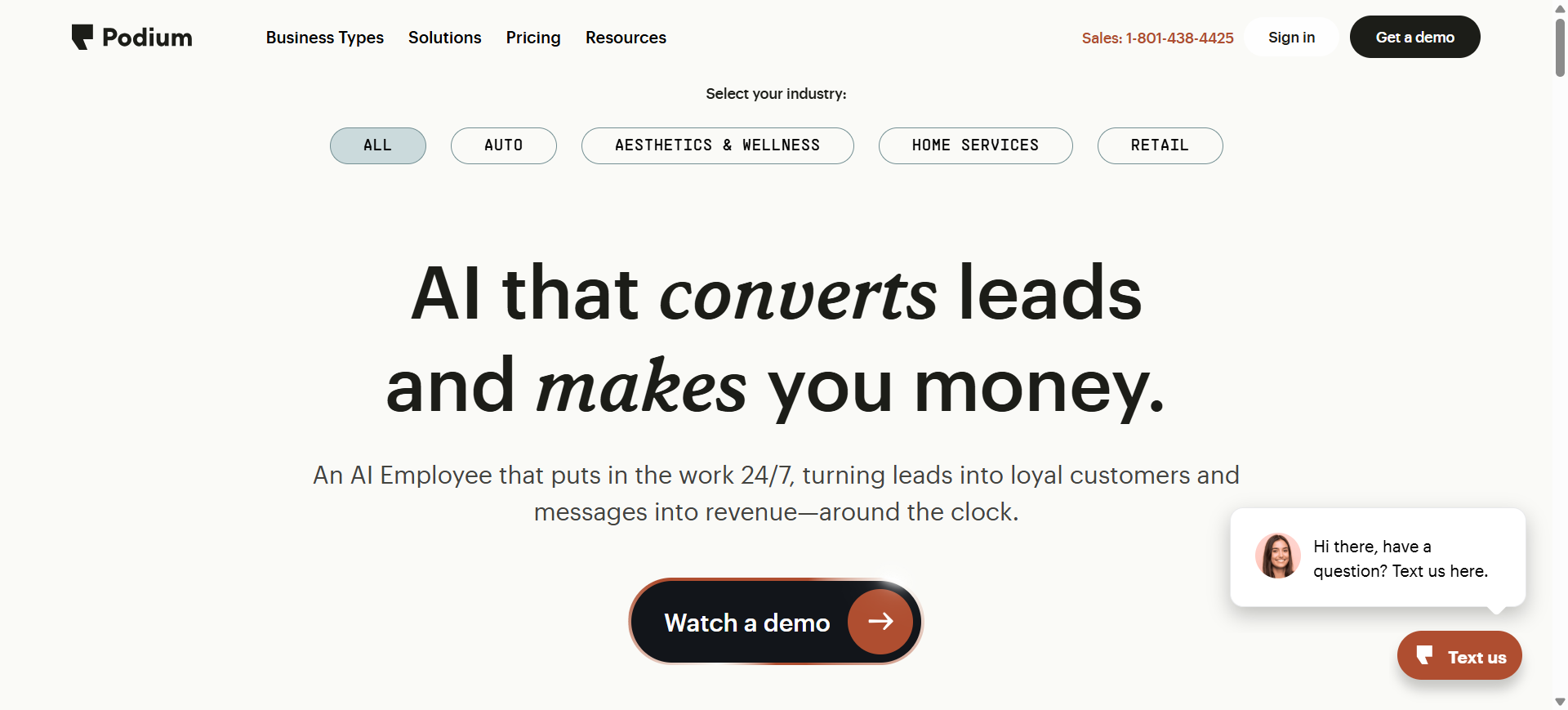
Podium is a reputation management and customer communication platform that helps businesses collect reviews, respond to customer feedback, and manage conversations across messaging channels. The platform uses artificial intelligence to automate review requests, generate suggested responses, and centralize customer interactions in a single inbox. Many local and service-based businesses use Podium to improve their online reputation and increase review visibility on platforms such as Google and Facebook.
How to use Podium AI for AI Reputation Management
- Connect review platforms such as Google and Facebook to the Podium dashboard.
- Send automated review requests to customers via SMS after transactions.
- Use AI-generated response suggestions to reply to reviews quickly.
- Monitor customer conversations and reputation metrics from a unified inbox.
Key Features of Podium AI
- AI-powered review response suggestions
- Automated review request campaigns via SMS
- Centralized messaging inbox for customer conversations
- Customer interaction analytics and reporting
- Integration with CRM and business systems
Benefits of Using Podium AI
- Increases the number of customer reviews
- Improves response speed to customer feedback
- Centralizes customer communication and reviews
- Strengthens local online visibility and trust
- Reduces manual effort in review management
Use Cases of Podium AI for AI Reputation Management
Local businesses such as automotive services, dental clinics, home service providers, and retail stores use Podium AI to manage customer reviews and strengthen their online reputation.
Who Should Use Podium AI
- Local and service-based businesses
- Marketing and customer engagement teams
- Small and mid-sized companies
- Multi-location service businesses
- Businesses focused on increasing online reviews
Pricing
Podium offers multiple pricing tiers depending on features and business size. Entry-level plans typically start around $399 per month, with enterprise options available for multi-location businesses.
8. Yext AI
What is Yext AI
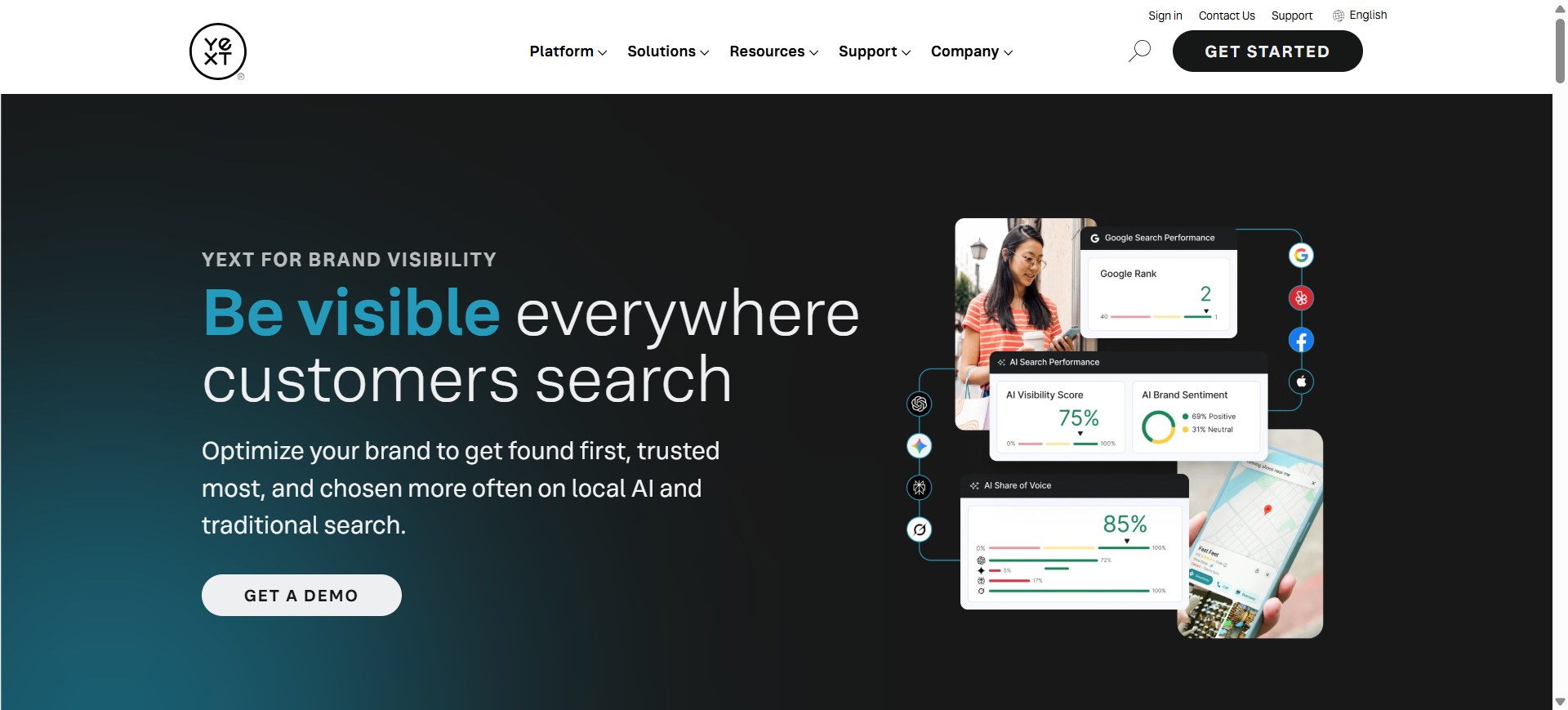
Yext is a digital presence and reputation management platform that helps businesses manage online listings, monitor customer reviews, and maintain consistent brand information across search engines and directories. The platform aggregates reviews from multiple platforms into a centralized dashboard and uses natural language processing to analyze sentiment and identify reputation trends.
At the core of the platform is the Yext Knowledge Graph, which organizes business information—such as locations, services, and contact details—into structured data that search engines and AI systems can easily interpret. This structured approach helps brands maintain accurate listings and improve visibility across digital channels.
How to use Yext AI for AI Reputation Management
- Connect review platforms such as Google, Facebook, Yelp, and TripAdvisor to the Yext dashboard.
- Monitor incoming reviews and customer feedback across multiple locations.
- Use sentiment analysis tools to identify recurring themes in reviews.
- Respond to reviews directly from the platform and track reputation trends.
Key Features of Yext AI
- Centralized review monitoring dashboard
- AI-powered sentiment analysis
- Listings management across 150+ directories
- Knowledge Graph for structured brand data
- Review response tools and alerts
Benefits of Using Yext AI
- Maintains consistent brand information across platforms
- Improves local search visibility and discoverability
- Provides insights into customer sentiment and feedback
- Centralizes reputation management workflows
- Helps businesses respond quickly to customer reviews
Use Cases of Yext AI for AI Reputation Management
Retail chains, healthcare organizations, financial services companies, and franchise businesses use Yext AI to manage reviews and listings across many locations.
Who Should Use Yext AI
- Multi-location businesses
- Marketing and brand management teams
- Local SEO specialists
- Customer experience teams
- Enterprise organizations managing digital presence
Pricing
Subscription-based pricing depending on the number of locations, listings, and reputation management features required.
9. Chatmeter AI
What is Chatmeter AI
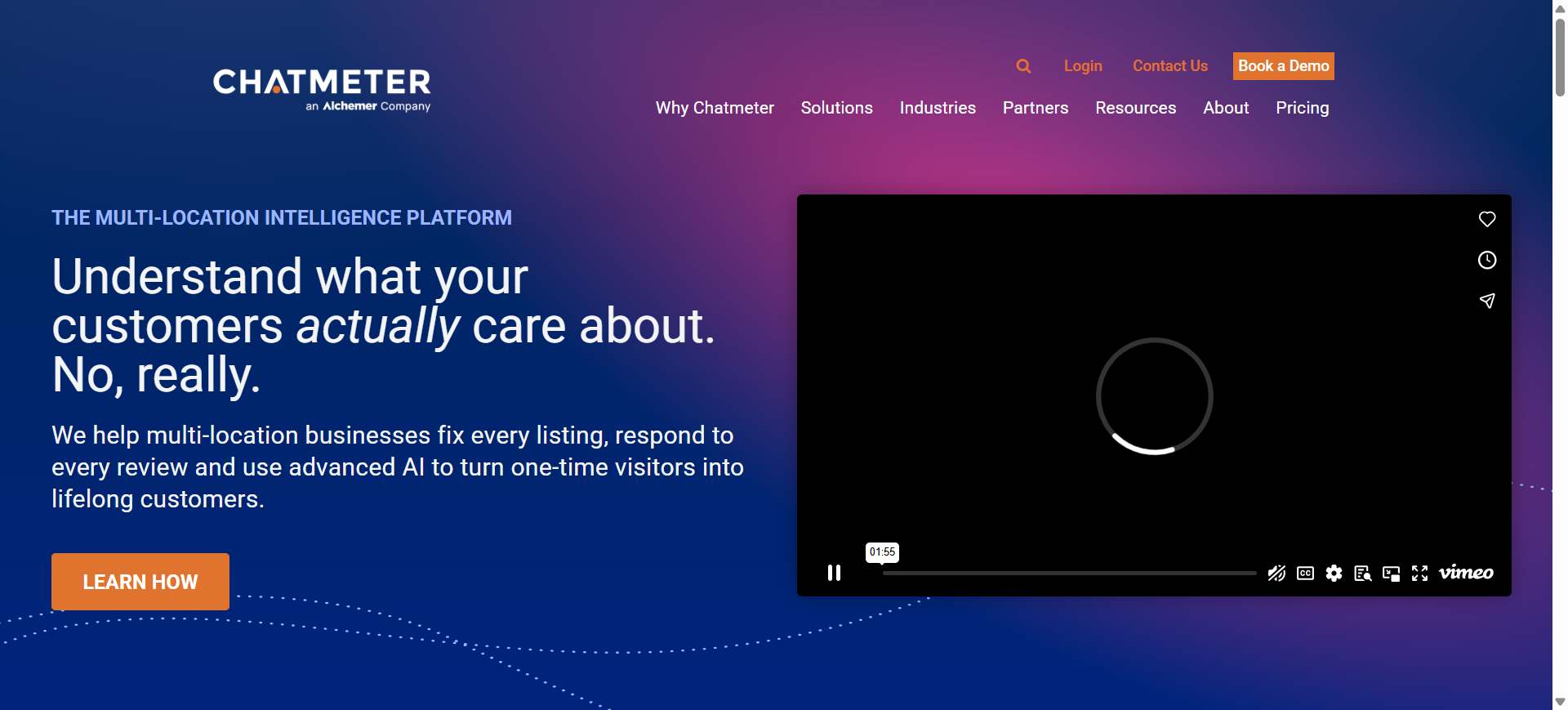
Chatmeter is a reputation management and customer intelligence platform designed for multi-location businesses such as retail chains, franchises, and service brands. The platform collects reviews, social media mentions, surveys, and other feedback sources into a single dashboard where AI analyzes sentiment and reputation trends.
Using its Pulse AI technology, Chatmeter processes large volumes of customer feedback to identify patterns, sentiment drivers, and emerging reputation risks that may impact brand perception across different locations.
How to use Chatmeter AI for AI Reputation Management
- Connect review platforms and social media channels to the Chatmeter dashboard.
- Collect and centralize customer reviews and feedback from multiple locations.
- Use AI sentiment analysis to identify trends and reputation drivers.
- Respond to reviews and monitor reputation performance across locations.
Key Features of Chatmeter AI
- AI-powered sentiment analysis (Pulse AI)
- Centralized review monitoring across platforms
- Multi-location reputation management
- Automated alerts for negative sentiment spikes
- Competitive benchmarking and analytics dashboards
Benefits of Using Chatmeter AI
- Provides real-time insights into customer sentiment
- Helps identify location-specific reputation issues
- Centralizes reputation management workflows
- Improves customer engagement and response time
- Enables data-driven brand reputation decisions
Use Cases of Chatmeter AI for AI Reputation Management
Retail chains, healthcare networks, restaurants, and franchise businesses use Chatmeter AI to manage customer reviews and analyze brand perception across multiple locations.
Who Should Use Chatmeter AI
- Multi-location brands and franchises
- Retail and hospitality businesses
- Marketing and reputation management teams
- Customer experience teams
- Enterprises monitoring regional brand sentiment
Pricing
Enterprise-level pricing based on the number of locations, monitoring volume, and analytics features required.
10. ReviewTrackers AI
What is ReviewTrackers AI
ReviewTrackers is a reputation and review management platform that helps businesses monitor, analyze, and respond to customer feedback across multiple review platforms. The software aggregates reviews from sources such as Google, Facebook, TripAdvisor, and other directories into a centralized dashboard, allowing companies to track brand perception and customer sentiment in real time.
The platform uses natural language processing and analytics to identify trends in customer feedback, enabling businesses to understand reputation drivers and improve customer experience.
How to use ReviewTrackers AI for AI Reputation Management
- Connect review platforms and online directories to the ReviewTrackers dashboard.
- Aggregate customer reviews from multiple sources in one centralized system.
- Use AI sentiment analysis to identify trends and reputation issues.
- Respond to reviews directly from the platform and track reputation metrics.
Key Features of ReviewTrackers AI
- Aggregated review monitoring across 100+ review platforms
- AI-powered sentiment and trend analysis
- Automated review collection via email and SMS
- Competitive benchmarking and analytics dashboards
- Alerts for new or negative reviews
Benefits of Using ReviewTrackers AI
- Centralizes reviews from multiple platforms
- Provides actionable insights from customer feedback
- Helps businesses respond quickly to negative reviews
- Improves understanding of customer sentiment trends
- Supports data-driven customer experience improvements
Use Cases of ReviewTrackers AI for AI Reputation Management
Restaurants, healthcare providers, retail chains, automotive companies, and hospitality businesses use ReviewTrackers AI to monitor customer feedback and manage online reviews across multiple locations.
Who Should Use ReviewTrackers AI
- Multi-location businesses and franchises
- Marketing and customer experience teams
- Reputation management professionals
- Local businesses with high review volumes
- Agencies managing multiple brands
Pricing
Subscription-based pricing depending on the number of business locations, features, and analytics capabilities required.
11. BrightLocal AI
What is BrightLocal AI
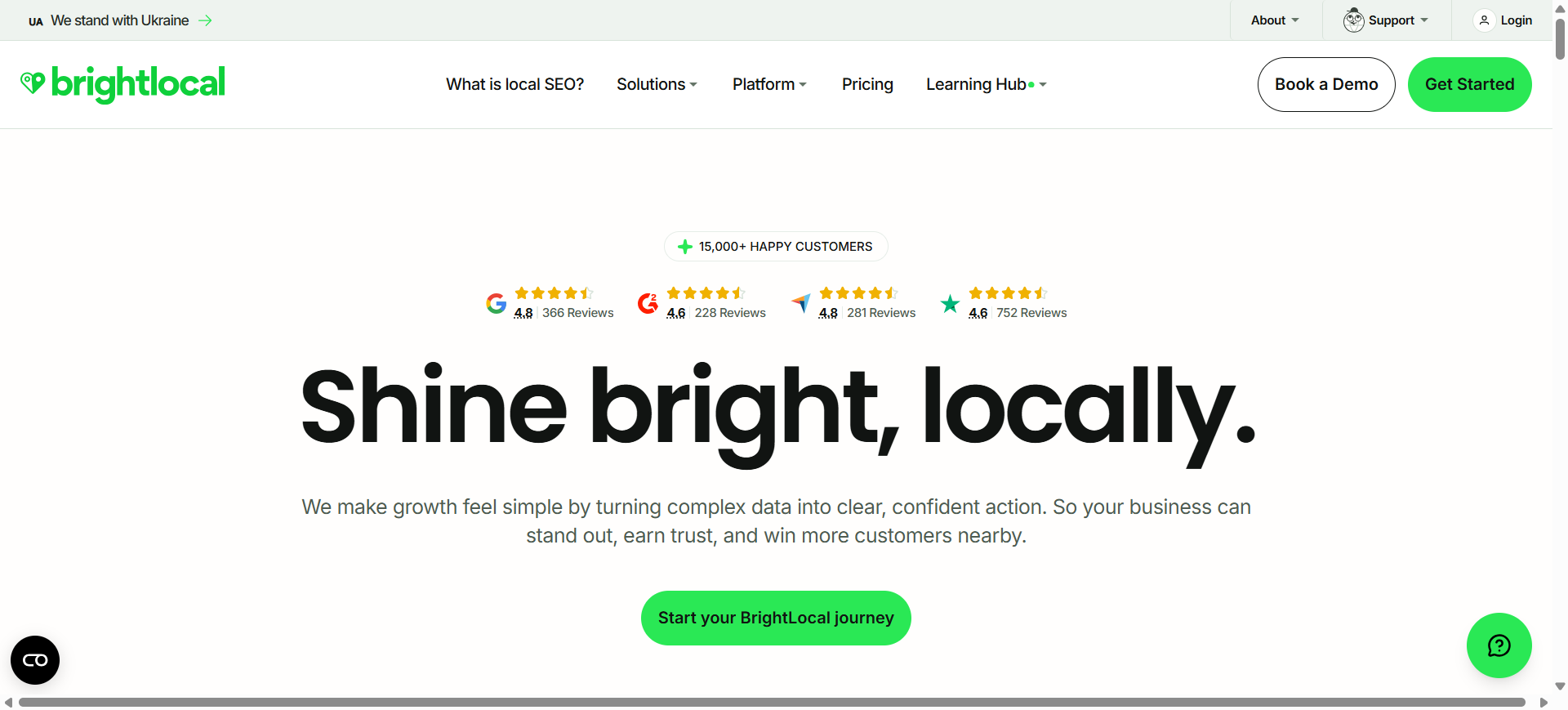
BrightLocal is a local SEO and reputation management platform designed to help businesses monitor reviews, track online visibility, and improve brand perception across local search platforms. The platform combines review monitoring, citation management, and analytics into one dashboard so businesses can understand how their brand appears in search and review ecosystems.
BrightLocal’s reputation tools collect reviews from dozens of review platforms and present them in a centralized system, allowing businesses to analyze sentiment, track rating changes, and respond quickly to customer feedback.
How to use BrightLocal AI for AI Reputation Management
- Connect business listings and review sources such as Google, Yelp, Facebook, and industry directories.
- Monitor reviews from multiple platforms using the review monitoring dashboard.
- Use analytics reports to identify reputation trends and sentiment changes.
- Respond to customer feedback and track improvements in ratings and visibility.
Key Features of BrightLocal AI
- Review monitoring across 80+ review sites
- AI-assisted review response and templates
- Local SEO rank tracking and citation management
- Reputation analytics and reporting dashboards
- Automated alerts for new or negative reviews
Benefits of Using BrightLocal AI
- Centralizes review monitoring across many platforms
- Helps businesses respond faster to customer feedback
- Improves local search visibility and trust signals
- Provides insights into customer sentiment trends
- Supports reputation and local SEO strategy in one platform
Use Cases of BrightLocal AI for AI Reputation Management
Marketing agencies, local businesses, and multi-location brands use BrightLocal AI to manage reviews and improve local search presence while monitoring brand reputation across multiple review platforms.
Who Should Use BrightLocal AI
- Local businesses and franchises
- Marketing and SEO agencies
- Multi-location service brands
- Local SEO specialists
- Small and mid-sized companies managing online reviews
Pricing
Subscription-based pricing with plans starting at approximately $39 per month depending on the number of locations and tools required.
Social Listening and Monitoring Platforms
12. Brand24 AI
What is Brand24 AI
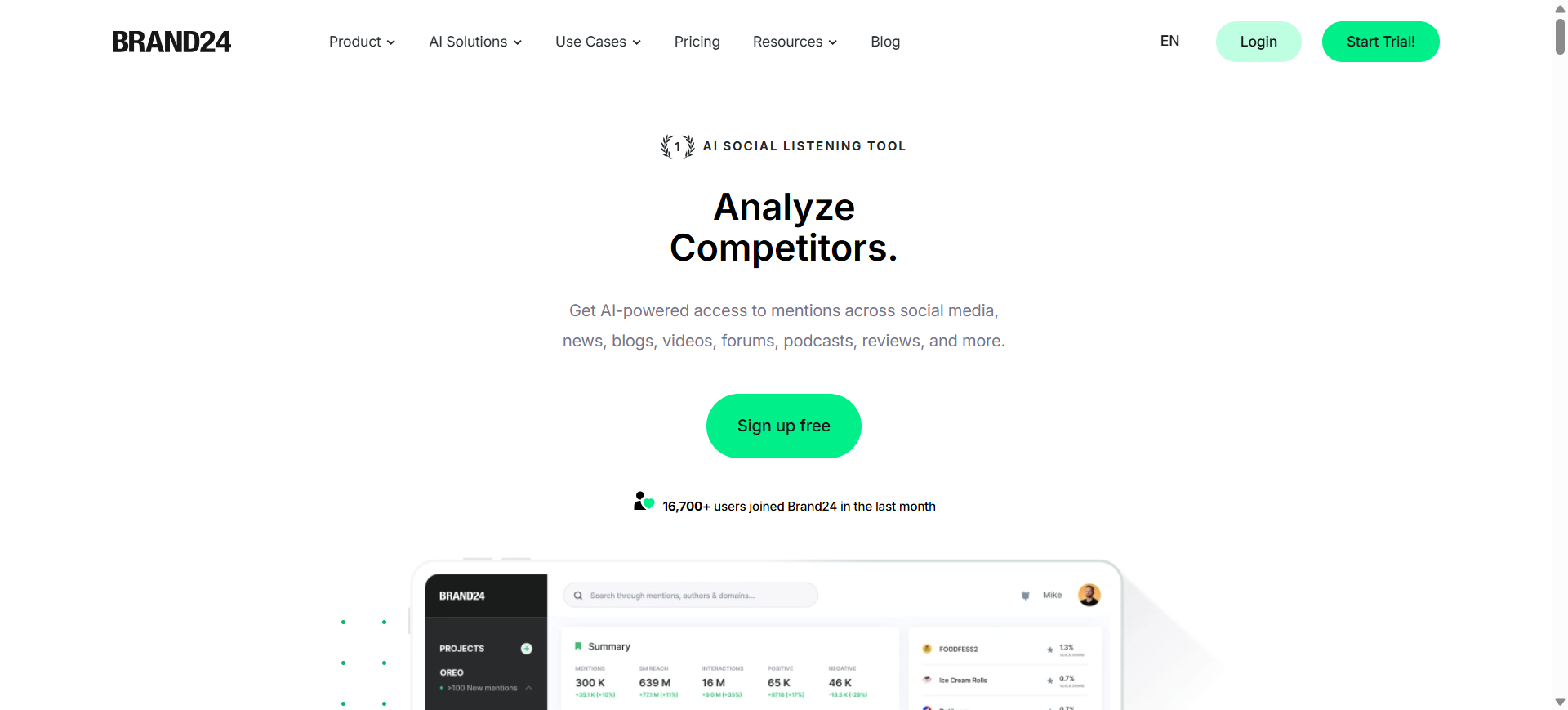
Brand24 is a real-time brand monitoring and reputation management platform that tracks online mentions across social media, news sites, blogs, forums, and review platforms. The platform uses artificial intelligence to analyze sentiment, detect spikes in conversations, and identify potential reputation risks. Businesses use Brand24 AI to monitor how their brand is discussed online and respond quickly to emerging issues.
How to use Brand24 AI for AI Reputation Management
- Set up monitoring for brand names, product names, and relevant keywords.
- Track mentions across social media, blogs, forums, and news platforms.
- Use AI sentiment analysis to understand public perception.
- Receive alerts when conversation volume or negative sentiment increases.
Key Features of Brand24 AI
- Real-time brand mention monitoring
- AI-powered sentiment analysis
- Anomaly detection for conversation spikes
- Influencer identification tools
- Share-of-voice and competitor tracking
Benefits of Using Brand24 AI
- Detects reputation issues early
- Provides real-time visibility into online conversations
- Helps teams respond quickly to feedback
- Tracks brand sentiment across multiple channels
- Supports crisis monitoring and reputation protection
Use Cases of Brand24 AI for AI Reputation Management
Marketing teams, PR agencies, and startups use Brand24 AI to track brand mentions, monitor sentiment, and manage reputation across digital channels.
Who Should Use Brand24 AI
- Marketing and PR teams
- Small and mid-sized businesses
- Brand monitoring teams
- Agencies managing multiple clients
- Companies monitoring online discussions
Pricing
Subscription-based pricing typically based on the number of mentions monitored and users included.
13. Talkwalker AI
What is Talkwalker AI
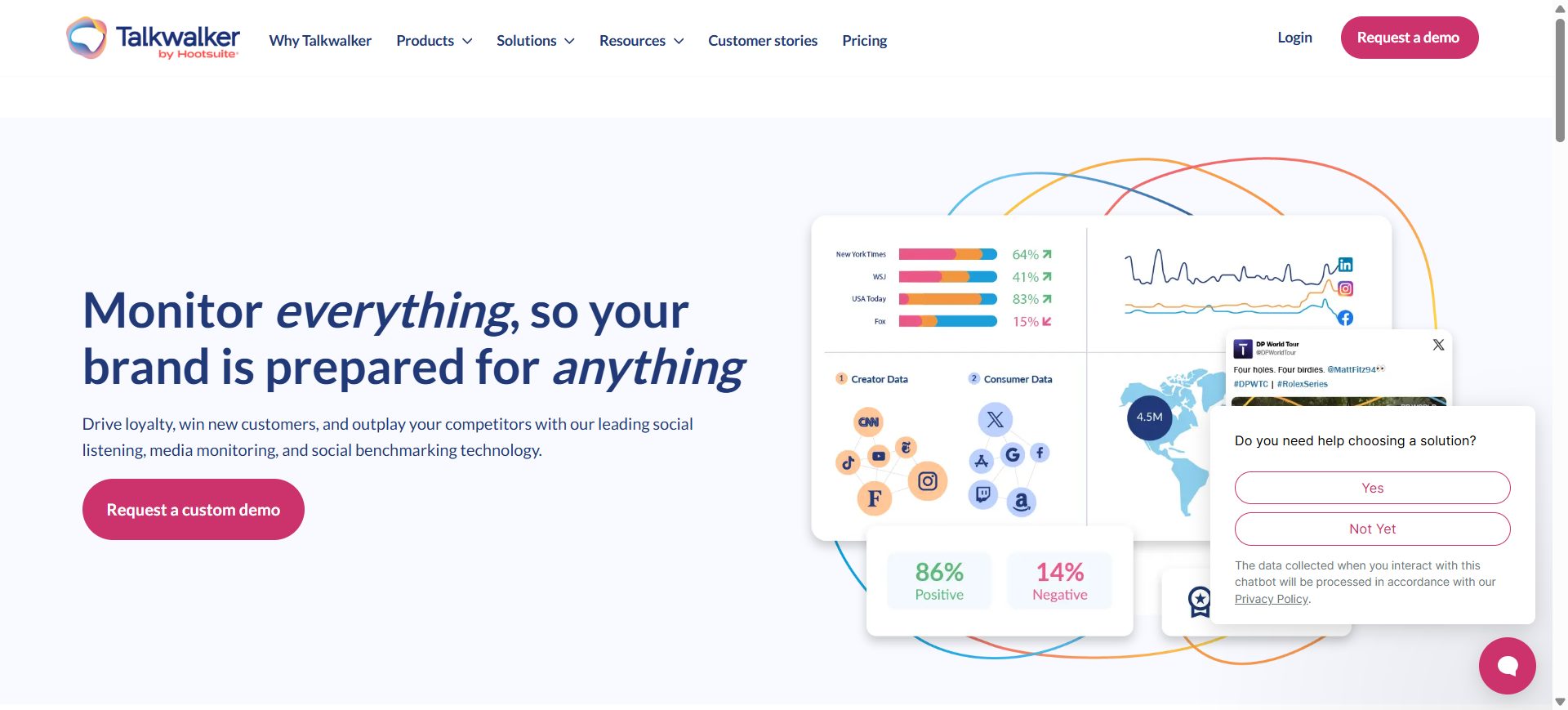
Talkwalker is a consumer intelligence and social listening platform that helps organizations monitor brand mentions, analyze sentiment, and track online conversations across digital channels. The platform uses artificial intelligence to process large volumes of data from social media, news sites, blogs, forums, and multimedia content to understand how people perceive a brand. Companies use Talkwalker AI to identify trends, detect reputation risks, and gain insights into audience behavior.
How to use Talkwalker AI for AI Reputation Management
- Set up monitoring for brand names, products, competitors, and relevant keywords.
- Track brand mentions across social networks, news platforms, blogs, and forums.
- Use AI sentiment analysis to evaluate public perception and identify conversation trends.
- Receive alerts when unusual spikes in mentions or negative sentiment occur.
Key Features of Talkwalker AI
- AI-powered social listening and analytics
- Sentiment analysis using natural language processing
- Image and video recognition for brand mentions
- Trend detection and conversation monitoring
- Competitive benchmarking and audience insights
Benefits of Using Talkwalker AI
- Provides real-time visibility into brand conversations
- Detects reputation risks early through sentiment analysis
- Analyzes global consumer conversations at scale
- Identifies trends and emerging topics quickly
- Supports data-driven marketing and PR strategies
Use Cases of Talkwalker AI for AI Reputation Management
Marketing teams, PR professionals, and global brands use Talkwalker AI to monitor brand reputation, detect crises early, and analyze how audiences respond to campaigns and product launches.
Who Should Use Talkwalker AI
- Enterprise marketing teams
- Public relations and communication teams
- Social media monitoring specialists
- Global consumer brands
- Organizations analyzing large-scale online conversations
Pricing
Subscription-based enterprise pricing customized based on monitoring scale, analytics features, and data volume requirements.
14. Mention AI
What is Mention AI
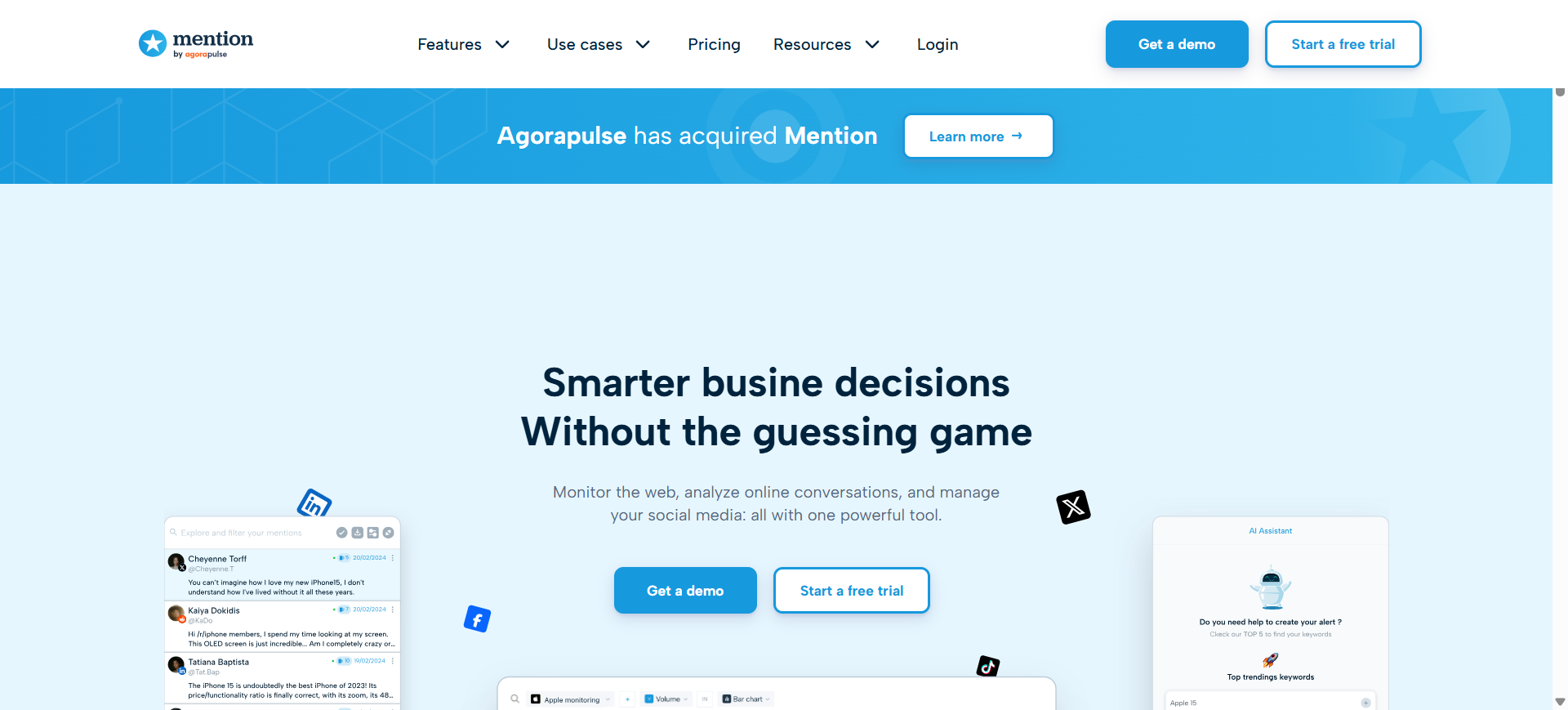
Mention is a brand monitoring and reputation management platform that tracks online mentions across social media, news websites, blogs, forums, and review platforms. The platform uses artificial intelligence to analyze sentiment, filter irrelevant mentions, and provide insights into how a brand is discussed online. By aggregating conversations from multiple digital channels, Mention AI helps organizations monitor reputation signals and respond quickly to changes in public perception.
How to use Mention AI for AI Reputation Management
- Create monitoring alerts for brand names, products, competitors, and industry keywords.
- Track brand mentions across social media, blogs, news sites, and forums.
- Use AI-powered sentiment analysis to evaluate whether mentions are positive, neutral, or negative.
- Review dashboards and alerts to identify reputation trends and respond to important conversations.
Key Features of Mention AI
- Real-time monitoring of brand mentions across web and social platforms
- AI-powered sentiment analysis and mention classification
- Competitor monitoring and share-of-voice tracking
- Advanced filtering and Boolean search queries
- Analytics dashboards and automated reports
Benefits of Using Mention AI
- Detects reputation issues as soon as they appear online
- Provides real-time alerts for brand mentions
- Helps businesses track competitor conversations
- Improves visibility into online brand perception
- Supports faster responses to emerging reputation risks
Use Cases of Mention AI for AI Reputation Management
Marketing teams, PR professionals, and agencies use Mention AI to monitor brand mentions, analyze sentiment trends, and track how public conversations influence brand reputation.
Who Should Use Mention AI
- Marketing and digital strategy teams
- Public relations professionals
- Brand monitoring teams
- Agencies managing multiple clients
- Businesses tracking online brand mentions
Pricing
Subscription-based pricing typically starting around $41 per month depending on monitoring volume, alerts, and analytics features.
Reputation Cleanup and Protection Platforms
15. Erase AI
What is Erase AI
Erase is an online reputation protection platform that focuses on identifying and removing harmful or negative content from search results and websites. The platform combines automated monitoring, AI analysis, and legal removal workflows to help individuals and businesses protect their digital reputation. Companies use Erase AI to track harmful mentions, remove outdated or defamatory content, and maintain a positive brand presence across the internet.
How to use Erase AI for AI Reputation Management
- Scan the web for negative or harmful content related to a brand or individual.
- Identify damaging search results, reviews, or posts that affect reputation.
- Use automated tools and legal processes to request removal of unwanted content.
- Monitor reputation dashboards to track improvements in search visibility and sentiment.
Key Features of Erase AI
- AI-powered harmful content detection
- Negative search result monitoring
- Content removal and suppression workflows
- Reputation risk alerts and monitoring
- Personal and business reputation dashboards
Benefits of Using Erase AI
- Helps remove harmful or defamatory content
- Protects brand credibility and online trust
- Improves search result reputation visibility
- Detects reputation risks early
- Provides structured reputation recovery strategies
Use Cases of Erase AI for AI Reputation Management
Businesses, executives, public figures, and professionals use Erase AI to monitor their digital footprint and address negative online content that may impact brand perception.
Who Should Use Erase AI
- Businesses facing negative publicity online
- Public figures and executives
- Professionals managing personal reputation
- Brands monitoring search engine reputation
- Organizations dealing with online defamation
Pricing
Custom pricing based on reputation management services such as monitoring, content removal, and long-term reputation protection.
AI Reputation Management Agents
What are AI Reputation Management Agents?
AI reputation management agents are autonomous software systems that continuously monitor how a brand is discussed across the internet and take automated actions to manage that reputation. These agents use artificial intelligence technologies such as natural language processing, machine learning, and sentiment analysis to interpret customer feedback and online conversations.
Unlike traditional reputation monitoring tools that only collect data, AI agents can perform tasks such as detecting sentiment changes, identifying reputation risks, generating review responses, and alerting teams about potential crises. By analyzing large volumes of online content in real time, these systems help businesses maintain visibility into brand perception across reviews, social media, news platforms, and discussion forums.
How AI Agents Are Changing Reputation Management?
AI agents are transforming reputation management from a manual, reactive process into an automated intelligence system. Instead of teams manually monitoring dozens of platforms and responding to feedback individually, AI agents handle these tasks continuously in the background.
Modern reputation management agents can detect spikes in negative sentiment, summarize thousands of customer comments, and generate context-aware responses that follow brand guidelines. They can also prioritize urgent issues, route feedback to the appropriate team, and track how reputation trends evolve over time.
This automation allows organizations to respond faster to customer concerns, identify emerging problems earlier, and maintain consistent engagement across digital channels. As reputation signals now appear across reviews, social media, forums, and search results, AI agents help businesses manage this complexity while providing actionable insights that support marketing, customer experience, and brand strategy decisions.
Examples of AI Reputation Management Agents
Several modern reputation management platforms now include AI agents that automate monitoring, analysis, and responses across digital channels. These agents continuously process brand mentions, customer reviews, and conversations to help businesses manage reputation at scale.
1) Birdeye AI Agents
Birdeye uses AI-driven agents to automate review requests, generate personalized responses, and analyze customer sentiment across hundreds of review platforms. These agents monitor feedback in real time and highlight trends that affect brand reputation across locations.
2) Sprinklr AI Automation Agents
Sprinklr deploys automation agents within its unified customer experience platform to track conversations across social media, messaging apps, and review channels. These agents classify sentiment, route customer feedback to the right teams, and prioritize reputation-related issues.
3) Brandwatch AI Consumer Intelligence
Brandwatch integrates AI consumer intelligence systems that analyze online discussions, social media conversations, and brand mentions. These AI agents detect emerging trends, identify influencers shaping public opinion, and highlight shifts in brand perception.
4) Podium Conversational AI
Podium provides conversational AI agents that interact with customers through messaging channels. These agents can answer inquiries, request reviews, and generate suggested responses to feedback, helping businesses maintain engagement with customers.
Tools Offering AI Agents
Several reputation management platforms integrate AI agents as part of their core functionality. Examples include:
- Birdeye AI
- Sprinklr AI
- Brandwatch AI
- Podium AI
- Chatmeter AI
These tools combine automated monitoring, sentiment analysis, and response generation to help organizations manage brand reputation across multiple digital channels efficiently.
How to Choose the Right AI Reputation Management Tool
Selecting the right AI reputation management platform requires evaluating several core capabilities that determine how effectively the tool can monitor brand perception, automate responses, and generate insights. Modern platforms combine monitoring, analytics, and automation to help businesses manage reputation at scale.
Monitoring Coverage Across Platforms
A reliable reputation management tool should monitor brand mentions across multiple digital channels, including review sites, social media platforms, forums, news websites, and online directories. Continuous monitoring ensures businesses can detect customer feedback and reputation risks in real time rather than discovering issues after they escalate.
AI Sentiment Analysis Capabilities
AI sentiment analysis allows platforms to understand the emotional tone behind customer feedback and categorize it as positive, neutral, or negative. Advanced systems use natural language processing and machine learning to detect nuanced emotions, context, and trends within large volumes of customer comments.
Automation Features for Review Responses
Automation is essential for scaling reputation management across multiple channels. AI-powered tools can generate suggested responses to reviews, automate feedback workflows, and ensure businesses respond quickly while maintaining a consistent brand voice. This significantly reduces manual workload and improves customer engagement.
Integration With CRM and Marketing Systems
The most effective reputation management platforms integrate with CRM systems, marketing automation tools, and customer support software. Integrations allow businesses to connect reputation insights with broader customer engagement strategies, ensuring feedback data informs marketing campaigns and service improvements.
Scalability for Business Growth
As businesses grow, the volume of reviews, mentions, and customer interactions increases significantly. A scalable AI reputation management tool should maintain performance and accuracy even when analyzing large datasets across multiple locations or markets.
When these capabilities—monitoring, sentiment analysis, automation, integrations, and scalability—are combined, businesses can build a comprehensive reputation management strategy that adapts to changing customer perceptions and digital conversations.
Benefits of AI Reputation Management Tools
- Monitor brand mentions across multiple platforms
- Detect sentiment changes in real time
- Automate review responses and customer engagement
- Identify emerging reputation risks early
- Improve customer trust and brand credibility
Future of AI Reputation Management
The future of AI reputation management will focus on prediction, automation, and deeper business integration. Instead of only monitoring brand mentions, AI platforms will help businesses anticipate reputation risks and respond proactively.
Key trends shaping the future include:
- Predictive analytics: AI will forecast reputation trends by analyzing historical reviews, sentiment patterns, and customer feedback.
- Automated crisis detection: Systems will identify sudden spikes in negative sentiment or unusual brand mentions and alert teams instantly.
- Deeper integrations: Reputation tools will integrate with CRM, marketing automation, and customer support systems to improve decision-making.
- Proactive reputation strategies: Businesses will use AI insights to guide marketing, product improvements, and customer experience strategies.
As AI technology advances, reputation management will shift from reactive monitoring to predictive brand intelligence.
Conclusion
AI reputation management tools help businesses understand how customers perceive their brand and respond to feedback across digital channels more efficiently. Platforms such as Birdeye AI, Sprinklr AI, and Brandwatch AI combine sentiment analysis, automation, and monitoring to provide actionable insights into brand perception. By choosing a tool that aligns with their monitoring needs, automation capabilities, and system integrations, organizations can manage reputation proactively and maintain customer trust in an increasingly digital marketplace.
FAQs
What is AI reputation management?
AI reputation management uses artificial intelligence to monitor brand mentions, analyze sentiment, and automate responses to online reviews and digital conversations.
How do AI reputation management tools work?
These tools collect feedback from review platforms, social media, forums, and news sources. AI systems analyze the data to detect sentiment trends, identify reputation risks, and generate insights for businesses.
Are AI reputation management tools only for large businesses?
No. Many platforms offer solutions for small businesses, startups, and local companies by automating review monitoring and response workflows.
Can AI tools automatically respond to reviews?
Yes. Many reputation management platforms use natural language processing to generate personalized responses to customer reviews while maintaining brand tone.
How quickly can reputation management tools detect issues?
Advanced AI monitoring systems can detect reputation changes in real time, allowing businesses to respond quickly to negative sentiment or emerging discussions.
Do reputation management tools remove negative reviews?
Most tools focus on monitoring and responding to feedback. They typically cannot remove legitimate reviews, but they help businesses manage responses and improve customer experience.