Apple
2030 CLIMATE ACTION
Research-based synthesized Action Plan • Current public information through September 2026
1
APPLE 2030
CLIMATE ACTION PLAN
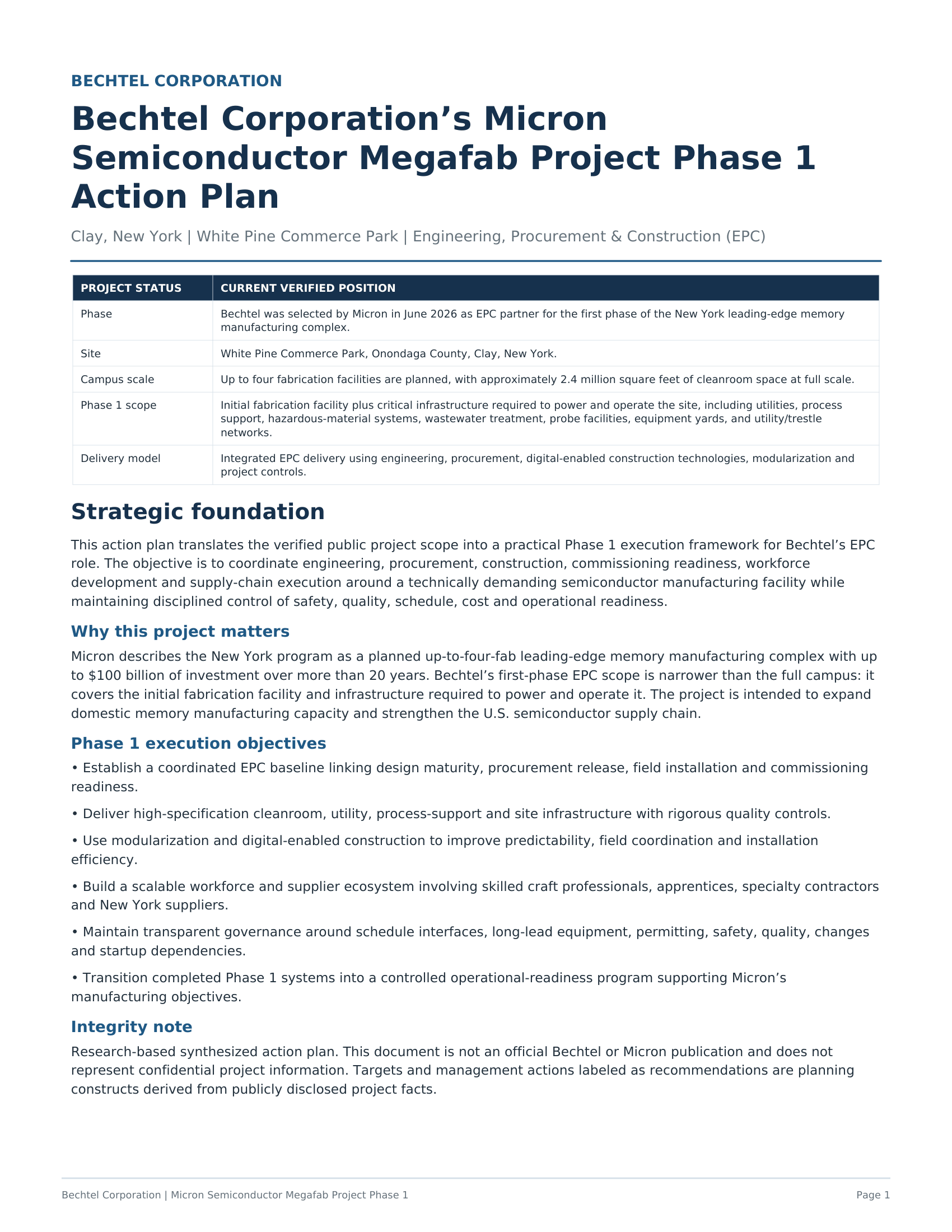
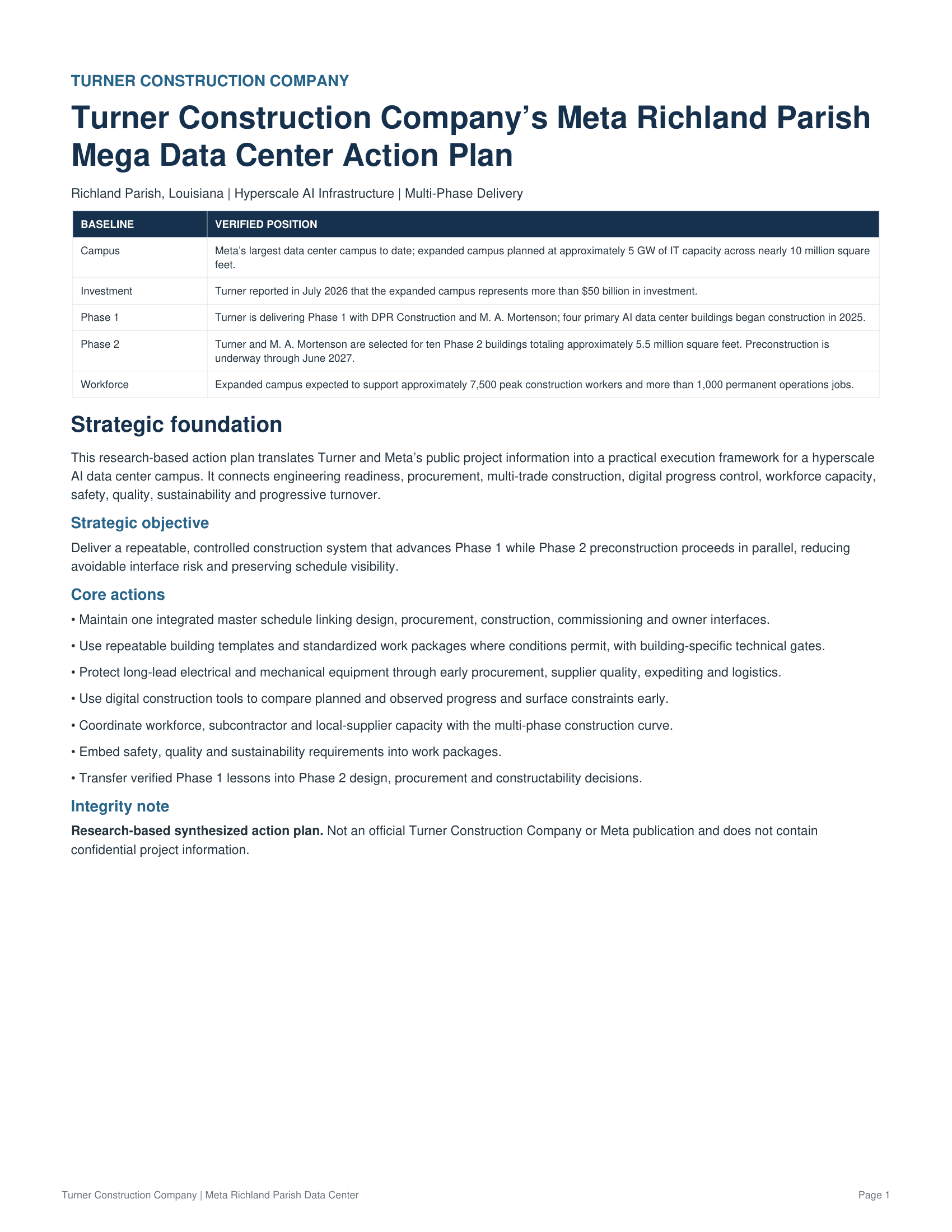
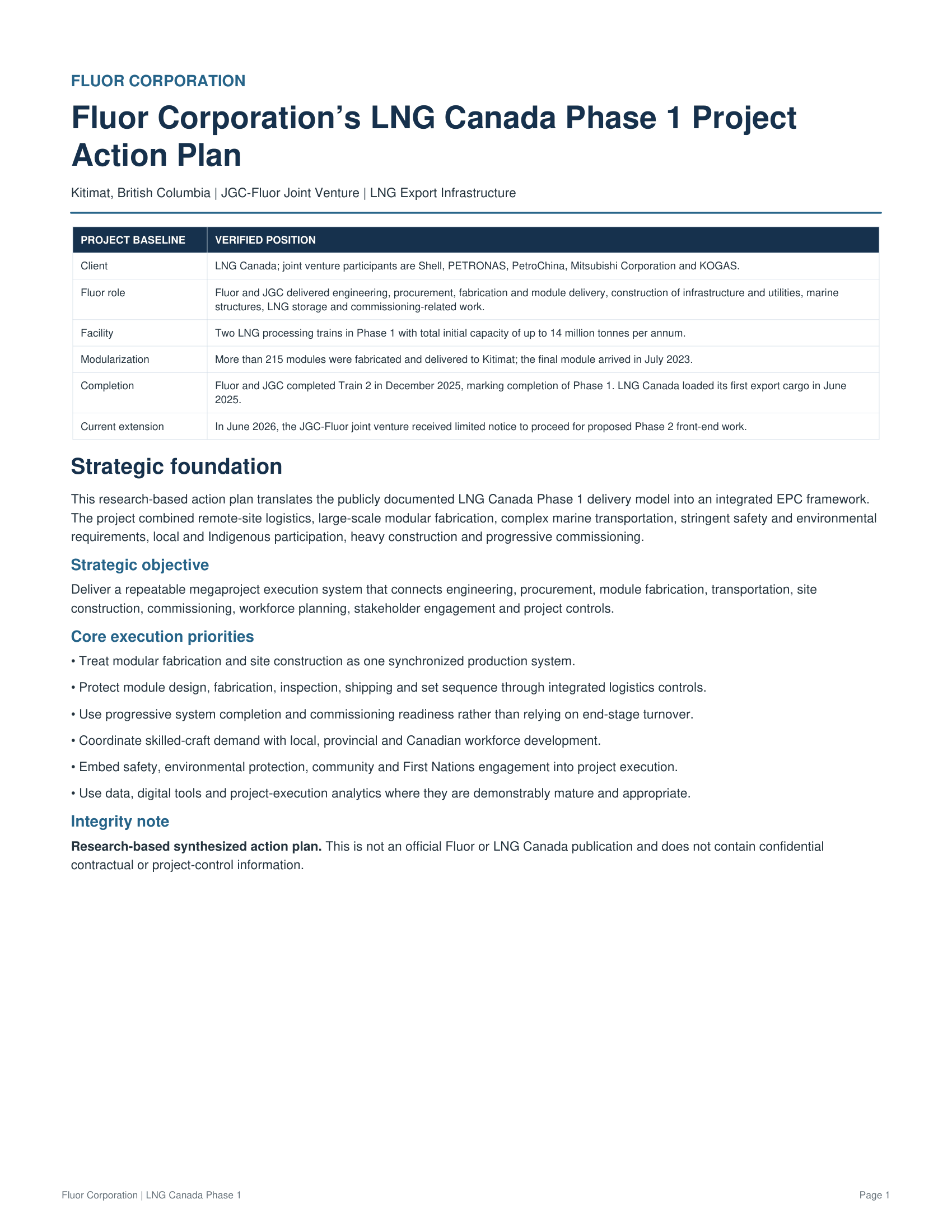
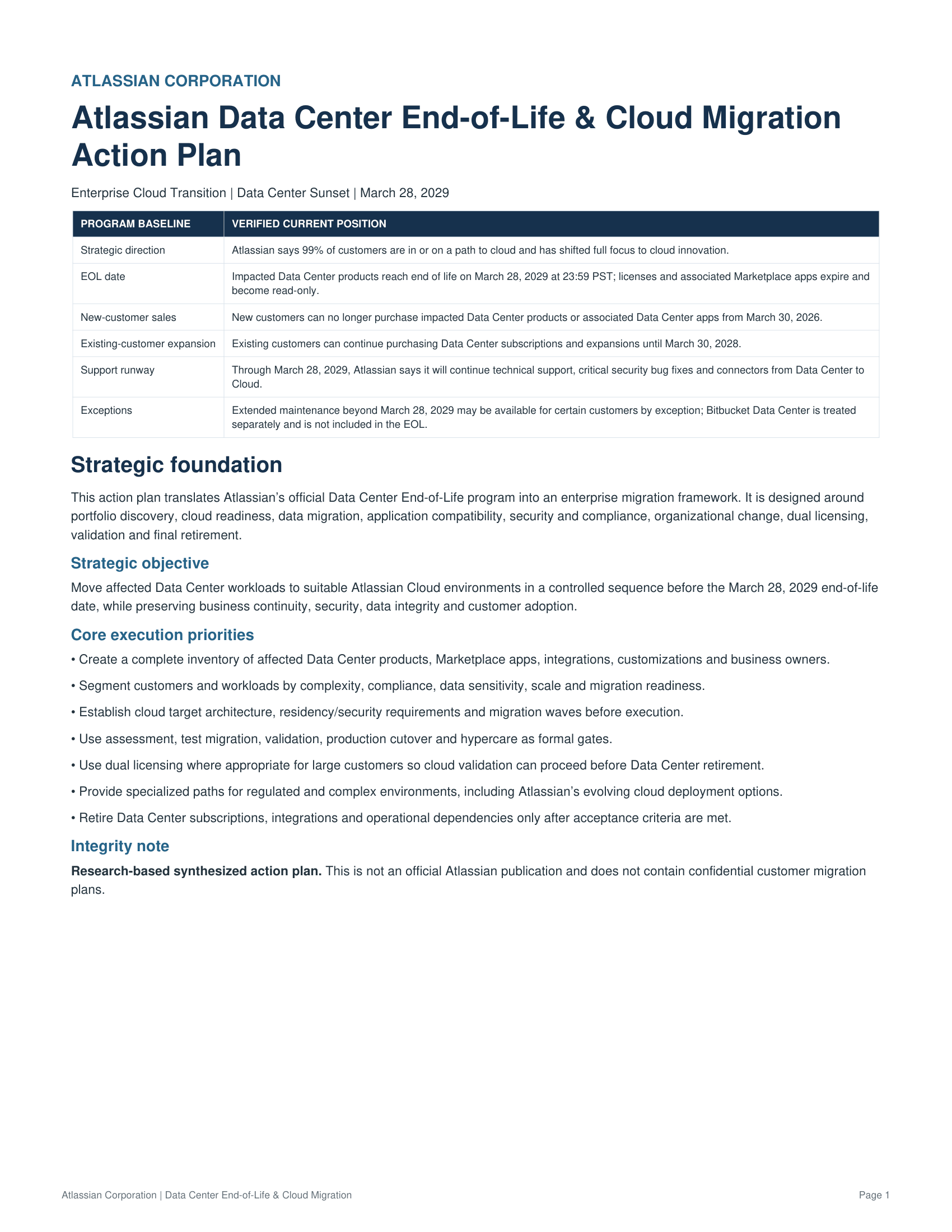
2026–2030 execution framework | Research-based synthesis of Apple’s science-based climate, materials, energy,
water, waste and recycling initiatives.
PLAN HORIZON
2030
CORE TARGET
75% emissions reduction vs. 2015, then balance residual
emissions
LATEST BASIS
2026 Environmental Progress Report
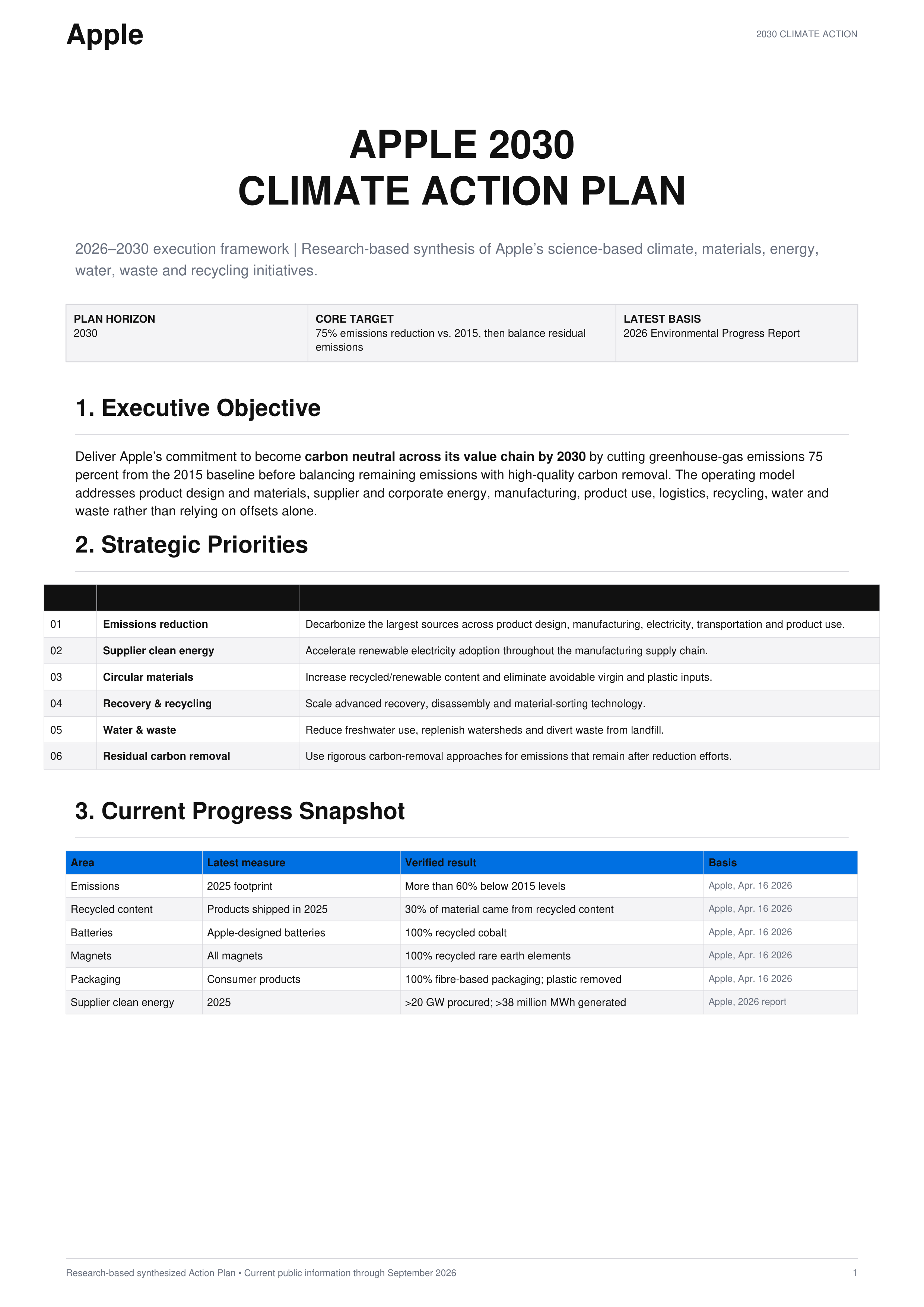
1. Executive Objective
Deliver Apple’s commitment to become
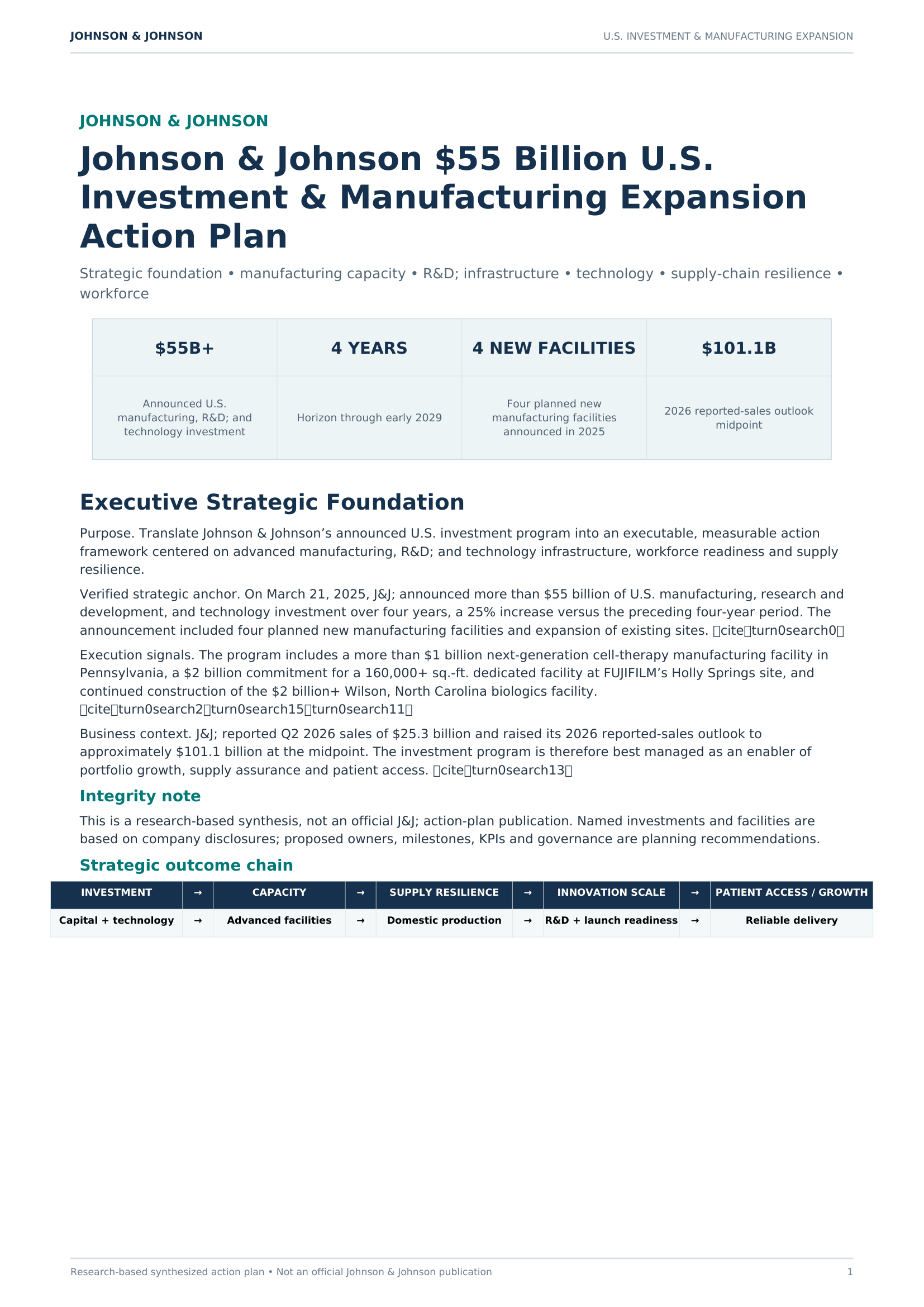
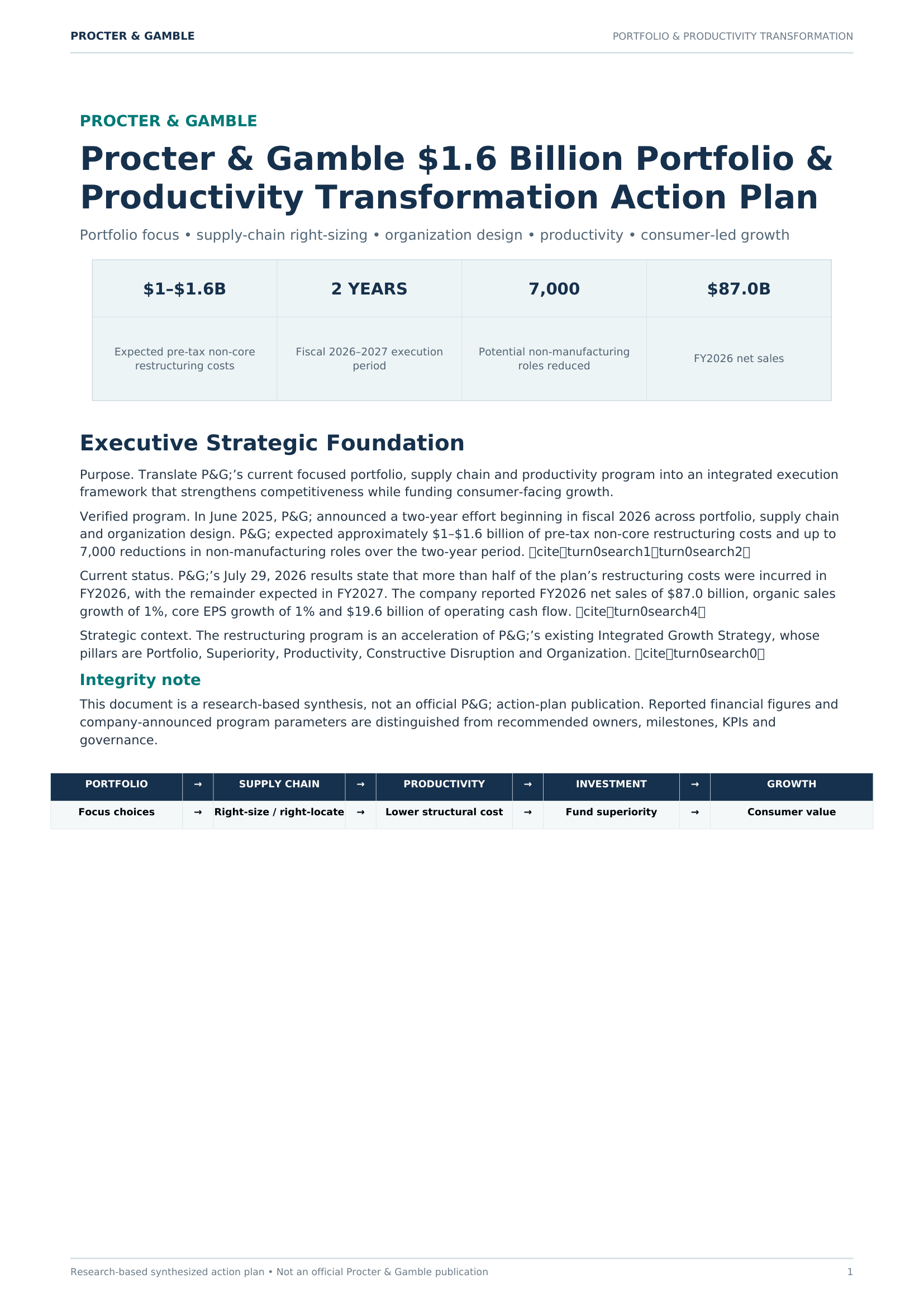
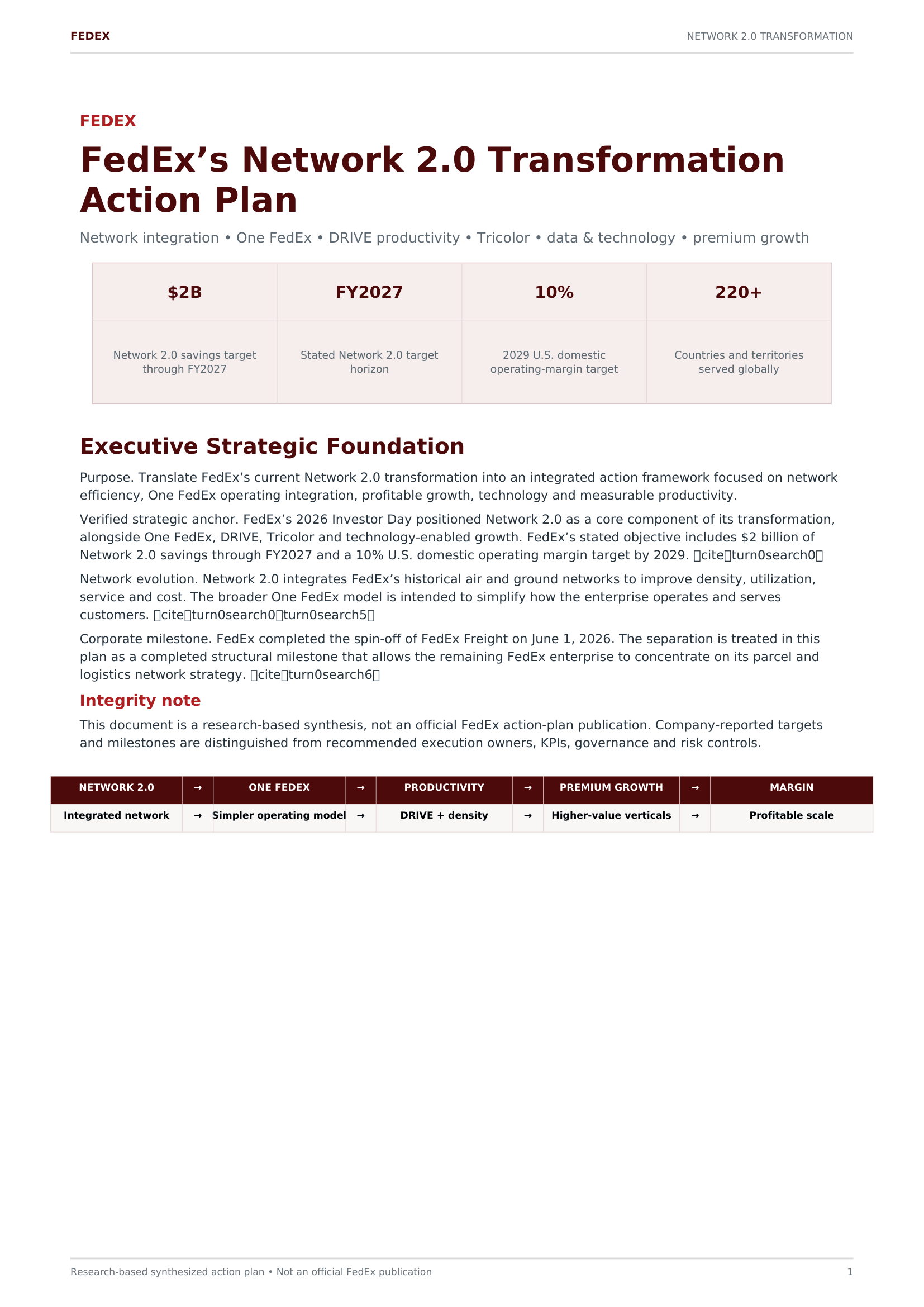
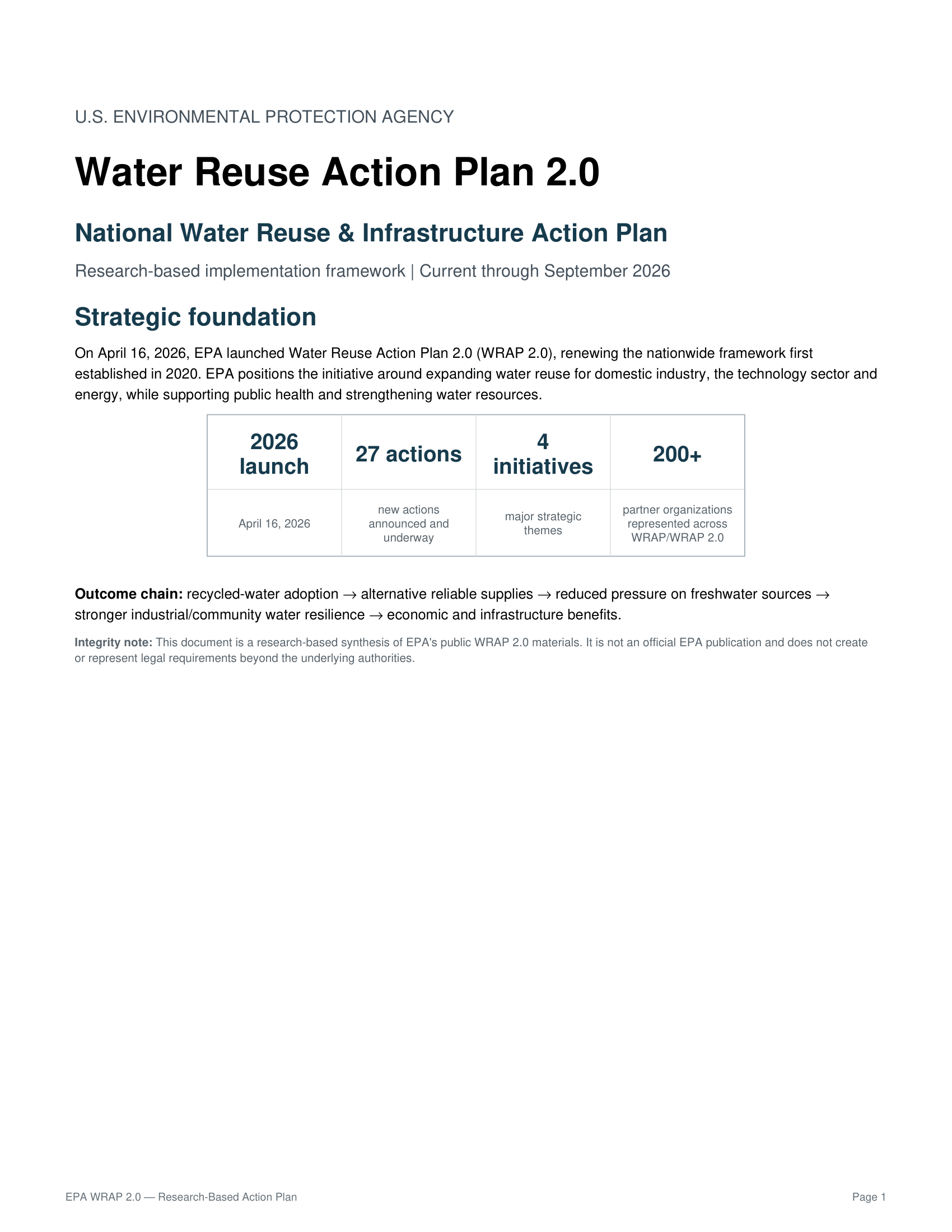
carbon neutral across its value chain by 2030
by cutting greenhouse-gas emissions 75
percent from the 2015 baseline before balancing remaining emissions with high-quality carbon removal. The operating model
addresses product design and materials, supplier and corporate energy, manufacturing, product use, logistics, recycling, water and
waste rather than relying on offsets alone.
2. Strategic Priorities
#
Priority
Execution intent
01
Emissions reduction
Decarbonize the largest sources across product design, manufacturing, electricity, transportation and product use.
02
Supplier clean energy
Accelerate renewable electricity adoption throughout the manufacturing supply chain.
03
Circular materials
Increase recycled/renewable content and eliminate avoidable virgin and plastic inputs.
04
Recovery & recycling
Scale advanced recovery, disassembly and material-sorting technology.
05
Water & waste
Reduce freshwater use, replenish watersheds and divert waste from landfill.
06
Residual carbon removal
Use rigorous carbon-removal approaches for emissions that remain after reduction efforts.
3. Current Progress Snapshot
Area
Latest measure
Verified result
Basis
Emissions
2025 footprint
More than 60% below 2015 levels
Apple, Apr. 16 2026
Recycled content
Products shipped in 2025
30% of material came from recycled content
Apple, Apr. 16 2026
Batteries
Apple-designed batteries
100% recycled cobalt
Apple, Apr. 16 2026
Magnets
All magnets
100% recycled rare earth elements
Apple, Apr. 16 2026
Packaging
Consumer products
100% fibre-based packaging; plastic removed
Apple, Apr. 16 2026
Supplier clean energy
2025
>20 GW procured; >38 million MWh generated
Apple, 2026 report
Apple
2030 CLIMATE ACTION
Research-based synthesized Action Plan • Current public information through September 2026
2
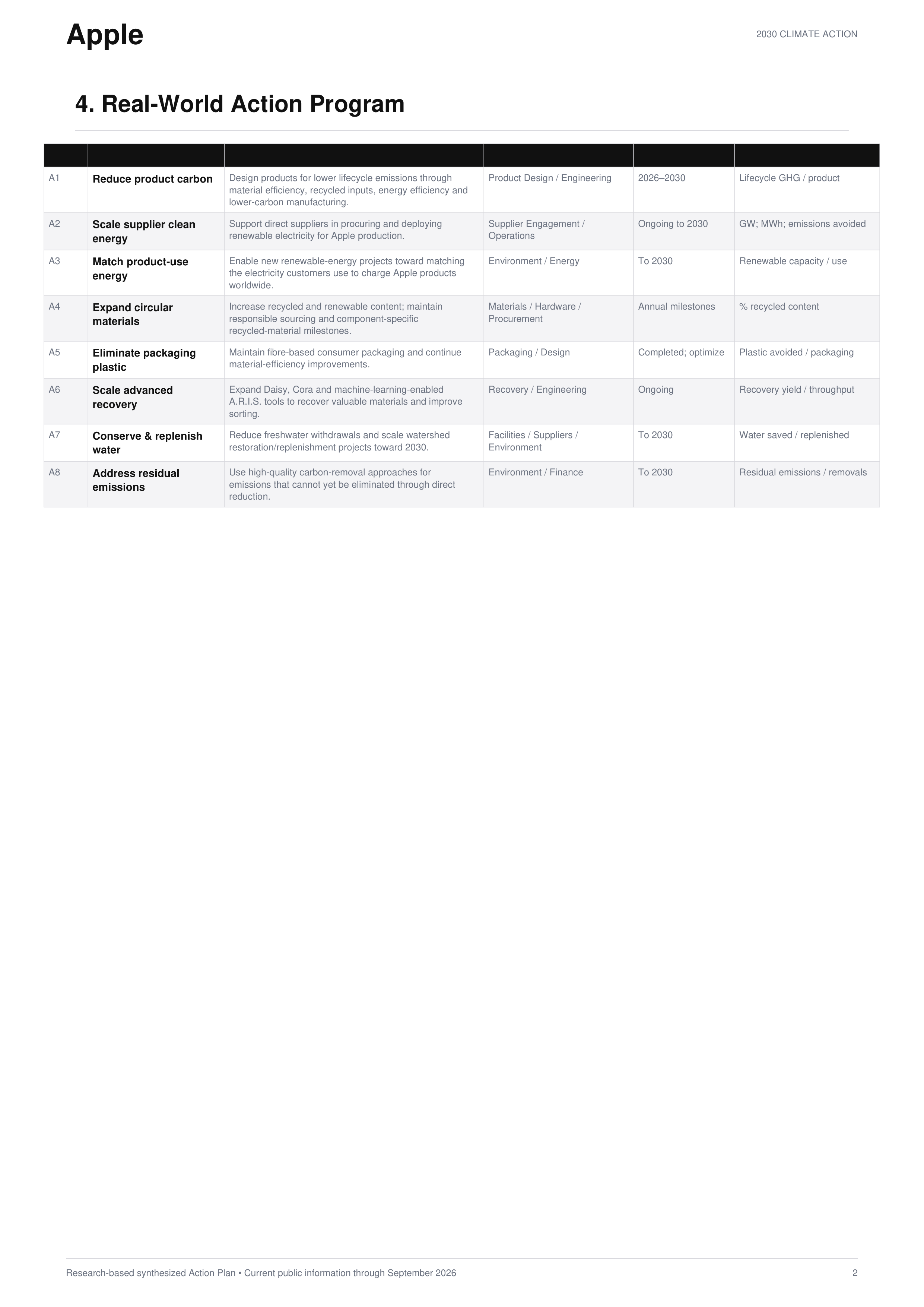
4. Real-World Action Program
ID
Action
Execution requirement
Accountability
Horizon
Primary measure
A1
Reduce product carbon
Design products for lower lifecycle emissions through
material efficiency, recycled inputs, energy efficiency and
lower-carbon manufacturing.
Product Design / Engineering
2026–2030
Lifecycle GHG / product
A2
Scale supplier clean
energy
Support direct suppliers in procuring and deploying
renewable electricity for Apple production.
Supplier Engagement /
Operations
Ongoing to 2030
GW; MWh; emissions avoided
A3
Match product-use
energy
Enable new renewable-energy projects toward matching
the electricity customers use to charge Apple products
worldwide.
Environment / Energy
To 2030
Renewable capacity / use
A4
Expand circular
materials
Increase recycled and renewable content; maintain
responsible sourcing and component-specific
recycled-material milestones.
Materials / Hardware /
Procurement
Annual milestones
% recycled content
A5
Eliminate packaging
plastic
Maintain fibre-based consumer packaging and continue
material-efficiency improvements.
Packaging / Design
Completed; optimize
Plastic avoided / packaging
A6
Scale advanced
recovery
Expand Daisy, Cora and machine-learning-enabled
A.R.I.S. tools to recover valuable materials and improve
sorting.
Recovery / Engineering
Ongoing
Recovery yield / throughput
A7
Conserve & replenish
water
Reduce freshwater withdrawals and scale watershed
restoration/replenishment projects toward 2030.
Facilities / Suppliers /
Environment
To 2030
Water saved / replenished
A8
Address residual
emissions
Use high-quality carbon-removal approaches for
emissions that cannot yet be eliminated through direct
reduction.
Environment / Finance
To 2030
Residual emissions / removals
Apple
2030 CLIMATE ACTION
Research-based synthesized Action Plan • Current public information through September 2026
3
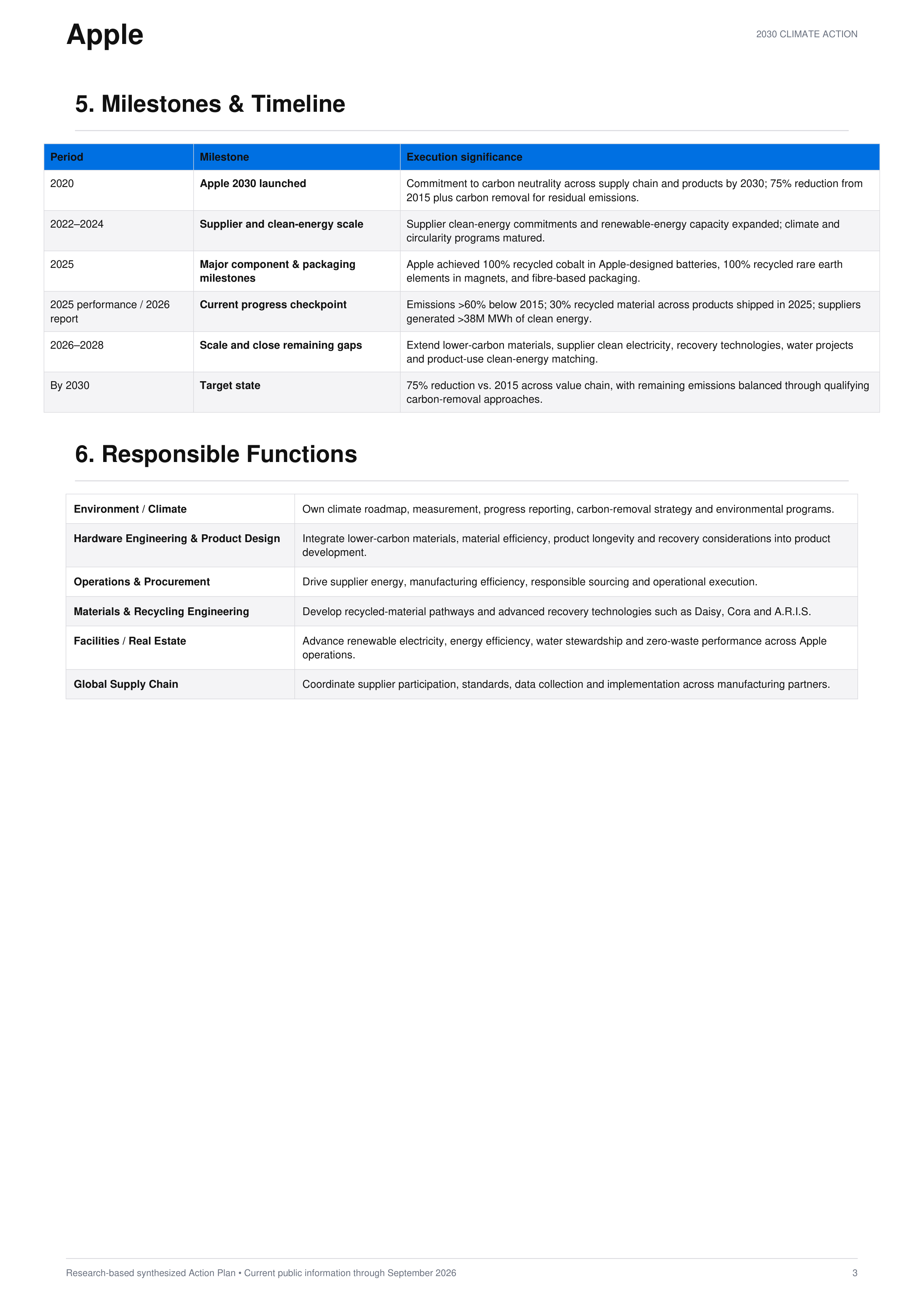
5. Milestones & Timeline
Period
Milestone
Execution significance
2020
Apple 2030 launched
Commitment to carbon neutrality across supply chain and products by 2030; 75% reduction from
2015 plus carbon removal for residual emissions.
2022–2024
Supplier and clean-energy scale
Supplier clean-energy commitments and renewable-energy capacity expanded; climate and
circularity programs matured.
2025
Major component & packaging
milestones
Apple achieved 100% recycled cobalt in Apple-designed batteries, 100% recycled rare earth
elements in magnets, and fibre-based packaging.
2025 performance / 2026
report
Current progress checkpoint
Emissions >60% below 2015; 30% recycled material across products shipped in 2025; suppliers
generated >38M MWh of clean energy.
2026–2028
Scale and close remaining gaps
Extend lower-carbon materials, supplier clean electricity, recovery technologies, water projects
and product-use clean-energy matching.
By 2030
Target state
75% reduction vs. 2015 across value chain, with remaining emissions balanced through qualifying
carbon-removal approaches.
6. Responsible Functions
Environment / Climate
Own climate roadmap, measurement, progress reporting, carbon-removal strategy and environmental programs.
Hardware Engineering & Product Design
Integrate lower-carbon materials, material efficiency, product longevity and recovery considerations into product
development.
Operations & Procurement
Drive supplier energy, manufacturing efficiency, responsible sourcing and operational execution.
Materials & Recycling Engineering
Develop recycled-material pathways and advanced recovery technologies such as Daisy, Cora and A.R.I.S.
Facilities / Real Estate
Advance renewable electricity, energy efficiency, water stewardship and zero-waste performance across Apple
operations.
Global Supply Chain
Coordinate supplier participation, standards, data collection and implementation across manufacturing partners.
Apple
2030 CLIMATE ACTION
Research-based synthesized Action Plan • Current public information through September 2026
4
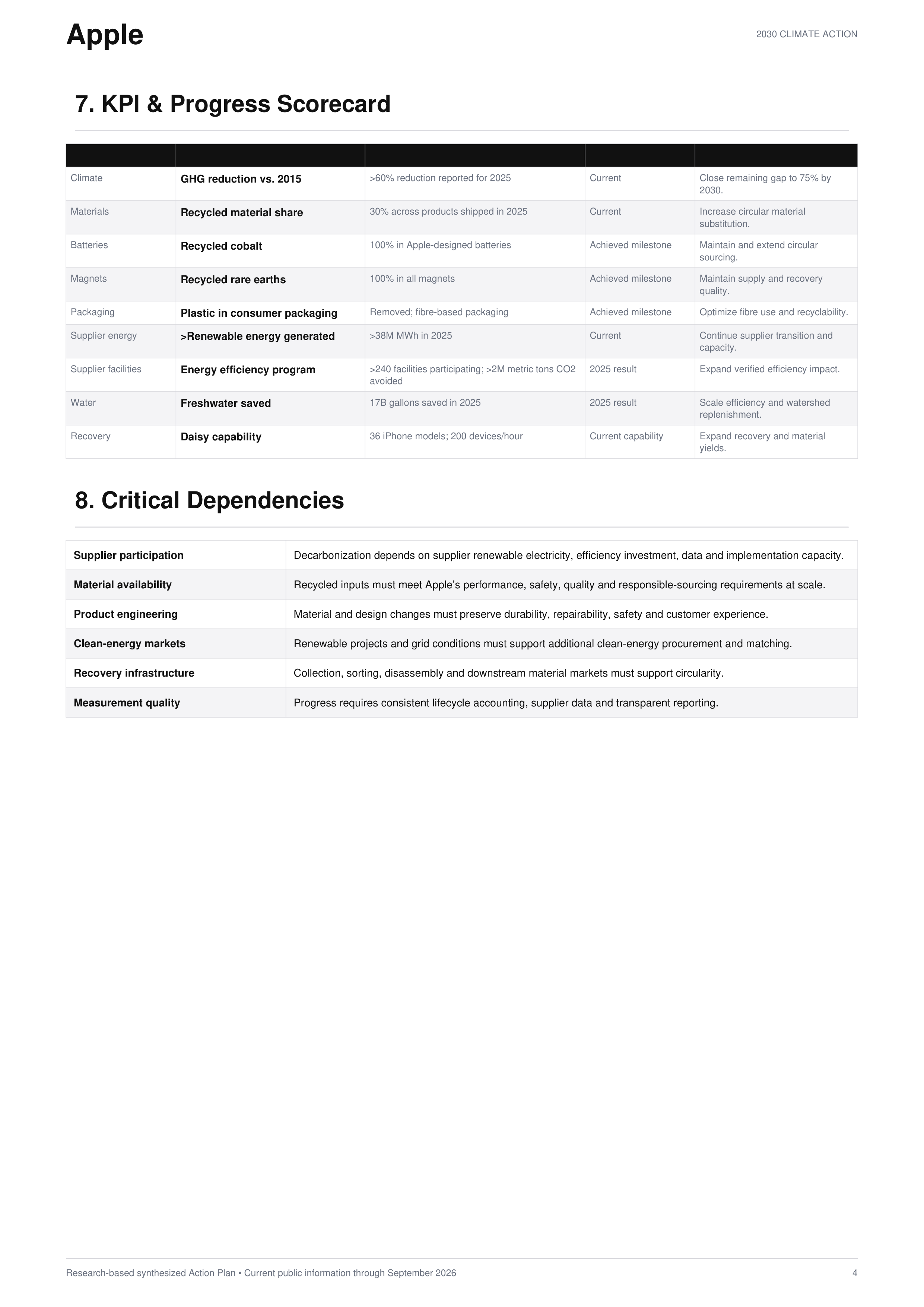
7. KPI & Progress Scorecard
Area
KPI
Latest evidence
Status
Management use
Climate
GHG reduction vs. 2015
>60% reduction reported for 2025
Current
Close remaining gap to 75% by
2030.
Materials
Recycled material share
30% across products shipped in 2025
Current
Increase circular material
substitution.
Batteries
Recycled cobalt
100% in Apple-designed batteries
Achieved milestone
Maintain and extend circular
sourcing.
Magnets
Recycled rare earths
100% in all magnets
Achieved milestone
Maintain supply and recovery
quality.
Packaging
Plastic in consumer packaging
Removed; fibre-based packaging
Achieved milestone
Optimize fibre use and recyclability.
Supplier energy
>Renewable energy generated
>38M MWh in 2025
Current
Continue supplier transition and
capacity.
Supplier facilities
Energy efficiency program
>240 facilities participating; >2M metric tons CO2
avoided
2025 result
Expand verified efficiency impact.
Water
Freshwater saved
17B gallons saved in 2025
2025 result
Scale efficiency and watershed
replenishment.
Recovery
Daisy capability
36 iPhone models; 200 devices/hour
Current capability
Expand recovery and material
yields.
8. Critical Dependencies
Supplier participation
Decarbonization depends on supplier renewable electricity, efficiency investment, data and implementation capacity.
Material availability
Recycled inputs must meet Apple’s performance, safety, quality and responsible-sourcing requirements at scale.
Product engineering
Material and design changes must preserve durability, repairability, safety and customer experience.
Clean-energy markets
Renewable projects and grid conditions must support additional clean-energy procurement and matching.
Recovery infrastructure
Collection, sorting, disassembly and downstream material markets must support circularity.
Measurement quality
Progress requires consistent lifecycle accounting, supplier data and transparent reporting.
Apple
2030 CLIMATE ACTION
Research-based synthesized Action Plan • Current public information through September 2026
5
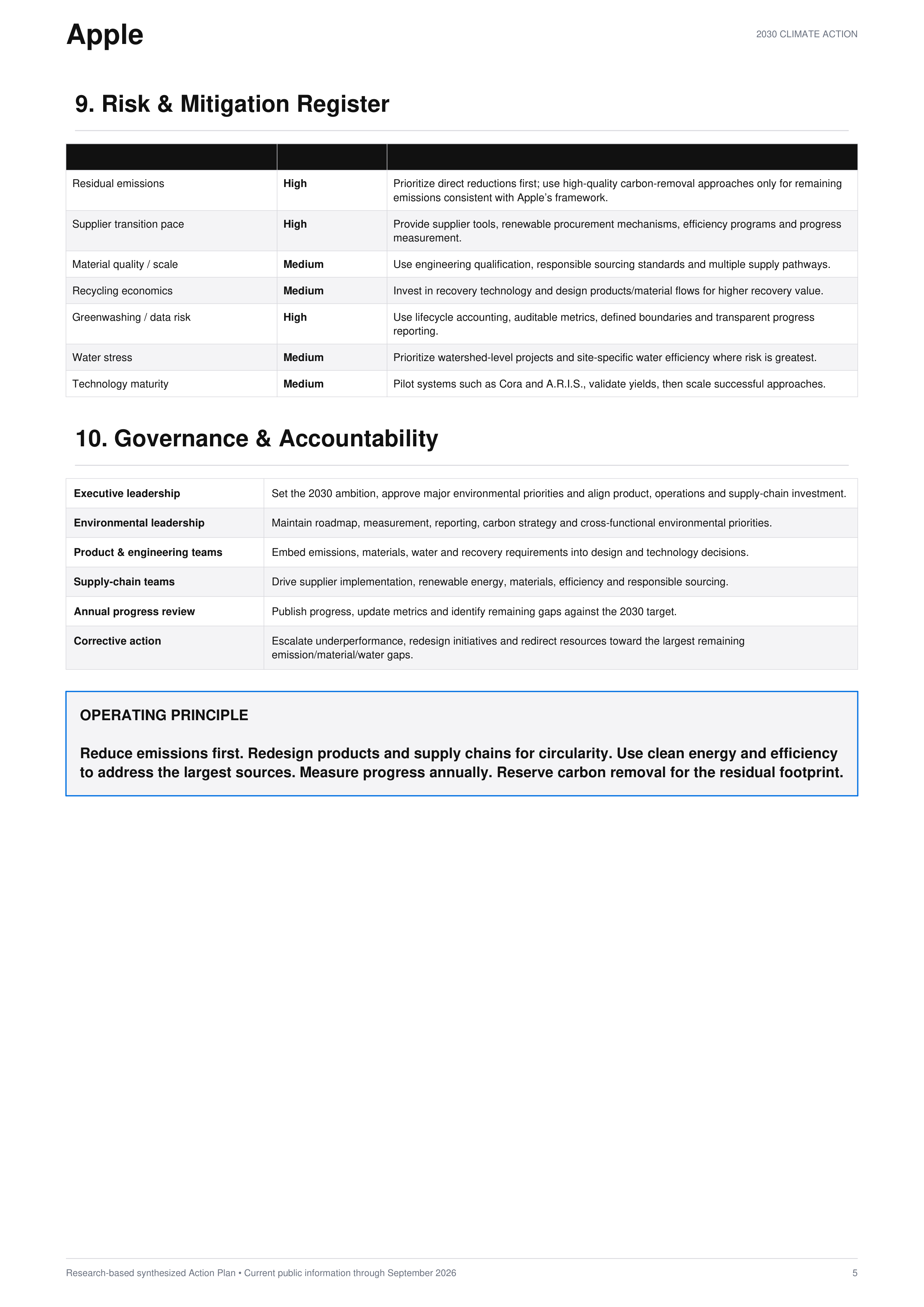
9. Risk & Mitigation Register
Risk
Exposure
Mitigation
Residual emissions
High
Prioritize direct reductions first; use high-quality carbon-removal approaches only for remaining
emissions consistent with Apple’s framework.
Supplier transition pace
High
Provide supplier tools, renewable procurement mechanisms, efficiency programs and progress
measurement.
Material quality / scale
Medium
Use engineering qualification, responsible sourcing standards and multiple supply pathways.
Recycling economics
Medium
Invest in recovery technology and design products/material flows for higher recovery value.
Greenwashing / data risk
High
Use lifecycle accounting, auditable metrics, defined boundaries and transparent progress
reporting.
Water stress
Medium
Prioritize watershed-level projects and site-specific water efficiency where risk is greatest.
Technology maturity
Medium
Pilot systems such as Cora and A.R.I.S., validate yields, then scale successful approaches.
10. Governance & Accountability
Executive leadership
Set the 2030 ambition, approve major environmental priorities and align product, operations and supply-chain investment.
Environmental leadership
Maintain roadmap, measurement, reporting, carbon strategy and cross-functional environmental priorities.
Product & engineering teams
Embed emissions, materials, water and recovery requirements into design and technology decisions.
Supply-chain teams
Drive supplier implementation, renewable energy, materials, efficiency and responsible sourcing.
Annual progress review
Publish progress, update metrics and identify remaining gaps against the 2030 target.
Corrective action
Escalate underperformance, redesign initiatives and redirect resources toward the largest remaining
emission/material/water gaps.
OPERATING PRINCIPLE
Reduce emissions first. Redesign products and supply chains for circularity. Use clean energy and efficiency
to address the largest sources. Measure progress annually. Reserve carbon removal for the residual footprint.
Apple
2030 CLIMATE ACTION
Research-based synthesized Action Plan • Current public information through September 2026
6
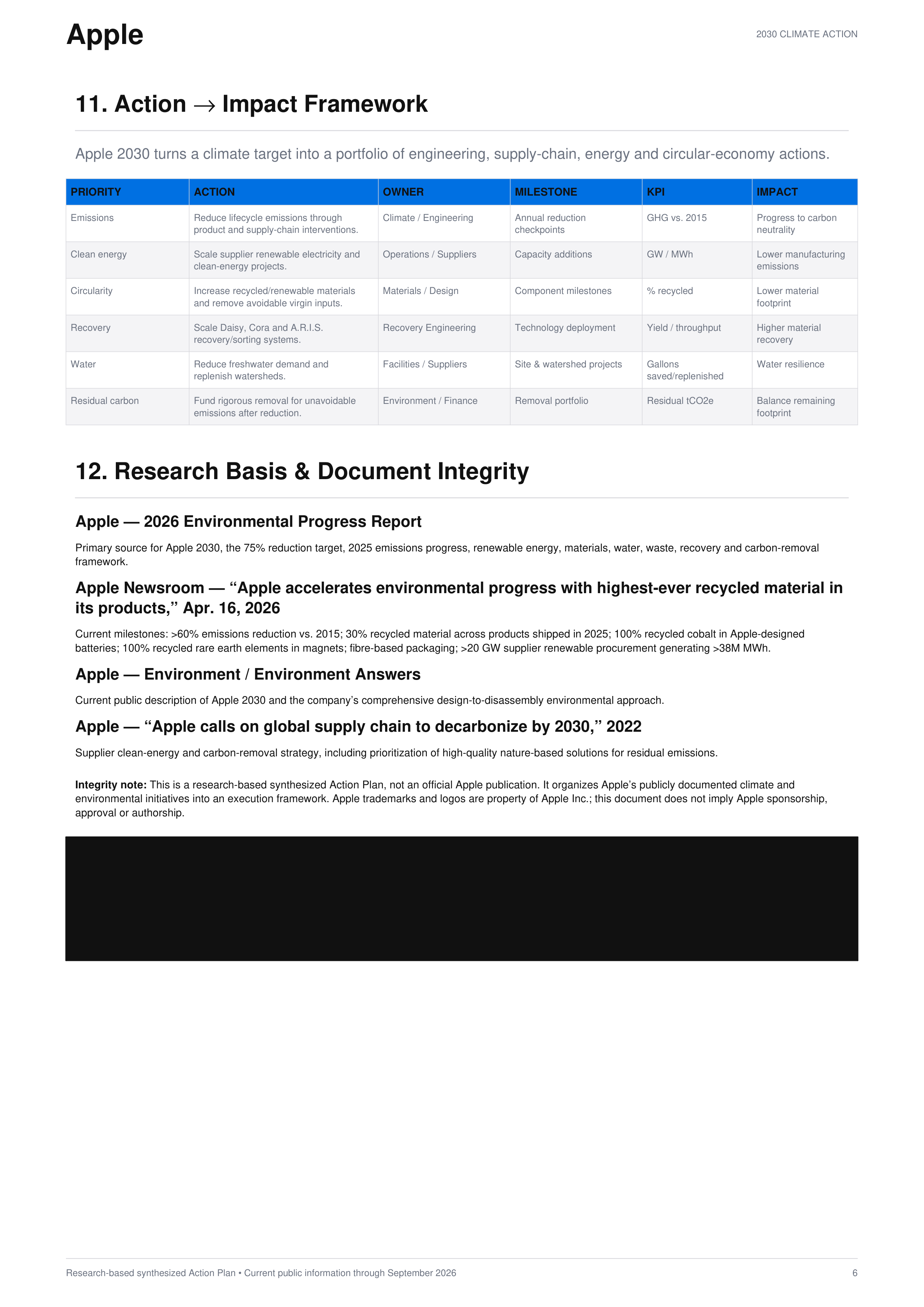
11. Action
→
Impact Framework
Apple 2030 turns a climate target into a portfolio of engineering, supply-chain, energy and circular-economy actions.
PRIORITY
ACTION
OWNER
MILESTONE
KPI
IMPACT
Emissions
Reduce lifecycle emissions through
product and supply-chain interventions.
Climate / Engineering
Annual reduction
checkpoints
GHG vs. 2015
Progress to carbon
neutrality
Clean energy
Scale supplier renewable electricity and
clean-energy projects.
Operations / Suppliers
Capacity additions
GW / MWh
Lower manufacturing
emissions
Circularity
Increase recycled/renewable materials
and remove avoidable virgin inputs.
Materials / Design
Component milestones
% recycled
Lower material
footprint
Recovery
Scale Daisy, Cora and A.R.I.S.
recovery/sorting systems.
Recovery Engineering
Technology deployment
Yield / throughput
Higher material
recovery
Water
Reduce freshwater demand and
replenish watersheds.
Facilities / Suppliers
Site & watershed projects
Gallons
saved/replenished
Water resilience
Residual carbon
Fund rigorous removal for unavoidable
emissions after reduction.
Environment / Finance
Removal portfolio
Residual tCO2e
Balance remaining
footprint
12. Research Basis & Document Integrity
Apple — 2026 Environmental Progress Report
Primary source for Apple 2030, the 75% reduction target, 2025 emissions progress, renewable energy, materials, water, waste, recovery and carbon-removal
framework.
Apple Newsroom — “Apple accelerates environmental progress with highest-ever recycled material in
its products,” Apr. 16, 2026
Current milestones: >60% emissions reduction vs. 2015; 30% recycled material across products shipped in 2025; 100% recycled cobalt in Apple-designed
batteries; 100% recycled rare earth elements in magnets; fibre-based packaging; >20 GW supplier renewable procurement generating >38M MWh.
Apple — Environment / Environment Answers
Current public description of Apple 2030 and the company’s comprehensive design-to-disassembly environmental approach.
Apple — “Apple calls on global supply chain to decarbonize by 2030,” 2022
Supplier clean-energy and carbon-removal strategy, including prioritization of high-quality nature-based solutions for residual emissions.
Integrity note:
This is a research-based synthesized Action Plan, not an official Apple publication. It organizes Apple’s publicly documented climate and
environmental initiatives into an execution framework. Apple trademarks and logos are property of Apple Inc.; this document does not imply Apple sponsorship,
approval or authorship.
FINAL ACTION-TO-IMPACT CHAIN
Measure the footprint
→
reduce emissions
→
decarbonize suppliers and energy
→
redesign materials and
packaging
→
recover resources
→
conserve water
→
balance unavoidable residual emissions
→
reach the
2030 target.