STANFORD UNIVERSITY | CLIMATE ACTION PLAN
Research-based synthesized Action Plan • Not an official Stanford publication
Page 1
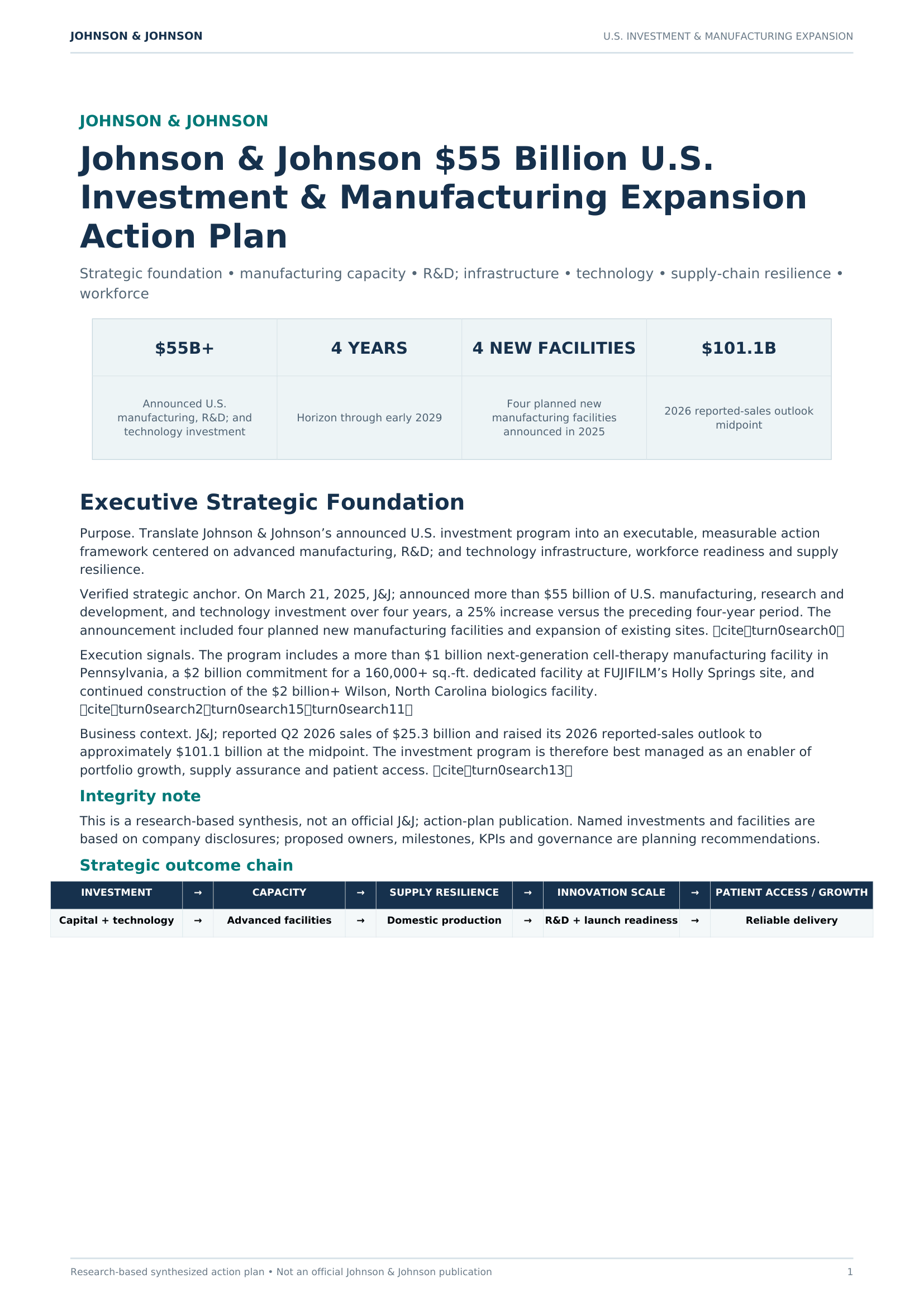
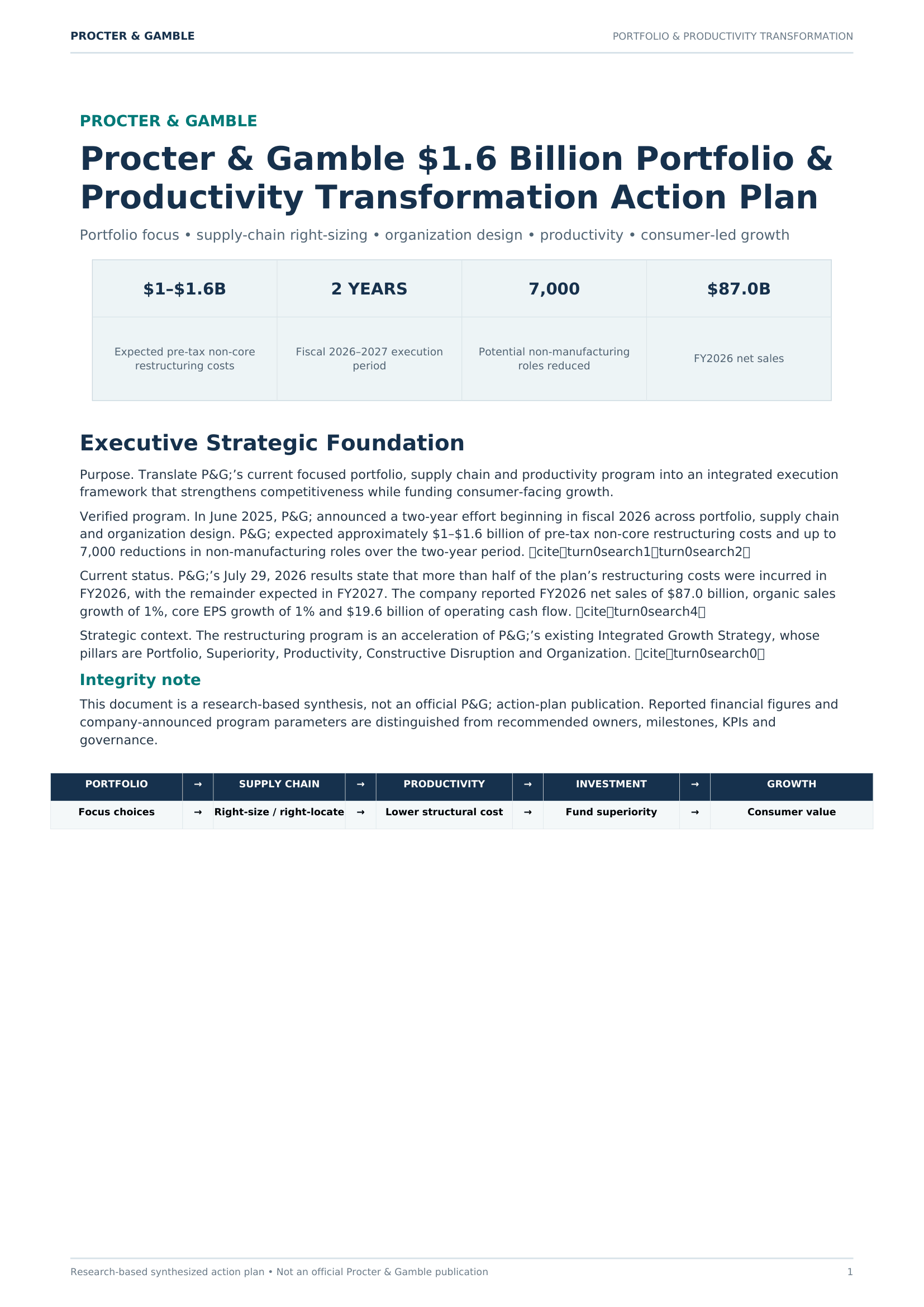
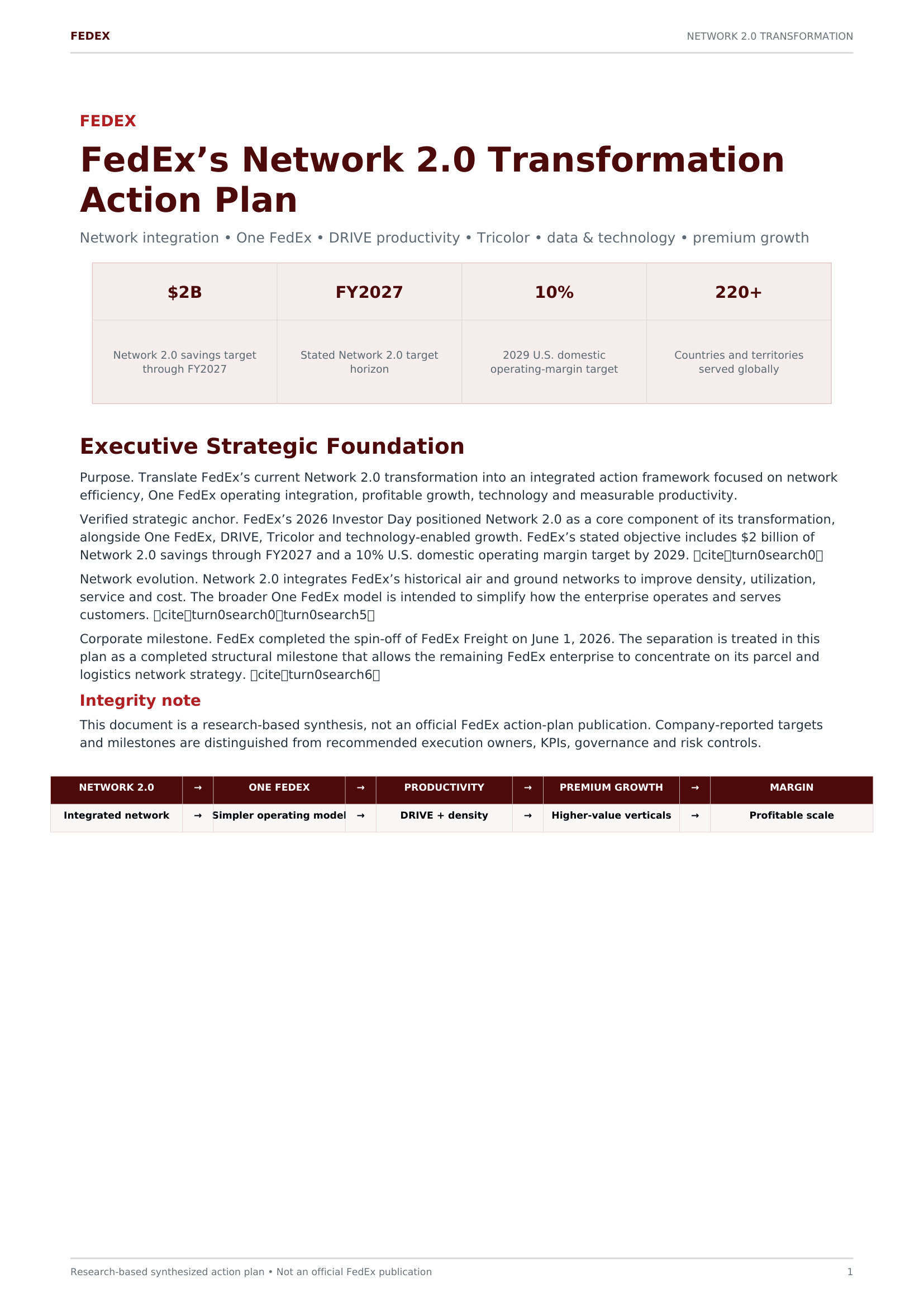
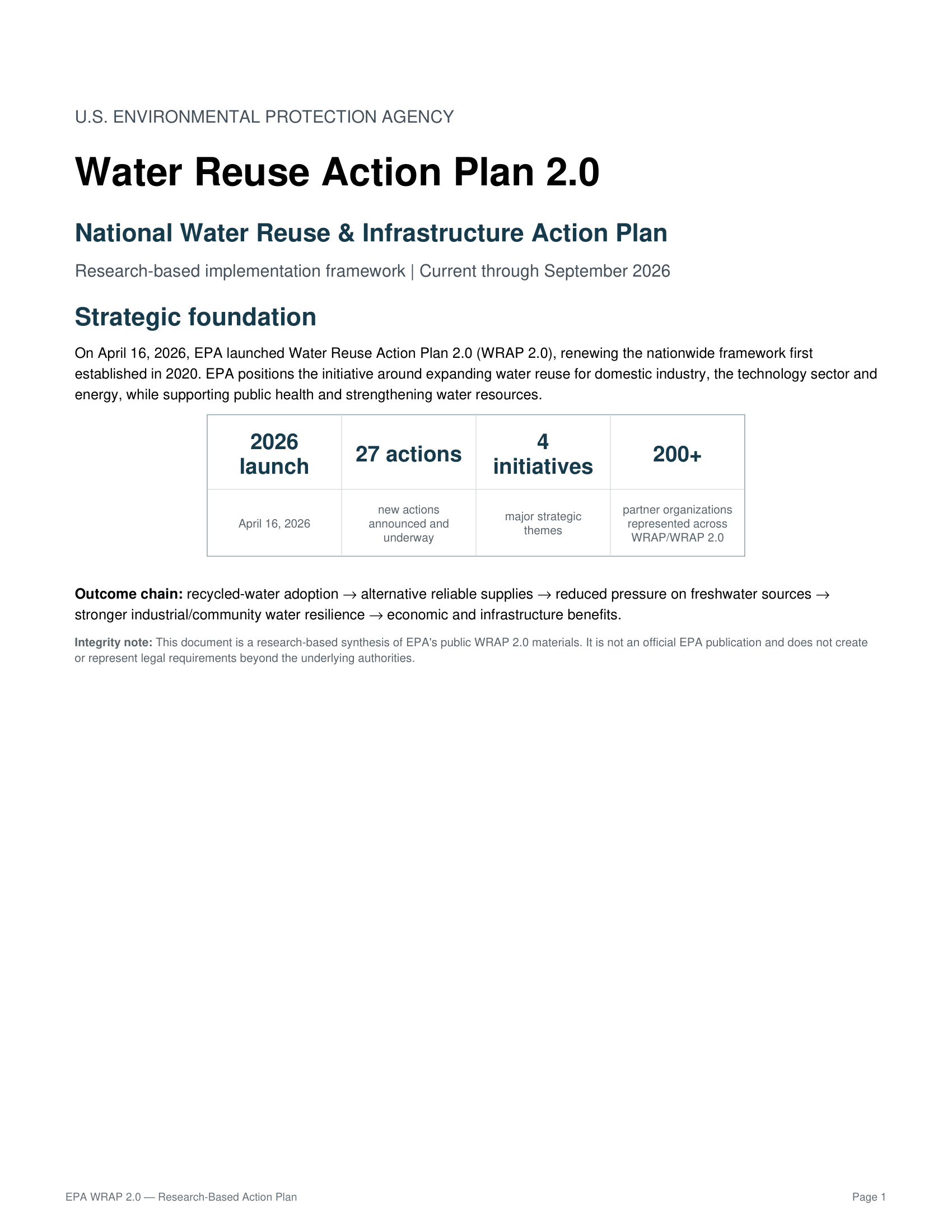
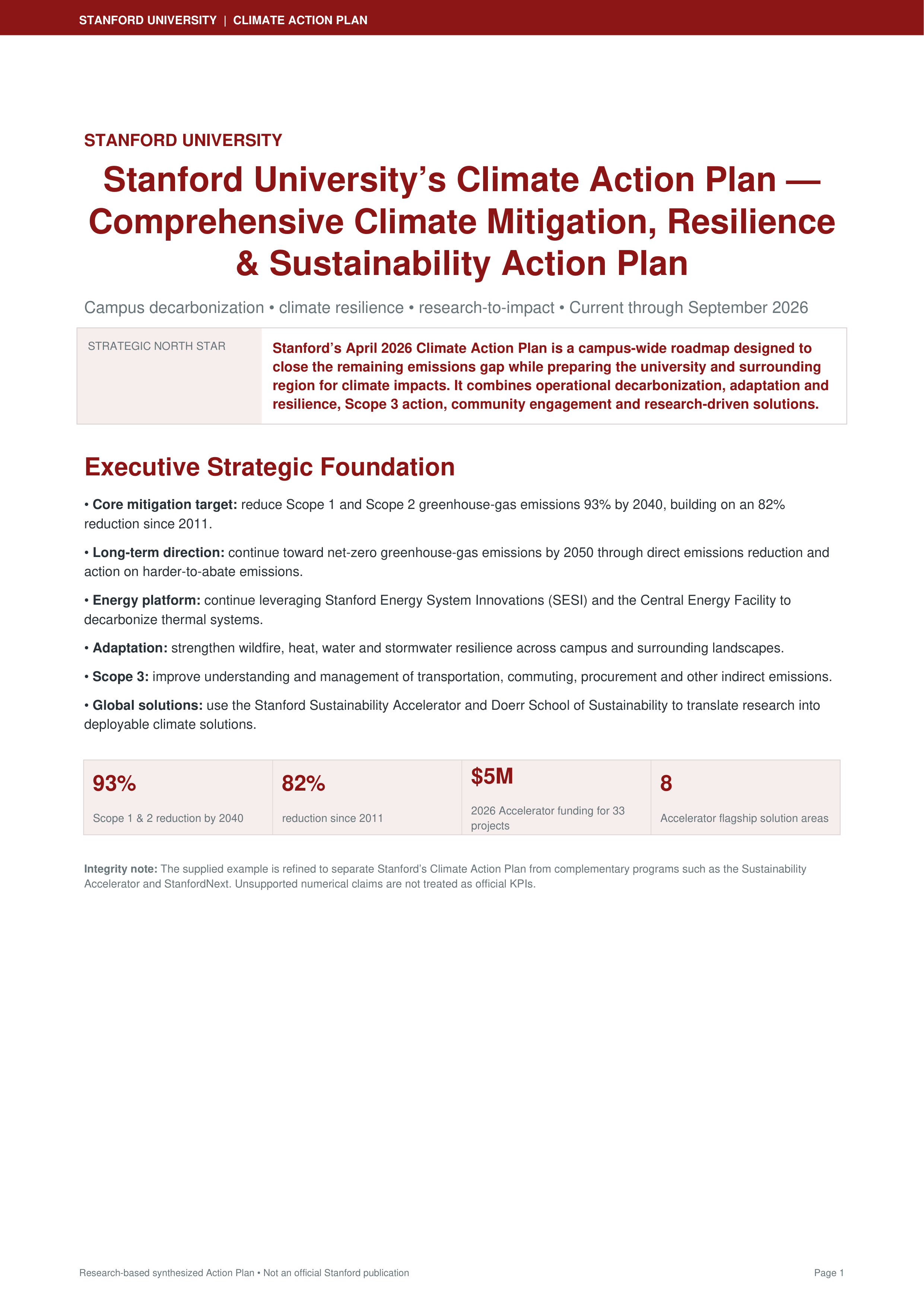
STANFORD UNIVERSITY
Stanford University’s Climate Action Plan —
Comprehensive Climate Mitigation, Resilience
& Sustainability Action Plan
Campus decarbonization • climate resilience • research-to-impact • Current through September 2026
STRATEGIC NORTH STAR
Stanford’s April 2026 Climate Action Plan is a campus-wide roadmap designed to
close the remaining emissions gap while preparing the university and surrounding
region for climate impacts. It combines operational decarbonization, adaptation and
resilience, Scope 3 action, community engagement and research-driven solutions.
Executive Strategic Foundation
•
Core mitigation target:
reduce Scope 1 and Scope 2 greenhouse-gas emissions 93% by 2040, building on an 82%
reduction since 2011.
•
Long-term direction:
continue toward net-zero greenhouse-gas emissions by 2050 through direct emissions reduction and
action on harder-to-abate emissions.
•
Energy platform:
continue leveraging Stanford Energy System Innovations (SESI) and the Central Energy Facility to
decarbonize thermal systems.
•
Adaptation:
strengthen wildfire, heat, water and stormwater resilience across campus and surrounding landscapes.
•
Scope 3:
improve understanding and management of transportation, commuting, procurement and other indirect emissions.
•
Global solutions:
use the Stanford Sustainability Accelerator and Doerr School of Sustainability to translate research into
deployable climate solutions.
93%
Scope 1 & 2 reduction by 2040
82%
reduction since 2011
$5M
2026 Accelerator funding for 33
projects
8
Accelerator flagship solution areas
Integrity note:
The supplied example is refined to separate Stanford’s Climate Action Plan from complementary programs such as the Sustainability
Accelerator and StanfordNext. Unsupported numerical claims are not treated as official KPIs.
STANFORD UNIVERSITY | CLIMATE ACTION PLAN
Research-based synthesized Action Plan • Not an official Stanford publication
Page 2
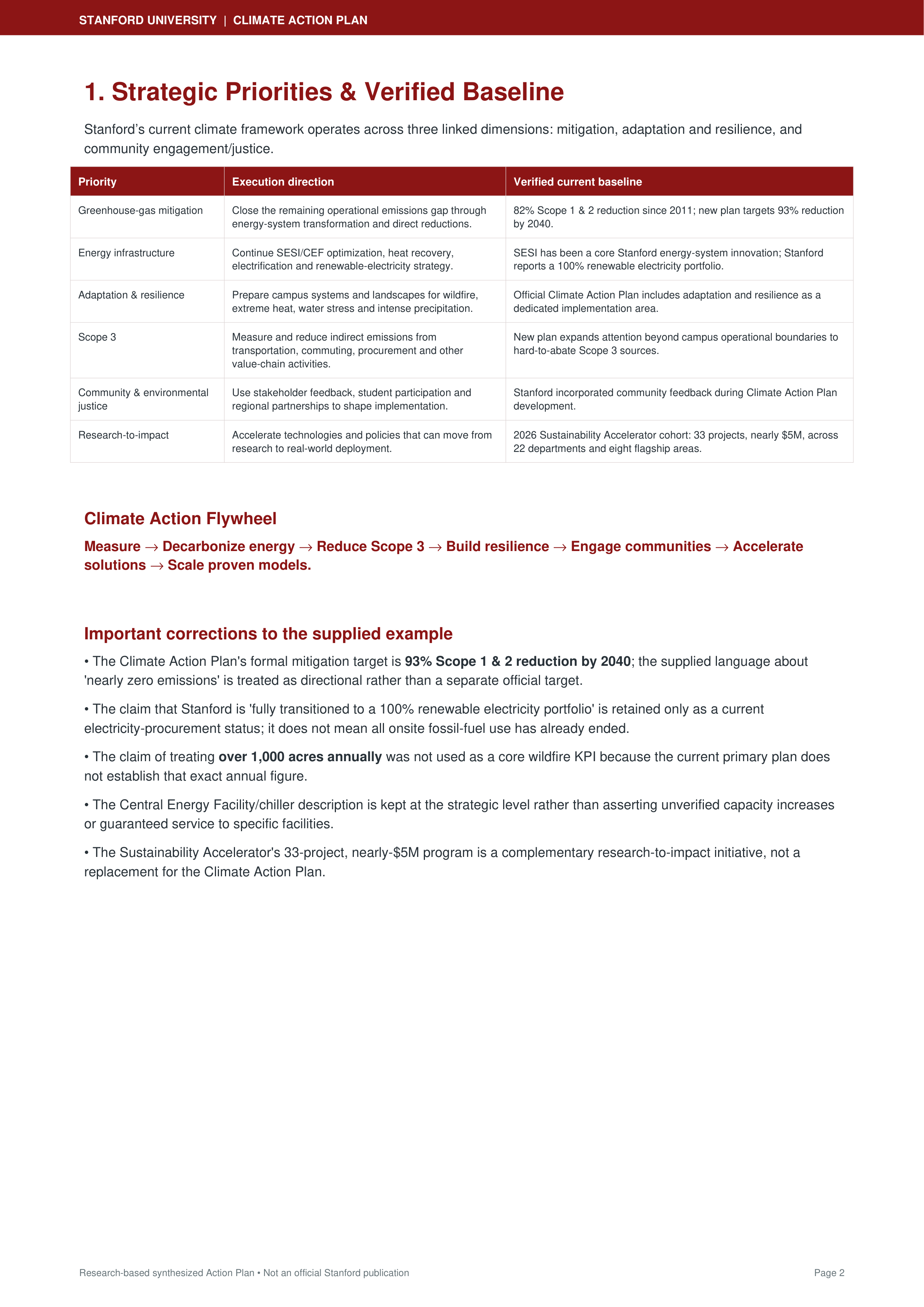
1. Strategic Priorities & Verified Baseline
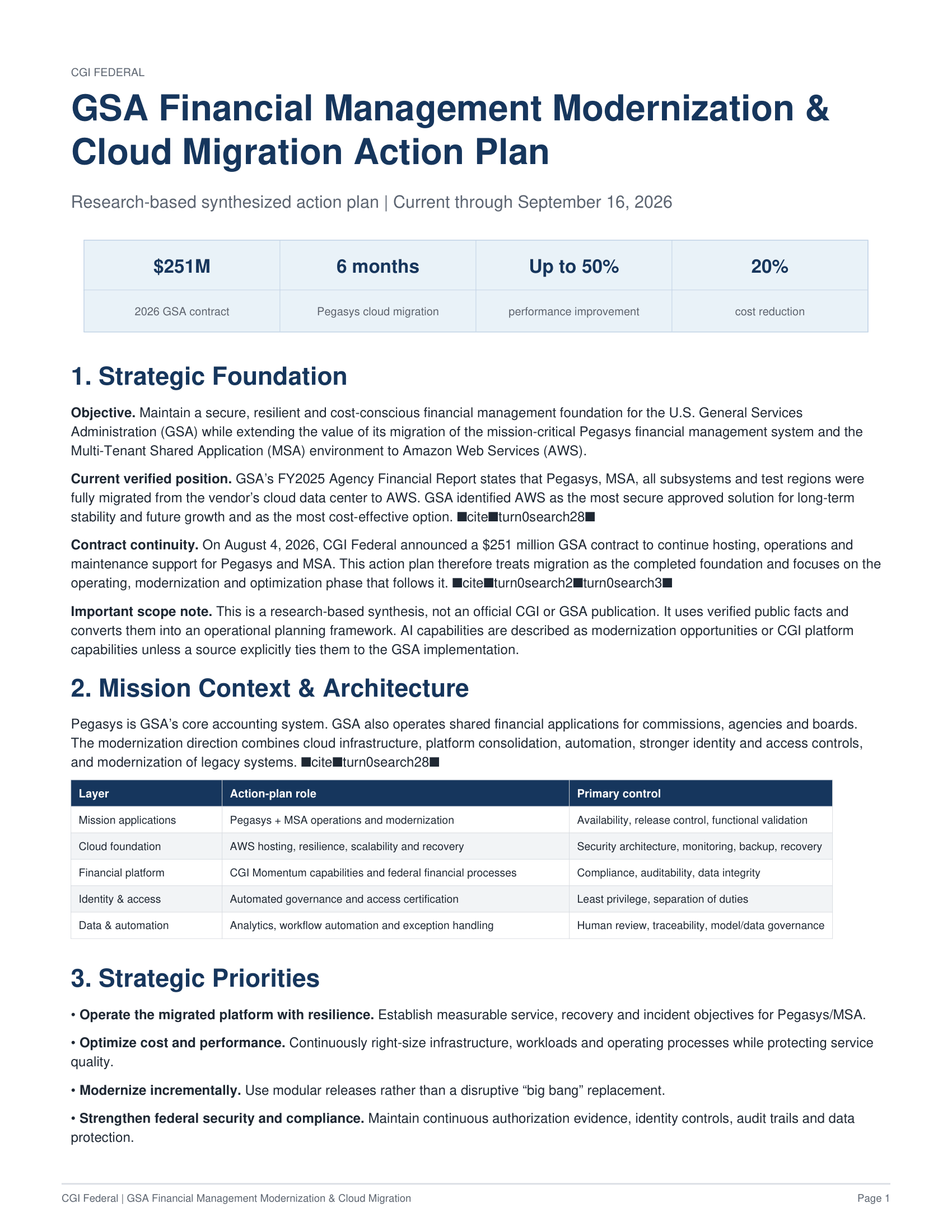
Stanford’s current climate framework operates across three linked dimensions: mitigation, adaptation and resilience, and
community engagement/justice.
Priority
Execution direction
Verified current baseline
Greenhouse-gas mitigation
Close the remaining operational emissions gap through
energy-system transformation and direct reductions.
82% Scope 1 & 2 reduction since 2011; new plan targets 93% reduction
by 2040.
Energy infrastructure
Continue SESI/CEF optimization, heat recovery,
electrification and renewable-electricity strategy.
SESI has been a core Stanford energy-system innovation; Stanford
reports a 100% renewable electricity portfolio.
Adaptation & resilience
Prepare campus systems and landscapes for wildfire,
extreme heat, water stress and intense precipitation.
Official Climate Action Plan includes adaptation and resilience as a
dedicated implementation area.
Scope 3
Measure and reduce indirect emissions from
transportation, commuting, procurement and other
value-chain activities.
New plan expands attention beyond campus operational boundaries to
hard-to-abate Scope 3 sources.
Community & environmental
justice
Use stakeholder feedback, student participation and
regional partnerships to shape implementation.
Stanford incorporated community feedback during Climate Action Plan
development.
Research-to-impact
Accelerate technologies and policies that can move from
research to real-world deployment.
2026 Sustainability Accelerator cohort: 33 projects, nearly $5M, across
22 departments and eight flagship areas.
Climate Action Flywheel
Measure
→
Decarbonize energy
→
Reduce Scope 3
→
Build resilience
→
Engage communities
→
Accelerate
solutions
→
Scale proven models.
Important corrections to the supplied example
• The Climate Action Plan's formal mitigation target is
93% Scope 1 & 2 reduction by 2040
; the supplied language about
'nearly zero emissions' is treated as directional rather than a separate official target.
• The claim that Stanford is 'fully transitioned to a 100% renewable electricity portfolio' is retained only as a current
electricity-procurement status; it does not mean all onsite fossil-fuel use has already ended.
• The claim of treating
over 1,000 acres annually
was not used as a core wildfire KPI because the current primary plan does
not establish that exact annual figure.
• The Central Energy Facility/chiller description is kept at the strategic level rather than asserting unverified capacity increases
or guaranteed service to specific facilities.
• The Sustainability Accelerator's 33-project, nearly-$5M program is a complementary research-to-impact initiative, not a
replacement for the Climate Action Plan.
STANFORD UNIVERSITY | CLIMATE ACTION PLAN
Research-based synthesized Action Plan • Not an official Stanford publication
Page 3
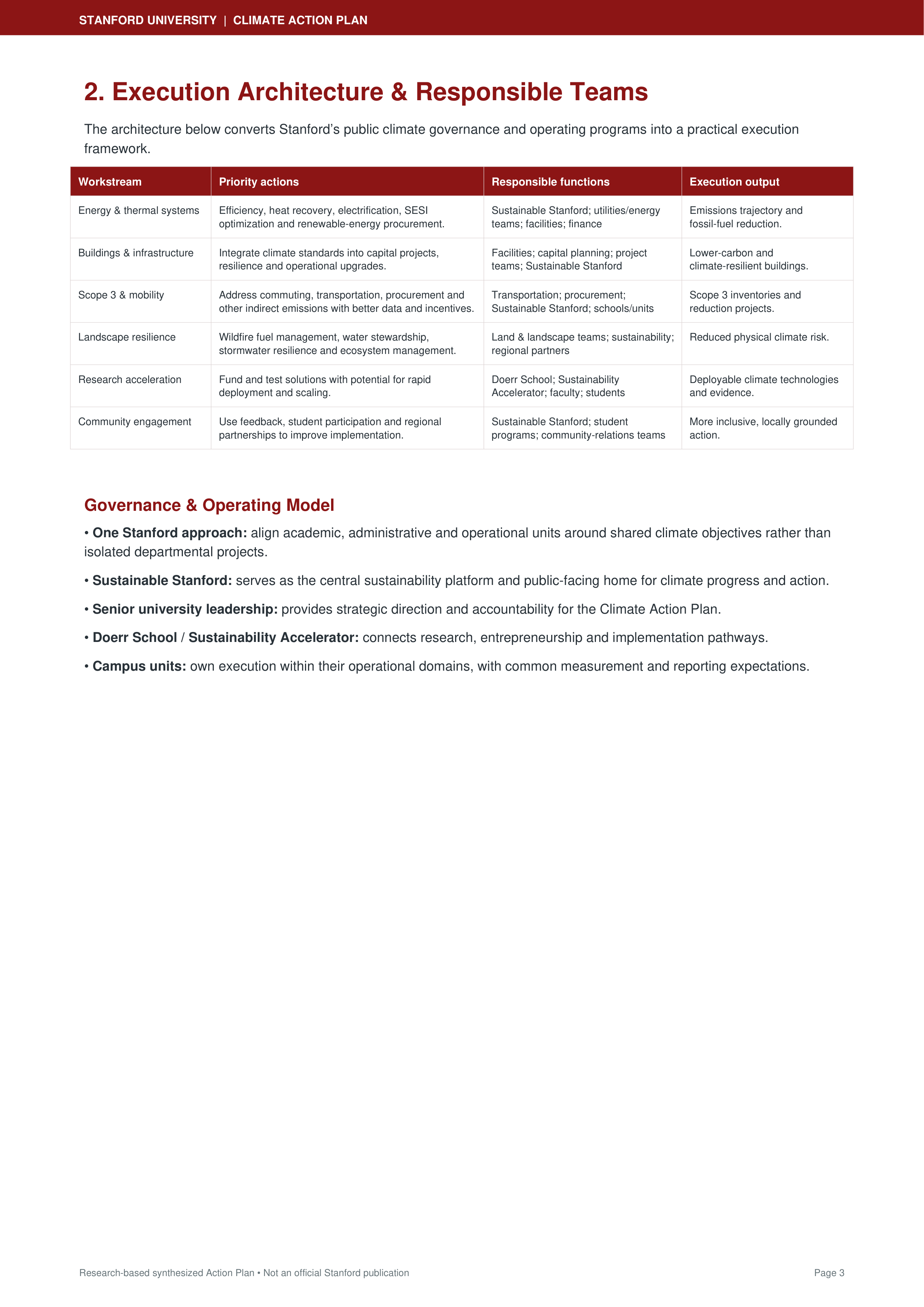
2. Execution Architecture & Responsible Teams
The architecture below converts Stanford’s public climate governance and operating programs into a practical execution
framework.
Workstream
Priority actions
Responsible functions
Execution output
Energy & thermal systems
Efficiency, heat recovery, electrification, SESI
optimization and renewable-energy procurement.
Sustainable Stanford; utilities/energy
teams; facilities; finance
Emissions trajectory and
fossil-fuel reduction.
Buildings & infrastructure
Integrate climate standards into capital projects,
resilience and operational upgrades.
Facilities; capital planning; project
teams; Sustainable Stanford
Lower-carbon and
climate-resilient buildings.
Scope 3 & mobility
Address commuting, transportation, procurement and
other indirect emissions with better data and incentives.
Transportation; procurement;
Sustainable Stanford; schools/units
Scope 3 inventories and
reduction projects.
Landscape resilience
Wildfire fuel management, water stewardship,
stormwater resilience and ecosystem management.
Land & landscape teams; sustainability;
regional partners
Reduced physical climate risk.
Research acceleration
Fund and test solutions with potential for rapid
deployment and scaling.
Doerr School; Sustainability
Accelerator; faculty; students
Deployable climate technologies
and evidence.
Community engagement
Use feedback, student participation and regional
partnerships to improve implementation.
Sustainable Stanford; student
programs; community-relations teams
More inclusive, locally grounded
action.
Governance & Operating Model
•
One Stanford approach:
align academic, administrative and operational units around shared climate objectives rather than
isolated departmental projects.
•
Sustainable Stanford:
serves as the central sustainability platform and public-facing home for climate progress and action.
•
Senior university leadership:
provides strategic direction and accountability for the Climate Action Plan.
•
Doerr School / Sustainability Accelerator:
connects research, entrepreneurship and implementation pathways.
•
Campus units:
own execution within their operational domains, with common measurement and reporting expectations.
STANFORD UNIVERSITY | CLIMATE ACTION PLAN
Research-based synthesized Action Plan • Not an official Stanford publication
Page 4
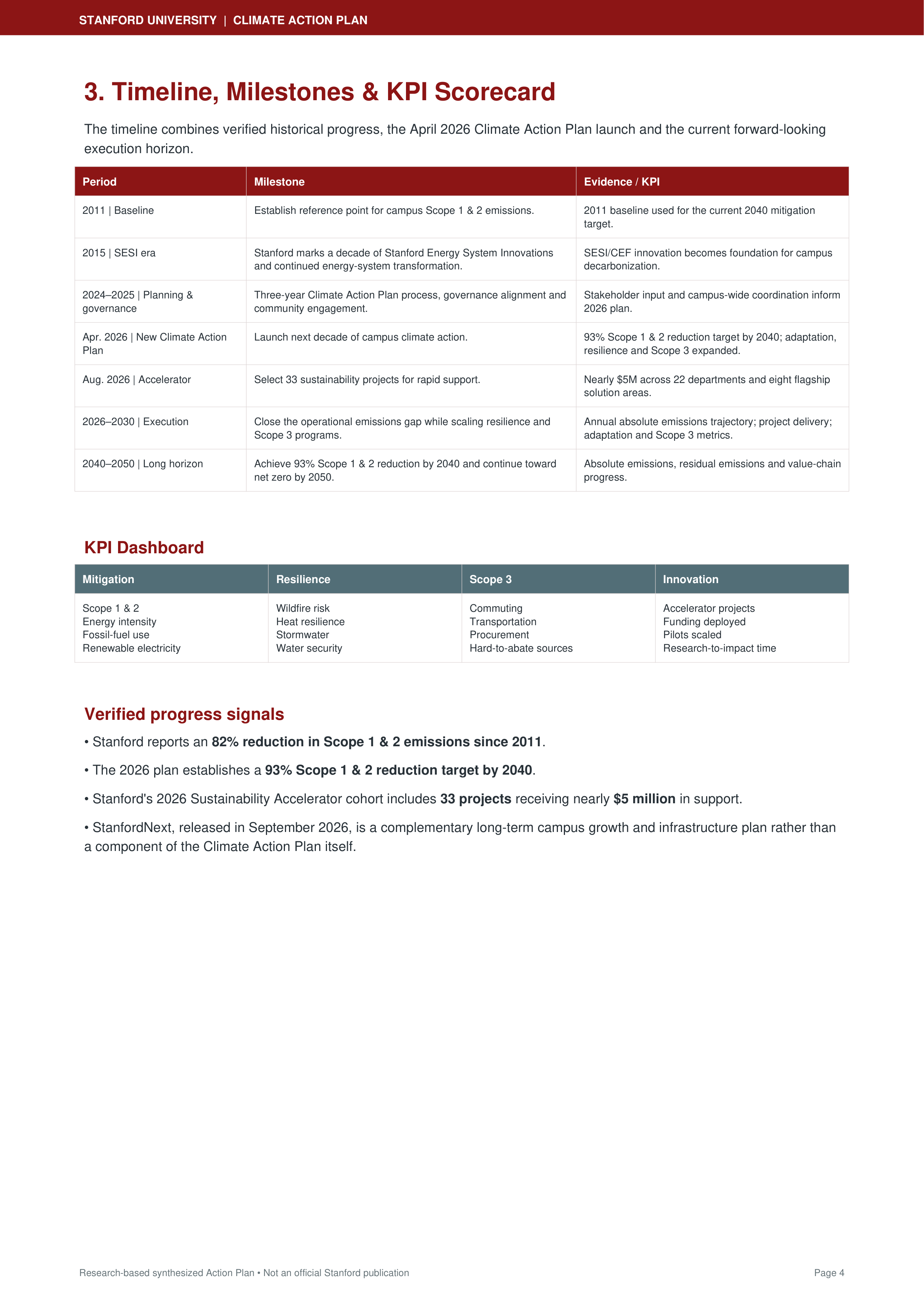
3. Timeline, Milestones & KPI Scorecard
The timeline combines verified historical progress, the April 2026 Climate Action Plan launch and the current forward-looking
execution horizon.
Period
Milestone
Evidence / KPI
2011 | Baseline
Establish reference point for campus Scope 1 & 2 emissions.
2011 baseline used for the current 2040 mitigation
target.
2015 | SESI era
Stanford marks a decade of Stanford Energy System Innovations
and continued energy-system transformation.
SESI/CEF innovation becomes foundation for campus
decarbonization.
2024–2025 | Planning &
governance
Three-year Climate Action Plan process, governance alignment and
community engagement.
Stakeholder input and campus-wide coordination inform
2026 plan.
Apr. 2026 | New Climate Action
Plan
Launch next decade of campus climate action.
93% Scope 1 & 2 reduction target by 2040; adaptation,
resilience and Scope 3 expanded.
Aug. 2026 | Accelerator
Select 33 sustainability projects for rapid support.
Nearly $5M across 22 departments and eight flagship
solution areas.
2026–2030 | Execution
Close the operational emissions gap while scaling resilience and
Scope 3 programs.
Annual absolute emissions trajectory; project delivery;
adaptation and Scope 3 metrics.
2040–2050 | Long horizon
Achieve 93% Scope 1 & 2 reduction by 2040 and continue toward
net zero by 2050.
Absolute emissions, residual emissions and value-chain
progress.
KPI Dashboard
Mitigation
Resilience
Scope 3
Innovation
Scope 1 & 2
Energy intensity
Fossil-fuel use
Renewable electricity
Wildfire risk
Heat resilience
Stormwater
Water security
Commuting
Transportation
Procurement
Hard-to-abate sources
Accelerator projects
Funding deployed
Pilots scaled
Research-to-impact time
Verified progress signals
• Stanford reports an
82% reduction in Scope 1 & 2 emissions since 2011
.
• The 2026 plan establishes a
93% Scope 1 & 2 reduction target by 2040
.
• Stanford's 2026 Sustainability Accelerator cohort includes
33 projects
receiving nearly
$5 million
in support.
• StanfordNext, released in September 2026, is a complementary long-term campus growth and infrastructure plan rather than
a component of the Climate Action Plan itself.
STANFORD UNIVERSITY | CLIMATE ACTION PLAN
Research-based synthesized Action Plan • Not an official Stanford publication
Page 5
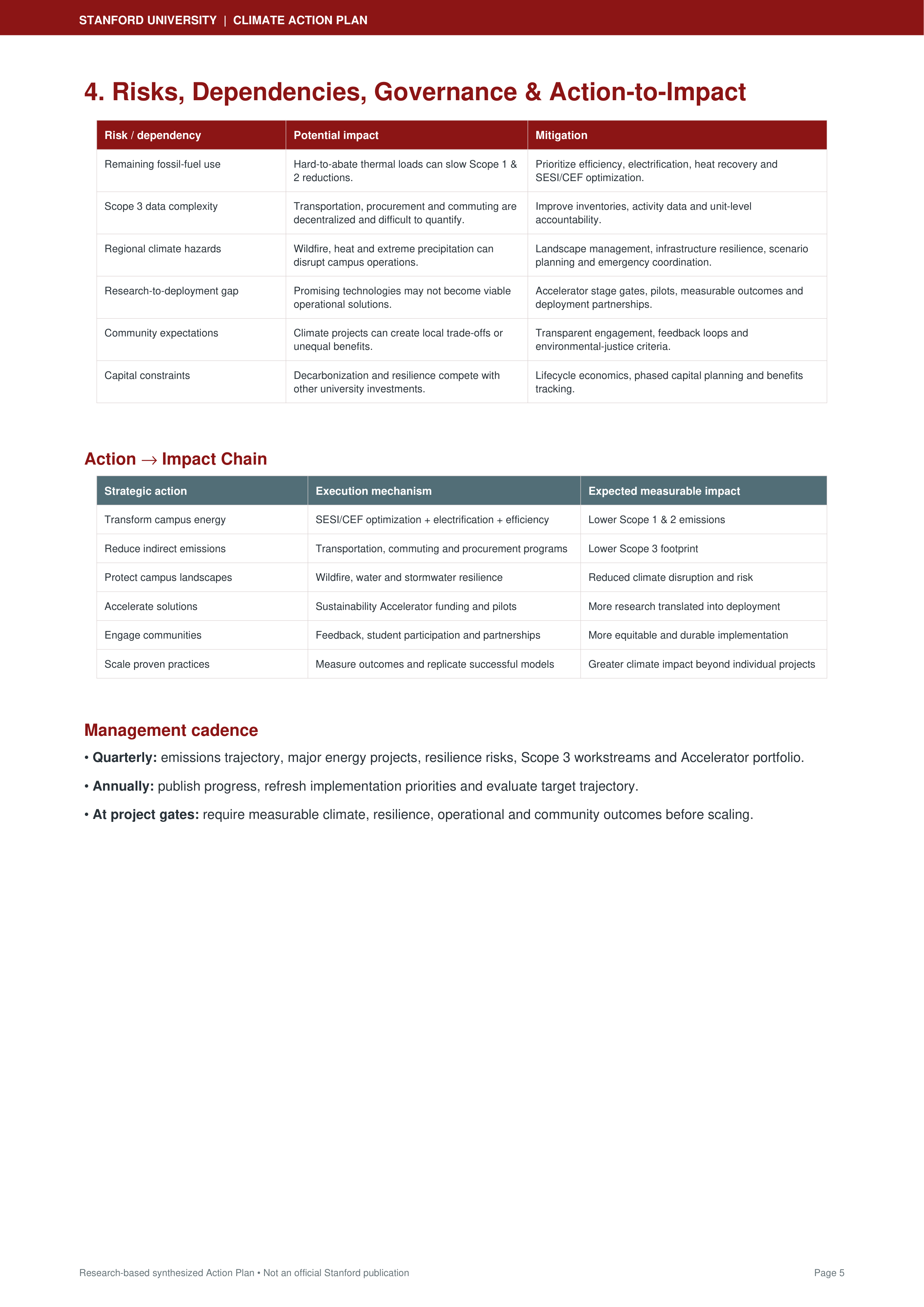
4. Risks, Dependencies, Governance & Action-to-Impact
Risk / dependency
Potential impact
Mitigation
Remaining fossil-fuel use
Hard-to-abate thermal loads can slow Scope 1 &
2 reductions.
Prioritize efficiency, electrification, heat recovery and
SESI/CEF optimization.
Scope 3 data complexity
Transportation, procurement and commuting are
decentralized and difficult to quantify.
Improve inventories, activity data and unit-level
accountability.
Regional climate hazards
Wildfire, heat and extreme precipitation can
disrupt campus operations.
Landscape management, infrastructure resilience, scenario
planning and emergency coordination.
Research-to-deployment gap
Promising technologies may not become viable
operational solutions.
Accelerator stage gates, pilots, measurable outcomes and
deployment partnerships.
Community expectations
Climate projects can create local trade-offs or
unequal benefits.
Transparent engagement, feedback loops and
environmental-justice criteria.
Capital constraints
Decarbonization and resilience compete with
other university investments.
Lifecycle economics, phased capital planning and benefits
tracking.
Action
→
Impact Chain
Strategic action
Execution mechanism
Expected measurable impact
Transform campus energy
SESI/CEF optimization + electrification + efficiency
Lower Scope 1 & 2 emissions
Reduce indirect emissions
Transportation, commuting and procurement programs
Lower Scope 3 footprint
Protect campus landscapes
Wildfire, water and stormwater resilience
Reduced climate disruption and risk
Accelerate solutions
Sustainability Accelerator funding and pilots
More research translated into deployment
Engage communities
Feedback, student participation and partnerships
More equitable and durable implementation
Scale proven practices
Measure outcomes and replicate successful models
Greater climate impact beyond individual projects
Management cadence
•
Quarterly:
emissions trajectory, major energy projects, resilience risks, Scope 3 workstreams and Accelerator portfolio.
•
Annually:
publish progress, refresh implementation priorities and evaluate target trajectory.
•
At project gates:
require measurable climate, resilience, operational and community outcomes before scaling.
STANFORD UNIVERSITY | CLIMATE ACTION PLAN
Research-based synthesized Action Plan • Not an official Stanford publication
Page 6
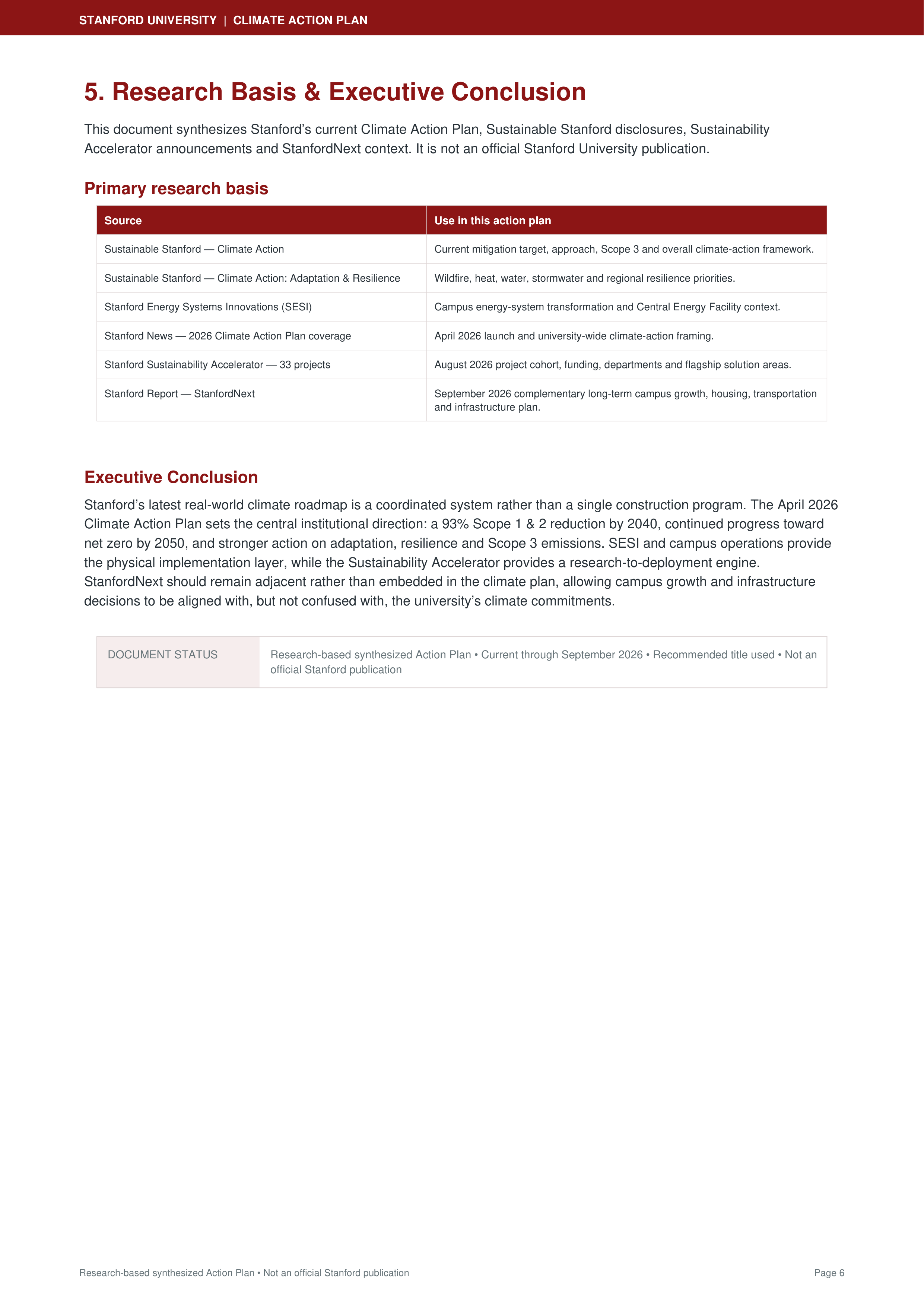
5. Research Basis & Executive Conclusion
This document synthesizes Stanford’s current Climate Action Plan, Sustainable Stanford disclosures, Sustainability
Accelerator announcements and StanfordNext context. It is not an official Stanford University publication.
Primary research basis
Source
Use in this action plan
Sustainable Stanford — Climate Action
Current mitigation target, approach, Scope 3 and overall climate-action framework.
Sustainable Stanford — Climate Action: Adaptation & Resilience
Wildfire, heat, water, stormwater and regional resilience priorities.
Stanford Energy Systems Innovations (SESI)
Campus energy-system transformation and Central Energy Facility context.
Stanford News — 2026 Climate Action Plan coverage
April 2026 launch and university-wide climate-action framing.
Stanford Sustainability Accelerator — 33 projects
August 2026 project cohort, funding, departments and flagship solution areas.
Stanford Report — StanfordNext
September 2026 complementary long-term campus growth, housing, transportation
and infrastructure plan.
Executive Conclusion
Stanford’s latest real-world climate roadmap is a coordinated system rather than a single construction program. The April 2026
Climate Action Plan sets the central institutional direction: a 93% Scope 1 & 2 reduction by 2040, continued progress toward
net zero by 2050, and stronger action on adaptation, resilience and Scope 3 emissions. SESI and campus operations provide
the physical implementation layer, while the Sustainability Accelerator provides a research-to-deployment engine.
StanfordNext should remain adjacent rather than embedded in the climate plan, allowing campus growth and infrastructure
decisions to be aligned with, but not confused with, the university’s climate commitments.
DOCUMENT STATUS
Research-based synthesized Action Plan • Current through September 2026 • Recommended title used • Not an
official Stanford publication