HARVARD UNIVERSITY | SUSTAINABILITY ACTION PLAN
Research-based synthesized Action Plan • Not an official Harvard publication
Page 3
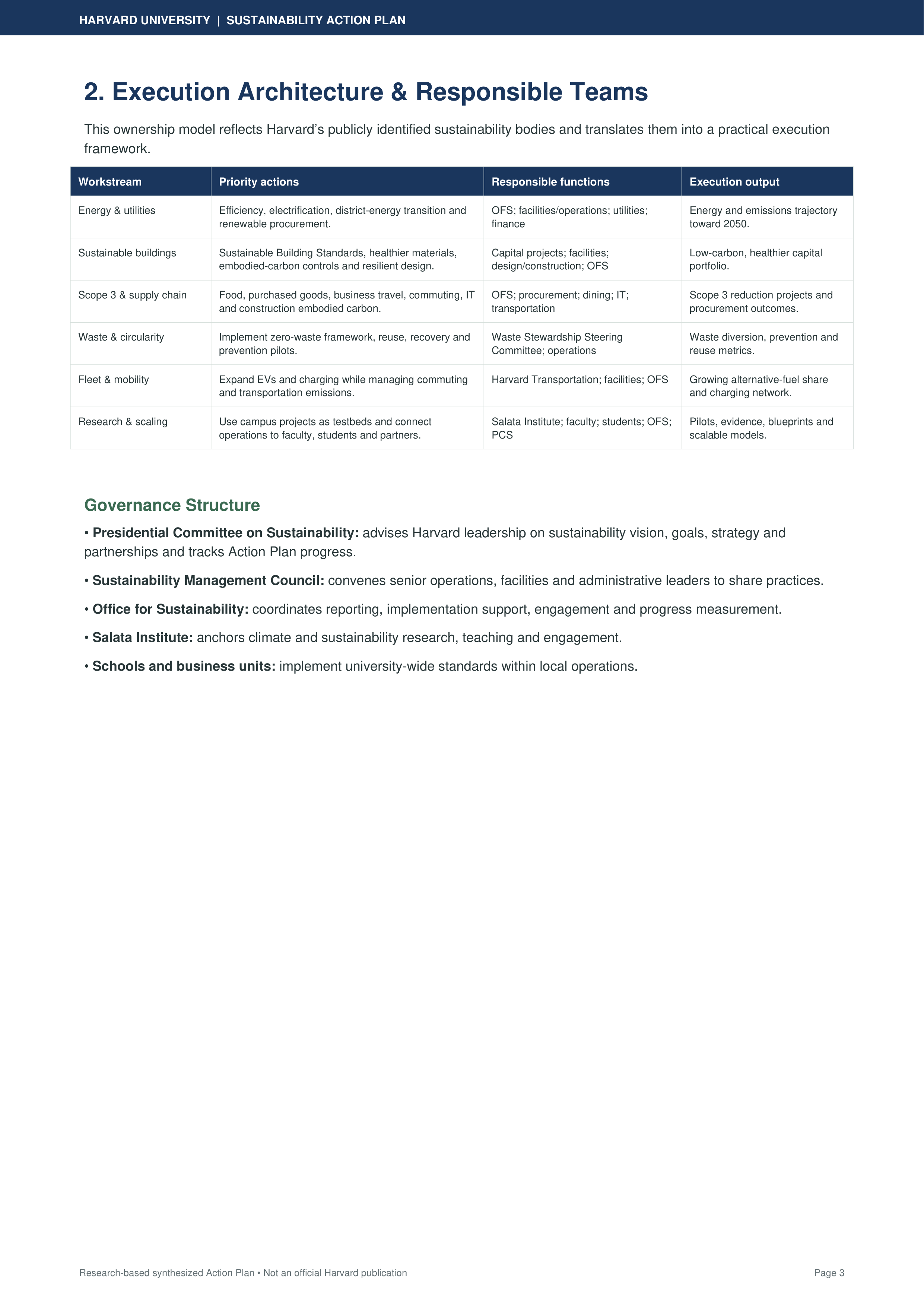
2. Execution Architecture & Responsible Teams
This ownership model reflects Harvard’s publicly identified sustainability bodies and translates them into a practical execution
framework.
Workstream
Priority actions
Responsible functions
Execution output
Energy & utilities
Efficiency, electrification, district-energy transition and
renewable procurement.
OFS; facilities/operations; utilities;
finance
Energy and emissions trajectory
toward 2050.
Sustainable buildings
Sustainable Building Standards, healthier materials,
embodied-carbon controls and resilient design.
Capital projects; facilities;
design/construction; OFS
Low-carbon, healthier capital
portfolio.
Scope 3 & supply chain
Food, purchased goods, business travel, commuting, IT
and construction embodied carbon.
OFS; procurement; dining; IT;
transportation
Scope 3 reduction projects and
procurement outcomes.
Waste & circularity
Implement zero-waste framework, reuse, recovery and
prevention pilots.
Waste Stewardship Steering
Committee; operations
Waste diversion, prevention and
reuse metrics.
Fleet & mobility
Expand EVs and charging while managing commuting
and transportation emissions.
Harvard Transportation; facilities; OFS
Growing alternative-fuel share
and charging network.
Research & scaling
Use campus projects as testbeds and connect
operations to faculty, students and partners.
Salata Institute; faculty; students; OFS;
PCS
Pilots, evidence, blueprints and
scalable models.
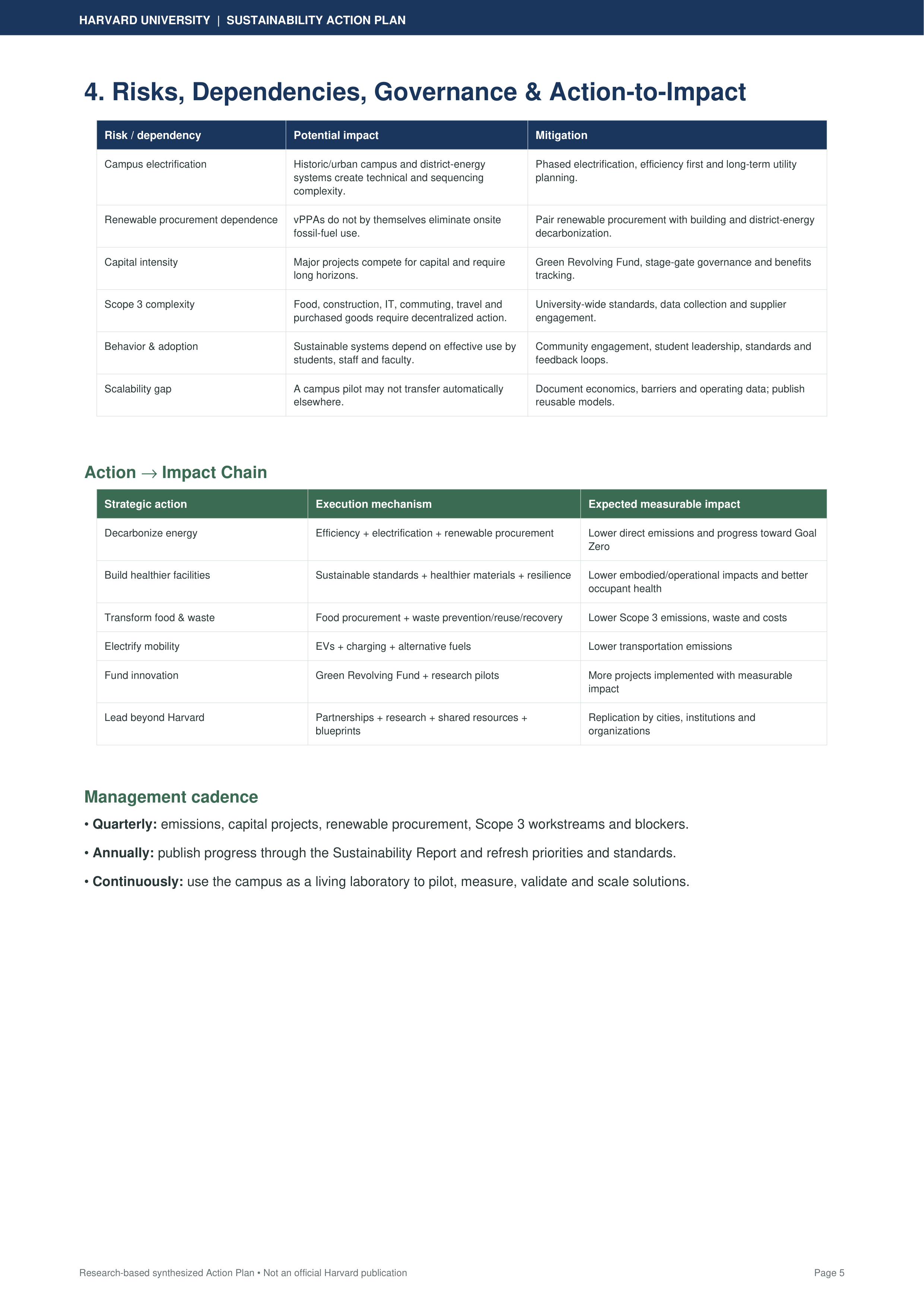
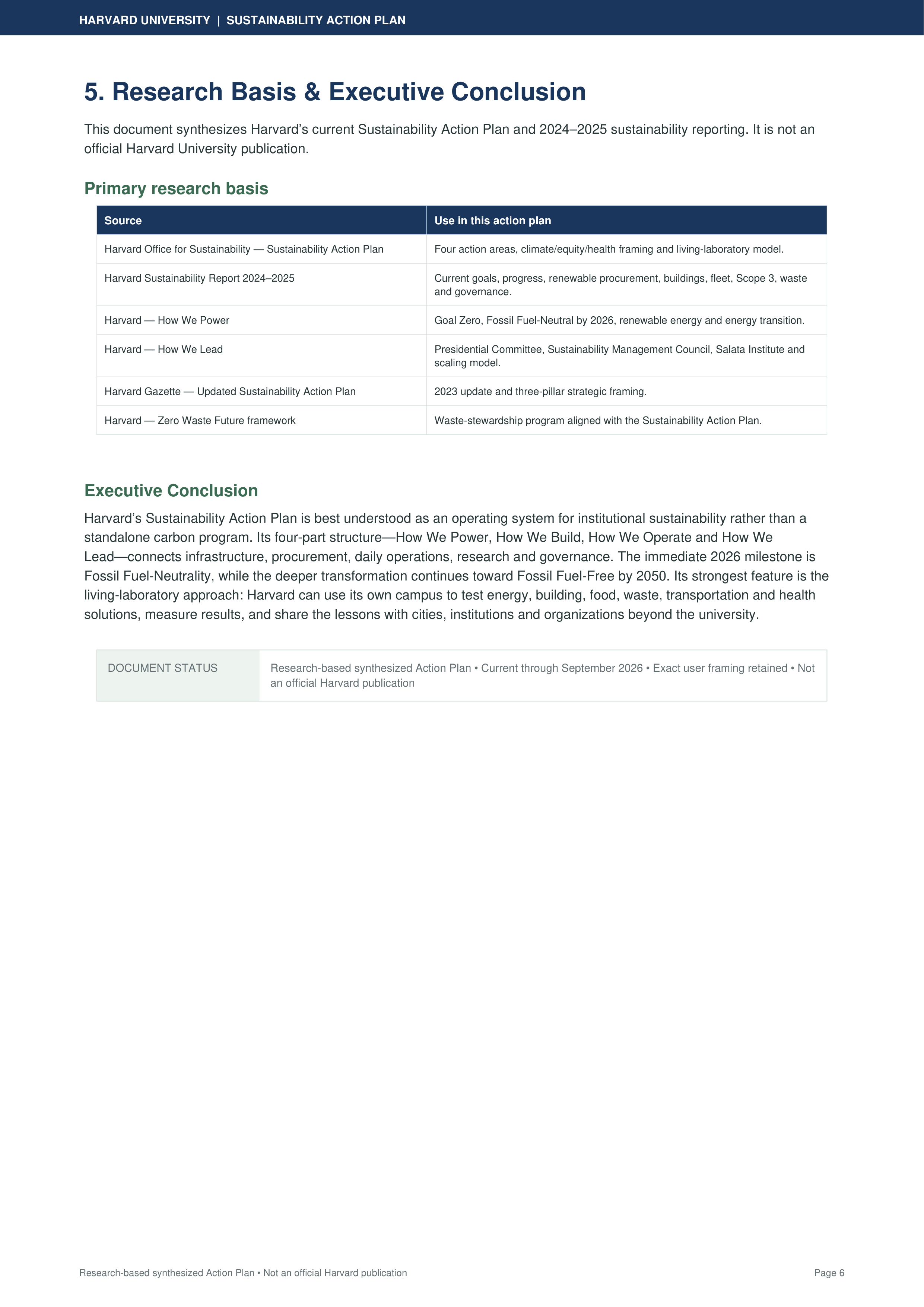
Governance Structure
•
Presidential Committee on Sustainability:
advises Harvard leadership on sustainability vision, goals, strategy and
partnerships and tracks Action Plan progress.
•
Sustainability Management Council:
convenes senior operations, facilities and administrative leaders to share practices.
•
Office for Sustainability:
coordinates reporting, implementation support, engagement and progress measurement.
•
Salata Institute:
anchors climate and sustainability research, teaching and engagement.
•
Schools and business units:
implement university-wide standards within local operations.