Fluor Corporation | LNG Canada Phase 1
Page 1
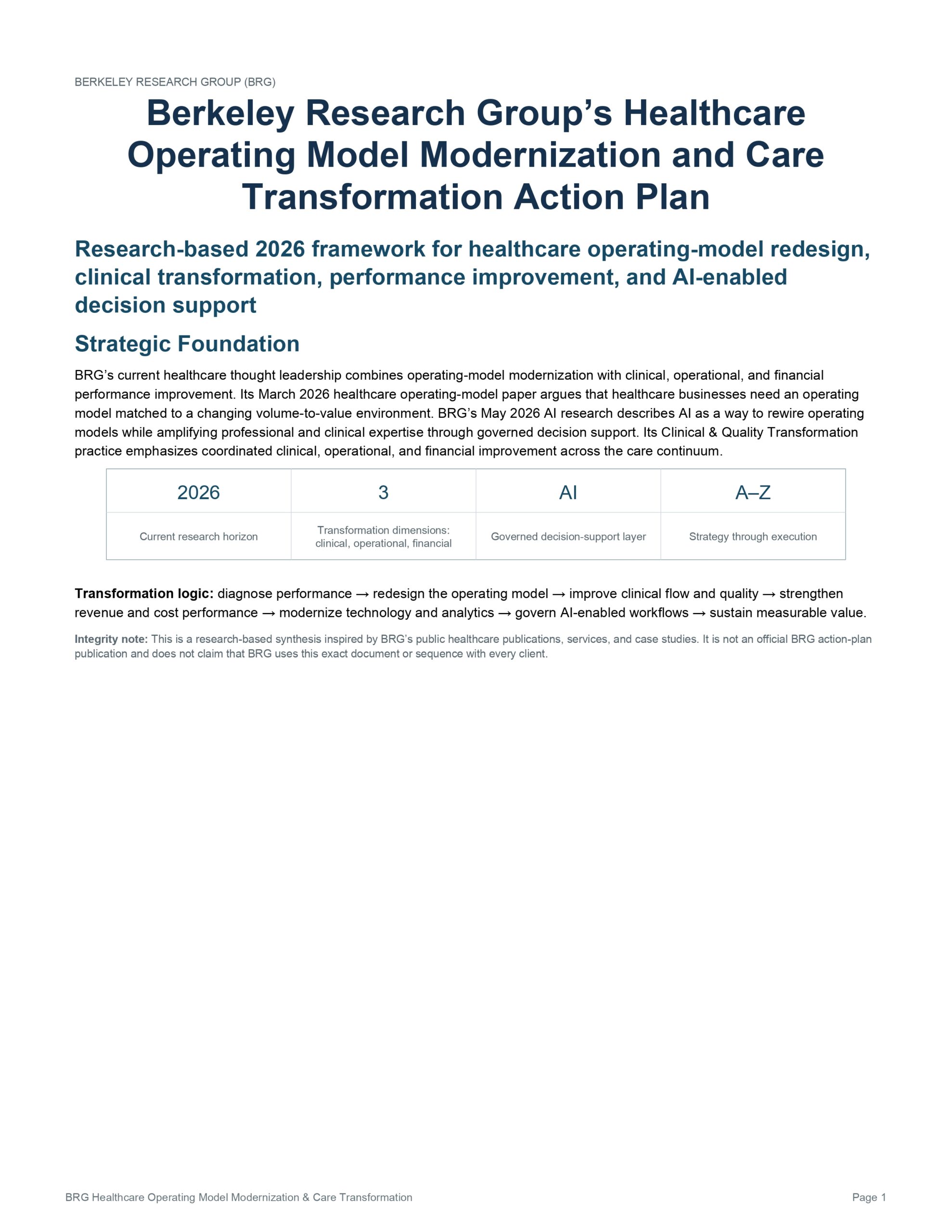
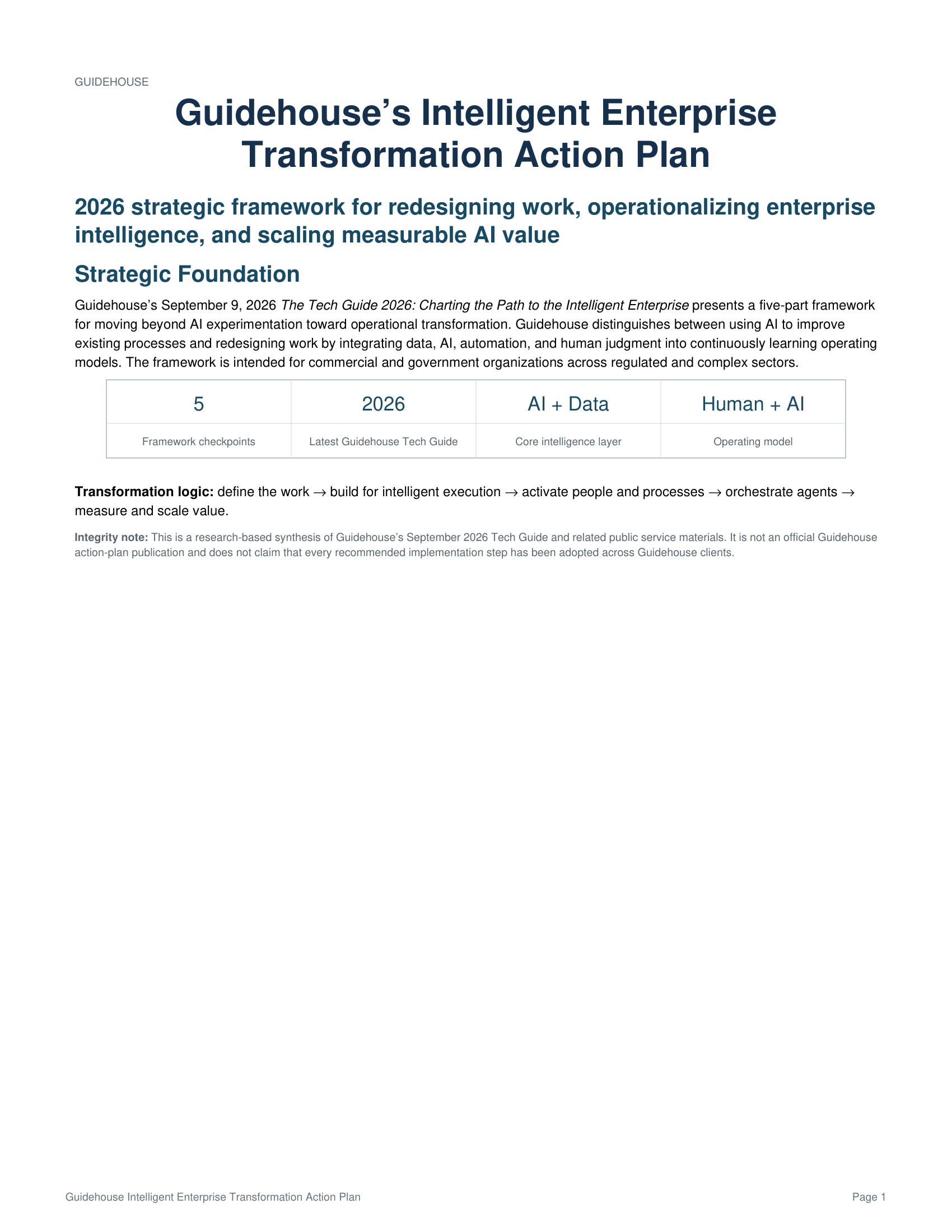
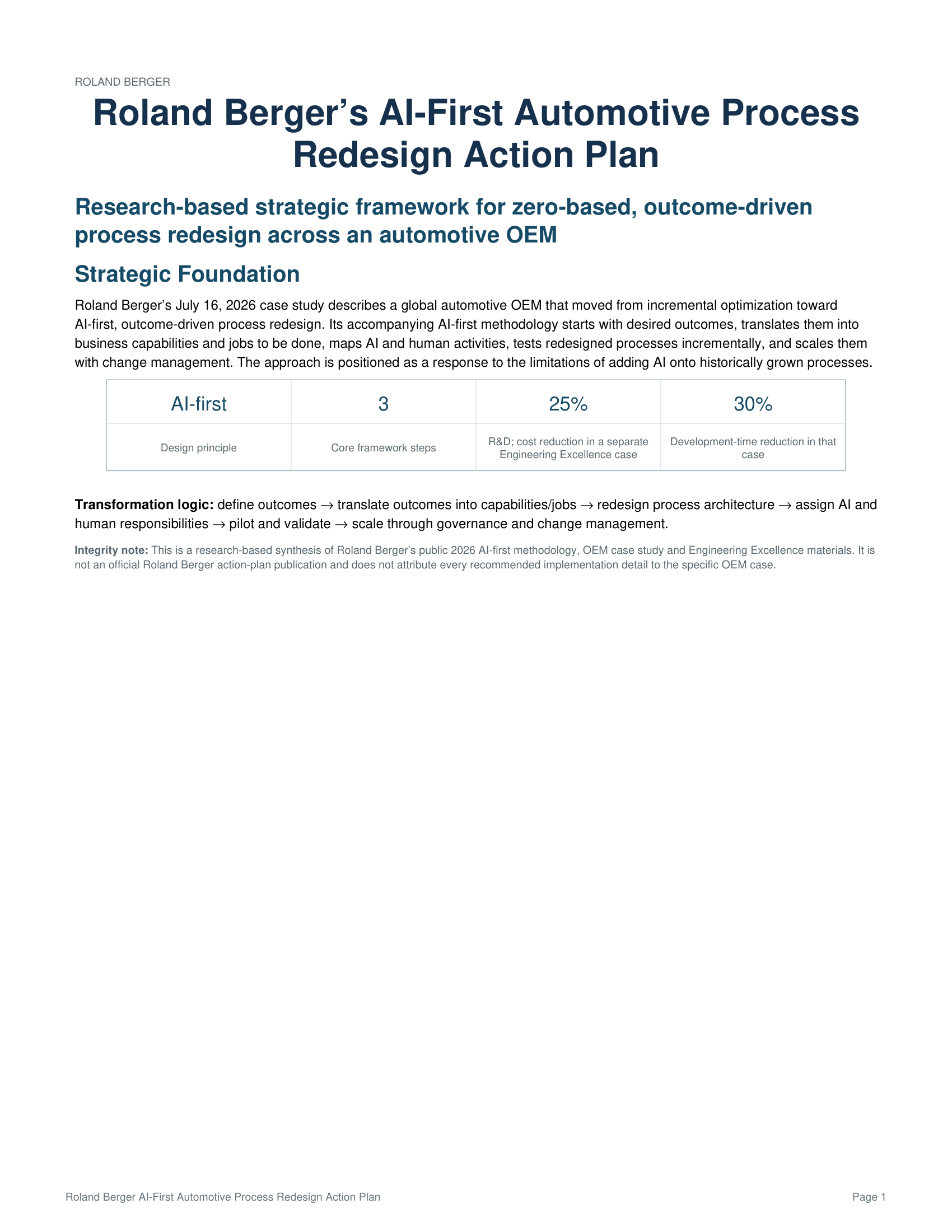
FLUOR CORPORATION
Fluor Corporation’s LNG Canada Phase 1 Project
Action Plan
Kitimat, British Columbia | JGC-Fluor Joint Venture | LNG Export Infrastructure
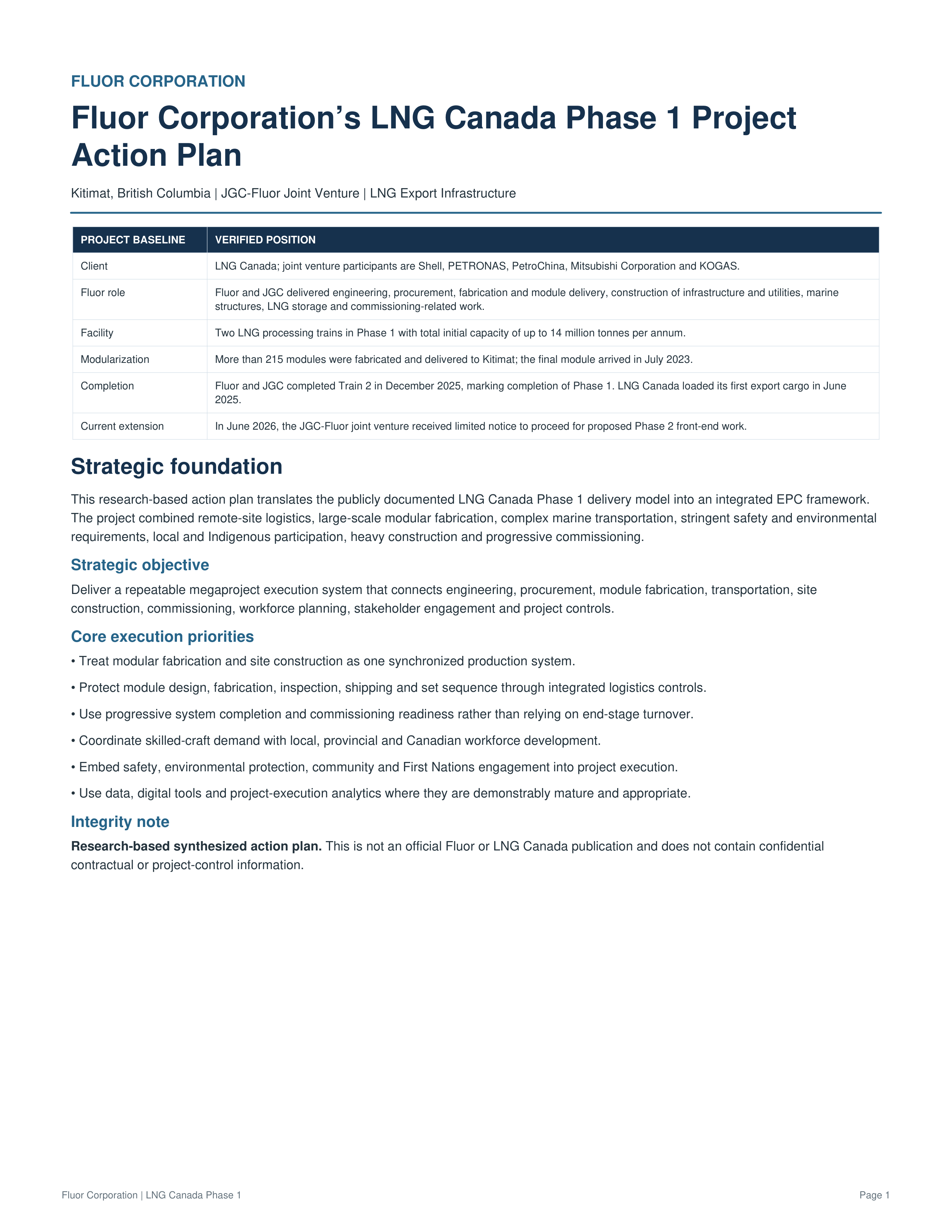
PROJECT BASELINE
VERIFIED POSITION
Client
LNG Canada; joint venture participants are Shell, PETRONAS, PetroChina, Mitsubishi Corporation and KOGAS.
Fluor role
Fluor and JGC delivered engineering, procurement, fabrication and module delivery, construction of infrastructure and utilities, marine
structures, LNG storage and commissioning-related work.
Facility
Two LNG processing trains in Phase 1 with total initial capacity of up to 14 million tonnes per annum.
Modularization
More than 215 modules were fabricated and delivered to Kitimat; the final module arrived in July 2023.
Completion
Fluor and JGC completed Train 2 in December 2025, marking completion of Phase 1. LNG Canada loaded its first export cargo in June
2025.
Current extension
In June 2026, the JGC-Fluor joint venture received limited notice to proceed for proposed Phase 2 front-end work.
Strategic foundation
This research-based action plan translates the publicly documented LNG Canada Phase 1 delivery model into an integrated EPC framework.
The project combined remote-site logistics, large-scale modular fabrication, complex marine transportation, stringent safety and environmental
requirements, local and Indigenous participation, heavy construction and progressive commissioning.
Strategic objective
Deliver a repeatable megaproject execution system that connects engineering, procurement, module fabrication, transportation, site
construction, commissioning, workforce planning, stakeholder engagement and project controls.
Core execution priorities
• Treat modular fabrication and site construction as one synchronized production system.
• Protect module design, fabrication, inspection, shipping and set sequence through integrated logistics controls.
• Use progressive system completion and commissioning readiness rather than relying on end-stage turnover.
• Coordinate skilled-craft demand with local, provincial and Canadian workforce development.
• Embed safety, environmental protection, community and First Nations engagement into project execution.
• Use data, digital tools and project-execution analytics where they are demonstrably mature and appropriate.
Integrity note
Research-based synthesized action plan.
This is not an official Fluor or LNG Canada publication and does not contain confidential
contractual or project-control information.
Fluor Corporation | LNG Canada Phase 1
Page 2
1. Current Situation & Project Architecture
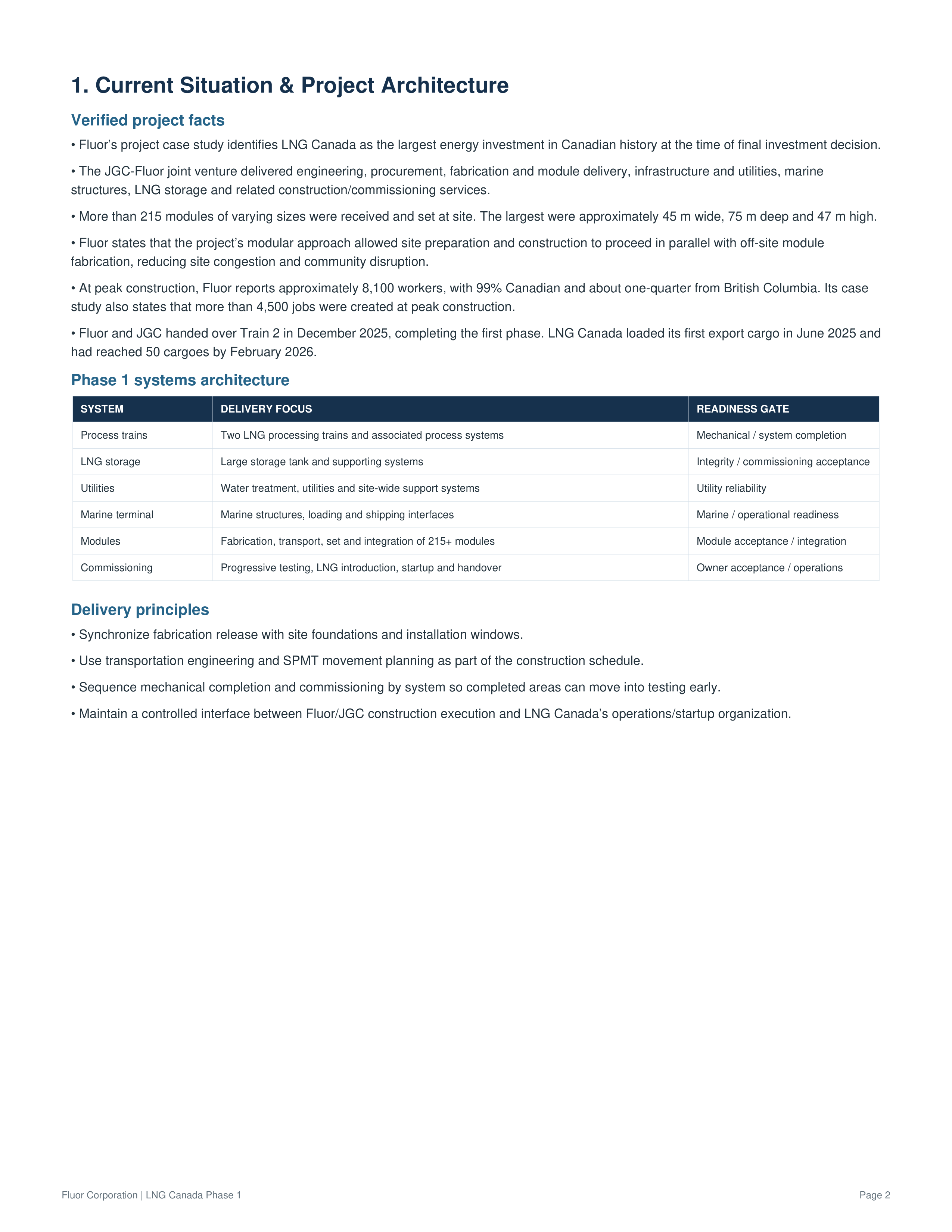
Verified project facts
• Fluor’s project case study identifies LNG Canada as the largest energy investment in Canadian history at the time of final investment decision.
• The JGC-Fluor joint venture delivered engineering, procurement, fabrication and module delivery, infrastructure and utilities, marine
structures, LNG storage and related construction/commissioning services.
• More than 215 modules of varying sizes were received and set at site. The largest were approximately 45 m wide, 75 m deep and 47 m high.
• Fluor states that the project’s modular approach allowed site preparation and construction to proceed in parallel with off-site module
fabrication, reducing site congestion and community disruption.
• At peak construction, Fluor reports approximately 8,100 workers, with 99% Canadian and about one-quarter from British Columbia. Its case
study also states that more than 4,500 jobs were created at peak construction.
• Fluor and JGC handed over Train 2 in December 2025, completing the first phase. LNG Canada loaded its first export cargo in June 2025 and
had reached 50 cargoes by February 2026.
Phase 1 systems architecture
SYSTEM
DELIVERY FOCUS
READINESS GATE
Process trains
Two LNG processing trains and associated process systems
Mechanical / system completion
LNG storage
Large storage tank and supporting systems
Integrity / commissioning acceptance
Utilities
Water treatment, utilities and site-wide support systems
Utility reliability
Marine terminal
Marine structures, loading and shipping interfaces
Marine / operational readiness
Modules
Fabrication, transport, set and integration of 215+ modules
Module acceptance / integration
Commissioning
Progressive testing, LNG introduction, startup and handover
Owner acceptance / operations
Delivery principles
• Synchronize fabrication release with site foundations and installation windows.
• Use transportation engineering and SPMT movement planning as part of the construction schedule.
• Sequence mechanical completion and commissioning by system so completed areas can move into testing early.
• Maintain a controlled interface between Fluor/JGC construction execution and LNG Canada’s operations/startup organization.
Fluor Corporation | LNG Canada Phase 1
Page 3
2. Strategic Priorities & Action Areas
01 Global modular fabrication strategy
Coordinate module design, procurement, fabrication-yard production, inspection, marine transport and site installation as a single integrated
schedule. Use modularization where it reduces site congestion, weather exposure or craft intensity.
02 Marine logistics & module integration
Control vessel windows, route constraints, unloading, SPMT movements, laydown areas and set sequences. Protect the installation sequence
from late module release or shipping disruption.
03 Engineering & constructability
Freeze interfaces early, review module/site boundaries, maintain model coordination and perform constructability reviews before fabrication
and field release.
04 Commissioning & turnover
Develop system completion dossiers progressively, establish test packs, close punch items systematically and align construction turnover with
LNG introduction and startup.
05 Workforce & skills mobilization
Forecast craft demand by discipline and phase, maintain training pipelines and use local/Canadian workforce participation programs to support
peak demand.
06 Safety, environmental & community execution
Use leading safety indicators, environmental controls, marine protections, community communication and First Nations engagement as active
execution workstreams.
07 Digital project controls
Use project execution data, schedule analytics, supply-chain visibility and appropriate AI-enabled tools to improve predictability, while
maintaining human review and project-specific validation.
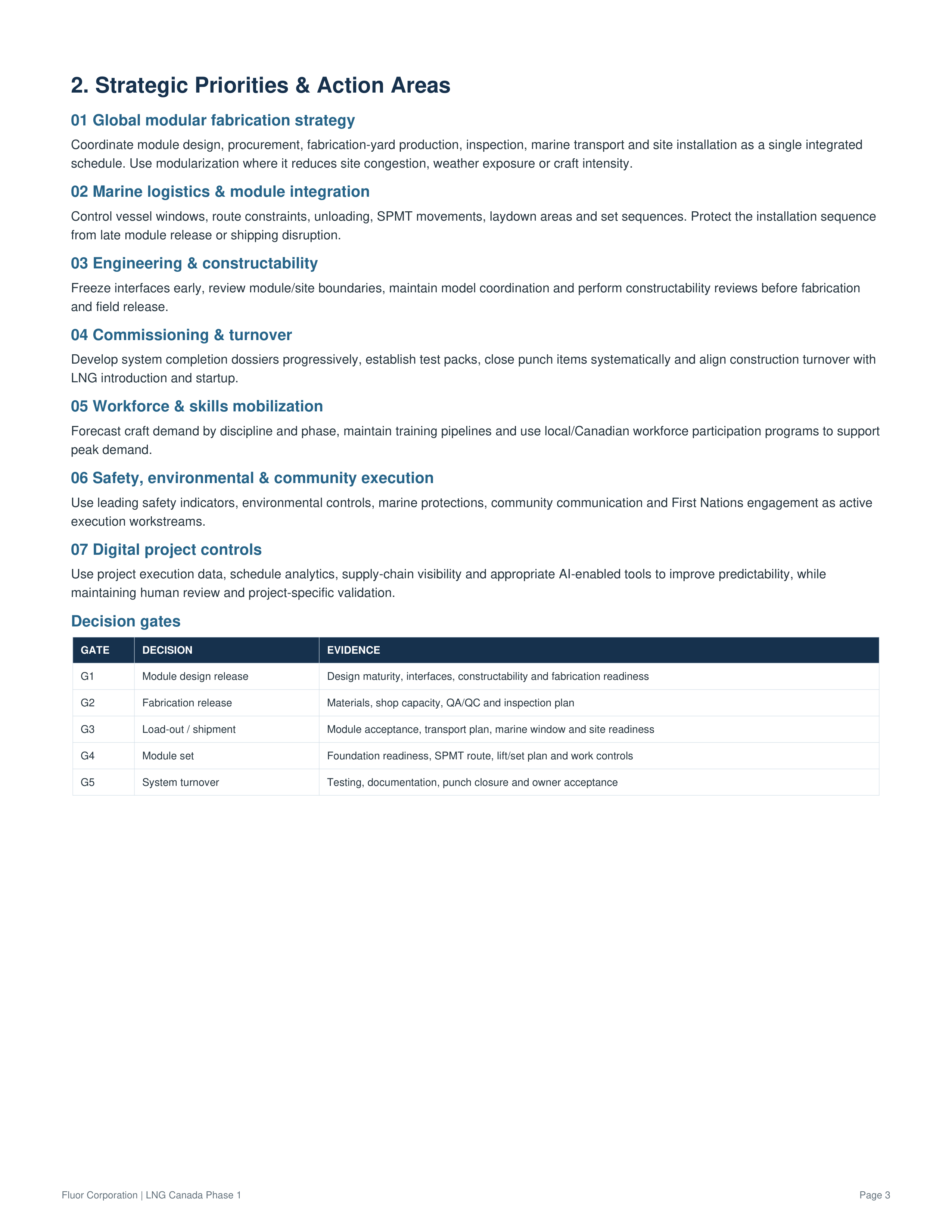
Decision gates
GATE
DECISION
EVIDENCE
G1
Module design release
Design maturity, interfaces, constructability and fabrication readiness
G2
Fabrication release
Materials, shop capacity, QA/QC and inspection plan
G3
Load-out / shipment
Module acceptance, transport plan, marine window and site readiness
G4
Module set
Foundation readiness, SPMT route, lift/set plan and work controls
G5
System turnover
Testing, documentation, punch closure and owner acceptance
Fluor Corporation | LNG Canada Phase 1
Page 4
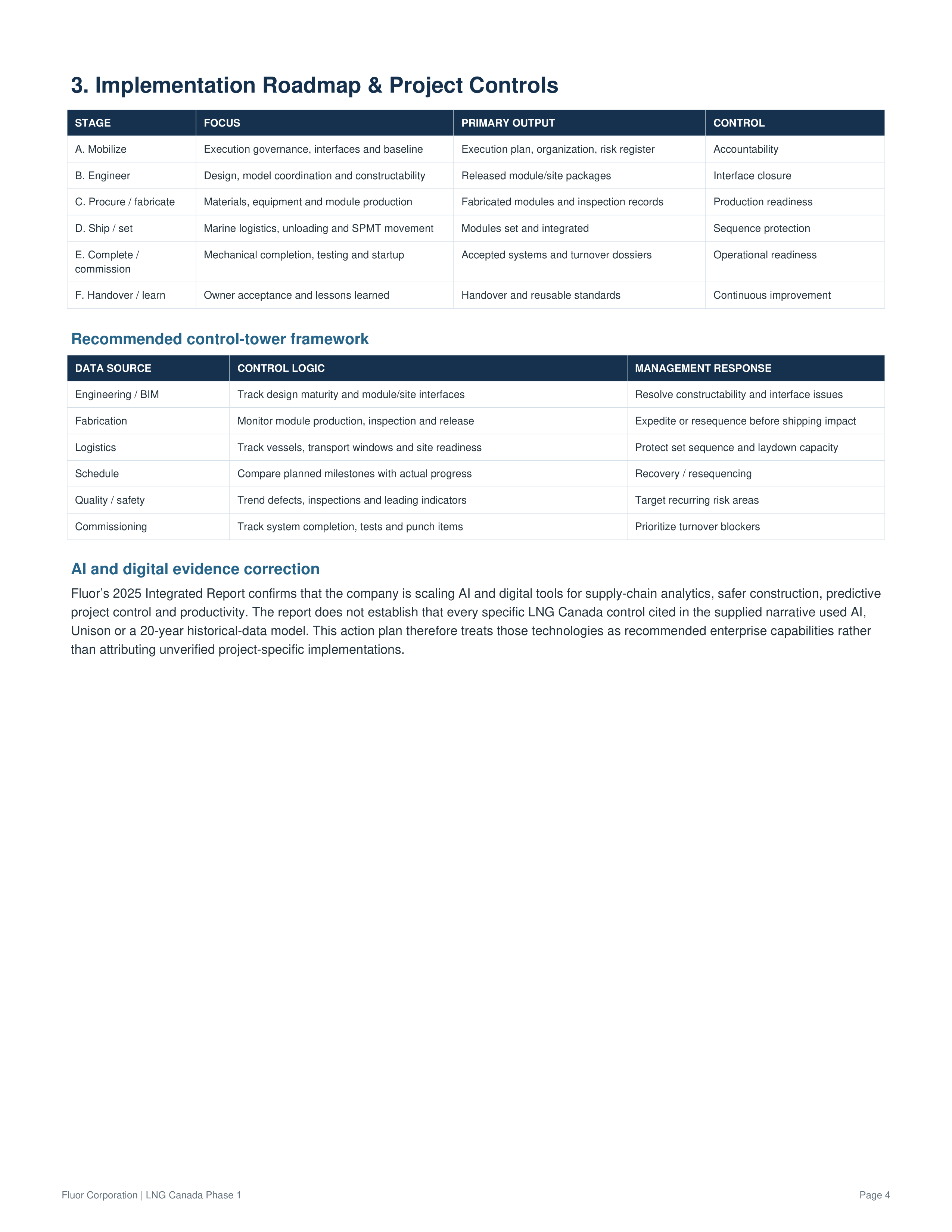
3. Implementation Roadmap & Project Controls
STAGE
FOCUS
PRIMARY OUTPUT
CONTROL
A. Mobilize
Execution governance, interfaces and baseline
Execution plan, organization, risk register
Accountability
B. Engineer
Design, model coordination and constructability
Released module/site packages
Interface closure
C. Procure / fabricate
Materials, equipment and module production
Fabricated modules and inspection records
Production readiness
D. Ship / set
Marine logistics, unloading and SPMT movement
Modules set and integrated
Sequence protection
E. Complete /
commission
Mechanical completion, testing and startup
Accepted systems and turnover dossiers
Operational readiness
F. Handover / learn
Owner acceptance and lessons learned
Handover and reusable standards
Continuous improvement
Recommended control-tower framework
DATA SOURCE
CONTROL LOGIC
MANAGEMENT RESPONSE
Engineering / BIM
Track design maturity and module/site interfaces
Resolve constructability and interface issues
Fabrication
Monitor module production, inspection and release
Expedite or resequence before shipping impact
Logistics
Track vessels, transport windows and site readiness
Protect set sequence and laydown capacity
Schedule
Compare planned milestones with actual progress
Recovery / resequencing
Quality / safety
Trend defects, inspections and leading indicators
Target recurring risk areas
Commissioning
Track system completion, tests and punch items
Prioritize turnover blockers
AI and digital evidence correction
Fluor’s 2025 Integrated Report confirms that the company is scaling AI and digital tools for supply-chain analytics, safer construction, predictive
project control and productivity. The report does not establish that every specific LNG Canada control cited in the supplied narrative used AI,
Unison or a 20-year historical-data model. This action plan therefore treats those technologies as recommended enterprise capabilities rather
than attributing unverified project-specific implementations.
Fluor Corporation | LNG Canada Phase 1
Page 5
4. KPI Scorecard, Governance & Risk Management
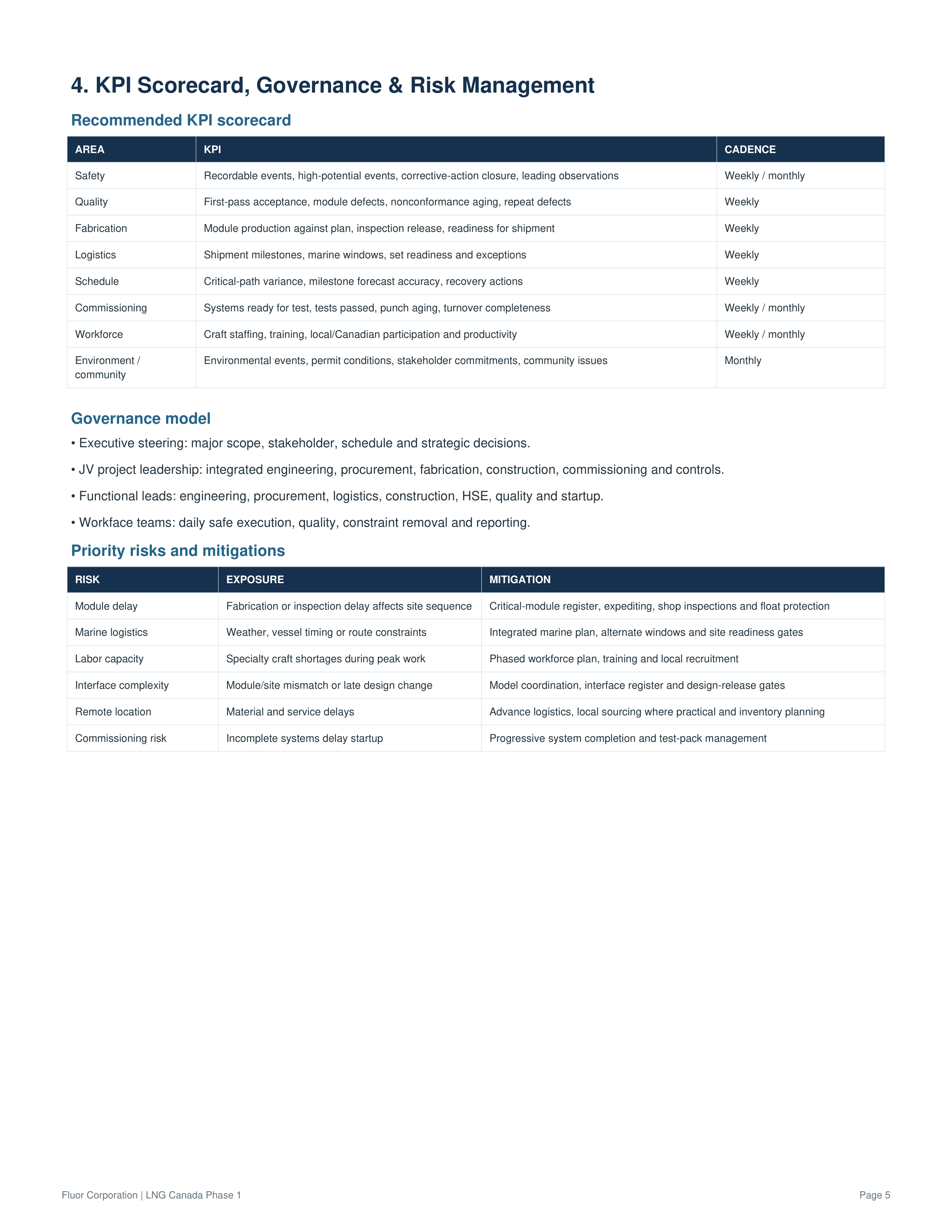
Recommended KPI scorecard
AREA
KPI
CADENCE
Safety
Recordable events, high-potential events, corrective-action closure, leading observations
Weekly / monthly
Quality
First-pass acceptance, module defects, nonconformance aging, repeat defects
Weekly
Fabrication
Module production against plan, inspection release, readiness for shipment
Weekly
Logistics
Shipment milestones, marine windows, set readiness and exceptions
Weekly
Schedule
Critical-path variance, milestone forecast accuracy, recovery actions
Weekly
Commissioning
Systems ready for test, tests passed, punch aging, turnover completeness
Weekly / monthly
Workforce
Craft staffing, training, local/Canadian participation and productivity
Weekly / monthly
Environment /
community
Environmental events, permit conditions, stakeholder commitments, community issues
Monthly
Governance model
• Executive steering: major scope, stakeholder, schedule and strategic decisions.
• JV project leadership: integrated engineering, procurement, fabrication, construction, commissioning and controls.
• Functional leads: engineering, procurement, logistics, construction, HSE, quality and startup.
• Workface teams: daily safe execution, quality, constraint removal and reporting.
Priority risks and mitigations
RISK
EXPOSURE
MITIGATION
Module delay
Fabrication or inspection delay affects site sequence
Critical-module register, expediting, shop inspections and float protection
Marine logistics
Weather, vessel timing or route constraints
Integrated marine plan, alternate windows and site readiness gates
Labor capacity
Specialty craft shortages during peak work
Phased workforce plan, training and local recruitment
Interface complexity
Module/site mismatch or late design change
Model coordination, interface register and design-release gates
Remote location
Material and service delays
Advance logistics, local sourcing where practical and inventory planning
Commissioning risk
Incomplete systems delay startup
Progressive system completion and test-pack management
Fluor Corporation | LNG Canada Phase 1
Page 6
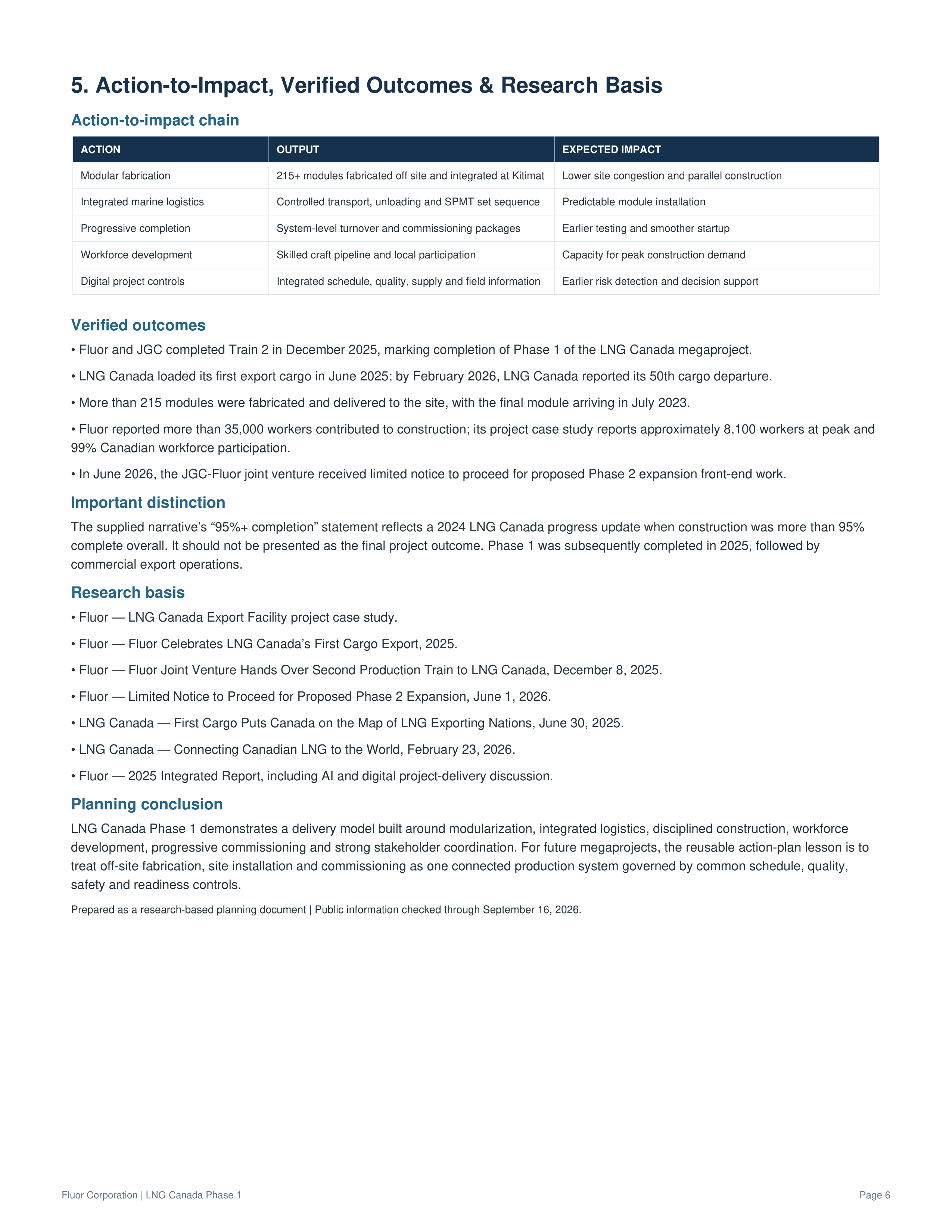
5. Action-to-Impact, Verified Outcomes & Research Basis
Action-to-impact chain
ACTION
OUTPUT
EXPECTED IMPACT
Modular fabrication
215+ modules fabricated off site and integrated at Kitimat
Lower site congestion and parallel construction
Integrated marine logistics
Controlled transport, unloading and SPMT set sequence
Predictable module installation
Progressive completion
System-level turnover and commissioning packages
Earlier testing and smoother startup
Workforce development
Skilled craft pipeline and local participation
Capacity for peak construction demand
Digital project controls
Integrated schedule, quality, supply and field information
Earlier risk detection and decision support
Verified outcomes
• Fluor and JGC completed Train 2 in December 2025, marking completion of Phase 1 of the LNG Canada megaproject.
• LNG Canada loaded its first export cargo in June 2025; by February 2026, LNG Canada reported its 50th cargo departure.
• More than 215 modules were fabricated and delivered to the site, with the final module arriving in July 2023.
• Fluor reported more than 35,000 workers contributed to construction; its project case study reports approximately 8,100 workers at peak and
99% Canadian workforce participation.
• In June 2026, the JGC-Fluor joint venture received limited notice to proceed for proposed Phase 2 expansion front-end work.
Important distinction
The supplied narrative’s “95%+ completion” statement reflects a 2024 LNG Canada progress update when construction was more than 95%
complete overall. It should not be presented as the final project outcome. Phase 1 was subsequently completed in 2025, followed by
commercial export operations.
Research basis
• Fluor — LNG Canada Export Facility project case study.
• Fluor — Fluor Celebrates LNG Canada’s First Cargo Export, 2025.
• Fluor — Fluor Joint Venture Hands Over Second Production Train to LNG Canada, December 8, 2025.
• Fluor — Limited Notice to Proceed for Proposed Phase 2 Expansion, June 1, 2026.
• LNG Canada — First Cargo Puts Canada on the Map of LNG Exporting Nations, June 30, 2025.
• LNG Canada — Connecting Canadian LNG to the World, February 23, 2026.
• Fluor — 2025 Integrated Report, including AI and digital project-delivery discussion.
Planning conclusion
LNG Canada Phase 1 demonstrates a delivery model built around modularization, integrated logistics, disciplined construction, workforce
development, progressive commissioning and strong stakeholder coordination. For future megaprojects, the reusable action-plan lesson is to
treat off-site fabrication, site installation and commissioning as one connected production system governed by common schedule, quality,
safety and readiness controls.
Prepared as a research-based planning document | Public information checked through September 16, 2026.