Research-based synthesized Action Plan • Not an official Microsoft publication
Page 1
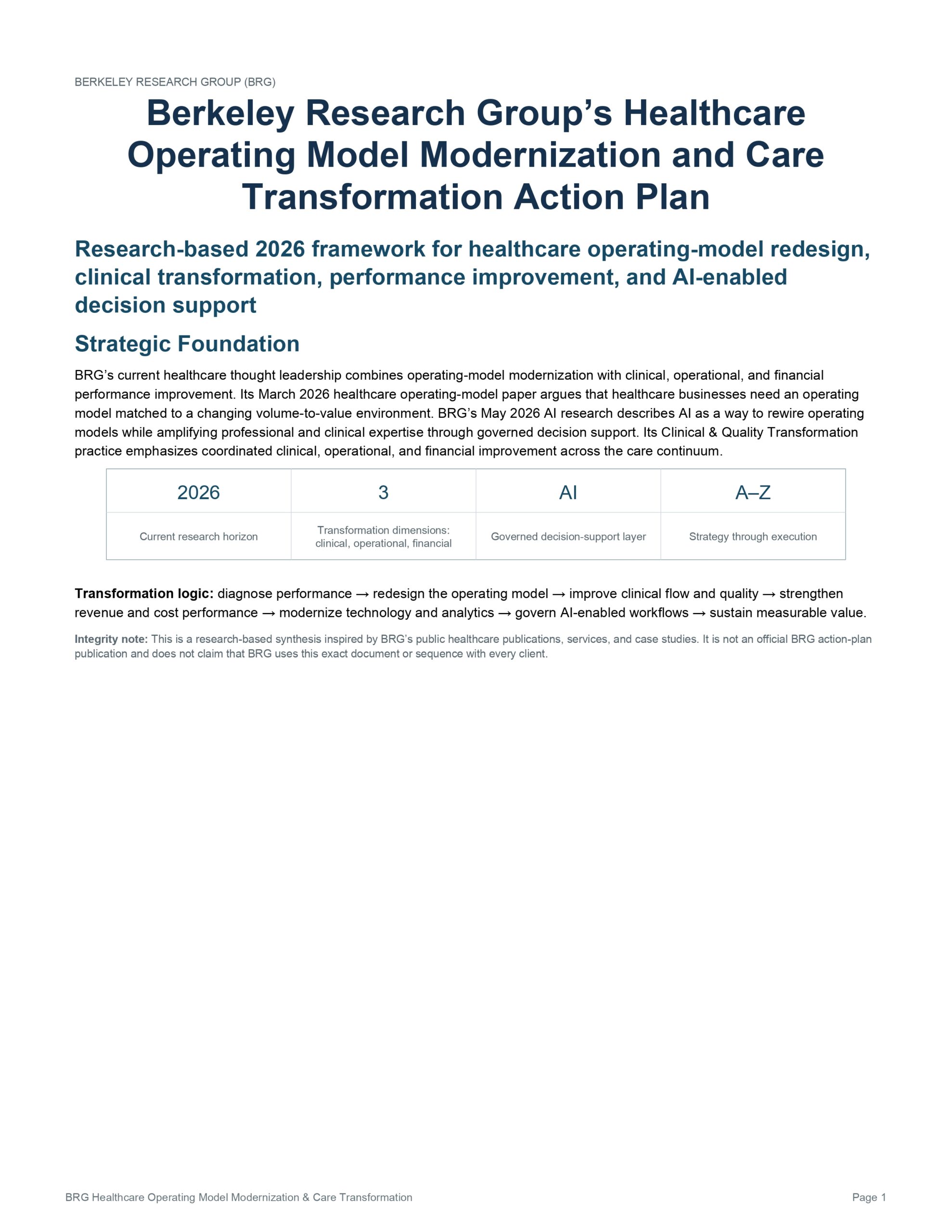
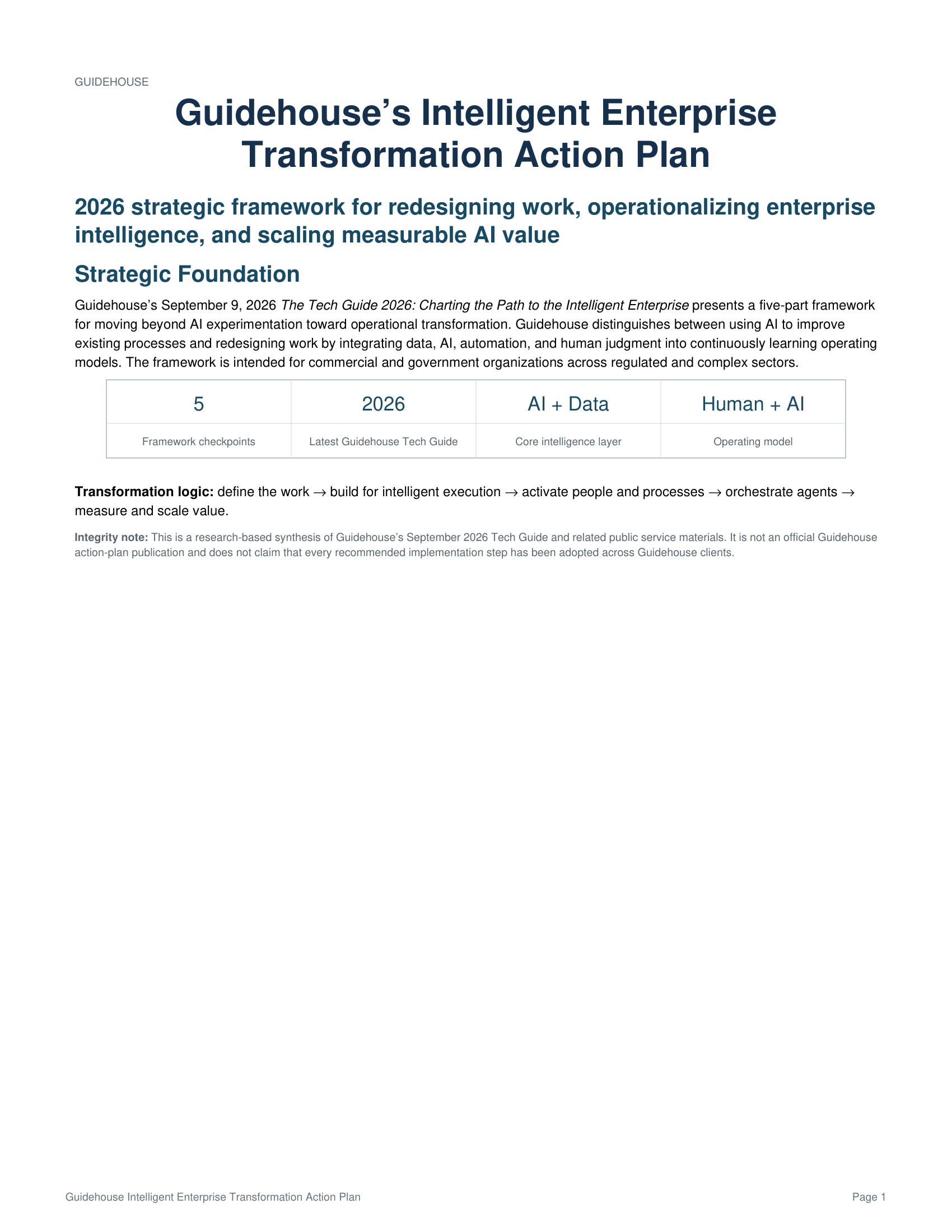
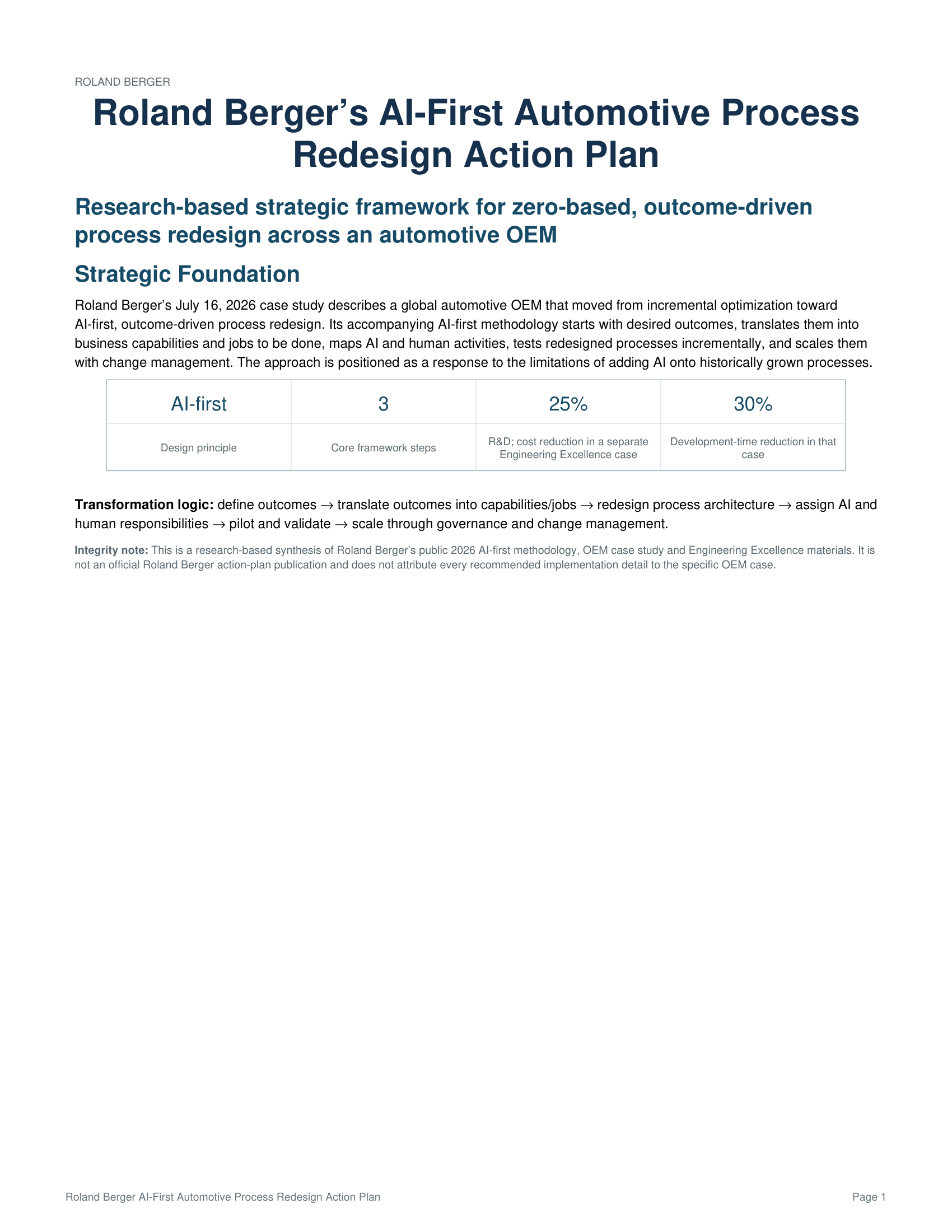
MICROSOFT
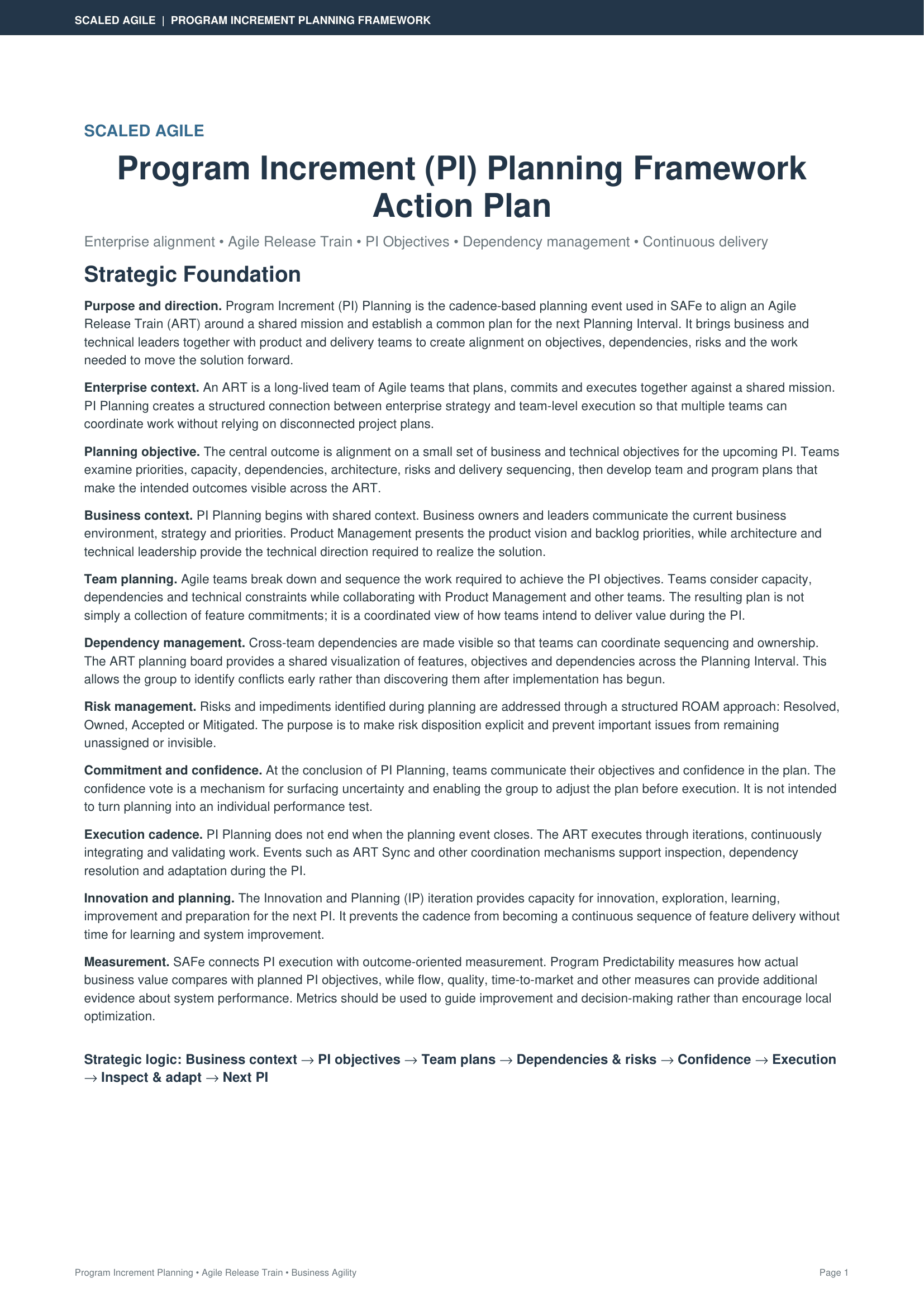
Microsoft AI Infrastructure Expansion, Data
Center Scaling & Carbon-Free Energy
Action Plan
Strategic Execution Framework • 2026–2032
EXECUTIVE FOUNDATION
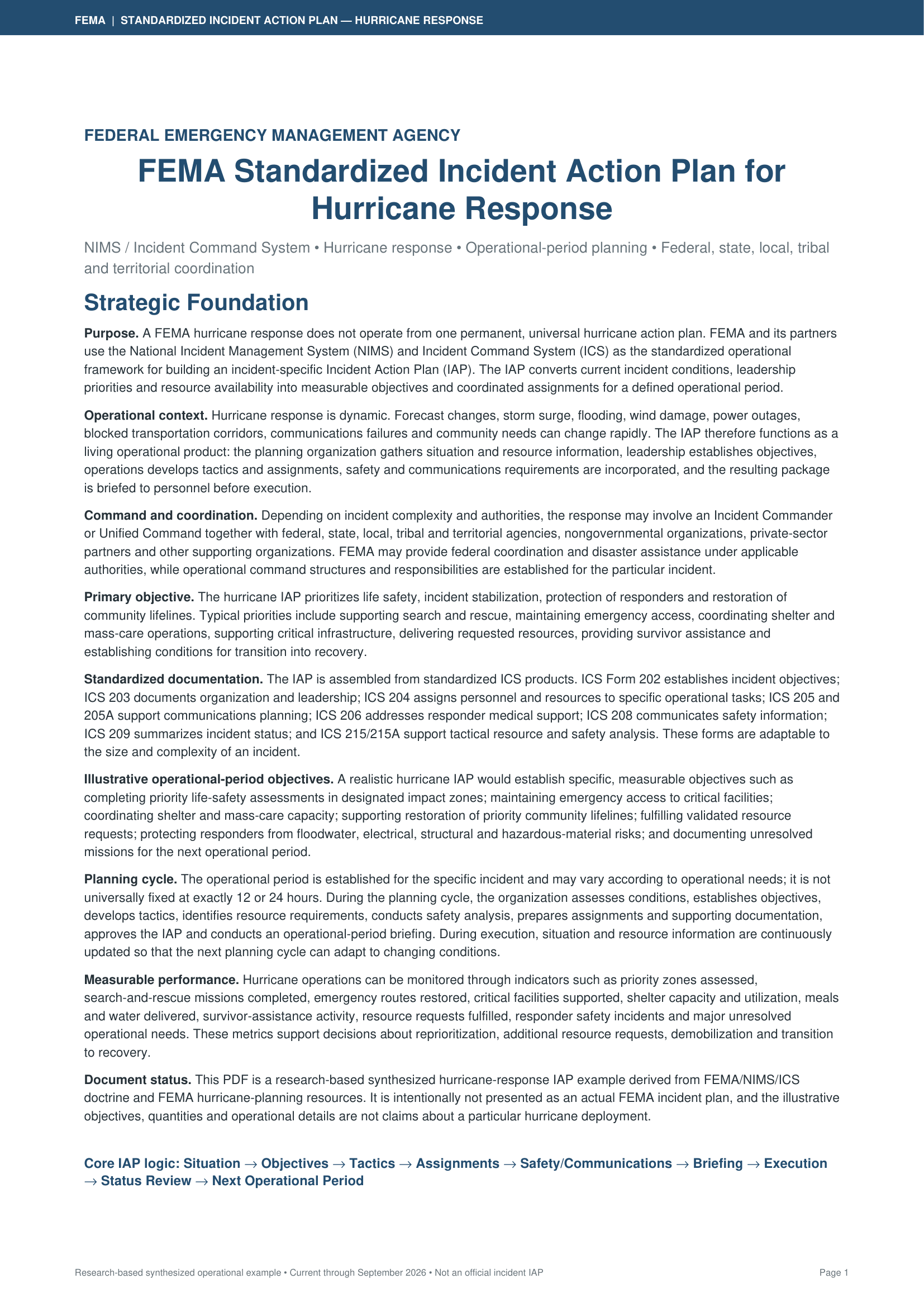
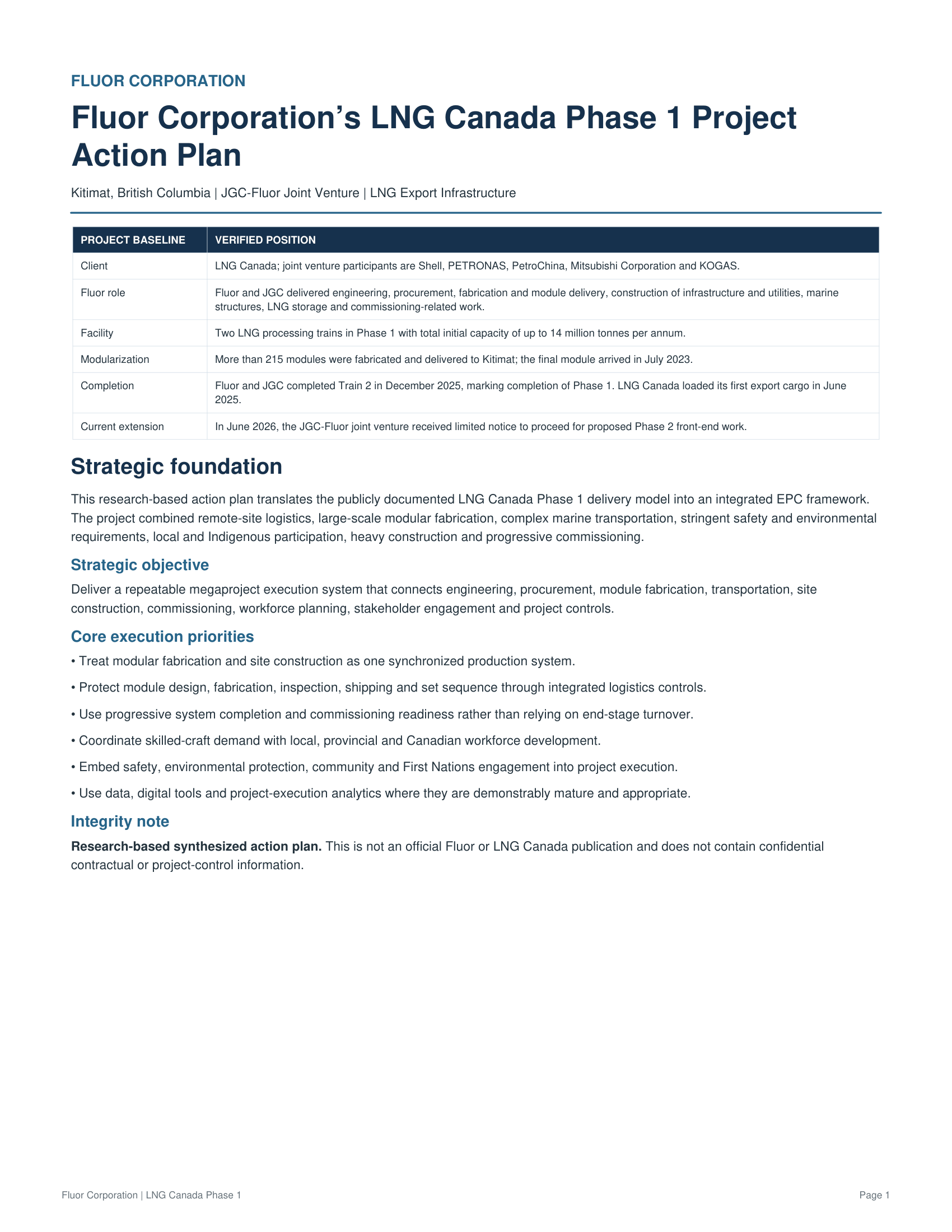
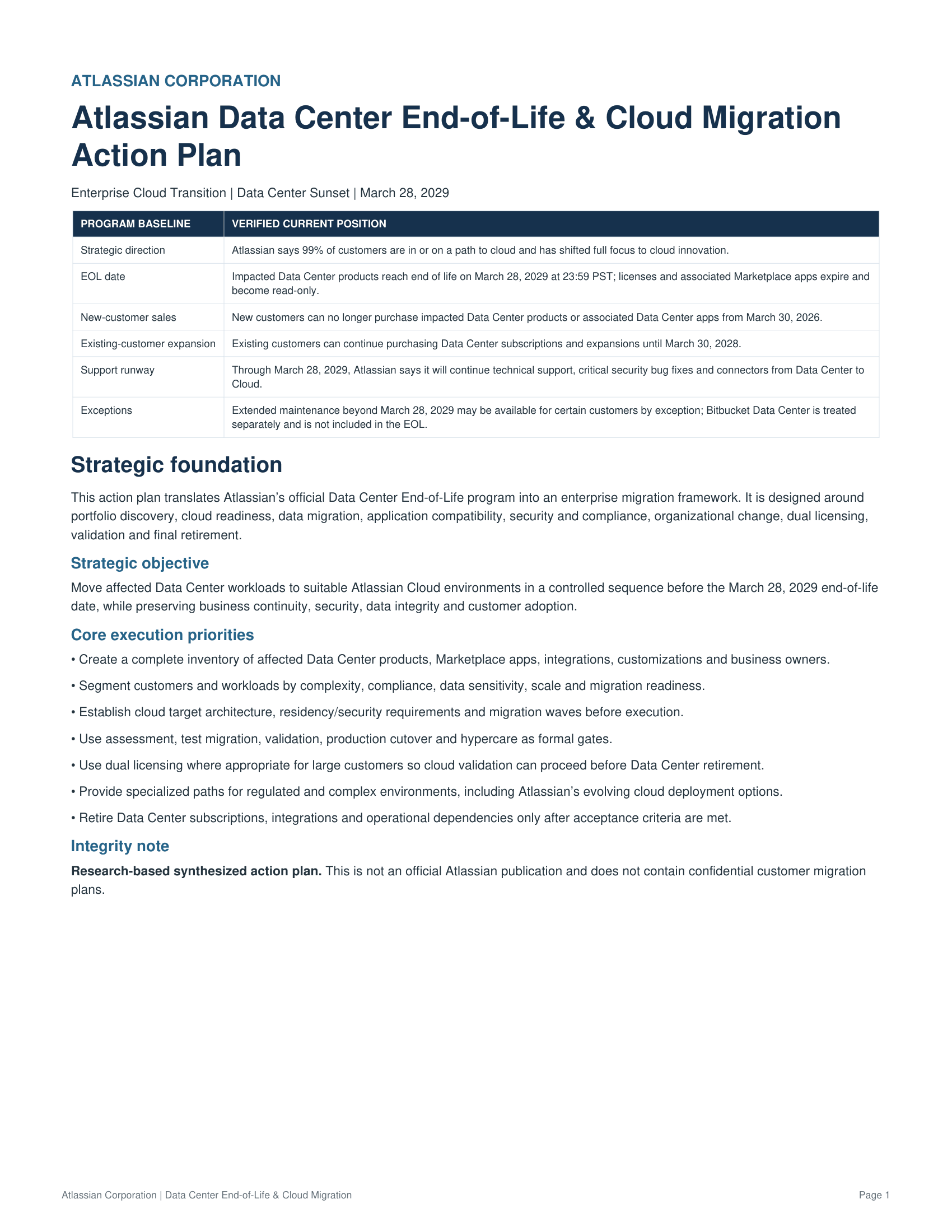
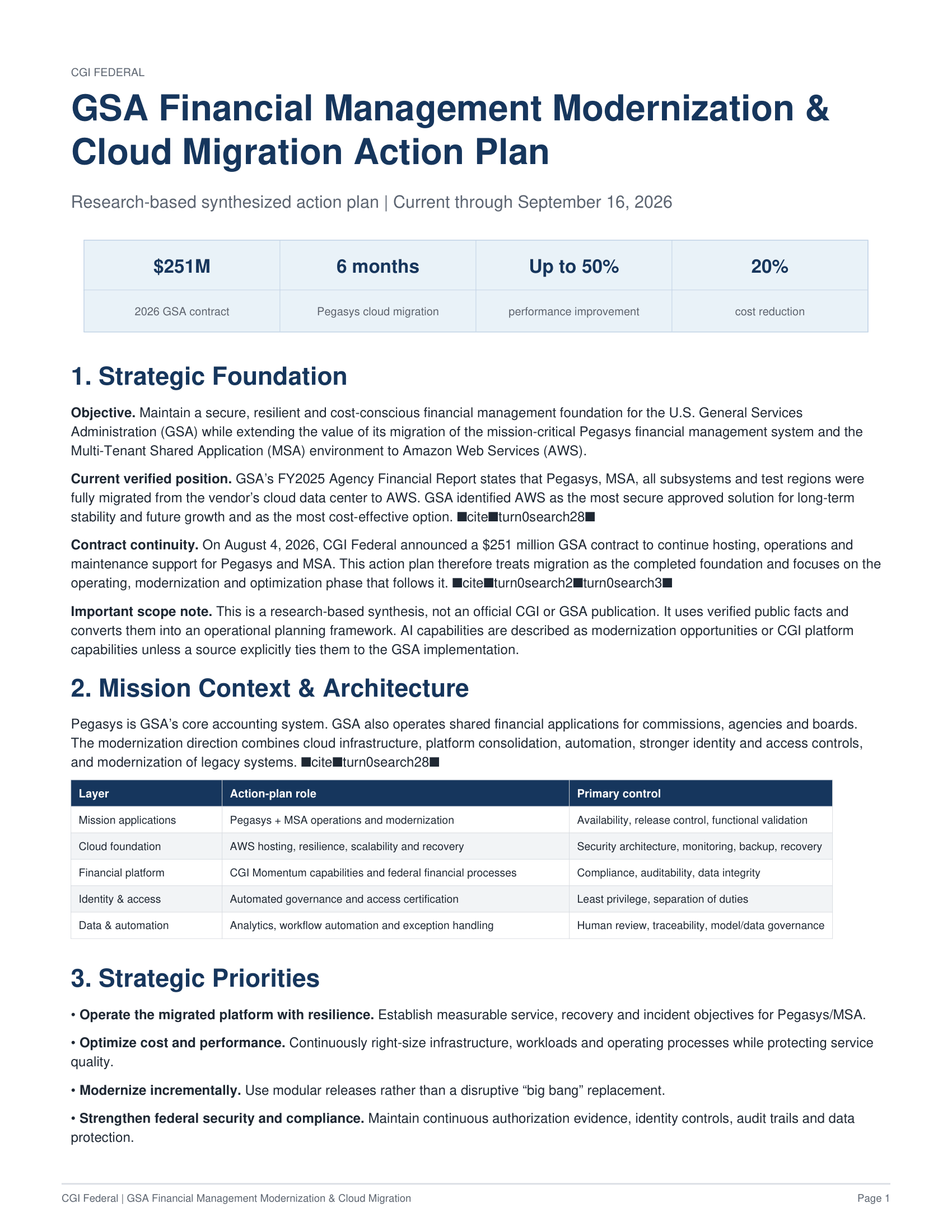
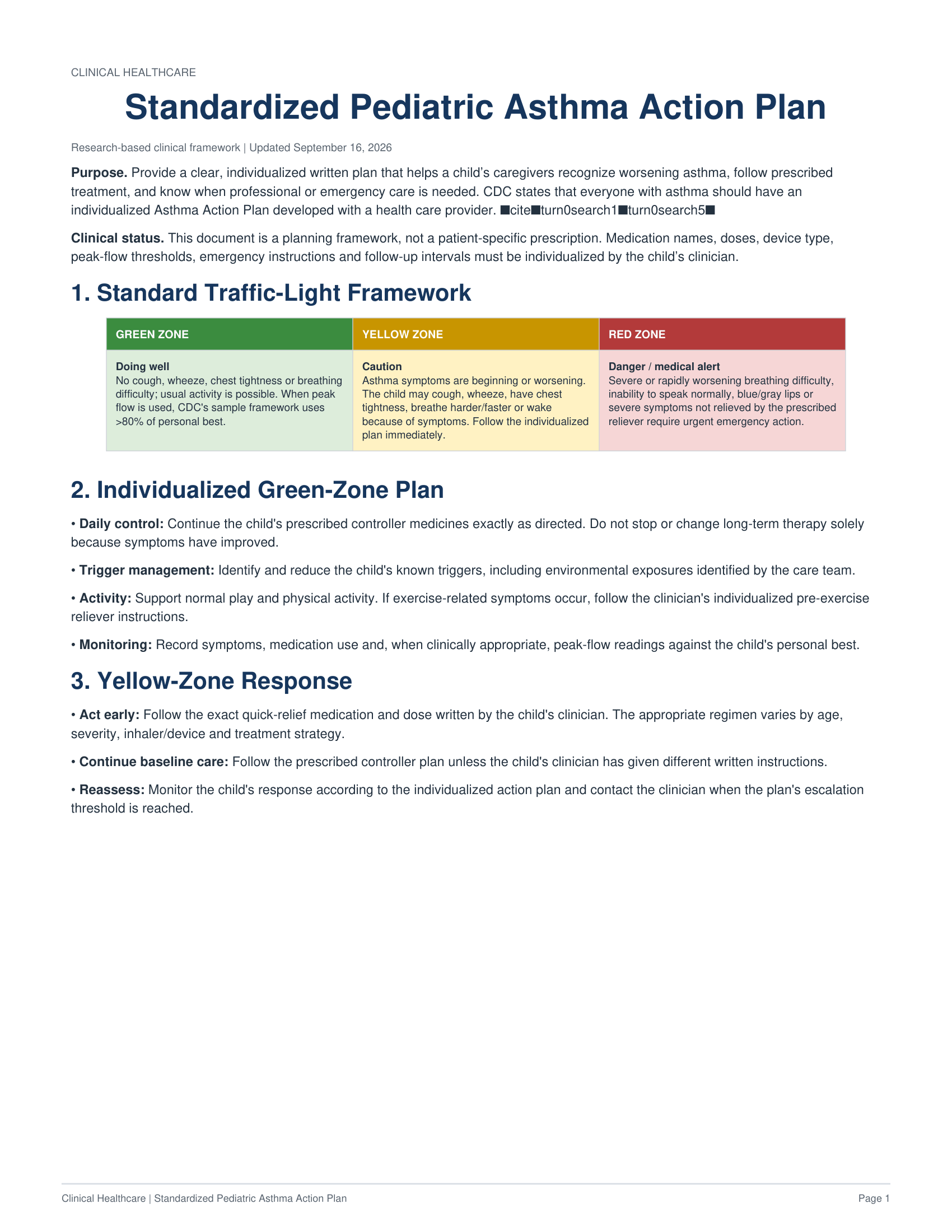
Microsoft is entering a scale phase in which AI demand, cloud capacity, electricity availability, data-center construction, hardware
lifecycle management, and decarbonization must be executed as one operating system. The latest public reporting points to a major
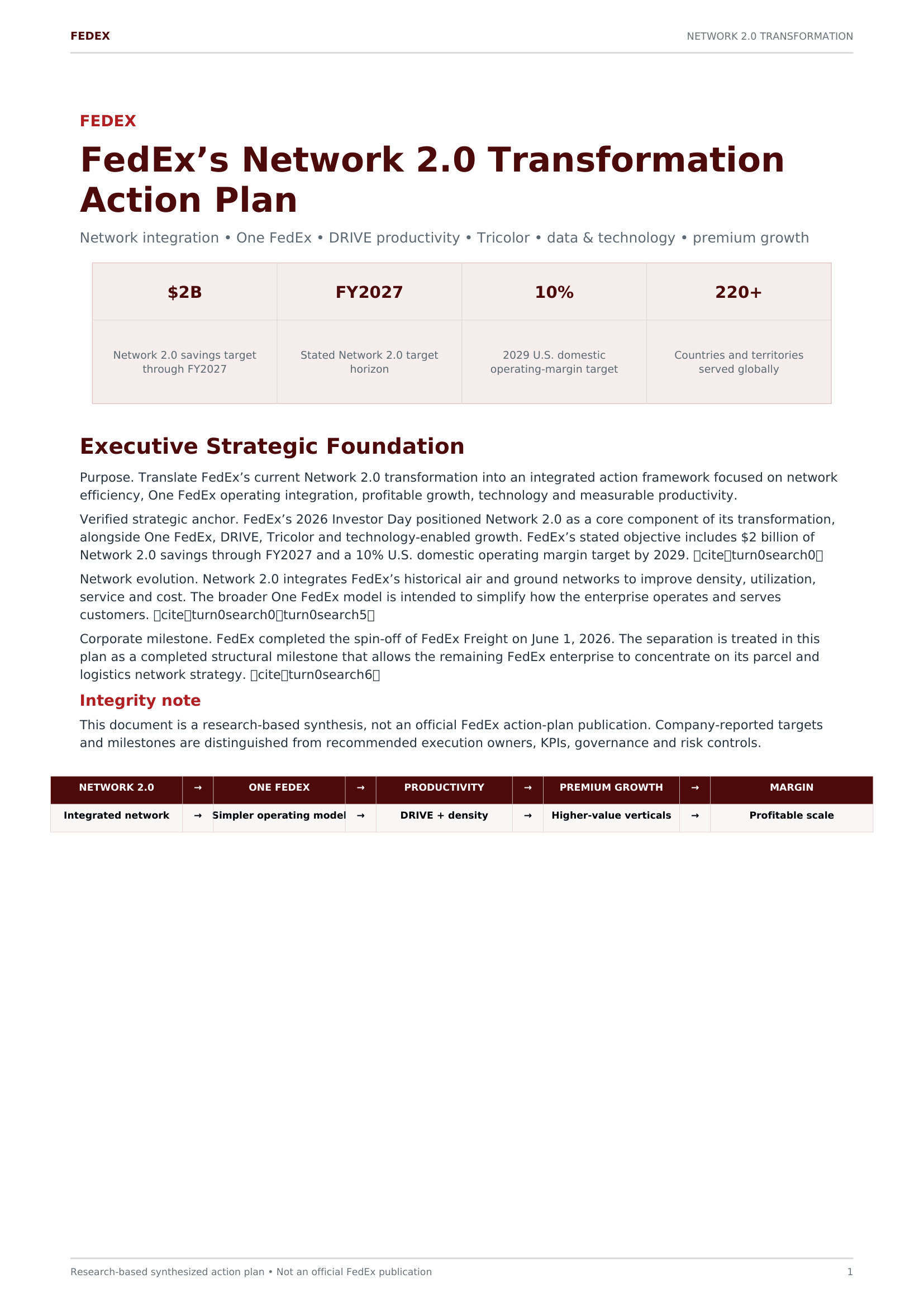
infrastructure expansion: Microsoft is planning approximately
38 gigawatts of global data-center capacity by 2032
, more than three
times its current footprint. Reuters reported the target on September 10, 2026, citing Bloomberg reporting.
Microsoft’s FY2026 fourth-quarter disclosures also show the financial magnitude of the buildout. Quarterly capital expenditures were
$41 billion, while the company said its calendar-year 2026 capital-expenditure expectation is approximately
$175 billion
following a
change in the treatment of certain future data-center leases; Microsoft stated that the underlying investment expectation was
unchanged.
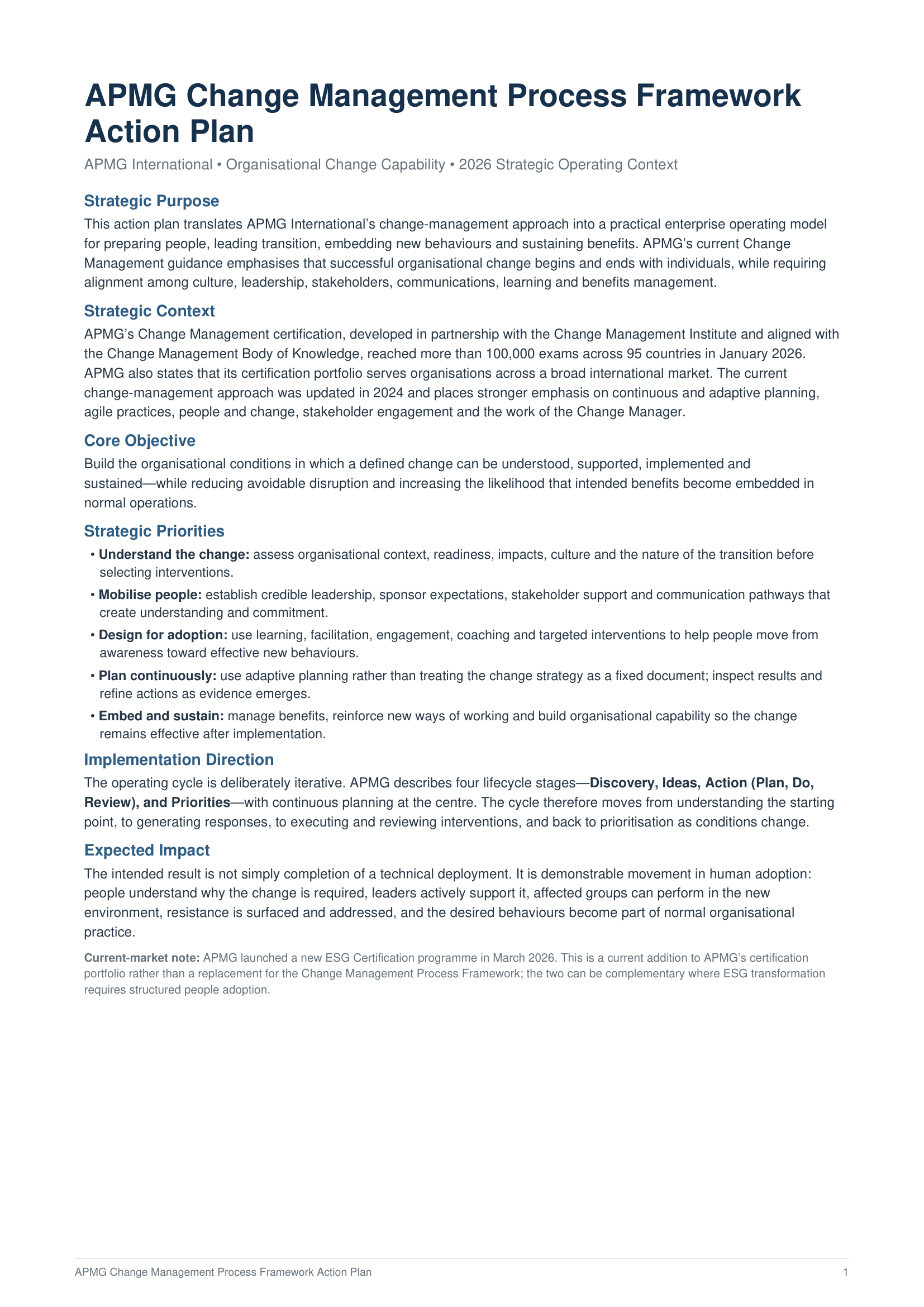
THE ENERGY CONSTRAINT
Microsoft has paired infrastructure expansion with an aggressive clean-energy procurement program. In February 2026, Microsoft
announced that it had matched 100% of annual global electricity consumption with renewable energy for FY2025 and had contracted
approximately
40 GW of new renewable energy across 26 countries
, with 19 GW already online.
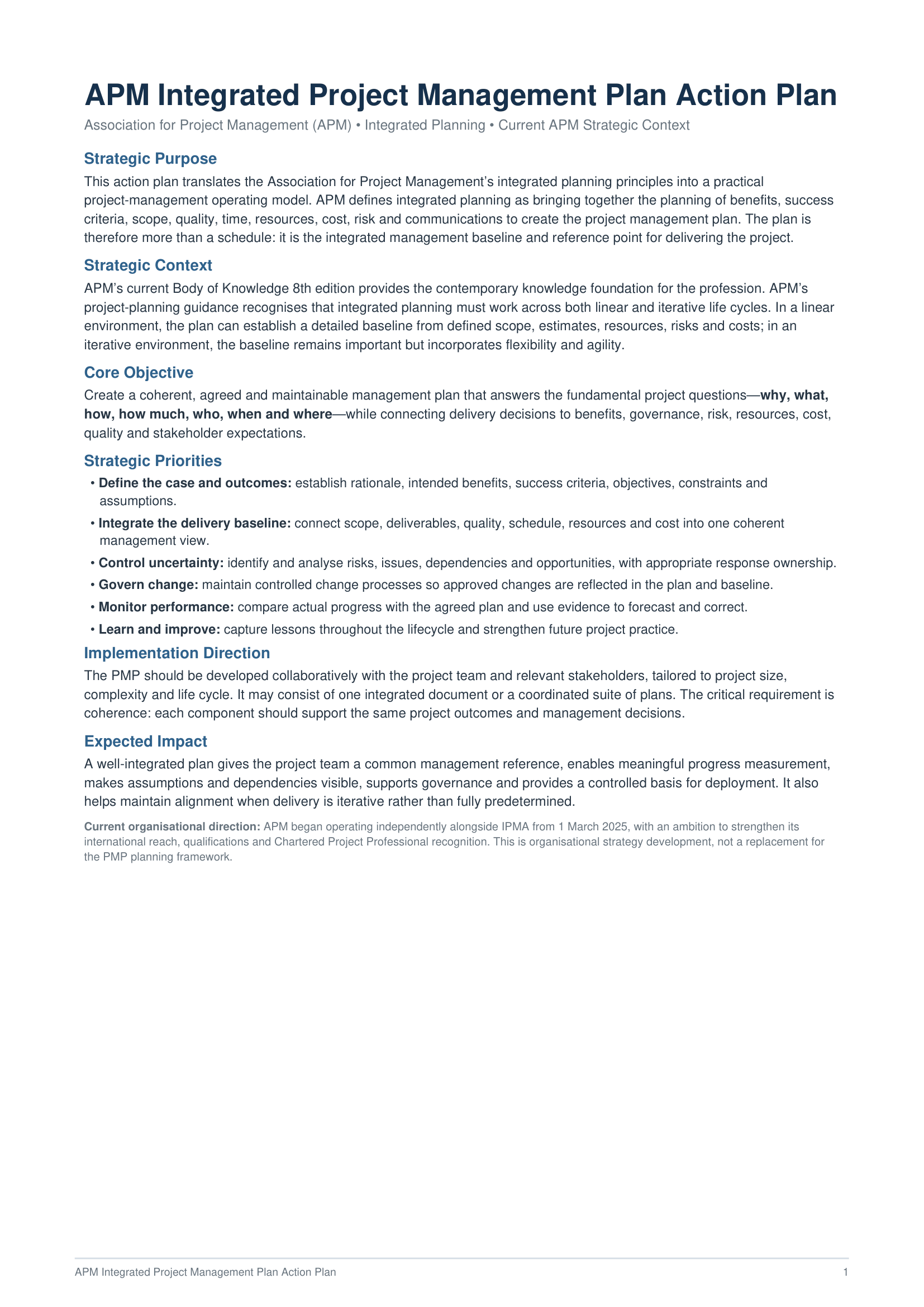
THE OPERATIONAL IMPERATIVE
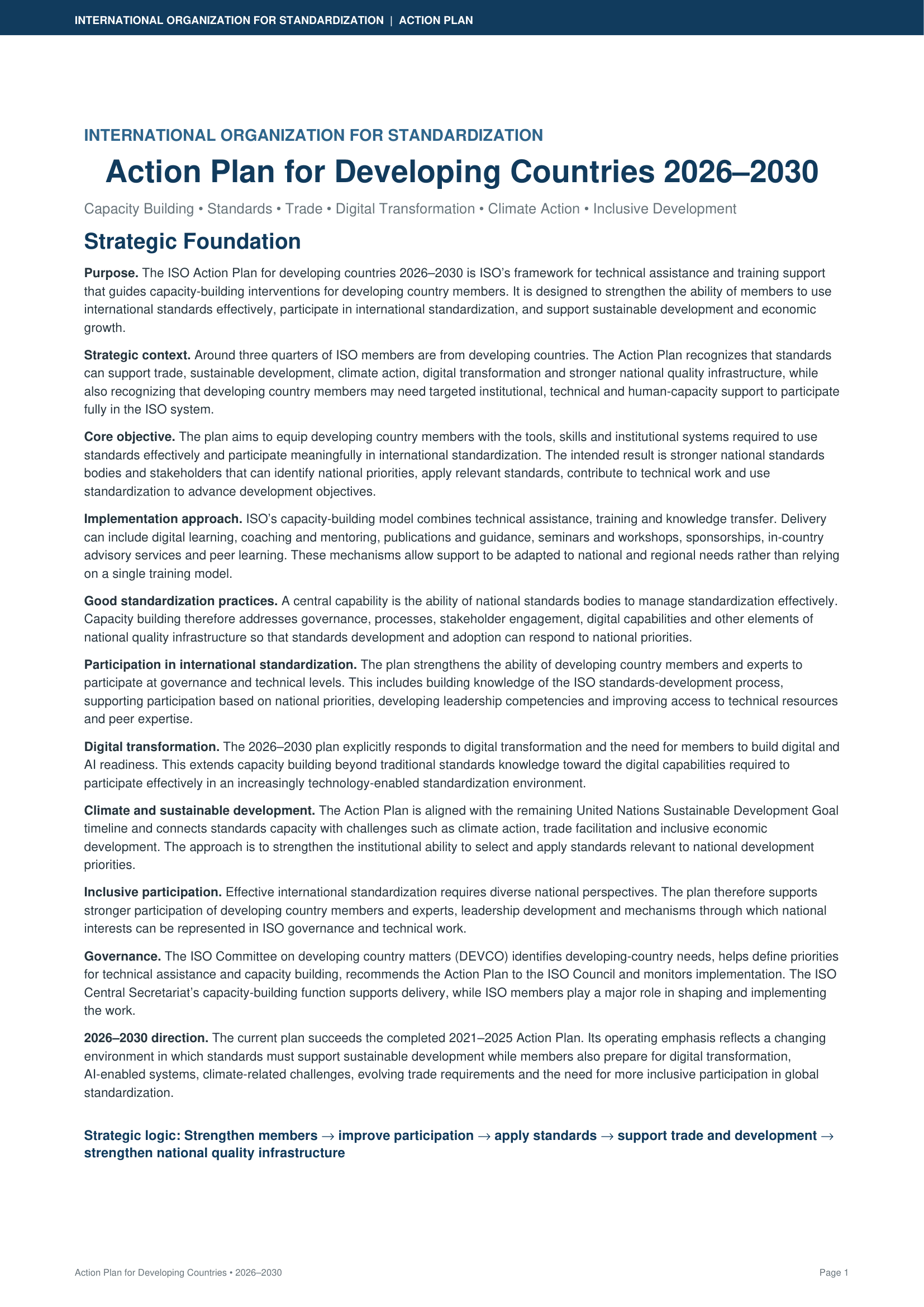
The action plan therefore treats compute, power, physical infrastructure, water, circular hardware, supply-chain resilience, and capital
discipline as interdependent workstreams. It does not treat every proposed initiative as an official Microsoft commitment;
recommendations below are synthesized from verified public strategy and operating evidence.
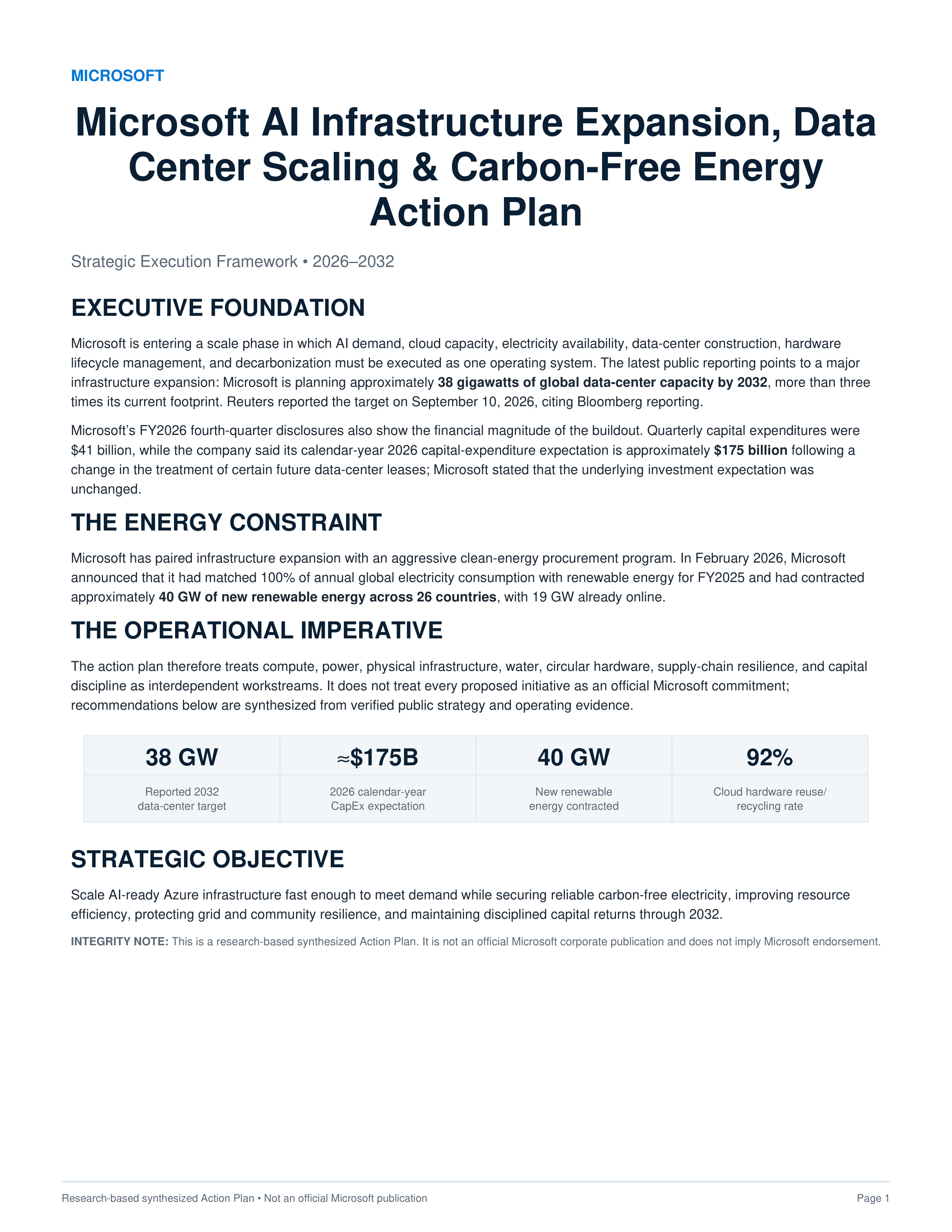
38 GW
≈
$175B
40 GW
92%
Reported 2032
data-center target
2026 calendar-year
CapEx expectation
New renewable
energy contracted
Cloud hardware reuse/
recycling rate
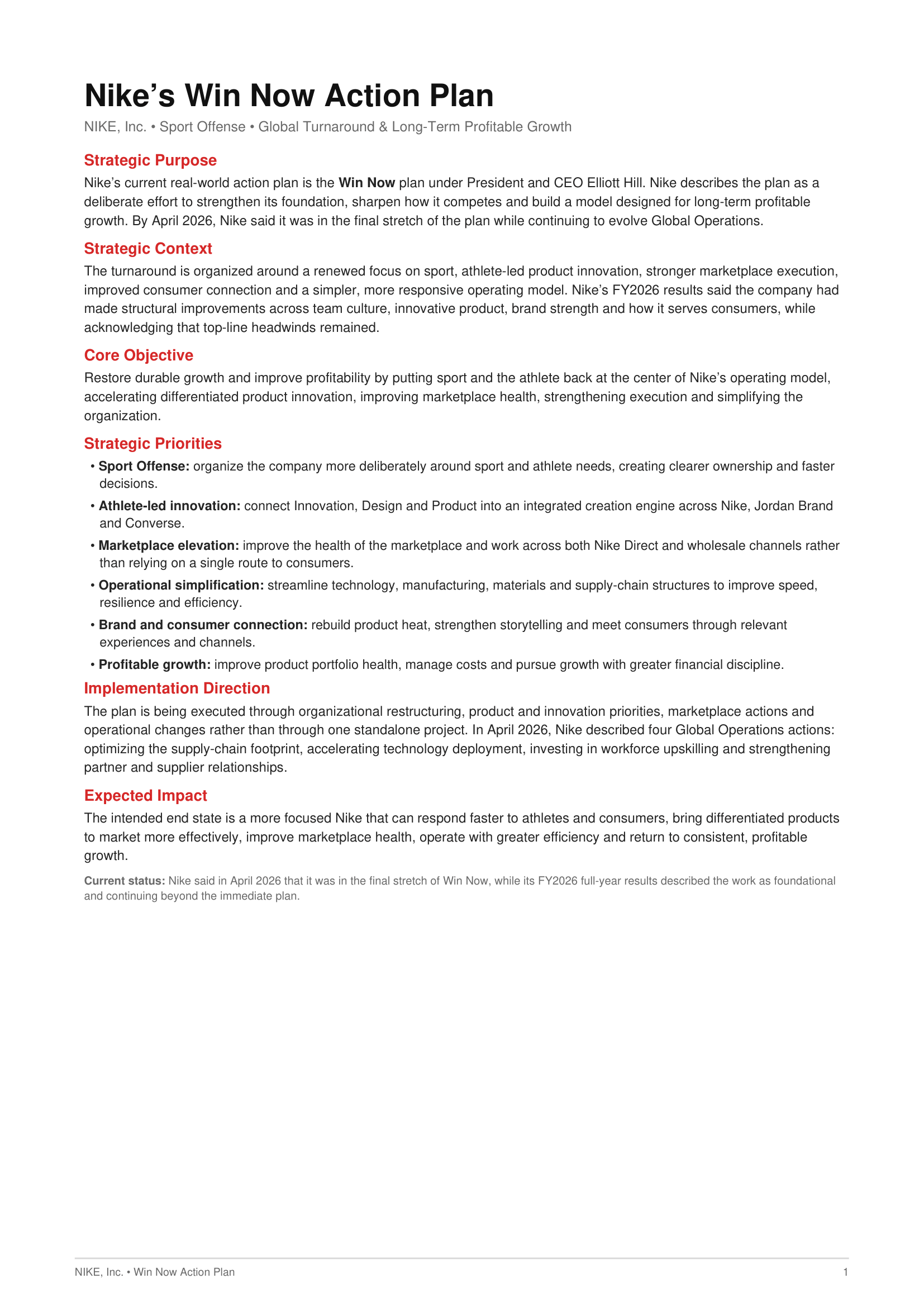
STRATEGIC OBJECTIVE
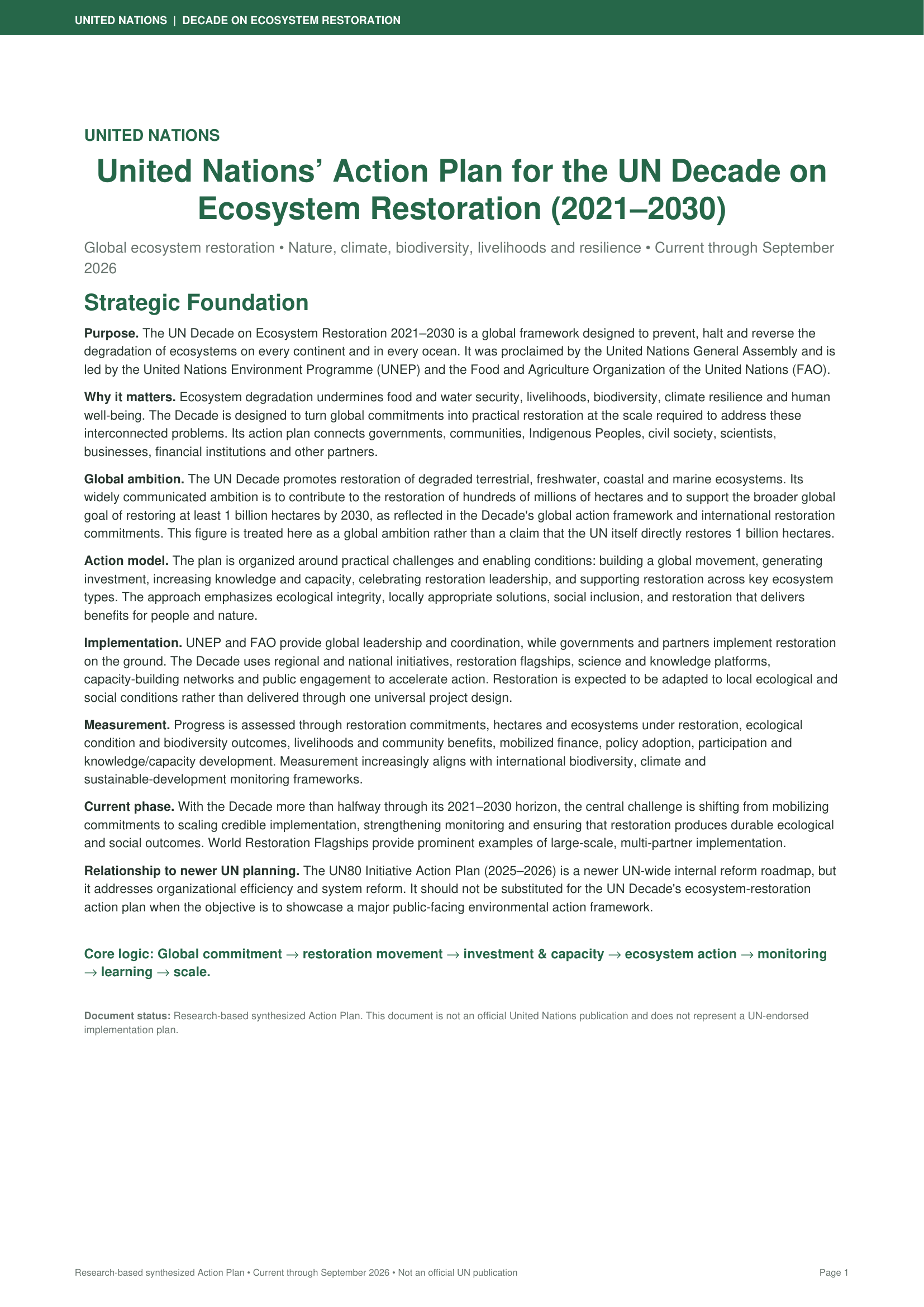
Scale AI-ready Azure infrastructure fast enough to meet demand while securing reliable carbon-free electricity, improving resource
efficiency, protecting grid and community resilience, and maintaining disciplined capital returns through 2032.
INTEGRITY NOTE:
This is a research-based synthesized Action Plan. It is not an official Microsoft corporate publication and does not imply Microsoft endorsement.
Research-based synthesized Action Plan • Not an official Microsoft publication
Page 2
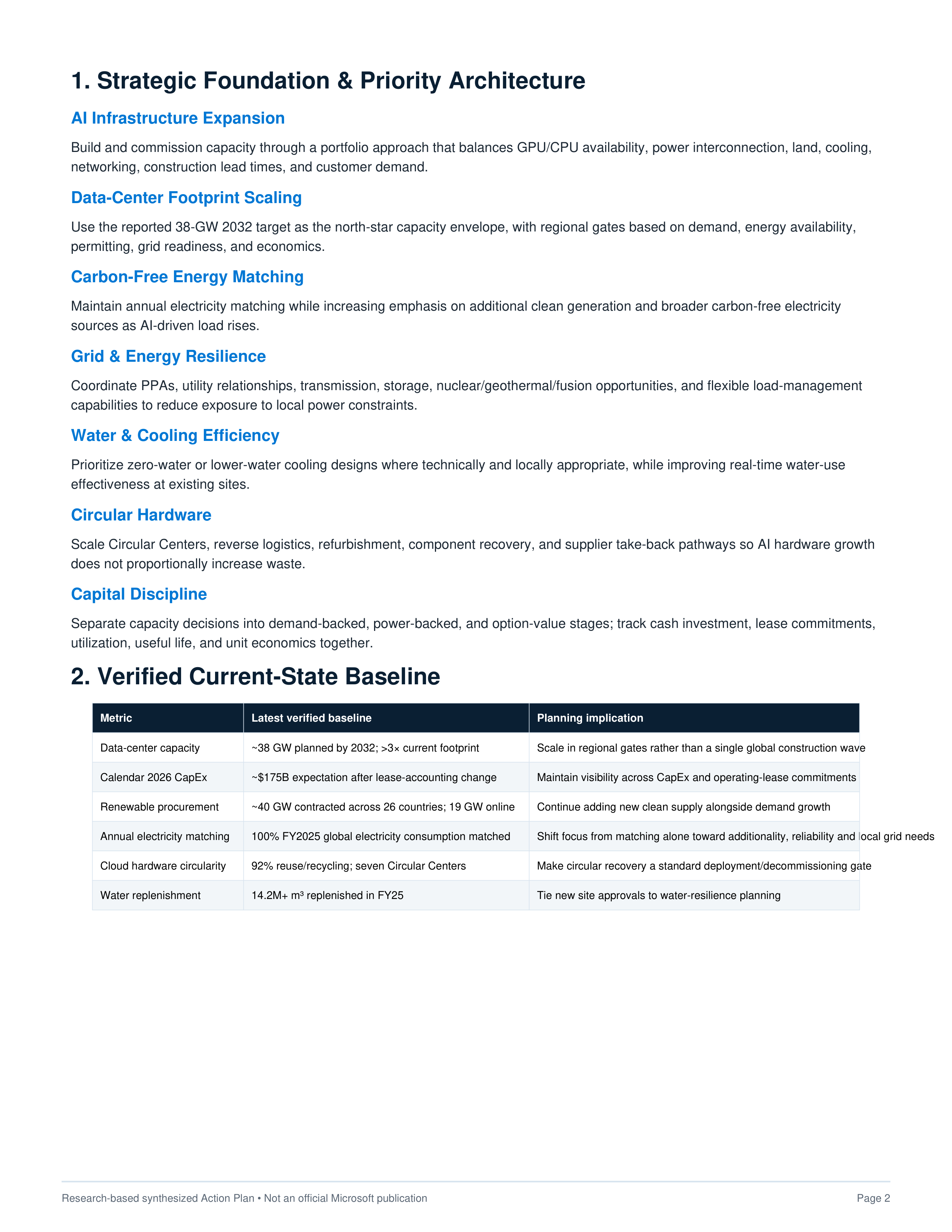
1. Strategic Foundation & Priority Architecture
AI Infrastructure Expansion
Build and commission capacity through a portfolio approach that balances GPU/CPU availability, power interconnection, land, cooling,
networking, construction lead times, and customer demand.
Data-Center Footprint Scaling
Use the reported 38-GW 2032 target as the north-star capacity envelope, with regional gates based on demand, energy availability,
permitting, grid readiness, and economics.
Carbon-Free Energy Matching
Maintain annual electricity matching while increasing emphasis on additional clean generation and broader carbon-free electricity
sources as AI-driven load rises.
Grid & Energy Resilience
Coordinate PPAs, utility relationships, transmission, storage, nuclear/geothermal/fusion opportunities, and flexible load-management
capabilities to reduce exposure to local power constraints.
Water & Cooling Efficiency
Prioritize zero-water or lower-water cooling designs where technically and locally appropriate, while improving real-time water-use
effectiveness at existing sites.
Circular Hardware
Scale Circular Centers, reverse logistics, refurbishment, component recovery, and supplier take-back pathways so AI hardware growth
does not proportionally increase waste.
Capital Discipline
Separate capacity decisions into demand-backed, power-backed, and option-value stages; track cash investment, lease commitments,
utilization, useful life, and unit economics together.
2. Verified Current-State Baseline
Metric
Latest verified baseline
Planning implication
Data-center capacity
~38 GW planned by 2032; >3× current footprint
Scale in regional gates rather than a single global construction wave
Calendar 2026 CapEx
~$175B expectation after lease-accounting change
Maintain visibility across CapEx and operating-lease commitments
Renewable procurement
~40 GW contracted across 26 countries; 19 GW online
Continue adding new clean supply alongside demand growth
Annual electricity matching
100% FY2025 global electricity consumption matched
Shift focus from matching alone toward additionality, reliability and local grid needs
Cloud hardware circularity
92% reuse/recycling; seven Circular Centers
Make circular recovery a standard deployment/decommissioning gate
Water replenishment
14.2M+ m³ replenished in FY25
Tie new site approvals to water-resilience planning
Research-based synthesized Action Plan • Not an official Microsoft publication
Page 3
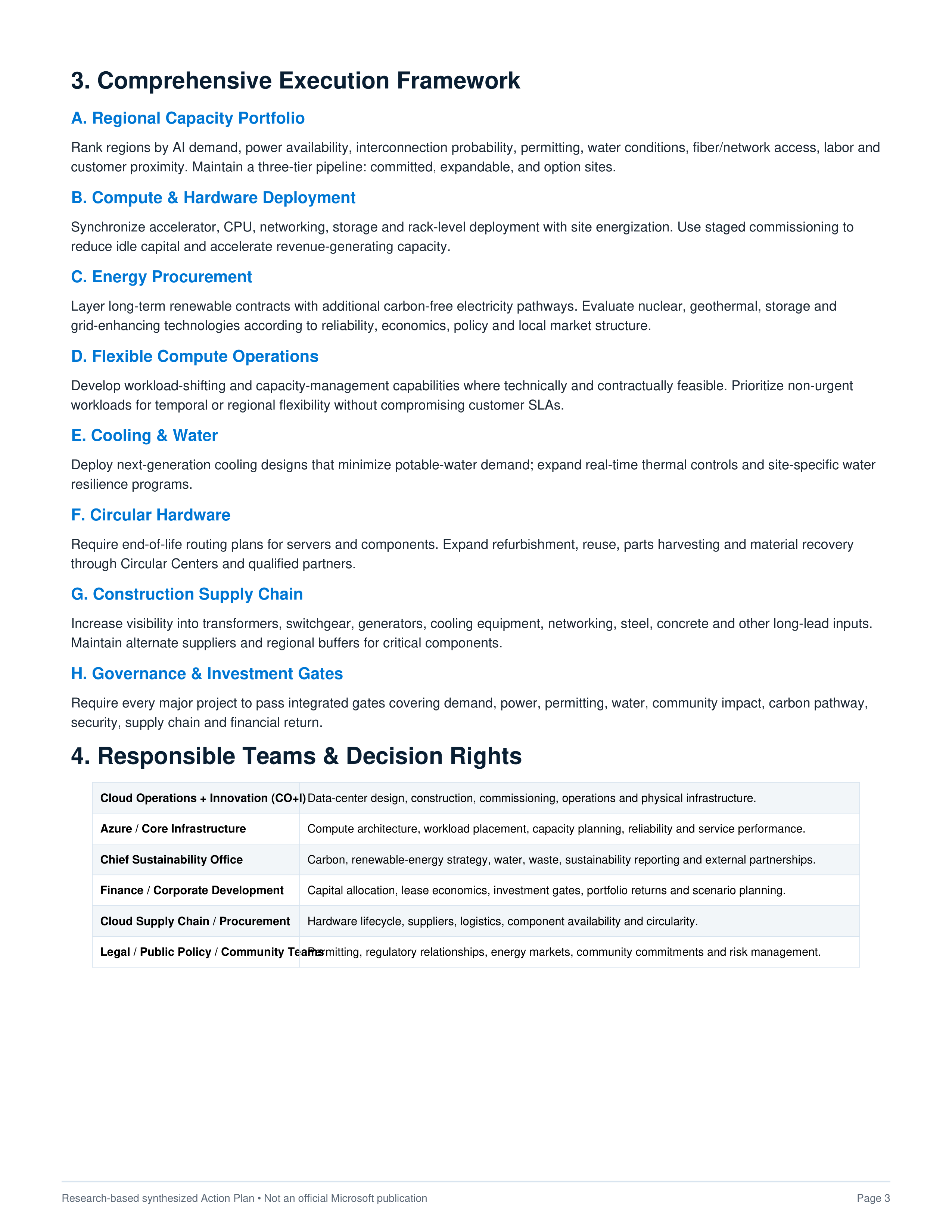
3. Comprehensive Execution Framework
A. Regional Capacity Portfolio
Rank regions by AI demand, power availability, interconnection probability, permitting, water conditions, fiber/network access, labor and
customer proximity. Maintain a three-tier pipeline: committed, expandable, and option sites.
B. Compute & Hardware Deployment
Synchronize accelerator, CPU, networking, storage and rack-level deployment with site energization. Use staged commissioning to
reduce idle capital and accelerate revenue-generating capacity.
C. Energy Procurement
Layer long-term renewable contracts with additional carbon-free electricity pathways. Evaluate nuclear, geothermal, storage and
grid-enhancing technologies according to reliability, economics, policy and local market structure.
D. Flexible Compute Operations
Develop workload-shifting and capacity-management capabilities where technically and contractually feasible. Prioritize non-urgent
workloads for temporal or regional flexibility without compromising customer SLAs.
E. Cooling & Water
Deploy next-generation cooling designs that minimize potable-water demand; expand real-time thermal controls and site-specific water
resilience programs.
F. Circular Hardware
Require end-of-life routing plans for servers and components. Expand refurbishment, reuse, parts harvesting and material recovery
through Circular Centers and qualified partners.
G. Construction Supply Chain
Increase visibility into transformers, switchgear, generators, cooling equipment, networking, steel, concrete and other long-lead inputs.
Maintain alternate suppliers and regional buffers for critical components.
H. Governance & Investment Gates
Require every major project to pass integrated gates covering demand, power, permitting, water, community impact, carbon pathway,
security, supply chain and financial return.
4. Responsible Teams & Decision Rights
Cloud Operations + Innovation (CO+I)
Data-center design, construction, commissioning, operations and physical infrastructure.
Azure / Core Infrastructure
Compute architecture, workload placement, capacity planning, reliability and service performance.
Chief Sustainability Office
Carbon, renewable-energy strategy, water, waste, sustainability reporting and external partnerships.
Finance / Corporate Development
Capital allocation, lease economics, investment gates, portfolio returns and scenario planning.
Cloud Supply Chain / Procurement
Hardware lifecycle, suppliers, logistics, component availability and circularity.
Legal / Public Policy / Community Teams
Permitting, regulatory relationships, energy markets, community commitments and risk management.
Research-based synthesized Action Plan • Not an official Microsoft publication
Page 4
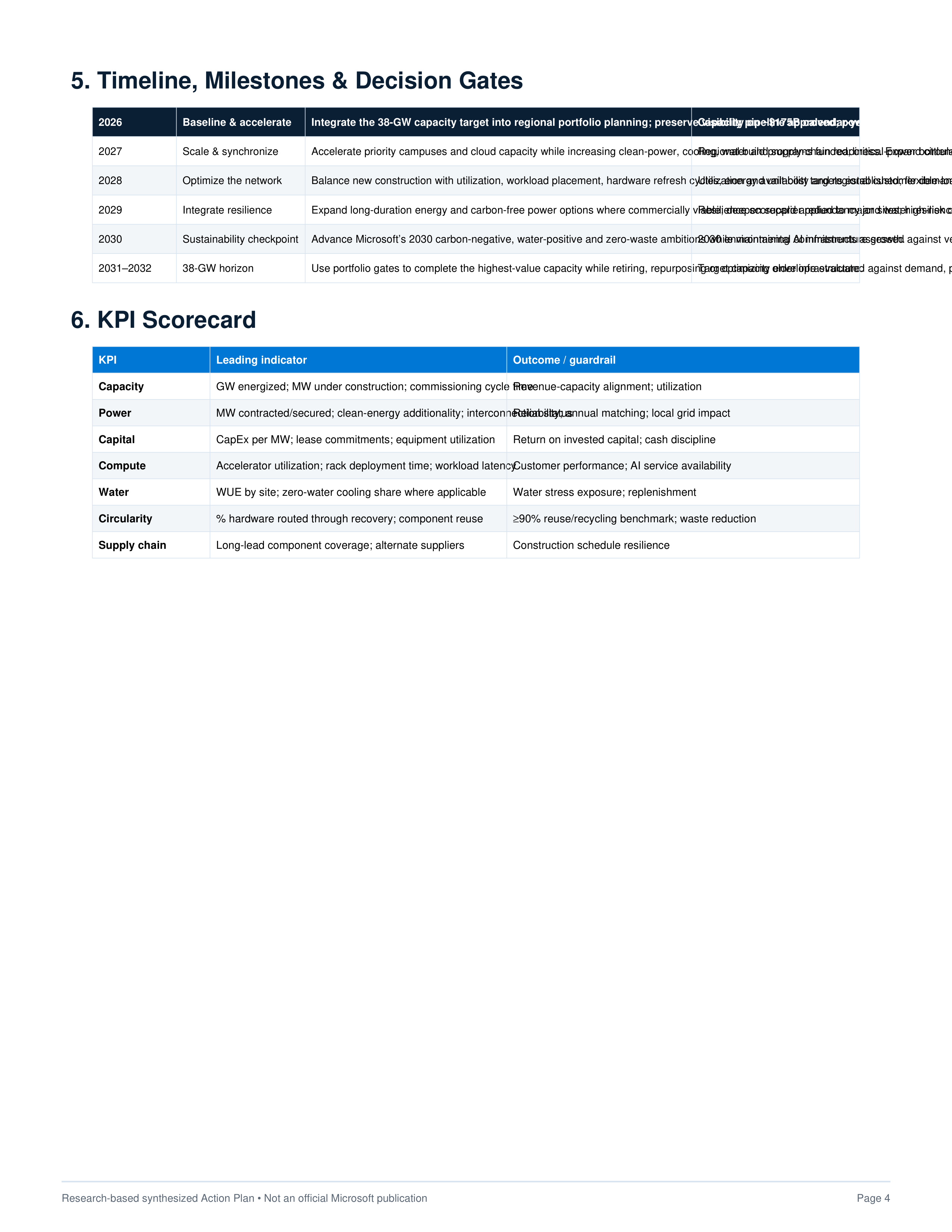
5. Timeline, Milestones & Decision Gates
2026
Baseline & accelerate
Integrate the 38-GW capacity target into regional portfolio planning; preserve visibility on ~$175B calendar-year investment exp
Capacity pipeline approved; power/site gates stand
2027
Scale & synchronize
Accelerate priority campuses and cloud capacity while increasing clean-power, cooling, water and supply-chain readiness. Expand circula
Regional build programs funded; critical-power bottlene
2028
Optimize the network
Balance new construction with utilization, workload placement, hardware refresh cycles, energy availability and regional customer demand
Utilization and unit-cost targets established; flexible-loa
2029
Integrate resilience
Expand long-duration energy and carbon-free power options where commercially viable; deepen supplier redundancy and water resilience
Resilience scorecard applied to major sites; high-risk d
2030
Sustainability checkpoint
Advance Microsoft’s 2030 carbon-negative, water-positive and zero-waste ambitions while maintaining AI infrastructure growth.
2030 environmental commitments assessed against ve
2031–2032
38-GW horizon
Use portfolio gates to complete the highest-value capacity while retiring, repurposing or optimizing older infrastructure.
Target capacity envelope evaluated against demand, p
6. KPI Scorecard
KPI
Leading indicator
Outcome / guardrail
Capacity
GW energized; MW under construction; commissioning cycle time
Revenue-capacity alignment; utilization
Power
MW contracted/secured; clean-energy additionality; interconnection status
Reliability; annual matching; local grid impact
Capital
CapEx per MW; lease commitments; equipment utilization
Return on invested capital; cash discipline
Compute
Accelerator utilization; rack deployment time; workload latencyCustomer performance; AI service availability
Water
WUE by site; zero-water cooling share where applicable
Water stress exposure; replenishment
Circularity
% hardware routed through recovery; component reuse
≥
90% reuse/recycling benchmark; waste reduction
Supply chain
Long-lead component coverage; alternate suppliers
Construction schedule resilience
Research-based synthesized Action Plan • Not an official Microsoft publication
Page 5
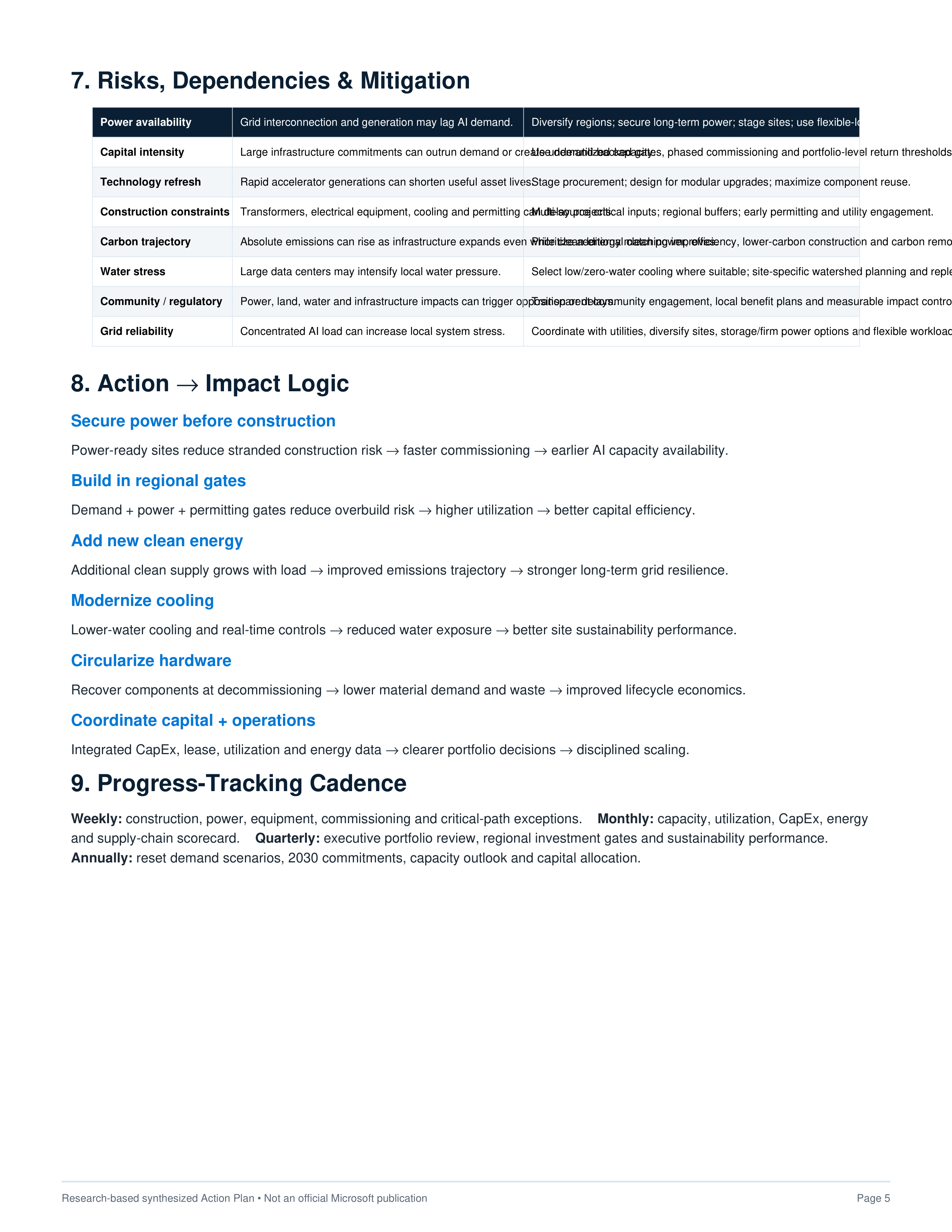
7. Risks, Dependencies & Mitigation
Power availability
Grid interconnection and generation may lag AI demand.
Diversify regions; secure long-term power; stage sites; use flexible-load capabilities.
Capital intensity
Large infrastructure commitments can outrun demand or create underutilized capacity.
Use demand-backed gates, phased commissioning and portfolio-level return thresholds
Technology refresh
Rapid accelerator generations can shorten useful asset lives.Stage procurement; design for modular upgrades; maximize component reuse.
Construction constraints
Transformers, electrical equipment, cooling and permitting can delay projects.
Multi-source critical inputs; regional buffers; early permitting and utility engagement.
Carbon trajectory
Absolute emissions can rise as infrastructure expands even while clean-energy matching improves.
Prioritize additional clean power, efficiency, lower-carbon construction and carbon remo
Water stress
Large data centers may intensify local water pressure.
Select low/zero-water cooling where suitable; site-specific watershed planning and reple
Community / regulatory
Power, land, water and infrastructure impacts can trigger opposition or delays.
Transparent community engagement, local benefit plans and measurable impact contro
Grid reliability
Concentrated AI load can increase local system stress.
Coordinate with utilities, diversify sites, storage/firm power options and flexible workload
8. Action
→
Impact Logic
Secure power before construction
Power-ready sites reduce stranded construction risk
→
faster commissioning
→
earlier AI capacity availability.
Build in regional gates
Demand + power + permitting gates reduce overbuild risk
→
higher utilization
→
better capital efficiency.
Add new clean energy
Additional clean supply grows with load
→
improved emissions trajectory
→
stronger long-term grid resilience.
Modernize cooling
Lower-water cooling and real-time controls
→
reduced water exposure
→
better site sustainability performance.
Circularize hardware
Recover components at decommissioning
→
lower material demand and waste
→
improved lifecycle economics.
Coordinate capital + operations
Integrated CapEx, lease, utilization and energy data
→
clearer portfolio decisions
→
disciplined scaling.
9. Progress-Tracking Cadence
Weekly:
construction, power, equipment, commissioning and critical-path exceptions.
Monthly:
capacity, utilization, CapEx, energy
and supply-chain scorecard.
Quarterly:
executive portfolio review, regional investment gates and sustainability performance.
Annually:
reset demand scenarios, 2030 commitments, capacity outlook and capital allocation.
Research-based synthesized Action Plan • Not an official Microsoft publication
Page 6
10. Research Basis & Integrity Note
This synthesized action plan is grounded primarily in Microsoft’s current public disclosures and recent reporting. Verified figures are
separated conceptually from recommended execution mechanisms. The document should not be read as a Microsoft-authored or
Microsoft-approved corporate plan.
Key verified evidence
• Microsoft’s FY2026 Q4 earnings materials report $41B of quarterly capital expenditures and approximately $175B calendar-year 2026
CapEx expectations after a change in the treatment of future data-center leases; Microsoft says the underlying investment expectation
is unchanged.
• Reuters reported on September 10, 2026 that Microsoft plans approximately 38 GW of global data-center capacity by 2032, more than
three times its current footprint.
• Microsoft announced in February 2026 that it had matched 100% of annual global electricity consumption with renewable energy for
FY2025, after contracting roughly 40 GW of new renewable energy across 26 countries; 19 GW was already online.
• Microsoft’s 2026 Environmental Sustainability Report states that it replenished more than 14.2 million m³ of water in FY25 and that
Circular Centers had expanded to seven facilities, with 92% reuse/recycling of cloud hardware.
• Microsoft states that it remains committed to being carbon negative, water positive and zero waste by 2030, while continuing to scale
carbon-free electricity for growing cloud and AI demand.
Selected sources
Microsoft — FY2026 Q4 Earnings Conference Call; Microsoft — 2026 Environmental Sustainability Report; Microsoft — “A milestone achievement in our journey to
carbon negative,” Feb. 18, 2026; Microsoft — “Responsibly building the AI future,” July 9, 2026; Microsoft Sustainability; Reuters — “Microsoft plans 38 gigawatts of
data center capacity by 2032,” Sept. 10, 2026.
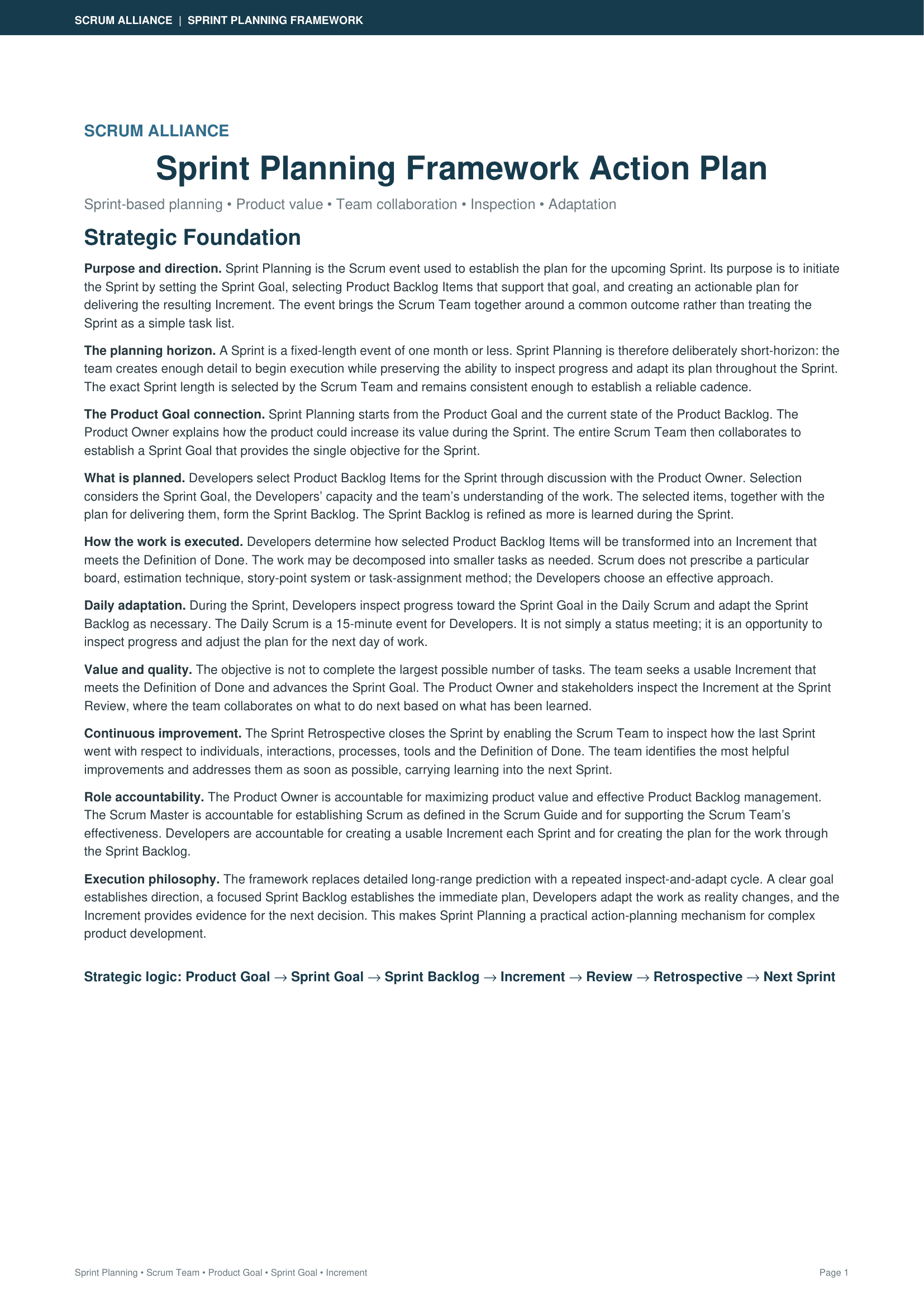
FINAL EXECUTIVE TAKEAWAY
Microsoft’s infrastructure challenge is no longer simply to build more data centers. The strategic task is to synchronize
compute
capacity, power supply, grid resilience, capital, water, hardware circularity and community readiness
at unprecedented scale.
The 2032 capacity objective makes integrated portfolio governance the central execution discipline.
Research-based synthesized Action Plan • Not an official Microsoft publication • Prepared September 2026