
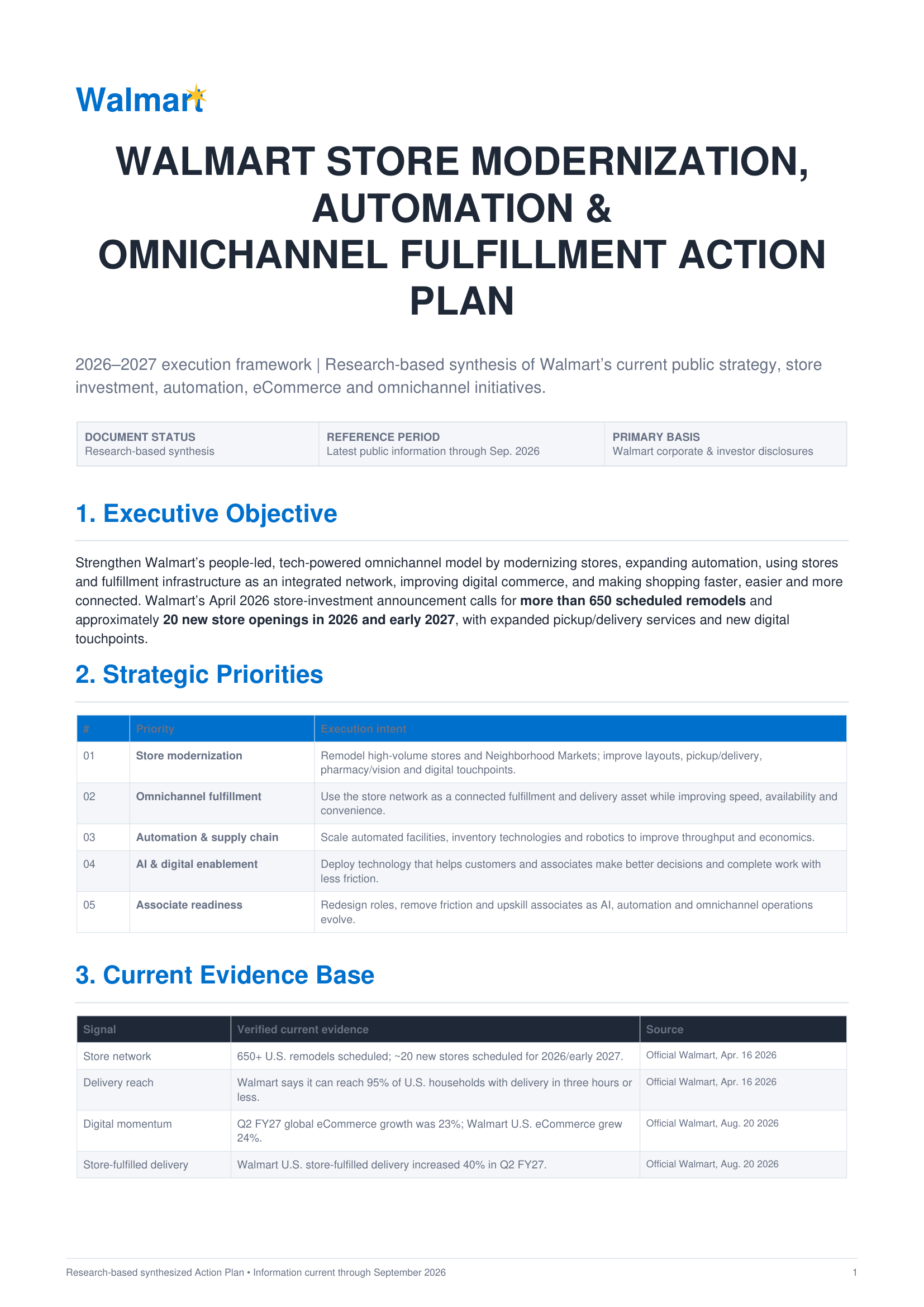
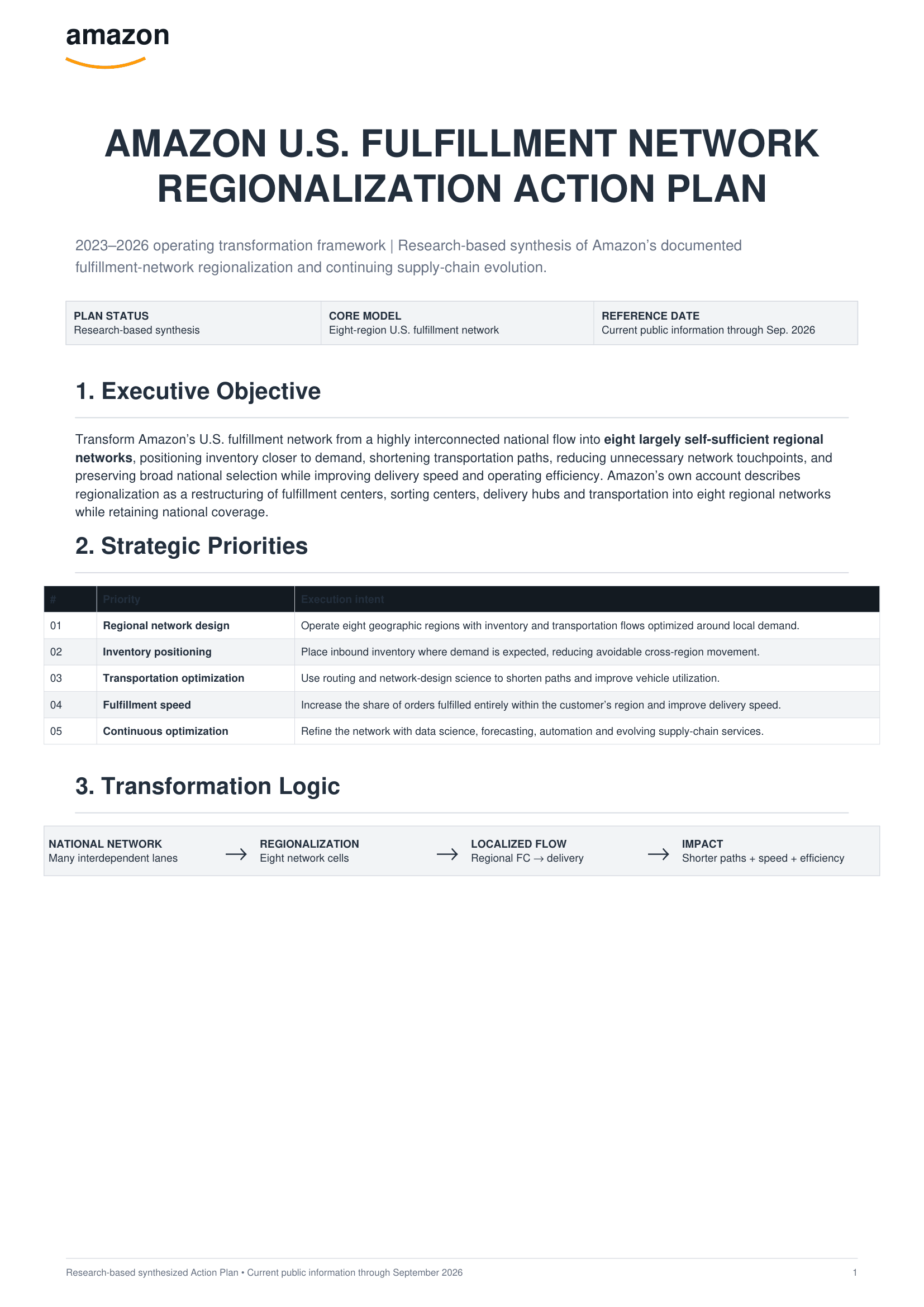
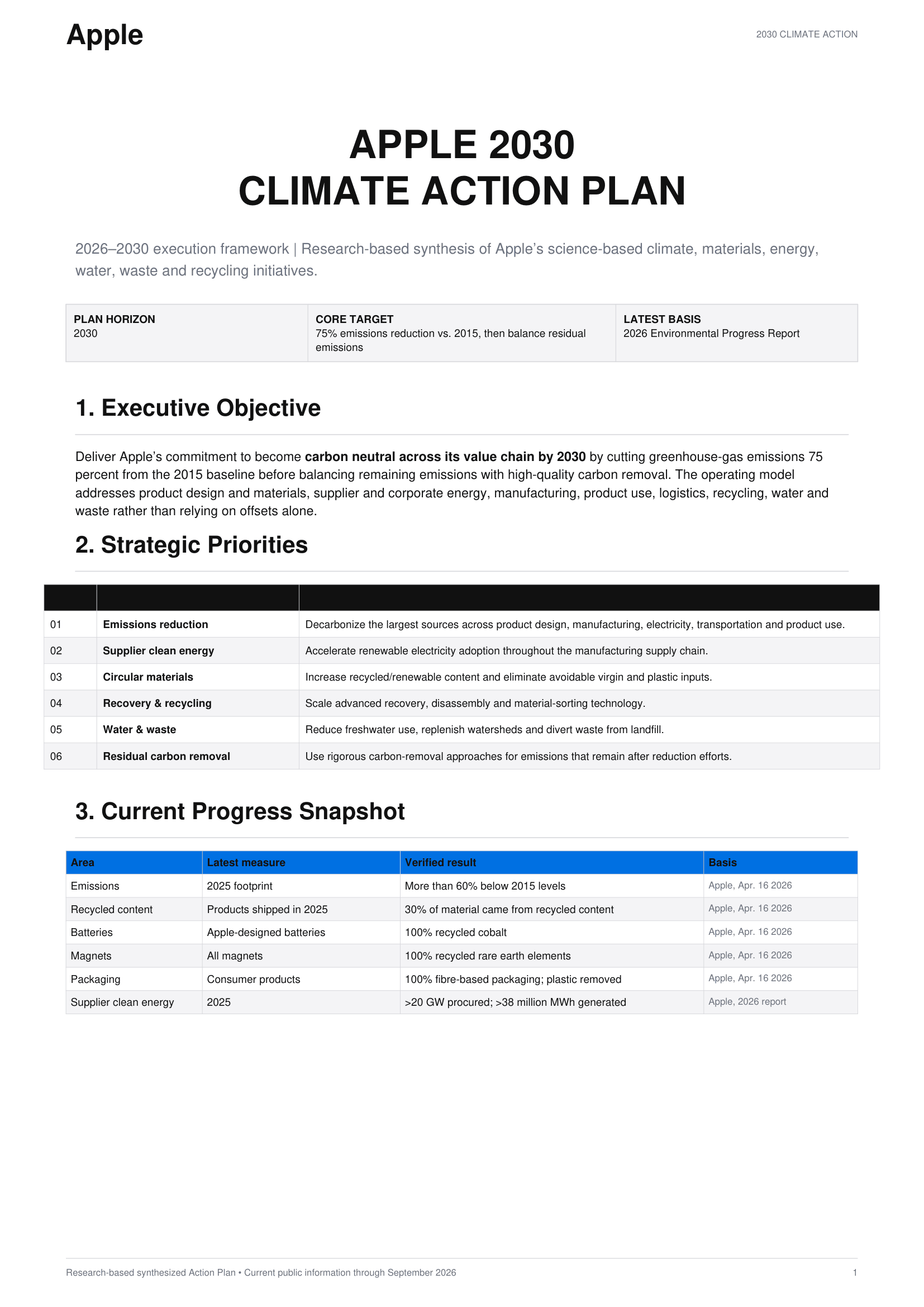
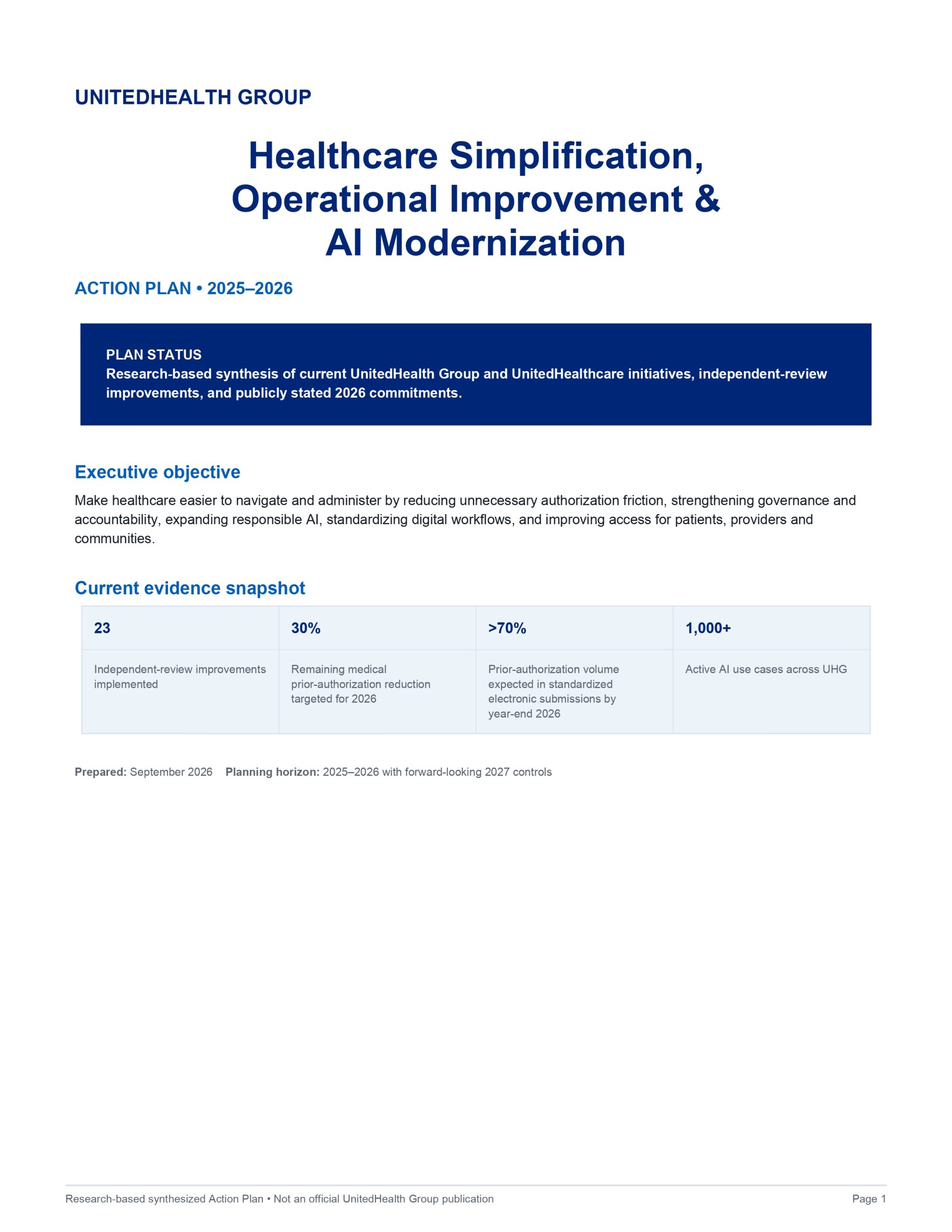
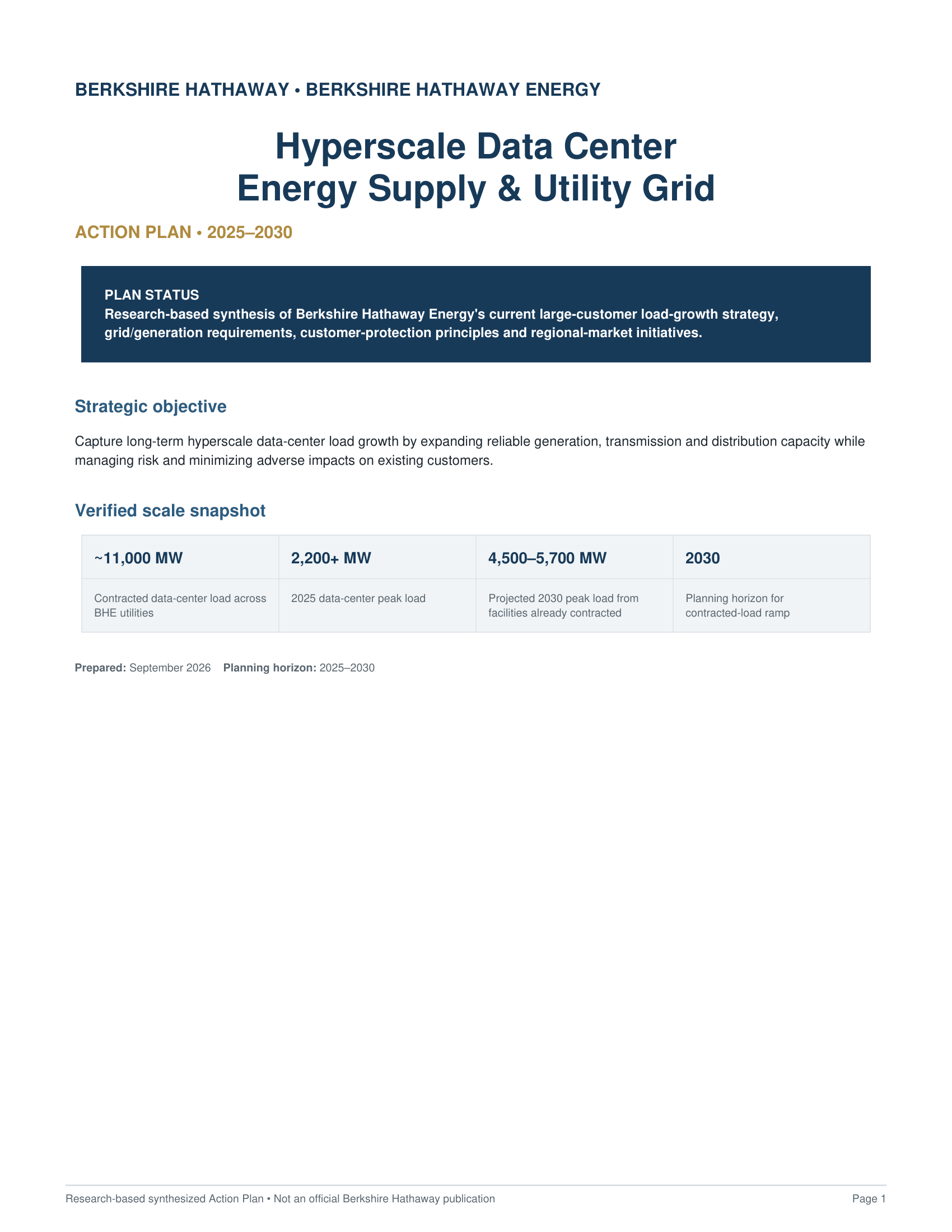
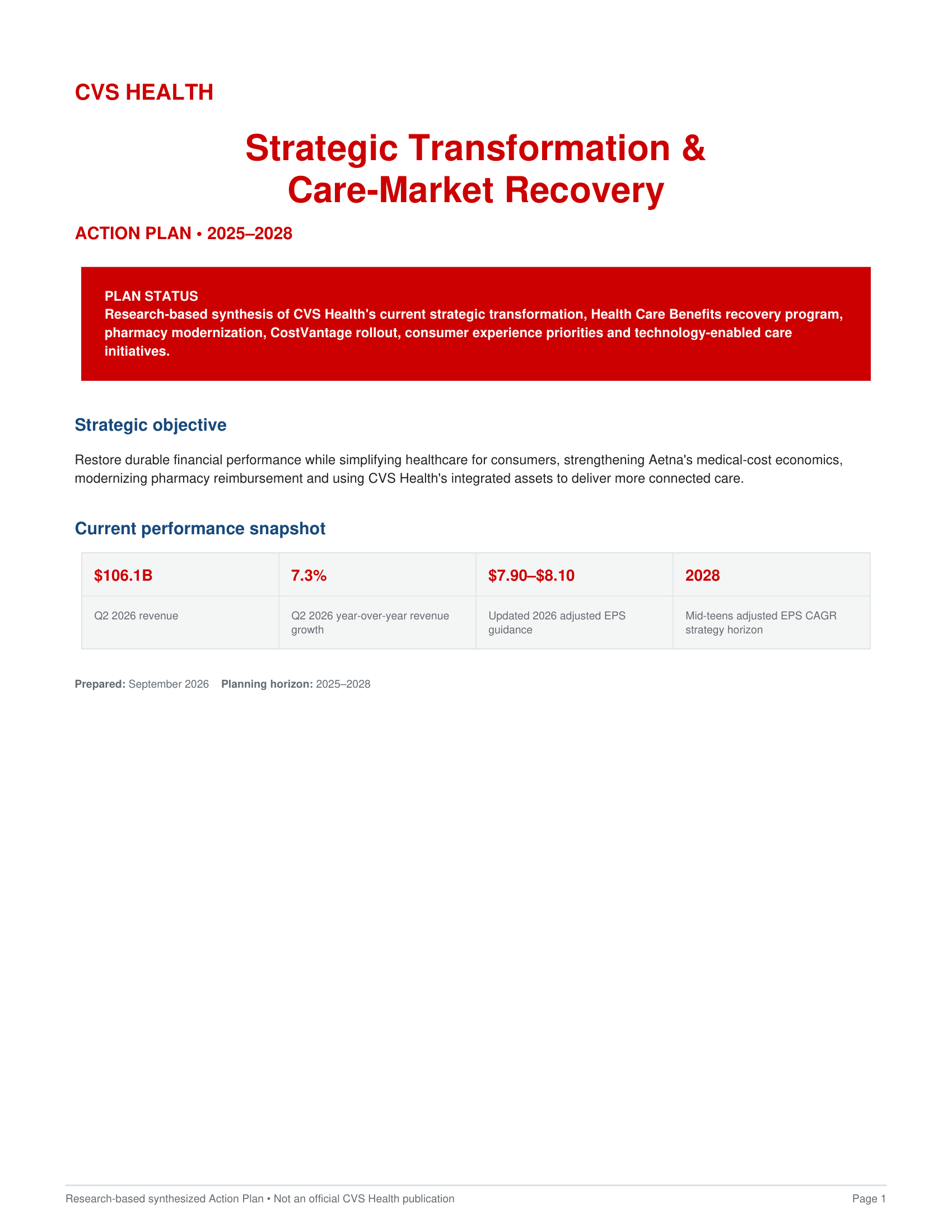
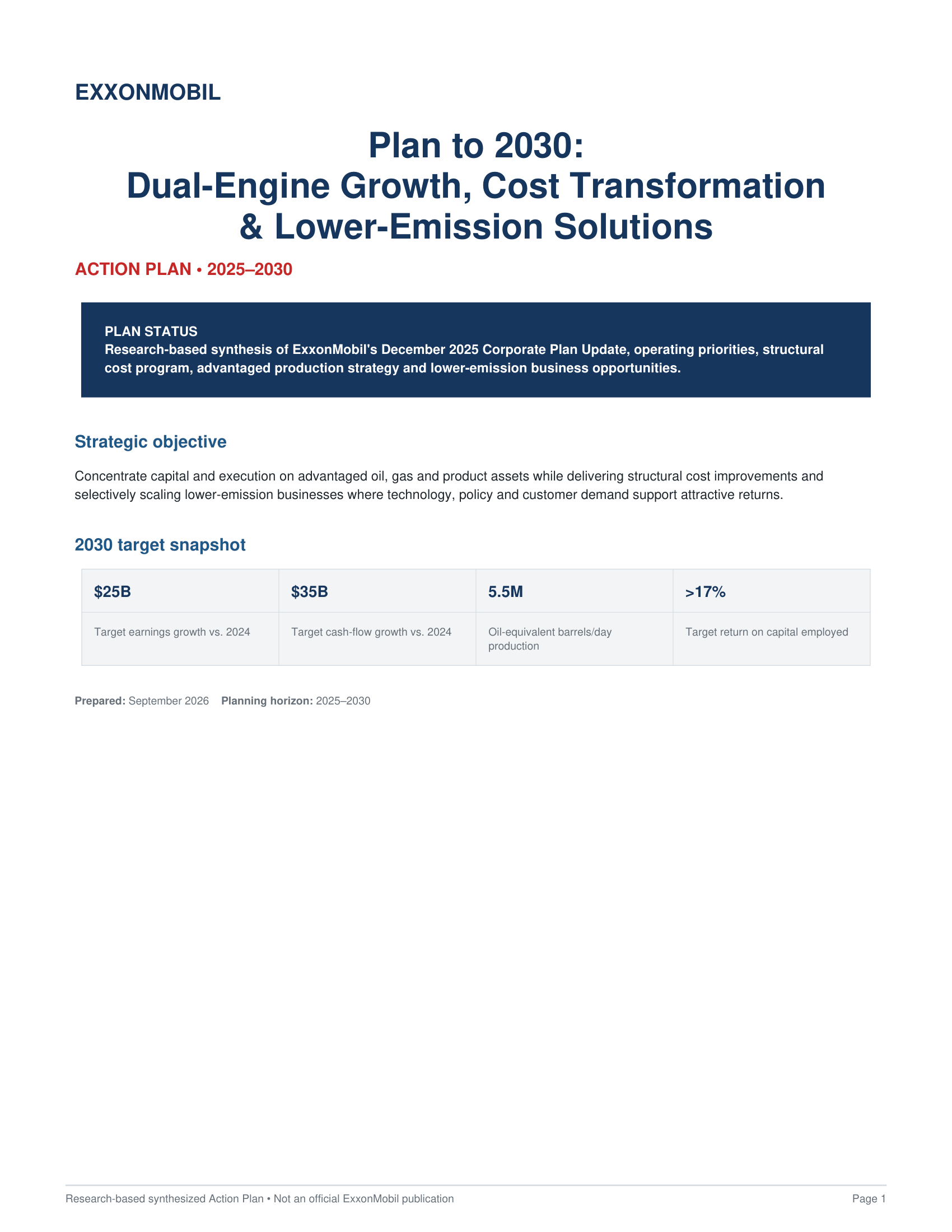
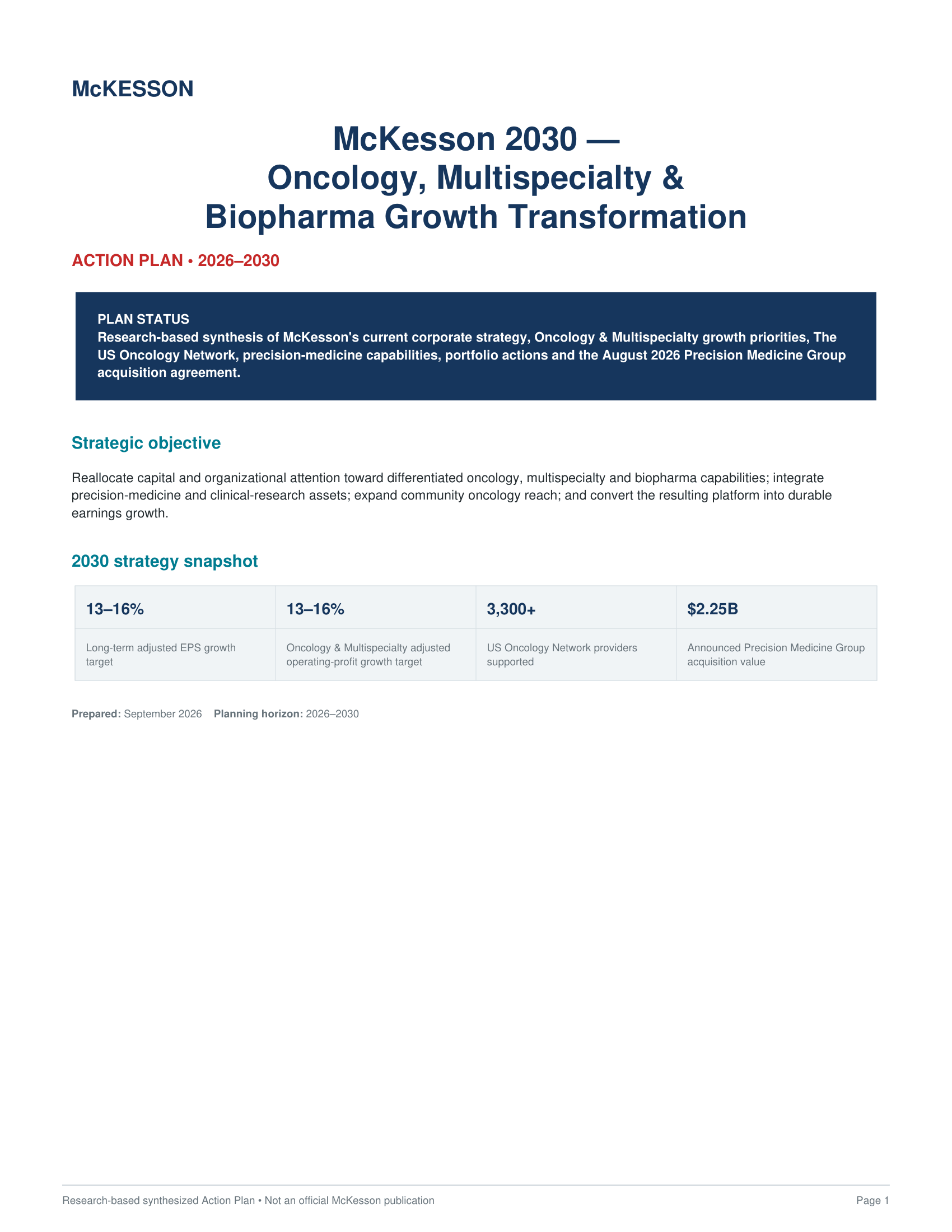
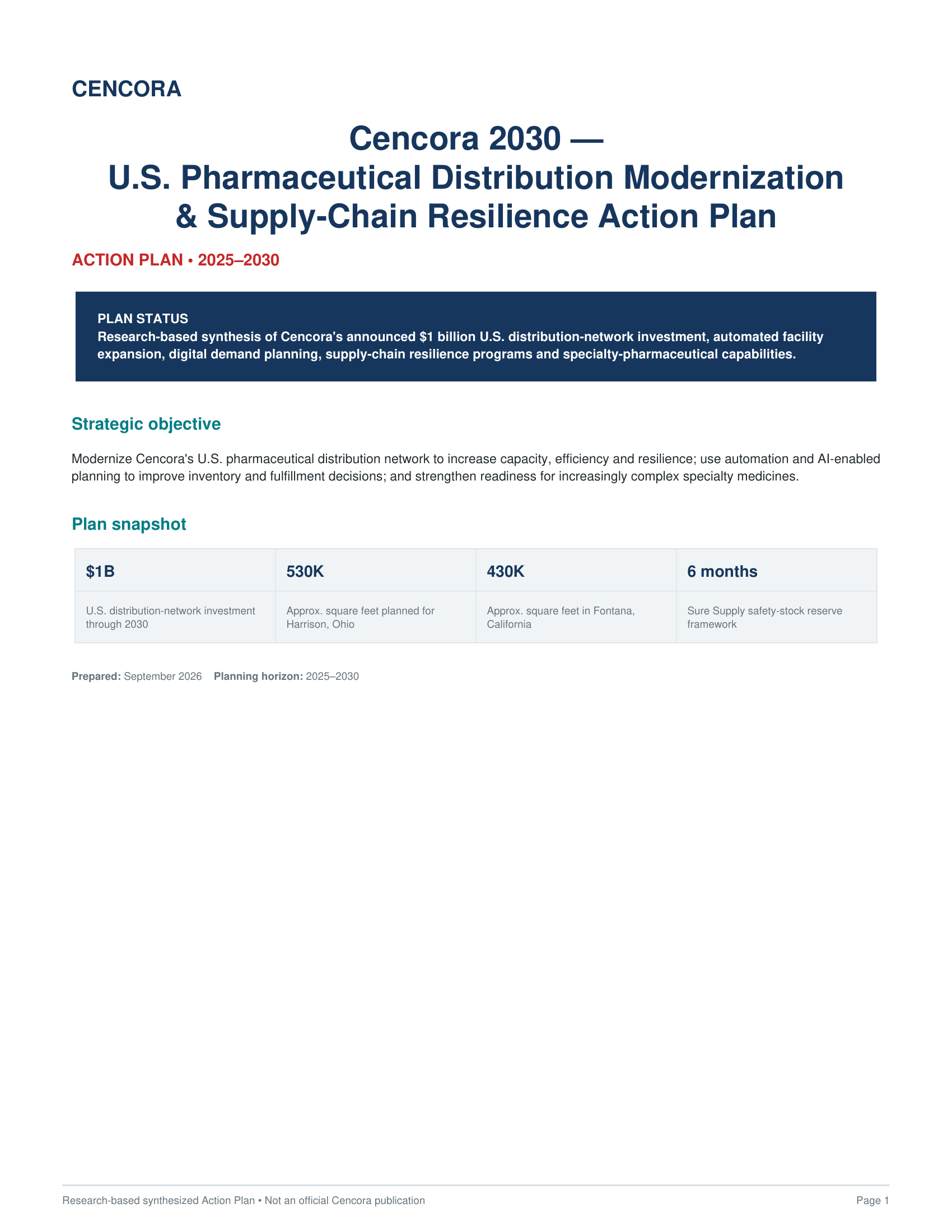
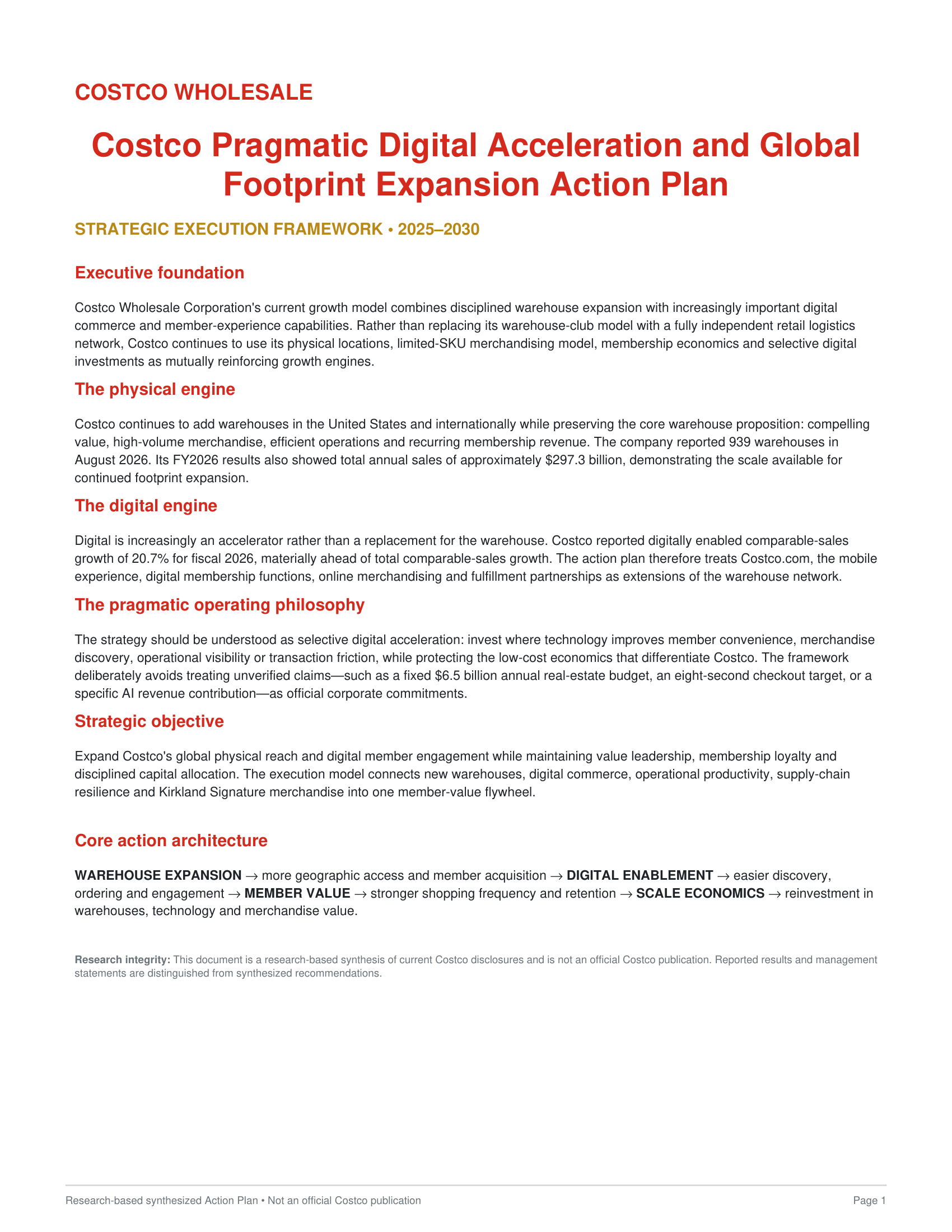
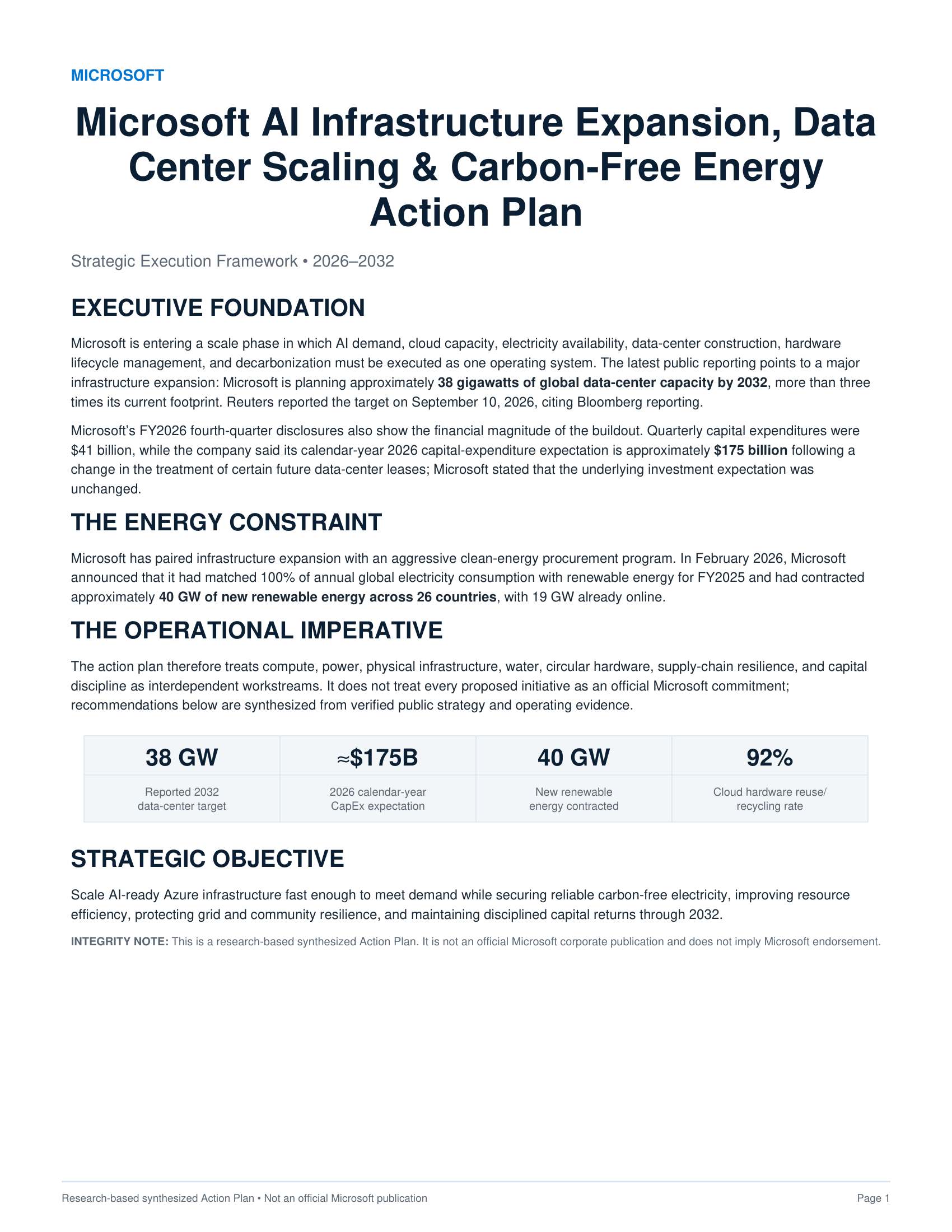
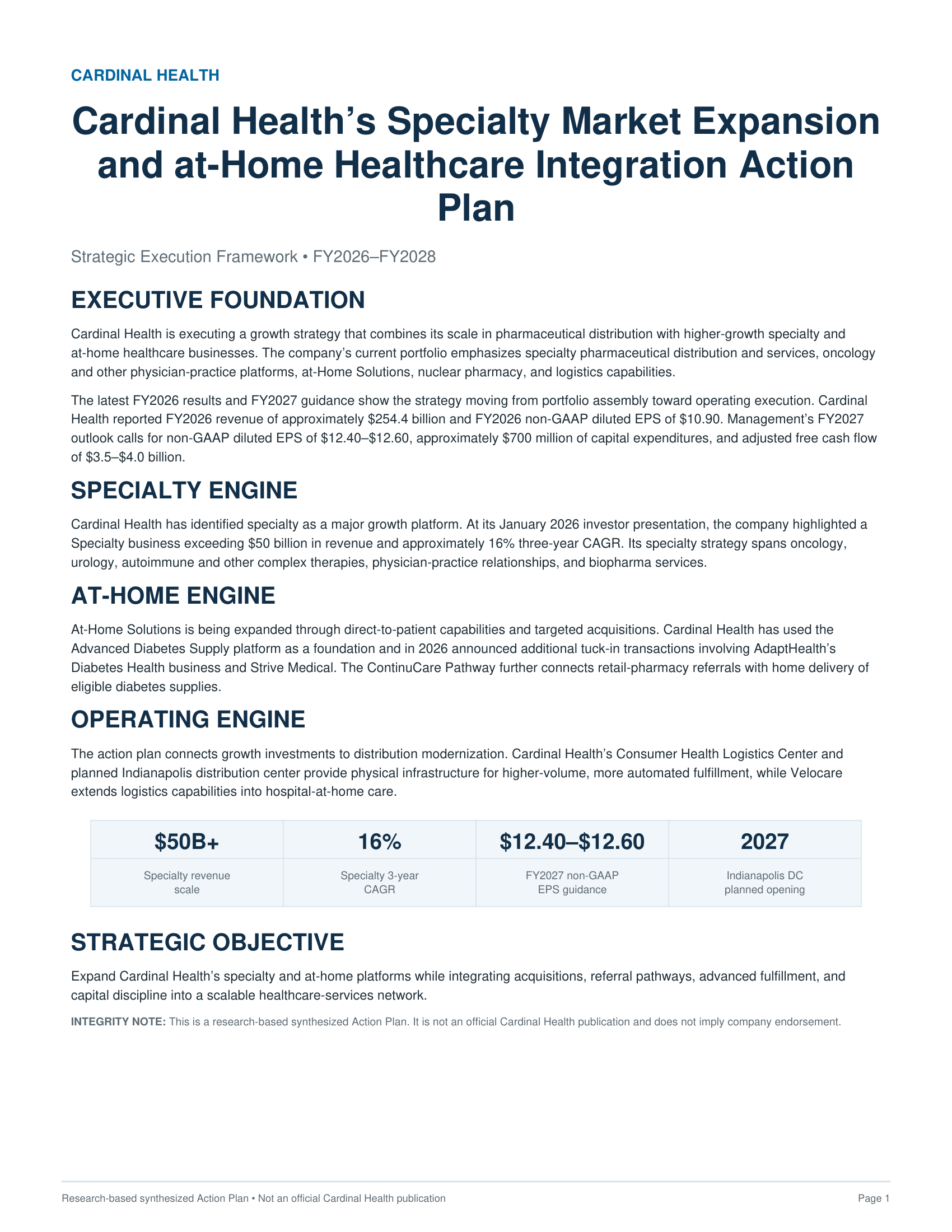
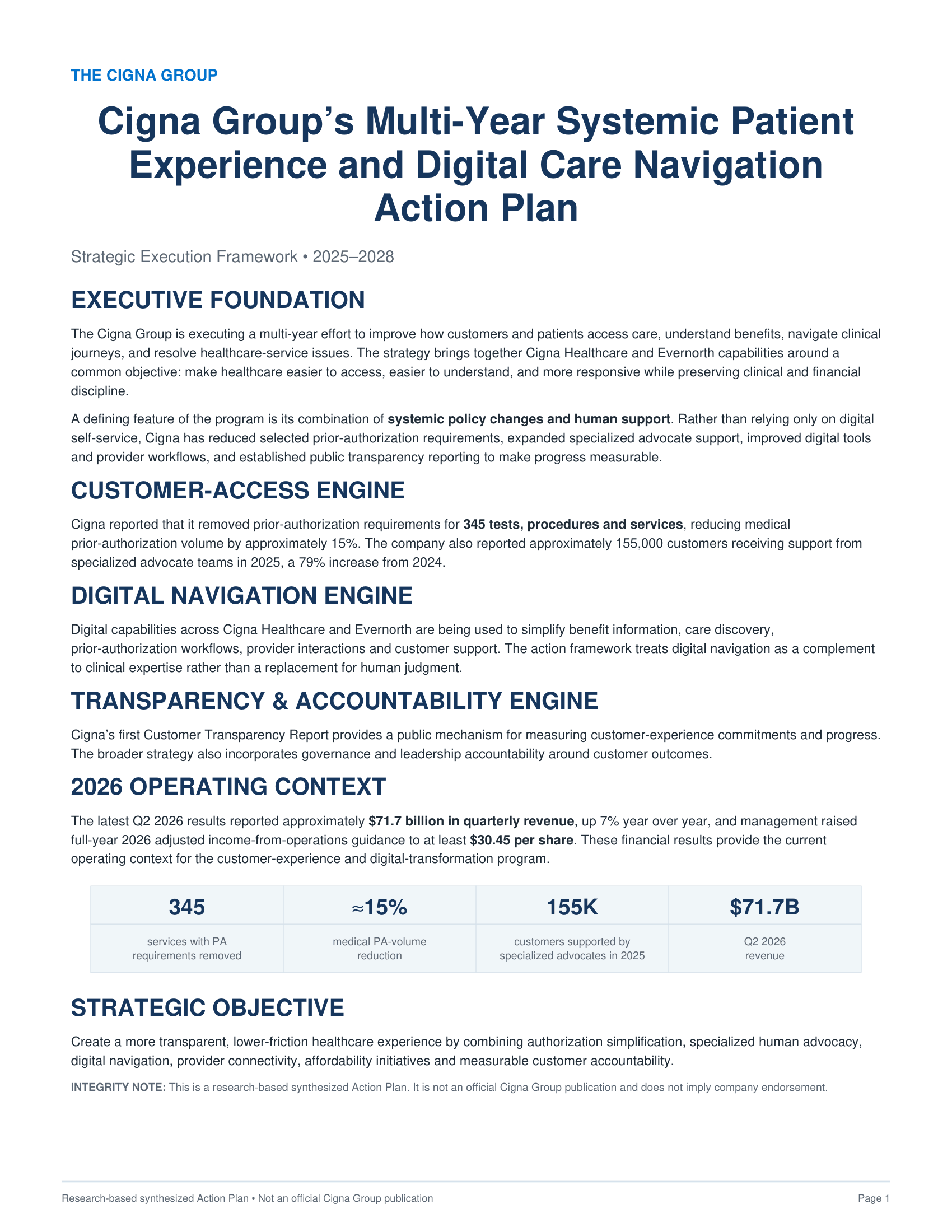
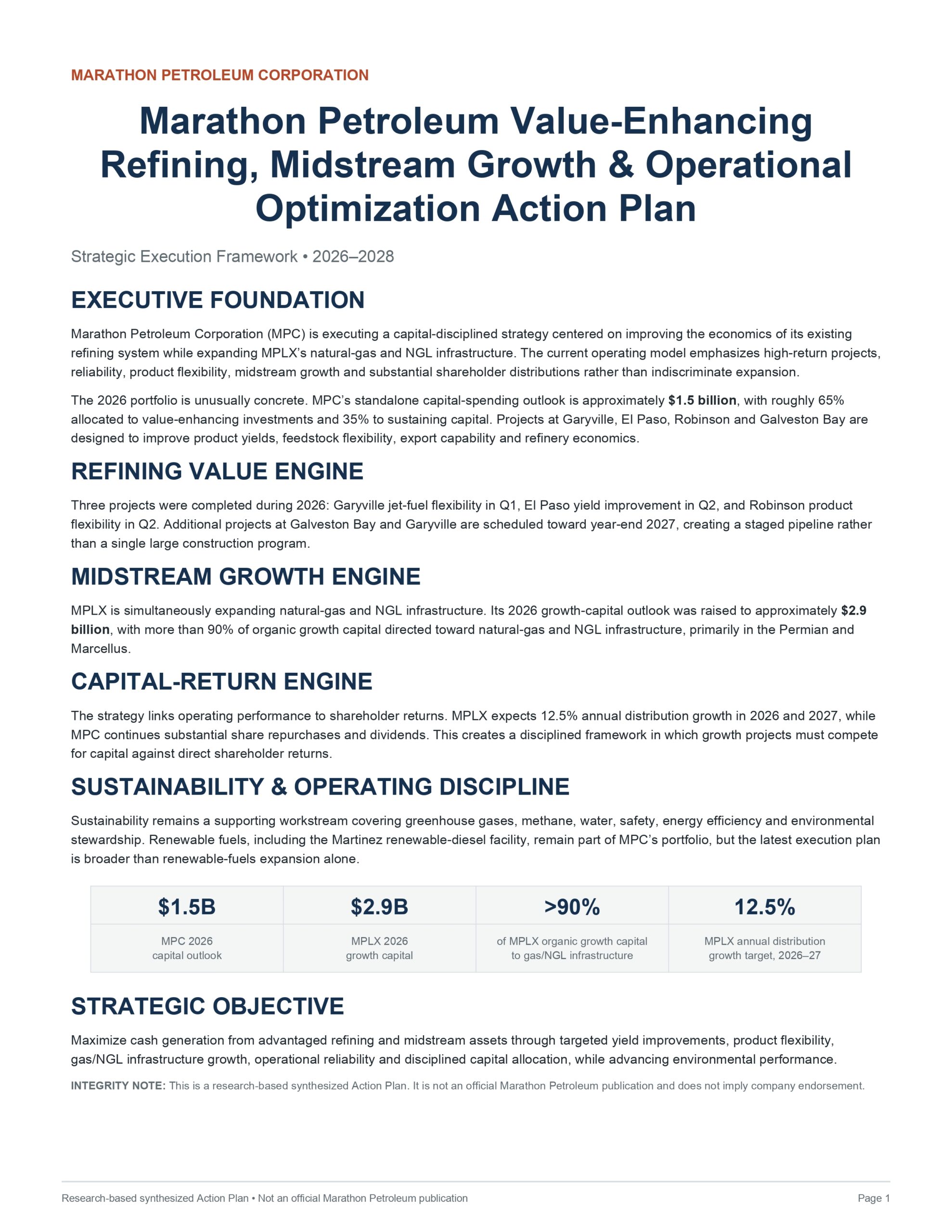
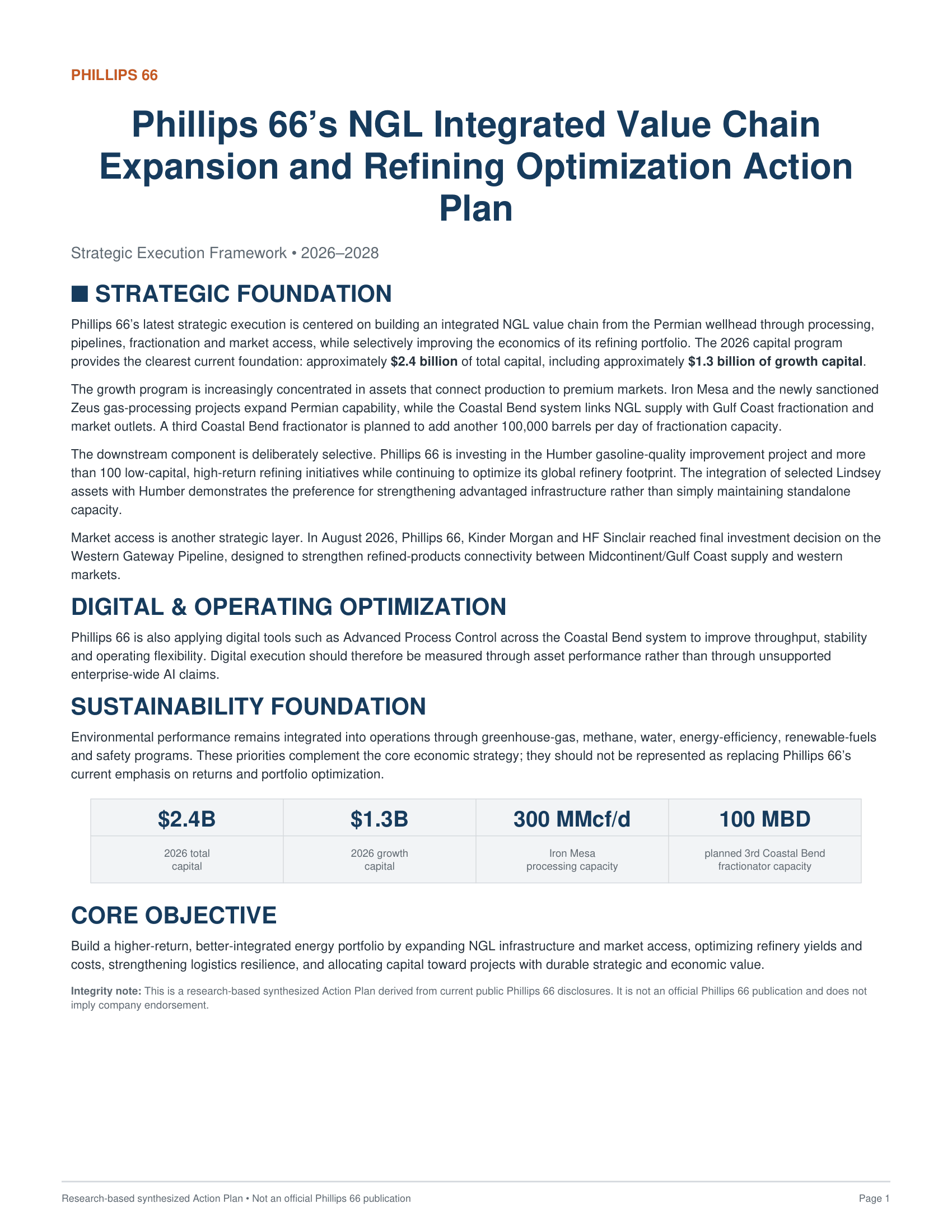
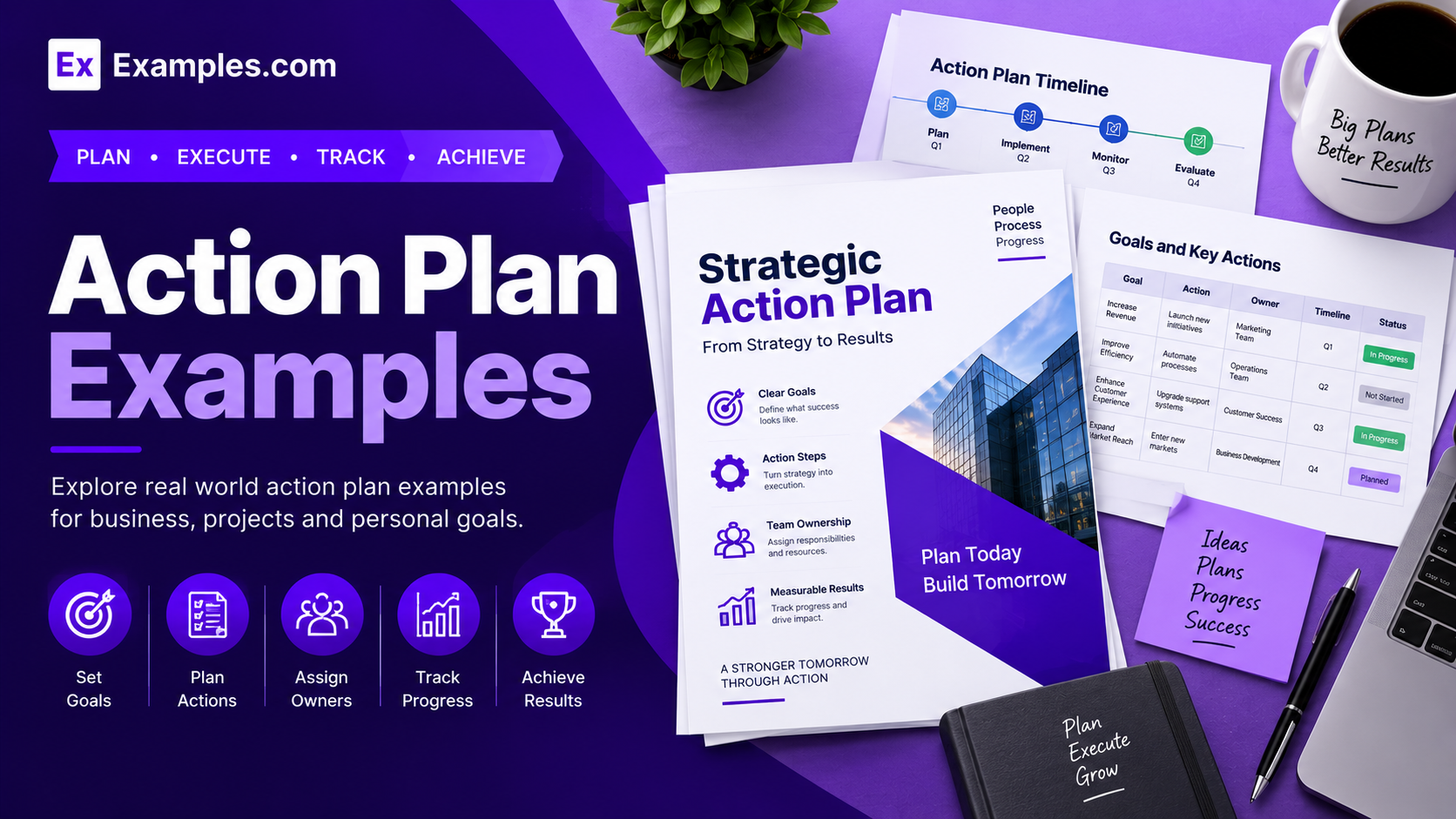
Create structured action plans using AI-powered generation inspired by real-world action plan examples. Browse action plans covering business transformation, project implementation, marketing campaigns, operational improvements, technology initiatives, healthcare programs, and organizational goals, choose a reference structure, enter your prompt, and generate a completely new action plan. Examples.com helps users turn high-level objectives into practical roadmaps with clear tasks, responsibilities, resources, timelines, milestones, dependencies, risks, and measurable outcomes. Users can customize every section in the online editor, refine the visual presentation, create alternative versions, and download the final action plan as a PDF without requiring advanced design experience.
What Is An Action Plan?
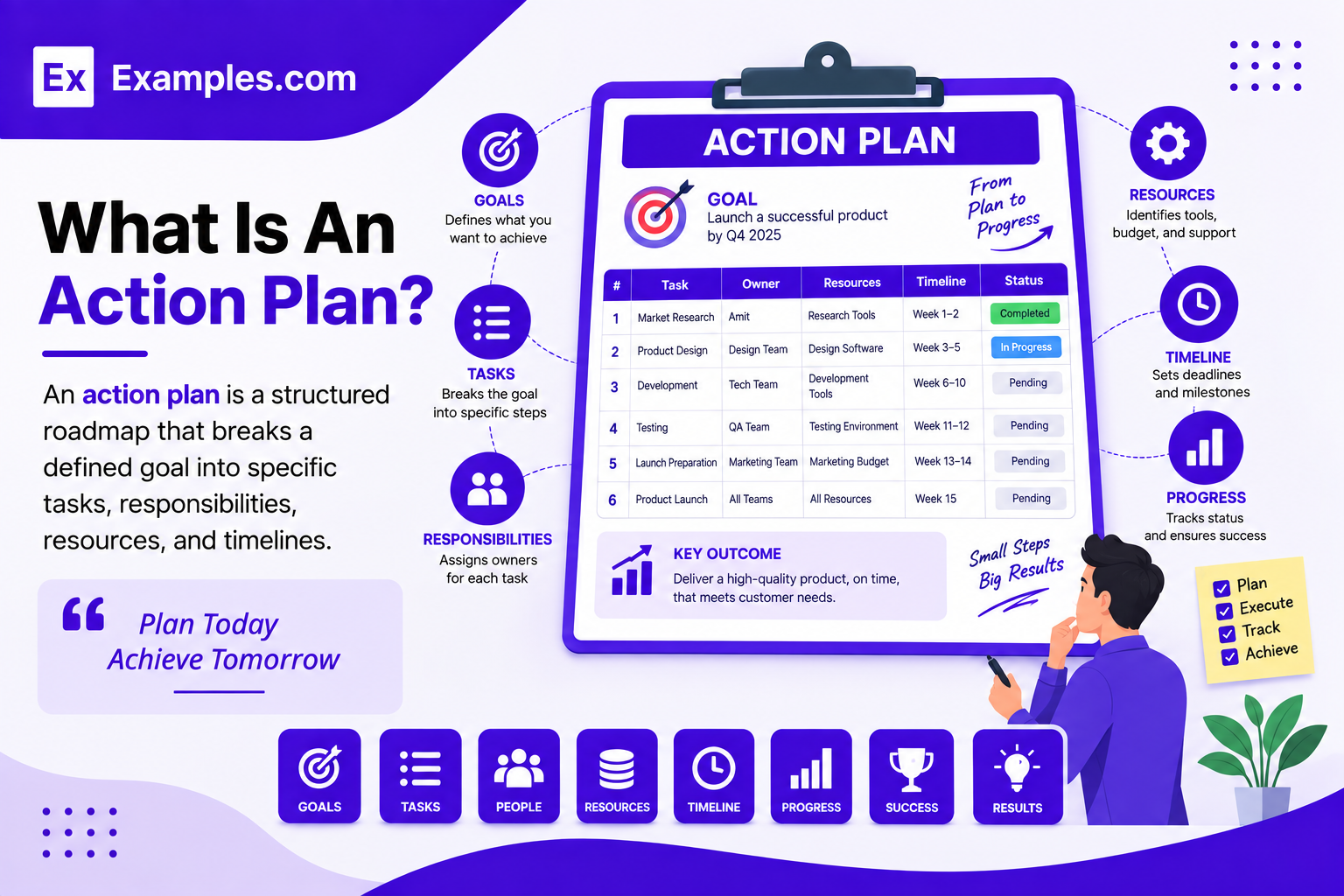
An action plan is a structured roadmap that breaks a defined goal into specific tasks, responsibilities, resources, and timelines. It explains what needs to be done, who is responsible, when each activity should happen, and how progress will be measured. Action plans can be created for projects, business initiatives, marketing campaigns, organizational goals, operational improvements, and transformation programs.
Popular Types Of Action Plans
Different action plan types help organizations and individuals turn specific objectives into measurable activities.
Strategic Action Plans
Strategic action plans translate long-term organizational strategies into priorities, initiatives, responsibilities, and measurable implementation steps.
Project Action Plans
Project action plans organize project tasks, owners, deadlines, resources, milestones, and deliverables from initiation through completion.
Business Action Plans
Business action plans define practical activities for achieving objectives such as expansion, transformation, operational improvement, or growth.
Marketing Action Plans
Marketing action plans structure campaigns, target activities, content initiatives, budgets, responsibilities, and performance measurements.
Operational Action Plans
Operational action plans improve day-to-day processes by assigning specific tasks, resources, timelines, and performance measures.
Corrective Action Plans
Corrective action plans identify problems, define corrective steps, assign responsibility, and establish deadlines for resolving identified issues.
Why Should I Use Real Action Plan Examples To Create My Own Action Plan?
Real action plan examples help me understand how organizations translate broad objectives into specific tasks, owners, resources, deadlines, milestones, and measurable outcomes. They provide inspiration for organizing complex initiatives into manageable steps and establishing a practical structure for monitoring progress.
Instead of modifying an existing action plan, I can use professional examples as references. On **Examples.com**, I simply choose an action plan style, enter an AI prompt describing my objective, generate a completely new plan, and customize each section to reflect my organization’s priorities, resources, responsibilities, and timelines.
How Do I Generate Action Plans Using Proven Examples From The World’s Best Organizations?
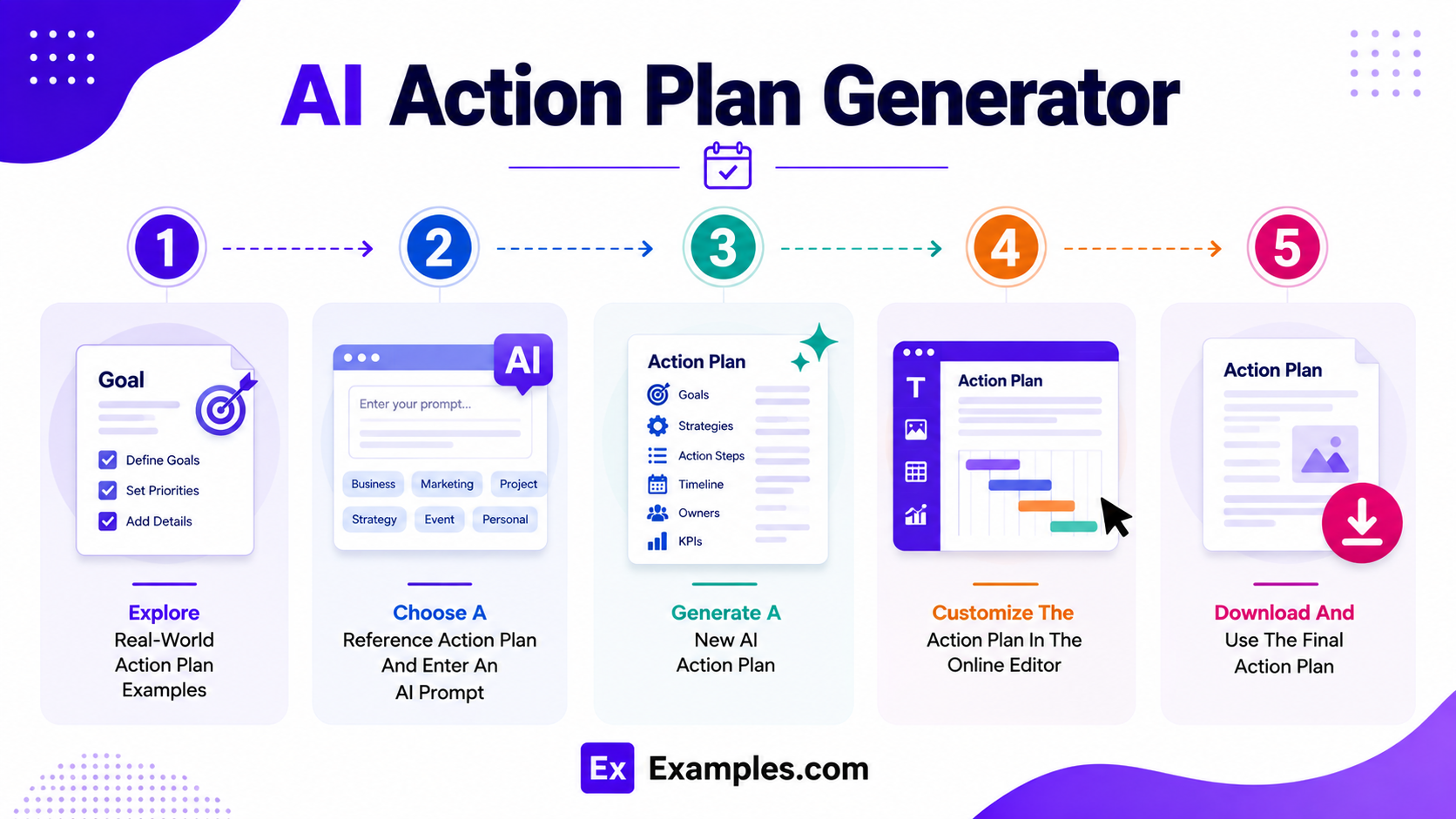
Creating a professional action plan becomes easier when I use real-world examples to understand how major initiatives are structured. The workflow combines reference examples, AI-powered generation, online editing, and personalized customization to turn objectives into practical implementation roadmaps.
Explore Real-World Action Plan Examples
I can browse action plan examples covering business transformation, technology implementation, project management, marketing, healthcare, operations, sustainability, supply chains, and organizational change to discover effective structures, milestones, responsibilities, and measurement approaches.
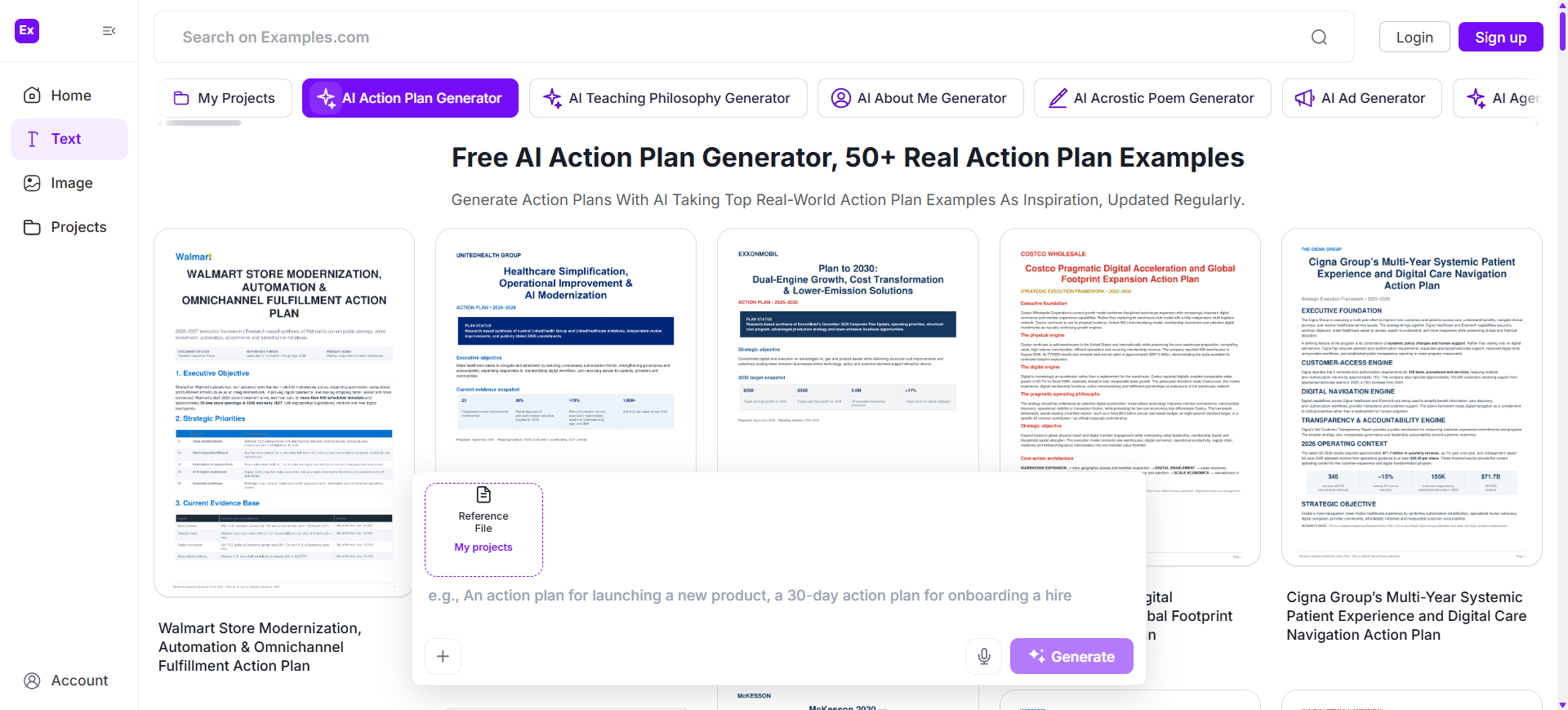
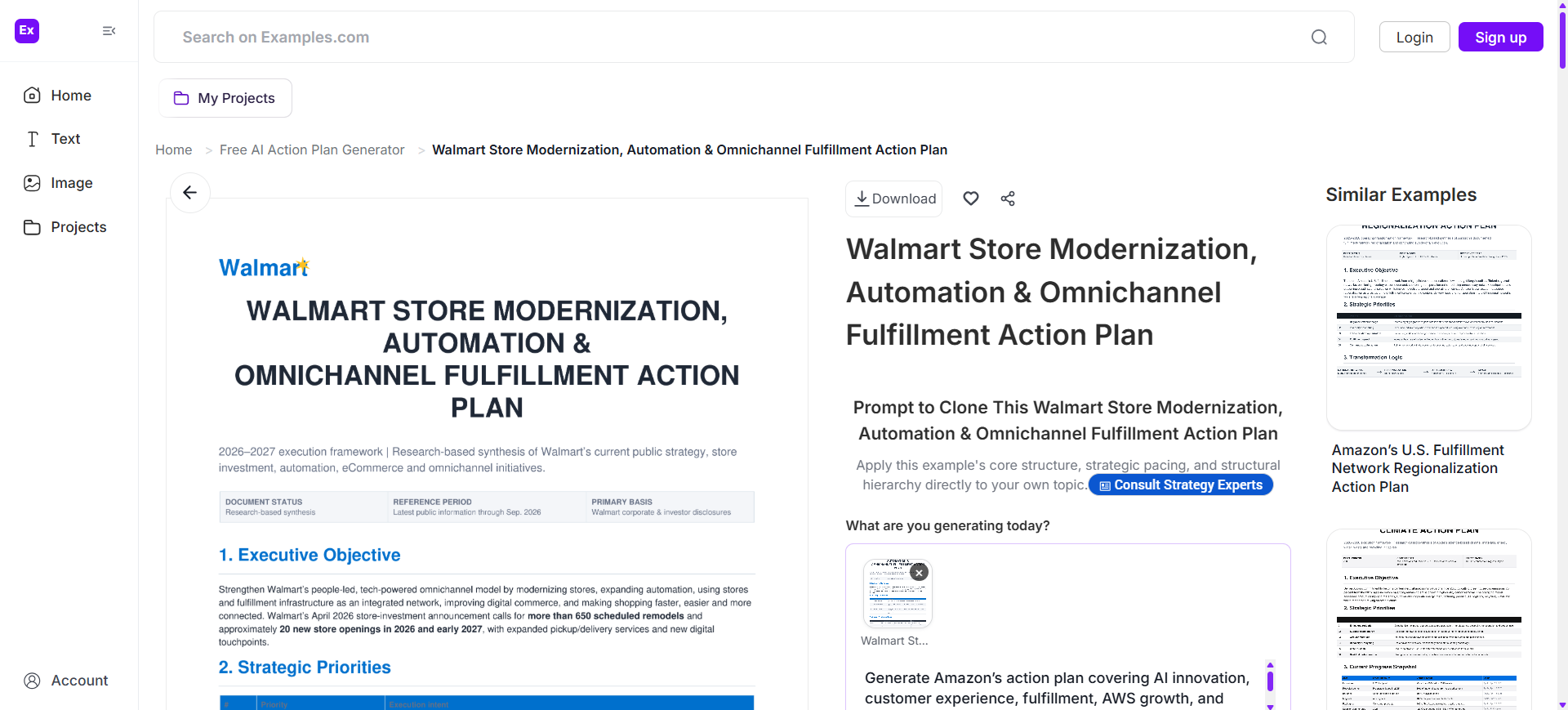
Choose A Reference Action Plan And Enter An AI Prompt
After selecting an action plan style, I can describe my goal, priorities, tasks, responsible teams, deadlines, resources, milestones, risks, dependencies, and success metrics through an AI prompt to generate a completely original action plan.
Generate A New AI Action Plan
The AI creates a brand-new action plan inspired by the selected example and my prompt. It organizes the objective into actionable steps, assigns responsibilities, establishes timelines, identifies resources, and defines measurable outcomes without modifying the original reference plan.
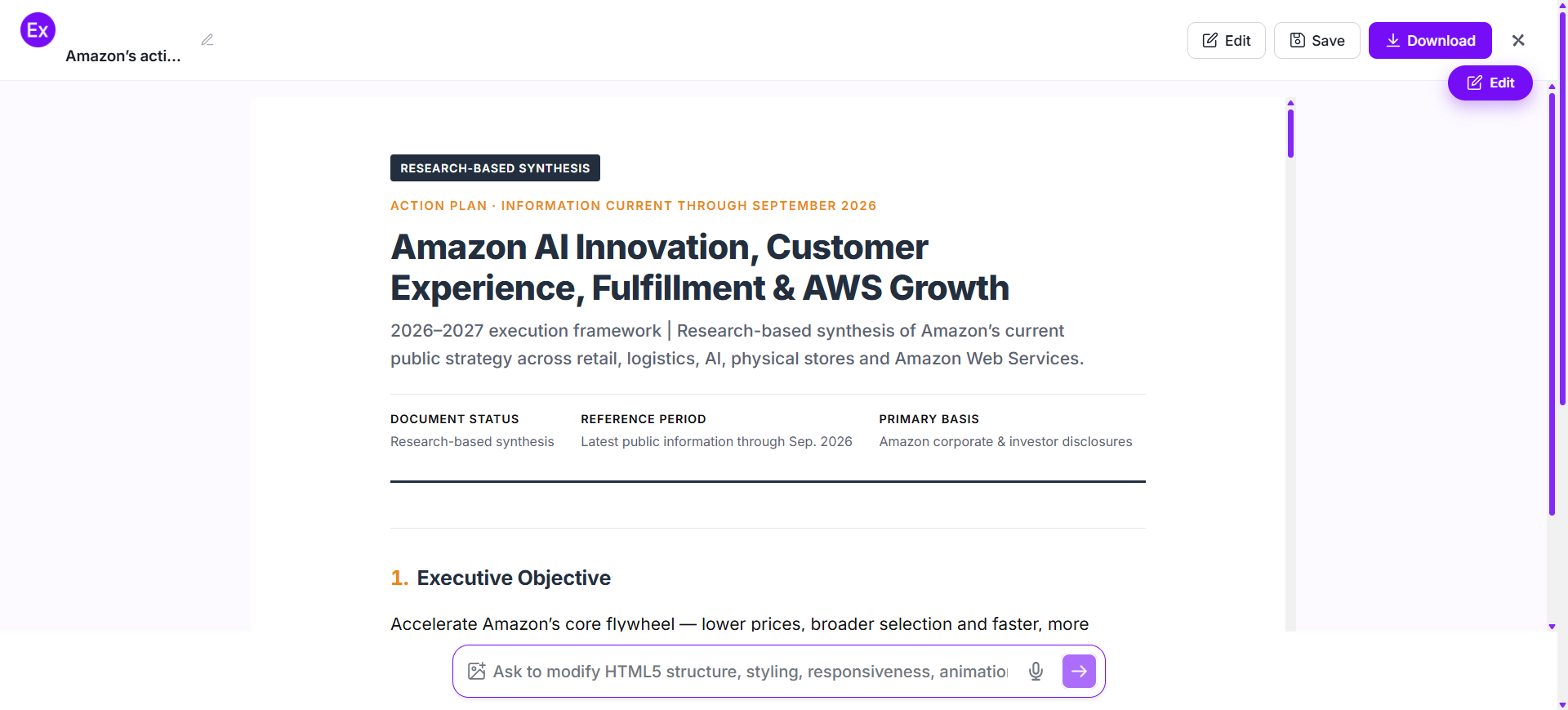
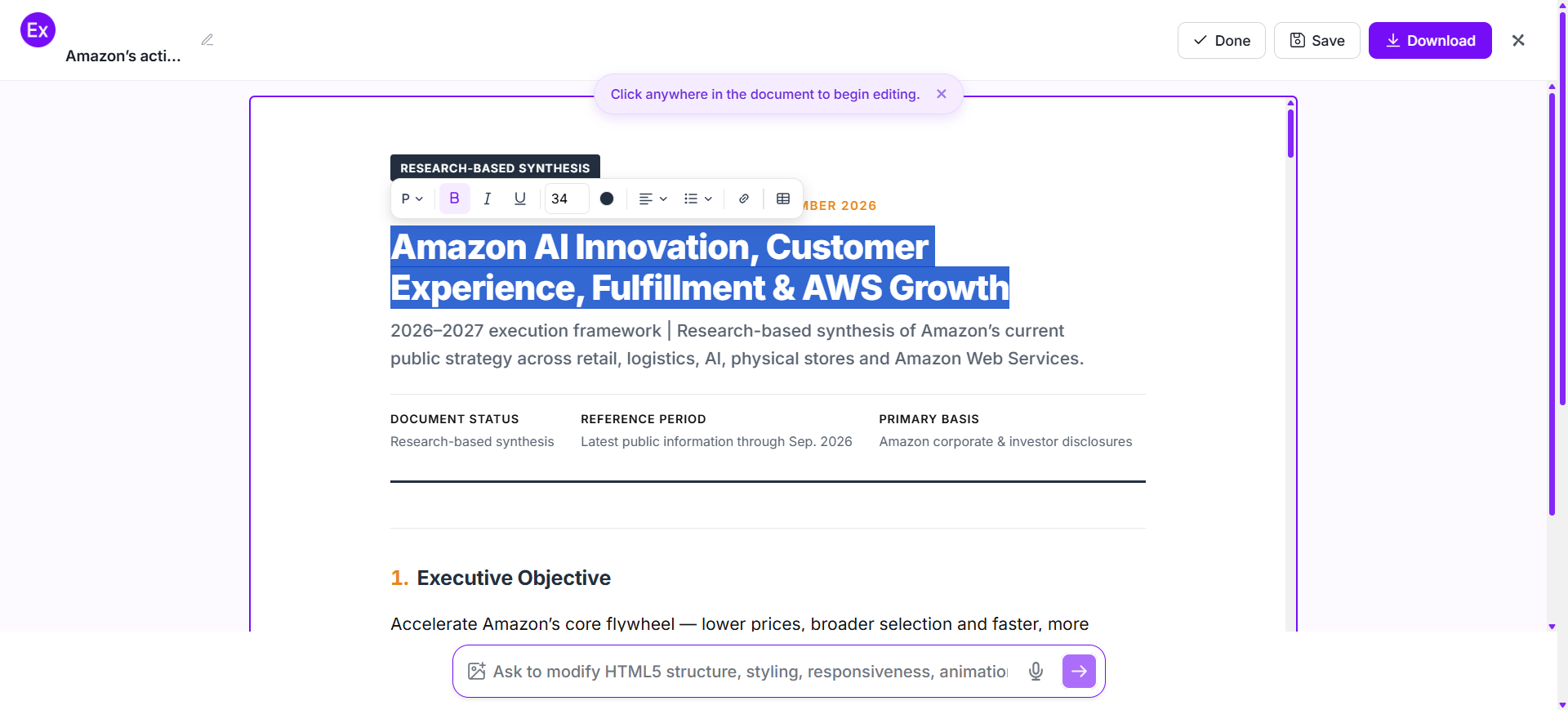
Customize The Action Plan In The Online Editor
I can personalize every section by editing goals, tasks, owners, deadlines, milestones, resources, KPIs, dependencies, and risks. I can also change colors, layouts, headings, tables, and visual elements using AI-powered editing tools.
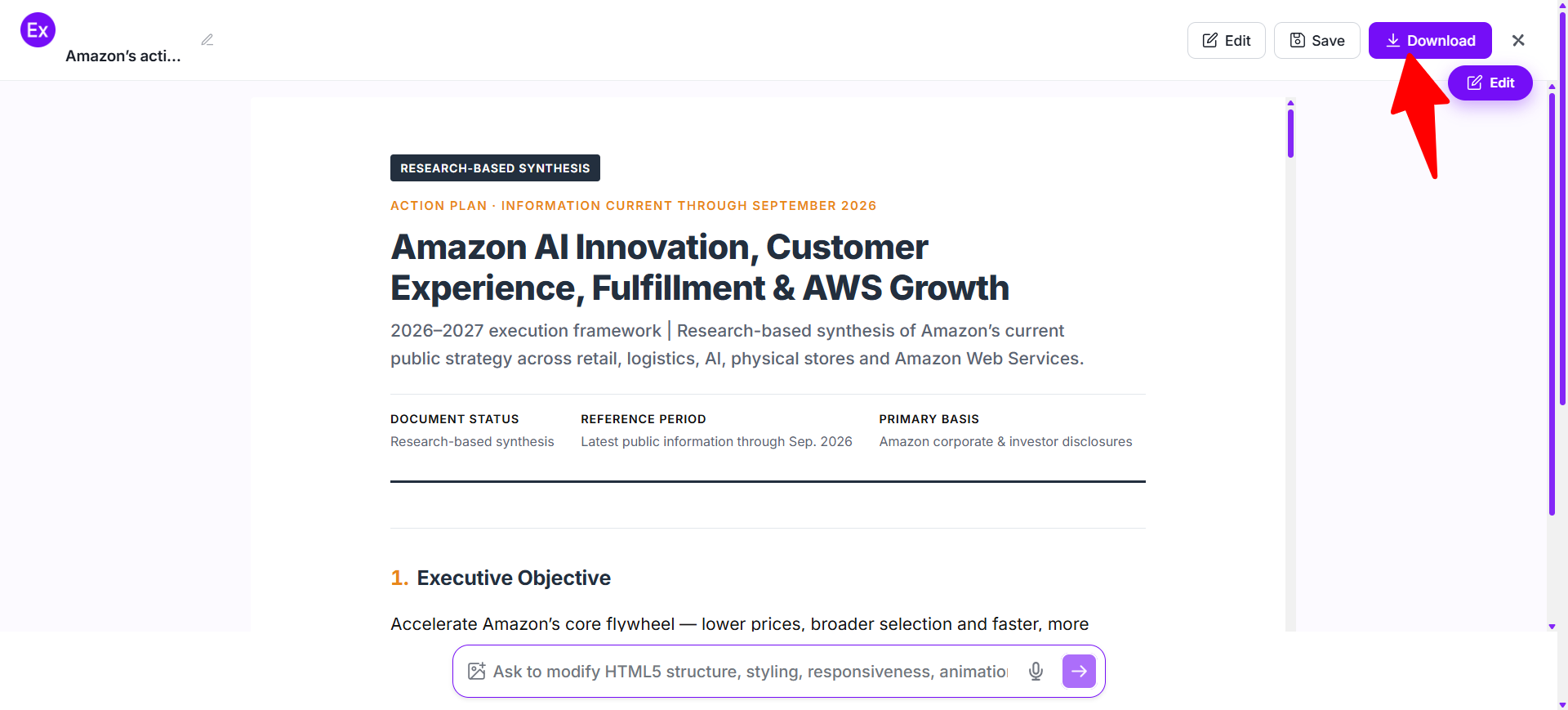
Download And Use The Final Action Plan
Once my action plan is complete, I can download the finished design as a PDF Document and use it for strategic planning, project execution, team coordination, business transformation, operational improvement, campaign management, or organizational reporting.
Customize Action Plan Designs Online
After generating a new action plan, I can open it in the online editor to personalize every goal, task, responsibility, timeline, milestone, and measurement. I can update owners, edit deadlines, add resources, revise priorities, modify KPIs, reorganize sections, and adjust the visual hierarchy to match my organization’s implementation needs.
The editor also includes AI-powered tools that help improve visual presentation and create alternative versions. I can enhance graphics, resize the action plan for different formats, remove backgrounds, restyle visual elements, and generate multiple variations. With Examples.com, I can turn an AI-generated action plan into a polished visual roadmap without requiring advanced design experience.
AI Action Plan Editing Features
AI-powered action plan features make it easier to generate, organize, customize, and track structured plans with clear implementation details.
AI Action Plan Generation
Generate a structured action plan based on your goals, priorities, tasks, resources, timelines, and expected outcomes.
Automatic Action Plan Structure
Organize your action plan into goals, strategies, tasks, responsibilities, milestones, timelines, resources, and measurable outcomes.
Action Plan Customization
Update objectives, tasks, owners, deadlines, priorities, resources, dependencies, and other details to match your specific project or business needs.
Smart Task And Milestone Editing
Add, remove, or modify tasks, milestones, priorities, and deadlines to keep your action plan aligned with changing requirements.
KPI And Progress Tracking
Define measurable KPIs, targets, milestones, and progress indicators to help monitor action plan implementation and results.
Instant PDF Download
Download your completed action plan as a PDF for planning, sharing, implementation, review, or record-keeping.
Standard Action Plan Sizes And Formats
The right action plan format depends on the amount of information, audience, and method of presentation. A clear layout should provide enough space for tasks, owners, timelines, milestones, and metrics.
| Action Plan Format | Common Size | Best Use Case |
|---|---|---|
| Landscape | 1920 × 1080 px | Executive presentations and strategic reviews |
| Portrait | 1080 × 1920 px | Mobile viewing and vertical implementation guides |
| Square | 1080 × 1080 px | Digital summaries and social communications |
| A4 | 210 × 297 mm | Formal action plans, reports, and documentation |
| A3 | 297 × 420 mm | Detailed project roadmaps and team workshops |
| Digital Custom | Custom Screen Size | Dashboards, websites, and online collaboration |
Landscape formats provide room for timelines, responsibilities, and multiple implementation stages. A4 works well for formal documentation, while A3 provides additional space for complex action plans with numerous tasks and milestones.
Essential Elements Every Action Plan Should Include
A strong action plan converts a broad objective into specific activities that can be assigned, scheduled, measured, and reviewed.
- Defined Goals – State the desired result clearly so every action supports a specific objective.
- Action Steps – Break the goal into smaller, practical tasks that can be completed and monitored individually.
- Assignees – Identify the individual, department, or team responsible for completing each action.
- Timeline – Set realistic start dates, deadlines, and time periods for completing activities.
- Milestones – Identify important checkpoints that show progress toward the overall objective.
- Resources – List the tools, people, budget, materials, technology, or other resources required for implementation.
- Priorities – Identify which tasks require immediate attention and which activities can be completed later.
- Metrics – Define measurable criteria that indicate whether each action or milestone has been successfully completed.
- Dependencies – Document tasks, approvals, resources, or external requirements that must be completed before another action can proceed.
How Do I Create A Better Action Plan?
A useful action plan should connect goals with specific responsibilities, realistic deadlines, available resources, and measurable outcomes.
- Define One Clear Objective – Define one clear objective that describes the result I want to achieve.
- Break The Objective Into Tasks – Break the objective into specific and manageable action steps.
- Assign Accountability – Assign an accountable person or team to every important task.
- Set Deadlines And Milestones – Set realistic deadlines and milestones for tracking implementation.
- Identify Required Resources – Identify the resources, budget, tools, and materials required for each activity.
- Prioritize Tasks – Prioritize tasks according to urgency, importance, dependencies, and organizational impact.
- Define Measurable KPIs – Define measurable KPIs or success criteria for evaluating progress.
- Document Risks And Dependencies – Record dependencies and potential risks that could delay implementation.
- Review Progress Regularly – Review progress regularly and update tasks, timelines, and responsibilities when circumstances change.
- Connect Actions To Outcomes – Confirm that every action contributes directly to the defined goal and produces a measurable outcome.
Common Action Plan Mistakes To Avoid
Avoiding common action plan mistakes helps ensure that goals, responsibilities, timelines, resources, and measurements remain clear and practical throughout implementation.
- Vague Goals – Setting vague goals makes progress difficult to measure. Define specific outcomes with clear success criteria and measurable results.
- Too Many Unprioritized Tasks – Listing too many tasks without priorities can make implementation difficult. Organize actions by importance, urgency, dependencies, and expected impact.
- Unclear Ownership – Assigning tasks without naming responsible people or teams can create accountability gaps. Give every major action a clear owner.
- Unrealistic Deadlines – Deadlines that do not match available resources can delay implementation. Set practical timelines with milestones and enough time for reviews.
- Unclear Resources And Budget – Leaving resource requirements unclear can create implementation problems. Identify the people, tools, materials, technology, and budget needed.
- Activity-Based Measurement – Measuring activity instead of actual outcomes can hide whether objectives are being achieved. Connect KPIs and metrics to defined goals.
- Ignoring Dependencies And Risks – Unidentified dependencies and risks can affect implementation timelines. Document dependencies and prepare mitigation actions before problems occur.
- Failing To Review The Plan – Creating an action plan without regular reviews can make it outdated. Update tasks, owners, deadlines, and priorities as circumstances change.
How Can I Market My Product Using An Action Plan?
Action plans can organize marketing activities into clear tasks, responsibilities, schedules, resources, and measurable outcomes across different campaigns.
Product Launch Action Plan
I can organize launch activities such as product preparation, pricing, promotional content, distribution, launch dates, responsible teams, and performance metrics into one structured plan.
Social Media Marketing Action Plan
I can outline content creation, publishing schedules, campaign themes, audience targeting, engagement activities, and performance tracking for different social platforms.
Content Marketing Action Plan
I can plan articles, videos, guides, social posts, email content, publishing dates, assigned creators, distribution channels, and measurable engagement goals.
Email Marketing Action Plan
I can structure audience segmentation, campaign topics, email schedules, promotional offers, testing activities, follow-ups, and conversion measurements.
Sales Promotion Action Plan
I can organize promotional campaigns around discounts, offers, product bundles, sales channels, campaign periods, sales responsibilities, and revenue targets.
Customer Retention Action Plan
I can create a structured plan for loyalty programs, customer communication, personalized offers, feedback collection, support activities, and retention measurements.
Which Action Plan Sizes Perform Best?
The best format depends on how the action plan will be reviewed, shared, or presented. Printable plans generally benefit from document-friendly dimensions, while digital plans can use screen-oriented layouts.
| Format | Common Size | Best Use |
|---|---|---|
| A4 Portrait | 210 × 297 mm | Detailed action plans and business documents |
| A3 Portrait | 297 × 420 mm | Large strategic plans and presentations |
| Landscape | 1920 × 1080 px | Executive presentations and digital displays |
| Portrait | 1080 × 1920 px | Mobile-friendly action plans |
| Square | 1080 × 1080 px | Social media action-plan graphics |
| Custom | Based on requirement | Specialized print or digital applications |
For detailed business plans, A4 provides enough space for goals, actions, owners, timelines, and metrics. Landscape formats work well when an action plan contains wide tables, timelines, or multiple workstreams.
Action Plan Ideas For Different Industries
Different industries can use action plans to organize strategic initiatives, operational improvements, projects, campaigns, and measurable outcomes.
- Retail Action Plans – Cover store modernization, inventory management, customer experience, staffing, promotions, supply chain improvements, and sales targets.
- Healthcare Action Plans – Organize patient-care initiatives, operational improvements, technology implementation, staff responsibilities, compliance activities, and measurable care outcomes.
- Technology Action Plans – Structure software launches, cloud migration, cybersecurity initiatives, AI implementation, product development, testing, deployment, and technical milestones.
- Education Action Plans – Outline curriculum improvements, student programs, teacher responsibilities, technology adoption, academic milestones, and assessment targets.
- Manufacturing Action Plans – Organize production improvements, equipment upgrades, quality initiatives, workforce responsibilities, safety activities, and operational KPIs.
- Financial Services Action Plans – Cover digital transformation, customer-service improvements, risk management, compliance activities, technology projects, and performance measurements.
- Marketing Agency Action Plans – Organize campaign objectives, creative production, client approvals, media activities, deadlines, assigned specialists, and campaign results.
- Construction Action Plans – Coordinate project phases, contractors, materials, budgets, safety requirements, inspections, milestones, and completion dates.
- Nonprofit Action Plans – Organize fundraising, community programs, volunteer responsibilities, partnerships, outreach activities, budgets, and impact measurements.
- E-Commerce Action Plans – Cover product launches, website improvements, inventory, advertising, customer service, fulfillment, promotional campaigns, and conversion targets.
FAQs
What Is The Main Purpose Of An Action Plan?
An action plan converts a broader goal into specific tasks, responsible owners, deadlines, resources, milestones, and measurable outcomes so progress can be managed systematically.
What Should Be Included In A Good Action Plan?
A strong action plan typically includes defined goals, action steps, task owners, priorities, timelines, milestones, resources, dependencies, risks, and performance metrics.
How Do I Create An Action Plan For A Project?
Start by defining the desired outcome, divide it into actionable tasks, assign responsibilities, establish deadlines, identify resources, set milestones, and determine how progress will be measured.
What Is The Difference Between A Strategy And An Action Plan?
A strategy describes the broader direction and approach for achieving an objective, while an action plan translates that direction into specific tasks, responsibilities, timelines, and measurable actions.
How Detailed Should An Action Plan Be?
The level of detail should match the project’s complexity. A simple plan may contain a few tasks and deadlines, while larger initiatives may require owners, dependencies, resources, milestones, risks, and KPIs.
Can I Create An Action Plan With AI?
Yes. I can use real-world action plan examples as inspiration, describe the objective and requirements in an AI prompt, and generate a completely new action plan design that I can customize afterward.
How Do I Make An Action Plan Easy To Follow?
Use clear headings, short task descriptions, logical sequencing, visible owners, realistic deadlines, priority indicators, milestones, and measurable KPIs so users can quickly understand what needs to happen next.
Can An Action Plan Be Used For Multiple Departments?
Yes. A cross-functional action plan can organize work across departments by separating responsibilities, timelines, dependencies, milestones, and metrics while keeping everyone aligned around the same objective.