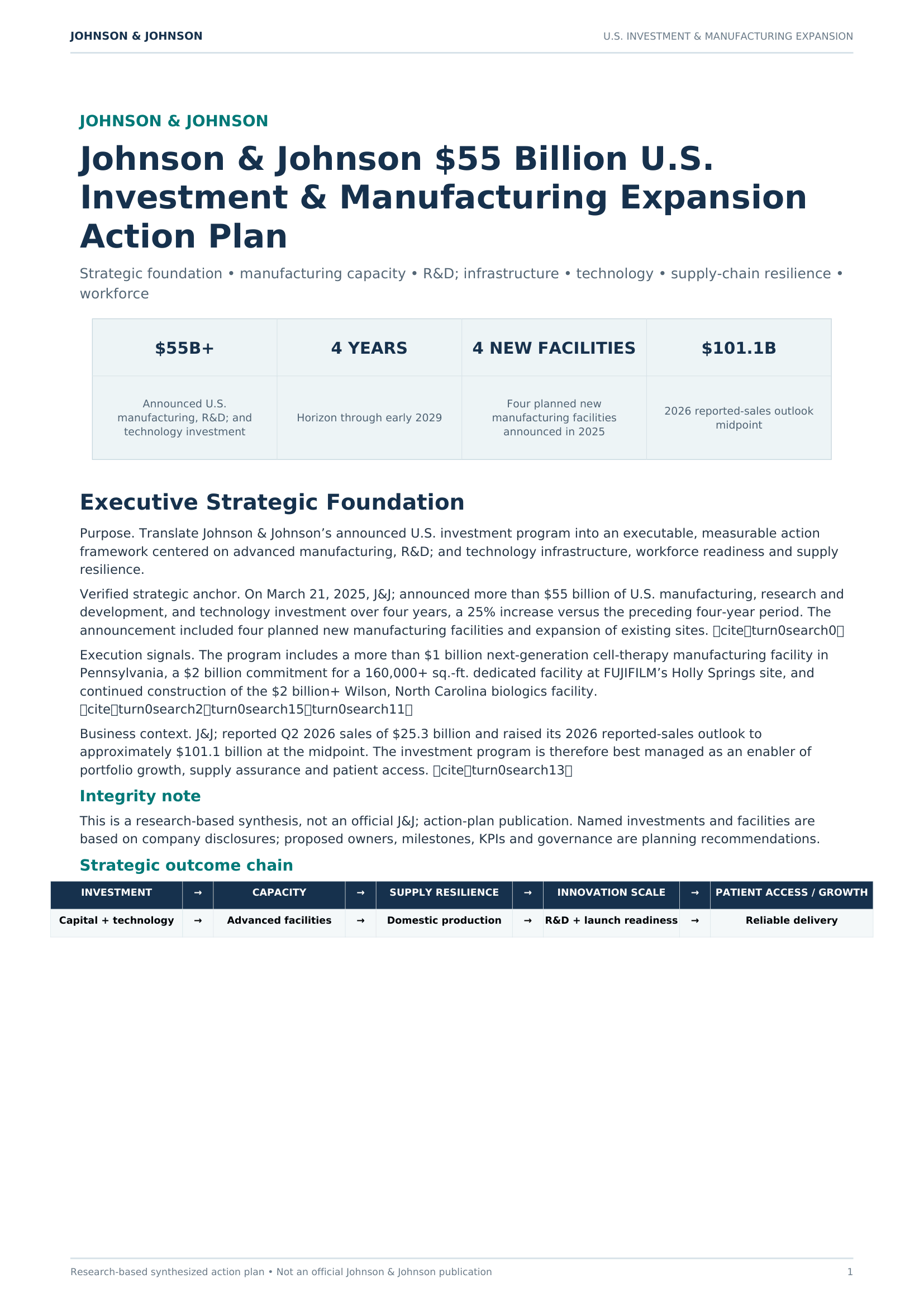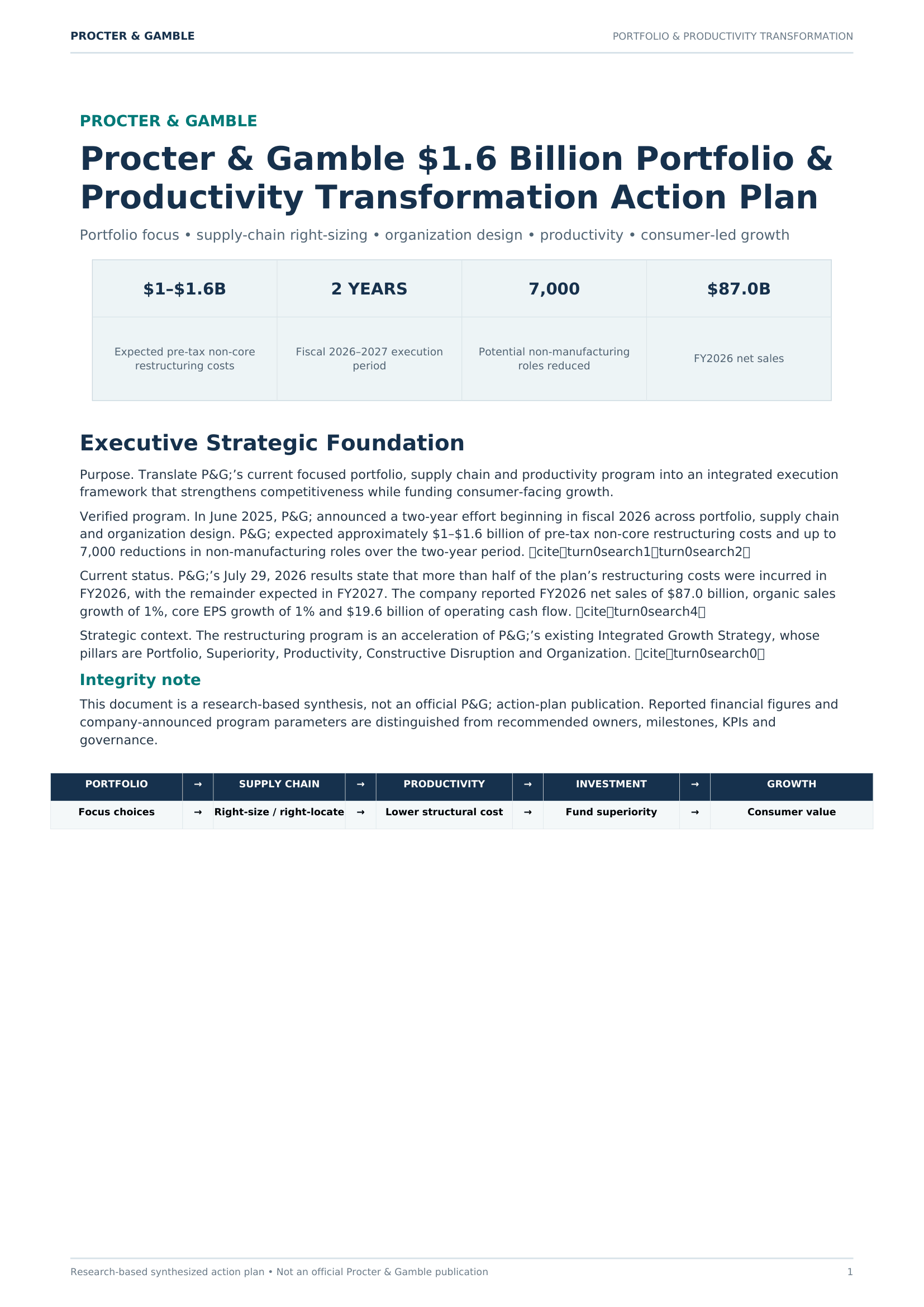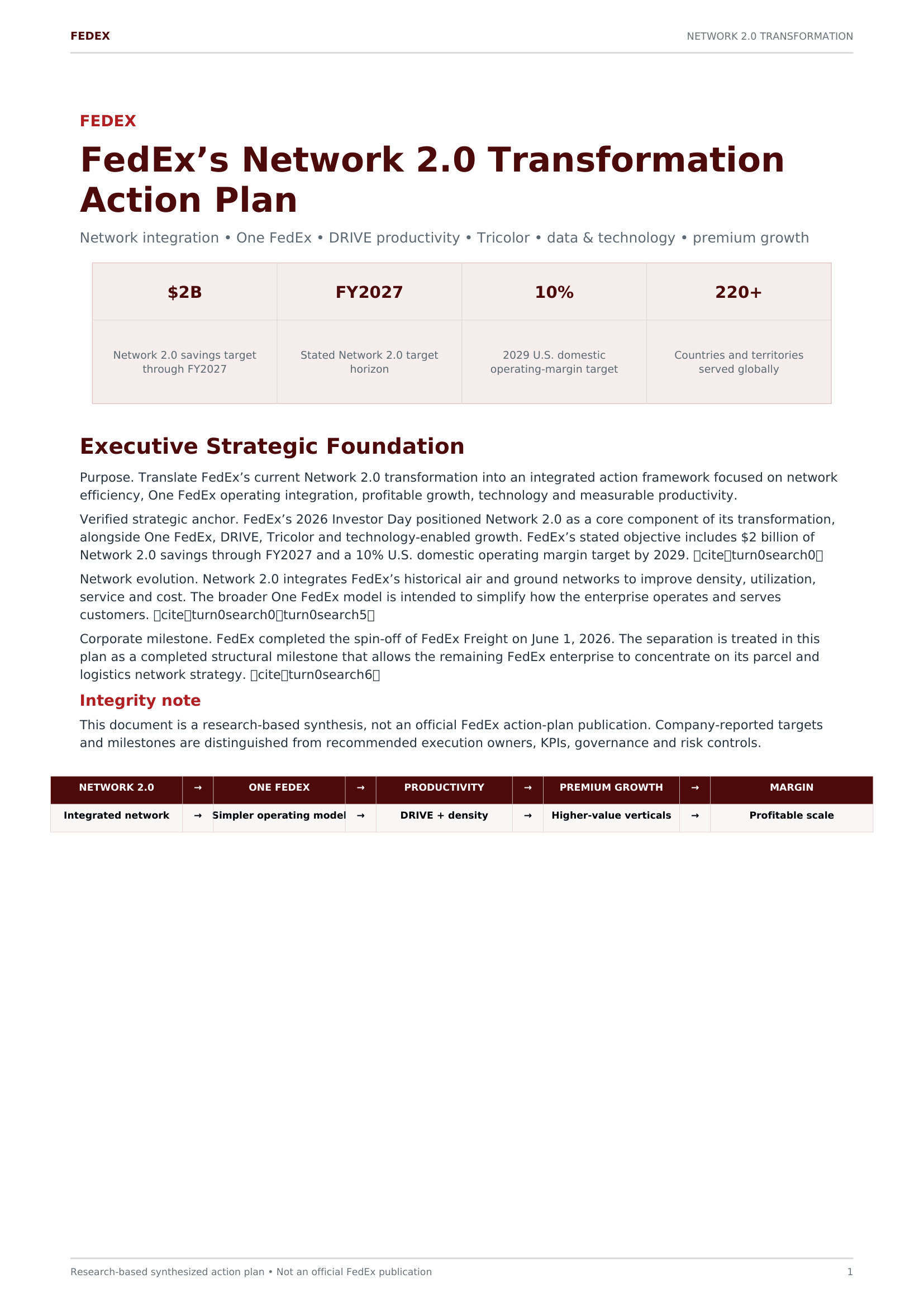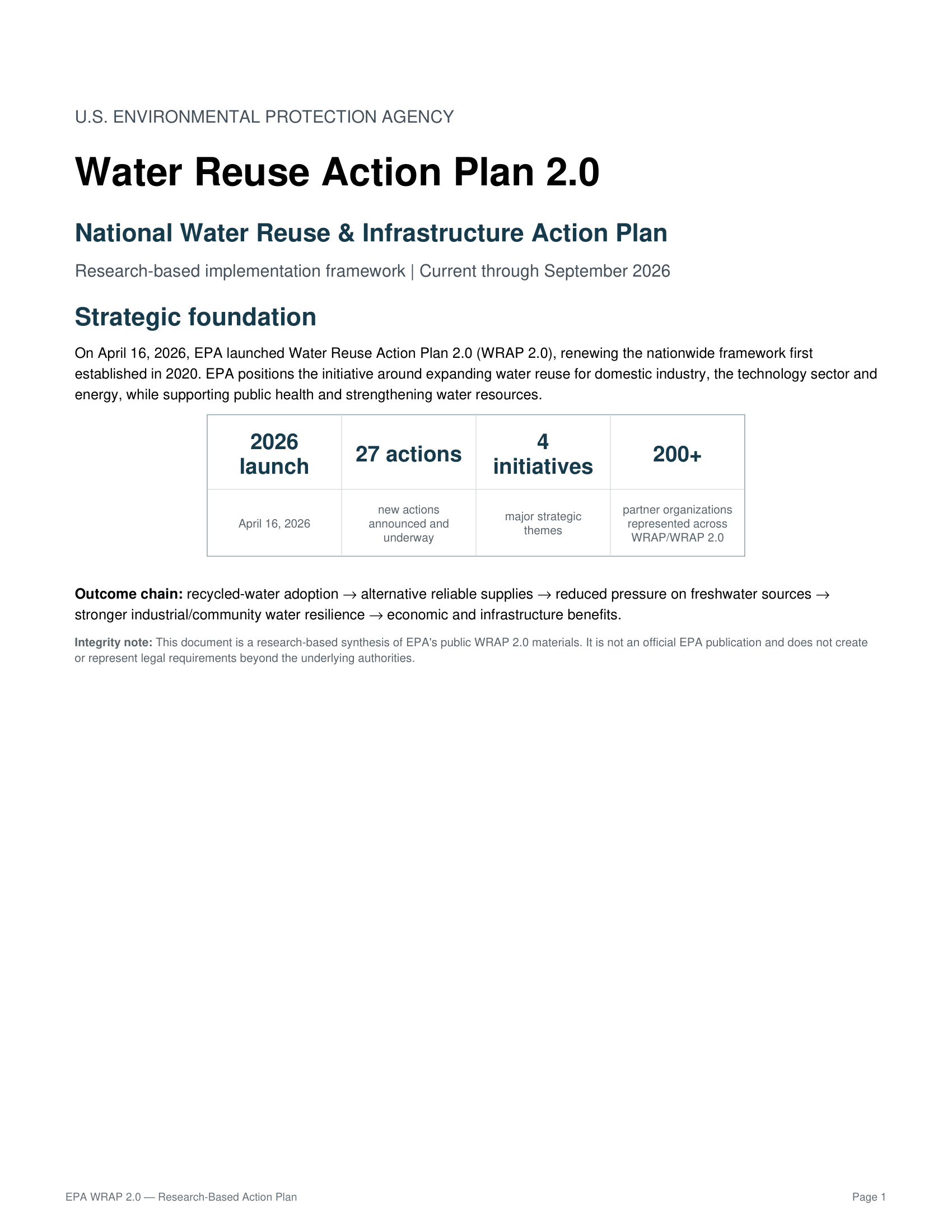
UNIVERSITY OF CALIFORNIA | CLIMATE ACTION & ADAPTATION
Research-based synthesized Action Plan • Current through September 2026 • Not an official UC publication
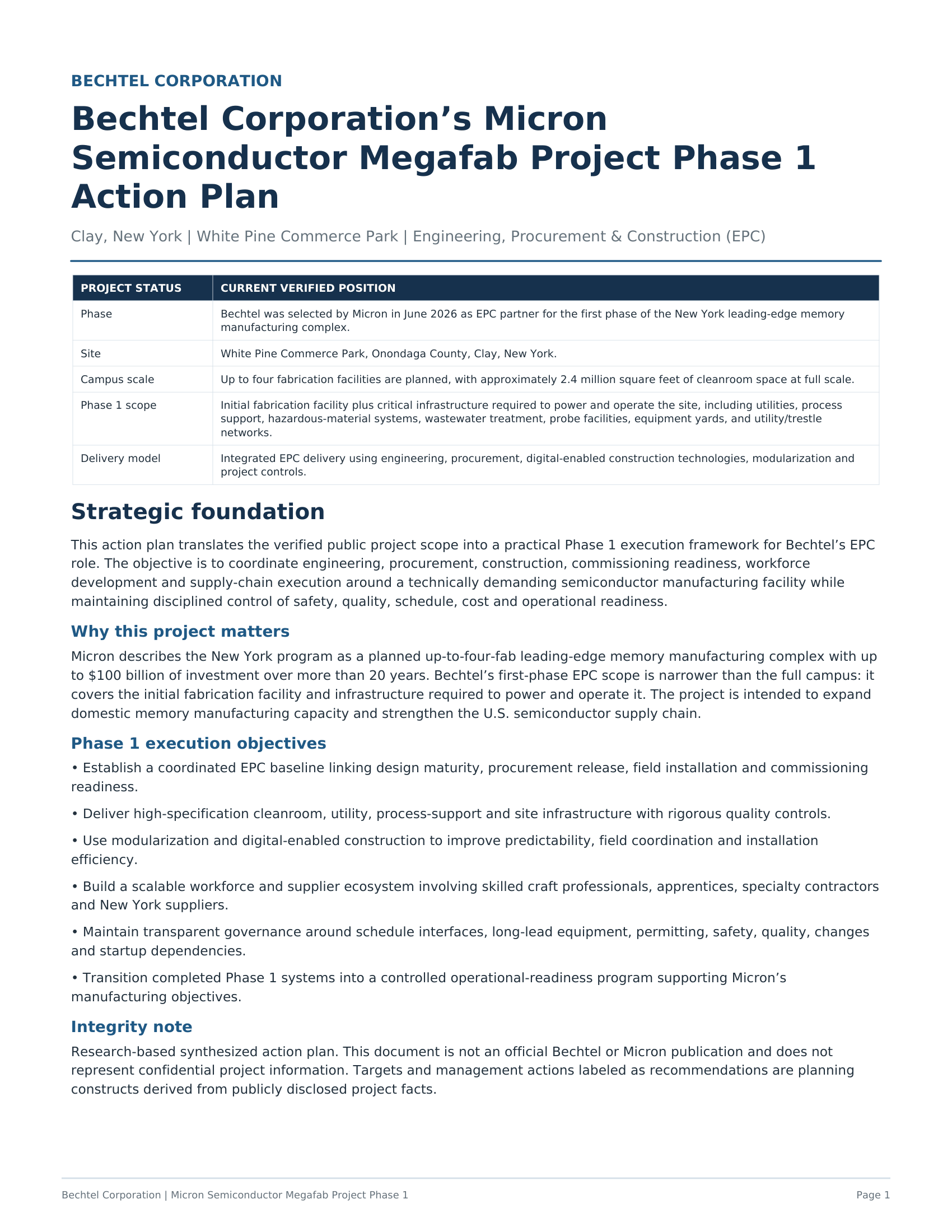
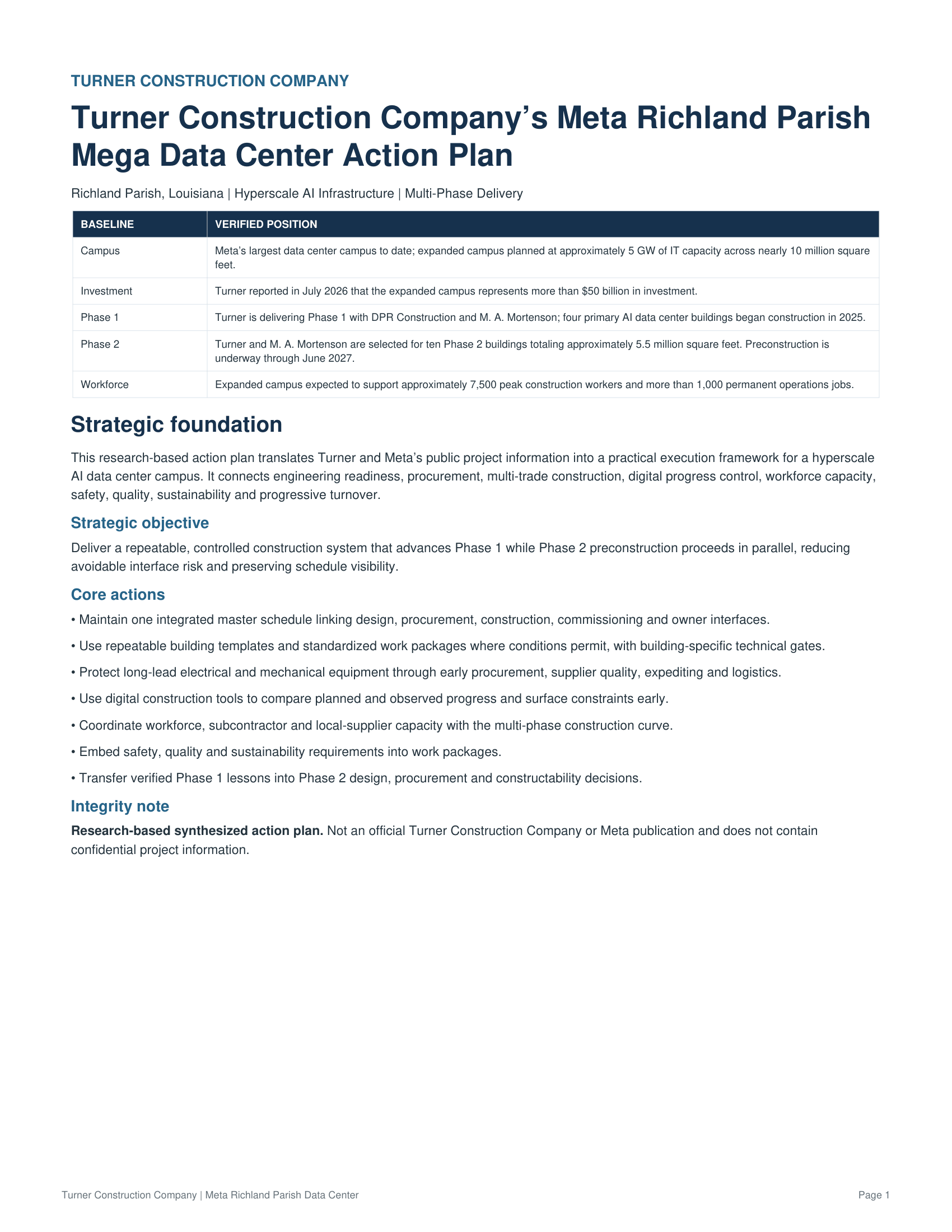
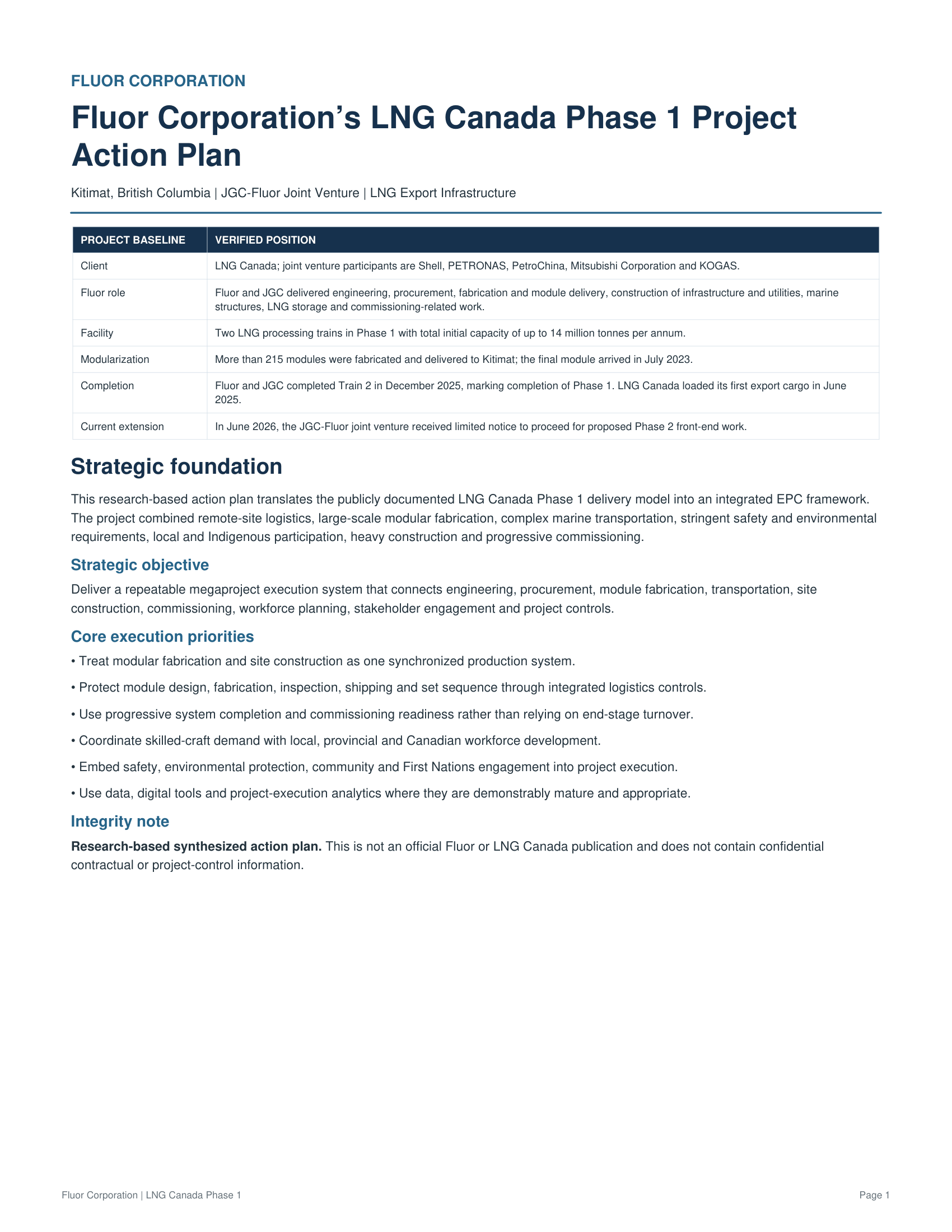
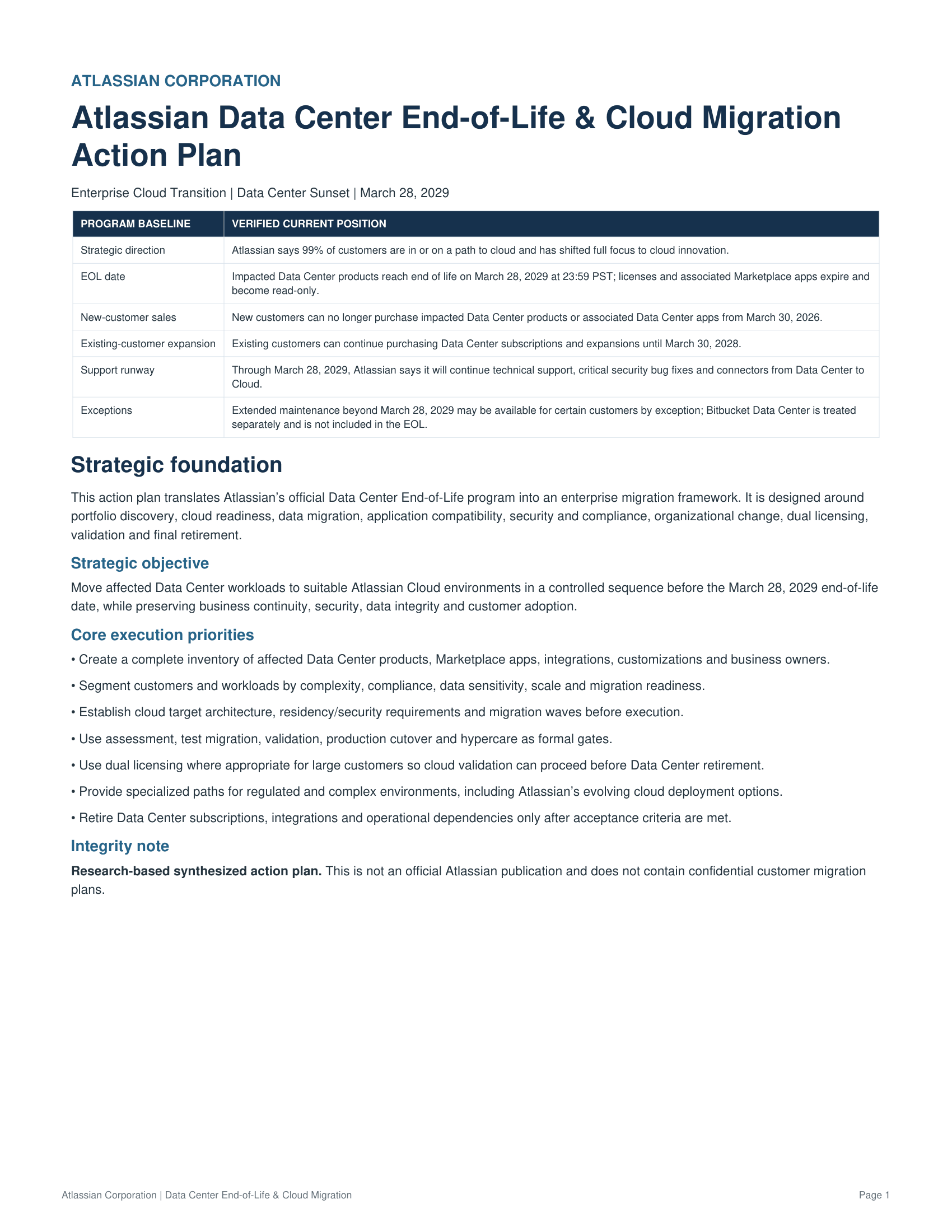
Page 1
UNIVERSITY OF CALIFORNIA
University of California’s Climate Action &
Adaptation Plan — Systemwide
Decarbonization, Resilience & Sustainability
Action Plan
UC systemwide policy framework • campus implementation plans • 2045 climate target • Current through
September 2026
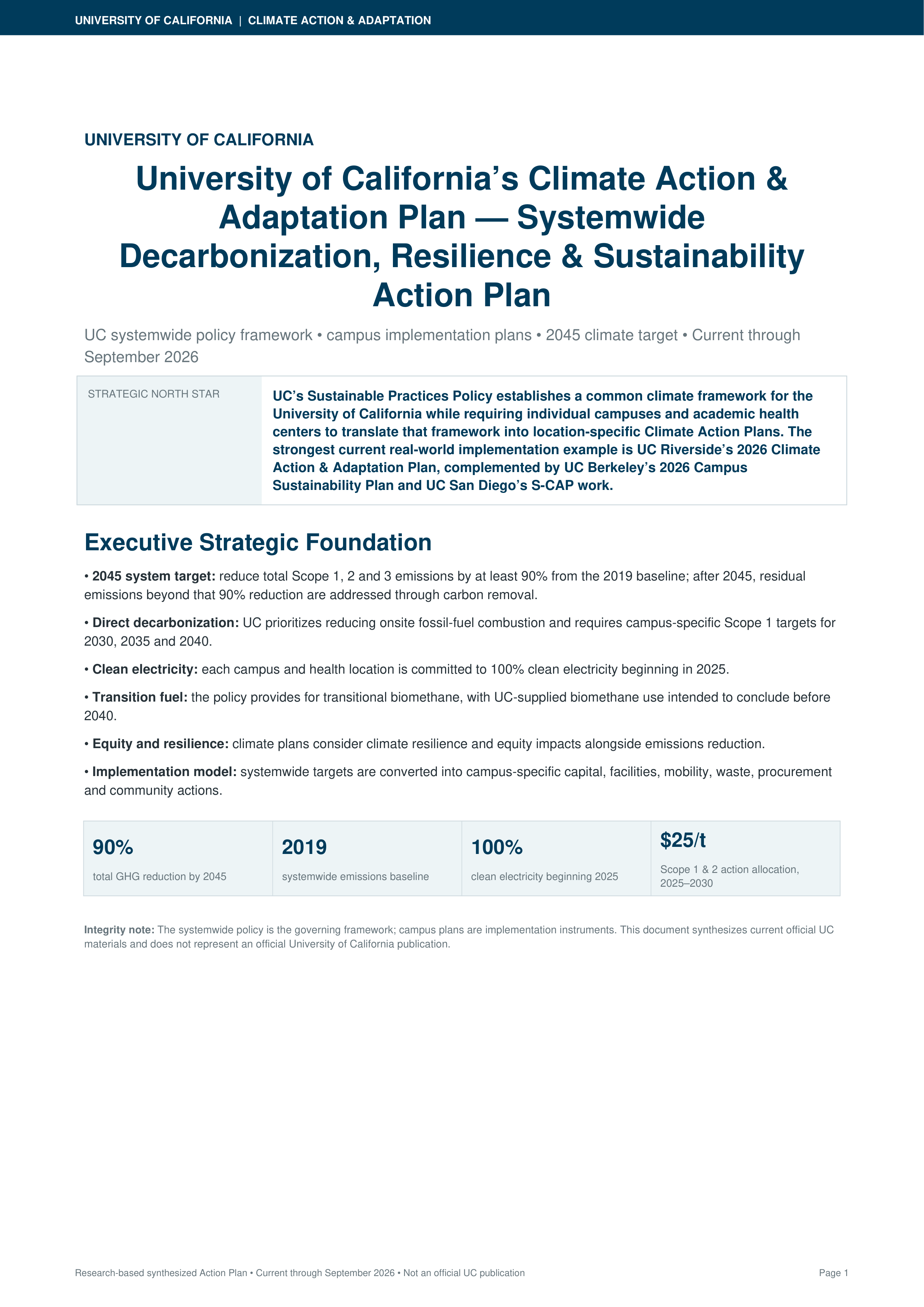
STRATEGIC NORTH STAR
UC’s Sustainable Practices Policy establishes a common climate framework for the
University of California while requiring individual campuses and academic health
centers to translate that framework into location-specific Climate Action Plans. The
strongest current real-world implementation example is UC Riverside’s 2026 Climate
Action & Adaptation Plan, complemented by UC Berkeley’s 2026 Campus
Sustainability Plan and UC San Diego’s S-CAP work.
Executive Strategic Foundation
•
2045 system target:
reduce total Scope 1, 2 and 3 emissions by at least 90% from the 2019 baseline; after 2045, residual
emissions beyond that 90% reduction are addressed through carbon removal.
•
Direct decarbonization:
UC prioritizes reducing onsite fossil-fuel combustion and requires campus-specific Scope 1 targets for
2030, 2035 and 2040.
•
Clean electricity:
each campus and health location is committed to 100% clean electricity beginning in 2025.
•
Transition fuel:
the policy provides for transitional biomethane, with UC-supplied biomethane use intended to conclude before
2040.
•
Equity and resilience:
climate plans consider climate resilience and equity impacts alongside emissions reduction.
•
Implementation model:
systemwide targets are converted into campus-specific capital, facilities, mobility, waste, procurement
and community actions.
90%
total GHG reduction by 2045
2019
systemwide emissions baseline
100%
clean electricity beginning 2025
$25/t
Scope 1 & 2 action allocation,
2025–2030
Integrity note:
The systemwide policy is the governing framework; campus plans are implementation instruments. This document synthesizes current official UC
materials and does not represent an official University of California publication.
UNIVERSITY OF CALIFORNIA | CLIMATE ACTION & ADAPTATION
Research-based synthesized Action Plan • Current through September 2026 • Not an official UC publication
Page 2
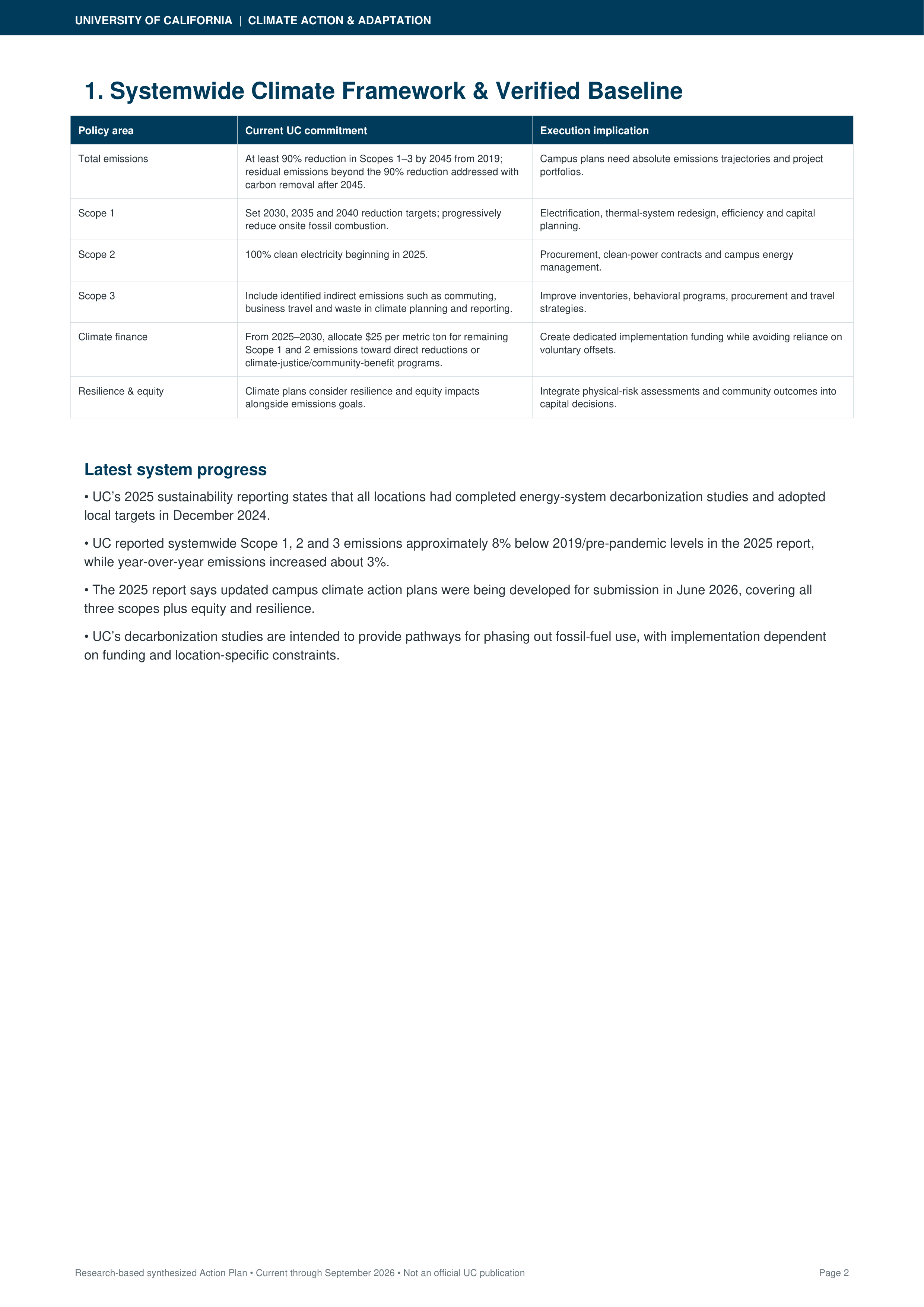
1. Systemwide Climate Framework & Verified Baseline
Policy area
Current UC commitment
Execution implication
Total emissions
At least 90% reduction in Scopes 1–3 by 2045 from 2019;
residual emissions beyond the 90% reduction addressed with
carbon removal after 2045.
Campus plans need absolute emissions trajectories and project
portfolios.
Scope 1
Set 2030, 2035 and 2040 reduction targets; progressively
reduce onsite fossil combustion.
Electrification, thermal-system redesign, efficiency and capital
planning.
Scope 2
100% clean electricity beginning in 2025.
Procurement, clean-power contracts and campus energy
management.
Scope 3
Include identified indirect emissions such as commuting,
business travel and waste in climate planning and reporting.
Improve inventories, behavioral programs, procurement and travel
strategies.
Climate finance
From 2025–2030, allocate $25 per metric ton for remaining
Scope 1 and 2 emissions toward direct reductions or
climate-justice/community-benefit programs.
Create dedicated implementation funding while avoiding reliance on
voluntary offsets.
Resilience & equity
Climate plans consider resilience and equity impacts
alongside emissions goals.
Integrate physical-risk assessments and community outcomes into
capital decisions.
Latest system progress
• UC’s 2025 sustainability reporting states that all locations had completed energy-system decarbonization studies and adopted
local targets in December 2024.
• UC reported systemwide Scope 1, 2 and 3 emissions approximately 8% below 2019/pre-pandemic levels in the 2025 report,
while year-over-year emissions increased about 3%.
• The 2025 report says updated campus climate action plans were being developed for submission in June 2026, covering all
three scopes plus equity and resilience.
• UC’s decarbonization studies are intended to provide pathways for phasing out fossil-fuel use, with implementation dependent
on funding and location-specific constraints.
UNIVERSITY OF CALIFORNIA | CLIMATE ACTION & ADAPTATION
Research-based synthesized Action Plan • Current through September 2026 • Not an official UC publication
Page 3
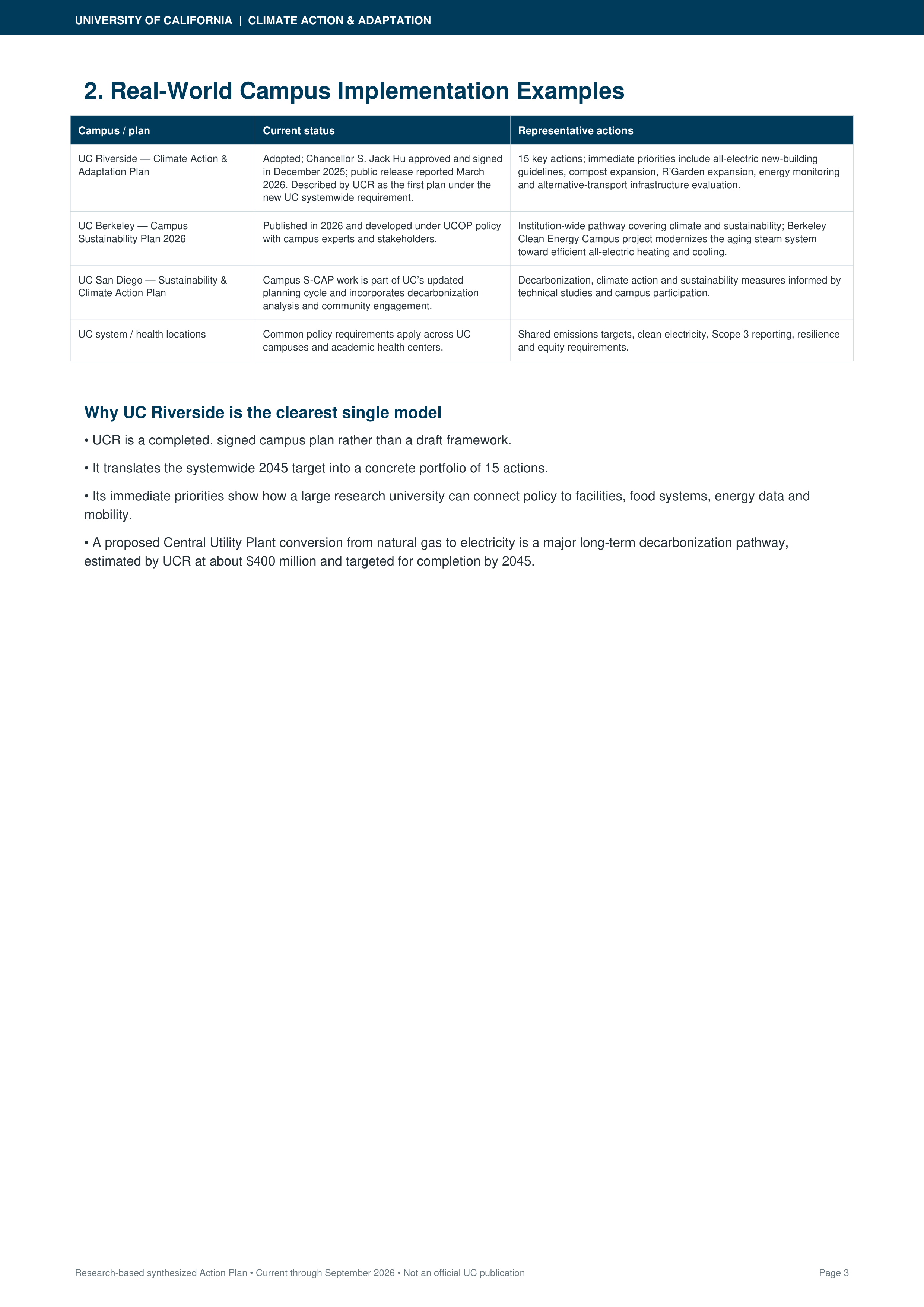
2. Real-World Campus Implementation Examples
Campus / plan
Current status
Representative actions
UC Riverside — Climate Action &
Adaptation Plan
Adopted; Chancellor S. Jack Hu approved and signed
in December 2025; public release reported March
2026. Described by UCR as the first plan under the
new UC systemwide requirement.
15 key actions; immediate priorities include all-electric new-building
guidelines, compost expansion, R’Garden expansion, energy monitoring
and alternative-transport infrastructure evaluation.
UC Berkeley — Campus
Sustainability Plan 2026
Published in 2026 and developed under UCOP policy
with campus experts and stakeholders.
Institution-wide pathway covering climate and sustainability; Berkeley
Clean Energy Campus project modernizes the aging steam system
toward efficient all-electric heating and cooling.
UC San Diego — Sustainability &
Climate Action Plan
Campus S-CAP work is part of UC’s updated
planning cycle and incorporates decarbonization
analysis and community engagement.
Decarbonization, climate action and sustainability measures informed by
technical studies and campus participation.
UC system / health locations
Common policy requirements apply across UC
campuses and academic health centers.
Shared emissions targets, clean electricity, Scope 3 reporting, resilience
and equity requirements.
Why UC Riverside is the clearest single model
• UCR is a completed, signed campus plan rather than a draft framework.
• It translates the systemwide 2045 target into a concrete portfolio of 15 actions.
• Its immediate priorities show how a large research university can connect policy to facilities, food systems, energy data and
mobility.
• A proposed Central Utility Plant conversion from natural gas to electricity is a major long-term decarbonization pathway,
estimated by UCR at about $400 million and targeted for completion by 2045.
UNIVERSITY OF CALIFORNIA | CLIMATE ACTION & ADAPTATION
Research-based synthesized Action Plan • Current through September 2026 • Not an official UC publication
Page 4
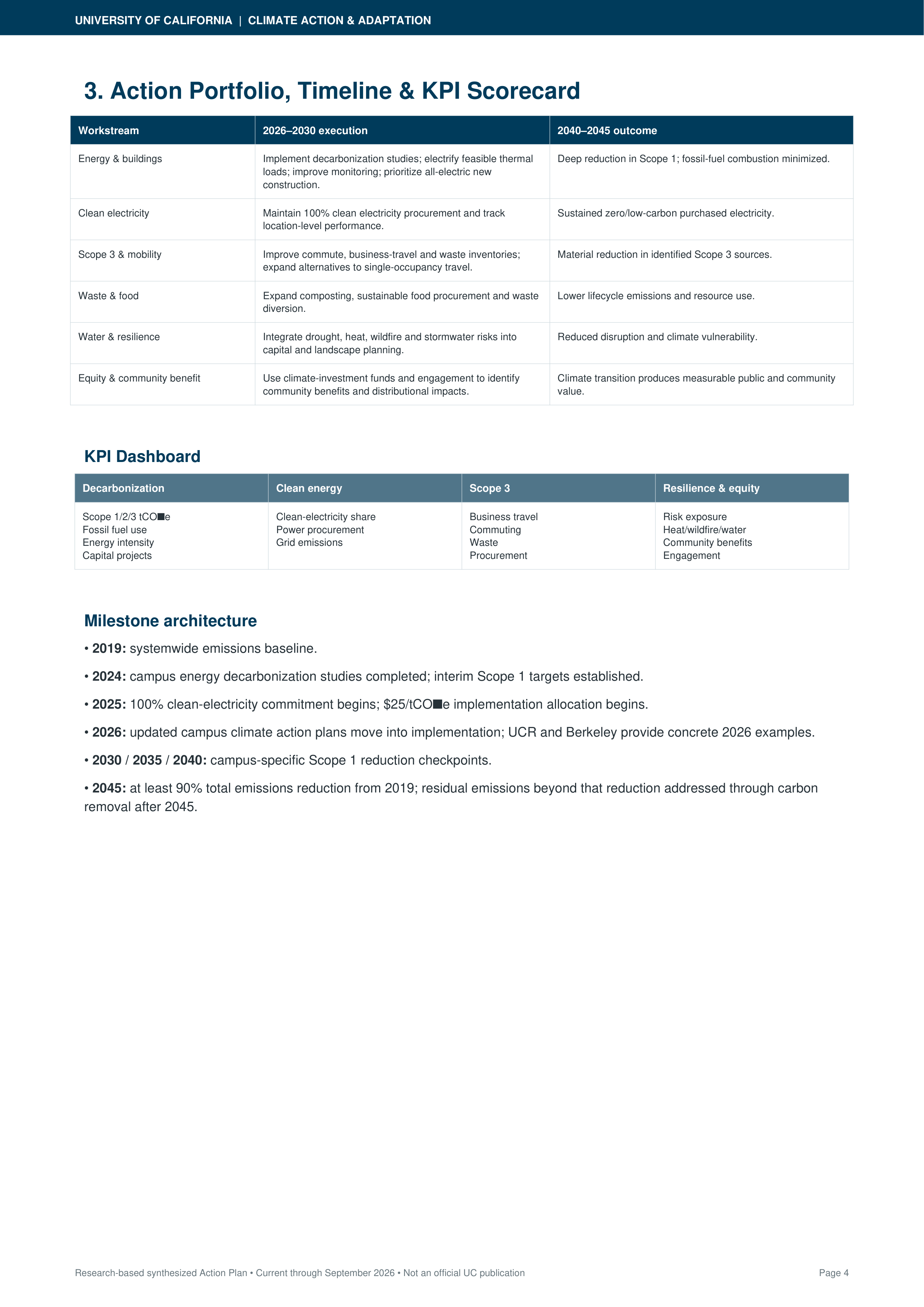
3. Action Portfolio, Timeline & KPI Scorecard
Workstream
2026–2030 execution
2040–2045 outcome
Energy & buildings
Implement decarbonization studies; electrify feasible thermal
loads; improve monitoring; prioritize all-electric new
construction.
Deep reduction in Scope 1; fossil-fuel combustion minimized.
Clean electricity
Maintain 100% clean electricity procurement and track
location-level performance.
Sustained zero/low-carbon purchased electricity.
Scope 3 & mobility
Improve commute, business-travel and waste inventories;
expand alternatives to single-occupancy travel.
Material reduction in identified Scope 3 sources.
Waste & food
Expand composting, sustainable food procurement and waste
diversion.
Lower lifecycle emissions and resource use.
Water & resilience
Integrate drought, heat, wildfire and stormwater risks into
capital and landscape planning.
Reduced disruption and climate vulnerability.
Equity & community benefit
Use climate-investment funds and engagement to identify
community benefits and distributional impacts.
Climate transition produces measurable public and community
value.
KPI Dashboard
Decarbonization
Clean energy
Scope 3
Resilience & equity
Scope 1/2/3 tCO
I
e
Fossil fuel use
Energy intensity
Capital projects
Clean-electricity share
Power procurement
Grid emissions
Business travel
Commuting
Waste
Procurement
Risk exposure
Heat/wildfire/water
Community benefits
Engagement
Milestone architecture
•
2019:
systemwide emissions baseline.
•
2024:
campus energy decarbonization studies completed; interim Scope 1 targets established.
•
2025:
100% clean-electricity commitment begins; $25/tCO
I
e implementation allocation begins.
•
2026:
updated campus climate action plans move into implementation; UCR and Berkeley provide concrete 2026 examples.
•
2030 / 2035 / 2040:
campus-specific Scope 1 reduction checkpoints.
•
2045:
at least 90% total emissions reduction from 2019; residual emissions beyond that reduction addressed through carbon
removal after 2045.
UNIVERSITY OF CALIFORNIA | CLIMATE ACTION & ADAPTATION
Research-based synthesized Action Plan • Current through September 2026 • Not an official UC publication
Page 5
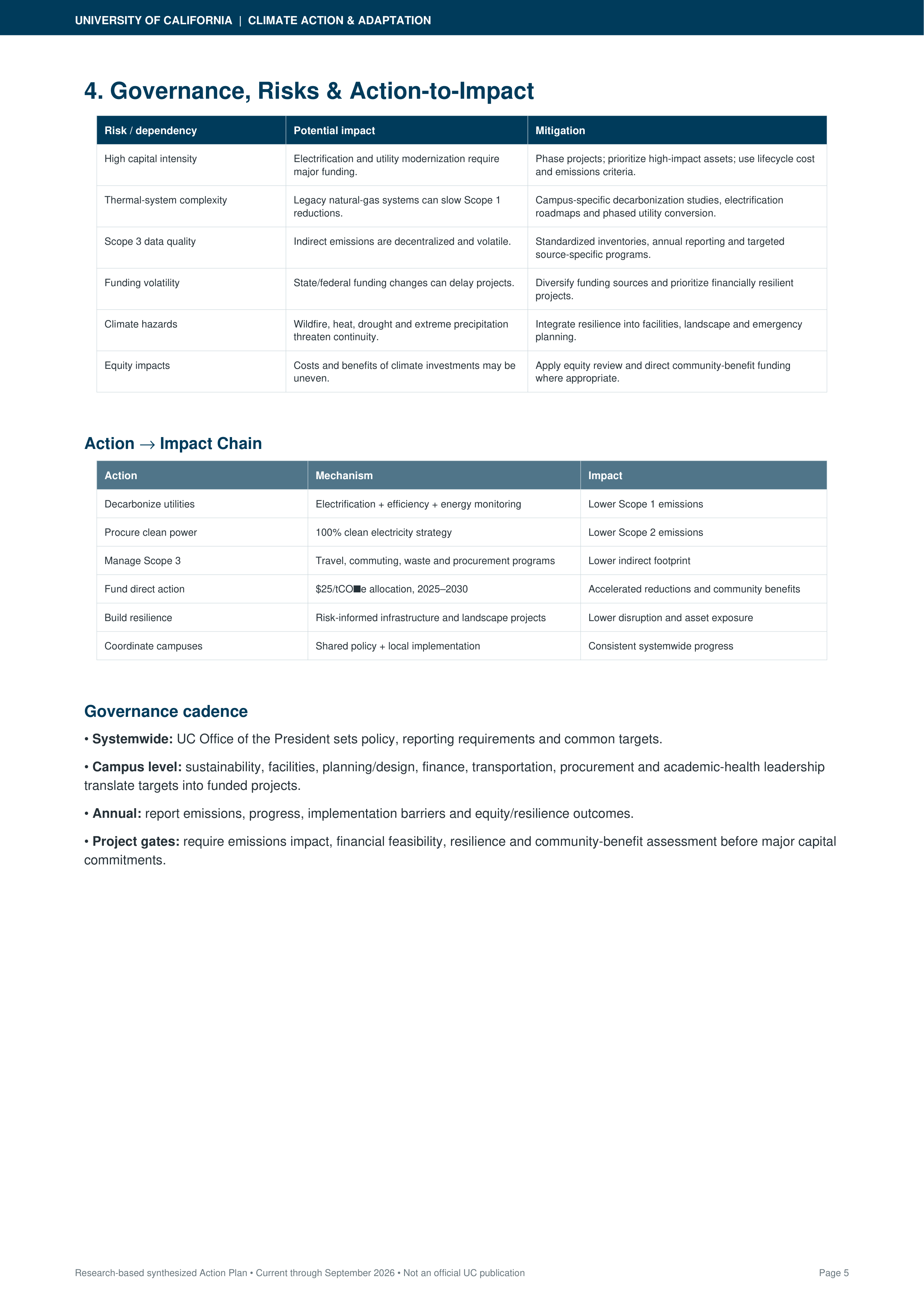
4. Governance, Risks & Action-to-Impact
Risk / dependency
Potential impact
Mitigation
High capital intensity
Electrification and utility modernization require
major funding.
Phase projects; prioritize high-impact assets; use lifecycle cost
and emissions criteria.
Thermal-system complexity
Legacy natural-gas systems can slow Scope 1
reductions.
Campus-specific decarbonization studies, electrification
roadmaps and phased utility conversion.
Scope 3 data quality
Indirect emissions are decentralized and volatile.
Standardized inventories, annual reporting and targeted
source-specific programs.
Funding volatility
State/federal funding changes can delay projects.
Diversify funding sources and prioritize financially resilient
projects.
Climate hazards
Wildfire, heat, drought and extreme precipitation
threaten continuity.
Integrate resilience into facilities, landscape and emergency
planning.
Equity impacts
Costs and benefits of climate investments may be
uneven.
Apply equity review and direct community-benefit funding
where appropriate.
Action
→
Impact Chain
Action
Mechanism
Impact
Decarbonize utilities
Electrification + efficiency + energy monitoring
Lower Scope 1 emissions
Procure clean power
100% clean electricity strategy
Lower Scope 2 emissions
Manage Scope 3
Travel, commuting, waste and procurement programs
Lower indirect footprint
Fund direct action
$25/tCO
I
e allocation, 2025–2030
Accelerated reductions and community benefits
Build resilience
Risk-informed infrastructure and landscape projects
Lower disruption and asset exposure
Coordinate campuses
Shared policy + local implementation
Consistent systemwide progress
Governance cadence
•
Systemwide:
UC Office of the President sets policy, reporting requirements and common targets.
•
Campus level:
sustainability, facilities, planning/design, finance, transportation, procurement and academic-health leadership
translate targets into funded projects.
•
Annual:
report emissions, progress, implementation barriers and equity/resilience outcomes.
•
Project gates:
require emissions impact, financial feasibility, resilience and community-benefit assessment before major capital
commitments.
UNIVERSITY OF CALIFORNIA | CLIMATE ACTION & ADAPTATION
Research-based synthesized Action Plan • Current through September 2026 • Not an official UC publication
Page 6
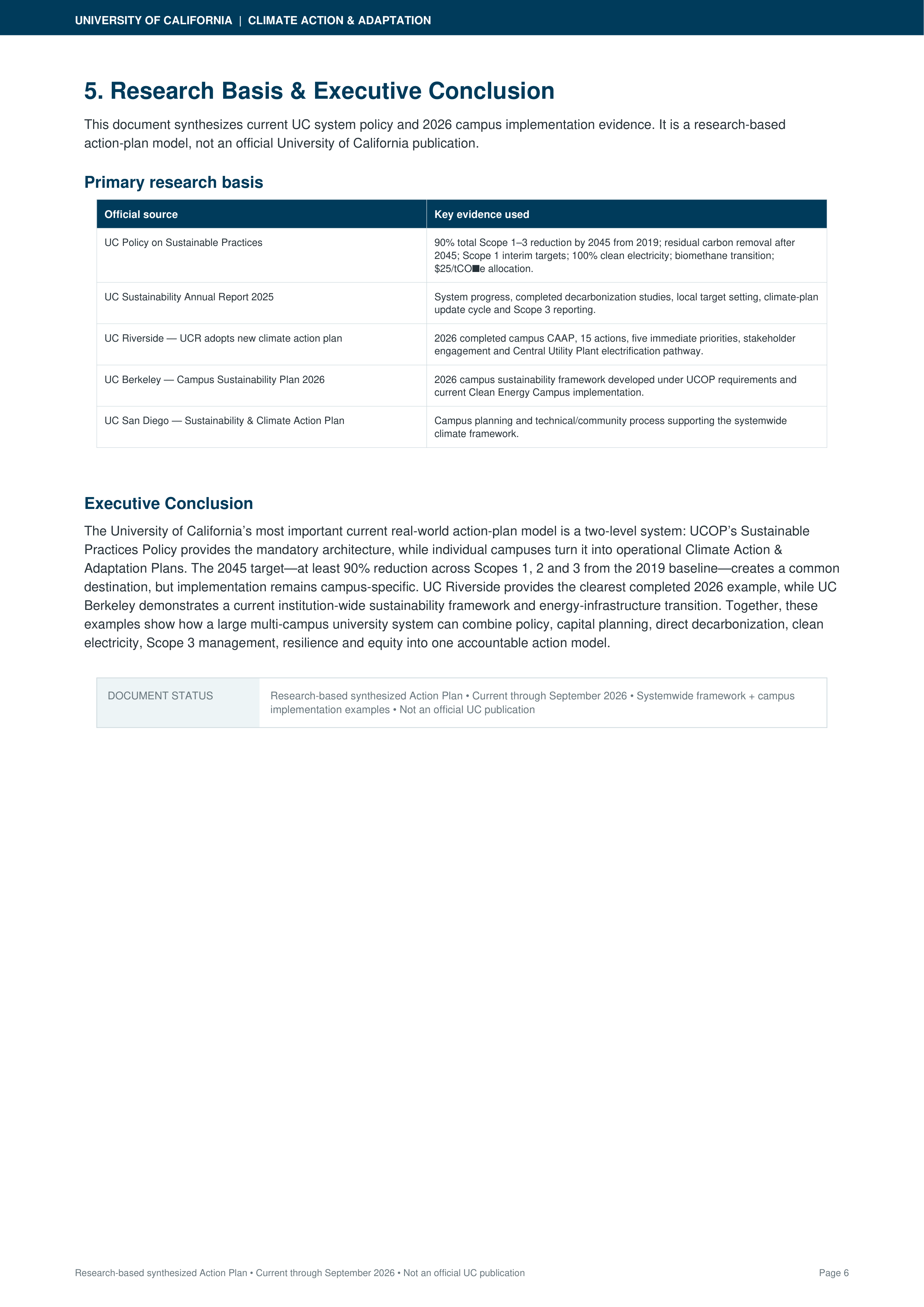
5. Research Basis & Executive Conclusion
This document synthesizes current UC system policy and 2026 campus implementation evidence. It is a research-based
action-plan model, not an official University of California publication.
Primary research basis
Official source
Key evidence used
UC Policy on Sustainable Practices
90% total Scope 1–3 reduction by 2045 from 2019; residual carbon removal after
2045; Scope 1 interim targets; 100% clean electricity; biomethane transition;
$25/tCO
I
e allocation.
UC Sustainability Annual Report 2025
System progress, completed decarbonization studies, local target setting, climate-plan
update cycle and Scope 3 reporting.
UC Riverside — UCR adopts new climate action plan
2026 completed campus CAAP, 15 actions, five immediate priorities, stakeholder
engagement and Central Utility Plant electrification pathway.
UC Berkeley — Campus Sustainability Plan 2026
2026 campus sustainability framework developed under UCOP requirements and
current Clean Energy Campus implementation.
UC San Diego — Sustainability & Climate Action Plan
Campus planning and technical/community process supporting the systemwide
climate framework.
Executive Conclusion
The University of California’s most important current real-world action-plan model is a two-level system: UCOP’s Sustainable
Practices Policy provides the mandatory architecture, while individual campuses turn it into operational Climate Action &
Adaptation Plans. The 2045 target—at least 90% reduction across Scopes 1, 2 and 3 from the 2019 baseline—creates a common
destination, but implementation remains campus-specific. UC Riverside provides the clearest completed 2026 example, while UC
Berkeley demonstrates a current institution-wide sustainability framework and energy-infrastructure transition. Together, these
examples show how a large multi-campus university system can combine policy, capital planning, direct decarbonization, clean
electricity, Scope 3 management, resilience and equity into one accountable action model.
DOCUMENT STATUS
Research-based synthesized Action Plan • Current through September 2026 • Systemwide framework + campus
implementation examples • Not an official UC publication