Bechtel Corporation | Micron Semiconductor Megafab Project Phase 1
Page 1
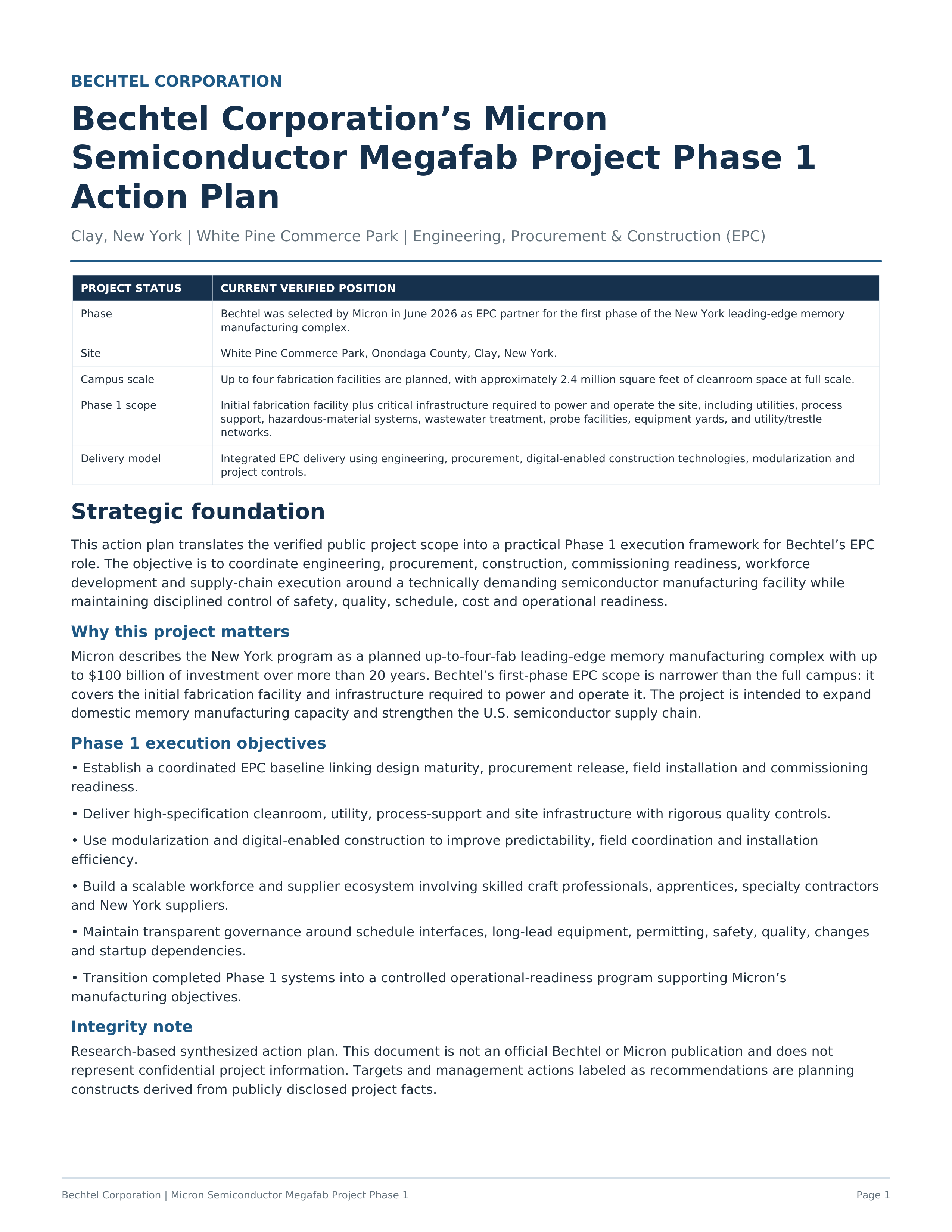
BECHTEL CORPORATION
Bechtel Corporation’s Micron
Semiconductor Megafab Project Phase 1
Action Plan
Clay, New York | White Pine Commerce Park | Engineering, Procurement & Construction (EPC)
PROJECT STATUS
CURRENT VERIFIED POSITION
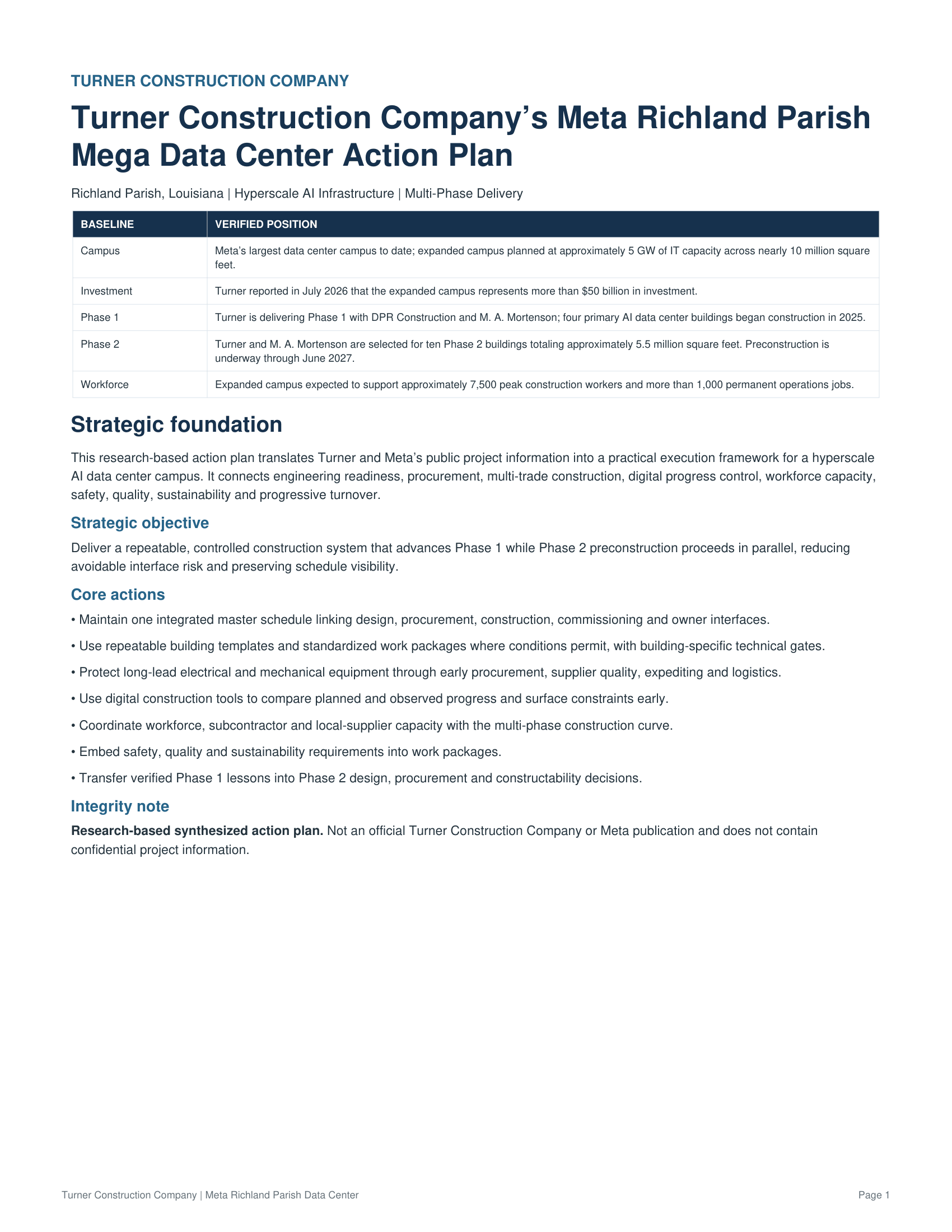
Phase
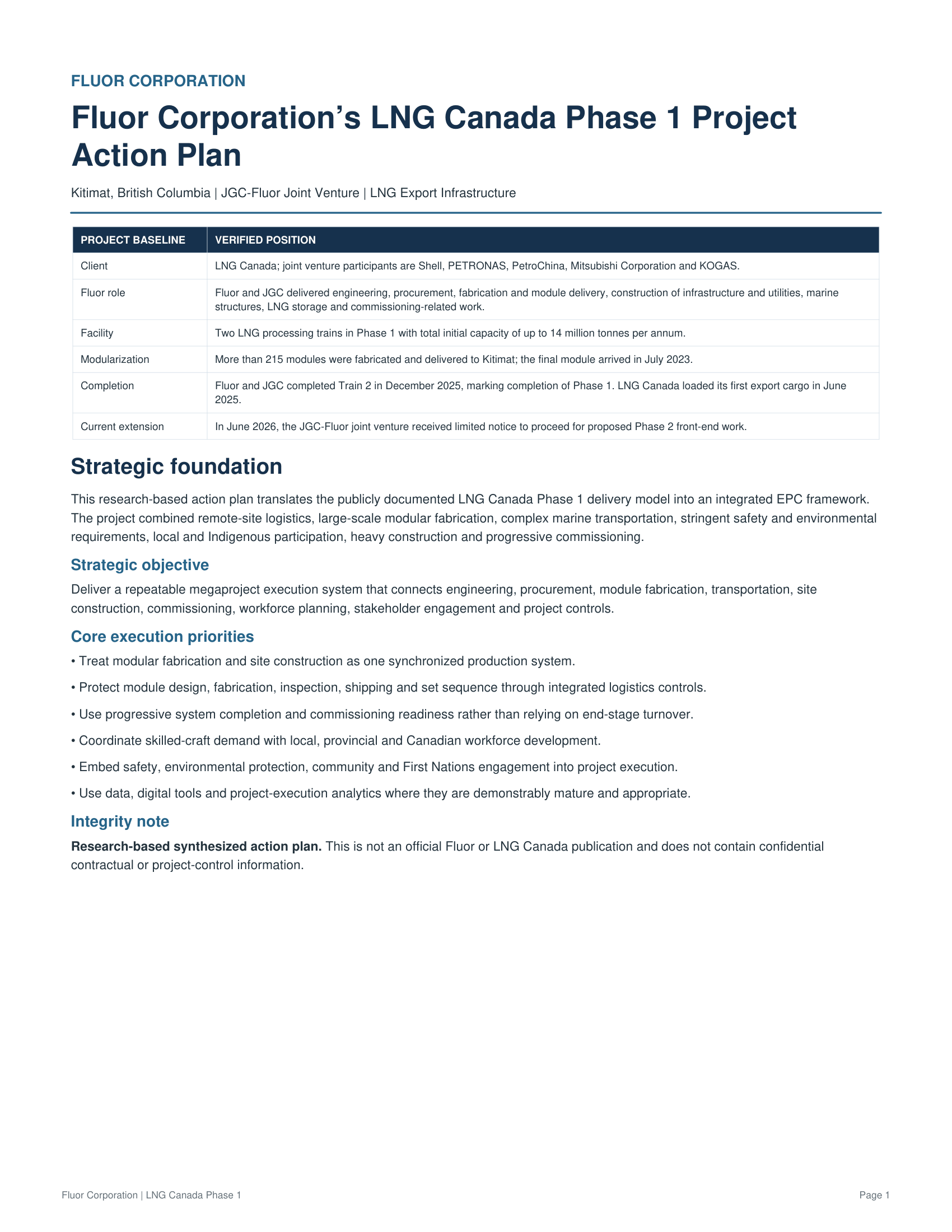
Bechtel was selected by Micron in June 2026 as EPC partner for the first phase of the New York leading-edge memory
manufacturing complex.
Site
White Pine Commerce Park, Onondaga County, Clay, New York.
Campus scale
Up to four fabrication facilities are planned, with approximately 2.4 million square feet of cleanroom space at full scale.
Phase 1 scope
Initial fabrication facility plus critical infrastructure required to power and operate the site, including utilities, process
support, hazardous-material systems, wastewater treatment, probe facilities, equipment yards, and utility/trestle
networks.
Delivery model
Integrated EPC delivery using engineering, procurement, digital-enabled construction technologies, modularization and
project controls.
Strategic foundation
This action plan translates the verified public project scope into a practical Phase 1 execution framework for Bechtel’s EPC
role. The objective is to coordinate engineering, procurement, construction, commissioning readiness, workforce
development and supply-chain execution around a technically demanding semiconductor manufacturing facility while
maintaining disciplined control of safety, quality, schedule, cost and operational readiness.
Why this project matters
Micron describes the New York program as a planned up-to-four-fab leading-edge memory manufacturing complex with up
to $100 billion of investment over more than 20 years. Bechtel’s first-phase EPC scope is narrower than the full campus: it
covers the initial fabrication facility and infrastructure required to power and operate it. The project is intended to expand
domestic memory manufacturing capacity and strengthen the U.S. semiconductor supply chain.
Phase 1 execution objectives
• Establish a coordinated EPC baseline linking design maturity, procurement release, field installation and commissioning
readiness.
• Deliver high-specification cleanroom, utility, process-support and site infrastructure with rigorous quality controls.
• Use modularization and digital-enabled construction to improve predictability, field coordination and installation
efficiency.
• Build a scalable workforce and supplier ecosystem involving skilled craft professionals, apprentices, specialty contractors
and New York suppliers.
• Maintain transparent governance around schedule interfaces, long-lead equipment, permitting, safety, quality, changes
and startup dependencies.
• Transition completed Phase 1 systems into a controlled operational-readiness program supporting Micron’s
manufacturing objectives.
Integrity note
Research-based synthesized action plan. This document is not an official Bechtel or Micron publication and does not
represent confidential project information. Targets and management actions labeled as recommendations are planning
constructs derived from publicly disclosed project facts.
Bechtel Corporation | Micron Semiconductor Megafab Project Phase 1
Page 2
1. Current Situation & Strategic Context
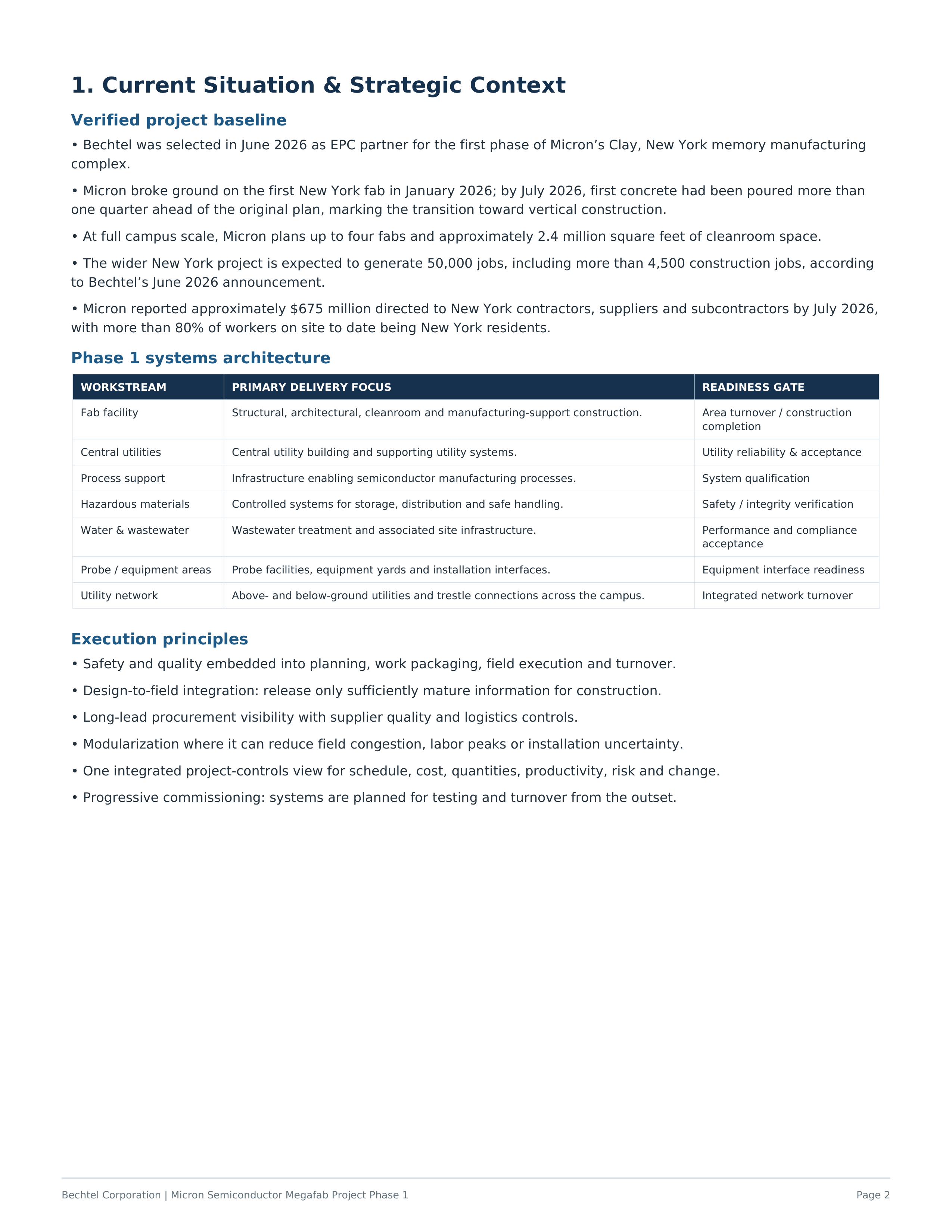
Verified project baseline
• Bechtel was selected in June 2026 as EPC partner for the first phase of Micron’s Clay, New York memory manufacturing
complex.
• Micron broke ground on the first New York fab in January 2026; by July 2026, first concrete had been poured more than
one quarter ahead of the original plan, marking the transition toward vertical construction.
• At full campus scale, Micron plans up to four fabs and approximately 2.4 million square feet of cleanroom space.
• The wider New York project is expected to generate 50,000 jobs, including more than 4,500 construction jobs, according
to Bechtel’s June 2026 announcement.
• Micron reported approximately $675 million directed to New York contractors, suppliers and subcontractors by July 2026,
with more than 80% of workers on site to date being New York residents.
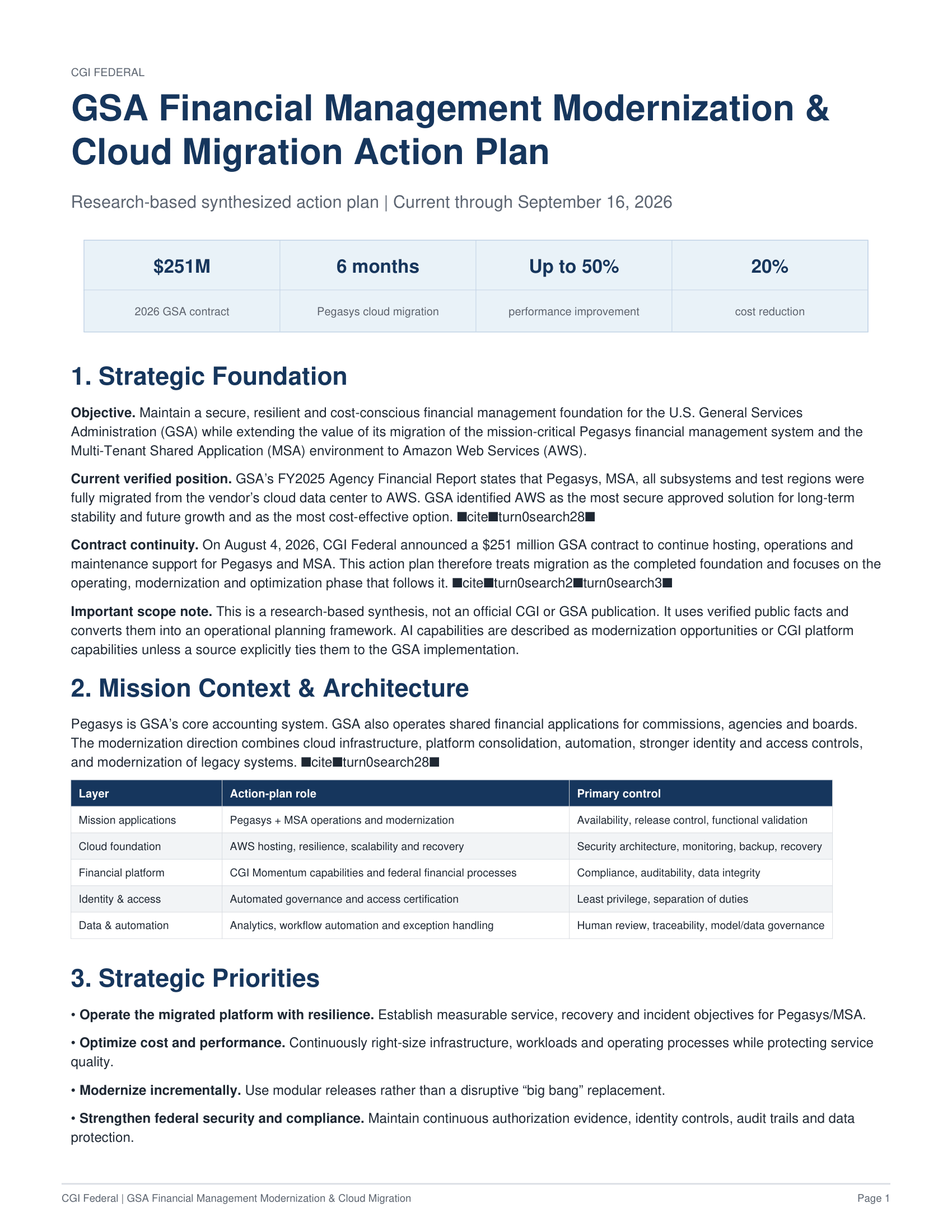
Phase 1 systems architecture
WORKSTREAM
PRIMARY DELIVERY FOCUS
READINESS GATE
Fab facility
Structural, architectural, cleanroom and manufacturing-support construction.
Area turnover / construction
completion
Central utilities
Central utility building and supporting utility systems.
Utility reliability & acceptance
Process support
Infrastructure enabling semiconductor manufacturing processes.
System qualification
Hazardous materials
Controlled systems for storage, distribution and safe handling.
Safety / integrity verification
Water & wastewater
Wastewater treatment and associated site infrastructure.
Performance and compliance
acceptance
Probe / equipment areas
Probe facilities, equipment yards and installation interfaces.
Equipment interface readiness
Utility network
Above- and below-ground utilities and trestle connections across the campus.
Integrated network turnover
Execution principles
• Safety and quality embedded into planning, work packaging, field execution and turnover.
• Design-to-field integration: release only sufficiently mature information for construction.
• Long-lead procurement visibility with supplier quality and logistics controls.
• Modularization where it can reduce field congestion, labor peaks or installation uncertainty.
• One integrated project-controls view for schedule, cost, quantities, productivity, risk and change.
• Progressive commissioning: systems are planned for testing and turnover from the outset.
Bechtel Corporation | Micron Semiconductor Megafab Project Phase 1
Page 3
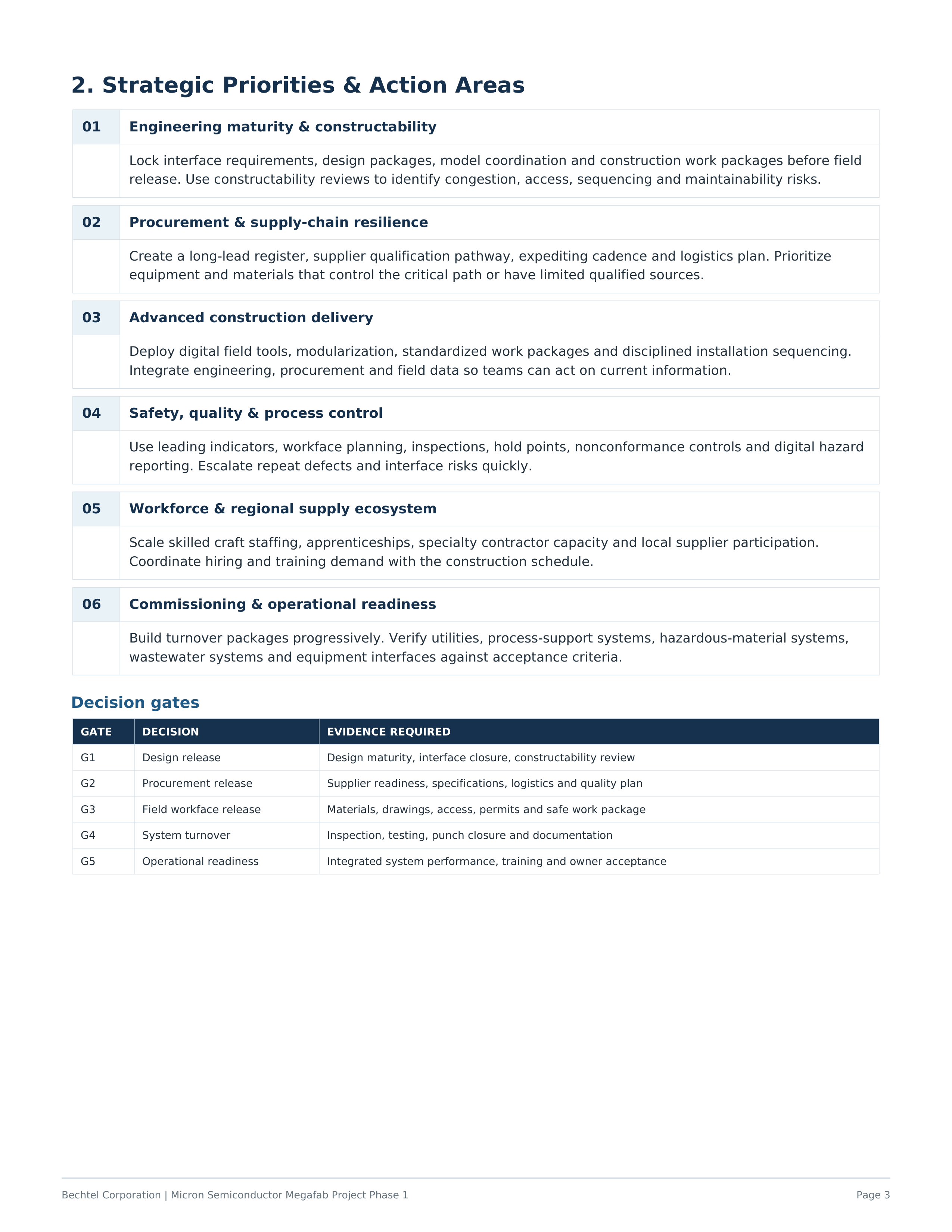
2. Strategic Priorities & Action Areas
01
Engineering maturity & constructability
Lock interface requirements, design packages, model coordination and construction work packages before field
release. Use constructability reviews to identify congestion, access, sequencing and maintainability risks.
02
Procurement & supply-chain resilience
Create a long-lead register, supplier qualification pathway, expediting cadence and logistics plan. Prioritize
equipment and materials that control the critical path or have limited qualified sources.
03
Advanced construction delivery
Deploy digital field tools, modularization, standardized work packages and disciplined installation sequencing.
Integrate engineering, procurement and field data so teams can act on current information.
04
Safety, quality & process control
Use leading indicators, workface planning, inspections, hold points, nonconformance controls and digital hazard
reporting. Escalate repeat defects and interface risks quickly.
05
Workforce & regional supply ecosystem
Scale skilled craft staffing, apprenticeships, specialty contractor capacity and local supplier participation.
Coordinate hiring and training demand with the construction schedule.
06
Commissioning & operational readiness
Build turnover packages progressively. Verify utilities, process-support systems, hazardous-material systems,
wastewater systems and equipment interfaces against acceptance criteria.
Decision gates
GATE
DECISION
EVIDENCE REQUIRED
G1
Design release
Design maturity, interface closure, constructability review
G2
Procurement release
Supplier readiness, specifications, logistics and quality plan
G3
Field workface release
Materials, drawings, access, permits and safe work package
G4
System turnover
Inspection, testing, punch closure and documentation
G5
Operational readiness
Integrated system performance, training and owner acceptance
Bechtel Corporation | Micron Semiconductor Megafab Project Phase 1
Page 4
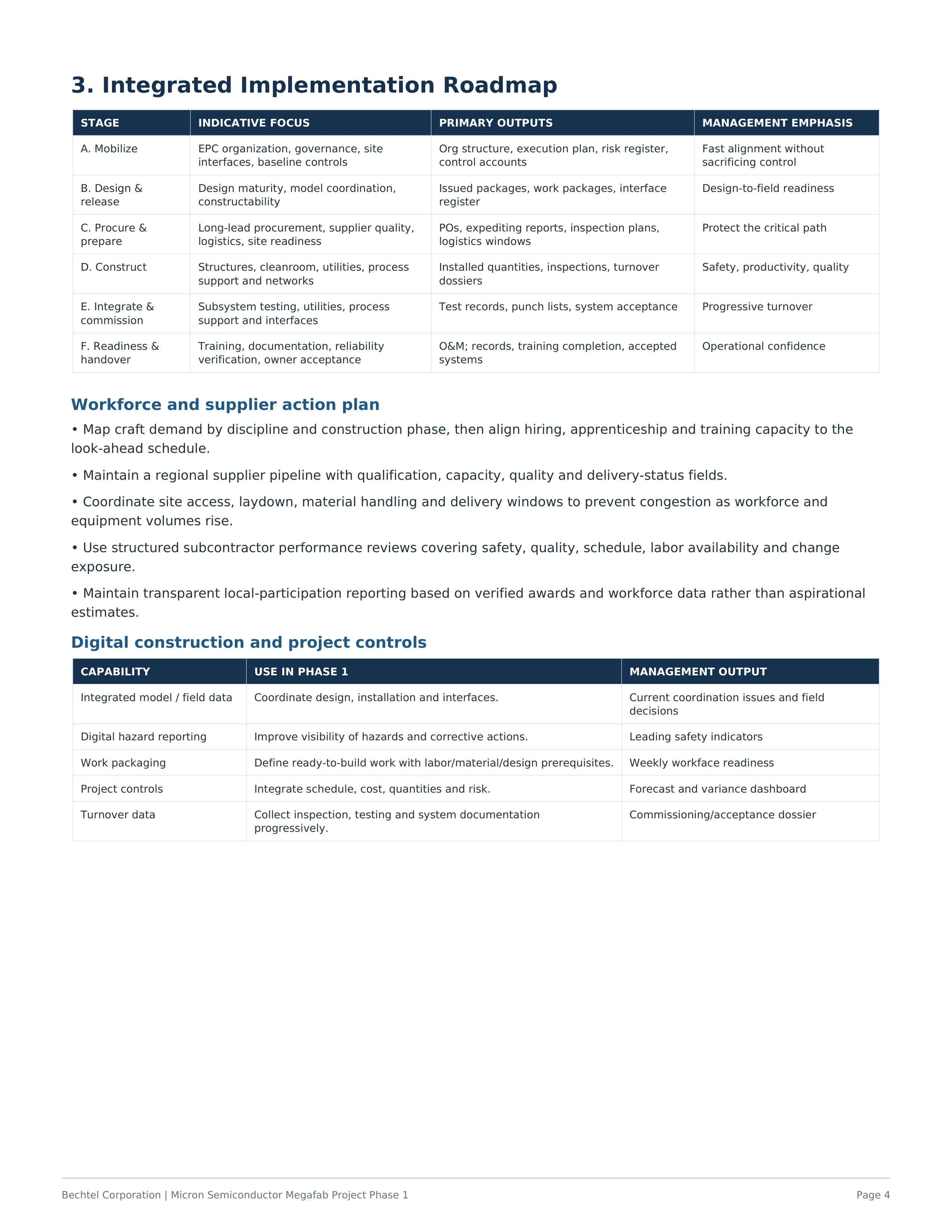
3. Integrated Implementation Roadmap
STAGE
INDICATIVE FOCUS
PRIMARY OUTPUTS
MANAGEMENT EMPHASIS
A. Mobilize
EPC organization, governance, site
interfaces, baseline controls
Org structure, execution plan, risk register,
control accounts
Fast alignment without
sacrificing control
B. Design &
release
Design maturity, model coordination,
constructability
Issued packages, work packages, interface
register
Design-to-field readiness
C. Procure &
prepare
Long-lead procurement, supplier quality,
logistics, site readiness
POs, expediting reports, inspection plans,
logistics windows
Protect the critical path
D. Construct
Structures, cleanroom, utilities, process
support and networks
Installed quantities, inspections, turnover
dossiers
Safety, productivity, quality
E. Integrate &
commission
Subsystem testing, utilities, process
support and interfaces
Test records, punch lists, system acceptance
Progressive turnover
F. Readiness &
handover
Training, documentation, reliability
verification, owner acceptance
O&M; records, training completion, accepted
systems
Operational confidence
Workforce and supplier action plan
• Map craft demand by discipline and construction phase, then align hiring, apprenticeship and training capacity to the
look-ahead schedule.
• Maintain a regional supplier pipeline with qualification, capacity, quality and delivery-status fields.
• Coordinate site access, laydown, material handling and delivery windows to prevent congestion as workforce and
equipment volumes rise.
• Use structured subcontractor performance reviews covering safety, quality, schedule, labor availability and change
exposure.
• Maintain transparent local-participation reporting based on verified awards and workforce data rather than aspirational
estimates.
Digital construction and project controls
CAPABILITY
USE IN PHASE 1
MANAGEMENT OUTPUT
Integrated model / field data
Coordinate design, installation and interfaces.
Current coordination issues and field
decisions
Digital hazard reporting
Improve visibility of hazards and corrective actions.
Leading safety indicators
Work packaging
Define ready-to-build work with labor/material/design prerequisites.
Weekly workface readiness
Project controls
Integrate schedule, cost, quantities and risk.
Forecast and variance dashboard
Turnover data
Collect inspection, testing and system documentation
progressively.
Commissioning/acceptance dossier
Bechtel Corporation | Micron Semiconductor Megafab Project Phase 1
Page 5
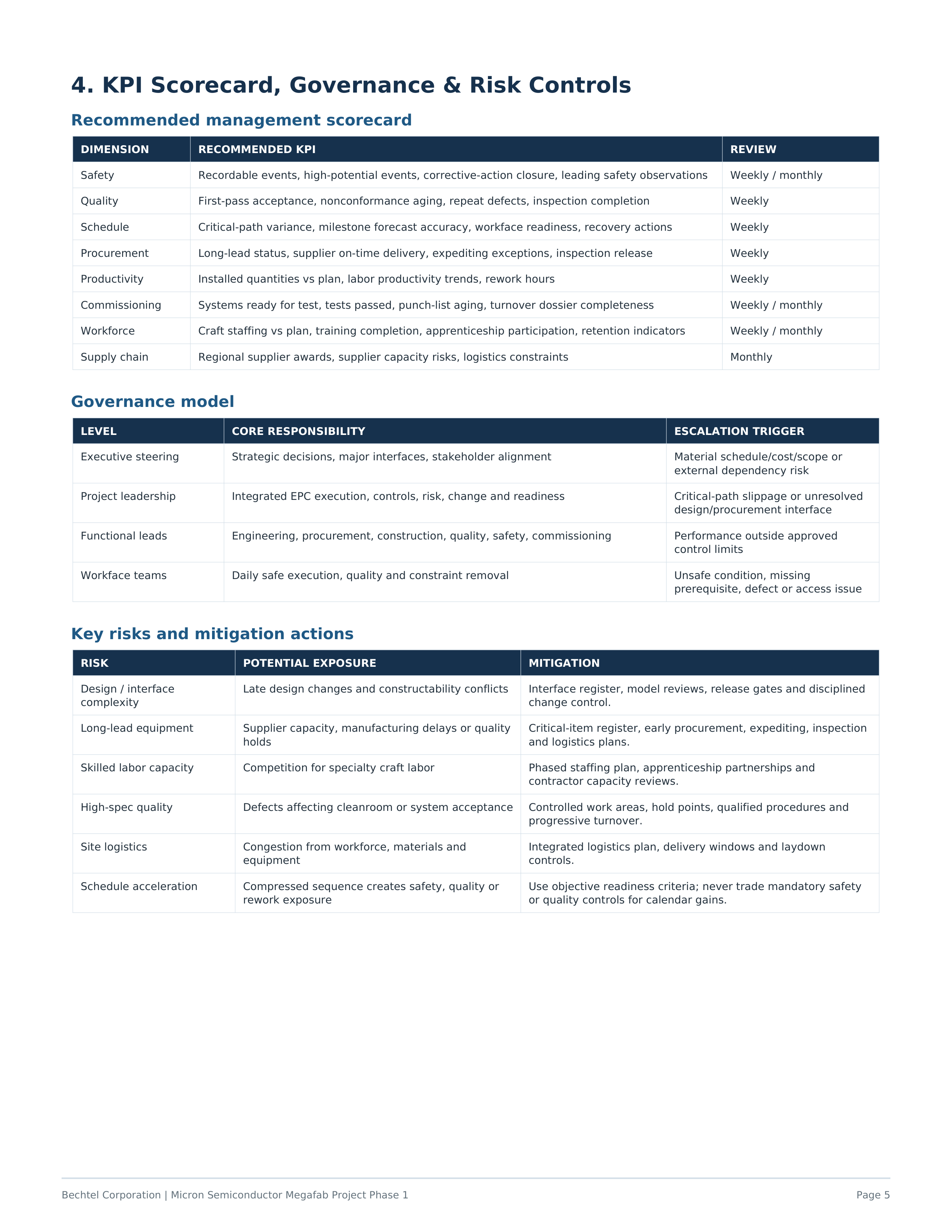
4. KPI Scorecard, Governance & Risk Controls
Recommended management scorecard
DIMENSION
RECOMMENDED KPI
REVIEW
Safety
Recordable events, high-potential events, corrective-action closure, leading safety observations
Weekly / monthly
Quality
First-pass acceptance, nonconformance aging, repeat defects, inspection completion
Weekly
Schedule
Critical-path variance, milestone forecast accuracy, workface readiness, recovery actions
Weekly
Procurement
Long-lead status, supplier on-time delivery, expediting exceptions, inspection release
Weekly
Productivity
Installed quantities vs plan, labor productivity trends, rework hours
Weekly
Commissioning
Systems ready for test, tests passed, punch-list aging, turnover dossier completeness
Weekly / monthly
Workforce
Craft staffing vs plan, training completion, apprenticeship participation, retention indicators
Weekly / monthly
Supply chain
Regional supplier awards, supplier capacity risks, logistics constraints
Monthly
Governance model
LEVEL
CORE RESPONSIBILITY
ESCALATION TRIGGER
Executive steering
Strategic decisions, major interfaces, stakeholder alignment
Material schedule/cost/scope or
external dependency risk
Project leadership
Integrated EPC execution, controls, risk, change and readiness
Critical-path slippage or unresolved
design/procurement interface
Functional leads
Engineering, procurement, construction, quality, safety, commissioning
Performance outside approved
control limits
Workface teams
Daily safe execution, quality and constraint removal
Unsafe condition, missing
prerequisite, defect or access issue
Key risks and mitigation actions
RISK
POTENTIAL EXPOSURE
MITIGATION
Design / interface
complexity
Late design changes and constructability conflicts
Interface register, model reviews, release gates and disciplined
change control.
Long-lead equipment
Supplier capacity, manufacturing delays or quality
holds
Critical-item register, early procurement, expediting, inspection
and logistics plans.
Skilled labor capacity
Competition for specialty craft labor
Phased staffing plan, apprenticeship partnerships and
contractor capacity reviews.
High-spec quality
Defects affecting cleanroom or system acceptance
Controlled work areas, hold points, qualified procedures and
progressive turnover.
Site logistics
Congestion from workforce, materials and
equipment
Integrated logistics plan, delivery windows and laydown
controls.
Schedule acceleration
Compressed sequence creates safety, quality or
rework exposure
Use objective readiness criteria; never trade mandatory safety
or quality controls for calendar gains.
Bechtel Corporation | Micron Semiconductor Megafab Project Phase 1
Page 6
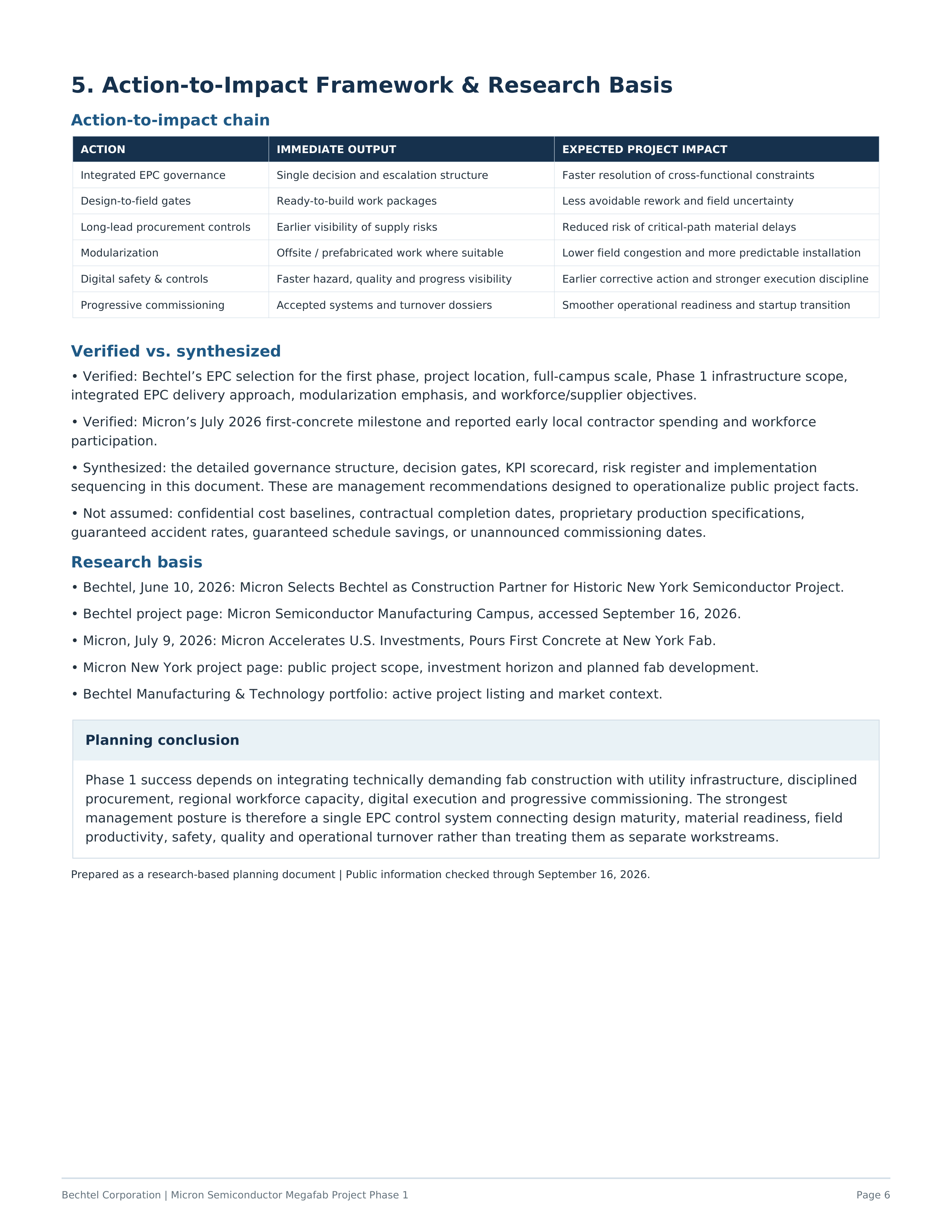
5. Action-to-Impact Framework & Research Basis
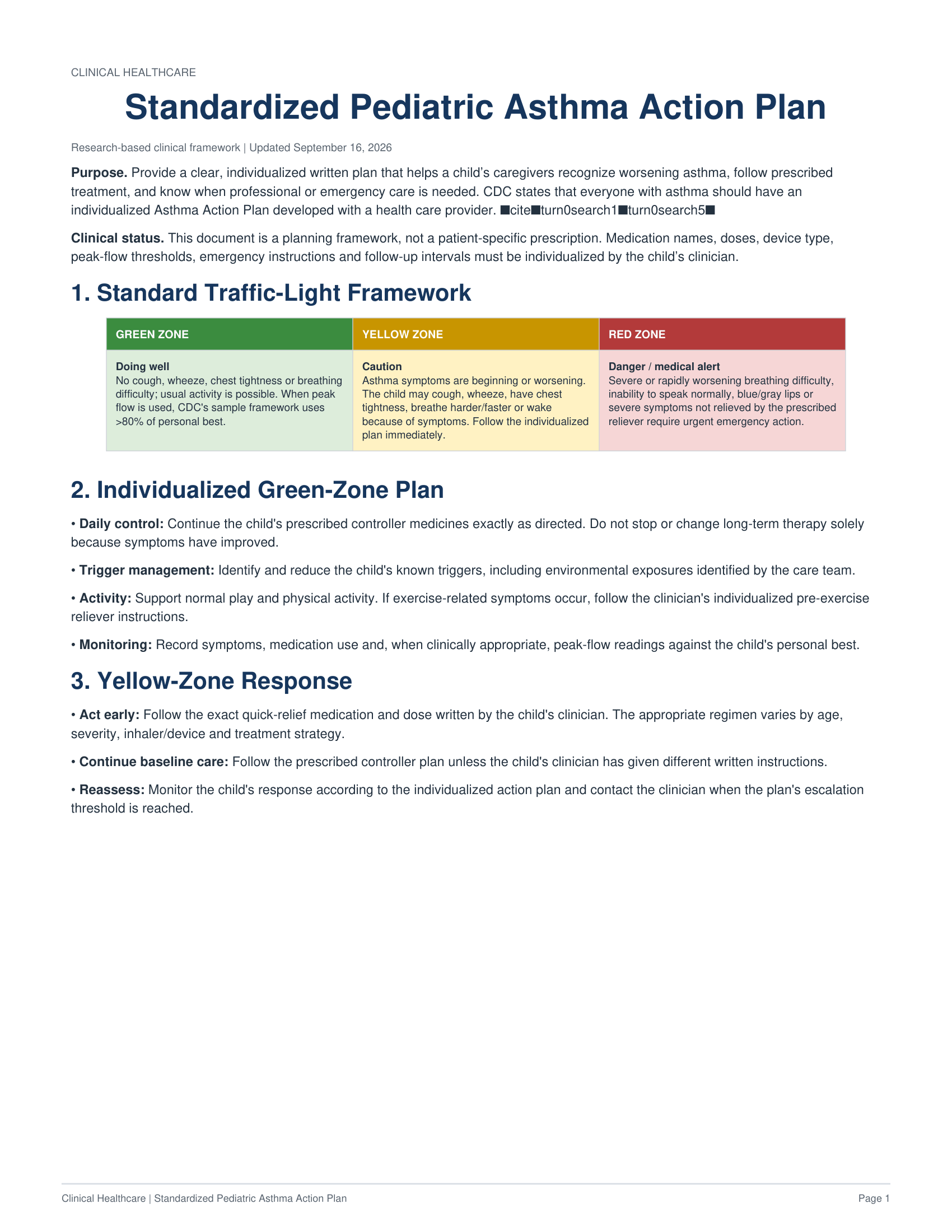
Action-to-impact chain
ACTION
IMMEDIATE OUTPUT
EXPECTED PROJECT IMPACT
Integrated EPC governance
Single decision and escalation structure
Faster resolution of cross-functional constraints
Design-to-field gates
Ready-to-build work packages
Less avoidable rework and field uncertainty
Long-lead procurement controls
Earlier visibility of supply risks
Reduced risk of critical-path material delays
Modularization
Offsite / prefabricated work where suitable
Lower field congestion and more predictable installation
Digital safety & controls
Faster hazard, quality and progress visibility
Earlier corrective action and stronger execution discipline
Progressive commissioning
Accepted systems and turnover dossiers
Smoother operational readiness and startup transition
Verified vs. synthesized
• Verified: Bechtel’s EPC selection for the first phase, project location, full-campus scale, Phase 1 infrastructure scope,
integrated EPC delivery approach, modularization emphasis, and workforce/supplier objectives.
• Verified: Micron’s July 2026 first-concrete milestone and reported early local contractor spending and workforce
participation.
• Synthesized: the detailed governance structure, decision gates, KPI scorecard, risk register and implementation
sequencing in this document. These are management recommendations designed to operationalize public project facts.
• Not assumed: confidential cost baselines, contractual completion dates, proprietary production specifications,
guaranteed accident rates, guaranteed schedule savings, or unannounced commissioning dates.
Research basis
• Bechtel, June 10, 2026: Micron Selects Bechtel as Construction Partner for Historic New York Semiconductor Project.
• Bechtel project page: Micron Semiconductor Manufacturing Campus, accessed September 16, 2026.
• Micron, July 9, 2026: Micron Accelerates U.S. Investments, Pours First Concrete at New York Fab.
• Micron New York project page: public project scope, investment horizon and planned fab development.
• Bechtel Manufacturing & Technology portfolio: active project listing and market context.
Planning conclusion
Phase 1 success depends on integrating technically demanding fab construction with utility infrastructure, disciplined
procurement, regional workforce capacity, digital execution and progressive commissioning. The strongest
management posture is therefore a single EPC control system connecting design maturity, material readiness, field
productivity, safety, quality and operational turnover rather than treating them as separate workstreams.
Prepared as a research-based planning document | Public information checked through September 16, 2026.