
AI SEO tools are software platforms that use artificial intelligence to automate and improve search engine optimization tasks such as keyword research, content optimization, technical audits, and search visibility tracking. In 2026, AI SEO tools also help businesses optimize for AI-generated answers, not just traditional search rankings. These platforms combine machine learning, generative AI, and data analysis to help marketers scale SEO workflows, analyze search behavior, and improve visibility across search engines and AI assistants.
List of Best AI SEO Tools
- Semrush AI
- Ahrefs AI
- Surfer SEO AI
- Clearscope AI
- Frase AI
- SE Ranking AI
- Screaming Frog SEO AI
- seoClarity AI
- Jasper AI
- ChatGPT AI
- BuzzSumo AI
- AnswerThePublic AI
- LLMClicks AI
- Originality AI
- Keywordly AI
AI SEO Tools Comparison Table
The following comparison helps marketers evaluate the best AI SEO tools based on their capabilities, use cases, and pricing models.
| Tool | Best For | Key Features | Pricing | Category |
|---|---|---|---|---|
| Semrush AI | All-in-one SEO platform | Keyword research, rank tracking, AI insights | From $139/month | SEO Suite |
| Ahrefs AI | Backlink & competitor research | Content gap, backlink analysis | From $129/month | SEO Suite |
| Surfer SEO AI | Content optimization | NLP analysis, content editor | From $79/month | Content SEO |
| Clearscope AI | Content quality optimization | Keyword recommendations, scoring | From $189/month | Content SEO |
| Frase AI | Content briefs & AEO | Question research, AI briefs | From $38/month | Content Research |
| SE Ranking AI | Local & agency SEO | Rank tracking, audits | From $65/month | SEO Suite |
| Screaming Frog SEO AI | Technical SEO audits | Website crawler, issue detection | From $279/year | Technical SEO |
| seoClarity AI | Enterprise SEO platform | AI assistant, content tools | Custom pricing | Enterprise SEO |
| Jasper AI | AI content writing | Marketing copy generation | From $49/month | Content AI |
| ChatGPT AI | AI SEO assistant | research, analysis, automation | $20/month | AI assistant |
| BuzzSumo AI | Content ideation | topic discovery, trends | From $199/month | Content research |
| AnswerThePublic AI | Question-based keyword research | query visualization | From $11/month | Keyword research |
| LLMClicks AI | AI search visibility tracking | LLM citation tracking | From $49/month | AEO analytics |
| Originality AI | AI content detection | plagiarism + AI detection | From $14.95/month | Content QA |
| Keywordly AI | Keyword clustering | Reddit research + clustering | From $14/month | Keyword strategy |
While the table above provides a quick comparison, choosing the right AI SEO tool depends on your workflow, technical expertise, and optimization goals. The following section explains each tool in detail, including how it works, its features, and who should use it.
1. Semrush AI
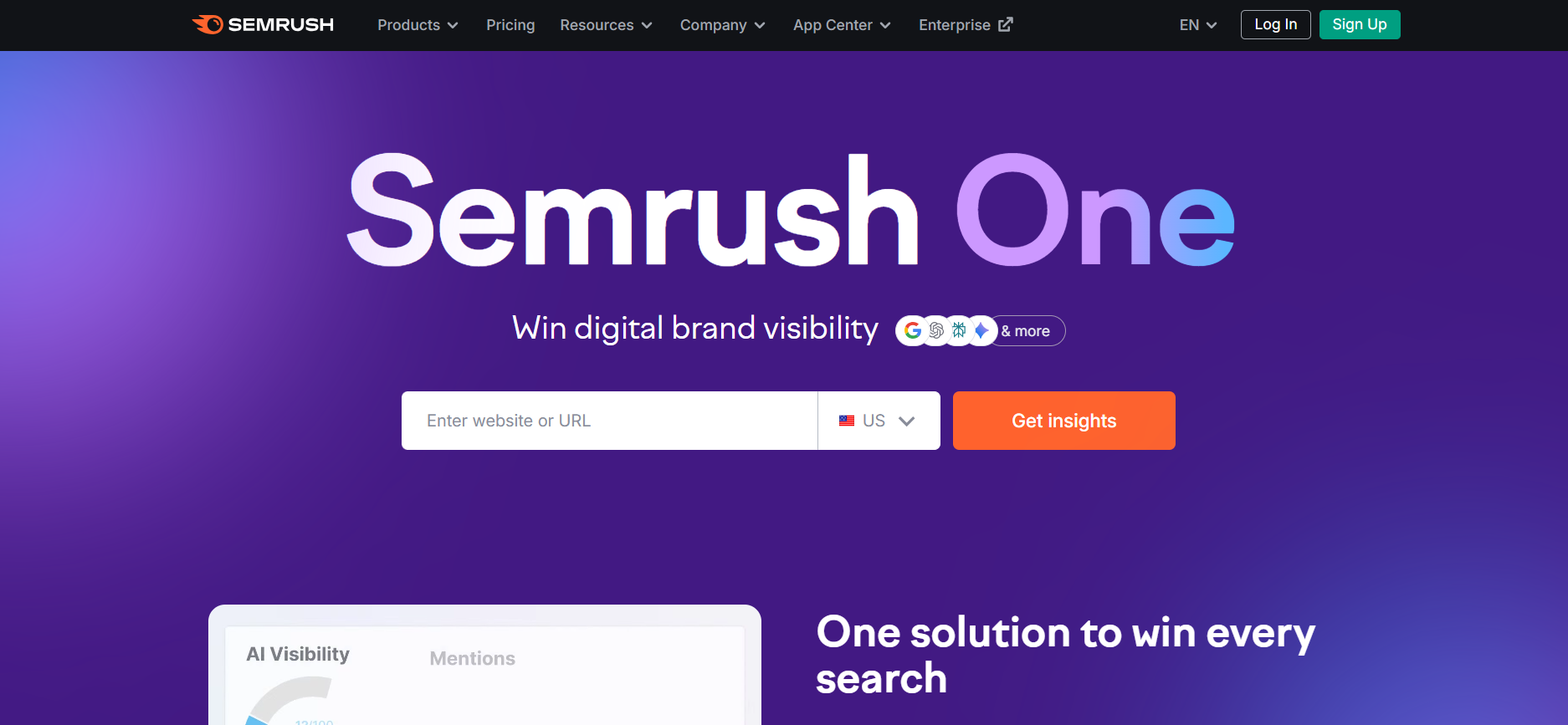
What is Semrush AI
Semrush AI is the artificial intelligence layer integrated within the Semrush platform that helps marketers automate SEO analysis, keyword research, and performance monitoring. It combines machine learning models, search data, and predictive analytics to provide recommendations for improving search visibility. In 2026, Semrush AI also supports workflow automation, content optimization insights, and AI-driven SEO monitoring for large websites and marketing teams.
How to use Semrush AI for SEO
- Research keywords using the Keyword Magic Tool to discover search terms and related topic clusters.
- Analyze competitors using tools like Domain Overview and Keyword Gap to identify ranking opportunities.
- Track rankings through Position Tracking to monitor keyword performance across locations and devices.
- Run site audits to detect technical SEO issues such as broken links, slow pages, or missing metadata.
Key Features of Semrush AI
- AI-powered keyword research and clustering
- Position tracking for keyword rankings
- Site audit automation with technical recommendations
- Keyword Gap and Backlink Gap analysis
- AI Copilot for automated SEO insights
- Competitor traffic and content analysis
- Market trend and search intent data
Use Cases of Semrush AI for SEO
Semrush AI is commonly used to manage complete SEO strategies across large websites and marketing campaigns. Teams use it to identify keyword opportunities, analyze competitor rankings, track organic traffic growth, and diagnose technical issues affecting search performance. It is also widely used for planning content strategies based on real search demand and monitoring ranking changes across multiple regions.
Who Should Use Semrush AI
- SEO professionals managing large websites
- Digital marketing agencies handling multiple clients
- Content teams planning SEO-driven editorial strategies
- E-commerce businesses optimizing product pages
- Enterprises requiring detailed market and competitor analysis
Pricing
Semrush offers multiple subscription tiers, with plans typically starting around $139 per month for smaller teams and scaling to enterprise plans with expanded data access and advanced features.
2. Ahrefs AI
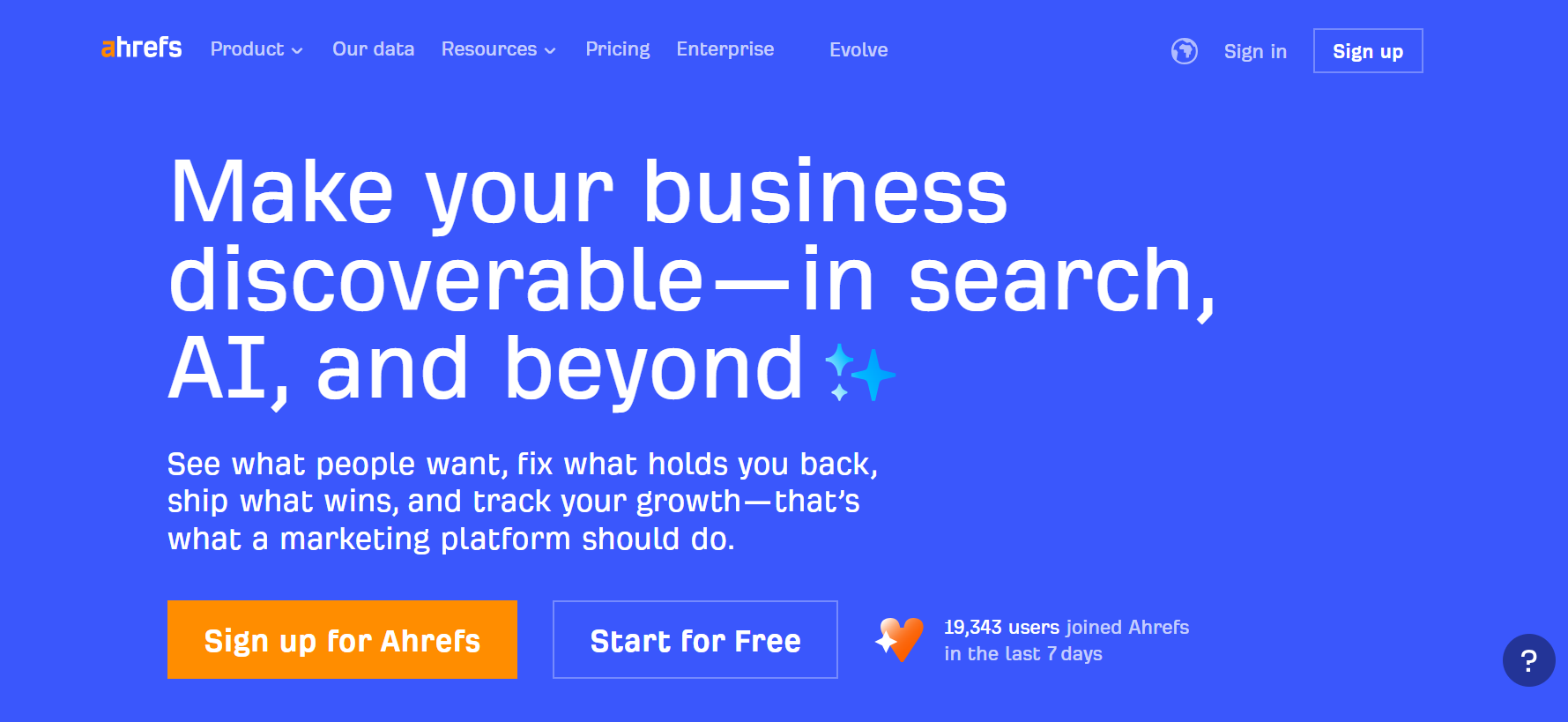
What is Ahrefs AI
Ahrefs AI refers to the artificial intelligence and data analysis capabilities integrated into the Ahrefs platform to help marketers analyze backlinks, monitor keyword rankings, and research competitors. The platform uses large-scale web crawling and machine learning to identify ranking patterns and SEO opportunities. In 2026, Ahrefs AI supports advanced backlink intelligence, keyword discovery, and competitive analysis across global search results.
How to use Ahrefs AI for SEO
- Analyze competitors using Site Explorer to understand their backlinks, top pages, and organic keywords.
- Discover keywords with Keywords Explorer to find search terms with high traffic potential.
- Identify content opportunities using the Content Gap tool to see keywords competitors rank for but your site does not.
- Monitor rankings and technical health through Rank Tracker and Site Audit features.
Key Features of Ahrefs AI
- Large-scale backlink database and analysis
- Site Explorer for competitor SEO analysis
- Keywords Explorer for keyword discovery and ranking potential
- Content Gap analysis to identify missing keyword opportunities
- Rank Tracker for monitoring keyword positions
- Site Audit for technical SEO diagnostics
- Traffic value estimation for ranking keywords
Use Cases of Ahrefs AI for SEO
Ahrefs AI is widely used for backlink analysis, competitor research, and keyword strategy development. SEO teams use it to study competitor content strategies, discover high-value keywords, and monitor ranking changes over time. The platform is also used to audit websites for technical SEO issues and evaluate the authority and link profile of any domain on the web.
Who Should Use Ahrefs AI
- SEO professionals conducting backlink and competitor analysis
- Digital marketing agencies managing SEO campaigns
- Content strategists researching keyword opportunities
- Businesses improving domain authority through link building
- Website owners monitoring organic search performance
Pricing
Ahrefs offers several subscription plans, typically starting at around $129 per month for the Lite plan, with higher tiers providing expanded data limits, advanced analytics, and enterprise features.
3. Surfer SEO AI
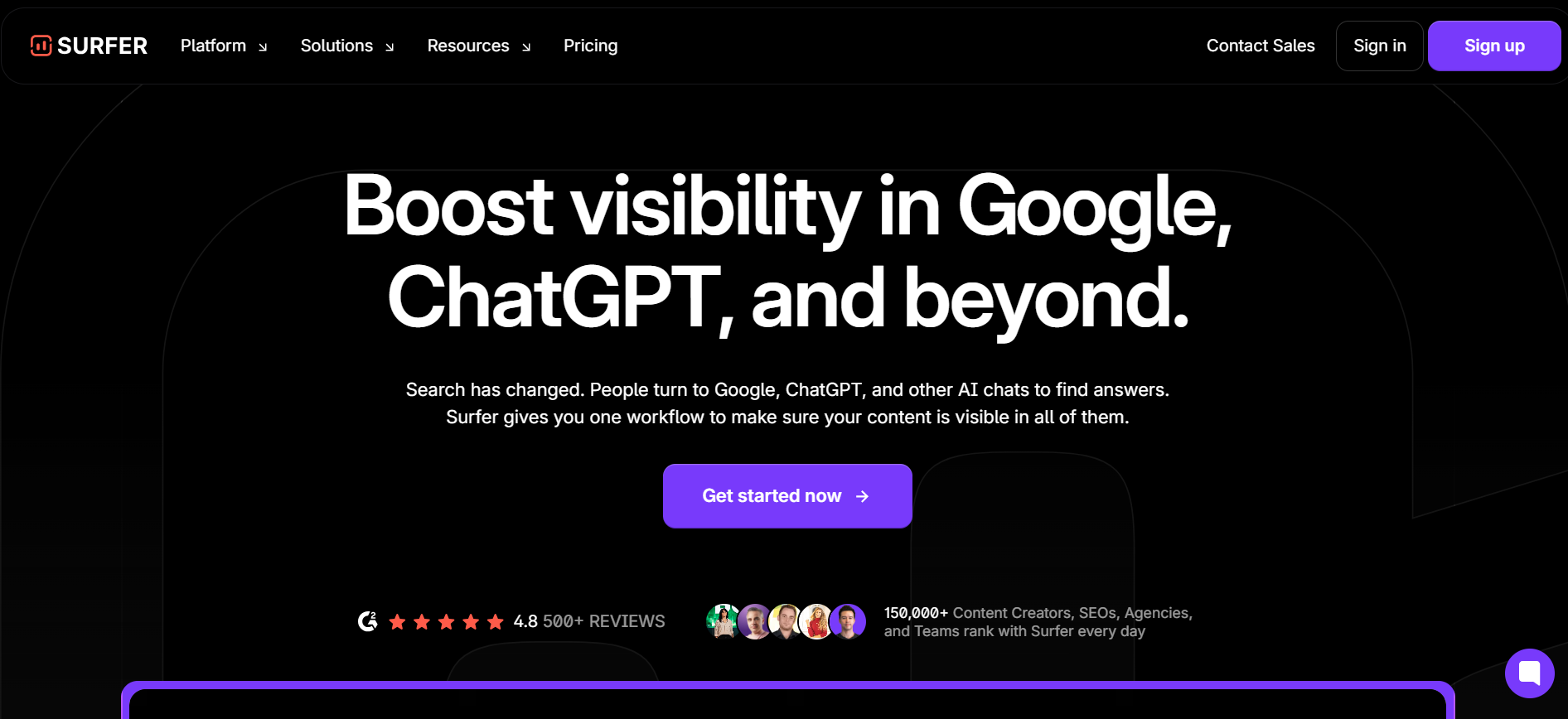
What is Surfer SEO AI
Surfer SEO AI is the artificial intelligence system integrated into the Surfer SEO platform that helps marketers optimize content for search engines. It analyzes top-ranking pages, search intent, and semantic keywords to provide recommendations for improving content structure and relevance. In 2026, Surfer SEO AI uses Natural Language Processing (NLP) and SERP data to guide writers in creating content that aligns with modern search algorithms and AI-driven search results.
How to use Surfer SEO AI for SEO
- Enter a target keyword in the Content Editor to analyze top-ranking pages for that query.
- Review optimization recommendations such as word count, headings, and related keywords.
- Write or update content while monitoring the real-time content score and SEO suggestions.
- Publish and track performance after implementing recommended improvements.
Key Features of Surfer SEO AI
- AI-powered Content Editor for real-time optimization
- NLP keyword and entity suggestions
- SERP Analyzer for competitor page analysis
- AI-generated content outlines and drafts
- Content score and readability evaluation
- Internal linking recommendations
- Integration with content management systems
Use Cases of Surfer SEO AI for SEO
Surfer SEO AI is commonly used by content teams and SEO specialists to optimize blog posts, landing pages, and long-form articles. It helps ensure that content covers relevant topics and keywords used by high-ranking pages. Many teams use it to improve existing articles, build SEO-driven content briefs, and scale content production while maintaining optimization standards.
Who Should Use Surfer SEO AI
- SEO writers and content marketers
- Agencies managing content optimization projects
- Businesses publishing large volumes of blog content
- Marketing teams improving on-page SEO performance
- Website owners updating underperforming articles
Pricing
Surfer SEO offers subscription plans starting at around $79 per month, with higher tiers providing more content editor credits, advanced features, and team collaboration tools.
4. Clearscope AI
What is Clearscope AI
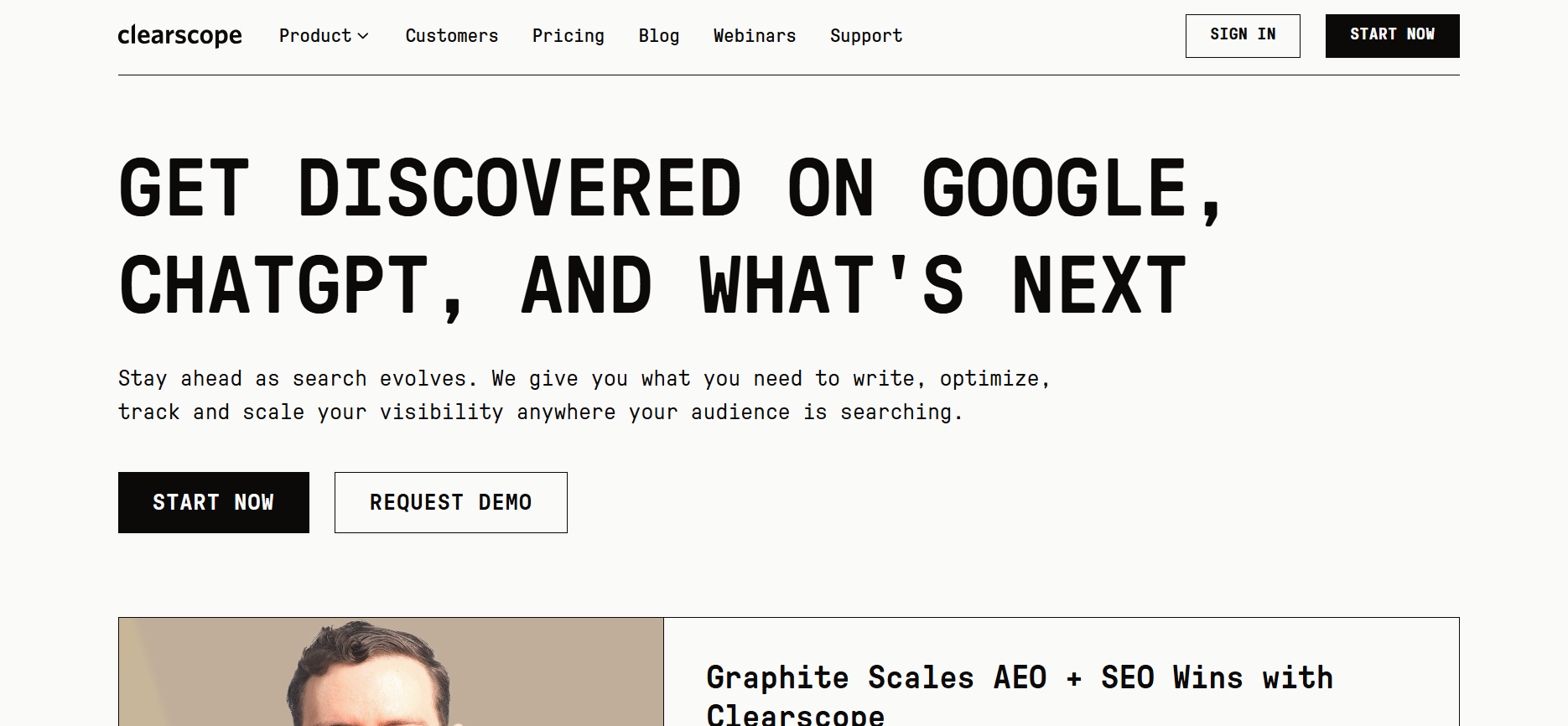
Clearscope AI is a content optimization platform that helps marketers improve the relevance and quality of web pages for search engines. It analyzes top-ranking search results for a keyword and generates recommendations on related terms, topics, and content structure. The platform uses Natural Language Processing (NLP) and AI models to evaluate how comprehensively an article covers a topic and provides a real-time content grade while writing.
How to use Clearscope AI for SEO
- Create a content report by entering a target keyword to analyze the top-ranking pages for that query.
- Review recommended keywords and topics generated from competitor content analysis.
- Write or optimize the article inside the editor while monitoring the real-time content grade.
- Improve coverage and readability by incorporating suggested terms and answering related questions.
Key Features of Clearscope AI
- AI-powered content optimization reports
- Real-time content grading based on SERP analysis
- NLP keyword and topic recommendations
- Topic exploration for discovering related questions
- Content inventory tracking for monitoring page performance
- Integration with tools like Google Docs and WordPress
- AI-assisted draft generation and outline suggestions
Use Cases of Clearscope AI for SEO
Clearscope AI is primarily used by content teams to improve the ranking potential of blog posts, landing pages, and informational articles. Writers use the platform to align their content with search intent and ensure they cover the important entities and topics used by top-ranking pages. It is also used to refresh older articles and maintain content quality across large websites.
Who Should Use Clearscope AI
- Content marketers optimizing long-form articles
- SEO teams improving on-page content quality
- Digital marketing agencies managing multiple writers
- Enterprise companies scaling large content operations
- Businesses focusing on topical authority and search visibility
Pricing
Clearscope typically offers subscription plans starting around $129 per month, with higher tiers designed for larger teams that require advanced reporting, collaboration tools, and expanded content analysis limits.
5. Frase AI
What is Frase AI
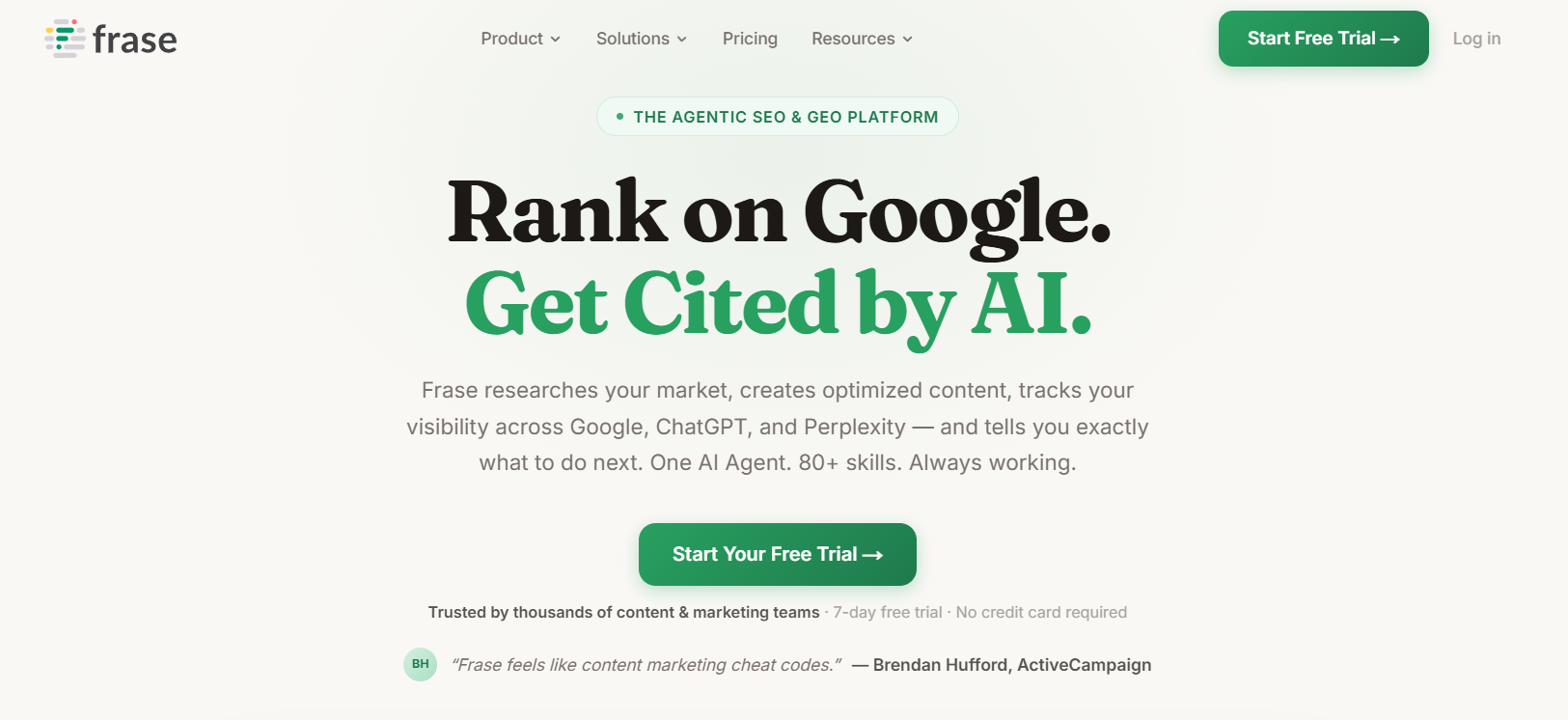
Frase AI is a content optimization and research platform designed to help marketers create search-optimized content using artificial intelligence. The tool analyzes top-ranking pages for a keyword, extracts important topics and questions, and generates content briefs or drafts based on that analysis. In 2026, Frase AI also supports Generative Engine Optimization (GEO), helping teams optimize content for both traditional search engines and AI platforms such as ChatGPT and Perplexity.
How to use Frase AI for SEO
- Enter a target keyword to analyze the search results and gather insights from top-ranking pages.
- Generate a content brief automatically with recommended headings, topics, and questions.
- Write or edit content using the AI editor while monitoring optimization suggestions.
- Optimize the article by covering recommended topics and improving semantic relevance.
Key Features of Frase AI
- AI-powered SERP analysis and competitor research
- Automated content brief and outline generation
- AI writing assistance for blog posts and articles
- SEO and GEO optimization scoring
- Question discovery from search queries and forums
- Content optimization recommendations
- AI visibility tracking for multiple AI search platforms
Use Cases of Frase AI for SEO
Frase AI is commonly used by content teams to research search intent and create structured content that aligns with user questions. SEO specialists use the platform to generate detailed content briefs, analyze competitors, and optimize articles for both search engines and AI answer engines. It is also used to refresh existing content by identifying missing topics and improving semantic coverage.
Who Should Use Frase AI
- Content marketers creating SEO-driven blog articles
- SEO professionals building structured content strategies
- Marketing agencies producing optimized content at scale
- Bloggers researching user questions and search intent
- Businesses optimizing content for both search engines and AI assistants
Pricing
Frase offers subscription plans starting around $39 per month, with higher tiers available for teams requiring advanced optimization tools, collaboration features, and larger AI content limits.
6. SE Ranking AI
What is SE Ranking AI
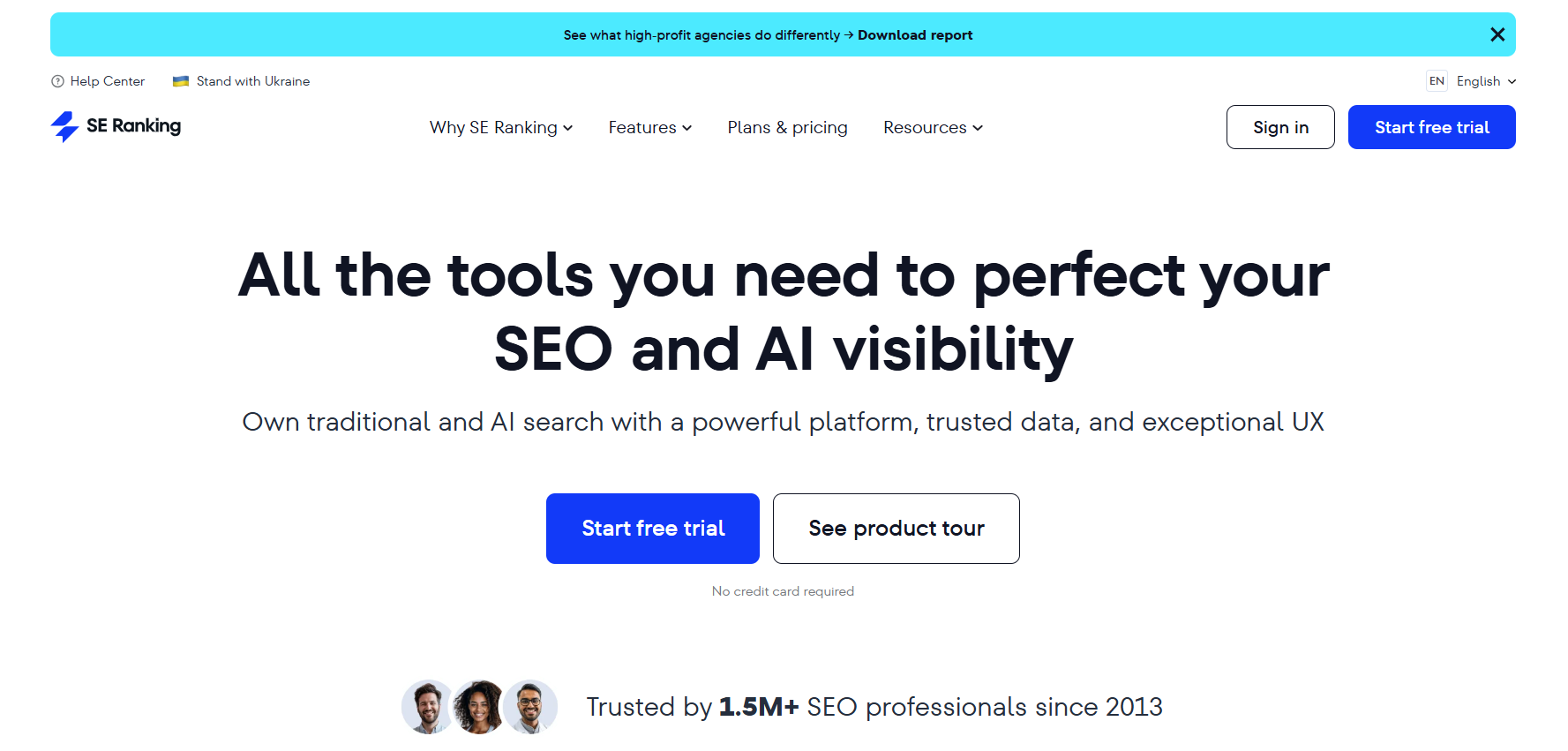
SE Ranking AI refers to the artificial intelligence features built into the SE Ranking platform that help automate keyword tracking, SEO analysis, and website optimization. The platform combines large SEO datasets with AI-powered insights to monitor rankings, analyze competitors, and detect technical issues affecting search performance. In 2026, SE Ranking also includes AI search tracking tools that monitor brand visibility across AI systems such as ChatGPT and Google AI Overviews.
How to use SE Ranking AI for SEO
- Track keyword rankings across search engines, locations, and devices using the rank tracking tool.
- Audit your website to identify technical issues such as broken links, duplicate content, and slow loading pages.
- Analyze competitors to see their keywords, backlinks, and traffic strategies.
- Monitor AI search visibility to check whether your brand appears in AI-generated answers and search summaries.
Key Features of SE Ranking AI
- Real-time keyword rank tracking across multiple search engines
- AI-powered website audit with technical SEO diagnostics
- Competitor research and backlink monitoring tools
- Content optimization recommendations based on SERP data
- AI search visibility tracking for platforms like ChatGPT and AI Overviews
- White-label SEO reporting for agencies
- API access for automating SEO data and workflows
Use Cases of SE Ranking AI for SEO
SE Ranking AI is commonly used by agencies and marketing teams to manage SEO campaigns across multiple websites. It helps track keyword rankings, monitor technical SEO health, and analyze competitor strategies. Businesses also use the platform to evaluate backlink profiles, generate SEO reports for clients, and monitor how their content appears in both traditional search results and AI-generated answers.
Who Should Use SE Ranking AI
- SEO professionals managing multiple websites
- Digital marketing agencies delivering SEO reports to clients
- Businesses monitoring keyword rankings across locations
- Content teams improving on-page SEO performance
- Companies tracking visibility in both search engines and AI answers
Pricing
SE Ranking offers several subscription plans, typically starting around $65 per month, with higher-tier plans providing expanded keyword tracking limits, deeper analytics, and additional AI search visibility tools.
7. Screaming Frog SEO AI
What is Screaming Frog SEO AI
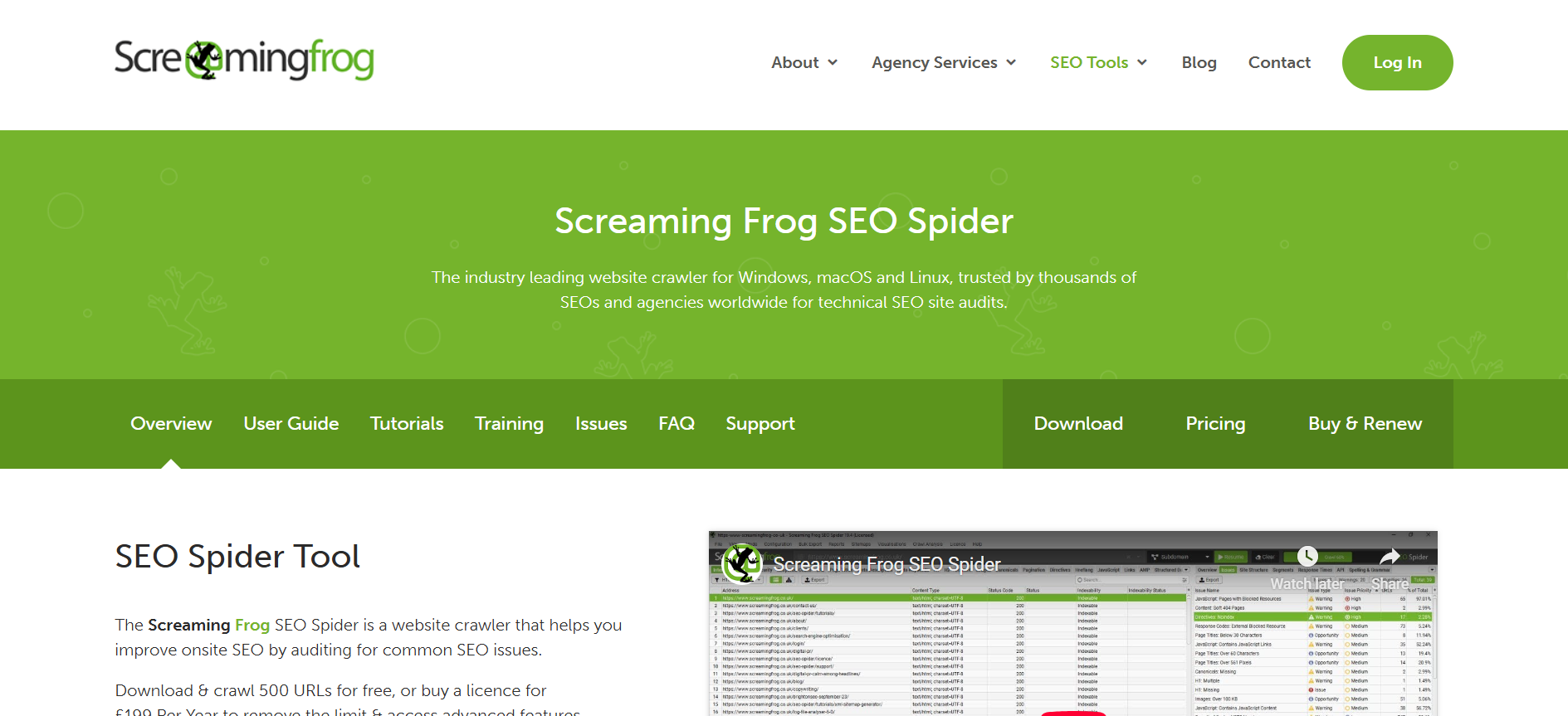
Screaming Frog SEO AI refers to the artificial intelligence capabilities integrated into the Screaming Frog SEO Spider platform, a widely used technical SEO crawler. The software scans websites the same way search engine bots do, collecting data about URLs, links, metadata, and technical SEO elements.
With the addition of AI integrations, Screaming Frog can now connect to large language models such as OpenAI, Gemini, and other AI systems to analyze page content, generate insights, and automate SEO tasks during a crawl. In modern SEO workflows, Screaming Frog SEO AI helps marketers perform advanced site audits, detect technical issues, analyze large websites, and enrich crawl data with AI-generated insights for better optimization decisions.
How to use Screaming Frog SEO AI for SEO
- Crawl your website by entering a domain to scan pages, links, images, and technical SEO elements.
- Identify technical issues such as broken links, redirect chains, duplicate content, and missing metadata.
- Connect AI models like OpenAI or Gemini through the API integration to analyze page content during the crawl.
- Use AI insights to generate metadata suggestions, analyze page relevance, and improve site structure.
Key Features of Screaming Frog SEO AI
- Website crawler that simulates search engine bots
- AI integration with models like OpenAI and Gemini
- Technical SEO auditing for broken links, redirects, and metadata
- Content analysis and semantic insights using AI prompts
- Structured data and JavaScript rendering analysis
- Integration with Google Analytics, Search Console, and PageSpeed Insights
- Large-scale website crawling and crawl comparison tools
Use Cases of Screaming Frog SEO AI for SEO
Screaming Frog SEO AI is widely used for technical SEO audits and large-scale website analysis. SEO professionals use it to discover indexing issues, broken links, redirect chains, and duplicate content across thousands of pages. The AI integration allows teams to automatically analyze page content, categorize pages, and generate SEO recommendations based on crawl data, significantly reducing manual audit time.
Who Should Use Screaming Frog SEO AI
- Technical SEO specialists auditing large websites
- Digital marketing agencies performing SEO site audits
- Developers diagnosing crawlability and indexing issues
- SEO consultants analyzing website architecture
- Businesses improving technical SEO performance
Pricing
Screaming Frog SEO Spider offers a free version that allows crawling up to 500 URLs. The paid version provides unlimited crawling, advanced features, and AI integrations, typically costing around $279 per year per user.
8. seoClarity AI
What is seoClarity AI
seoClarity AI refers to the artificial intelligence capabilities integrated into the seoClarity platform to help organizations analyze search data, automate SEO tasks, and optimize content at scale. The platform is designed primarily for enterprise teams managing large websites and complex SEO strategies. It combines rank tracking, keyword research, content optimization, technical SEO analysis, and AI search visibility tracking into a single platform.
A key component of seoClarity AI is Sia, an AI-powered SEO assistant that uses large language models to automate workflows such as keyword grouping, content generation, and optimization recommendations.
How to use seoClarity AI for SEO
- Analyze keyword opportunities using the platform’s research tools to discover ranking and content gaps.
- Track rankings and performance across search engines, devices, and locations using enterprise rank tracking tools.
- Optimize content and pages with AI suggestions generated by the Sia assistant and Content Fusion tools.
- Monitor AI search visibility to track brand mentions, citations, and performance in AI-generated answers.
Key Features of seoClarity AI
- Enterprise-level keyword research and rank tracking
- AI assistant (Sia) for SEO task automation
- Content Fusion AI for content research and optimization
- Technical SEO auditing and site crawling
- Clarity ArcAI for tracking visibility in AI search results
- ClarityAutomate for deploying SEO changes without developer support
- Advanced analytics dashboards and SEO data APIs
Use Cases of seoClarity AI for SEO
seoClarity AI is commonly used by large enterprises and SEO agencies to manage complex SEO campaigns across multiple domains and regions. Teams use the platform to track keyword performance, analyze competitor strategies, optimize large content libraries, and automate technical SEO improvements. It is also used to monitor brand visibility across AI search systems and generative search platforms.
Who Should Use seoClarity AI
- Enterprise SEO teams managing large websites
- Digital marketing agencies working with large clients
- E-commerce businesses optimizing thousands of product pages
- SEO analysts requiring advanced data and automation
- Organizations tracking visibility across search engines and AI search platforms
Pricing
seoClarity uses enterprise-level pricing. Plans typically start at around $750 per month, while full enterprise packages with advanced modules can exceed $2,500–$4,500 per month, depending on the number of keywords, domains, and features required.
9. Jasper AI
What is Jasper AI
Jasper AI is a generative AI platform designed primarily for marketing teams to create and optimize content at scale. It uses advanced large language models and natural language processing to generate blog posts, marketing copy, product descriptions, and other digital content. In 2026, Jasper also includes AI agents and workflow automation that help teams manage content pipelines and optimize content for SEO and AI-driven discovery systems.
How to use Jasper AI for SEO
- Generate content ideas and outlines by entering a topic or keyword related to your SEO strategy.
- Create optimized drafts such as blog posts, landing pages, or product descriptions using AI templates.
- Refine content with brand voice controls to maintain consistent tone and messaging.
- Optimize content structure and keywords to align with search intent and modern search platforms.
Key Features of Jasper AI
- AI-powered content generation for blogs, ads, and marketing copy
- Brand voice memory to maintain consistent messaging
- Marketing templates for SEO articles, emails, and landing pages
- AI agents and automated marketing workflows
- Content pipelines for managing large-scale campaigns
- Integration with marketing and content tools
- Collaboration features for content teams
Use Cases of Jasper AI for SEO
Jasper AI is widely used by marketing teams to accelerate content production and maintain consistency across large content campaigns. Businesses use it to create SEO blog articles, generate meta descriptions, produce marketing copy, and repurpose existing content across different platforms. It is also used to streamline content workflows and automate repetitive writing tasks.
Who Should Use Jasper AI
- Content marketers producing SEO blog content
- Digital marketing agencies managing multiple campaigns
- Businesses scaling content production across channels
- E-commerce teams writing product descriptions
- Marketing teams automating content workflows
Pricing
Jasper offers subscription plans typically starting at around $49 per month, with higher-tier plans designed for teams that require advanced collaboration, brand controls, and workflow automation features.
10. ChatGPT AI

What is ChatGPT AI
ChatGPT AI is a conversational artificial intelligence platform developed by OpenAI that can assist with research, writing, data analysis, and automation tasks. Although it is not built exclusively for SEO, it has become a widely used AI assistant for SEO professionals. In 2026, ChatGPT AI helps marketers analyze search data, generate optimized content, build SEO workflows, and structure information for AI-driven search platforms.
How to use ChatGPT AI for SEO
- Research topics and keywords by asking the AI to generate topic ideas and content outlines based on a search query.
- Create optimized drafts such as blog posts, meta descriptions, or FAQ sections aligned with search intent.
- Analyze SEO data by uploading spreadsheets or keyword lists to identify trends and clusters.
- Automate repetitive SEO tasks like schema markup generation, internal linking ideas, and content summaries.
Key Features of ChatGPT AI
- AI-powered content generation and editing
- Keyword clustering and topic ideation
- Data analysis for spreadsheets and SEO datasets
- Custom GPTs for specialized SEO workflows
- Code generation for schema markup and technical SEO tasks
- Conversational research and competitive analysis
- Integration with automation tools and APIs
Use Cases of ChatGPT AI for SEO
ChatGPT AI is commonly used as a flexible SEO assistant that supports multiple tasks in the optimization process. SEO teams use it for brainstorming article ideas, generating outlines, improving readability, and analyzing keyword data. It is also used to automate repetitive tasks such as writing meta tags, creating structured FAQ sections, and generating schema markup for web pages.
Who Should Use ChatGPT AI
- SEO professionals performing research and content planning
- Content writers creating blog articles and landing pages
- Marketing teams automating repetitive SEO tasks
- Agencies analyzing large keyword datasets
- Businesses experimenting with AI-driven marketing workflows
Pricing
ChatGPT offers a free version with basic capabilities, while the premium plan ChatGPT Plus starts at around $20 per month, providing access to advanced AI models and additional features.
11. BuzzSumo AI
What is BuzzSumo AI
BuzzSumo AI refers to the artificial intelligence and data-analysis features used in the BuzzSumo platform to discover high-performing content, analyze trends, and identify influencers in a specific industry. The platform scans billions of articles and social media posts to reveal which topics generate the most engagement and backlinks. In 2026, BuzzSumo AI helps SEO teams develop data-driven content strategies by identifying trending topics and analyzing competitor content performance.
How to use BuzzSumo AI for SEO
- Search a keyword or topic to discover the most shared and linked content across the web.
- Analyze competitor domains to identify their best-performing articles and content strategies.
- Identify influencers and journalists who regularly share content in your niche.
- Track trends and alerts to monitor brand mentions, industry discussions, and emerging topics.
Key Features of BuzzSumo AI
- Content discovery across billions of articles
- Social engagement analytics for articles and posts
- Influencer and journalist discovery tools
- Trending topic monitoring and alerts
- Competitor content analysis
- Content brief and idea generation tools
- Backlink and engagement tracking
Use Cases of BuzzSumo AI for SEO
BuzzSumo AI is widely used by SEO professionals and content marketers to identify trending topics and create content that matches audience interests. Teams use it to analyze competitor articles, monitor brand mentions, and discover influential creators who can amplify content reach. It also helps marketers plan editorial calendars based on real engagement data rather than guesswork.
Who Should Use BuzzSumo AI
- Content marketers researching high-performing topics
- SEO professionals planning data-driven content strategies
- Digital marketing agencies managing content campaigns
- PR teams monitoring brand mentions and media outreach
- Businesses building influencer partnerships
Pricing
BuzzSumo offers multiple subscription tiers, typically starting at around $199 per month, with higher plans providing expanded search limits, advanced analytics, and influencer databases for larger marketing teams.
12. AnswerThePublic AI
What is AnswerThePublic AI
AnswerThePublic AI refers to the AI-assisted keyword research and search-listening capabilities within the AnswerThePublic platform. The tool analyzes autocomplete data from search engines and other platforms to reveal the questions, phrases, and topics people search for online. It helps marketers understand real user intent and generate content ideas based on audience curiosity and search behavior.
How to use AnswerThePublic AI for SEO
- Enter a topic or keyword in the search field to generate related queries and topic ideas.
- Analyze question-based keywords such as “how,” “why,” and “what” queries related to your topic.
- Identify content opportunities by reviewing search patterns and popular topics.
- Use the insights to build content outlines and create articles targeting real user questions.
Key Features of AnswerThePublic AI
- Question-based keyword research from autocomplete data
- Visual keyword maps and search query clusters
- Content idea generation based on real user questions
- Search trend analysis across multiple platforms
- Keyword lists grouped by questions, comparisons, and prepositions
- Exportable keyword data for SEO planning
- Search listening insights for audience research
Use Cases of AnswerThePublic AI for SEO
AnswerThePublic AI is widely used to discover what users are actually searching for online. SEO professionals and content marketers use it to generate blog topics, identify long-tail keywords, and understand user questions about a topic. The tool is especially useful for building FAQ sections, creating informational content, and planning content strategies that match real search intent.
Who Should Use AnswerThePublic AI
- SEO professionals researching long-tail keywords
- Content marketers planning blog topics and FAQs
- Digital marketing agencies building content strategies
- Bloggers researching audience questions and search intent
- Businesses performing market and customer research
Pricing
AnswerThePublic offers both free and paid plans, with the free version providing limited daily searches and premium plans offering expanded research features, monitoring tools, and larger keyword datasets.
13. LLMClicks AI
What is LLMClicks AI
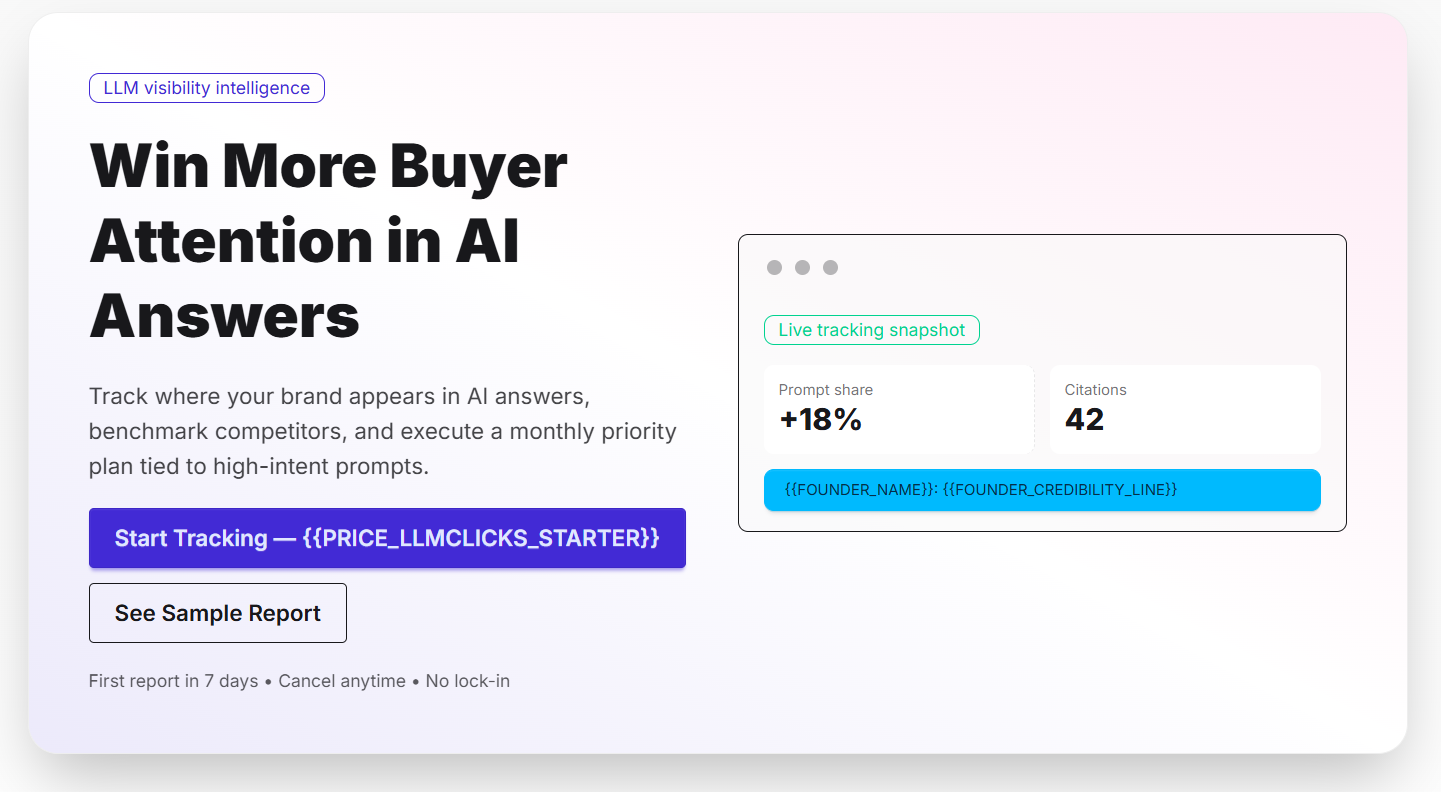
LLMClicks AI is an AI visibility tracking and optimization platform designed to help marketers monitor how their brand appears inside AI-generated answers. Instead of focusing only on traditional search rankings, the platform analyzes how large language models mention or cite a website in responses from systems such as ChatGPT, Google AI Overviews, Perplexity, and Microsoft Copilot.
The tool helps businesses understand their AI search presence, identify which prompts trigger mentions, and discover what content influences AI recommendations. This allows marketers to optimize content not only for search engines but also for generative AI discovery systems.
How to use LLMClicks AI for SEO
- Connect your domain or brand to the platform and create a project for monitoring AI visibility.
- Track conversational prompts to see when AI systems recommend or mention your brand.
- Analyze competitor mentions and citations to understand why competing brands appear in AI answers.
- Optimize pages and content based on AI visibility insights, audits, and suggested improvements.
Key Features of LLMClicks AI
- AI visibility tracking across platforms like ChatGPT, Perplexity, Google AI, and Copilot
- Share-of-voice and brand mention monitoring in AI responses
- AI visibility audits and citation analysis
- Query mapping that connects AI prompts to specific web pages
- Competitor benchmarking in generative search results
- AI domain profiling to understand how models interpret your brand
- On-page optimization tasks to improve AI citations
Use Cases of LLMClicks AI for SEO
LLMClicks AI is used by SEO teams and marketing agencies to monitor how AI assistants describe their brand and recommend products or services. Businesses use the platform to identify missing citations, detect incorrect AI information about their brand, and optimize content for AI-generated answers. It is also used to benchmark AI visibility against competitors and track improvements in AI search presence over time.
Who Should Use LLMClicks AI
- SEO agencies optimizing for generative search visibility
- SaaS companies monitoring brand mentions in AI answers
- Marketing teams analyzing AI-driven search behavior
- Content strategists working on Generative Engine Optimization (GEO)
- Businesses preparing for AI-first search ecosystems
Pricing
LLMClicks AI offers subscription plans starting around $49 per month, with higher tiers providing additional query tracking limits, page audits, and agency features.
14. Originality AI
What is Originality AI
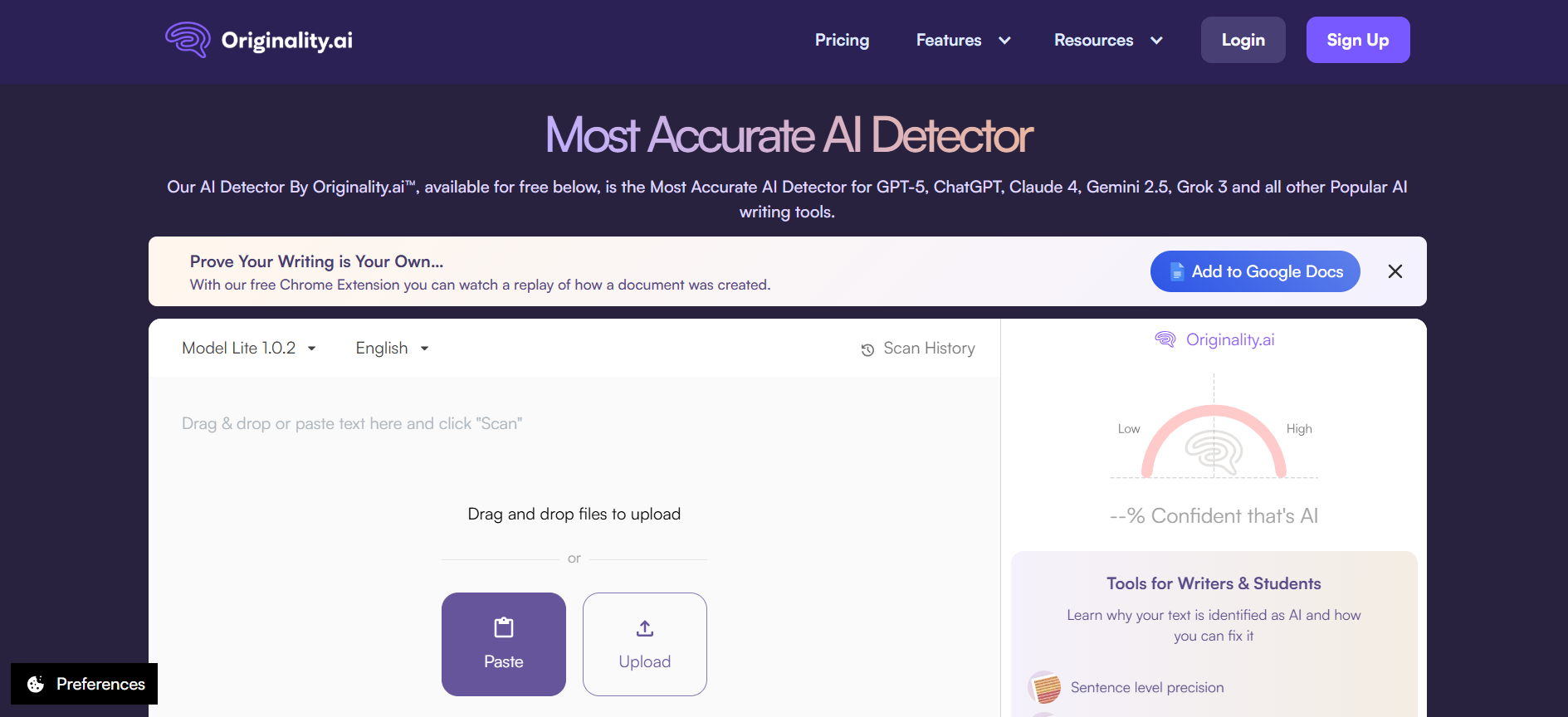
Originality.ai is an artificial intelligence tool designed to detect AI-generated text and check for plagiarism in digital content. It is widely used by publishers, SEO teams, and content agencies to verify whether text was written by humans or generated using AI models. The platform combines AI detection algorithms with web-based plagiarism scanning to help ensure content authenticity and maintain quality standards for online publishing.
How to use Originality AI for SEO
- Upload or paste content into the AI detection tool to scan the text for AI-generated patterns.
- Run a plagiarism scan to check whether the content matches existing web pages or published material.
- Review detection reports showing AI probability scores and similarity matches.
- Edit and refine content to ensure originality and maintain quality standards before publishing.
Key Features of Originality AI
- AI content detection for identifying machine-generated text
- Plagiarism checking across web sources
- Fact-checking and paraphrase detection tools
- Full website scanning to detect AI-generated pages
- Team management and shareable reports
- Multilingual AI detection across multiple languages
- Browser extensions and integrations for content workflows
Use Cases of Originality AI for SEO
Originality AI is commonly used by content publishers and SEO teams to verify the authenticity of articles before publishing them online. It helps organizations ensure that their content is original, free from plagiarism, and not excessively generated by AI systems. Marketing agencies also use it to review work from writers or freelancers and maintain quality standards across large content production pipelines.
Who Should Use Originality AI
- Content marketing teams maintaining editorial quality
- SEO agencies reviewing outsourced content
- Website publishers checking for plagiarism and AI writing
- Businesses protecting brand credibility in online content
- Editors managing large content production workflows
Pricing
Originality AI offers subscription and credit-based pricing. Plans typically start at around $14.95 per month, with additional credits available for larger content scans and team usage.
15. Keywordly AI
What is Keywordly AI
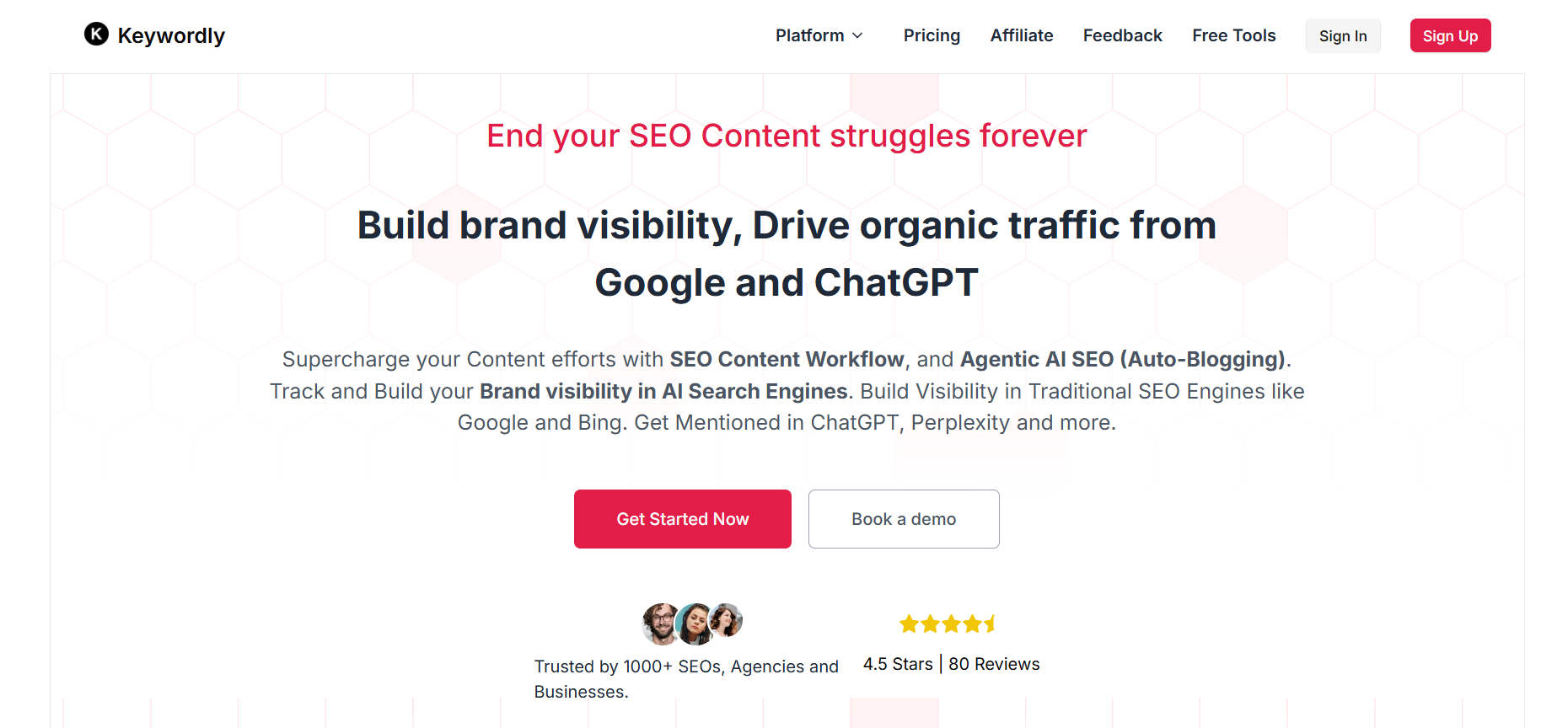
Keywordly AI is an AI-powered SEO content workflow platform designed to help marketers discover high-impact keywords, analyze search intent, and generate optimized content strategies. The platform combines keyword research, clustering, and AI content generation tools to simplify the SEO content creation process. It allows marketers to identify relevant search queries, organize them into topic clusters, and produce SEO-friendly articles that support topical authority and organic traffic growth.
How to use Keywordly AI for SEO
- Enter a seed keyword or topic to generate keyword ideas from search engines and online discussions.
- Analyze keyword metrics such as search volume, difficulty, and user intent to identify ranking opportunities.
- Group keywords into clusters to build topic authority and structured content plans.
- Generate optimized outlines or articles using the built-in AI content generation tools.
Key Features of Keywordly AI
- AI-powered keyword discovery and long-tail keyword research
- Automatic keyword clustering and topical map generation
- Search intent analysis based on real user queries
- Content outline and AI article generation tools
- People Also Ask keyword research and question mining
- Competitor keyword analysis and gap discovery
- SEO content scoring and optimization insights
Use Cases of Keywordly AI for SEO
Keywordly AI is used by marketers to build structured SEO content strategies based on real search behavior. Content teams use the platform to discover long-tail keywords, organize them into topic clusters, and create articles designed to answer user questions. SEO agencies also use the tool to analyze competitor keywords, identify content gaps, and develop topical authority strategies for client websites.
Who Should Use Keywordly AI
- Content marketers building SEO topic clusters
- Bloggers researching long-tail keyword opportunities
- Digital marketing agencies developing content strategies
- SEO professionals analyzing keyword gaps and search intent
- Businesses creating scalable content marketing workflows
Pricing
Keywordly AI offers several pricing tiers, with plans typically starting around $49 per month for individual users, while higher-tier plans provide expanded keyword research, content generation limits, and team collaboration features.
AI Agents in SEO
What are AI SEO agents?
AI SEO agents are autonomous or semi-autonomous systems that perform SEO tasks using artificial intelligence. Unlike traditional SEO tools that only provide reports or recommendations, AI agents can analyze data, make decisions, and execute actions automatically.
These agents use machine learning, natural language processing, and workflow automation to manage tasks such as keyword research, content optimization, technical audits, and SEO monitoring. In modern SEO workflows, AI agents act as assistants that continuously analyze search data and recommend or implement improvements.
AI SEO agents are designed to support both traditional search optimization and generative search visibility, helping websites appear in search engines as well as AI-generated answers.
How AI agents are changing SEO workflows?
AI agents are transforming SEO from a manual analysis process into an automated, data-driven workflow.
Traditionally, SEO professionals performed tasks such as keyword research, competitor analysis, and site audits manually using multiple tools. AI agents automate many of these processes by continuously analyzing large datasets and identifying optimization opportunities.
Key changes include:
- Automated monitoring – AI agents continuously track keyword rankings, traffic changes, and technical issues.
- Workflow automation – repetitive tasks such as keyword grouping, meta tag generation, and content briefs can be automated.
- Real-time recommendations – agents provide immediate optimization suggestions based on search data.
- Data analysis at scale – AI systems analyze thousands of keywords, pages, and competitors simultaneously.
- Integration with content systems – agents can assist with publishing workflows and content optimization.
As search ecosystems evolve toward AI-generated answers, these agents also help monitor how brands appear inside AI platforms and conversational search systems.
Examples of AI SEO agents
Several platforms now include AI assistants or agent-style automation systems designed to support SEO teams.
Examples include:
- Sia AI assistant – an automation assistant inside seoClarity that helps generate SEO insights and content recommendations.
- Semrush Copilot – an AI assistant that analyzes SEO performance and sends automated recommendations.
- ChatGPT Custom GPTs – specialized AI assistants trained to perform tasks such as keyword clustering or SEO auditing.
- AirOps AI workflows – automation systems used to manage SEO content pipelines.
- Nightwatch SEO agent – AI-driven monitoring tools that detect ranking changes and technical issues.
These agents help reduce the time spent on repetitive tasks while improving decision-making using data analysis.
AI SEO tools that include agents
Many modern SEO platforms are integrating AI agents directly into their systems to automate optimization workflows.
Common examples include:
- Semrush AI – includes AI Copilot for automated SEO insights and recommendations.
- seoClarity AI – includes the Sia assistant and automation tools for enterprise SEO workflows.
- Frase AI – generates structured content briefs and research using AI analysis.
- ChatGPT AI – can be customized to act as a flexible SEO research and analysis agent.
- AirOps – provides automated AI workflows for SEO content production and optimization.
As search engines and AI assistants continue to evolve, AI SEO agents are expected to play a larger role in managing SEO strategies, automating routine tasks, and helping marketers adapt to generative search environments.
Where AI Is Used in SEO?
Artificial intelligence is widely used in modern SEO to automate analysis, improve content quality, and monitor search performance. Instead of relying only on manual research, AI tools analyze large datasets and provide actionable insights that help marketers optimize websites more efficiently.
Common areas where AI is used in SEO include:
1) Keyword Research
AI tools analyze search data to discover keywords, long-tail queries, and topic clusters based on search intent.
2) Content Optimization
AI systems evaluate top-ranking pages and recommend improvements such as keyword usage, headings, and semantic topics.
3) Technical SEO Audits
AI auditing tools automatically detect issues like broken links, duplicate pages, and slow website performance.
4) Competitor Analysis
AI platforms analyze competitor rankings, backlinks, and content strategies to identify SEO opportunities.
5) Rank Tracking and Performance Monitoring
AI tools monitor keyword rankings, traffic changes, and user engagement to detect performance trends.
6) Generative Search Optimization
AI tools help track brand mentions and citations in AI-generated answers from conversational search platforms.
These capabilities help marketing teams automate SEO tasks, identify opportunities faster, and scale optimization efforts.
How to Choose the Right AI SEO Tool?
Selecting the right AI SEO tool depends on your goals, technical expertise, and the type of SEO tasks you need to automate. Different platforms specialize in different areas such as keyword research, content optimization, technical auditing, or AI search tracking.
Consider the following factors when evaluating AI SEO tools:
1) Define your SEO objectives
Identify whether you need support for keyword research, content optimization, technical audits, competitor analysis, or AI search visibility.
2) Evaluate core features
Look for tools that provide essential capabilities such as keyword discovery, rank tracking, content analysis, and technical diagnostics.
3) Assess data quality and accuracy
Reliable SEO tools rely on large search datasets and advanced algorithms to provide accurate insights about rankings, traffic, and competitors.
4) Consider workflow integration
Choose tools that integrate easily with your existing marketing platforms, analytics systems, and content management tools.
5) Compare pricing and scalability
Some platforms are designed for small teams while others target enterprise organizations. Select a solution that matches your budget and long-term growth plans.
6) Check usability and learning curve
An effective SEO tool should present insights clearly and allow teams to quickly apply recommendations without extensive technical expertise.
By evaluating these factors, businesses can select an AI SEO tool that aligns with their strategy and supports long-term search visibility across both traditional search engines and AI-driven discovery systems.
Future of AI SEO
The future of AI SEO is centered on automation, predictive analytics, and optimization for AI-driven search systems. As search engines increasingly integrate generative AI, SEO strategies are shifting from only ranking web pages to ensuring visibility in AI-generated answers.
AI will continue to automate tasks such as keyword research, content optimization, and technical audits while helping marketers analyze large datasets faster. Tools are also evolving to track brand mentions, citations, and recommendations across AI platforms.
In the coming years, SEO strategies will focus more on semantic relevance, structured content, and authoritative sources so that websites can be accurately understood and referenced by both search engines and AI assistants.
Conclusion
AI SEO tools are transforming how businesses approach search engine optimization. These platforms help automate time-consuming tasks such as keyword research, content optimization, technical audits, and performance monitoring. By analyzing large search datasets and providing data-driven recommendations, AI tools allow marketing teams to identify opportunities faster and execute SEO strategies more efficiently.
As search platforms increasingly incorporate generative AI and answer engines, SEO is expanding beyond traditional rankings. Businesses now need to optimize content for both search results and AI-generated responses. By using modern AI SEO tools, organizations can improve search visibility, streamline workflows, and adapt their strategies to the evolving search ecosystem.
FAQs
What are AI SEO tools?
AI SEO tools are software platforms that use artificial intelligence to help improve search engine optimization. They analyze search data, automate SEO tasks, and provide recommendations for improving website visibility. These tools assist with keyword research, content optimization, technical audits, and competitor analysis, helping marketers manage SEO strategies more efficiently.
Which AI SEO tool is best for beginners?
Beginner-friendly AI SEO tools usually focus on simple interfaces and easy-to-understand insights. Platforms like SE Ranking, Surfer SEO, and Mangools are commonly recommended because they provide clear dashboards, guided SEO suggestions, and essential optimization tools without requiring advanced technical knowledge.
Can AI tools fully automate SEO?
AI tools can automate many SEO tasks, including keyword research, content analysis, technical audits, and performance monitoring. However, they cannot completely replace human strategy and expertise. Successful SEO still requires human judgment to interpret data, create valuable content, and develop long-term marketing strategies.
Are AI SEO tools useful for small businesses?
Yes, AI SEO tools can be valuable for small businesses because they simplify complex SEO processes. These tools help identify relevant keywords, optimize website content, and monitor search performance without requiring large marketing teams. By automating routine tasks, small businesses can improve their search visibility while saving time and resources.
How do AI SEO tools help with content optimization?
AI SEO tools analyze top-ranking pages and identify patterns in keyword usage, content structure, and topic coverage. Based on this analysis, they recommend improvements such as related keywords, headings, and content length. This helps writers create content that better matches search intent and improves the chances of ranking in search results.
What is the difference between traditional SEO tools and AI SEO tools?
Traditional SEO tools primarily collect and display data about keywords, rankings, and backlinks. AI SEO tools go further by analyzing that data using machine learning to generate recommendations, automate tasks, and predict optimization opportunities. This makes AI SEO tools more capable of assisting with decision-making and workflow automation.