Business
Communication
—
Professional
Skills
&
Goals
1.
Core
Business
Communication
Skills
The
skill
set
below
is
the
foundation
every
professional
goal
is
built
on
.
Each
group
is
assessed
individually
so
strengths
and
gaps
are
visible
before
goals
are
set
.
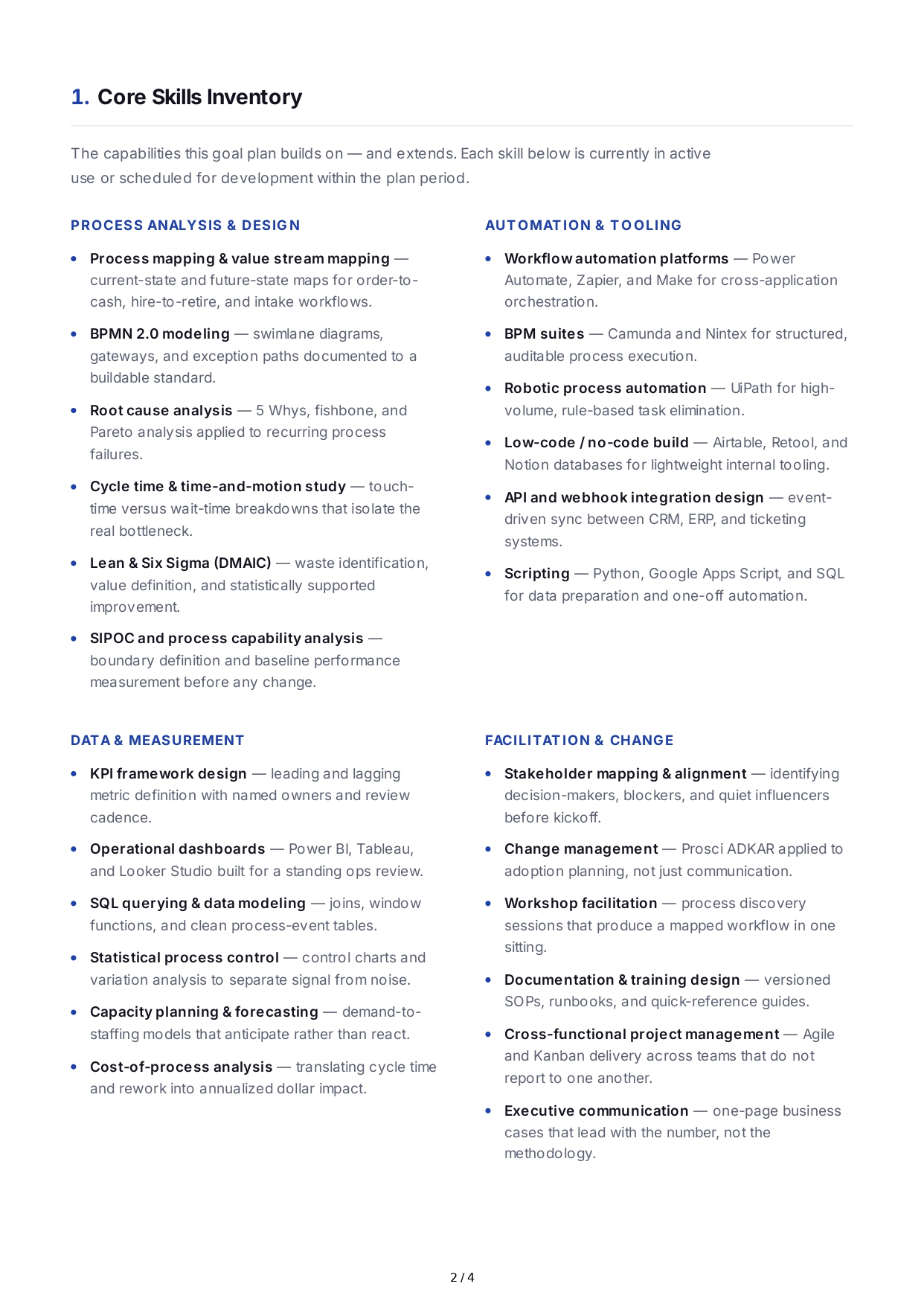
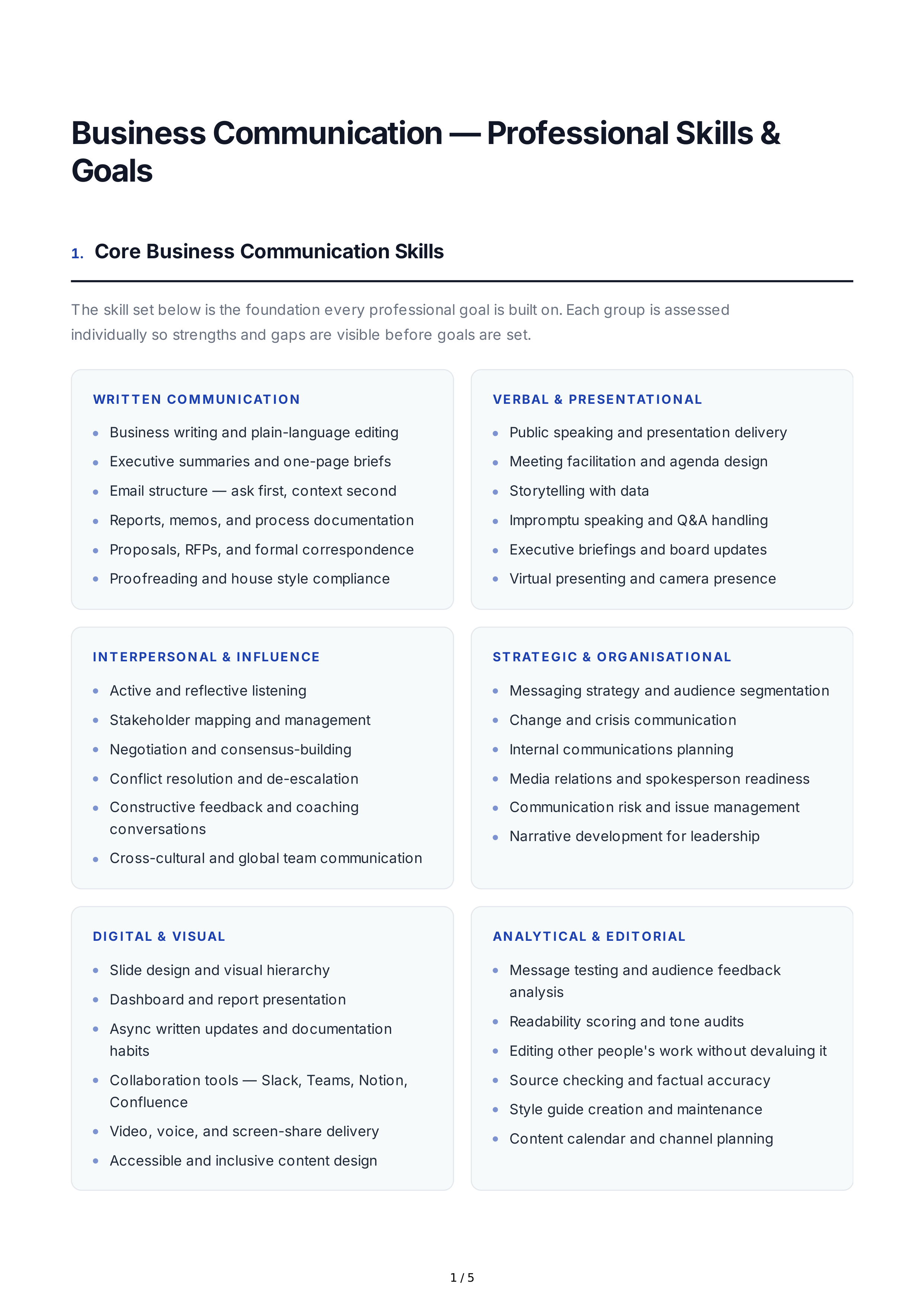
WRIT T EN
COMMUN ICAT ION
VERBAL
&
PRESEN TAT ION AL
IN T ERPERSON AL
&
IN FLUEN CE
ST RAT EG IC
&
ORG AN ISAT ION AL
DIG ITAL
&
VISUAL
AN ALYT ICAL
&
EDIT ORIAL
Business
writing
and
plain
-
language
editing
Executive
summaries
and
one
-
page
briefs
Email
structure
—
ask
first
,
context
second
Reports
,
memos
,
and
process
documentation
Proposals
,
RFPs
,
and
formal
correspondence
Proofreading
and
house
style
compliance
Public
speaking
and
presentation
delivery
Meeting
facilitation
and
agenda
design
Storytelling
with
data
Impromptu
speaking
and
Q
&
A
handling
Executive
briefings
and
board
updates
Virtual
presenting
and
camera
presence
Active
and
reflective
listening
Stakeholder
mapping
and
management
Negotiation
and
consensus
-
building
Conflict
resolution
and
de
-
escalation
Constructive
feedback
and
coaching
conversations
Cross
-
cultural
and
global
team
communication
Messaging
strategy
and
audience
segmentation
Change
and
crisis
communication
Internal
communications
planning
Media
relations
and
spokesperson
readiness
Communication
risk
and
issue
management
Narrative
development
for
leadership
Slide
design
and
visual
hierarchy
Dashboard
and
report
presentation
Async
written
updates
and
documentation
habits
Collaboration
tools
—
Slack
,
Teams
,
Notion
,
Confluence
Video
,
voice
,
and
screen
-
share
delivery
Accessible
and
inclusive
content
design
Message
testing
and
audience
feedback
analysis
Readability
scoring
and
tone
audits
Editing
other
people
'
s
work
without
devaluing
it
Source
checking
and
factual
accuracy
Style
guide
creation
and
maintenance
Content
calendar
and
channel
planning
1 / 5
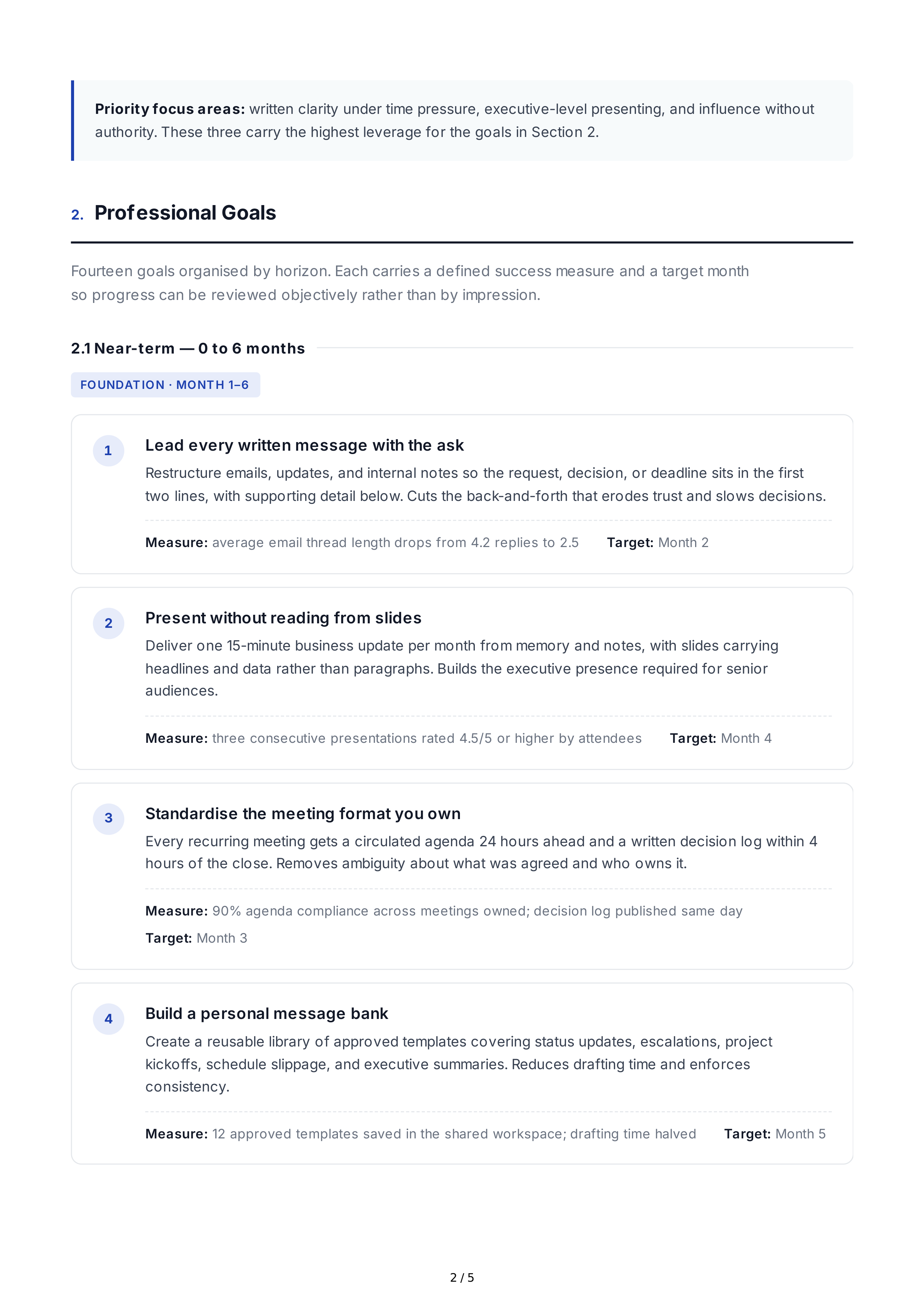
Priority
focus
areas
:
written
clarity
under
time
pressure
,
executive
-
level
presenting
,
and
influence
without
authority
.
These
three
carry
the
highest
leverage
for
the
goals
in
Section
2.
2.
Professional
Goals
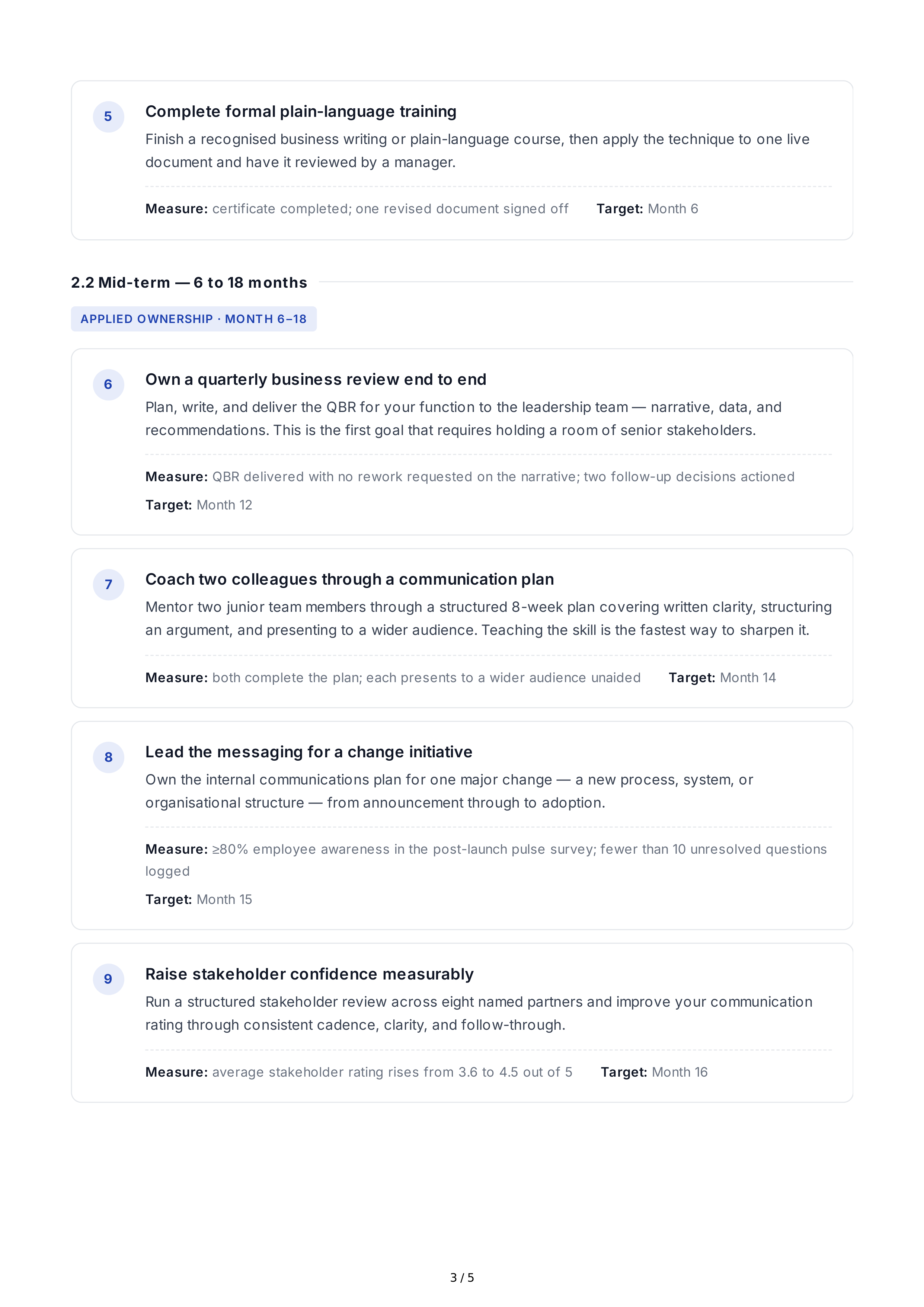
Fourteen
goals
organised
by
horizon
.
Each
carries
a
defined
success
measure
and
a
target
month
so
progress
can
be
reviewed
objectively
rather
than
by
impression
.
2.1
Near
-
term
— 0
to
6
months
FOUNDATION
·
MONTH
1–6
1
Lead
every
written
message
with
the
ask
Restructure
emails
,
updates
,
and
internal
notes
so
the
request
,
decision
,
or
deadline
sits
in
the
first
two
lines
,
with
supporting
detail
below
.
Cuts
the
back
-
and
-
forth
that
erodes
trust
and
slows
decisions
.
Measure
:
average
email
thread
length
drops
from
4.2
replies
to
2.5
Target
:
Month
2
2
Present
without
reading
from
slides
Deliver
one
15-
minute
business
update
per
month
from
memory
and
notes
,
with
slides
carrying
headlines
and
data
rather
than
paragraphs
.
Builds
the
executive
presence
required
for
senior
audiences
.
Measure
:
three
consecutive
presentations
rated
4.5/5
or
higher
by
attendees
Target
:
Month
4
3
Standardise
the
meeting
format
you
own
Every
recurring
meeting
gets
a
circulated
agenda
24
hours
ahead
and
a
written
decision
log
within
4
hours
of
the
close
.
Removes
ambiguity
about
what
was
agreed
and
who
owns
it
.
Measure
:
90%
agenda
compliance
across
meetings
owned
;
decision
log
published
same
day
Target
:
Month
3
4
Build
a
personal
message
bank
Create
a
reusable
library
of
approved
templates
covering
status
updates
,
escalations
,
project
kickoffs
,
schedule
slippage
,
and
executive
summaries
.
Reduces
drafting
time
and
enforces
consistency
.
Measure
:
12
approved
templates
saved
in
the
shared
workspace
;
drafting
time
halved
Target
:
Month
5
2 / 5
5
Complete
formal
plain
-
language
training
Finish
a
recognised
business
writing
or
plain
-
language
course
,
then
apply
the
technique
to
one
live
document
and
have
it
reviewed
by
a
manager
.
Measure
:
certificate
completed
;
one
revised
document
signed
off
Target
:
Month
6
2.2
Mid
-
term
— 6
to
18
months
APPLIED
OWNERSHIP
·
MONTH
6–18
6
Own
a
quarterly
business
review
end
to
end
Plan
,
write
,
and
deliver
the
QBR
for
your
function
to
the
leadership
team
—
narrative
,
data
,
and
recommendations
.
This
is
the
first
goal
that
requires
holding
a
room
of
senior
stakeholders
.
Measure
:
QBR
delivered
with
no
rework
requested
on
the
narrative
;
two
follow
-
up
decisions
actioned
Target
:
Month
12
7
Coach
two
colleagues
through
a
communication
plan
Mentor
two
junior
team
members
through
a
structured
8-
week
plan
covering
written
clarity
,
structuring
an
argument
,
and
presenting
to
a
wider
audience
.
Teaching
the
skill
is
the
fastest
way
to
sharpen
it
.
Measure
:
both
complete
the
plan
;
each
presents
to
a
wider
audience
unaided
Target
:
Month
14
8
Lead
the
messaging
for
a
change
initiative
Own
the
internal
communications
plan
for
one
major
change
—
a
new
process
,
system
,
or
organisational
structure
—
from
announcement
through
to
adoption
.
Measure
:
≥
80%
employee
awareness
in
the
post
-
launch
pulse
survey
;
fewer
than
10
unresolved
questions
logged
Target
:
Month
15
9
Raise
stakeholder
confidence
measurably
Run
a
structured
stakeholder
review
across
eight
named
partners
and
improve
your
communication
rating
through
consistent
cadence
,
clarity
,
and
follow
-
through
.
Measure
:
average
stakeholder
rating
rises
from
3.6
to
4.5
out
of
5
Target
:
Month
16
3 / 5
10
Publish
regularly
on
business
communication
Write
six
pieces
for
the
company
blog
,
internal
knowledge
base
,
or
an
industry
publication
.
Publishing
forces
precision
and
builds
an
external
reputation
alongside
the
internal
one
.
Measure
:
six
published
pieces
;
two
cited
in
internal
onboarding
material
Target
:
Month
18
2.3
Long
-
term
— 18
to
36
months
LEADERSHIP
·
MONTH
18–36
11
Become
a
designated
spokesperson
Take
on
media
and
analyst
-
facing
spokesperson
duties
for
one
business
line
,
including
on
-
the
-
record
interviews
and
prepared
statements
.
Measure
:
media
training
completed
;
four
interviews
handled
on
the
record
Target
:
Month
24
12
Build
and
run
a
team
communication
programme
Design
a
training
programme
covering
writing
standards
,
presentation
skills
,
and
asynchronous
communication
habits
,
then
deliver
it
across
the
wider
team
.
Measure
:
50+
participants
trained
;
average
session
score
4.4/5; 25%
pre
/
post
assessment
improvement
Target
:
Month
28
13
Join
the
crisis
communication
rotation
Serve
on
the
on
-
call
crisis
communications
team
,
contributing
to
holding
statements
,
internal
briefings
,
and
stakeholder
updates
during
live
incidents
.
Measure
:
two
live
incident
simulations
completed
;
one
real
incident
supported
Target
:
Month
30
14
Step
into
a
communications
lead
role
Move
into
a
Communications
Lead
or
Manager
position
with
direct
reports
,
budget
ownership
,
and
accountability
for
the
organisation
'
s
communication
standards
.
Measure
:
role
secured
;
first
90-
day
plan
delivered
to
leadership
Target
:
Month
36
3.
90-
Day
Action
Plan
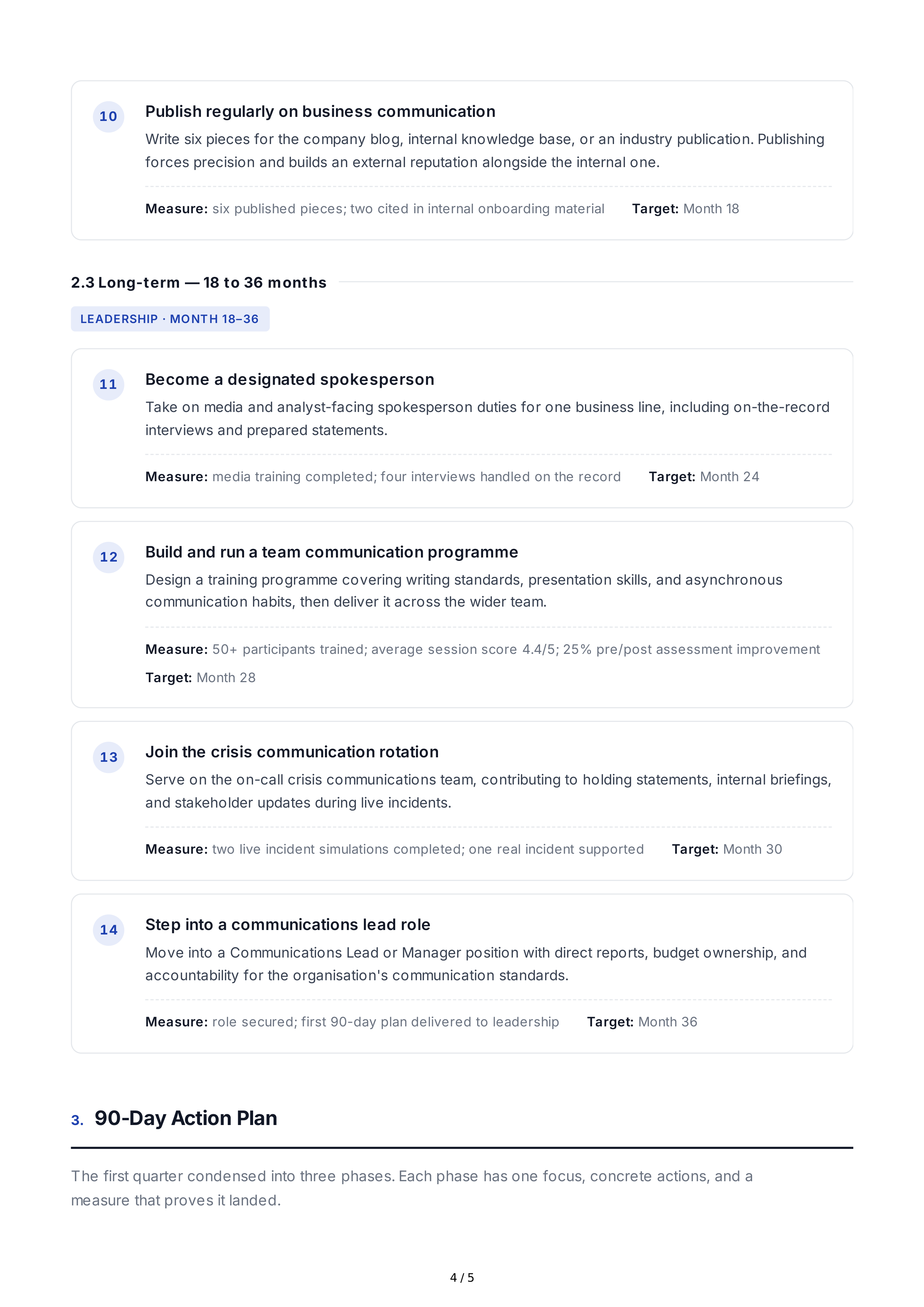
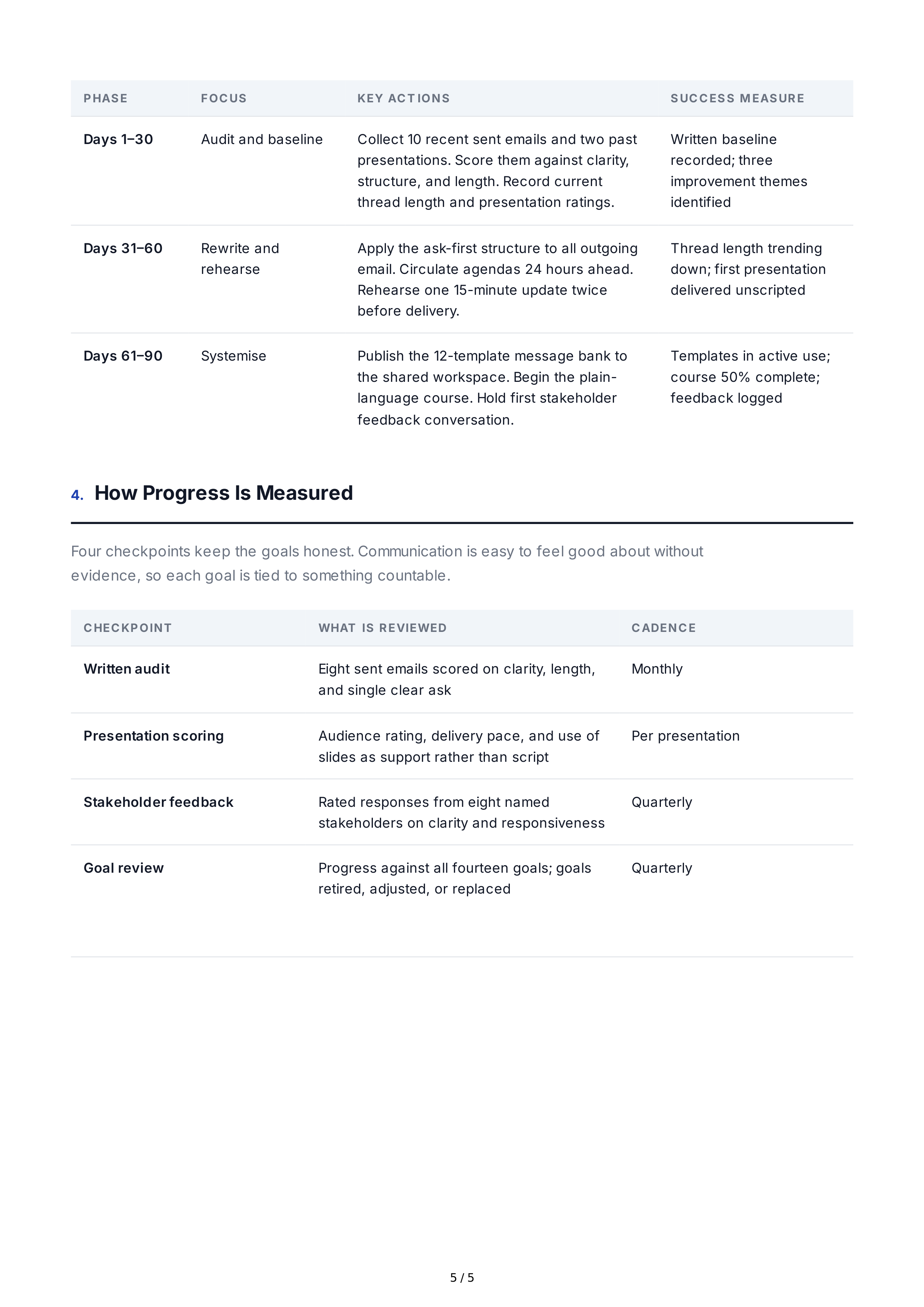
The
first
quarter
condensed
into
three
phases
.
Each
phase
has
one
focus
,
concrete
actions
,
and
a
measure
that
proves
it
landed
.
4 / 5
P HASE
FOCUS
KEY
ACT IONS
SUCCESS
MEASURE
Days
1–30
Audit
and
baseline
Collect
10
recent
sent
emails
and
two
past
presentations
.
Score
them
against
clarity
,
structure
,
and
length
.
Record
current
thread
length
and
presentation
ratings
.
Written
baseline
recorded
;
three
improvement
themes
identified
Days
31–60
Rewrite
and
rehearse
Apply
the
ask
-
first
structure
to
all
outgoing
email
.
Circulate
agendas
24
hours
ahead
.
Rehearse
one
15-
minute
update
twice
before
delivery
.
Thread
length
trending
down
;
first
presentation
delivered
unscripted
Days
61–90
Systemise
Publish
the
12-
template
message
bank
to
the
shared
workspace
.
Begin
the
plain
-
language
course
.
Hold
first
stakeholder
feedback
conversation
.
Templates
in
active
use
;
course
50%
complete
;
feedback
logged
4.
How
Progress
Is
Measured
Four
checkpoints
keep
the
goals
honest
.
Communication
is
easy
to
feel
good
about
without
evidence
,
so
each
goal
is
tied
to
something
countable
.
CHECKP OINT
WHAT
IS
REVIEWED
CADENCE
Written
audit
Eight
sent
emails
scored
on
clarity
,
length
,
and
single
clear
ask
Monthly
Presentation
scoring
Audience
rating
,
delivery
pace
,
and
use
of
slides
as
support
rather
than
script
Per
presentation
Stakeholder
feedback
Rated
responses
from
eight
named
stakeholders
on
clarity
and
responsiveness
Quarterly
Goal
review
Progress
against
all
fourteen
goals
;
goals
retired
,
adjusted
,
or
replaced
Quarterly
5 / 5