Workflow
Optimization
—
Professional
Goals
1 / 4
1.
Core
Skills
Inventory
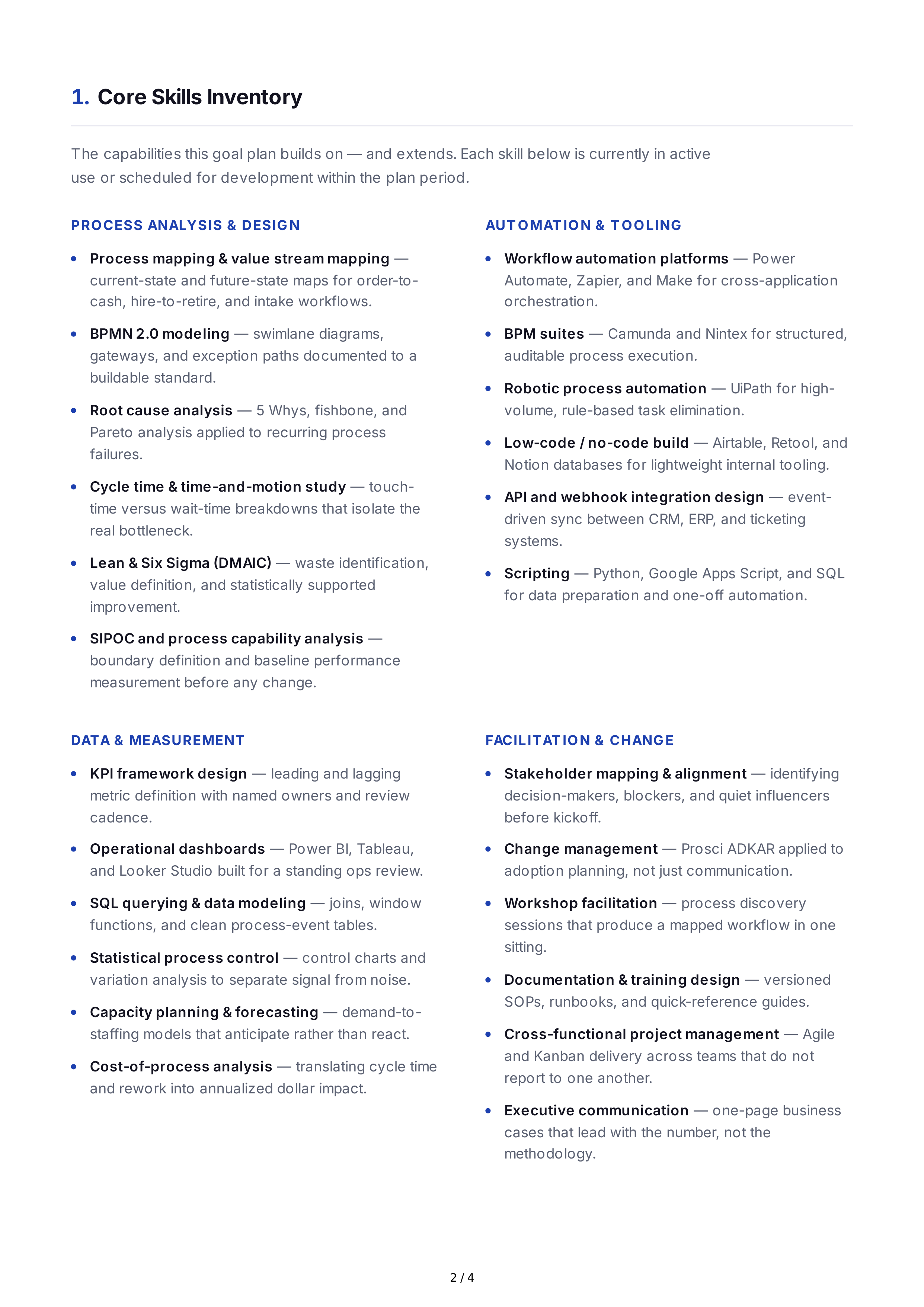
The
capabilities
this
goal
plan
builds
on
—
and
extends
.
Each
skill
below
is
currently
in
active
use
or
scheduled
for
development
within
the
plan
period
.
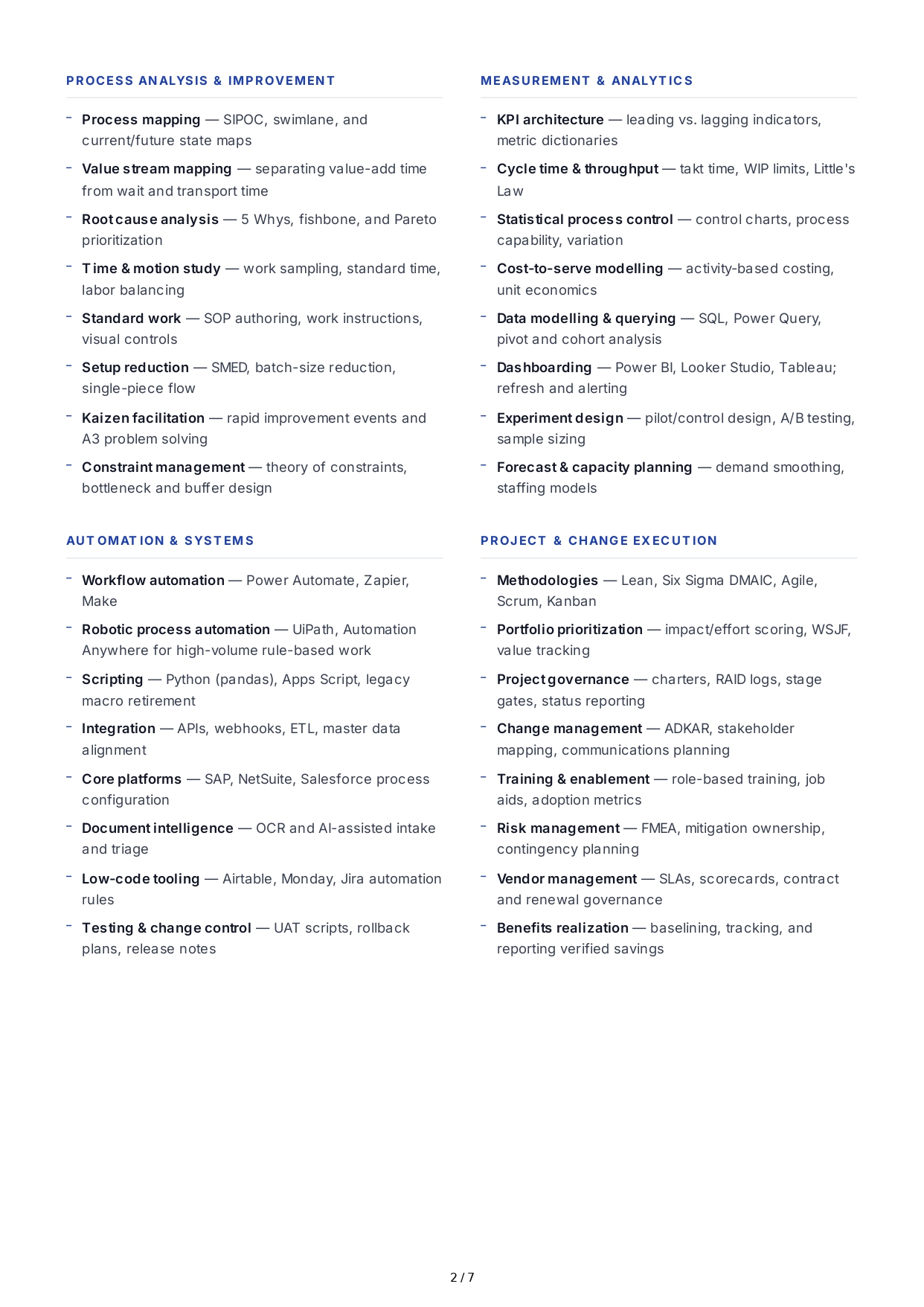
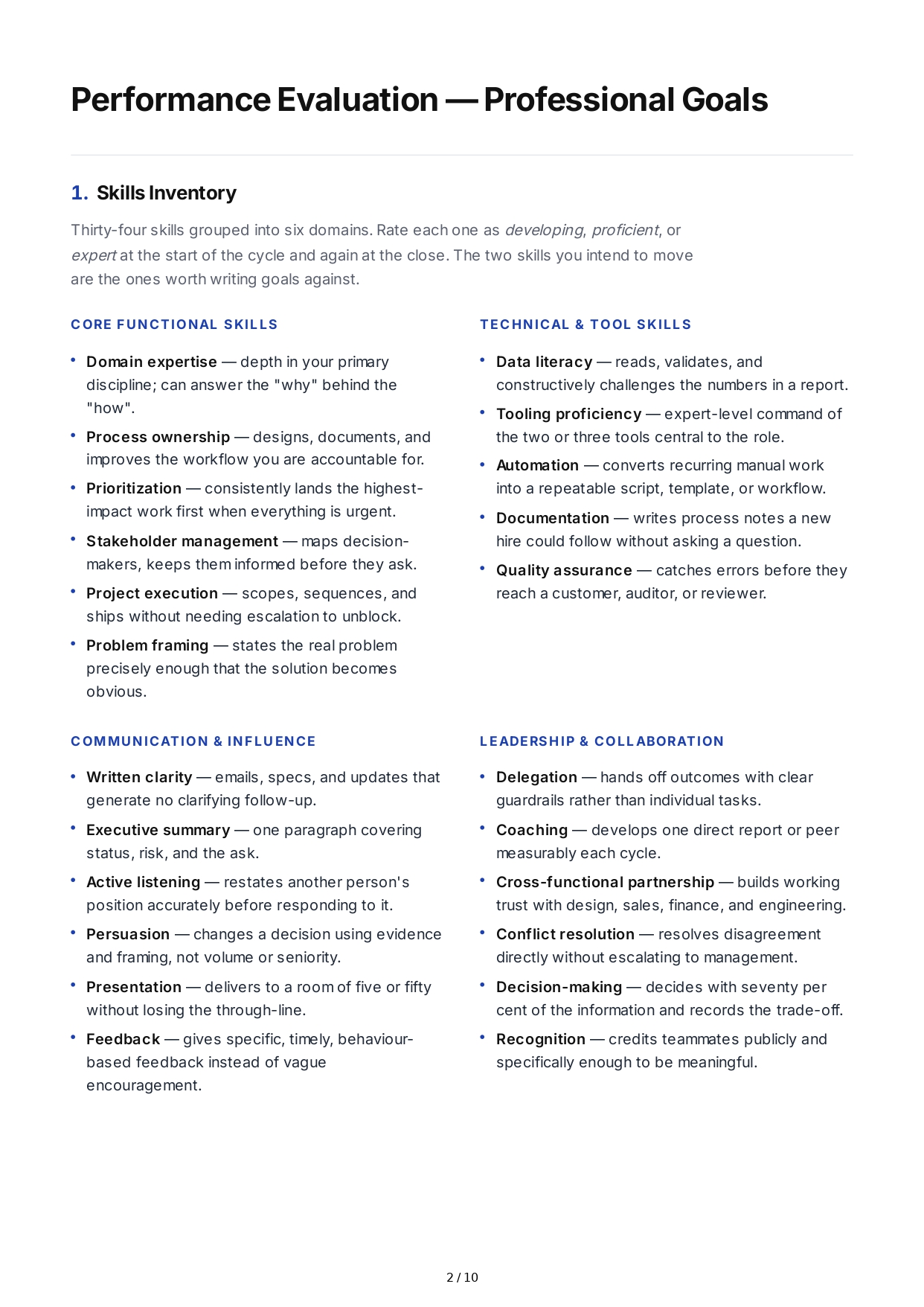
PROCESS
ANALYSIS
&
DESIGN
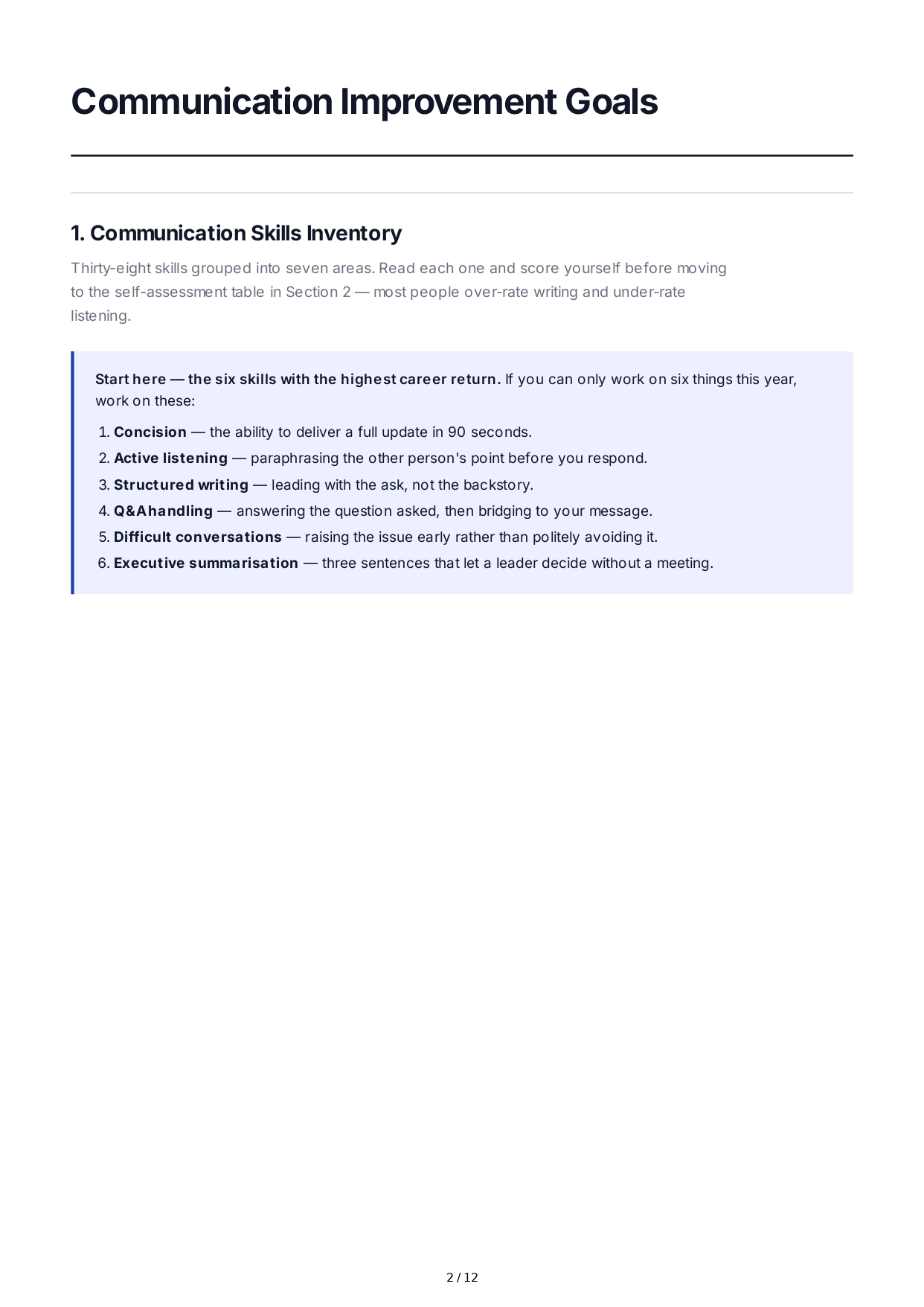
AUT OMAT ION
&
T OOLING
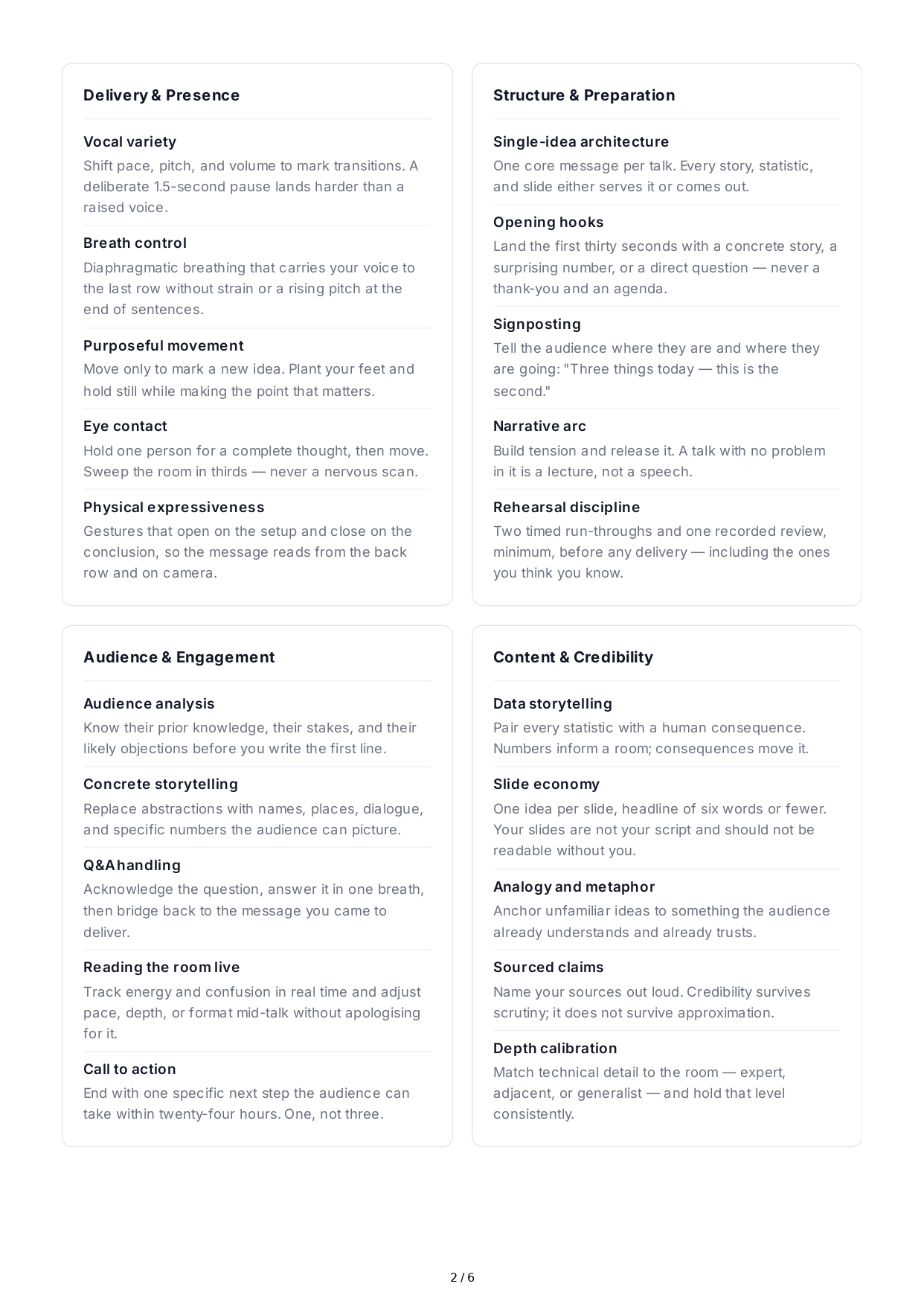
DATA
&
MEASUREMENT
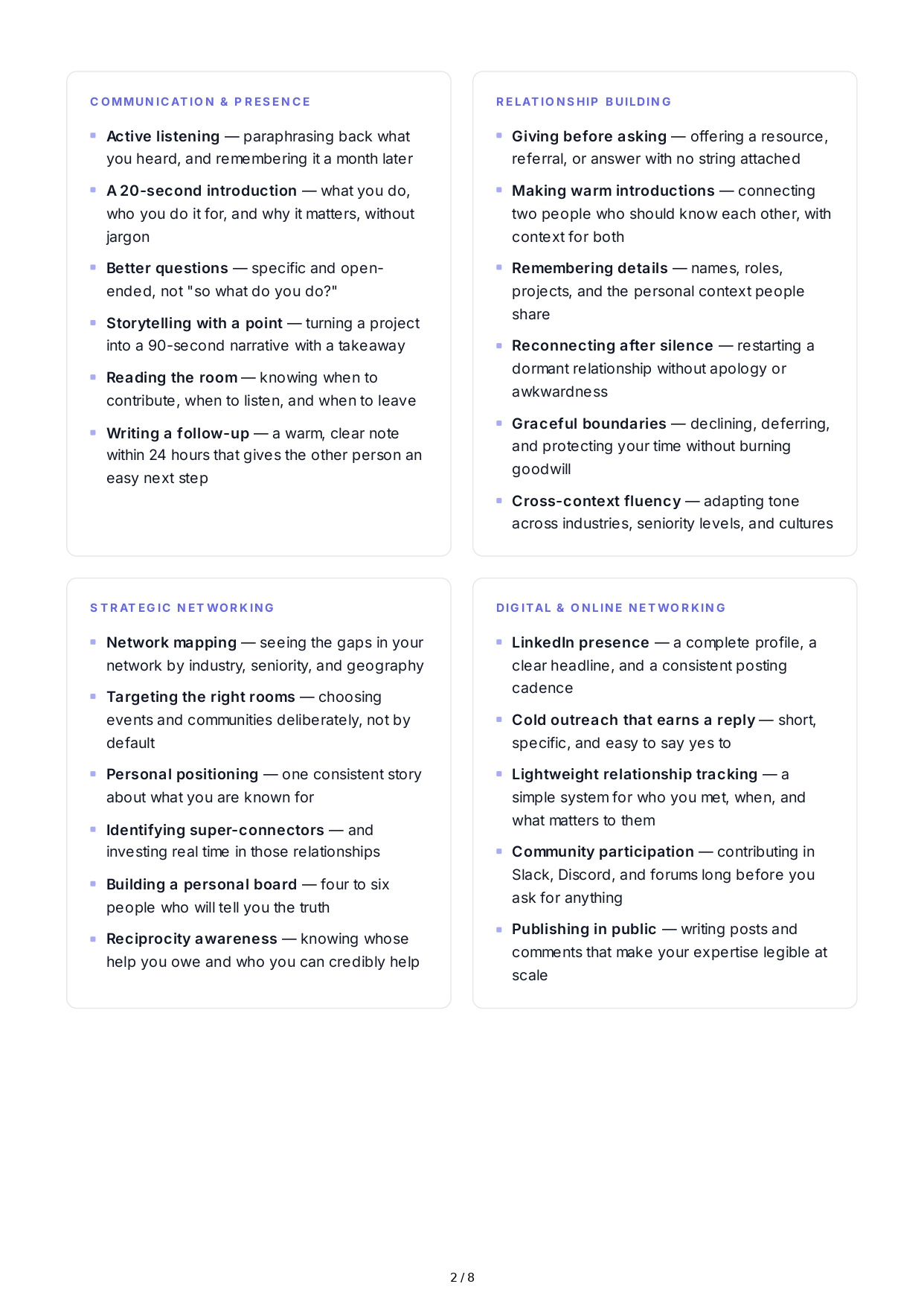
FACILITAT ION
&
CHANGE
Process
mapping
&
value
stream
mapping
—
current
-
state
and
future
-
state
maps
for
order
-
to
-
cash
,
hire
-
to
-
retire
,
and
intake
workflows
.
BPMN
2.0
modeling
—
swimlane
diagrams
,
gateways
,
and
exception
paths
documented
to
a
buildable
standard
.
Root
cause
analysis
— 5
Whys
,
fishbone
,
and
Pareto
analysis
applied
to
recurring
process
failures
.
Cycle
time
&
time
-
and
-
motion
study
—
touch
-
time
versus
wait
-
time
breakdowns
that
isolate
the
real
bottleneck
.
Lean
&
Six
Sigma
(
DMAIC
)
—
waste
identification
,
value
definition
,
and
statistically
supported
improvement
.
SIPOC
and
process
capability
analysis
—
boundary
definition
and
baseline
performance
measurement
before
any
change
.
Workflow
automation
platforms
—
Power
Automate
,
Zapier
,
and
Make
for
cross
-
application
orchestration
.
BPM
suites
—
Camunda
and
Nintex
for
structured
,
auditable
process
execution
.
Robotic
process
automation
—
UiPath
for
high
-
volume
,
rule
-
based
task
elimination
.
Low
-
code
/
no
-
code
build
—
Airtable
,
Retool
,
and
Notion
databases
for
lightweight
internal
tooling
.
API
and
webhook
integration
design
—
event
-
driven
sync
between
CRM
,
ERP
,
and
ticketing
systems
.
Scripting
—
Python
,
Google
Apps
Script
,
and
SQL
for
data
preparation
and
one
-
off
automation
.
KPI
framework
design
—
leading
and
lagging
metric
definition
with
named
owners
and
review
cadence
.
Operational
dashboards
—
Power
BI
,
Tableau
,
and
Looker
Studio
built
for
a
standing
ops
review
.
SQL
querying
&
data
modeling
—
joins
,
window
functions
,
and
clean
process
-
event
tables
.
Statistical
process
control
—
control
charts
and
variation
analysis
to
separate
signal
from
noise
.
Capacity
planning
&
forecasting
—
demand
-
to
-
staffing
models
that
anticipate
rather
than
react
.
Cost
-
of
-
process
analysis
—
translating
cycle
time
and
rework
into
annualized
dollar
impact
.
Stakeholder
mapping
&
alignment
—
identifying
decision
-
makers
,
blockers
,
and
quiet
influencers
before
kickoff
.
Change
management
—
Prosci
ADKAR
applied
to
adoption
planning
,
not
just
communication
.
Workshop
facilitation
—
process
discovery
sessions
that
produce
a
mapped
workflow
in
one
sitting
.
Documentation
&
training
design
—
versioned
SOPs
,
runbooks
,
and
quick
-
reference
guides
.
Cross
-
functional
project
management
—
Agile
and
Kanban
delivery
across
teams
that
do
not
report
to
one
another
.
Executive
communication
—
one
-
page
business
cases
that
lead
with
the
number
,
not
the
methodology
.
2 / 4
2.
Professional
Goals
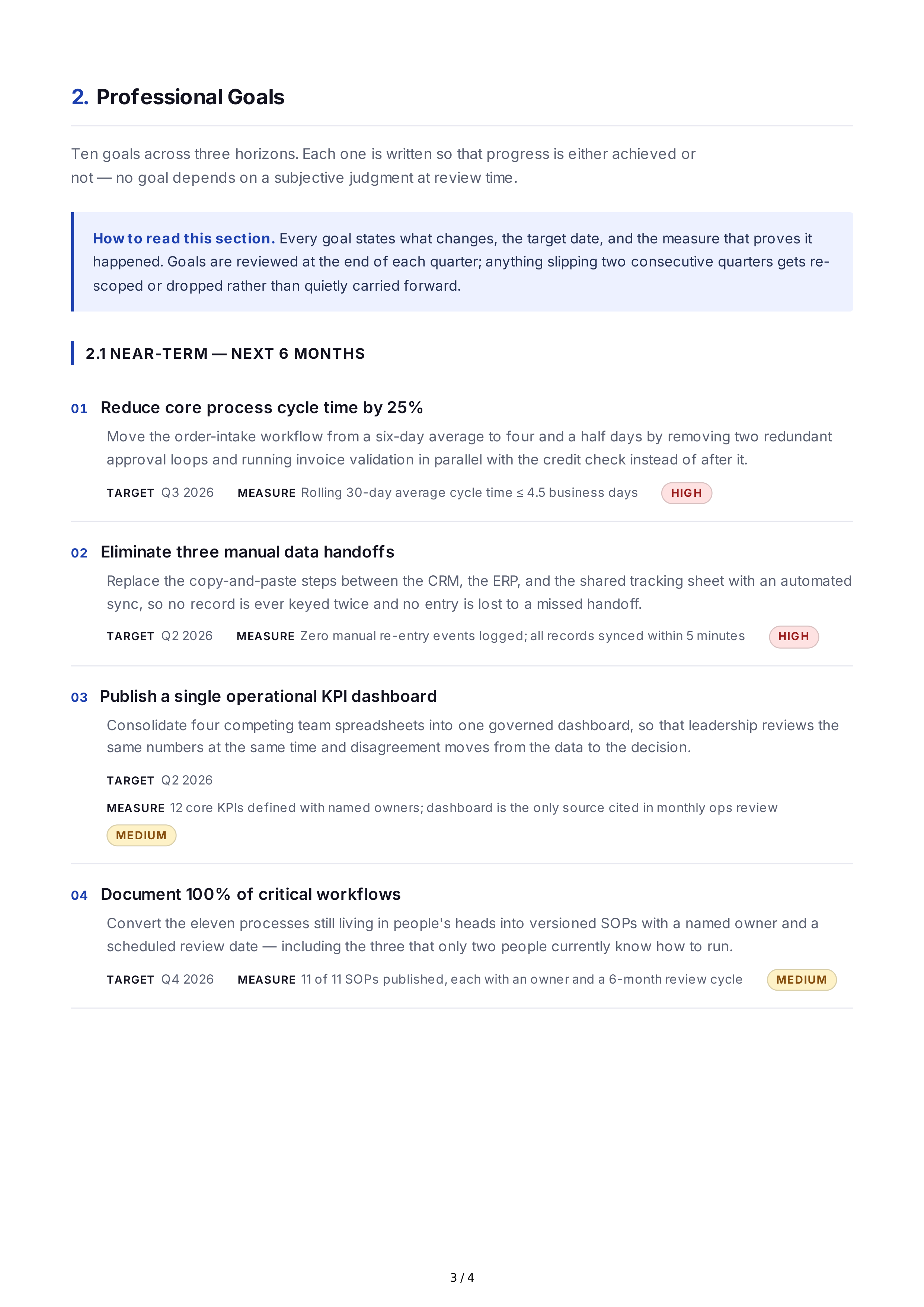
Ten
goals
across
three
horizons
.
Each
one
is
written
so
that
progress
is
either
achieved
or
not
—
no
goal
depends
on
a
subjective
judgment
at
review
time
.
How
to
read
this
section
.
Every
goal
states
what
changes
,
the
target
date
,
and
the
measure
that
proves
it
happened
.
Goals
are
reviewed
at
the
end
of
each
quarter
;
anything
slipping
two
consecutive
quarters
gets
re
-
scoped
or
dropped
rather
than
quietly
carried
forward
.
2.1
NEAR
-
TERM
—
NEXT
6
MONTHS
01
Reduce
core
process
cycle
time
by
25%
Move
the
order
-
intake
workflow
from
a
six
-
day
average
to
four
and
a
half
days
by
removing
two
redundant
approval
loops
and
running
invoice
validation
in
parallel
with
the
credit
check
instead
of
after
it
.
TARGET
Q
3 2026
MEASURE
Rolling
30-
day
average
cycle
time
≤
4.5
business
days
HIG H
02
Eliminate
three
manual
data
handoffs
Replace
the
copy
-
and
-
paste
steps
between
the
CRM
,
the
ERP
,
and
the
shared
tracking
sheet
with
an
automated
sync
,
so
no
record
is
ever
keyed
twice
and
no
entry
is
lost
to
a
missed
handoff
.
TARGET
Q
2 2026
MEASURE
Zero
manual
re
-
entry
events
logged
;
all
records
synced
within
5
minutes
HIG H
03
Publish
a
single
operational
KPI
dashboard
Consolidate
four
competing
team
spreadsheets
into
one
governed
dashboard
,
so
that
leadership
reviews
the
same
numbers
at
the
same
time
and
disagreement
moves
from
the
data
to
the
decision
.
TARGET
Q
2 2026
MEASURE
12
core
KPIs
defined
with
named
owners
;
dashboard
is
the
only
source
cited
in
monthly
ops
review
MEDIUM
04
Document
100%
of
critical
workflows
Convert
the
eleven
processes
still
living
in
people
'
s
heads
into
versioned
SOPs
with
a
named
owner
and
a
scheduled
review
date
—
including
the
three
that
only
two
people
currently
know
how
to
run
.
TARGET
Q
4 2026
MEASURE
11
of
11
SOPs
published
,
each
with
an
owner
and
a
6-
month
review
cycle
MEDIUM
3 / 4
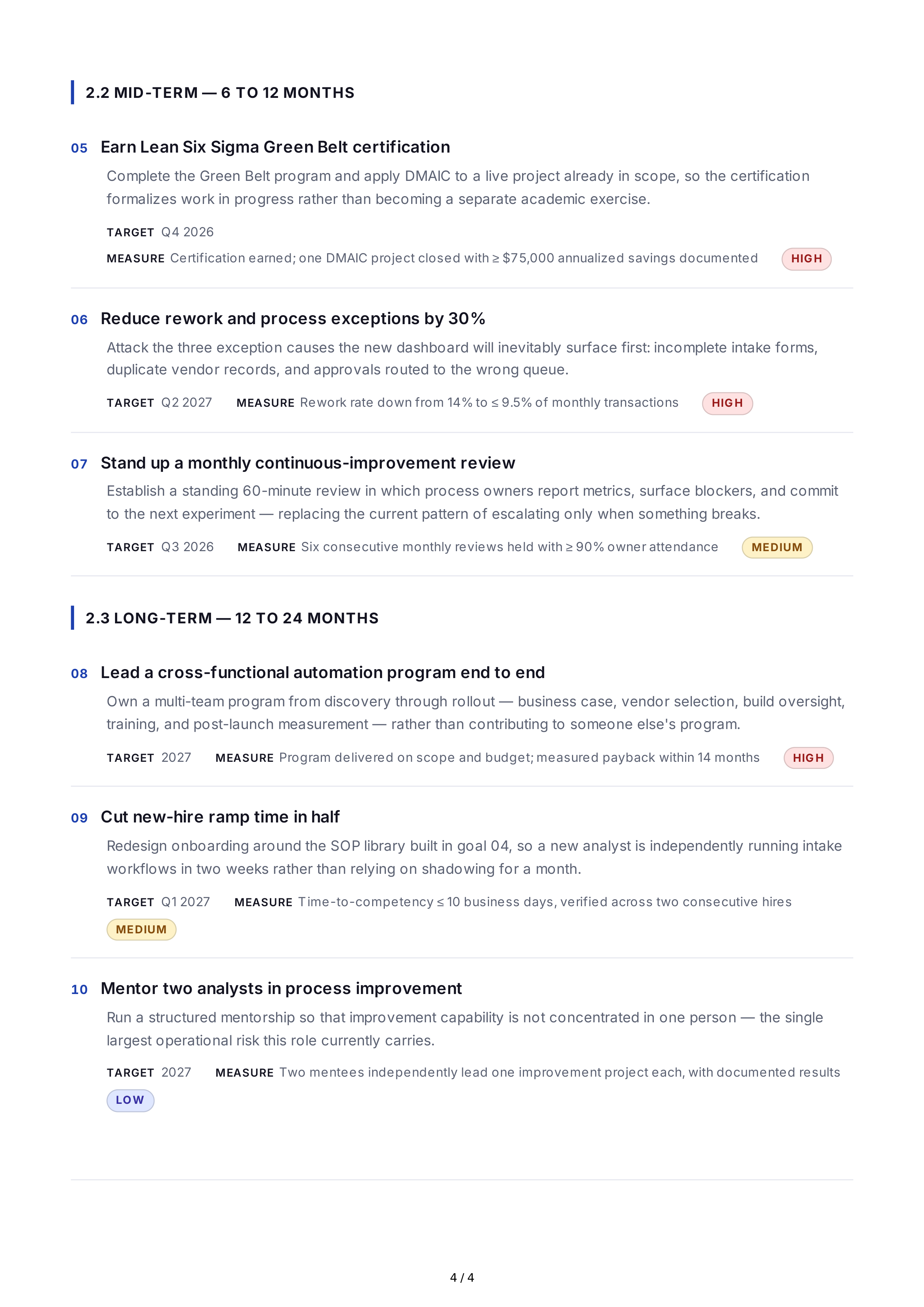
2.2
MID
-
TERM
— 6
TO
12
MONTHS
05
Earn
Lean
Six
Sigma
Green
Belt
certification
Complete
the
Green
Belt
program
and
apply
DMAIC
to
a
live
project
already
in
scope
,
so
the
certification
formalizes
work
in
progress
rather
than
becoming
a
separate
academic
exercise
.
TARGET
Q
4 2026
MEASURE
Certification
earned
;
one
DMAIC
project
closed
with
≥
$
75,000
annualized
savings
documented
HIG H
06
Reduce
rework
and
process
exceptions
by
30%
Attack
the
three
exception
causes
the
new
dashboard
will
inevitably
surface
first
:
incomplete
intake
forms
,
duplicate
vendor
records
,
and
approvals
routed
to
the
wrong
queue
.
TARGET
Q
2 2027
MEASURE
Rework
rate
down
from
14%
to
≤
9.5%
of
monthly
transactions
HIG H
07
Stand
up
a
monthly
continuous
-
improvement
review
Establish
a
standing
60-
minute
review
in
which
process
owners
report
metrics
,
surface
blockers
,
and
commit
to
the
next
experiment
—
replacing
the
current
pattern
of
escalating
only
when
something
breaks
.
TARGET
Q
3 2026
MEASURE
Six
consecutive
monthly
reviews
held
with
≥
90%
owner
attendance
MEDIUM
2.3
LONG
-
TERM
— 12
TO
24
MONTHS
08
Lead
a
cross
-
functional
automation
program
end
to
end
Own
a
multi
-
team
program
from
discovery
through
rollout
—
business
case
,
vendor
selection
,
build
oversight
,
training
,
and
post
-
launch
measurement
—
rather
than
contributing
to
someone
else
'
s
program
.
TARGET
2027
MEASURE
Program
delivered
on
scope
and
budget
;
measured
payback
within
14
months
HIG H
09
Cut
new
-
hire
ramp
time
in
half
Redesign
onboarding
around
the
SOP
library
built
in
goal
04,
so
a
new
analyst
is
independently
running
intake
workflows
in
two
weeks
rather
than
relying
on
shadowing
for
a
month
.
TARGET
Q
1 2027
MEASURE
Time
-
to
-
competency
≤
10
business
days
,
verified
across
two
consecutive
hires
MEDIUM
10
Mentor
two
analysts
in
process
improvement
Run
a
structured
mentorship
so
that
improvement
capability
is
not
concentrated
in
one
person
—
the
single
largest
operational
risk
this
role
currently
carries
.
TARGET
2027
MEASURE
Two
mentees
independently
lead
one
improvement
project
each
,
with
documented
results
LOW
4 / 4