Conflict
Resolution
01
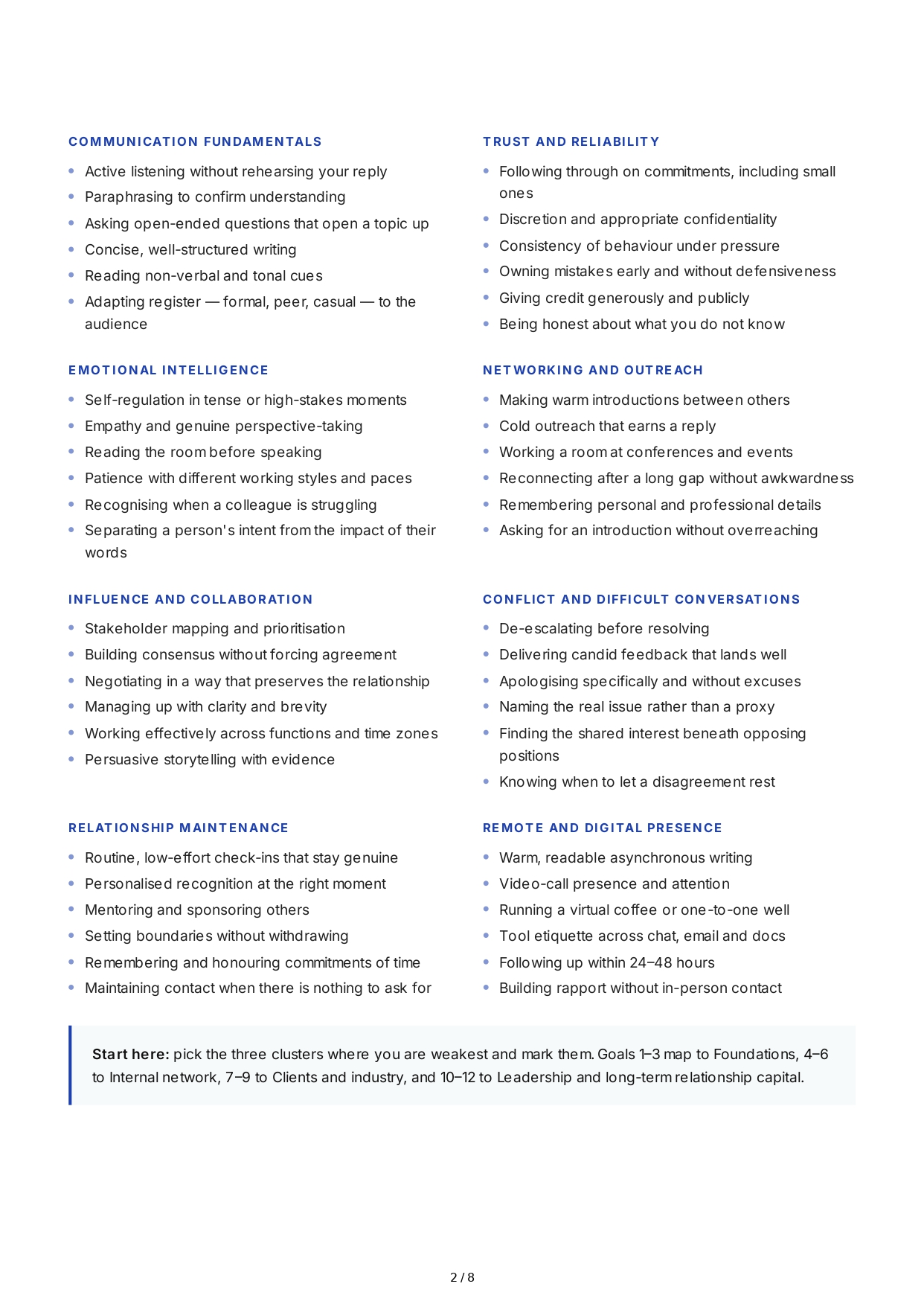
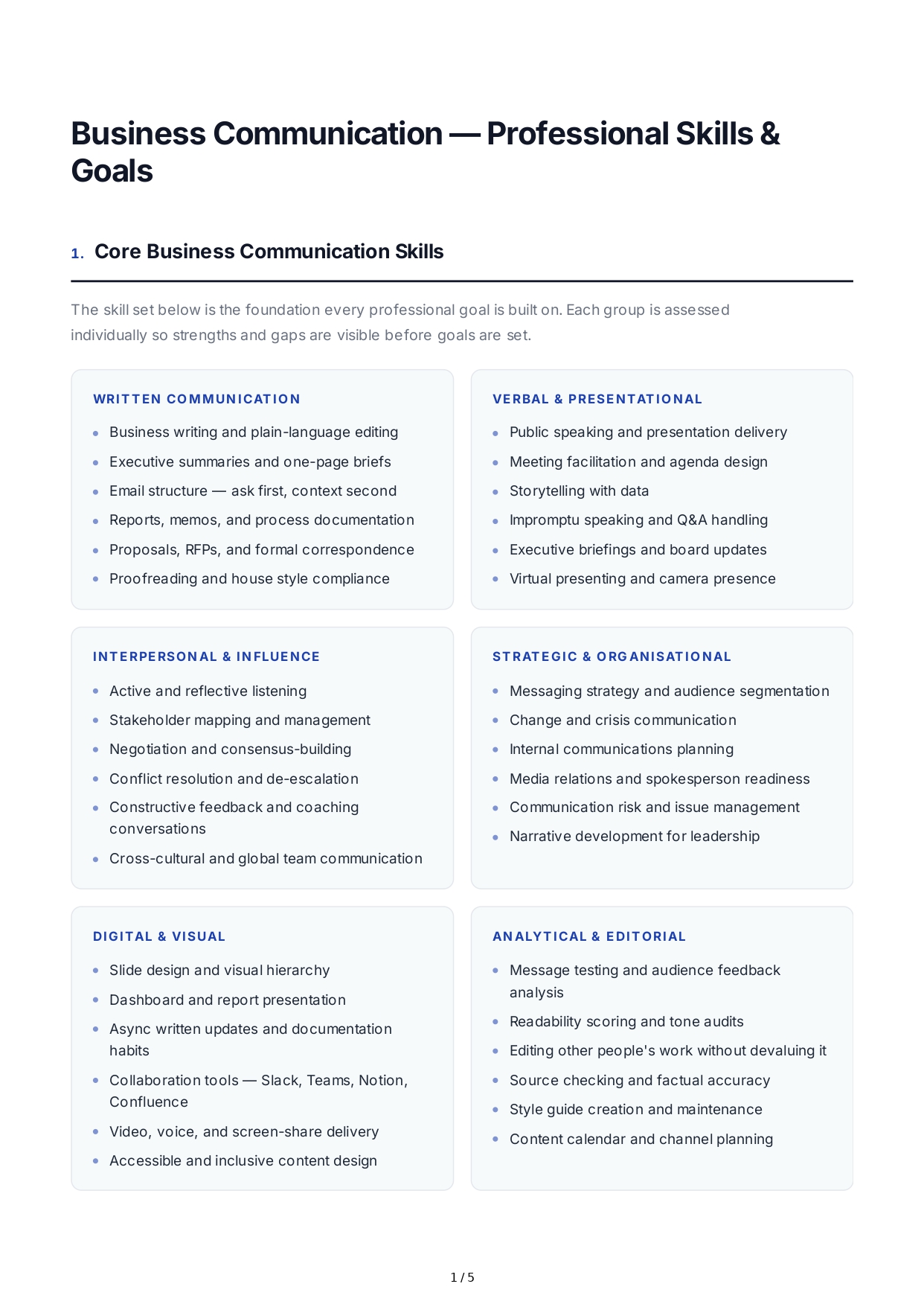
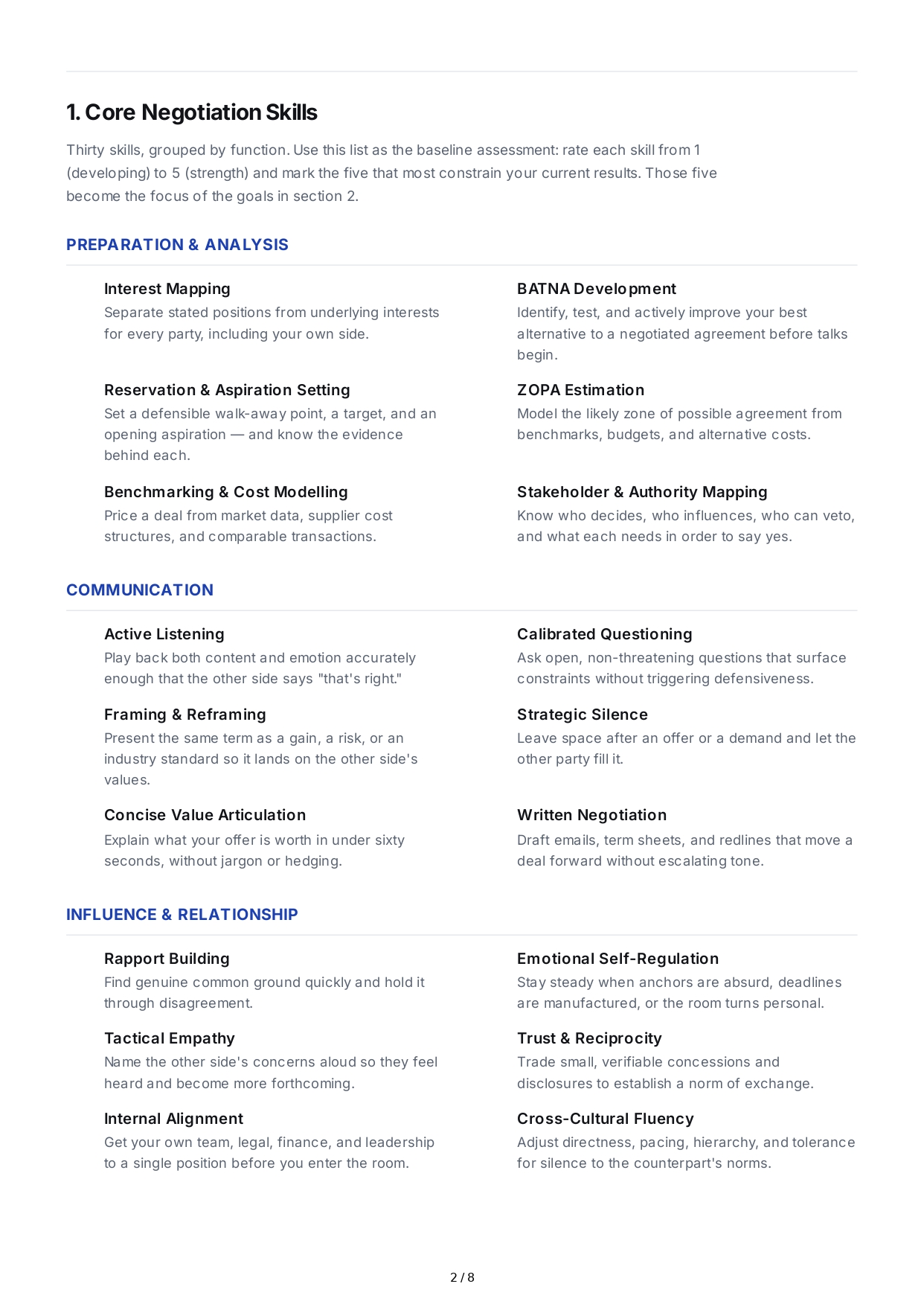
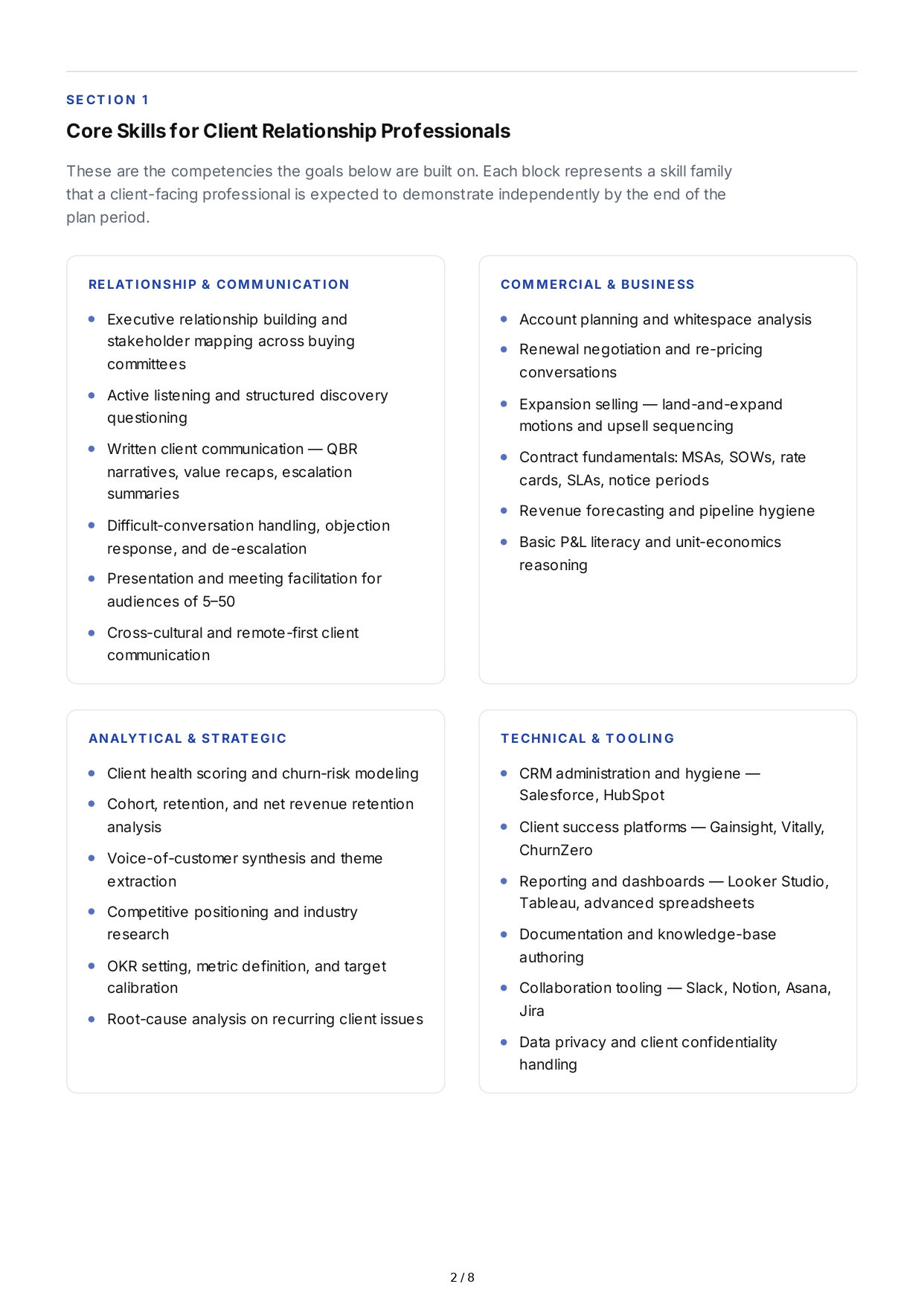
Core
Skills
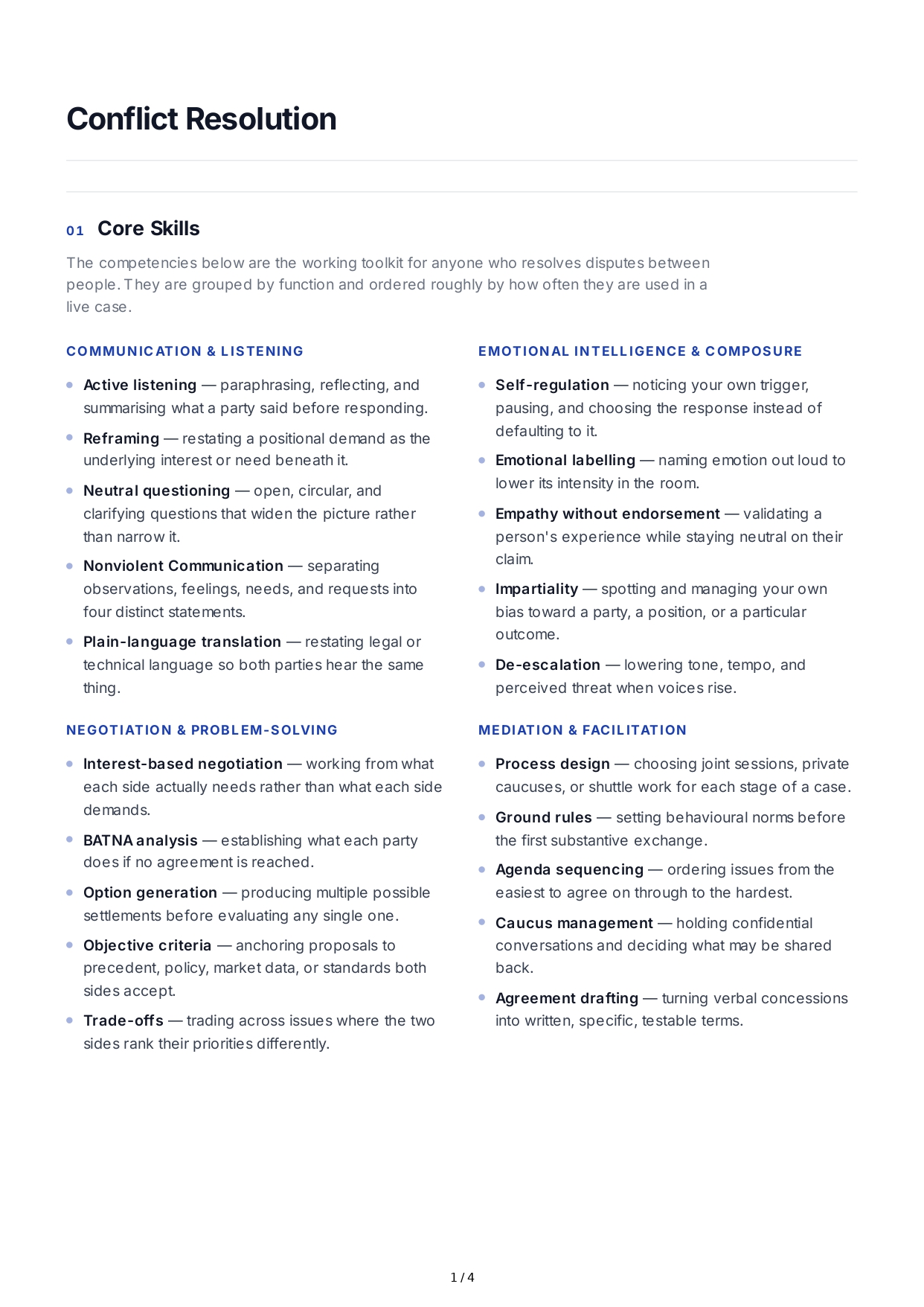
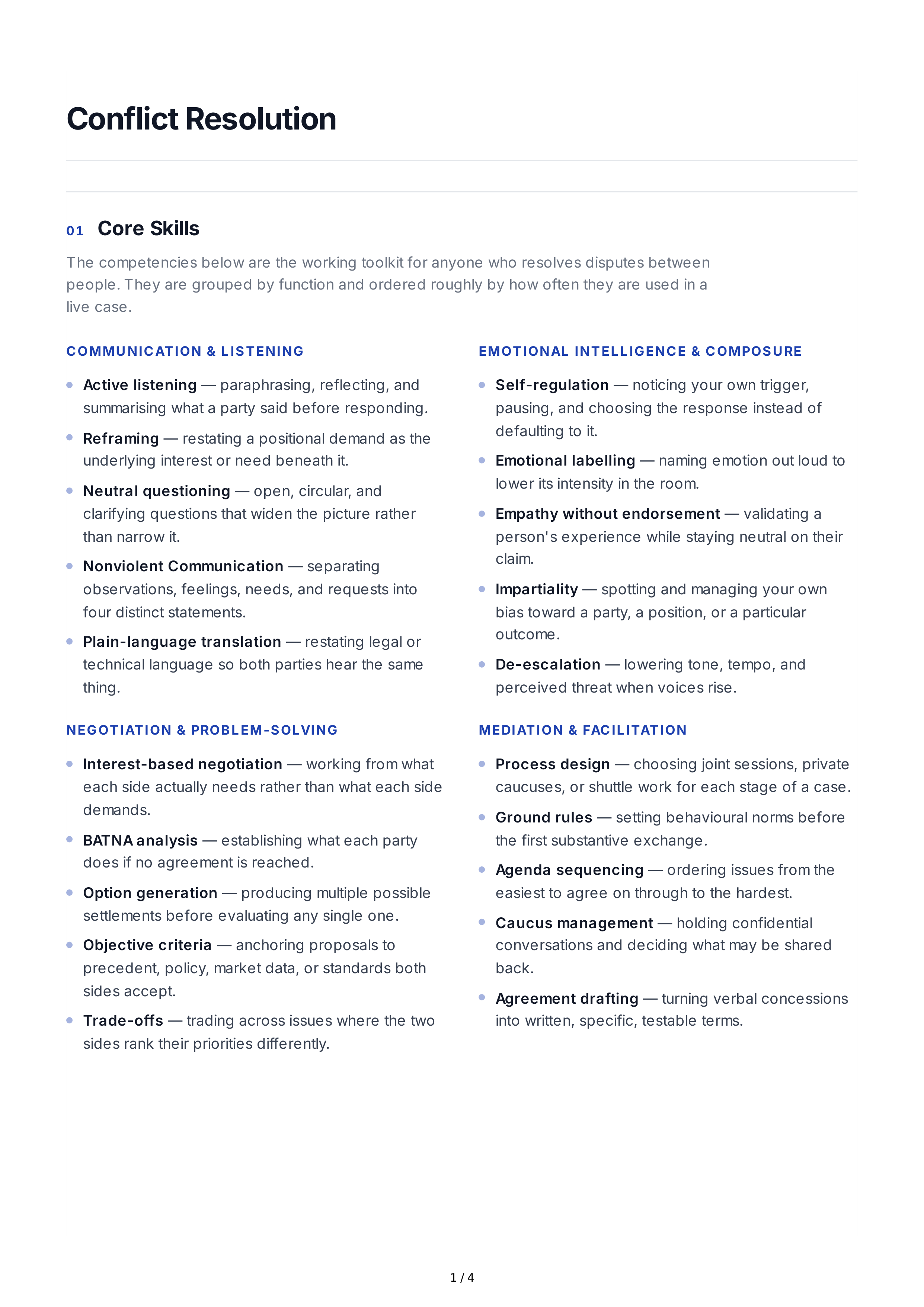
The
competencies
below
are
the
working
toolkit
for
anyone
who
resolves
disputes
between
people
.
They
are
grouped
by
function
and
ordered
roughly
by
how
often
they
are
used
in
a
live
case
.
COMMUNICATION
&
LISTENING
EMOTIONAL
INTELLIGENCE
&
COMPOSURE
NEGOTIATION
&
PROBLEM
-
SOLVING
MEDIATION
&
FACILITATION
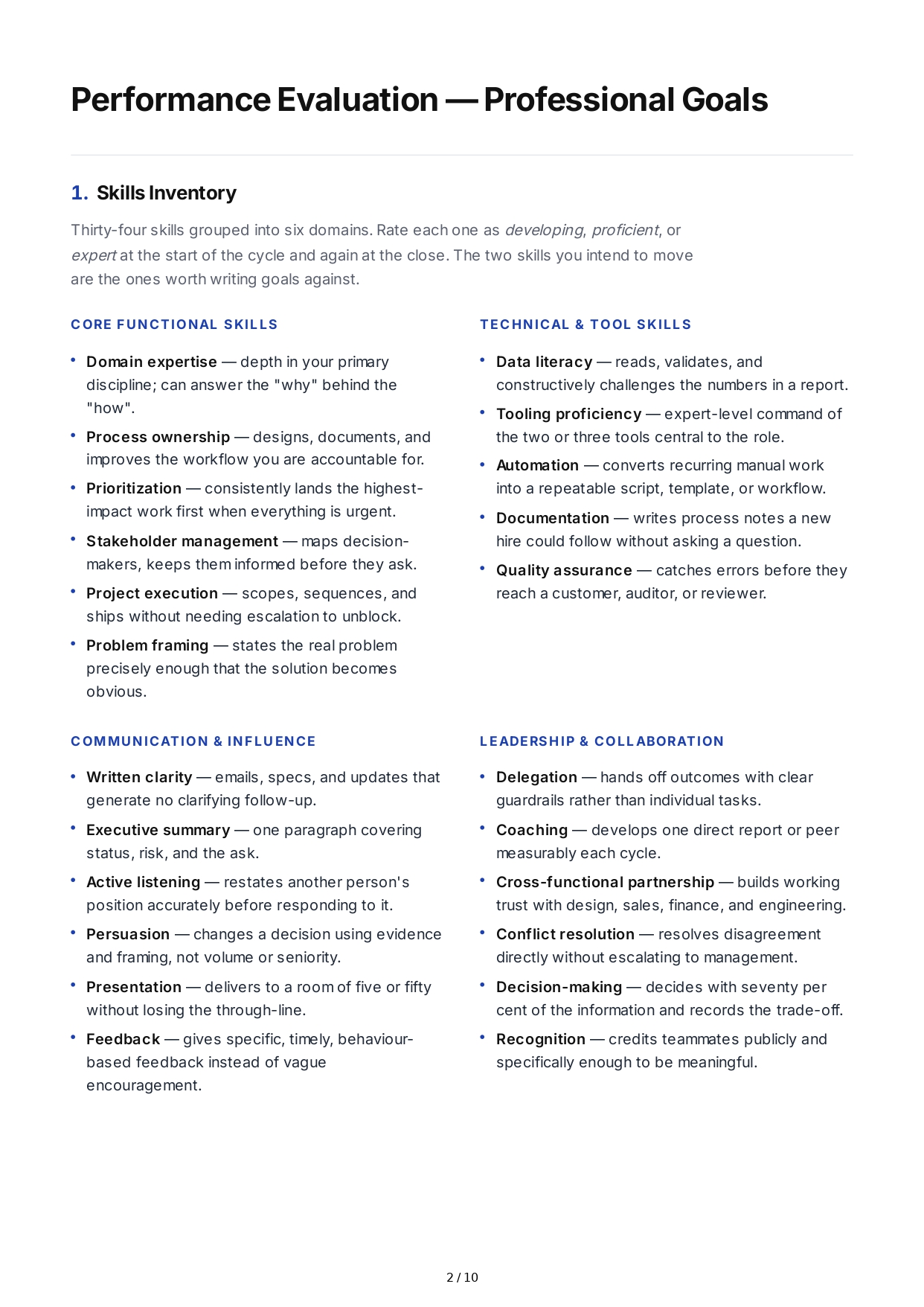
Active
listening
—
paraphrasing
,
reflecting
,
and
summarising
what
a
party
said
before
responding
.
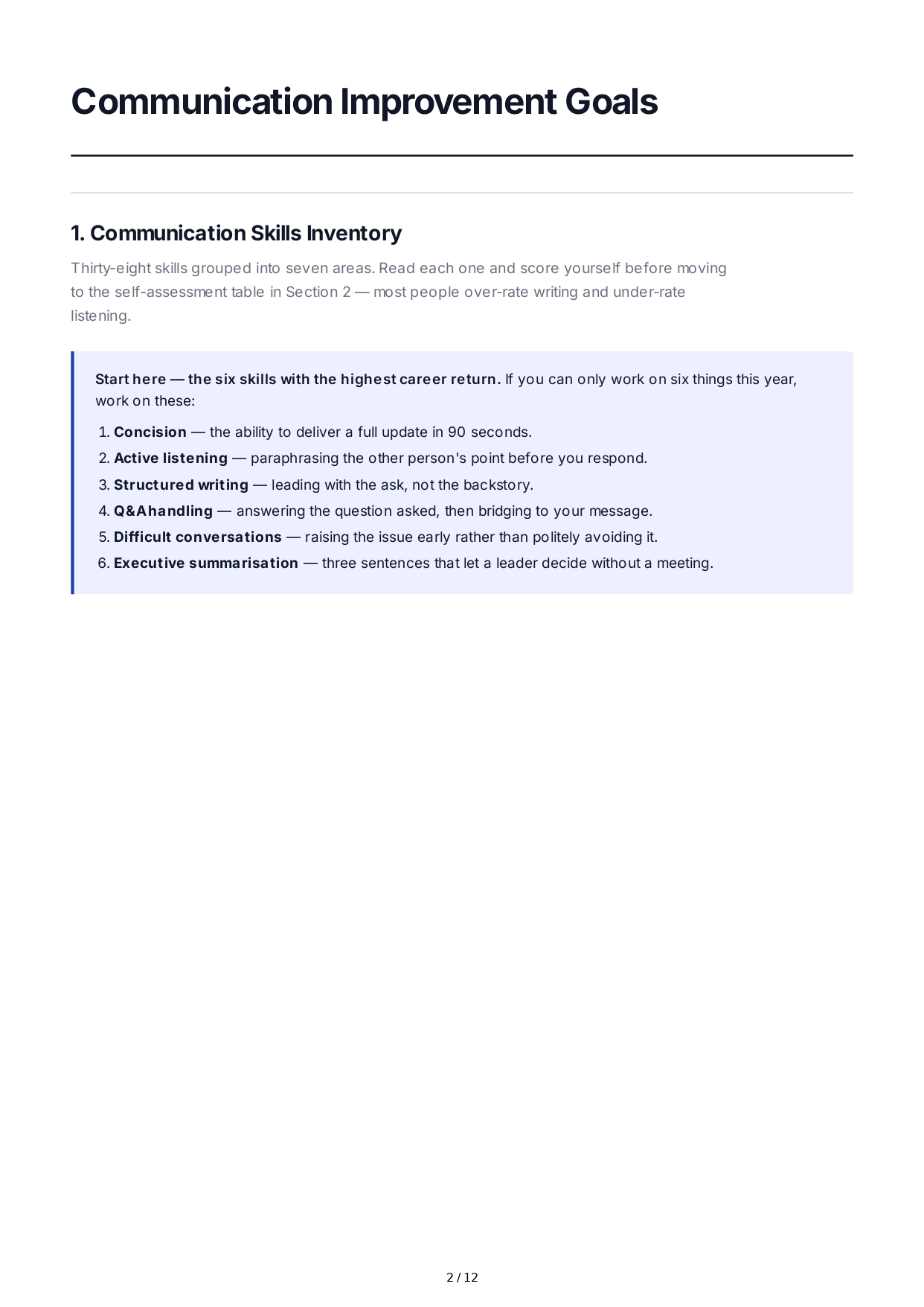
Reframing
—
restating
a
positional
demand
as
the
underlying
interest
or
need
beneath
it
.
Neutral
questioning
—
open
,
circular
,
and
clarifying
questions
that
widen
the
picture
rather
than
narrow
it
.
Nonviolent
Communication
—
separating
observations
,
feelings
,
needs
,
and
requests
into
four
distinct
statements
.
Plain
-
language
translation
—
restating
legal
or
technical
language
so
both
parties
hear
the
same
thing
.
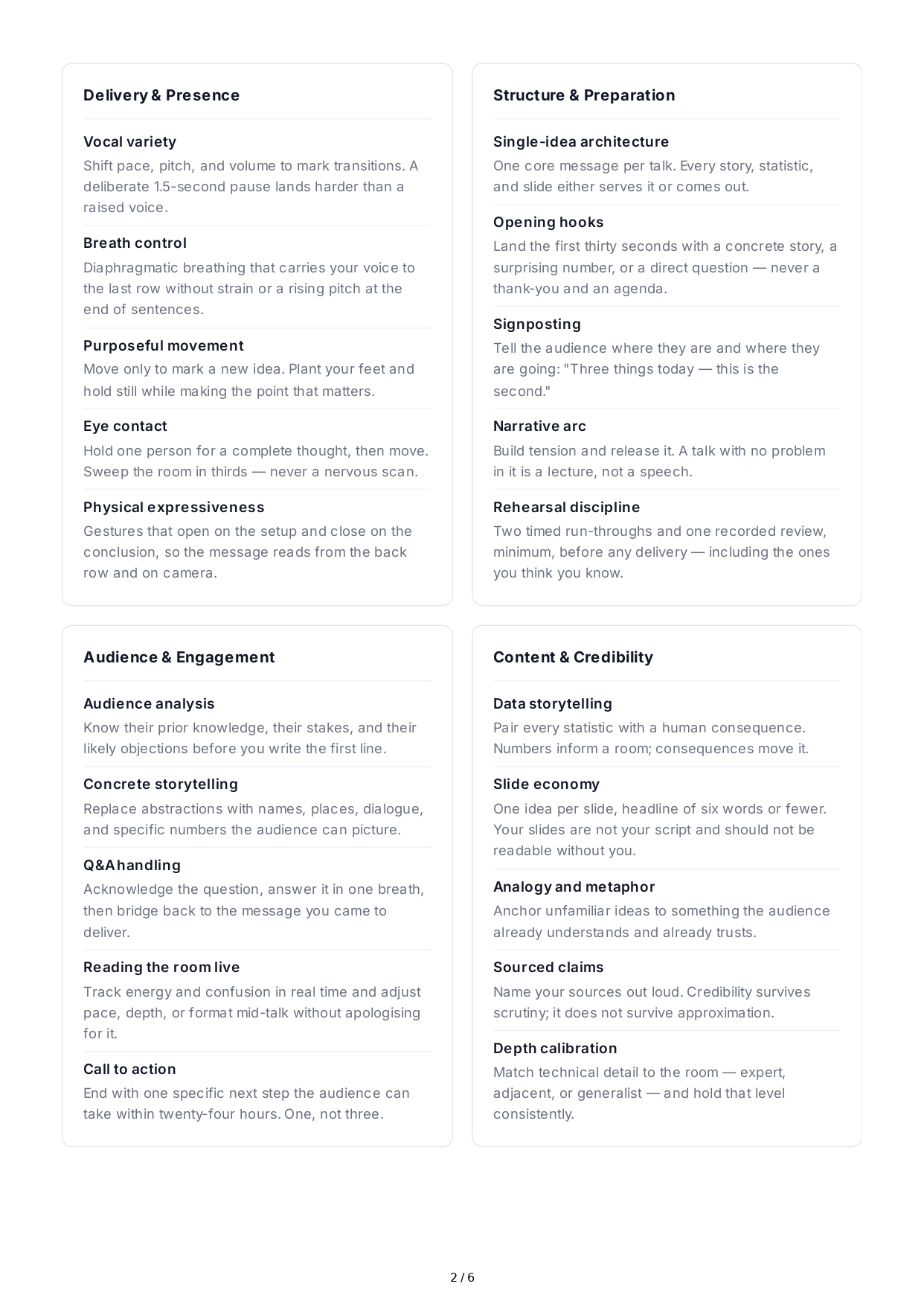
Self
-
regulation
—
noticing
your
own
trigger
,
pausing
,
and
choosing
the
response
instead
of
defaulting
to
it
.
Emotional
labelling
—
naming
emotion
out
loud
to
lower
its
intensity
in
the
room
.
Empathy
without
endorsement
—
validating
a
person
'
s
experience
while
staying
neutral
on
their
claim
.
Impartiality
—
spotting
and
managing
your
own
bias
toward
a
party
,
a
position
,
or
a
particular
outcome
.
De
-
escalation
—
lowering
tone
,
tempo
,
and
perceived
threat
when
voices
rise
.
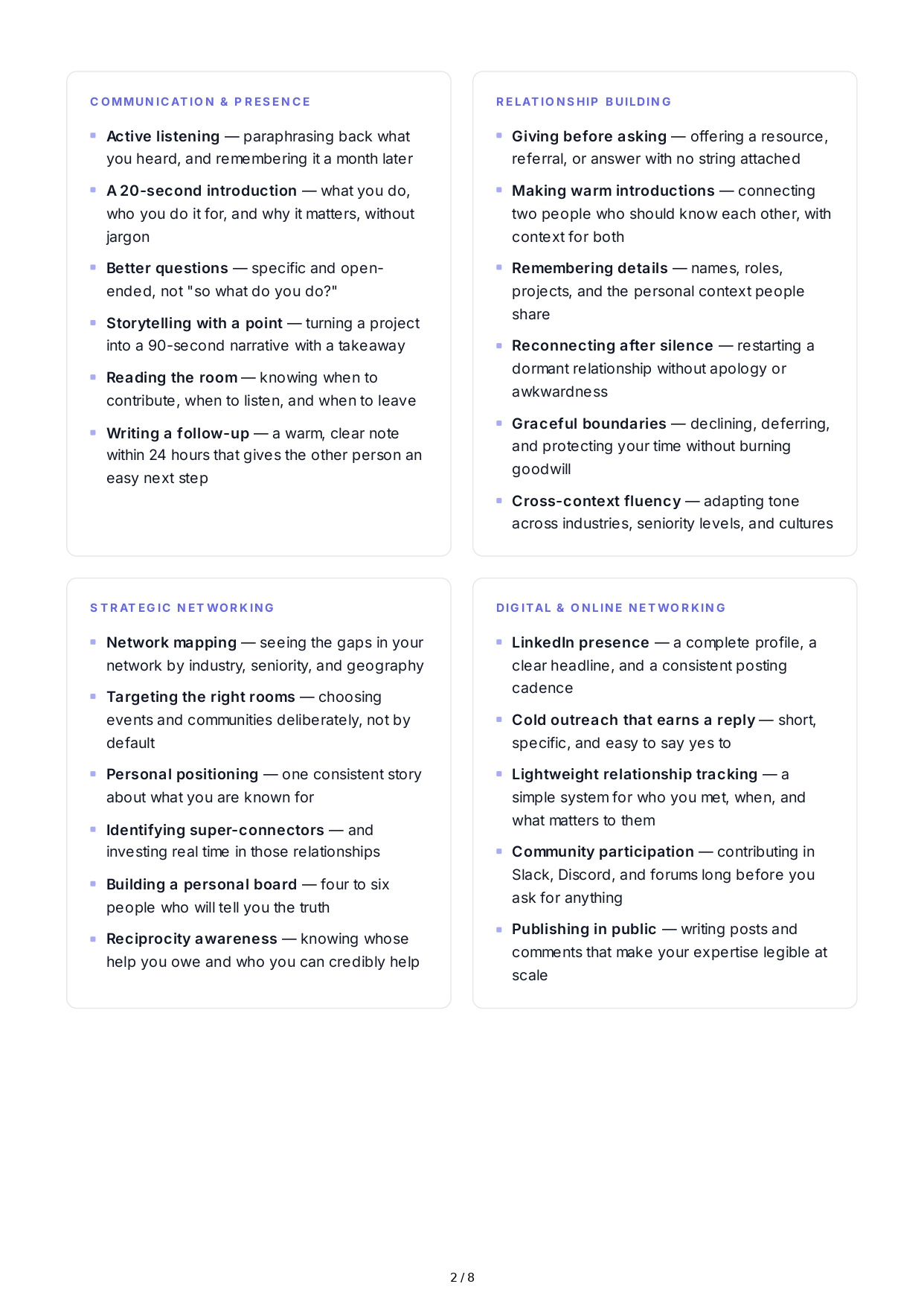
Interest
-
based
negotiation
—
working
from
what
each
side
actually
needs
rather
than
what
each
side
demands
.
BATNA
analysis
—
establishing
what
each
party
does
if
no
agreement
is
reached
.
Option
generation
—
producing
multiple
possible
settlements
before
evaluating
any
single
one
.
Objective
criteria
—
anchoring
proposals
to
precedent
,
policy
,
market
data
,
or
standards
both
sides
accept
.
Trade
-
offs
—
trading
across
issues
where
the
two
sides
rank
their
priorities
differently
.
Process
design
—
choosing
joint
sessions
,
private
caucuses
,
or
shuttle
work
for
each
stage
of
a
case
.
Ground
rules
—
setting
behavioural
norms
before
the
first
substantive
exchange
.
Agenda
sequencing
—
ordering
issues
from
the
easiest
to
agree
on
through
to
the
hardest
.
Caucus
management
—
holding
confidential
conversations
and
deciding
what
may
be
shared
back
.
Agreement
drafting
—
turning
verbal
concessions
into
written
,
specific
,
testable
terms
.
1 / 4
ANALYSIS
&
DOCUMENTATION
CULTURAL
&
ORGANISATIONAL
FLUENCY
02
Professional
Goals
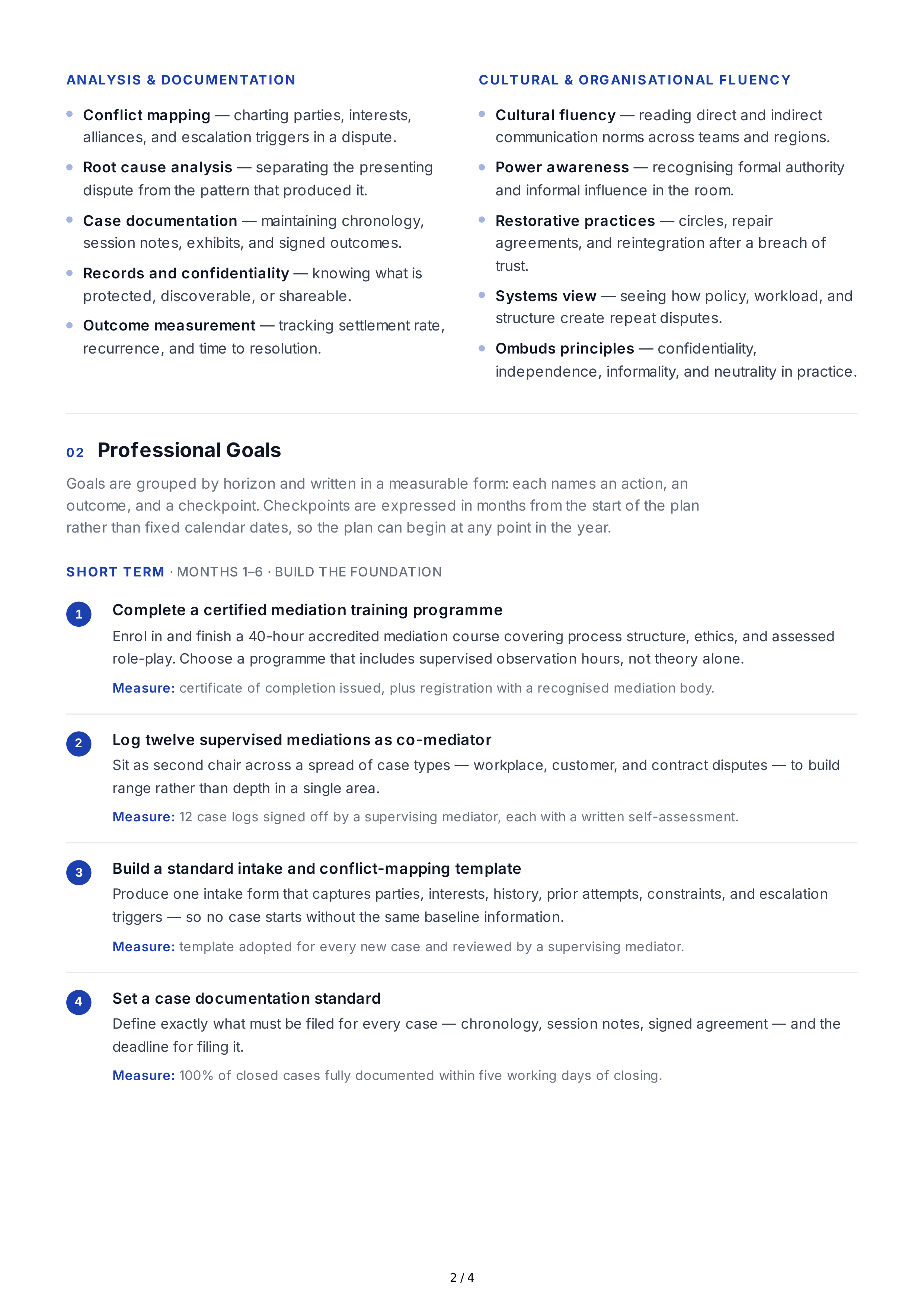
Goals
are
grouped
by
horizon
and
written
in
a
measurable
form
:
each
names
an
action
,
an
outcome
,
and
a
checkpoint
.
Checkpoints
are
expressed
in
months
from
the
start
of
the
plan
rather
than
fixed
calendar
dates
,
so
the
plan
can
begin
at
any
point
in
the
year
.
SHORT
TERM
·
MONTHS
1–6 ·
BUILD
THE
FOUNDATION
1
Complete
a
certified
mediation
training
programme
Enrol
in
and
finish
a
40-
hour
accredited
mediation
course
covering
process
structure
,
ethics
,
and
assessed
role
-
play
.
Choose
a
programme
that
includes
supervised
observation
hours
,
not
theory
alone
.
Measure
:
certificate
of
completion
issued
,
plus
registration
with
a
recognised
mediation
body
.
2
Log
twelve
supervised
mediations
as
co
-
mediator
Sit
as
second
chair
across
a
spread
of
case
types
—
workplace
,
customer
,
and
contract
disputes
—
to
build
range
rather
than
depth
in
a
single
area
.
Measure
:
12
case
logs
signed
off
by
a
supervising
mediator
,
each
with
a
written
self
-
assessment
.
3
Build
a
standard
intake
and
conflict
-
mapping
template
Produce
one
intake
form
that
captures
parties
,
interests
,
history
,
prior
attempts
,
constraints
,
and
escalation
triggers
—
so
no
case
starts
without
the
same
baseline
information
.
Measure
:
template
adopted
for
every
new
case
and
reviewed
by
a
supervising
mediator
.
4
Set
a
case
documentation
standard
Define
exactly
what
must
be
filed
for
every
case
—
chronology
,
session
notes
,
signed
agreement
—
and
the
deadline
for
filing
it
.
Measure
:
100%
of
closed
cases
fully
documented
within
five
working
days
of
closing
.
Conflict
mapping
—
charting
parties
,
interests
,
alliances
,
and
escalation
triggers
in
a
dispute
.
Root
cause
analysis
—
separating
the
presenting
dispute
from
the
pattern
that
produced
it
.
Case
documentation
—
maintaining
chronology
,
session
notes
,
exhibits
,
and
signed
outcomes
.
Records
and
confidentiality
—
knowing
what
is
protected
,
discoverable
,
or
shareable
.
Outcome
measurement
—
tracking
settlement
rate
,
recurrence
,
and
time
to
resolution
.
Cultural
fluency
—
reading
direct
and
indirect
communication
norms
across
teams
and
regions
.
Power
awareness
—
recognising
formal
authority
and
informal
influence
in
the
room
.
Restorative
practices
—
circles
,
repair
agreements
,
and
reintegration
after
a
breach
of
trust
.
Systems
view
—
seeing
how
policy
,
workload
,
and
structure
create
repeat
disputes
.
Ombuds
principles
—
confidentiality
,
independence
,
informality
,
and
neutrality
in
practice
.
2 / 4
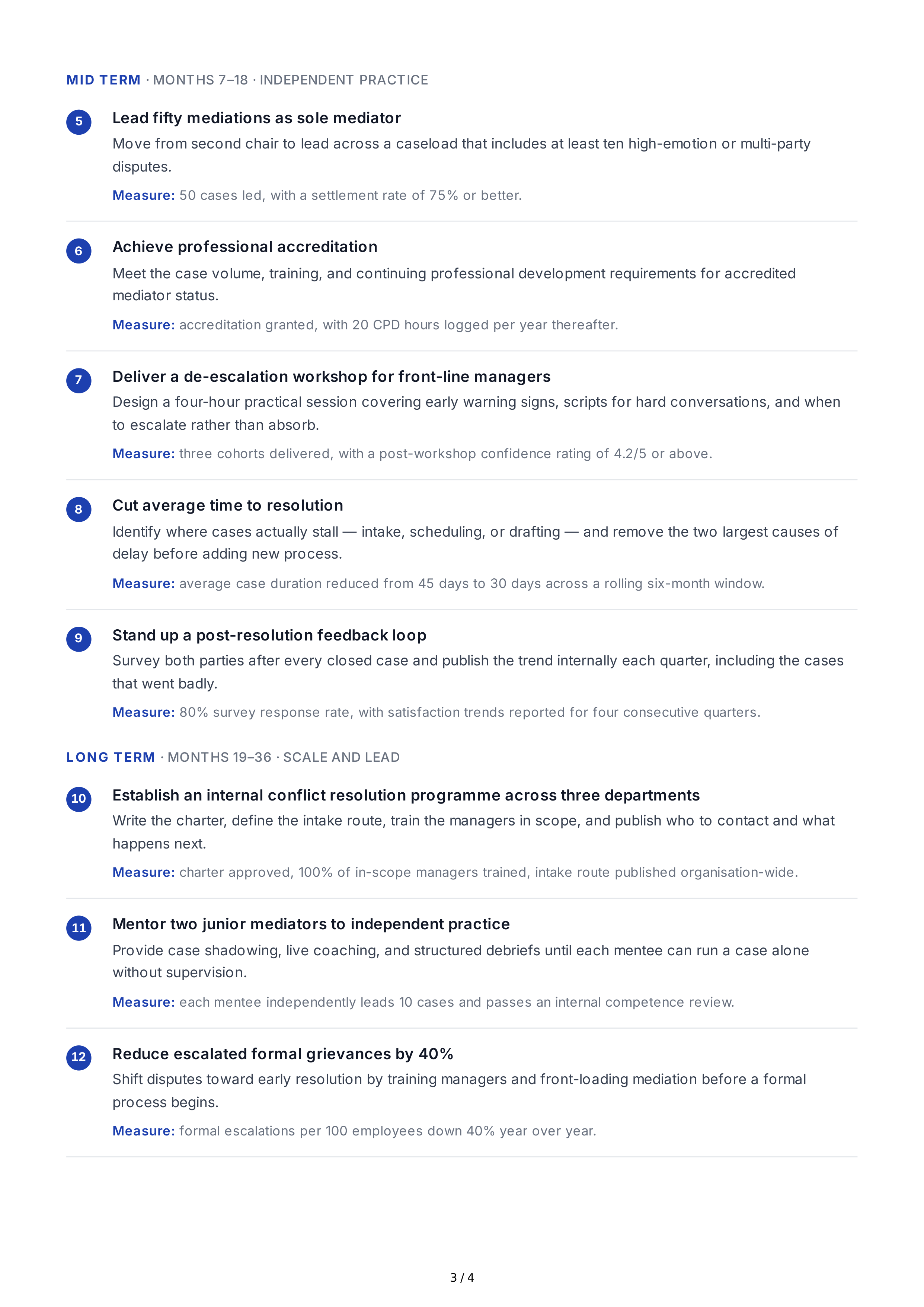
MID
TERM
·
MONTHS
7–18 ·
INDEPENDENT
PRACTICE
5
Lead
fifty
mediations
as
sole
mediator
Move
from
second
chair
to
lead
across
a
caseload
that
includes
at
least
ten
high
-
emotion
or
multi
-
party
disputes
.
Measure
:
50
cases
led
,
with
a
settlement
rate
of
75%
or
better
.
6
Achieve
professional
accreditation
Meet
the
case
volume
,
training
,
and
continuing
professional
development
requirements
for
accredited
mediator
status
.
Measure
:
accreditation
granted
,
with
20
CPD
hours
logged
per
year
thereafter
.
7
Deliver
a
de
-
escalation
workshop
for
front
-
line
managers
Design
a
four
-
hour
practical
session
covering
early
warning
signs
,
scripts
for
hard
conversations
,
and
when
to
escalate
rather
than
absorb
.
Measure
:
three
cohorts
delivered
,
with
a
post
-
workshop
confidence
rating
of
4.2/5
or
above
.
8
Cut
average
time
to
resolution
Identify
where
cases
actually
stall
—
intake
,
scheduling
,
or
drafting
—
and
remove
the
two
largest
causes
of
delay
before
adding
new
process
.
Measure
:
average
case
duration
reduced
from
45
days
to
30
days
across
a
rolling
six
-
month
window
.
9
Stand
up
a
post
-
resolution
feedback
loop
Survey
both
parties
after
every
closed
case
and
publish
the
trend
internally
each
quarter
,
including
the
cases
that
went
badly
.
Measure
:
80%
survey
response
rate
,
with
satisfaction
trends
reported
for
four
consecutive
quarters
.
LONG
TERM
·
MONTHS
19–36 ·
SCALE
AND
LEAD
10
Establish
an
internal
conflict
resolution
programme
across
three
departments
Write
the
charter
,
define
the
intake
route
,
train
the
managers
in
scope
,
and
publish
who
to
contact
and
what
happens
next
.
Measure
:
charter
approved
, 100%
of
in
-
scope
managers
trained
,
intake
route
published
organisation
-
wide
.
11
Mentor
two
junior
mediators
to
independent
practice
Provide
case
shadowing
,
live
coaching
,
and
structured
debriefs
until
each
mentee
can
run
a
case
alone
without
supervision
.
Measure
:
each
mentee
independently
leads
10
cases
and
passes
an
internal
competence
review
.
12
Reduce
escalated
formal
grievances
by
40%
Shift
disputes
toward
early
resolution
by
training
managers
and
front
-
loading
mediation
before
a
formal
process
begins
.
Measure
:
formal
escalations
per
100
employees
down
40%
year
over
year
.
3 / 4
13
Publish
an
internal
conflict
resolution
playbook
Document
the
process
,
templates
,
scripts
,
and
anonymised
case
studies
so
the
practice
survives
beyond
any
single
practitioner
.
Measure
:
playbook
distributed
organisation
-
wide
and
presented
at
an
industry
or
peer
forum
.
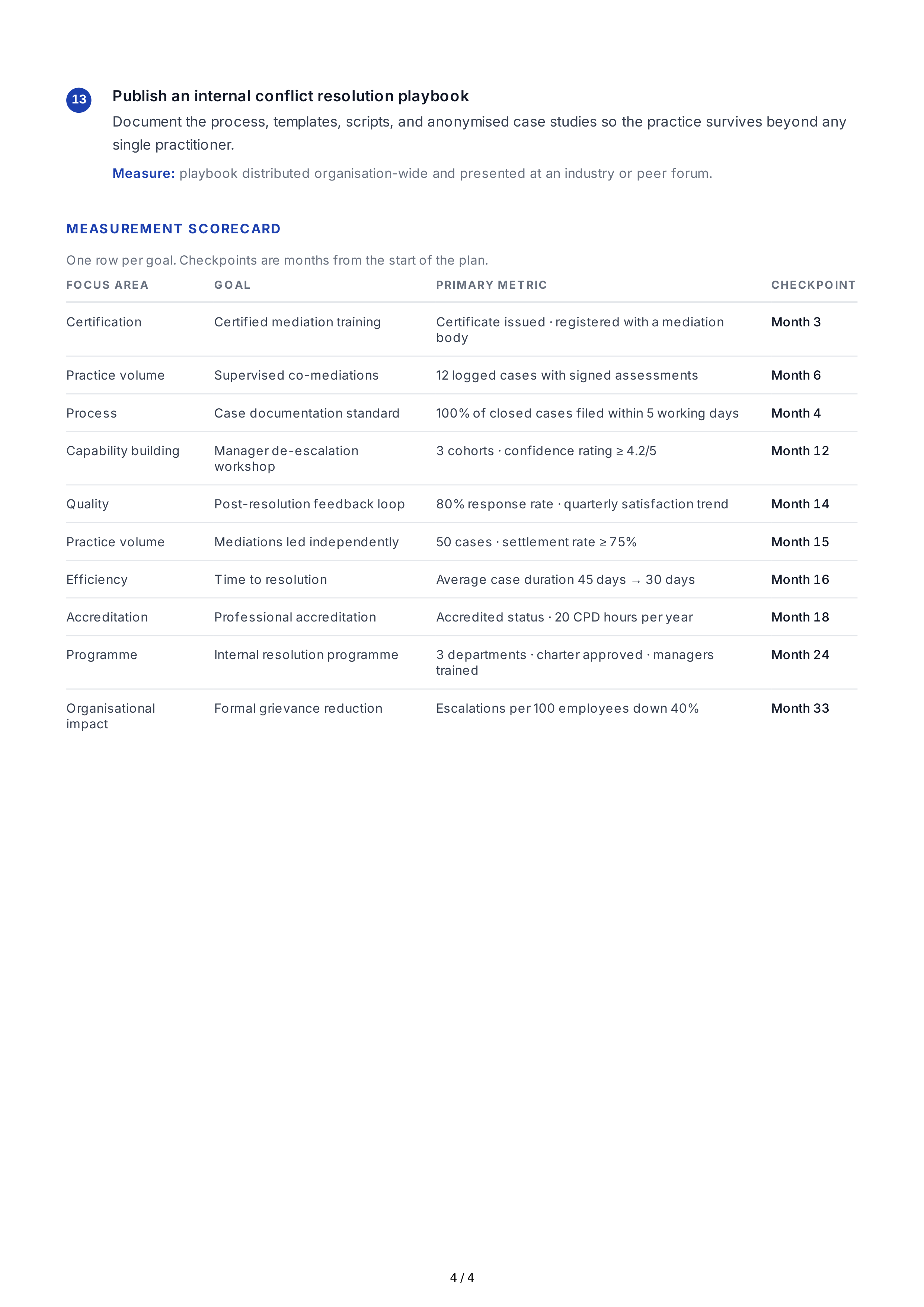
MEASUREMENT
SCORECARD
One
row
per
goal
.
Checkpoints
are
months
from
the
start
of
the
plan
.
FO CUS
AREA
G O AL
PRIMARY
MET RIC
CHECKPO INT
Certification
Certified
mediation
training
Certificate
issued
·
registered
with
a
mediation
body
Month
3
Practice
volume
Supervised
co
-
mediations
12
logged
cases
with
signed
assessments
Month
6
Process
Case
documentation
standard
100%
of
closed
cases
filed
within
5
working
days
Month
4
Capability
building
Manager
de
-
escalation
workshop
3
cohorts
·
confidence
rating
≥
4.2/5
Month
12
Quality
Post
-
resolution
feedback
loop
80%
response
rate
·
quarterly
satisfaction
trend
Month
14
Practice
volume
Mediations
led
independently
50
cases
·
settlement
rate
≥
75%
Month
15
Efficiency
Time
to
resolution
Average
case
duration
45
days
→
30
days
Month
16
Accreditation
Professional
accreditation
Accredited
status
· 20
CPD
hours
per
year
Month
18
Programme
Internal
resolution
programme
3
departments
·
charter
approved
·
managers
trained
Month
24
Organisational
impact
Formal
grievance
reduction
Escalations
per
100
employees
down
40%
Month
33
4 / 4