
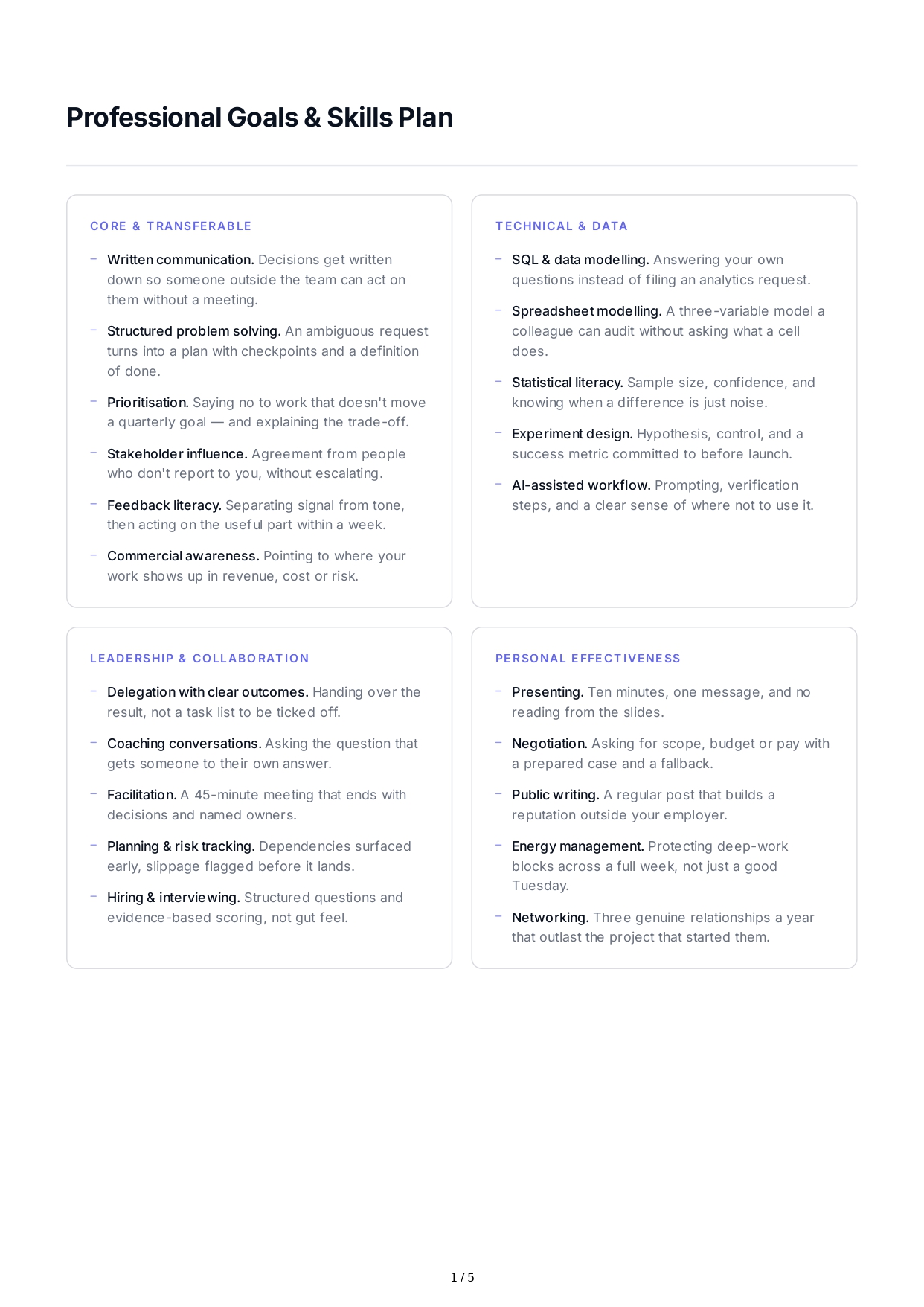
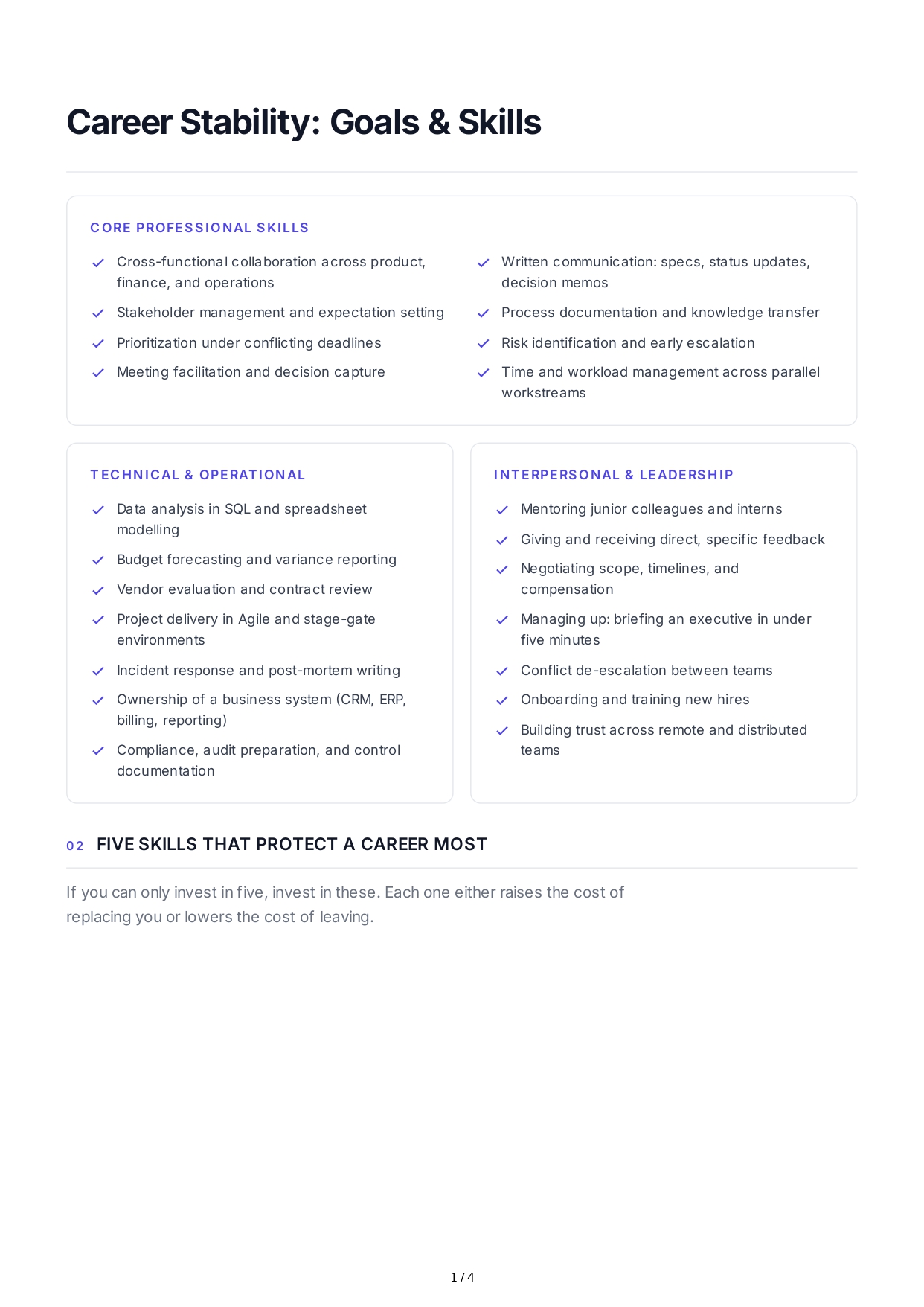
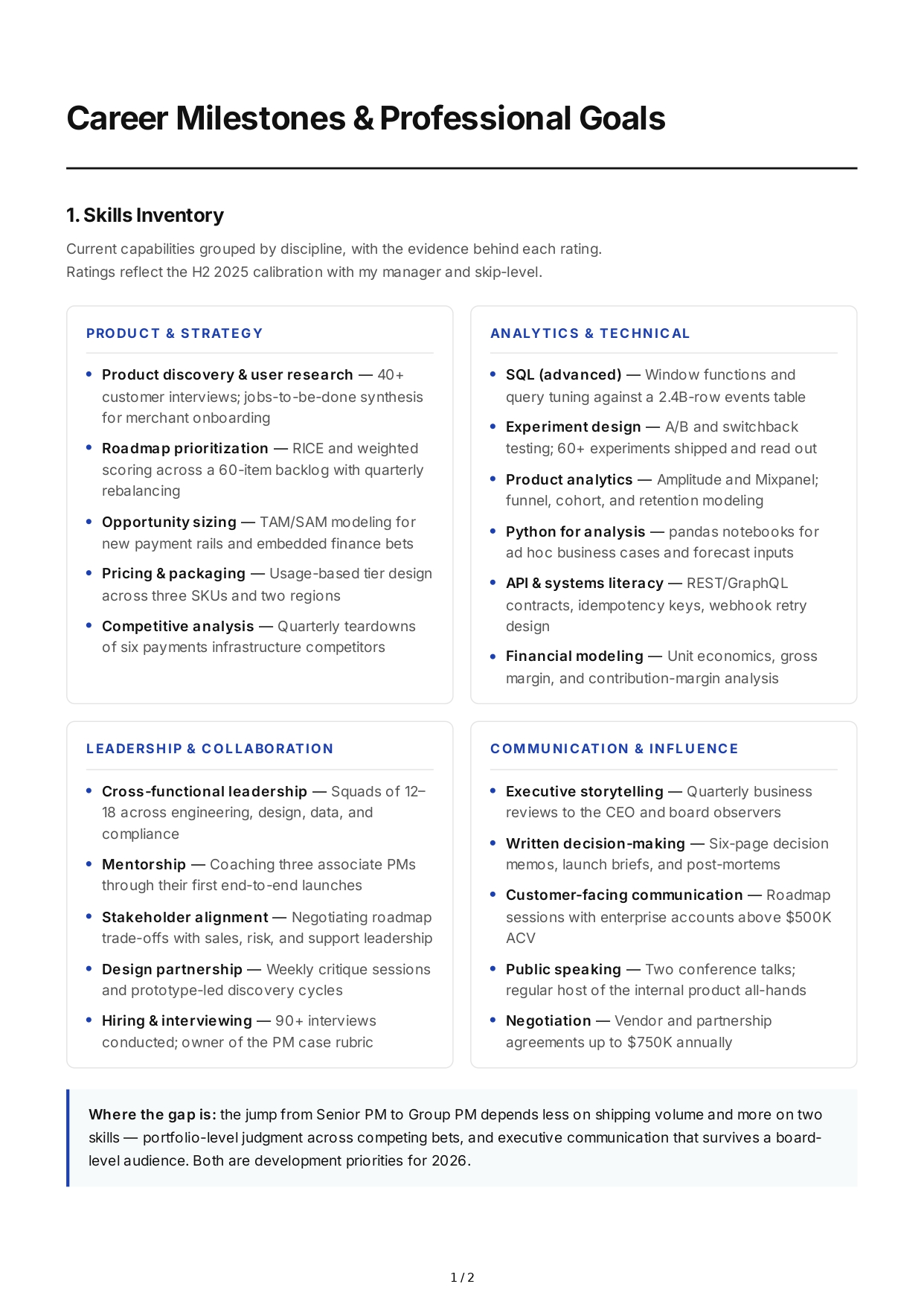
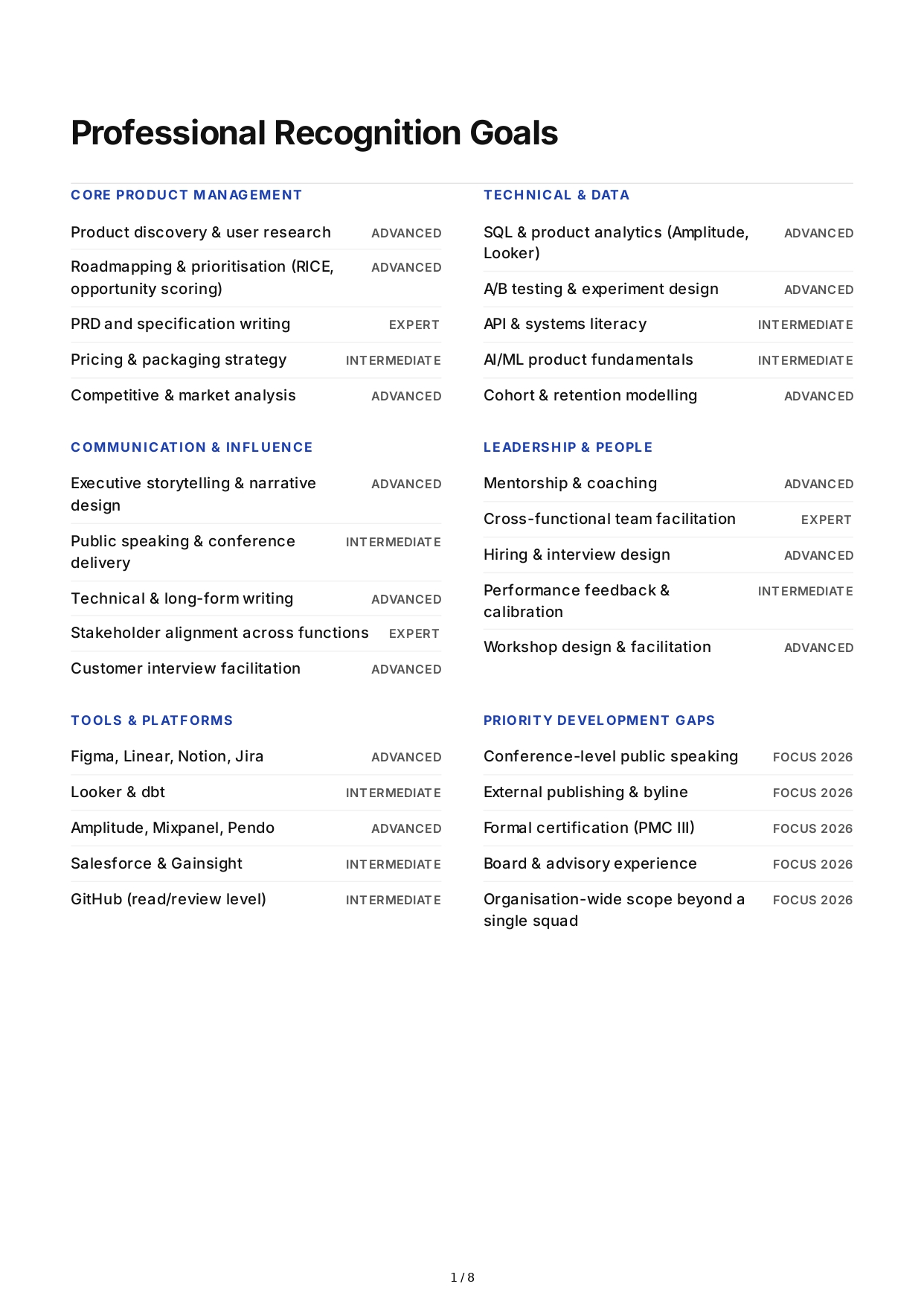
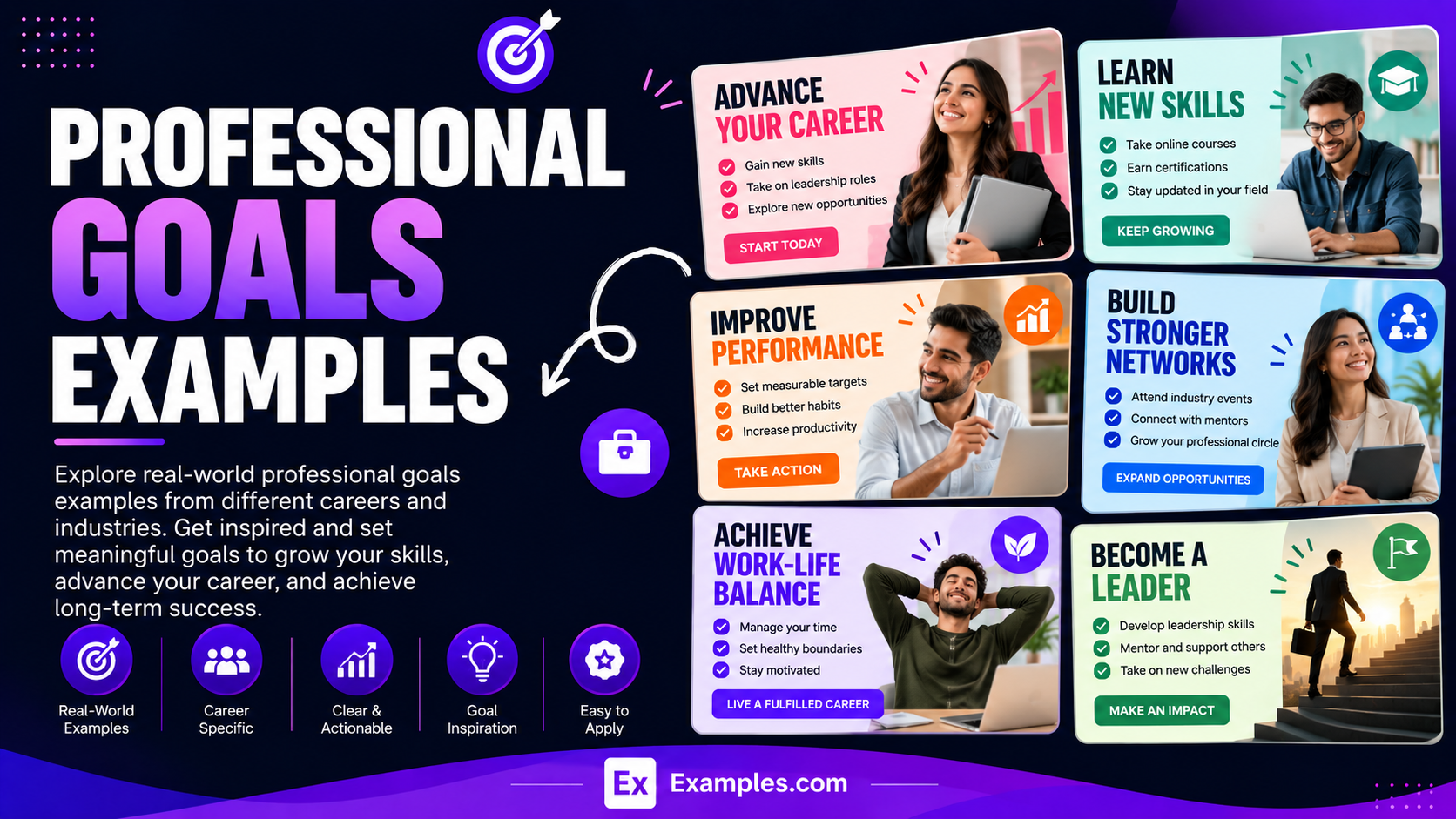
Professional goals are specific objectives people set to improve their skills, advance their careers, increase workplace performance, and achieve long-term career ambitions. Common professional goals examples include earning a promotion, developing leadership skills, completing a certification, improving productivity, expanding professional networks, and achieving a healthier work-life balance. Effective goals have clear actions, measurable outcomes, and realistic deadlines.
What are Professional Goals?
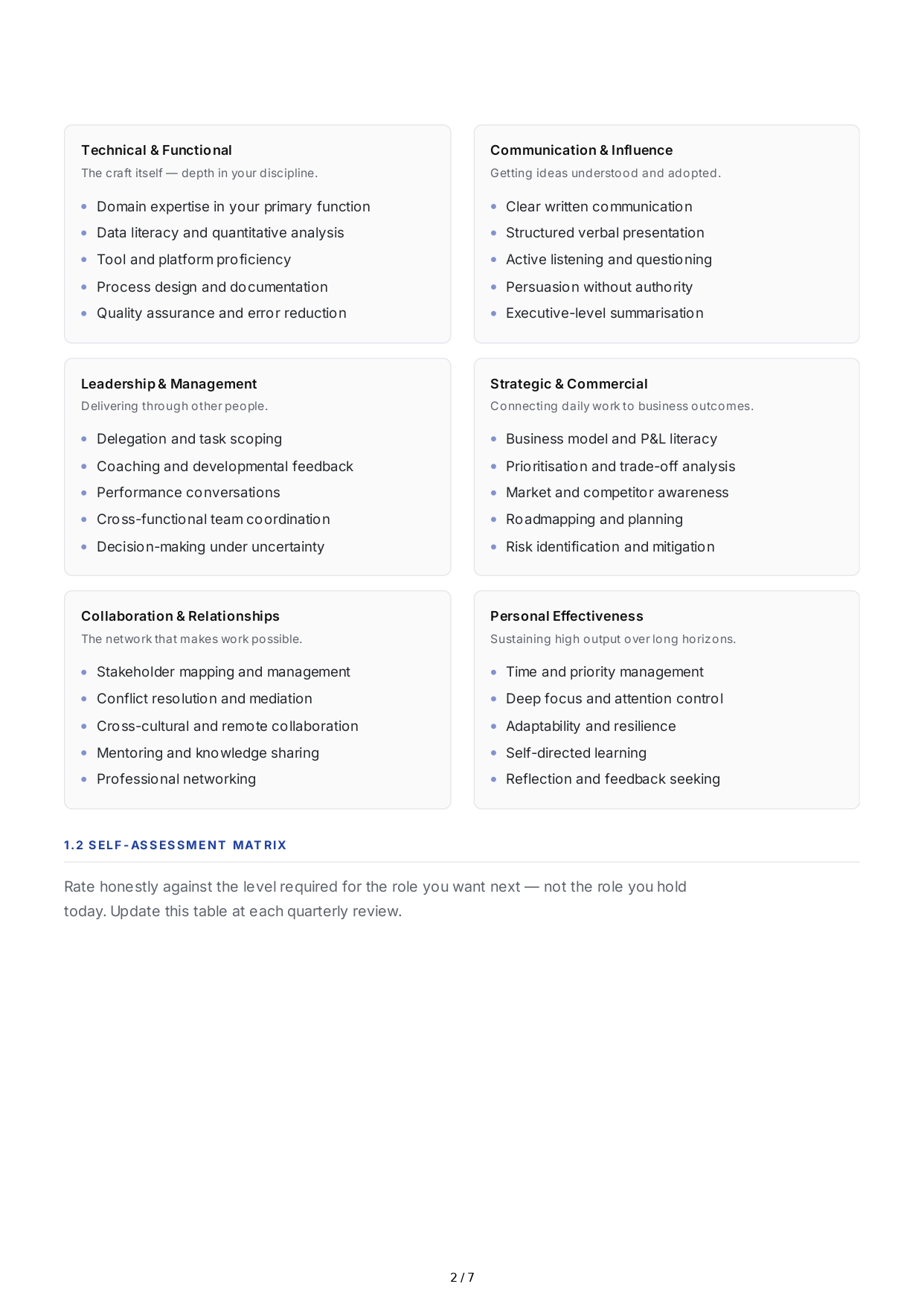
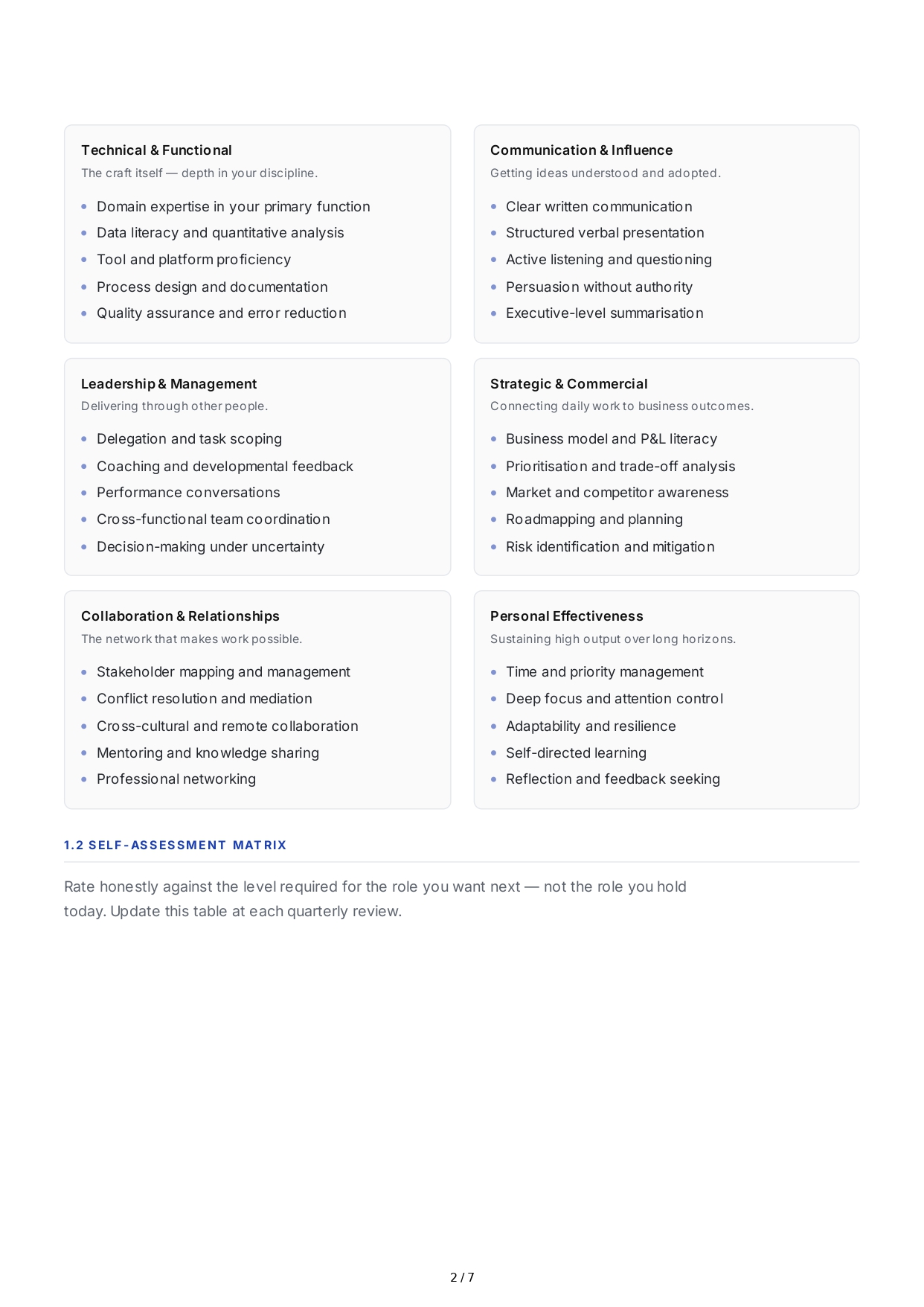
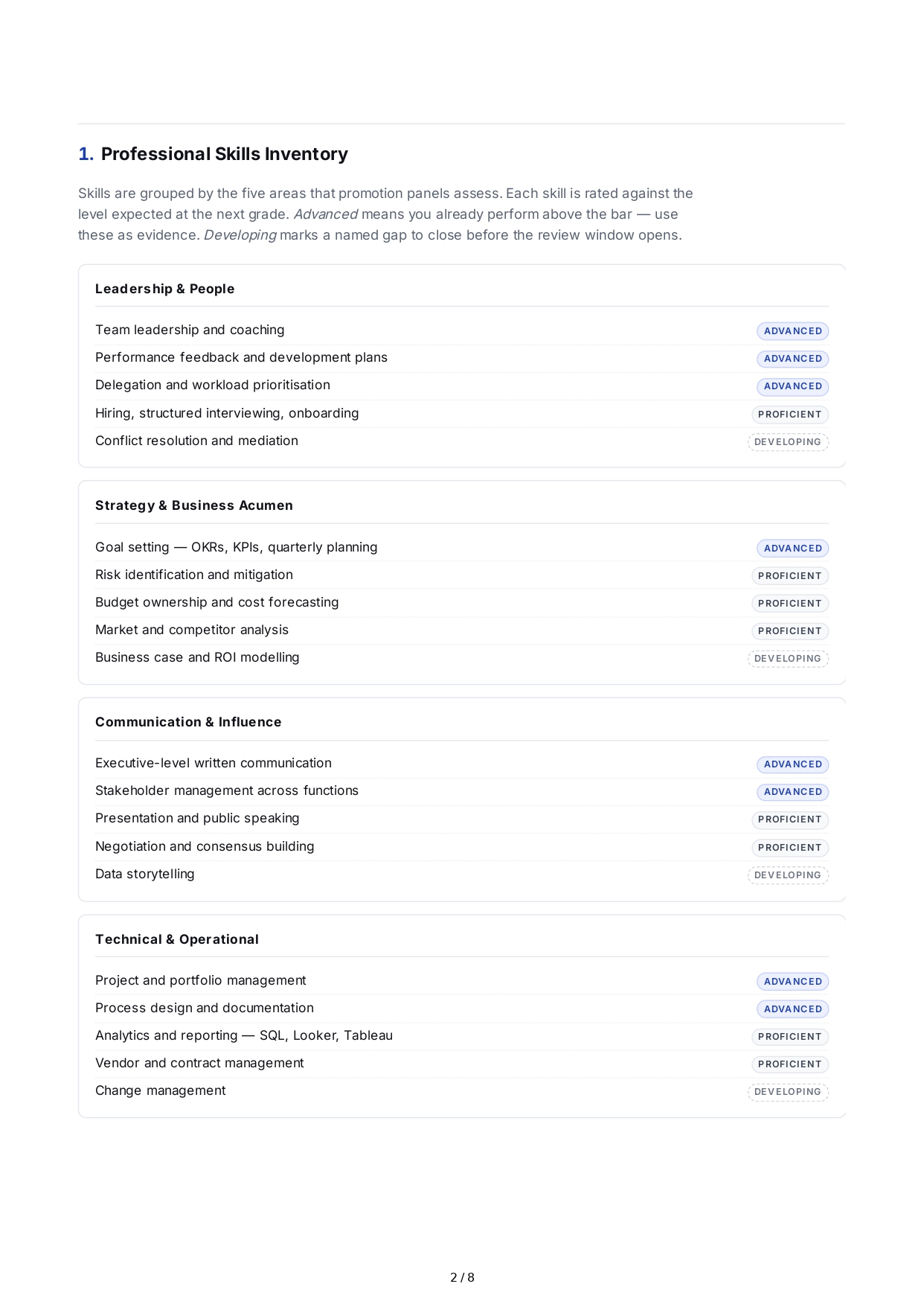
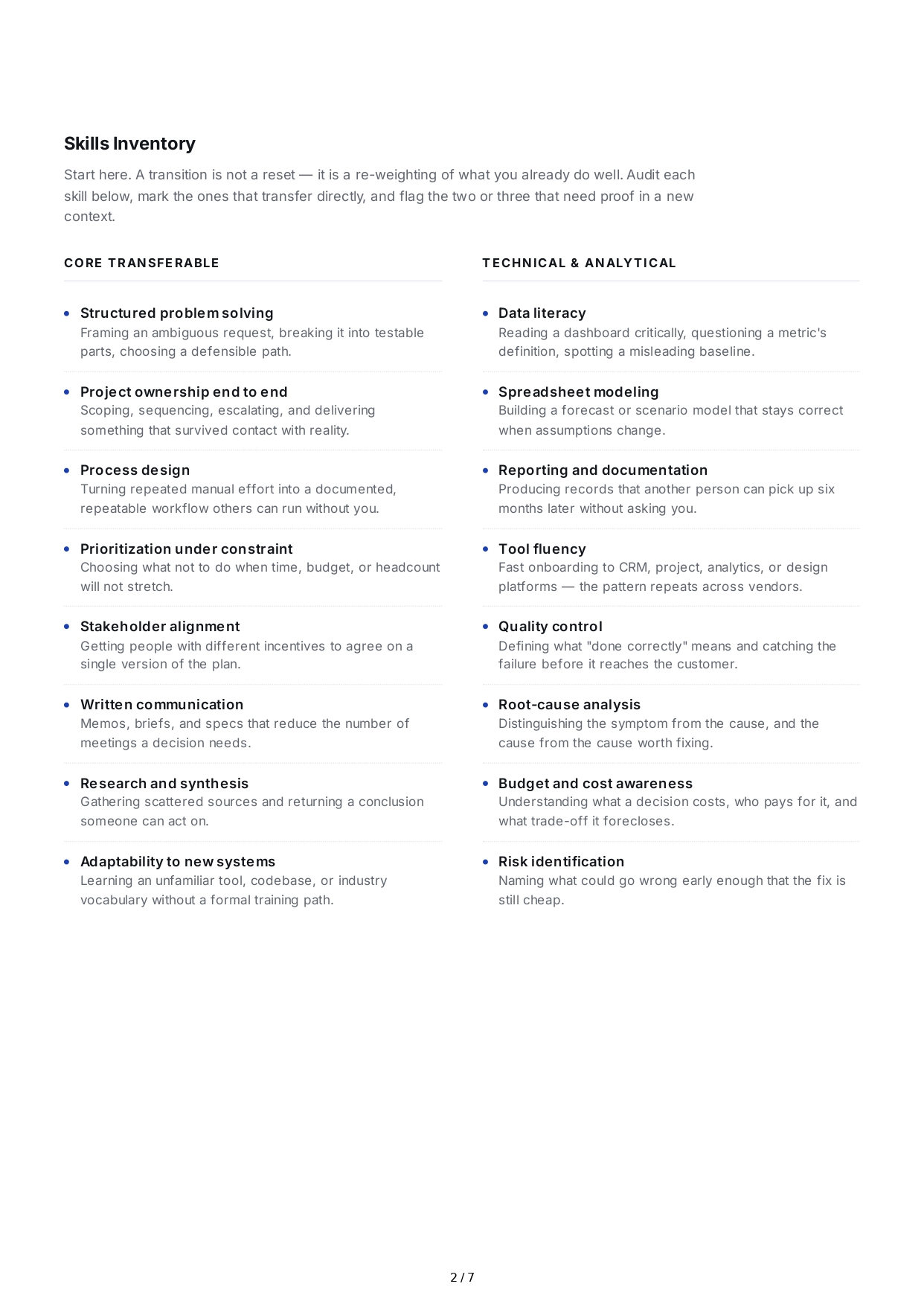
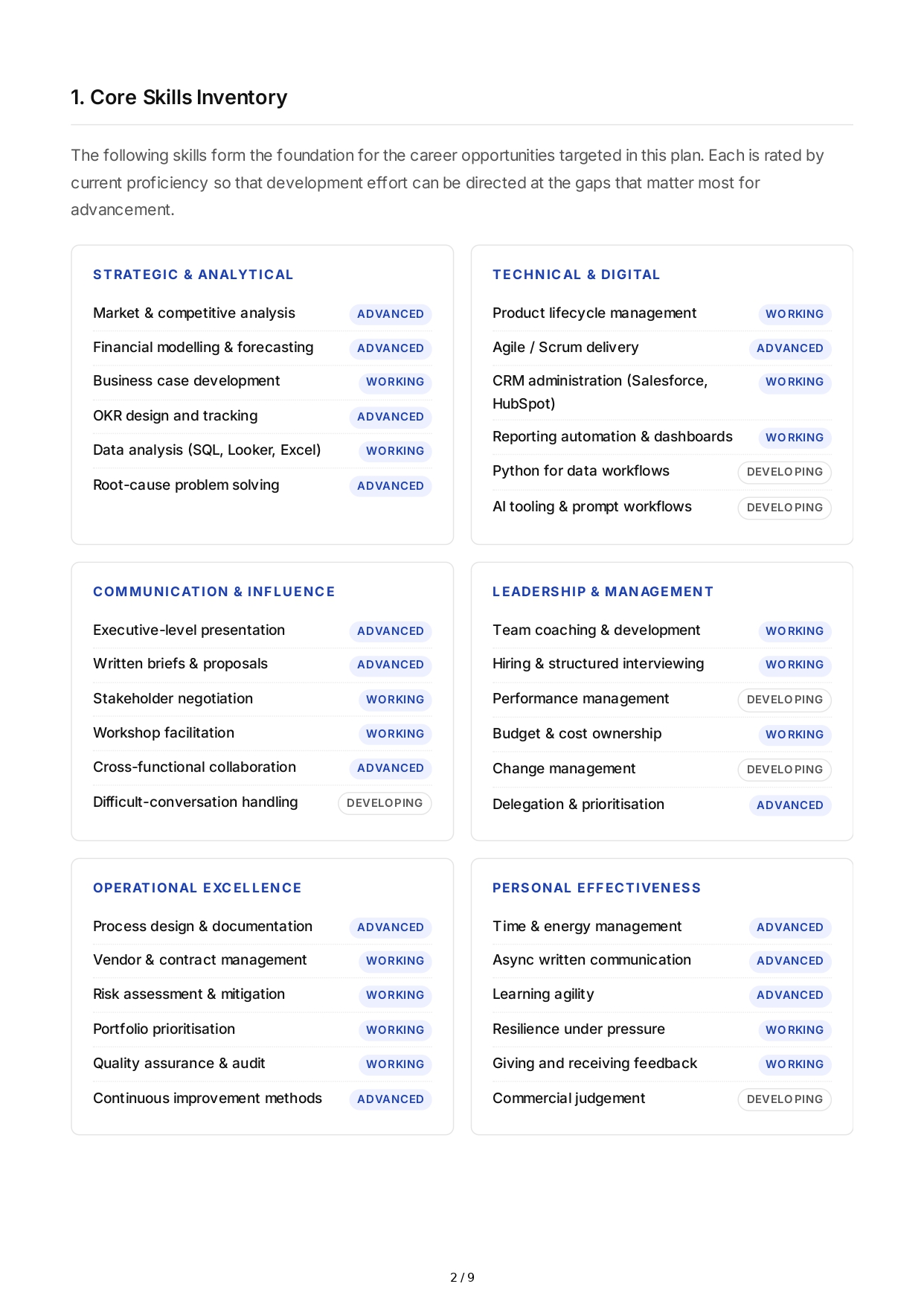
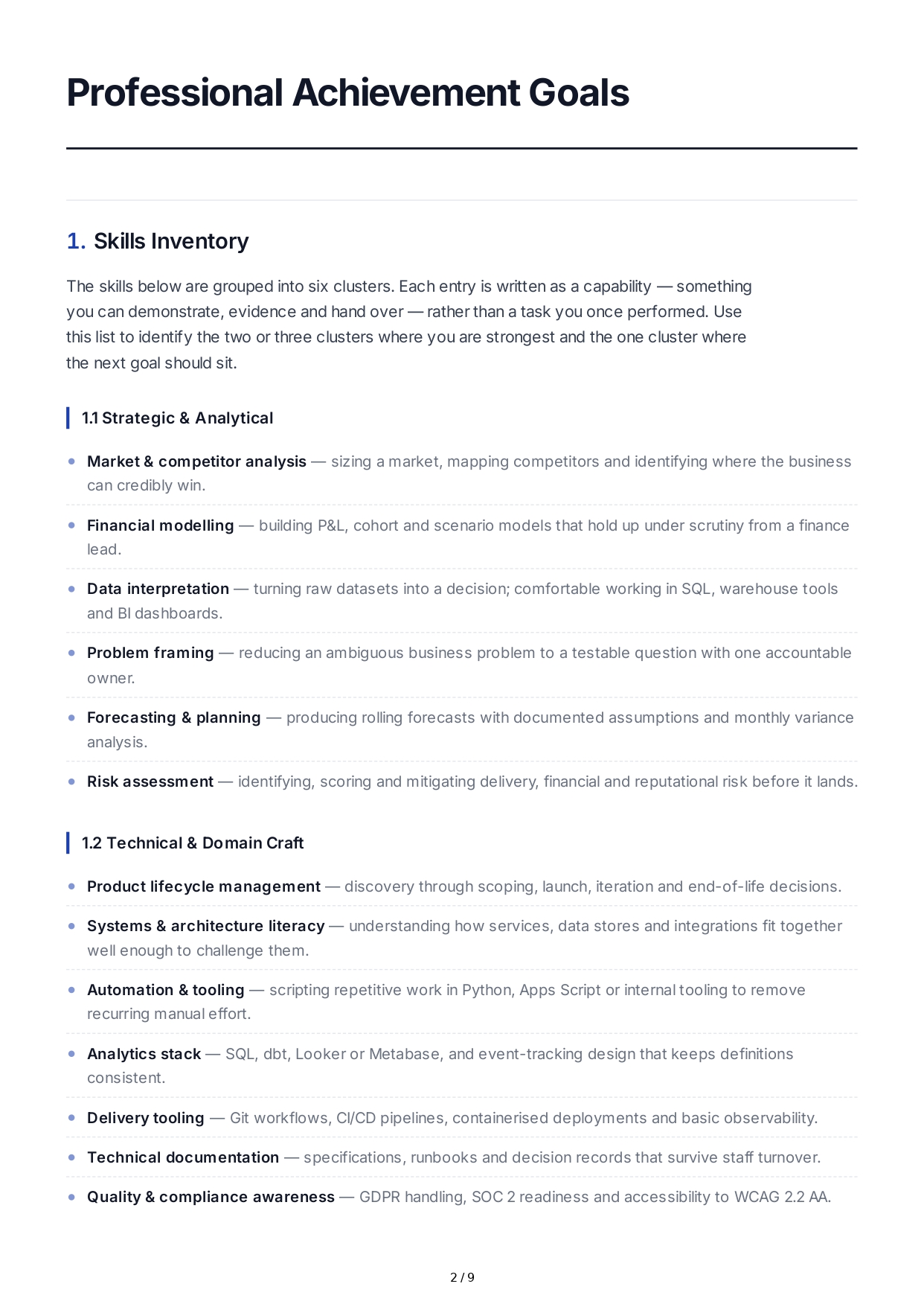
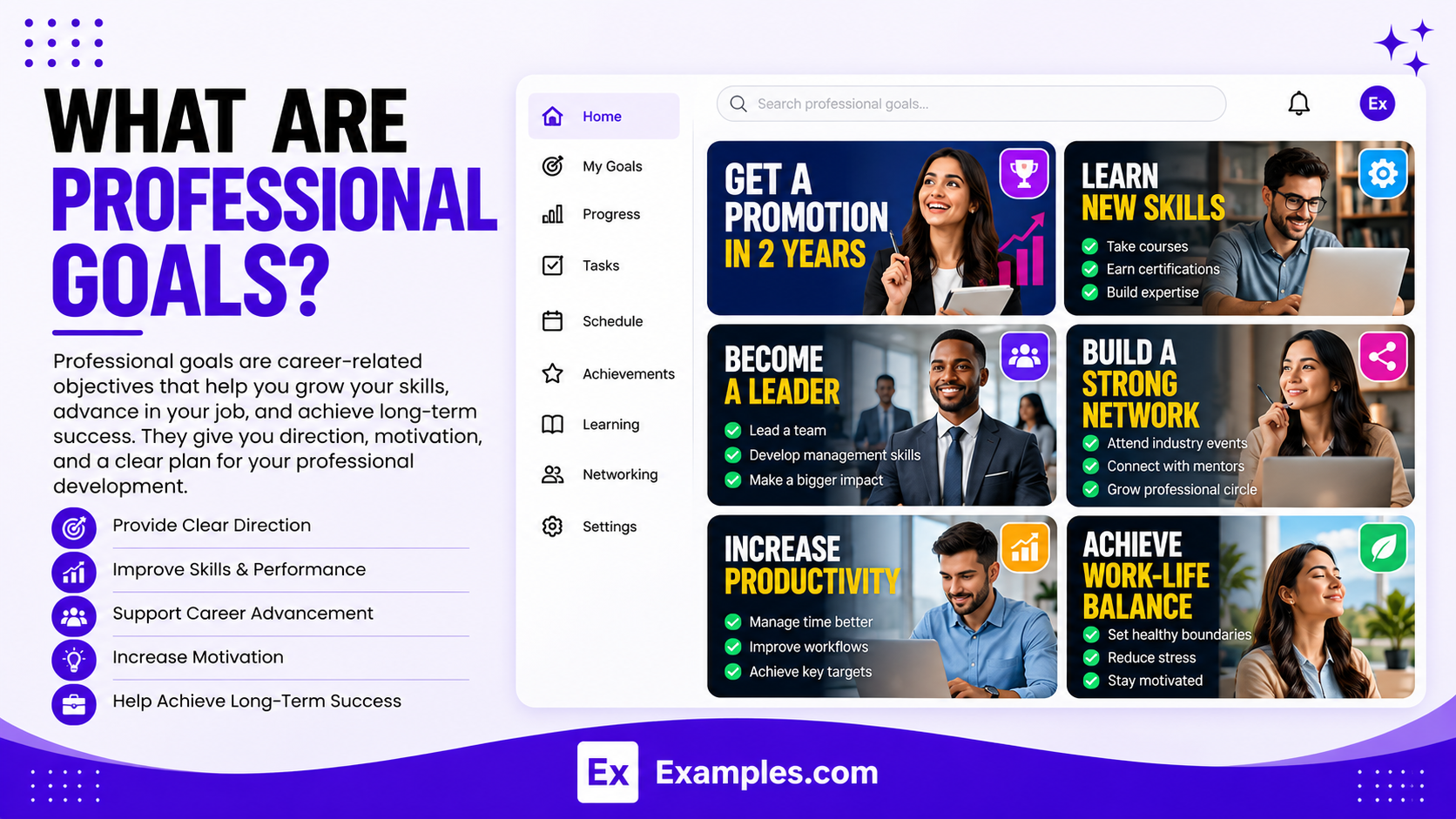
Professional goals are career-related objectives that guide your development, performance, and future opportunities. They can focus on improving your current abilities, gaining new qualifications, taking on additional responsibilities, or preparing for a different career.
Professional goals help individuals:
- Establish a clear direction for career development.
- Identify important skills and qualifications.
- Improve productivity and job performance.
- Prepare for leadership and career advancement.
- Measure professional growth over time.
Popular Types Of Professional Goals
Professional goals cover different aspects of career development, workplace performance, education, and personal growth. The following categories provide examples for employees, managers, students, and business professionals.
Career Advancement Professional Goals
These goals focus on progressing into positions with greater responsibility or different professional opportunities.
- Earn a promotion.
- Qualify for a senior-level position.
- Move into a management role.
- Transition to a new career.
- Become a recognized industry specialist.
Skill Development Professional Goals
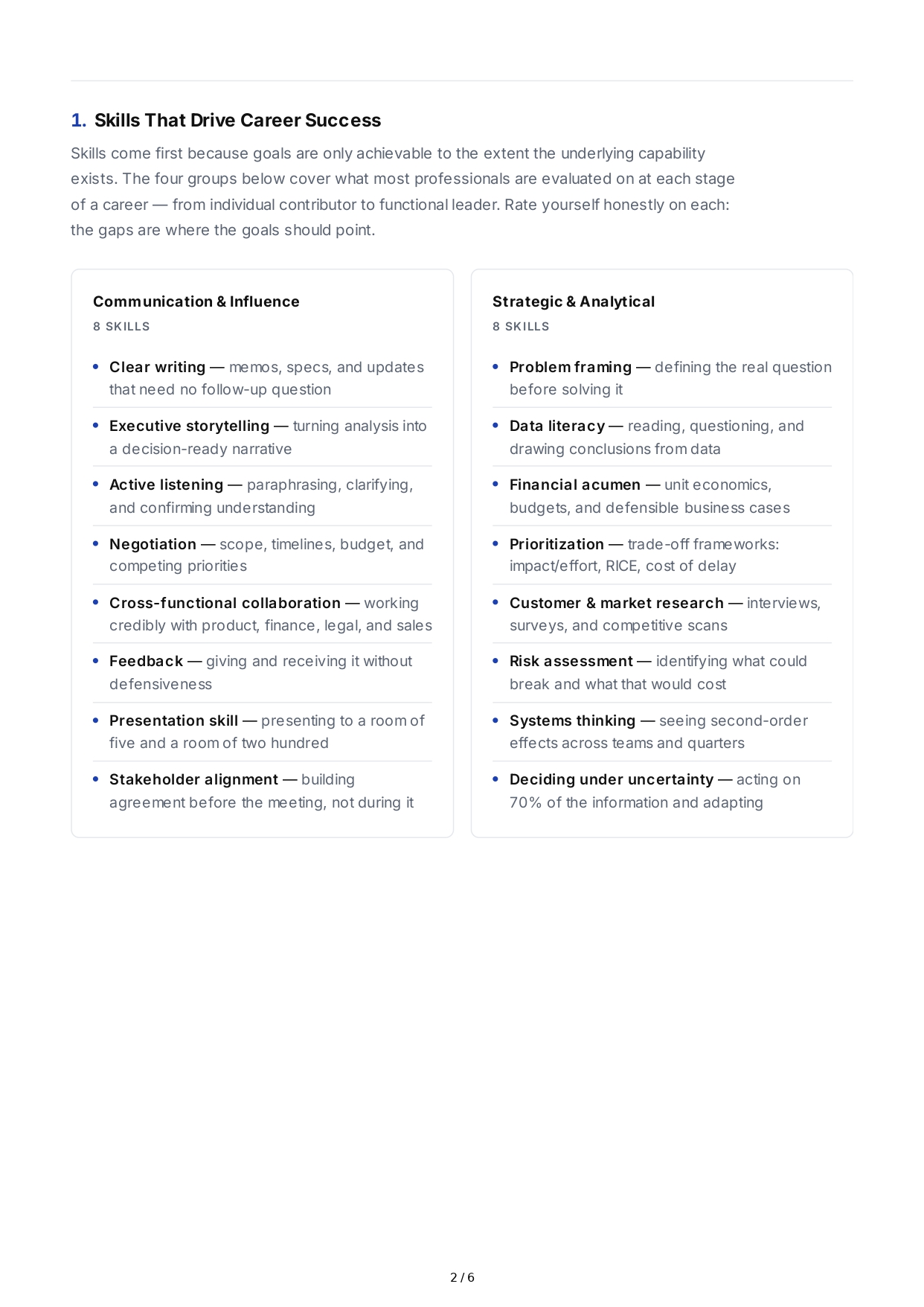
Skill development goals involve improving existing abilities or learning new competencies relevant to your profession.
- Learn a new programming language.
- Improve business communication.
- Develop advanced data analysis skills.
- Master industry-specific software.
- Strengthen critical thinking and problem-solving.
Leadership Development Professional Goals
Leadership goals prepare professionals to guide teams, manage responsibilities, and support organizational development.
- Complete leadership training.
- Mentor junior employees.
- Improve delegation skills.
- Lead a cross-functional project.
- Develop effective decision-making abilities.
Productivity and Performance Professional Goals
These objectives focus on improving work quality, efficiency, and professional results.
- Reduce project completion time.
- Improve task prioritization.
- Meet quarterly performance targets.
- Reduce errors in daily operations.
- Automate repetitive workplace tasks.
Professional Education and Certification Goals
These goals help individuals acquire qualifications, expand their knowledge, and meet industry requirements.
- Earn a professional certification.
- Complete an advanced degree.
- Attend industry training programs.
- Finish a specialized online course.
- Develop expertise in emerging technologies.
Communication and Interpersonal Professional Goals
These goals focus on improving workplace interactions and developing stronger professional relationships.
- Improve public speaking.
- Practice active listening.
- Deliver constructive feedback.
- Develop conflict resolution skills.
- Strengthen cross-cultural communication.
Skill Development Professional Goals
Networking and industry knowledge goals help professionals build connections and remain informed about developments in their field.
- Attend professional conferences.
- Join an industry association.
- Find an experienced career mentor.
- Participate in professional communities.
- Follow relevant industry research.
Innovation and Problem-Solving Professional Goals
These goals encourage professionals to identify opportunities, improve existing processes, and develop practical solutions.
- Introduce an improved workflow.
- Develop a new product idea.
- Lead a process improvement initiative.
- Apply creative problem-solving techniques.
- Reduce operational inefficiencies.
Work-Life Balance Professional Goals
Work-life balance goals help professionals manage responsibilities while maintaining sustainable working habits.
- Establish clear working-hour boundaries.
- Improve workload planning.
- Reduce unnecessary overtime.
- Develop sustainable productivity routines.
- Schedule regular professional development time.
How Do I Generate Professional Goals Using Proven Examples from Top Companies?
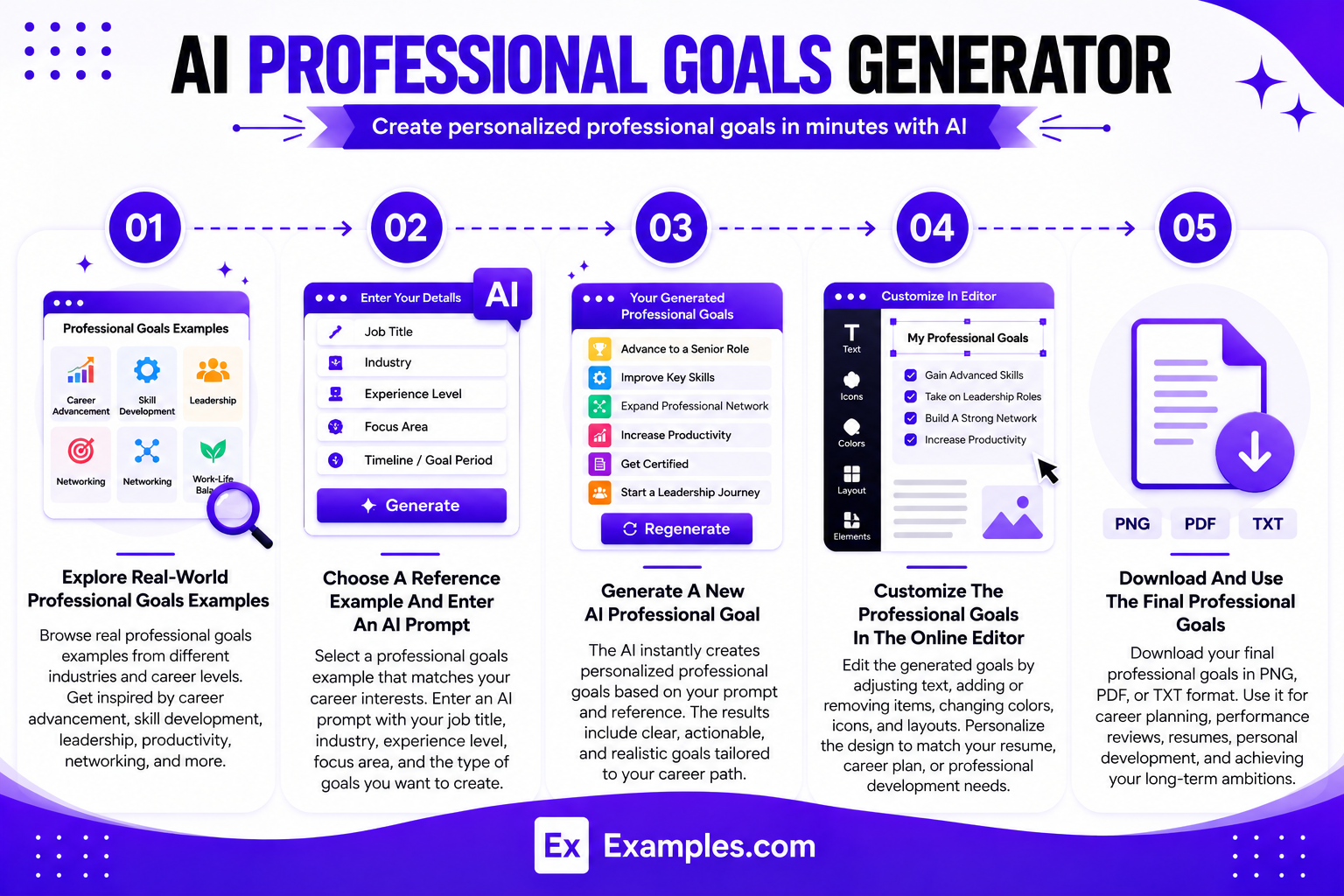
AI can help turn career ambitions into structured professional goals by using reference examples, job-specific information, and clear instructions. Review every generated goal to ensure it matches your actual experience, resources, and career plans.
Explore Real-World Professional Goals Examples
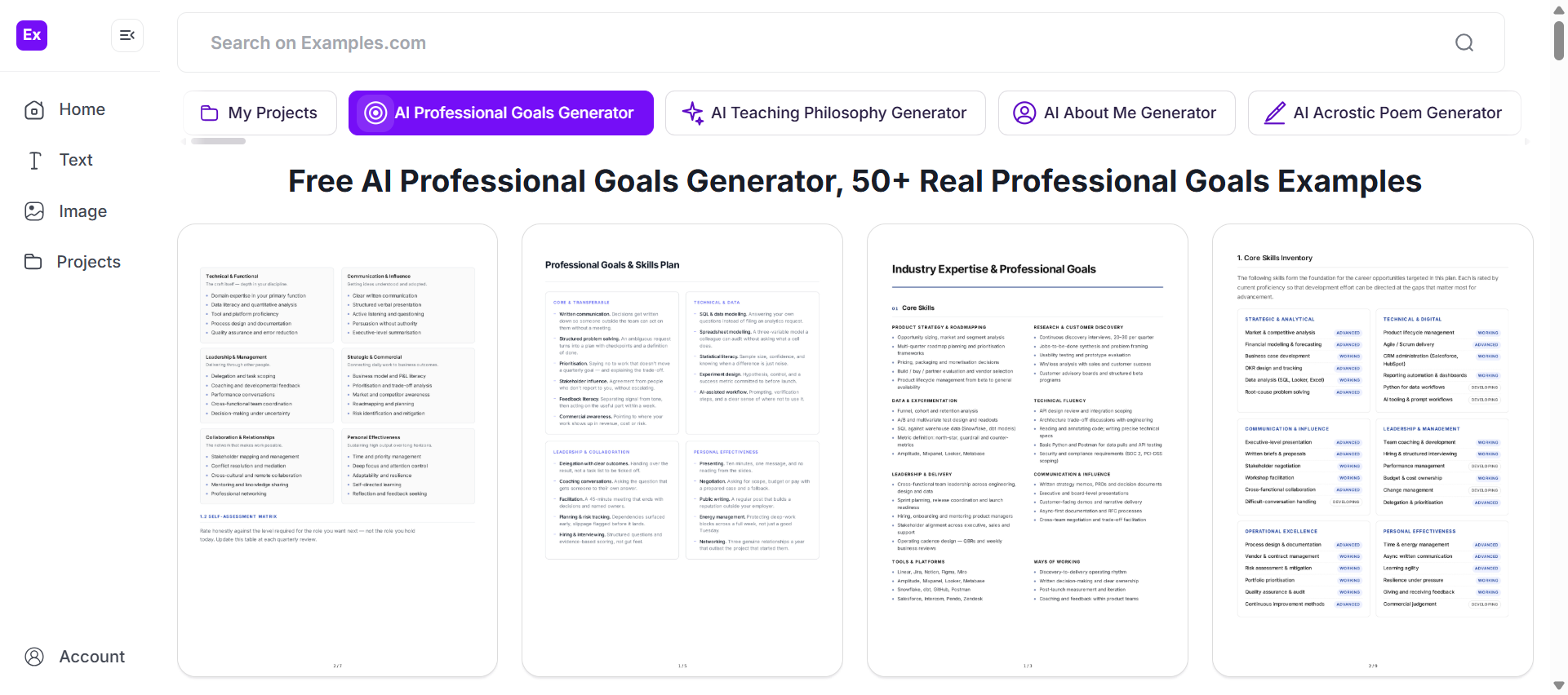
Browse real-world professional goals examples to explore career advancement, leadership development, skill improvement, workplace productivity, and professional education. These examples help you identify suitable objectives for your career and experience level.
Choose A Reference Example And Enter An AI Prompt
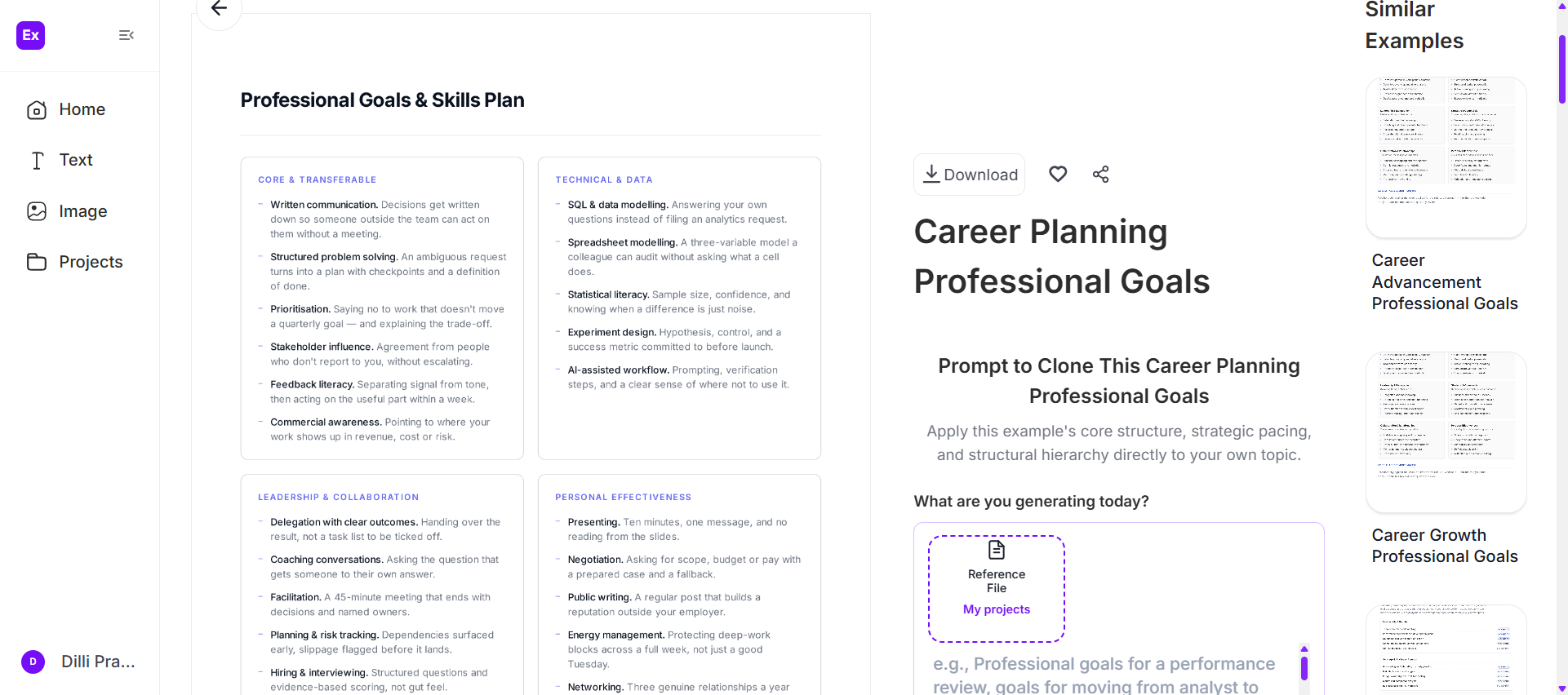
Select a professional goals example that matches your career ambitions. Enter an AI prompt describing your job title, industry, experience, current skills, desired achievements, and preferred timeline.
Generate A New AI Professional Goal
Use AI to generate a personalized professional goal based on your selected reference and prompt. Review the suggested objectives, milestones, and deadlines to ensure they are relevant, achievable, and aligned with your career plans.
Customize The Professional Goal In The Online Editor
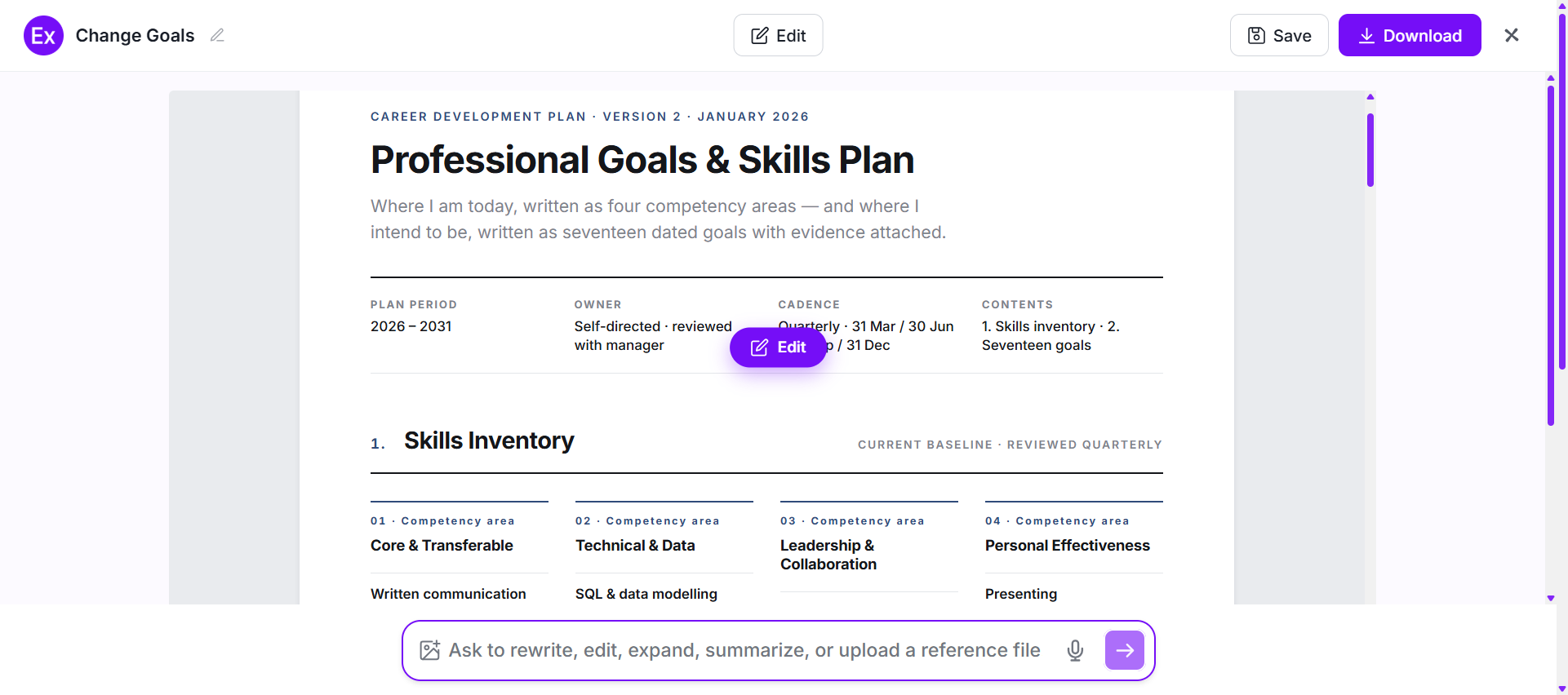
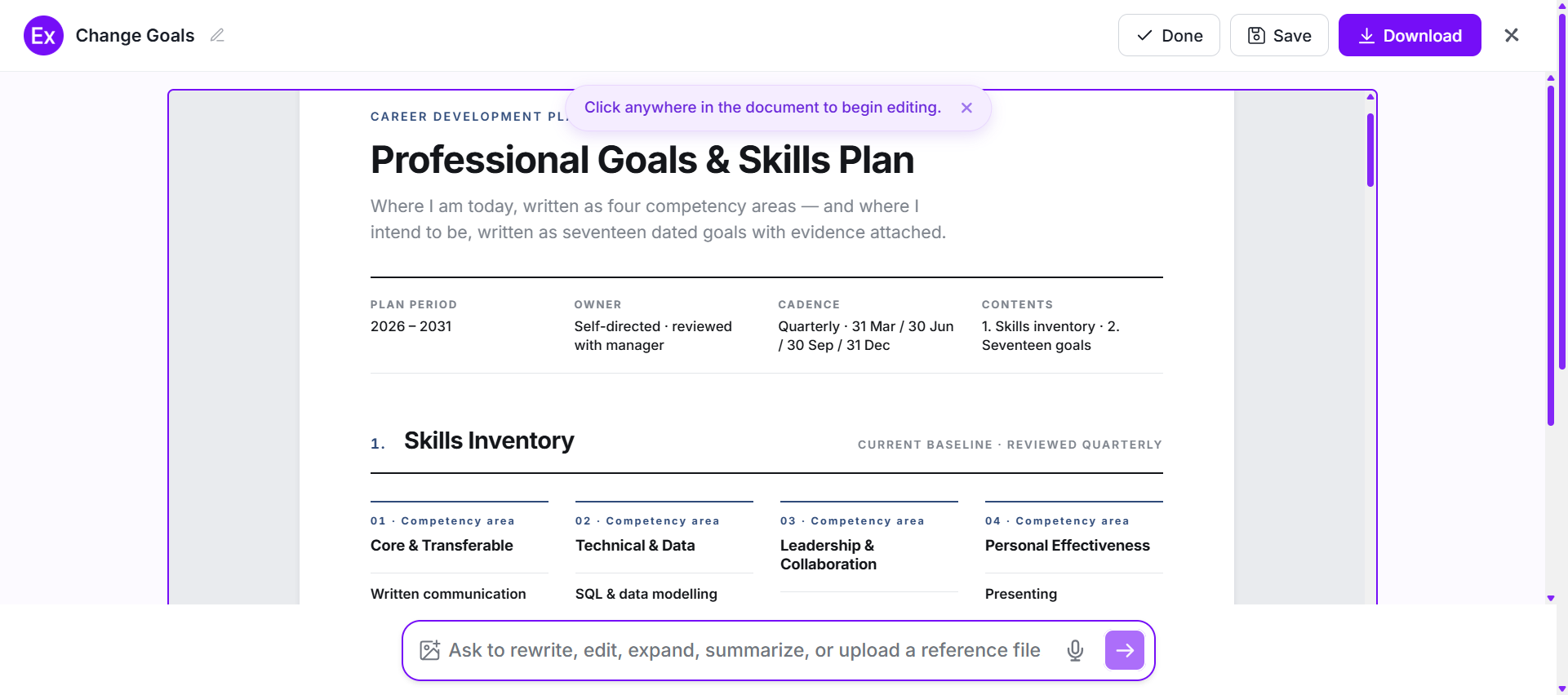
Customize the generated professional goal by editing descriptions, adjusting deadlines, adding measurable targets, organizing milestones, and personalizing the layout. Refine the final example to match your professional development plan.
Download And Use The Final Professional Goal
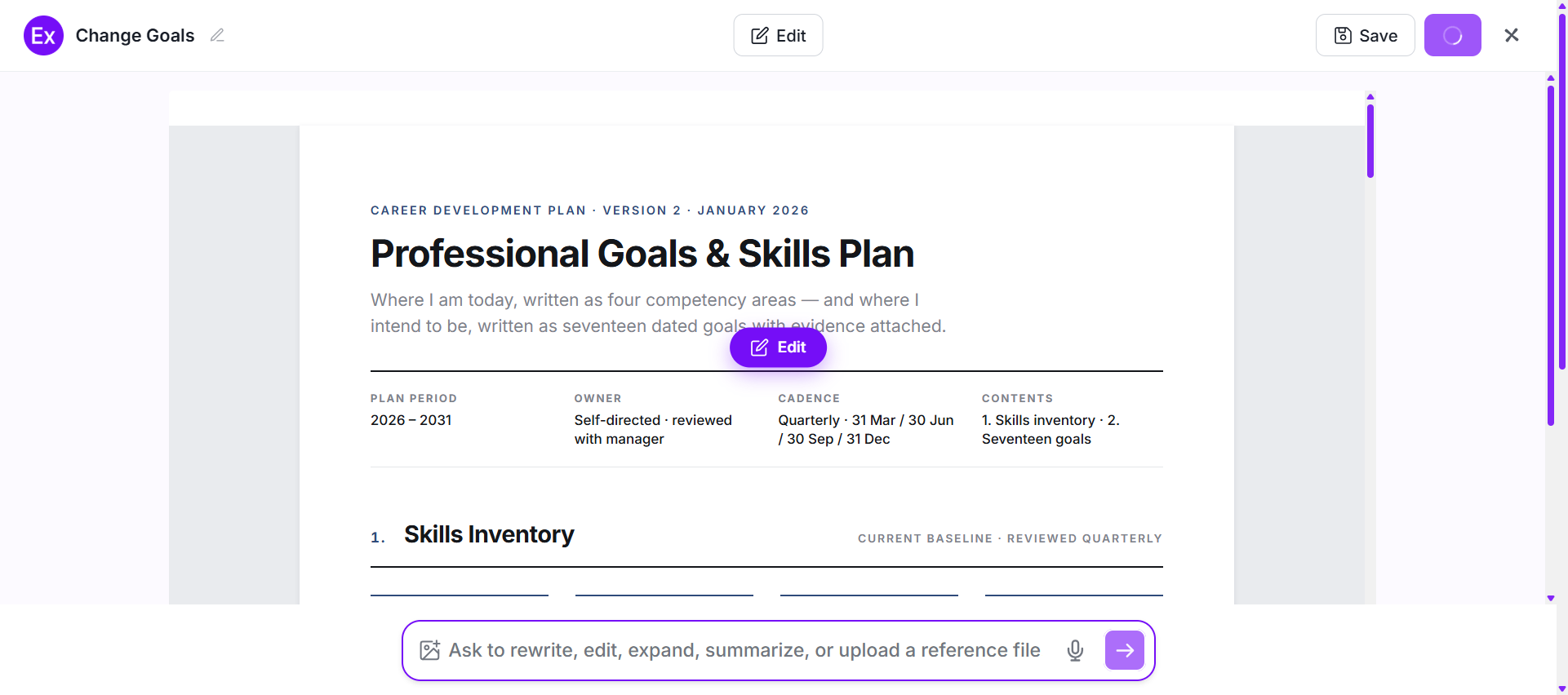
Download your completed professional goal in an available format. Use it for career planning, employee performance reviews, professional development documents, personal portfolios, and workplace goal-setting.
30 Professional Goals Examples for Career Growth
These sample goals cover practical workplace achievements, career development, and long-term professional ambitions. Adjust the targets and deadlines to suit your circumstances.
|
Category |
Professional goal examples |
|---|---|
|
Career advancement |
Qualify for a senior position within two years; prepare for a management role; develop expertise in a new field |
|
Technical skills |
Complete an advanced Excel course in three months; learn Python within six months; earn a cloud computing certification |
|
Leadership |
Mentor two junior employees; lead a cross-functional project; complete leadership training this year |
|
Communication |
Deliver four presentations in six months; improve client communication; practice giving constructive feedback |
|
Productivity |
Reduce reporting time by 20%; complete weekly priority planning; automate two repetitive tasks |
|
Networking |
Attend three industry events annually; find a professional mentor; build five meaningful industry connections |
|
Education |
Complete a relevant professional certification; enroll in postgraduate education; attend four industry workshops |
|
Innovation |
Propose three process improvements; test a new workflow; develop a practical solution to a recurring problem |
|
Team development |
Organize monthly knowledge-sharing sessions; improve team documentation; introduce regular project reviews |
|
Career transition |
Build a portfolio for a new profession; complete relevant training; gain experience through an industry project |
Short-Term vs. Long-Term Professional Goals
Short-term professional goals create immediate progress, while long-term goals provide broader career direction. The two work together: completing smaller objectives can help you achieve more ambitious career plans.
|
Short-term goals |
Long-term goals |
|---|---|
|
Complete a training course |
Earn an advanced qualification |
|
Improve presentation skills |
Become a confident public speaker |
|
Lead a small project |
Progress into a management role |
|
Learn a new software tool |
Become an industry specialist |
|
Build a professional portfolio |
Transition into a new career |
Frequently Asked Questions
What are five examples of professional goals?
Five examples are earning a promotion, completing a professional certification, improving communication skills, developing leadership abilities, and increasing workplace productivity.
How do I write a professional goal?
Identify a specific achievement, explain the actions required, establish measurable outcomes, and set a realistic deadline. The SMART framework can help structure your goal.
What are good professional goals for employees?
Employees may focus on improving job-specific skills, meeting performance targets, taking on additional responsibilities, collaborating effectively, or preparing for career advancement.
What are professional goals for fresh graduates?
Fresh graduates can aim to secure an internship, develop industry-specific skills, build a professional portfolio, find a mentor, or gain their first full-time position.
How many professional goals should I set?
Start with a manageable number of meaningful priorities. Two or three clearly defined goals may be easier to pursue consistently than a long list of competing objectives.
How often should professional goals be reviewed?
Review your progress regularly, such as monthly or quarterly. Adjust your milestones when responsibilities, resources, or career priorities change.