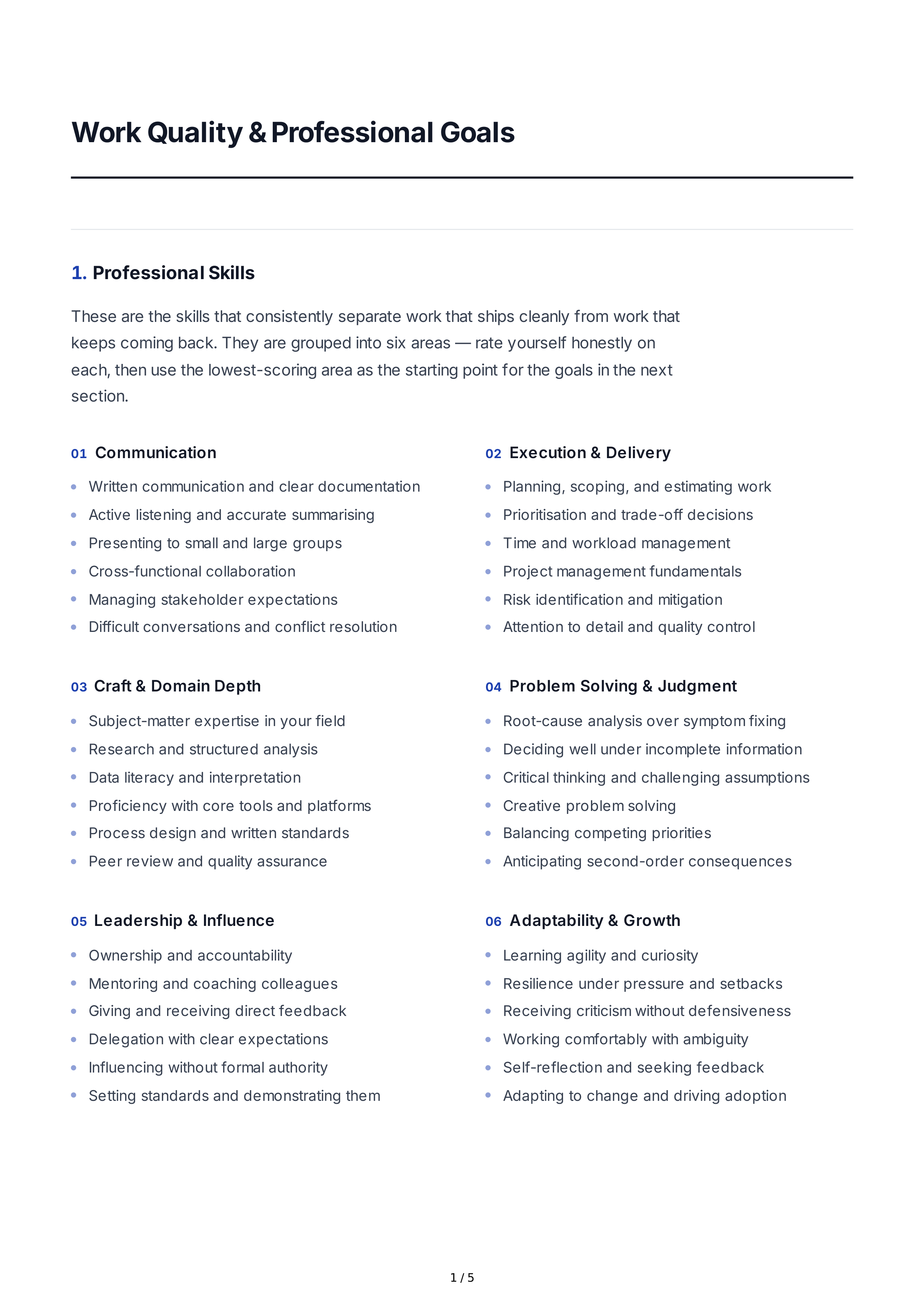
Work
Quality
&
Professional
Goals
1.
Professional
Skills
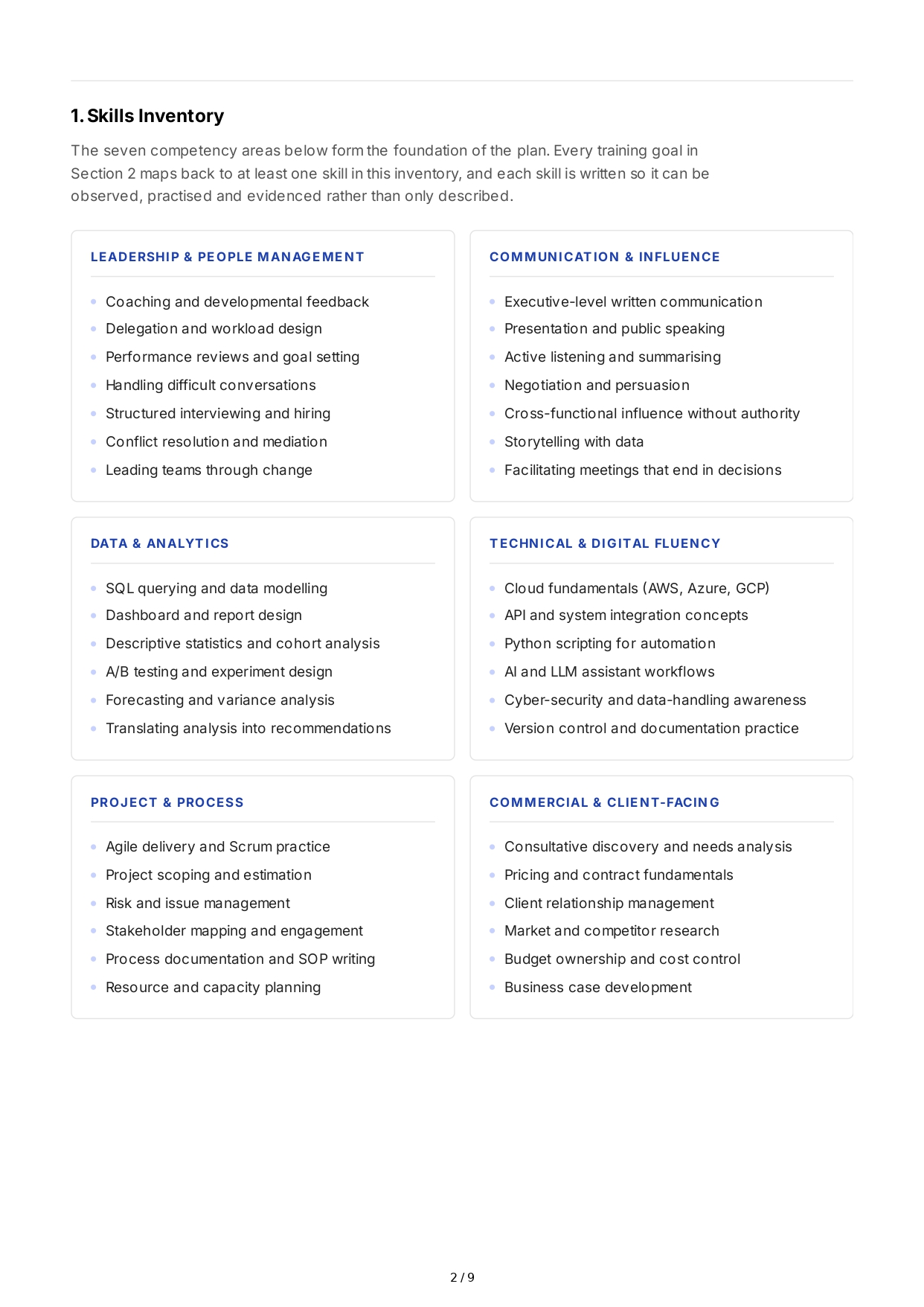
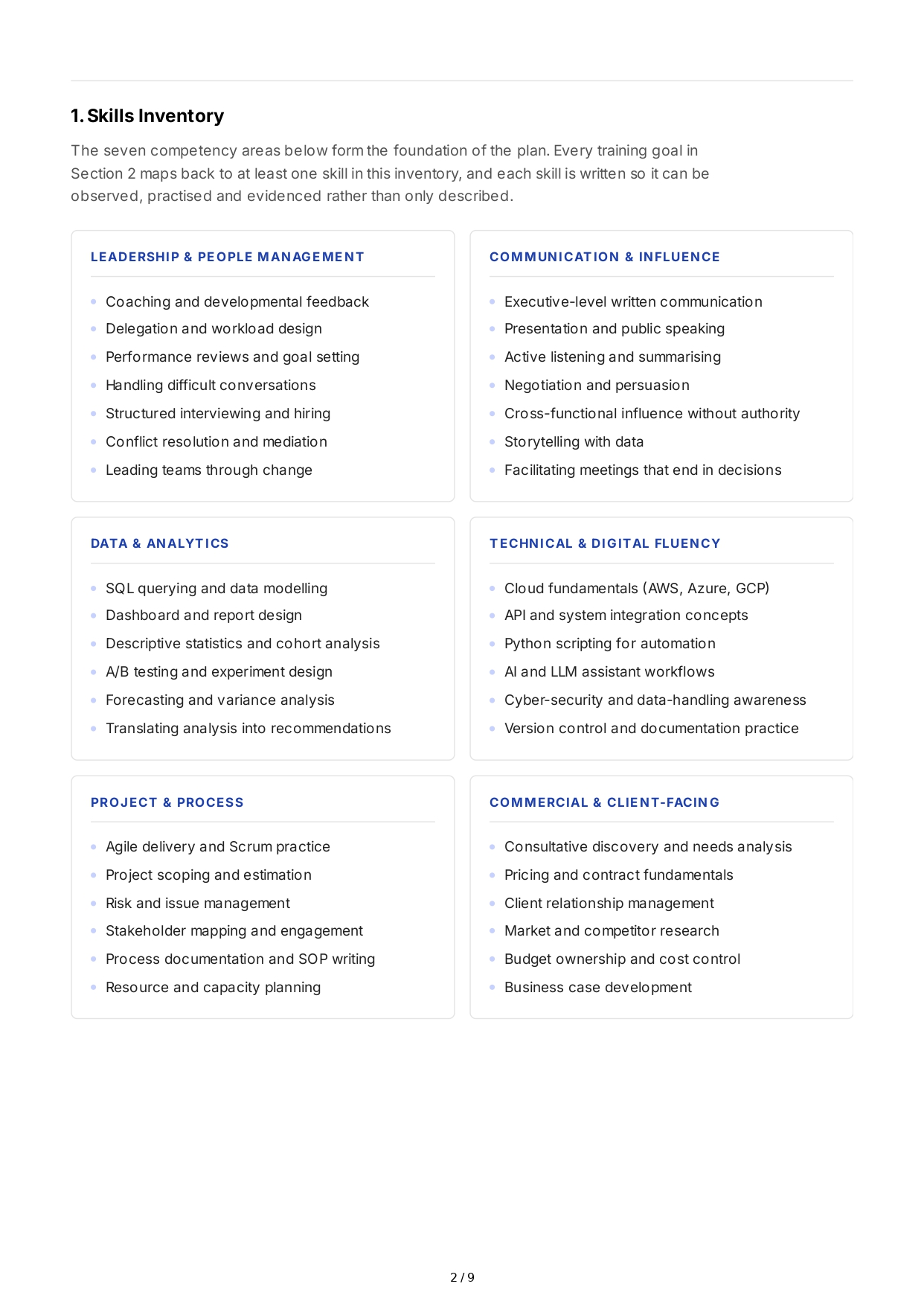
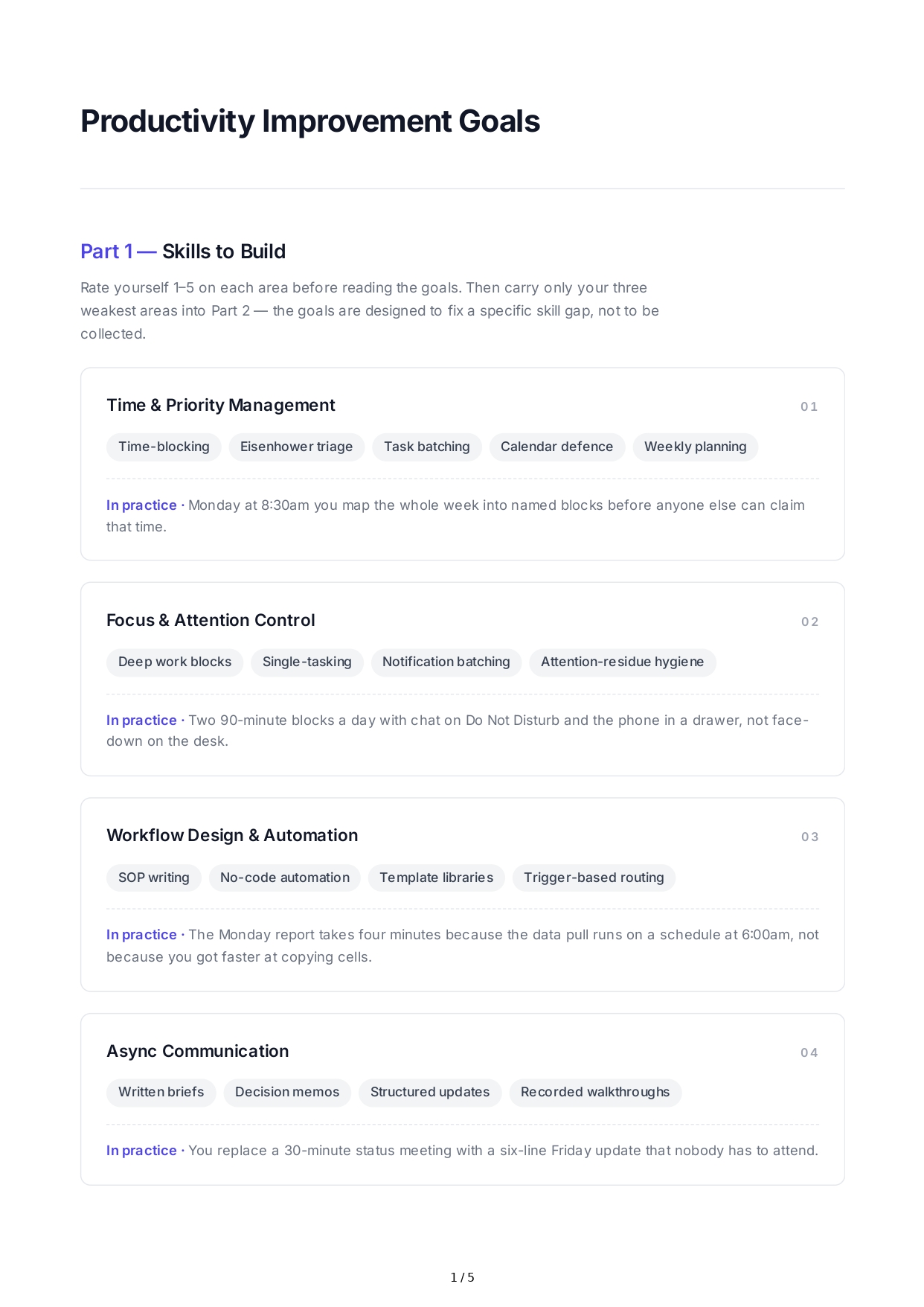
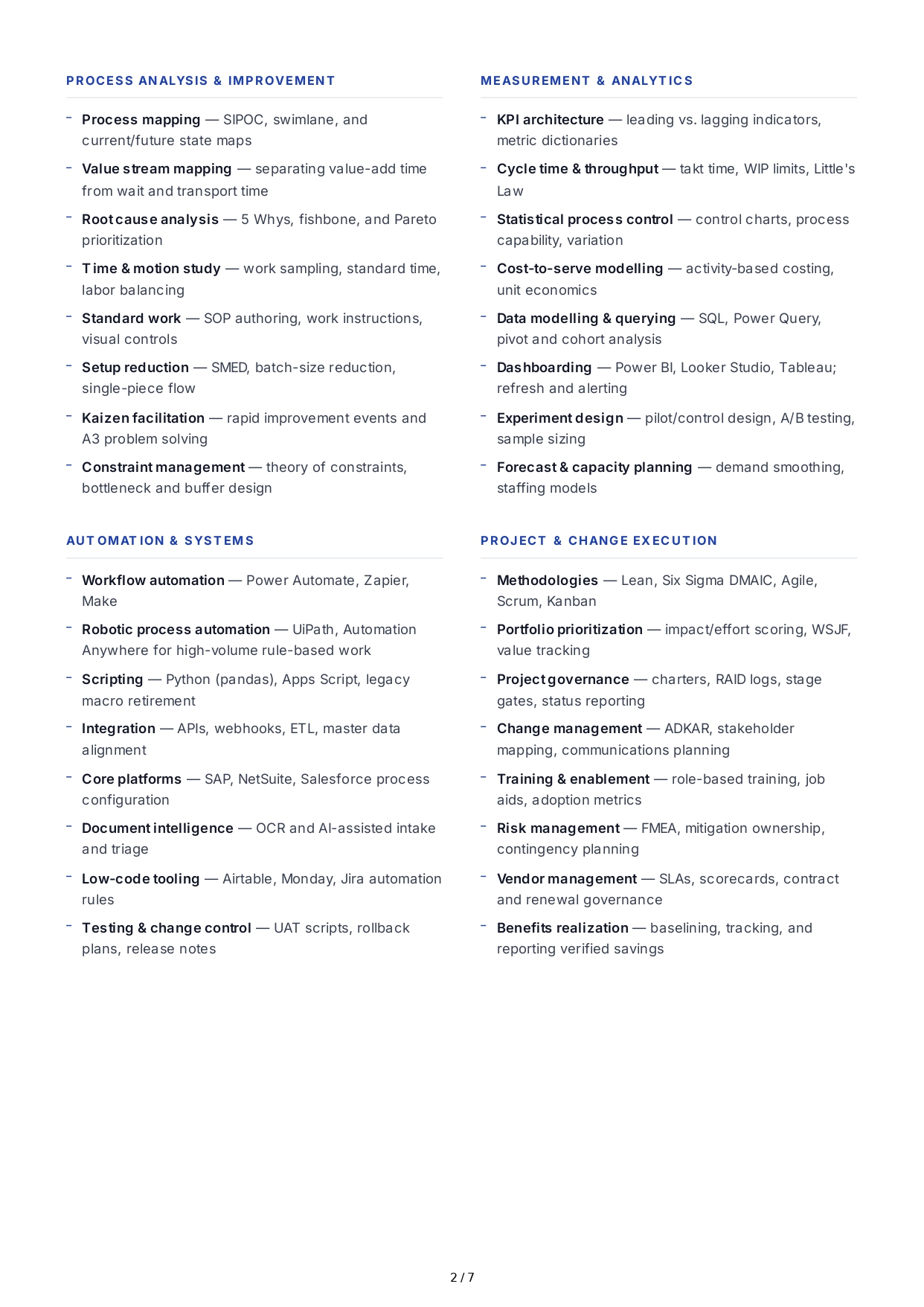
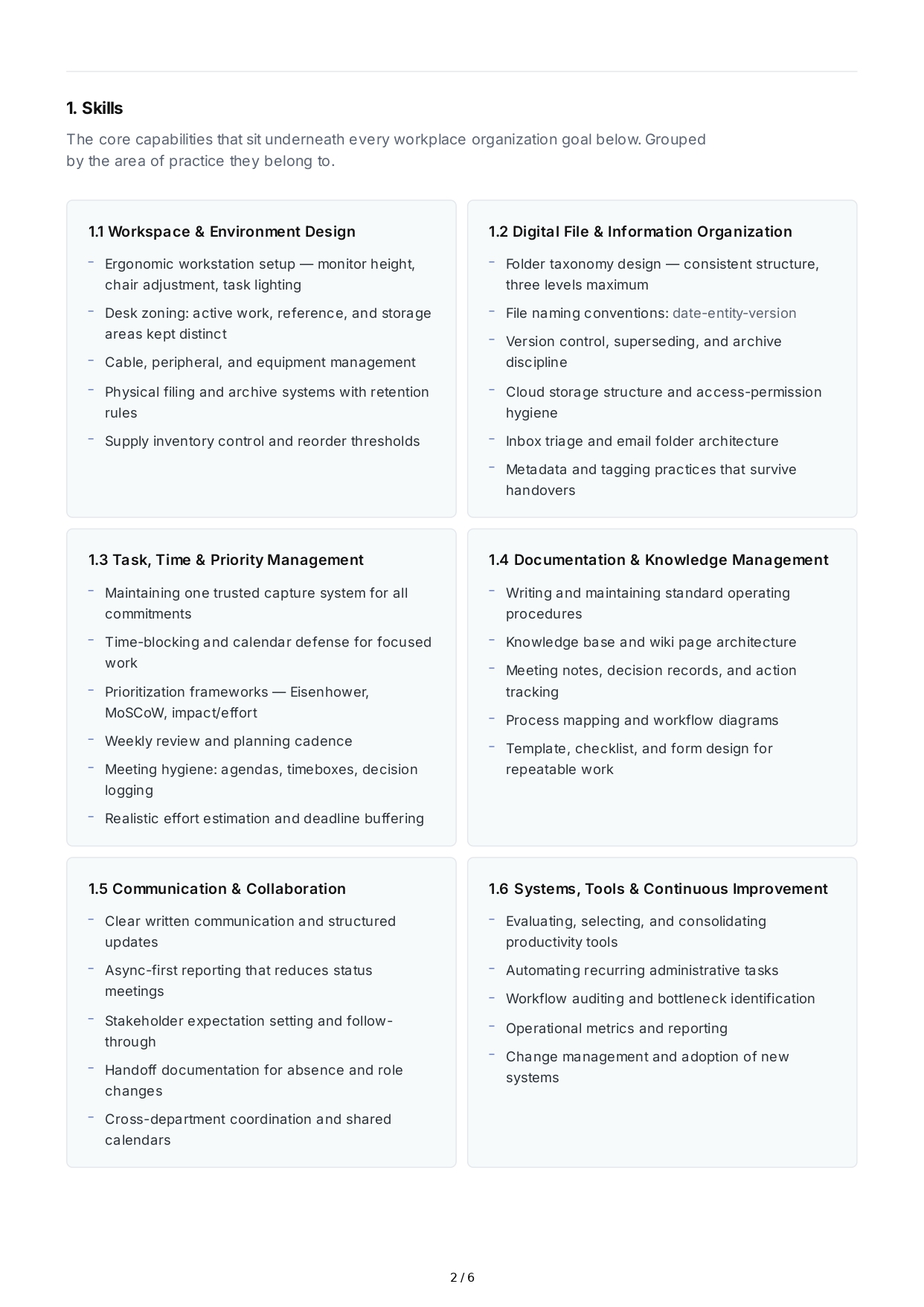
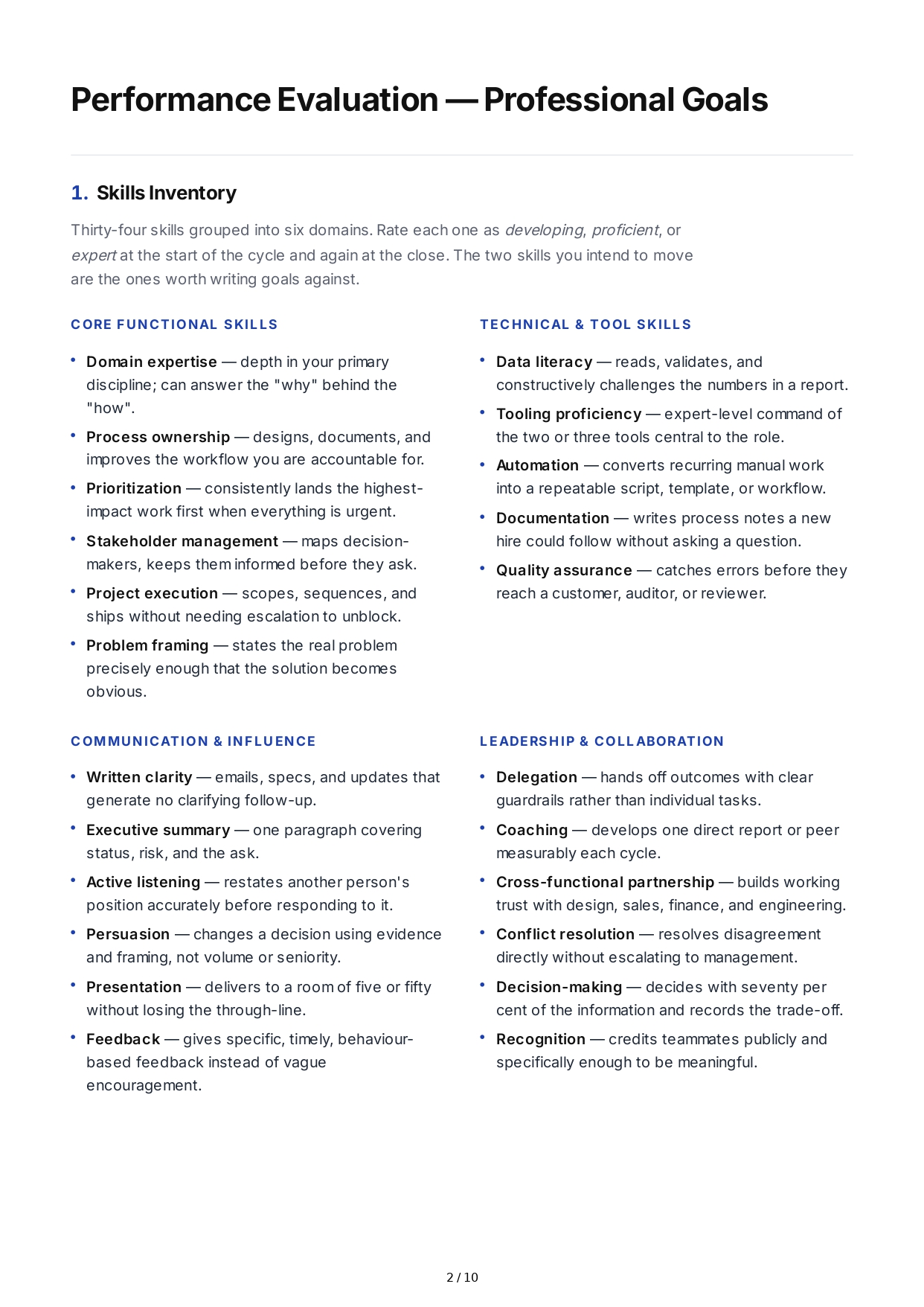
These
are
the
skills
that
consistently
separate
work
that
ships
cleanly
from
work
that
keeps
coming
back
.
They
are
grouped
into
six
areas
—
rate
yourself
honestly
on
each
,
then
use
the
lowest
-
scoring
area
as
the
starting
point
for
the
goals
in
the
next
section
.
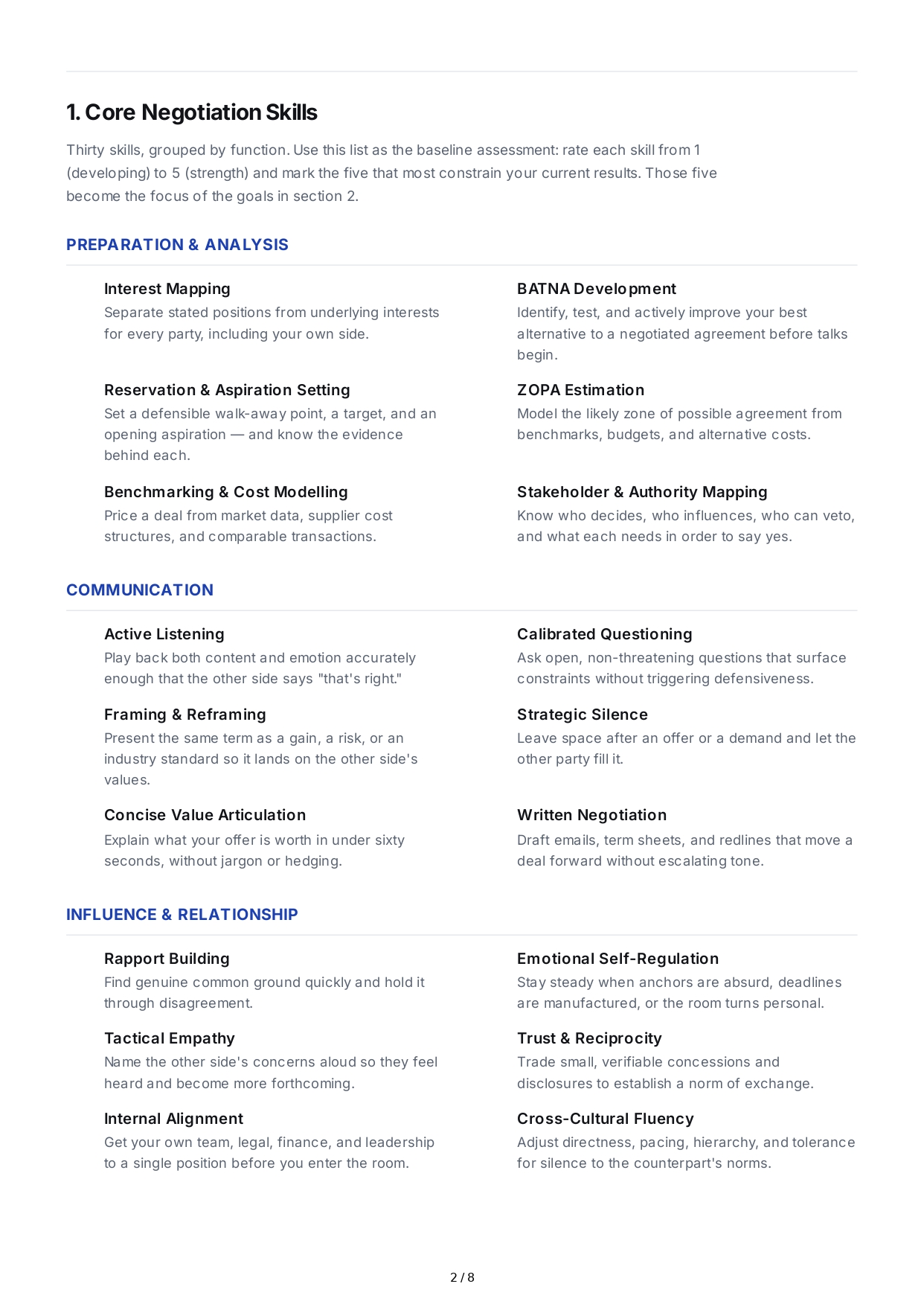
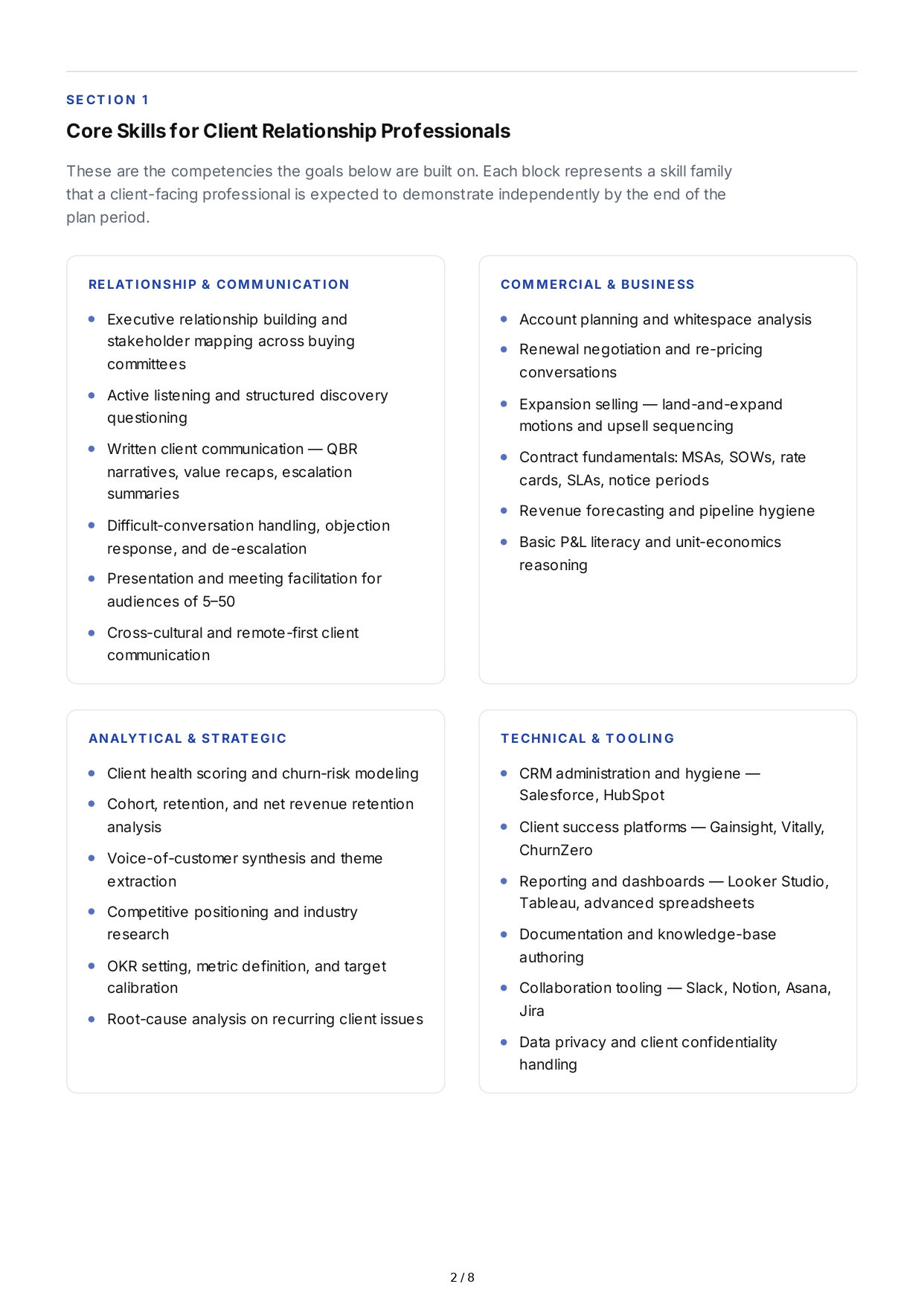
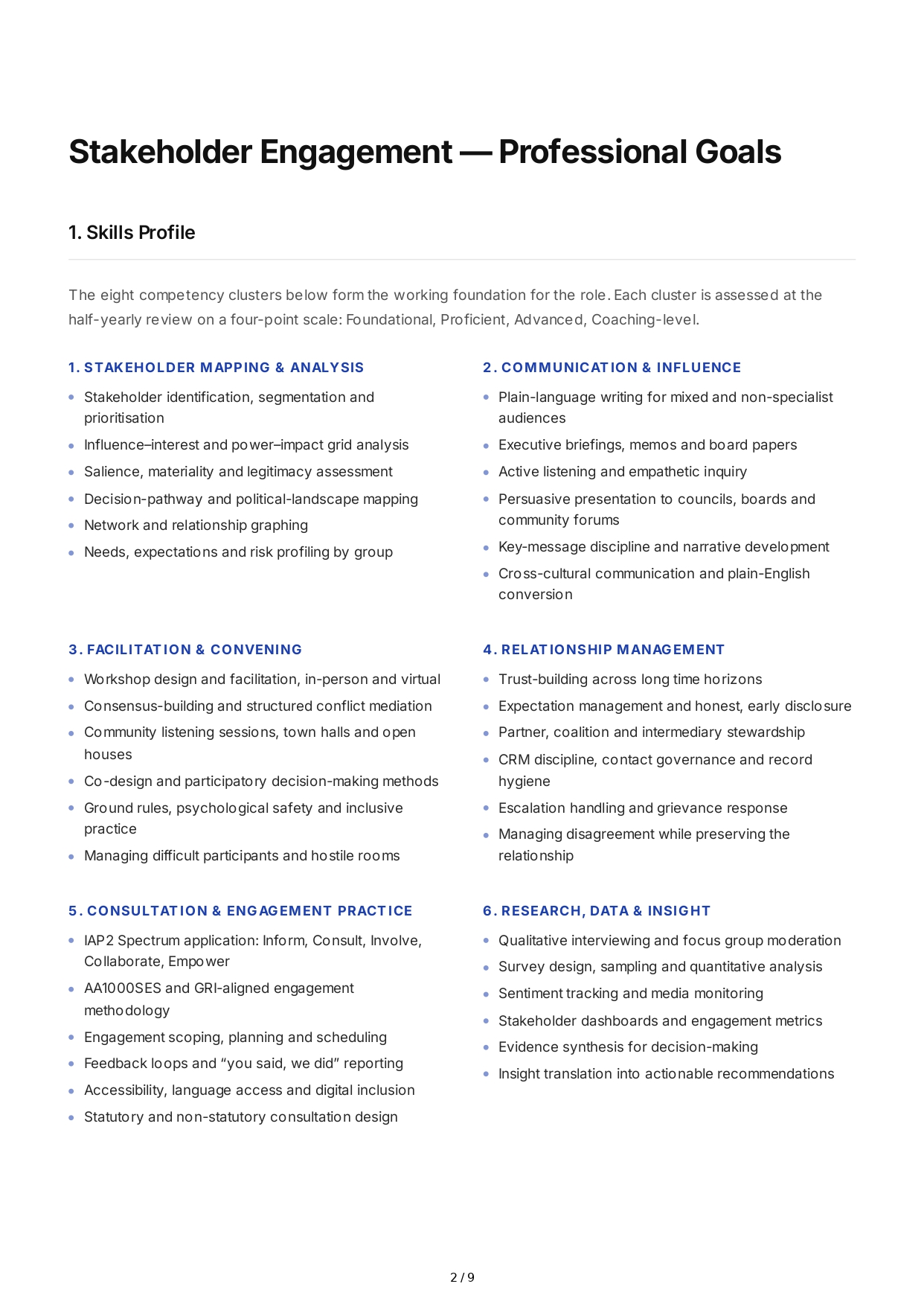
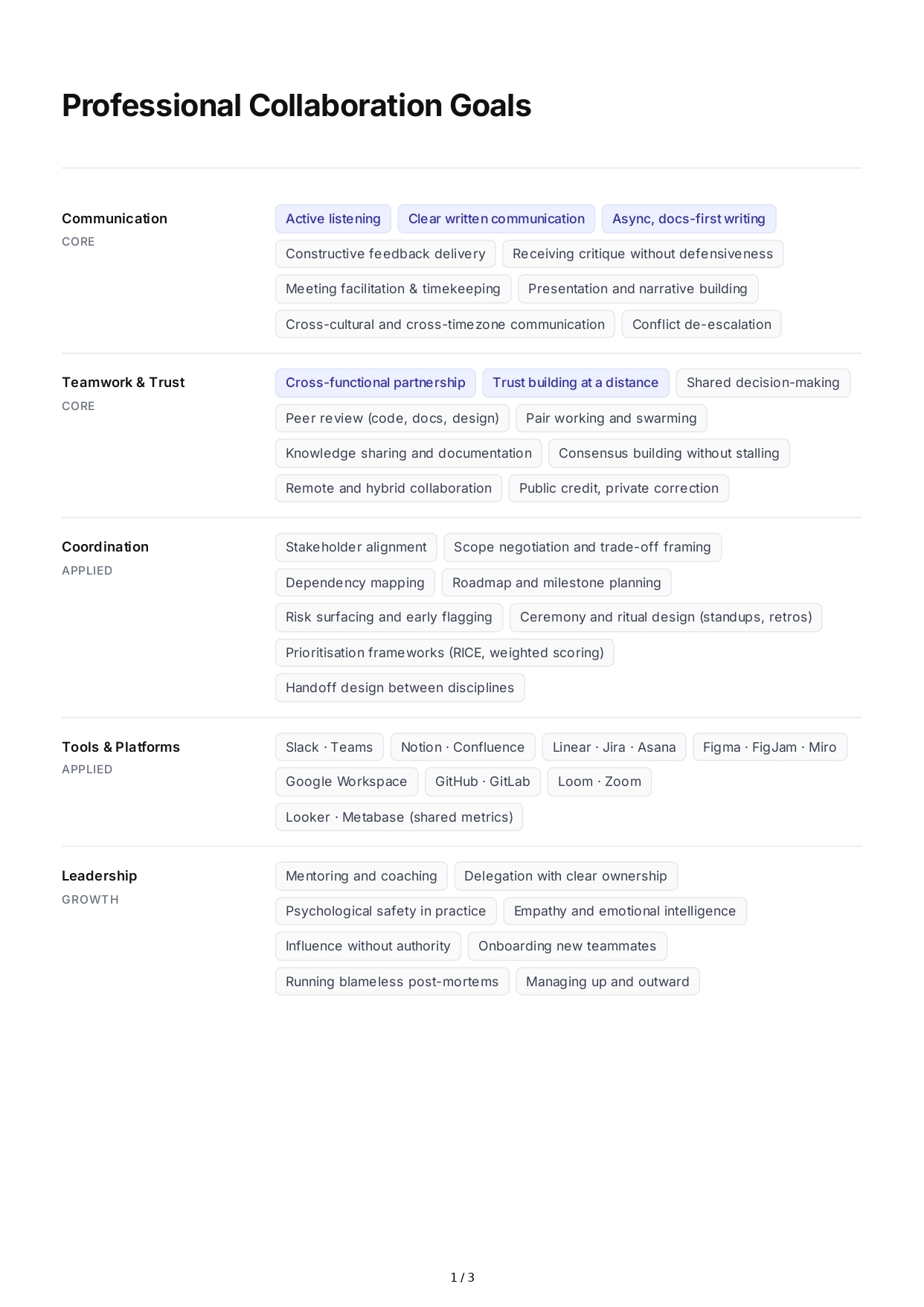
01
Communication
02
Execution
&
Delivery
03
Craft
&
Domain
Depth
04
Problem
Solving
&
Judgment
05
Leadership
&
Influence
06
Adaptability
&
Growth
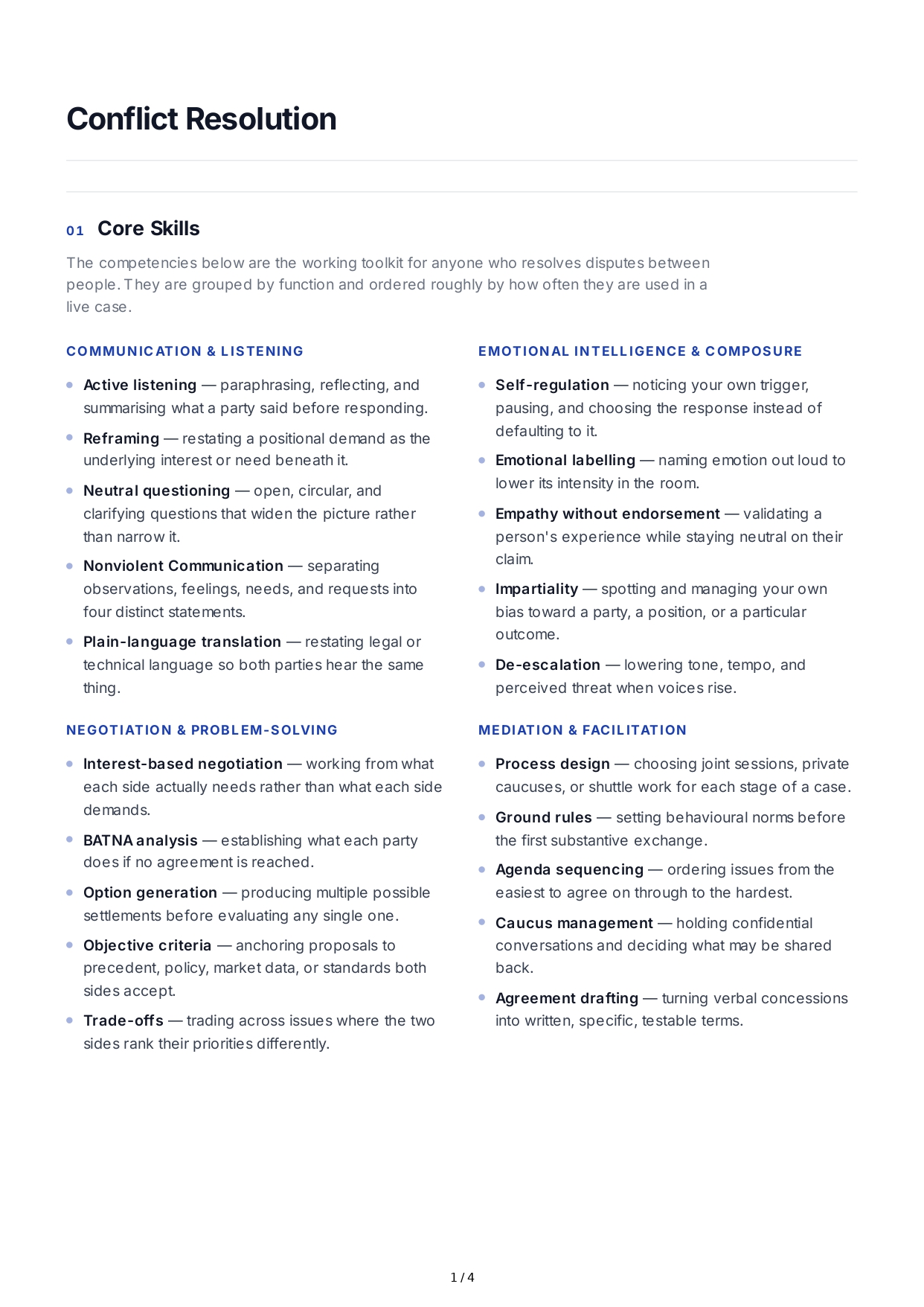
Written
communication
and
clear
documentation
Active
listening
and
accurate
summarising
Presenting
to
small
and
large
groups
Cross
-
functional
collaboration
Managing
stakeholder
expectations
Difficult
conversations
and
conflict
resolution
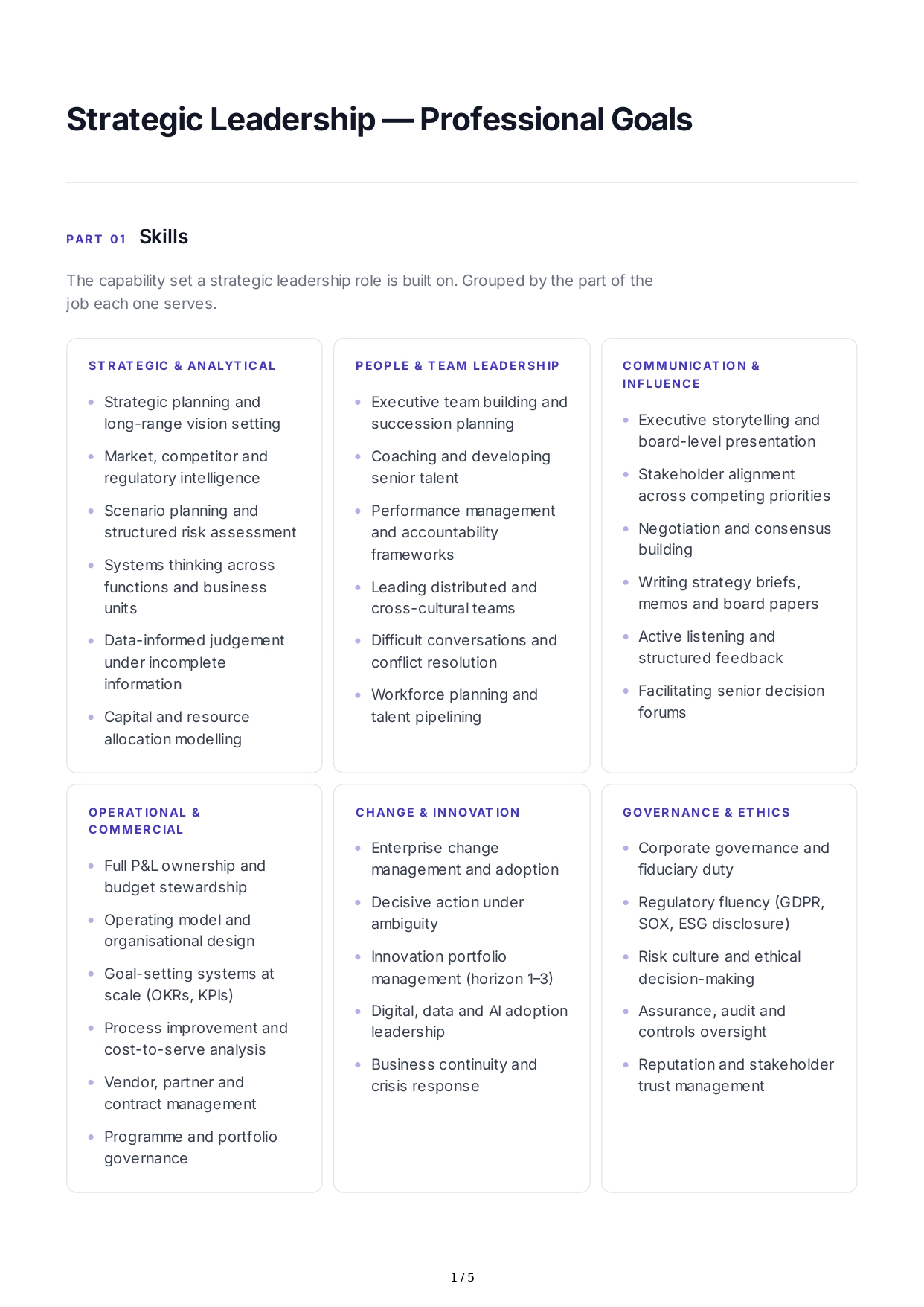
Planning
,
scoping
,
and
estimating
work
Prioritisation
and
trade
-
off
decisions
Time
and
workload
management
Project
management
fundamentals
Risk
identification
and
mitigation
Attention
to
detail
and
quality
control
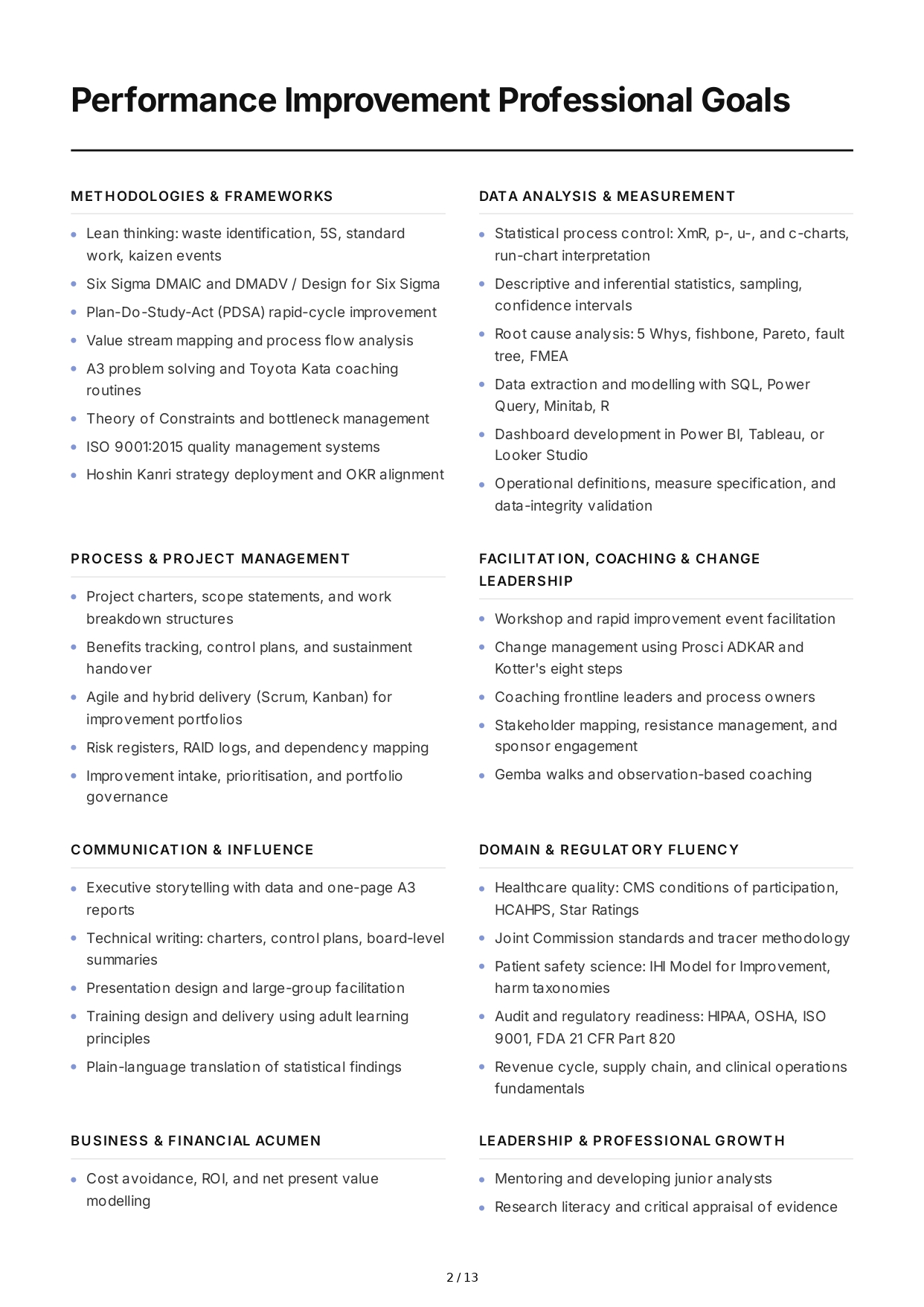
Subject
-
matter
expertise
in
your
field
Research
and
structured
analysis
Data
literacy
and
interpretation
Proficiency
with
core
tools
and
platforms
Process
design
and
written
standards
Peer
review
and
quality
assurance
Root
-
cause
analysis
over
symptom
fixing
Deciding
well
under
incomplete
information
Critical
thinking
and
challenging
assumptions
Creative
problem
solving
Balancing
competing
priorities
Anticipating
second
-
order
consequences
Ownership
and
accountability
Mentoring
and
coaching
colleagues
Giving
and
receiving
direct
feedback
Delegation
with
clear
expectations
Influencing
without
formal
authority
Setting
standards
and
demonstrating
them
Learning
agility
and
curiosity
Resilience
under
pressure
and
setbacks
Receiving
criticism
without
defensiveness
Working
comfortably
with
ambiguity
Self
-
reflection
and
seeking
feedback
Adapting
to
change
and
driving
adoption
1 / 5
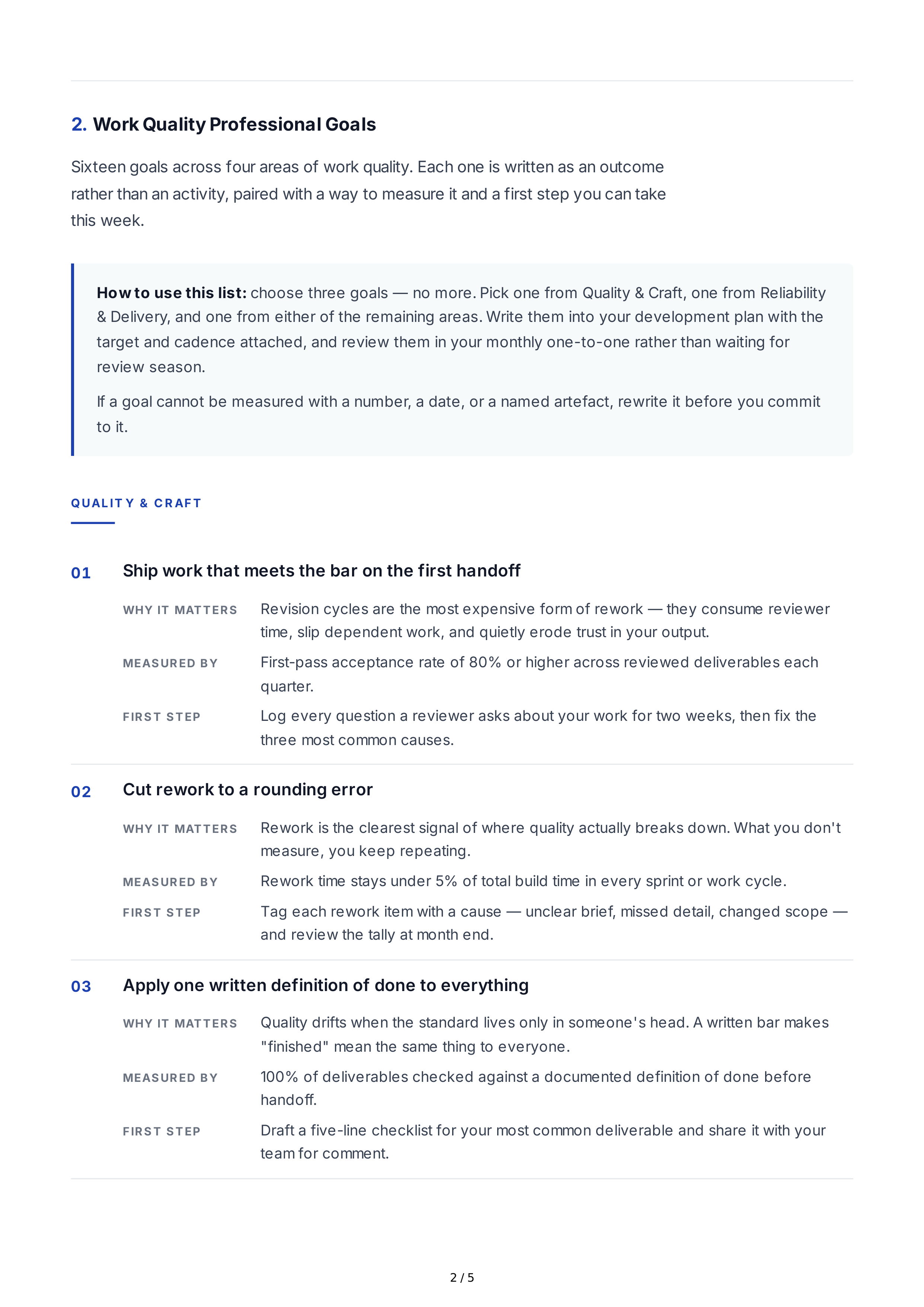
2.
Work
Quality
Professional
Goals
Sixteen
goals
across
four
areas
of
work
quality
.
Each
one
is
written
as
an
outcome
rather
than
an
activity
,
paired
with
a
way
to
measure
it
and
a
first
step
you
can
take
this
week
.
How
to
use
this
list
:
choose
three
goals
—
no
more
.
Pick
one
from
Quality
&
Craft
,
one
from
Reliability
&
Delivery
,
and
one
from
either
of
the
remaining
areas
.
Write
them
into
your
development
plan
with
the
target
and
cadence
attached
,
and
review
them
in
your
monthly
one
-
to
-
one
rather
than
waiting
for
review
season
.
If
a
goal
cannot
be
measured
with
a
number
,
a
date
,
or
a
named
artefact
,
rewrite
it
before
you
commit
to
it
.
QUAL IT Y
&
C R AF T
01
Ship
work
that
meets
the
bar
on
the
first
handoff
WHY
IT
MATTERS
Revision
cycles
are
the
most
expensive
form
of
rework
—
they
consume
reviewer
time
,
slip
dependent
work
,
and
quietly
erode
trust
in
your
output
.
MEAS URED
BY
First
-
pass
acceptance
rate
of
80%
or
higher
across
reviewed
deliverables
each
quarter
.
FIRS T
S TEP
Log
every
question
a
reviewer
asks
about
your
work
for
two
weeks
,
then
fix
the
three
most
common
causes
.
02
Cut
rework
to
a
rounding
error
WHY
IT
MATTERS
Rework
is
the
clearest
signal
of
where
quality
actually
breaks
down
.
What
you
don
'
t
measure
,
you
keep
repeating
.
MEAS URED
BY
Rework
time
stays
under
5%
of
total
build
time
in
every
sprint
or
work
cycle
.
FIRS T
S TEP
Tag
each
rework
item
with
a
cause
—
unclear
brief
,
missed
detail
,
changed
scope
—
and
review
the
tally
at
month
end
.
03
Apply
one
written
definition
of
done
to
everything
WHY
IT
MATTERS
Quality
drifts
when
the
standard
lives
only
in
someone
'
s
head
.
A
written
bar
makes
"
finished
"
mean
the
same
thing
to
everyone
.
MEAS URED
BY
100%
of
deliverables
checked
against
a
documented
definition
of
done
before
handoff
.
FIRS T
S TEP
Draft
a
five
-
line
checklist
for
your
most
common
deliverable
and
share
it
with
your
team
for
comment
.
2 / 5
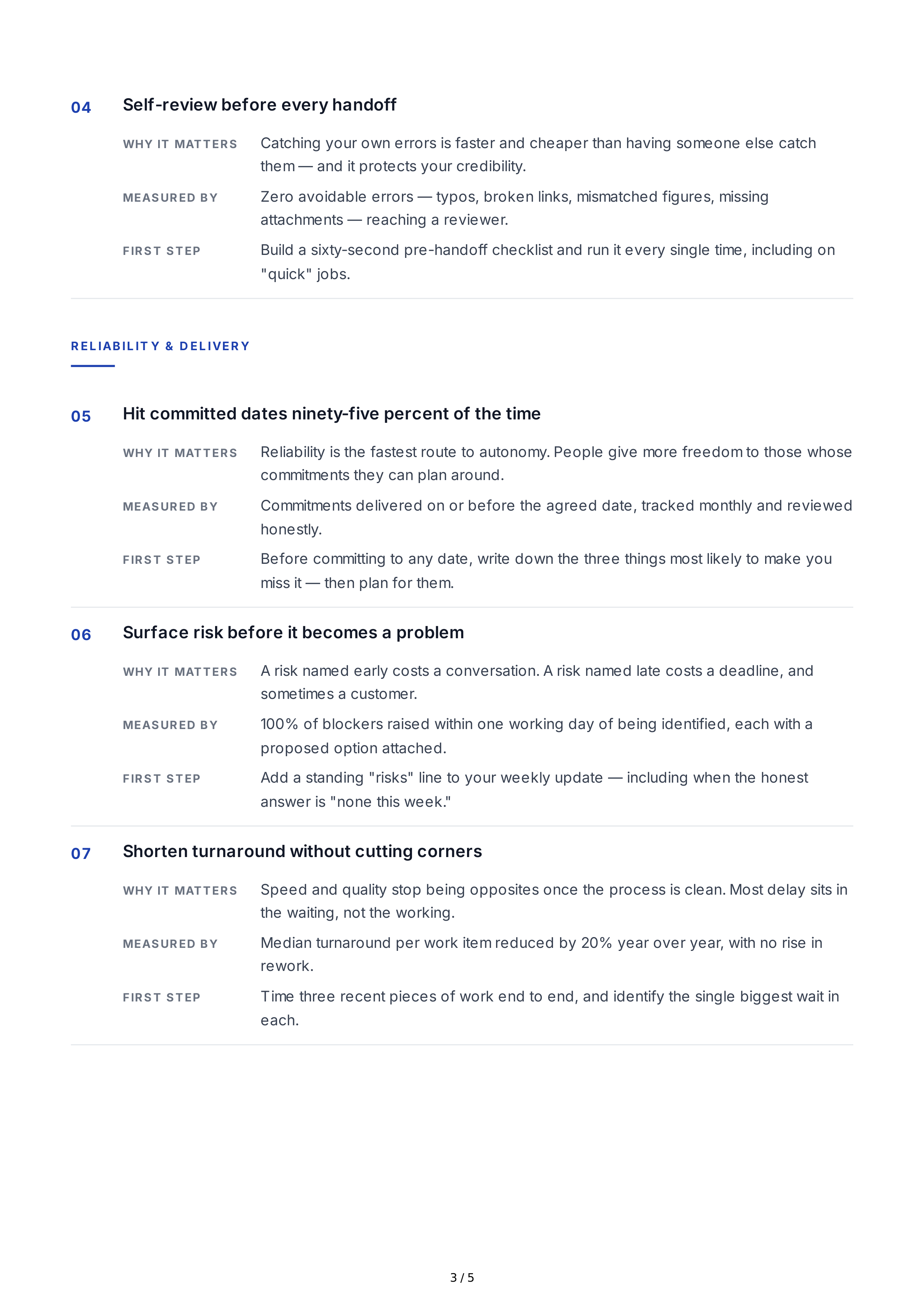
04
Self
-
review
before
every
handoff
WHY
IT
MATTERS
Catching
your
own
errors
is
faster
and
cheaper
than
having
someone
else
catch
them
—
and
it
protects
your
credibility
.
MEAS URED
BY
Zero
avoidable
errors
—
typos
,
broken
links
,
mismatched
figures
,
missing
attachments
—
reaching
a
reviewer
.
FIRS T
S TEP
Build
a
sixty
-
second
pre
-
handoff
checklist
and
run
it
every
single
time
,
including
on
"
quick
"
jobs
.
R EL IAB IL IT Y
&
D EL IVER Y
05
Hit
committed
dates
ninety
-
five
percent
of
the
time
WHY
IT
MATTERS
Reliability
is
the
fastest
route
to
autonomy
.
People
give
more
freedom
to
those
whose
commitments
they
can
plan
around
.
MEAS URED
BY
Commitments
delivered
on
or
before
the
agreed
date
,
tracked
monthly
and
reviewed
honestly
.
FIRS T
S TEP
Before
committing
to
any
date
,
write
down
the
three
things
most
likely
to
make
you
miss
it
—
then
plan
for
them
.
06
Surface
risk
before
it
becomes
a
problem
WHY
IT
MATTERS
A
risk
named
early
costs
a
conversation
.
A
risk
named
late
costs
a
deadline
,
and
sometimes
a
customer
.
MEAS URED
BY
100%
of
blockers
raised
within
one
working
day
of
being
identified
,
each
with
a
proposed
option
attached
.
FIRS T
S TEP
Add
a
standing
"
risks
"
line
to
your
weekly
update
—
including
when
the
honest
answer
is
"
none
this
week
."
07
Shorten
turnaround
without
cutting
corners
WHY
IT
MATTERS
Speed
and
quality
stop
being
opposites
once
the
process
is
clean
.
Most
delay
sits
in
the
waiting
,
not
the
working
.
MEAS URED
BY
Median
turnaround
per
work
item
reduced
by
20%
year
over
year
,
with
no
rise
in
rework
.
FIRS T
S TEP
Time
three
recent
pieces
of
work
end
to
end
,
and
identify
the
single
biggest
wait
in
each
.
3 / 5
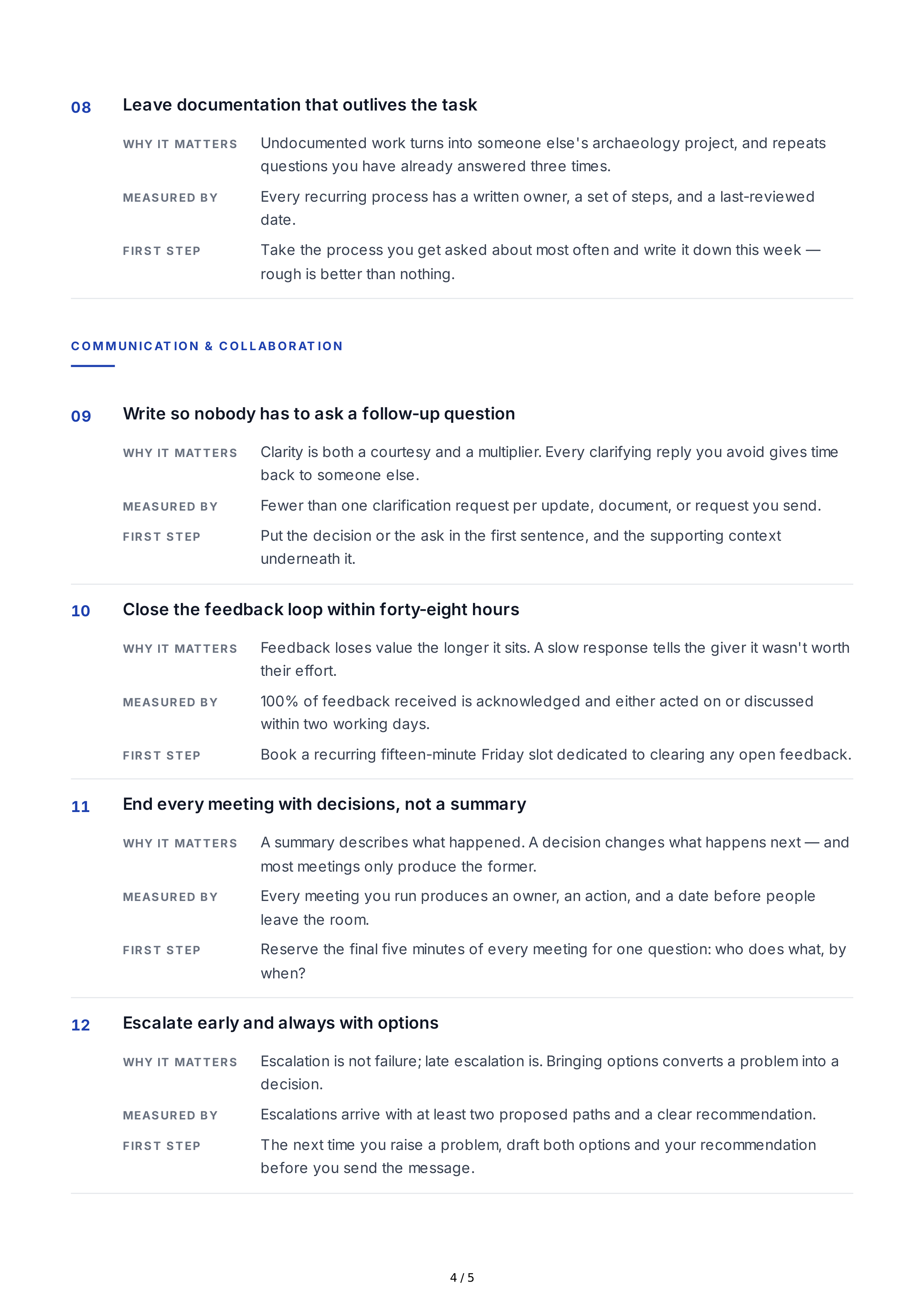
08
Leave
documentation
that
outlives
the
task
WHY
IT
MATTERS
Undocumented
work
turns
into
someone
else
'
s
archaeology
project
,
and
repeats
questions
you
have
already
answered
three
times
.
MEAS URED
BY
Every
recurring
process
has
a
written
owner
,
a
set
of
steps
,
and
a
last
-
reviewed
date
.
FIRS T
S TEP
Take
the
process
you
get
asked
about
most
often
and
write
it
down
this
week
—
rough
is
better
than
nothing
.
C O M M UN IC AT IO N
&
C O L L AB O R AT IO N
09
Write
so
nobody
has
to
ask
a
follow
-
up
question
WHY
IT
MATTERS
Clarity
is
both
a
courtesy
and
a
multiplier
.
Every
clarifying
reply
you
avoid
gives
time
back
to
someone
else
.
MEAS URED
BY
Fewer
than
one
clarification
request
per
update
,
document
,
or
request
you
send
.
FIRS T
S TEP
Put
the
decision
or
the
ask
in
the
first
sentence
,
and
the
supporting
context
underneath
it
.
10
Close
the
feedback
loop
within
forty
-
eight
hours
WHY
IT
MATTERS
Feedback
loses
value
the
longer
it
sits
.
A
slow
response
tells
the
giver
it
wasn
'
t
worth
their
effort
.
MEAS URED
BY
100%
of
feedback
received
is
acknowledged
and
either
acted
on
or
discussed
within
two
working
days
.
FIRS T
S TEP
Book
a
recurring
fifteen
-
minute
Friday
slot
dedicated
to
clearing
any
open
feedback
.
11
End
every
meeting
with
decisions
,
not
a
summary
WHY
IT
MATTERS
A
summary
describes
what
happened
.
A
decision
changes
what
happens
next
—
and
most
meetings
only
produce
the
former
.
MEAS URED
BY
Every
meeting
you
run
produces
an
owner
,
an
action
,
and
a
date
before
people
leave
the
room
.
FIRS T
S TEP
Reserve
the
final
five
minutes
of
every
meeting
for
one
question
:
who
does
what
,
by
when
?
12
Escalate
early
and
always
with
options
WHY
IT
MATTERS
Escalation
is
not
failure
;
late
escalation
is
.
Bringing
options
converts
a
problem
into
a
decision
.
MEAS URED
BY
Escalations
arrive
with
at
least
two
proposed
paths
and
a
clear
recommendation
.
FIRS T
S TEP
The
next
time
you
raise
a
problem
,
draft
both
options
and
your
recommendation
before
you
send
the
message
.
4 / 5
O W N ER S H IP
&
G R O W T H
13
Own
the
outcome
,
not
the
task
list
WHY
IT
MATTERS
Tasks
end
when
they
are
checked
off
.
Outcomes
need
someone
who
keeps
caring
past
the
handoff
.
MEAS URED
BY
You
can
state
the
business
result
your
work
produced
—
not
just
the
list
of
things
you
completed
.
FIRS T
S TEP
For
your
current
project
,
write
one
sentence
describing
the
outcome
as
the
end
user
would
experience
it
.
14
Learn
one
new
capability
per
quarter
and
apply
it
WHY
IT
MATTERS
Skills
that
are
never
used
on
real
work
do
not
compound
.
Learning
without
application
is
a
hobby
,
not
growth
.
MEAS URED
BY
One
new
skill
or
tool
practised
on
live
work
every
quarter
,
with
a
short
written
retrospective
.
FIRS T
S TEP
Name
this
quarter
'
s
skill
and
the
specific
piece
of
work
you
will
apply
it
to
.
Be
concrete
.
15
Raise
the
floor
for
the
people
around
you
WHY
IT
MATTERS
Individual
quality
is
capped
by
the
quality
of
the
system
it
sits
in
.
Improving
the
system
outlasts
any
single
deliverable
.
MEAS URED
BY
Two
documented
contributions
per
year
to
team
standards
—
templates
,
review
guides
,
onboarding
notes
,
or
checklists
.
FIRS T
S TEP
Share
one
thing
you
learned
this
month
in
a
channel
where
your
whole
team
will
see
it
.
16
Ask
for
feedback
before
review
season
arrives
WHY
IT
MATTERS
A
performance
review
should
confirm
what
you
already
know
about
yourself
,
not
deliver
a
surprise
.
MEAS URED
BY
A
calibration
conversation
with
your
manager
at
least
once
per
quarter
,
outside
the
formal
review
cycle
.
FIRS T
S TEP
Book
thirty
minutes
and
open
with
one
question
: "
What
would
make
my
work
easier
to
trust
?"
5 / 5