Professional
Networking
Goals
1 / 8
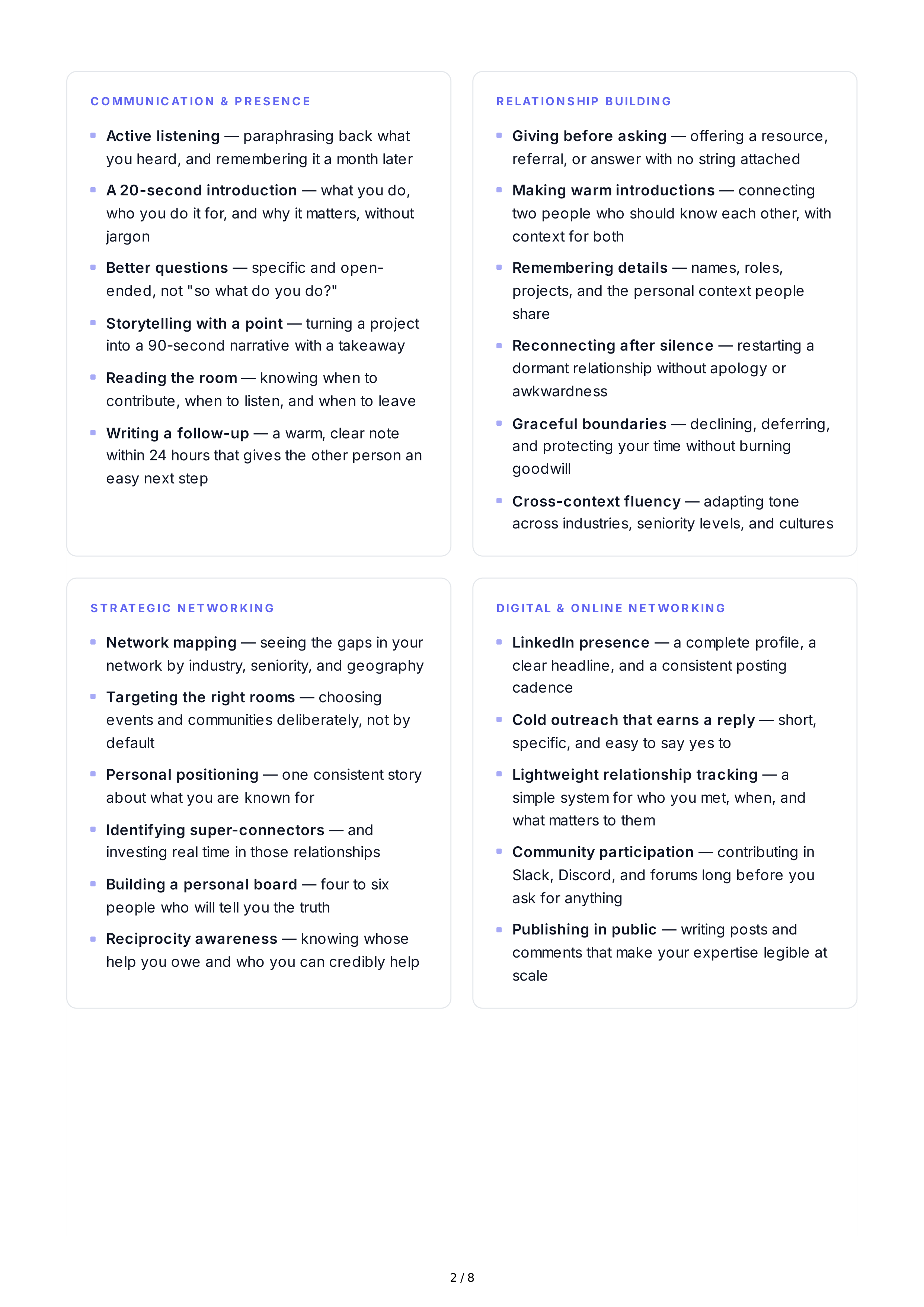
C O MMUN IC AT IO N
&
P R E S E N C E
R E LAT IO N S HIP
B UILDIN G
S T R AT E G IC
N E T WO R KIN G
DIG ITAL
&
O N LIN E
N E T WO R KIN G
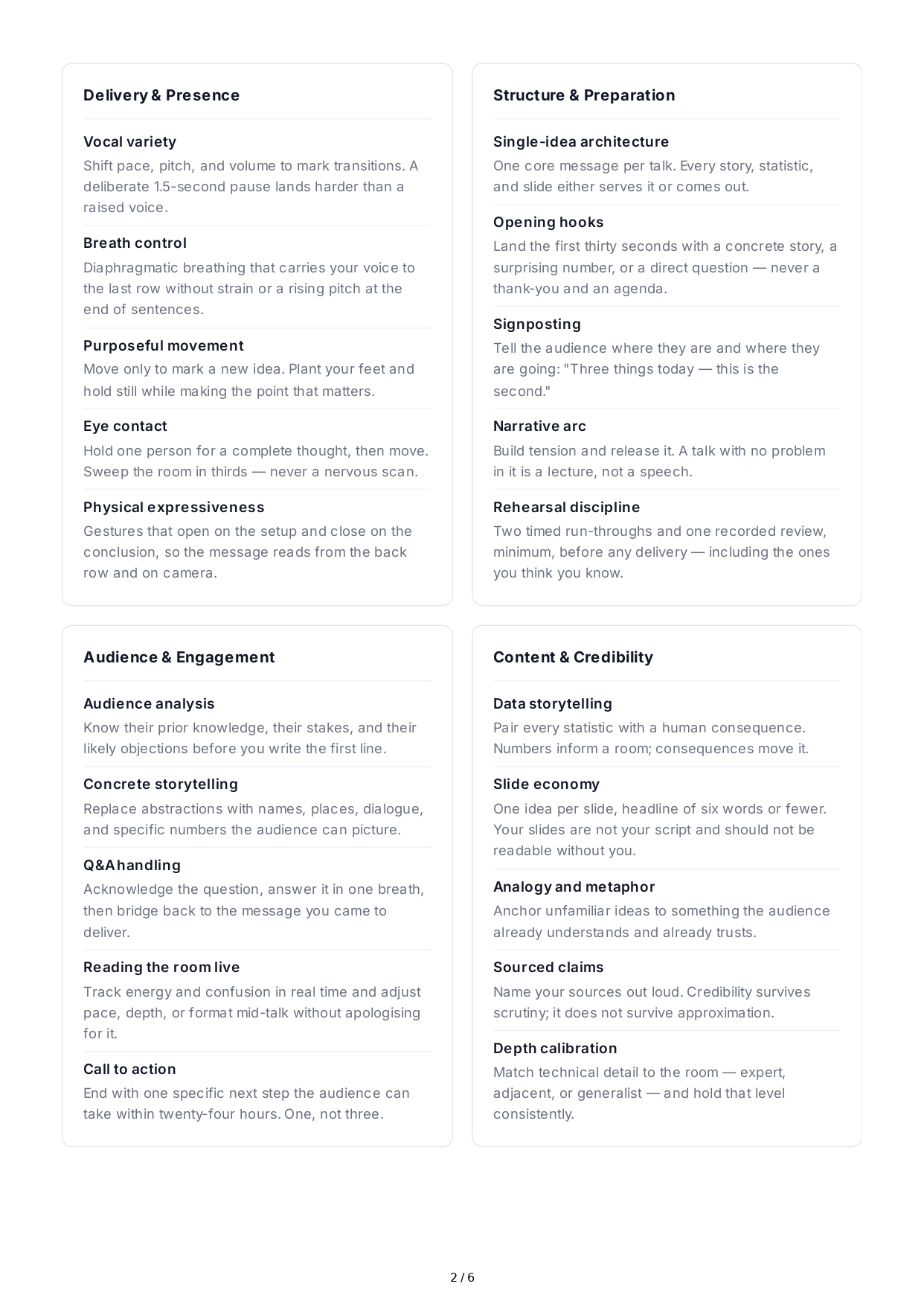
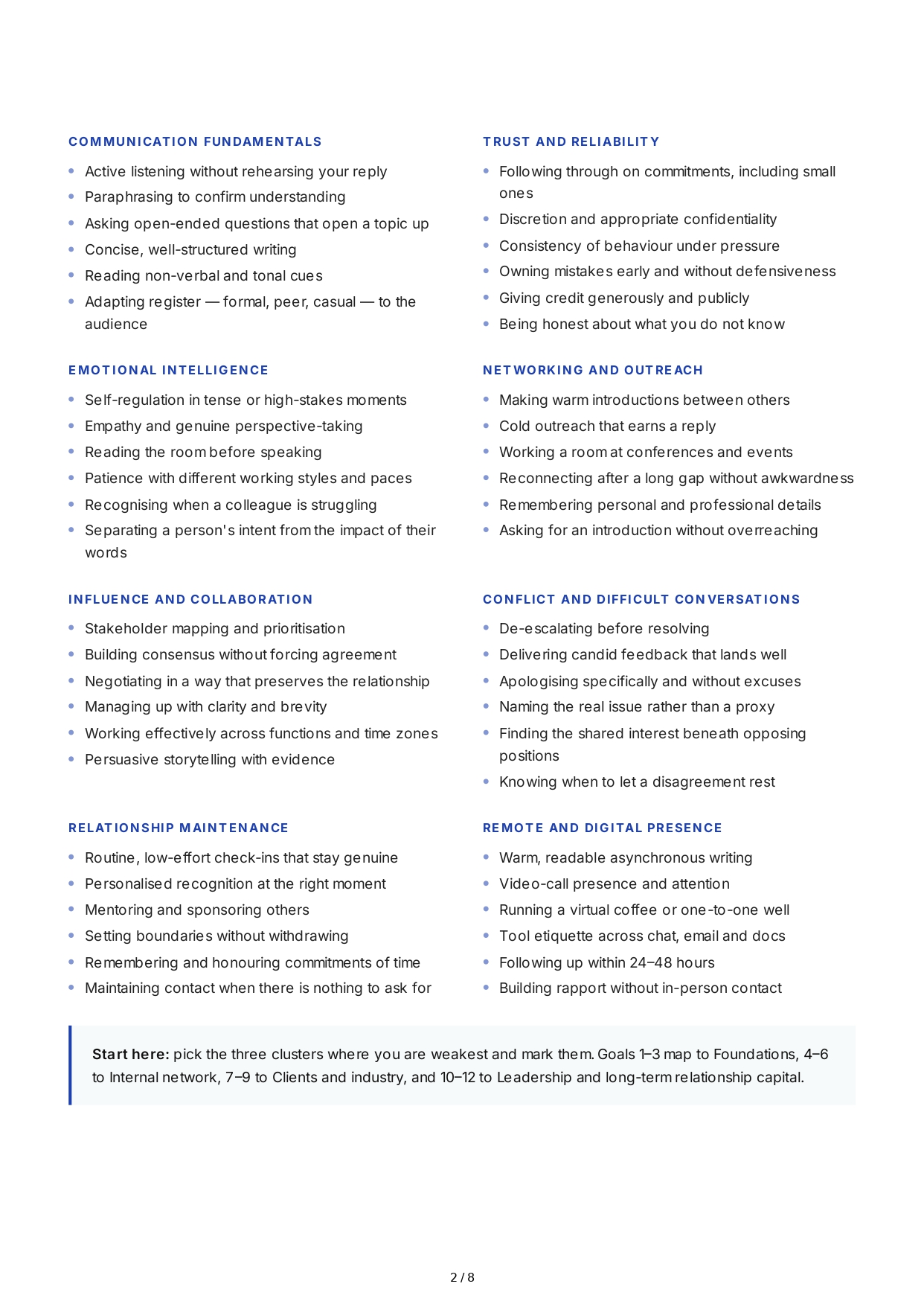
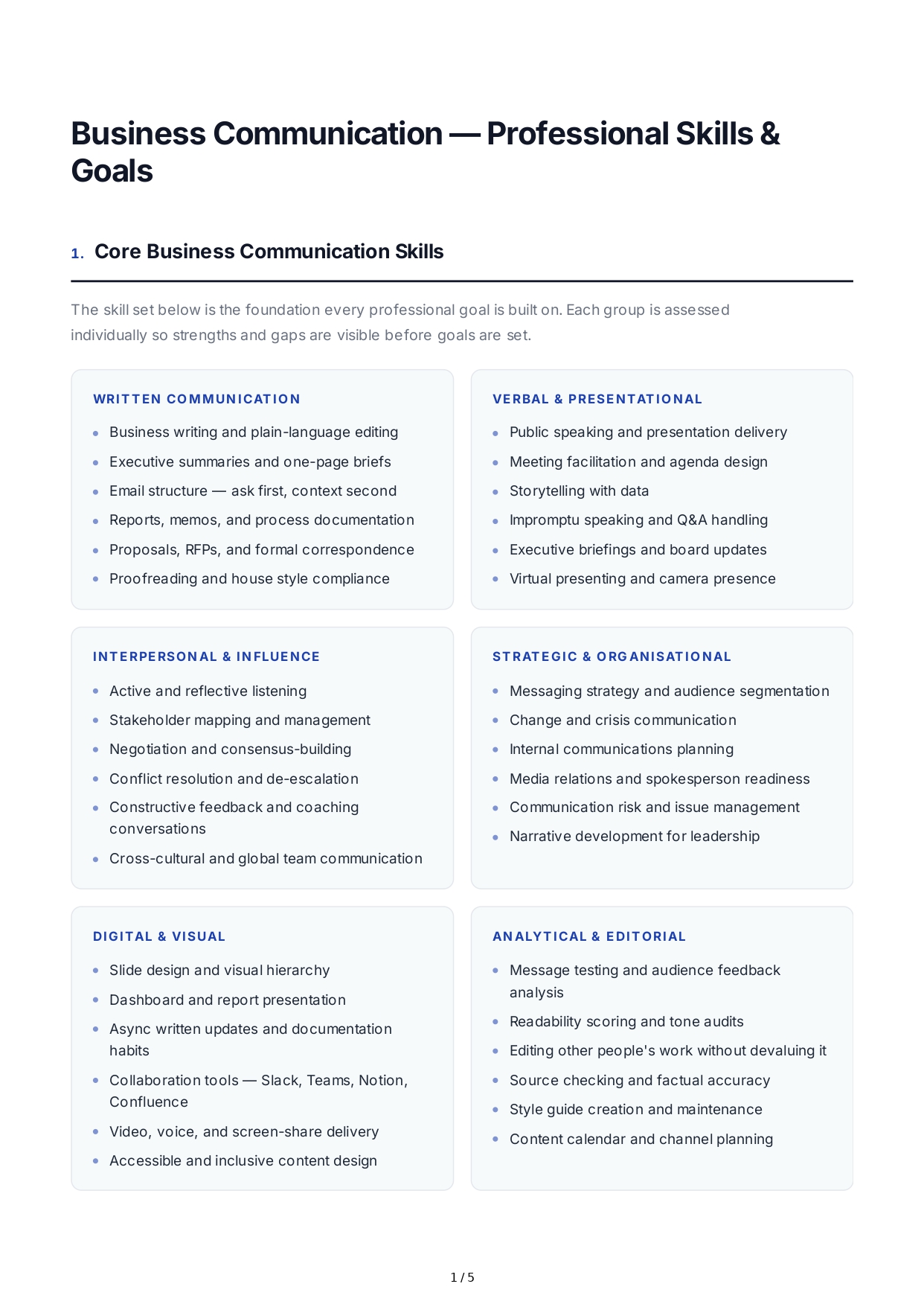
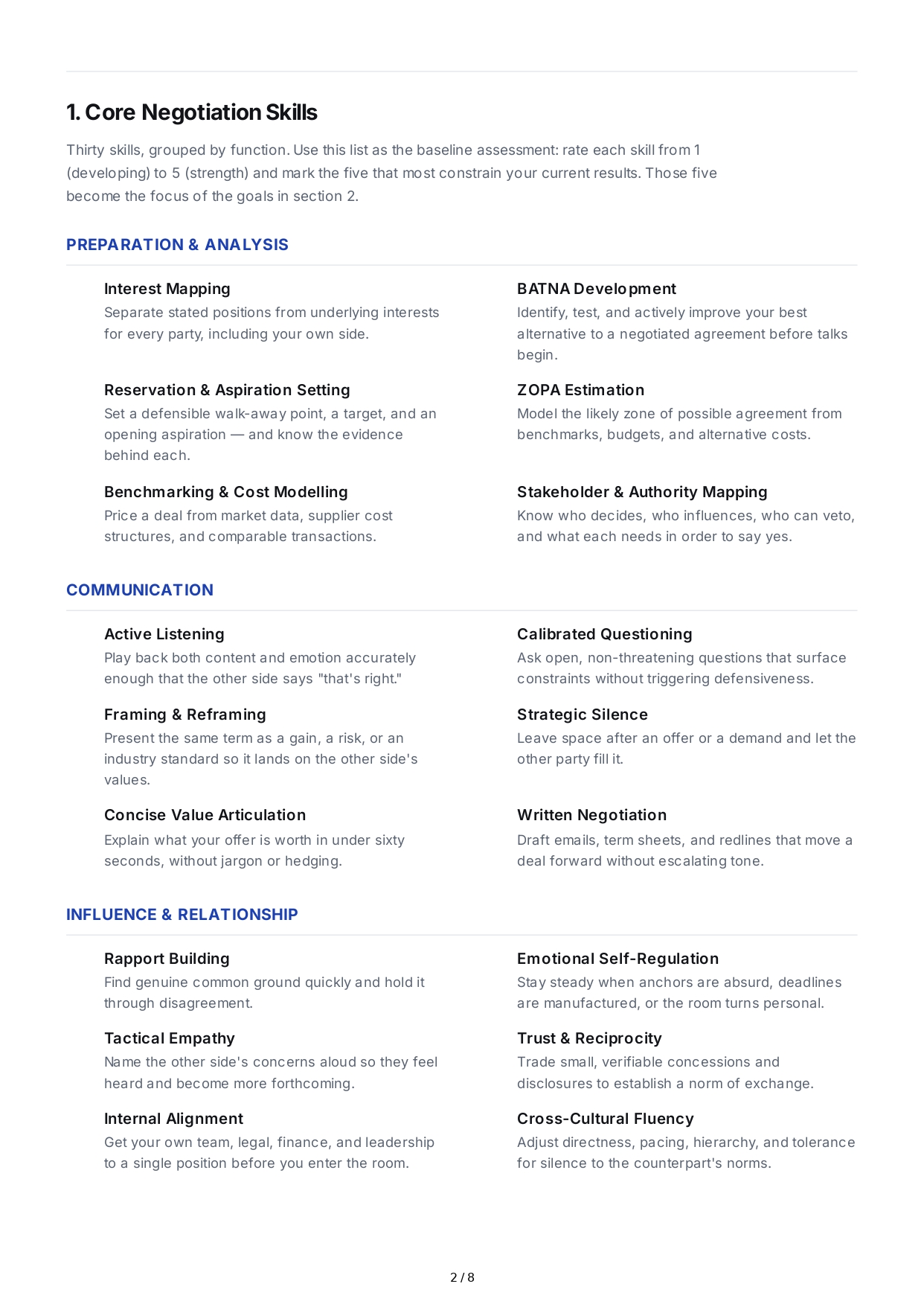
Active
listening
—
paraphrasing
back
what
you
heard
,
and
remembering
it
a
month
later
A
20-
second
introduction
—
what
you
do
,
who
you
do
it
for
,
and
why
it
matters
,
without
jargon
Better
questions
—
specific
and
open
-
ended
,
not
"
so
what
do
you
do
?"
Storytelling
with
a
point
—
turning
a
project
into
a
90-
second
narrative
with
a
takeaway
Reading
the
room
—
knowing
when
to
contribute
,
when
to
listen
,
and
when
to
leave
Writing
a
follow
-
up
—
a
warm
,
clear
note
within
24
hours
that
gives
the
other
person
an
easy
next
step
Giving
before
asking
—
offering
a
resource
,
referral
,
or
answer
with
no
string
attached
Making
warm
introductions
—
connecting
two
people
who
should
know
each
other
,
with
context
for
both
Remembering
details
—
names
,
roles
,
projects
,
and
the
personal
context
people
share
Reconnecting
after
silence
—
restarting
a
dormant
relationship
without
apology
or
awkwardness
Graceful
boundaries
—
declining
,
deferring
,
and
protecting
your
time
without
burning
goodwill
Cross
-
context
fluency
—
adapting
tone
across
industries
,
seniority
levels
,
and
cultures
Network
mapping
—
seeing
the
gaps
in
your
network
by
industry
,
seniority
,
and
geography
Targeting
the
right
rooms
—
choosing
events
and
communities
deliberately
,
not
by
default
Personal
positioning
—
one
consistent
story
about
what
you
are
known
for
Identifying
super
-
connectors
—
and
investing
real
time
in
those
relationships
Building
a
personal
board
—
four
to
six
people
who
will
tell
you
the
truth
Reciprocity
awareness
—
knowing
whose
help
you
owe
and
who
you
can
credibly
help
LinkedIn
presence
—
a
complete
profile
,
a
clear
headline
,
and
a
consistent
posting
cadence
Cold
outreach
that
earns
a
reply
—
short
,
specific
,
and
easy
to
say
yes
to
Lightweight
relationship
tracking
—
a
simple
system
for
who
you
met
,
when
,
and
what
matters
to
them
Community
participation
—
contributing
in
Slack
,
Discord
,
and
forums
long
before
you
ask
for
anything
Publishing
in
public
—
writing
posts
and
comments
that
make
your
expertise
legible
at
scale
2 / 8
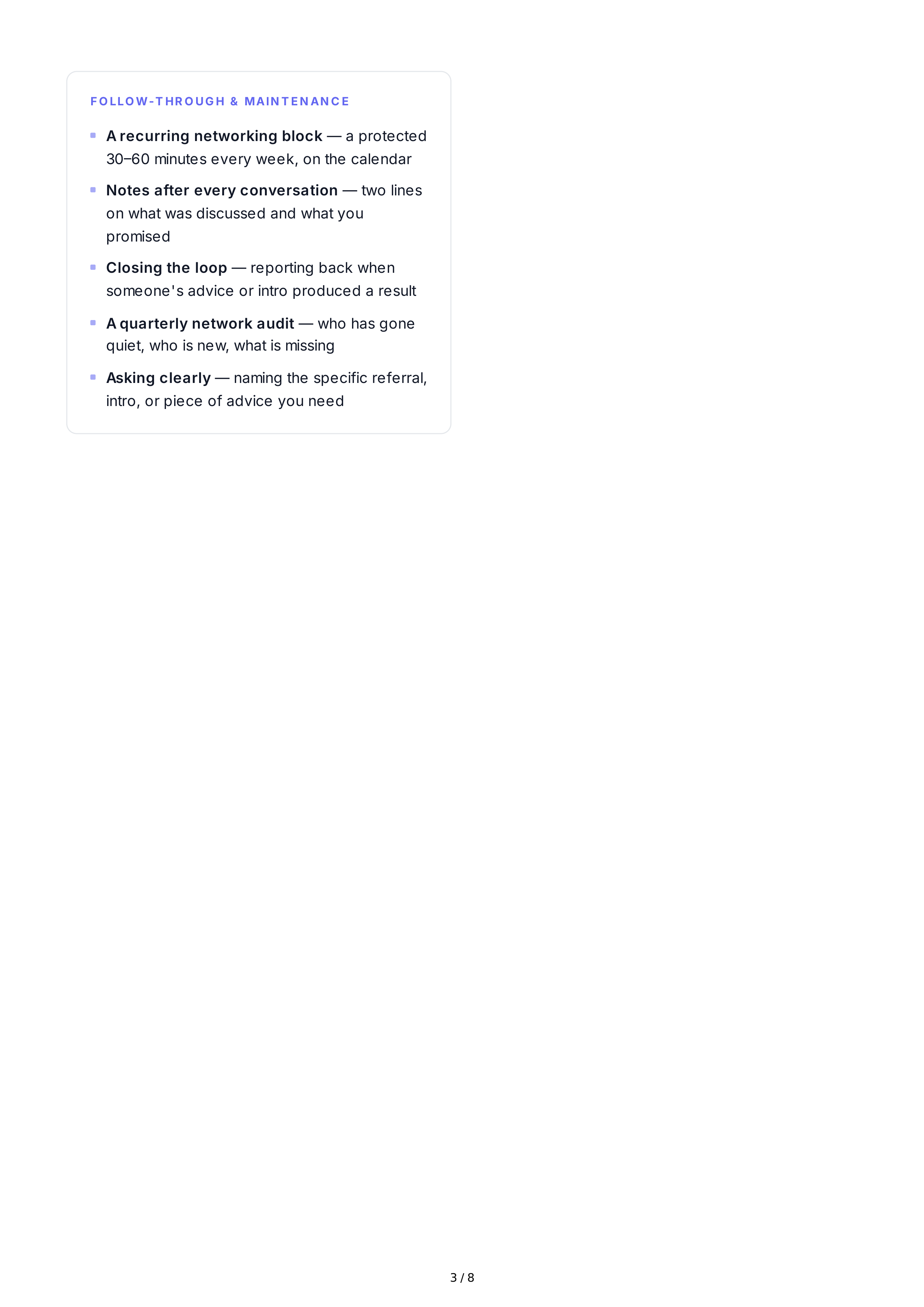
F O LLO W
-
T HR O UG H
&
MAIN T E N AN C E
A
recurring
networking
block
—
a
protected
30–60
minutes
every
week
,
on
the
calendar
Notes
after
every
conversation
—
two
lines
on
what
was
discussed
and
what
you
promised
Closing
the
loop
—
reporting
back
when
someone
'
s
advice
or
intro
produced
a
result
A
quarterly
network
audit
—
who
has
gone
quiet
,
who
is
new
,
what
is
missing
Asking
clearly
—
naming
the
specific
referral
,
intro
,
or
piece
of
advice
you
need
3 / 8
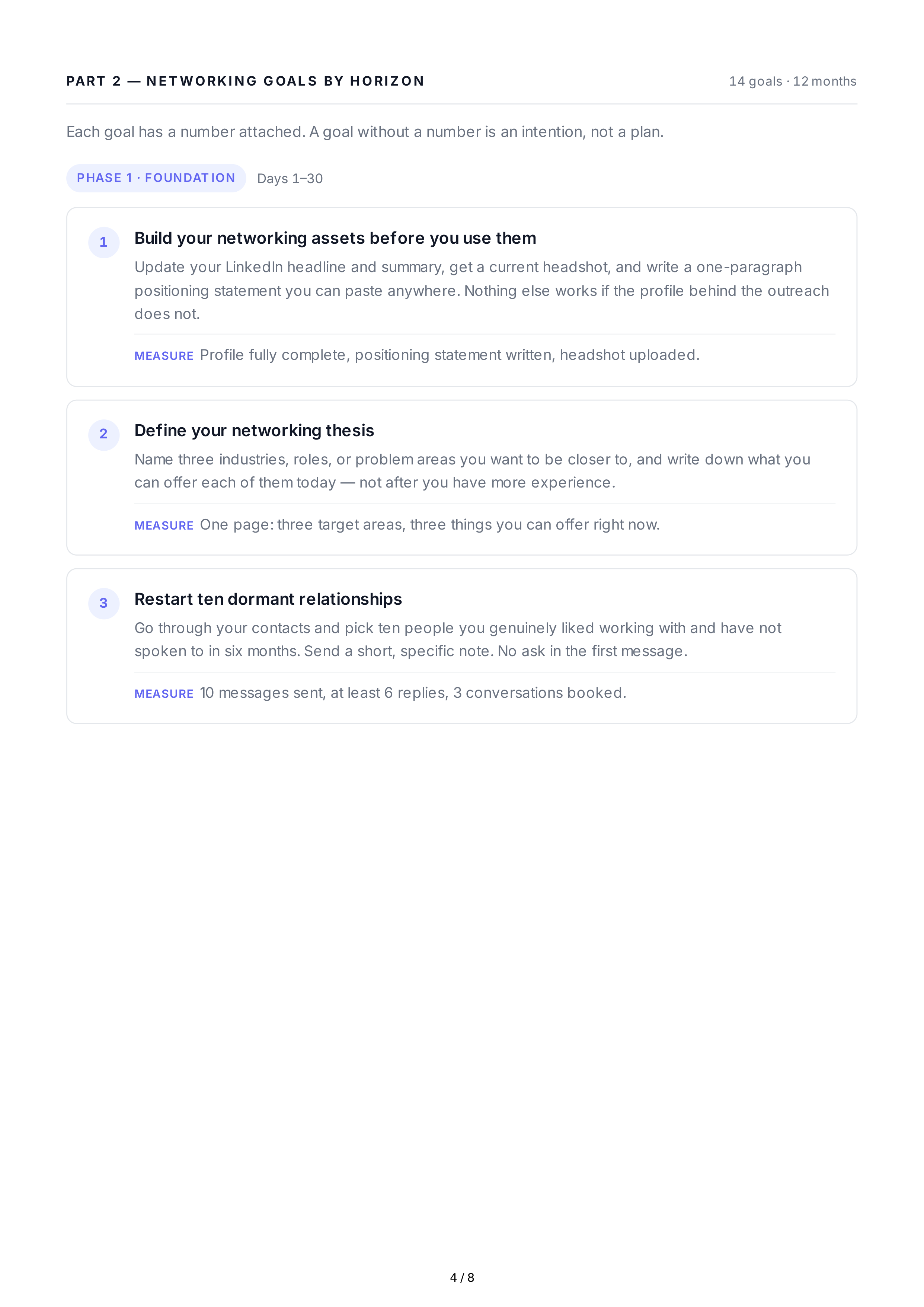
PART
2 —
N E T WO RKI N G
G OAL S
BY
H O RI Z O N
14
goals
· 12
months
Each
goal
has
a
number
attached
.
A
goal
without
a
number
is
an
intention
,
not
a
plan
.
PHASE
1 ·
FOUNDAT ION
Days
1–30
1
Build
your
networking
assets
before
you
use
them
Update
your
LinkedIn
headline
and
summary
,
get
a
current
headshot
,
and
write
a
one
-
paragraph
positioning
statement
you
can
paste
anywhere
.
Nothing
else
works
if
the
profile
behind
the
outreach
does
not
.
MEASURE
Profile
fully
complete
,
positioning
statement
written
,
headshot
uploaded
.
2
Define
your
networking
thesis
Name
three
industries
,
roles
,
or
problem
areas
you
want
to
be
closer
to
,
and
write
down
what
you
can
offer
each
of
them
today
—
not
after
you
have
more
experience
.
MEASURE
One
page
:
three
target
areas
,
three
things
you
can
offer
right
now
.
3
Restart
ten
dormant
relationships
Go
through
your
contacts
and
pick
ten
people
you
genuinely
liked
working
with
and
have
not
spoken
to
in
six
months
.
Send
a
short
,
specific
note
.
No
ask
in
the
first
message
.
MEASURE
10
messages
sent
,
at
least
6
replies
, 3
conversations
booked
.
4 / 8
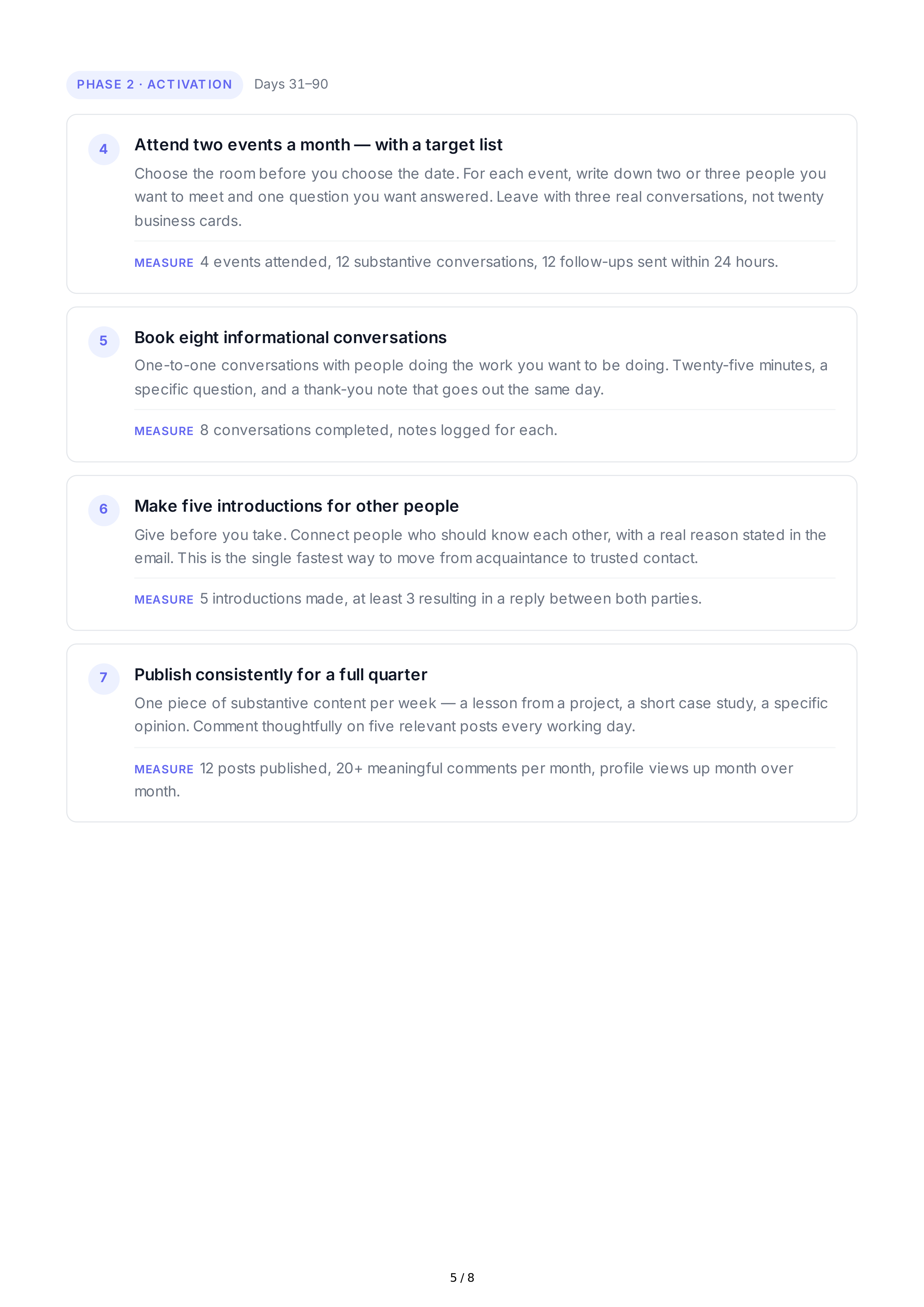
PHASE
2 ·
ACT IVAT ION
Days
31–90
4
Attend
two
events
a
month
—
with
a
target
list
Choose
the
room
before
you
choose
the
date
.
For
each
event
,
write
down
two
or
three
people
you
want
to
meet
and
one
question
you
want
answered
.
Leave
with
three
real
conversations
,
not
twenty
business
cards
.
MEASURE
4
events
attended
, 12
substantive
conversations
, 12
follow
-
ups
sent
within
24
hours
.
5
Book
eight
informational
conversations
One
-
to
-
one
conversations
with
people
doing
the
work
you
want
to
be
doing
.
Twenty
-
five
minutes
,
a
specific
question
,
and
a
thank
-
you
note
that
goes
out
the
same
day
.
MEASURE
8
conversations
completed
,
notes
logged
for
each
.
6
Make
five
introductions
for
other
people
Give
before
you
take
.
Connect
people
who
should
know
each
other
,
with
a
real
reason
stated
in
the
email
.
This
is
the
single
fastest
way
to
move
from
acquaintance
to
trusted
contact
.
MEASURE
5
introductions
made
,
at
least
3
resulting
in
a
reply
between
both
parties
.
7
Publish
consistently
for
a
full
quarter
One
piece
of
substantive
content
per
week
—
a
lesson
from
a
project
,
a
short
case
study
,
a
specific
opinion
.
Comment
thoughtfully
on
five
relevant
posts
every
working
day
.
MEASURE
12
posts
published
, 20+
meaningful
comments
per
month
,
profile
views
up
month
over
month
.
5 / 8
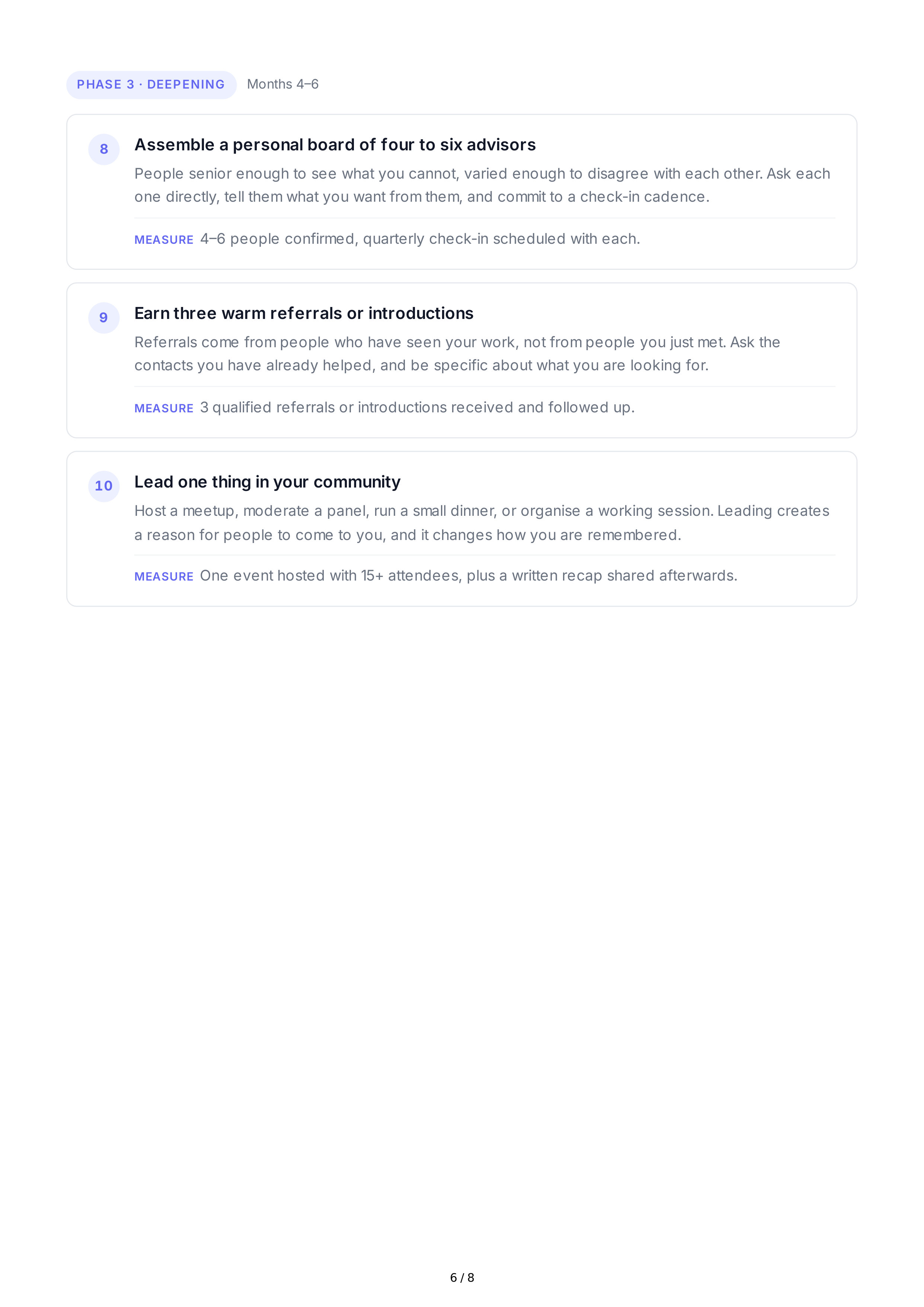
PHASE
3 ·
DEEPENING
Months
4–6
8
Assemble
a
personal
board
of
four
to
six
advisors
People
senior
enough
to
see
what
you
cannot
,
varied
enough
to
disagree
with
each
other
.
Ask
each
one
directly
,
tell
them
what
you
want
from
them
,
and
commit
to
a
check
-
in
cadence
.
MEASURE
4–6
people
confirmed
,
quarterly
check
-
in
scheduled
with
each
.
9
Earn
three
warm
referrals
or
introductions
Referrals
come
from
people
who
have
seen
your
work
,
not
from
people
you
just
met
.
Ask
the
contacts
you
have
already
helped
,
and
be
specific
about
what
you
are
looking
for
.
MEASURE
3
qualified
referrals
or
introductions
received
and
followed
up
.
10
Lead
one
thing
in
your
community
Host
a
meetup
,
moderate
a
panel
,
run
a
small
dinner
,
or
organise
a
working
session
.
Leading
creates
a
reason
for
people
to
come
to
you
,
and
it
changes
how
you
are
remembered
.
MEASURE
One
event
hosted
with
15+
attendees
,
plus
a
written
recap
shared
afterwards
.
6 / 8
PHASE
4 ·
COMPOUNDING
Months
7–12
11
Deliver
one
substantial
piece
of
public
work
A
conference
talk
,
a
long
-
form
essay
,
an
open
-
source
release
,
or
a
detailed
industry
breakdown
.
One
strong
artefact
does
more
for
your
network
than
a
year
of
coffee
chats
.
MEASURE
One
published
or
presented
artefact
,
with
inbound
conversations
resulting
from
it
.
12
Mentor
two
people
junior
to
you
Mentoring
builds
the
other
half
of
a
network
—
the
people
who
will
be
senior
in
ten
years
.
Two
ongoing
relationships
,
monthly
,
with
real
commitment
on
both
sides
.
MEASURE
2
mentoring
relationships
active
for
at
least
two
consecutive
quarters
.
13
Hold
a
quarterly
cadence
with
your
top
25
contacts
The
people
who
matter
most
should
hear
from
you
four
times
a
year
,
with
something
useful
attached
each
time
—
an
article
,
an
introduction
,
a
genuine
question
.
MEASURE
25
contacts
touched
each
quarter
;
zero
gaps
longer
than
120
days
in
the
core
group
.
14
Run
an
annual
network
audit
and
rebalance
Review
the
full
network
once
a
year
:
who
has
gone
quiet
,
which
relationships
have
turned
one
-
sided
,
which
industries
or
functions
are
still
missing
,
and
what
you
owe
people
.
MEASURE
Written
audit
completed
, 5
specific
relationship
actions
defined
for
the
next
quarter
.
7 / 8
PART
3 —
H O W
T O
M E AS U RE
PRO G RE S S
By
day
90
Track
these
six
numbers
.
They
are
the
leading
indicators
that
the
network
is
actually
growing
.
MET RIC
WHAT
IT
T ELLS
YOU
TARG ET
New
conversations
First
-
time
one
-
to
-
one
conversations
with
people
outside
your
current
circle
20
Reconnected
contacts
Dormant
relationships
genuinely
revived
,
not
just
messaged
10
Introductions
made
Value
you
created
for
other
people
,
with
no
ask
attached
5
Follow
-
ups
within
24
hours
How
disciplined
your
process
is
—
the
clearest
predictor
of
goodwill
90%
Referrals
or
warm
intros
received
Whether
your
network
is
producing
opportunities
,
not
just
contacts
3
Content
published
Whether
your
expertise
is
visible
to
people
who
have
not
met
you
12
8 / 8