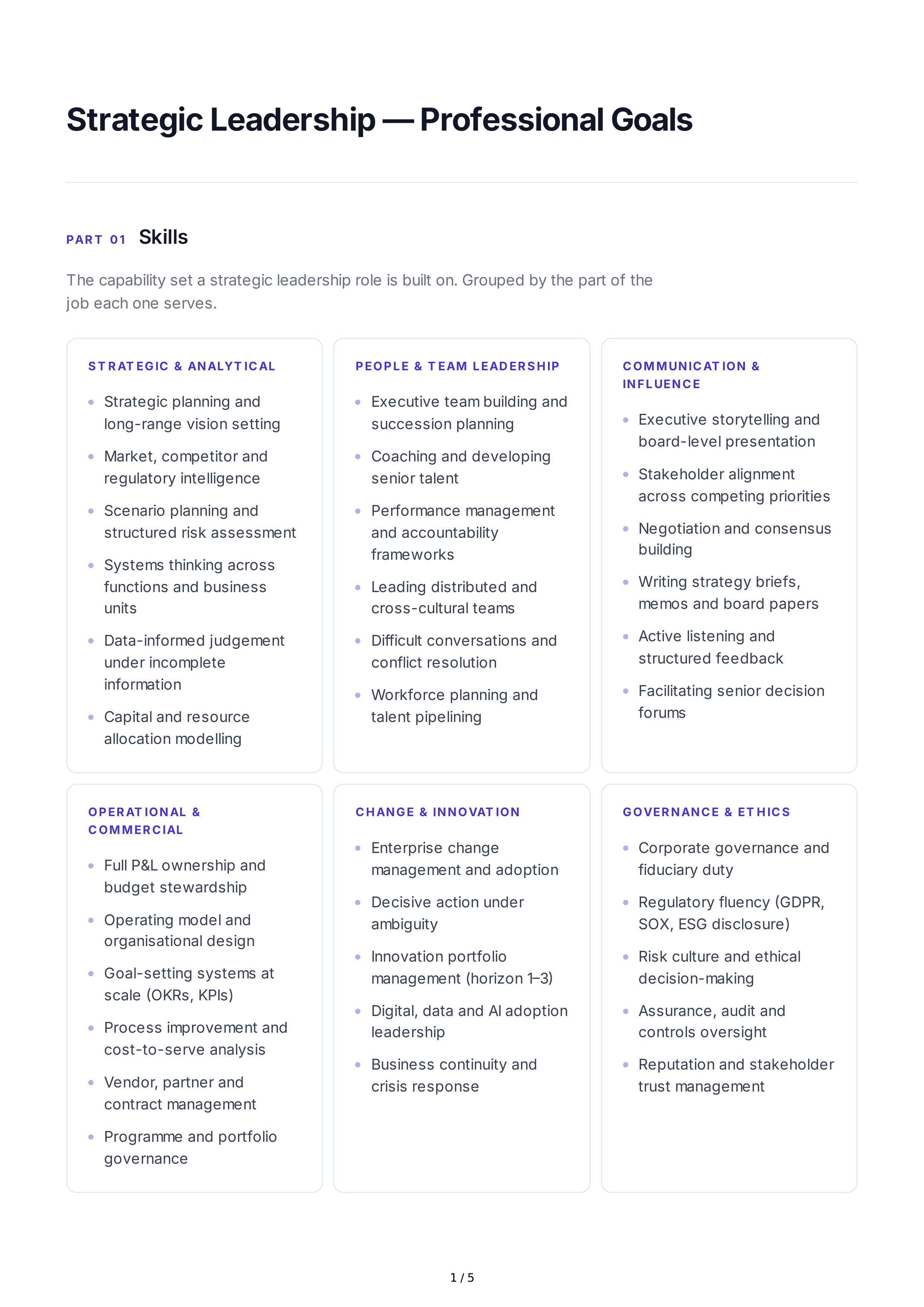
Strategic
Leadership
—
Professional
Goals
PAR T
0 1
Skills
The
capability
set
a
strategic
leadership
role
is
built
on
.
Grouped
by
the
part
of
the
job
each
one
serves
.
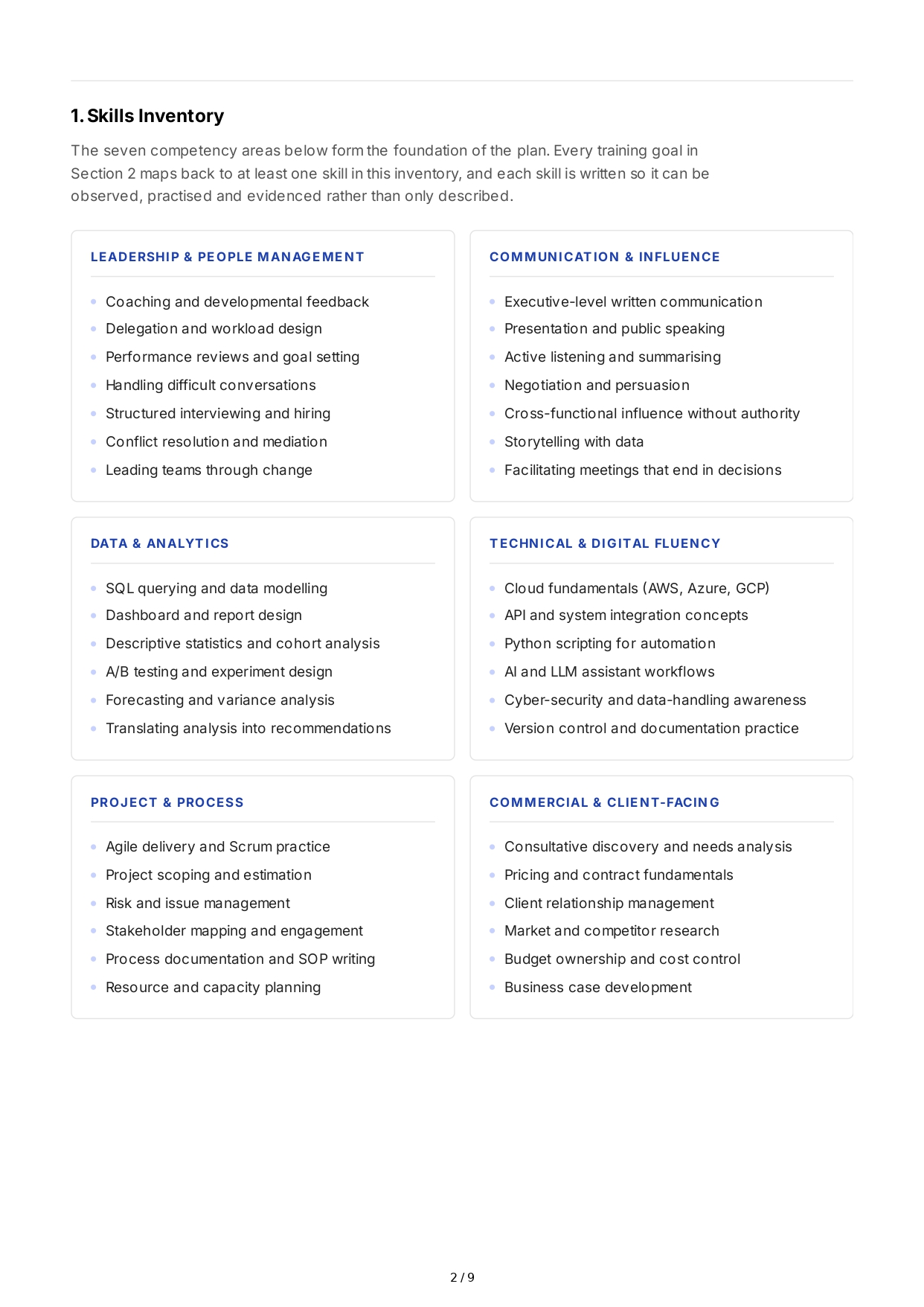
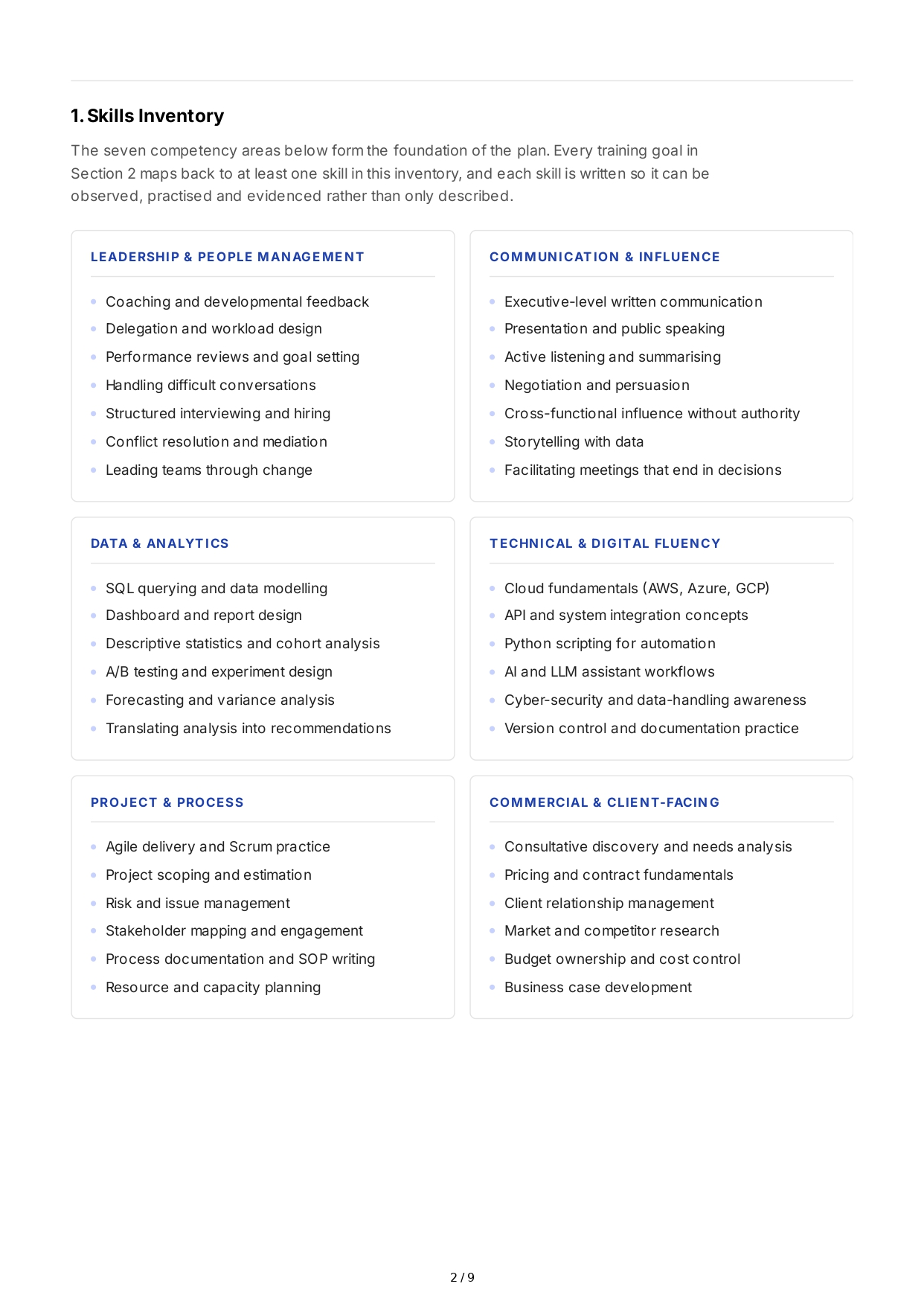
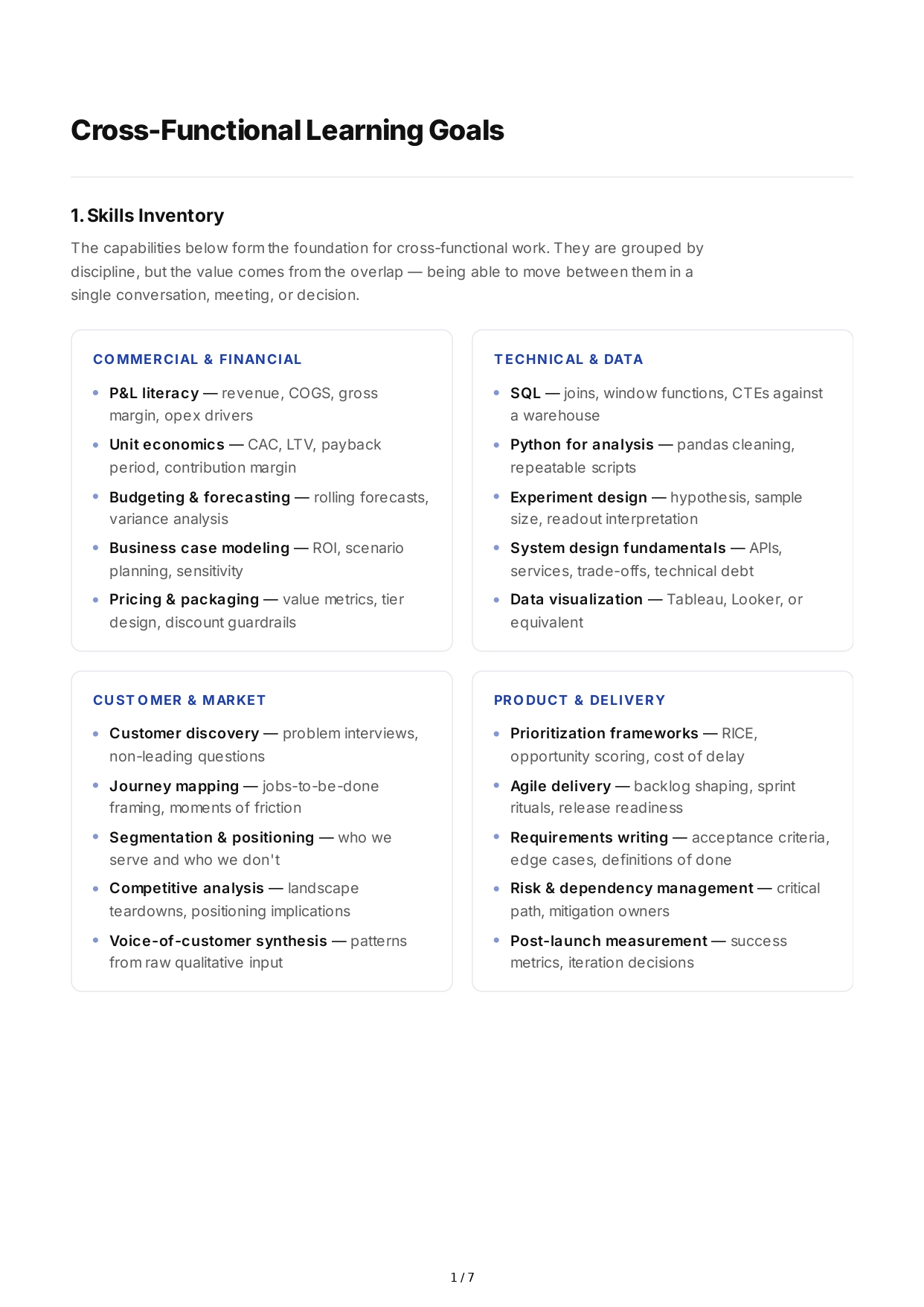
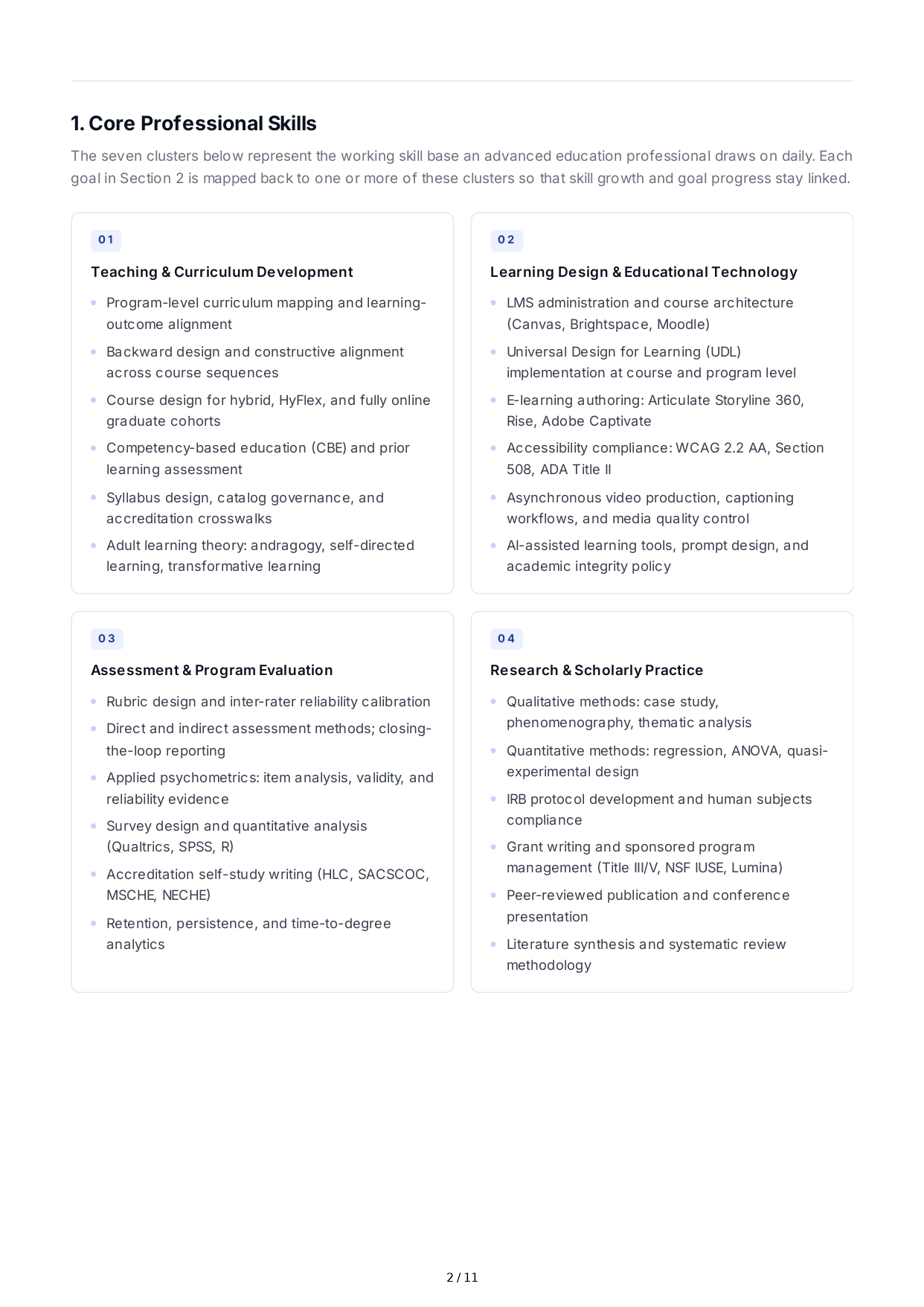
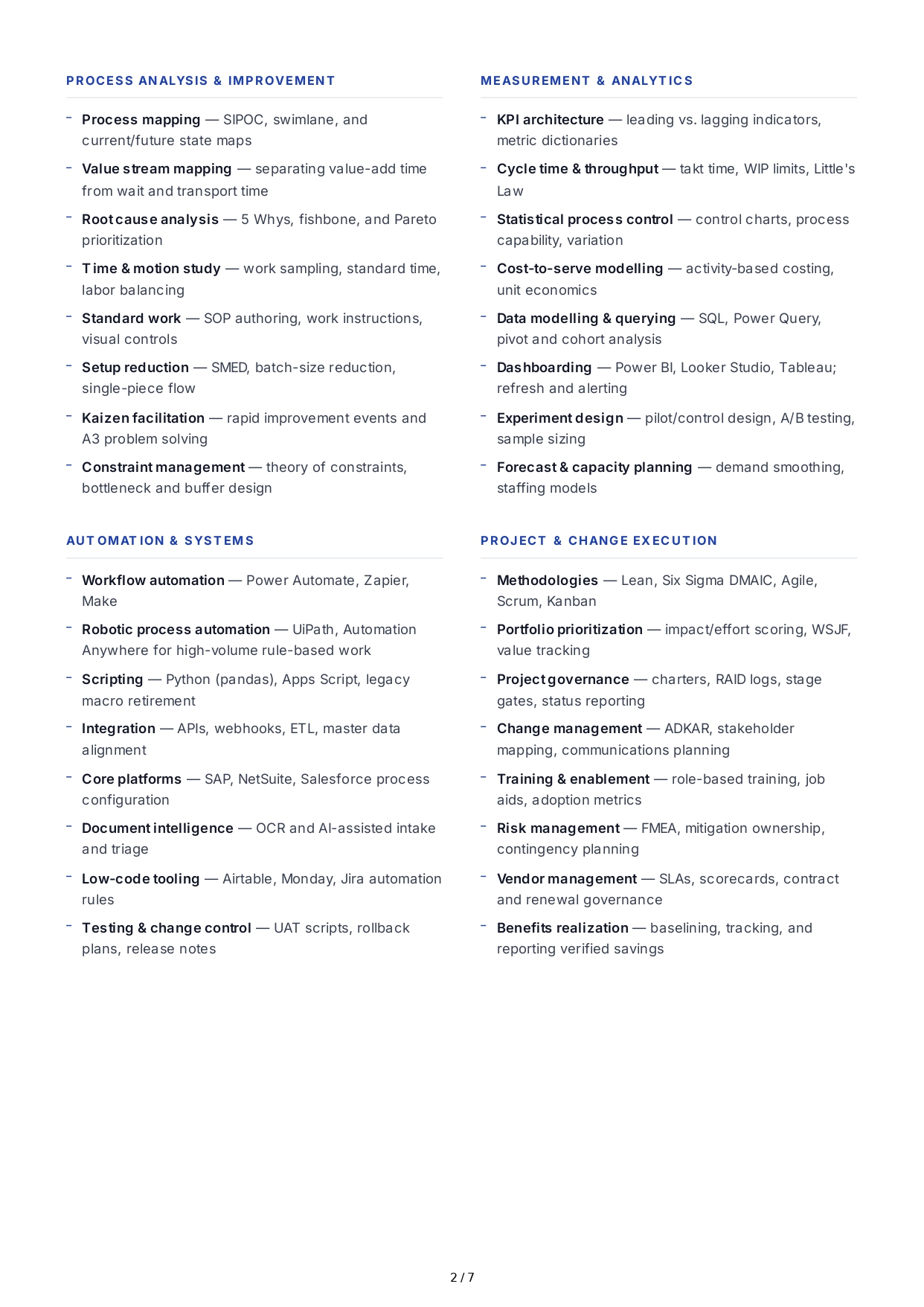
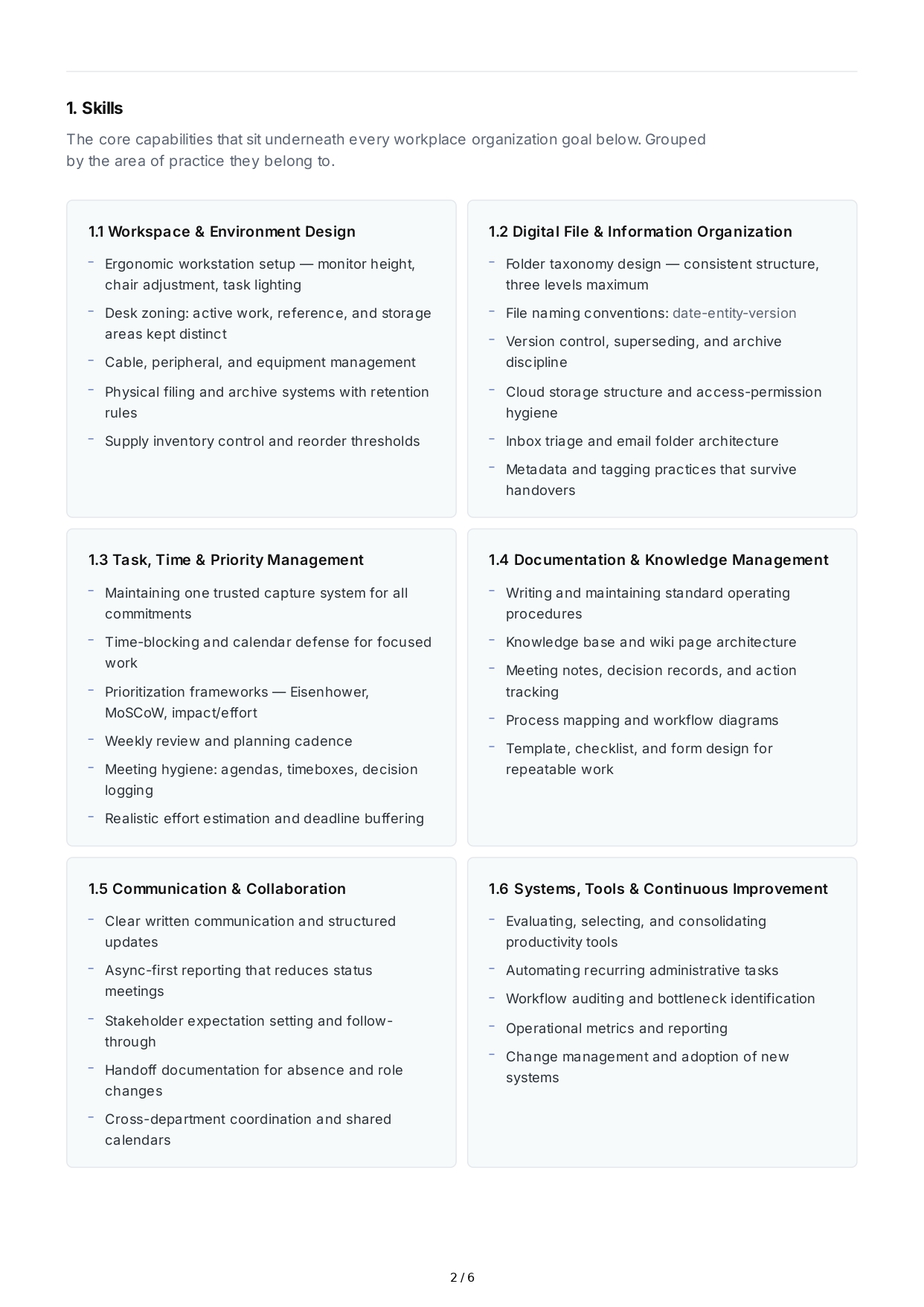
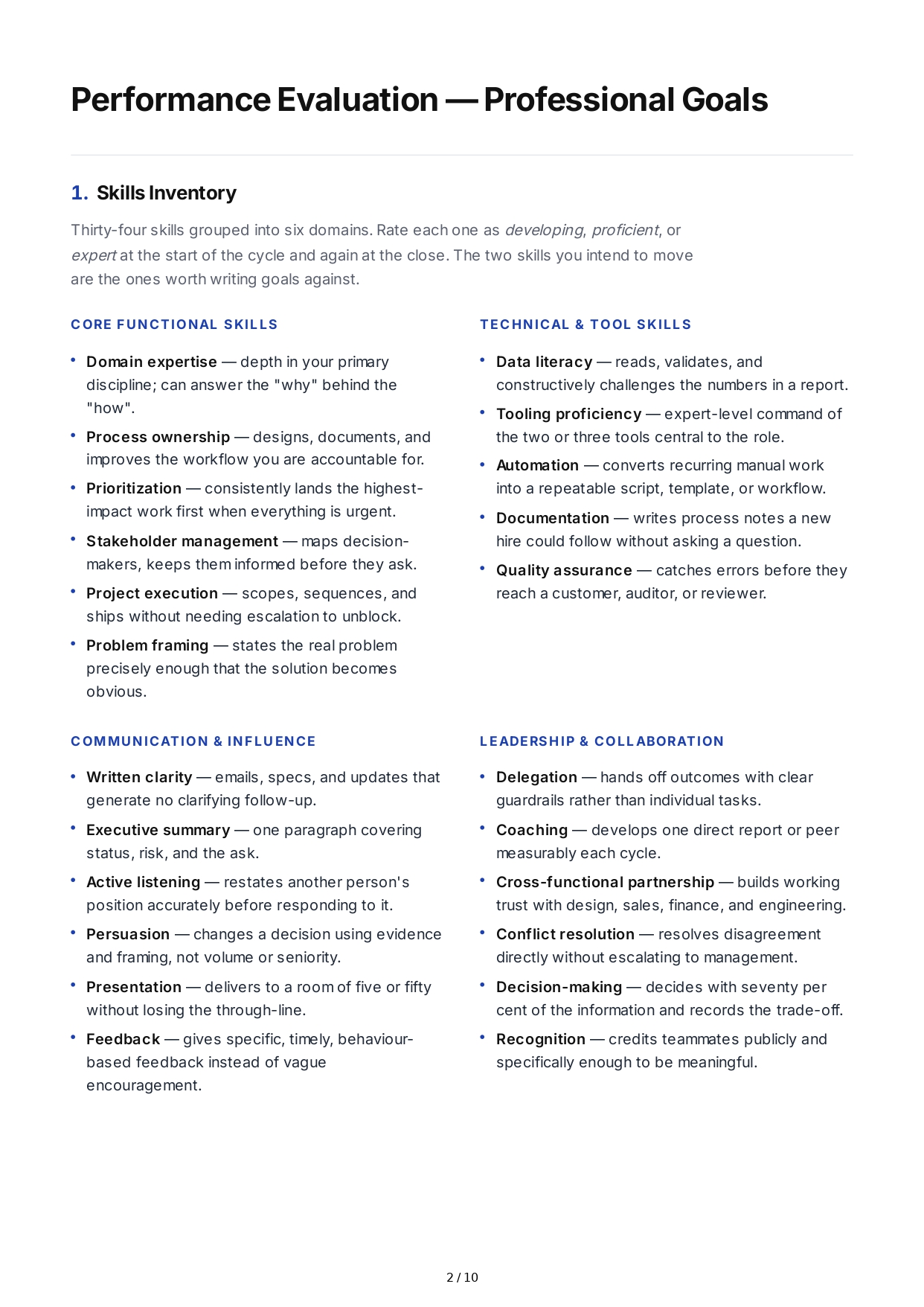
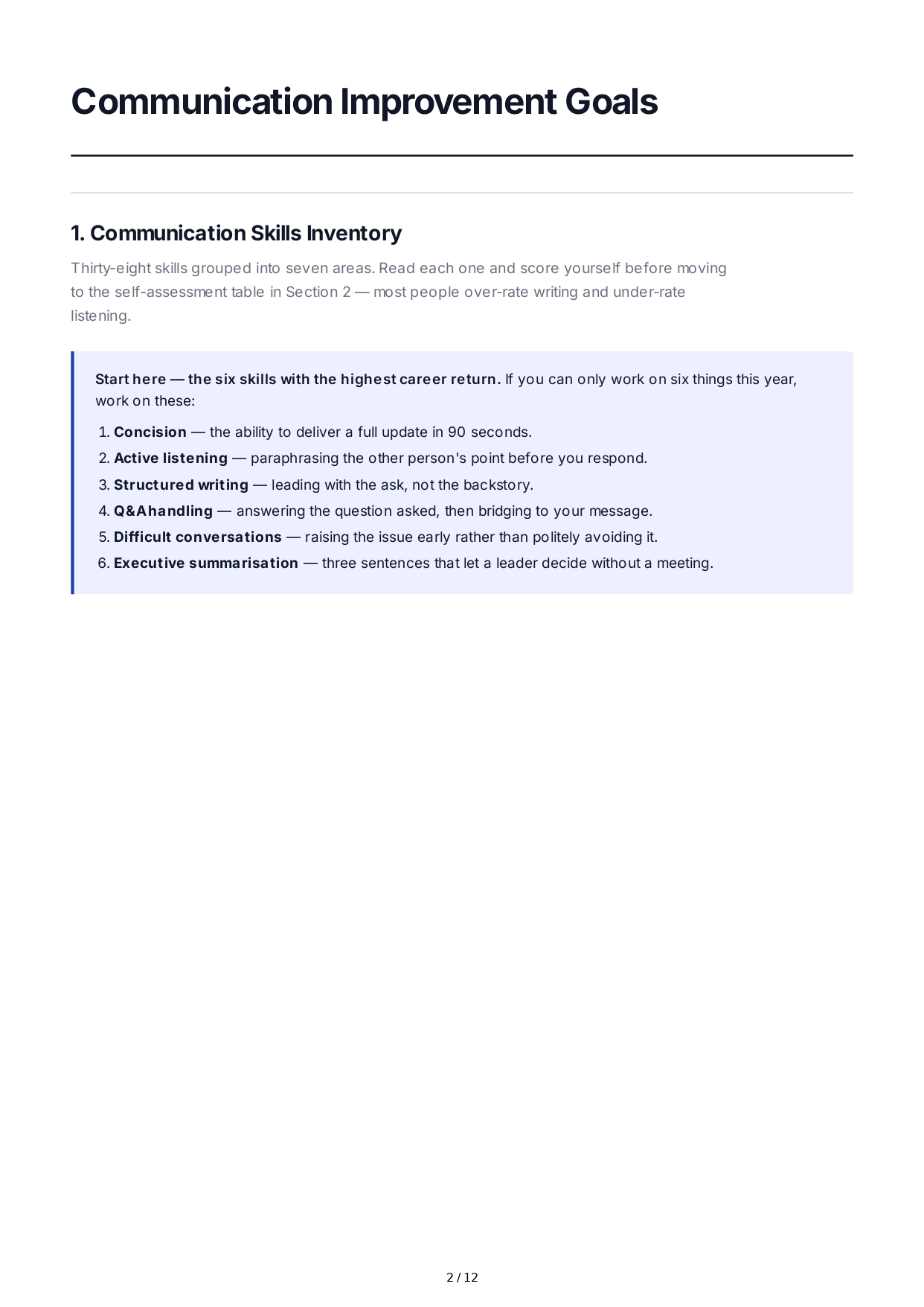
S T RAT EGIC
&
ANALYT IC AL
P EOP L E
&
T EAM
L EAD ERS HIP
C OMMUNIC AT ION
&
INFL UENC E
OP ERAT IONAL
&
C OMMERC IAL
C HANGE
&
INNOVAT ION
GOVERNANC E
&
ET HIC S
Strategic
planning
and
long
-
range
vision
setting
Market
,
competitor
and
regulatory
intelligence
Scenario
planning
and
structured
risk
assessment
Systems
thinking
across
functions
and
business
units
Data
-
informed
judgement
under
incomplete
information
Capital
and
resource
allocation
modelling
Executive
team
building
and
succession
planning
Coaching
and
developing
senior
talent
Performance
management
and
accountability
frameworks
Leading
distributed
and
cross
-
cultural
teams
Difficult
conversations
and
conflict
resolution
Workforce
planning
and
talent
pipelining
Executive
storytelling
and
board
-
level
presentation
Stakeholder
alignment
across
competing
priorities
Negotiation
and
consensus
building
Writing
strategy
briefs
,
memos
and
board
papers
Active
listening
and
structured
feedback
Facilitating
senior
decision
forums
Full
P
&
L
ownership
and
budget
stewardship
Operating
model
and
organisational
design
Goal
-
setting
systems
at
scale
(
OKRs
,
KPIs
)
Process
improvement
and
cost
-
to
-
serve
analysis
Vendor
,
partner
and
contract
management
Programme
and
portfolio
governance
Enterprise
change
management
and
adoption
Decisive
action
under
ambiguity
Innovation
portfolio
management
(
horizon
1–3)
Digital
,
data
and
AI
adoption
leadership
Business
continuity
and
crisis
response
Corporate
governance
and
fiduciary
duty
Regulatory
fluency
(
GDPR
,
SOX
,
ESG
disclosure
)
Risk
culture
and
ethical
decision
-
making
Assurance
,
audit
and
controls
oversight
Reputation
and
stakeholder
trust
management
1 / 5
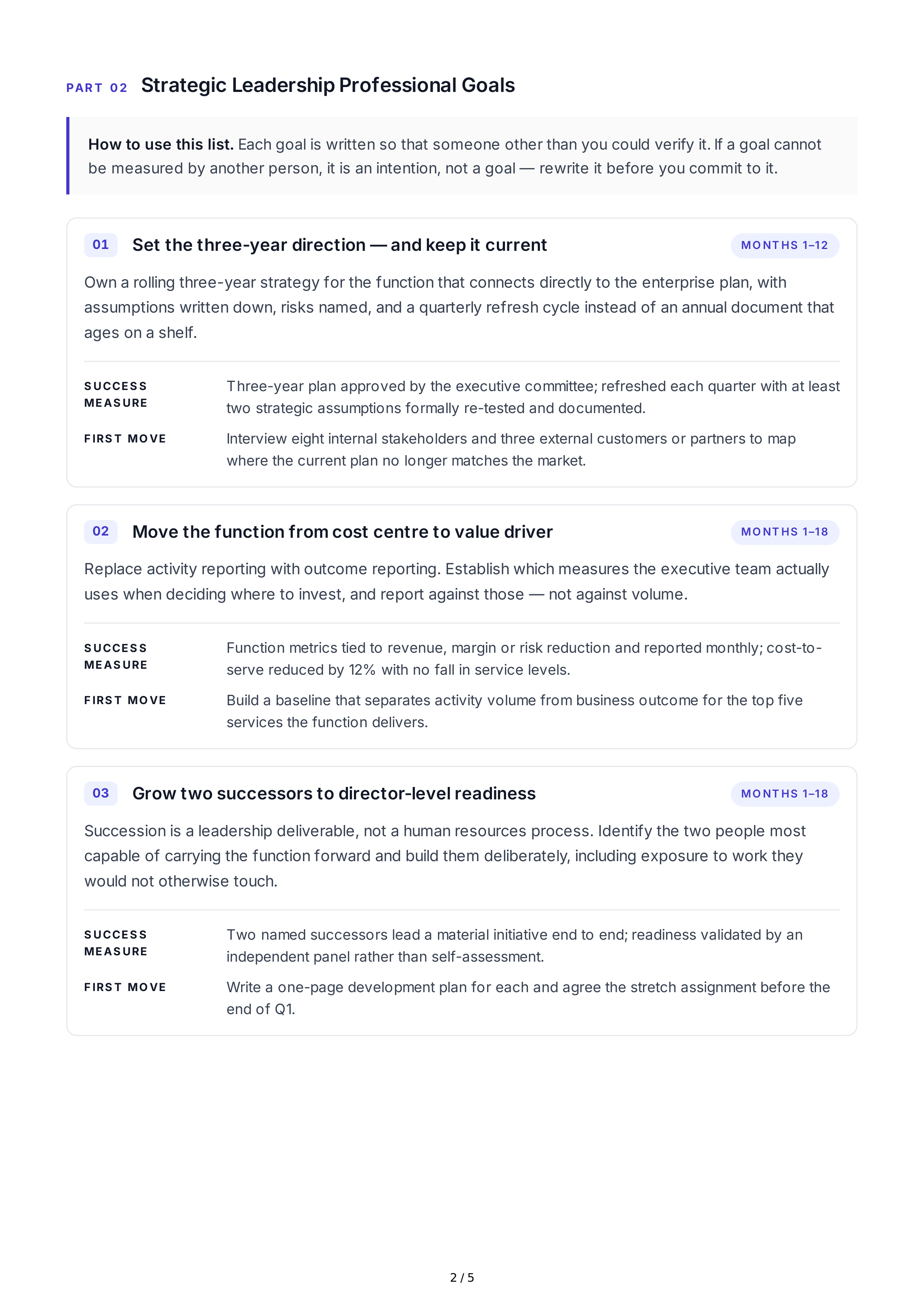
PAR T
0 2
Strategic
Leadership
Professional
Goals
How
to
use
this
list
.
Each
goal
is
written
so
that
someone
other
than
you
could
verify
it
.
If
a
goal
cannot
be
measured
by
another
person
,
it
is
an
intention
,
not
a
goal
—
rewrite
it
before
you
commit
to
it
.
01
Set
the
three
-
year
direction
—
and
keep
it
current
MO NT HS
1–12
Own
a
rolling
three
-
year
strategy
for
the
function
that
connects
directly
to
the
enterprise
plan
,
with
assumptions
written
down
,
risks
named
,
and
a
quarterly
refresh
cycle
instead
of
an
annual
document
that
ages
on
a
shelf
.
S UCCES S
MEAS URE
Three
-
year
plan
approved
by
the
executive
committee
;
refreshed
each
quarter
with
at
least
two
strategic
assumptions
formally
re
-
tested
and
documented
.
F IRS T
MO VE
Interview
eight
internal
stakeholders
and
three
external
customers
or
partners
to
map
where
the
current
plan
no
longer
matches
the
market
.
02
Move
the
function
from
cost
centre
to
value
driver
MO NT HS
1–18
Replace
activity
reporting
with
outcome
reporting
.
Establish
which
measures
the
executive
team
actually
uses
when
deciding
where
to
invest
,
and
report
against
those
—
not
against
volume
.
S UCCES S
MEAS URE
Function
metrics
tied
to
revenue
,
margin
or
risk
reduction
and
reported
monthly
;
cost
-
to
-
serve
reduced
by
12%
with
no
fall
in
service
levels
.
F IRS T
MO VE
Build
a
baseline
that
separates
activity
volume
from
business
outcome
for
the
top
five
services
the
function
delivers
.
03
Grow
two
successors
to
director
-
level
readiness
MO NT HS
1–18
Succession
is
a
leadership
deliverable
,
not
a
human
resources
process
.
Identify
the
two
people
most
capable
of
carrying
the
function
forward
and
build
them
deliberately
,
including
exposure
to
work
they
would
not
otherwise
touch
.
S UCCES S
MEAS URE
Two
named
successors
lead
a
material
initiative
end
to
end
;
readiness
validated
by
an
independent
panel
rather
than
self
-
assessment
.
F IRS T
MO VE
Write
a
one
-
page
development
plan
for
each
and
agree
the
stretch
assignment
before
the
end
of
Q
1.
2 / 5
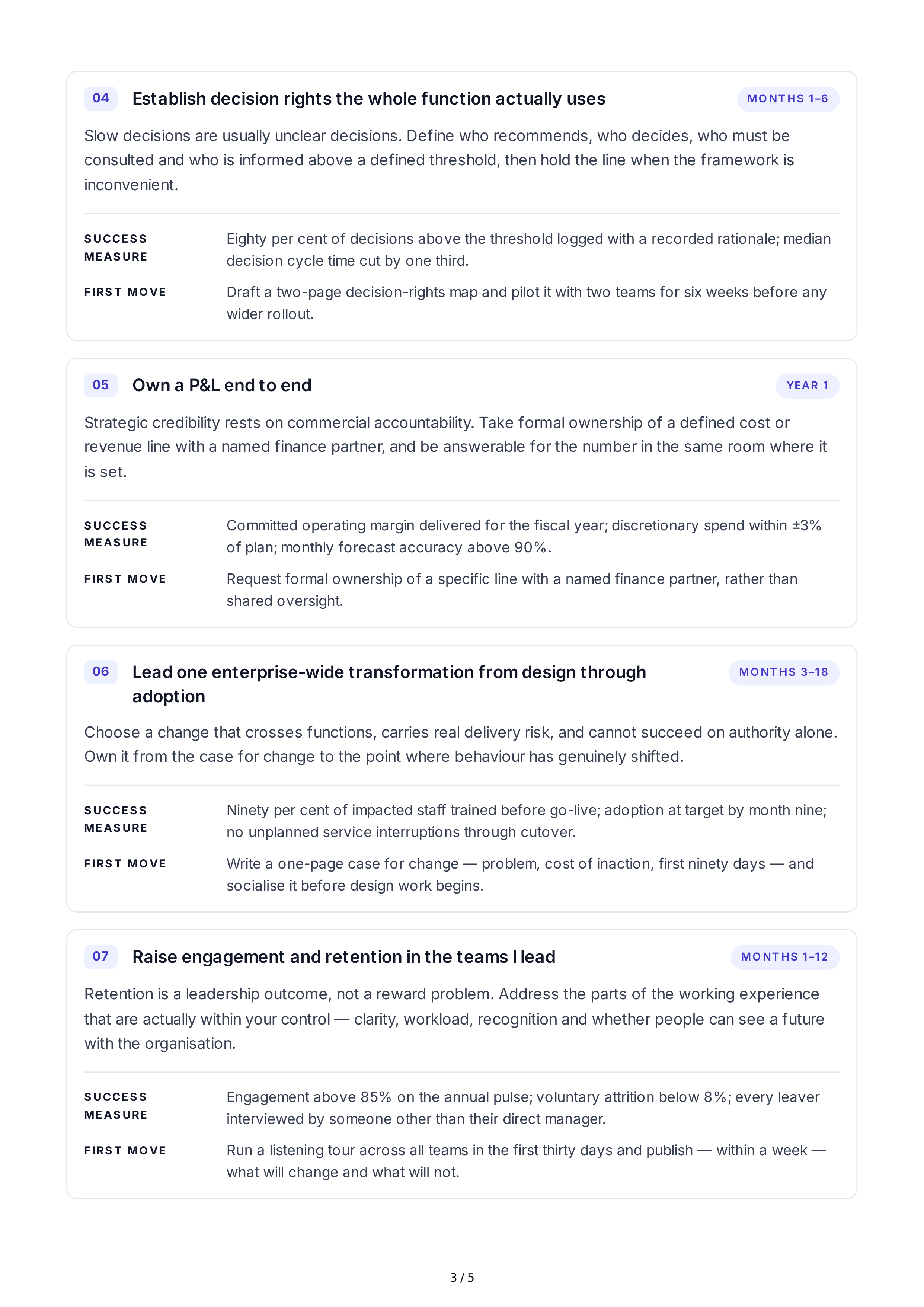
04
Establish
decision
rights
the
whole
function
actually
uses
MO NT HS
1–6
Slow
decisions
are
usually
unclear
decisions
.
Define
who
recommends
,
who
decides
,
who
must
be
consulted
and
who
is
informed
above
a
defined
threshold
,
then
hold
the
line
when
the
framework
is
inconvenient
.
S UCCES S
MEAS URE
Eighty
per
cent
of
decisions
above
the
threshold
logged
with
a
recorded
rationale
;
median
decision
cycle
time
cut
by
one
third
.
F IRS T
MO VE
Draft
a
two
-
page
decision
-
rights
map
and
pilot
it
with
two
teams
for
six
weeks
before
any
wider
rollout
.
05
Own
a
P
&
L
end
to
end
YEAR
1
Strategic
credibility
rests
on
commercial
accountability
.
Take
formal
ownership
of
a
defined
cost
or
revenue
line
with
a
named
finance
partner
,
and
be
answerable
for
the
number
in
the
same
room
where
it
is
set
.
S UCCES S
MEAS URE
Committed
operating
margin
delivered
for
the
fiscal
year
;
discretionary
spend
within
±3%
of
plan
;
monthly
forecast
accuracy
above
90%.
F IRS T
MO VE
Request
formal
ownership
of
a
specific
line
with
a
named
finance
partner
,
rather
than
shared
oversight
.
06
Lead
one
enterprise
-
wide
transformation
from
design
through
adoption
MO NT HS
3–18
Choose
a
change
that
crosses
functions
,
carries
real
delivery
risk
,
and
cannot
succeed
on
authority
alone
.
Own
it
from
the
case
for
change
to
the
point
where
behaviour
has
genuinely
shifted
.
S UCCES S
MEAS URE
Ninety
per
cent
of
impacted
staff
trained
before
go
-
live
;
adoption
at
target
by
month
nine
;
no
unplanned
service
interruptions
through
cutover
.
F IRS T
MO VE
Write
a
one
-
page
case
for
change
—
problem
,
cost
of
inaction
,
first
ninety
days
—
and
socialise
it
before
design
work
begins
.
07
Raise
engagement
and
retention
in
the
teams
I
lead
MO NT HS
1–12
Retention
is
a
leadership
outcome
,
not
a
reward
problem
.
Address
the
parts
of
the
working
experience
that
are
actually
within
your
control
—
clarity
,
workload
,
recognition
and
whether
people
can
see
a
future
with
the
organisation
.
S UCCES S
MEAS URE
Engagement
above
85%
on
the
annual
pulse
;
voluntary
attrition
below
8%;
every
leaver
interviewed
by
someone
other
than
their
direct
manager
.
F IRS T
MO VE
Run
a
listening
tour
across
all
teams
in
the
first
thirty
days
and
publish
—
within
a
week
—
what
will
change
and
what
will
not
.
3 / 5
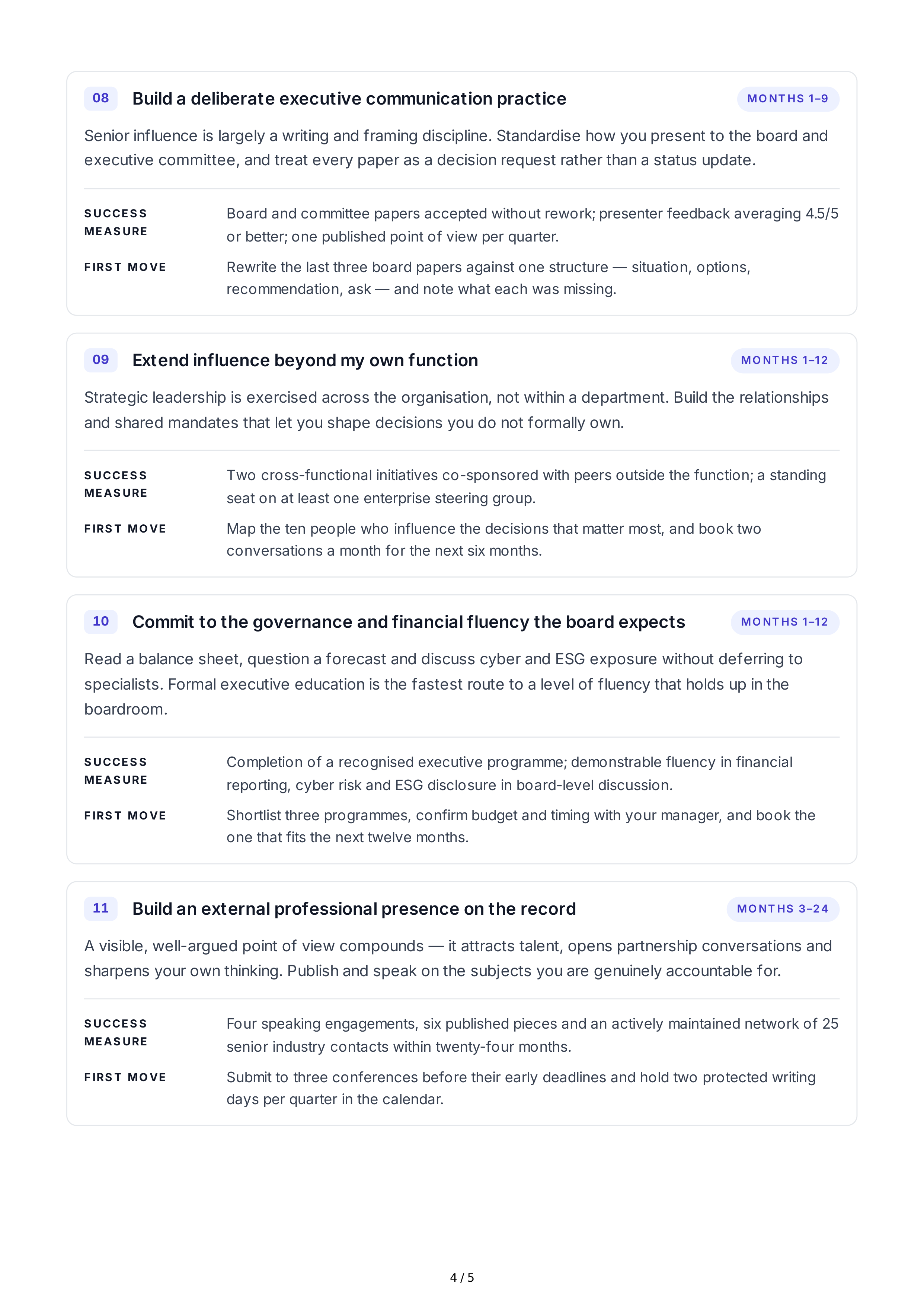
08
Build
a
deliberate
executive
communication
practice
MO NT HS
1–9
Senior
influence
is
largely
a
writing
and
framing
discipline
.
Standardise
how
you
present
to
the
board
and
executive
committee
,
and
treat
every
paper
as
a
decision
request
rather
than
a
status
update
.
S UCCES S
MEAS URE
Board
and
committee
papers
accepted
without
rework
;
presenter
feedback
averaging
4.5/5
or
better
;
one
published
point
of
view
per
quarter
.
F IRS T
MO VE
Rewrite
the
last
three
board
papers
against
one
structure
—
situation
,
options
,
recommendation
,
ask
—
and
note
what
each
was
missing
.
09
Extend
influence
beyond
my
own
function
MO NT HS
1–12
Strategic
leadership
is
exercised
across
the
organisation
,
not
within
a
department
.
Build
the
relationships
and
shared
mandates
that
let
you
shape
decisions
you
do
not
formally
own
.
S UCCES S
MEAS URE
Two
cross
-
functional
initiatives
co
-
sponsored
with
peers
outside
the
function
;
a
standing
seat
on
at
least
one
enterprise
steering
group
.
F IRS T
MO VE
Map
the
ten
people
who
influence
the
decisions
that
matter
most
,
and
book
two
conversations
a
month
for
the
next
six
months
.
10
Commit
to
the
governance
and
financial
fluency
the
board
expects
MO NT HS
1–12
Read
a
balance
sheet
,
question
a
forecast
and
discuss
cyber
and
ESG
exposure
without
deferring
to
specialists
.
Formal
executive
education
is
the
fastest
route
to
a
level
of
fluency
that
holds
up
in
the
boardroom
.
S UCCES S
MEAS URE
Completion
of
a
recognised
executive
programme
;
demonstrable
fluency
in
financial
reporting
,
cyber
risk
and
ESG
disclosure
in
board
-
level
discussion
.
F IRS T
MO VE
Shortlist
three
programmes
,
confirm
budget
and
timing
with
your
manager
,
and
book
the
one
that
fits
the
next
twelve
months
.
11
Build
an
external
professional
presence
on
the
record
MO NT HS
3–24
A
visible
,
well
-
argued
point
of
view
compounds
—
it
attracts
talent
,
opens
partnership
conversations
and
sharpens
your
own
thinking
.
Publish
and
speak
on
the
subjects
you
are
genuinely
accountable
for
.
S UCCES S
MEAS URE
Four
speaking
engagements
,
six
published
pieces
and
an
actively
maintained
network
of
25
senior
industry
contacts
within
twenty
-
four
months
.
F IRS T
MO VE
Submit
to
three
conferences
before
their
early
deadlines
and
hold
two
protected
writing
days
per
quarter
in
the
calendar
.
4 / 5

12
Protect
the
capacity
to
lead
O NGO ING
Strategic
work
is
the
first
thing
displaced
when
a
quarter
gets
hard
.
Defend
time
for
thinking
,
and
treat
your
own
workload
as
a
design
problem
rather
than
a
discipline
problem
.
S UCCES S
MEAS URE
Two
consecutive
quarters
with
planned
deep
-
work
blocks
intact
;
a
documented
quarterly
review
of
workload
,
energy
and
priorities
with
your
own
manager
.
F IRS T
MO VE
Audit
two
weeks
of
calendar
time
and
remove
the
bottom
20%
of
recurring
commitments
—
the
series
,
not
the
individual
meetings
.
5 / 5