CLIMATE RESEARCH
ANNOTATED BIBLIOGRAPHY
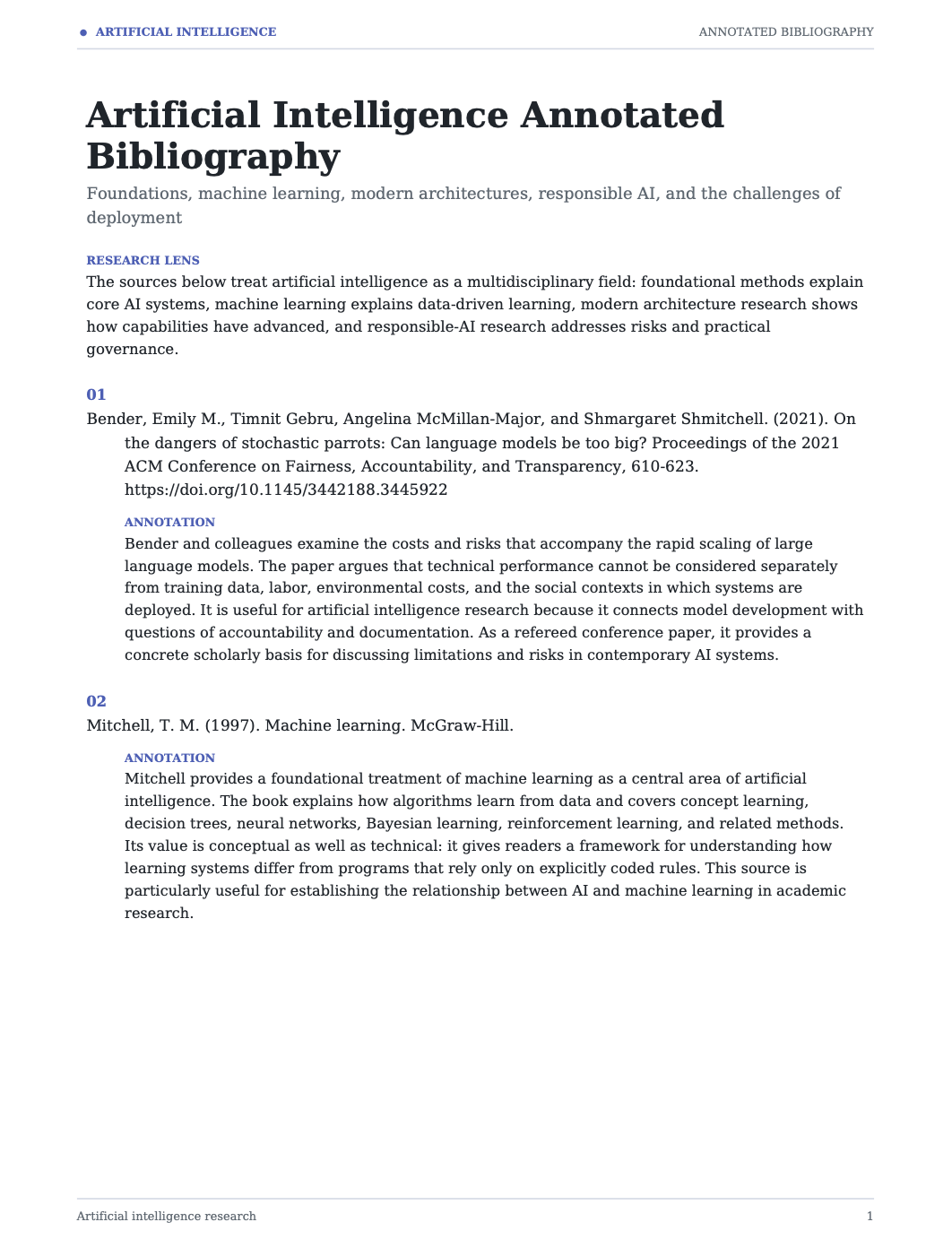
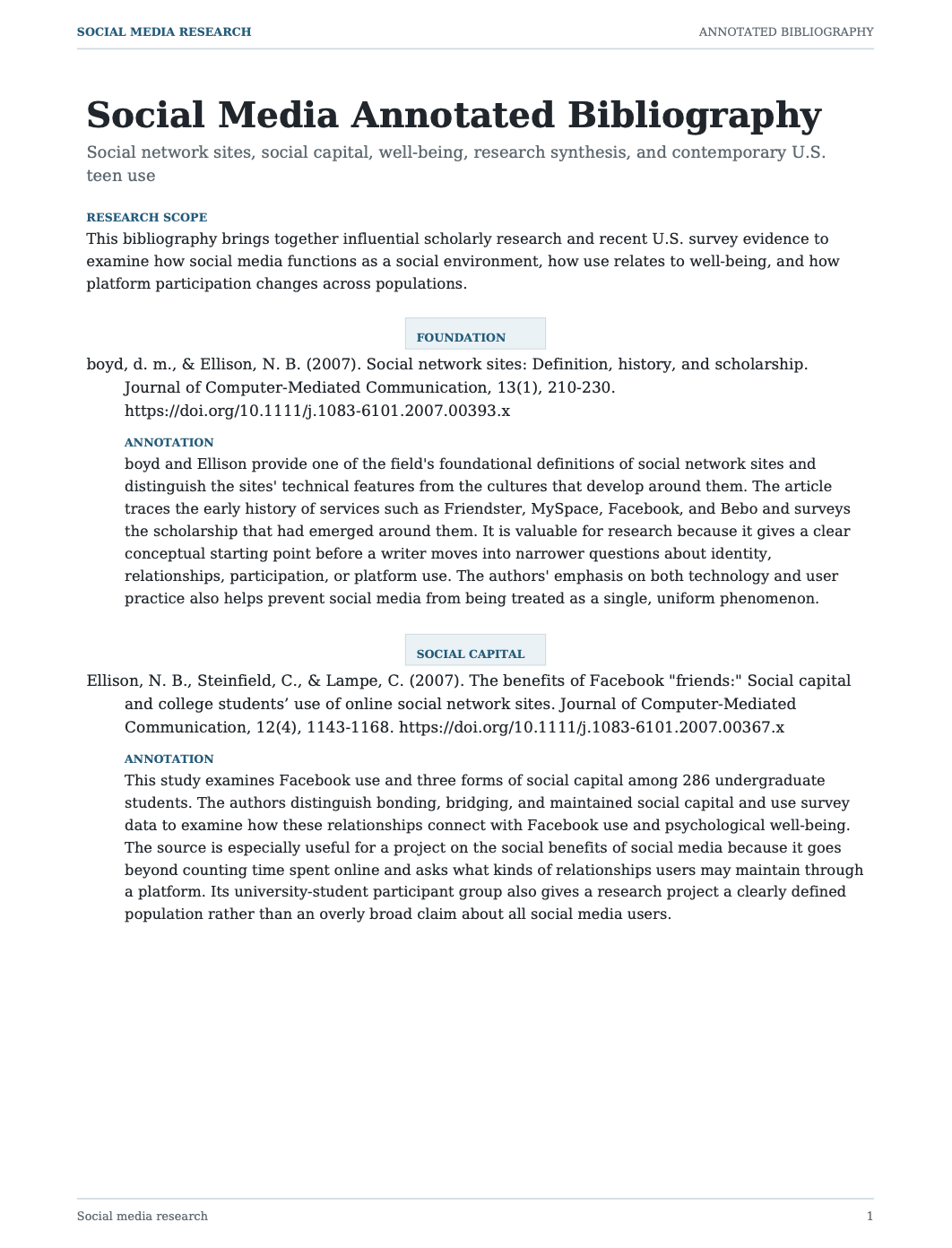
Climate change research
1
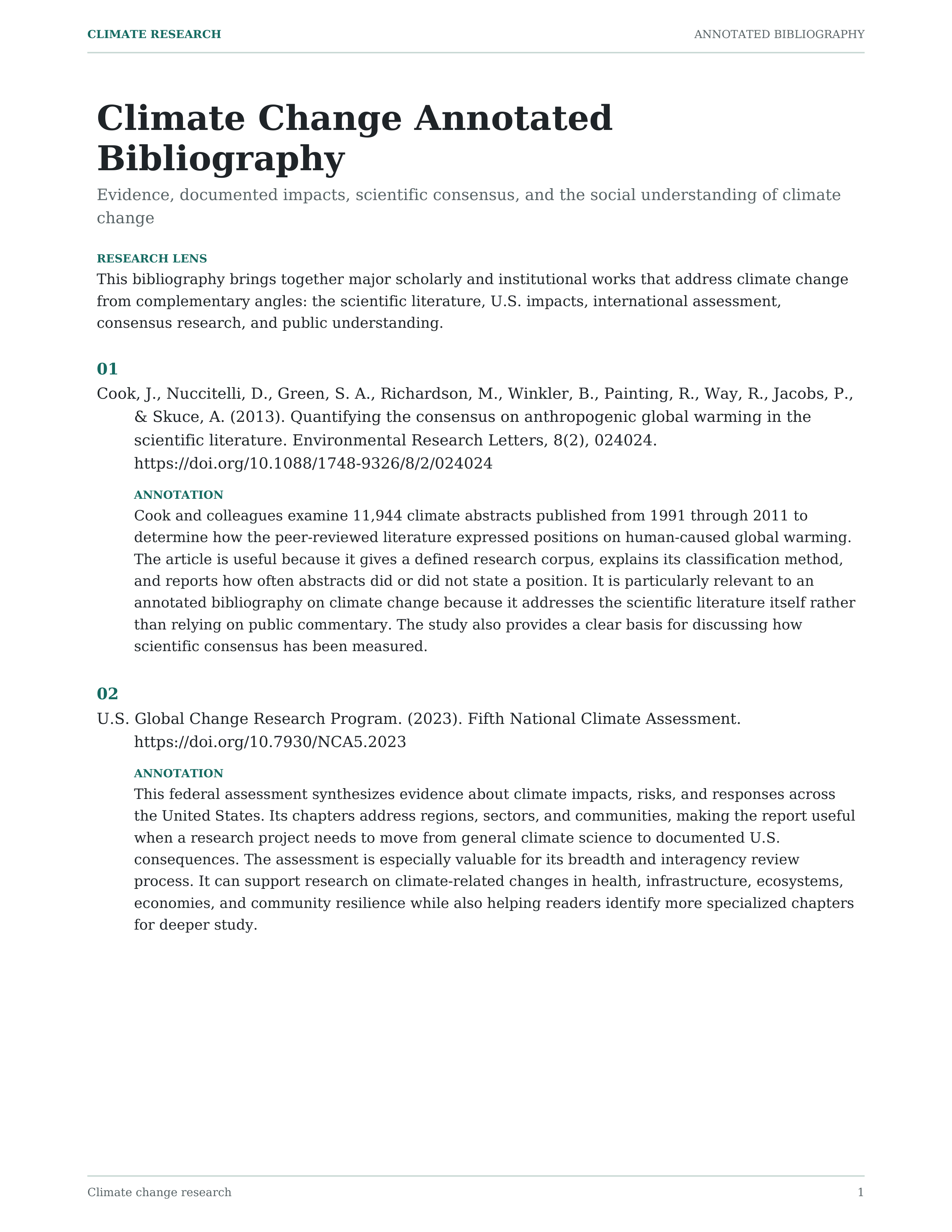
Climate Change Annotated
Bibliography
Evidence, documented impacts, scientific consensus, and the social understanding of climate
change
RESEARCH LENS
This bibliography brings together major scholarly and institutional works that address climate change
from complementary angles: the scientific literature, U.S. impacts, international assessment,
consensus research, and public understanding.
01
Cook, J., Nuccitelli, D., Green, S. A., Richardson, M., Winkler, B., Painting, R., Way, R., Jacobs, P.,
& Skuce, A. (2013). Quantifying the consensus on anthropogenic global warming in the
scientific literature. Environmental Research Letters, 8(2), 024024.
https://doi.org/10.1088/1748-9326/8/2/024024
ANNOTATION
Cook and colleagues examine 11,944 climate abstracts published from 1991 through 2011 to
determine how the peer-reviewed literature expressed positions on human-caused global warming.
The article is useful because it gives a defined research corpus, explains its classification method,
and reports how often abstracts did or did not state a position. It is particularly relevant to an
annotated bibliography on climate change because it addresses the scientific literature itself rather
than relying on public commentary. The study also provides a clear basis for discussing how
scientific consensus has been measured.
02
U.S. Global Change Research Program. (2023). Fifth National Climate Assessment.
https://doi.org/10.7930/NCA5.2023
ANNOTATION
This federal assessment synthesizes evidence about climate impacts, risks, and responses across
the United States. Its chapters address regions, sectors, and communities, making the report useful
when a research project needs to move from general climate science to documented U.S.
consequences. The assessment is especially valuable for its breadth and interagency review
process. It can support research on climate-related changes in health, infrastructure, ecosystems,
economies, and community resilience while also helping readers identify more specialized chapters
for deeper study.