SUBSTANCE USE RESEARCH / EVIDENCE
PAGE 4
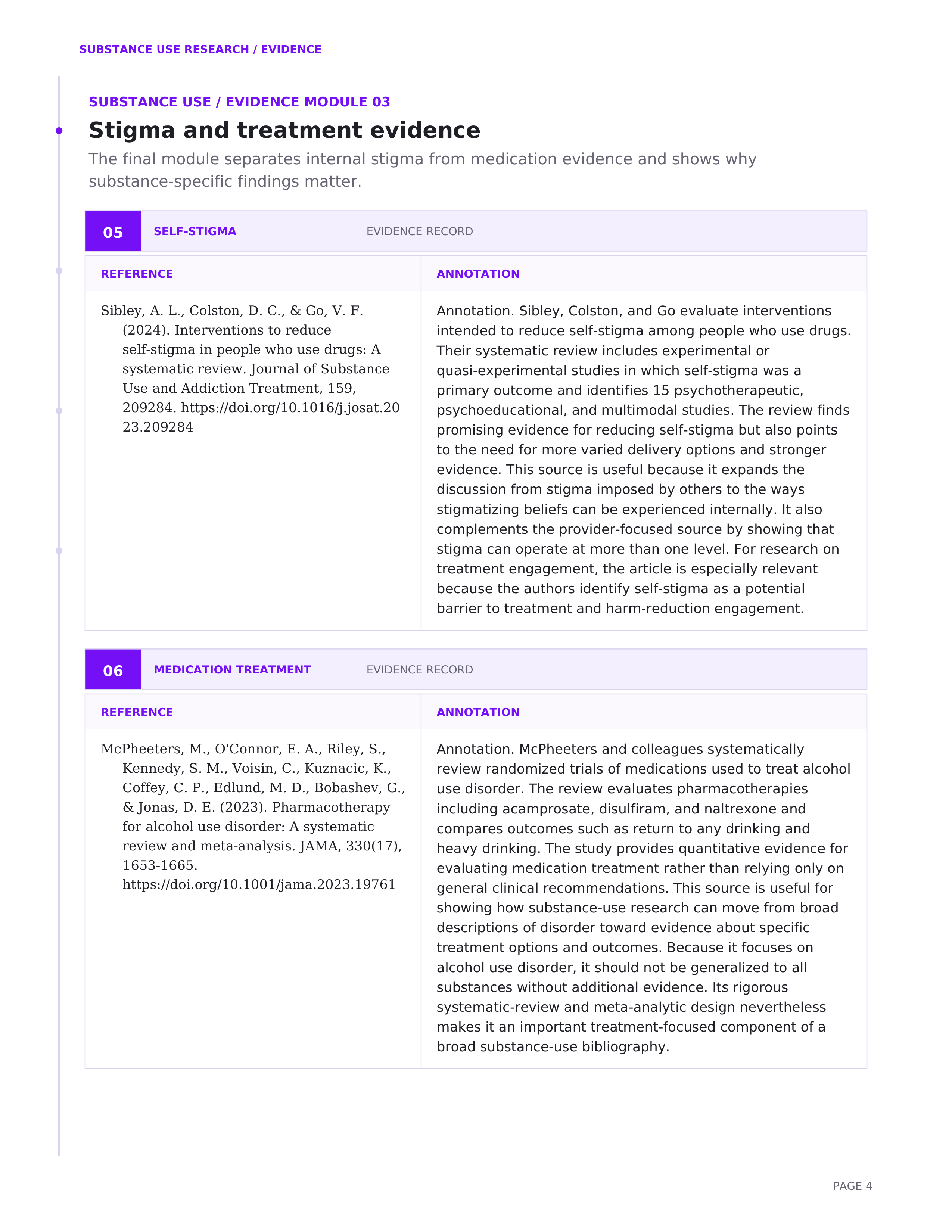
SUBSTANCE USE / EVIDENCE MODULE 03
Stigma and treatment evidence
The final module separates internal stigma from medication evidence and shows why
substance-specific findings matter.
05
SELF-STIGMA
EVIDENCE RECORD
REFERENCE
ANNOTATION
Sibley, A. L., Colston, D. C., & Go, V. F.
(2024). Interventions to reduce
self-stigma in people who use drugs: A
systematic review. Journal of Substance
Use and Addiction Treatment, 159,
209284. https://doi.org/10.1016/j.josat.20
23.209284
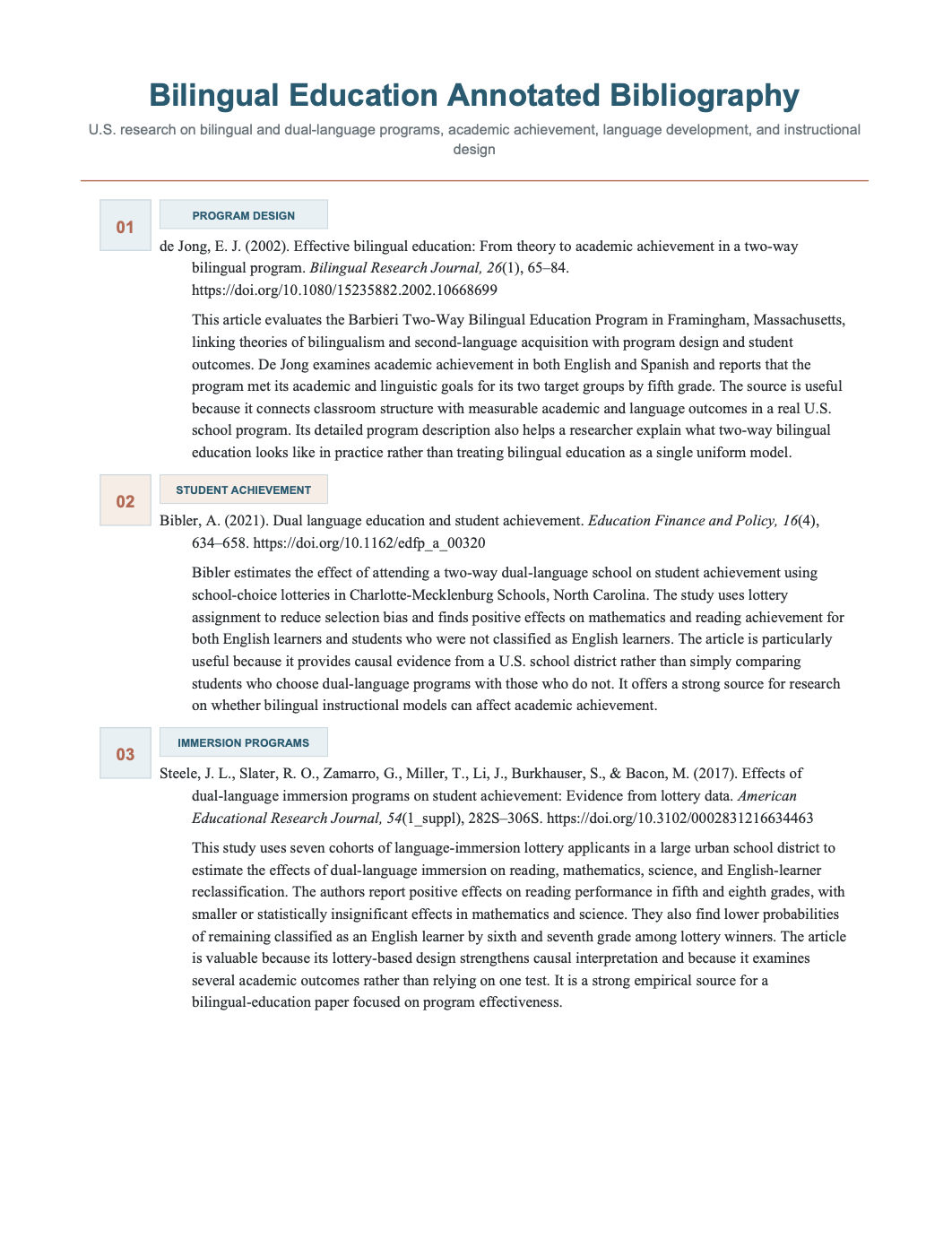
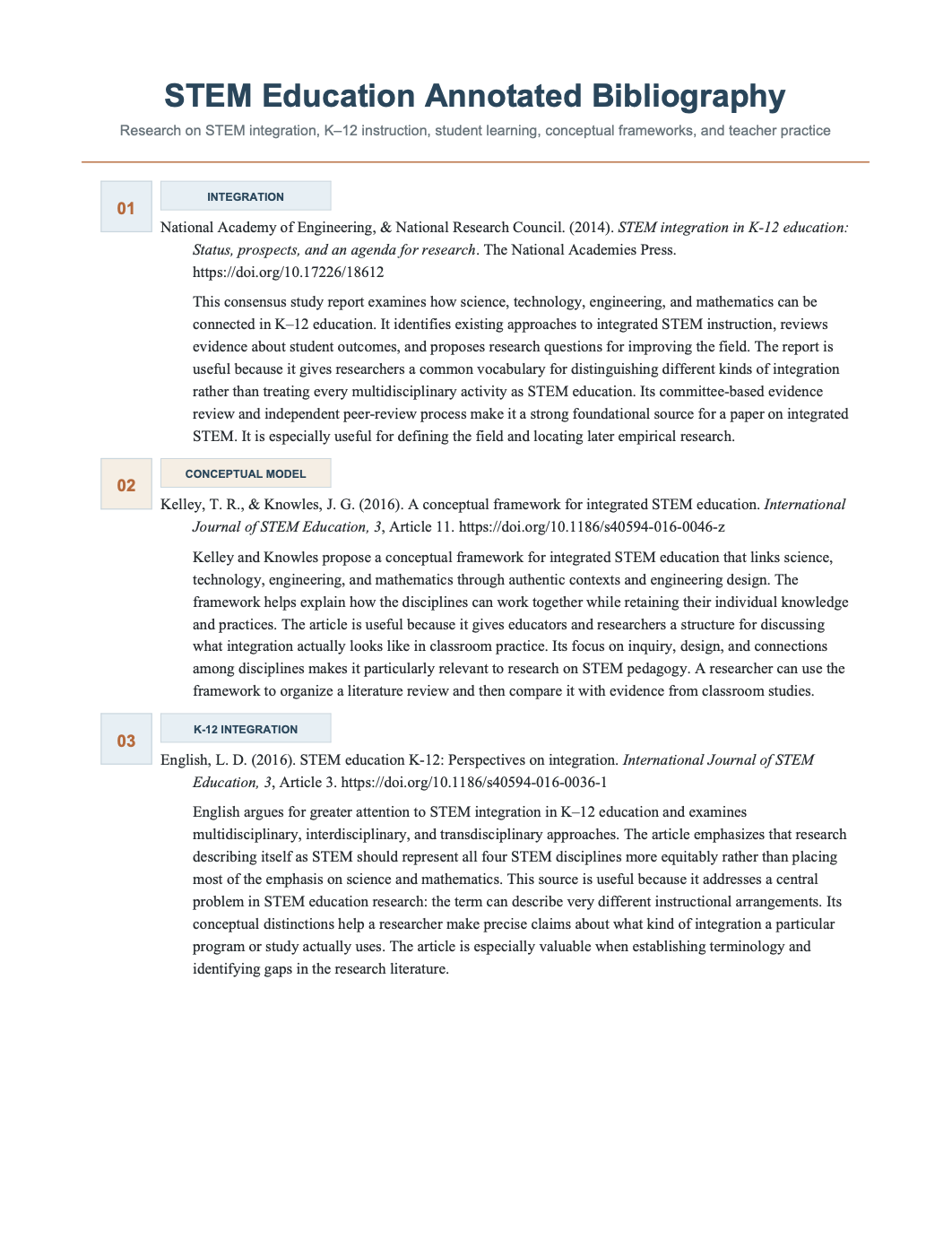
Annotation. Sibley, Colston, and Go evaluate interventions
intended to reduce self-stigma among people who use drugs.
Their systematic review includes experimental or
quasi-experimental studies in which self-stigma was a
primary outcome and identifies 15 psychotherapeutic,
psychoeducational, and multimodal studies. The review finds
promising evidence for reducing self-stigma but also points
to the need for more varied delivery options and stronger
evidence. This source is useful because it expands the
discussion from stigma imposed by others to the ways
stigmatizing beliefs can be experienced internally. It also
complements the provider-focused source by showing that
stigma can operate at more than one level. For research on
treatment engagement, the article is especially relevant
because the authors identify self-stigma as a potential
barrier to treatment and harm-reduction engagement.
06
MEDICATION TREATMENT
EVIDENCE RECORD
REFERENCE
ANNOTATION
McPheeters, M., O'Connor, E. A., Riley, S.,
Kennedy, S. M., Voisin, C., Kuznacic, K.,
Coffey, C. P., Edlund, M. D., Bobashev, G.,
& Jonas, D. E. (2023). Pharmacotherapy
for alcohol use disorder: A systematic
review and meta-analysis. JAMA, 330(17),
1653-1665.
https://doi.org/10.1001/jama.2023.19761
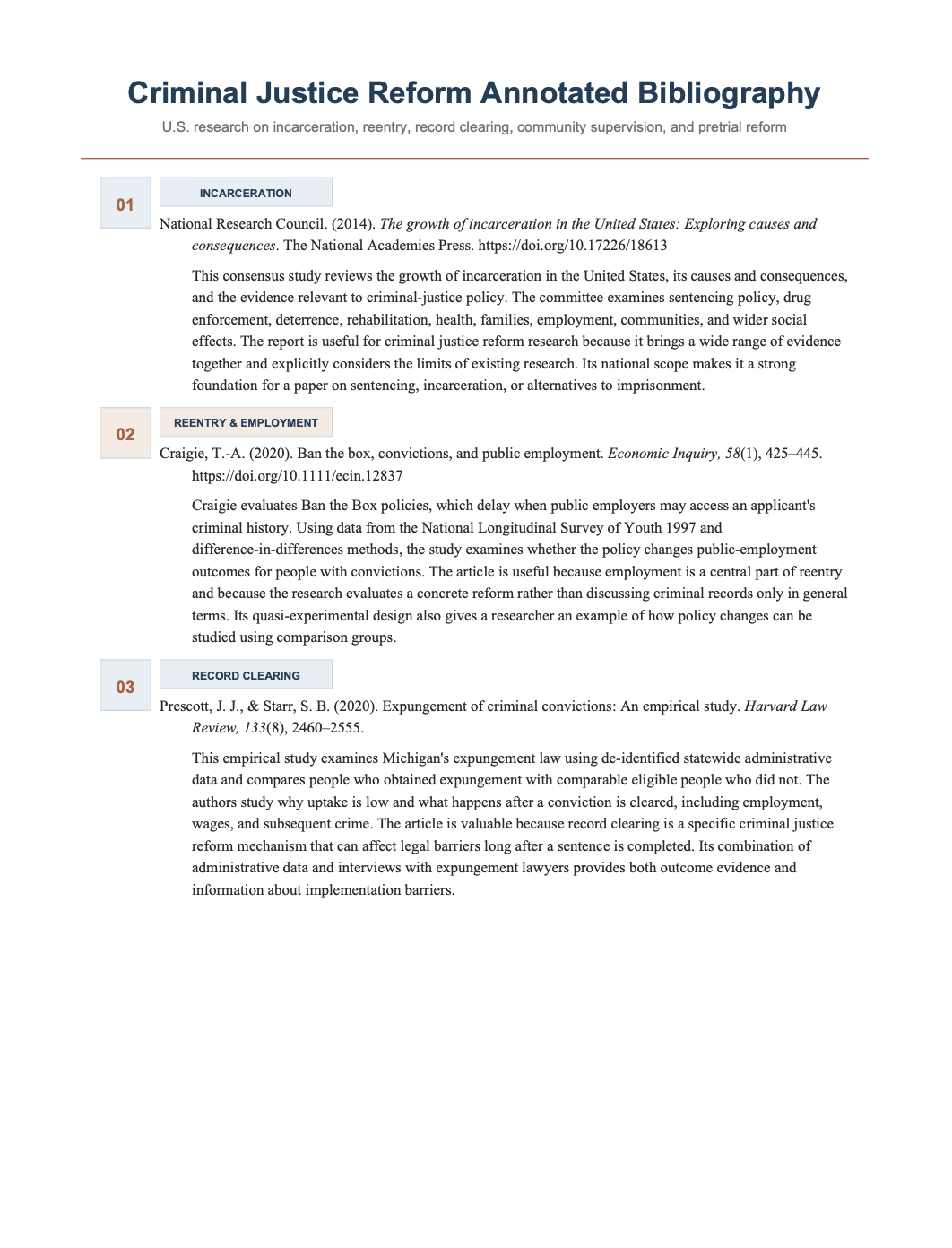
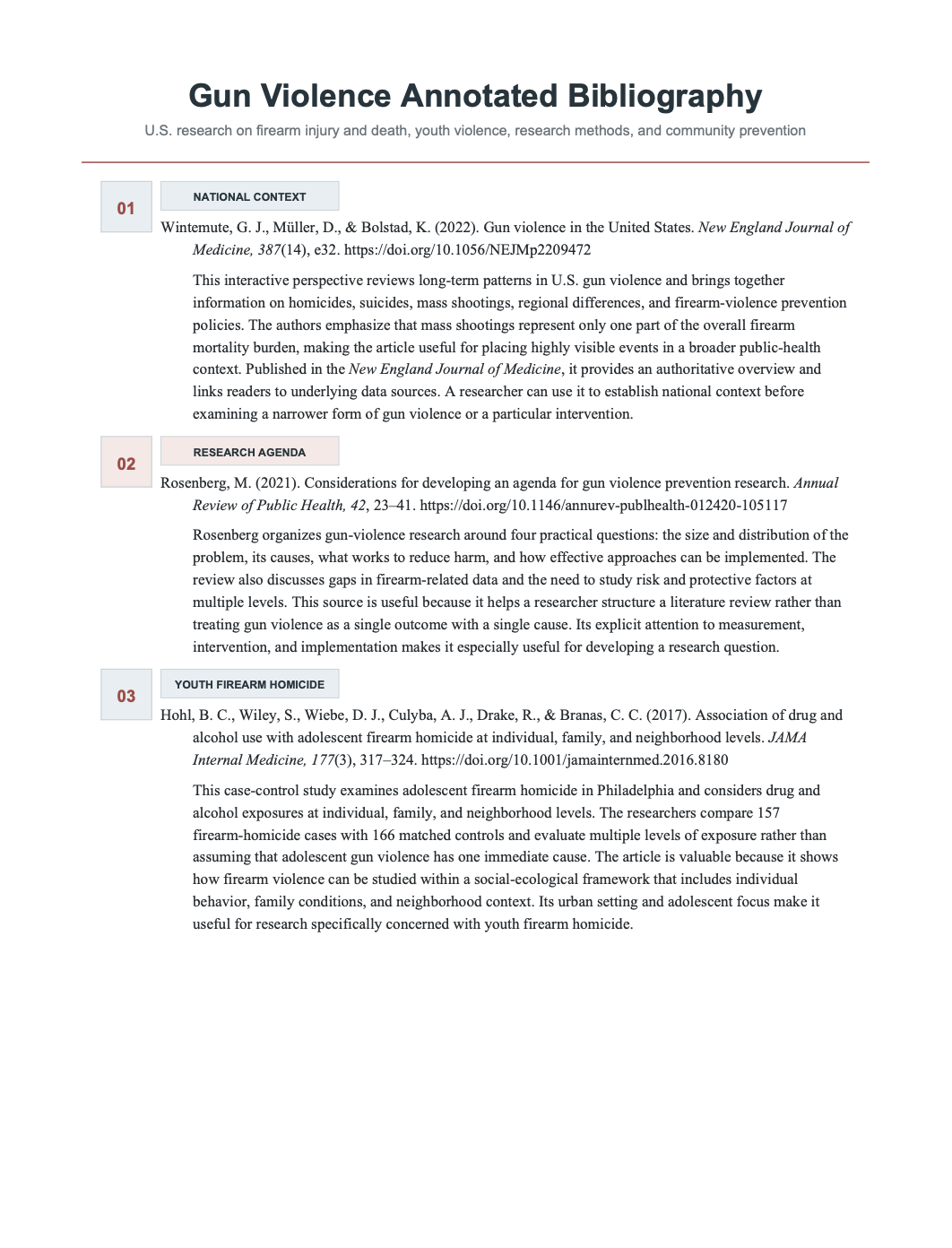
Annotation. McPheeters and colleagues systematically
review randomized trials of medications used to treat alcohol
use disorder. The review evaluates pharmacotherapies
including acamprosate, disulfiram, and naltrexone and
compares outcomes such as return to any drinking and
heavy drinking. The study provides quantitative evidence for
evaluating medication treatment rather than relying only on
general clinical recommendations. This source is useful for
showing how substance-use research can move from broad
descriptions of disorder toward evidence about specific
treatment options and outcomes. Because it focuses on
alcohol use disorder, it should not be generalized to all
substances without additional evidence. Its rigorous
systematic-review and meta-analytic design nevertheless
makes it an important treatment-focused component of a
broad substance-use bibliography.