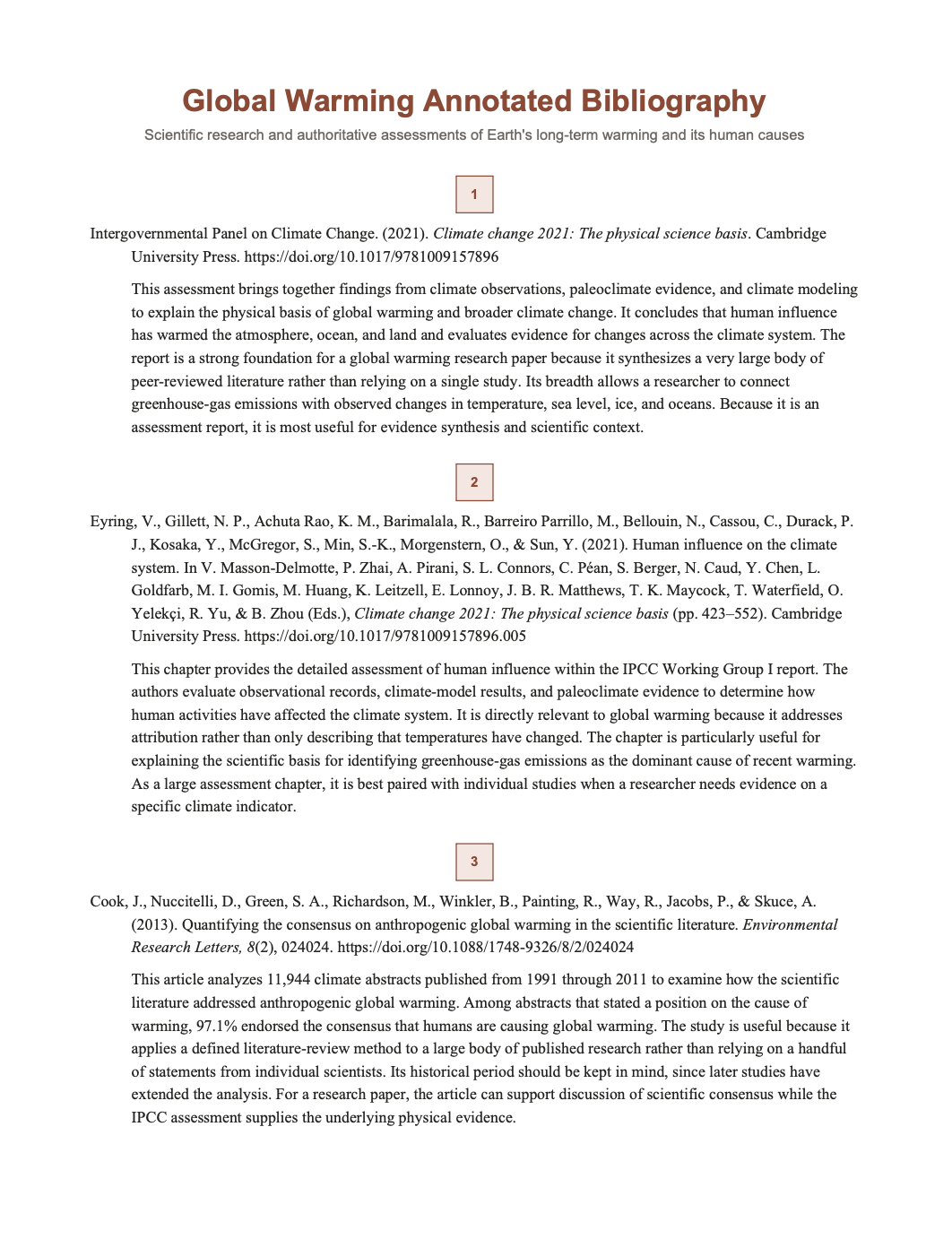
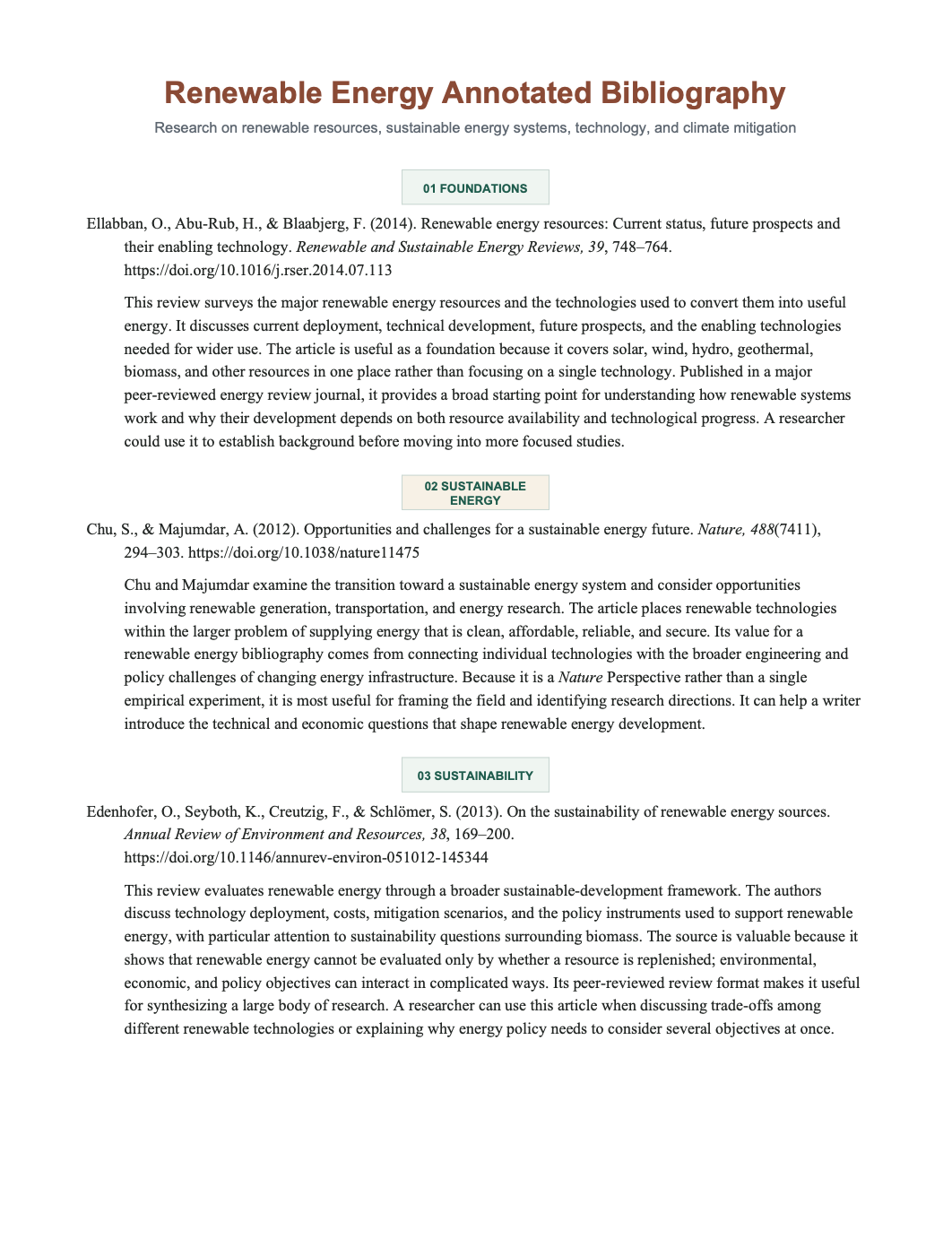
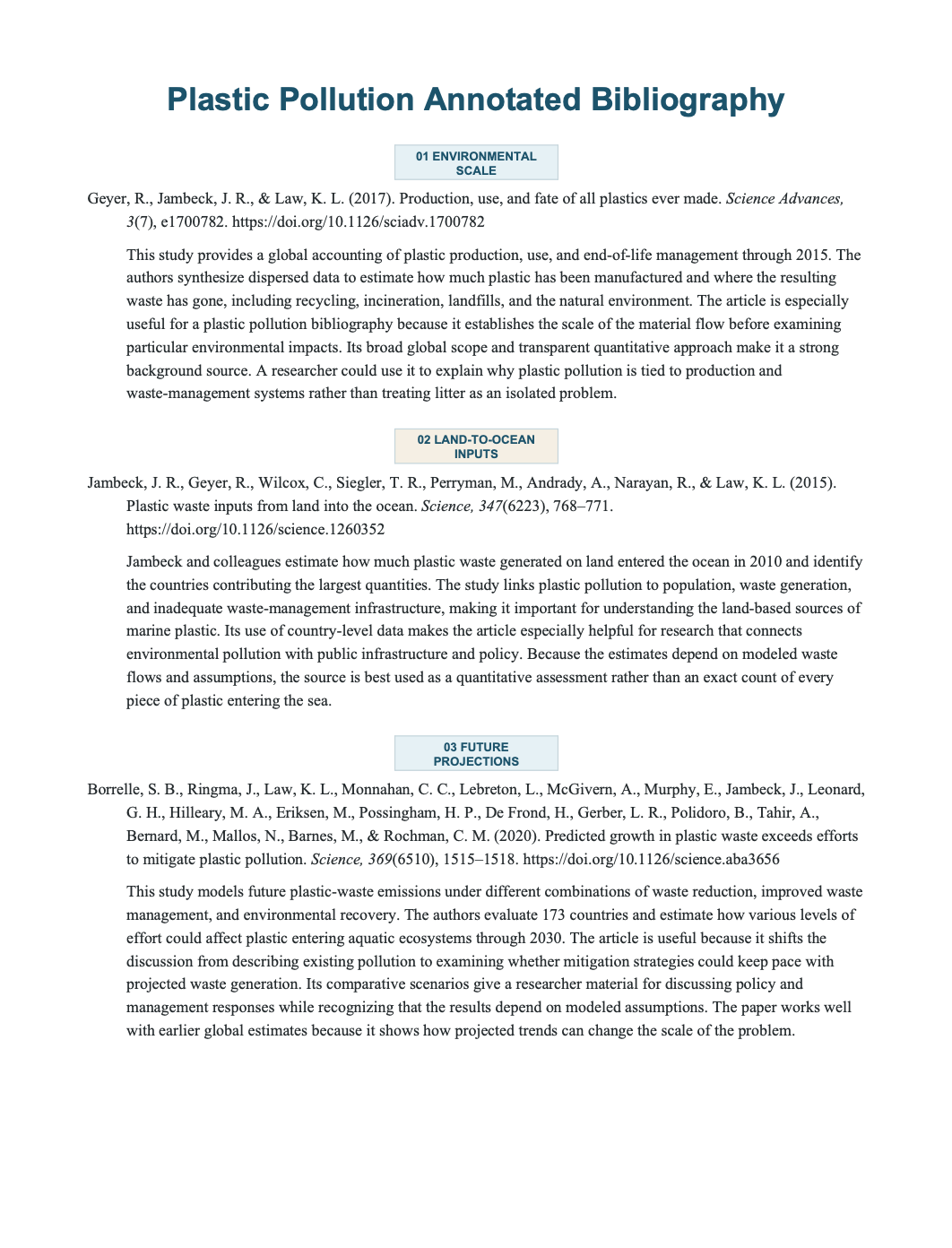
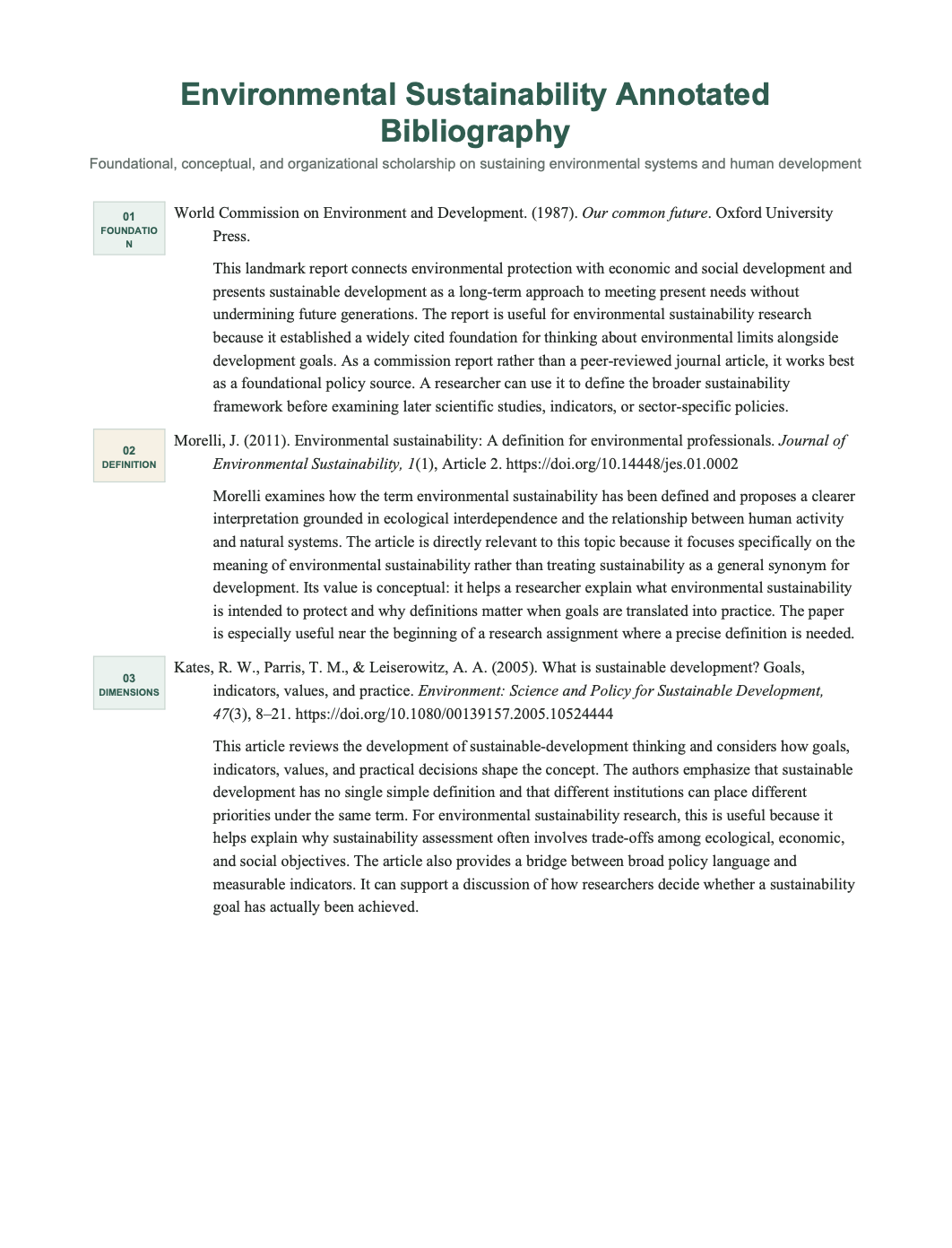
EDUCATION RESEARCH
ANNOTATED BIBLIOGRAPHY
Learning, teaching, and educational outcomes
2
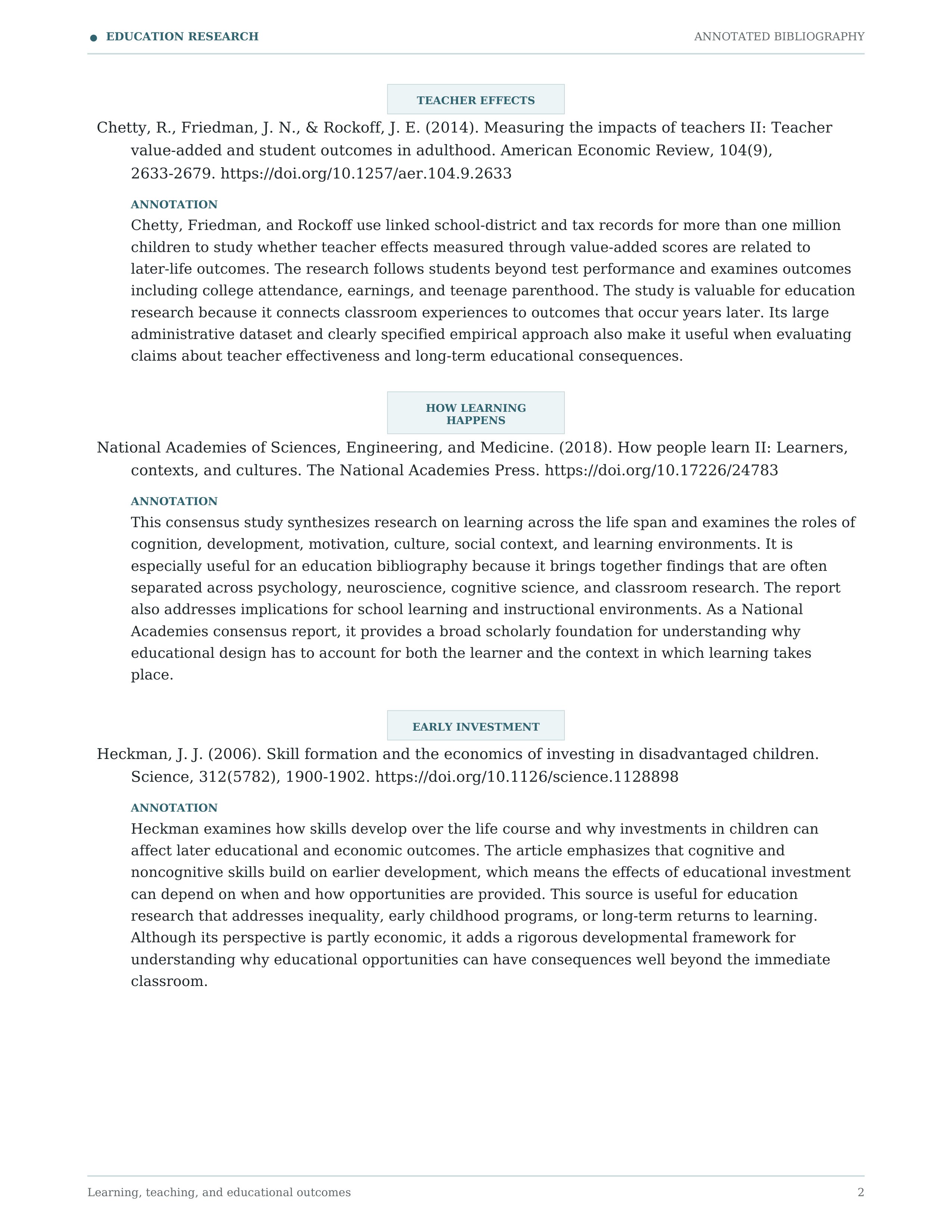
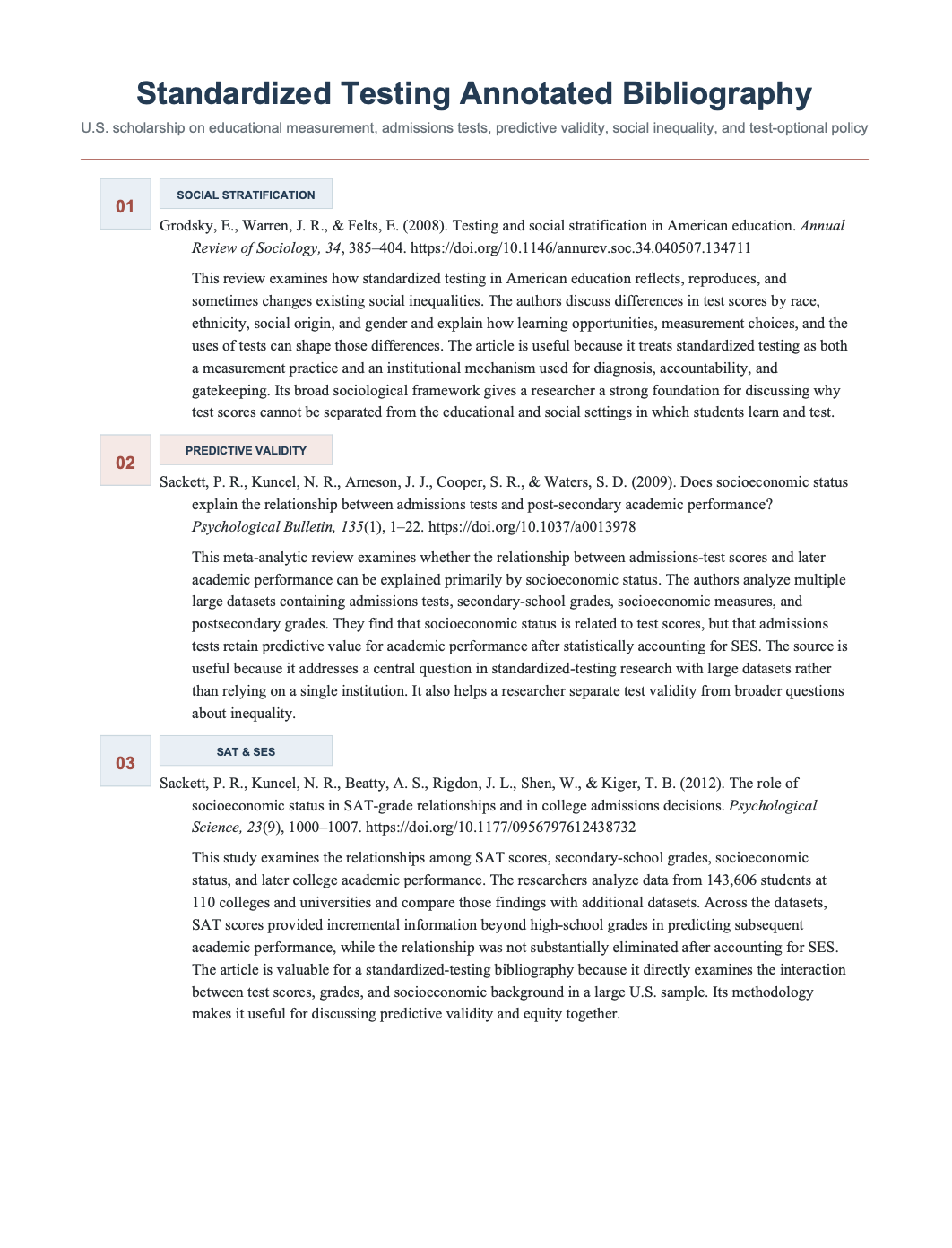
TEACHER EFFECTS
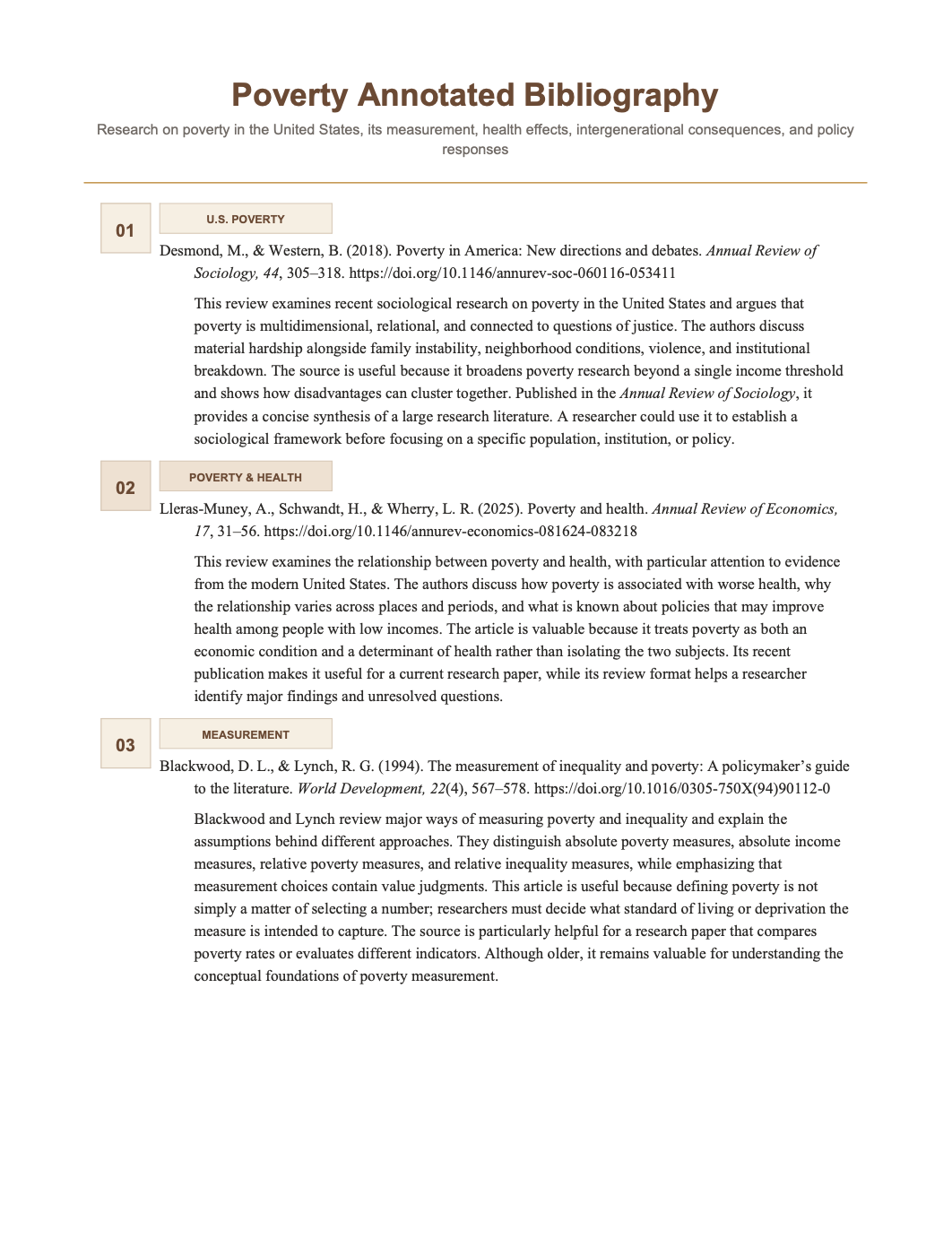
Chetty, R., Friedman, J. N., & Rockoff, J. E. (2014). Measuring the impacts of teachers II: Teacher
value-added and student outcomes in adulthood. American Economic Review, 104(9),
2633-2679. https://doi.org/10.1257/aer.104.9.2633
ANNOTATION
Chetty, Friedman, and Rockoff use linked school-district and tax records for more than one million
children to study whether teacher effects measured through value-added scores are related to
later-life outcomes. The research follows students beyond test performance and examines outcomes
including college attendance, earnings, and teenage parenthood. The study is valuable for education
research because it connects classroom experiences to outcomes that occur years later. Its large
administrative dataset and clearly specified empirical approach also make it useful when evaluating
claims about teacher effectiveness and long-term educational consequences.
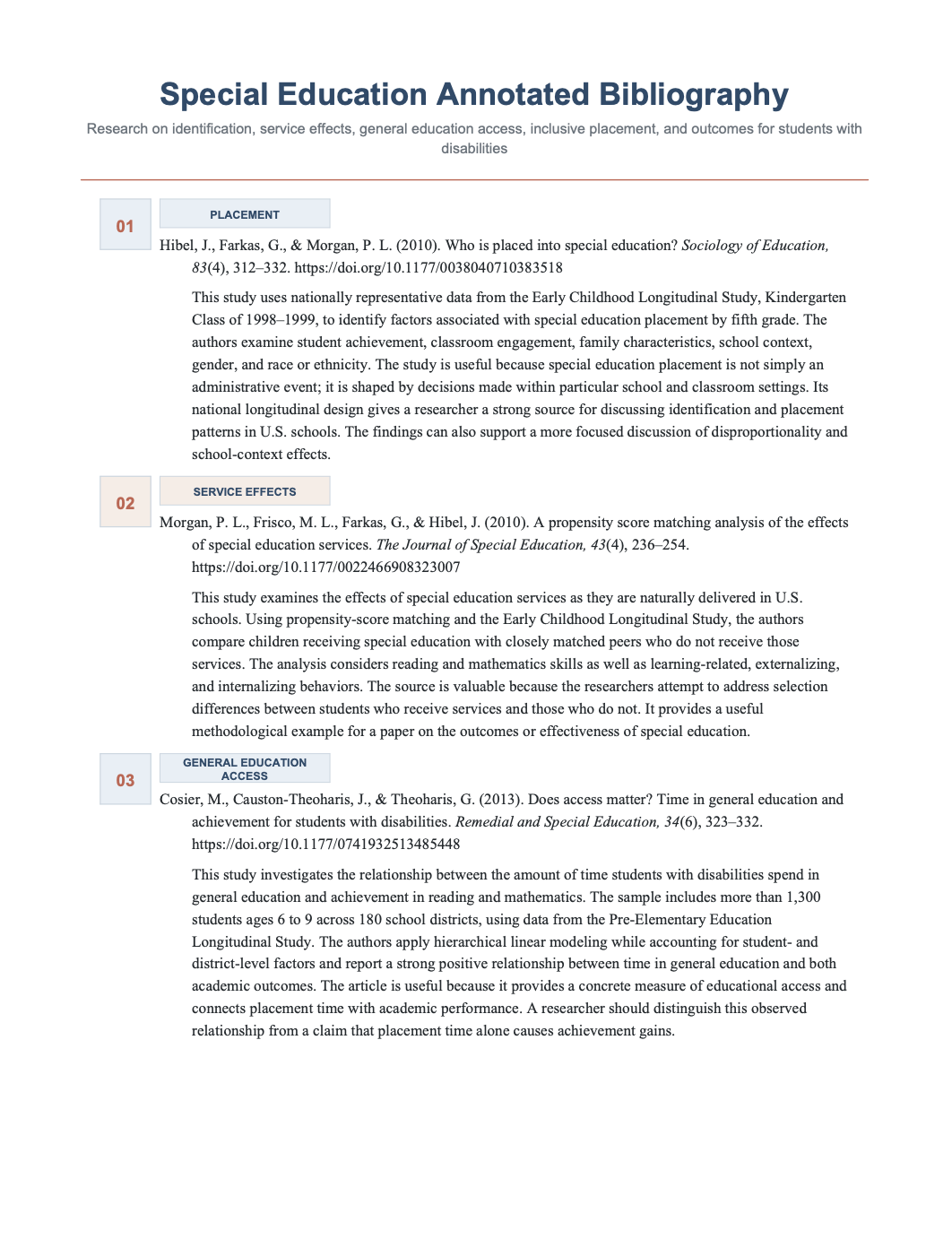
HOW LEARNING
HAPPENS
National Academies of Sciences, Engineering, and Medicine. (2018). How people learn II: Learners,
contexts, and cultures. The National Academies Press. https://doi.org/10.17226/24783
ANNOTATION
This consensus study synthesizes research on learning across the life span and examines the roles of
cognition, development, motivation, culture, social context, and learning environments. It is
especially useful for an education bibliography because it brings together findings that are often
separated across psychology, neuroscience, cognitive science, and classroom research. The report
also addresses implications for school learning and instructional environments. As a National
Academies consensus report, it provides a broad scholarly foundation for understanding why
educational design has to account for both the learner and the context in which learning takes
place.
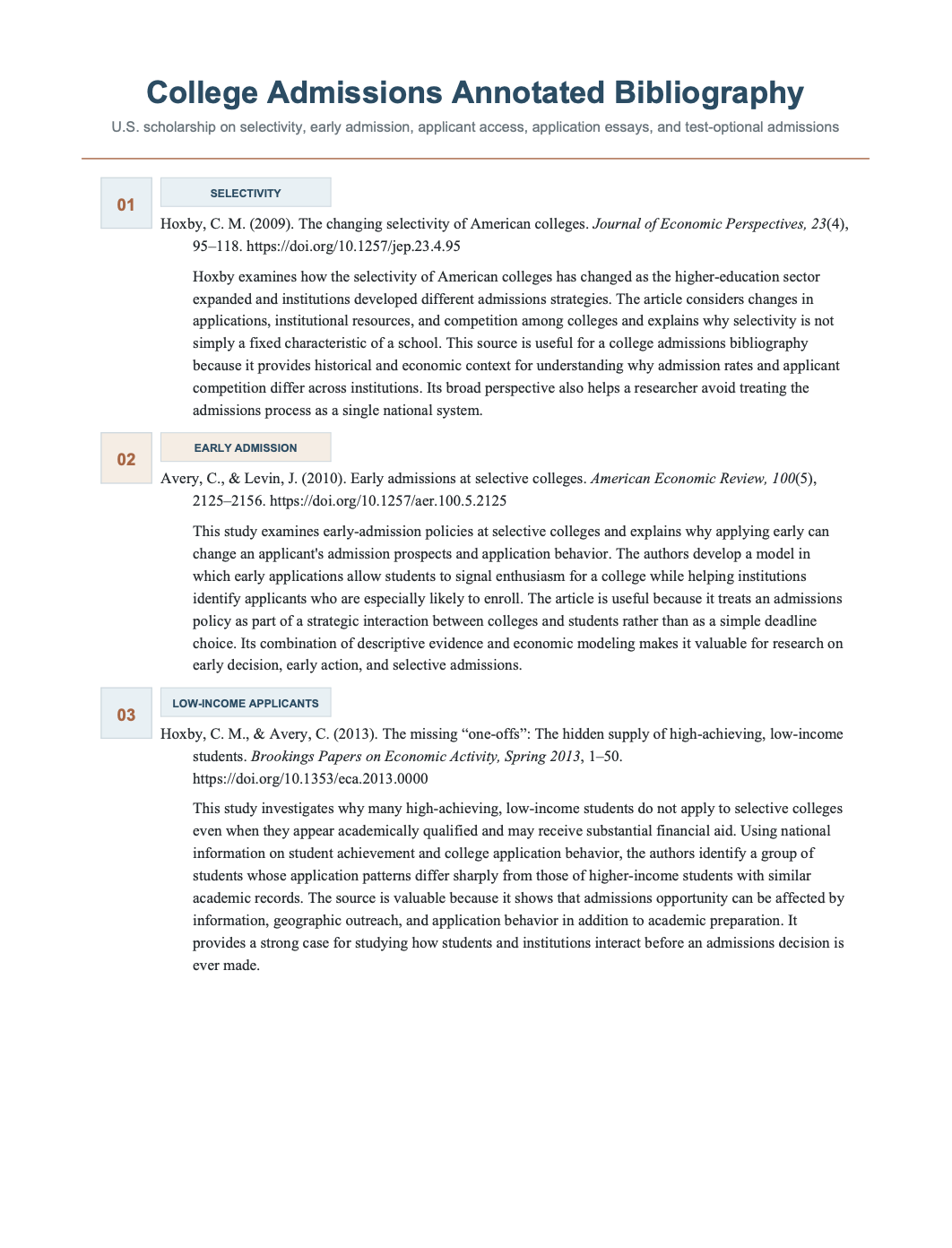
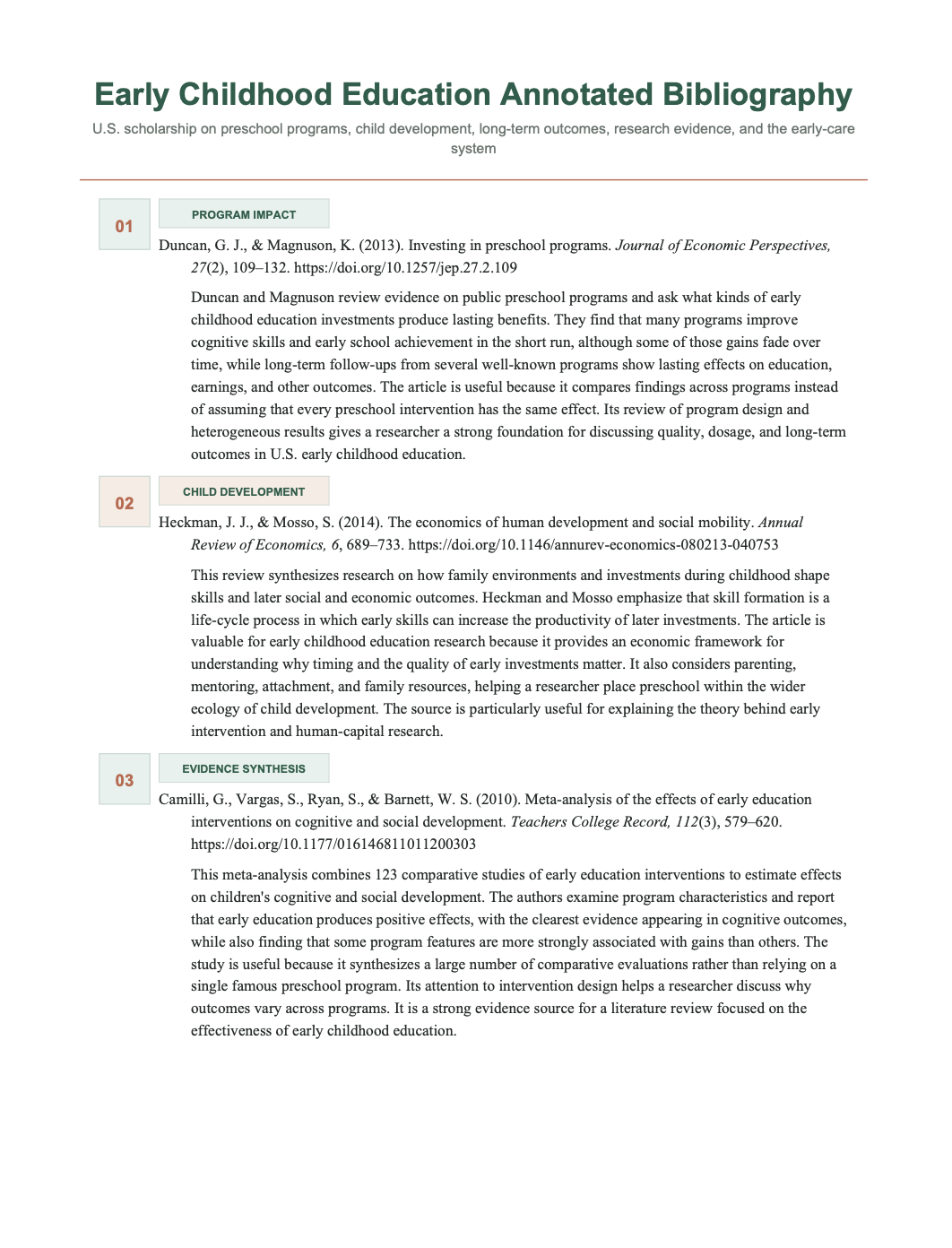
EARLY INVESTMENT
Heckman, J. J. (2006). Skill formation and the economics of investing in disadvantaged children.
Science, 312(5782), 1900-1902. https://doi.org/10.1126/science.1128898
ANNOTATION
Heckman examines how skills develop over the life course and why investments in children can
affect later educational and economic outcomes. The article emphasizes that cognitive and
noncognitive skills build on earlier development, which means the effects of educational investment
can depend on when and how opportunities are provided. This source is useful for education
research that addresses inequality, early childhood programs, or long-term returns to learning.
Although its perspective is partly economic, it adds a rigorous developmental framework for
understanding why educational opportunities can have consequences well beyond the immediate
classroom.