PSYCHOLOGY RESEARCH
ANNOTATED BIBLIOGRAPHY
Psychological research
2
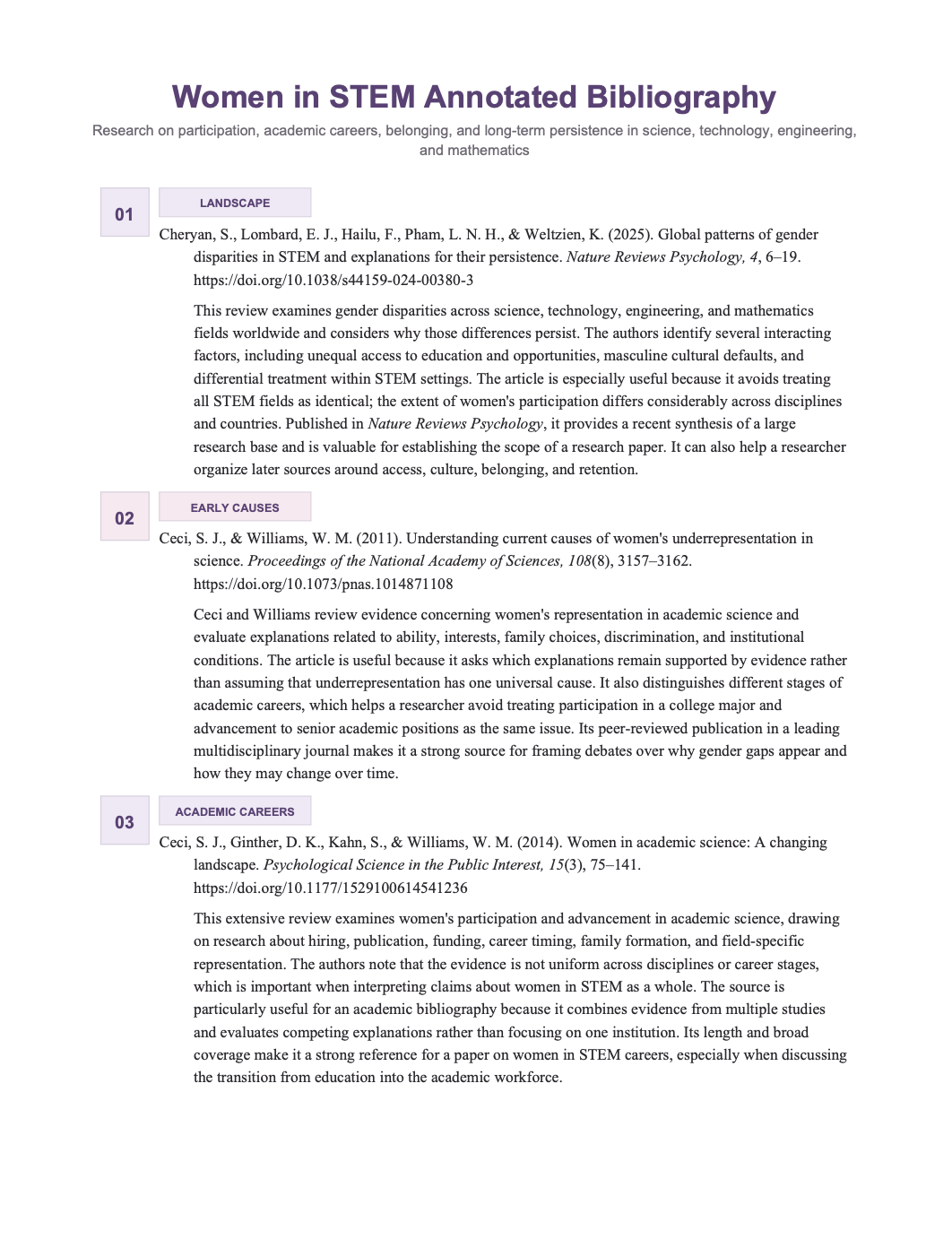
PSYCHOLOGICAL
WELL-BEING
Ryff, C. D. (1989). In the eye of the beholder: Views of psychological well-being among middle-aged
and older adults. Psychology and Aging, 4(2), 195-201.
https://doi.org/10.1037/0882-7974.4.2.195
ANNOTATION
Ryff investigates how adults themselves describe positive psychological functioning rather than
defining well-being only through symptoms or life satisfaction. Interviews with middle-aged and
older adults identified themes involving positive relationships, self-acceptance, self-knowledge,
confidence, enjoyment of life, and adapting to change. The article is important for research on
psychology because it shows that well-being is a multidimensional construct that includes how
people function and relate to others. It is particularly useful when a project needs to distinguish
psychological well-being from the absence of mental illness or from a single measure of happiness.
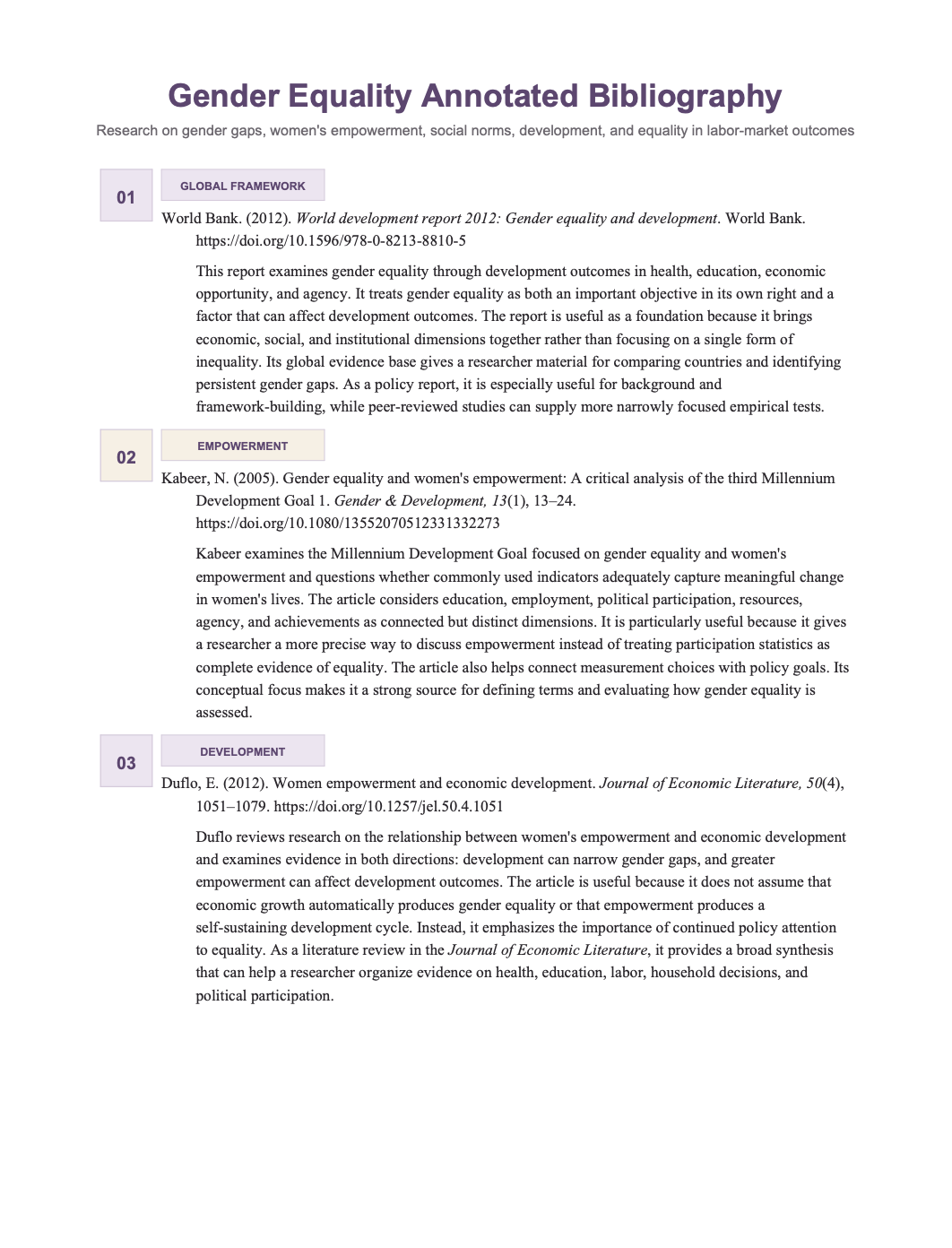
PERCEIVED STRESS
Cohen, S., Kamarck, T., & Mermelstein, R. (1983). A global measure of perceived stress. Journal of
Health and Social Behavior, 24(4), 385-396. https://doi.org/10.2307/2136404
ANNOTATION
Cohen, Kamarck, and Mermelstein develop the Perceived Stress Scale to assess the degree to which
situations are appraised as unpredictable, uncontrollable, and overwhelming. The article is useful
because it focuses on perceived stress rather than simply counting stressful events, making the
psychological appraisal process part of the measurement. The authors report evidence from several
studies concerning reliability and validity, which helps explain why the scale became widely used in
behavioral and health research. For an annotated bibliography, the article provides both a
psychological construct and a concrete measurement approach that later studies can build on or
adapt.
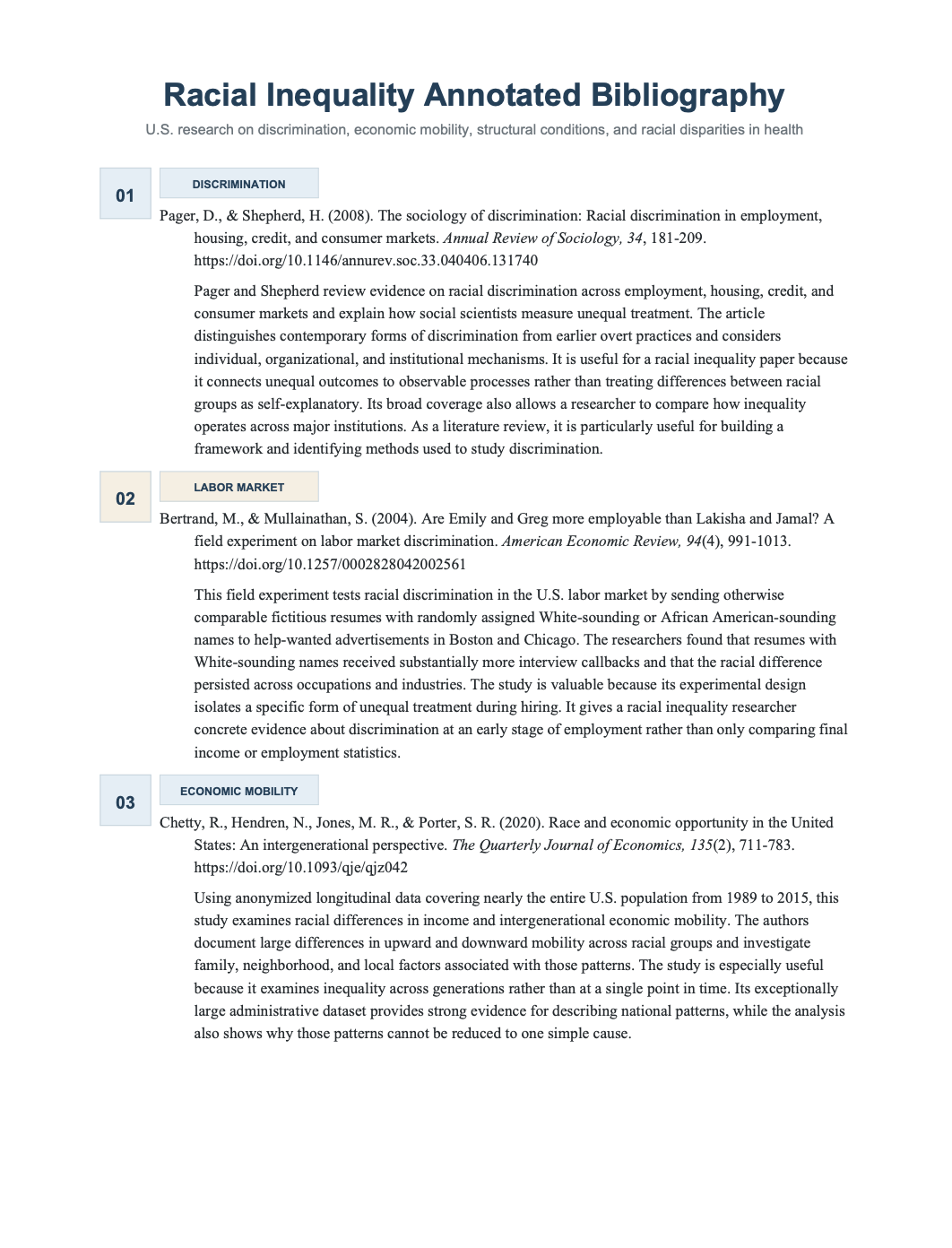
SOCIAL CONNECTION
Holt-Lunstad, J., Smith, T. B., & Layton, J. B. (2010). Social relationships and mortality risk: A
meta-analytic review. PLoS Medicine, 7(7), e1000316.
https://doi.org/10.1371/journal.pmed.1000316
ANNOTATION
Holt-Lunstad, Smith, and Layton synthesize evidence from 148 studies involving more than 300,000
participants to examine the relationship between social relationships and mortality risk. The review
considers different measures of social connection and tests whether characteristics such as age,
sex, and health status alter the association. Although the outcome is physical mortality, the study is
highly relevant to psychology because social connection is a central psychological and behavioral
context. Its meta-analytic design also makes it useful for showing how evidence from many separate
studies can be combined to assess a broad psychological question.