Compromise
Interpersonal
Skills
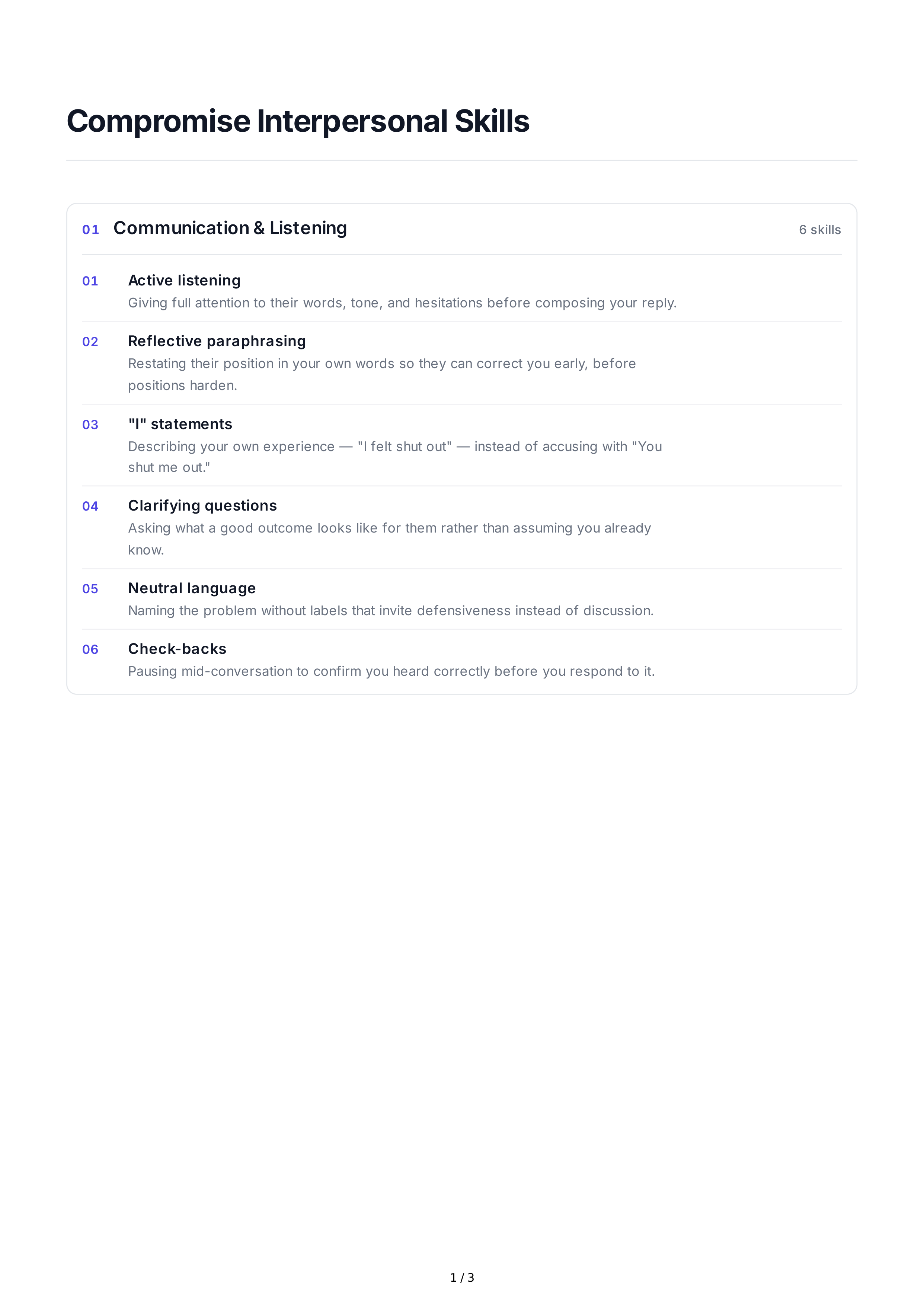
01
Communication
&
Listening
6
skills
01
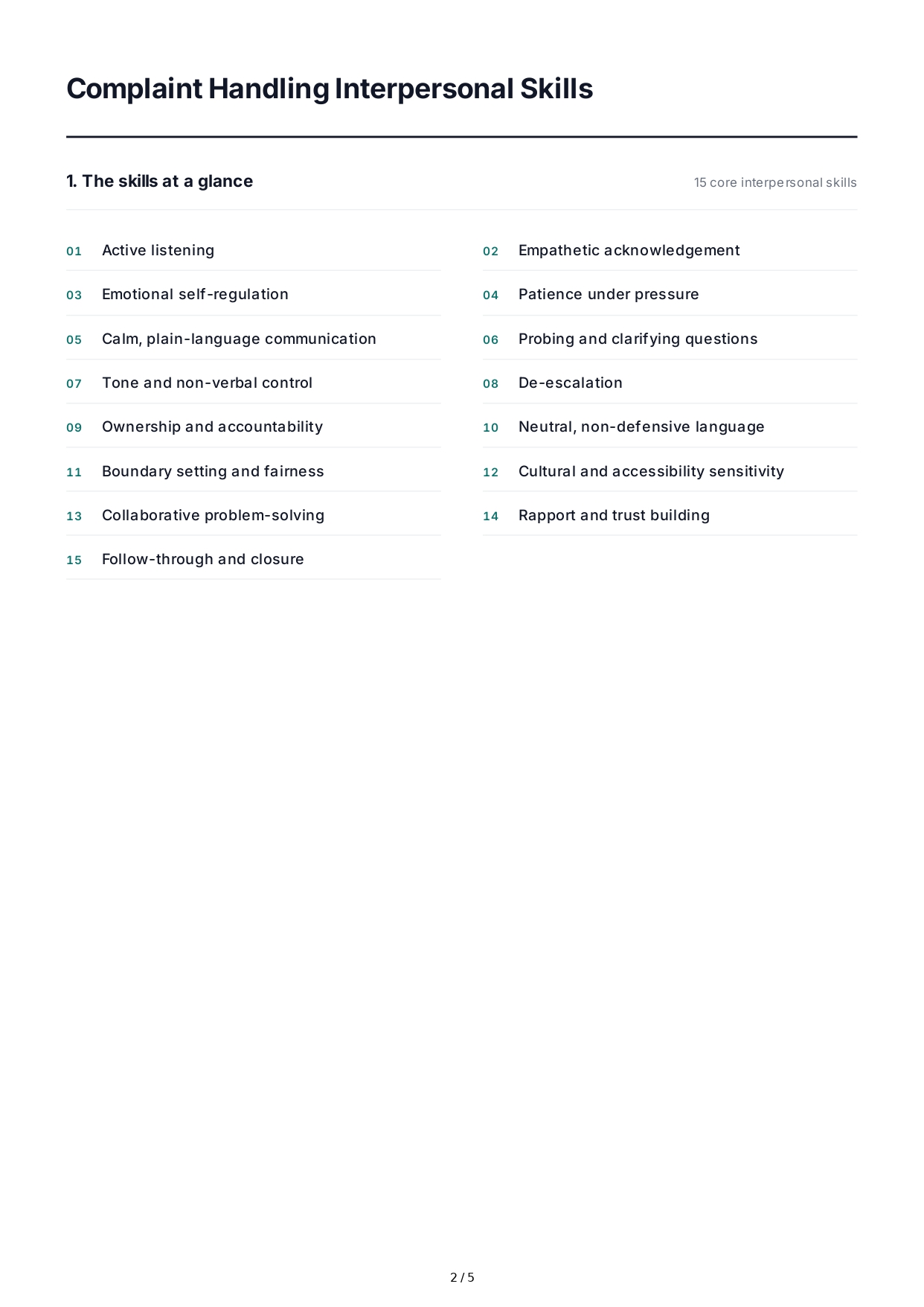
Active
listening
Giving
full
attention
to
their
words
,
tone
,
and
hesitations
before
composing
your
reply
.
02
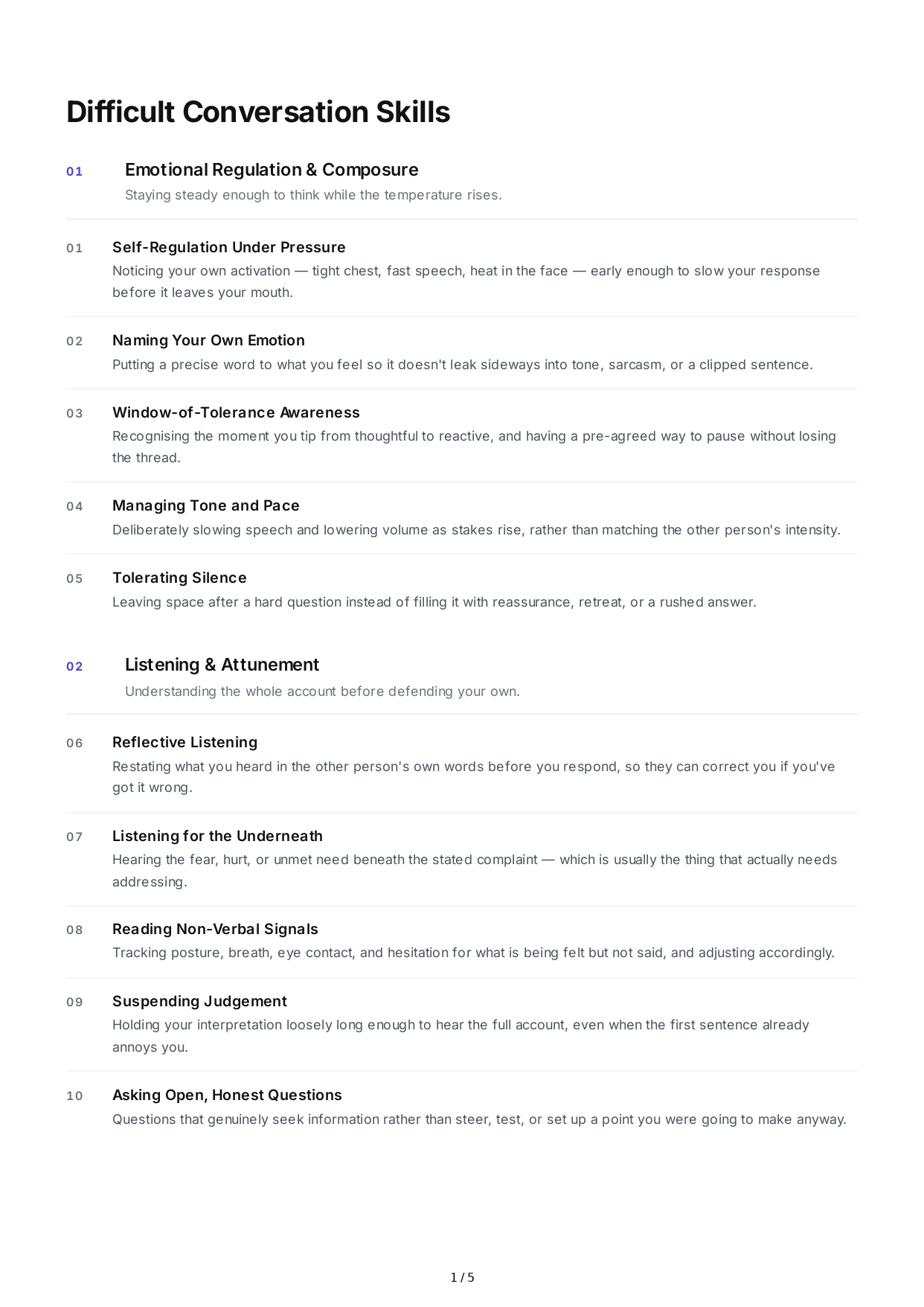
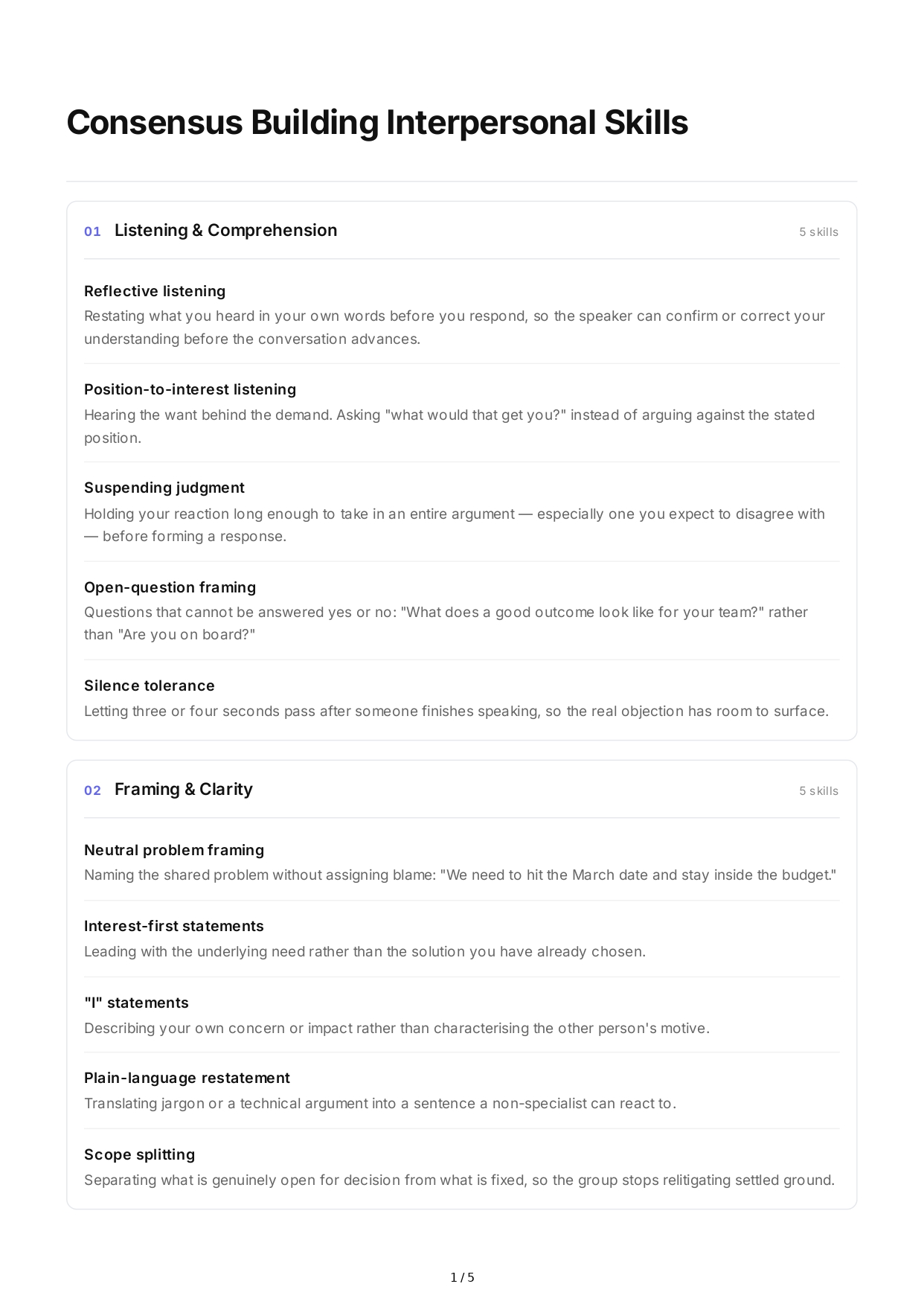
Reflective
paraphrasing
Restating
their
position
in
your
own
words
so
they
can
correct
you
early
,
before
positions
harden
.
03
"
I
"
statements
Describing
your
own
experience
— "
I
felt
shut
out
" —
instead
of
accusing
with
"
You
shut
me
out
."
04
Clarifying
questions
Asking
what
a
good
outcome
looks
like
for
them
rather
than
assuming
you
already
know
.
05
Neutral
language
Naming
the
problem
without
labels
that
invite
defensiveness
instead
of
discussion
.
06
Check
-
backs
Pausing
mid
-
conversation
to
confirm
you
heard
correctly
before
you
respond
to
it
.
1 / 3
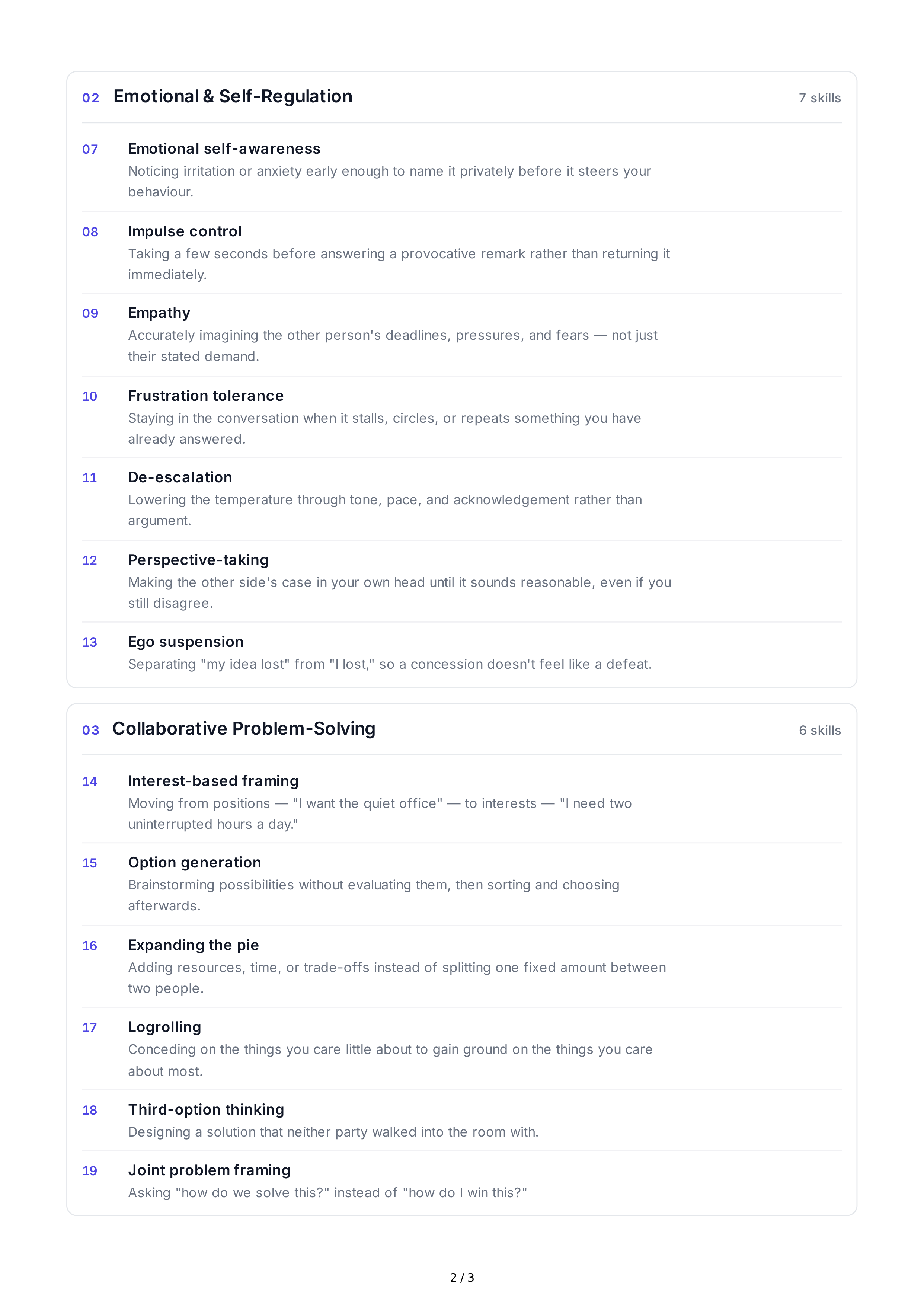
02
Emotional
&
Self
-
Regulation
7
skills
07
Emotional
self
-
awareness
Noticing
irritation
or
anxiety
early
enough
to
name
it
privately
before
it
steers
your
behaviour
.
08
Impulse
control
Taking
a
few
seconds
before
answering
a
provocative
remark
rather
than
returning
it
immediately
.
09
Empathy
Accurately
imagining
the
other
person
'
s
deadlines
,
pressures
,
and
fears
—
not
just
their
stated
demand
.
10
Frustration
tolerance
Staying
in
the
conversation
when
it
stalls
,
circles
,
or
repeats
something
you
have
already
answered
.
11
De
-
escalation
Lowering
the
temperature
through
tone
,
pace
,
and
acknowledgement
rather
than
argument
.
12
Perspective
-
taking
Making
the
other
side
'
s
case
in
your
own
head
until
it
sounds
reasonable
,
even
if
you
still
disagree
.
13
Ego
suspension
Separating
"
my
idea
lost
"
from
"
I
lost
,"
so
a
concession
doesn
'
t
feel
like
a
defeat
.
03
Collaborative
Problem
-
Solving
6
skills
14
Interest
-
based
framing
Moving
from
positions
— "
I
want
the
quiet
office
" —
to
interests
— "
I
need
two
uninterrupted
hours
a
day
."
15
Option
generation
Brainstorming
possibilities
without
evaluating
them
,
then
sorting
and
choosing
afterwards
.
16
Expanding
the
pie
Adding
resources
,
time
,
or
trade
-
offs
instead
of
splitting
one
fixed
amount
between
two
people
.
17
Logrolling
Conceding
on
the
things
you
care
little
about
to
gain
ground
on
the
things
you
care
about
most
.
18
Third
-
option
thinking
Designing
a
solution
that
neither
party
walked
into
the
room
with
.
19
Joint
problem
framing
Asking
"
how
do
we
solve
this
?"
instead
of
"
how
do
I
win
this
?"
2 / 3
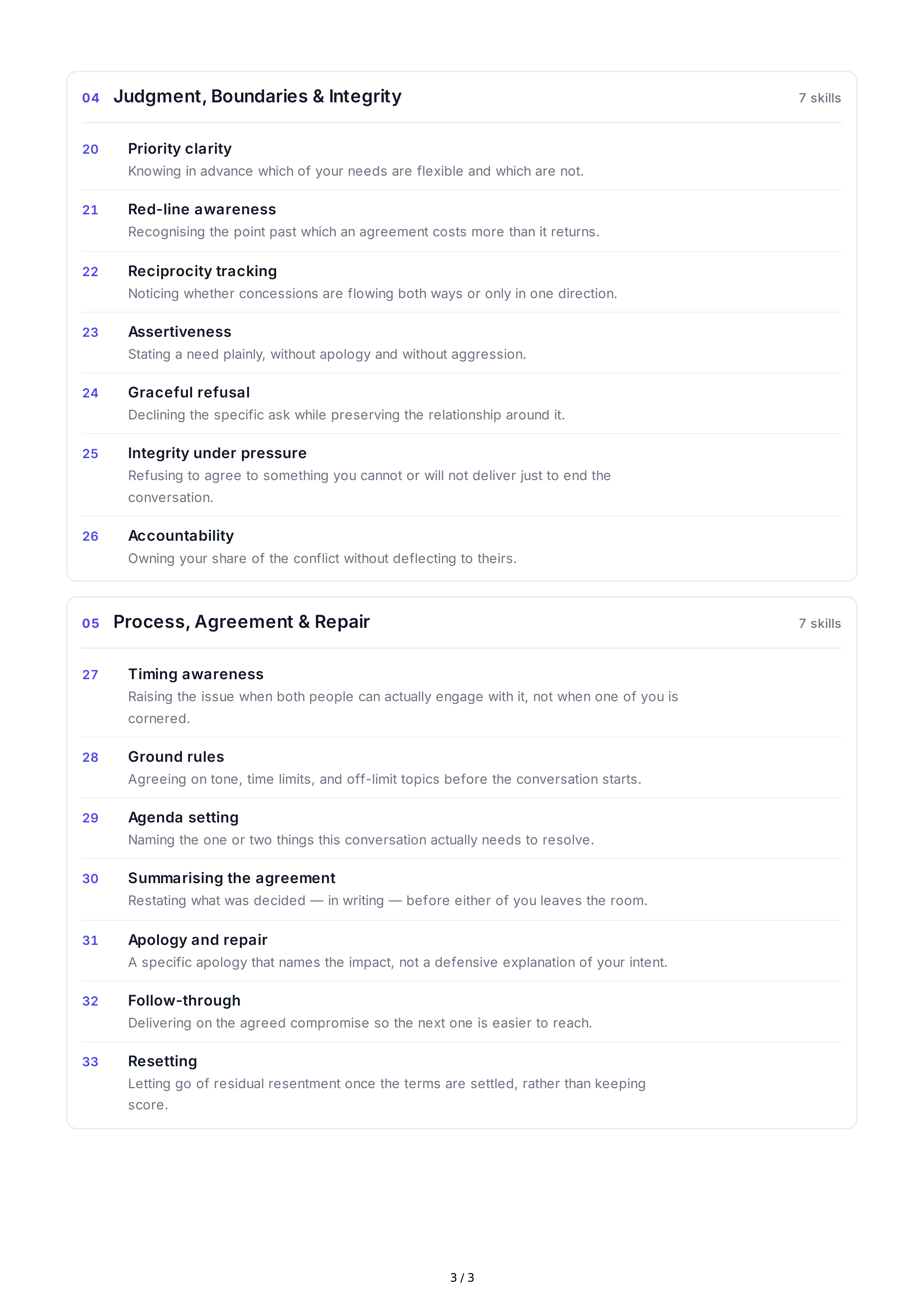
04
Judgment
,
Boundaries
&
Integrity
7
skills
20
Priority
clarity
Knowing
in
advance
which
of
your
needs
are
flexible
and
which
are
not
.
21
Red
-
line
awareness
Recognising
the
point
past
which
an
agreement
costs
more
than
it
returns
.
22
Reciprocity
tracking
Noticing
whether
concessions
are
flowing
both
ways
or
only
in
one
direction
.
23
Assertiveness
Stating
a
need
plainly
,
without
apology
and
without
aggression
.
24
Graceful
refusal
Declining
the
specific
ask
while
preserving
the
relationship
around
it
.
25
Integrity
under
pressure
Refusing
to
agree
to
something
you
cannot
or
will
not
deliver
just
to
end
the
conversation
.
26
Accountability
Owning
your
share
of
the
conflict
without
deflecting
to
theirs
.
05
Process
,
Agreement
&
Repair
7
skills
27
Timing
awareness
Raising
the
issue
when
both
people
can
actually
engage
with
it
,
not
when
one
of
you
is
cornered
.
28
Ground
rules
Agreeing
on
tone
,
time
limits
,
and
off
-
limit
topics
before
the
conversation
starts
.
29
Agenda
setting
Naming
the
one
or
two
things
this
conversation
actually
needs
to
resolve
.
30
Summarising
the
agreement
Restating
what
was
decided
—
in
writing
—
before
either
of
you
leaves
the
room
.
31
Apology
and
repair
A
specific
apology
that
names
the
impact
,
not
a
defensive
explanation
of
your
intent
.
32
Follow
-
through
Delivering
on
the
agreed
compromise
so
the
next
one
is
easier
to
reach
.
33
Resetting
Letting
go
of
residual
resentment
once
the
terms
are
settled
,
rather
than
keeping
score
.
3 / 3