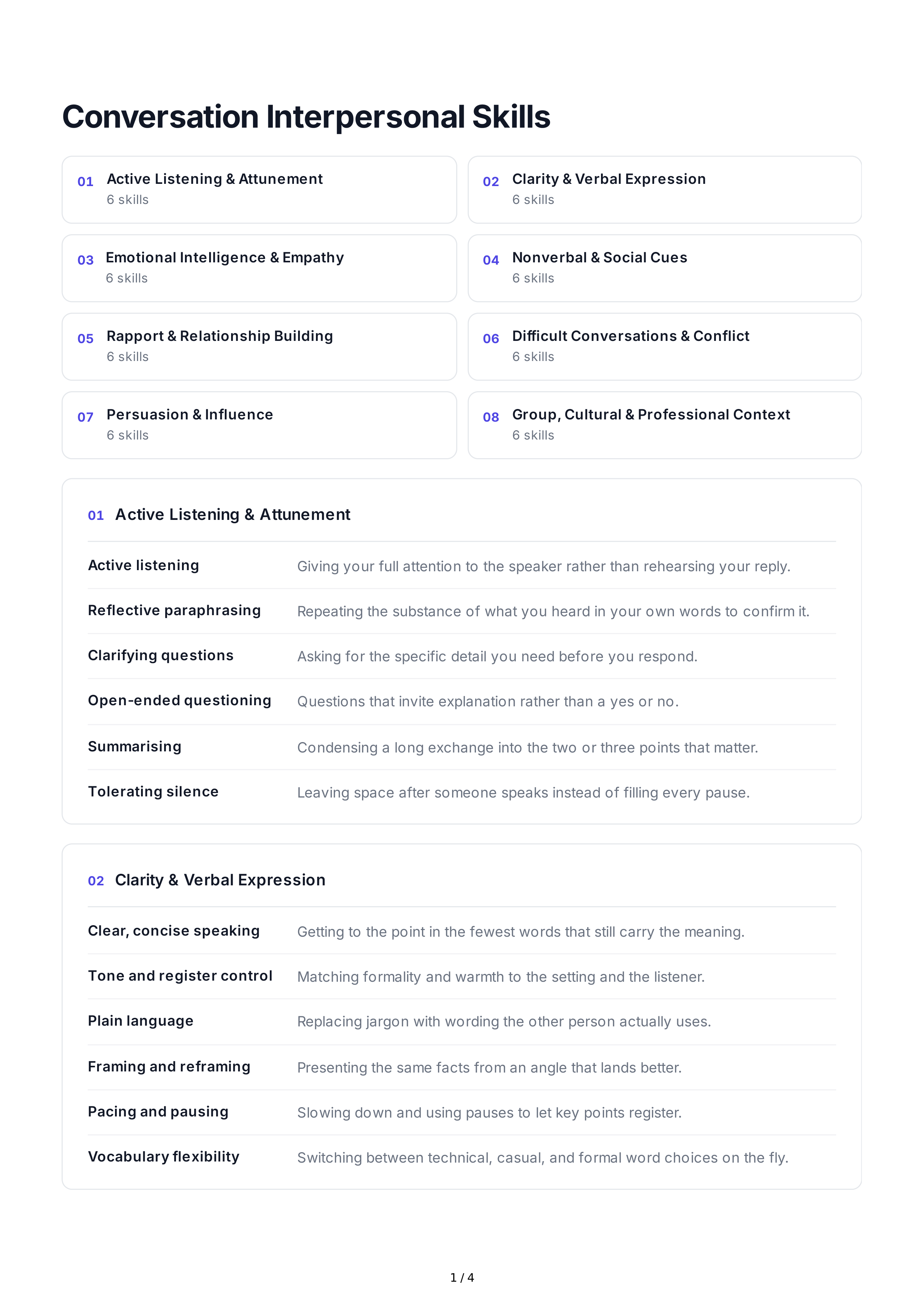
Conversation
Interpersonal
Skills
01
Active
Listening
&
Attunement
6
skills
02
Clarity
&
Verbal
Expression
6
skills
03
Emotional
Intelligence
&
Empathy
6
skills
04
Nonverbal
&
Social
Cues
6
skills
05
Rapport
&
Relationship
Building
6
skills
06
Difficult
Conversations
&
Conflict
6
skills
07
Persuasion
&
Influence
6
skills
08
Group
,
Cultural
&
Professional
Context
6
skills
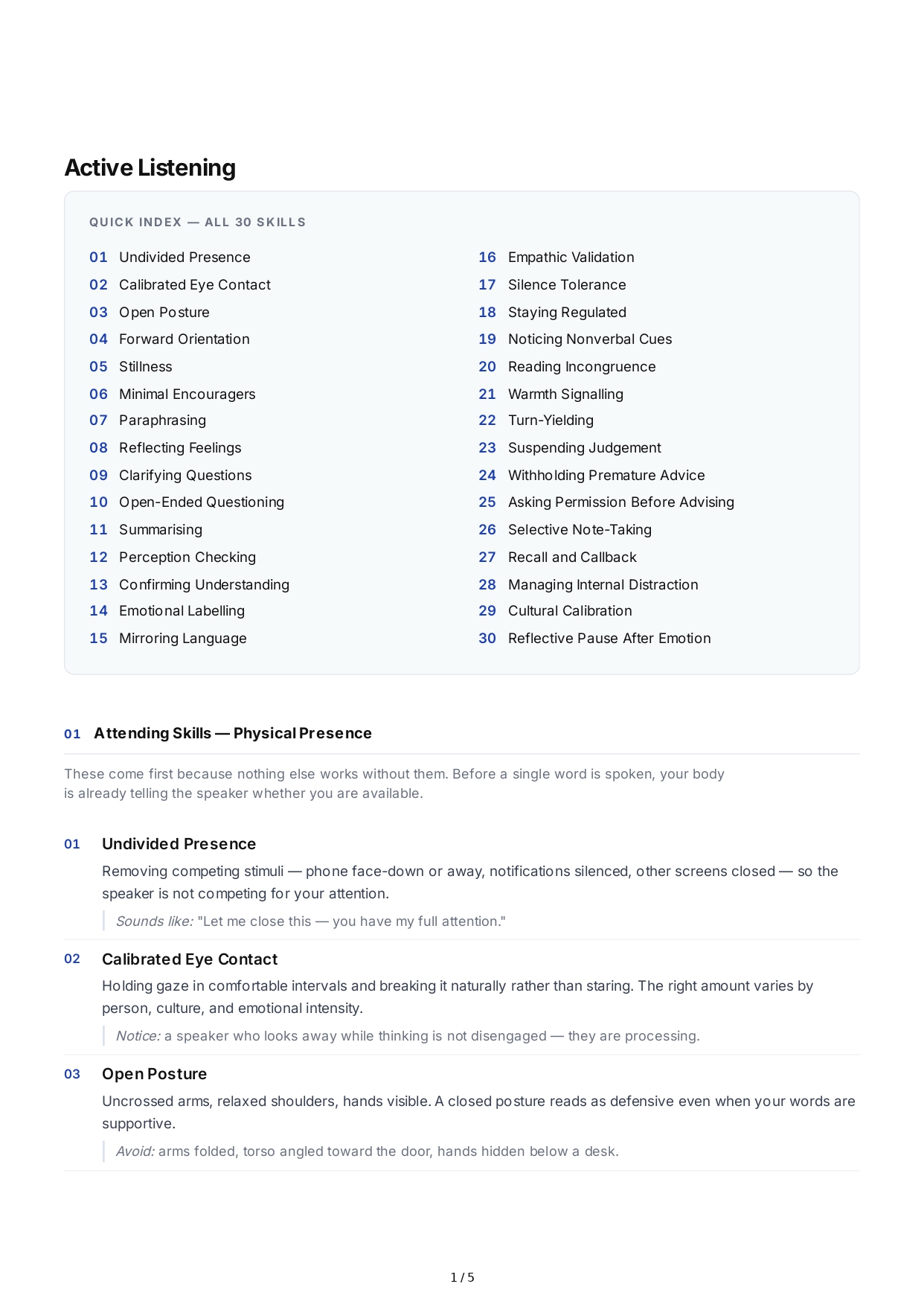
01
Active
Listening
&
Attunement
Active
listening
Giving
your
full
attention
to
the
speaker
rather
than
rehearsing
your
reply
.
Reflective
paraphrasing
Repeating
the
substance
of
what
you
heard
in
your
own
words
to
confirm
it
.
Clarifying
questions
Asking
for
the
specific
detail
you
need
before
you
respond
.
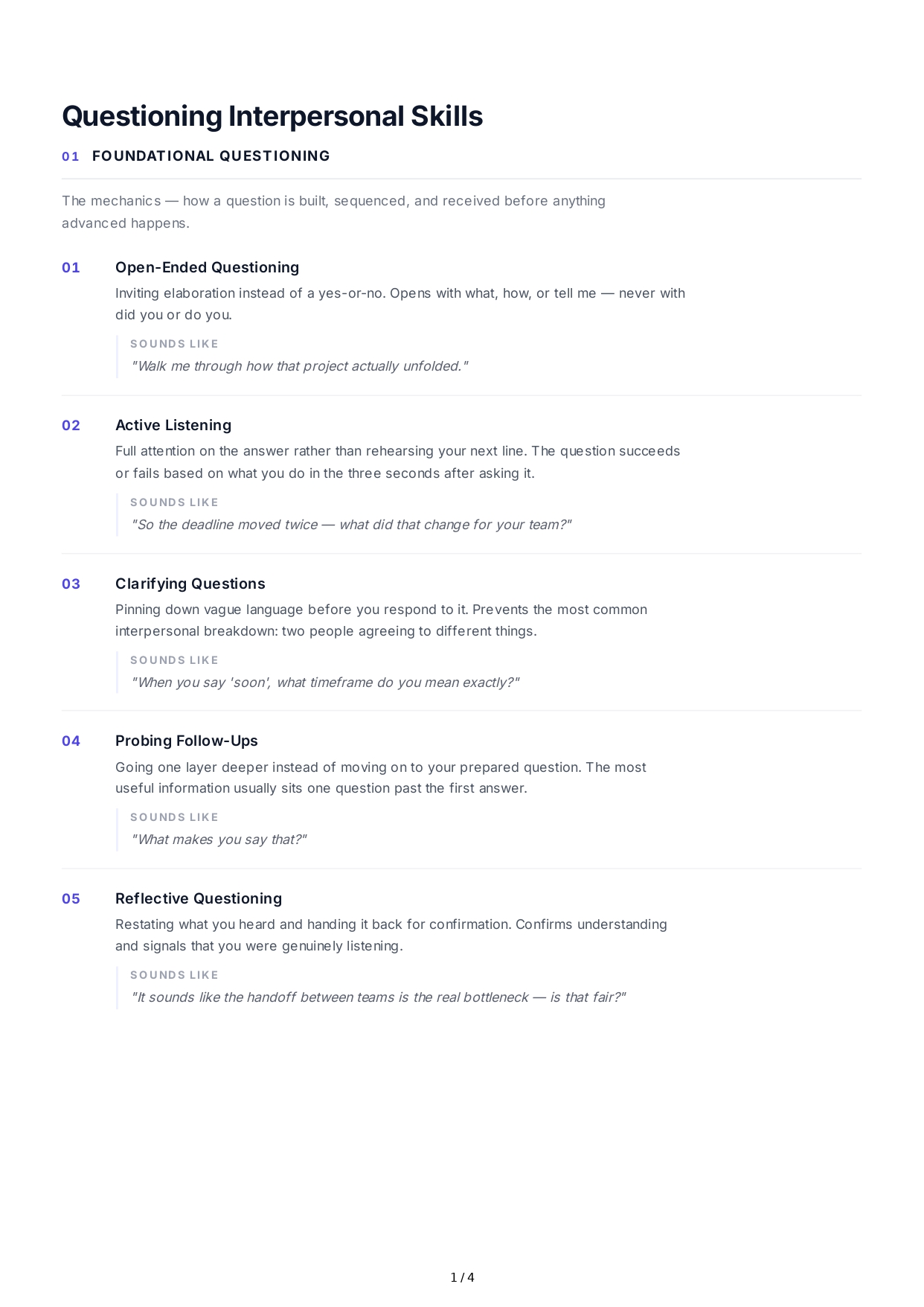
Open
-
ended
questioning
Questions
that
invite
explanation
rather
than
a
yes
or
no
.
Summarising
Condensing
a
long
exchange
into
the
two
or
three
points
that
matter
.
Tolerating
silence
Leaving
space
after
someone
speaks
instead
of
filling
every
pause
.
02
Clarity
&
Verbal
Expression
Clear
,
concise
speaking
Getting
to
the
point
in
the
fewest
words
that
still
carry
the
meaning
.
Tone
and
register
control
Matching
formality
and
warmth
to
the
setting
and
the
listener
.
Plain
language
Replacing
jargon
with
wording
the
other
person
actually
uses
.
Framing
and
reframing
Presenting
the
same
facts
from
an
angle
that
lands
better
.
Pacing
and
pausing
Slowing
down
and
using
pauses
to
let
key
points
register
.
Vocabulary
flexibility
Switching
between
technical
,
casual
,
and
formal
word
choices
on
the
fly
.
1 / 4
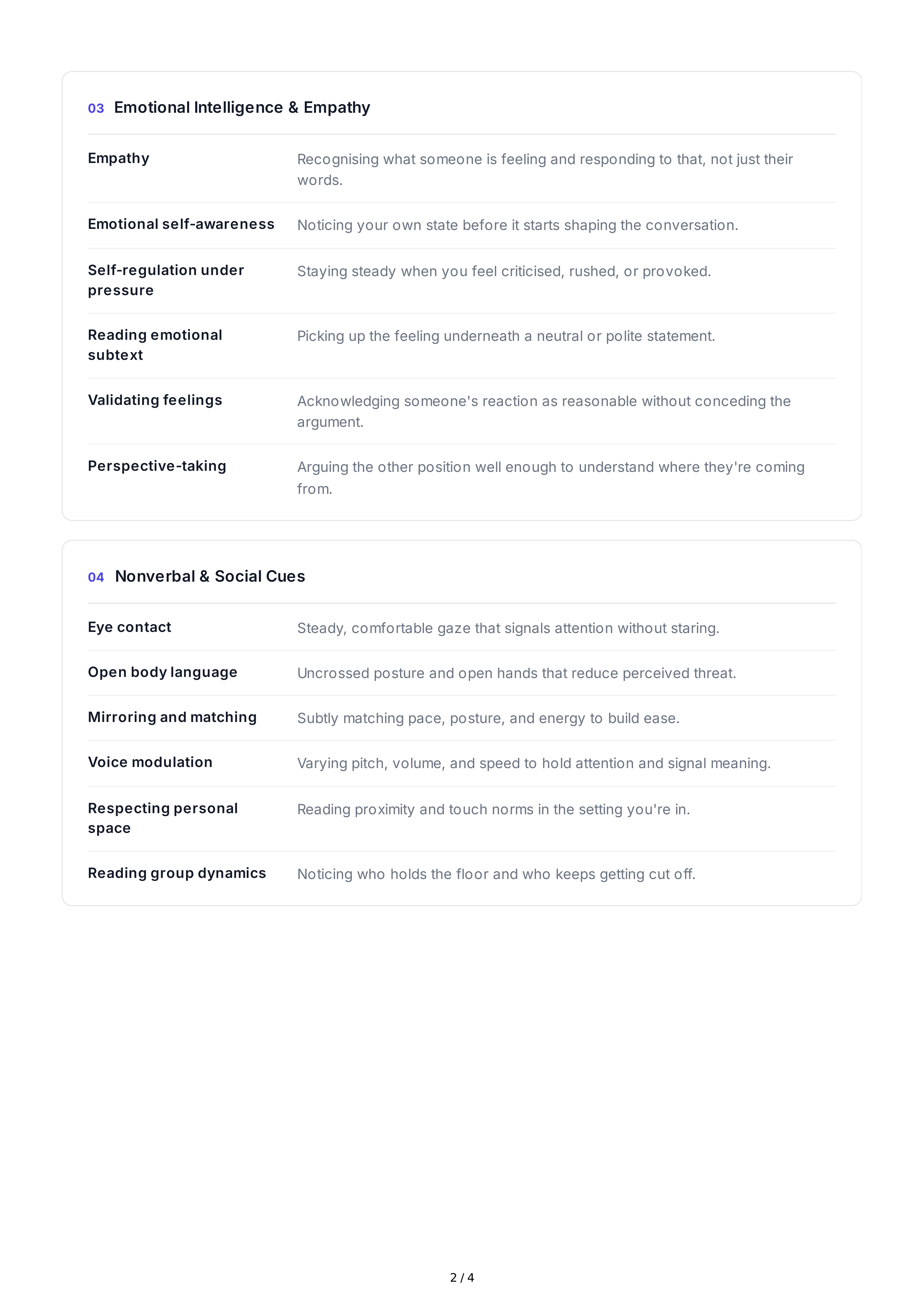
03
Emotional
Intelligence
&
Empathy
Empathy
Recognising
what
someone
is
feeling
and
responding
to
that
,
not
just
their
words
.
Emotional
self
-
awareness
Noticing
your
own
state
before
it
starts
shaping
the
conversation
.
Self
-
regulation
under
pressure
Staying
steady
when
you
feel
criticised
,
rushed
,
or
provoked
.
Reading
emotional
subtext
Picking
up
the
feeling
underneath
a
neutral
or
polite
statement
.
Validating
feelings
Acknowledging
someone
'
s
reaction
as
reasonable
without
conceding
the
argument
.
Perspective
-
taking
Arguing
the
other
position
well
enough
to
understand
where
they
'
re
coming
from
.
04
Nonverbal
&
Social
Cues
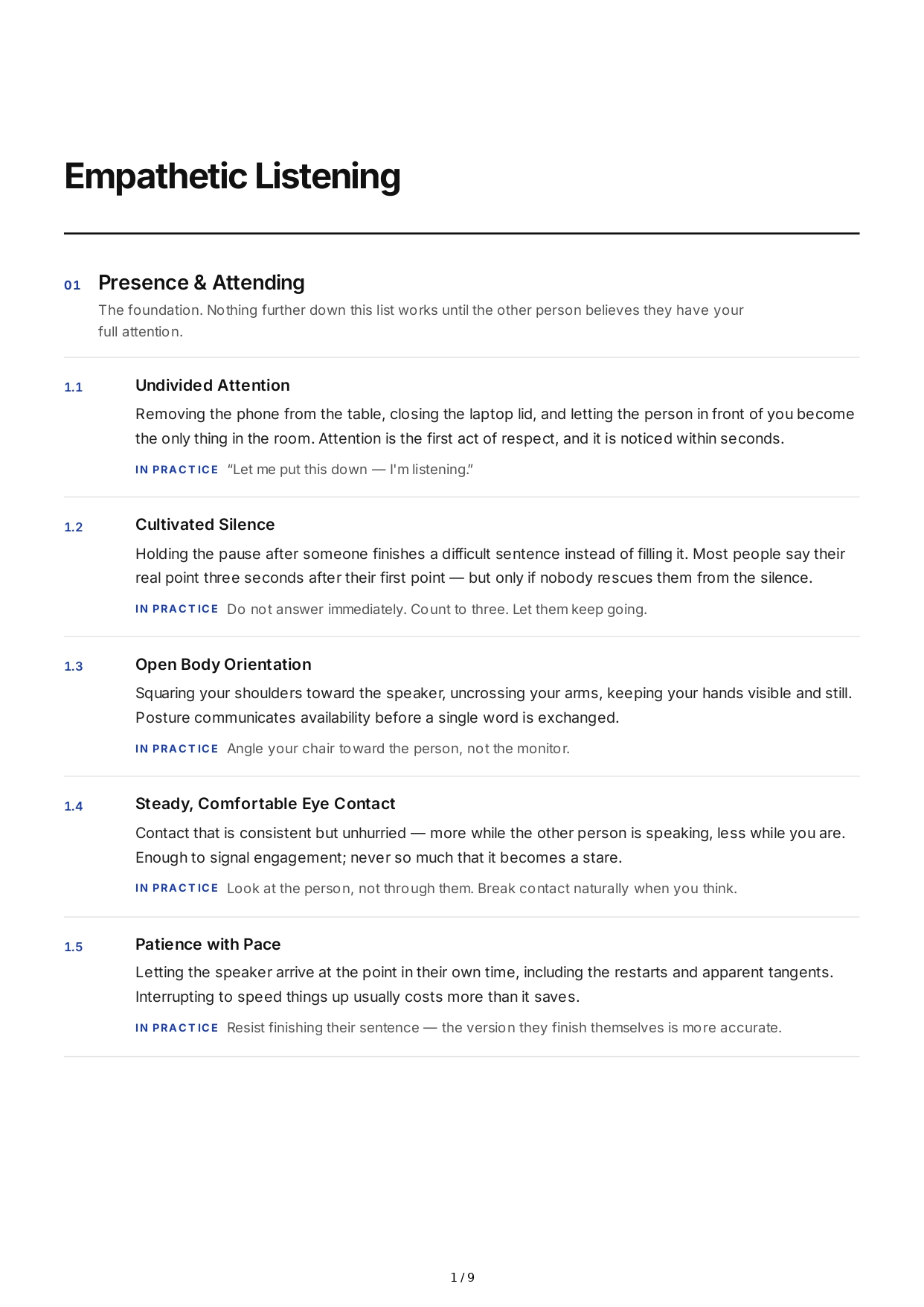
Eye
contact
Steady
,
comfortable
gaze
that
signals
attention
without
staring
.
Open
body
language
Uncrossed
posture
and
open
hands
that
reduce
perceived
threat
.
Mirroring
and
matching
Subtly
matching
pace
,
posture
,
and
energy
to
build
ease
.
Voice
modulation
Varying
pitch
,
volume
,
and
speed
to
hold
attention
and
signal
meaning
.
Respecting
personal
space
Reading
proximity
and
touch
norms
in
the
setting
you
'
re
in
.
Reading
group
dynamics
Noticing
who
holds
the
floor
and
who
keeps
getting
cut
off
.
2 / 4
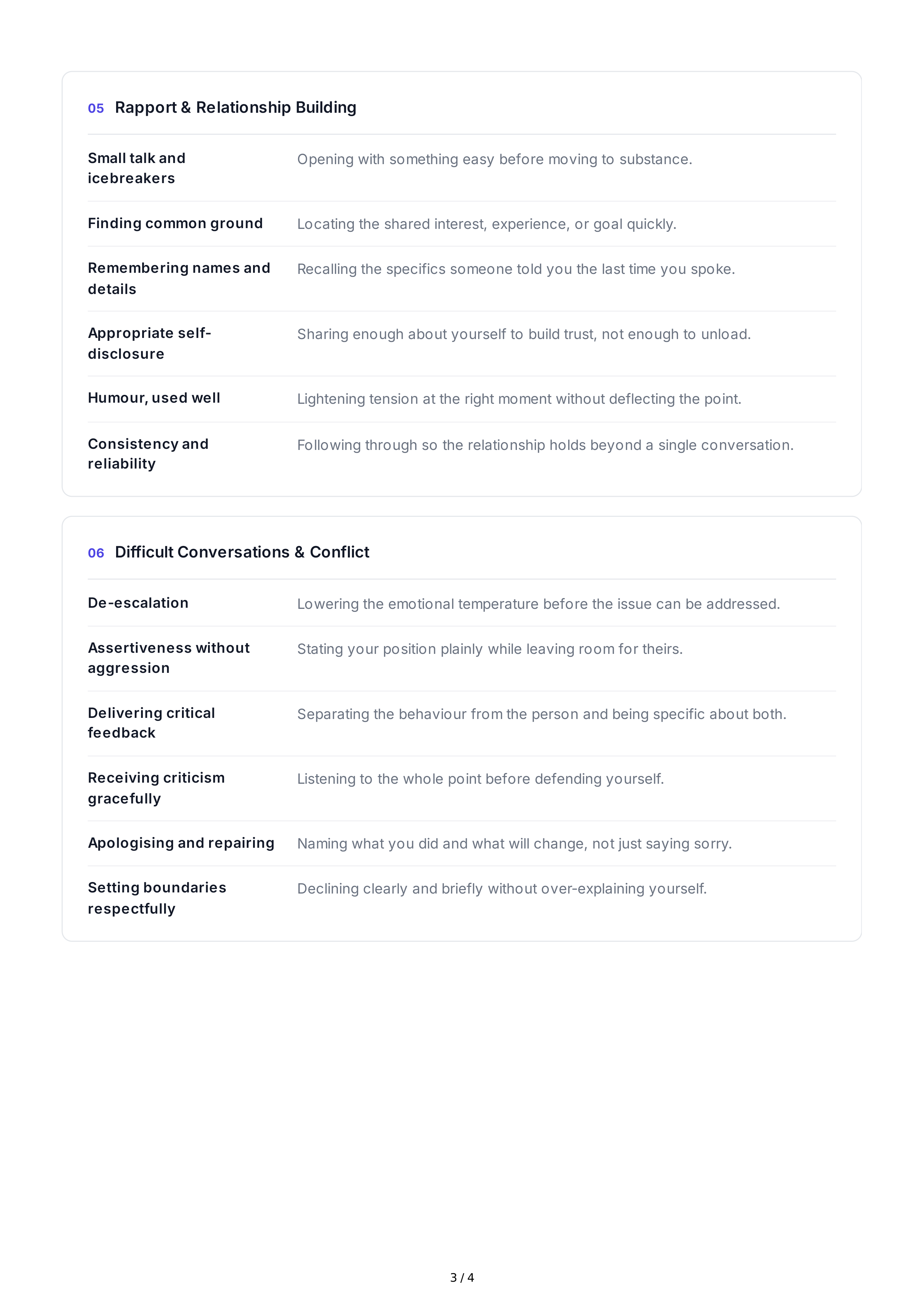
05
Rapport
&
Relationship
Building
Small
talk
and
icebreakers
Opening
with
something
easy
before
moving
to
substance
.
Finding
common
ground
Locating
the
shared
interest
,
experience
,
or
goal
quickly
.
Remembering
names
and
details
Recalling
the
specifics
someone
told
you
the
last
time
you
spoke
.
Appropriate
self
-
disclosure
Sharing
enough
about
yourself
to
build
trust
,
not
enough
to
unload
.
Humour
,
used
well
Lightening
tension
at
the
right
moment
without
deflecting
the
point
.
Consistency
and
reliability
Following
through
so
the
relationship
holds
beyond
a
single
conversation
.
06
Difficult
Conversations
&
Conflict
De
-
escalation
Lowering
the
emotional
temperature
before
the
issue
can
be
addressed
.
Assertiveness
without
aggression
Stating
your
position
plainly
while
leaving
room
for
theirs
.
Delivering
critical
feedback
Separating
the
behaviour
from
the
person
and
being
specific
about
both
.
Receiving
criticism
gracefully
Listening
to
the
whole
point
before
defending
yourself
.
Apologising
and
repairing
Naming
what
you
did
and
what
will
change
,
not
just
saying
sorry
.
Setting
boundaries
respectfully
Declining
clearly
and
briefly
without
over
-
explaining
yourself
.
3 / 4
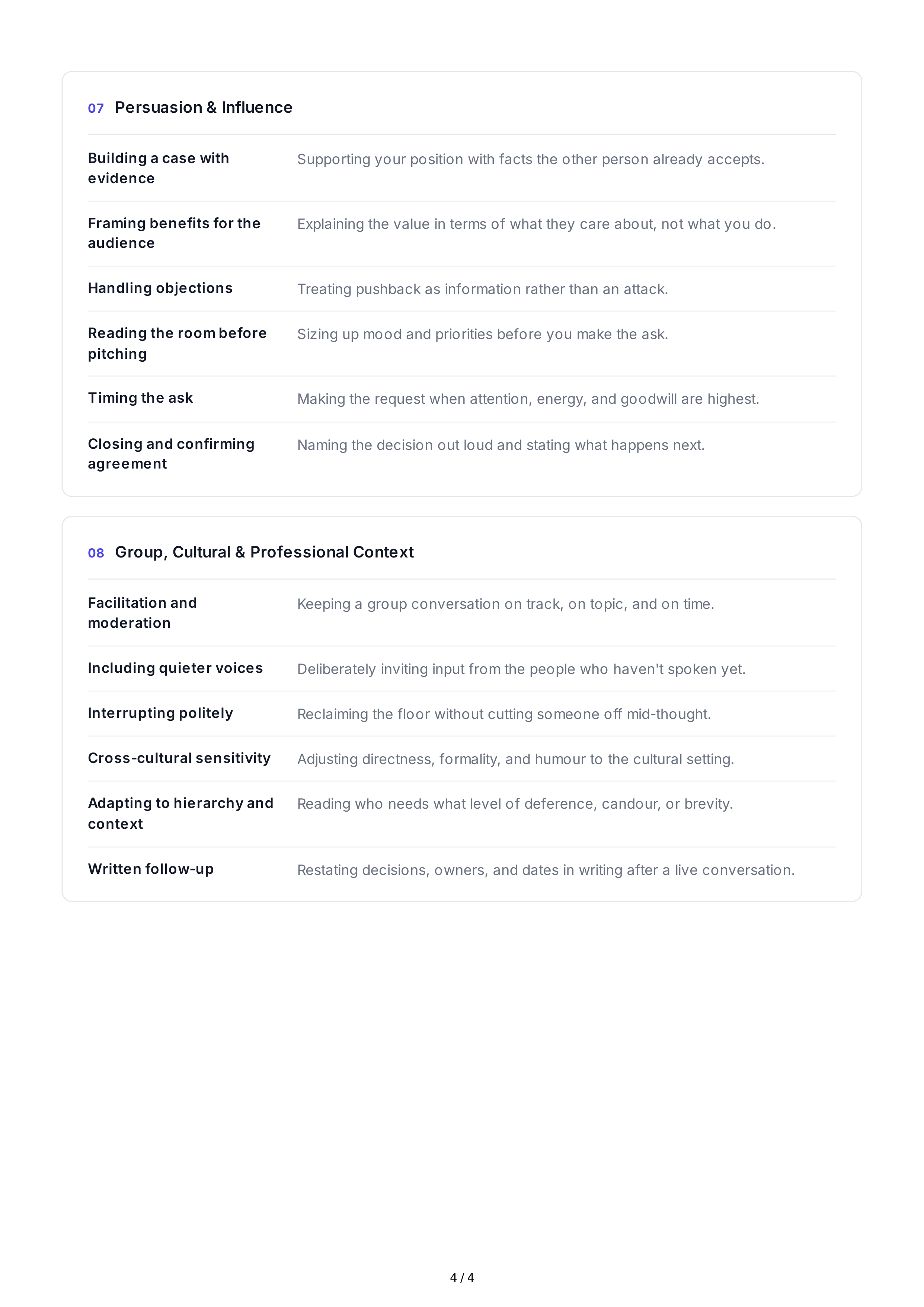
07
Persuasion
&
Influence
Building
a
case
with
evidence
Supporting
your
position
with
facts
the
other
person
already
accepts
.
Framing
benefits
for
the
audience
Explaining
the
value
in
terms
of
what
they
care
about
,
not
what
you
do
.
Handling
objections
Treating
pushback
as
information
rather
than
an
attack
.
Reading
the
room
before
pitching
Sizing
up
mood
and
priorities
before
you
make
the
ask
.
Timing
the
ask
Making
the
request
when
attention
,
energy
,
and
goodwill
are
highest
.
Closing
and
confirming
agreement
Naming
the
decision
out
loud
and
stating
what
happens
next
.
08
Group
,
Cultural
&
Professional
Context
Facilitation
and
moderation
Keeping
a
group
conversation
on
track
,
on
topic
,
and
on
time
.
Including
quieter
voices
Deliberately
inviting
input
from
the
people
who
haven
'
t
spoken
yet
.
Interrupting
politely
Reclaiming
the
floor
without
cutting
someone
off
mid
-
thought
.
Cross
-
cultural
sensitivity
Adjusting
directness
,
formality
,
and
humour
to
the
cultural
setting
.
Adapting
to
hierarchy
and
context
Reading
who
needs
what
level
of
deference
,
candour
,
or
brevity
.
Written
follow
-
up
Restating
decisions
,
owners
,
and
dates
in
writing
after
a
live
conversation
.
4 / 4