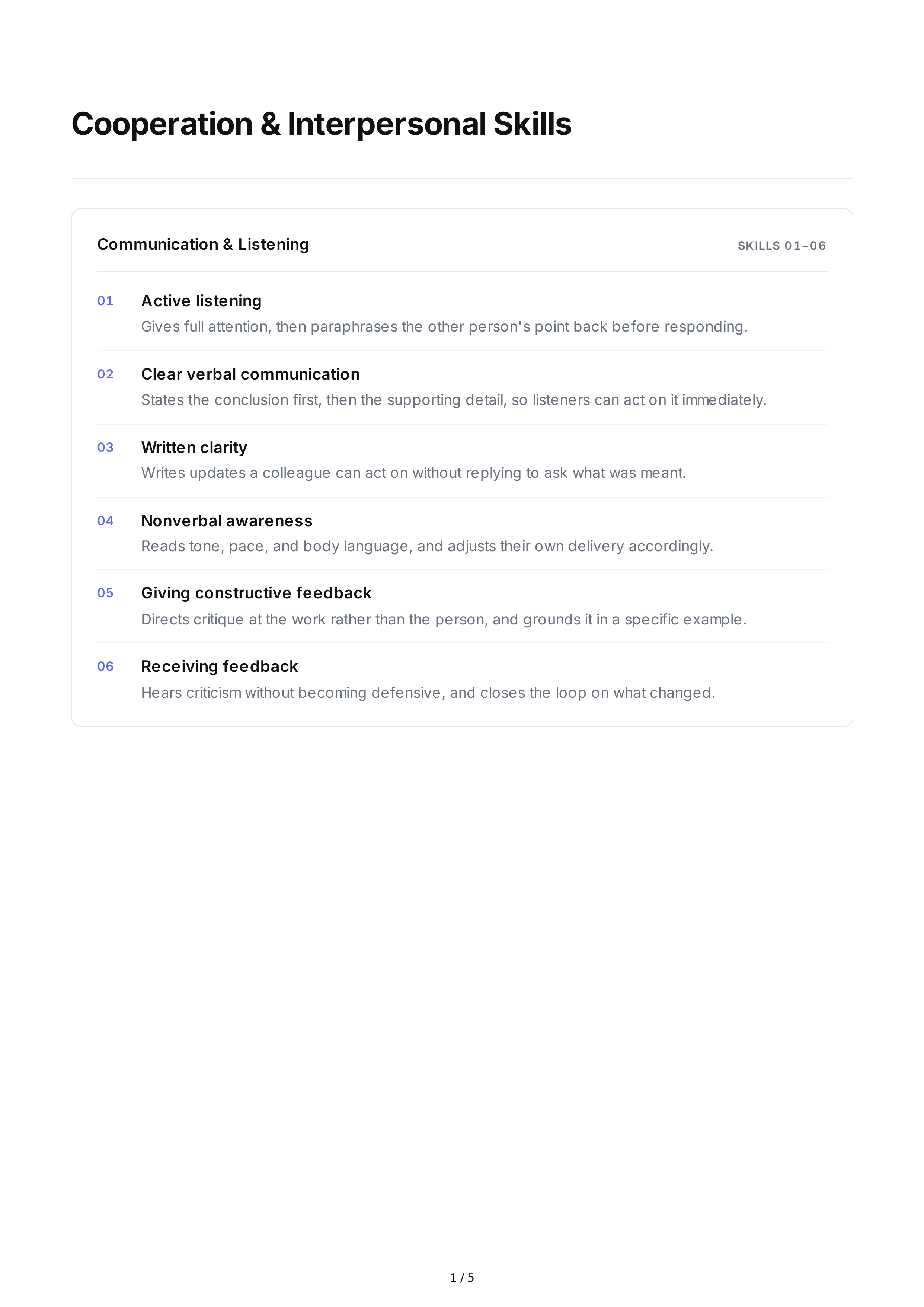
Cooperation
&
Interpersonal
Skills
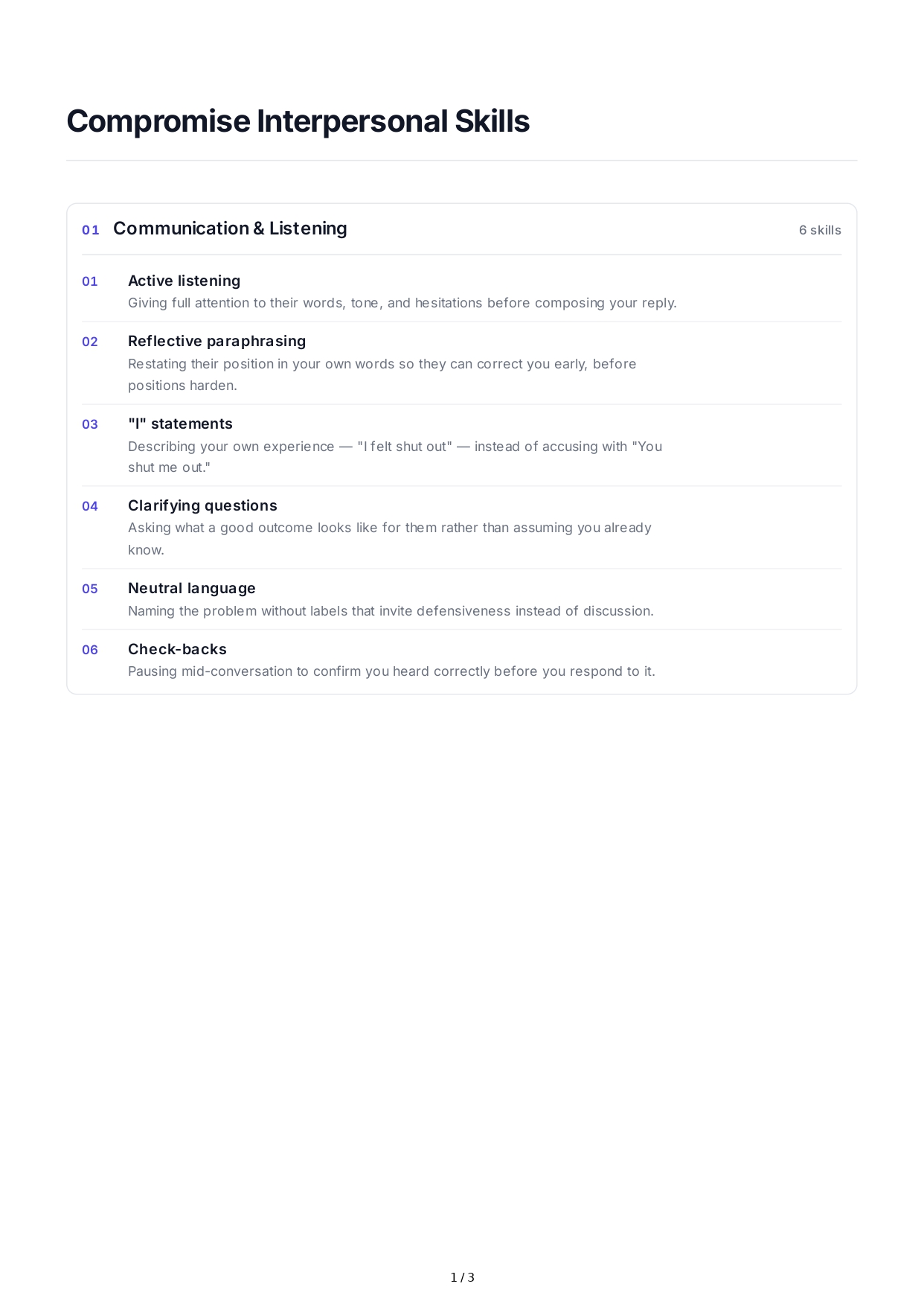
Communication
&
Listening
SKILLS
01–06
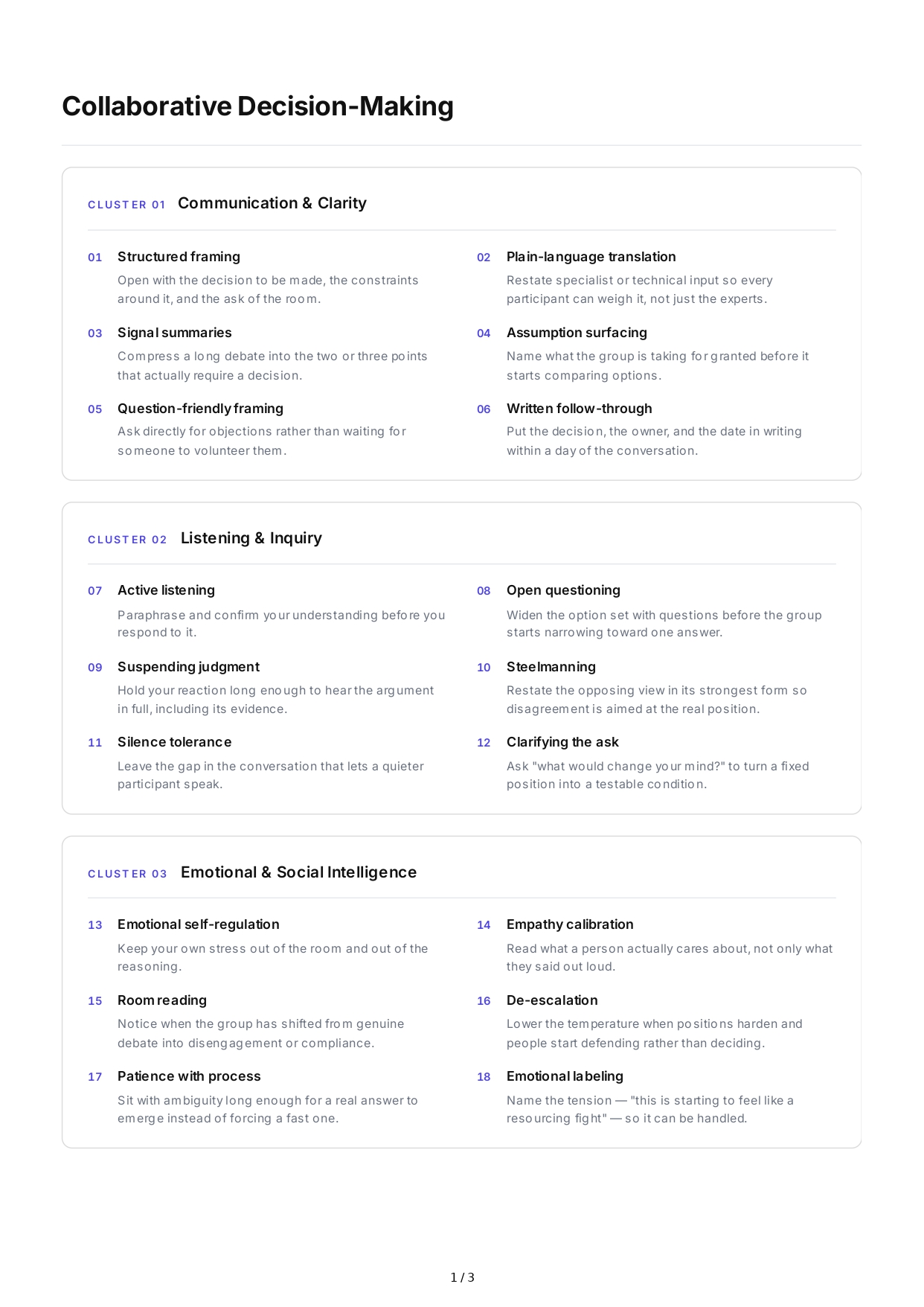
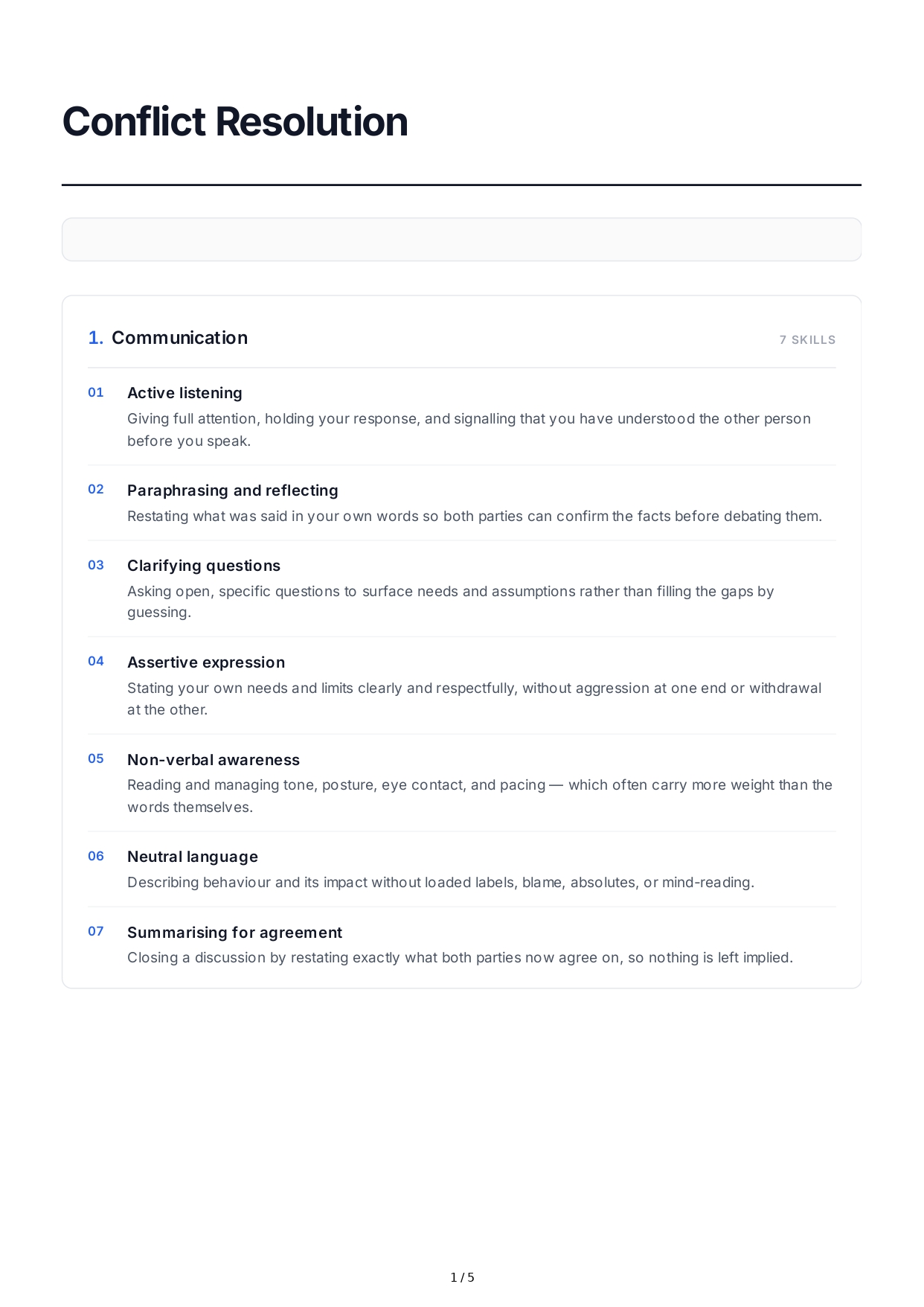
01
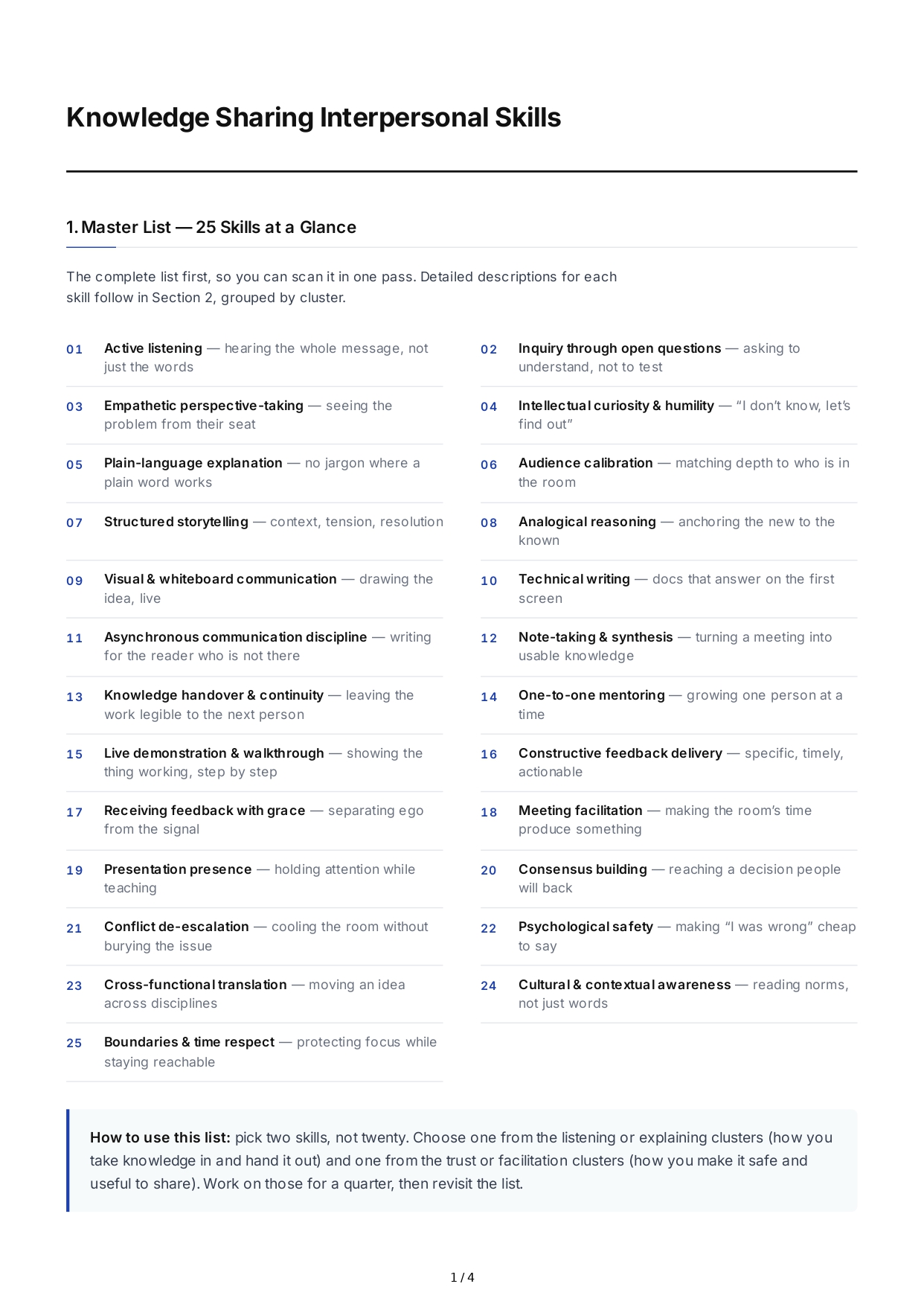
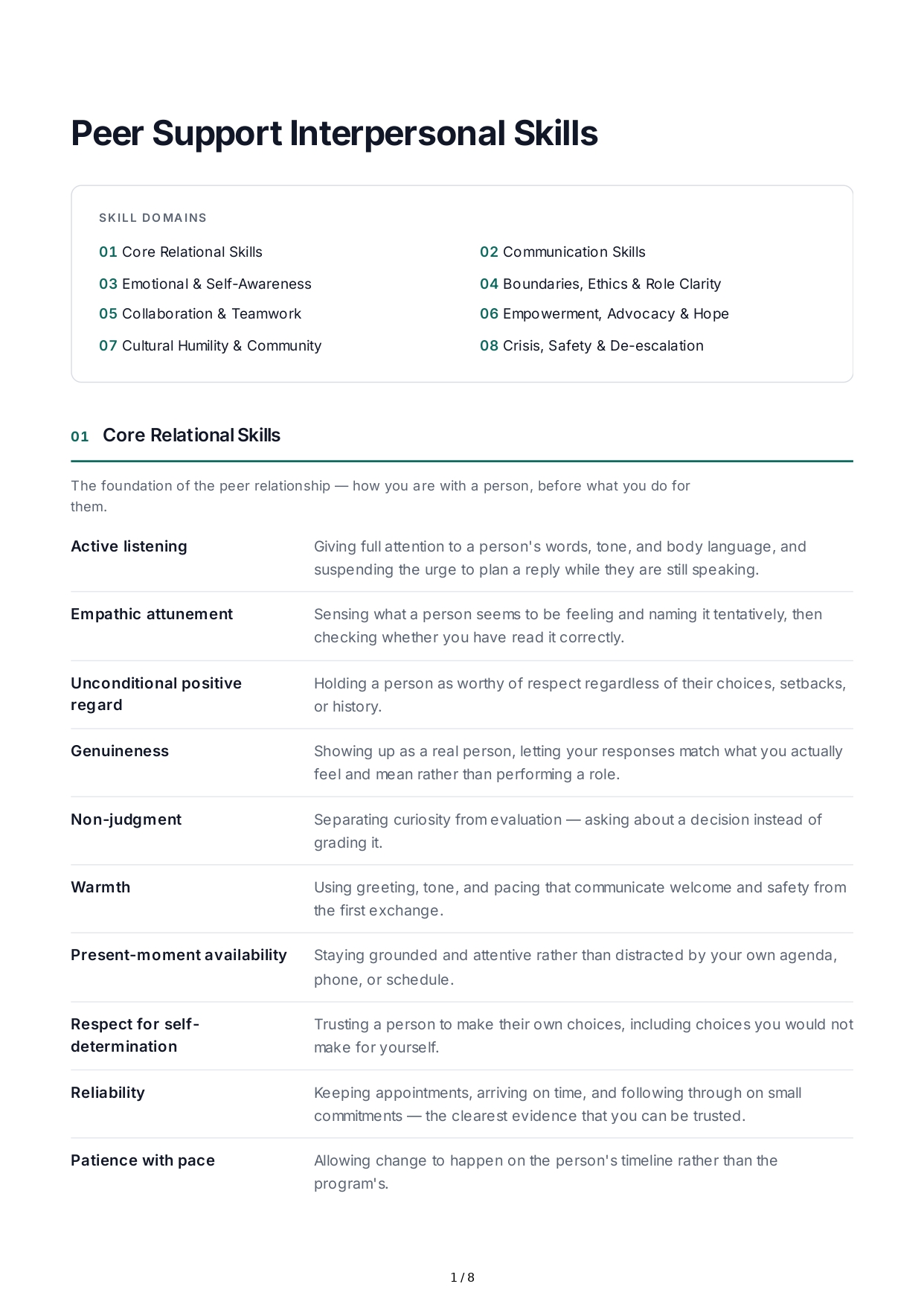
Active
listening
Gives
full
attention
,
then
paraphrases
the
other
person
'
s
point
back
before
responding
.
02
Clear
verbal
communication
States
the
conclusion
first
,
then
the
supporting
detail
,
so
listeners
can
act
on
it
immediately
.
03
Written
clarity
Writes
updates
a
colleague
can
act
on
without
replying
to
ask
what
was
meant
.
04
Nonverbal
awareness
Reads
tone
,
pace
,
and
body
language
,
and
adjusts
their
own
delivery
accordingly
.
05
Giving
constructive
feedback
Directs
critique
at
the
work
rather
than
the
person
,
and
grounds
it
in
a
specific
example
.
06
Receiving
feedback
Hears
criticism
without
becoming
defensive
,
and
closes
the
loop
on
what
changed
.
1 / 5
Teamwork
&
Collaboration
SKILLS
07–12
07
Collaboration
Shares
work
in
progress
early
,
rather
than
presenting
it
only
when
it
is
finished
.
08
Shared
goal
orientation
Optimises
for
the
team
'
s
outcome
over
personal
credit
or
a
preferred
approach
.
09
Dependability
Meets
commitments
,
or
renegotiates
the
deadline
before
it
slips
rather
than
after
.
10
Task
coordination
Tracks
who
owns
what
,
and
follows
up
in
a
way
that
helps
rather
than
nags
.
11
Knowledge
sharing
Documents
how
things
work
so
the
team
is
never
blocked
by
a
single
person
'
s
memory
.
12
Peer
support
Offers
help
before
being
asked
when
a
colleague
is
visibly
underwater
.
Emotional
Intelligence
&
Empathy
SKILLS
13–18
13
Empathy
Notices
when
someone
is
struggling
and
responds
to
the
person
,
not
just
the
task
.
14
Self
-
awareness
Recognises
their
own
triggers
and
names
them
instead
of
acting
on
them
.
15
Emotional
regulation
Stays
steady
under
pressure
so
that
others
can
stay
steady
too
.
16
Social
awareness
Reads
the
room
and
adjusts
tone
,
timing
,
and
channel
to
suit
it
.
17
Patience
Gives
people
the
time
they
need
to
reach
an
answer
or
a
level
of
comfort
with
a
decision
.
18
Respect
for
boundaries
Honours
working
hours
,
focus
time
,
and
personal
limits
—
and
expects
the
same
in
return
.
2 / 5
Conflict
Resolution
&
Negotiation
SKILLS
19–24
19
De
-
escalation
Lowers
the
temperature
in
a
tense
exchange
instead
of
matching
it
.
20
Perspective
taking
Restates
the
other
side
'
s
position
accurately
enough
that
they
agree
with
the
summary
.
21
Interest
-
based
negotiation
Looks
for
the
underlying
need
behind
a
stated
position
,
and
trades
against
it
.
22
Mediation
Helps
two
colleagues
reach
their
own
resolution
rather
than
handing
down
a
ruling
.
23
Disagreeing
respectfully
Challenges
an
idea
in
the
room
,
not
in
a
side
channel
afterwards
.
24
Repair
Apologises
specifically
,
and
changes
the
behaviour
that
caused
the
friction
.
Leadership
&
Influence
SKILLS
25–30
25
Trust
building
Follows
through
on
small
commitments
so
that
larger
ones
are
believed
.
26
Mentoring
Develops
colleagues
by
asking
questions
rather
than
handing
over
answers
.
27
Delegation
Matches
work
to
a
person
'
s
growth
edge
,
with
the
context
and
support
to
succeed
.
28
Recognition
Credits
contributions
publicly
and
names
precisely
what
the
person
did
.
29
Influencing
without
authority
Builds
agreement
across
teams
that
do
not
report
to
them
.
30
Facilitation
Runs
a
discussion
where
the
quietest
relevant
voice
is
still
heard
.
3 / 5
Cross
-
Cultural
&
Remote
Collaboration
SKILLS
31–36
31
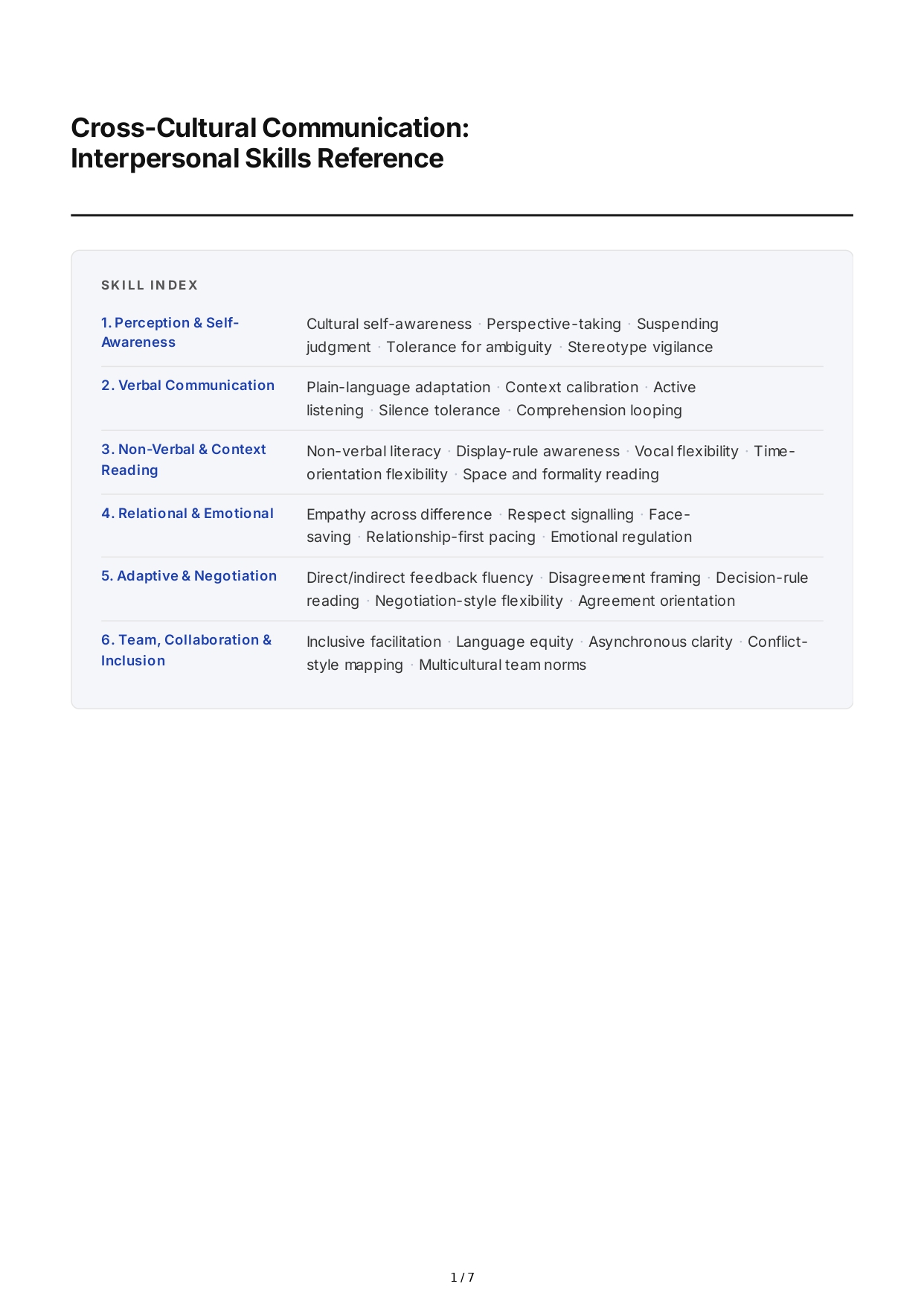
Cultural
sensitivity
Adapts
communication
style
across
differing
norms
of
directness
,
hierarchy
,
and
silence
.
32
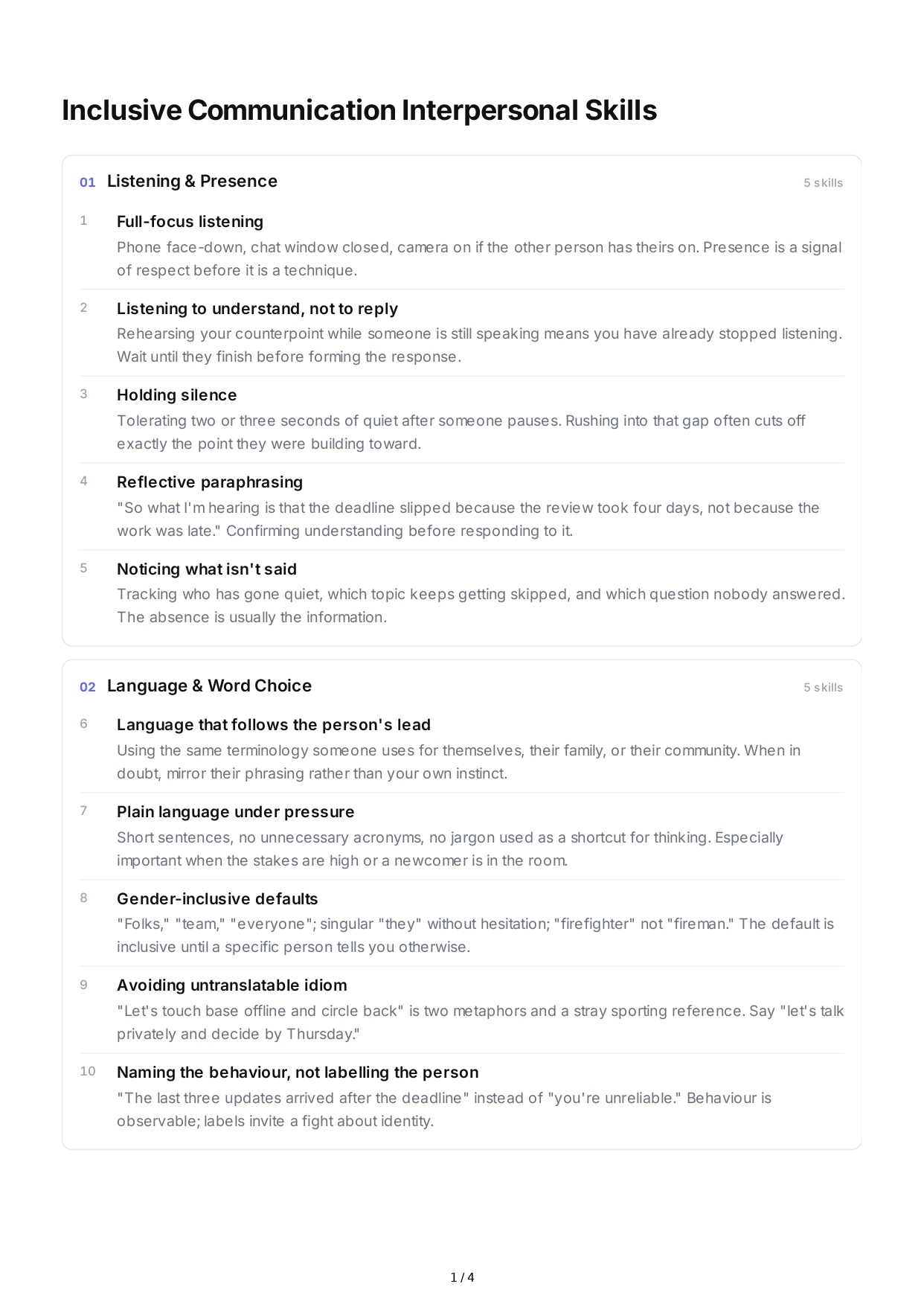
Inclusive
communication
Uses
names
and
pronouns
correctly
,
and
actively
invites
the
missing
perspective
.
33
Language
accommodation
Slows
down
,
avoids
idiom
,
and
confirms
understanding
when
working
in
a
second
language
.
34
Asynchronous
communication
Writes
updates
that
work
across
time
zones
without
requiring
another
meeting
.
35
Remote
presence
Keeps
distributed
teammates
visible
and
included
in
decisions
as
they
happen
.
36
Time
-
zone
fairness
Rotates
meeting
times
instead
of
defaulting
to
headquarters
'
working
hours
.
Reliability
,
Trust
&
Professionalism
SKILLS
37–42
37
Accountability
Owns
a
mistake
without
being
prompted
,
and
states
the
correction
.
38
Discretion
Keeps
confidences
and
handles
sensitive
information
with
care
.
39
Composure
Maintains
a
consistent
manner
during
a
crisis
or
an
escalated
deadline
.
40
Adaptability
Adjusts
to
a
teammate
'
s
changed
circumstances
without
keeping
score
.
41
Follow
-
through
Arrives
prepared
and
on
time
,
and
closes
action
items
rather
than
letting
them
drift
.
42
Professional
courtesy
Treats
support
staff
,
contractors
,
and
junior
colleagues
with
the
same
regard
as
executives
.
4 / 5
Building
Rapport
&
Everyday
Cooperation
SKILLS
43–48
43
Approachability
Makes
it
easy
for
people
to
raise
a
problem
early
,
while
it
is
still
small
.
44
Conversational
skill
Opens
with
something
genuine
and
specific
rather
than
a
rehearsed
script
.
45
Expressing
gratitude
Names
exactly
what
someone
did
and
why
it
helped
,
shortly
after
it
happened
.
46
Humour
with
judgement
Uses
levity
to
ease
tension
,
never
at
another
person
'
s
expense
.
47
Relationship
maintenance
Stays
in
touch
with
colleagues
and
contacts
before
needing
something
from
them
.
48
Making
introductions
Connects
people
who
should
know
each
other
,
and
explains
why
.
5 / 5