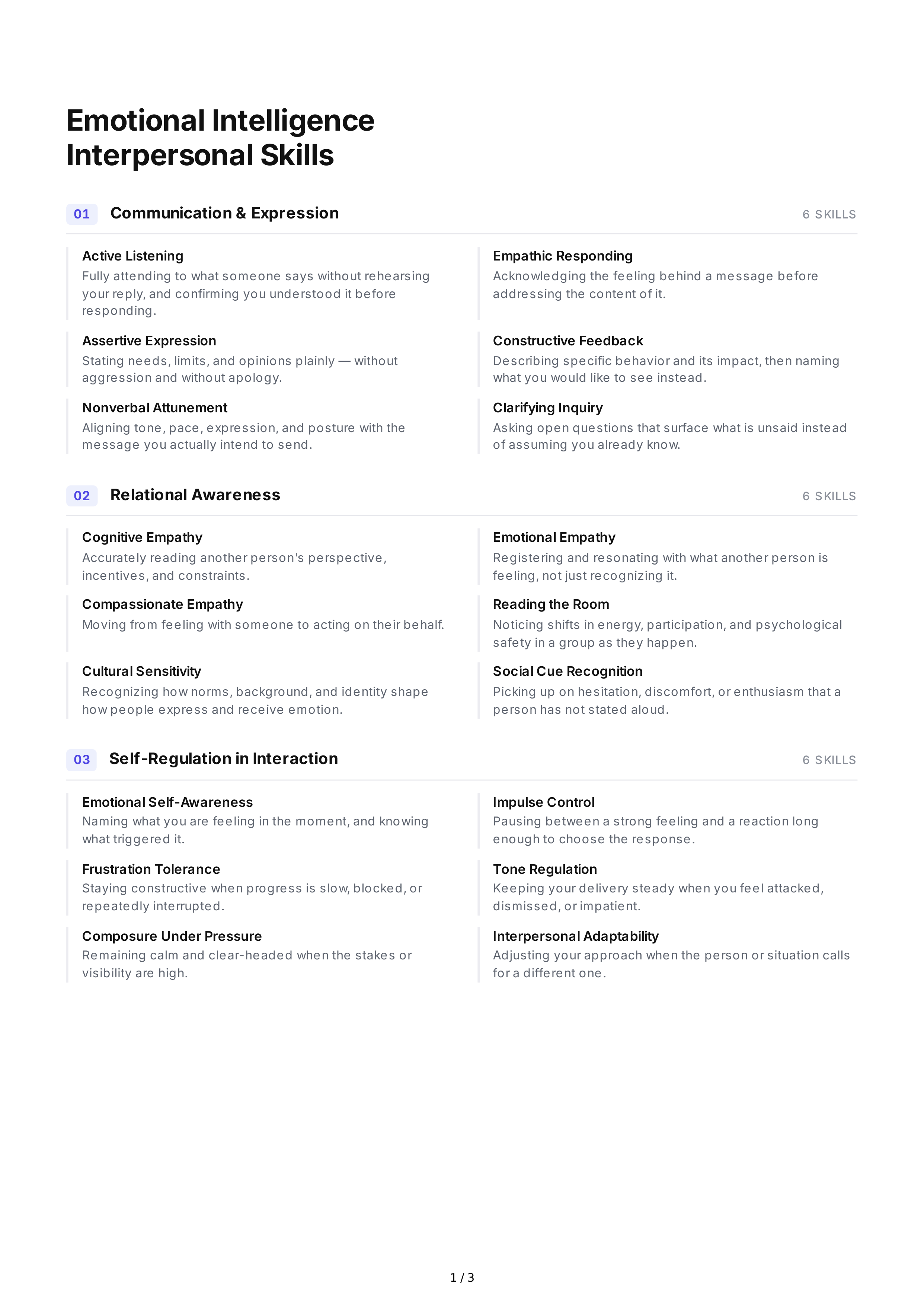
Emotional
Intelligence
Interpersonal
Skills
01
Communication
&
Expression
6
SKILLS
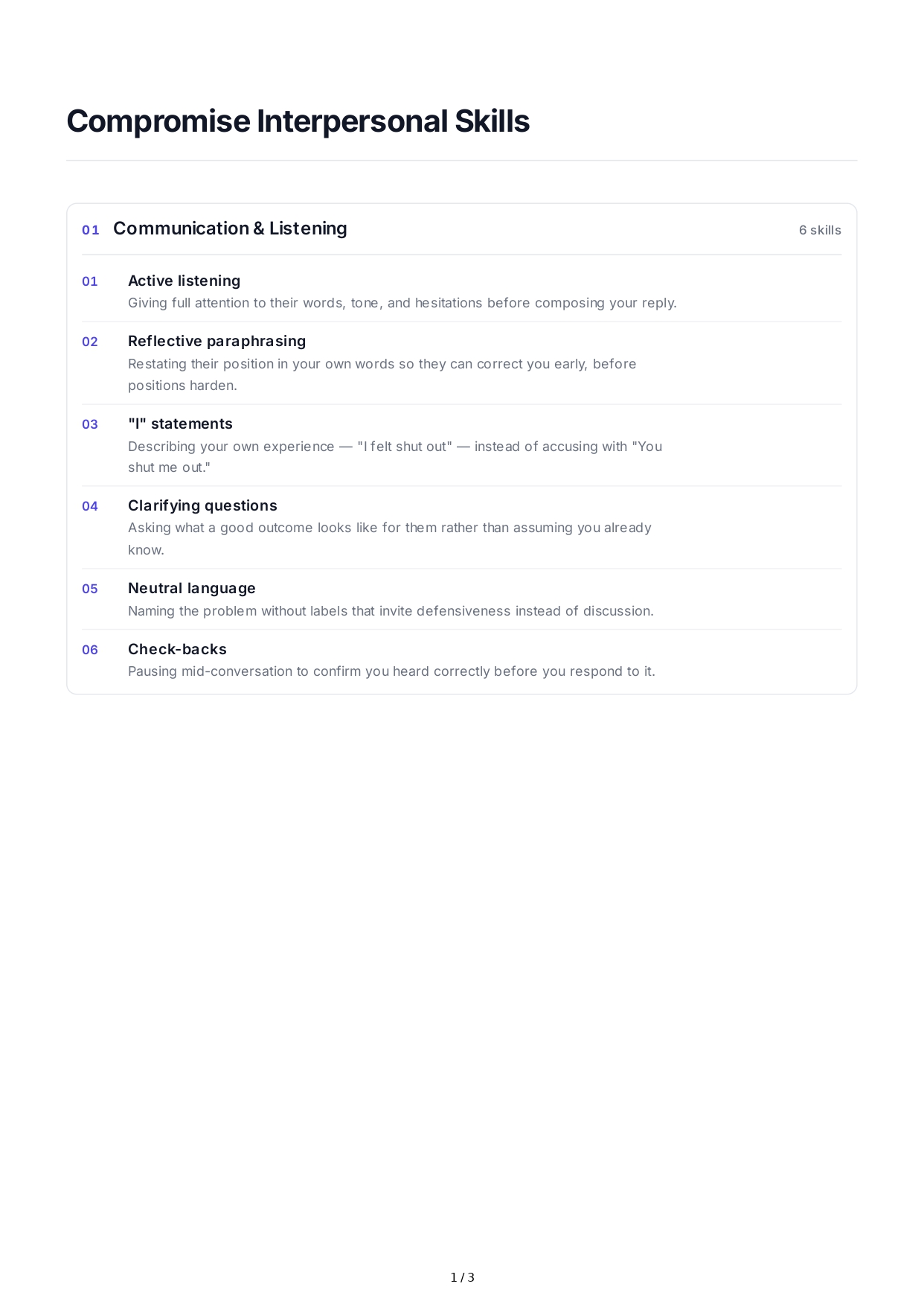
Active
Listening
Fully
attending
to
what
someone
says
without
rehearsing
your
reply
,
and
confirming
you
understood
it
before
responding
.
Empathic
Responding
Acknowledging
the
feeling
behind
a
message
before
addressing
the
content
of
it
.
Assertive
Expression
Stating
needs
,
limits
,
and
opinions
plainly
—
without
aggression
and
without
apology
.
Constructive
Feedback
Describing
specific
behavior
and
its
impact
,
then
naming
what
you
would
like
to
see
instead
.
Nonverbal
Attunement
Aligning
tone
,
pace
,
expression
,
and
posture
with
the
message
you
actually
intend
to
send
.
Clarifying
Inquiry
Asking
open
questions
that
surface
what
is
unsaid
instead
of
assuming
you
already
know
.
02
Relational
Awareness
6
SKILLS
Cognitive
Empathy
Accurately
reading
another
person
'
s
perspective
,
incentives
,
and
constraints
.
Emotional
Empathy
Registering
and
resonating
with
what
another
person
is
feeling
,
not
just
recognizing
it
.
Compassionate
Empathy
Moving
from
feeling
with
someone
to
acting
on
their
behalf
.
Reading
the
Room
Noticing
shifts
in
energy
,
participation
,
and
psychological
safety
in
a
group
as
they
happen
.
Cultural
Sensitivity
Recognizing
how
norms
,
background
,
and
identity
shape
how
people
express
and
receive
emotion
.
Social
Cue
Recognition
Picking
up
on
hesitation
,
discomfort
,
or
enthusiasm
that
a
person
has
not
stated
aloud
.
03
Self
-
Regulation
in
Interaction
6
SKILLS
Emotional
Self
-
Awareness
Naming
what
you
are
feeling
in
the
moment
,
and
knowing
what
triggered
it
.
Impulse
Control
Pausing
between
a
strong
feeling
and
a
reaction
long
enough
to
choose
the
response
.
Frustration
Tolerance
Staying
constructive
when
progress
is
slow
,
blocked
,
or
repeatedly
interrupted
.
Tone
Regulation
Keeping
your
delivery
steady
when
you
feel
attacked
,
dismissed
,
or
impatient
.
Composure
Under
Pressure
Remaining
calm
and
clear
-
headed
when
the
stakes
or
visibility
are
high
.
Interpersonal
Adaptability
Adjusting
your
approach
when
the
person
or
situation
calls
for
a
different
one
.
1 / 3
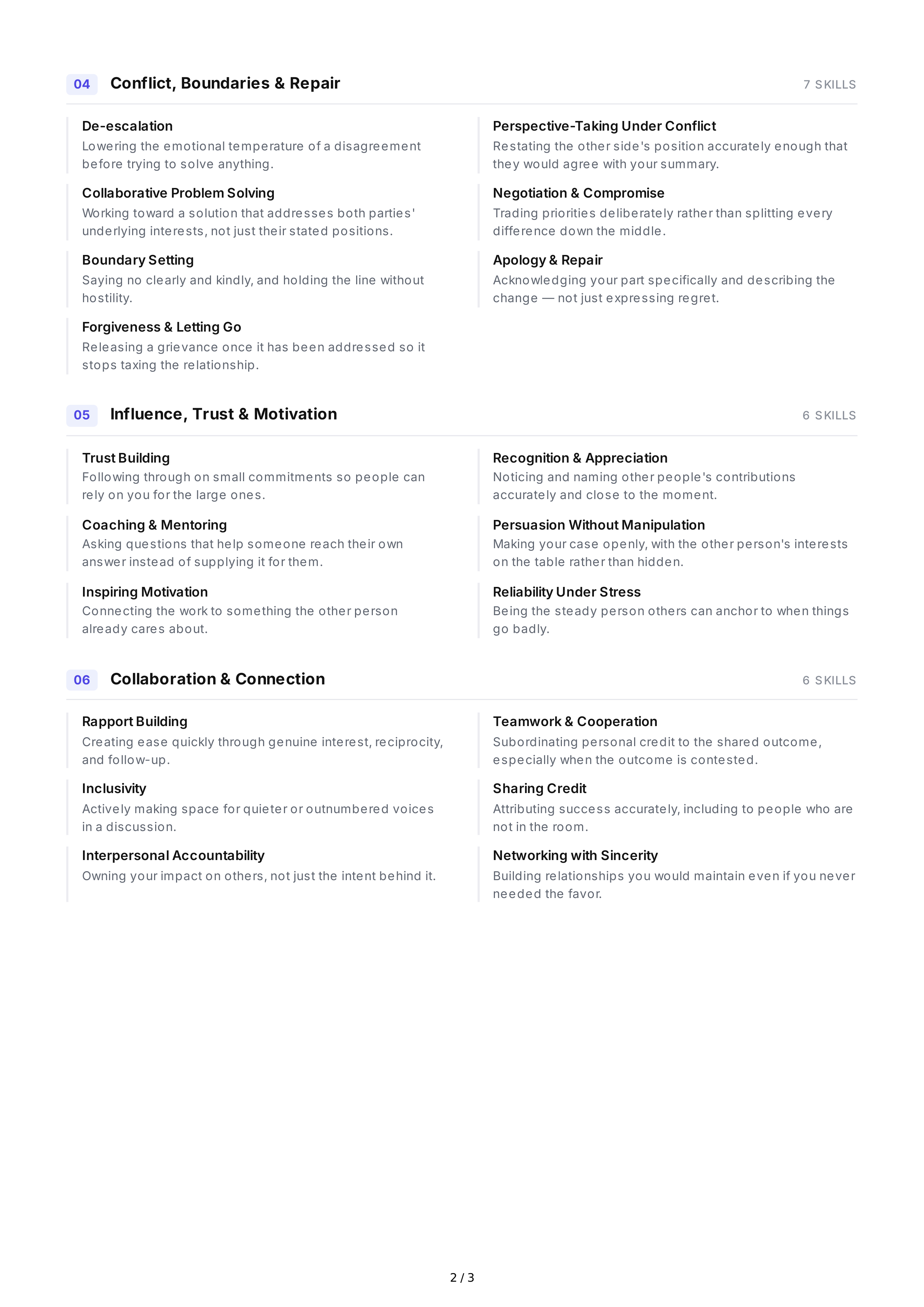
04
Conflict
,
Boundaries
&
Repair
7
SKILLS
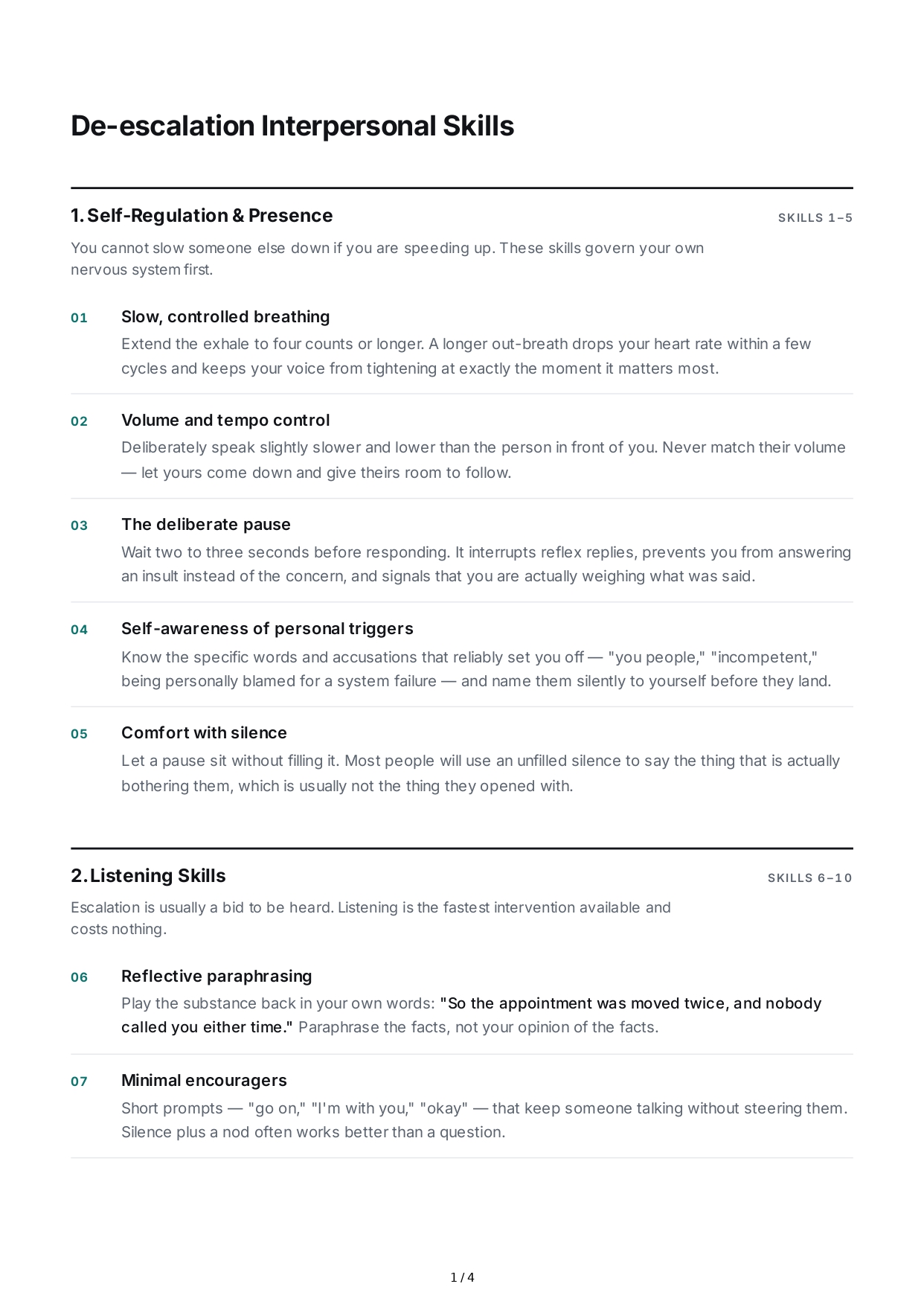
De
-
escalation
Lowering
the
emotional
temperature
of
a
disagreement
before
trying
to
solve
anything
.
Perspective
-
Taking
Under
Conflict
Restating
the
other
side
'
s
position
accurately
enough
that
they
would
agree
with
your
summary
.
Collaborative
Problem
Solving
Working
toward
a
solution
that
addresses
both
parties
'
underlying
interests
,
not
just
their
stated
positions
.
Negotiation
&
Compromise
Trading
priorities
deliberately
rather
than
splitting
every
difference
down
the
middle
.
Boundary
Setting
Saying
no
clearly
and
kindly
,
and
holding
the
line
without
hostility
.
Apology
&
Repair
Acknowledging
your
part
specifically
and
describing
the
change
—
not
just
expressing
regret
.
Forgiveness
&
Letting
Go
Releasing
a
grievance
once
it
has
been
addressed
so
it
stops
taxing
the
relationship
.
05
Influence
,
Trust
&
Motivation
6
SKILLS
Trust
Building
Following
through
on
small
commitments
so
people
can
rely
on
you
for
the
large
ones
.
Recognition
&
Appreciation
Noticing
and
naming
other
people
'
s
contributions
accurately
and
close
to
the
moment
.
Coaching
&
Mentoring
Asking
questions
that
help
someone
reach
their
own
answer
instead
of
supplying
it
for
them
.
Persuasion
Without
Manipulation
Making
your
case
openly
,
with
the
other
person
'
s
interests
on
the
table
rather
than
hidden
.
Inspiring
Motivation
Connecting
the
work
to
something
the
other
person
already
cares
about
.
Reliability
Under
Stress
Being
the
steady
person
others
can
anchor
to
when
things
go
badly
.
06
Collaboration
&
Connection
6
SKILLS
Rapport
Building
Creating
ease
quickly
through
genuine
interest
,
reciprocity
,
and
follow
-
up
.
Teamwork
&
Cooperation
Subordinating
personal
credit
to
the
shared
outcome
,
especially
when
the
outcome
is
contested
.
Inclusivity
Actively
making
space
for
quieter
or
outnumbered
voices
in
a
discussion
.
Sharing
Credit
Attributing
success
accurately
,
including
to
people
who
are
not
in
the
room
.
Interpersonal
Accountability
Owning
your
impact
on
others
,
not
just
the
intent
behind
it
.
Networking
with
Sincerity
Building
relationships
you
would
maintain
even
if
you
never
needed
the
favor
.
2 / 3
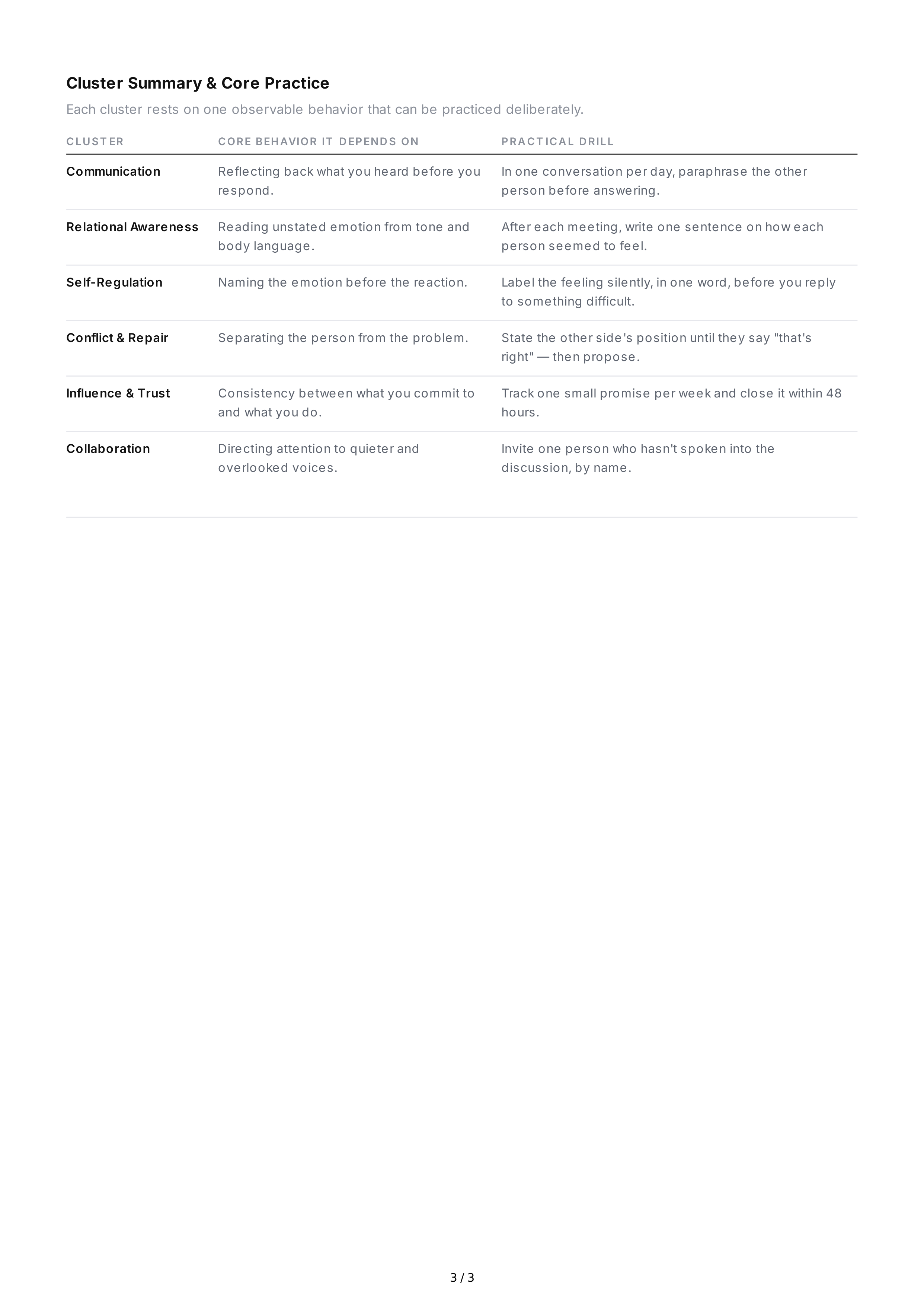
Cluster
Summary
&
Core
Practice
Each
cluster
rests
on
one
observable
behavior
that
can
be
practiced
deliberately
.
CLUST ER
CORE
BEHAVIOR
IT
D EPEND S
ON
PRA CT ICA L
D RILL
Communication
Reflecting
back
what
you
heard
before
you
respond
.
In
one
conversation
per
day
,
paraphrase
the
other
person
before
answering
.
Relational
Awareness
Reading
unstated
emotion
from
tone
and
body
language
.
After
each
meeting
,
write
one
sentence
on
how
each
person
seemed
to
feel
.
Self
-
Regulation
Naming
the
emotion
before
the
reaction
.
Label
the
feeling
silently
,
in
one
word
,
before
you
reply
to
something
difficult
.
Conflict
&
Repair
Separating
the
person
from
the
problem
.
State
the
other
side
'
s
position
until
they
say
"
that
'
s
right
" —
then
propose
.
Influence
&
Trust
Consistency
between
what
you
commit
to
and
what
you
do
.
Track
one
small
promise
per
week
and
close
it
within
48
hours
.
Collaboration
Directing
attention
to
quieter
and
overlooked
voices
.
Invite
one
person
who
hasn
'
t
spoken
into
the
discussion
,
by
name
.
3 / 3