Interpersonal
Skills
for
Effective
Teams
T HE
40
SKILLS
AT
A
GLANCE
1.
Active
listening
2.
Clarifying
questions
3.
Plain
-
language
updates
4.
Constructive
feedback
5.
Receiving
criticism
gracefully
6.
Sharing
credit
7.
Proactive
offers
of
help
8.
Negotiating
competing
priorities
9.
Clean
handoffs
10.
"
Yes
,
and
"
building
11.
Empathy
12.
Self
-
regulation
13.
Reading
the
room
14.
Naming
your
own
state
15.
Noticing
when
someone
is
off
16.
Following
through
17.
Owning
mistakes
early
18.
Transparency
about
blockers
19.
Consistency
across
the
org
chart
20.
Keeping
confidence
21.
Disagreeing
with
the
idea
22.
De
-
escalation
23.
Interest
-
based
problem
solving
24.
Repair
conversations
25.
Peer
mediation
26.
Psychological
safety
27.
Inviting
quieter
voices
28.
Public
credit
29.
Communication
-
style
awareness
30.
Interrupting
disrespect
31.
Facilitating
meetings
32.
Coaching
peers
33.
Specific
recognition
34.
Aligning
a
group
on
a
decision
35.
Modeling
accountability
36.
Staying
curious
37.
Flexibility
under
new
constraints
38.
Lightness
39.
Honest
capacity
40.
Recovery
after
a
setback
SKILLS
BY
AREA
1 / 3
01
Communication
How
information
moves
between
people
—
and
how
it
lands
once
it
arrives
.
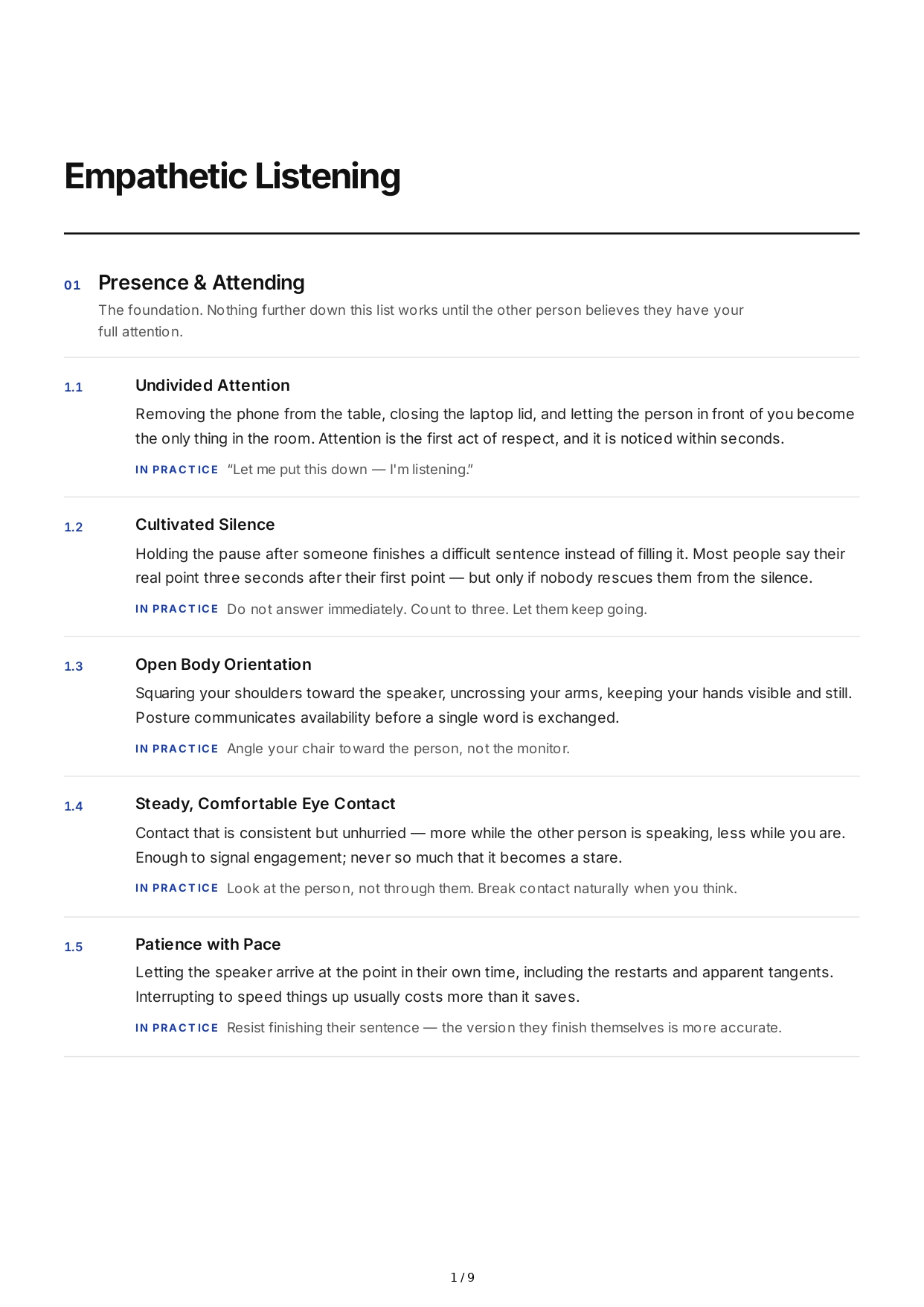
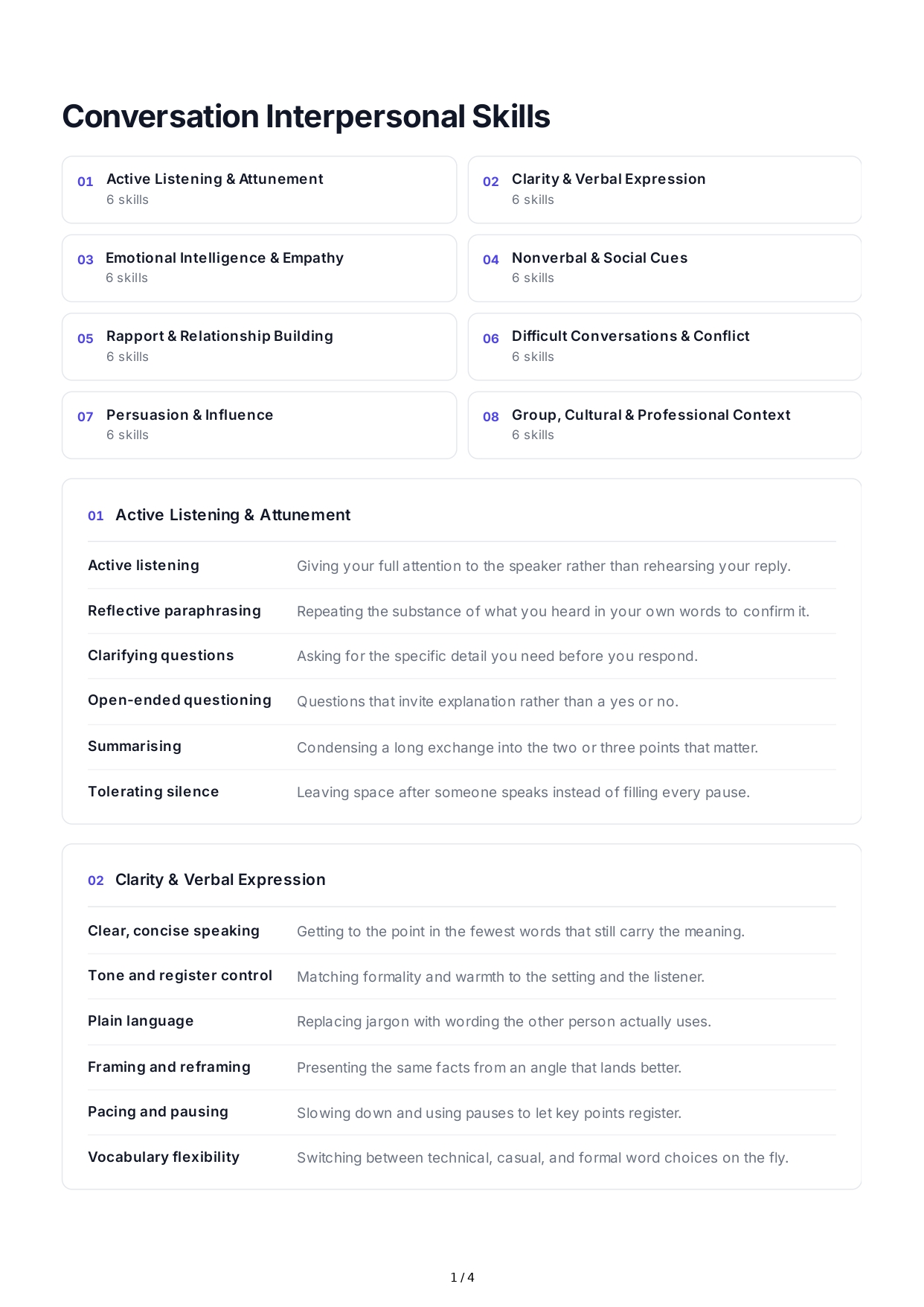
Active
listening
Letting
someone
finish
,
then
reflecting
back
what
you
heard
before
you
respond
to
it
.
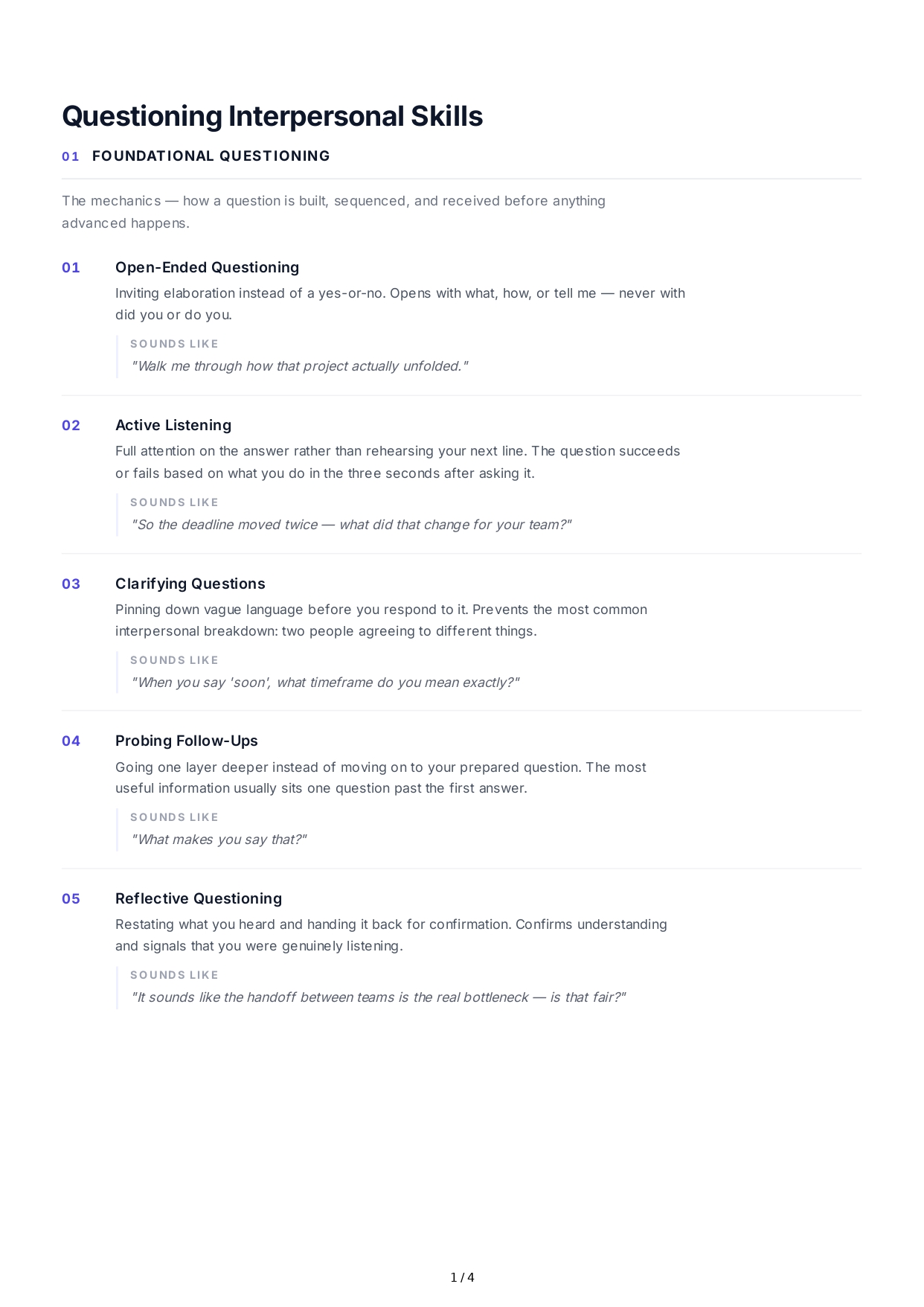
Clarifying
questions
Asking
"
what
does
done
look
like
?"
instead
of
assuming
you
and
your
teammate
mean
the
same
thing
.
Plain
-
language
updates
Status
notes
a
non
-
specialist
teammate
could
act
on
in
thirty
seconds
.
Constructive
feedback
Describing
the
specific
behavior
and
its
impact
,
not
the
other
person
'
s
character
.
Receiving
criticism
gracefully
Thanking
the
giver
,
asking
one
follow
-
up
question
,
and
deciding
what
to
do
with
it
later
.
02
Collaboration
Working
with
others
on
shared
output
,
where
credit
and
workload
are
both
finite
.
Sharing
credit
Naming
who
actually
did
the
work
,
in
public
,
every
time
the
work
comes
up
.
Proactive
offers
of
help
Spotting
an
overloaded
teammate
and
asking
what
to
take
off
their
plate
—
specifically
.
Negotiating
competing
priorities
Working
through
trade
-
offs
in
the
open
instead
of
quietly
deprioritizing
someone
else
'
s
work
.
Clean
handoffs
Leaving
enough
context
that
the
next
person
does
not
have
to
re
-
derive
your
thinking
.
"
Yes
,
and
"
building
Adding
to
a
colleague
'
s
idea
before
critiquing
it
,
so
the
proposal
improves
rather
than
dies
.
03
Emotional
intelligence
Reading
and
responding
to
the
human
state
of
a
room
,
including
your
own
.
Empathy
Recognizing
what
a
teammate
is
feeling
and
adjusting
your
response
to
it
.
Self
-
regulation
Noticing
the
urge
to
snap
in
a
tense
review
—
and
choosing
your
words
anyway
.
Reading
the
room
Noticing
when
a
discussion
has
shifted
from
productive
debate
into
discomfort
.
Naming
your
own
state
Saying
"
I
'
m
frustrated
about
this
,
and
it
isn
'
t
about
you
"
so
the
other
person
isn
'
t
guessing
.
Noticing
when
someone
is
off
Checking
in
on
the
colleague
who
has
gone
quiet
in
a
channel
they
used
to
lead
.
04
Trust
&
reliability
The
unglamorous
behaviors
that
make
a
team
stop
needing
to
double
-
check
each
other
.
Following
through
Doing
the
small
thing
you
said
you
would
do
,
without
anyone
reminding
you
.
Owning
mistakes
early
Reporting
the
error
with
a
proposed
fix
,
before
someone
else
discovers
it
.
Transparency
about
blockers
Flagging
a
slipping
date
the
day
you
learn
it
,
not
the
day
it
was
due
.
Consistency
across
the
org
chart
Behaving
the
same
way
toward
people
who
can
and
cannot
help
your
career
.
Keeping
confidence
Holding
what
was
said
in
a
private
conversation
instead
of
trading
it
for
social
capital
.
2 / 3
05
Conflict
&
disagreement
Handling
friction
so
the
team
keeps
the
argument
and
loses
the
resentment
.
Disagreeing
with
the
idea
Pressure
-
testing
the
proposal
'
s
assumptions
rather
than
the
proposer
'
s
competence
.
De
-
escalation
Lowering
the
temperature
when
a
thread
turns
personal
,
without
dismissing
the
concern
.
Interest
-
based
problem
solving
Asking
what
each
side
actually
needs
before
splitting
the
difference
down
the
middle
.
Repair
conversations
Going
back
after
friction
to
clear
the
air
,
instead
of
letting
it
quietly
set
.
Peer
mediation
Helping
two
teammates
hear
each
other
without
becoming
a
permanent
referee
.
06
Inclusion
&
belonging
Making
it
normal
for
every
person
on
the
team
to
contribute
and
be
credited
.
Psychological
safety
Making
it
visibly
safe
to
say
"
I
don
'
t
know
"
or
"
I
was
wrong
"
without
a
cost
.
Inviting
quieter
voices
Directly
asking
for
input
from
someone
who
has
not
spoken
,
rather
than
assuming
they
had
nothing
to
add
.
Public
credit
Naming
contributions
in
the
same
channel
where
the
work
landed
.
Communication
-
style
awareness
Adapting
for
async
time
zones
,
non
-
native
speakers
,
and
different
norms
around
directness
.
Interrupting
disrespect
Stopping
a
joke
or
a
comment
that
makes
a
teammate
smaller
,
in
the
moment
.
07
Team
leadership
&
influence
Moving
a
group
toward
a
decision
without
leaning
on
formal
authority
.
Facilitating
meetings
Keeping
a
discussion
pointed
at
the
decision
,
not
at
whoever
speaks
the
most
.
Coaching
peers
Asking
questions
that
help
someone
reach
the
answer
themselves
.
Specific
recognition
Timely
,
concrete
praise
for
work
that
would
otherwise
go
unnoticed
.
Aligning
a
group
on
a
decision
Getting
to
a
choice
people
can
genuinely
commit
to
,
even
if
they
preferred
another
option
.
Modeling
accountability
Being
first
to
say
"
that
'
s
on
me
"
when
something
goes
wrong
.
08
Adaptability
&
resilience
Staying
useful
and
steady
when
the
plan
,
the
deadline
,
or
the
team
changes
.
Staying
curious
Treating
a
challenge
to
your
plan
as
new
information
rather
than
a
personal
attack
.
Flexibility
under
new
constraints
Reworking
the
approach
when
the
scope
,
budget
,
or
headcount
shifts
mid
-
quarter
.
Lightness
Using
humor
that
includes
people
in
the
moment
rather
than
at
someone
'
s
expense
.
Honest
capacity
Saying
"
I
can
take
this
or
that
,
not
both
"
instead
of
quietly
overcommitting
.
Recovery
after
a
setback
Debriefing
a
failed
launch
to
find
the
cause
,
without
hunting
for
a
person
to
blame
.
3 / 3