
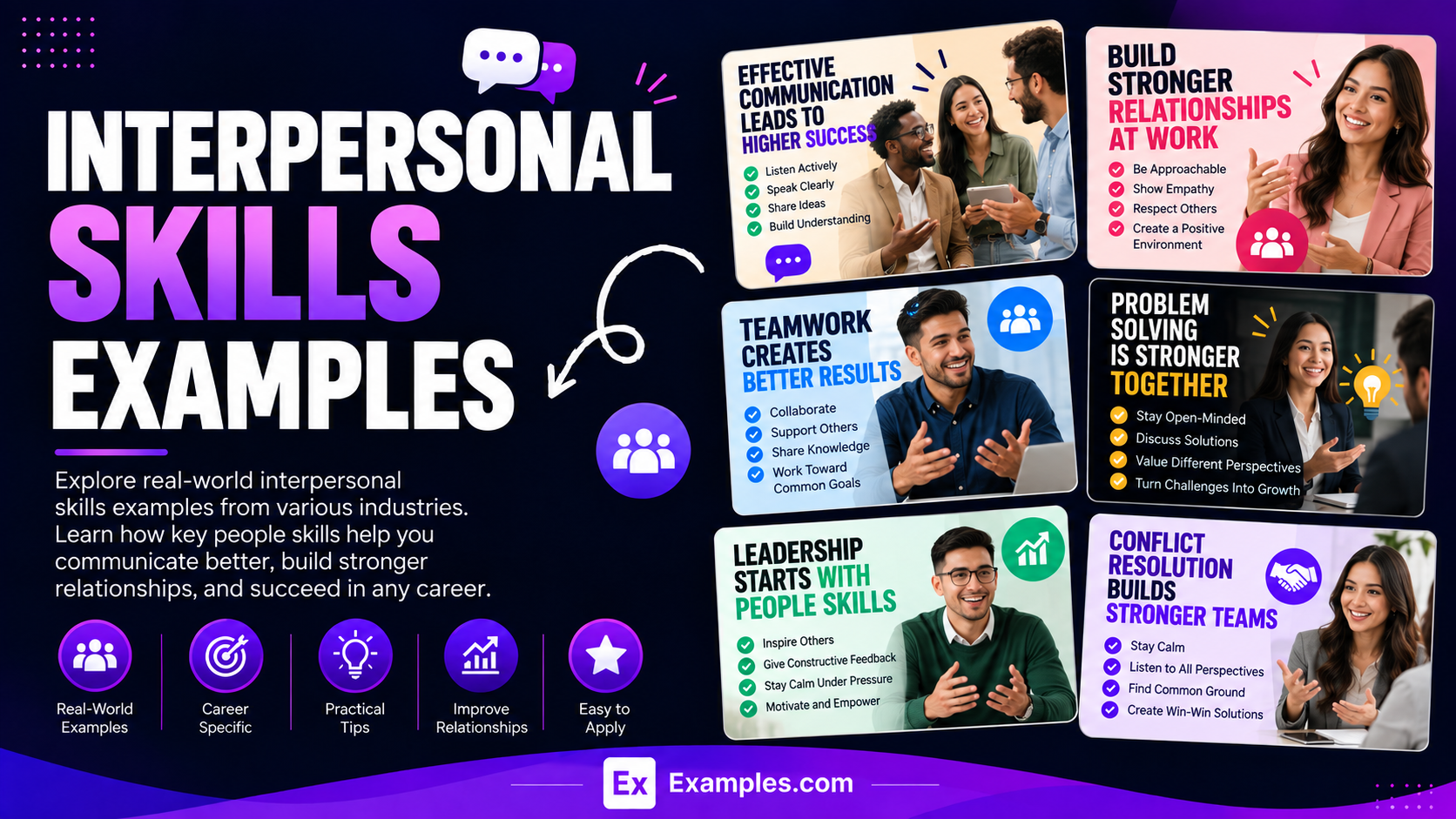
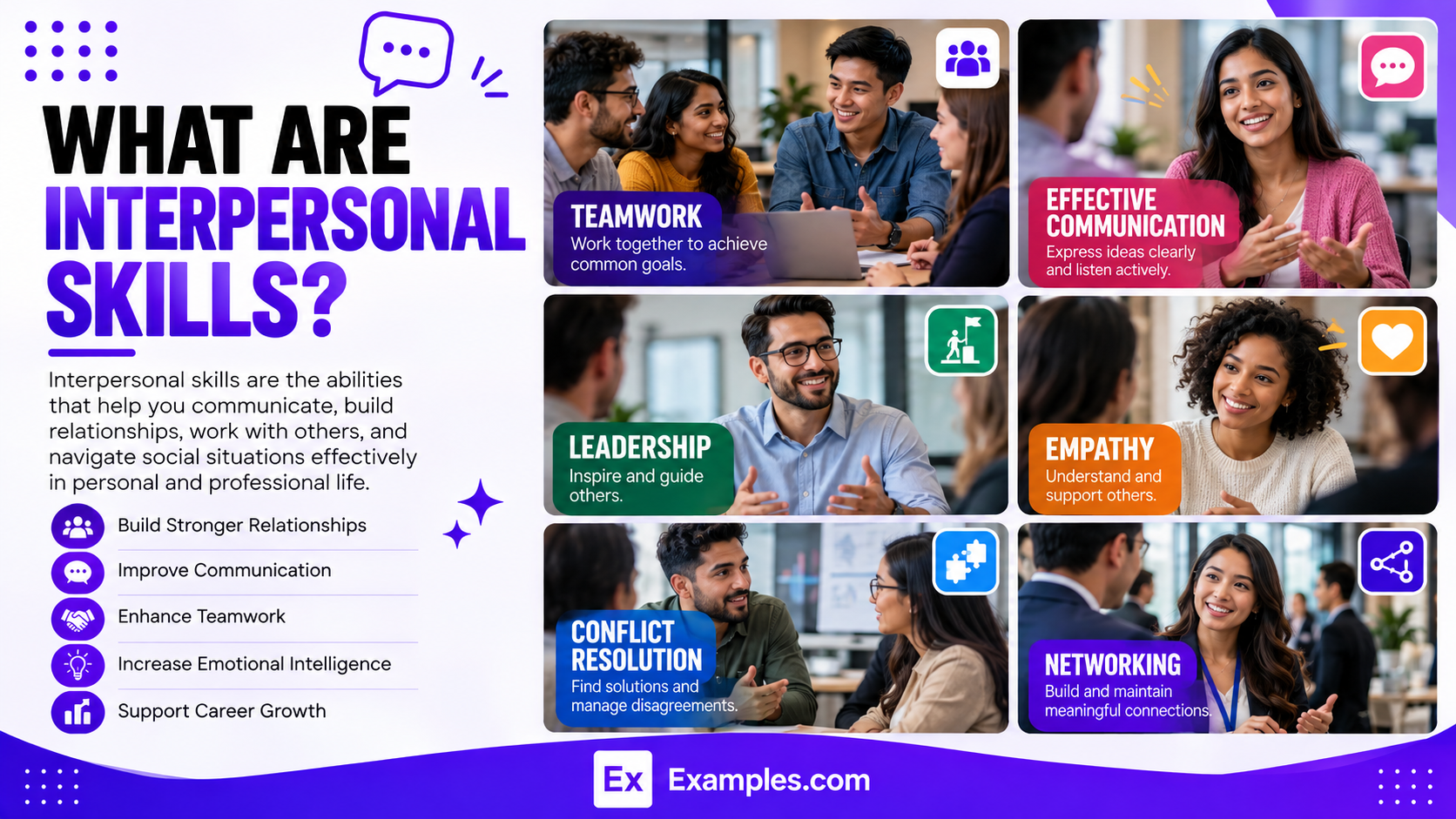
Interpersonal skills are the abilities people use to communicate, collaborate, build relationships, and interact effectively with others. Common interpersonal skills examples include active listening, empathy, teamwork, conflict resolution, leadership, negotiation, and emotional intelligence. These skills are useful in everyday life and across professions, particularly when working with colleagues, customers, managers, or clients.
What are Interpersonal Skills?
Interpersonal skills, also called people skills, are the abilities that help individuals communicate, understand others, develop relationships, and manage social interactions. They include verbal and nonverbal communication, emotional awareness, cooperation, and the ability to respond appropriately in different situations.
Interpersonal skills are important because they help people:
- Build and maintain stronger relationships.
- Communicate ideas and information clearly.
- Collaborate with people from different backgrounds.
- Resolve disagreements constructively.
- Develop trust and mutual understanding.
- Create supportive professional environments.
Popular Types Of Interpersonal Skills
Interpersonal skills cover several areas of communication, relationship management, and social interaction. The following categories include practical examples for personal and professional situations.
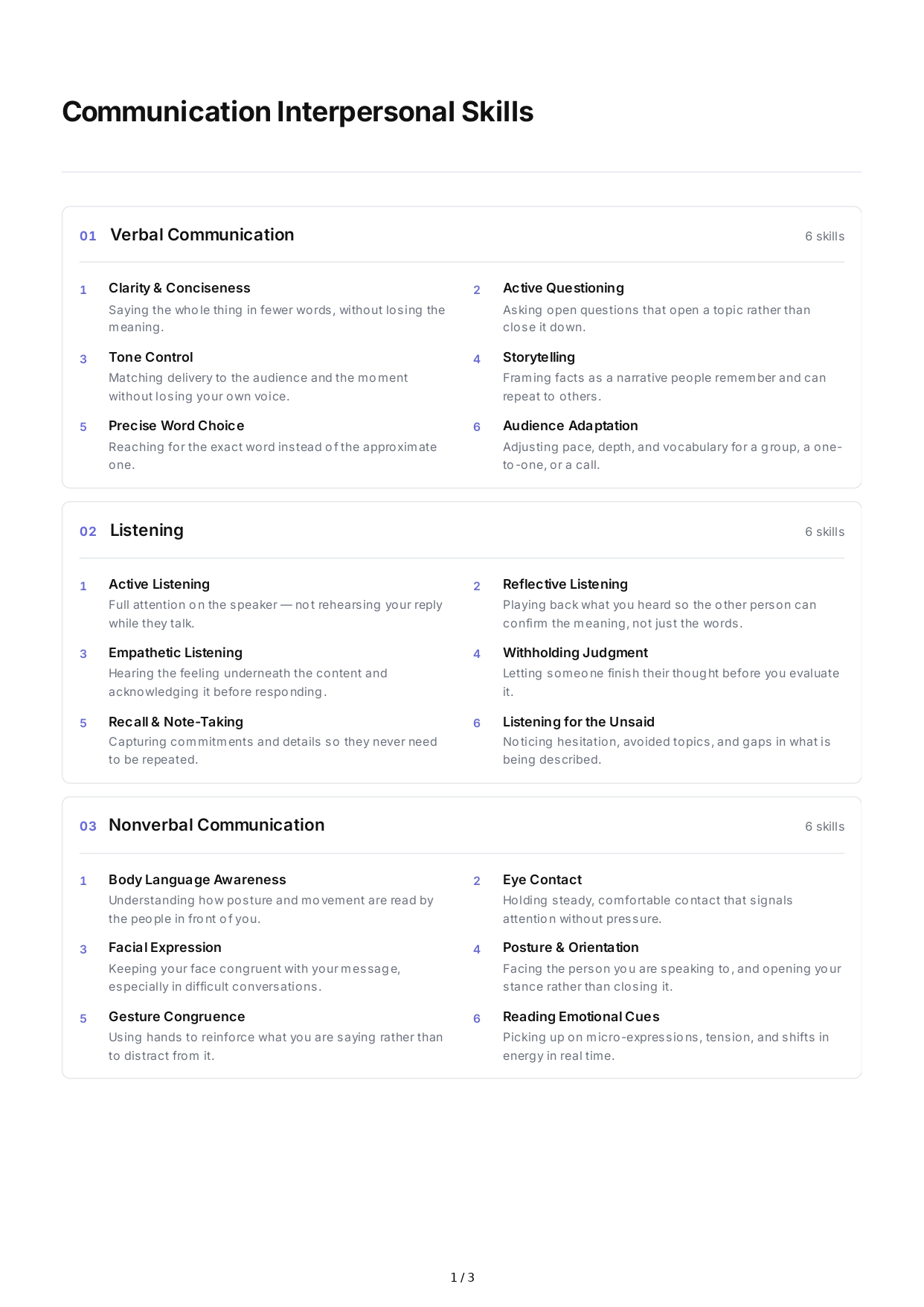
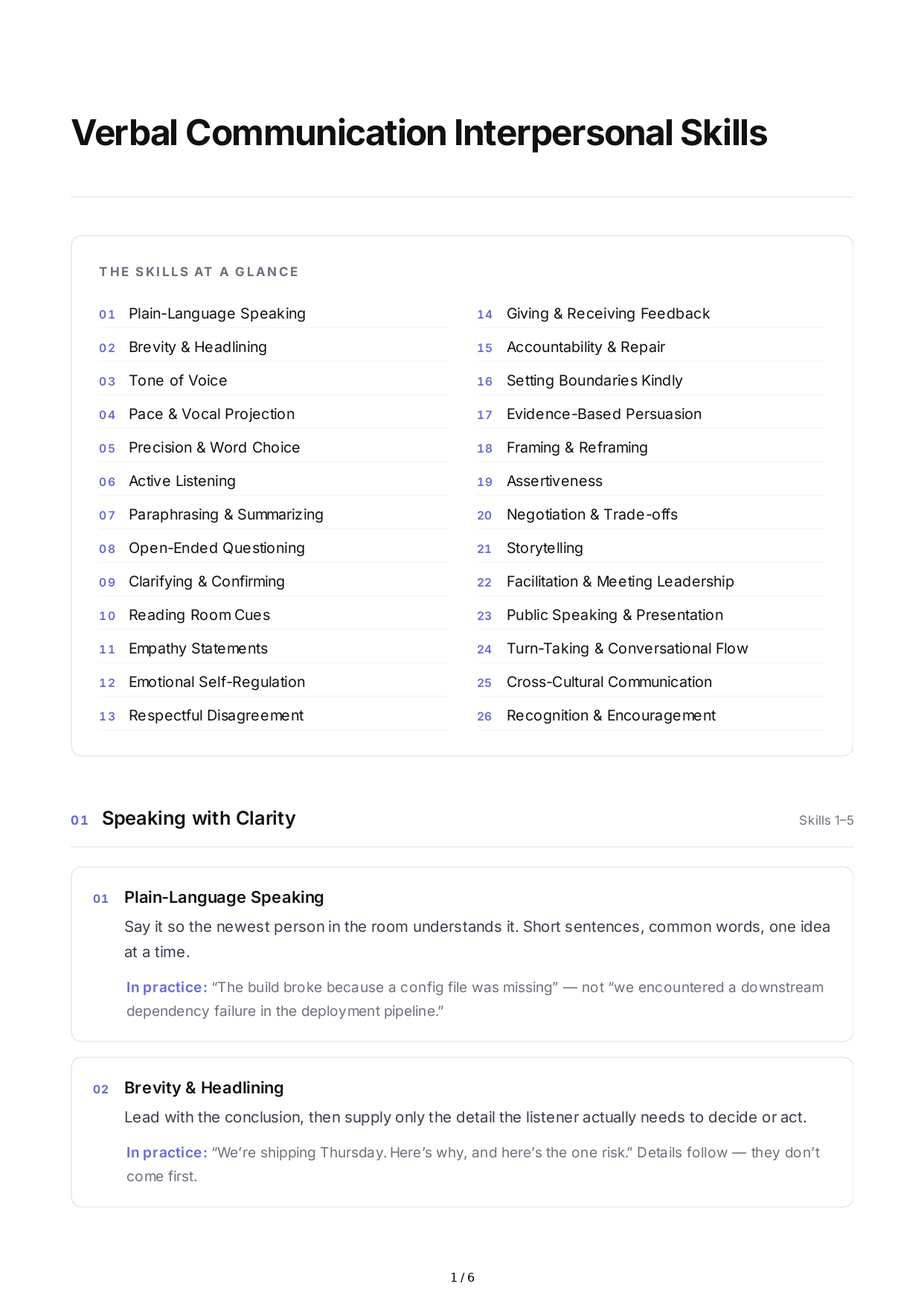
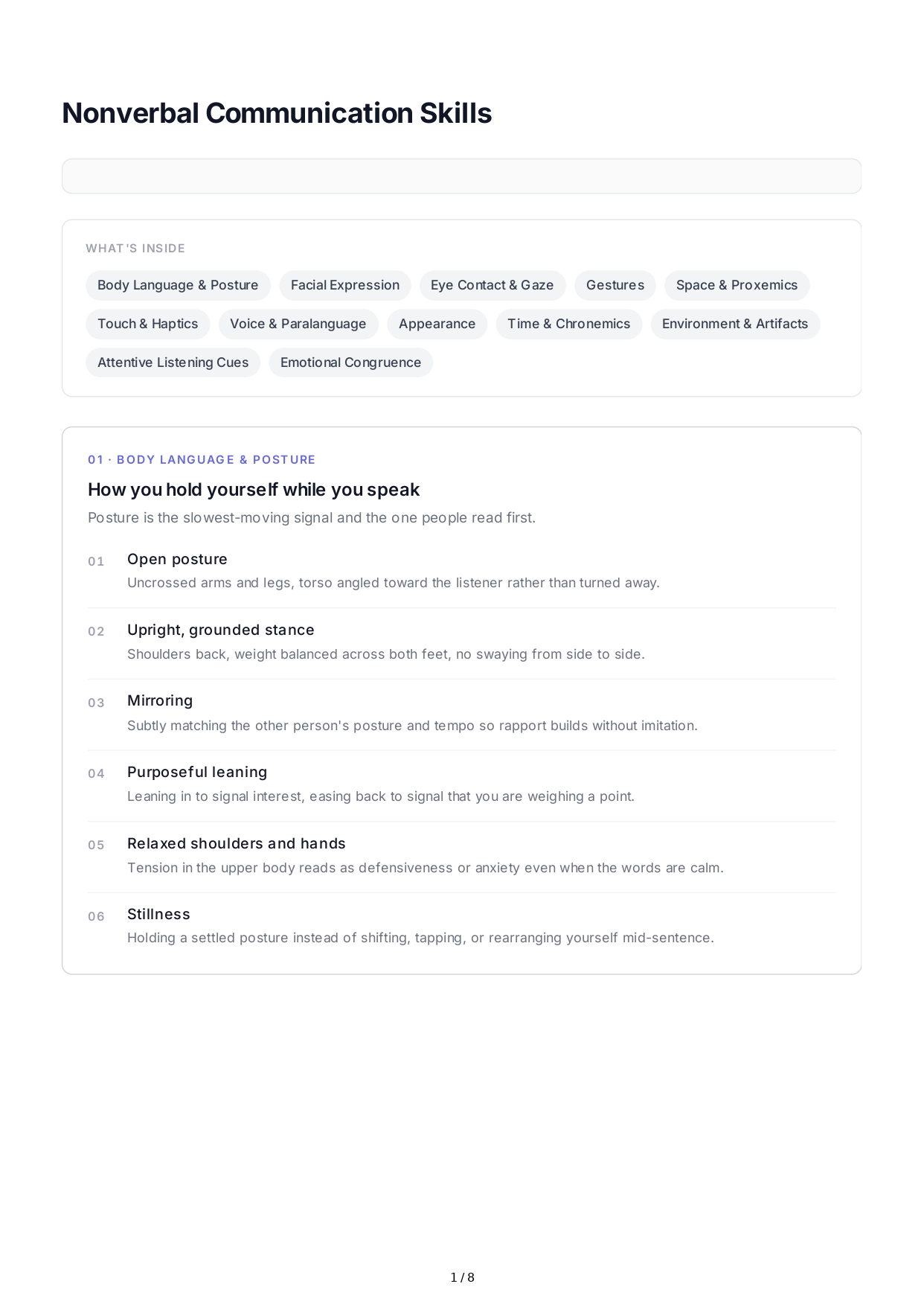
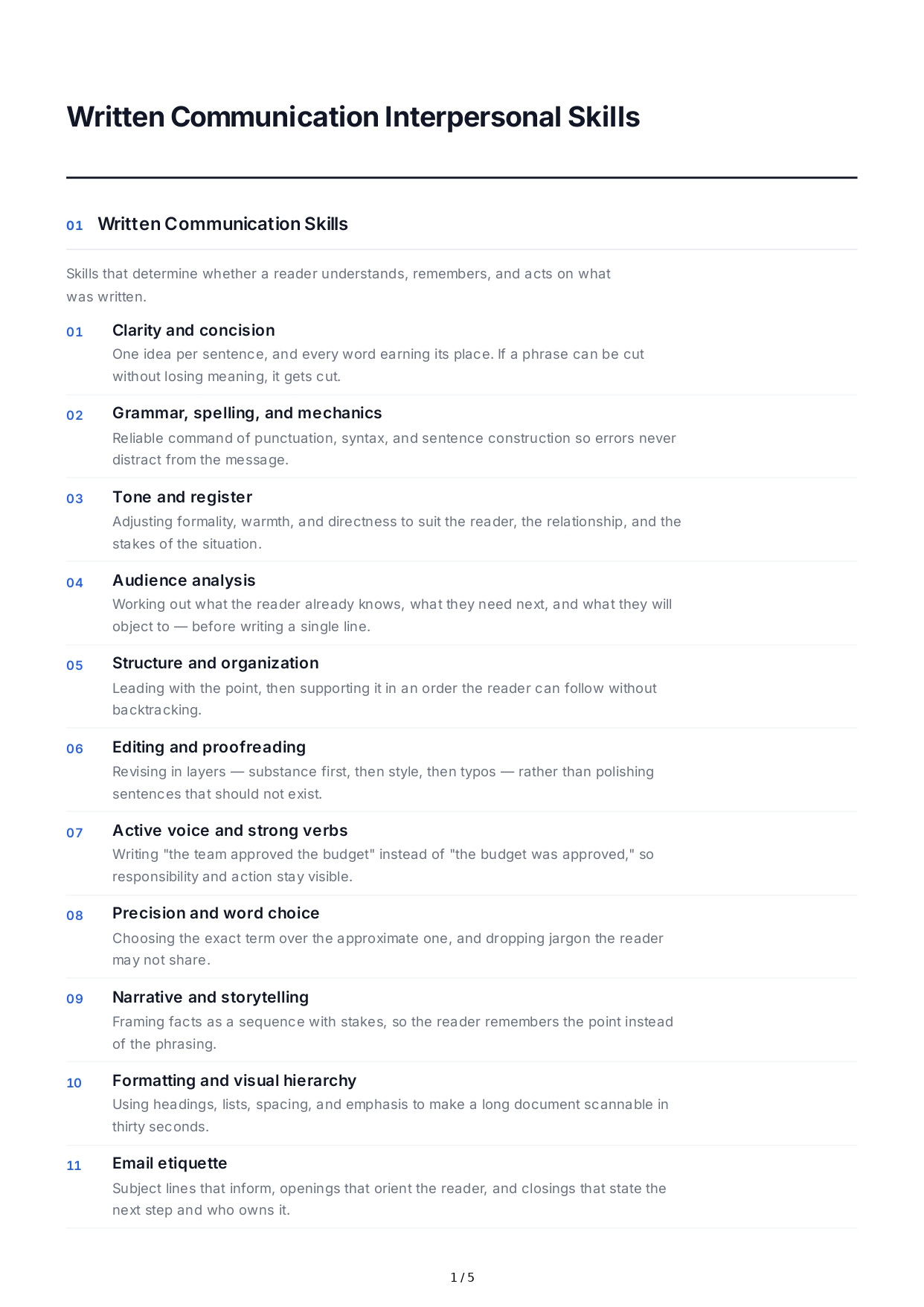
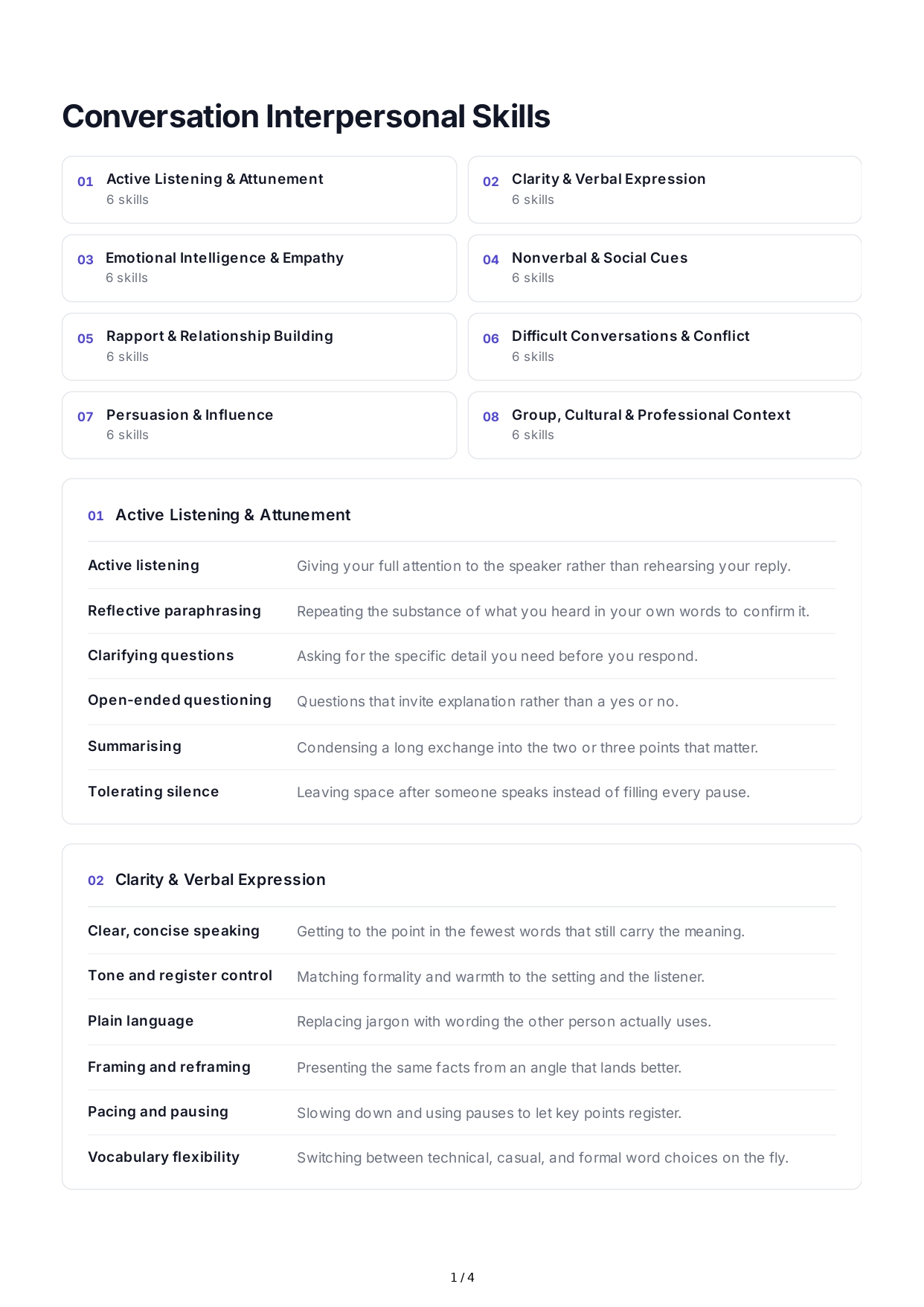
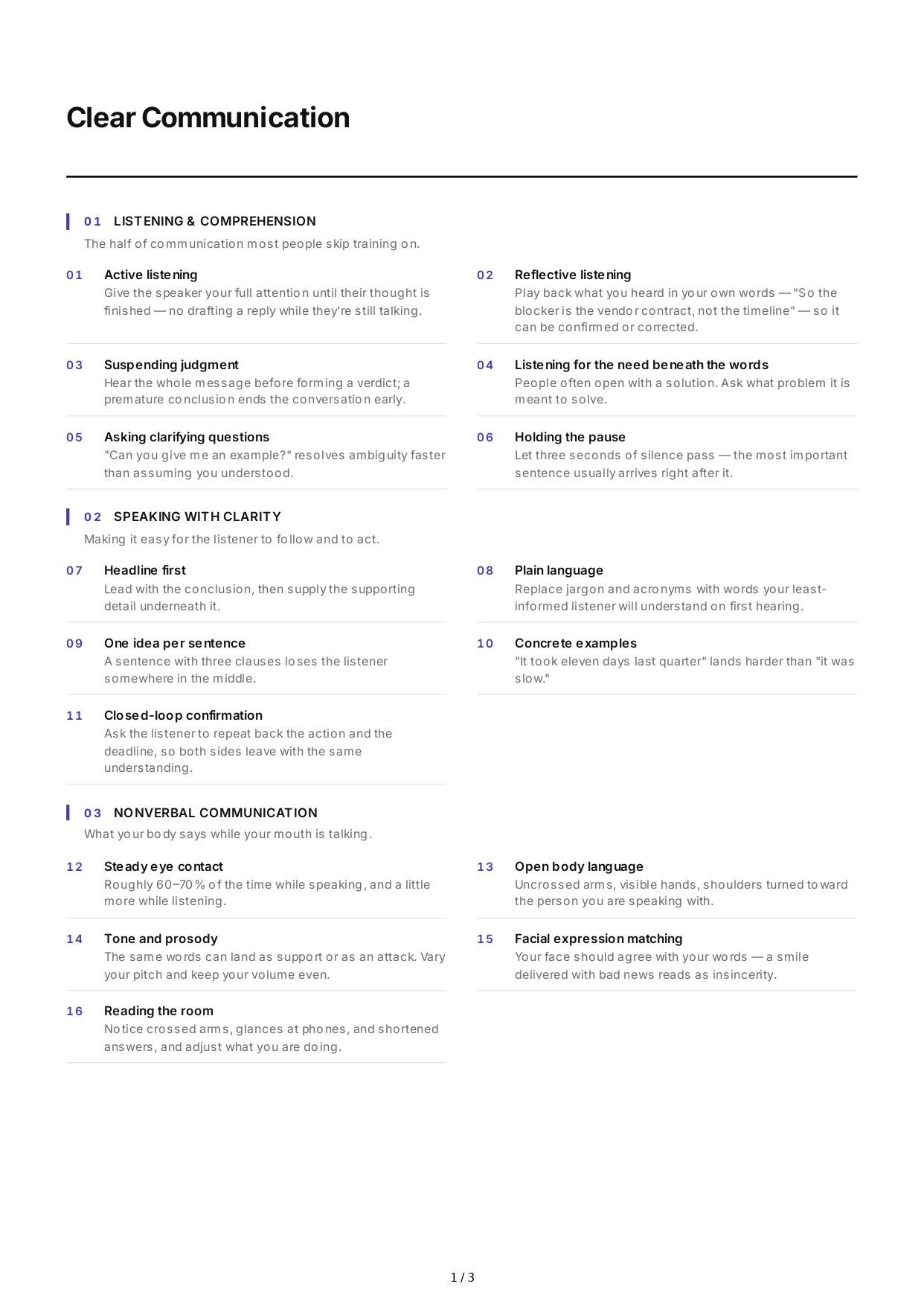
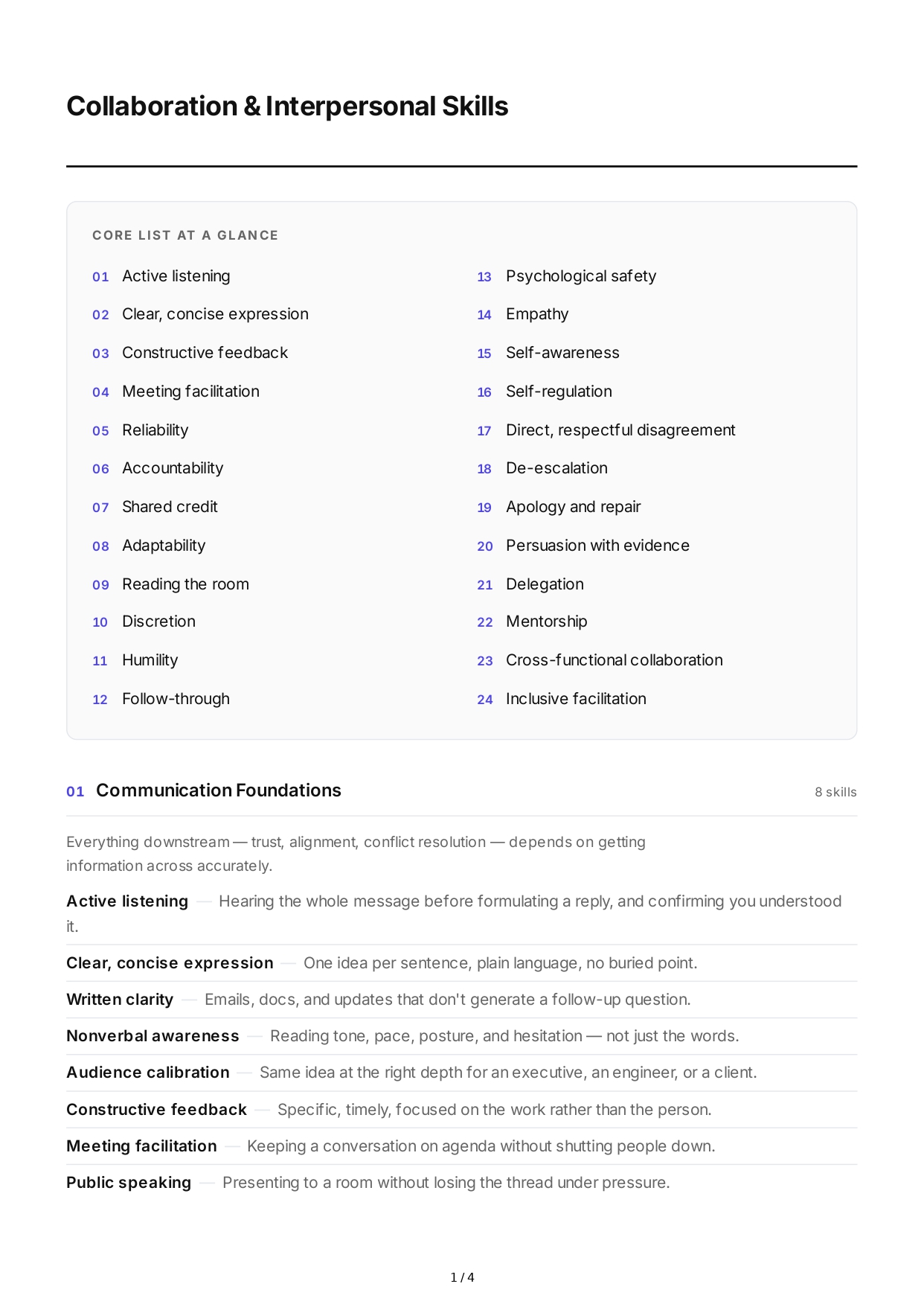
Communication Interpersonal Skills
Communication skills help individuals exchange information, express opinions, and understand other people’s messages.
- Verbal communication
- Nonverbal communication
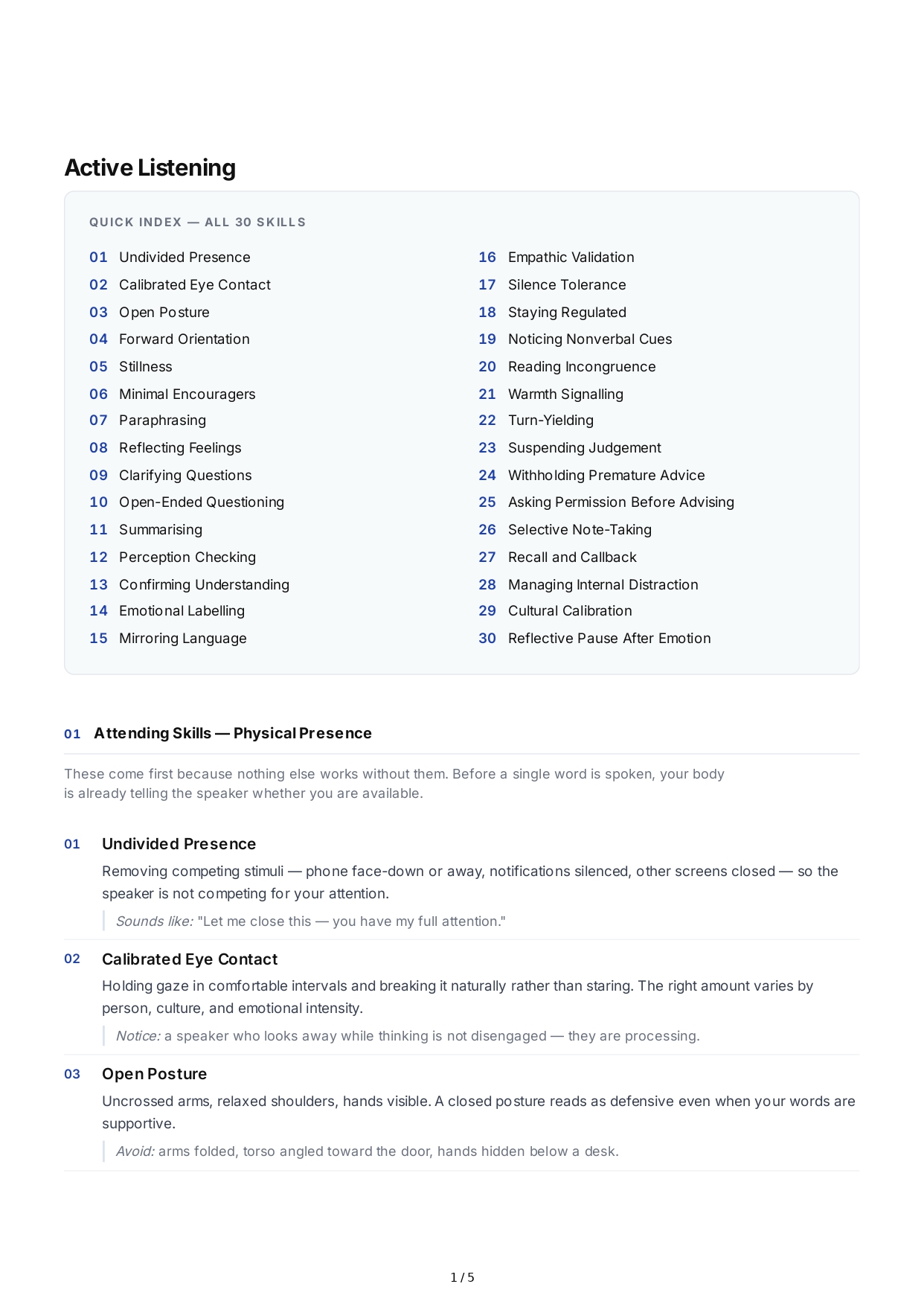
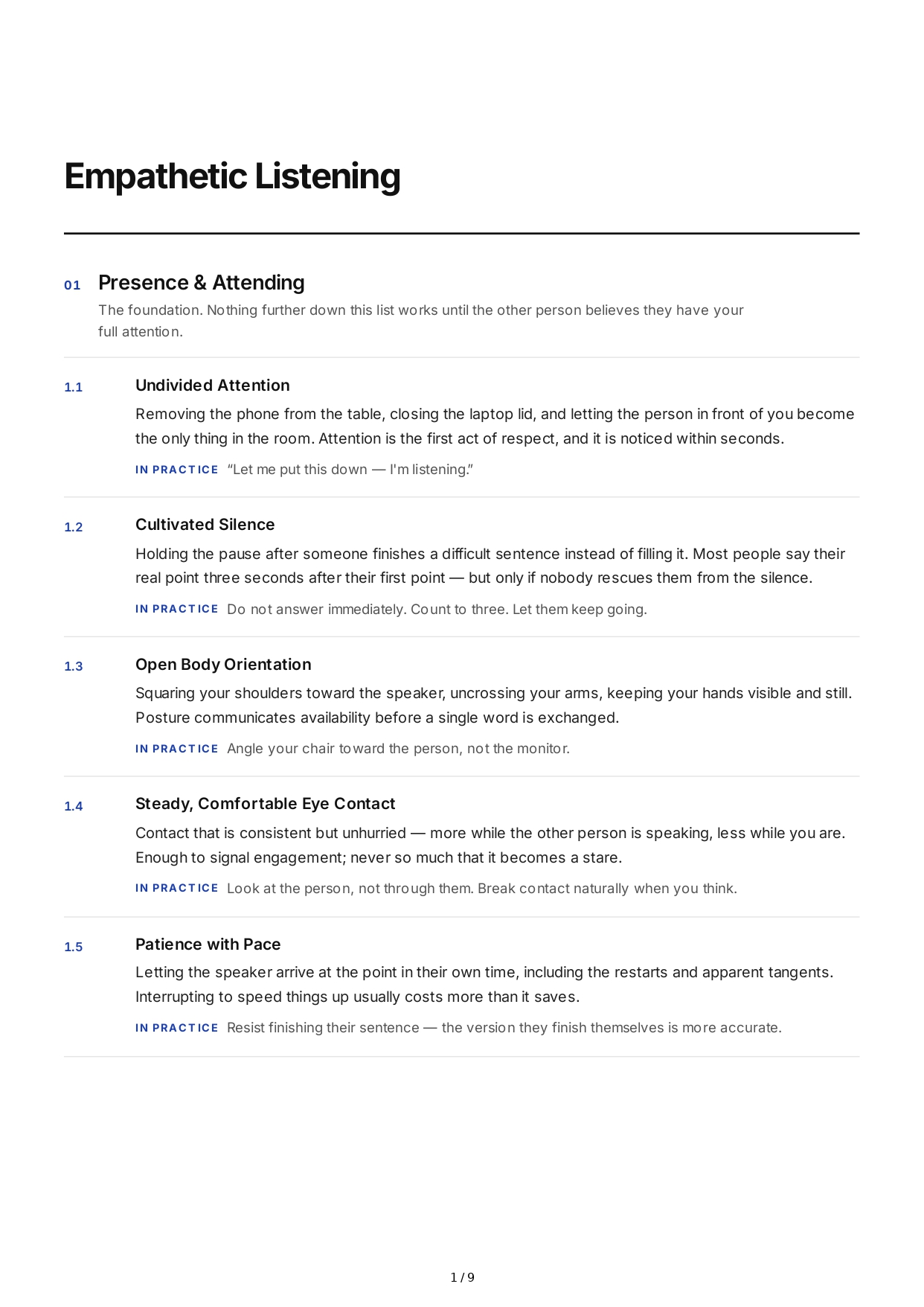
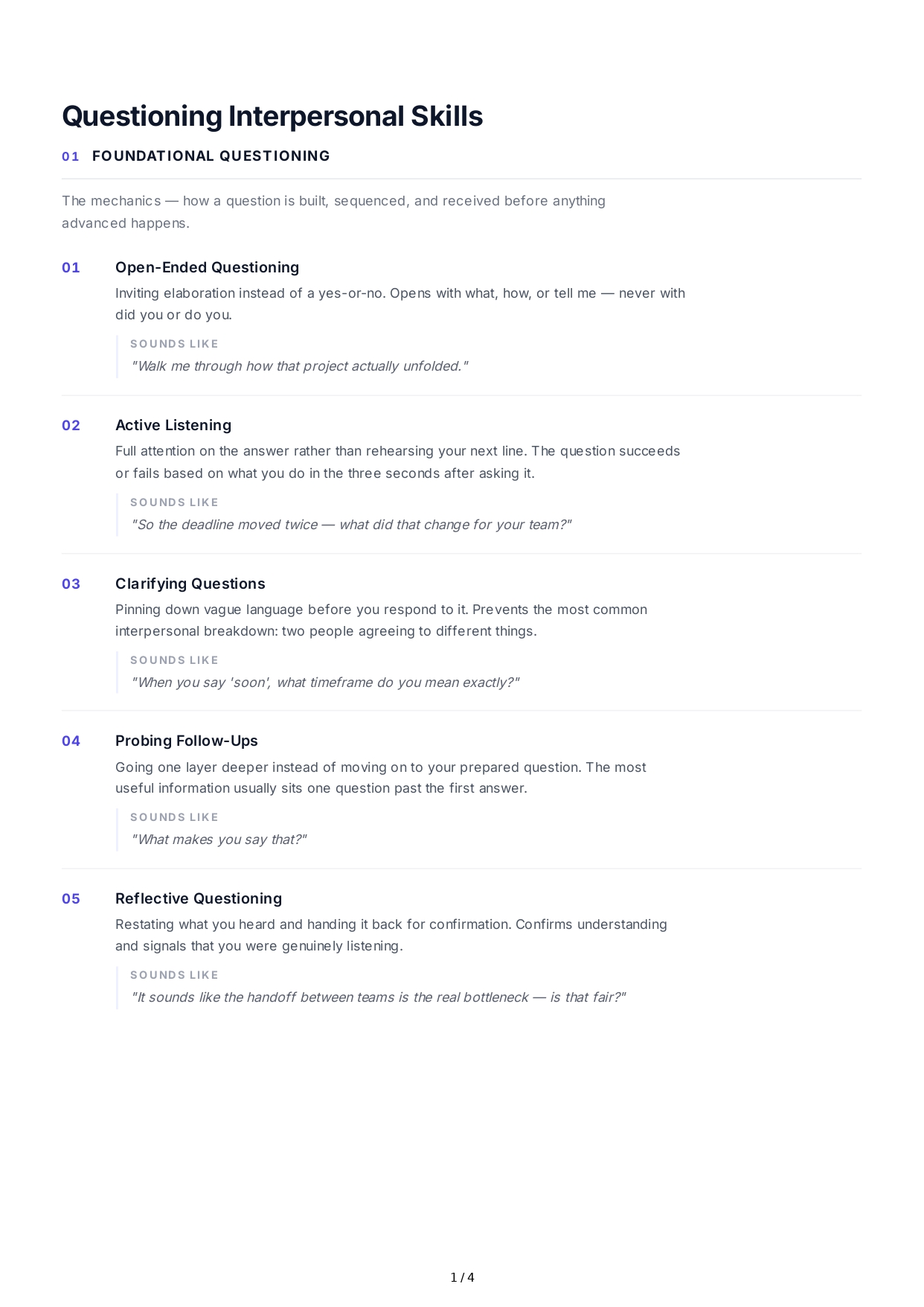
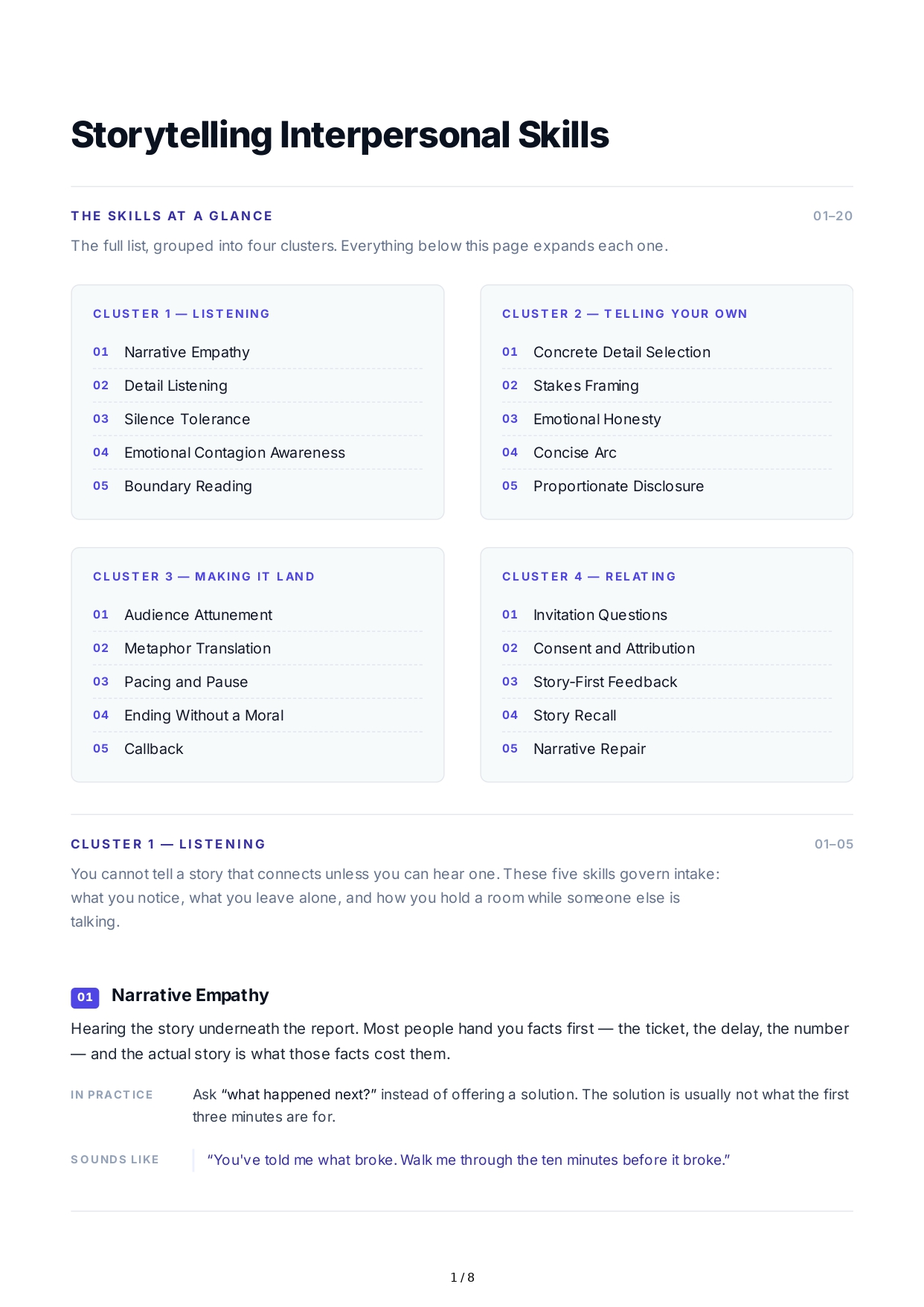
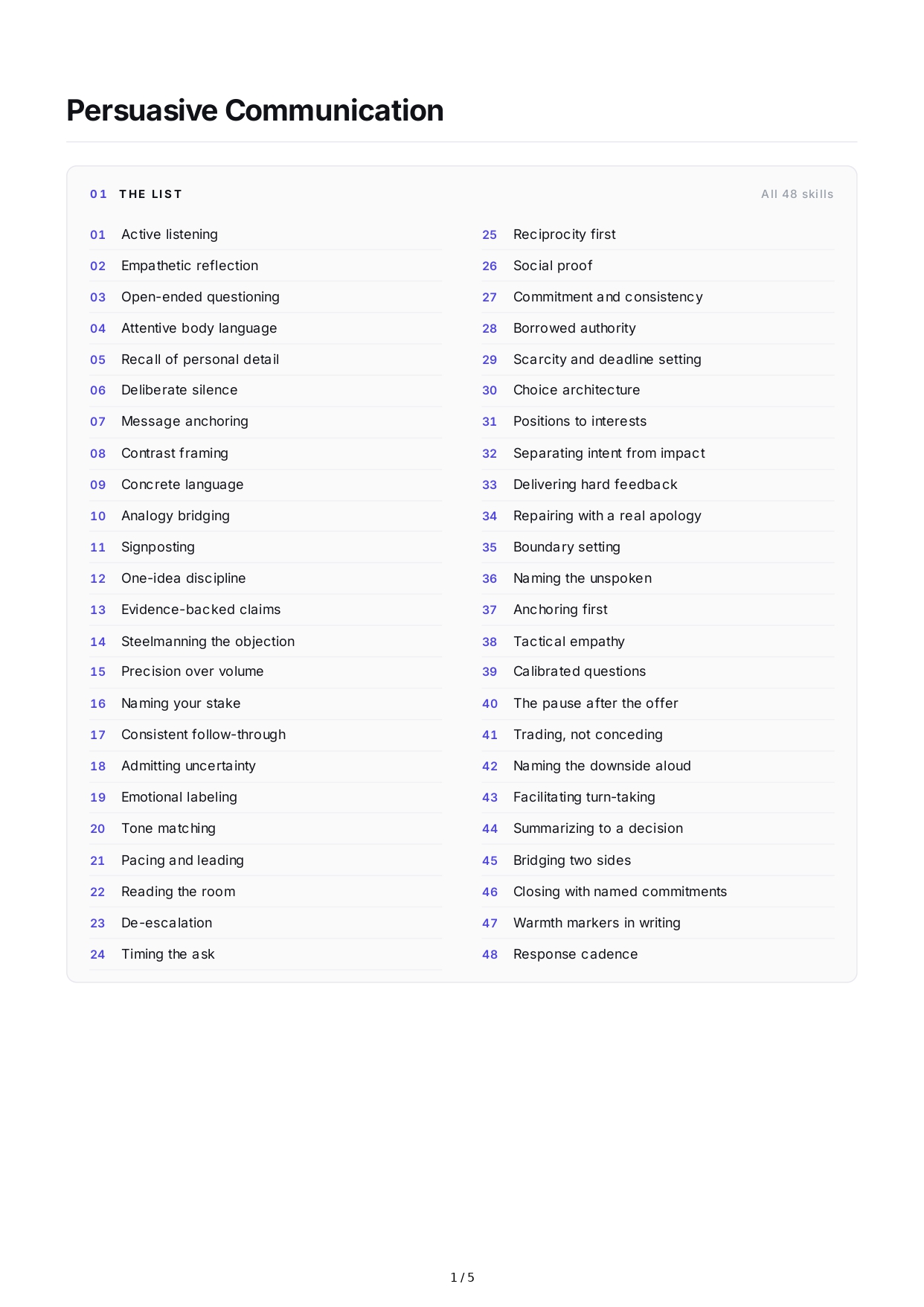
- Active listening
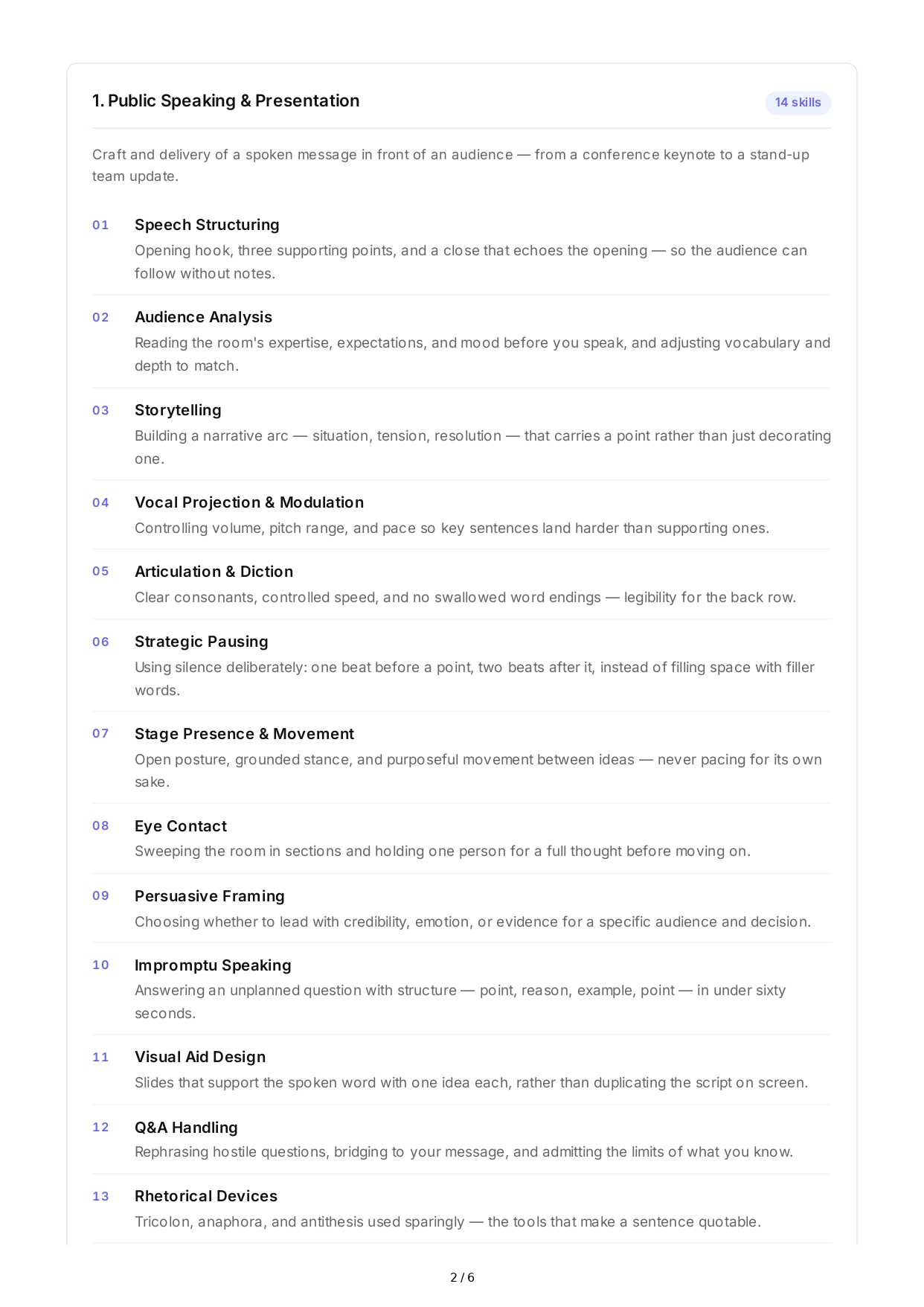
- Public speaking
- Assertive communication
- Constructive feedback
Emotional Intelligence Interpersonal Skills
Emotional intelligence involves recognizing emotions, understanding their effects, and responding appropriately to other people’s feelings.
- Self-awareness
- Empathy
- Emotional regulation
- Social awareness
- Patience
- Emotional support
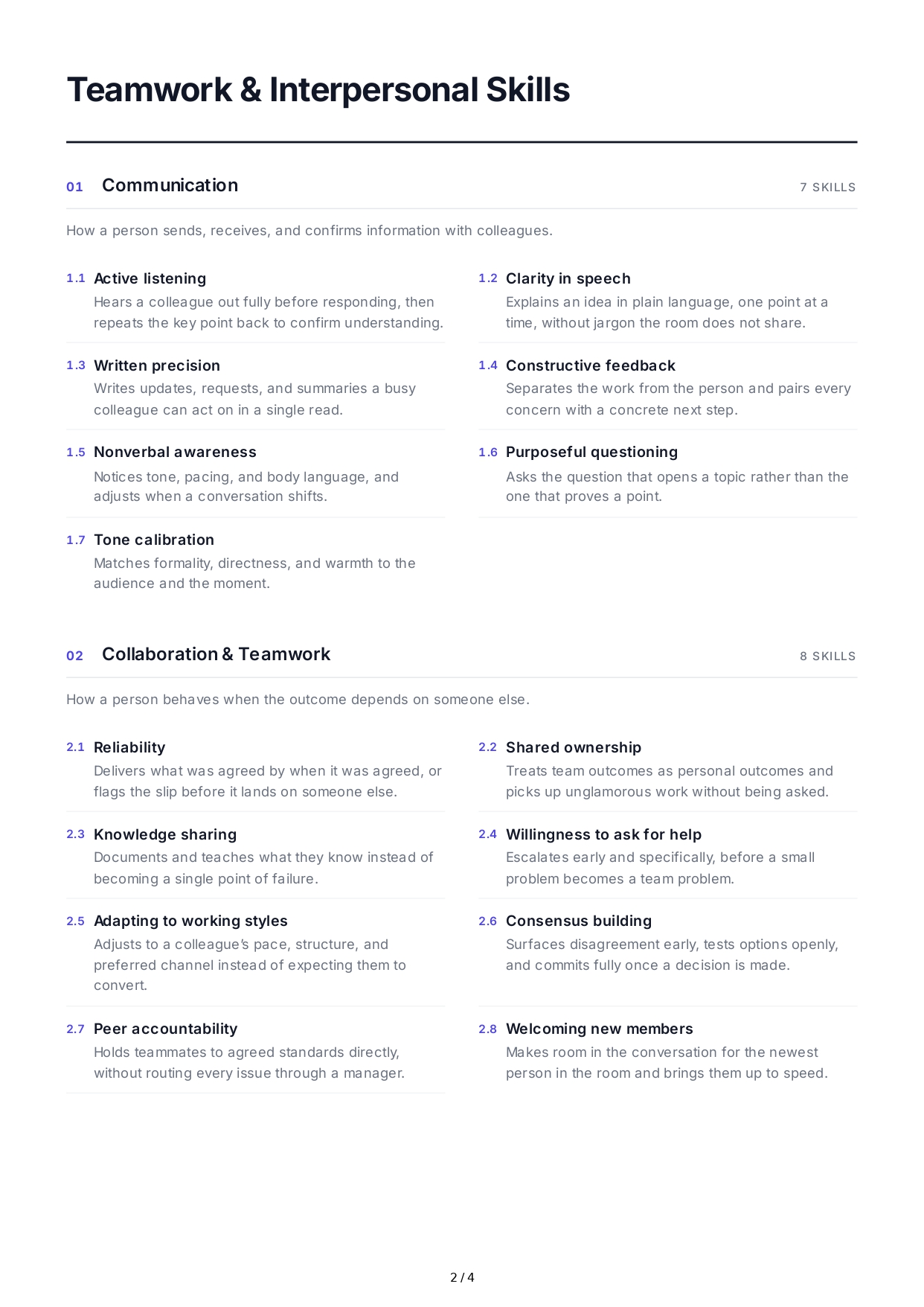
Teamwork and Collaboration Interpersonal Skills
These abilities help people work together, share responsibilities, and contribute toward common objectives.
- Team collaboration
- Cross-functional cooperation
- Knowledge sharing
- Group decision-making
- Mutual support
- Shared accountability
Relationship-Building Interpersonal Skills
Relationship-building skills help individuals establish trust, develop professional connections, and maintain positive interactions.
- Rapport building
- Trust building
- Professional networking
- Relationship management
- Approachability
- Cultural sensitivity
Conflict Resolution Interpersonal Skills
Conflict resolution skills help individuals address disagreements, understand different perspectives, and reach constructive solutions.
- Conflict de-escalation
- Mediation
- Negotiation
- Compromise
- Perspective-taking
- Diplomatic communication
Leadership Interpersonal Skills
Interpersonal leadership skills involve guiding, motivating, supporting, and influencing others while maintaining productive relationships.
- Team motivation
- Mentoring
- Coaching
- Delegation
- Constructive criticism
- Consensus building
Social Adaptability Interpersonal Skills
Social adaptability helps people adjust their communication and behavior according to different individuals, cultures, and situations.
- Open-mindedness
- Flexibility
- Inclusive communication
- Social awareness
- Respect for different viewpoints
- Openness to feedback
How Do I Generate Interpersonal Skills Using Proven Examples from Top Companies?
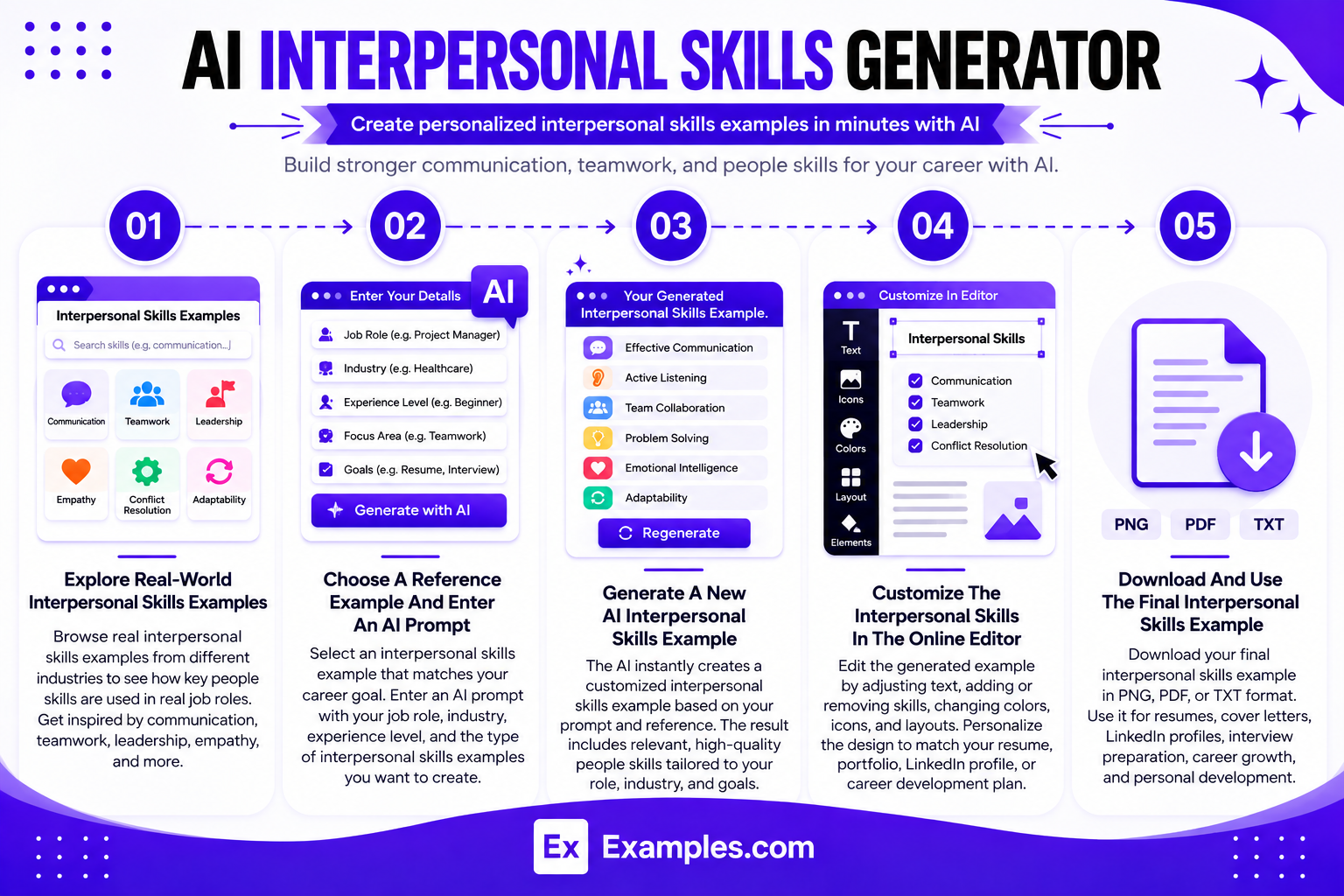
Use real-world interpersonal skills examples as references to create personalized descriptions for resumes, professional portfolios, interviews, and career development. AI can help organize and phrase these examples, but the final content should accurately reflect your own abilities and experience.
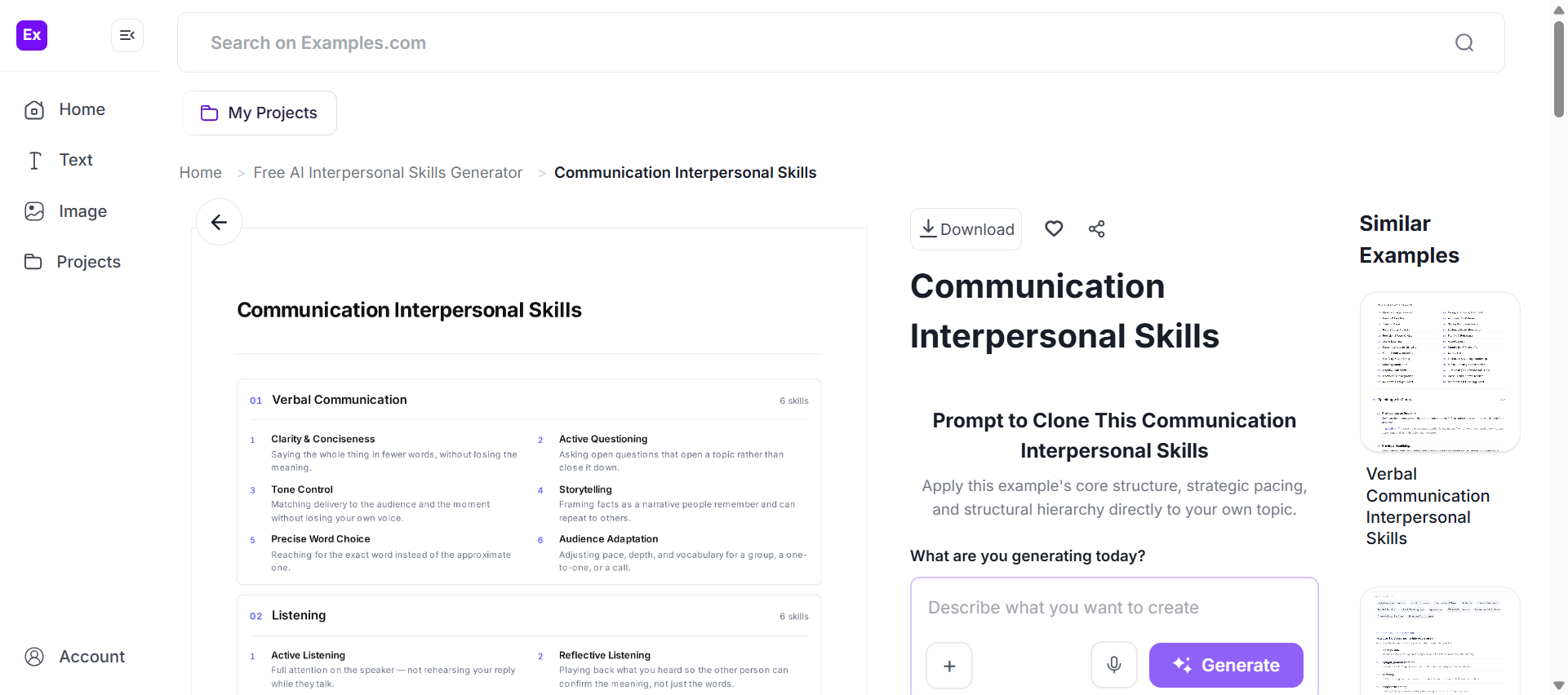
Explore Real-World Interpersonal Skills Examples
Browse real-world interpersonal skills examples from different professions and industries. Explore communication, teamwork, empathy, leadership, conflict resolution, and relationship-building examples to understand how people skills are applied in professional situations.
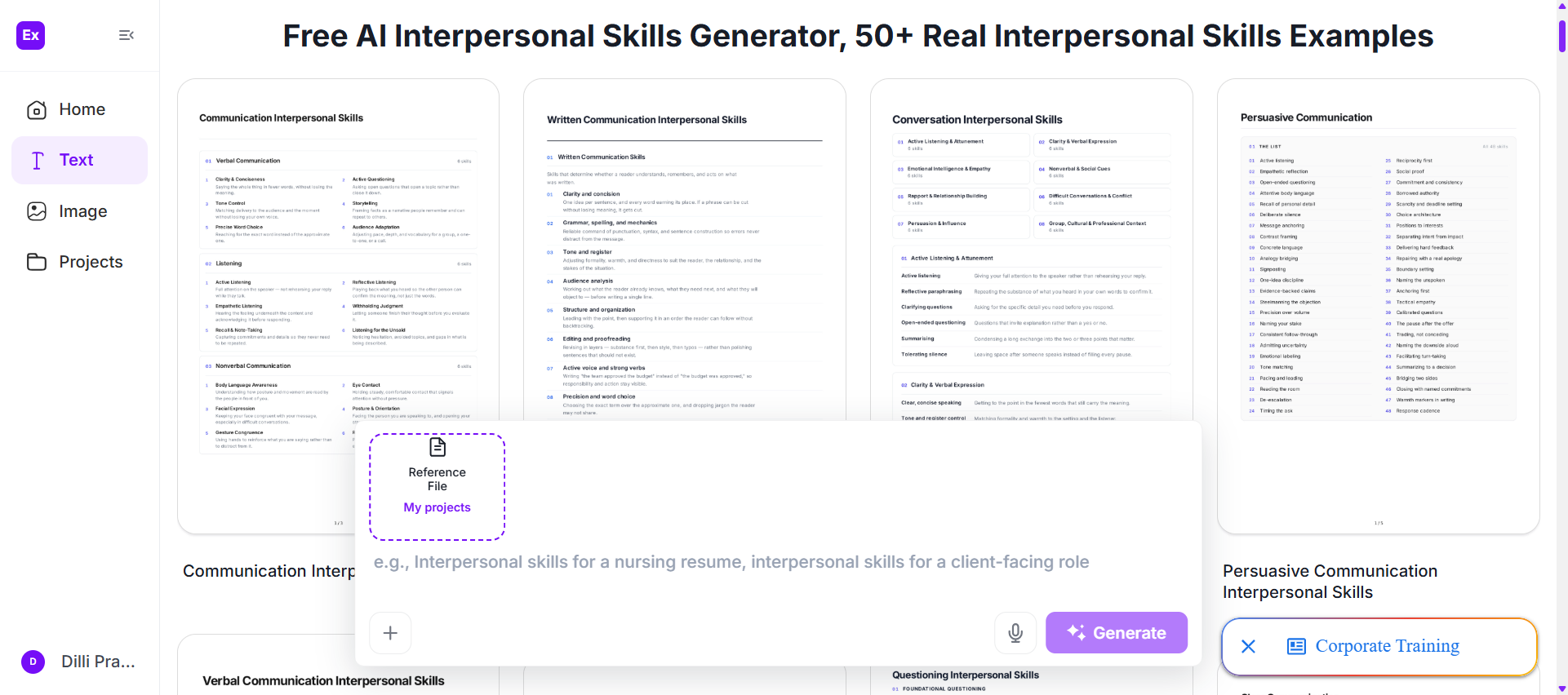
Choose A Reference Example And Enter An AI Prompt
Select an interpersonal skills example that matches your career goals. Enter an AI prompt describing your job role, industry, experience level, professional responsibilities, and the interpersonal skills you want to highlight.
Generate A New AI Interpersonal Skills Example
Use AI to generate a personalized interpersonal skills example based on your reference and prompt. Review the suggested communication, collaboration, leadership, and relationship-building skills to ensure they accurately reflect your experience.
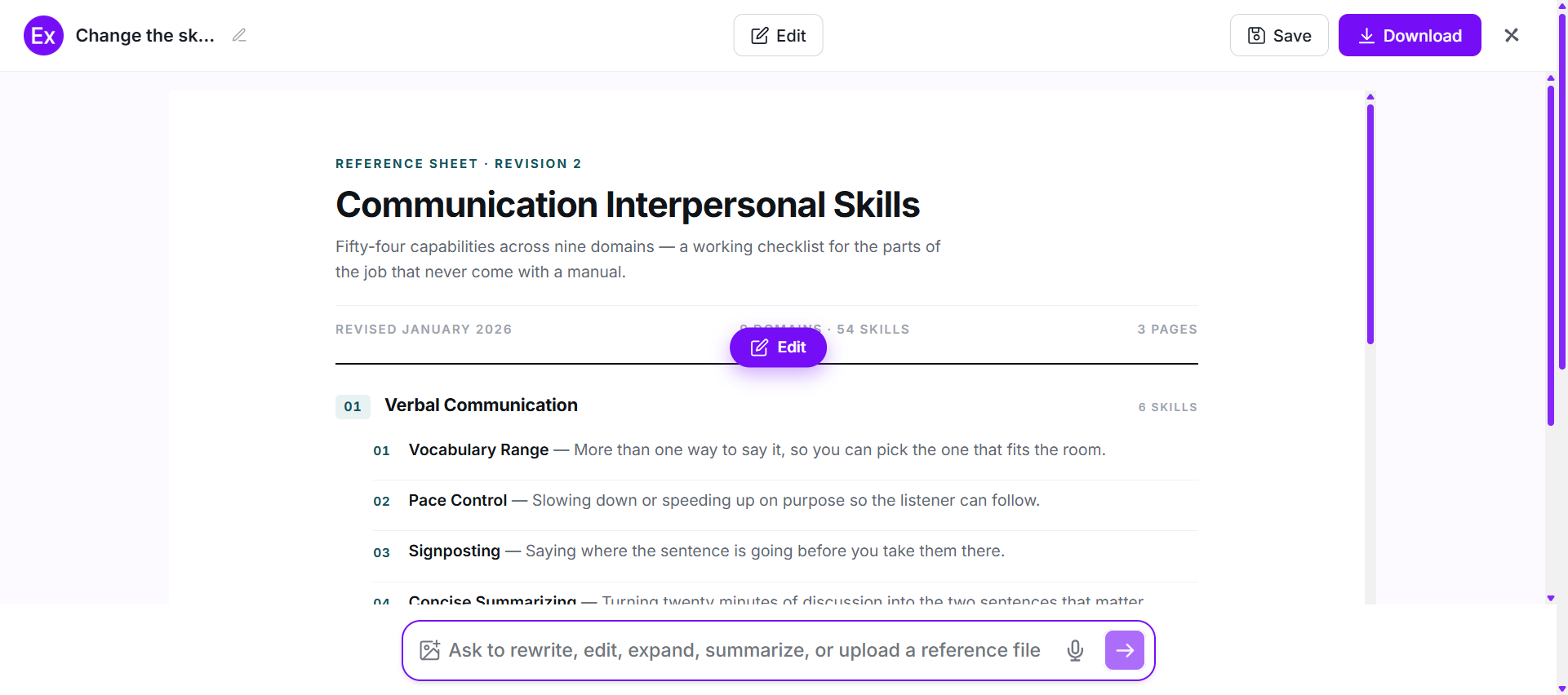
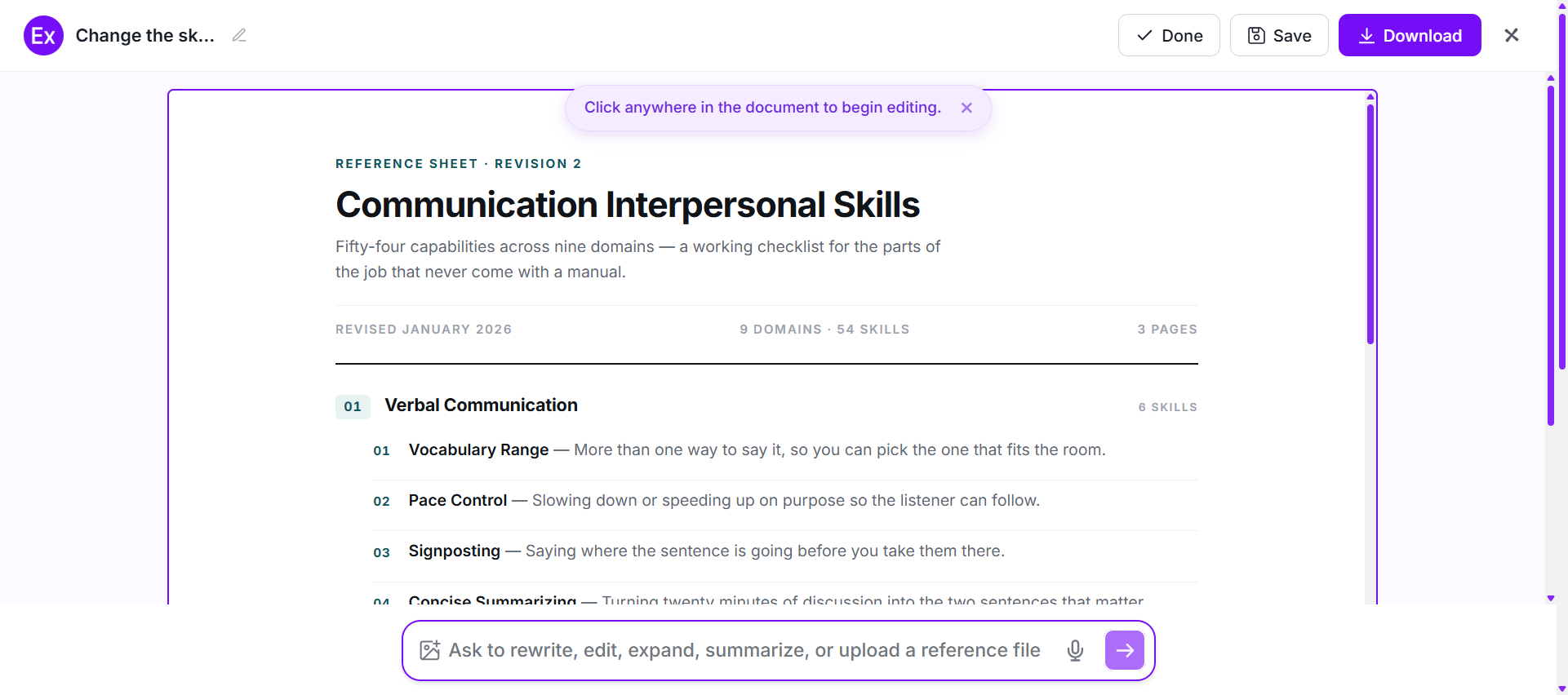
Customize The Interpersonal Skills In The Online Editor
Customize the generated example by editing skill descriptions, adding relevant experiences, organizing related abilities, and adjusting the layout. Personalize the content to suit your resume, professional portfolio, LinkedIn profile, or career development plan.
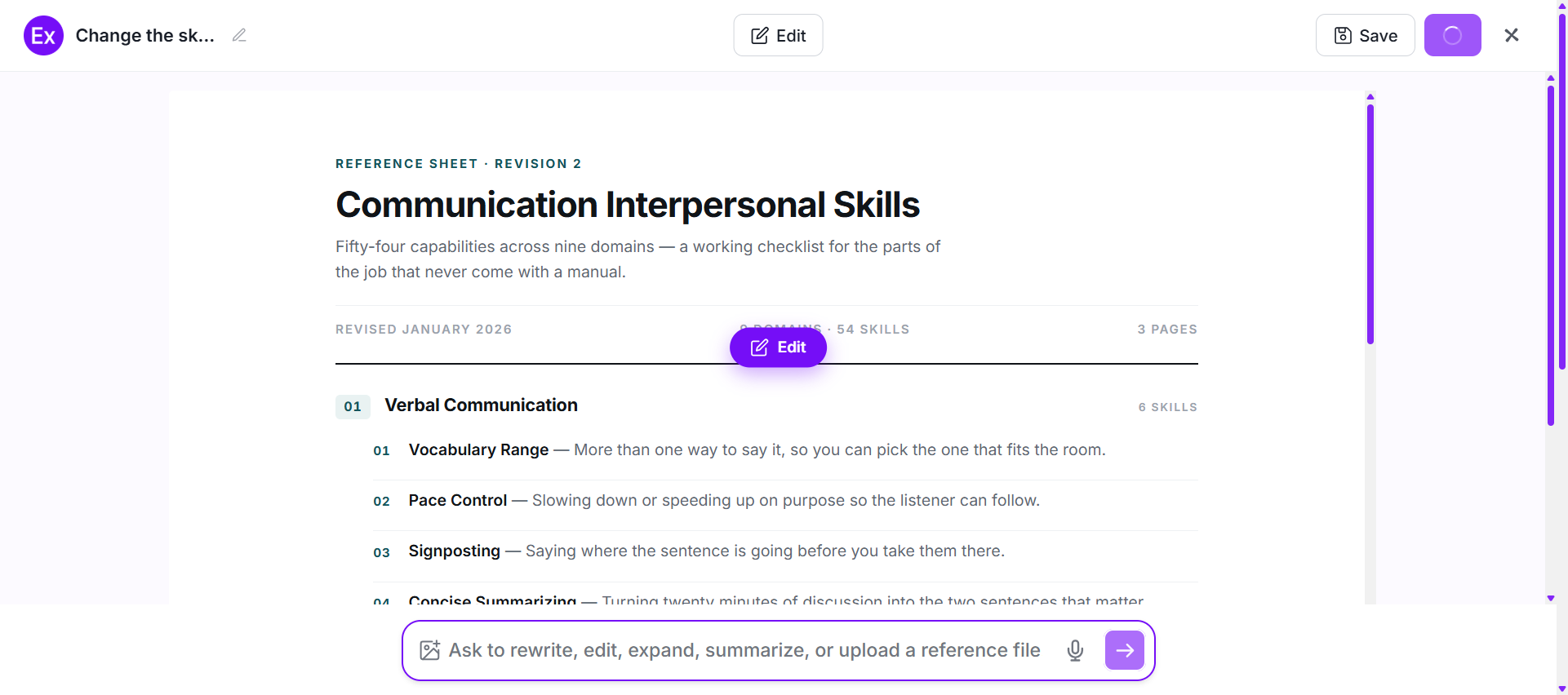
Download And Use The Final Interpersonal Skills Example
Download your completed interpersonal skills example in an available format. Use it as a reference when preparing resumes, cover letters, professional portfolios, interview answers, and personal development materials.
30 Real-Life Interpersonal Skills Examples
Interpersonal skills become easier to understand when connected to specific behaviors. The following examples show how these abilities can be demonstrated in everyday situations.
| Interpersonal skill | Real-life example |
|---|---|
| Active listening | Asking clarifying questions during a meeting |
| Empathy | Acknowledging a colleague’s concerns |
| Verbal communication | Explaining a complicated task clearly |
| Nonverbal communication | Using attentive body language |
| Teamwork | Sharing responsibilities during a project |
| Collaboration | Coordinating with another department |
| Conflict resolution | Helping colleagues resolve a disagreement |
| Negotiation | Finding mutually acceptable project deadlines |
| Leadership | Guiding a team through organizational changes |
| Mentoring | Helping a new employee learn workplace procedures |
| Coaching | Supporting a colleague’s professional development |
| Emotional regulation | Remaining composed during a difficult conversation |
| Patience | Explaining instructions without showing frustration |
| Assertiveness | Expressing concerns respectfully |
| Constructive feedback | Suggesting specific ways to improve performance |
| Adaptability | Adjusting communication for a new team |
| Cultural sensitivity | Respecting different communication practices |
| Networking | Building connections at professional events |
| Trust building | Following through on commitments |
| Rapport building | Establishing a friendly relationship with clients |
| Persuasion | Presenting evidence to gain support for an idea |
| Mediation | Facilitating a discussion between disagreeing coworkers |
| Diplomacy | Communicating sensitive information tactfully |
| Cooperation | Helping teammates complete urgent assignments |
| Social awareness | Recognizing when someone needs additional support |
| Open-mindedness | Considering suggestions that differ from your own |
| Delegation | Assigning responsibilities according to team strengths |
| Motivation | Encouraging colleagues during challenging projects |
| Customer communication | Listening carefully to a customer’s complaint |
| Relationship management | Maintaining regular communication with stakeholders |
How Interpersonal Skills Appear in Different Careers
| Profession | Relevant interpersonal skills |
|---|---|
| Customer service | Patience, empathy, active listening |
| Human resources | Mediation, diplomacy, confidentiality |
| Healthcare | Compassionate communication, emotional awareness |
| Teaching | Encouragement, patience, constructive feedback |
| Sales | Rapport building, negotiation, persuasion |
| Management | Leadership, delegation, conflict resolution |
| Software development | Collaboration, feedback, cross-functional communication |
| Hospitality | Cultural sensitivity, approachability, service orientation |
How to Demonstrate Interpersonal Skills on Your Resume
Rather than listing general qualities alone, describe situations where you applied interpersonal skills and achieved meaningful results. Career guidance recommends matching skills to job requirements and supporting them with relevant work experience.
Interpersonal Skills Resume Examples
- Collaborated with cross-functional teams to complete a product launch.
- Resolved customer complaints through active listening and clear communication.
- Mentored new employees and supported their onboarding.
- Facilitated team discussions to resolve scheduling conflicts.
- Presented project updates to stakeholders and addressed their questions.
Practical Ways to Improve Your Interpersonal Skills
Improving interpersonal skills requires consistent practice, self-reflection, and feedback. Career guidance from Indeed recommends observing effective interactions, seeking constructive criticism, participating in training, and finding mentors.
- Practice active listening: Focus on the speaker and ask questions before responding.
- Request feedback: Ask colleagues or mentors how you can improve your communication.
- Participate in group activities: Develop teamwork through collaborative projects.
- Practice difficult conversations: Learn to express disagreements respectfully.
- Observe your communication habits: Pay attention to tone, body language, and word choice.
- Set specific goals: Work on one interpersonal skill at a time and review your progress.
Frequently Asked Questions
What are five examples of interpersonal skills?
Five common examples are active listening, empathy, teamwork, conflict resolution, and effective communication.
Are interpersonal skills and soft skills the same?
Interpersonal skills are a category of soft skills focused on communicating and interacting with other people. Soft skills also include broader abilities such as time management, self-discipline, and independent problem-solving.
Why are interpersonal skills important in the workplace?
They support effective communication, collaboration, relationship building, and constructive conflict management. They also help employees work with colleagues, managers, customers, and clients.
Can interpersonal skills be learned?
Yes. Interpersonal skills can be developed through practice, observation, feedback, mentorship, and real-world experience.
How do you demonstrate interpersonal skills in an interview?
Describe a specific situation in which you used communication, teamwork, empathy, or conflict resolution. Explain your actions and the outcome using an example from your own experience.
What is the difference between communication and interpersonal skills?
Communication is the exchange of information and ideas. Interpersonal skills are broader and include communication alongside empathy, relationship building, cooperation, emotional awareness, and conflict resolution.