Problem
-
Solving
Interpersonal
Skills
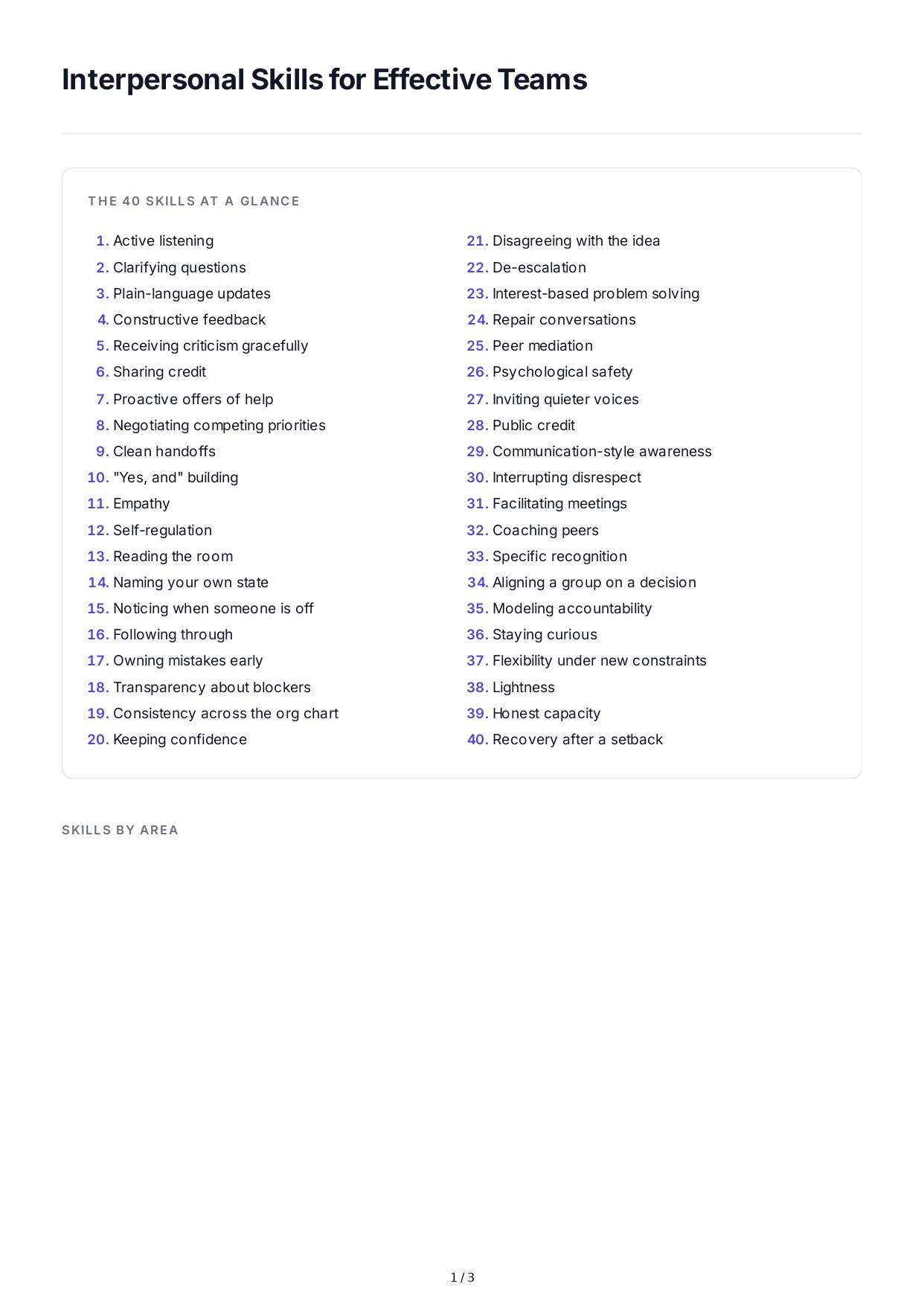
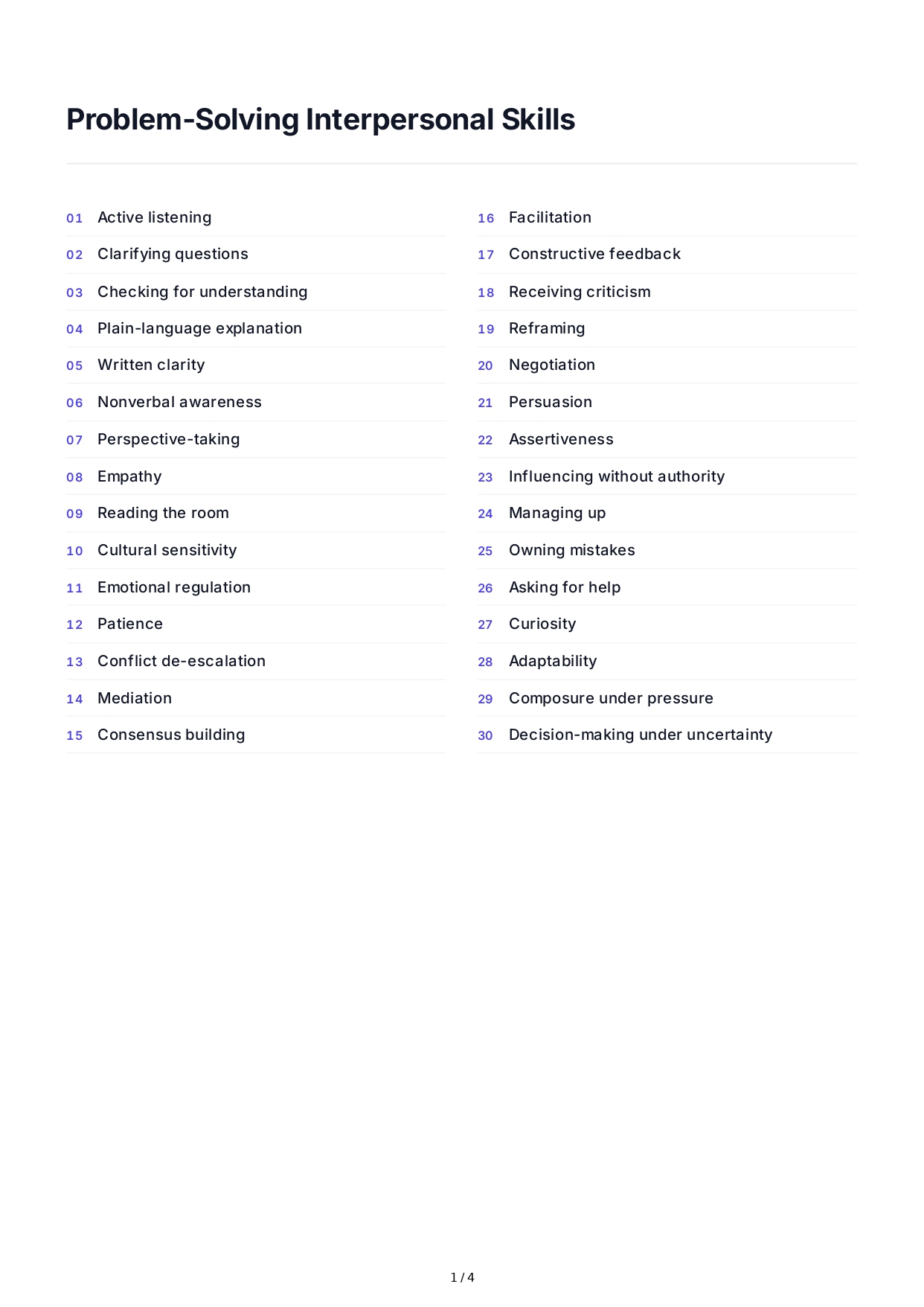
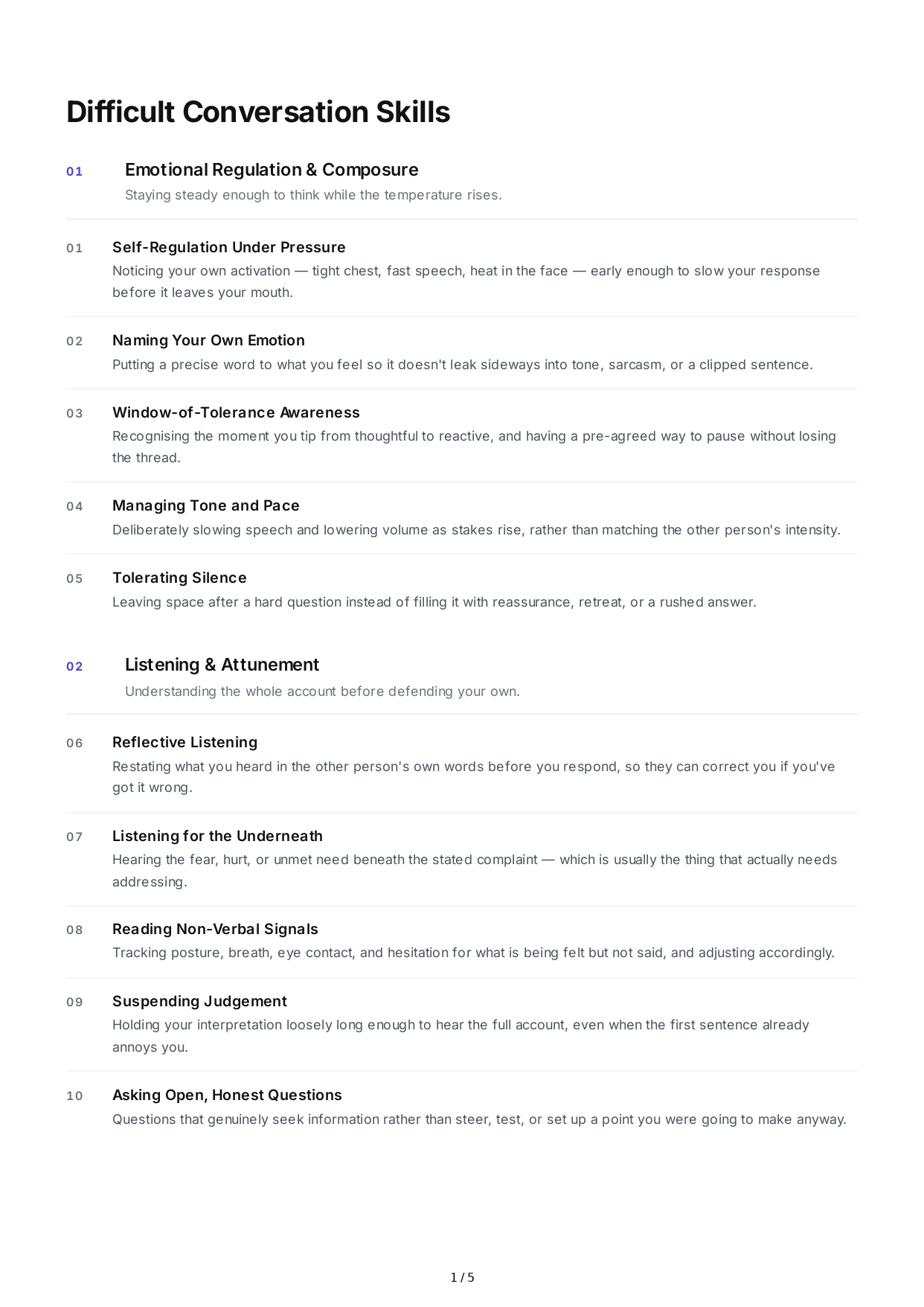
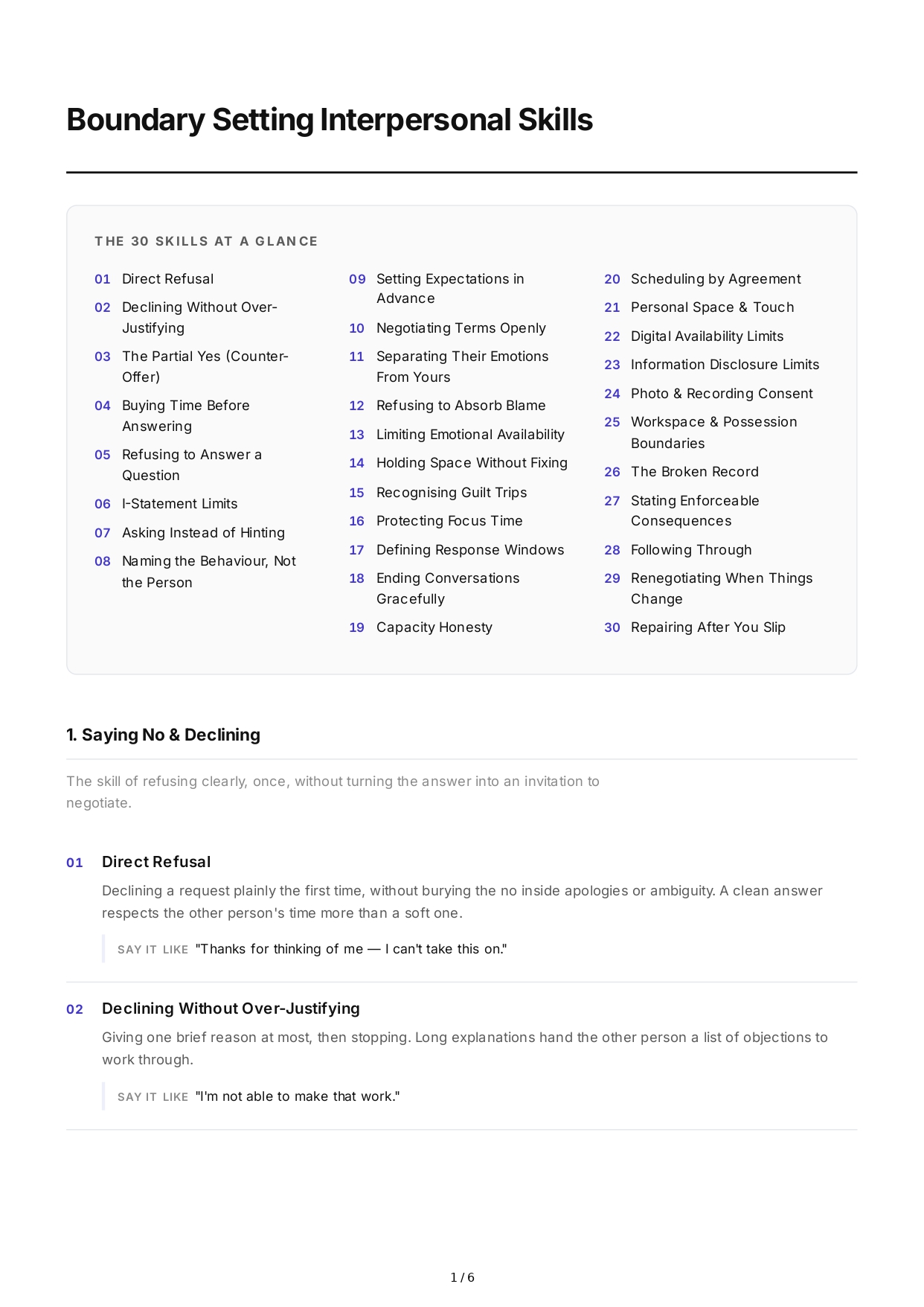
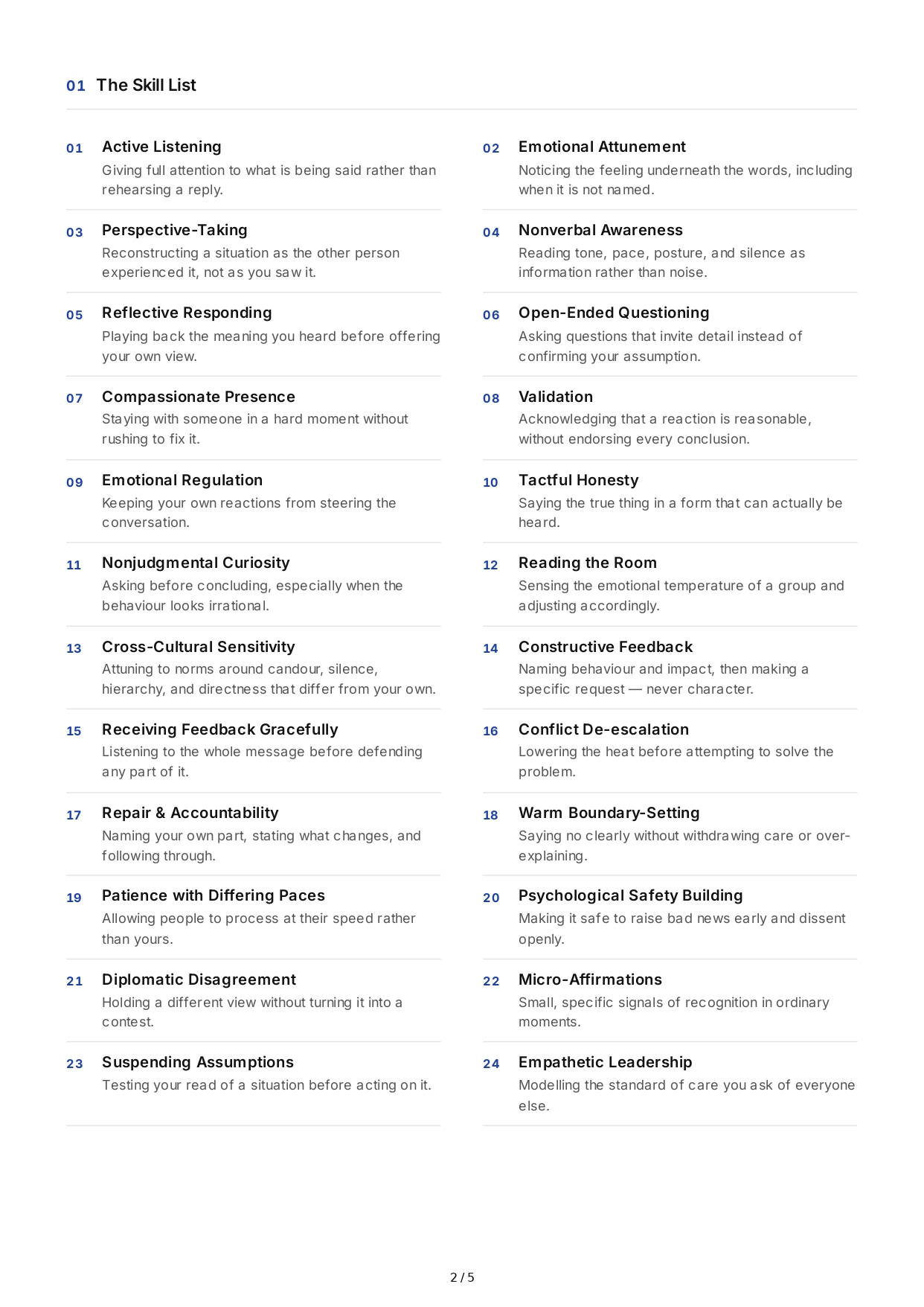
01
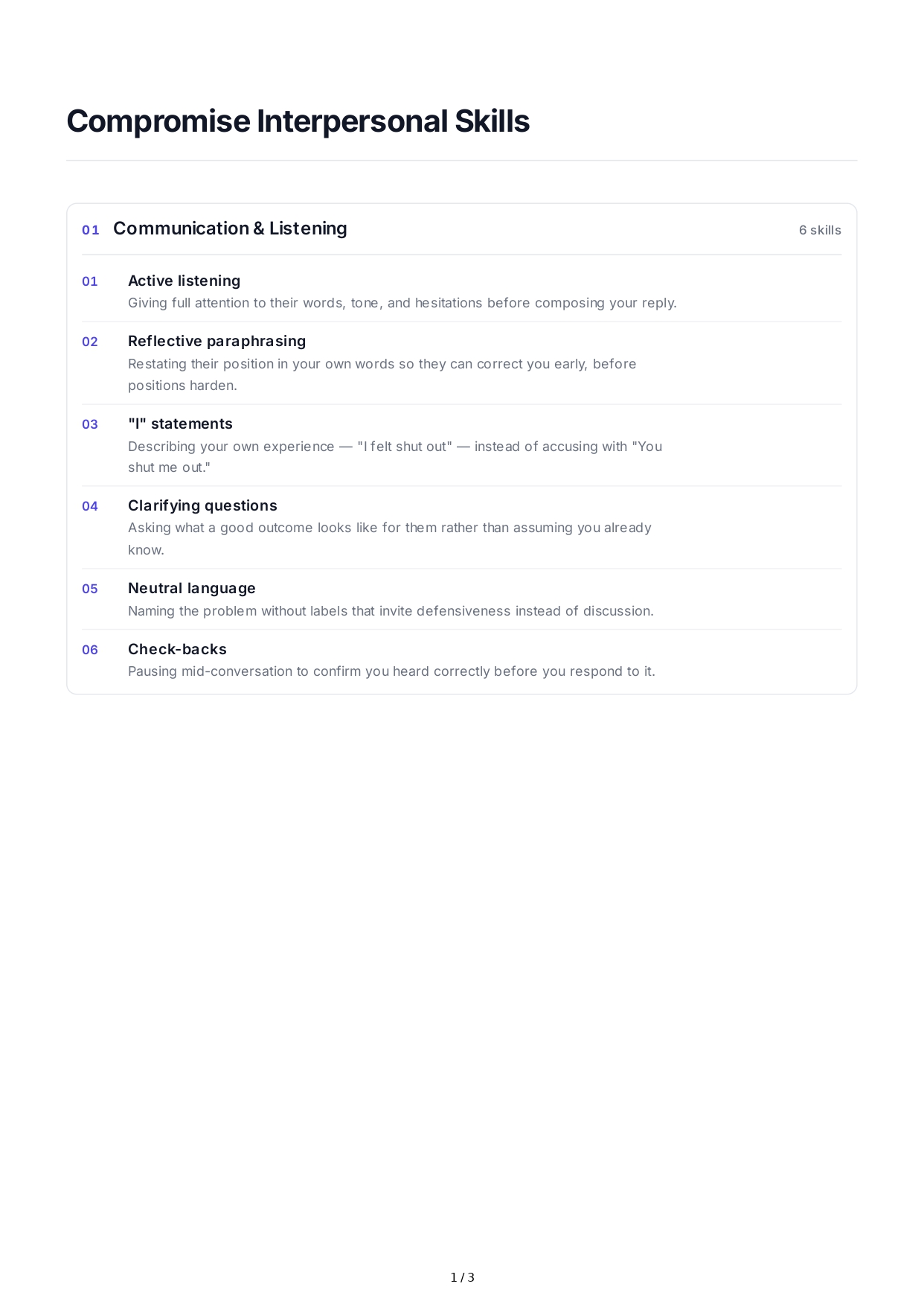
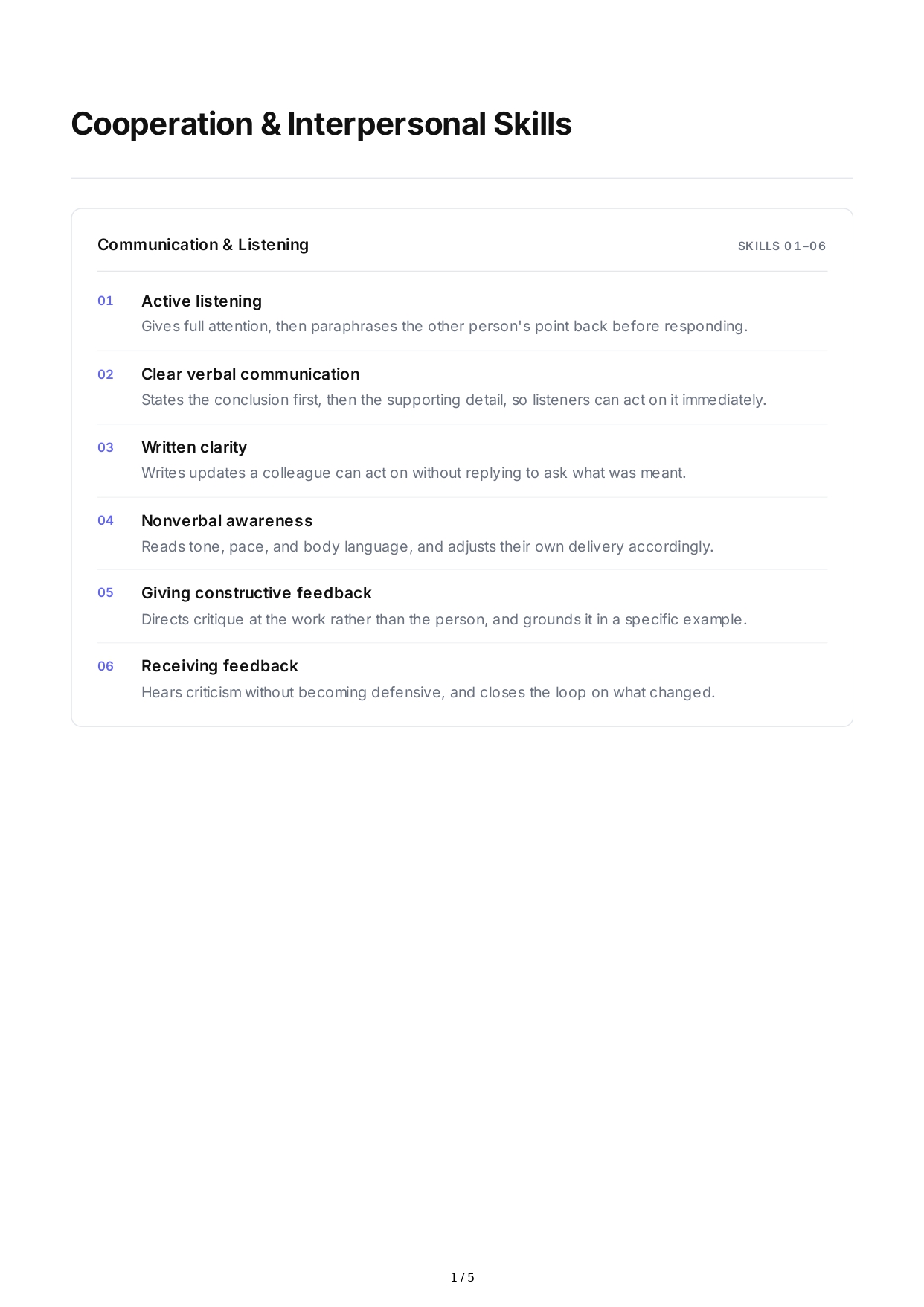
Active
listening
02
Clarifying
questions
03
Checking
for
understanding
04
Plain
-
language
explanation
05
Written
clarity
06
Nonverbal
awareness
07
Perspective
-
taking
08
Empathy
09
Reading
the
room
10
Cultural
sensitivity
11
Emotional
regulation
12
Patience
13
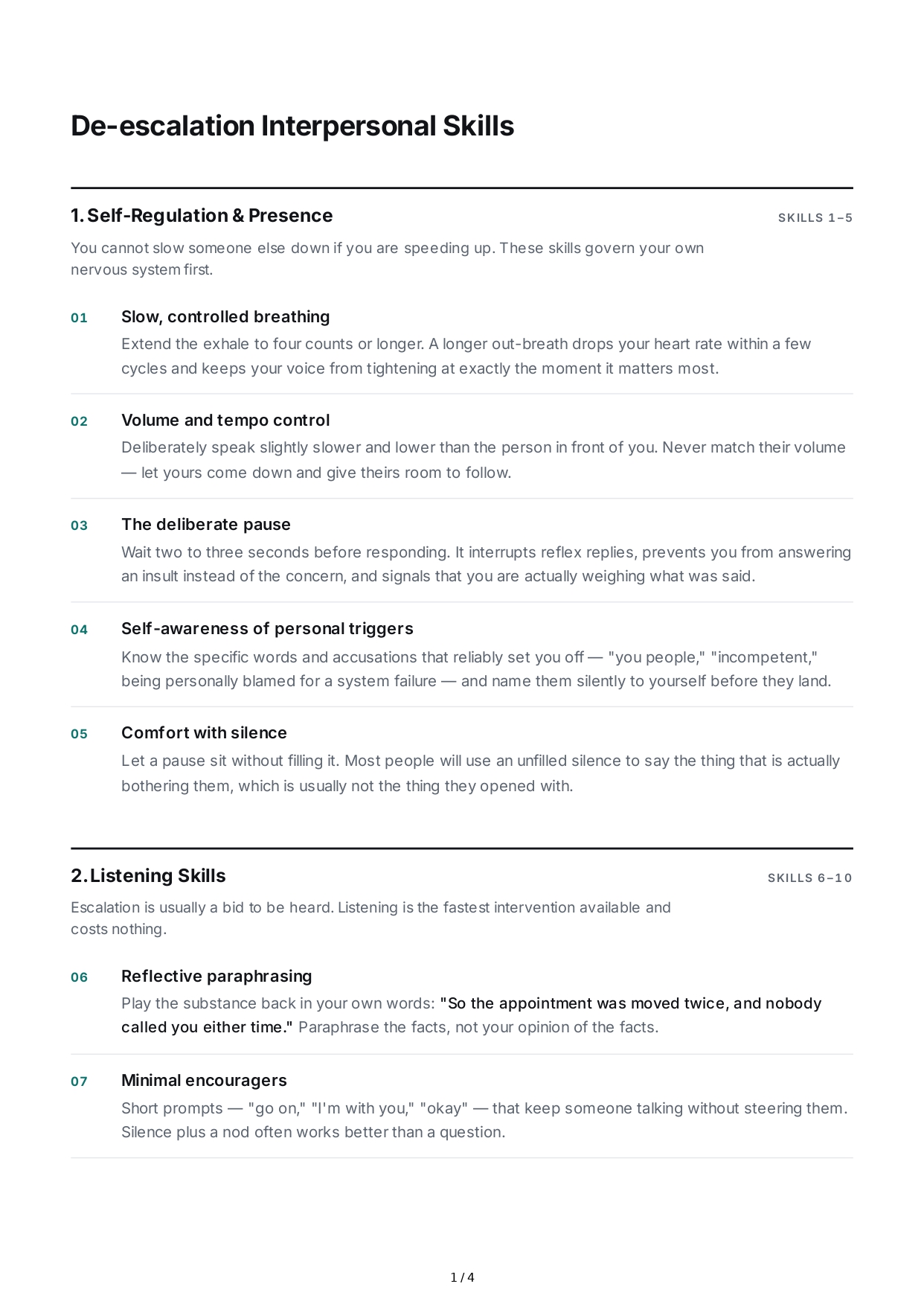
Conflict
de
-
escalation
14
Mediation
15
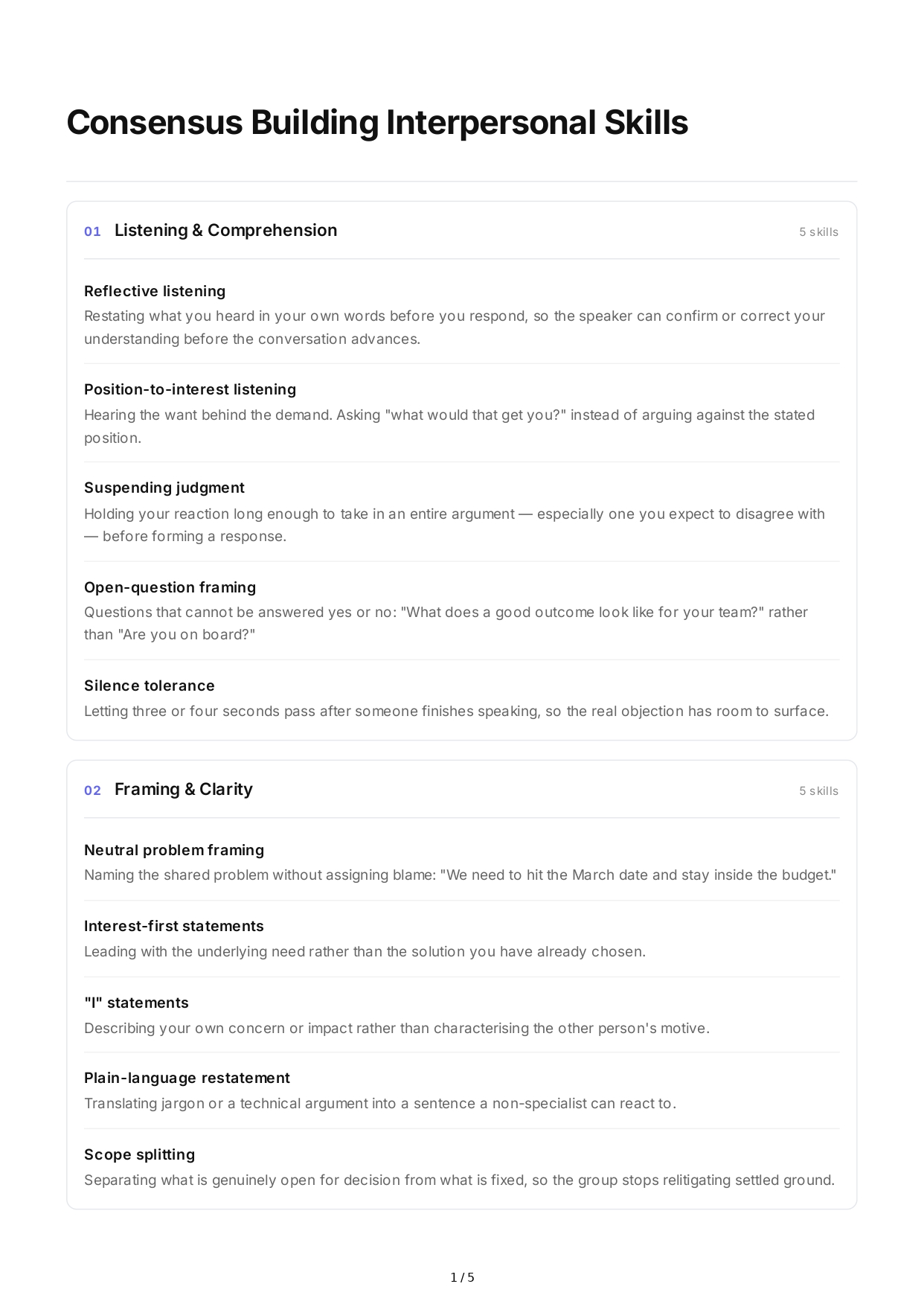
Consensus
building
16
Facilitation
17
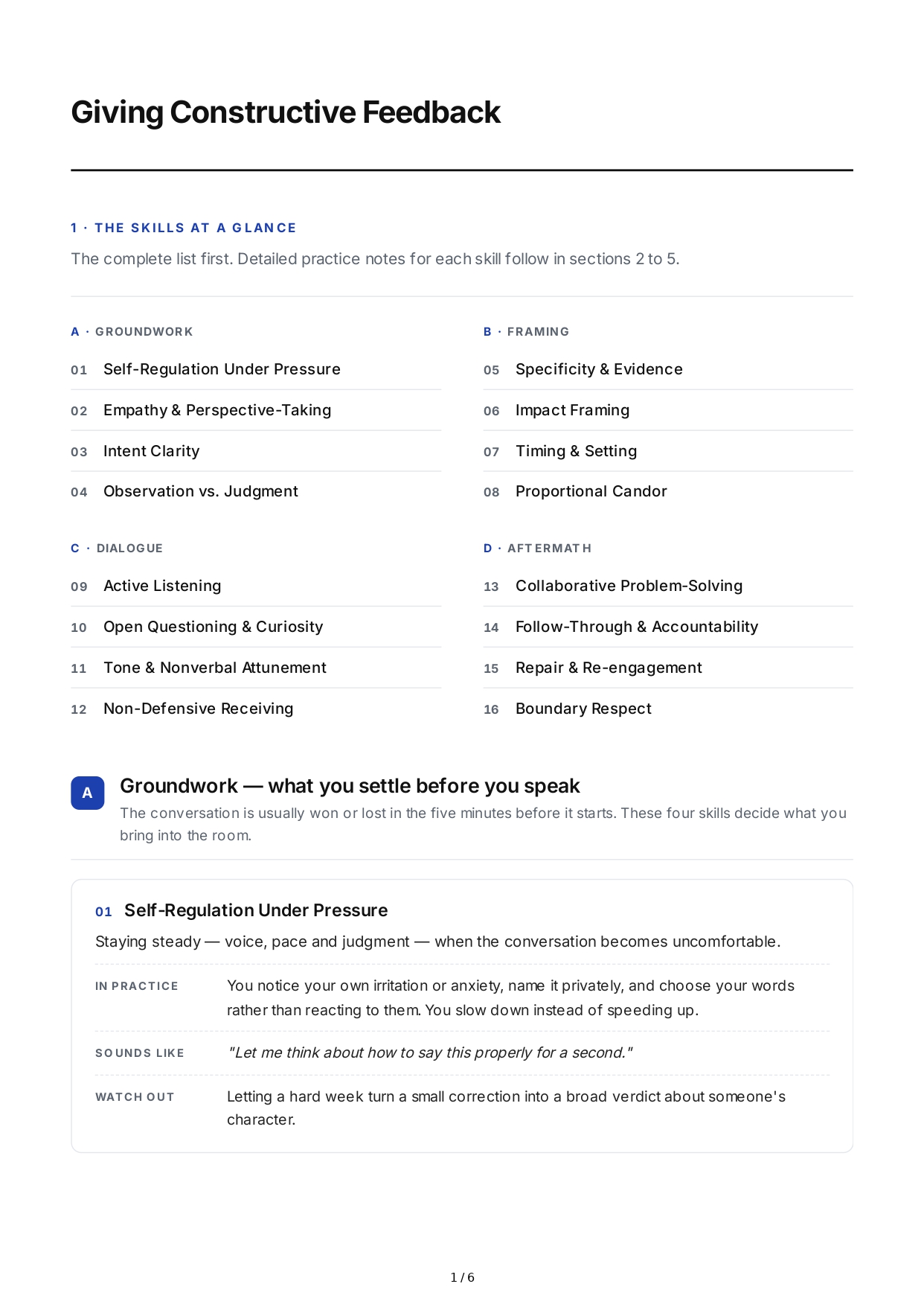
Constructive
feedback
18
Receiving
criticism
19
Reframing
20
Negotiation
21
Persuasion
22
Assertiveness
23
Influencing
without
authority
24
Managing
up
25
Owning
mistakes
26
Asking
for
help
27
Curiosity
28
Adaptability
29
Composure
under
pressure
30
Decision
-
making
under
uncertainty
1 / 4
IN
DETAIL
What
each
one
looks
like
in
practice
One
line
each
,
written
as
a
behaviour
rather
than
a
personality
trait
—
so
it
can
be
recognised
,
practised
,
and
pointed
to
in
a
review
.
Communication
&
Comprehension
6
SKILLS
01
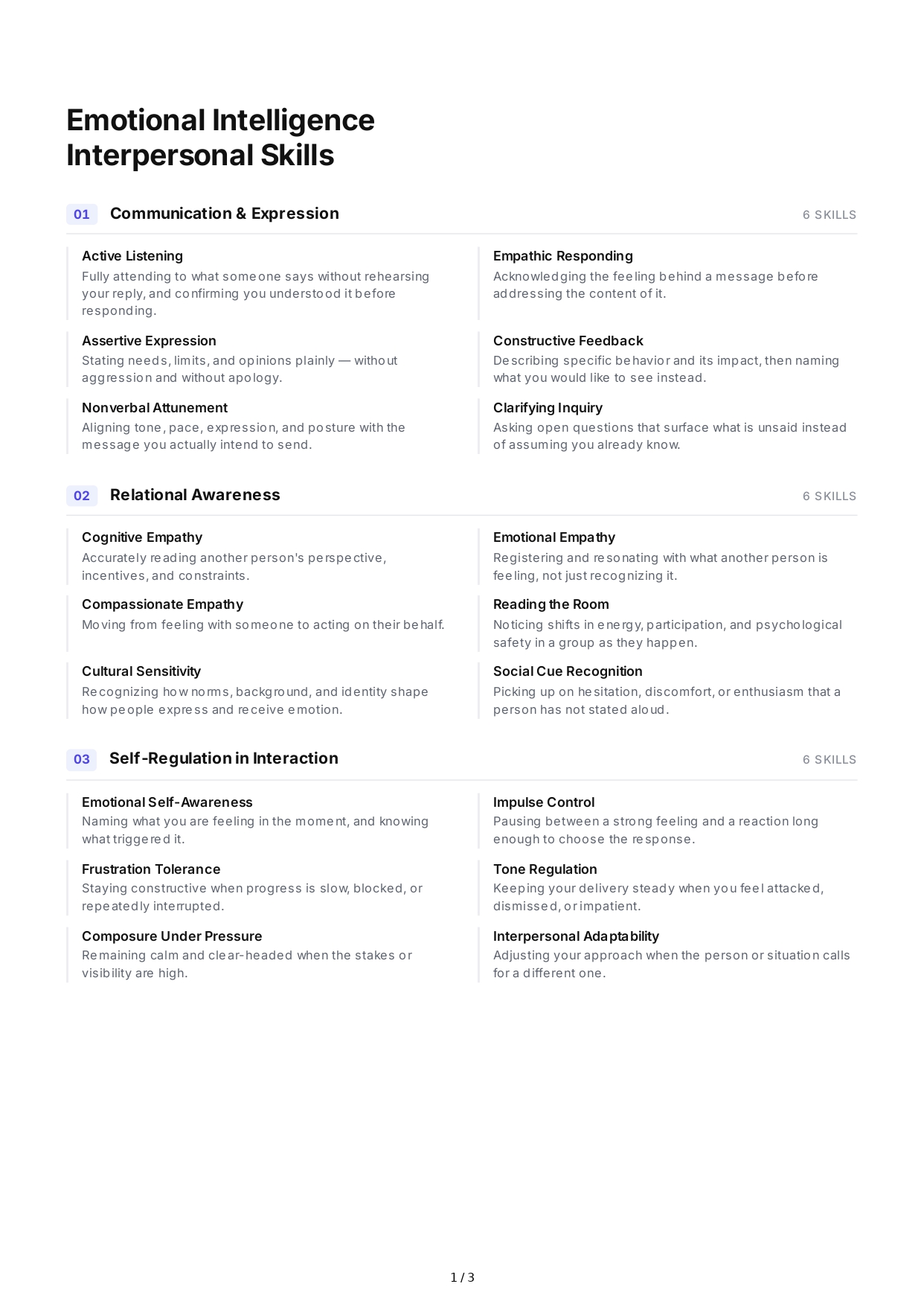
Active
listening
Letting
someone
finish
a
thought
—
and
proving
you
heard
it
—
before
you
reach
for
a
fix
.
02
Clarifying
questions
Asking
what
"
done
"
looks
like
until
the
real
problem
surfaces
,
instead
of
answering
the
first
version
you
were
told
.
03
Checking
for
understanding
Playing
back
what
you
think
was
agreed
,
so
a
misread
never
survives
past
the
end
of
the
meeting
.
04
Plain
-
language
explanation
Translating
a
technical
or
complex
diagnosis
into
something
the
person
who
owns
the
decision
can
act
on
.
05
Written
clarity
Writing
the
summary
,
decision
,
or
handoff
so
the
next
person
doesn
'
t
have
to
come
back
and
ask
you
what
you
meant
.
06
Nonverbal
awareness
Reading
pace
,
posture
,
and
hesitation
for
the
information
the
words
aren
'
t
carrying
.
Empathy
&
Social
Awareness
6
SKILLS
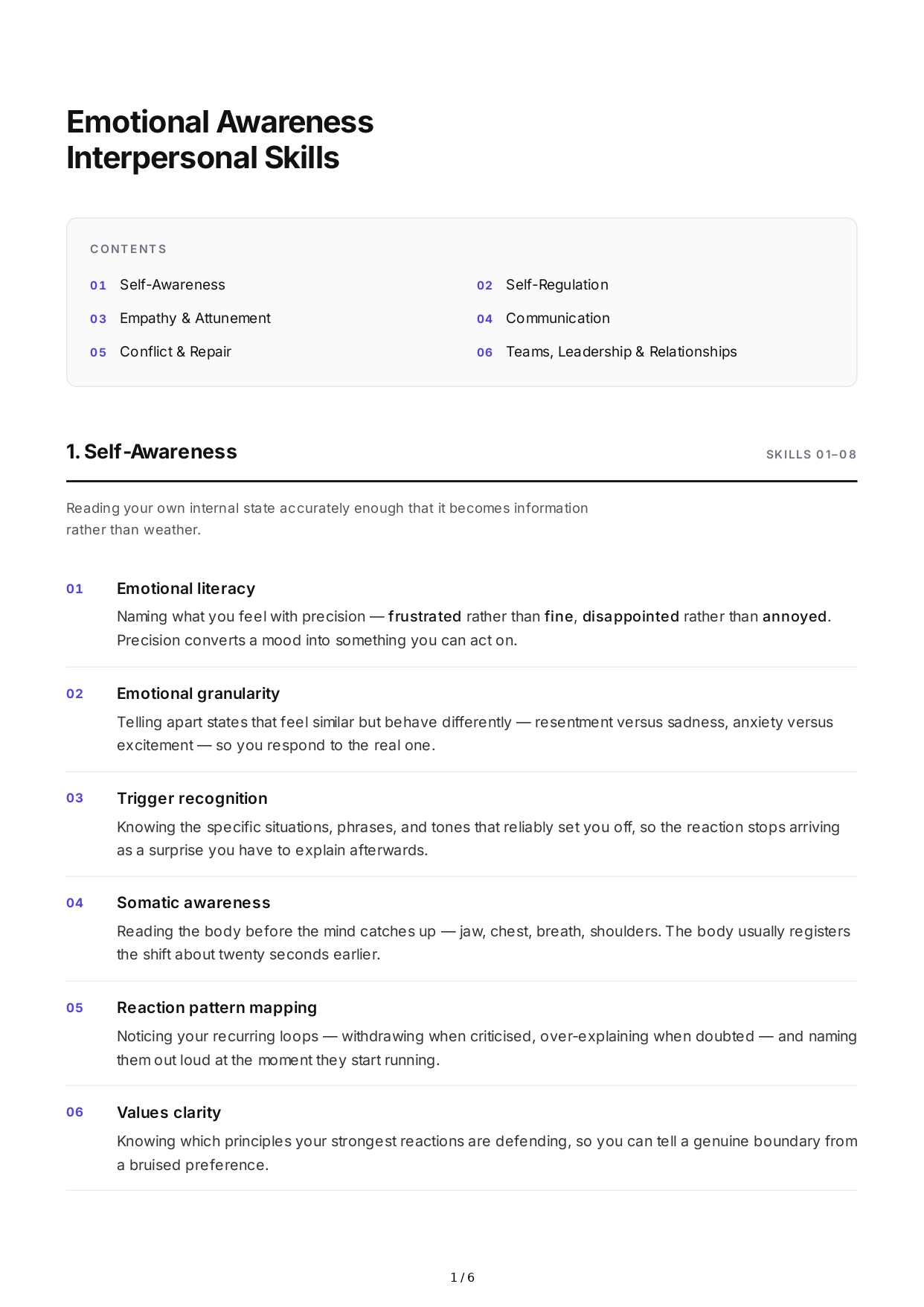
07
Perspective
-
taking
Reconstructing
the
problem
as
it
looks
from
someone
else
'
s
role
,
incentives
,
and
constraints
.
08
Empathy
Acknowledging
what
a
person
is
carrying
before
you
ask
them
to
change
their
position
.
09
Reading
the
room
Noticing
when
a
conversation
has
shifted
from
solving
to
defending
—
and
naming
it
out
loud
.
10
Cultural
sensitivity
Adjusting
directness
,
formality
,
and
pace
to
norms
that
aren
'
t
the
ones
you
grew
up
with
.
11
Emotional
regulation
Staying
useful
in
the
ten
seconds
after
someone
says
the
thing
that
lands
badly
.
12
Patience
Giving
a
slow
but
correct
answer
the
time
it
needs
,
when
you
would
much
rather
ship
the
fast
one
.
2 / 4
Collaboration
&
Conflict
6
SKILLS
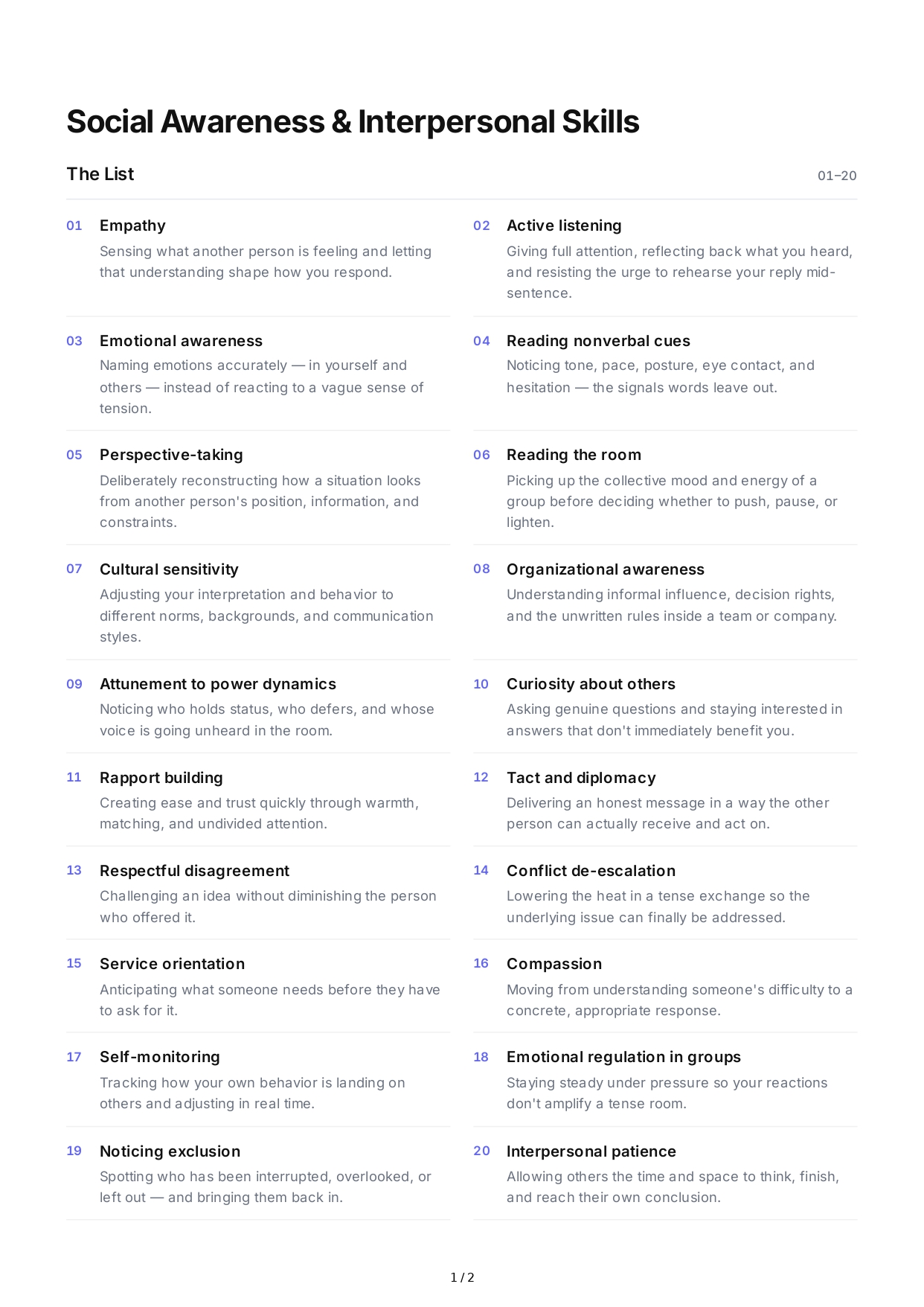
13
Conflict
de
-
escalation
Lowering
the
temperature
enough
that
the
actual
problem
becomes
discussable
again
.
14
Mediation
Helping
two
parties
restate
each
other
'
s
position
well
enough
to
find
the
part
they
already
agree
on
.
15
Consensus
building
Moving
a
group
to
a
decision
they
will
defend
,
even
when
it
wasn
'
t
their
first
choice
.
16
Facilitation
Running
a
conversation
so
the
quietest
accurate
voice
is
heard
before
the
decision
closes
.
17
Constructive
feedback
Describing
the
specific
behaviour
and
its
effect
,
with
a
change
that
is
actually
within
reach
.
18
Receiving
criticism
Extracting
the
true
part
from
a
badly
delivered
critique
without
defending
first
.
Influence
&
Negotiation
6
SKILLS
19
Reframing
Turning
"
we
can
'
t
do
this
"
into
a
narrower
question
that
can
actually
be
answered
today
.
20
Negotiation
Trading
scope
,
time
,
and
cost
openly
instead
of
arguing
about
whose
constraint
matters
more
.
21
Persuasion
Building
the
case
on
the
other
person
'
s
priorities
,
not
on
your
reasoning
simply
being
correct
.
22
Assertiveness
Saying
the
hard
thing
clearly
and
early
,
without
softening
it
into
a
hint
nobody
acts
on
.
23
Influencing
without
authority
Getting
work
done
by
people
who
don
'
t
report
to
you
because
they
trust
your
judgement
,
not
your
title
.
24
Managing
up
Giving
your
manager
the
context
,
the
options
,
and
a
recommendation
before
they
have
to
ask
for
it
.
3 / 4
Resilience
&
Judgement
6
SKILLS
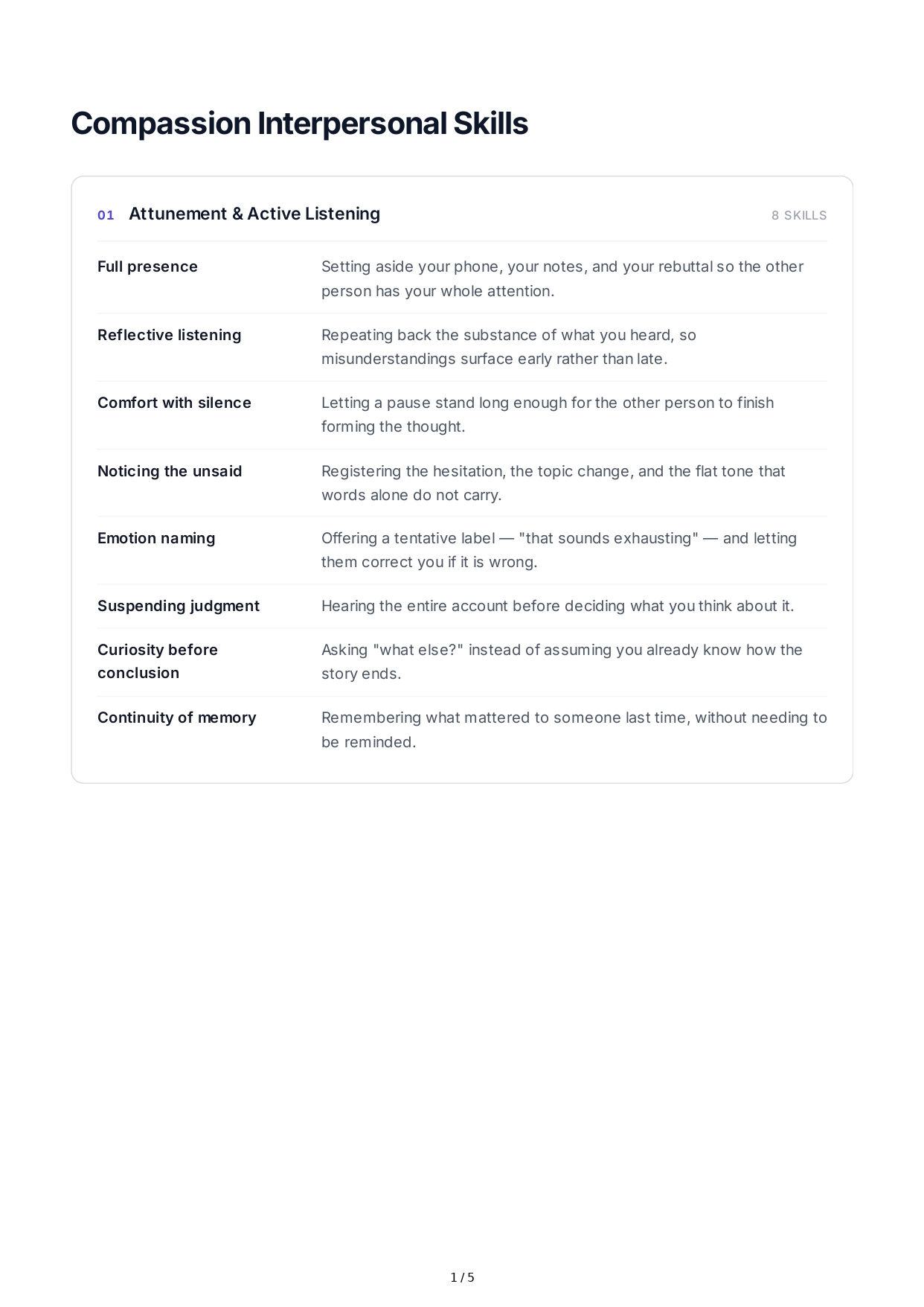
25
Owning
mistakes
Naming
the
error
,
its
impact
,
and
the
fix
in
the
same
breath
—
before
someone
else
has
to
.
26
Asking
for
help
Telling
the
difference
between
a
genuinely
hard
problem
and
one
you
'
re
about
to
lose
a
week
to
.
27
Curiosity
Staying
genuinely
interested
in
the
explanation
that
contradicts
your
current
theory
.
28
Adaptability
Dropping
a
plan
that
works
on
paper
but
is
visibly
failing
in
the
room
.
29
Composure
under
pressure
Slowing
down
to
think
at
the
exact
moment
everyone
around
you
is
speeding
up
.
30
Decision
-
making
under
uncertainty
Choosing
a
defensible
direction
with
70%
of
the
information
—
and
saying
which
30%
is
missing
.
4 / 4