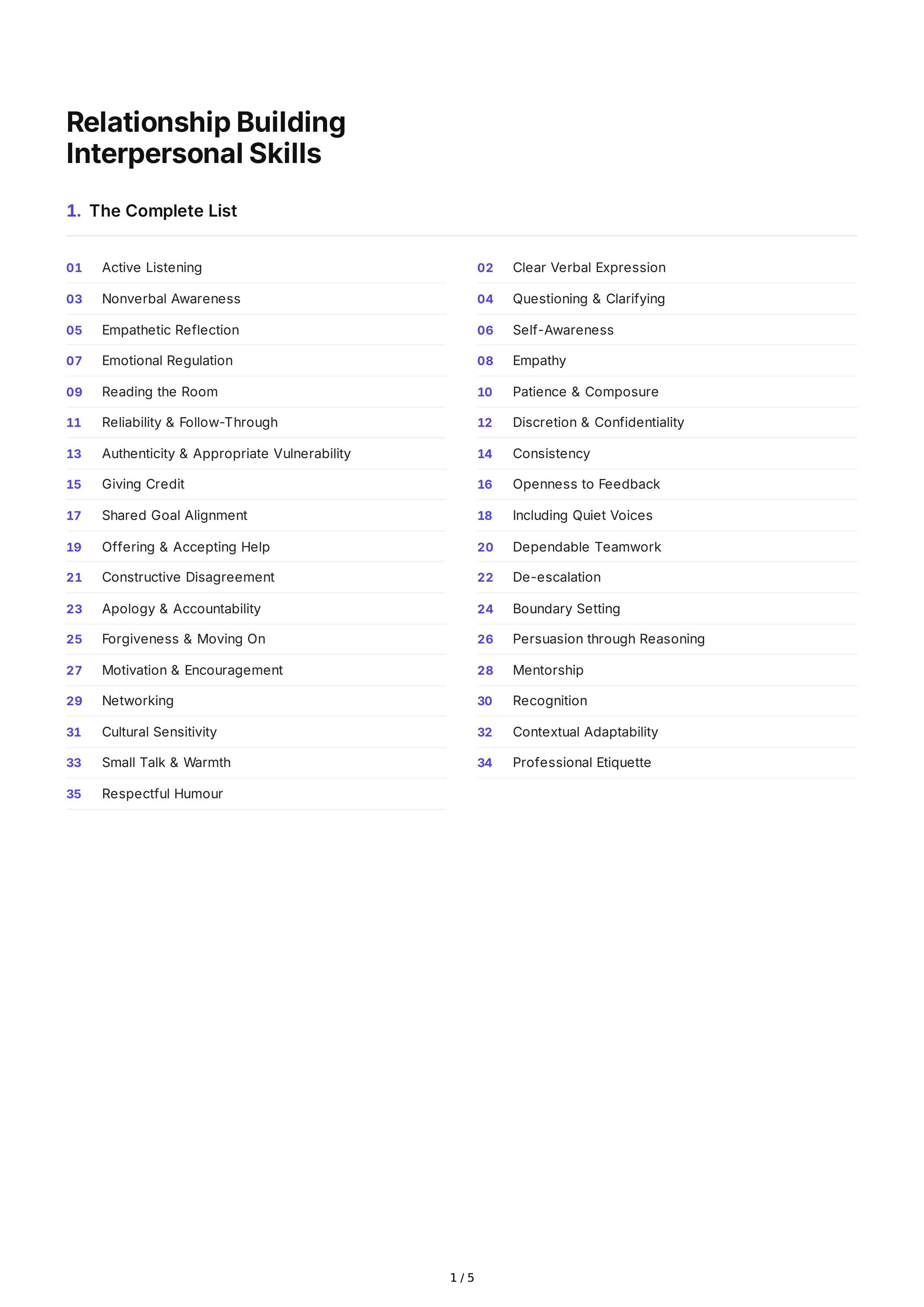
Relationship
Building
Interpersonal
Skills
1.
The
Complete
List
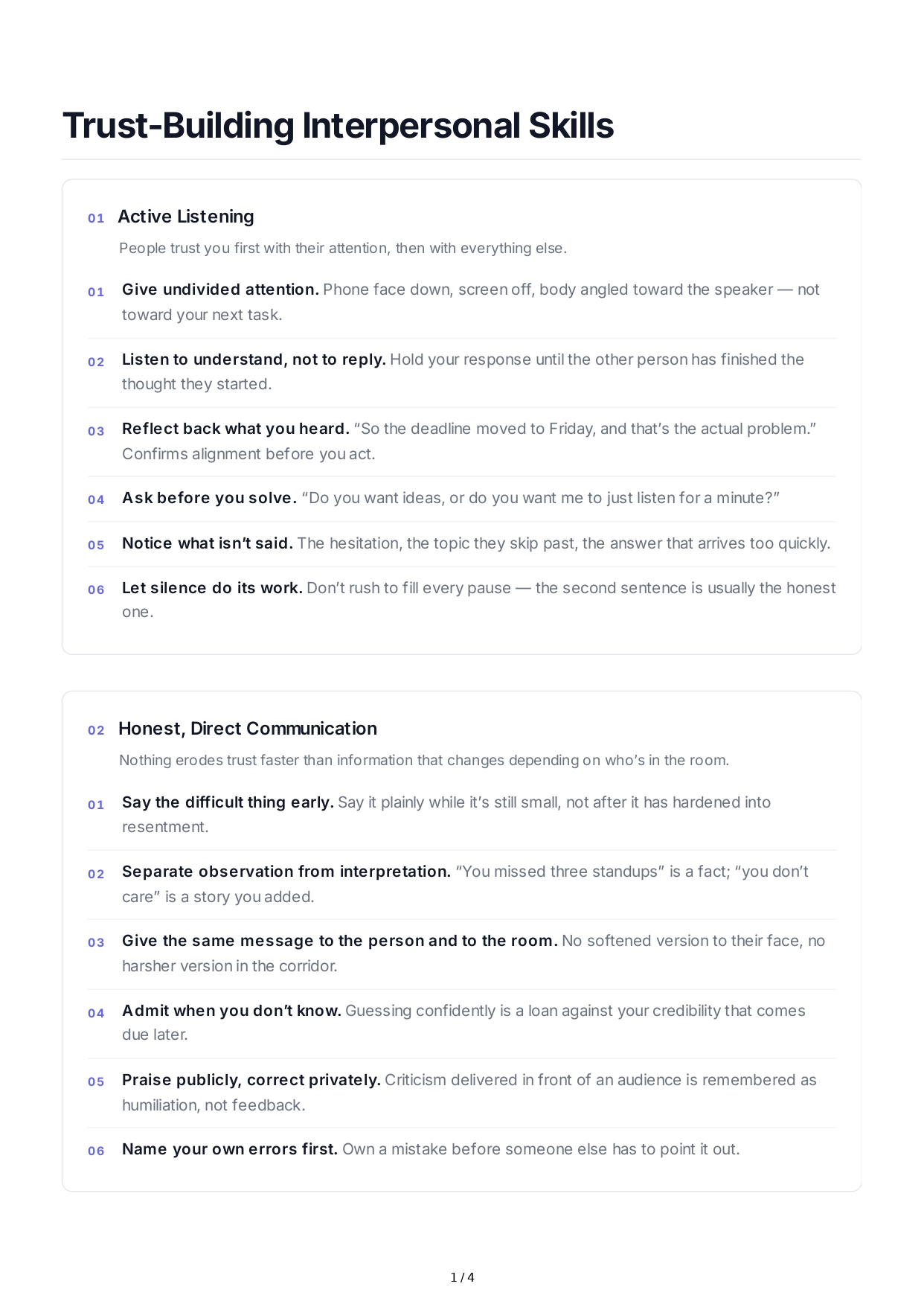
01
Active
Listening
02
Clear
Verbal
Expression
03
Nonverbal
Awareness
04
Questioning
&
Clarifying
05
Empathetic
Reflection
06
Self
-
Awareness
07
Emotional
Regulation
08
Empathy
09
Reading
the
Room
10
Patience
&
Composure
11
Reliability
&
Follow
-
Through
12
Discretion
&
Confidentiality
13
Authenticity
&
Appropriate
Vulnerability
14
Consistency
15
Giving
Credit
16
Openness
to
Feedback
17
Shared
Goal
Alignment
18
Including
Quiet
Voices
19
Offering
&
Accepting
Help
20
Dependable
Teamwork
21
Constructive
Disagreement
22
De
-
escalation
23
Apology
&
Accountability
24
Boundary
Setting
25
Forgiveness
&
Moving
On
26
Persuasion
through
Reasoning
27
Motivation
&
Encouragement
28
Mentorship
29
Networking
30
Recognition
31
Cultural
Sensitivity
32
Contextual
Adaptability
33
Small
Talk
&
Warmth
34
Professional
Etiquette
35
Respectful
Humour
1 / 5
2.
Detailed
Breakdown
Communication
Foundations
01–05
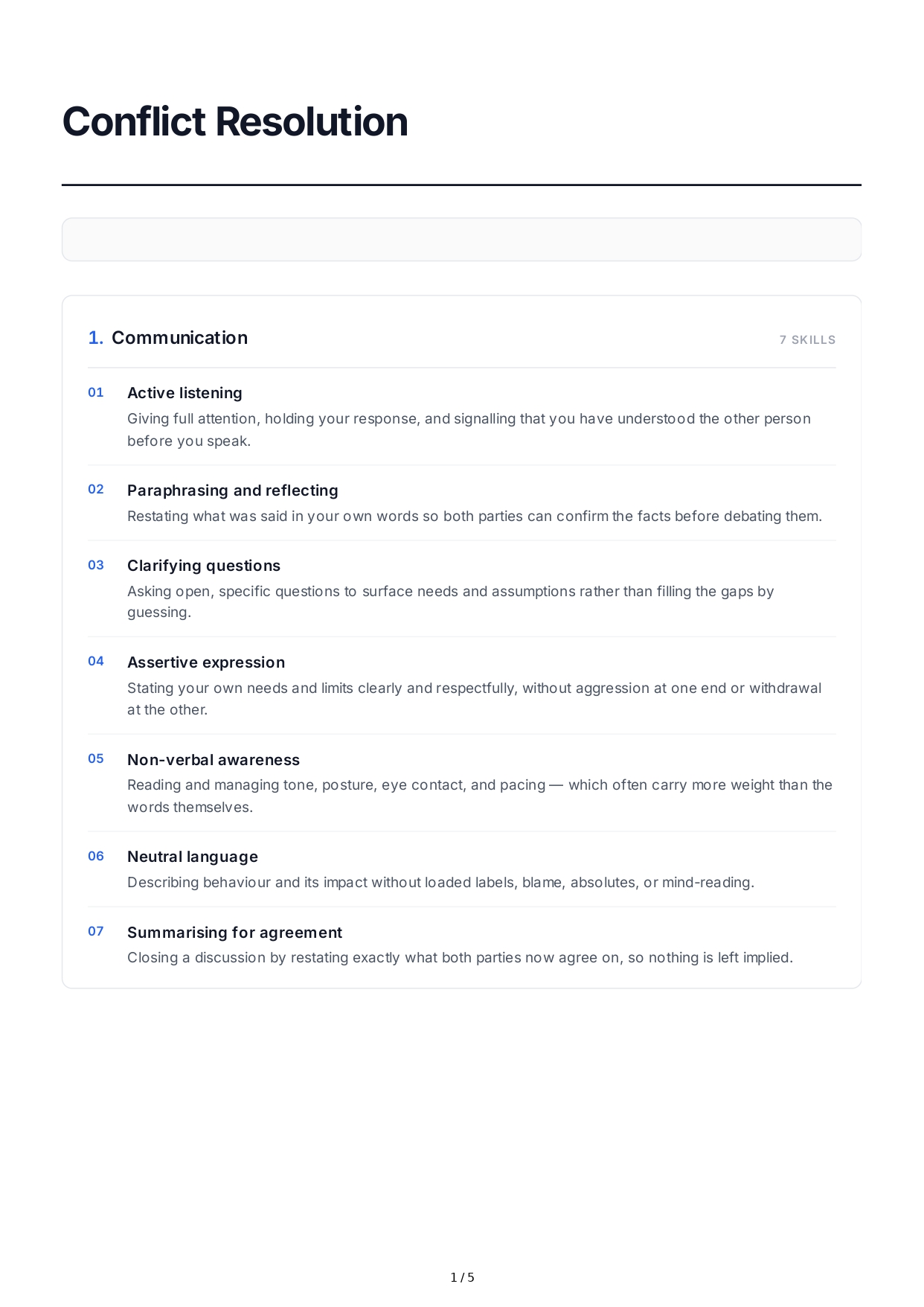
01
Active
Listening
Fully
attending
to
what
someone
is
saying
before
forming
a
reply
,
and
confirming
understanding
by
paraphrasing
rather
than
assuming
it
.
02
Clear
Verbal
Expression
Stating
needs
,
expectations
and
feedback
in
plain
language
,
so
the
other
person
never
has
to
guess
what
you
actually
meant
.
03
Nonverbal
Awareness
Reading
and
managing
tone
,
posture
,
eye
contact
and
pace
,
since
a
large
share
of
relational
signals
travels
outside
the
words
themselves
.
04
Questioning
&
Clarifying
Asking
open
questions
that
draw
people
out
,
and
checking
the
facts
before
drawing
conclusions
about
their
motives
.
05
Empathetic
Reflection
Naming
what
someone
appears
to
be
feeling
— "
that
sounds
frustrating
" —
without
judging
it
or
rushing
to
fix
it
.
Emotional
Intelligence
06–10
06
Self
-
Awareness
Knowing
your
own
triggers
,
habits
and
impact
on
other
people
before
asking
anyone
else
to
adapt
to
you
.
07
Emotional
Regulation
Staying
steady
under
pressure
instead
of
letting
frustration
,
impatience
or
anxiety
leak
into
the
conversation
.
08
Empathy
Making
a
genuine
effort
to
understand
another
person
'
s
perspective
,
constraints
and
pressures
,
even
when
you
disagree
with
their
conclusion
.
09
Reading
the
Room
Picking
up
on
unspoken
dynamics
—
hesitancy
,
fatigue
,
an
unresolved
conflict
—
and
adjusting
what
you
say
and
when
you
say
it
.
10
Patience
&
Composure
Giving
people
the
time
they
need
to
process
,
decide
or
finish
a
thought
without
filling
every
silence
.
2 / 5
Trust
&
Rapport
11–15
11
Reliability
&
Follow
-
Through
Doing
what
you
said
you
would
,
when
you
said
you
would
.
Trust
is
assembled
from
small
kept
promises
,
not
grand
gestures
.
12
Discretion
&
Confidentiality
Keeping
confidences
and
never
using
private
information
as
leverage
,
even
when
it
would
be
convenient
.
13
Authenticity
&
Appropriate
Vulnerability
Sharing
honest
context
and
admitting
uncertainty
rather
than
performing
a
confidence
you
do
not
have
.
14
Consistency
Behaving
the
same
way
with
the
same
person
every
day
,
so
colleagues
stop
having
to
predict
your
mood
before
they
approach
you
.
15
Giving
Credit
Naming
who
contributed
,
publicly
and
specifically
,
instead
of
quietly
absorbing
shared
wins
as
your
own
.
Collaboration
&
Teamwork
16–20
16
Openness
to
Feedback
Receiving
criticism
as
information
rather
than
as
an
attack
,
and
then
visibly
acting
on
it
.
17
Shared
Goal
Alignment
Framing
requests
around
the
other
person
'
s
priorities
,
not
only
your
own
deadline
or
agenda
.
18
Including
Quiet
Voices
Actively
inviting
input
from
people
who
are
less
likely
to
speak
up
in
a
group
,
and
making
room
for
the
answer
.
19
Offering
&
Accepting
Help
Noticing
when
someone
is
overloaded
and
asking
,
and
accepting
support
yourself
without
deflecting
it
.
20
Dependable
Teamwork
Carrying
your
share
without
needing
to
be
chased
,
and
flagging
slippage
early
enough
for
others
to
adjust
.
3 / 5
Conflict
&
Repair
21–25
21
Constructive
Disagreement
Challenging
ideas
directly
while
leaving
the
other
person
'
s
dignity
and
standing
intact
.
22
De
-
escalation
Lowering
the
temperature
of
a
heated
exchange
instead
of
matching
its
volume
or
defending
your
position
harder
.
23
Apology
&
Accountability
Acknowledging
the
impact
plainly
,
without
a
"
but
",
and
describing
what
will
change
next
time
.
24
Boundary
Setting
Saying
no
clearly
and
kindly
,
so
resentment
never
has
the
chance
to
accumulate
quietly
.
25
Forgiveness
&
Moving
On
Closing
out
a
resolved
conflict
instead
of
re
-
litigating
it
weeks
or
months
later
.
Influence
&
Leadership
Presence
26–30
26
Persuasion
through
Reasoning
Making
a
case
with
evidence
and
shared
interest
rather
than
pressure
,
repetition
or
seniority
.
27
Motivation
&
Encouragement
Recognising
effort
in
a
way
that
is
specific
to
the
person
and
actually
heard
by
them
.
28
Mentorship
Investing
time
in
someone
'
s
development
without
making
them
feel
indebted
or
assessed
.
29
Networking
Building
a
wide
circle
of
loose
,
low
-
maintenance
relationships
long
before
you
need
anything
from
them
.
30
Recognition
Marking
contributions
in
the
moment
they
happen
,
not
only
when
a
formal
review
cycle
comes
around
.
4 / 5
Cultural
&
Social
Awareness
31–35
31
Cultural
Sensitivity
Understanding
how
norms
around
directness
,
hierarchy
,
silence
and
time
differ
across
backgrounds
and
regions
.
32
Contextual
Adaptability
Shifting
register
between
a
peer
,
a
client
,
a
senior
leader
and
a
stressed
colleague
without
becoming
a
different
person
.
33
Small
Talk
&
Warmth
Opening
conversations
with
genuine
curiosity
rather
than
transactional
pleasantries
on
the
way
to
the
real
ask
.
34
Professional
Etiquette
Respecting
time
,
attention
,
reply
expectations
and
shared
space
—
the
unglamorous
courtesies
that
keep
relationships
easy
.
35
Respectful
Humour
Using
levity
to
ease
tension
or
build
closeness
,
never
at
someone
else
'
s
expense
.
5 / 5