
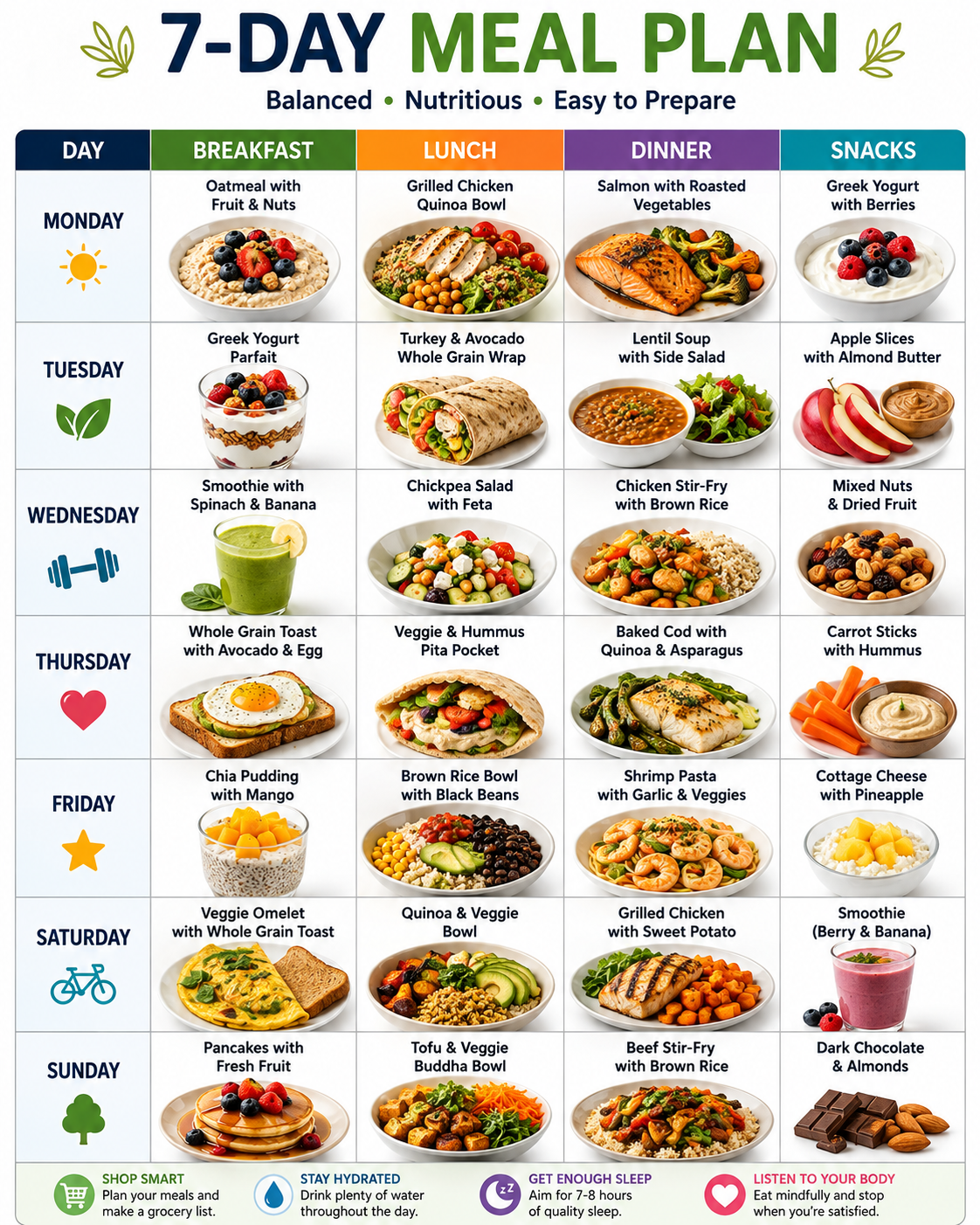
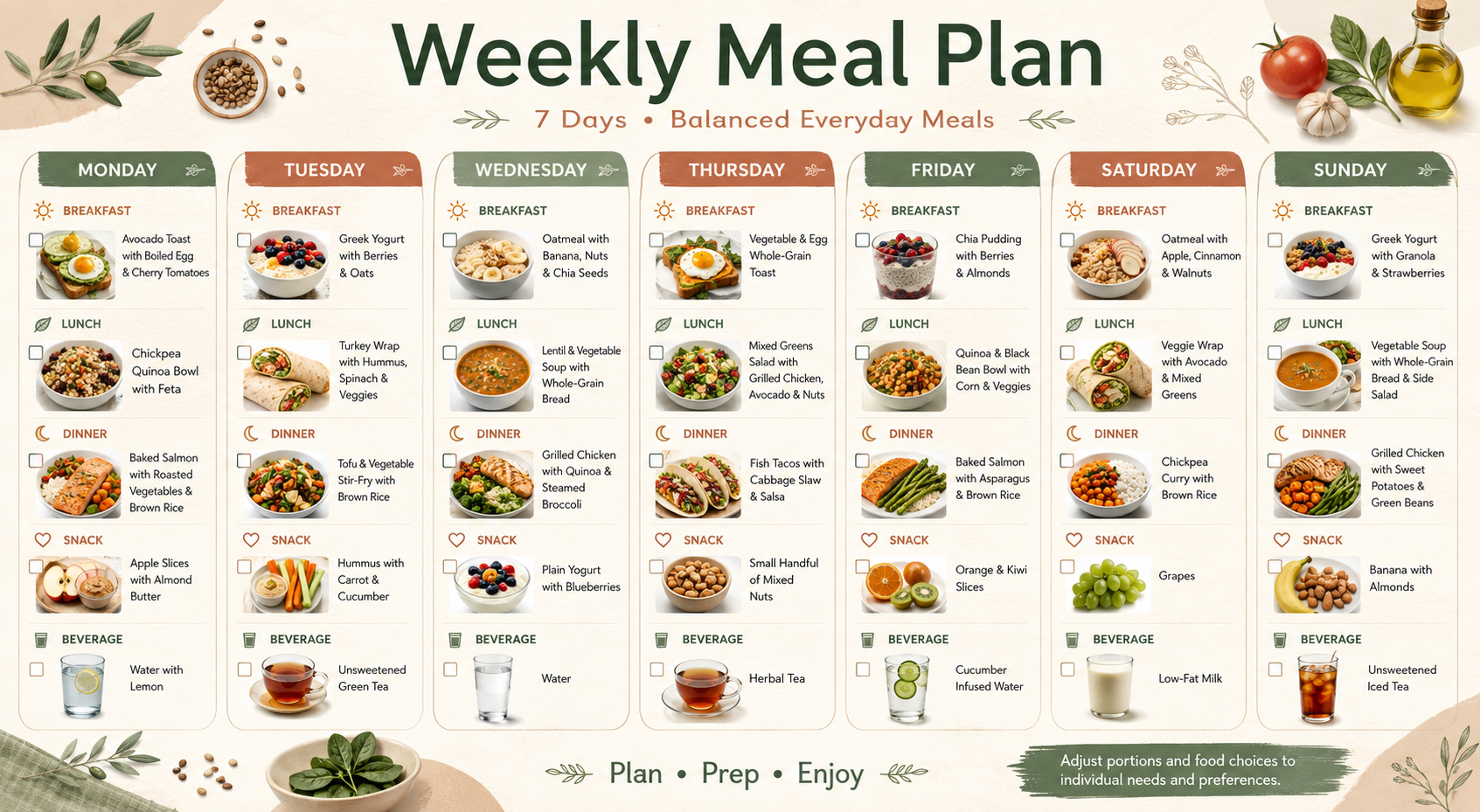
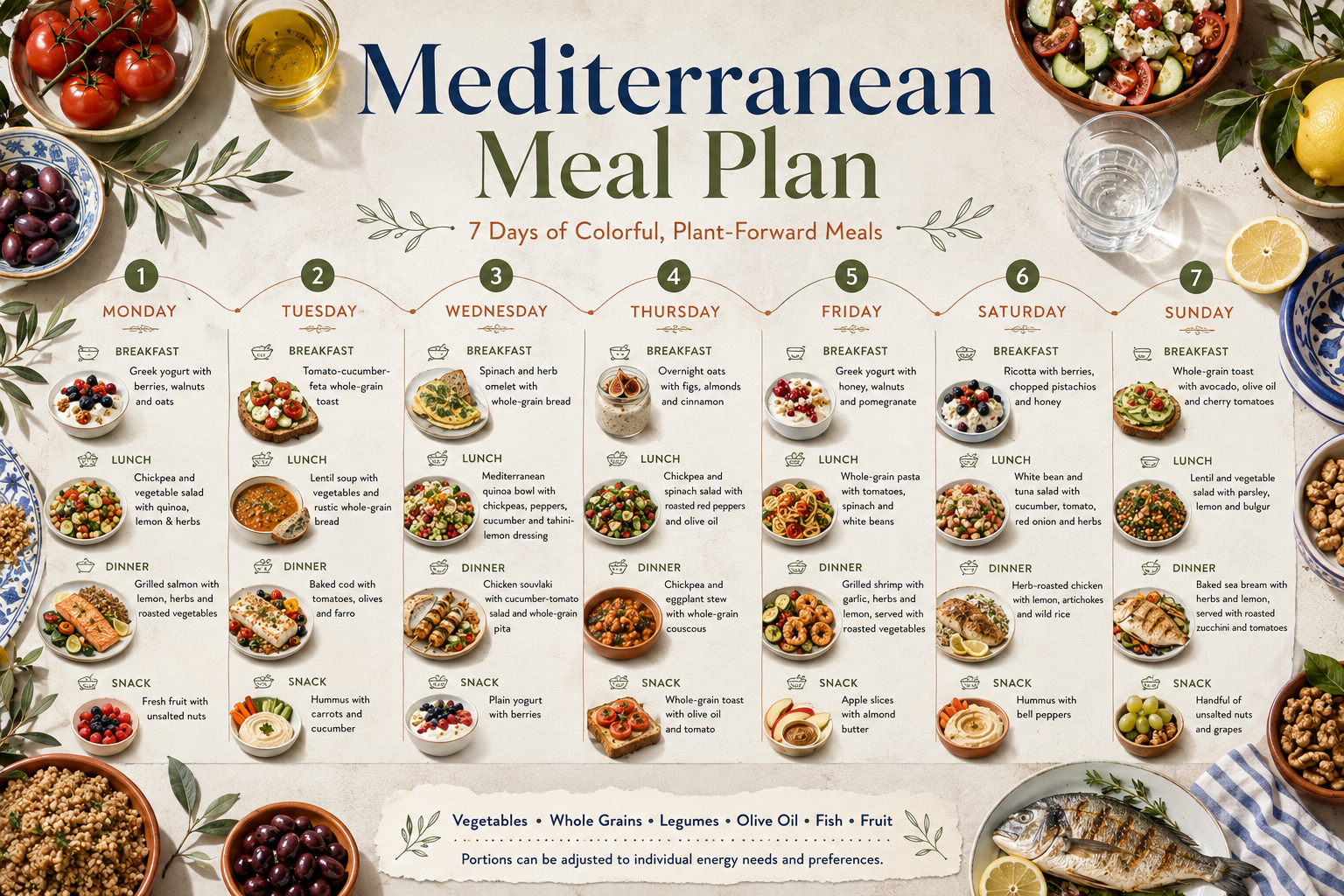
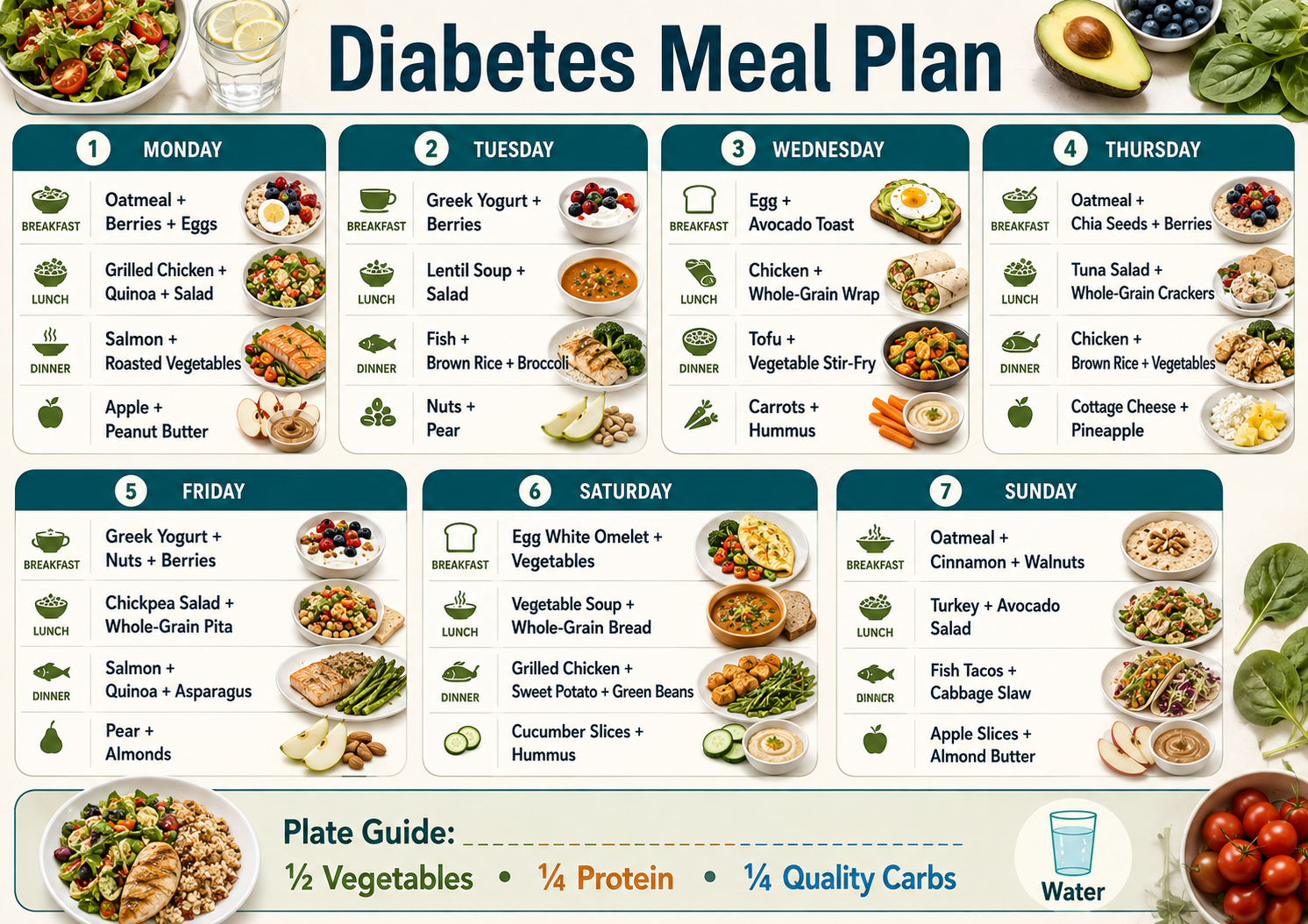
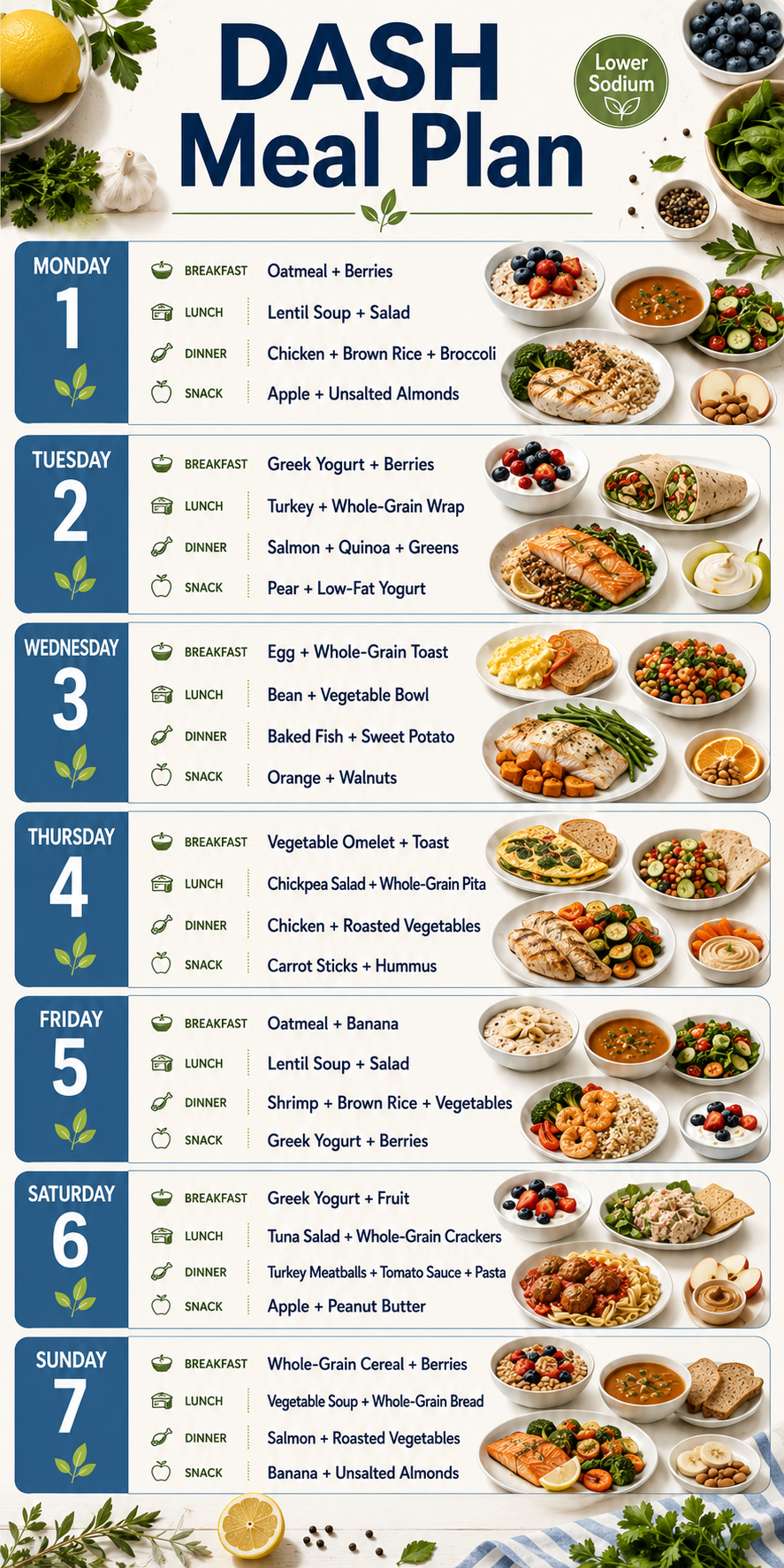
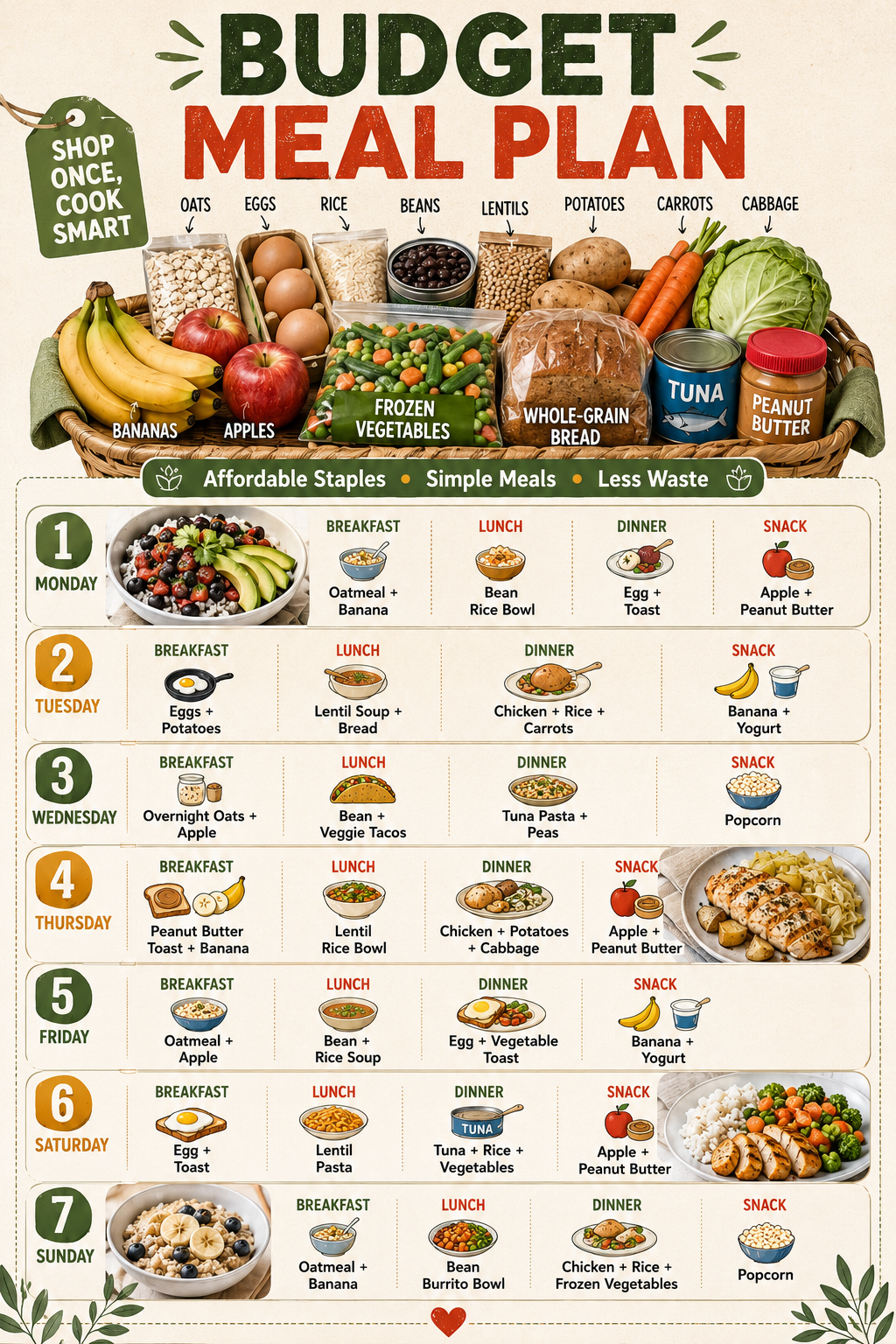
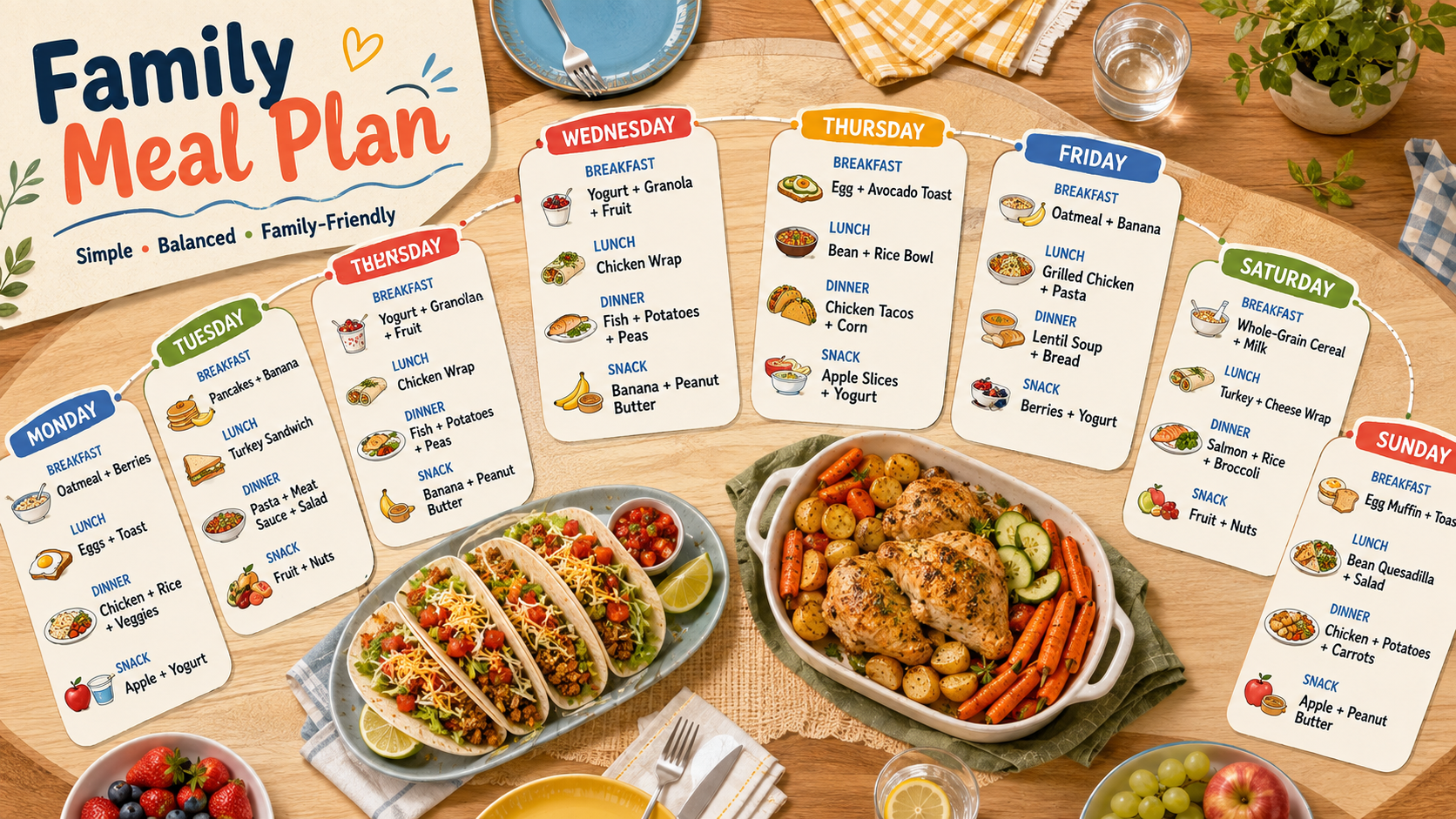
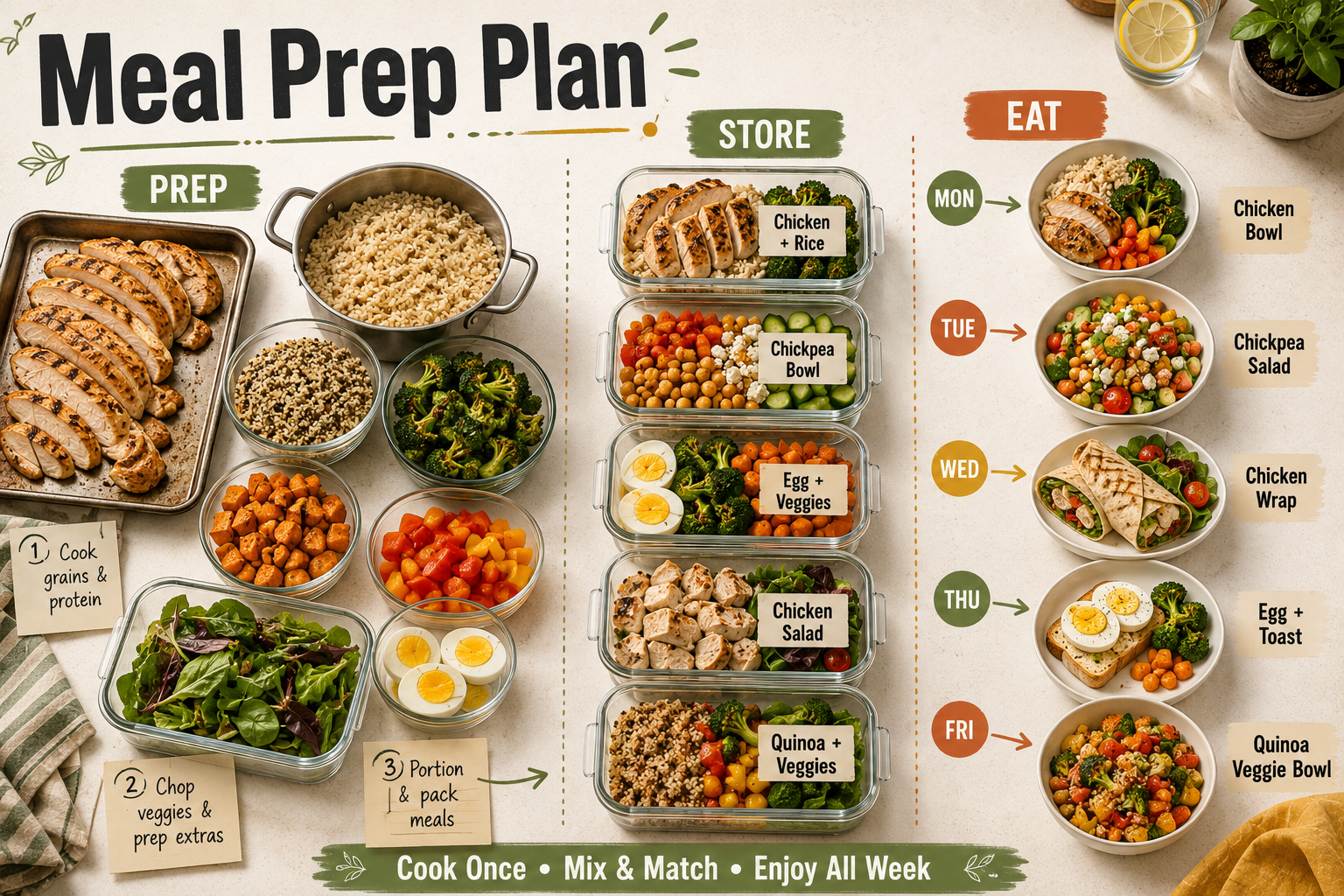
Create practical, visually organized meal plans with AI using real-world meal plan examples as inspiration. Explore different meal-planning formats, dietary approaches, food combinations, and weekly structures, then describe your nutritional preferences, schedule, household needs, budget, cooking habits, and goals in an AI prompt. The AI generates a completely new meal plan that you can review and personalize. With Examples.com, the reference example is used only as inspiration; it is not edited or copied. After generation, you can open the Online Editor, customize the plan, and download the final PNG for everyday use.
What Is A Meal Plan?
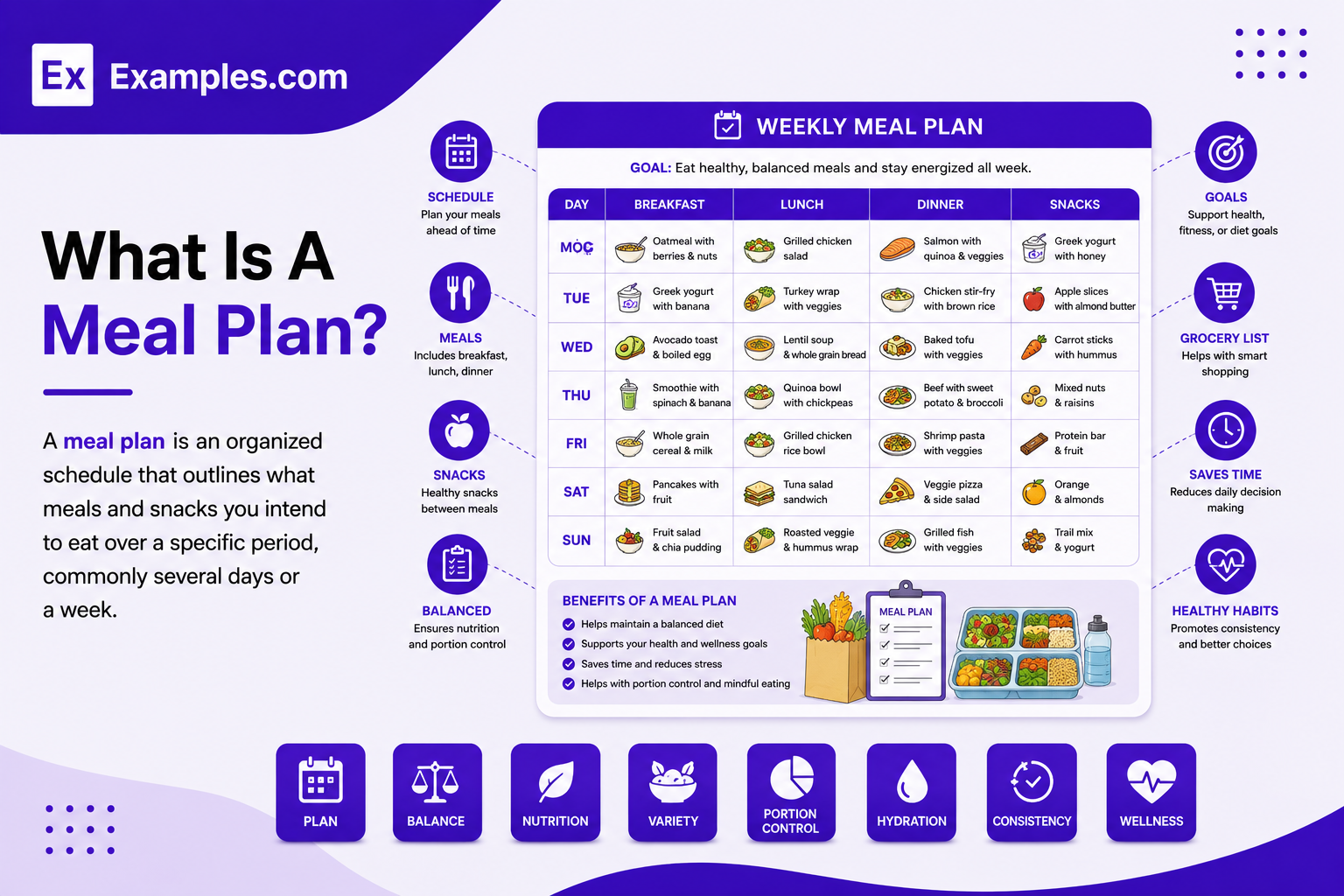
A meal plan is an organized schedule that outlines what meals and snacks you intend to eat over a specific period, commonly several days or a week. It can include breakfast, lunch, dinner, snacks, recipes, ingredients, portions, and a corresponding shopping list. A well-planned schedule helps organize grocery shopping, reduce last-minute food decisions, use ingredients efficiently, and support balanced eating. Meal plans can also be adapted for different dietary preferences, household sizes, budgets, schedules, and cooking abilities.
Popular Types Of Meal Plans
Meal plans can be designed around different nutritional priorities, lifestyles, schedules, and dietary preferences.
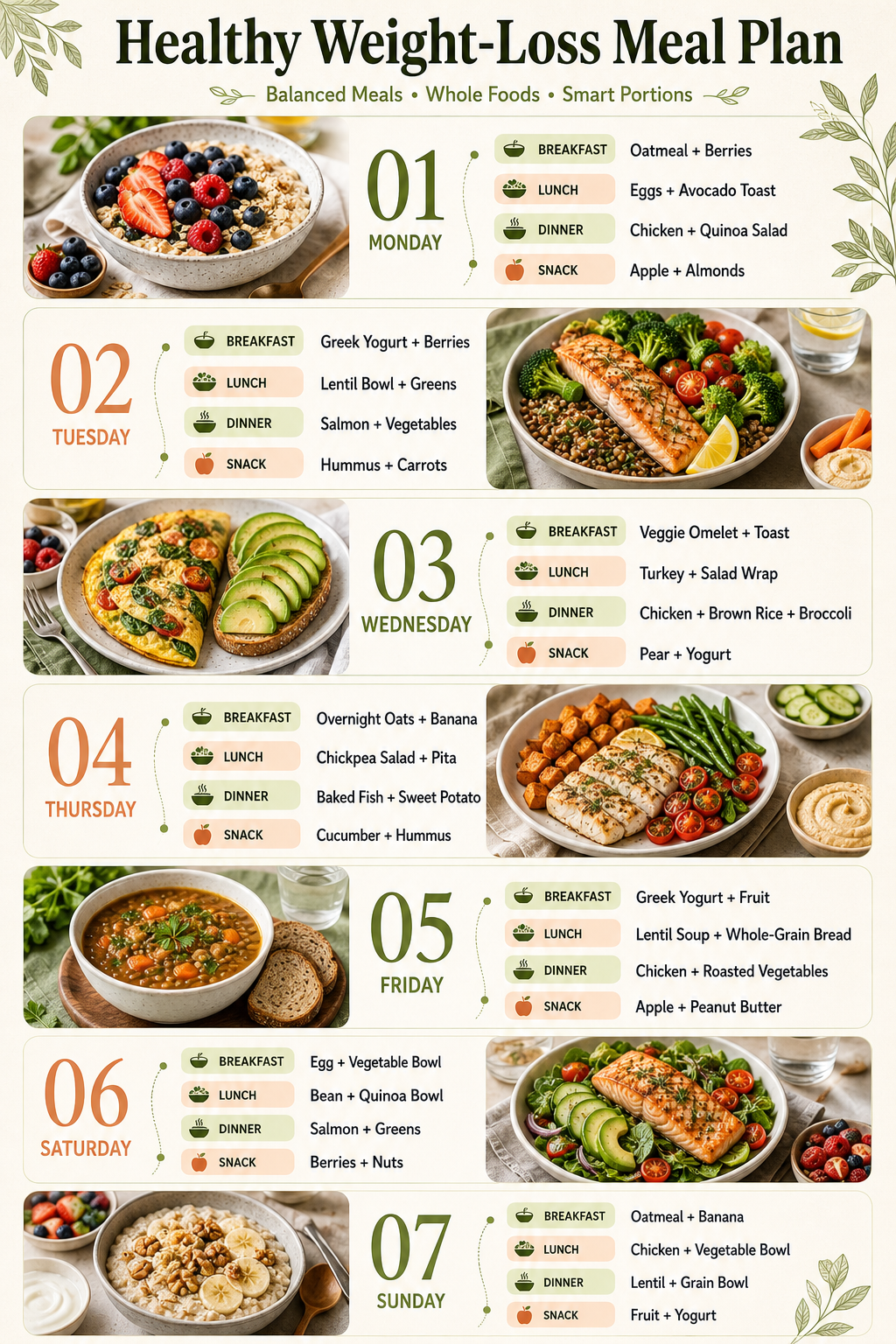
Weekly Meal Plan
Organizes breakfast, lunch, dinner, and snacks across seven days for convenient planning.
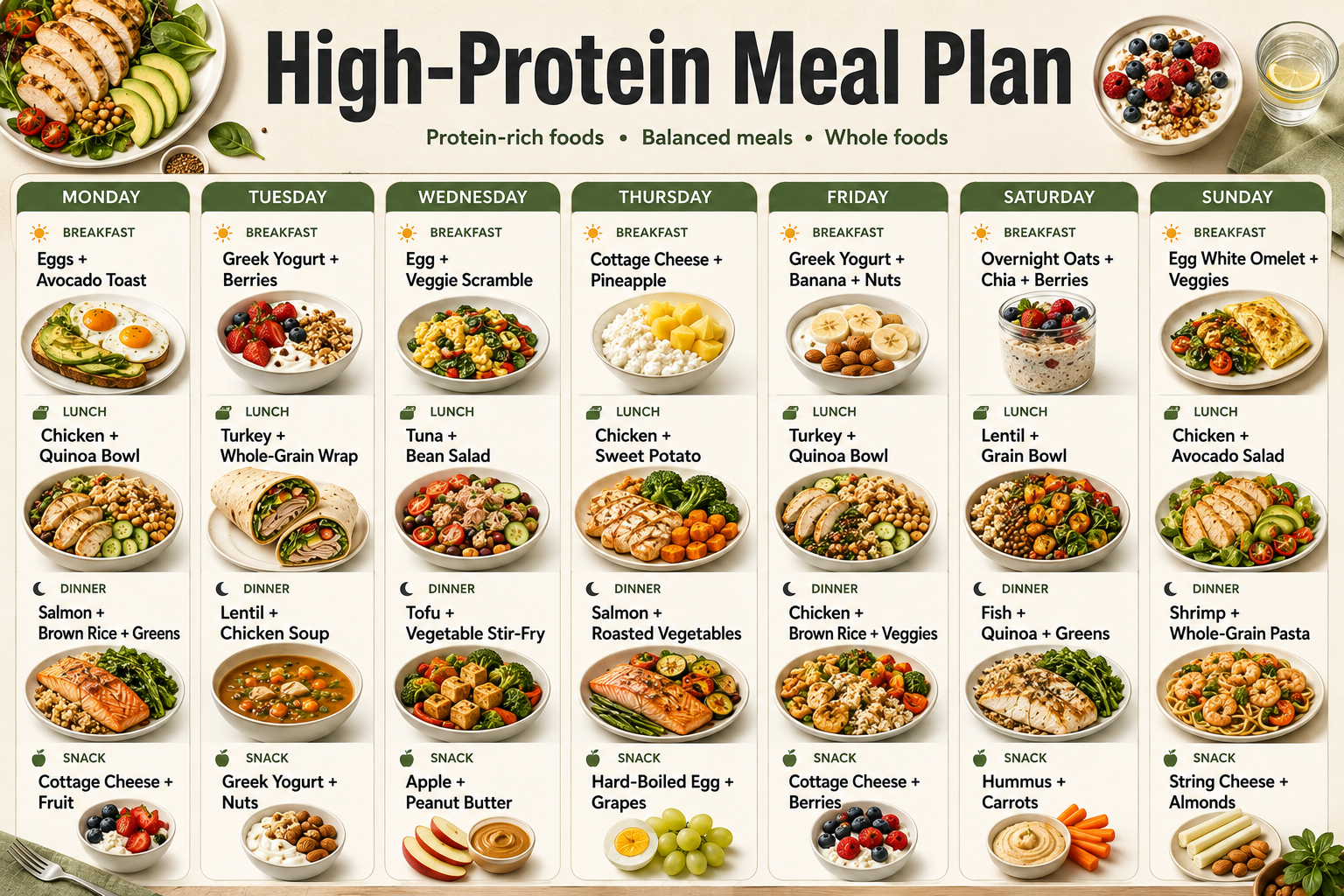
High-Protein Meal Plan
Emphasizes protein-rich foods alongside vegetables, grains, fruits, and other nutritious ingredients.
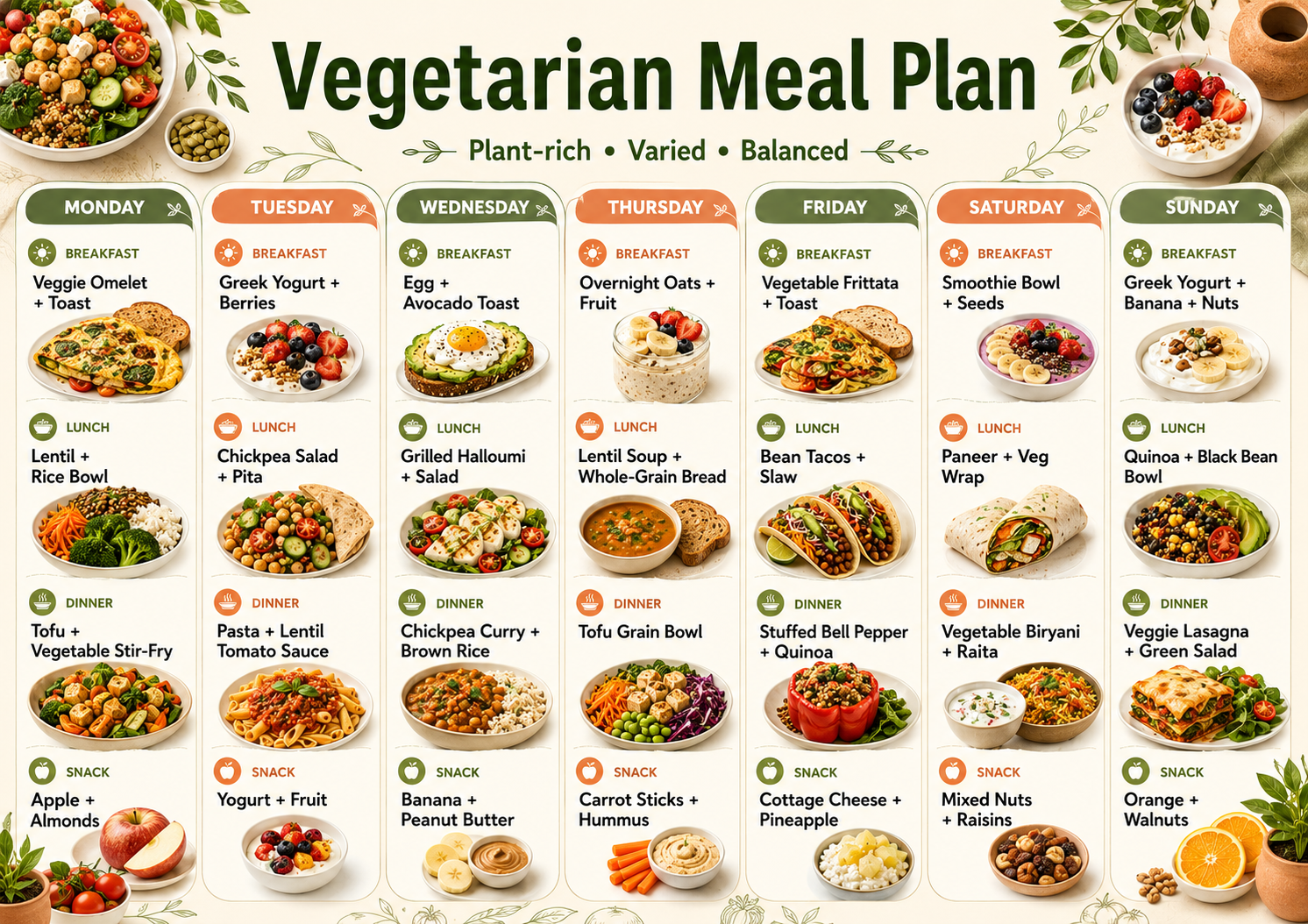
Vegetarian Meal Plan
Uses plant-based foods while excluding meat, poultry, and seafood.
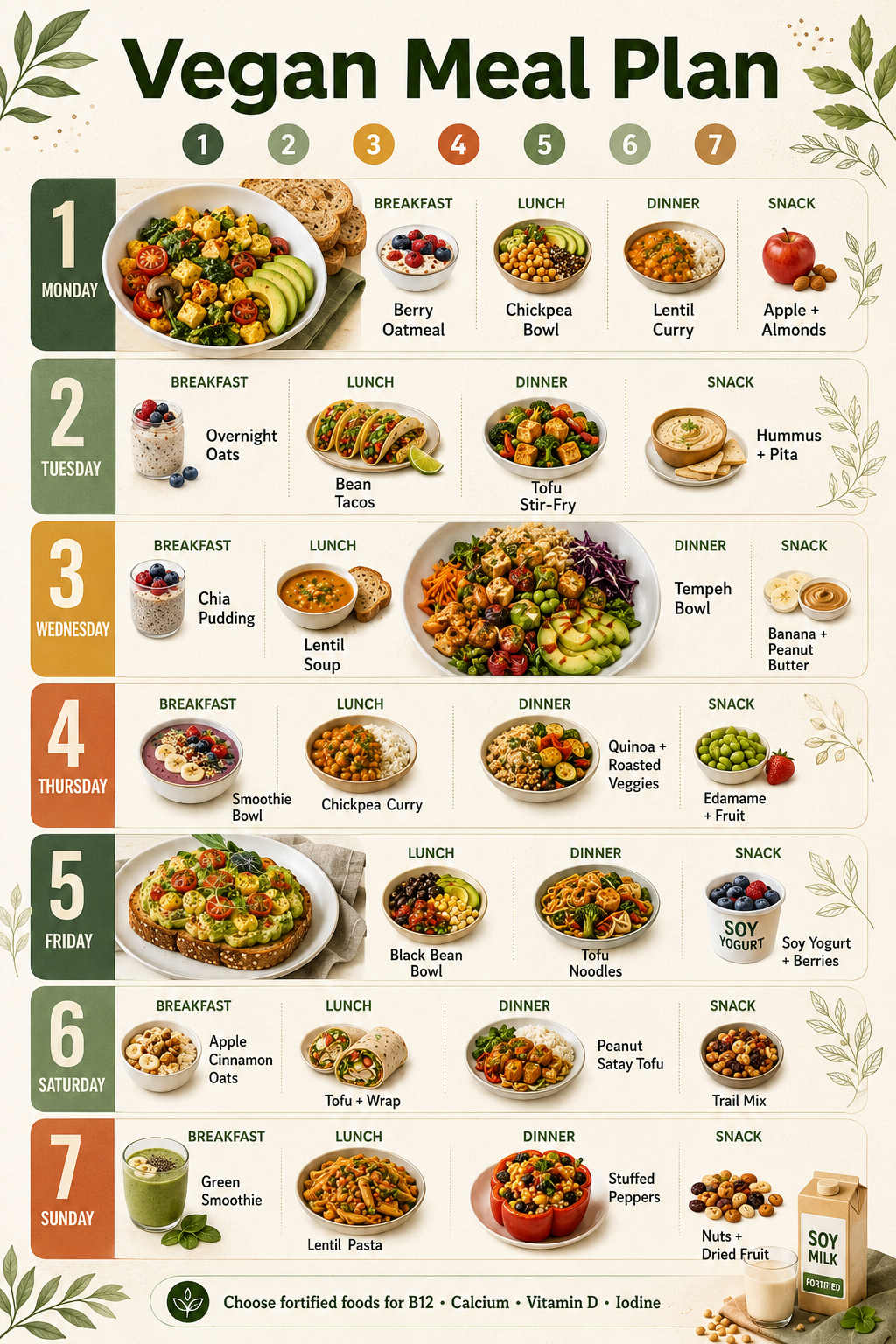
Vegan Meal Plan
Uses entirely plant-based ingredients without meat, dairy, eggs, or other animal-derived foods.
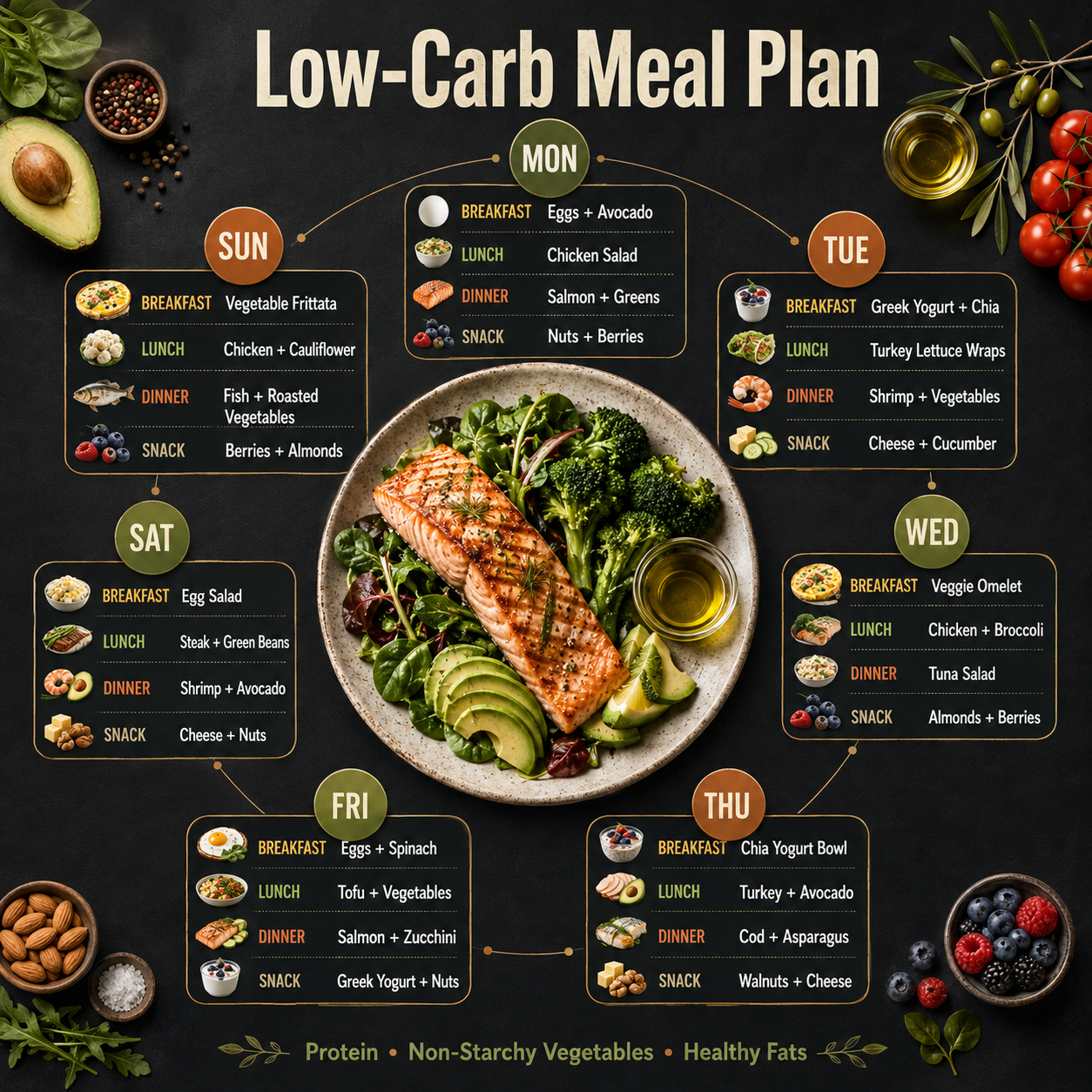
Low-Carb Meal Plan
Prioritizes non-starchy vegetables, protein sources, and suitable fats while limiting carbohydrate-rich foods.
Family Meal Plan
Coordinates practical meals that accommodate household preferences, schedules, portions, and different age groups.
Why Should I Use Real Meal Plan Examples To Create My Own Meal Plan?
Real meal plan examples show how meals can be organized into practical daily schedules without starting from an empty page. They can demonstrate useful combinations of breakfasts, lunches, dinners, snacks, leftovers, recipes, shopping lists, ingredient categories, and nutritional priorities. Looking at examples also helps me understand how much information should appear on each day and how different dietary approaches can be visually organized.
I can use these examples as inspiration rather than copying another person’s plan. On Examples.com, I select a suitable reference, describe my own preferences and requirements in an AI prompt, and generate a completely new meal plan. I can then review the food choices, replace unsuitable meals, personalize the schedule, and edit the final design to match my household and routine.
How Do I Generate Meal Plans Using Proven Examples From The World’s Best Brands?
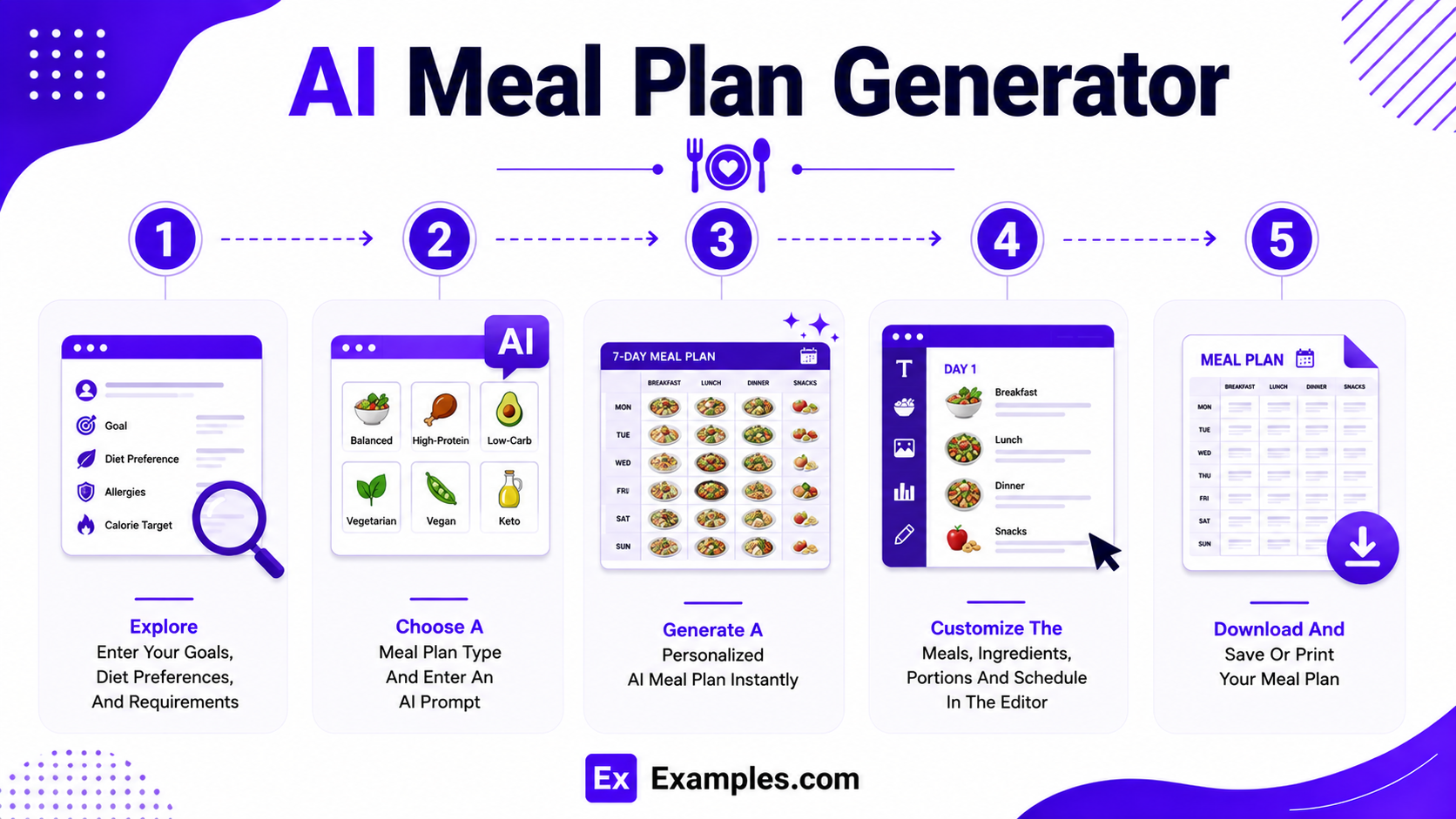
Creating a useful meal plan starts with understanding my actual routine, available ingredients, dietary preferences, and food budget. A reference-based AI workflow can then turn those requirements into a clear visual schedule.
Explore Real-World Meal Plan Examples
Browse meal plan examples to see how weekly schedules, dietary plans, shopping lists, recipes, portions, and meal categories are organized. Choose references that match the type of plan I want to create.
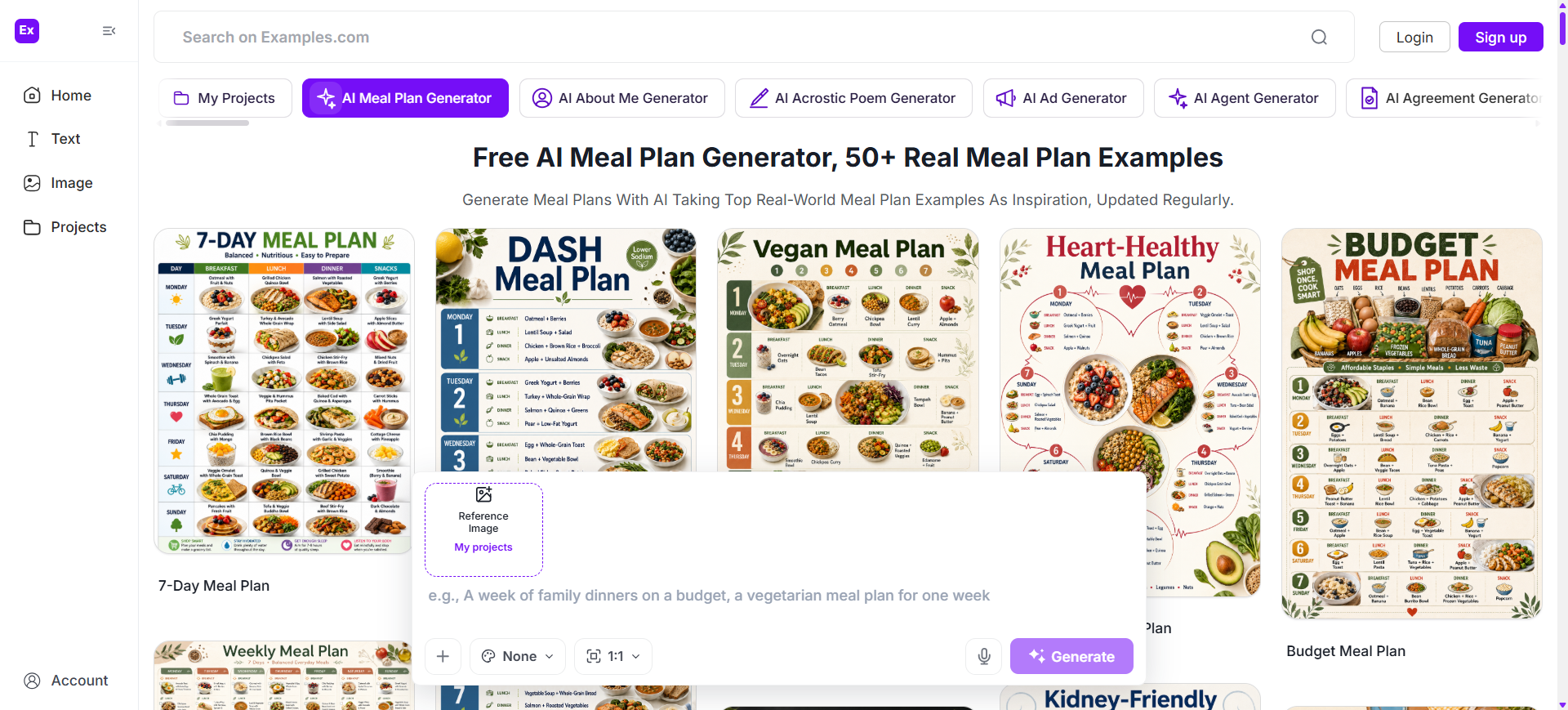
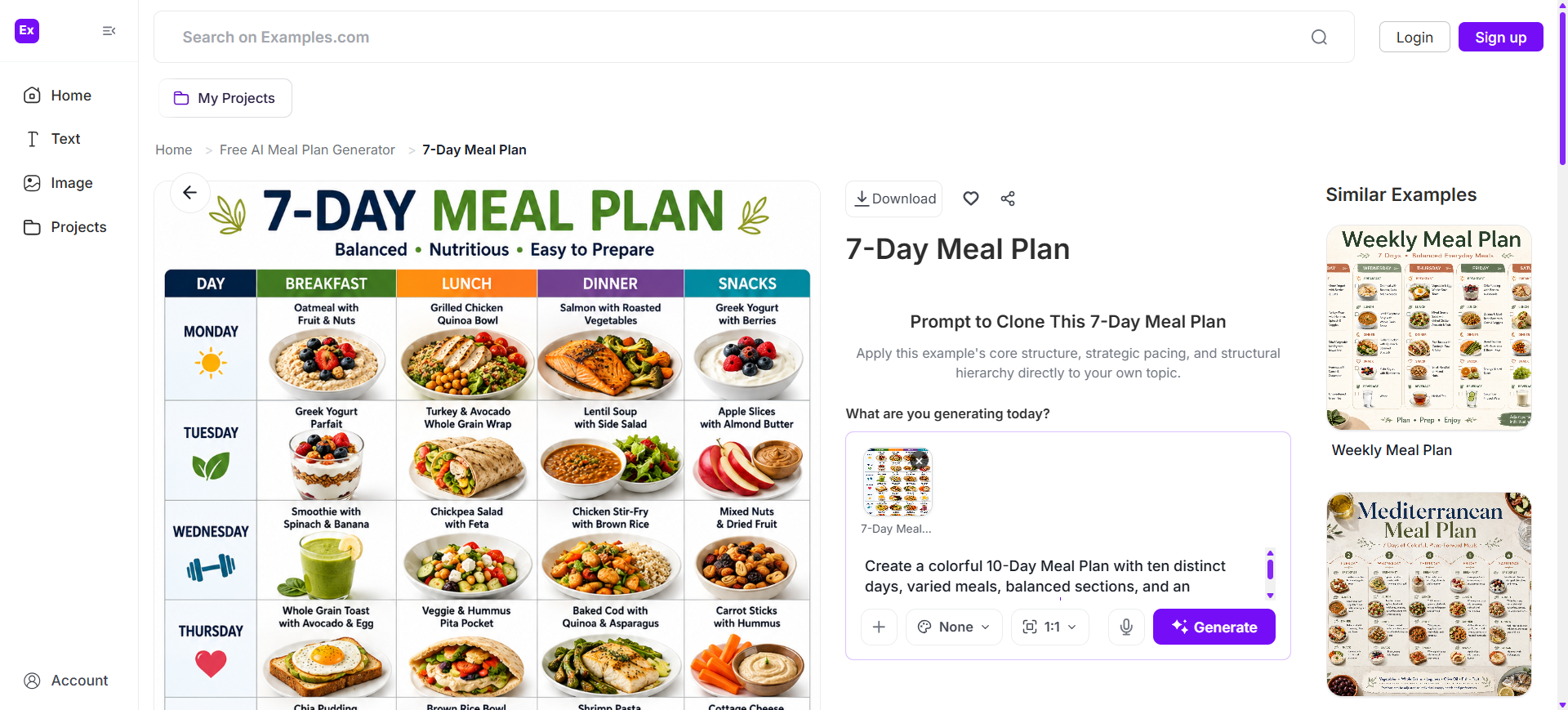
Choose A Reference Meal Plan And Enter An AI Prompt
Select a useful reference and describe my requirements, including household size, meals per day, dietary preferences, allergies, cooking time, budget, available ingredients, and nutritional goals.
Generate A New AI Meal Plan
The AI creates a new meal plan based on my instructions and the selected reference style. I can request daily meals, snacks, leftovers, ingredient suggestions, and a shopping-list structure.
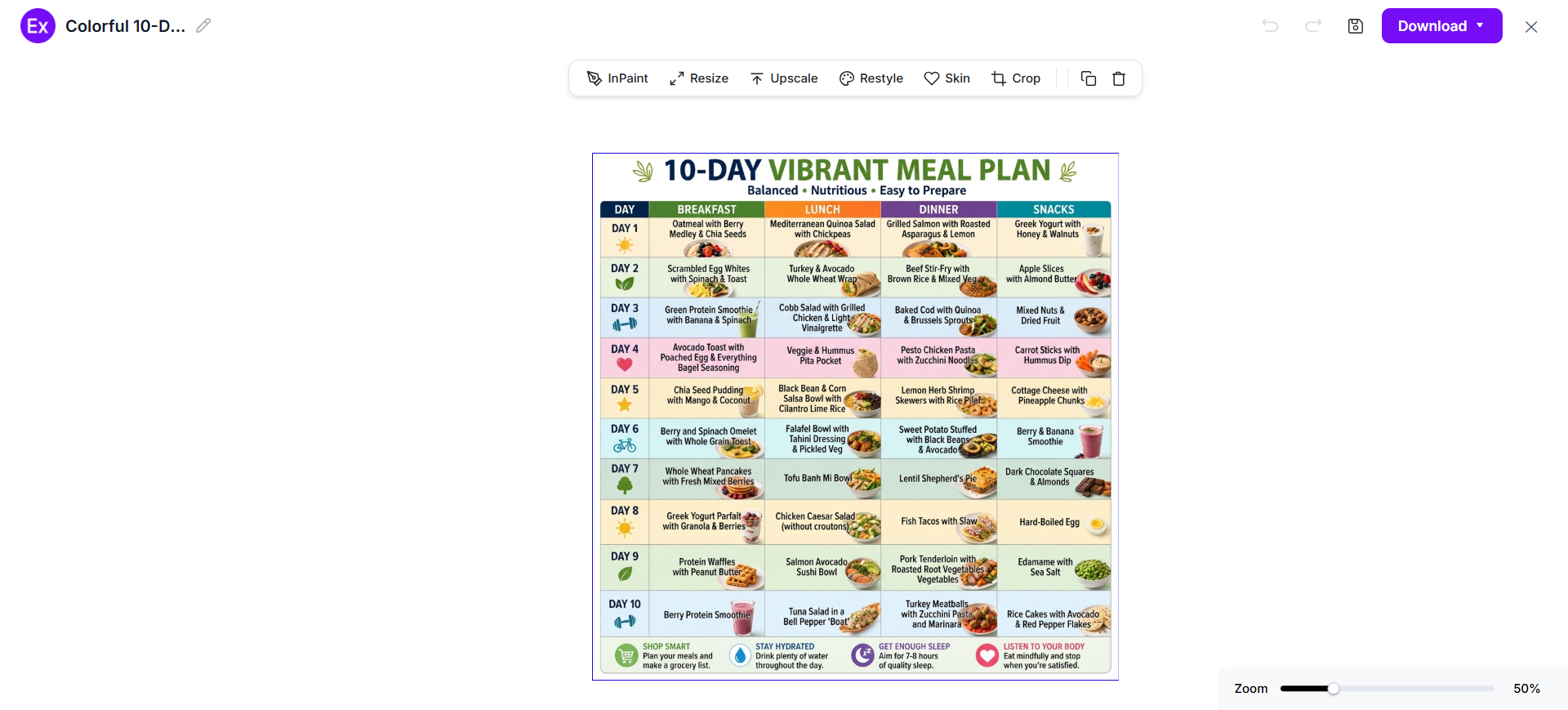
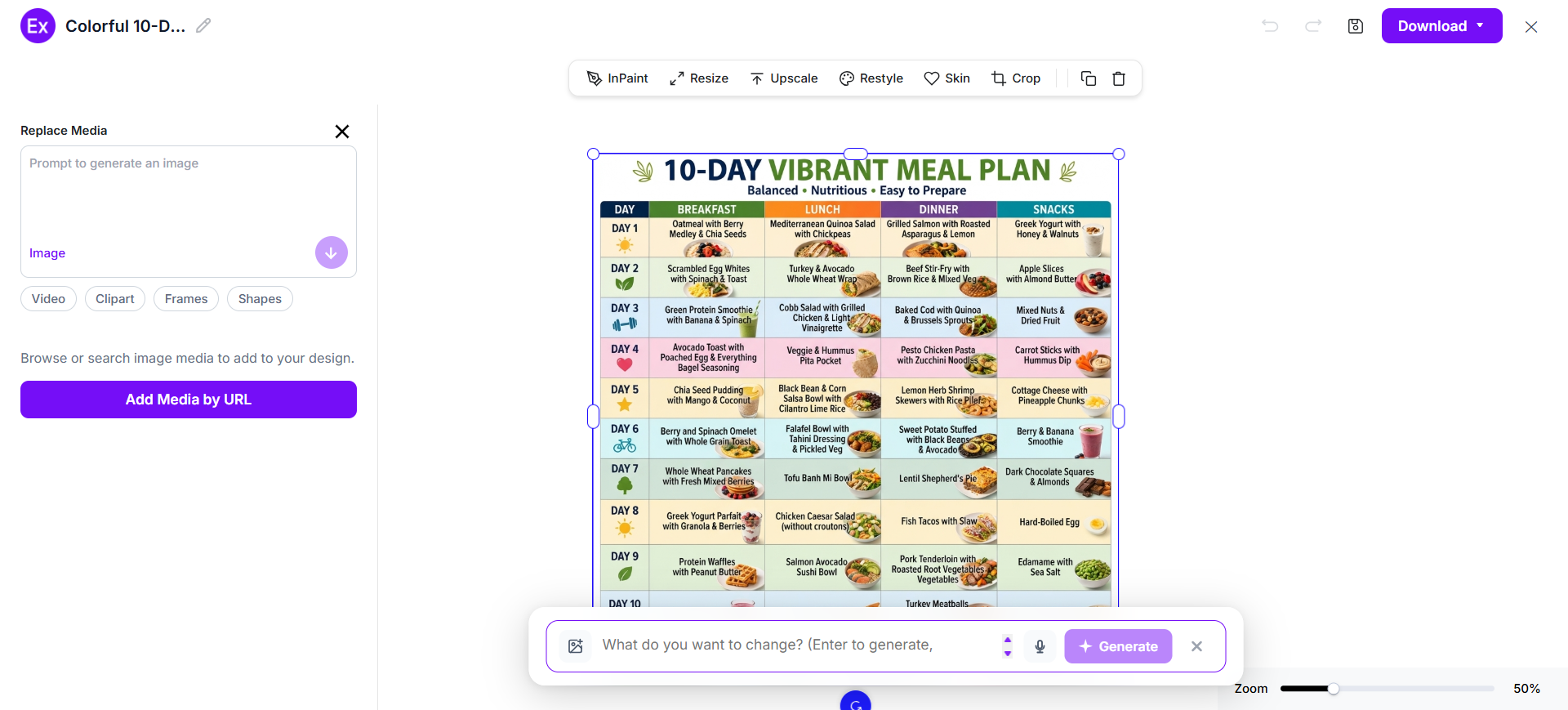
Customize The Meal Plan In The Online Editor
Review every meal and replace foods that do not suit my preferences, availability, schedule, or dietary needs. I can also edit headings, images, portions, colors, text, and other visual elements.
Download And Use The Final Meal Plan
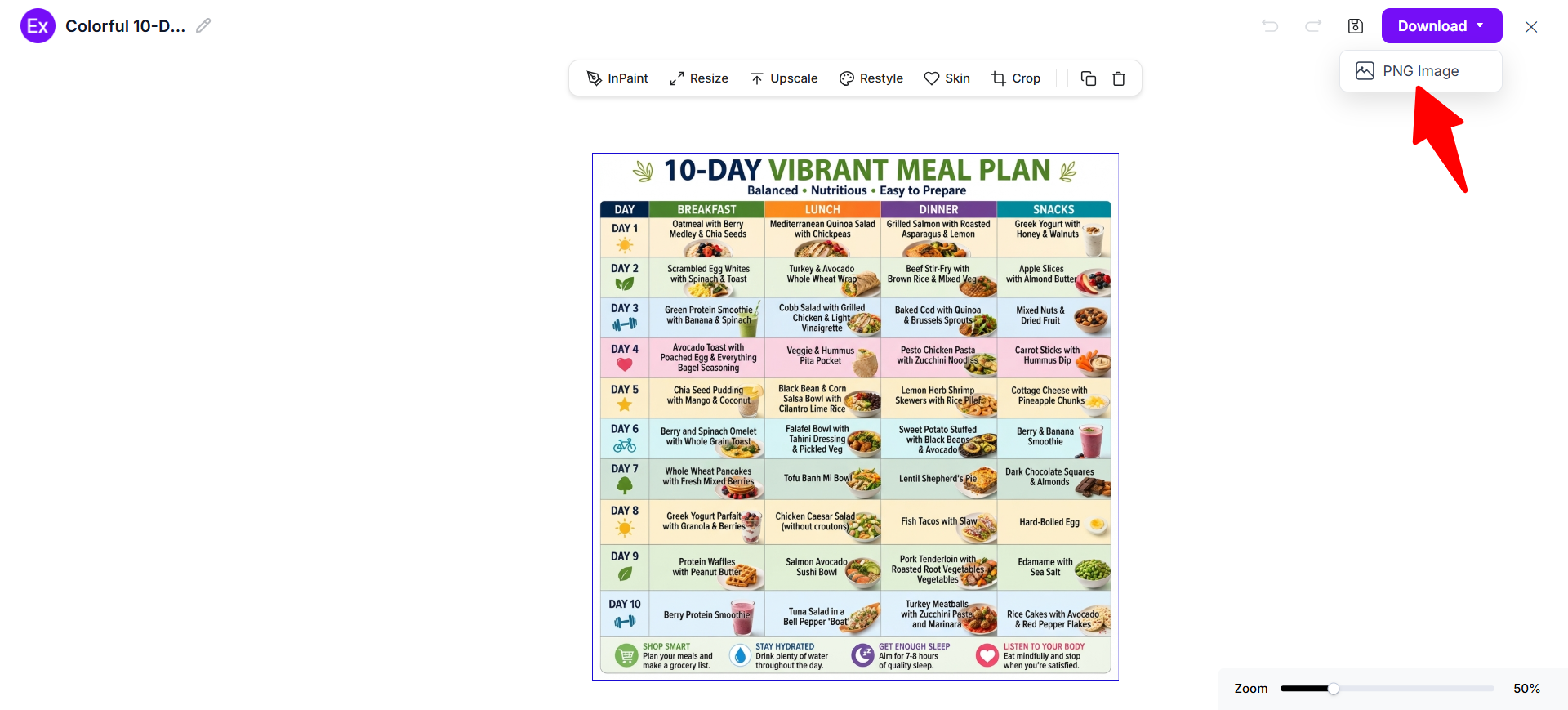
After reviewing the completed plan, I can download the final PNG and keep it on my phone, print it for the kitchen, share it with household members, or use it while grocery shopping and preparing meals.
Customize Meal Plan Designs Online
After generating a meal plan, I can customize the design in the Online Editor so it reflects my actual eating routine. I can replace meals, change food images, update ingredient information, modify headings, rearrange days, add snacks, and adjust the visual hierarchy. This is especially useful when an automatically generated meal does not fit my preferences or when I already have certain ingredients available at home.
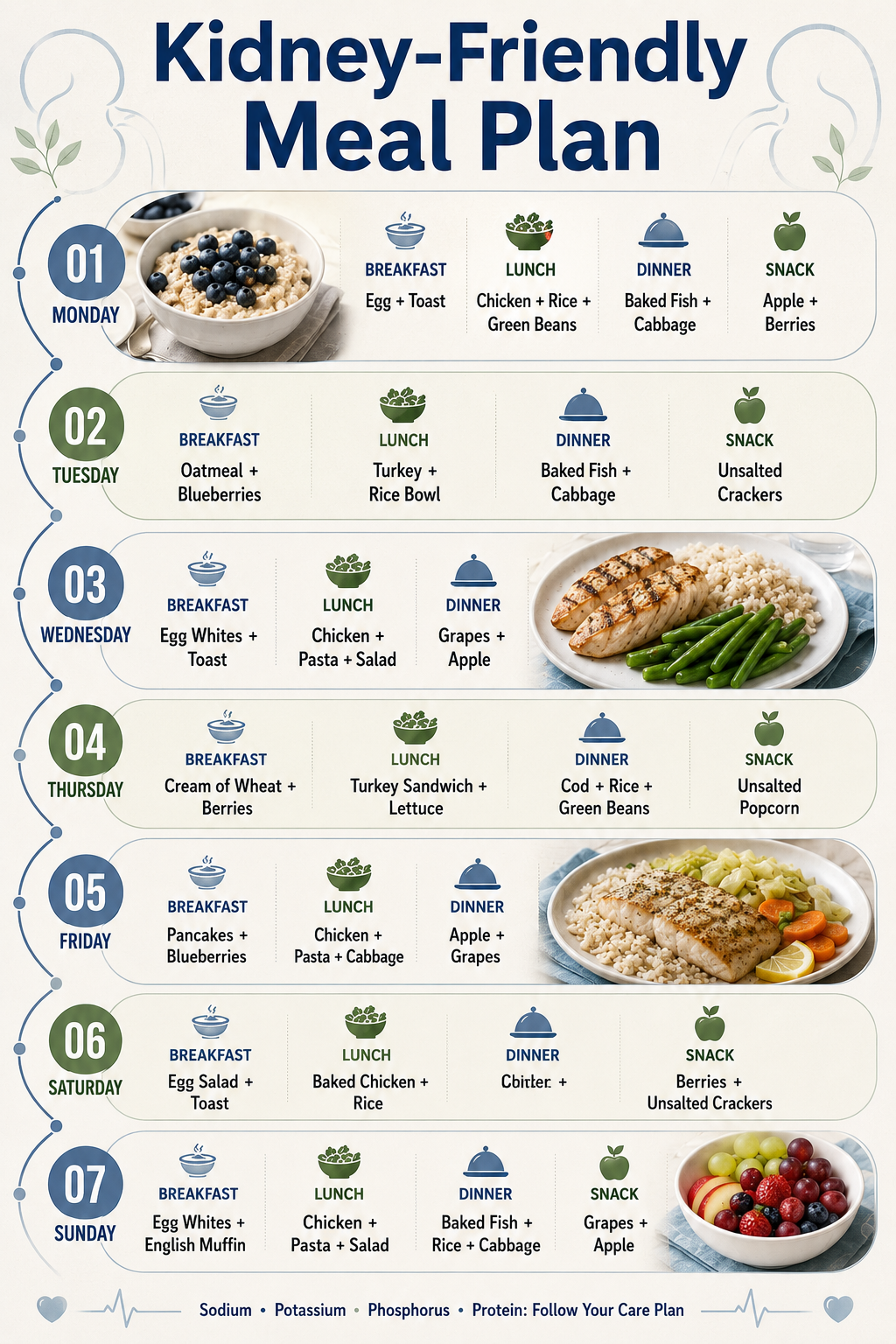
I can also adapt the plan for different household needs. For example, I can create separate sections for breakfast, lunch, dinner, snacks, leftovers, meal-preparation tasks, or grocery items. AI editing tools can help modify images and layouts without requiring advanced graphic-design experience. Before following a plan for a medical condition, allergy, pregnancy, or other specific health requirement, I should verify the food choices with an appropriate qualified professional.
AI Meal Plan Editing Features
Examples.com includes multiple AI-powered editing tools that help users improve and customize meal plan designs online.
InPaint
Replace or modify selected food images and visual elements while preserving the surrounding meal plan composition.
Resize
Adapt the meal plan to different dimensions for phones, tablets, printing, kitchen displays, or social platforms.
Upscale
Improve image resolution when food photographs or meal visuals need to appear sharper and clearer.
Restyle
Experiment with different visual styles, typography, colors, and presentation approaches while retaining the meal-plan concept.
BG
Remove or replace image backgrounds to create cleaner food photographs and more consistent visual sections.
Crop
Adjust food images to emphasize the dish while removing unnecessary surrounding areas.
Flip
Mirror selected food photographs or visual elements when a different orientation improves the composition.
Animate
Add motion to suitable digital meal-plan visuals when creating an interactive or presentation-style design.
Multishot
Generate multiple visual variations so I can compare different meal-plan layouts and choose the most useful presentation.
Standard Meal Plan Sizes And Formats
The best meal plan format depends on where I intend to use it. A kitchen printout needs clear text and practical spacing, while a mobile meal plan should be easy to scroll through and read on a smaller screen.
| Format | Common Size | Best Use |
|---|---|---|
| A4 Portrait | 210 × 297 mm | Printable weekly meal plans |
| A3 Portrait | 297 × 420 mm | Large kitchen planning sheets |
| Letter Portrait | 8.5 × 11 in | Printable household meal schedules |
| Mobile Portrait | 1080 × 1920 px | Phone-based meal planning |
| Square | 1080 × 1080 px | Social media meal-plan graphics |
| Landscape | 1920 × 1080 px | Digital displays and presentations |
For printed plans, use readable typography and sufficient space between days. For mobile formats, prioritize large headings, short meal descriptions, and a clear vertical sequence. If the plan contains many ingredients or preparation instructions, consider a larger format or separate shopping-list section.
Essential Elements Every Meal Plan Should Include
A useful meal plan should provide enough information to make meals easy to understand and prepare.
- Planning Period – Clearly identify whether the plan covers three days, one week, or another period.
- Daily Meals – Organize breakfast, lunch, dinner, and snacks by day.
- Balanced Food Choices – Include a practical variety of vegetables, fruits, protein foods, grains, and other appropriate foods.
- Portion Guidance – Provide suitable serving information when the plan requires it.
- Ingredient Information – Identify the main ingredients needed for each meal.
- Shopping List – Consolidate ingredients that need to be purchased.
- Leftover Strategy – Use suitable leftovers to reduce preparation time and food waste.
- Preparation Notes – Include useful cooking, storage, or meal-preparation reminders.
- Dietary Requirements – Clearly account for stated preferences, allergies, intolerances, or restrictions.
How Do I Design A Better Meal Plan?
A practical meal plan should fit the household's schedule, available ingredients, food preferences, cooking habits, and budget. Following a few planning principles can make the schedule easier to prepare and maintain.
- Check My Kitchen First – Review the refrigerator, freezer, and pantry before choosing new ingredients.
- Plan Around My Schedule – Choose quick meals for busy days and more involved recipes when I have extra time.
- Choose A Manageable Number Of Recipes – Reuse suitable ingredients and leftovers instead of cooking completely different meals every day.
- Include Variety – Rotate protein sources, vegetables, fruits, grains, flavors, and cooking methods.
- Create A Shopping List – Purchase only the ingredients needed for the selected meals and account for items already available.
- Plan For Leftovers – Intentionally prepare extra portions that can become convenient lunches or another meal.
- Consider Storage – Choose meals that can be safely stored and reheated when preparing food in advance.
- Keep Portions Practical – Match quantities to household size and individual needs rather than creating unnecessary excess.
- Make The Layout Easy To Scan – Use clear day labels and distinct meal sections.
- Review Before Using – Check ingredients, dietary requirements, allergies, and food-safety considerations before following the plan.
Common Meal Plan Design Mistakes To Avoid
Avoiding common meal-planning mistakes helps create schedules that are easier to prepare, shop for, understand, and maintain.
- Overcomplicated Recipes → Choose Practical Meals – Use recipes that match available cooking time and skill level.
- Ignoring Existing Ingredients → Check The Kitchen First – Build meals around foods already available when appropriate.
- Too Much Food Variety → Reuse Ingredients Strategically – Select recipes that share compatible ingredients to simplify shopping.
- Missing Snacks → Plan Them Separately – Include snacks when they are part of the person’s normal eating routine.
- Unclear Portions → Add Serving Guidance – Make quantities understandable for the intended household.
- Crowded Layout → Organize By Day – Use clear sections so meals can be identified quickly.
- No Shopping List → Consolidate Ingredients – Turn the weekly schedule into an actionable grocery list.
- Ignoring Dietary Requirements → Review Every Ingredient – Check labels and ingredients carefully for allergies, intolerances, and dietary restrictions.
How Can I Market My Product Using A Meal Plan?
Meal plans can also support food businesses, nutrition brands, grocery services, restaurants, meal-preparation companies, and content creators by demonstrating how products can fit into practical eating routines.
Grocery Products
Show how selected ingredients can be combined into breakfasts, lunches, dinners, or snacks throughout the week.
Meal-Prep Services
Present a weekly schedule that demonstrates the meals, preparation options, and convenience offered by the service.
Food Brands
Feature branded ingredients naturally within recipes while providing useful meal ideas for customers.
Restaurants
Create themed meal schedules that showcase menu items, seasonal dishes, or complementary food combinations.
Recipe Platforms
Use structured weekly plans to encourage readers to discover multiple recipes rather than viewing individual recipes separately.
Nutrition Businesses
Present educational meal-planning resources that demonstrate practical food organization while keeping recommendations appropriate to the audience and professional scope.
Which Meal Plan Sizes Perform Best?
Different sizes work better for different planning environments.
| Format | Best For | Strength |
|---|---|---|
| A4 | Kitchen printouts | Compact and easy to print |
| A3 | Wall planning | More room for detailed meals |
| Letter | North American households | Familiar document format |
| Mobile Portrait | Phone planning | Convenient while shopping |
| Square | Social content | Easy to share visually |
| Landscape | Digital displays | Provides space for weekly grids |
For everyday household planning, A4 or Letter formats are practical because they provide enough space without requiring a large display area. Mobile designs are particularly convenient for grocery shopping, while A3 can work well when a family wants a detailed weekly schedule visible in the kitchen.
Meal Plan Ideas For Different Industries
Different industries can use meal plans to organize food ideas, demonstrate products, educate audiences, and support practical planning.
- Fitness And Training – Create meal schedules featuring practical protein sources, carbohydrates, vegetables, hydration reminders, and preparation strategies appropriate to the individual’s goals.
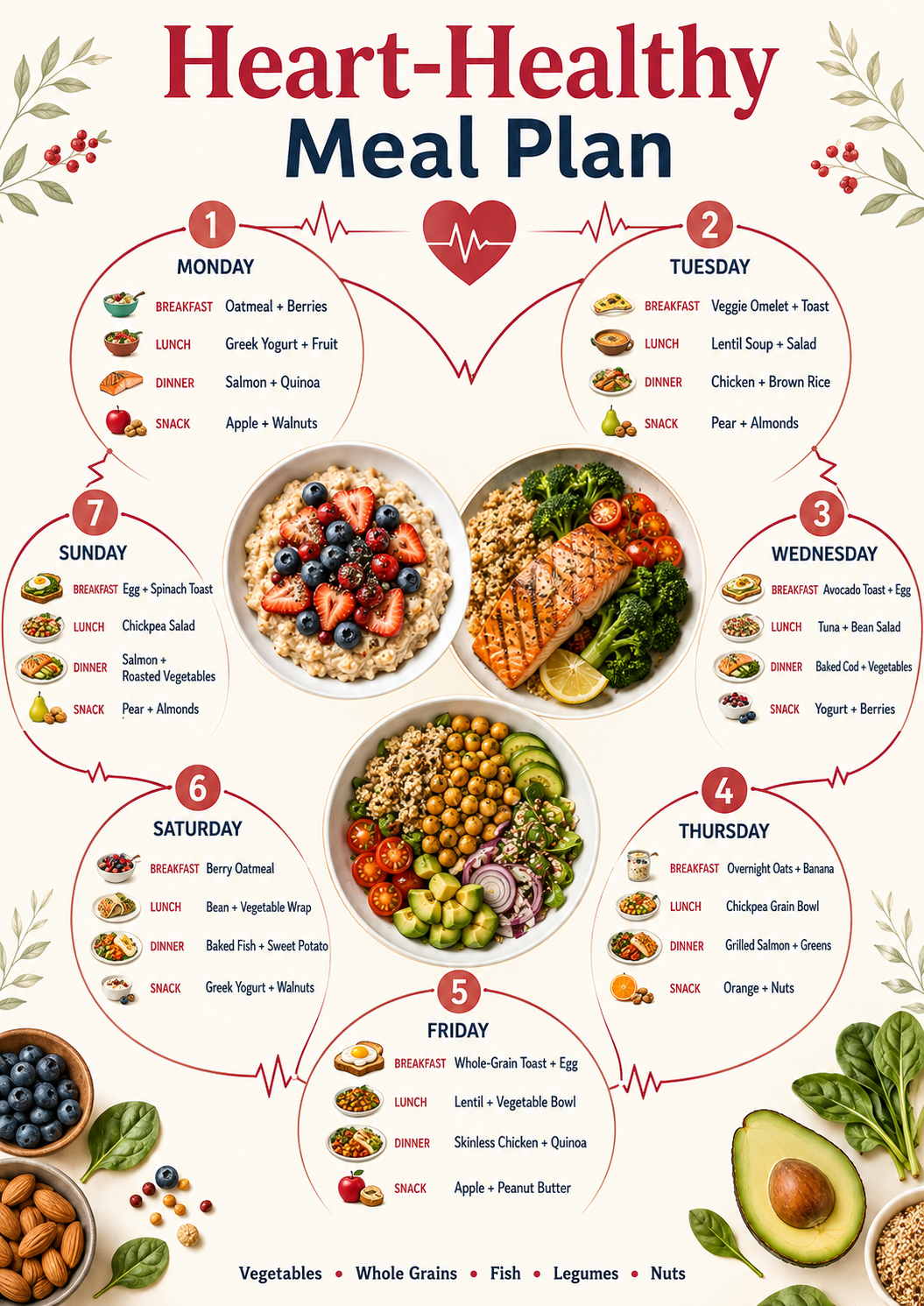
- Healthcare Education – Develop educational meal-planning examples around general healthy eating principles, with individualized medical requirements reviewed by qualified professionals.
- Schools – Create age-appropriate meal schedules that organize breakfasts, lunches, snacks, and family meal ideas in a clear format.
- Hospitality – Develop themed meal schedules showcasing breakfast, lunch, dinner, snacks, seasonal ingredients, or regional cuisines.
- Grocery Retail – Create weekly meal plans that help customers discover ways to use ingredients available through the store.
- Meal-Preparation Services – Present weekly menus that demonstrate how prepared meals can fit into busy household schedules.
- Food Blogging – Use visually appealing weekly schedules to organize recipes and encourage readers to prepare multiple dishes.
- Corporate Wellness – Create general educational meal-planning resources for employees interested in organizing balanced meals around busy work schedules.
- Nutrition Coaching – Use meal-plan layouts as educational planning tools, while ensuring individualized dietary advice is provided within appropriate professional qualifications.
- Family Planning – Build flexible weekly schedules around household preferences, school routines, work schedules, cooking time, leftovers, and grocery budgets.
FAQs
How Do I Create A Weekly Meal Plan?
Start by checking the foods you already have, identify the meals you need for the week, select practical recipes, create a shopping list, and organize the meals by day. Planning several dinners that create suitable leftovers can reduce preparation time.
How Many Meals Should A Meal Plan Include?
There is no universal number. A plan can include breakfast, lunch, dinner, snacks, or any combination that matches the person’s normal routine. The important factor is creating a schedule that is practical and sustainable.
How Can A Meal Plan Save Money?
Planning meals before shopping can reduce impulse purchases, help you use ingredients already available, and make it easier to buy only what is needed. Choosing recipes with overlapping ingredients and using suitable leftovers can also reduce waste.
What Should I Check Before Creating A Meal Plan?
Review your available ingredients, household size, food preferences, schedule, cooking ability, budget, dietary restrictions, allergies, and storage options. These factors determine which meals are practical.
Can AI Create A Meal Plan For Me?
Yes. AI can generate a meal-plan structure from information such as preferred foods, number of meals, cooking time, budget, dietary preferences, and household requirements. The generated plan should be reviewed before use.
Can I Create A Meal Plan For A Specific Diet?
Yes. AI can organize meal-plan concepts around dietary preferences such as vegetarian, vegan, low-carb, or high-protein eating. For medical diets, allergies, or other health-related requirements, verify the final food choices with an appropriately qualified professional.
Can I Use Leftovers In A Meal Plan?
Yes. Planning suitable leftovers can reduce cooking time and food waste. For example, a dinner can intentionally produce an additional portion for the next day’s lunch, provided the food is stored and reheated safely.
Can I Customize An AI-Generated Meal Plan?
Yes. You can replace meals, edit text, change food images, rearrange daily sections, adjust visual formatting, and personalize the plan in the Online Editor. The original reference is only used for inspiration; the generated design is new and can be customized for your needs.